专题 02 阅读理解---记叙文
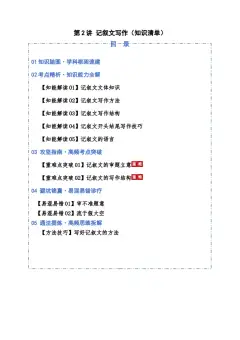
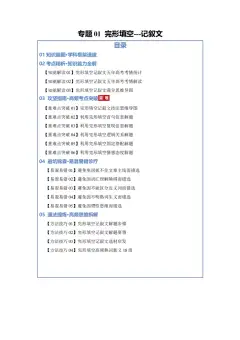
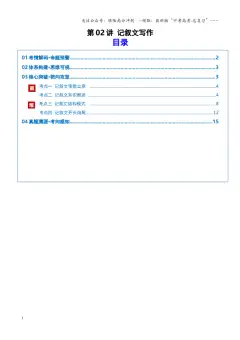
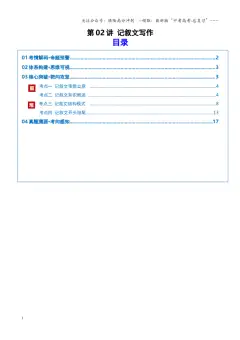
目录
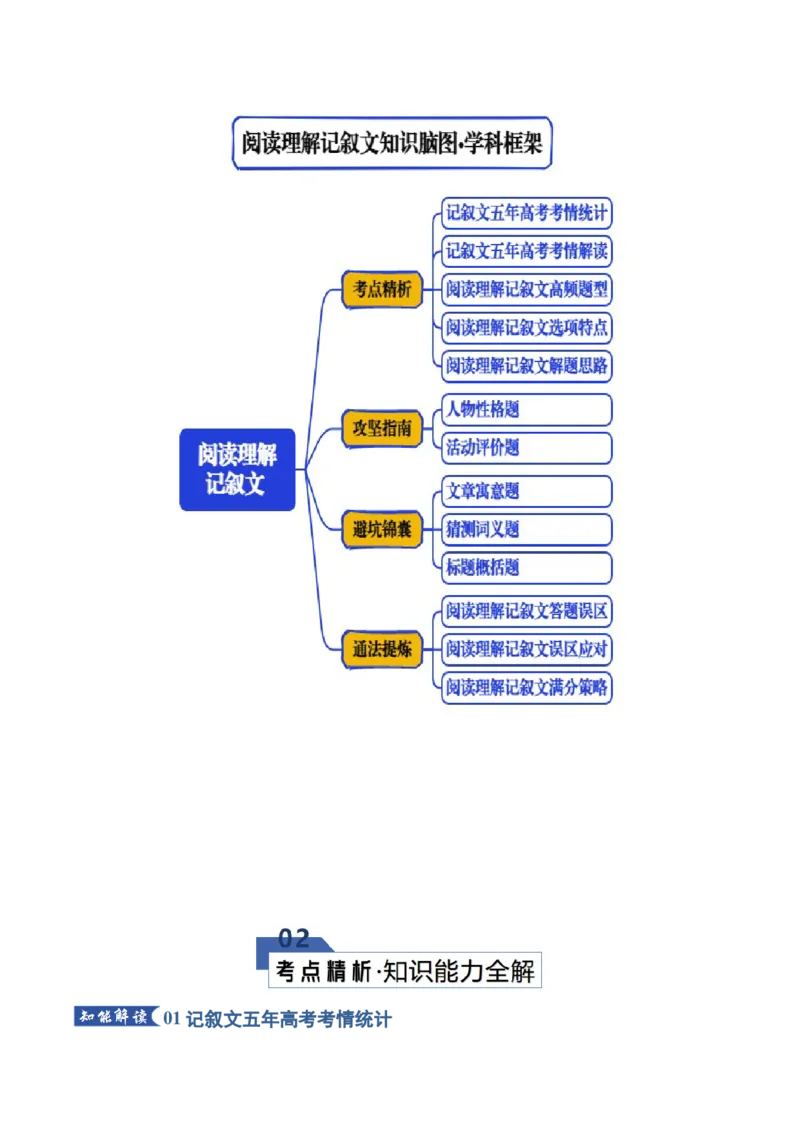
01知识脑图·学科框架速建
02考点精析·知识能力全解
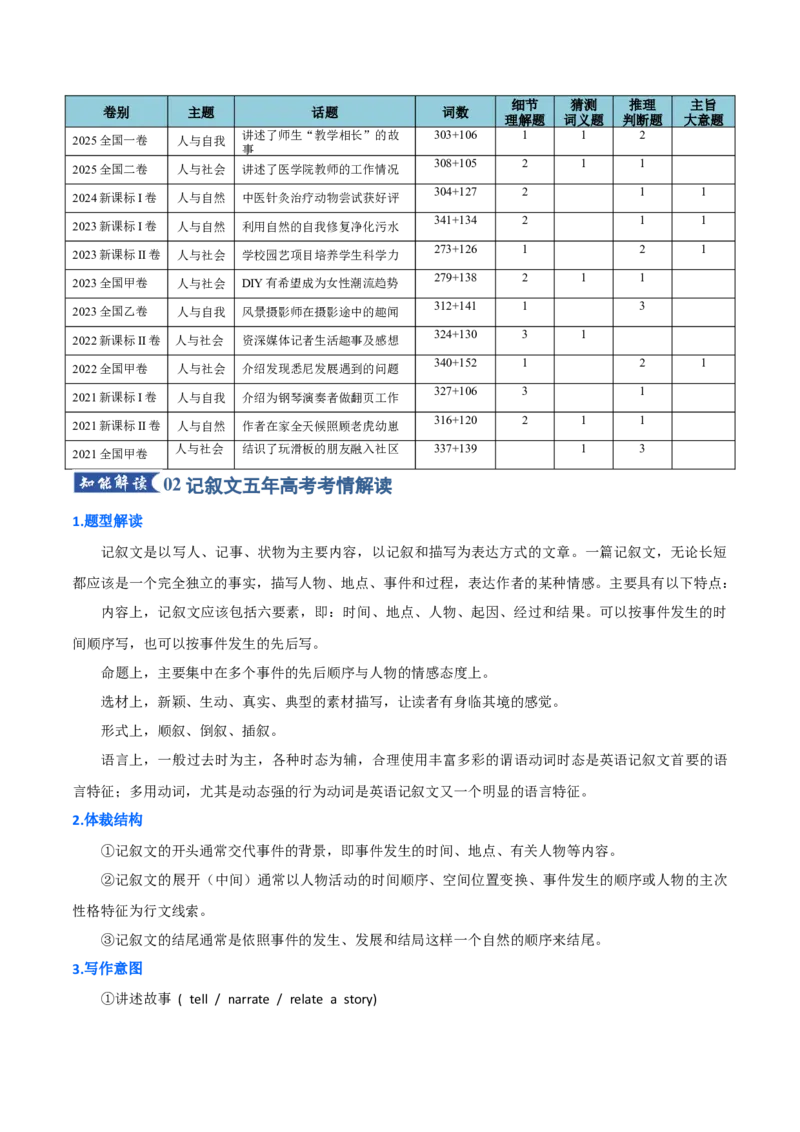
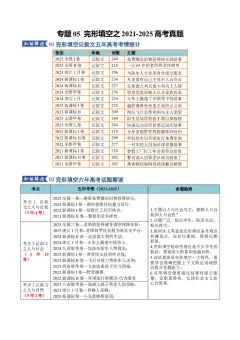
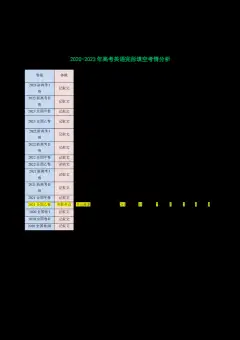
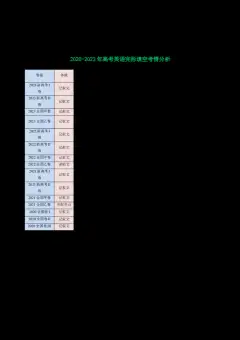
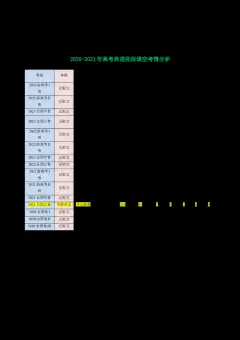
【知能解读01】记叙文五年高考考情统计
【知能解读02】记叙文五年高考考情解读
【知能解读03】阅读理解记叙文高频题型
【知能解读04】阅读理解记叙文选项特点
【知能解读05】阅读理解记叙文解题思路
03 攻坚指南·高频考点突破
【重难点突破01】人物性格题
【重难点突破02】活动评价题
04 避坑锦囊·易混易错诊疗
【易混易错01】文章寓意题
【易混易错02】猜测词义题
【易混易错03】标题概括题
05 通法提炼·高频思维拆解
【方法技巧01】阅读理解记叙文答题误区
【方法技巧02】阅读理解记叙文误区应对
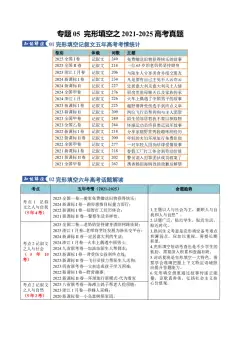
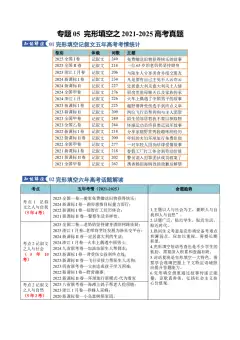
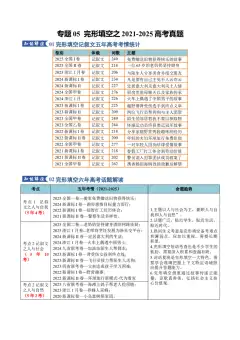
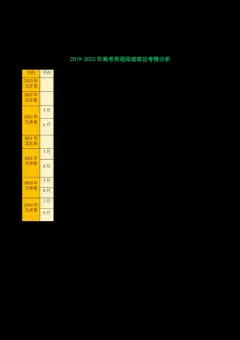
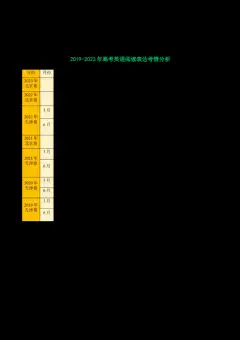
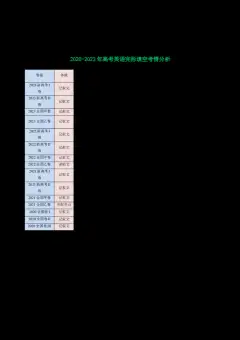
【方法技巧03】阅读理解记叙文满分策略01记叙文五年高考考情统计细节 猜测 推理 主旨
卷别 主题 话题 词数
理解题 词义题 判断题 大意题
讲述了师生“教学相长”的故 303+106 1 1 2
2025全国一卷 人与自我
事
308+105 2 1 1
2025全国二卷 人与社会 讲述了医学院教师的工作情况
304+127 2 1 1
2024新课标I卷 人与自然 中医针灸治疗动物尝试获好评
341+134 2 1 1
2023新课标I卷 人与自然 利用自然的自我修复净化污水
273+126 1 2 1
2023新课标II卷 人与社会 学校园艺项目培养学生科学力
279+138 2 1 1
2023全国甲卷 人与社会 DIY有希望成为女性潮流趋势
312+141 1 3
2023全国乙卷 人与自我 风景摄影师在摄影途中的趣闻
324+130 3 1
2022新课标II卷 人与社会 资深媒体记者生活趣事及感想
340+152 1 2 1
2022全国甲卷 人与社会 介绍发现悉尼发展遇到的问题
327+106 3 1
2021新课标I卷 人与自我 介绍为钢琴演奏者做翻页工作
316+120 2 1 1
2021新课标II卷 人与自然 作者在家全天候照顾老虎幼崽
人与社会 结识了玩滑板的朋友融入社区 337+139 1 3
2021全国甲卷
02记叙文五年高考考情解读
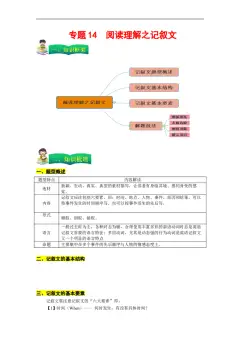
1.题型解读
记叙文是以写人、记事、状物为主要内容,以记叙和描写为表达方式的文章。一篇记叙文,无论长短
都应该是一个完全独立的事实,描写人物、地点、事件和过程,表达作者的某种情感。主要具有以下特点:
内容上,记叙文应该包括六要素,即:时间、地点、人物、起因、经过和结果。可以按事件发生的时
间顺序写,也可以按事件发生的先后写。
命题上,主要集中在多个事件的先后顺序与人物的情感态度上。
选材上,新颖、生动、真实、典型的素材描写,让读者有身临其境的感觉。
形式上,顺叙、倒叙、插叙。
语言上,一般过去时为主,各种时态为辅,合理使用丰富多彩的谓语动词时态是英语记叙文首要的语
言特征;多用动词,尤其是动态强的行为动词是英语记叙文又一个明显的语言特征。
2.体裁结构
①记叙文的开头通常交代事件的背景,即事件发生的时间、地点、有关人物等内容。
②记叙文的展开(中间)通常以人物活动的时间顺序、空间位置变换、事件发生的顺序或人物的主次
性格特征为行文线索。
③记叙文的结尾通常是依照事件的发生、发展和结局这样一个自然的顺序来结尾。
3.写作意图
①讲述故事 ( tell / narrate / relate a story)②分享经验 (share an experience)
③纪念人物 (remember a person)
④阐明道理 (communicate an idea / convey a message)
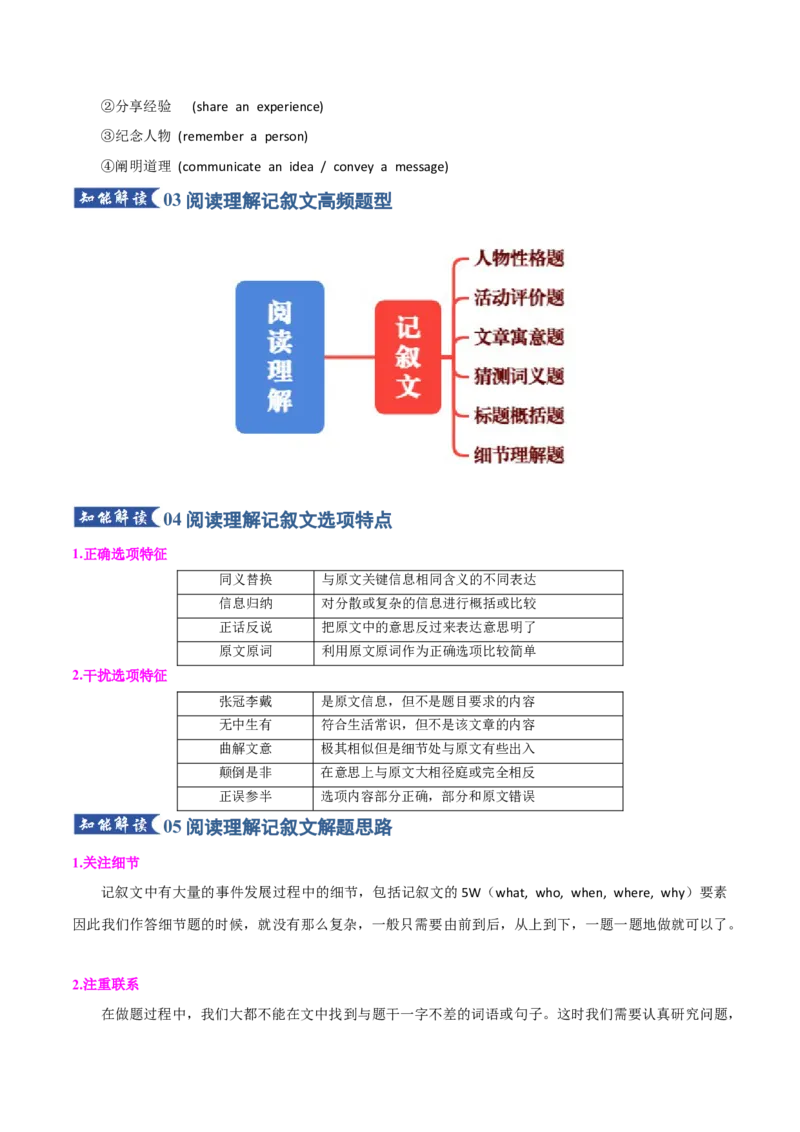
03阅读理解记叙文高频题型
04阅读理解记叙文选项特点
1.正确选项特征
同义替换 与原文关键信息相同含义的不同表达
信息归纳 对分散或复杂的信息进行概括或比较
正话反说 把原文中的意思反过来表达意思明了
原文原词 利用原文原词作为正确选项比较简单
2.干扰选项特征
张冠李戴 是原文信息,但不是题目要求的内容
无中生有 符合生活常识,但不是该文章的内容
曲解文意 极其相似但是细节处与原文有些出入
颠倒是非 在意思上与原文大相径庭或完全相反
正误参半 选项内容部分正确,部分和原文错误
05阅读理解记叙文解题思路
1.关注细节
记叙文中有大量的事件发展过程中的细节,包括记叙文的5W(what, who, when, where, why)要素
因此我们作答细节题的时候,就没有那么复杂,一般只需要由前到后,从上到下,一题一题地做就可以了。
2.注重联系
在做题过程中,我们大都不能在文中找到与题干一字不差的词语或句子。这时我们需要认真研究问题,抓住题干中的关键词语,然后到文中准确地找到与之相关的语句,或是疑似语句的位置,接着去左顾,或
右盼,在前句或后句寻找线索。
3.读懂表象
主旨大意题或推理判断、作者意图题等实际上是同一类型的问题,或者说是可用同种方法解答的题型。
在解答此类题目的时候,不可被题干的表象所迷惑,要像剥洋葱一样,一层一层地剥;在四个可选项中,
一个一个地去证实,去排除。特别是解答推论或暗指类的题目,比如“What can be inferred from …?”
或是What does the author imply in…?”之类的题目,文中所陈述的往往不是答案。我们要在文前文后去
查找,在字里行间里去寻觅。有时还少不了借助自己的生活经验和常理来体会这言外之意。
4.挖掘意义
每年的高考阅读题中,特别是记叙文的阅读题,都会出现一至两道词义猜测题。而这些词汇往往是你
素昧平生的,或者和你有点头之交,在文中却另有新意的,总之,猜的是那些在高考词汇表要求之外的词
汇。小小的一个词,一个短语,考核的不是你的语法的熟练程度,也不是你的记忆力,而是你对文章通篇
或者一个段落的整体把握和变通能力。
01 人物性格题
1.题型解读
无论是叙事型或者记人型阅读理解记叙文,往往都涉及到人们或者公众对其人生事迹或贡献评价,
选项多用一个形容词或者两个并列的形容词。注意人物性格形容词往往与具体行为、态度直接关联。
分类 例词
brave勇敢的kind善良的optimistic乐观的reliable可靠的determined坚定的humorous幽默的
正面评价
generous慷慨的reserved内敛的ambitious有野心的sensitive敏感的creative有创造性的
负面评价 odd古怪的rude粗鲁的stubborn固执的selfish自私的impatient不耐烦的cowardly懦弱的
2.命题方式
设问方式以“Which of the following best describes...?”等引出问题。
24. What do some of Farber’s coworkers think of him? (2024新课标I卷)
22. Which of the following best describes Whaley as a teacher? (2019全国I卷)
3.解题步骤
阅读理解记叙文“人物性格描述题”的最优处理方法:
第一、先整体把握文章大意、人物经历、事迹贡献、人物反馈,多为弘扬“真善美”主旋律主题。
第二、结合题干锁定原文答题区间,圈划关键词句,尤其是动词和形容词,注意提炼态度倾向。第三、比对选项形容词的褒贬性,多为并列型,一对一错,采用“排除法”,去伪存真确定答案。
跟踪训练1 (2024新课标I卷阅读B片段)
“I am not crazy,” says Dr. William Farber, shortly after performing acupuncture (针灸) on a rabbit. “I am
ahead of my time.” If he seems a little defensive, it might be because even some of his coworkers occasionally
laugh at his unusual methods. But Farber is certain he’ll have the last laugh. He’s one of a small but growing
number of American veterinarians (兽医) now practicing “holistic” medicine – combining traditional Western
treatments with acupuncture, chiropractic (按摩疗法) and herbal medicine.
…
24. What do some of Farber’s coworkers think of him?
A. He’s odd. B. He’s strict. C. He’s brave. D. He’s rude.
跟踪训练2 (2019全国I卷阅读B片段)
…
Whaley got the idea of this second-grade presidential campaign project when he asked the children one day to
raise their hands if they thought they could never be a president. The answer broke his heart. Whaley says the
project is about more than just learning to read and speak in public. He wants these kids to learn to boast(夸
耀)about themselves.
“Boasting about yourself, and your best qualities,” Whaley says, “is very difficult for a child who came into
the classroom not feeling confident.”
27. Which of the following best describes Whaley as a teacher?
A. Humorous. B. Ambitious. C. Caring. D. Demanding.
02 活动评价题
1.题型解读
①“活动评价题”试题大多出现在记叙文最后一题;
②属于复杂细节理解题,可能会涉及阅读材料多处;
③常见命题形式:Which of the following best describes…?
26. Which of the following best describes the impact of the program? (2023新课标I卷)
26. What did the author think of raising the tiger cubs at home? (2021新课标II卷)
2.解题策略
阅读理解记叙文“活动评价题”的最优处理方法:
第一、先通读全文把握主旨,重点了解相关事件的前因后果和来龙去脉,为后续处理做铺垫。
第二、结合题干锁定原文答题区间,圈划关键词句,尤其是动词和形容词,注意提炼态度倾向。
第三、比对选项形容词的褒贬性,采用“排除法”,去伪存真确定答案。
跟踪训练1 (2023新课标I卷B篇片段)
…
Program evaluations show that kids eat more vegetables as a result of the classes. “We have students who saythey went home and talked to their parents and now they’re eating differently,” Jaramillo says.
She adds that the program’s benefits go beyond nutrition. Some students get so interested in gardening that
they bring home seeds to start their own vegetable gardens. Besides, working in the garden seems to have a calming
effect on Jaramillo’s special education students, many of whom have emotional control issues. “They get outside,”
she says, “and they feel successful.”
26. Which of the following best describes the impact of the program?
A. Far-reaching. B. Predictable.
C. Short-lived. D. Unidentifiable.
跟踪训练 (2023全国乙卷B篇)
…
One time my friends and I drove three hours to Devil’s Lake, Wisconsin, to climb the purple quartz (石英)
rock around the lake. After we found a crazy-looking road that hung over a bunch of rocks, we decided to
photograph the scene at sunset. The position enabled us to look over the lake with the sunset in the background. We
managed to leave this spot to climb higher because of the spare time until sunset. However, we did not mark the
route (路线) so we ended up almost missing the sunset entirely. Once we found the place, it was stressful getting
lights and cameras set up in the limited time. Still, looking back on the photos, they are some of my best shots
though they could have been so much better if I would have been prepared and managed my time wisely.
27. How does the author find his photos taken at Devil’s Lake?
A. Amusing. B. Satisfying.
C. Encouraging. D. Comforting.
01文章寓意题
1.命题形式
文章寓意题属于文章整体阅读,属于主旨概括题,类似于中心大意题。一方面,需要考生研读全文把握大
意。另一方面需要吃透选项字面意思和言外之意方能把二者有效结合起来做出最佳选择。
27. What does the author’s experience show? (2025全国一卷)45. What message does Tara's story convey? (2023天津卷)
2.解题策略
①平时多注意收集英语谚语并吃透其字面意思和言外之意,有备无患;
②仔细阅读文本,把握大意,尤其是关注记叙文尾段,多是感想或体会;
③把文章大意和四个选项内容逐一进行比对,逐个排除,筛选出最佳答案。
3.常用英语格言
英语谚语 汉语
Practice makes perfect. 熟能生巧。
More haste, less speed. 欲速则不达。
Well begun is half done. 好的开始是成功的一半。
Where there is a will, there is a way. 有志者事竟成。
A friend in need is a friend indeed. 患难见真情。
Actions speak louder than words. 事实胜于雄辩。
All roads lead to Rome. 条条大路通罗马。
An apple a day keeps the doctor away. 一天一苹果,医生远离我。
Beauty lies in the love's eyes. 情人眼里出西施。
Don't put off till tomorrow what should be done
今日事,今日毕。
today.
Every dog has its day. 凡人皆有得意日。
Failure is the mother of success. 失败是成功之母。
God helps those who help themselves. 自助者天助。
Good medicine tastes bitter. 良药苦口。
Great minds think alike. 英雄所见略同。
He who laughs last laughs best. 谁笑到最后,谁笑得最好。
It is never too late to mend. 亡羊补牢,为时未晚。
One false step will make a great difference. 失之毫厘,谬之千里。
Experience is the mother of wisdom. 实践出真知。
Slow and steady wins the race. 稳扎稳打无往而不胜。
跟踪训练1 (2021全国甲卷第23题)
…
I walked into class believing that writing is important as a means of communication. However, my students
demonstrated something more important to me. When the final bell rang in June, I walked away with a yearbookfull of messages about writing’s most powerful significance — the ability to connect people, to put us in another’s
skin, to teach us what it means to be human.
27. What does the author’s experience show?
A. Teaching is learning. B. Still waters run deep.
C. Knowledge is power. D. Practice makes perfect.
跟踪训练2 (2023天津卷B篇)
I looked through the window of the charming little violin shop, and my heart began to race.
I'd been out to dinner that evening. Since it wasn't dark yet after the meal, I decided to walk home from the
restaurant. I had traveled that way before, yet I had never noticed that old little shop. But that night I felt drawn to
the violin shop the moment I came across it.
I wiped the dirt from the window to get a better look inside. Several violins hung from the dark walls, quietly
waiting to be chosen. As my eyes rested on them, I felt as though I were looking through a window into my own
past.
My childhood was all about the pursuits I had attempted, most of which had been chosen by Mom. She was
like, “Join the swim team, Tara. Your sister is a good swimmer;surely you will be, too. ”What she refused to
acknowledge, however, was that I was visibly afraid of water.
Every Saturday I begged Mom not to make me go to the swim meet, but had little chance of success. That
said, with a bang of the starting gun, I would dive into the cold water with all my strength and swim to the other
side of the pool as fast as I could, only to find that the other swimmers slid past me. I would have given it up if I
had not heard my father's encouraging shouts to cheer me on. When at last my hand would grab the edge of the
pool, he would always be there with a warm, dry towel, telling me how proud he was of my desperate efforts.
Then came a turning point in my life the day our school orchestra( 管弦乐队)visited my class, and gave a
demonstration. The drums annoyed me. The flutes(笛子)bored me. But the violin…ah, the violin. It made the
sweetest sound I'd ever heard!My heart was dancing along with its flowing tune. For the first time in my life, I went
so wild with joy.
Tightly holding the permission slip from the orchestra director, I ran all the way home after school, and shakily
handed it to my parents with a fear that they might dismiss my desire. They didn't. Mom was thrilled to see me
finally excited about something, and Dad winked(眨眼示意)at me while eagerly signing the slip.
I began practicing the violin with great passion, and rose quickly in ability. Before long I had won the first seat
in the community orchestra …
45. What message does Tara's story convey?
A. It's never too young to learn.
B. A passionate interest works wonders.
C. Hard work will pay off in the long run.
D. Like mother, like daughter.
02 猜测词义题在阅读理解中,通常通过信息指代类的题目考查考生对于上下文衔接关系以及文章基本结构的把握。
信息指代类题目在高考英语中有两种:名词(短语)指代题和代词指代题。本专题我们就如何解答名词(短语)
指代题进行相关技巧的点拨。
1.思维导图
3.猜测技巧
①利用释义法猜词
在说明文尤其是科技类说明文中,作者通常会对一些关键词或专业术语进行解释。常见的有对该词下
定义或后跟同位语、定语从句、冒号、破折号、括号等引出解释说明部分。
②利用构词法猜词
英语单词可以通过添加词缀、合成或转化的方式构成新词或生成新的词义。同学们要熟记一定数量的
词根、前缀和后缀,从而达到通过“解剖”一个单词,对一个生词能够“望文生义”的效果。
③利用因果关系猜词
若画线单词或短语前后句子之间构成因果关系,那我们便可以根据这种因果逻辑关系推知单词或短语
的意义。因果关系的语境通常由because, so, thus, therefore, as a result of, so that, so/such...that...等标志词体现。
⑥利用对比关系猜词
运用转折对比描述事物或现象是写作时常用的一种手法,作者常借用一些信号词来提供相反信息,抓
住这些信号词,结合上下文意,我们就能够快速推测出词义。体现对比关系的词语很多,常见的有 but,
yet, however, while, unlike, instead of, on the other hand, rather than, on the contrary等。
⑤利用语境法解题
有些猜测词义句意题找不到以上标志或线索,我们可以利用上下文提供的语境进行合乎逻辑的综合分
析,进而推测词义句意。
⑥利用同义关系解题
画线单词或短语前后有时会出现与之同义或近义的词语或结构,这时我们可从熟悉的词语中推知生词
的含义。常见的表示同义关系的词或短语有and, or, like, as well, similarly, too, also, either等。⑦利用生活常识解题
在仅靠分析篇章内在逻辑关系和语境无法猜出词义时,我们可以借助生活经验和普通常识确定词义。
3.解题思路
在语篇中有时为了避免重复提及某一个词或者短语,常常用指代词表示,如:要求考生指出代词it,
they,one等的指代对象。指代词起连接语篇的作用,它能体现出语篇中各句子之间的逻辑关系。解题时
需要做到:
原文定位:返回原文,找出指代词。
左顾右盼:找与其最接近的名词,名词性词组或句子(90%以上都是往前找答案)。
替换验证:替换该指代词,看逻辑是否通顺,范围是否一致。3.替换验证:替换该指代词,看逻辑
是否通顺,范围是否一致。
跟踪训练1 (2025全国一卷B篇)
…
As a new unit started, I asked everyone to write a persuasive piece on a health-related topic of their choice.
This time they found the exercise much more interesting. For the next two assignments, a personal-narrative unit
followed by a creative-writing workshop, I only required that the piece meet the specifications of its genre (体裁)
and that it contain a thesis. The results were staggering. The students took on diverse topics and turned in stories,
10 to 20 pages each, with characters that broadened my view and touched my heart.
…
26. What does the underlined word “staggering” in paragraph 3 mean?
A. Mixed. B. Amazing. C. Similar. D. Disturbing.
跟踪训练2 (2025全国二卷B篇)
…
There are up to 30 students at any given time in Ho’s class. She generally works with their regular teachers to
get lessons and tests being used at their home schools. Some teachers don’t give the kids any assignments; they
express sympathy instead. “I feel like it is a disservice to the kids,” Ho says. “They think their teachers don’t care
about their schoolwork.”
…
26. What does the underlined word “it” refer to in paragraph 4?
A. Offering regular lessons. B. Paying extra attention.
C. Assigning no schoolwork. D. Showing no sympathy.
03 记叙文选标题阅读理解记叙文选标题这个类型不是频繁出现,但是难度不小,需要整体把控记叙文的文章结构、
文章线索、选项特点做出自己的判断。
1.思维导图
2.解题思路
①主题句法
记叙文一般没有明显的主题句,需要根据文中叙述的内容和线索来概括文章大意,但是如果文章末段出现
说理性的句子,则这个句子为主题句。
②关键词法
全文中无明显主题句时,我们可以利用文章中的关键词。任何一篇文章都是围绕某个主题展开的,因此,
有的文章中最明显的特点之一是有一个反复出现的中心词,即关键词,也叫做主题词。抓住了它,便容易
抓住文章的中心。
③逆向思维法
在两个选项看上去都十分正确无法选择时,试着从选项出发,想象一下如果自己以此选项来写文章会有哪
些内容,然后把它与文章的内容比较,逐一排除,缩小范围,接近的即为正确选项。
跟踪训练1 (2023新课标I卷B篇)
Turning soil, pulling weeds, and harvesting cabbage sound like tough work for middle and high school kids.
And at first it is, says Abby Jaramillo, who with another teacher started Urban Sprouts, a school garden program at
four low-income schools. The program aims to help students develop science skills, environmental awareness, and
healthy lifestyles.
Jaramillo’s students live in neighborhoods where fresh food and green space are not easy to find and fast food
restaurants outnumber grocery stores. “The kids literally come to school with bags of snacks and large bottles of
soft drinks,” she says. “They come to us thinking vegetables are awful, dirt is awful, insects are awful.” Thoughsome are initially scared of the insects and turned off by the dirt, most are eager to try something new.
Urban Sprouts’ classes, at two middle schools and two high schools, include hands-on experiments such as soil
testing, flower-and-seed dissection, tastings of fresh or dried produce, and work in the garden. Several times a year,
students cook the vegetables they grow, and they occasionally make salads for their entire schools.
Program evaluations show that kids eat more vegetables as a result of the classes. “We have students who say
they went home and talked to their parents and now they’re eating differently,” Jaramillo says.
She adds that the program’s benefits go beyond nutrition. Some students get so interested in gardening that
they bring home seeds to start their own vegetable gardens. Besides, working in the garden seems to have a calming
effect on Jaramillo’s special education students, many of whom have emotional control issues. “They get outside,”
she says, “and they feel successful.”
27. What can be a suitable title for the text?
A. Rescuing School Gardens B. Experiencing Country Life
C. Growing Vegetable Lovers D. Changing Local Landscape
跟踪训练2 (2019全国III卷B篇)
For Western designers, China and its rich culture have long been an inspiration for Western creative.
"It's no secret that China has always been a source(来源)of inspiration for designers," says Amanda Hill, chief
creative officer at A+E Networks, a global media company and home to some of the biggest fashion(时尚)shows.
Earlier this year, the China Through A Looking Glass exhibition in New York exhibited 140 pieces of China-
inspired fashionable clothing alongside Chinese works of art, with the aim of exploring the influence of Chinese
aesthetics(美学)on Western fashion and how China has fueled the fashionable imagination for centuries. The
exhibition had record attendance, showing that there is huge interest in Chinese influences.
"China is impossible to overlook," says Hill. "Chinese models are the faces of beauty and fashion campaigns
that sell dreams to women all over the world, which means Chinese women are not just consumers of fashion —
they are central to its movement. "Of course, only are today's top Western designers being influenced by China;
some of the best designers of contemporary fashion are themselves Chinese." Vera Wang, Alexander Wang, Jason
Wu are taking on Galiano, Albaz, Marc Jacobs-and beating them hands down in design and sales," adds Hil.
For Hill, it is impossible not to talk about China as the leading player when discussing fashion. "The most
famous designers are Chinese, so are the models, and so are the consumers," she says. "China is no longer just
another market; in many senses it has become the market. If you talk about fashion today, you are talking about
China-its influences, its direction, its breathtaking clothes, and how young designers and models are finally
acknowledging that in many ways."
27. What can be a suitable title for the text?
A. Young Models Selling Dreams to the World
B. A Chinese Art Exhibition Held in New York
C. Differences Between Eastern and Western Aesthetics
D. Chinese Culture Fueling International Fashion Trends01 阅读理解记叙文答题误区
1.忽视文章整体主旨,纠结局部细节
考生在阅读记叙文时,容易过度关注文中的个别细节,如特定的事件、对话或描述,却忽略了从整体
上把握文章的主旨大意。
以 2023 年新高考 I 卷中关于 John Todd 的记叙文为例,文章围绕 John Todd 受自然启发,利用生
态原理设计机器处理污水等内容展开,主旨在于展现他的生态设计理念和实践成果。有的考生在答题时,
只关注到他从自然现象中发现问题(如污水变清)这一细节,在回答 “John Todd 工作的基础是什么”
这类涉及主旨理解的题目时,误选 “某些植物能捕获有害细菌” 等选项,而忽视了 “自然能自我修
复” 这一贯穿全文的核心要点,没有从整体理解 John Todd 的工作是基于对自然自我修复机制的运用。
2.未准确理解题干要求,答非所问
部分考生在阅读题干时不够仔细,未能准确把握题目所问的核心内容,导致回答与问题不匹配。
以 2025 年全国高考一卷的写作课记叙文里,题目问 “学生创作故事效果惊人的原因” ,正确思路
应从老师布置作业的要求、学生对作业的兴趣等方面思考。但有些考生因未理解题干,从学生自身写作能
力等无关角度作答,忽略了老师改变作业要求(如让学生选择健康相关话题写说服性文章)这一关键因素,
使得答案偏离要点。
3.混淆人物情感态度,主观臆断
记叙文常涉及人物的情感态度,考生容易根据自己的主观想法去判断,而没有依据文章中人物的具体
言行、所处情境以及作者的描述来分析。
2023 年新高考 II 卷中关于学校花园项目 Urban Sprouts 的文章,讲述该项目帮助学生发展多种能力。
在分析学生对项目的情感态度时,有的考生未依据文中 “学生起初害怕昆虫、嫌弃泥土,但后来参与其
中” 等描述,而是主观认为学生一开始就积极喜欢,在回答相关情感态度题目时出错,没有准确把握学
生情感的变化过程。
4.被选项干扰,脱离文本判断
阅读理解的选项常设置干扰项,部分考生容易被看似合理但与原文不符的选项迷惑,没有紧扣文本内
容进行分析判断。
2025 年全国高考二卷中关于教师 Kathy H的记叙文,若题目问Kathy H对自己工作的看法,干扰选项
可能会提及一些常见的教师工作特点,但与 Kathy H在医院教学的特殊情况不符。有的考生不依据文中
Kathy H对自己工作特殊性质的描述,被干扰项误导,做出错误选择 。
02 阅读理解记叙文误区应对
1.主旨理解偏差
应对办法:通读全文后,思考文章讲述的核心人物和主要事件,提炼出中心思想;重点关注文章开头、
结尾以及每段的关键句,这些地方常体现文章主旨;还可将各段落内容进行概括,梳理它们之间的关联,
从而准确把握文章主旨。
2.审题不清答非所问
应对办法:认真研读题干,圈画出关键词,明确题目所问是原因、结果、态度还是其他方面;答题前
再次确认题干要求,确保回答内容与问题匹配;如果题干涉及对某个细节的理解,要精准定位到原文相关段落和语句后再作答。
3.人物情感态度误判
应对办法:圈画出描写人物语言、动作、心理活动的语句,以及文中描述场景、氛围的词汇。例如,
上述花园项目文章里,关注学生从 “害怕昆虫、嫌弃泥土” 到 “积极参与” 的变化语句;留意作者议
论时所用的形容词、副词,像 “fortunately”“surprisingly” 等,从这些词句中准确把握人物情感态度。
4.受干扰项误导
应对办法:将选项与原文进行细致比对,分析选项每个部分是否都能在原文找到依据;遇到含绝对化
词汇(如 “only”“never”“all”)的选项要格外留意,除非原文明确表述,否则很可能是错误选项;对于观
点类题目,分清是作者观点还是文中其他人的观点,避免混淆。
03 阅读理解记叙文满分策略
1.阅读理解记叙文细节理解题居多,落实“定位原文”和“同义替换”。
2.阅读理解记叙文重视首尾段作用,尤其是标题概括题和写作意图题。
3.猜词词义题注意运用“代入法”“排除法”从逻辑性和褒贬性出发。
4.文章寓意题选项字面意思和言外之意与文章主旨结合,去伪存真。
5.性格描述题注意原文定位,找到动词或形容词描述,确定最佳答案。
6.标题概括题注意文章线索点睛作用,兼有概括性、新颖性和针对性。
阅读理解记叙文综合能力提升
真题专区:研读高考真题,洞悉高考命题规律,探寻满分做题技巧和应试思维
01 (2025八省联考卷)
Jim Johnson, a mail carrier, was an institution in the leafy Westmoreland, Westhaven and Westover Hills
neighborhoods. just north of downtown Wilmington, where he delivered much more than the mail. He knew all the
kids and their pets by name; he carried in the groceries; he took note of unlocked doors, offered gardening advice,
and taught more than a few young boys the art of the curveball. When he wasn't doing all that, Jim was running
across a checkerboard of green lawns(草坪) to ensure the local postal service did not fall short of its daily promise.
Though the postal service is often disparaged now, the trust in local postal service lives on. In many
communities, that trust is won every day when life-saving medicine, greeting cards, social security checks, college
acceptance letters-even the bills-appear in mailboxes in front of the houses.
After more than three decades, Jim approached his final days on the job much like any other. He drove a boxy
postal truck to North DuPont Road for the first unofficial stop of the day. Butch, a dog who belonged to one of theneighbors, was waiting just like every day before. And just like every day before, he got into the jump seat and they
were off. On the route, Jim and Butch had become inseparable. Now, the dog and the mailman would ride off to
retirement together. At every stop, Jim accepted the parting good wishes of families that had become his own.
There were tears and laughter, and hugs filled with warm memories.
It’s been 33 years since Jim left the route, but we are still reminded of the deep bond established between
community and letter carrier. That’s what the postal service means to us.
24. What do we know about Jim Johnson from the first paragraph? (人物性格题)
A. He’s open-minded. B. He’s sharp-eyed.
C. He’s warm-hearted. D. He’s strong-willed.
25. What does the underlined word “disparaged” in paragraph 2 mean? (猜测词义题)
A. Refused. B. Criticized. C. Investigated. D. Suspended.
26. What did Jim do besides daily delivery on his final days of work?
A. He drove Butch to its owner.
B. He sent presents to his friends.
C. He prepared a retirement party.
D. He said goodbye to the neighbors.
27. What is the author’s purpose in writing the text?
A. To remember a respected mail carrier.
B. To record an unforgettable experience.
C. To raise funds for the postal service.
D. To call for harmony in the community.
02 (2024浙江1月卷)
When was the last time you used a telephone box? I mean to make an actual phone call — not to shelter from
the rain. Ages ago, right? The last time I used a phone box for its intended purpose was…2006. I was conducting
auditions (试演) for my play in my tiny old shared house in London. Hoping to impress some talented actors to
come and work for me for nothing, I spread some throws over the sofas and lit candles to make it seem a bit more
”young professional”.
As I rushed outdoors to empty the wastepaper baskets, the door swung shut behind me. Suddenly I was locked
outside. My mobile phone was inside, but luckily there was a telephone box across the street. So, I called Directory
Assistance, got put through to our landlady’s managing agent, and had a spare key sent to me with just enough time
to get back in before the actors arrived.
As it has been many years since I last used one, I should hardly be surprised that then are no longer any public
telephones near my house. The last one standing has just been turn into a “mini community library”: any passer-by
can “borrow” a book from its shelves return it later, or replace it with another title from their own collection.
For a few months after the “library” opened, I didn’t bother taking a look, as I had assumed that it would be
stuffed full of cheese love stories. Then I noticed fork conducting spring cleans dropping boxes of voluminous
books on various subjects there. And these books were free. This unbeatable price-point encouraged me to
experiment with dozens of titles that I would never normally consider buying. And I’ve discovered some great
books!If I ever get trapped outside my house again, my local telephone box will, sadly no longer be able to connect
me with my keys. But it can certainly keep me entertained while I wait for my wife to rescue me.
24. What does the underlined word “it” in the first paragraph refer to? (猜测词义题)
A. The play. B. The shared house. C. The sofa. D. The telephone box.
25. Why did the author use the telephone box in 2006?
A. To place an urgent call. B. To put up a notice.
C. To shelter from the rain. D. To hold an audition.
26. What do we know about the “mini community library”?
A. It provides phone service for free.
B. Anyone can contribute to its collection.
C. It is popular among young readers.
D. Books must be returned within a month.
27. Why did the author start to use the “library”?
A. He wanted to borrow some love stories.
B. He was encouraged by a close neighbour.
C. He found there were excellent free books.
D. He thought it was an ideal place for reading.
模拟专区:精选名校真题好题,帮你锤炼做题技巧,助力冲刺备考圆梦高考
03(2025·江西·二模)
While touring Mississippi in an old car, John Ingall and his wife, Jane, discovered a plant that would change
their lives — the hardshell gourd (葫芦).
At first, it was mere curiosity, but soon, they saw gourds everywhere — carved, hanging, glowing as
lanterns. Drawn to them, John, a lifelong farmer, decided to try growing them.
Back in Warwickshire, he planted a few seeds among his tomatoes. The plants grew quickly, reaching six
feet tall. Weeks later, he found large gourds hidden among the leaves. Since then, he has harvested about a hundred
gourds each year, each with a different shape — some long and thin, others round. Unexpectedly, Ingall had been
trying to retire when he first discovered gourds. After managing two farms — one from Jane’s family and another
for growing crops — he had always planned to stop working at 65. Unlike many farmers who never retire, he
wanted to find a new interest.
Farming had been his childhood dream, despite his parents’ objections. They, shaped by the Great
Depression, had hoped he would take an office job. Yet, his love for rural life never faded. Over 45 years, he moved
from dairy to beef, then organic farming, and finally letting the land return to nature. Change, he welcomed — but
only in a controlled manner.
Yet gourds pushed him beyond his comfort zone. “Not until I started working on them did I realize — I am
an artist!” said John. Now, as one of the few gourd artists in the U. K., he creates lanterns with colored glass,
astonishing visitors.
As well as selling gourds through his personal studio, John markets them at art fairs, donating profits to fight
the climate crisis. “It’s very satisfying. Gourds are an entirely sustainable material for many types of art, and everygourd is unique,” he says. “I enjoy growing them. It’s amazing what you can do with gourds.”
1. What motivated John to plant gourds?
A. His wife’s encouragement. B. His desire for a new interest.
C. His fascination with the plant. D. His longing for a big harvest.
2. What do we know about John?
A. He resisted the life change. B. He favored organic farming.
C. He had little interest in retiring. D. He went against his parents will.
3. What do gourds mean to John?
A. A bond with people. B. A passion of lifetime.
C. A means of earning money. D. A source of inspiration.
4. Which of the following can best describe John? (人物性格题)
A. Humorous and caring. B. Talented and generous.
C. Committed and humble. D. Ambitious and sensitive.
04(2025·浙江·二模)
Off the coast of Santa Barbara — Just yards from the Fish 1,a 22-foot research ship, a humpback whale
about twice the size of the boat threw itself out of the water, sending shining droplets in a broken necklace of
splash. In the other direction, a cargo ship, piled high with containers, crept closer.
Aboard the Fish 1, a slight figure whose face is wrinkled from years in the sun and saltwater, looked from
one to the other. Ocean scientist Douglas McCauley wanted to see whether the near real-time detection system he
and his colleagues had developed, Whale Safe, could prevent crashes between whales and ships in the Santa
Barbara Channel. By collecting data from several sources, Whale Safe forecasts to ships the chances of meeting a
whale and then grades shipping companies on whether they actually slow down during whale migrations.
“We can literally watch all of the ships in California and across the whole ocean; we are better positioned
than ever before to try to track damage before it occurs,” McCauley said, “We are in trouble if we don’t do
something different, and I realized that if I kept sticking my head literally underwater or stayed in the lab, these
problems weren’t going to fix themselves.”
Humans have worked in the seas for centuries. But as development has intensified and the planet has
warmed, the 43-year-old McCauley has dared to brave the gray area between scientific research and advocacy to try
to fix these problems — or at least make them visible.
“One of Doug’s notable qualities as a scientist is that he is keen to explore outside the box,” said Benjamin
Halpern, a professor of marine biology and ocean conservation who has worked with McCauley for about a decade.
“He is a very creative thinker, and able to think differently about the solutions to problems and what kinds of
research and science can help inform those.”
1. Why are the whale and the ship mentioned in paragraph.1?
A. To tell a story. B. To describe a scene.
C. To provide an example. D. To make a comparison.
2. What do we know about Whale Safe?
A. It alarms the whales about the presence of ships.B. It offers data-driven warnings to the ships.
C. It grades shipping companies all year around. D. It records crashes between whales and ships.3. What can we infer from McCauley’ words?
A. Preventive measures are critical to whale protection.
B. Conventional approaches prove effective in damage tracking.
C. Underwater investigation guarantees real-time ocean monitoring.
D. Laboratory research provides valuable solutions to ocean problems.
4. Which of the following can best describe Douglas McCauley? (人物性格题)
A. Courageous and hard-working. B. Adventurous and open-minded.
C. Competitive and forward-looking. D. Innovative and solution-oriented.
05(2025·吉林·二模)
For the past three years, my mother battled cancer in silence. When she learned of her diagnosis, she chose
not to tell anyone in our family. She did not want us to worry, so she carried the burden alone. I only noticed her
fatigue and thinning hair, but she always smiled and insisted that everything was fine.
Every morning, she would rise before dawn to prepare breakfast for me and my father. I remember the smell
of pancakes and freshly brewed coffee filling the kitchen, masking the bitter taste of her reality. She would slip
away to her treatments, returning home with a tired smile and dark circles under her eyes. I asked her about the
bruises (淤青) on her arms and she simply said they were from clumsy moments.
Despite her pain and growing weakness, my mother devoted herself to my happiness. Every year, as my
birthday approached, she carefully selected a special gift, wrapped it in bright paper, and placed it in the garage (车
库). She even painted a small wooden sign above the tool cabinet and hung the key on a hook. On its tag, she
wrote, “Open after I die.” This secret tradition remained between her and the boxes of presents waiting silently in
the garage.
Last month, my mother passed away. I was preparing to leave for college out of state, hoping to see her
proud smile as I walked onto the campus. Instead, I returned home to an empty house filled with stillness and
echoes of her laughter. My greatest regret is that she never got to see me begin this new chapter of my life. Grief
weighed heavily on my heart as I struggled to accept her absence.
A week after the funeral, I remembered the garage key. With trembling hands, I walked into the cluttered
space. Behind the old lawnmower and stacked boxes, I found a row of neatly arranged gifts, one for each birthday
she had planned. On the wall above them hung a photograph of her and me, smiling at the beach when I was a
child. Beneath the photo, in her familiar handwriting, were the words, “Happy Birthday, son. May happiness fill
each day!”
1. For approximately how long did the mother bear her illness in secret?
A. Roughly two years. B. Less than twelve months.
C. Over thirty-six months. D. Under eighteen months.
2. In which part of the house did she hide the birthday presents?
A. Under the bedroom floorboards.
B. Within the home’s external storage area.
C. Tucked behind the basement furnace.
D. Concealed in the linen closet.
3. Which of the following best captures the narrator’s deepest remorse?A. She didn’t witness his beginning at university.
B. She never documented her final wishes.
C. She forgot to tell him the truth before passing.
D. She failed to leave a parting letter.
4. Which title most fittingly conveys the story’s theme? (标题概括题)
A. A Silent Protector B. Gifts Left in Waiting
C. Shadows of Sorrow D. The Key to Unspoken Love
06(2025·河北保定·一模)
Jamie Mittelman was outside all the time as a kid growing up in Dover, Massachusetts. Sports and exercise
were a big part of her childhood: Hiking and skiing with her family, running track and field at school, playing
soccer.
Mittelman’s second passion — working with international women and girls — was something she first
explored in college as an international affairs and geography major and gender studies minor. Living in Chittagong,
Bangladesh, Mittelman solidified her passion for working with this demographic (特定人群). As an English
grammar teacher and project manager, Mittelman got involved with women from 13 Asian countries and helped
them prepare for college. She saw them for the future leaders they were — strong, smart, and capable. “Working
with these incredible women fueled my passion to champion women and girls, especially those from different
contexts than my own.”
“I’ve always been a huge fan of the Olympics,” she says. “I think they’re incredible, a time of great hope.”
When COVID-19 hit and the games were postponed, with Harvard support, Mittelman launched her COVID-
adaptation of her dream job: Flame Bearers, the first and only global storytelling platform for women Olympians
and Paralympians. Flame Bearers is a podcast, website, and social media platform, bringing these athletes’
experiences to life, giving them a platform of celebration and an opportunity to share their learnings. Mittelman
uses sport as a vehicle for issues such as pay equity, disability bias (偏见), or racial justice.
What she did know was what she wanted the podcast to represent. Mittelman gave the example of a disabled
Chilean table tennis player, Tamara Leonelli, explaining that the press doesn’t give her the time of day, let alone
portray her in a way that doesn’t paint her with the pity brush. “I wanted to celebrate a diversity of region, ability,
sport, fame, and then race, class, religion. And I wanted to portray them as whole people who do more than sports.”
Mittelman says that lack of quality representation makes it near impossible for younger girls to see their future
selves in someone who doesn’t “exist” today.
1. When did Mittelman commit to advocating for women and girls?
A. When playing sports with her family.
B. When doing gender studies in college.
C. When working as a teacher and project manager.
D. When preparing for the college examinations.
2. Why did Mittelman launch the Flame Bearers?
A. To adjust to the impact of the delay of the Olympics.
B. To gain fame by featuring women Olympians and Paralympians.
C. To tell stories to cheer up women Olympians and Paralympians.D. To arouse people’s attention to women Olympians and Paralympians.
3. Mittelman mentioned the example of Tamara Leonelli to show ________.
A. there is prejudice in sports media reporting
B. there is less high-quality media coverage
C. younger girls find it difficult to achieve their dreams
D. women and disabled athletes can do better in Olympics
4. Which of the following words can best describe Mittelman? (人物性格题)
A. Fearless and strict. B. Persevering and cautious.
C. Passionate and careful. D. Supportive and determined.
07(2025·山东·二模)
Did you know that an average Indian household wastes over 50 litres of water daily? At just 18, Mannat
Kaur has found a way to change that. Mannat’s story towards sustainability began at home. Her parents had
educated her in following a more sustainable path towards everyday events. This early exposure to sustainable
practices laid the foundation for her later efforts. However, Mannat’s passion for water recycling was sparked by a
first-hand experience in 2016. “I saw people struggling for two days during a supply shortage in Delhi’s canals,
searching for water and carrying their pots,” recalls Mannat.
Determined to find a solution, 10-year-old Mannat started researching. She surveyed 400 people to
understand barriers to greywater (洗涤水) recycling. Mannat found that people were willing to have a recycling
system, but the limitations and the lack of knowledge stopped them from doing so. Driven by a desire to bridge this
gap, Mannat began a mission.
Her innovation, a decentralised greywater recycling system, comprises two key components: the Bilge
Vessel (BV) and the Scupper Valve (SV). The Scupper Valve, a compact device placed in the floor drain, collects
shower and kitchen greywater, which is then pumped to the Bilge Vessel or filtration (过滤). The Bilge Vessel is a
three-bucket filtration system that purifies water using natural filter media. “The Bilge Vessel stores the recycled
water, which can be used for non-drinking operations and activities that require non-human contact like irrigation,
mopping, car washing, etc,” shares Mannat.
The impact of Mannat’s system is evident in her own home, where the prototype has been functioning for
two years. For a family of four, the system saves 5,000 to 6,000 litres of potable water per month, effectively
recycling 50%of their water demand. Furthermore, her decentralised approach significantly reduces carbon
emissions compared to traditional centralised sewage treatment systems.
Mannat Kaur’s journey is an inspiring example of how youthful innovation, coupled with a deep
understanding of real-world problems, can lead to impactful solutions. Her greywater recycling system addresses
water scarcity and promotes a sustainable lifestyle, making her a true champion of environmental stewardship.
1. What inspired Mannat to focus on water recycling?
A. A scientific project. B. Delhi’s water crisis.
C. Her parents’ advice. D. A household practice.
2. What was a problem with greywater recycling according to the survey?
A. Lack of government funding. B. Public disinterest in recycling
C. Great distance between families. D. Challenges in knowledge and methods.3. How does Mannat’s creation work?
A. By collecting, filtering and storing. B. By treating, purifying, and storing.
C. By reducing, recycling and reusing. D. By pumping, filtering and dumping.
4. Which might be the best title for the text? (标题概括题)
A. Reducing Pollution in Households B. Personal Efforts in Water Conservation
C. A Teen’s Innovation for Water Recycling D. The History of Pollution Treatment Systems
08(2025·全国·模拟预测)
When people ask me now why I’m not an Instagram user, I usually give a general response like, “I’m not
really a social media person.” But the true reasons are more complicated.
For a while, I quite liked this. I didn’t have to bother cultivating a perfect profile, and could enjoy a sense of
moral superiority believing I didn’t buy into the same image-driven society as other teenagers. It’s true that I
appeared to care less about popularity than some of my peers — if only because I’d always been on the outside
loop. Admittedly, this may also be a reflection of my fixation on something else at school: studying. My satisfaction
did not come from social media likes, but from teacher reports and test papers.
Yet, over time, I have also felt the negative effects of my lack of social media presence. At school, as at
university, it partly contributed to my status as a wallflower. Above all, it was isolating. Aside from a small circle
of friends (fortunately, extremely good ones), I felt that people generally did not know me, or even know of me, and
I didn’t know them. Would Instagram have helped me make friends more easily?
Overall, I have a contradictory attitude towards my own lack of Instagram. In some ways, I feel that it has
genuinely bettered my outlook on life, enabling me to resist constant comparison with others, but, at times, I have
also felt it to be an unnecessary self-imposed social exclusion. The latter may reveal how deep-rooted social media
has become in our times.
For better or for worse, I did take a different route. I never created a social media presence. I never posted
photos. I never watched how many likes they got. Whichever path I might have gone down, there are positives and
negatives to both. But this is the choice I took. And that has made all the difference.
1. What does the underlined word “wallflower” represent in Paragraph 3? (猜测词义题)
A. An outsider. B. An outgoing person.
C. A garden plant in spring. D. A flower growing on the wall.
2. Which may be the negative effect of using Instagram?
A. Making one isolated. B. Causing mental diseases.
C. Cultivating dependent personality. D. Causing constant comparisons with others.
3. Which may the author agree with?
A. Instagram is a must in social media age.
B. Social media play a vital role in our times.
C. Lack of social media makes people insecure.
D. Instagram improves mental and physical health.
4. Which can best describe the author? (人物性格题)
A. Independent-minded. B. Old-fashioned.
C. Outgoing. D. Over-confident.09(2025·湖南长沙·三模)
“Hey, lady! You can move your ugly car up now!” The silver-haired driver behind me in a fancy truck rudely
yelled at me. Without much thought, I yelled back at the man, “What? Are you in a rush or something? ”
I was waiting in line at the drive-through to order our breakfast on a Sunday morning. There were only 12
inches or so between me and the car in front of me. There were also three additional cars in front of that one. We
were getting nowhere fast. What was he hoping to gain by yelling at me?
I wanted to let my own anger go after this ridiculous exchange. But the more I thought about it, the angrier I
got. I was angry that he yelled at a mother in front of two kids. My daughter and my son were both confused and
saddened by what they had just witnessed. We were on our way to a soccer tournament, and we had a bonus day
free from school and work. Probably, there was nothing in the world to be upset about. Then this man let his anger
out.
I told my kids I was so mad that I had to roll my window up so that I wouldn’t keep yelling at this guy. Then,
I stopped and looked back. I had moved up the 12 or so inches at his “suggestion”, while he hadn’t moved an inch.
Suddenly, I felt sympathy for him. He must have been suffering in some way. As my kids and I slowly made our
way to the pick-up window to pay for our order, I had an idea.
“I heard how rude that man was to you, and I wanted to apologize to you for having to put up with that. He
isn’t worth paying for,” the cashier said to me. “My kids support me in doing that,” I answered the cashier, adding
that hate cannot drive out hate.
1. Why was the driver angry with the author?
A. Her car cut in. B. She held up his truck.
C. Her car stopped suddenly. D. She screamed at him.
2. What does the author mainly tell us in paragraph 3?
A. Why her anger kept growing. B. What her kids’ reaction was.
C. How she calmed herself down D. Why she ordered the breakfast.
3. What was the author’s final decision?
A. She taught her kids a lesson. B. She apologized to the driver.
C. She paid for the driver’s food. D. She gave the cashier some advice
4. What does the author intend to convey in the text? (文章寓意题)
A. Respond to hate with kindness
B. Deal with a man as he deals with you.
C. Put distance between your car and another.
D. Never go to the drive-through at rush hours
10(2025·全国·模拟预测)
From a small Vermont countryside community comes the story of a couple who stopped cutting their
massive lawn (草坪) and grew wildflowers instead, pleasing the neighbors, birds, bees, and butterflies.
Jonathan Yacko and Natalie Gilliard moved back to Chittenden, Vermont after living on Long Island for
many years. Their 5-acre property in Chittenden had a sea of grass that required a whole day to cut. Wanting to do
something different, they explained their issue of tiring cutting to a local friend who just happened to work for a
company called American Lawns.It would cost the couple hundred dollars and require a fair amount of initial work, but the friend suggested
they turn to a wildflower lawn that would grow on its own. They liked the idea and so got rid of an acre’s worth of
grass, pulled out all the large stones, turned over the soil, threw down the contents of a 50-pound bag of wildflower
seed containing 27 species, and then waited.
In the next spring, they arrived, painting the landscape with various colors and wildlife. It started with an
explosion of tiny white flowers, then came other colors: pink catchfly, bright orange sulphur cosmos, red
columbine, and purple foxglove.
The beauty of the lawn was striking, and soon it began to draw the local community’s attention. People
expressed their gratitude for coloring their morning bus journey, people brought baked goods, flowers, and most
importantly, for the two newcomers who had had difficulty meeting new people on Long Island, they brought
friendship. Neighbors Jenna Baird and Jacob Powsner were so inspired by the lawn that they asked to work
together with Yacko and Gilliard on seeding another acre on their property.
1. Why did the couple want to change their lawn at first?
A. To narrow the size of the lawn. B. To make it different from others.
C. To entertain people and wildlife. D. To avoid time-consuming cutting.
2. What did the couple’s friend advise them to do?
A. Turn to the lawn company. B. Plant a self-sustaining lawn.
C. Get rid of most of the grass. D. Grow more kinds of flowers.
3. What did the new lawn bring?
A. More work opportunities. B. A donated public space.
C. Enhanced local biodiversity. D. A popular friendship center.
4. What does the author want to convey through the story? (文章寓意题)
A. You harvest what you sow. B. Actions speak louder than words.
C. Rome wasn’t built in a day. D. The early bird catches the worm.