ARTICLE · 1210092
高中英语读后续写高分结尾句式及高分场景表达
需要哪些资料,请下方留言!!
点击蓝字 关注我们
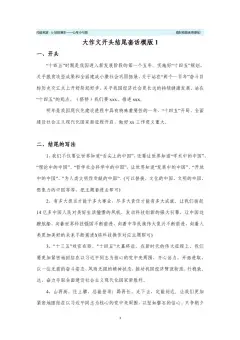
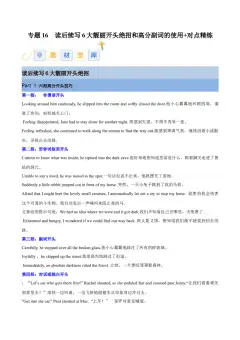
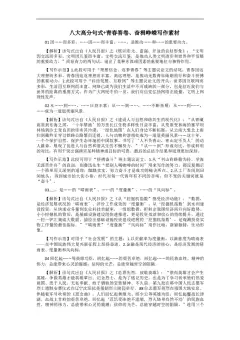
(一) 高分结尾
精彩结尾一 点题式
点题式结尾是指在续写文章结尾时,通过一两句话点明文章主旨,突出文章的立意。一般可以通过总结阅读材料写出点题式结尾。
[套用句式 1](Whenever) Looking back on/Thinking of+the experience/the journey 等名词,主人公+always/still ... (无论何时) 回首 / 想到这次经历 / 旅程…… 时,主人公总是 / 仍然……
①Whenever thinking of that heart‑warming scene, Jenna couldn't help getting deeply moved by the selfless love and care of her neighbors.
每当想起那暖心的场景,詹娜都会情不自禁地被邻居无私的关爱深深打动。
②And now, when looking back on that experience, Mary still feels that it was that experience that transformed her into a nature lover.
现在,当回顾那段经历时,玛丽仍然觉得正是那段经历把她变成了一个热爱自然的人。
[套用句式 2] 衔接语,(形容词+) 无灵主语+sounded/echoed/rang+in one's ears/head/mind/... …… 在耳边 / 脑海中 /…… 回响。
③Since then, my father's plain and encouraging words have always echoed in my mind, guiding the way of my life.
从那时起,父亲朴实而鼓舞人心的话语就一直在我的脑海中回响,指引着我的人生道路。
[套用句式 3](衔接语+)(形容词+) 无灵主语+有灵动词 (如:enlighten, remind 等)+主人公+that ... …… 启发 / 提醒某人……
④The whole experience reminded me that teamwork was key to our success in the project.
整个经历提醒我,团队合作是我们项目成功的关键。
⑤The special experience enlightened me that company is the most important for the elderly.
这次特别的经历使我明白对老年人来说陪伴是最重要的。
精彩结尾二 主题升华式
主题升华式结尾是指在续写文章结尾时,通过一句高度凝练的话来对主题进行升华,使文章上升到一定的高度,给读者以启示。这种话往往是一些名言或谚语。
[套用句式 4] 衔接句+Just as the saying goes,+名言 / 谚语 …… 正如俗话所说的,……
⑥Through the experience, we learned that helping people in need makes our day as well. Just as the saying goes, “Roses given, fragrance in hand.”
通过这次经历,我们认识到,帮助需要帮助的人也会让我们的一天变得美好。正如俗话所说:“赠人玫瑰,手留余香。”
[套用句式 5]Just then, a (n) old/famous saying/sb's words flashed through/echoed in one's mind+“名言 / 谚语”.就在那时,一句老话 / 名言 / 某人的话 “……” 闪过某人的脑海 / 在某人脑海中回响。
⑦Just then, a famous saying flashed through his mind, “Keep your face always towards the sunshine, and shadows will fall behind you.”
就在那时,他的脑海中闪过一句名言:“始终面向阳光,阴影自然落在你身后。”
精彩结尾三 人生感悟式
人生感悟式结尾是指在文章即将结束时,作者通过深入反思和体验,表达对人、事、景或物的独特感悟和理解。这种结尾方式不仅是对文章主题的升华,也是对读者思考的引导和启发。
[套用句式 6]Not until then did+主人公+realize/learn what true +主旨名词+was:感悟到的道理直到那时,某人才意识到 / 了解到什么是真正的……:……
⑧Not until then did I realize what true friendship was: A friend in need is a friend indeed.
直到那时我才意识到什么是真正的友谊:患难见真情。
[套用句式 7]It is/was+主旨名词+that ..., which sb felt deep in one's heart/mind. 正是……,某人在心里深深感受到了这一点。
⑨It is love and care that make the world go around, which he felt deep in his heart.
⑩ It was the warmth and kindness of the volunteers that helped the homeless people get through the cold winter, which he felt deep in his heart.
正是志愿者们的温暖与善意帮助无家可归的人们度过了寒冷的冬天,这份感动深深烙印在他的心底。
精彩结尾四 寓情于景式
寓情于景式结尾是指在文章的结尾处描写要借用的景物,以景物衬托情感。景物的选择要与情感一致,景物为情感服务,做到情景交融。
[套用句式 8]With+the+adj.+sunlight/wind/air/snow ... sb/sth did ... 随着…… 的阳光 / 风 / 空气 / 雪……,某人 / 物做……
⑪With the warm sunlight flooding in, they hugged together, feeling forgiven, loved and trusted.
温暖的阳光照射进来,他们拥抱在一起,感到被原谅、被关爱和被信任。
⑫After a whole day of volunteering service in the nursing home, we headed for our home, with the setting sun shining upon our happy faces appreciatively.
在养老院志愿服务一整天后,我们动身回家,夕阳温柔地洒在我们洋溢着幸福的脸上。
[套用句式 9]Despite/In spite of the+adj.+wind/rain/storm/air/..., sb/sth did ... 尽管…… 的风 / 雨 / 暴风雪 / 空气……,某人 / 物做……
⑬Despite the bone‑chilling wind, I felt a wave of warmth and pride as I had got the love and respect of my classmates.
尽管寒风刺骨,但我还是感到一阵温暖和自豪,因为我得到了同学们的爱和尊重。
(二) 高分场景表达
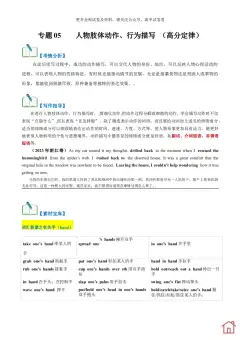
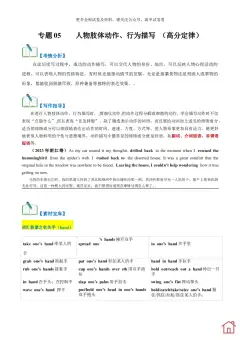
01 表示 “感到…… 情绪与情感” 场景
[句式 1] a flush/wave/feeling/sense of+表情绪的名词一阵……
[句式 2] 表情绪的名词+flooded over sb/swept over sb/seized sb …… 涌上心头
1.A flush of pride swept over him as he watched his children.
当他看着自己孩子的时候,一种自豪感涌上心头。
2.With everything ready, Bernard started out on his new business. And much sooner than could be expected, Bernard returned with an empty basket. Never before had he earned so much money in his life. A wave of happiness flooded over him.
一切准备就绪后,伯纳德开始了他的新生意。比预期的要快得多,伯纳德带着一个空篮子回来。他一生中从未挣过这么多钱。一股高兴的情绪涌上心头。
3.To my surprise, I learned that my essay had ranked first in the contest. A mix of excitement and doubt flooded over me.
令我吃惊的是,我得知我的作品在比赛中排名第一。兴奋和怀疑交织的感觉涌上心头。
02 表示 “直到…… 才意识到……” 场景
[句式 1] Not until+时间状语+did sb realize that ...
[句式 2] It was only+时间状语+that sb realized that ...
1.Not until then did he realize that something was wrong.
=It was only then that he realized that something was wrong.
直到那时他才意识到有什么不对劲。
2.I watched as David moved up to the starting line with the other runners. The race started. It was only then that I realized that the runway was extremely long for young children, not to mention a child with a heart disease.
我看着大卫和其他赛跑者一起向起跑线走去。比赛开始了。就在那时,我才意识到跑道对小孩子来说太长了,更不用说一个患有心脏病的孩子了。
3.Eager and delighted, I held up the championship trophy, and not until then did I realize that the journey of writing was not only filled with disbelief and self‑doubt but also support and self‑approval.
我急切又高兴地举起冠军奖杯。直到那时我才意识到写作的历程不仅充满着不相信和自我怀疑,而且还充满着支持和自我肯定。
03 表示 “一…… 就……” 场景
[句式 1] upon/on+n./doing ... “一…… 就……”,相当于 as soon as 引导的时间状语从句
[句式 2] immediately/directly/instantly+从句
[句式 3] the moment/minute/instant+从句
[句式 4] no sooner ... than .../hardly ... when ...
[句式 5] at the sight/thought of ... 一看到 / 想到……
1.The instant I saw him, I knew he was the policeman who had helped me carry the box.
我一看见他,就知道他就是那个曾经帮我搬过箱子的警察。
2.“Ignore what the players from other teams would say and I believe you could make it!” Upon hearing my words, David beamed a big smile, stood up and moved towards the starting line.
“不管其他队的队员怎么说,我相信你能做到!” 听到我的话,大卫笑了笑,站起来朝起跑线走去。
3.Immediately she heard the sound of the bell, she grabbed her bag and rushed out of the classroom.
一听到铃声,她就抓起书包冲出教室。
4.No sooner had I stepped into this familiar room than I saw my teacher sitting among piles of papers.
我一走进这个熟悉的房间就看到老师坐在成堆的试卷当中。
5.I felt a surge of relief and awe at the sight of this grateful creature, and I knew that I would always cherish the memories we shared as I climbed into my car and drove away.
一看到这只感恩的生物我就感到一阵宽慰和敬畏,当我钻进车里开走时我知道我会永远珍惜我们共同的回忆。
04 表示 “(因为紧张、害怕……)心跳” 场景
[句式 1] sb could feel one's heart pounding wildly in one's chest 某人能感受到心在胸膛怦怦直跳
[句式 2] one's heart thumped/beat/raced wildly/loudly/hard 某人的心怦怦直跳
1.I could feel my heart pounding wildly as I went on stage to collect the prize.
上台领奖时我感到心怦怦直跳。
2.He unfolded the letter, his heart racing wildly.
他打开信,心跳加速。
3.Oh dear! The piece of bread in the pan had turned black as well. As the twins looked around them in disappointment, their father appeared. Their hearts began to thump wildly as they were afraid of being scolded by their father.
天哪!锅里的那片面包也变黑了。当双胞胎失望地环顾四周时,他们的父亲出现了。他们害怕被父亲责骂,心开始怦怦直跳。
05 表示 “迫不及待做……;毫不犹豫” 场景
[句式 1] sb could not/hardly wait to do sth 某人迫不及待地想做某事
[句式 2] without a second thought 不假思索;毫不犹豫地
[句式 3] without even thinking 毫不犹豫地
[句式 4] without delay 立即;毫不延迟
[句式 5] without hesitation 毫不犹豫地
1.The water was freezing cold, but without a second thought the young man jumped in.
水冷得刺骨,可那个年轻人想也没想就跳了进去。
2.Without delay, he climbed up the tree quickly to reach for the leaf.
他毫不迟疑地迅速爬上树去摘树叶。
3.On Christmas morning, I could not wait to open the package. To my excitement, it was a brand‑new pair of ice skates which I was eager for.
圣诞节早晨,我迫不及待地打开包裹。令我兴奋的是,这是一双我一直想要的崭新的溜冰鞋。
4.He accepted the job offer without hesitation.
他毫不犹豫地接受了这个工作邀请。
06 表示 “流泪” 场景
[句式 1] One's eyes got misty./One's eyes misted with tears. 某人泪眼模糊。
[句式 2] be close to tears 几乎要哭了
[句式 3] tears roll/stream down one's eyes/cheeks/face 泪水从眼睛 / 脸颊 / 面部落下
1.My mother was close to tears when she heard I was admitted to a key university.
当得知我被重点大学录取时,母亲差点儿就哭了。
2.With tears of gratitude rolling/streaming down his cheeks, Peter hugged Green tightly, saying, “You've saved me today. I couldn't thank you enough.”
感激的泪水顺着他的脸颊流下来,彼得紧紧地拥抱着格林,说,“今天你救了我。我对你感激不尽。 ”
3.On the day when he left hospital, he hugged me, his eyes misting with tears, saying, “You are a truly good nurse, thank you.”
出院那天,他泪眼模糊地拥抱着我说,“你真是位好护士,谢谢你。 ”
07 表示 “不知道做……”场景
[句式 1] sb did sth, wondering/not knowing/unsure of what to do next 某人做了某事,接下来不知该怎么办
[句式 2] sb was at a loss what to do 某人不知如何是好
1.I was desperate at that time, not knowing what to do next.
当时我很绝望,不知道接下来该怎么办。
2.David sat still with a deep breath, wondering what to do next. I said gently and quietly, “No one can change your mind, except yourself. If you desire to challenge yourself, there is nothing to do with others' thoughts.”
大卫静静地坐着,深吸了一口气,不知道下一步该做什么。我轻轻地说:“除了你自己,没有人能改变你的想法。如果你想挑战自己,那与别人的想法无关。”
3.Facing the situation,Ruth felt her heart was pounding, and chest pains almost took her breath away. She started to sob, totally at a loss what to do.
面对这种情况,鲁斯感到心跳加速,胸痛几乎让她喘不过气来。她开始哭泣,完全不知道该怎么办。
08 表示 “某人想到/ 明白……;有了主意”场景
[句式 1] It suddenly occurred to sb that ... =It hit/struck sb that ... 某人突然想到……
[句式 2](idea, thought ...) occurred/came to sb= ... came/flashed into one's mind= ... crowded into one's mind 某人想到 (主意,想法……)
[句式 3] one's mind began to race 头脑开始快速转动
1.Suddenly a brilliant idea flashed into his mind.
他突然想到一个好主意。
2.His mind began to race, trying to think of a way out.
他的头脑开始快速转动,试图想出办法。
3.There was no meal on the table. “Let's prepare for the party together this time,”Aunt Beatrice said gladly, who was dressed in the same outfit. It suddenly occurred to Mya that the theme this year was supposed to be “Sweet Labor, Sweet Sixteen”.
桌上没有饭菜。“这次让我们一起准备聚会吧,” 比阿特丽斯阿姨穿着同样的衣服高兴地说。米娅突然想到,今年的主题应该是 “甜蜜的劳动,甜蜜的十六岁”。
09 表示 “因…… 颤抖” 场景
[句式] tremble/shake with fear/panic/excitement/rage ...因害怕 / 惊慌 / 兴奋 / 愤怒…… 而颤抖
1.Her lips trembled with rage and big tears rolled down her cheeks.
她气得嘴唇发抖,大颗的泪珠顺着脸颊滚落下来。
2.He lay there for a long time, shaking with fear.
他躺在那里很长时间,害怕得发抖。
3.Farmer Mike's house had been a great place for the little mouse until the farmer married a wife who had a cat. Zigfried shook with fear when he thought of it.
农夫迈克的房子对小老鼠来说一直是一个好地方,直到农夫娶了一个养猫的妻子。齐格弗里德一想到这件事就吓得直哆嗦。
4.Suddenly, the donkey uttered a shrill cry. The tiger trembled with fear, thinking that the donkey was going to kill it.
突然,驴大叫一声。老虎以为驴要把自己杀掉,吓得直哆嗦。
10 表示 “发出……(声音)” 场景
[句式 1] There were loud shouts and cheers (from ...) when ... 当…… 时,(从……) 传来喊叫与欢呼声。
[句式 2] There was a storm of applause (from ...) when ... 当…… 时,(从……) 响起了雷鸣般的掌声。
[句式 3] let out a cry/scream (of horror/fear/terror/shock/surprise/pain ... ) 发出了…… 叫声
1.The night before last, just before dinner, while my father was looking through the evening paper, he suddenly let out a cry of surprise.
前天晚上,就在晚饭前,我父亲在看晚报时,突然惊讶地喊了一声。
2.While my mind was wandering, our performance time came. It turned out a great success, loud shouts and cheers from the audience filling the theatre.
我走神的时候,我们的表演时间到了。结果这场演出取得了巨大的成功,观众的欢呼声和喝彩声响彻了整个剧场。
11 表示 “转折” 场景
[句式 1] But bad luck for sb ... 但是某人真不走运……
[句式 2] To one's surprise (delight)/Strangely enough, it turned out that ... 让人惊讶 (高兴)/ 奇怪的是,原来……
[句式 3] ..., but in vain …… ,但徒劳无功
[句式 4] ..., but without success …… ,但没有成功
[句式 5] But on second thoughts, ... 但是转而一想, ……
1.But bad luck for Jack, he tripped and fell to the ground.
但杰克真不走运,他绊了一跤,摔在了地上。
2.Her friend tried to persuade her to go back home with him, but in vain.
她的朋友想劝她和他一起回家,但是白费唇舌。
3.I was about to accept the job offer, but on second thoughts, I realized it didn't align with my long‑term career goals.
我正要接受这份工作邀约,但转念一想,我意识到它和我的长期职业目标并不契合。
12 表示 “心里想” 场景
[句式 1] An inner voice told sb that ... 内心的声音告诉某人……
[句式 2] sb thought to oneself ... 某人心里想……
1.An inner voice told him that what he had done was wrong.
心里的声音告诉他,他所做的是错的。
2.That night after the guests left, Susan sat alone in her room. On her bed was the purple dress given to her as a birthday gift. She thought to herself, “It seems that the dress doesn't look that bad. Actually, I like all the clothes Mom bought for me.”
那天晚上,客人离开后,苏珊独自坐在房间里。她的床上放着作为生日礼物送给她的紫色连衣裙。她心想:“这件衣服看起来没那么糟糕。事实上,我喜欢妈妈给我买的所有衣服。”
13 表示 “感到欣慰,放下心来”场景
[句式 1] ... breathed a sigh of relief=... sighed with relief …… 松了一口气
[句式 2](A wave of) relief flooded over sb 某人如释重负
[句式 3] to one's relief ... 使某人欣慰 / 放心的是……
1.I breathed a sigh of relief as the plane landed safely.
=A wave of relief flooded over me as the plane landed safely.
=To my relief, the plane landed safely.
飞机安全着陆,我顿时放下心来。
2.After studying the map, we figured out that our car was parked over three kilometers away. She offered us a ride back to our car and we accepted gladly. To my relief, I saw our rental car again. What a blessing to have such an unforgettable experience!
在研究了地图之后,我们发现我们的车停在三公里以外。她让我们搭便车过去,我们欣然接受了。让我欣慰的是,我又看到了我们租来的车。有这样一次难忘的经历真是太好了!
14 表示 “还记得某人的话;还在某人的脑海中” 场景
[句式 1] one's words rang out in one's ears 某人的话在耳边回响
[句式 2] one's head was full of ...=... crowded into one's mind 某人脑子里充满……
1.Memories came crowding into her mind.
往事涌上她的心头。
2.My teacher often encouraged me to study hard in order to be admitted into a key university, and her encouraging words still rang out in my ears.
我的老师经常鼓励我努力学习,以便考上一所重点大学,她鼓励的话仍在我耳边回响。
3.My head was full of strange thoughts and worries.
=Strange thoughts and worries crowded into my mind.
我的脑子里充满奇怪的想法与忧虑。
15 表示 “经历与教训”场景
[句式 1] What a/an ... lesson sb taught me! 某人给我上了多么…… 的一课啊!
[句式 2] What a/an ... experience sb had! 某人有多么…… 的经历啊!
[句式 3] ... be rooted in one's memory …… 植根于某人的记忆中
1.The valuable lesson Mr Green taught him will be rooted in his memory forever.
格林先生给他上的这堂宝贵的课将永远扎根在他的记忆里。
2.Finally, the teacher announced Karan's team was the winner. All the children burst into thunderous applause on hearing that. Karan and his partners walked up to the front with great excitement. They received the surprise gift from Mangat Madam. What a wonderful experience they had!
最后,老师宣布卡兰的队伍获胜。听到这个消息,所有的孩子都爆发出雷鸣般的掌声。卡兰和他的伙伴们兴奋地走到前面。他们收到了来自漫戈塔夫人的惊喜礼物。他们有多么美妙的经历啊
-END-
点个关注也不错哦!
米粒儿英语
17个公式教你如何在高中应用文写作中表达问题、利弊、理由、重要性和建议

【特别声明】本公众号尊重知识产权,如有侵权,请联系删除!