ARTICLE · 1370252
考研真题6:2015年翻译,词根词缀应用

一、原文
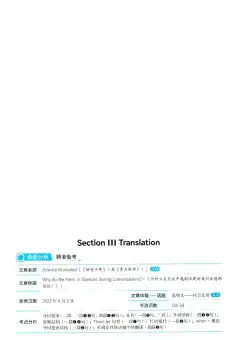
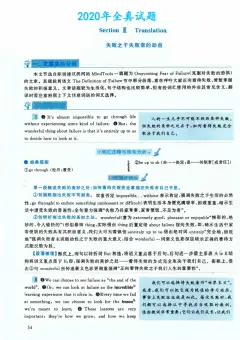
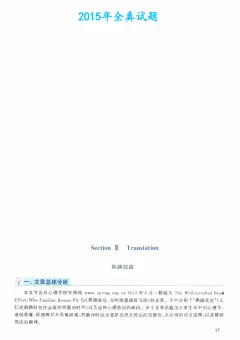
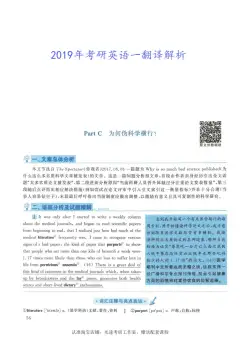
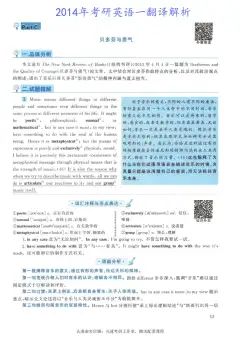
Think about driving a route that's very familiar. It could be your commute to work, a trip into town or the way home. Whichever it is, you know every twist and turn like the back of your hand. On these sorts of trips it's easy to lose concentration on the driving and pay little attention to the passing scenery. The consequence is that you perceive that the trip has taken less time than it actually has.
This is the well-travelled road effect: people tend to underestimate the time it takes to travel a familiar route.
The effect is caused by the way we allocate our attention. When we travel down a well- known route, because we don't have to concentrate much, time seems to flow more quickly. And afterwards, when we come to think back on it, we can't remember the journey well because we didn't pay much attention to it. So we assume it was shorter.
二、参考译文
试想驾车行驶在一条非常熟悉的路线上。可能是上下班的路,也可能是去城里或者回家的路。无论是哪条路,你对路上的每一处转弯都了如指掌。在这样的路上开车时很容易会心不在焉,不太关注沿途的风景。结果就是你觉得花在旅途上的时间比实际要少。
这就是“熟路效应”:人们往往会低估走熟路时所花费的时间。
这种效应是由我们分配注意力的方式引起的。当我们行驶在熟悉的路上时,由于不必非常专注,时间似乎流逝得更快。之后,当我们回想起这段旅程时,因为当时没怎么注意,便会对这段旅程记得不太清楚。于是,我们就会觉得时间变短了。
三、高频词解析
1. commute /kəˈmjuːt/ n./v. 通勤;往返上下班
✅解析:com-(共同,相互)+ -mut-(变换)+ -e(小词尾)
✅例句:Many workers commute between suburbs and city centers every day.
很多上班族每天往返于郊区和市中心通勤。
✅同根词:commuter n. 通勤者;mutate v. 突变
✅辨析:commute / travel
1) commute:固定路线上下班通勤;
2) travel:泛指长途出行、旅行。
2. twist /twɪst/ n. 拐弯处;转折;v. 扭转,扭曲
✅解析:原生词
✅例句:The mountain road is full of twists and turns.
这条山路布满弯道。
✅同根词:twisted adj. 扭曲的;twisty adj. 弯弯曲曲的
✅辨析:twist / bend
1) twist:螺旋扭转;
2) bend:单纯弯曲。
3. concentration /ˌkɒnsnˈtreɪʃn/ n. 专注,注意力;集中
✅解析:con-(一起)+ -centr-(中心)+ -ation(名词后缀)
✅例句:Noise in the street can break our concentration.
街上的噪音会打断我们的注意力。
✅同根词:concentrate v. 集中;concentrated adj. 集中的;center n. 中心
✅辨析:concentration / focus
1) concentration:长时间持续专注;
2) focus:聚焦某一个目标。
4. consequence /ˈkɒnsɪkwəns/ n. 后果,结果
✅解析:con-(跟随)+ -sequ-(跟随)+ -ence(名词后缀)
✅例句:Careless driving may bring serious consequences.
粗心驾驶可能带来严重后果。
✅同根词:consequent adj. 随之而来的;consequently adv. 因此;sequence n. 序列
✅辨析:consequence / result
1) consequence:侧重行为带来的后续影响,常偏负面;
2) result:中性,泛指最终结果。
5. perceive /pəˈsiːv/ v. 感知,察觉;认为
✅解析:per-(穿过)+ -ceive-(抓取)
✅例句:People often perceive familiar things as simpler than they really are.
人们常常认为熟悉的事物比实际更简单。
✅同根词:perception n. 感知;perceptive adj. 敏锐的;receive v. 接收
✅辨析:perceive / observe
1) perceive:内心主观感知;
2) observe:客观观察。
6. underestimate /ˌʌndərˈestɪmeɪt/ v. 低估,对…估计不足
✅解析:under(低于)+ estimate(估计)
✅例句:We should not underestimate the time needed for a long trip.
我们不应该低估长途出行需要的时间。
✅同根词:overestimate v. 高估;estimate v./n. 估计
✅辨析:underestimate / undervalue
1) underestimate:低估数量、时间、难度;
2) undervalue:低估价值、轻视。
7. allocate /ˈæləkeɪt/ v. 分配,划拨(注意力、资源)
✅解析:al-(朝向)+ -loc-(位置)+ -ate(动词后缀)
✅例句:We need to allocate our attention reasonably on long journeys.
长途出行时我们需要合理分配注意力。
✅同根词:allocation n. 分配;locate v. 定位;location n. 位置
✅辨析:allocate / assign
1) allocate:分配资源、资金、注意力;
2) assign:分配任务、指派人员。
8. assume /əˈsjuːm/ v. 假定,设想;认为
✅解析:as-(加强)+ -sum-(拿)+ -e(小词尾)
✅例句:It is wrong to assume that familiar routes take less time.
想当然认为熟悉路线耗时更短是错误的。
✅同根词:assumption n. 假定;presume v. 推定;consume v. 消耗
✅辨析:assume / suppose
1) assume:没有证据,主观假定;
2) suppose:猜想、假设(语气更柔和)。
9. route /ruːt/ n. 路线,路途
✅解析:原生词
✅例句:Many drivers choose a shorter route to save time.
很多司机选择更短的路线来节省时间。
✅同根词:router n. 路由器
✅辨析:route / path
1) route:规划好的行车、出行路线;
2) path:小路、小径。
10. effect /ɪˈfekt/ n. 效应,效果;影响
✅解析:ef-(向外)+ -fect-(做)
✅例句:This psychological effect exists widely in daily life.
这种心理效应在日常生活中广泛存在。
✅同根词:effective adj. 有效的;affect v. 影响;defect n. 缺陷
✅辨析:effect / influence
1) effect:直接产生的效应、结果;
2) influence:潜移默化的长期影响。