ARTICLE · 1382532
高考英语每日练 | 笔友回潮:The Return of the Pen Pal(阅读+七选五)

英语试界瓜坊 · 高考英语
今天的原创练习取自英美报刊近年持续讨论的生活方式话题——「笔友回潮 The Return of the Pen Pal」:在被即时消息填满的时代,越来越多学校重新把"手写信"请回课堂,孩子们为等一封回信排队看门房。阅读部分 4 题、七选五 36–40(配文 How to Keep a New Habit Going 坚持新习惯),题量与形式按高考全国卷要求命制,全文原创。建议限时 20 分钟完成。
阅读理解(共 4 题)
阅读下面短文,从每题所给的 A、B、C、D 四个选项中选出最佳选项。
Every Friday morning, the pupils of Mill Lane Primary School in Leeds crowd around a small wooden box by the office door. Inside are envelopes — some fat, some thin, all covered in foreign stamps. The box is emptied once a week, and its contents come from pen pals in France, Japan and Canada. Ten years ago, the school's letter exchange had shrunk to a single class; this year, more than two hundred pupils have signed up. Similar programmes are quietly reappearing in schools across Britain and the United States, and teachers give the trend an unexpected name: the return of the pen pal.
The decline was easy to explain. When email arrived, and later instant messaging, letter writing seemed as out of date as the telegram. Why wait two weeks for a reply when a message takes two seconds? Yet some teachers began to notice what the speed had quietly removed. "My pupils write beautifully on a screen, but they no longer think before they press send," says Hannah Clarke, who runs the Mill Lane programme. "A letter is different. You cannot delete it, so you read it through three times before you post it."
Researchers who study waiting say the delay is not a weakness but the whole point. Psychologists have long found that people value things more highly when they have waited for them — a phenomenon known as the effort effect. A reply that takes ten days gives the writer ten days of imagining: is my friend enjoying the story I told? Children in the exchange programmes, teachers report, reread their own letters the evening after posting them, looking for mistakes they did not see before. The waiting, in other words, is doing quiet work.
Not everyone is convinced. Critics point out that stamps are expensive and that a pen pal across the world may simply drift away, leaving a half-written reply in a drawer. Programme organisers answer with the same sentence again and again: an instant message says "answer me now", but a letter says "you are worth an hour of my Sunday afternoon". In a classroom full of screens, that may be the most valuable sentence a child ever reads.
1. What can we learn about the Mill Lane letter exchange from Paragraph 1?
A. It was started by pupils from three countries.
B. It once nearly died out but is growing again.
C. It empties the pen pal box twice a week.
D. It only connects schools within Britain.
2. According to Hannah Clarke, how is writing a letter different from sending a message?
A. It makes writers check their words before sending.
B. It teaches pupils to type faster than ever.
C. It allows writers to correct mistakes later.
D. It helps pupils receive replies more quickly.
3. What do researchers say about the waiting mentioned in Paragraph 3?
A. It often makes children lose interest in writing.
B. It teaches children to post letters more carefully.
C. It adds value to what people are waiting for.
D. It prevents children from rereading their letters.
4. What is the organisers' reply to the critics in the last paragraph?
A. Stamps will become cheaper in the future.
B. A letter expresses time and care that messages do not.
C. Pen pals who drift away can easily be replaced.
D. Screens should be completely kept out of classrooms.
七选五(共 5 题)
根据短文内容,从短文后的选项中选出能填入空白处的最佳选项。选项中有两项为多余选项。
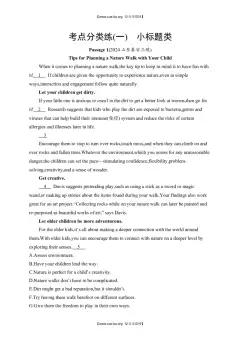
Every January, my cousin Leo starts a new habit with enormous energy. Last year it was running, the year before it was the guitar. By March, both were gathering dust. (36)______ He planned thirty minutes of running every morning and an hour of guitar practice every night. When a busy week arrived, the first thing he dropped was exactly the new thing he had promised himself.
Think about why checking your phone is such an easy habit. It is always within arm's reach. (37)______ Put your running shoes by the front door, and the morning run becomes the natural choice. Leave the guitar on its stand in the living room instead of inside a case, and you will pick it up far more often. The environment decides much more than willpower does.
Nobody keeps a habit perfectly. (38)______ In one study of habit formation, missing a single day had almost no effect on people's long-term success. The danger begins when one missed day quietly turns into two, and then into a week. So decide in advance what you will do after a slip — and make the answer simple: continue the very next day.
Finally, make your progress visible. (39)______ Mark an X on a paper calendar for every day you practise; soon the growing chain of X's will make you think twice before skipping. One reader of this newspaper said she kept a habit alive for a whole year simply because she could not bear to break the chain.
Habits are not built by strong will alone. (40)______ Start smaller than feels necessary, place the habit beside something you already do, keep a simple score, and forgive yourself quickly when you slip. That is how a habit stops being a January promise and becomes part of who you are.
A. Missing one day does not mean you have failed.
B. The problem usually started with the size of the plan.
C. A simple record of progress can do surprising work.
D. Many people believe new habits should begin on a Monday.
E. Your surroundings can work for you or against you.
F. A habit that costs nothing is worth more than an expensive one.
G. Small, visible, well-placed and forgiving — that is how a habit survives.
答案与解析
阅读理解
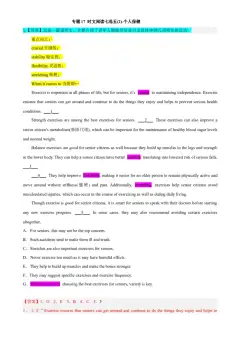
1. B 第一段:"Ten years ago, the school's letter exchange had shrunk to a single class; this year, more than two hundred pupils have signed up." → 曾经萎缩到只剩一个班、如今两百多人报名,即"一度几近消亡、如今重新壮大",选 B。A「由三个国家的学生创办」偷换概念(是信件来自法/日/加);C「每周清空两次」与"emptied once a week"矛盾;D「只联结英国国内学校」与异国邮票、法日加笔友相反。
2. A 第二段 Hannah 的话:"A letter is different. You cannot delete it, so you read it through three times before you post it." → 信不能撤回,所以寄出前反复通读、字斟句酌,选 A。B「打字更快」无据;C 与"cannot delete"恰好相反;D「更快收到回信」与全文"慢"的立意相反。
3. C 第三段:"people value things more highly when they have waited for them — a phenomenon known as the effort effect." → 等待让所等之物更有价值(努力效应),且结尾"waiting is doing quiet work"再次点题,选 C。A「让孩子失去兴趣」与孩子们重读自己信件的表现相反;B「学会更小心地寄信」曲解"reread their own letters"(重读而非小心投递);D 与孩子们"the evening after posting"就重读的事实矛盾。
4. B 末段:组织者反复用同一句话回应批评——"an instant message says 'answer me now', but a letter says 'you are worth an hour of my Sunday afternoon'" → 信件传达的是即时消息给不了的"投入时间与心意",选 B。A「邮票会降价」文中没有;C「走散的笔友容易替换」无据;D「教室里应完全禁屏」过度引申——原文只说"在满是屏幕的教室里"这句话珍贵。
七选五
36. B 空前"利奥的新习惯总在三月落灰",空后"他计划每天晨跑三十分钟、每晚练琴一小时——忙碌一周来临,最先放弃的恰恰是新习惯"。B "The problem usually started with the size of the plan."(问题出在计划定得太大)先给出结论,再由下文"计划有多大"坐实,选 B。D「新习惯该从周一开始」与文意无关;F「不花钱的习惯更值钱」脱离语境。
37. E 空前"手机为什么好养成?因为它永远在一伸手的地方",空后"跑鞋放门口,晨跑就成了默认选项;吉他不装箱摆在客厅,就会更常拿起"。E "Your surroundings can work for you or against you."(环境既能帮你也能拖你后腿)承接"手机近在手边"的反面例子,引出"改造环境"的正面做法,选 E。
38. A 段首"没有人能完美坚持一个习惯",空后"研究发现漏掉一天对长期成功几乎没有影响;危险从第二天、第三天开始"。A "Missing one day does not mean you have failed."(漏掉一天不等于失败)正是这段的中心句,选 A。
39. C 空前"让进步看得见",空后"在日历上为每天练习画 X,X 连成的链条让人舍不得断"。C "A simple record of progress can do surprising work."(一份简单的进度记录有意想不到的作用)概括本段"日历画叉"的做法,选 C。G 是全文收束句,放在段中会让"链条"例证失去落点。
40. G 空前"习惯不是只靠意志力建成的",空后"开始得比必要的更小、把习惯放在常做的事旁边、简单记账、漏了就原谅自己"。G "Small, visible, well-placed and forgiving — that is how a habit survives."(小、可见、放对地方、懂得原谅——习惯才能活下来)逐条对应下文四个建议,收束全文,选 G。A 的"漏掉一天"话题已在第 38 题处理过,重复出现不合逻辑。
觉得有用点个【在看】,明天继续更~想看哪类题型,留言告诉我。