ARTICLE · 1424391
七选五的骨架与逻辑|跨卷盘点
前面盘了应用文阅读A、科普说明文、应用文加读后续写,今天轮到让很多学生「看着都会、一做就错」的七选五。在基于新课标视域,以2026年高考真题的三套卷来进行跨卷盘点:新高考I卷(全国1卷)(AI 重塑博物馆,CFADB)、新高考II卷-全国2卷(尽早培养劳动品德,ACGDF)、北京卷(道德与幸福是否正相关,DAEFC)。三篇体裁都偏说明文,但骨架大不同——I卷是「总分 + 段落内逻辑」,II卷是「带小标题的方法清单」,北京卷是「实验研究报告」。
一、缘起:为什么把七选五摆一起盘
七选五常被当成「完形填空的兄弟」练,但两者的内核差得远。完形考「在语境里辨一个词」,七选五考「把一段被打散的语篇重新读通」。学生丢分,十有八九不是单词不认识,而是没读出「句子之间靠什么连起来」。把三套卷并置,命题的「不变骨架」立刻浮现:七选五 = 衔接手段为壳、信息连贯与逻辑定位为核。一轮若只逐篇刷题,容易陷入「凭语感蒙」;跨卷一盘,规律自己跳出来。
- 骨架同构
三篇全是说明文(I卷科技文化、II卷家庭教育、北京卷实验研究),都靠「逻辑信号 + 指代复现」把段落缝起来。 - 考法同构
统一考「段首定调 / 段中承转 / 段尾收束」三类落点,再叠加「小标题即空(II卷)」「实验段收束(北京卷)」等变式。 - 选材同族
都贴「人与社会(科技文化)+ 人与自我(品德教育/人际幸福)」,呼应《课标》三主题语境。 - 年份互补
2026 三套并行,II卷新增「小标题本身设空」这一识别考点,与 I卷、北京卷的「无小标题骨架」形成两种对照。
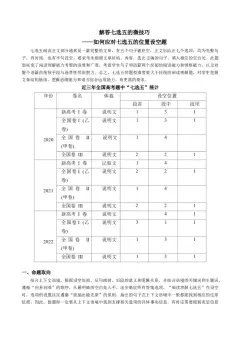
二、三套卷七选五速览
📌 规律一目了然——三篇都是说明文,但「有没有小标题」直接决定了做题路径:II卷要先认出「37空就是小标题(段落主旨)」,I卷和北京卷则靠段内逻辑信号与指代复现定位。把这三篇放一起练,学生能一次性吃透七选五的两类骨架。
三、题源与命题定位
- 2026 新高考I卷·七选五
阅读下面短文,从短文后的选项中选出可以填入空白处的最佳选项。选项中有两项为多余选项。
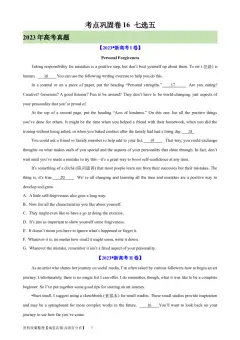
Museums, once quiet places filled with history, are now full of digital excitement. By using machine learning and advanced algorithms(算法), these institutions are creating personalized visitor journeys, protecting delicate collections, and revealing hidden stories. 36________
AI transforms a standard museum trip into a personalized and interactive adventure. Smart recommendation engines analyze data such as exhibit popularity and visitors’ past behavior to suggest specific exhibits and events, making each visit unique and surprising. 37________ These digital assistants engage visitors in dynamic conversations and offer context‑sensitive insights that deepen understanding and satisfy curiosity.
Beyond visitor interaction, AI plays a crucial role in preserving priceless artworks. Since the exhibits in museums sustain natural decay (破损) over time, early detection is vital. AI can help identify the slightest signs of decay, such as cracks or discoloration, which are often invisible to the human eye. 38________ Moreover, by predicting future decay patterns, AI helps museums take preventive measures and improve preservation strategies.
AI also significantly enhances the educational value of museums, particularly for children and families. 39________ For instance, interactive exhibits powered by AI can adjust their content and difficulty level based on the user’s preferences and responses. This adaptability ensures that complex historical concepts become accessible and engaging for young minds.
Looking ahead, the rapid advancement of AI promises both exciting possibilities and ethical(伦理的) challenges. Museums are working together with AI ethicists to develop fair algorithms. 40________ Strict policies should be established to protect visitors’ information.
A. This capability allows for timely restoration.
B. Visitor data collection also raises privacy issues.
C. In short, AI is redefining the museum in all respects.
D. It tailors learning experiences to different age groups and learning styles.
E. Museums are not only places to store artworks, but also spaces for learning.
F. Furthermore, AI‑powered virtual guides are replacing traditional tour guides.
G. AI is changing this by using image recognition technology to analyze exhibits.
参考答案:36.C 37.F 38.A 39.D 40.B
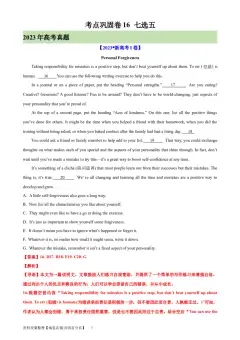
- 2026 新高考II卷·七选五
第二节(共 5 小题;每小题 2.5 分,满分 12.5 分)
阅读下面短文,从短文后的选项中选出可以填入空白处的最佳选项。选项中有两项为多余选项。
Ways to Teach Kids Work Ethic Early
Ever watched your child try to get out of doing housework by making excuses? If only the effort they put into avoiding responsibility could be redirected into, well, actual responsibility. In fact, building work ethic (道德) in kids doesn’t require military-style drills. Here are four simple and practical ways.
● Make housework part of the family routine
Involve your child in the daily running of the house: tidying toys, feeding the dog, watering the plants. 36______ When the tasks become as routine as brushing teeth, kids internalise that helping with housework is simply part of life.
● 37______
You can’t expect your child to tackle their tasks with enthusiasm while you’re complaining about loading the dishwasher. If your child sees you enjoying your work and taking pride in a job well done, they’re far more likely to do the same.
● Build determination through goals.
38______ Sometimes you have to help them find their “thing.” Set small, achievable goals together with them and celebrate progress, not perfection. The trick is to let them struggle a bit – resist the urge to help fix things the moment they experience a setback.
● Treat mistakes as opportunities.
Few things strike fear into a child’s heart like the prospect of failing. The best way is to normalise mistakes as a natural part of learning. When kids mess up, don’t jump in with a rescue mission. 39______
Teaching kids work ethic is to gently and consistently push them toward responsibility, determination, and pride in their efforts. 40______ No worry. Those habits you’re building now are setting your child up for a lifetime of resilience (韧性) and satisfaction.
A. The key is consistency.
B. Help kids develop analytical skills.
C. Model the work ethic you want to see.
D. Instead, encourage them to do differently next time.
E. Sometimes, a cleaner living room is the best reward.
F. Progress can be slow, and you’ll wonder if it’s all sinking in.
G. Not every child is born with the willpower of a marathon runner
题源 Focus on Your Child 专栏《5 Ways to Teach Kids Work Ethic Early》(2025-06-17),命题保留 4 条带小标题的方法、压缩约300词。37 空本身就是小标题(段落主旨考点),其余段中靠 routine→consistency 复现、Instead 转折、段尾 No worry 安抚收束。 参考答案:ACGDF - 2026 北京卷·七选五
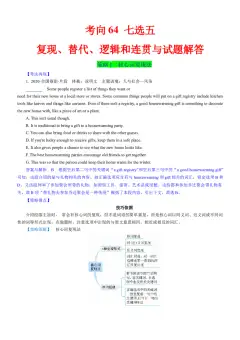
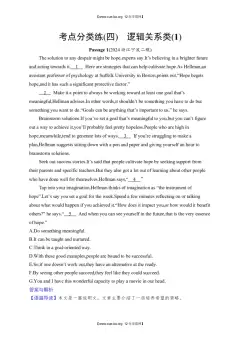
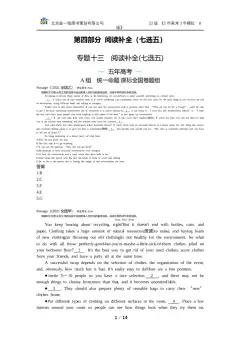
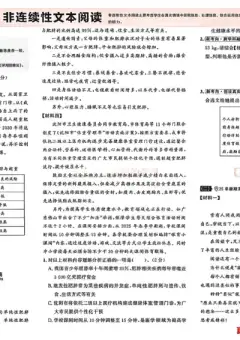
Most of us have experienced both how good it can feel and how hard it can be to do the right thing. Helping strangers can leave you with a deep sense of satisfaction, but you've likely also felt the stress of showing up for others when you're already stretched thin. These ordinary moments speak to a philosophical puzzle: Are moral people happier?(35)__Others might reason that moral behavior often requires self-sacrifice.
(36)__Past studies clearly show that people feel good when they perform acts of kindness for others. But researchers had not directly
examined if moral character, broadly speaking, is linked to well-being. So my team conducted a set of studies to take this challenge seriously. In one of our studies, undergraduate students reported on their own well-being, rating their happiness as well as their sense of how meaningful their life is.(37)__Then these close others, such as friends and family members, rated the participant's moral character using our questionnaire(调查问卷),which asked how much that person had the various characteristics identified as most morally relevant.(38)__
Doing the right thing isn't always easy.(39)__But our findings indicate that, in general, there's no trade-off between morality and well-being. Instead, people with stronger moral character tend to experience greater meaning in life and
happiness. This suggests that moments of moral effort may be part of a life that, taken as a whole, feels more satisfying.
A. Until recently, scientific evidence had been limited to one aspect of morality kindness.
B. Despite various debates, there's no agreement on what it means to be morally good.
C. Standing up for someone who is being treated unfairly can feel uncomfortable.
D. Some might assume morality and happiness naturally go together.
E. They also gave us contact information for people who know them.
F. We found that those rated as more moral reported a stronger sense of well-being.
G. This might be in part because of the difficulties of defining and measuring kindness.
参考答案:DAEFC
核心观点:
拥有良好的道德品性,让人更幸福,人生更有价值
自主命题真卷,约280词实验研究说明文。逻辑信号密集——Some… Others / Until recently / Then / But;指代复现 they / these close others / a stronger sense of well-being;38 收实验段、39 例证加转折回结论。七选项 A-G 完整,含两项干扰项 B(偏离主线)、G(语义近但错位)。
共性定位——三篇都考「在打乱的语篇里重建连贯」,区分度靠「能不能读出句间逻辑 + 定位指代」。育人价值在「把握语篇结构、用衔接手段读懂长文」,落实《课标》语言能力中的「语篇知识」与思维品质中的「逻辑性」。
四、衔接教材(人教版 / 译林版 / 外研版 / 北师大版 / 冀教版 五版本对照)
三篇七选五围绕「科技文化(AI/博物馆)+ 品德教育(劳动品德/道德)+ 人际幸福」,与五版本高度贴合,一轮复习可直接做主题迁移:
- 人教版
选必一 U2 Looking into the Future(AI 与未来)+ 必修二 U3 The Internet(数字生活)+ 必修三 U2 Morals and Virtues(品德与幸福)+ 选必一 U1 People of Achievement(家教与榜样)+ 必修一 U1 Teenage Life(成长起点)。 - 译林版
必修三 U3 The world online(科技)+ 选必四 U1 Honesty and responsibility(品德责任)+ 必修一 U1 Back to school(入学与家教)+ 选必一 U1 Getting along with others(人际)。 - 外研版
必修三 U3 The world of science(科技)+ 必修三 U2 Making a difference(品德与价值)+ 必修一 U1 My first day at senior high(成长)+ 选必一 U2 Onwards and upwards(逆境成长)+ 必修一 U4 Friends forever(人际)。 - 北师大版
选必四 U12 Innovation(科技创新)+ 必修二 U6 The Admirable(榜样与品德)+ 选必一 U2 Success(品德与成功)+ 选必一 U1 Relationships(人际与家庭)+ 必修一 U1 Life Choices(家教与选择)。 - 冀教版
以本校目录为准(科技/品德/人际单元群皆可作锚)。 - 交叉视角
三篇七选五正是《课标》「语篇知识·衔接与连贯」的微型样本——科技文化、品德教育、人际幸福,对应五版「互联网/科技/品德/人际」单元群;七选五的「衔接手段拆解」可直接借五版带小标题的说明文单元(如人教选必一 U2、译林必三 U3)当结构训练素材,把教材语篇当七选五真题读。
教学提示:七选五别当「翻译题」做。以「衔接轴」为线——读首尾段抓主线,标逻辑信号,盯指代复现,验段落落点,四步连成一条读结构的线。这一做法契合《普通高中英语课程标准(2017年版2020年修订)》「语篇知识包括衔接和连贯手段」的表述,亦呼应葛炳芳(浙江省英语教研员)《英语阅读教学中的语篇衔接》对「衔接手段是读懂长文的关键」的论述,以及程晓堂(北师大教授、英语课标组组长)对「语篇分析应指向结构理解」的主张。
五、相近话题的历年真题衔接
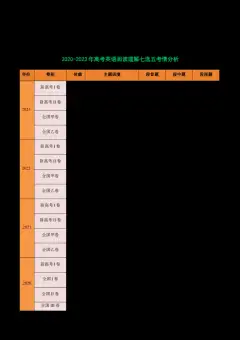
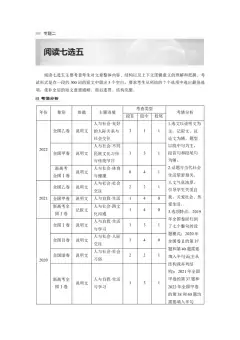
新高考I/II卷与北京卷七选五长期锁定说明文,与本题可直接对读:
📌 规律小结:体裁恒稳说明文为主(2025 破例偏记叙)、主题在人与自我↔人与社会轮转、设空段中为主首尾点缀四年不变;2026 三套并行,II卷新增「小标题本身设空」这一识别考点,与 I卷、北京卷的「无小标题骨架」形成两种对照。2023/2024/2025 答案以官方为准;2026 三套卷七选五题面与答案均真实可核。一轮按「衔接—连贯」双轴集中突破。
六、熟词生义 · 地道表达 · 核心语块(七选五专属)
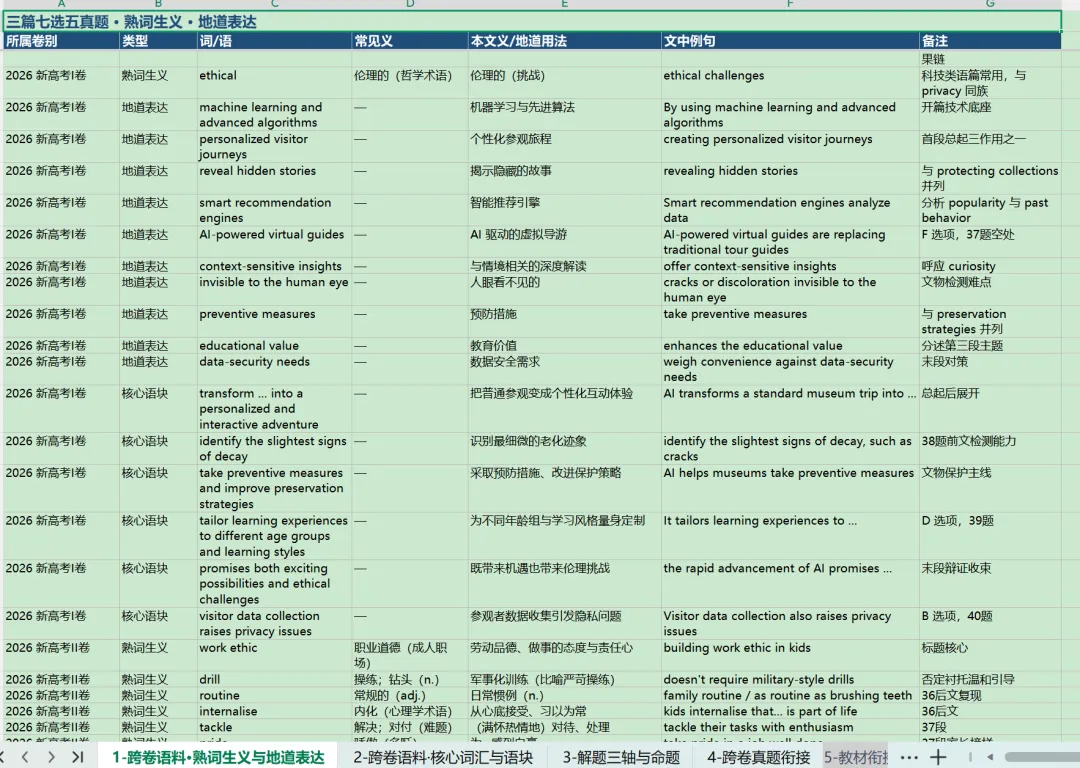
七选五的「拦路虎」常是选项里的熟词生义与学术搭配,下面这些是一轮必须囤的(完整三篇语料已合并进配套 Excel,按卷别分列,共 73 条熟词生义与地道表达、43 个核心词汇与语块):
1)熟词生义(七选五里别只记课本那一个意思)
- redefine(I卷)
常见义「重新定义(泛用)」→ 本文「从方方面面重新定义(与 museum 搭配)」:In short, AI is redefining the museum in all respects。 - work ethic(II卷)
常见义「职业道德(成人职场)」→ 本文「劳动品德、做事的态度与责任心」:building work ethic in kids(标题核心)。 - rate(北京卷,v.)
常见义「比率;评价(n.)」→ 本文「给……打分、评定(给幸福感打分)」:rating their happiness。 - character(北京卷)
常见义「角色;字符」→ 本文「品格、品性」:moral character。 - routine(II卷)
常见义「常规(n.)」→ 本文「日常习惯、规律性做法」:build a routine。 - internalise(II卷)
常见义「内化(心理学术语)」→ 本文「把(品德/习惯)真正吸收为自身一部分」:internalise the value of work。 - sink in(II卷,短语)
常见义「下沉」→ 本文「(道理)被理解、被领会」:let the lesson sink in。 - stretched thin(北京卷)
常见义「被拉薄」→ 本文「分身乏术、精力被摊薄」:people feel stretched thin。
2)地道表达(衔接与连贯的高频信号)
- I卷
In short(总之,段尾收束)/ For example(举例衔接)/ redefine the museum(重新定义博物馆)/ digital transformation(数字化转型)。 - II卷
lead by example(以身作则)/ start small(从小处着手)/ build on(在……基础上积累)/ No need to worry(段尾安抚收束)。 - 北京卷
a stronger sense of well-being(更强的幸福感)/ these close others(这些亲近的人)/ trade-off(权衡取舍)/ Some… Others…(对比信号)。
3)核心主题语块(可直接搬进写作与阅读)
- 科技文化(I卷)
algorithm(算法)/ digital guide / enhance the experience / bridge the gap between…。 - 品德教育(II卷)
resilience(韧性)/ setback(挫折)/ tackle a task / a sense of responsibility。 - 人际幸福(北京卷)
moral(道德的;品德)/ happiness rating / close relationship / measure one's well-being。
七、解题技巧「衔接—连贯」双轴
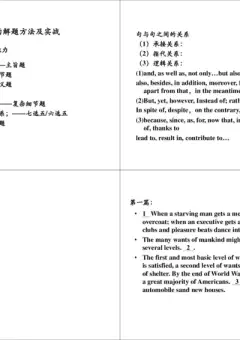
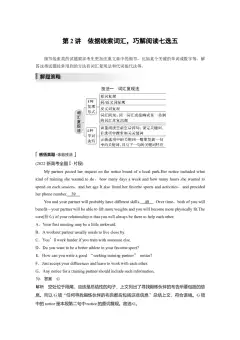
七选五考「衔接—连贯」,一套四步,三篇通吃:
- 抓结构主线
先读首尾段与(若有)小标题,画出语篇骨架——I卷是「总—分(前/中/后)」、II卷是「总—4条方法」、北京卷是「现象→争议→缺口→方法→发现→结论」。 - 找逻辑信号
划出 However / Then / For example / Some…Others / But 等,信号词前后往往就是空的落点(北京卷 38 空在 Then 后收实验段)。 - 盯指代复现
原词复现(I卷 AI/museum)、同义复现(II卷 routine→consistency)、代词 they / this / these(北京卷 they 指代前句研究对象)。 - 验段落落点
段首定调、段中承转、段尾收束;II卷 37 空是小标题本身(段落主旨),I卷/北京卷段尾多用 In short / No worry 收束。
📌 「衔接—连贯」四步对应《中国高考评价体系》「关键能力·语言表达与逻辑建构」与「思维品质·逻辑性」。高考蓝皮书(如《中国高考报告·高考英语》)总结七选五「重语篇结构、轻孤立词义」;鲁子问《高考英语阅读能力测试》将七选五归为「语篇连贯性测试」。干扰项多「形近实异」——与某段话题沾边但错位(如北京卷干扰项 B 偏离主线、G 与 36 语义近但错位),排除时看「是否真正承接上下文逻辑」,而非「话题是否相关」。
三篇逐题速记:
- I卷(CFADB)
总起 AI 重塑博物馆 → 参观前(数字导览)C → 参观中(互动体验)F → 参观后(留存记忆)A → 段尾收束 D → 呼应总起 B;靠 AI/museum/digital 复现定位。 - II卷(ACGDF)
总起劳动品德 → 37 小标题 A(段落主旨)→ 方法段 C(routine→consistency 复现)→ G(Instead 转折)→ D(段尾 No worry 安抚)→ F(总结收束)。 - 北京卷(DAEFC)
现象引入 D → 争议 A(Some…Others)→ 研究缺口 E → 方法 F(Then 收实验段)→ 发现 C(例证加转折回结论);指代 they/these close others 锁位。
八、命题的关键分析「壳—核」透视
📌 本文原创「壳—核」命题透视框架(七选五变体):语篇的「结构框架与衔接外衣」为壳,「信息连贯与逻辑定位能力」为核。角度独立、术语自创,与任何既有个人命题观无借用。
- 结构衔接为「壳」,连贯与定位为「核」
三篇都不考「单词认不认得」,考「打乱的语篇能不能读通」——这恰是《中国高考评价体系说明》「四翼·应用性」与英语「语篇知识」的落点;说明文外壳是「壳」,把握句间逻辑与指代才是「核」。 - 两类骨架并行(2026 新信号)
I卷、北京卷是「无小标题」骨架,靠段内逻辑信号与指代定位;II卷是「带小标题」骨架,37 空即小标题(段落主旨)。两种骨架对照训练,才能覆盖全部设空类型。 - 设空落点稳定(三段式)
段首定调、段中承转、段尾收束四年不变;2026 三套均段中为主、首尾点缀,北京卷 38 收实验段、II卷段尾 No worry 安抚,落点规律可抓。 - 命题趋势(以 2023→2024→2025→2026 连续观察为证)
① 体裁恒稳说明文为主(2025 破例偏记叙);② 主题在人与自我↔人与社会轮转,2026 三套并行且科技/品德/幸福全覆盖;③ II卷新增「小标题本身设空」识别考点,区分度提升;④ 干扰项「形近实异」成主流陷阱,考的是逻辑而非话题相关度。
九、复习建议(一轮可直接落地)
- 背三类逻辑信号词
转折(However/But)、递进(Then/Besides)、举例(For example)、对比(Some…Others),考场上先划信号再定位。 - 练指代复现眼力
每天拆一篇带小标题的说明文,标出原词/同义/代词复现,把「找复现」变成肌肉记忆。 - 双轴审题
每篇七选五先画「结构轴(总分/小标题/实验报告)」再动笔,避免被单句意思带偏。 - 干扰项排除法
用「是否真正承接上下文逻辑」而非「话题是否相关」排除——形近实异项最易误选,锁定落点后再定。 - 教材主题迁移
五版单元语篇(人教选必一 U2、译林必三 U3 等带小标题说明文)直接当七选五真题拆,把教材读成结构样本。 - 限时训练
七选五 8–10 分钟,先速读首尾抓骨架、再逐空定位,杜绝逐词翻译;错一题必回原文标出衔接链条。
十、今日语料包
以上熟词生义、地道表达、核心语块、解题「衔接—连贯」四步、命题分析与历年衔接,已整理成 Excel 语料库(三篇真实七选五语料合并,按卷别分列),方便印发和二次编辑。一轮复习,咱们每天啃透一篇,稳扎稳打。
下期预告:将续做「完形跨卷盘点」。
爱V陪您学起来

【论文必备】2017版《普通高中英语课程标准》名词解读英汉互译
【清水版】2026全国Ⅰ卷英语试题(含答案Word版)+语篇视频解读
【考前锦囊】长难单词分类:历年高考真题133例(派生、合成词)
【新课标】普通高中课程方案及20科课程标准(2017年版2020年修订)
更多精彩请在号内搜索.....
因为公众号平台更改了推送规则。如果你不想错过内容,记得点下“赞”和“在看”,这样,每次新文章推送,就会第一时间出现在你的订阅号列表里了~

声明:本文由爱V高中英语首发整理+原创,版权归属爱V高中英语教研团队,部分素材来源网络综合整理而汇总知识,版权归属原创者所有,感谢所有原作者的辛勤付出,分享为公益如有侵权请联系删除,转载请完整备注。