 夜雨聆风
夜雨聆风

2026年西工大附中第二学期高一期末英语试卷
一、阅读理解
A
Join usat an undergraduate Open Days to discover whatCambridge is really like.
Undergraduate Open Days
lThursday9 July 2026
lFriday 10 July 2026
These events are designed for potential applicants from, Year 12 in England/Wales, Year 13 inNorther Ireland, S5 in Scotland (or equivalent), and mature applicants (aged 21 or over), alongwith their parents and supporters to help them learn more about the University.
Friday 10 July 2026
Booking information for the Open Days
Bookings for the Open Days in July 2026 are now live. Book to secure your space.
How to get ready for the OpenDays
Sign up to the Applicant Webinar (网络会) Series to learn more about applying to Cambridge and get top tips for each stage of the process.
Sign up to the preparing for an Open Day webinar.
What to expect at the Open Days
During the Open Days you can find out all about our courses, the Colleges and departments,University facilities, the application process, student life and finance via:
Information stands
Course presentations and sample lectures
College and department tours
Q&A sessions with current students and staff
The programme will run from 9:30 am to.4:30 pm (UK time) and most activities will be the same on both days so you will only need to attend one day. This will give as many people as possible the opportunity to attend an Open Day at Cambridge. Talks on topics such as the admissions process, Colleges, finance, and interviews will not be available during the Open Days.These talks take place online as part of the Applicant Webinar Series.
21.Who can book the Open Days?
A.A student from Year 12 in Northern Ireland.
B.A 20-year-old woman applying for Cambridge.
C.A mother with a daughter from Year 12 in Wales.
D.A tourist interested in the campus life of Cambridge.
22.Which statement is true about the OpenDays?
A. Visitors are required to attend both days.
B. Students can get information about finance.
C.Visitors must book by signing up to a webinar.
D. Talks on the admissions process will be given offline.
23.Where is the next probably taken from?
A. An open day brochure.
B. A blog about studying abroad.
C. A university’s official website.
D. A university admission letter.
B
I have long realized that people who have grown up on a farm have a leg up on so many future job prospects. Exposed to the very true saying that necessity is the mother of invention, farm kids witnessed parents who could perform a master class on figuring out a solution to any number of breakdowns on the fly.
We all knew the names of hand tools before we started first grade. Much of this education transferred without a word uttered, and no praise or reward was expected. People who visited my parents were always astonished that we kids got our barn boots and headed out the door for milking time without a word said. There was no complaining. We knew that the sooner we got started, the sooner we would be done.
What we didn’t realize is that we were learning life skills and mastering simple strategies to deal with challenges that inevitably landed in our path. We could draw on dozens of previous experiences we had helped our parents through.
Not too long ago, I heard a friend of mine saying that hiring a young person who was raised on a farm is a dream find and getting harder to come by as our landscape changes. This fact is worrisome in nearly every career lane. If a young nursing student has assisted with animals, there is sympathy and attention to detail already in the makeup of that student. Judgment has been developed, helping to determine a minor issue versus a major one. A young truck driver who grew up working on tractors (拖拉机) already has an eye for safety. If a tire is low, it will be checked and addressed before taking to the open road.
A young person starting just about any job starts at a disadvantage if they’ve done nothing but play throughout their life. Most of my classmates, even if their own parents were not farmers, had the opportunity to be hired by a farmer, even if just for summer work. However, that fact has changed greatly over the years, even in my rural community. I truly miss those simple, golden days.
4.What does the author think of farm life?
A.It is tiring and demanding.
B.It is practical and educational.
C.It is filled with job opportunities.
D.It is full of unexpected challenges.
5.Which of the following would the author’s friend approve of?
A.The job market is increasingly competitive.
B.It’s getting harder to hire qualified employees.
C.Farm experiences bring out fine qualities in people.
D.People raised on a farm are disadvantaged in most careers.
6.What is the author’s attitude toward the change mentioned in the last paragraph?
A.Disapproving.
B.Tolerant.
C.Favorable.
D.Doubtful.
7.What can be a suitable title for the text?
A.Why Practical Skills matter
B.How to Get Better Job Prospects
C.The Gift of Growing up on a Farm
D.The Simple Pleasures of Farm Life
C
In our increasingly digitized society, the change from paper to pixels (像素) is widely celebrated as a massive victory for environmental conservation. We naturally assume that storing documents in “the cloud” or streaming entertainment effortlessly reduces our carbon footprint. However, emerging research from the past decade reveals a disturbing problem: our virtual world relies on a massive, energy-hungry physical infrastructure. The cloud is not an invisible, weightless place, but rather a global network of massive server plants that consume enormous amounts of electricity and water every single day.
To understand this hidden environmental crisis, researchers have closely examined the infrastructure behind our internet habits. Studies published around 2019 indicate that data centers worldwide are responsible for roughly two percent of global greenhouse gas emissions — a figure mirroring the emissions of the entire pre-pandemic airline industry. The primary cause is not just powering the billions of microchips housed inside, but the constant cooling systems required to prevent these facilities from overheating. As we demand faster connections and higher-quality streaming, the environmental pressure taxes local power networks and water supplies.
Furthermore, this serious technological challenge is deeply worsened by our collective lack of digital awareness. Because we cannot easily see the physical pollution generated by a single sent email or automatic cloud backup, we tend to accumulate infinite amounts of invisible digital waste without a second thought. This psychological disconnection effectively prevents us from recognizing that streaming a high-definition video contributes directly to carbon emissions through a distant, power-hungry server farm.
Ultimately, resolving this crisis does not demand a blind rejection of modern technology, but rather a fundamental shift in how we design and use it. Tech corporations must invest heavily in renewable energy sources to feed their networks, while individual consumers need to develop digital awareness in their daily lives. True sustainability in the modern era cannot be achieved by merely replacing physical objects with digital alternatives, but by actively managing the invisible costs of our connected lives.
8.According to paragraph 2, what is the primary cause of data centers’ energy consumption?
A.The demand for faster internet speeds
B.The growing number of streaming users worldwide
C.Poor construction of server facilities
D.Both powering chips and running cooling systems
9.What can we infer about most people’s view of cloud storage from paragraph 3?
A.They see it as environmentally harmless
B.They are worried about data security risks
C.They prefer it to physical storage devices
D.They are aware of its hidden energy costs
10.According to paragraph 4, what are individual consumers expected to do?
A.Invest in renewable energy sources
B.Develop awareness of their digital habits
C.Reject the use of modern technology
D.Replace physical objects with digital ones
11.What is the main idea of the text?
A.Data centers give off heavy greenhouse gases.
B.Streaming entertainment causes severe carbon pollution.
C.Technology firms must build greener networks.
D.Virtual storage carries unseen environmental costs.
D
Artificial intelligence is contributing to significant advances in many academic and technical fields. Although the application of AI tools can benefit science and society, it also creates risks.
AI slop — low-quality, inaccurate content from Generative AI like ChatGPT — floods scientific literature with false data and misleading reasoning. AI review tools favour such slop. After ChatGPT’s 2022 release, scientists lacking oversight submit error-ridden papers. AI slop also appears in paper mills (工厂) — companies mass-producing papers; in 2022 alone, 416 mill-produced articles were withdrawn. Though fake (伪造的) research existed before Generative AI, this new technology has facilitated its expansion, driving a transition from individual bad actors to illegal businesses.
Unfortunately, professional journals continue to publish AI slop. This problem arises partially from novel challenges specific to Generative AI, such as the difficulties involved in detecting AI slop; the complexities in enforcing policies that require disclosure (公开) of AI assistance; and the increase in submissions arising from AI assistance. The AI slop trend also results from long-standing failures in the review system. Even before Generative AI, overstretched volunteer reviewers and editors lacked the time and resources to ensure high standards, allowing many low-quality papers to pass. AI-generated and AI-assisted papers are pushing an already overstressed system to the breaking point.
Even the very citations that provide continuity and prior evidence in scientific papers are being undermined by Generative AI. Librarians have reported increasing requests for access to AI-generated citations that do not exist. Many such citations have already entered the academic literature, contributing to the reduction of trust in science. When researchers cite such slop, they pollute the academic world with unreliable or biased analyses, damaging confidence in the entire scientific ecosystem.
What can we do to contain the AI slop in scientific research? Researchers who use AI to conduct literature searches should carefully check references for reliability. AI developers and companies bear some responsibility for ensuring that these tools are trained on high-quality research papers and data. For example, scientific institutions can pressure developers to fine-tune their AI models using the most reliable sources and to openly share the results of their safety and accuracy tests with users. This is just the beginning of a long journey.
12.How does the new technology lead to the expansion of fake research?
A.It transforms illegal businesses.
B.It saves struggling paper mills.
C.It eliminates misleading reasoning.
D.It boosts the production of false papers.
13.What can we learn about the academic review system?
A.It is overburdened.
B.It is underestimated.
C.It is rich in resources.
D.It is efficient in checks.
14.What does the underlined word “undermined” in paragraph 4 mean?
A.Inspected.
B.Ignored.
C.Weakened.
D.Mixed.
15.What does the author imply in the last paragraph?
A.AI slop should be tackled collectively.
B.AI companies should be fined severely.
C.AI tools can be trained on various data.
D.AI developers are the root cause of AI slop.
七选五阅读
In a world crazy about speed and quick results, the spirit of craftsmanship reminds us of the value of high quality and diligence. Rooted in the desire to do excellent work through careful effort, attention to details and lifelong learning, this traditional spirit has promoted human progress for centuries and still matters in modern society.
Craftsmanship is built on timeless values: professionalism, the pursuit of perfection, full focus and creativity. 16 Whether it is a skilled carpenter measuring wood carefully or an engineer perfecting designs to the highest standards, both show this spirit. Such devotion makes products work well and stand the test of time.
17 British clockmaker John Harrison spent 40 years perfecting marine chronometers (航海计时器) and solved a hard navigation (航海) problem. This spirit also lives in China. Master Gao Fenglin makes precise rocket engine welds (焊接点) with errors under 0.16 millimeters. 18
In today’s competitive society, companies with craftsmanship gain a special advantage. Consumers prefer well-made products and workers feel satisfied with meaningful work. Craftsmanship encourages innovation, as mastering traditional skills brings new improvements. 19 It tells us true excellence comes from patience, not haste. We should improve skills step by step and understand the true nature of our work. As Zhuangzi said, mastery comes from knowing the principles of a craft, which guides us to do our best.
To sum up, craftsmanship is a special attitude towards work. 20 As an everlasting spirit, it remains the foundation of success for both people and societies in the fast-changing world.
A.It also promotes personal growth.
B.Examples from history and today prove its value.
C.These values exist in both traditional and modern work.
D.It emphasizes quality, small details and persistent effort.
E.This is why craftsmanship is highly praised in the business world.
F.These stories show craftsmanship includes skills, passion and determination.
G.Truly excellent works are always created with strong patience and full attention.
二、完形填空
Despite my successful career, performance anxiety has been my constant companion. It first struck during an exam at university. For thirty minutes, my mind went completely blank, unable to 21 a single word from the paper. Although I 22 recovered and achieved a decent result, the regret remained: what if I hadn’t 23 ?
Years later, as a professional, I frequently gave 24 . Usually, a few deep breaths would calm my nerves. However, one day, while heading to address students on how to improve learning efficiency, I 25 the subway exit. The mistake 26 me precious time, and I rushed into the hall just five minutes before the start.
Seeing the audience already 27 , I felt a wave of terror washing over me. This time, the breathing technique 28 . When I finally began to speak, my voice shook uncontrollably. In that 29 moment, I made a sudden decision. I admitted my fear to the students. Immediately, their eyes filled with 30 instead of judgment.
For the next ten minutes, I shared my story, explaining that everyone has weaknesses that may never be fully 31 . I told them that no one is perfect, but 32 ourselves can make us better. The two-hour session ended with unexpected warmth. Later, a friend mentioned how 33 the students were to try the methods I shared. I explained that the success lay in my 34 interaction. Sometimes, what truly touches hearts is not a perfect speech, but the 35 to share our real selves.
21.A.take inB.bring upC.look forD.send out
22.A.actuallyB.eventuallyC.quicklyD.suddenly
23.A.passedB.recoveredC.panickedD.finished
24.A.adviceB.feedbackC.lecturesD.performances
25.A.forgotB.foundC.changedD.misjudged
26.A.costB.wonC.boughtD.spared
27.A.boredB.seatedC.chattingD.leaving
28.A.helpedB.matteredC.respondedD.failed
29.A.surprisingB.desperateC.magicalD.unforgettable
30.A.angerB.doubtC.curiosityD.sympathy
31.A.overcomeB.forgivenC.understoodD.neglected
32.A.behavingB.describingC.acceptingD.loving
33.A.eagerB.hesitantC.proudD.confused
34.A.meaningfulB.inspiringC.casualD.honest
35.A.motivationB.courageC.techniqueD.determination
三、语法填空
阅读下面短文,在空白处填入1个适当的单词或括号内单词的正确形式。
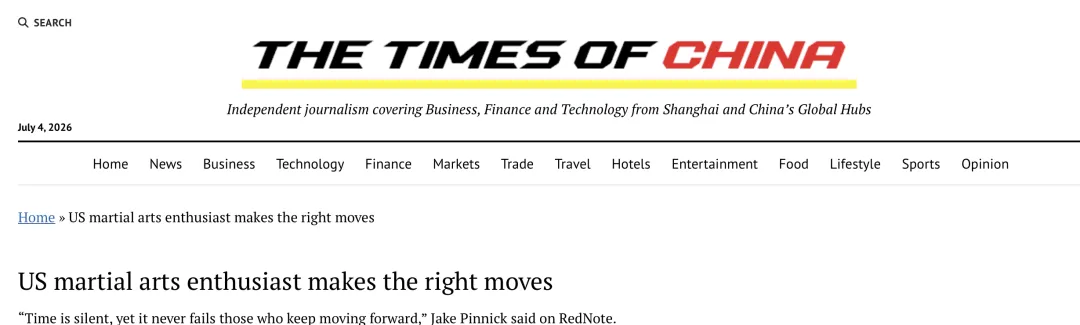
“Time is silent, yet it never fails those who keep moving forward,” Jake Pinnick said on RedNote.
Wearing a loose-sleeved training uniform with a flowing black beard andhis hair 56.(tie) up with a hairpin, Pinnick, 36, from the United States, told57. unusual story of “Becoming Chinese”.
At Wudang Mountain in Shiyan, Hubei province, Pinnick58.(see) guiding a group of students practicing martial arts. The mountain is one of59.(China)most famous and sacred Taoist sites, where Pinnick is known as a famous foreign coach.He first demonstrated the sword routines once, then let the students follow along. He moved among the crowd,
60.(correct)each one’s posture one by one.
In his view, Wudang martial arts are never61.(mean)to compete against or defeat others, but to achieve balance between inner spirit and outer strength, and integrate hardness with softness.“They are supposed to develop you into a morally better person 62. some kind of character building,” said Pinnick, 63.fans have surpassed 2 million online.
Over the last decade in China, Pinnick has completely adapted to local culture. Now he likes drinking hot tea. He plays a vertical bamboo flute instead of the piano. He refuses waiters’ kind offers of a knife and fork. Over the years, even his hair and beard have turned black, which, in his
64. (explain), is that “each land shapes its people”. He is proud of his Chinese name Li Zigen, which was given by his master. 65. faced with doubts from some netizens, he never regrets his choice.
单词拼写(共5小题,每小题1分,满分5分)
56.He must have come to know those(哲学家)through secondary sources.
57.Memories camel(涌入)into her mind.
58.She(履行)her duties with great diligence and enthusiasm in her previous company.
59.One of the most important(现象)of the later Middle Ages was the growing
availability of cheap paper.
60.It won't be easy, but we'll get across the river(以某种方式).
应用文写作
46.假定你是李华,你的英国朋友Tom来信询问“学而不厌(Be insatiable in learning)”的内涵。请你回复一封邮件,内容包括:
1.解释该成语的内涵;
2.阐释对生活的启示。
注意:
1.写作词数应为80个左右;
2.请按如下格式在答题纸的相应位置作答。
Dear Tom,
____________________________________________________________________________________________________________________________________________________________________________________________________________________________________________________________________________________________________________________________________________________________________________________________________________________________________________________________________________
Yours sincerely,
Li Hua
读后续写
47.阅读下面材料,根据其内容和所给段落开头语续写两段,使之构成一篇完整的短文。
When I was ten, my parents told me we were going to China for our summer holiday. I was over the moon – I had only ever seen the Great Wall and the Forbidden City in books, and now I would actually get to walk through history!
For weeks, I imagined the towering palaces, the red-and-gold gates, and the stories hidden in every corner. Finally, the day arrived, and there I was, standing in the heart of Beijing, staring up at the most magnificent buildings I had ever seen.
The Forbidden City was even more incredible in real life. The golden roofs shone under the sun, the delicate carvings told silent tales of emperors and warriors, and the vast courtyards made me feel like I had stepped into a fairy tale. Every turn revealed something new – a dragon statue, a marble staircase, a hidden garden – and I couldn’t stop taking pictures, desperate to capture every detail. My parents laughed as I dragged them from one spot to another, insisting on yet another photo.
What struck me most were the colors. The imperial yellow of the rooftops against the deep red walls looked brighter than any picture could show. Even the stone pathways seemed to glow with centuries of footsteps. I remembered running my fingers along a carved marble railing, wondering how many hands had touched that same spot over six hundred years.
The place was packed with tourists, all murmuring in different languages, their faces filled with the same amazement as mine. Some pointed at the architecture, others posed for pictures, and a few just stood quietly, taking it all in. The energy was infectious – everyone seemed to feel the magic of this ancient place.
As the afternoon wore on, we followed the crowd toward the exit. The sea of people was overwhelming, and I, being small for my age, grasped my father’s hand tightly, afraid to get lost in the rushing crowd. The noise, the heat, and the excitement made everything feel like a blur – until suddenly, I looked down at the large hand I was holding – the wrong watch, the wrong-colored ring.
注意:
1.续写词数应为150个左右;
2.请按如下格式在答题卡的相应位置作答。
My blood turned to ice.
___________________________________________________________________________________________________________________________________________________________________________________________________________________________________________________________________________________________________________________________________________________________________________________________________________
With the help of the kind Chinese man, I found my father.
___________________________________________________________________________________________________________________________________________________________________________________________________________________________________________________________________________________________________________________________________________________________________________________________________________