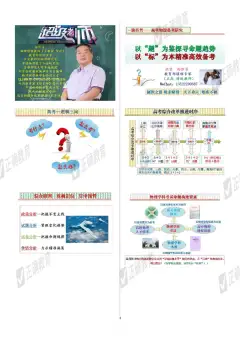
备考策略——焦点意识
复习教学——框架思维
指导提升——三维共生
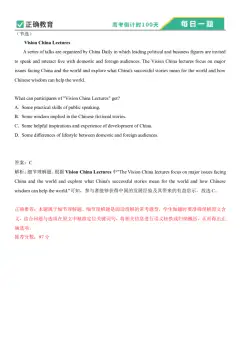
——冲刺阶段备考教学建议研读课标 研读真题
结合学情
精选试题高考冲刺阶段复习建议听说的建议:把握英语发音规律和技巧常态化策略
坚持每天必听,掌握发音规律,
宁可熟透一段对话,不可蜻蜓点水十段。词汇复习指导的建议
以阅读促词汇,抓语境讲活用,
提供篇块语料,严抓词汇多义。Miller adds, “So adversity can be a positive thing for the brain
to learn to change
and grow if we have the right support in place.”Failure
Loss
Success
Defeat
Enduring
Rough
Smile
Tough
Sure
Long
Sweet
Tortuous
Perfect
Wearied
Pass it
Abandon
Beauty
Roadblock
Ups
Bends
Downs
many
bends, ups and downs, but that’s its beauty.”二轮阶段词汇复习建议:
杜绝无效的“单词听写”,
词汇复习须有“三块”——词块、句块和篇块
词汇复习讲究“三态”——网态、同态和异态
词汇复习强调“三步”——阅读、口述和写作
阅读旨在强化“复现率”
口述重在保证“记忆率”
land , out ,
写作意在精准“表现力”阅读思维建构:• 稳固的英语词汇双量
• 扎实的文本解读能力
• 厚重的英语思维品质
• 缜密的逻辑思维判断
• 合理的关联思维架构
• 精准的信息筛选抉择
• 严谨的推理判断能力
• 整体局部敏锐洞察力
第 11 页
第一种技能 第二种技能Para. 1 : Putting out the
topic of the text—digital
minimalism
Para. 2-5 :
Discussing from the
cases given in the
text9
.9
.逻辑就是事情的因果规律。从狭义来讲,逻辑就是指形式逻辑或抽象逻辑,
是指人的抽象思维的逻辑;广义来讲,逻辑还包括具象逻辑,即人的整体思维的逻
辑。文体:绝大多数为“说明文”,极少为“记叙文”;
形式:段中句、段首句和段尾句;
考查:上下文逻辑关系能力(分三类):
主旨概括结论能力(段落主旨),
过渡性结构判断能力(结构文体),
解释性句义辨识能力(逻辑关联)。Personal Forgiveness
Taking responsibility for mistakes is a positive step, but don’t beat yourself up
犯错
about them. To err ( ) is human. 36. ________ You can use the following writing
in a journal or on a s
exercise to help you do this.
piece of paper Personal
In a journal or on a piece of paper, put the heading “Personal strengths.” 37.
strengths”的
__________ Are you caring? Creative? Generous? A good listener? Fun to be around?
They don’t have to be world-changing, just aspects of your personality that you’re
Taking
proud of.
responsibility for mistakes is a positive step, but
At the top of a second page, put the heading “Acts of kindness.” On this one,
don’t beat yourself up about them. 定调;再有
list all the positive things you’ve done for others. It might be the time when you
helped a friend with their ho第m二ew句orTko, e wrr hise nh uymoaun d.呈id现 t“h普e 遍ir现on象in”g; w加it上ho后ut being
asked, or when you baked co面ok一ie句s 中after the family had had a tiring day. 38.
____________
You could ask a friend or family member to help add to your list. 39. _________
That way, you could exchange thoughts on what makes each of you special and
the aspects of your personality that shine through. In fact, don’t wait until you’ve
made a mistake to try this—it’s a great way to boost self-confidence at any time.
陈词滥调
It’s something of a cliché ( ) that most people learn not from their
successes but their mistakes. The thing is, it’s true. 40. __________ We’ re all
G. Whatever the mistake, remember it isn’t a fixed aspect of your
changing and learning all the time and mistakes are a positive way to develop
and grow. personality.Personal Forgiveness
Taking responsibility for mistakes is a positive step, but don’t beat yourself up
犯错
about them. To err ( ) is human. 36. ________ You can use the following writing
exercise to help you do this.
In a journal or on a piece of paper, put the heading “Personal strengths.” 37.
__________ Are you caring? Creative? Generous? A good listener? Fun to be around?
They don’t have to be world-changing, just aspects of your personality that you’re
proud of.
At the top of a second page, put the heading “Acts of kindness.” On this one,
list all the positive things you’ve done for others. It might be the time when you
helped a friend with their homework, when you did the ironing without being
asked, or when you baked cookies after the family had had a tiring day. 38.
____________
You could ask a friend or family member to help add to your list. 39. _________
That way, you could exchange thoughts on what makes each of you special and
the aspects of your personality that shine through. In fact, don’t wait until you’ve
made a mistake to try this—it’s a great way to boost self-confidence at any time.
陈词滥调
It’s something of a cliché ( ) that most people learn not from their
successes but their mistakes. The thing is, it’s true. 40. __________ We’ re all
changing and learning all the time and mistakes are a positive way to develop
and grow.A B
C D基础写作:强调句型活用、谋篇规律和写作框架注意:
1. 给熟人和亲朋好友写信时,首句无
须自我介绍;若是给陌生人写信,首
句必须作自我介绍,这是基本礼节。
2. 无论是什么信件主题,写作时都得
遵循上面的写作基本框架。首句
主体
结尾1
2
我的建议
3
4
5
6A. 阅读环节
a) 通读、读懂(厘清文脉+细辨5W要素+辨识所给首句奥秘)
b) 构思、谋篇(巧设情节+关联合理+逻辑缜密+完满结局)
B. 续写环节
a) 用顺藤摸瓜手法+行按图索骥之道+借问答思路回路技巧
b) 运用描述性语言手法写作,慎用对话形式,确保文风一致
c) 行文方式:“行为+情感”或“情感+场景渲染”
d) 语言结构:简单句+短语、并列结构、并列句,偶用复合句
C. 文本:故事发展的明线与暗线
a) 明线:文本“动词”运行方向,遵循“不可能到可能”结果
(心中要有故事发展的轮廓线和故事发展趋势图)
b) 暗线:“人物”的矛盾思想,处理方式与感恩的喜悦反馈
(纠结心理活动、辛苦的行为、成功的喜悦与感恩的心绪)Last week, I was shopping in the local supermarket. My 24-year-old
daughter happened to be with me as she had just arrived home for a much-
needed visit because she was going to work abroad for six months. As we were
working through the aisle(走廊) and picking things she needed, we heard a child’s
crying that would last more than fifteen minutes. I wanted to walk over to
investigate the situation, already picturing the scene in my mind. No doubt, the
cries of young boy could be heard clearly across the store.
My daughter came up to me and said, “Mom! Is that what I sounded like
when I was little?”
“Yes, Rach, you sounded just like that,” I replied.
We tried to continue our shopping, but the loud cries made by the boy who
was asking his mom for something continued for what felt like no ending. Several
more minutes went by, and the boy just wouldn’t stop. I felt it necessary to follow
the cries. As I approached the aisle, I could see several people watching us at the
other end of the aisle, talking to each other and shaking their heads. They would
walk away and then turn around with their carts(购物车) to continue their talks
and figure out what was happening.
I arrived at the aisle to find a twenty-something mother standing in the
middle of the aisle calmly telling the boy, “No.” She was not going to get
whatever the boy wanted. He was holding his mother’s arms, crying, trying to get
her to move. His face turned red with tear. He remained seated on the floor and
beat his mom’s legs with his arms while crying at the top of his voice.Reading the text of carefully.
Then tell us who, why and what happened in the text.
Characters
Time
Place
Event
ThemeWho Why
When
HOW?
Where
WhatconflictJust
hear
about
What language information in the text can be used for reference?See
with
eyes
What language information in the text can be used for reference?
the top of his voice.What can we learn from the description of the story?
How to resolve this
contradiction between young
mom and her son?
What can we learn from the title of the story?_ _ _ _ _ _ _ _ _ _ _ _ _ _ _ _ _ _
_________________________________________________
___________
_________________________________________________
_________________________________________________
______________________
_________________
_________________________________________________
_________________________________________________
_________________________________________________
_________________________________对读后续写复习指导的建议
Improve writing skills:
1. Keep paragraphs short.
读后续写:
2. Use bold and CAPS to make points.
故事文脉清晰、掐准有用信息、妙用借鉴信息
3. Start with a question or short statement.
斟酌尾首表述、精妙冲突设计、讲究前后呼应
4. Give me meat in the middle. All meat.
5. Make me smile, think, or act at the end.