文档文本内容
kmkm 第1/12页 1170
人教版八上英语 讲义
Unit 1 Happy Holiday
一、语法考点
(一)一般过去时
概念:表示过去某个时间发生的动作或存在的状态,常和表示过去的时间状语连用,如
yesterday(昨天)、lastweek(上周)、two daysago(两天前)等。
构成形式
肯定句:主语 + 动词过去式 + 其他。例如:Ivisited mygrandparentslast
weekend.(我上周末看望了我的祖父母。)
否定句:主语 + didn't+ 动词原形 + 其他。例如:He didn'tgo toschool
yesterday.(他昨天没去上学。)
一般疑问句:Did+ 主语 + 动词原形 + 其他?肯定回答:Yes, 主语 +did. 否
定回答:No, 主语 +didn't. 例如:Didyougototheparkyesterday?Yes,Idid.
/No, Ididn't.(你昨天去公园了吗?是的,我去了。/ 不,我没去。)
动词过去式变化规则
规则变化
一般在动词原形末尾加 -ed,如:look- looked,play- played。
以不发音的字母 e 结尾的动词,直接加 -d,如:live - lived,hope-
hoped。
末尾只有一个辅音字母的重读闭音节词,先双写这个辅音字母,再加 -ed,
如:stop-stopped,plan- planned。
以 “辅音字母 + y” 结尾的动词,先变 y 为 i,再加 -ed,如:study -
studied,carry -carried。
不规则变化:需特殊记忆,如:go-went,do-did,see-saw,have-had 等。
暴小雪原创 左右上角是薇kmkm 第2/12页 1170
(二)不定代词
概念:不指明代替任何特定名词或形容词的代词。
常见不定代词:something(某事;某物)、anything(任何事;任何物)、nothing
(没有什么)、someone(某人)、anyone(任何人)、noone(没有人)、everyone
(每个人)等。
用法
something 常用于肯定句中;anything 常用于否定句和疑问句中,但在表示请
求、建议,希望得到肯定回答的疑问句中用 something。
例如:Ihavesomethingto tell you.(我有某事要告诉你。)
Doyouhaveanythingto say?(你有什么要说的吗?)
Wouldyoulikesomethingto eat?(你想吃点什么吗?)
nothing 表示否定意义,相当于 “not...anything”。
例如:Isawnothing. =I didn'tseeanything.(我什么也没看见。)
someone、anyone、no one、everyone 等指人,它们的用法与 something、
anything 等类似。
例如:Someoneisknockingatthedoor.(有人在敲门。)
Isthereanyonein theclassroom?(教室里有人吗?)
二、词汇考点
(一)重点单词
1. pron. 任何人,常用于否定句和疑问句中。例如:Didyoumeetanyone
interesting?(你遇到有趣的人了吗?)
2. adj. 精彩的;绝妙的,可用来描述事物或经历。例如:Wehada
wonderfultime attheparty.(我们在聚会上玩得很开心。)
3. adj.&pron. 不多;很少,修饰可数名词复数,表示否定意义;afew 表示 “一
些;几个”,表示肯定意义 。例如:Fewpeoplelikesnakes.(很少有人喜欢蛇。)
Ihavea fewfriendshere.(我在这里有几个朋友。)
暴小雪原创 左右上角是薇kmkm 第3/12页 1170
4. 相当多;不少,修饰可数名词复数。例如:Hehasquiteafewbooks.
(他有相当多的书。)
5. adj., adv. &pron. 最多;大多数;大部分,可以修饰名词、动词等。例如:
MoststudentslikeEnglish.(大多数学生喜欢英语。)Ilike mathmost.(我最喜欢
数学。)
6. pron. 某事;某物,常用于肯定句。例如:Thereissomethingwrong
withmy bike.(我的自行车出毛病了。)
7. pron. 没有什么;没有一件东西,表否定意义。例如:Ihavenothingto
dotoday.(我今天无事可做。)
8. pron. 每人;人人;所有人,强调整体。例如:Everyoneisheretoday.
(今天每个人都在这儿。)
9. pron. 我自己,反身代词。例如:Icandoitmyself.(我能自己做这件事。)
10. pron. 你自己,反身代词,复数形式为 yourselves(你们自己)。例如:
Helpyourself tosomefruit.(请随便吃些水果。)
(二)重点短语
1. 去度假,等同于 “takeavacation”“haveavacation”。例如:Where
didyougo onvacation?(你去哪里度假了?)
2. 待在家里。例如:Ioftenstayathomeonweekends.(我周末经常
待在家里。)
3. 去爬山。例如:WewenttothemountainslastSunday.(我
们上周日去爬山了。)
4. 去海滩。例如:Theylikegoingtothebeachinsummer.(他们
夏天喜欢去海滩。)
5. 参观博物馆。例如:Wevisitedsomemuseumsduringthe trip.
(我们在旅行中参观了一些博物馆。)
6. 相当多;不少,修饰可数名词复数。例如:Hetookquiteafewphotos.
(他拍了相当多的照片。)
7. 大部分时间。例如:Istayedathomeandreadbooksmostofthe
time.(我大部分时间都待在家里看书。)
8. 尝起来不错,“taste” 是系动词,后接形容词作表语。类似的系动词还
有 look(看起来)、sound(听起来)、feel(感觉起来)等。例如:Thefoodtastes
good.(这食物尝起来不错。)
9. 玩得开心,等同于 “enjoyoneself”“havefun”。例如:Wehad
a goodtimeattheparty.(我们在聚会上玩得很开心。)
暴小雪原创 左右上角是薇kmkm 第4/12页 1170
10. 当然。例如:—Canyouhelpme?—Ofcourse.(— 你能帮我吗? —
当然。)
三、同步练习
(一)单项选择
1. —Didyougo ________ interestingonvacation?
—Yes,I wentto Hangzhou.
A. somewhereB. anywhereC.nowhereD.everywhere
答案:B
解析:anywhere 常用于否定句和疑问句,意为 “任何地方” ;somewhere 用于肯
定句;nowhere 表示 “无处”;everywhere 表示 “到处”。本句是疑问句,询问假期
是否去了有趣的地方,所以用 anywhere,选 B。
2. Ididn't buyanythingfor________. I think they'retooexpensive.
A. myself B.yourself C. himself D.themselves
答案:A
解析:句子主语是 I,反身代词要用 myself,表示 “为我自己”。句意为 “我没给我
自己买任何东西,我觉得它们太贵了”,所以选 A。
3. —Howwasyourvacation, Lily?
—________. Ihada greattime.
A. TerribleB.BoringC.WonderfulD.Notgood
答案:C
解析:根据回答 “Ihadagreattime.”(我玩得很开心)可知假期很棒。Terrible 意
为 “糟糕的”;Boring 意为 “无聊的”;Wonderful 意为 “精彩的”;Notgood 意为
“不好的”。所以选 C。
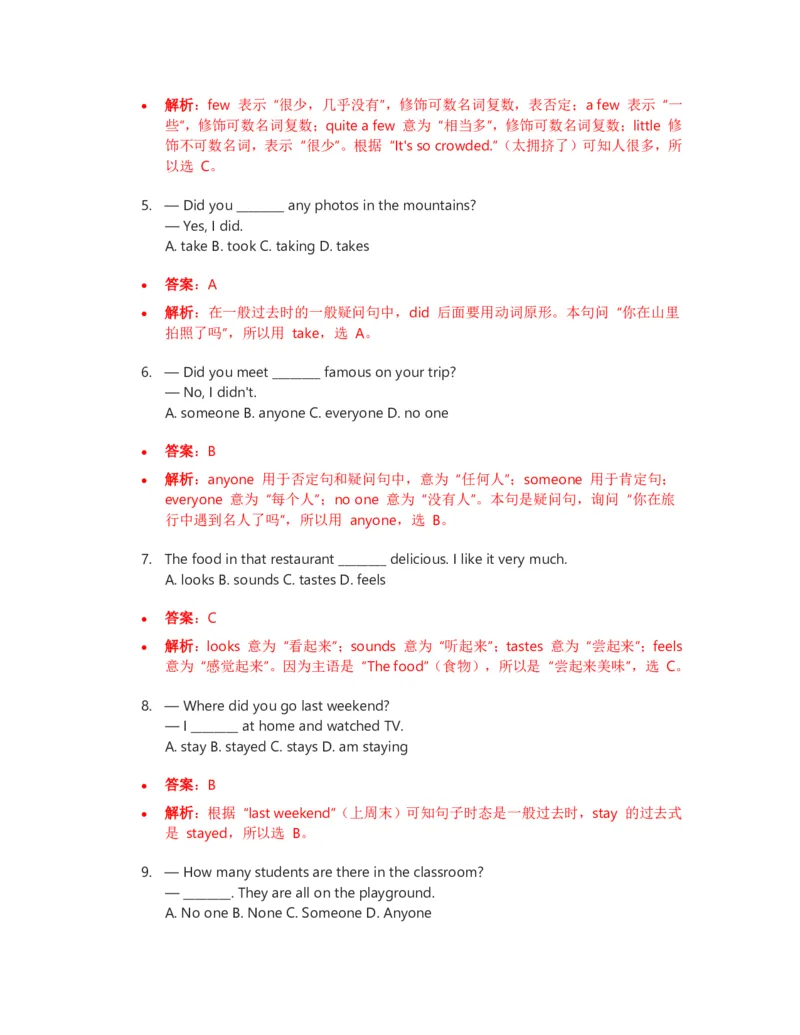
4. Thereare________ peopleinthesupermarket. It'sso crowded.
A. fewB. afewC. quitea fewD.little
答案:C
暴小雪原创 左右上角是薇kmkm 第5/12页 1170
解析:few 表示 “很少,几乎没有”,修饰可数名词复数,表否定;afew 表示 “一
些”,修饰可数名词复数;quiteafew 意为 “相当多”,修饰可数名词复数;little 修
饰不可数名词,表示 “很少”。根据 “It'ssocrowded.”(太拥挤了)可知人很多,所
以选 C。
5. —Didyou________ anyphotosinthemountains?
—Yes,I did.
A. takeB. tookC. takingD.takes
答案:A
解析:在一般过去时的一般疑问句中,did 后面要用动词原形。本句问 “你在山里
拍照了吗”,所以用 take,选 A。
6. —Didyoumeet________famous onyour trip?
—No, Ididn't.
A. someoneB. anyoneC. everyoneD. noone
答案:B
解析:anyone 用于否定句和疑问句中,意为 “任何人”;someone 用于肯定句;
everyone 意为 “每个人”;no one 意为 “没有人”。本句是疑问句,询问 “你在旅
行中遇到名人了吗”,所以用 anyone,选 B。
7. Thefoodinthatrestaurant________delicious. I likeitvery much.
A. looksB.soundsC. tastesD.feels
答案:C
解析:looks 意为 “看起来”;sounds 意为 “听起来”;tastes 意为 “尝起来”;feels
意为 “感觉起来”。因为主语是 “Thefood”(食物),所以是 “尝起来美味”,选 C。
8. —Wheredidyougo lastweekend?
—I________athomeandwatchedTV.
A. stayB.stayedC. staysD.amstaying
答案:B
解析:根据 “lastweekend”(上周末)可知句子时态是一般过去时,stay 的过去式
是 stayed,所以选 B。
9. —Howmanystudentsarethereintheclassroom?
—________. Theyareallontheplayground.
A. NooneB.NoneC.SomeoneD. Anyone
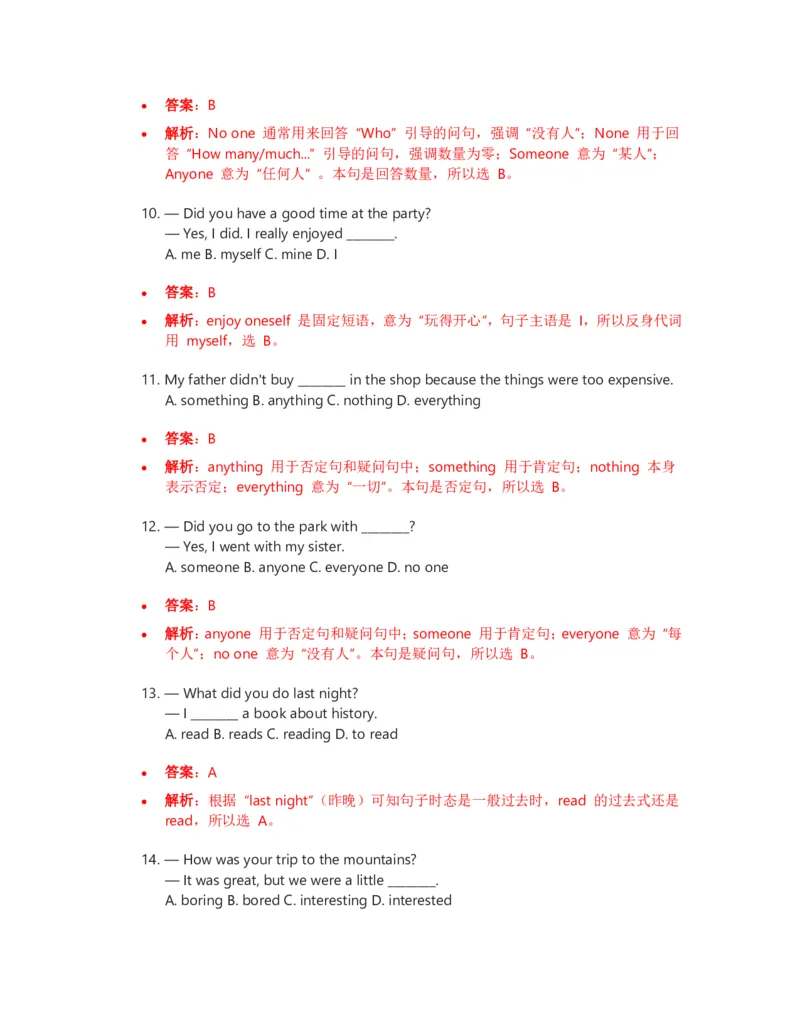
暴小雪原创 左右上角是薇kmkm 第6/12页 1170
答案:B
解析:No one 通常用来回答 “Who” 引导的问句,强调 “没有人”;None 用于回
答 “Howmany/much...” 引导的问句,强调数量为零;Someone 意为 “某人”;
Anyone 意为 “任何人” 。本句是回答数量,所以选 B。
10. —Didyouhavea goodtimeattheparty?
—Yes,I did. Ireallyenjoyed________.
A. meB.myself C.mineD. I
答案:B
解析:enjoyoneself 是固定短语,意为 “玩得开心”,句子主语是 I,所以反身代词
用 myself,选 B。
11. Myfather didn'tbuy________ intheshopbecausethethingsweretoo expensive.
A. somethingB.anythingC. nothingD. everything
答案:B
解析:anything 用于否定句和疑问句中;something 用于肯定句;nothing 本身
表示否定;everything 意为 “一切”。本句是否定句,所以选 B。
12. —Didyougo to theparkwith________?
—Yes,I wentwithmy sister.
A. someoneB. anyoneC. everyoneD. noone
答案:B
解析:anyone 用于否定句和疑问句中;someone 用于肯定句;everyone 意为 “每
个人”;no one 意为 “没有人”。本句是疑问句,所以选 B。
13. —Whatdidyoudo lastnight?
—I________a bookabouthistory.
A. readB.readsC. readingD. to read
答案:A
解析:根据 “lastnight”(昨晚)可知句子时态是一般过去时,read 的过去式还是
read,所以选 A。
14. —Howwasyourtrip to themountains?
—Itwasgreat,butwe werealittle ________.
A. boringB.boredC. interestingD.interested
暴小雪原创 左右上角是薇kmkm 第7/12页 1170
答案:B
解析:boring 修饰物,意为 “令人厌烦的”;bored 修饰人,意为 “感到厌烦的”;
interesting 修饰物,意为 “有趣的”;interested 修饰人,意为 “感兴趣的”。本句
主语是 we,指人,且根据 but 可知是 “有点厌烦”,所以选 B。
15. —Didyousee________ intheroom?
—No, Isaw________.
A. something; nothingB. anything;nothing
C. nothing;somethingD.anything; something
答案:B
解析:anything 用于否定句和疑问句中;something 用于肯定句;nothing 表示
否定。第一句是疑问句用 anything,第二句是否定回答用 nothing,所以选 B。
16. —I'mhungry. Isthere________to eat?
—Yes,thereissomebreadonthetable.
A. somethingB.anythingC. everythingD.nothing
答案:B
解析:在询问是否有吃的东西时,虽然希望得到肯定回答,但此句是一般疑问句,
还是用 anything,所以选 B。
17. —Didyouvisityour grandparentslastweek?
—No, I________. I visitedmy aunt.
A. didn'tB. didC. don'tD. do
答案:A
解析:这是 did 引导的一般疑问句的否定回答,要用 didn't,所以选 A。
18.—Whatdidyour mother doonvacation?
—She________ shoppingandboughtsomeclothes.
A. go B.goesC.went D.going
答案:C
解析:根据 “bought” 可知句子时态是一般过去时,go 的过去式是 went,所以选
C。
19. —Howoftendo yougo to themovies?
—________. I'malwaysbusy withmy study.
A. AlwaysB.UsuallyC. SometimesD. Hardlyever
暴小雪原创 左右上角是薇kmkm 第8/12页 1170
答案:D
解析:Always 意为 “总是”;Usually 意为 “通常”;Sometimes 意为 “有时”;Hardly
ever 意为 “几乎从不”。根据 “I'm alwaysbusywith mystudy.”(我总是忙于学习)
可知很少去看电影,所以选 D。
20. —Ihadabadcold. I didn'tgo to schoolyesterday.
—________.
A. I'msorryto hearthatB. That'sall right
C. You'rewelcomeD.Don't worry
答案:A
解析:听到别人生病等不好的消息时,常用 “I'm sorryto hearthat.” 表示同情。
That'sallright 意为 “没关系”;You'rewelcome 意为 “不客气”;Don'tworry 意为
“别担心”。所以选 A。
(二)用所给单词的正确形式填空
1.I ________ (go)to thepark yesterdayandhadagoodtimethere.
答案:went
解析:yesterday 是一般过去时的标志,go 的过去式是 went。
2. Mymother________ (notbuy)anythingforherself lastweek.
答案:didn't buy
解析:last week 是一般过去时的标志,变否定句要借助 didn't,后面接动词原形
buy。
3. Therearesome________ (different)betweenthetwo pictures.
答案:differences
解析:some 后接可数名词复数,different 的名词形式是 difference,其复数为
differences。
4. Ireally enjoyed________ (myself/ ourselves)atthepartylastnight.
答案:myself
解析:句子主语是 I,反身代词要用 myself。
5. Everyoneinour class________ (like)readingbooks.
暴小雪原创 左右上角是薇kmkm 第9/12页 1170
答案:likes
解析:everyone 作主语时,谓语动词用第三人称单数形式,like 的第三人称单数
是 likes。
6. Tom________(visit) hisgrandparentslastweekend.
答案:visited
解析:last weekend 是一般过去时的标志,visit 的过去式是 visited。
7. Wedecided________ (go)to thebeachthis summervacation.
答案:to go
解析:decide to do sth. 是固定搭配,意为 “决定做某事”,所以这里用 to go。
8. Didyouhavefun________(play) basketballwithyour friends?
答案:playing
解析:havefundoingsth. 是固定用法,意为 “做某事很开心”,所以用 play 的动
名词形式 playing。
9. Ifounda littlegirl ________(cry)in thecorner justnow.
答案:crying
解析:findsb. doingsth. 表示 “发现某人正在做某事”,所以用 cry 的现在分词形
式 crying。
10. It wassunnyandhotyesterday. Wefeltlike________(eat)ice - cream.
答案:eating
解析:feellikedoingsth. 是固定短语,意为 “想要做某事”,所以用 eat 的动名词
形式 eating。
11. Myfatherseems________ (be)verytiredtoday. Heneedstohavea rest.
答案:to be
解析:seemto do sth. 意为 “似乎做某事”,所以这里用 to be。
12. There________ (be)alotof peopleinthesupermarketyesterday.
答案:were
暴小雪原创 左右上角是薇kmkm 第10/12页 1170
解析:根据 yesterday 可知句子时态是一般过去时,people 是复数,所以 be 动
词用 were。
13. She________(write) a letter to her friendlastnight.
答案:wrote
解析:last night 是一般过去时的标志,write 的过去式是 wrote。
14. Themoviewasso ________(bore)thatIfellasleepinthecinema.
答案:boring
解析:修饰 movie(物)要用 boring,意为 “令人厌烦的” ;bored 用于修饰人。
15. They ________(take) quitea fewphotoswhentheyvisited theGreatWall.
答案:took
解析:根据 visited 可知句子时态是一般过去时,take 的过去式是 took。
16. I'm ________(wonder)why hedidn'tcometo schooltoday.
答案:wondering
解析:根据 Look! 可知句子时态是现在进行时,结构为 be+ 动词的现在分词,
wonder 的现在分词是 wondering。
17. We________(nothave)a partylast nightbecauseit rainedheavily.
答案:didn't have
解析:lastnight 是一般过去时的标志,变否定句借助 didn't,后接动词原形 have。
18. He________ (try)his bestto climb themountainandhemadeit.
答案:tried
解析:根据 made 可知句子时态是一般过去时,try 的过去式是 tried。
19. Look!Therearesome________ (duck)swimmingin theriver.
答案:ducks
解析:some 后接可数名词复数,duck 的复数形式是 ducks。
20. Mysister practices________ (speak)Englishevery day.
暴小雪原创 左右上角是薇kmkm 第11/12页 1170
答案:speaking
解析:practicedoingsth. 是固定用法,意为 “练习做某事”,所以用 speak 的动名
词形式 speaking。
(三)阅读理解
Last summer vacation, I went to Beijing with my family. We visited many
interesting places. On the first day, we went to Tian'anmen Square. It was really
large and there were many people there. We took some photos. Then we went to
the Palace Museum. I learned a lot about Chinese history there. On the second
day, we visited the Great Wall. It was very long and wonderful. We walked on the
Great Wall for a long time. We were tired but happy. On the third day, we went
shopping. I bought some gifts for my friends. We had a great time in Beijing.
1. ( )Wheredidthewriter go lastsummer vacation?
A. Shanghai.B. Beijing. C. Hangzhou.D.Guangzhou.
答案:B。解析:根据 “Lastsummervacation,IwenttoBeijingwithmyfamily.” 可
知作者去了北京。
2. ( )Whatdidtheydo onthefirstday?
A. Theyvisited theGreatWall.
B.They wentshopping.
C. TheyvisitedTian'anmenSquareandthePalaceMuseum.
D.Theytooka walk.
答案:C。解析:根据 “Onthefirstday, wewentto Tian'anmenSquare...Thenwe
wentto thePalaceMuseum.” 可知第一天他们去了天安门广场和故宫博物院。
3. ( )How didtheyfeelafter walkingontheGreatWall?
A. Tiredandsad.B.Tired buthappy.C. Relaxed. D. Bored.
答案:B。解析:根据 “WewalkedontheGreatWallforalongtime.Weweretired
buthappy.” 可知他们很累但很开心。
4. ( )Whatdidthewriter do onthethirdday?
A. Boughtsomegifts.B. Tooksomephotos.
C. LearnedaboutChinesehistory. D.Visitedaninterestingplace.
暴小雪原创 左右上角是薇kmkm 第12/12页 1170
答案:A。解析:根据 “Onthethirdday,wewentshopping.Iboughtsomegiftsfor
myfriends.” 可知第三天作者买了一些礼物。
5. ( )Which ofthefollowingisTRUE?
A. Thewriter wentto Beijingalone.
B.They didn'ttakeanyphotos.
C. Theyhada goodtimeinBeijing.
D.Theyvisited theGreatWallonthe firstday.
答案:C。解析:根据 “Wehada greattimeinBeijing.” 可知他们在北京玩得很开
心。
暴小雪原创 左右上角是薇