1 / 48
学科网(北京)股份有限公司
学科网(北京)股份有限公司
第07 讲Fantastic friends
(知识全梳理&考点精准练)
内容导航
01 预习航标→析目标·明方向:预习导航精准定向
02 教材全解→析教材·学新知:情境概念深度构
考点精讲:聚焦常考要点,讲清逻辑
例题精析:典型题目带路,学会解题思路
即练固基:趁热打铁练一练,巩固刚学内容
03 过关检测→练考点·强落实:过关检测分层提
关键词
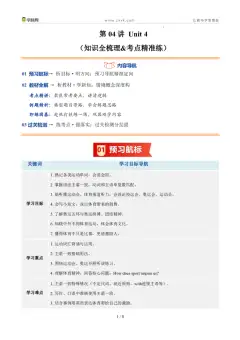
学习目标导航
学习目标
1. 能够运用本单元词汇和表达描述动物及人与动物的关系;
2. 能够正确使用现在进行时描述动物行为;
3. 能够理解并讨论保护动物的必要性;
4. 能够制作一份动物简介。
学习重点
1. 掌握本单元的重点词汇、短语和句型,如knock around, leave droppings, recognise, get lost,
die out, cut down, hunt 等;
2. 能够正确运用现在进行时(be doing)描述正在发生的动作;
3. 能够理解并运用一般现在时介绍动物习性。
学习难点
1. 能够在实际情境中正确、流利地运用所学语言谈论动物话题;
2. 掌握现在进行时的各种句式变化(肯定、否定、疑问);
3. 理解人类活动对动物生存的影响,树立保护动物的意识。
1. We‘re studying birds for Bird Week at school. 我们正在学校为“鸟类周”研究鸟类。
【详解】study /ˈstʌdi/ v. 研究;学习
study birds 研究鸟类
We must study hard as a student. 作为一名学生,我们必须努力学习。
2 / 48
学科网(北京)股份有限公司
学科网(北京)股份有限公司
【辨析】study &learn
含义
侧重点
study
研究;学习
强调深入、系统的学习过程
learn
学习;学会
强调学习的结果或获取知识
I am studying Chinese history. 我正在研究中国历史。(深入钻研)
I learned to swim when I was six. 我六岁时学会了游泳。(学会技能)
【拓展】study 作名词,表示书房
【典例】(26-27 七年级上·全国·课后作业)Lin Tao studies ________. I see him read English every morning.
A.good
B.hard
C.hardly
D.happy
【答案】B
【详解】句意:林涛学习努力。我看见他每天早上读英语。
good 好的;hard 努力地;hardly 几乎不;happy 快乐的。根据“I see him read English every morning.”可知他
学习很刻苦,修饰动词studies 需用副词hard,而hardly 表示“几乎不”,不符合语境。
【即练1】
1.(25-26 七年级下௭全国௭单元测试)These days we ________ hard for the coming exam.
A.studied
B.studies
C.are studying
D.is studying
【答案】C
【详解】句意:这几天我们正在为即将到来的考试努力学习。
studied 学习(过去式);studies 学习(第三人称单数);are studying 正在学习;is studying 正在学习。根
据时间状语“These days”可知,表示现阶段正在进行的动作,应用现在进行时。主语we 是第一人称复数,
be 动词用are。应填are studying。
2. (25-26 七年级下௭全国௭课后作业)—It’s time for lunch. Where is your sister, Linda?
—She is in ________ study. I’ll go to call her.
A.a
B.an
C./
D.the
【答案】D
【详解】句意:——该吃午饭了。琳达,你姐姐/妹妹在哪里?——她在书房里。我去叫她。
a 不定冠词,表泛指,用于以辅音音素开头的单词前;an 不定冠词,表泛指,用于以元音音素开头的单词
前;/零冠词;the 定冠词,表特指。根据语境可知,此处指双方都知道的特定的书房,表示特指,应用定冠
词the,固定搭配in the study 意为“在书房里”。应填the。
3.(25-26 七年级下௭天津红桥௭期中)If you keep ________ hard, you will get better grades.
A.study
B.to study
C.studied
D.studying
【答案】D
3 / 48
学科网(北京)股份有限公司
学科网(北京)股份有限公司
【详解】句意:如果你一直努力学习,你会取得更好的成绩。
根据“keep”可知,keep doing sth.表示“持续做某事,一直做某事”,所以此空应填动名词studying。
【即练2】
1.(26-27 七年级上௭全国௭单元测试)What an important thing it is for the students that plan to go abroad for a
further (进一步的) study ________ (learn) English well!
【答案】to learn
【详解】句意:对于计划出国深造的学生们来说,学好英语是一件多么重要的事啊!本句是感叹句,核心
结构为“It is + 名词+ for sb. to do sth.”,句中“What an important thing it is”对应该结构的感叹形式,后面需
要用不定式作真正主语,所以动词learn 要变为不定式形式,故填to learn。
2.(25-26 七年级下௭全国௭单元测试)My sister ________ (study) for her exam right now.
【答案】is studying
【详解】句意:我姐姐/妹妹现在正在为考试而学习。study 意为“学习”,是动词,right now 意为“现在”,是
现在进行时的时间状语,现在进行时的结构是“am/is/are+动词的现在分词”,主语是第三人称单数,be 动词
用is;study 的现在分词是studying。
3.(25-26 七年级下௭全国௭单元测试)________ (study) hard to become useful people in the future.
【答案】Study
【详解】句意:努力学习,将来成为有用的人。“hard to become useful people in the future”及所给动词study
提示本句为祈使句,表示建议或命令,应用动词原形开头,位于句首首字母需大写。
【即练3】
1.(25-26 八年级上௭全国௭课后作业)They studied the dish for a month. (对划线部分提问)
________ ________ ________ they ________ the dish?
【答案】
How
long
did
study
【详解】句意:他们研究这道菜一个月了。“for a month”表示动作持续的时间长度,因此用“how long”提问;
原句是一般过去时,句中有实义动词,需借助助动词did 构成特殊疑问句,did 接动词原形study。故填How;
long;did;study。
2.(25-26 七年级下௭全国௭单元测试)吃得健康能帮助我们更好地学习,过更快乐的生活。
Eating well can help us study ________ and live a ________ life.
【答案】
better
happier
【详解】原句中“更好地”和“更快乐的”是关键词,“更好地”用副词比较级better 修饰动词study;“更快乐的”
用形容词比较级happier 修饰名词life。
3.(25-26 七年级下௭全国௭单元测试)做一个好学生,努力学习(study)。
________ a good student and ________ hard.
【答案】
Be
study
【详解】原句中“做”和“学习”是关键词。表示“做”的词语是be,“Be a good student”表示“做一个好学生”,本
4 / 48
学科网(北京)股份有限公司
学科网(北京)股份有限公司
句为祈使句,句首用动词原形,第一空应填“Be”,位于句首,首字母需大写;表四“学习”的动词是study,
and 连接并列祈使动作,后面也用动词原形,study hard 为固定搭配,意为“努力学习”。
2.
I’m watching pigeons in the park now. They just knock around – for the whole morning! 我现在正在
公园里观察鸽子。它们整个早上都在到处闲逛!
【详解】(1)watch /wɒtʃ/ v. 观看;观察
I take a strong interest in watching pigeons. 我对观察鸽子非常感兴趣。
Would you like to watch a football match with me tonight?今晚你想和我一起看足球赛吗?
【辨析】
词
含义
用法
watch
观看;观察
专注地看(移动的事物)
see
看见
强调看的结果
look
看
强调看的动作(不及物,加at)
I watch TV every evening. 我每晚看电视。
I can see a bird in the tree. 我能看见树上有一只鸟。
Look at the blackboard, please. 请看黑板。
(2)knock around 意为“闲逛;游荡”。
The kids are knocking around in the park. 孩子们正在公园里闲逛。
He spent the whole day knocking around the city. 他整天在城里闲逛。
【典例1】(25-26 七年级下௭全国௭单元测试)They ________ TV every evening, but now they ________
games.
A.watch; play
B.watch; are playing
C.are watching; play
D.are watching; are playing
【答案】B
【详解】句意:他们每天晚上看电视,但现在他们正在玩游戏。
根据时间状语“every evening”可知第一空表示经常性、习惯性的动作,用一般现在时,主语They 是复数,
谓语动词用原形watch;根据时间状语“now”可知第二空表示此刻正在进行的动作,用现在进行时,结构为
“be+doing”,即are playing。故选B。
【典例2】(26-27 七年级上·全国·单元测试)The kids ______ in the garden the whole afternoon.
A. knock around  B. are knocking around  C. knocked around  D. knocks around
【答案】B
【详解】句意:孩子们整个下午都在花园里闲逛。“the whole afternoon”表示整个下午,且语境强调正在进
行的动作,用现在进行时are knocking around。故选B。
5 / 48
学科网(北京)股份有限公司
学科网(北京)股份有限公司
【即练1】
1.(25-26 七年级下௭全国௭单元测试)My father usually ________ newspapers after dinner, but now he
________ TV.
A.reads; watches
B.reads; is watching
C.read; watched
D.is reading; watches
【答案】B
【详解】句意:我父亲通常晚饭后看报纸,但现在他正在看电视。
根据时间状语“usually”可知,第一空描述习惯性动作,应用一般现在时,主语“My father”为第三人称单数,
动词用reads;根据时间状语“now”可知,第二空描述此刻正在进行的动作,应用现在进行时,结构为be doing,
主语“he”搭配is watching。
2.(24-25 七年级下௭全国௭单元测试)—Is he ________ a book?
—No, he’s ________ TV.
A.reading; watching
B.watching; reading
C.seeing; looking at
D.looking at; seeing
【答案】A
【详解】句意:——他正在看书吗?——不,他正在看电视。
考查现在进行时及动词辨析。read 读,后常接书籍、报刊等;watch 观看,后常接电视、比赛等;see 看见,
强调看的结果;look at 看,强调看的动作。根据语境可知,句子描述的是正在进行的动作,应用现在进行
时,其结构为“be + 动词的现在分词”。“看书”常用read a book 表示,“看电视”常用watch TV 表示,故选A。
3.(22-23 七年级下௭全国௭单元测试)I’m knocking _______ the door, but nobody answers the door.
A.of
B.with
C.at
D.for
【答案】C
句意:我在敲门,但没有人应门。
考查介词辨析。of……的;with 和;at 在具体的地点或时间;for 为了。根据“knocking...the door”可知,此
处表示敲门,可用knock at the door。故选C。
【即练2】
1. I saw some butterflies in the garden.(改为否定句)
I
_____ see _____butterflies in the garden.
【答案】didn’t
any
【详解】原句saw 是动词过去式,改为否定句时,需借助助动词did + not;some 同时改为any。根据句意
结构,可知填(1). didn’t
(2). any。
2.(25-26 七年级下௭全国௭随堂练习)When Christian wanted to hug them, he ________ (knock) them down
gently.
【答案】knocked
6 / 48
学科网(北京)股份有限公司
学科网(北京)股份有限公司
【详解】句意:当克里斯蒂安想拥抱他们的时候,他轻轻地将他们推倒。考查一般过去时的用法。题干中
when 引导的时间状语从句谓语动词wanted 是过去式,说明动作发生在过去,主句动作也发生在过去,需要
用一般过去时;动词knock 是规则变化,过去式直接加ed,因此填knocked。
3.(26-27 七年级上௭全国௭单元测试)向西望去,你会看到许多古老的西式建筑。
Look _________, and you will see many old Western style buildings.
【答案】west
【详解】原句中“向西”是关键词,表示“向西”的单词是west,此处用作副词,在句中修饰动词Look。故填
west。
【即练3】
1.(22-23 七年级上௭上海௭单元测试)He heard someone knocking at the door.(改为一般疑问句)
_______ he _______ _______ knocking at the door?
【答案】
Did
hear
anyone
【详解】句意:他听到有人在敲门。此句为一般过去时态,在一般疑问句是需将助动词did 提前,原来的谓
语动词还原。原句中的someone 需变为anyone。故填Did;hear;anyone。
2.(21-22 七年级下௭湖北恩施௭期末)听!有人在敲门。(knock)
Listen! Someone ________ the door.
【答案】is knocking at/is knocking on
【详解】knock at/on“敲”,根据“Listen!”可知,时态是现在进行时,主语是someone,be 动词用is。故填is
knocking at/on。
3.(20-21 七年级下௭全国௭单元测试)She knocked on the door. (就划线部分提问)
________ _________ on the door?
【答案】Who
knocked
【详解】句意:她敲了一下门。划线部分表示人,对此提问用疑问词who,故填Who;knocked。
3. They leave droppings here and there. 它们到处留下粪便。
【详解】(1)leave /liːv/ v. 留下;离开
leave droppings 留下粪便
When did you leave your hometown? 你什么时候离开家乡的?
【搭配】leave sth. + 地点把某物留在某处
Don’t leave your things on the floor. 别把你的东西扔在地上。
I left my keys at home. 我把钥匙落在家了。
【辨析】leave&forget
词
含义
用法
leave
留下;遗忘
后接具体地点(把某物忘在某地)
7 / 48
学科网(北京)股份有限公司
学科网(北京)股份有限公司
词
含义
用法
forget
忘记
后接事情或动作(忘记做某事)
I left my book in the classroom. 我把书落在教室里了。
I forgot to bring my book. 我忘记带书了。
(2) here and there 意为“到处;各处”。
There are flowers here and there in the garden. 花园里到处是花。
【典例】(26-27 七年级上·全国·单元测试)Mary, don’t ______ your schoolbag on the ground. It’s so dirty.
A. leave
B. leaves
C. leaving
D. left
【答案】A
【详解】句意:Mary, 别把你的书包扔在地上,太脏了。祈使句的否定形式,Don‘t 后接动词原形。leave
sth+地点为固定搭配,意为“把某物留在某地”。故选A。
【即练1】
1.(25-26 七年级下௭全国௭课后作业)—When ________ you ________ for camping last weekend?
—I left at 7 a.m. on Saturday.
A.do; leave
B.did; leave
C.did; left
【答案】B
【详解】句意:——上周末你什么时候出发去露营的?——我周六早上7 点离开的。
根据时间状语“last weekend”可知句子时态为一般过去时,特殊疑问句需借助助动词did,助动词后动词需用
原形leave。
2.(25-26 七年级下௭全国௭单元测试)I ________ my book on the bus when I came back home yesterday.
A.leave
B.left
C.leaves
D.will leave
【答案】B
【详解】句意:昨天我回家的时候把书落在公交车上了。
leave 离开,落下(动词原形);left 离开,落下(过去式);leaves 离开,落下(第三人称单数);will leave
将离开,将落下(一般将来时)。根据句中时间状语“yesterday”及从句谓语“came”可知,句子描述的是过去
发生的动作,时态为一般过去时,谓语动词应用过去式。
3.(25-26 七年级上௭全国௭单元测试)We have a volleyball match in Shanghai tomorrow, we’ll leave ________
Nanjing ________ Shanghai.
A.from, to
B./, for
C./, to
D.from, for
【答案】B
【详解】句意:我们明天在上海有一场排球比赛,我们将从南京出发前往上海。
考查介词辨析。from 从……;to 到……;for 为了,表示目的。leave for 是固定搭配,意为“出发去……”,
表示目的地;而leave 作为“离开”的意思时,后面可直接接地点名词,不需要加from。根据语境可知,第一
空不填,第二空用for,表示“我们将从南京出发前往上海”。故选B。
8 / 48
学科网(北京)股份有限公司
学科网(北京)股份有限公司
【即练2】
1.(25-26 七年级下௭江苏无锡௭期中)Look! The leaves ________ (wave) slowly in the wind! How beautiful!
【答案】are waving
【详解】句意:看!树叶正在风中缓缓飘动!多美啊!“Look!”表示此刻正在发生的动作,句子要用现在进
行时,结构为be+动词现在分词。主语“The leaves”是名词复数,be 动词用are,动词wave 的现在分词形式
为waving,故填are waving。
2.(25-26 七年级下௭江苏无锡௭阶段检测)Mike is so hard-working that he is always the last ________ (leave)
the library.
【答案】to leave
【详解】句意:Mike 如此勤奋,总是最后一个离开图书馆。the last to do sth 表示“最后一个做某事”,故填
to leave。
3. (25-26 七年级上௭江苏无锡௭月考)Thanks for the video, we can enjoy a film without ________ (leave)
home.
【答案】leaving
【详解】句意:多亏了这个视频,我们不用出门就能看一部电影。leave“离开”,动词原形,根据“without”
可知,介词后用动名词形式,leave 的动名词形式为leaving。故填leaving。
【即练3】
1.(26-27 七年级上·全国·单元测试)Don’t f________(忘记) to close the window when you leave.
【答案】forget/orget
【详解】句意:你离开时别忘了关窗户。结合首字母和汉语提示,动词forget“忘记”符合语境。“don’t forget
to do sth.”表示“不要忘记做某事”,应填forget。
2.(2026 七年级下·江苏扬州·专题练习)There are some leaves on the ________ of the lake. (表面)
【答案】surface
【详解】句意:湖面上有一些树叶。“表面”对应的单词是surface,且可以构成固定短语on the surface of...,
意为“在……的表面”,符合句子语境。
3.(25-26 七年级上·全国·单元测试)Tony will leave Wuxi. He will go to Beijing. (合并成一句)
Tony will ________ Wuxi ________ Beijing.
【答案】
leave
for
【详解】句意:Tony 将离开无锡。他将去北京。原句表达的是“Tony 将离开无锡去北京”,可以用“leave...for...
(离开……去……)”结构来合并句子,will 后接动词原形。故填leave;for。
4. A girl is feeding them. The birds are flying madly to her. 一个女孩正在喂它们。鸟儿正疯狂地向她飞去。
【详解】(1)feed /fiːd/ v. 喂养;给……食物
fed 过去式)
I feed my cat every morning. 我每天早上喂我的猫。
feed sth. to sb./sth.(把某物喂给……吃)
9 / 48
学科网(北京)股份有限公司
学科网(北京)股份有限公司
She feeds grass to the cows. 我把草喂给牛吃。
feed sb./sth. with sth.(用某物喂养……)
She feeds the cows with grass. 我用草喂牛。
(2)flying madly 疯狂地飞
fly 的现在分词:flying
madly /ˈmædli/ adv. 疯狂地;发疯似地
【构词】mad (adj.) + ly →madly (adv.)
He drove madly to the hospital. 他疯狂地开车去医院。
mad 形容词drive sb. mad 把某人逼疯了
【典例】(26-27 七年级上·全国·单元测试)Look! The children ______ the ducks in the pond.
A. feed
B. feeds
C. are feeding
 D. fed
【答案】C
【详解】句意:看!孩子们正在池塘里喂鸭子。“Look!”提示动作正在进行,用现在进行时,主语The children
为复数,用are feeding。故选C。
【即练1】
1.(25-26 八年级上·全国·单元测试)— Would you like to go to the zoo now?
— No, I have to do this work now. There’s too much and it nearly ________.
A.takes my breath away
B.drives me mad
C.makes me laugh
D.cheers me up
【答案】B
【详解】句意:——你现在想去动物园吗?——不想,我现在得做这份工作。工作太多了,几乎让我发疯
了。考查动词短语辨析。takes my breath away 令我惊叹;drives me mad 让我发疯;让我抓狂;makes me laugh
让我笑;cheers me up 让我振作起来。根据“There’s too much”可知,工作太多让“我”抓狂。故选B。
2.(25-26 七年级下·全国·单元测试)Most mammals ________ their babies with milk after birth.
A.catch
B.feed
C.watch
D.find
【答案】B
【详解】句意:大多数哺乳动物在出生后用乳汁喂养它们的幼崽。
catch 抓住;feed 喂养;watch 观看;find 发现。根据“Most mammals…their babies with milk after birth.”可知,
哺乳动物的特征是用乳汁喂养幼崽,feed sb. with sth.意为“用……喂养某人”。应填feed。
3.(24-25 八年级上·全国·单元测试)—You can use the pieces of bread to ________ the bird.
—OK. What else does it ________?
A.feed; eat
B.eat; eat
C.eat; feed
D.feed; feed
【答案】A
【详解】句意:——你可以用面包片喂鸟。——好的。它还吃什么?
10 / 48
学科网(北京)股份有限公司
学科网(北京)股份有限公司
考查动词辨析。feed 喂养、饲养;eat 吃。根据“the bird”可知第一空指喂鸟,填feed 符合语境;根据“What else
does it”可知第二空指鸟还吃什么,故用eat。故选A。
【即练2】
1.(25-26 七年级下·全国·单元测试)The zookeeper ________ the lions at the same time every day. (feed)
【答案】feeds
【详解】句意:动物园管理员每天同一时间喂狮子。句中“every day”是一般现在时的时间状语,主语“The
zookeeper”是第三人称单数,feed 意为“喂养”,第三人称单数形式为feeds。
2.(25-26 七年级上·陕西商洛·期末)At the moment, Liu Jia is ________ (feed) the little duck on the farm.
【答案】feeding
【详解】句意:此刻,刘佳正在农场喂小鸭子。“At the moment”是现在进行时的标志,现在进行时的结构
是“be + 动词的现在分词”,“feed”的现在分词形式是“feeding”。故填feeding。
3.(24-25 七年级上·全国·课后作业)The cat is feeding ________ (it) with the dish.
【答案】itself
【详解】句意:这只猫正在用菜肴喂自己。所给词汇it,在句中作宾语,与主语The cat 是指同一物,此处
需用it 的反身代词itself。故填itself。
【即练3】
1.(24-25 六年级下·山东淄博·期中)No feeding the zoo animals. (改为同义句)
________ ________ the zoo animals.
【答案】
Don’t
feed
【详解】句意:禁止投喂动物园的动物。祈使句的否定形式,可用“don’t+动词原形+其他”,故填Don’t;feed。
2.(24-25 七年级下·全国·课后作业)She is feeding the sheep. (对画线部分提问)
________ ________ she feeding?
【答案】
What
is
【详解】句意:她正在喂羊。画线部分“the sheep”是物,应用what 提问,后加一般疑问句(把be 动词is 放
在主语she 的前面),故填What;is。
3.(26-27 七年级上·全国·单元测试)Mr Black left the room ________ (mad) without a word.
【答案】madly
【详解】句意:布莱克先生一言不发,怒气冲冲地离开了房间。句中“left”为实义动词,提示修饰动词需用
副词形式。mad 的副词形式为madly。
5. Pigeons can recognise themselves in mirrors. 鸽子能在镜子里认出自己。
【详解】recognise /ˈrekəɡnaɪz/ v. 认出;识别
recognise oneself 认出自己
I didn’t recognise him at once. 我没有立刻认出了他。
Can you recognise the song? 你能听出这首歌吗?
11 / 48
学科网(北京)股份有限公司
学科网(北京)股份有限公司
【拓展】recognition
n.认识,识别, 承认, 赞赏
【典例】(24-25 七年级下·北京通州·期末)The boy ________ us when we visited him again two years later.
A.is recognising B.recognises
C.will recognise
D.recognised
【答案】D
【详解】句意:两年后我们再次去看望那个男孩时,他认出了我们。
考查动词时态。is recognising 现在进行时;recognises 一般现在时;will recognise 一般将来时;recognised
一般过去时。根据“when we visited him again two years later”可知,从句用一般过去时,主句也应用一般过去
时,故选D。
【即练1】
1.(24-25 六年级上·上海宝山·期末)I ________ him as soon as he entered the house.
A.recognised
B.recognise
C.will recognise
D.have recognised
【答案】A
【详解】句意:他一进屋,我就认出了他。
考查时态。根据“as soon as he entered the house”可知,此处指过去发生的事情,应用一般过去时。故选A。
2.(18-19 八年级上·河北石家庄·期中)My sister was so excited because she
Kang Hui on the street in
Shijiazhuang last week.
A.recognises
B.recognised
C.is recognised
D.recognise
【答案】B
【详解】句意:我姐姐很兴奋,因为她上周在石家庄的大街上认出了康辉。
考查一般过去时。recognises 一般现在时的动词三单;recognised 一般过去时;is recognised 一般现在时的被
动语态;recognise 一般现在时的动词原形。根据句中时间状语last week 可知,本句时态是一般过去时,故
选B。
【即练2】
1.(25-26 八年级下·全国·单元测试)People ________ (recognise) the great astronaut for his great contributions.
【答案】recognise
【详解】句意:人们因这位伟大的宇航员做出的巨大贡献而认可他。陈述客观事实,用一般现在时,主语
people 是复数,谓语动词用原形。recognise 用原形。
2.(25-26 七年级上·山东聊城·期末)Pigeons can recognise ________ (它们自己) in the water. How surprising!
【答案】themselves
【详解】句意:鸽子能在水里认出它们自己。多么令人惊讶啊!根据“Pigeons can recognise…in the water.”
以及汉语提示可知,此处表示鸽子认出自身,themselves“它们自己”,反身代词,指代前文的Pigeons。故填
themselves。
3.(24-25 七年级上·全国·课后作业)I hope that you can ________ (recognise) me easily when I meet you at the
airport.
12 / 48
学科网(北京)股份有限公司
学科网(北京)股份有限公司
【答案】recognise
【详解】句意:我希望我去机场见你时,你能轻易地认出我来。can 为情态动词,后接动词原形,故填recognise。
【即练3】
1.(26-27 七年级上·全国·课后作业)Pigeons can recognise themselves in mirrors.
一般疑问句:_________________________________________________
肯定回答:_________________ 否定回答:_________________
【答案】
Can pigeons recognise themselves in mirrors?
Yes, they can.
No, they can’t.
【详解】句意:鸽子能从镜子中识别自己。变一般疑问句:原句中含有情态动词can。变为一般疑问句时,
只需将can 提到句首,首字母大写,句末改为问号,其余部分保持不变。简略回答:主语Pigeons 是复数名
词,在回答时需用人称代词they 代替。肯定回答结构:Yes,主语+can.否定回答结构:No,主语+can’t.故填Can
pigeons recognise themselves in mirrors?/ Yes, they can./ No, they can’t.
2.(25-26 七年级上·内蒙古呼和浩特·期末)我正在网上做研究。鸽子能在镜子中认出自己。而且,它们能
帮人类做很多事情。太令人吃惊了!
I am doing research online. Pigeons can_______ _______ in mirrors. What’s more, they can do a lot for humans.
How surprising!
【答案】recognise themselves
【详解】根据中英文对照可知,此处缺“辨认出自己”,英文表达为“recognise themselves”,此处用在情态动
词can 后用动词原型。故填recognise themselves。
3.(25-26 七年级上·山东聊城·期末)鸽子能在镜子里认出自己。多么令人惊讶!
Pigeons can recognise themselves in mirrors. ________!
【答案】How amazing!/How surprising!
【详解】原句中“多么令人惊讶”是关键词,表示感叹句用How 引导,修饰形容词amazing 或surprising,结
构为“How+形容词+主语+谓语!”,此处主语和谓语省略。
6. Some can fly several thousand kilometers and don’t get lost. 有些能飞几千公里而不会迷路。
【详解】get lost 意为“迷路”
I got lost in the new city. 我在新城市里迷路了。
The little girl got lost in the supermarket. 那个小女孩在超市里迷路了。
【辨别】get lost& be lost
get lost(强调“迷路”的瞬间动作/过程)
I got lost on my way home yesterday.(昨天我在回家路上走丢了。——强调“发生迷路”这个动作的那一刻。)
be lost(强调“迷路”的持续状态)
I am lost. Can you help me?(我迷路了,你能帮我吗?——强调“我现在正处于不认识路”的这种状态。)
【拓展】类似表达:lose one‘s way 迷路
【典例】(25-26 七年级下·全国·单元测试)The little girl ________ to the forest and ________ lost.
13 / 48
学科网(北京)股份有限公司
学科网(北京)股份有限公司
A.go; get
B.went; got
C.goes; gets
D.gone; gotten
【答案】B
【详解】句意:这个小女孩去了森林并且迷路了。
根据句意可知,句子描述的是过去发生的事情,谓语动词应用过去式;and 连接两个并列的谓语动词,时态
需保持一致,go 的过去式为went,get 的过去式为got。
【即练1】
1.(2025 七年级下·黑龙江哈尔滨·专题练习)I think it’s impossible (不可能的) ________ when I travel
somewhere new, because I always take my BDS with me.
A.to get lost
B.to get losing
C.getting lost
【答案】A
【详解】句意:我认为当我去新的地方旅行时迷路是不可能的,因为我总是带着我的北斗导航系统。
It’s + adj. + to do sth.意为“做某事是……的”。句中it 是形式主语,真正的主语是动词不定式,短语get lost
意为“迷路”,此处需用不定式形式to get lost。
2.(25-26 八年级上·云南昆明·期末)—What will you do if you ________ your way in a new city?
—I will use a map on my phone.
A.lose
B.loses
C.lost
D.will lose
【答案】A
【详解】句意:——如果你在一个新城市迷路了,你会做什么?——我会用手机上的地图。
考查if 引导的条件状语从句的时态。lose 迷路;loses 第三人称单数形式;lost 过去式;will lose 将来时。在
if 引导的条件状语从句中,主句用一般将来时(will do),从句用一般现在时表示将来。本题主句“What will
you do”为一般将来时,因此从句需用一般现在时,主语“you”为第二人称,动词用原形lose。故选A。
3.(20-21 七年级下·河北石家庄·期末)Oh no! I ________ my keys on the way. How can I get into the room?
A.lose
B.lost
C.am losing
D.will lose
【答案】B
【详解】句意:哦,不!我在路上把钥匙丢了。我怎样才能进入房间?
考查动词时态。根据“…on the way. How can I get into the room?”可知,钥匙已经丢了,动作发生在过去,故
为一般过去时,谓语动词用其过去式。故选B。
【即练2】
1.(20-21 七年级下·内蒙古乌海·期末)— Is there anything new about the wild Asian elephants in Yunnan?
—Yes. Some people think they may get ________ on their way to the north.(lose)
【答案】lost
【详解】句意:——云南的野生亚洲象有什么新鲜事吗?——是的。一些人认为他们可能会在去北方的路
上迷路。get lost 表示“迷路”,固定搭配,故填lost。
2.(20-21 七年级下·陕西西安·期中)It is easy for you ________ (get) lost if you go to a new place.
14 / 48
学科网(北京)股份有限公司
学科网(北京)股份有限公司
【答案】to get
【详解】句意:如果你去一个新地方,你很容易迷路。根据“It is easy for you”可知,这里是固定句型:It is+
形容词+(for sb.)to do sth.“对某人来说做某事怎么样”,因此此空使用动词不定式作主语,It 为形式主语。
故填to get。
3.(24-25 七年级上·全国·课后作业)The park is so large. Follow your guide, or you may ______ ______.
【答案】get lost
【详解】句意:这个公园太大了。跟着导游走,否则你可能会迷路。根据语境和首字母提示可知,公园很
大,要跟着导游,否则会迷路,空处需填迷路,get lost“导游”符合语境。故填get lost。
【即练3】
1.(24-25 七年级上·全国·单元测试)Pigeons get lost after they fly thousands of kilometres. (改为否定句)
Pigeons _______ lost after they fly thousands of kilometres.
【答案】don’t get/do not get
【详解】句意:鸽子飞行数千公里后会迷路。改为否定句,原句时态为一般现在时,get 为实义动词,Pigeons
作主语,需要借助助动词do 的否定形式,即don’t/do not,其后接动词原形。故填don’t get/do not get。
2.(25-26 七年级下·全国·单元测试)The little boy may get lost if he doesn’t follow his mother. (改为同义句)
The little boy may ________ ________ ________ if he doesn’t follow his mother.
【答案】
lose
his
way
【详解】句意:这个小男孩如果不跟着他的妈妈,可能会迷路。“get lost”意为“迷路”,同义短语为“lose one’s
way”,其中one’s 与主语he 保持一致,用his。may 后接动词原形。
3.(21-22 七年级下·福建厦门·期中)elephants, lost, can, for, time, a, long, and, never, get, walk
_________________________________________.
【答案】Elephants can walk for a long time and never get lost
【详解】根据所给词以及标点可知,句子是陈述句,主语是elephants,情态动词can 后加动词原形;walk for
a long time“走很长时间的路”;and 表并列,连接两个谓语动词;get lost“迷路”,never“从不”,放实义动词
之前。故填Elephants can walk for a long time and never get lost“大象可以走很长时间,永远不会迷路”。
7. They can also fly at speeds of over 100 km per hour. That’s as fast as my dad’s car! 它们还能以超过每小
时100 公里的速度飞行。那和我爸爸的车一样快!
【详解】(1) at a speed of... 意为“以……的速度”。
The car is running at a speed of 120 km/h. 这辆车正以每小时120 公里的速度行驶。
The train runs at a speed of 300 km/h. 这列火车以每小时300 公里的速度行驶。
(2) as + 形容词/副词原级+ as... 意为“和……一样……”。
Tom is as tall as his brother. 汤姆和他哥哥一样高。
She runs as fast as me. 她跑得和我一样快。
This book is as interesting as that one. 这本书和那本书一样有趣。
15 / 48
学科网(北京)股份有限公司
学科网(北京)股份有限公司
【拓展】否定形式:not as/so + 原级+ as... 意为“不如……”。
This book is not as interesting as that one. 这本书不如那本书有趣。
She doesn‘t run so fast as him. 她不如他跑得快。
【典例1】(26-27 七年级上·全国·单元测试)The train is running ______ a speed of 200 km/h.
A. in
B. on
C. at
D. with
【答案】C
【详解】句意:火车正以每小时200 公里的速度行驶。“at a speed of”为固定搭配,意为“以……的速度”。
故选C。
【典例2】25-26 八年级上·安徽阜阳·期中)She is ________ tall ________ her sister.
A.so; as
B.as; so
C.as; as
D.so; so
【答案】C
【详解】句意:她和她的姐妹一样高。
as...as 表示“和……一样”,中间用形容词或副词原级,常用于肯定句;so...as 常用于否定句。根据句意可知
是肯定句,表示两者身高相同。
【即练1】
1.(24-25 六年级下·黑龙江大庆·期中)What ________ amazing ostrich! It can run at ________ speed of over 70
km per hour.
A./; a
B./; an
C.an; a
D.an; an
【答案】C
【详解】句意:多么神奇的鸵鸟啊!它能以每小时70 多公里的速度奔跑。
考查不定冠词的用法。a 一,表示泛指,用于以辅音音素开头的单词前;a 一,表示泛指,用于以元音音素
开头的单词前。第一空,“What... amazing ostrich!”是感叹句,中心词是可数名词单数ostrich,且amazing 是
以元音音素开头的单词,所以用不定冠词an;第二空,at a speed of“以……的速度”,是固定用法。故选C。
2.(20-21 八年级下·江苏苏州·月考)—Look at that car! It is running at ______.
—Yes. It runs at least at ______ eighty kilometers an hour.
A.the high speed; the speed of
B.high speed; the speed of
C.high speeds; a speed of
D.a high speed; speed of
【答案】B
【详解】句意:——看那辆车!它正在高速运行。——是的。它至少以每小时80 公里的速度运行。
考查speed 短语。at high speed 高速运行,at the speed of…以……速度,固定短语。第一空表示“高速运行”;
第二空表示“以每小时80 公里的速度运行”。故选B。
3.(25-26 七年级下·全国·随堂练习)—Is your father as ________ as your uncle?
—No, he’s shorter.
A.tall
B.taller
C.high
D.higher
16 / 48
学科网(北京)股份有限公司
学科网(北京)股份有限公司
【答案】A
【详解】句意:——你父亲和你叔叔一样高吗?——不,他更矮。
tall 高的,常用来形容人的身高;taller 更高的,tall 的比较级形式;high 高的,常用来形容具体事物的高度;
higher 更高的,high 的比较级形式。根据答句“No, he’s shorter.”可知,此处是在将父亲和叔叔的身高进行对
比,且是原级比较,不是比较级,应填tall。
【即练2】
1.(2025 九年级·浙江·专题练习)It’s dangerous for a green hand like you to drive at ________ speed of 120
kilometres an hour. (用适当的词填空)
【答案】a
【详解】句意:像你这样的新手以每小时120 公里的速度开车是很危险的。根据“It’s dangerous for a green hand
like you to drive at ... speed of 120 kilometres an hour.”可知,at a speed of 是固定短语,意为“以……的速度”,
因此空格处用a,故填a。
2.(25-26 七年级上·全国·课后作业)Up in the air, a peregrine falcon (游隼) would fly down at an ________
(amaze) speed of 320 km/h.
【答案】amazing
【详解】句意:在高空中,一只游隼会以惊人的320 公里/小时的速度俯冲而下。根据“speed”可知,横线处
需填形容词,amaze“使惊奇”,动词,其形容词形式为amazed 和amazing,amazed 常用来修饰人,amazing
常用来修饰物,本句中修饰speed,所以用amazing。故填amazing。
3.(25-26 七年级上·全国·单元测试)Our classroom is as ________ (明亮的) as theirs.
【答案】bright
【详解】句意:我们的教室和他们的一样明亮。根据汉语提示可知,明亮的:bright,形容词;as…as“和……
一样”,固定用法,中间必须用形容词原级。故填bright。
【即练3】
1.(24-25 七年级上·全国·单元测试)汽车正以每小时60 千米的速度行驶。(at the speed of)
________ drives ________.
【答案】
The car
at the speed of 60 kilometers per hour
【详解】car“汽车”,此处表示特指;at the speed of“以……速度”;60 kilometers per hour“每小时60 千米”。
故填The car;at the speed of 60 kilometers per hour。
2.(25-26 七年级下·全国·单元测试)This movie is not as interesting as that one. (改为同义句)
That movie is _______ _______ _______this one.
【答案】
more
interesting
than
【详解】句意:这部电影不如那部有趣。not as…as 表示“不如……”,其同义结构为比较级形式,interesting
的比较级是more interesting,意为“更有趣的”。故填more;interesting;than。
3.(24-25 七年级下·全国·课后作业)这本书不如那本书有用。
17 / 48
学科网(北京)股份有限公司
学科网(北京)股份有限公司
This book is _________ ________ ________ _________ that book.(用as ... as 完成句子)
This book is ________ _________ _________ that book.(用than 完成句子)
【答案】
not
as
useful
as ;less
useful
than
【详解】“as + 形容词/副词原级+ as” 是表示“和……一样……”的原级比较结构,其否定形式为“not as + 形
容词/副词原级+ as”,用于表达“不如……”。“这本书不如那本书有用” ,“有用”是“useful”,按照否定形式
结构,需填“not as useful as”,故①填“not”、②填“as”、③填“useful”、④填“as”;“than”用于比较级结构,“有
用”的比较级是“less useful”(less + 多音节形容词原级,构成比较级,表“不如……;更不……”),完整结
构为“比较级+ than”。要体现“这本书比那本书有用性低”,用“less useful than”,所以⑤填“less”、⑥填“useful”、
⑦填“than”。故填not;as;useful;as;less;useful;than。
8. Pigeons aren’t boring or scary. They are AMAZING – I just didn‘t know enough about them! 鸽子并
不无聊也不可怕。它们太令人惊叹了——我只是对它们了解得不够多!
【详解】(1) boring /ˈbɔːrɪŋ/ adj. 无聊的;令人厌烦的。修饰物,表示“令人……的”。
This movie is boring. 这部电影很无聊。
The class is boring. 这堂课很无聊。
(2) scary /ˈskeəri/ adj. 可怕的;吓人的。修饰物,表示“令人害怕的”。
That snake looks scary. 那条蛇看起来很吓人。
It’s scary to walk alone at night. 晚上独自走路很吓人。
【辨析】v-ed 和v-ing 区别
词
含义
修饰对象
boring
令人无聊的
物
bored
感到无聊的
人
scary
令人害怕的
物
scared
感到害怕的
人
(3) not...or... 意为“既不……也不……”。在否定句中,用or 连接并列成分。
I don’t like apples or bananas. 我不喜欢苹果和香蕉。
She can’t sing or dance. 她既不会唱歌也不会跳舞。
【典例】(26-27 七年级上·全国·单元测试)The story is so ______ that all of us are ______ in it.
A. interesting; interested  B. interested; interesting
C. interesting; interesting  D. interested; interested
【答案】A
【详解】句意:这个故事如此有趣,我们所有人都对它感兴趣。修饰物(story)用interesting,修饰人(us)
用interested。故选A。
18 / 48
学科网(北京)股份有限公司
学科网(北京)股份有限公司
【即练1】
1.(26-27 七年级上·全国·单元测试)The lecture was ________, and many students looked ________.
A.bored; boring
B.boring; bored
C.bored; bored
D.boring; boring
【答案】B
【详解】句意:这个讲座很无聊,许多学生看起来也很无聊。
本题考查现在分词与过去分词作形容词的区别:-ing 形式表示“令人……的”,修饰物;-ed 形式表示“感到……
的”,修饰人。讲座本身“令人无聊”应用boring,学生“感到无聊”应用bored。
2.(25-26 八年级上·全国·单元测试)—The basketball game was so ________.
—Yes. I felt ________ with it.
A.boring; boring B.bored; bored
C.boring; bored
D.bored; boring
【答案】C
【详解】句意:——这场篮球比赛太无聊了。——是啊,我对它感到很厌烦。
考查形容词辨析。boring 表示“事物本身具有令人厌烦的性质”,强调“事物让人无聊”,通常修饰事物/事件;
bored 表示“人自身产生厌烦的情绪”,强调“人感到无聊”,通常修饰人。第一空,空格前主语是“The basketball
game”,属于事物,需用“boring”修饰,表示“比赛本身很无聊”,排除B 和D;第二空,空格前主语是“I”,
指人,需用“bored”修饰,表示“我自身感到无聊”,排除A。故选C。
3.(25-26 七年级下·陕西西安·阶段检测)Tim doesn’t watch ________ movies because they make him feel
________.
A.scary; scared
B.scary; scary
C.scared; scared
D.scared; scary
【答案】A
【详解】句意:蒂姆不看恐怖电影,因为它们让他感到害怕。
scary 恐怖的,吓人的,常用来修饰物;scared 害怕的,常用来修饰人。第一空修饰“movies”,应用scary;
第二空作“feel”的表语,且修饰人,应用scared。
【即练2】
1. (24-25 七年级下·全国·课后作业)He looked ________ during the ________ meeting. (bore)
【答案】
bored
boring
【详解】句意:在无聊的会议上,他看起来很无聊。第一空作系动词looked 的表语,用形容词,主语为He,
修饰人用形容词bored“烦闷的;厌烦的”;第二空修饰名词meeting 用形容词作定语,修饰物用形容词
boring“无聊的;令人厌倦的”。故填bored;boring。
2.(24-25 七年级下·全国·课后作业)Her first job was too boring. (改为感叹句)
________ ________ her first job was!
【答案】
How
boring
【详解】句意:她的第一份工作太无聊了。此处感叹句的中心词是形容词boring,用感叹句结构how adj.+
主谓。故填How;boring。
19 / 48
学科网(北京)股份有限公司
学科网(北京)股份有限公司
3.(24-25 七年级下·全国·单元测试)Snakes can be (scary) ________ to some people.
【答案】scary
【详解】句意:蛇对某些人来说可能很可怕。空前为be,空处应用形容词作表语,应用scary“令人害怕的”。
故填scary。
【即练3】
1.(21-22 七年级下·重庆沙坪坝·开学考试)My school trip is boring. (划线部分提问)
________ ________ school trip?
【答案】
How’s
your
【详解】句意:我的学校旅行很无聊。询问某事物如何用“How’s...?”,疑问句第一人称my 改为第二人称your,
故填How’s;your。
2.(22-23 七年级下·全国·单元测试)我认为看电视无聊。
I think ________ is boring ________ watch TV.
【答案】
it
to
【详解】做某事是……的:it is adj. to do sth.,it 作形式主语,真正的主语是动词不定式。故填it;to。
3.(25-26 七年级下·江苏·课后作业)The tiger looks scary. (改为否定句)
___________________________________________
【答案】The tiger doesn’t look scary.
【详解】句意:这只老虎看起来很吓人。原句谓语动词looks 是第三人称单数形式,变否定句时,需借助助
动词does 加not,缩写为doesn’t,并将动词looks 还原为原形look。
9. Bingjie – a rescue dog 冰洁——一只搜救犬
【课文背景】本部分介绍了一只名叫“冰洁”的搜救犬,它在2008 年汶川地震中参与了救援工作,是真
实的英雄犬。课文内容来自听力材料。
【详解】rescue /ˈreskjuː/ n. & v. 救援;营救
a rescue dog 搜救犬
rescue workers 救援人员
a rescue team 救援队
The rescue team saved many people. 救援队救了许多人。
【典例】(22-23 七年级下·广东深圳·单元测试)People rescued the sleeping baby from the fire.
A.saved
B.carried
C.took
D.dug
【答案】A
【详解】句意:人们从火中救出了睡着的孩子。
考查动词词义辨析。saved 营救;carried 搬;took 带走;dug 挖。划线部分“rescued”表示“营救”,与saved
同义。故选A。
【即练1】
20 / 48
学科网(北京)股份有限公司
学科网(北京)股份有限公司
1.(19-20 七年级上·上海黄浦·阶段检测)Firemen rescued the last victim (幸存者)-Yiyi__________the train in
October, 2011.
A.of
B.from
C.out
D.away
【答案】B
【详解】句意:消防队员在2011 年10 月从火车上救出了最后一名幸存者——伊伊。
考查介词辨析。of 属于…的;from 从…;out 在外;away 离开,动词词组rescue sb from 从…营救某人,属
于固定搭配,故选B。
2. (24-25 七年级上·天津和平·期末)Bingjie was a rescue dog and used his good sense of ________ to find
missing people.
A.bearing
B.taste
C.smell
D.feeling
【答案】C
【详解】句意:炳杰是一只救援犬,他凭借敏锐的嗅觉找到失踪的人。
考查名词辨析。bearing 关系;taste 味道;smell 嗅觉;feeling 感觉。根据“Bingjie was a rescue dog and used his
good sense of...to find missing people”可知救援犬是凭借敏锐的嗅觉找到失踪的人。故选C。
【即练2】
1.(24-25 七年级上·全国·课后作业)A mountain ________ (rescue) team tries to save ten people on a high
mountain.
【答案】rescue
【详解】句意:一支山地救援队试图营救高山上的十个人。根据“A mountain...(rescue) team tries to save ten
people”可知,此处应是rescue team“救援队”,名词rescue 作定语,修饰team。故填rescue。
2.(24-25 七年级上·全国·单元测试)A group of ________ (rescue) tried to enter the building to save people.
【答案】rescuers
【详解】句意:一群救援人员试图进入大楼救人。根据“tried to enter the building to save people.”可知此处指
救援人员,rescuer“救援人员”,a group of 后加可数名词复数。故填rescuers。
3.(24-25 七年级上·全国·单元测试)________ ________ use their good sense of smell to find missing people.
【答案】Rescue dogs
【详解】句意:救援犬利用它们敏锐的嗅觉去寻找失踪的人。根据句子结构可知,空格处需填入形容词修
饰名词救援犬,故填rescue dogs。
【即练3】
1.(26-27 七年级上·全国·课后作业)Bingjie was a rescue dog.
一般疑问句:__________________________
肯定回答:__________________________
否定回答:__________________________
【答案】
Was Bingjie a rescue dog?
Yes, he was.
No, he wasn’t.
21 / 48
学科网(北京)股份有限公司
学科网(北京)股份有限公司
【详解】句意:冰洁是一只救援犬。原句是一般过去时,be 动词为was,变一般疑问句时直接把was 提到
主语Bingjie 前,位于句首首字母大写,其余部分不变,末尾句号变为问号即可。参考本单元课文,将Bingjie
作拟人化处理,所以回答时用代词he 指代Bingjie,因此肯定回答为“Yes, he was.”,否定回答为“No, he wasn’t.”。
2.(25-26 七年级下·全国·单元测试)search-and-rescue, important, very, work, is
_______________________________________.
【答案】Search-and-rescue work is very important
【详解】根据所给单词及标点可知,本句为陈述句,Search-and-rescue work 作主语;is 作谓语;very important
作表语。故填Search-and-rescue work is very important“搜救工作非常重要”。
3.(25-26 七年级下·全国·单元测试)当两名酒店客人迷路时,她协助救援队找到了他们。
When two hotel guests _______ _______, she helped the _______ _______ find them.
【答案】got lost; rescue team
【详解】根据中英文对照可知,此处缺少”迷路““救援队”,“救援队”用固定搭配rescue team,迷路用固定
搭配“get lost”,结合语境,用过去时即可。故填got lost; rescue team。
10. Are you looking at me? Do you know me? I’m a dodo! 你看我干什么?你认识我吗?我是一只渡渡鸟!
【详解】(1) look at 意为“看……”,强调看的动作。
look at me 看着我
Look at the photo. What can you see? 看这张照片。你能看到什么?
【辨析】look, see & watch
词
含义
用法
look
看
强调看的动作(不及物,加at)
see
看见
强调看的结果
watch
观看;观察
专注地看(移动的事物)
(2) dodo /ˈdəʊdəʊ/ n. 渡渡鸟(已灭绝的鸟类,曾生活在毛里求斯岛)
复数形式:dodos
【拓展】as dead as a dodo 意为“彻底死了;完全灭绝”。
这是一个英语习语,用于形容某物已经彻底消失或不再存在。
该习语源自渡渡鸟(dodo)的灭绝故事,现在用来比喻“彻底过时了”或“完全消失了”。
This old computer is as dead as a dodo. 这台旧电脑已经完全淘汰了。
The tradition is as dead as a dodo. 这个传统已经完全消失了。
类似短语:as happy as a clam 意为“非常快乐;如鱼得水”。
这是一个英语习语,表示“非常幸福、满足”。
全句是as happy as a clam at high tide(涨潮时的蛤蜊最安全快乐),后来简化为as happy as a clam。
22 / 48
学科网(北京)股份有限公司
学科网(北京)股份有限公司
【典例1】
【典例2】(26-27 七年级上·全国·单元测试)The expression “as dead as a dodo” means something ______.
A. very happy
B. very fast
C. completely dead
D. very dangerous
【答案】C
【详解】句意:“as dead as a dodo”这个表达意思是某物______。根据课文内容,该习语表示“彻底死了;完
全灭绝了”。故选C。
【即练1】
1.(25-26 六年级上·黑龙江哈尔滨·阶段检测)Please ________ the blackboard carefully!
A.look at
B.have a look
C.see
【答案】A
【详解】句意:请认真看黑板!
考查动词短语。look at 看,后面直接接宾语;have a look 看,不能直接接宾语,若要接宾语,需加介词at;
see 看见,强调看到的结果。根据“the blackboard”可知,此处指看黑板,强调“看”的动作。故选A。
2.(24-25 七年级下·甘肃酒泉·期末)He is ________ his math book, but he can’t ________ it.
A.looking at, find B.find; look for
C.looking for, find
D.looking for, finding
【答案】C
【详解】句意:他正在找他的数学书,但是他没有能找到。
考查动词、动词短语和现在进行时。looking at 看;find 找到,强调结果;look for 寻找,强调过程。第一空,
根据“is”可知,此处表示正在进行的动作,应使用现在进行时,这里强调寻找数学书这一动作,故用looking
for;第二空,根据“but he can’t... it.”可知,表示结果“没有找到”,应用find,can’t 后接动词原形。故选C。
3.(24-25 七年级上·全国·单元测试)—Please ________ the picture on the wall.
—OK. I ________ it. How beautiful it is!
A.look at; see
B.look; see
C.watch; see
D.read; look
【答案】A
【详解】句意:——请看看墙上的照片。——好的。我看到了。它多么美丽啊!
考查动词辨析及动词短语。look at 看,表示动作,后接看的内容;look 看,后跟宾语时,需加介词at;see
看见,强调结果;watch 观看,指看电视等;read 读书。根据“the picture on the wall.”可知,空一处指看墙上
的照片,空后是要看的内容,用look at;空二处根据“How beautiful it is!”可知,是强调看的结果,用see 表
示“看见”。故选A。
【即练2】
1.(25-26 八年级下·全国·课后作业)Dad ________ (look) at them as if they were crazy.
【答案】looked
【详解】句意:爸爸看着他们,好像他们疯了似的。根据句子结构,主语“Dad” 为第三人称单数,括号内
给出动词“look”。从句中使用“as if they were crazy”,其中“were” 是虚拟语气,表示与事实相反,主句动
23 / 48
学科网(北京)股份有限公司
学科网(北京)股份有限公司
作发生在过去,因此主句动词应用一般过去时。“look” 的过去式为“looked”。故填looked。
2.(21-22 七年级下·广东深圳·期末)He used ______ (look) at the stars every night, but now he does not.
【答案】to look
【详解】句意:他过去常常在晚上看星星,但是现在不会了。根据“used”和“but now”可知前句表达的是“过
去常常做某事”,用used to do sth。故填to look。
3.(22-23 七年级上·全国·课后作业)Now Sally and I ________ (look) at the map and ________ (study).
【答案】
are looking
studying
【详解】句意:现在,莎莉和我正在看地图并学习。根据时间状语now 可知,是现在进行时,其结构是be
doing 的形式,主语是Sally and I,be 动词用are,动词look 的现在分词为looking;study“学习”,是动词,
and 是并列连词,所以第二空也使用现在分词。故填are looking;studying。
【即练3】
1.(25-26 六年级下·全国·课后作业)is, fun, it, at, look, marks, to, the, later (连词成句)
________________.
【答案】It is fun to look at the marks later
【详解】根据所给标点可知应用陈述句的形式。分析所给单词,it 作形式主语,放在句首;is 是系动词;fun
是形容词作表语,意为“有趣的”;“to look at the marks later”是不定式短语作真正的主语,其中look at 是动
词短语,意为“看”,the marks 是宾语,意为“这些记号”,later 是时间状语,意为“之后,后来”。整句话的意
思是“之后看这些记号很有趣”。
2.(22-23 七年级上·全国·单元测试)Look at the blackboard. (改为否定句)
________ ________ at the blackboard.
【答案】
Don’t
look
【详解】句意:看黑板。根据原句可知,原句是为动词原形开头的祈使句,改为否定句时在句首加don’t,
后跟动词原形look。故填Don’t;look 。
3.(24-25 七年级下·全国·假期作业)You should look at the river on the map.(改为祈使句)
________ ________ the river on the map.
【答案】
Look
at
【详解】句意:你应该看看地图上的那条河。改为祈使句,需要以动词原形开头,原句中谓语部分是动词
短语look at。故填Look;at。
11. Actually, there used to be thousands of us – for real. 实际上,曾经有成千上万只我们——是真的。
【详解】(1) actually /ˈæktʃuəli/ adv. 实际上;事实上
Actually, I don‘t like it. 实际上,我不喜欢它。
It looks difficult, but actually it’s easy. 它看起来难,但实际上很简单。
(2) there used to be 意为“曾经有……”,表示过去存在而现在不再有。
There used to be a tree here. 这里曾经有一棵树。
24 / 48
学科网(北京)股份有限公司
学科网(北京)股份有限公司
(3) for real 意为“真的;真正的”。
Are you kidding or is this for real? 你是在开玩笑还是这是真的?
【典例1】(26-27 七年级上·全国·单元测试)There ______ a lot of trees here, but now they are gone.
A. used to be
B. used to have
C. is
D. are
【答案】A
【详解】句意:这里曾经有很多树,但现在它们不在了。“used to be”表示“曾经有”,且现在没有了。
故选A。
【典例2】(2023·甘肃白银·中考真题)—Peter looks like he’d be good at sports.
—Actually, he’s not.
A.In fact
B.By the way
C.Besides
D.In a word
【答案】A
【详解】句意:——彼得看起来很擅长运动。——事实上,他不是。
考查同义词替换。In fact 事实上;By the way 顺便说一下;Besides 除……之外;In a word 简言之。题干中
“Actually”指的是“事实上”,与A 选项一致,故选A。
【即练1】
1.(2017·山东济南·一模)We must give thanks to the teachers who _______ teach us knowledge and help us to
grow.
A.exactly
B.actually
C.gradually
D.completely
【答案】B
【详解】句意:我们必须感谢那些真正教我们知识并帮助我们成长的老师。
考查副词辨析。exactly 确切地;actually 确实地;gradually 逐步地;completely 完全地。根据“who...teach us
knowledge and help us to grow.”和语境可知,真正教我们知识并帮助我们成长的老师,actually 最合句意,故
选B。
2.(21-22 九年级上·广东深圳·开学考试)—Are you ________ to play against Laura?
—________. I’ve practised hard for a long time.
A.patient; Finally
B.pleased; Actually
C.ready; Certainly
【答案】C
【详解】句意:——你准备好和劳拉比赛了吗?——当然。我已经努力练习了很长时间。
考查形容词和副词辨析。patient 耐心的;pleased 高兴的;ready 准备好的。根据“Are you ... to play against Laura?”
可知,第一空是问准备好同劳拉比赛了吗,be ready to do sth.表示“准备好做某事”。Finally 最后;Actually
实际上;Certainly 当然。根据“I’ve practised hard for a long time.”可知,是准备好了比赛,应用Certainly。故
选C。
3.(25-26 九年级上·云南昆明·期中)The Taklamakan Desert ________ the “Sea of Death”, but there are green
plants in some places around it now.
A.used to
B.used to be
C.was used to be
D.was used to being
25 / 48
学科网(北京)股份有限公司
学科网(北京)股份有限公司
【答案】B
【详解】句意:塔克拉玛干沙漠过去是“死亡之海”,但现在周围一些地方有了绿色植物。
used to 后接动词原形,表示“过去常常”或“过去是”;be used to doing 表示“习惯于”;be used to do 表示“被用
来”。根据“but there are green plants in some places around it now”可知,前后表示转折,强调过去的状态,且
空后是名词短语,需要系动词be,应填used to be。
【即练2】
1.(25-26 七年级下·全国·单元测试)________ (actual), body language can improve our communication.
【答案】Actually
【详解】句意:事实上,肢体语言可以改善我们的沟通。此处需要修饰整个句子,要用副词actually,意为
“事实上”,句首单词的首字母需大写。
2.(25-26 七年级下·全国·课后作业)—Which do you think is the safest car colour? Is it a bright colour like red?
—No, it’s ________ (actual) white! If you drive a white car, there will be fewer accidents.
【答案】actually
【详解】句意:——你认为哪种汽车颜色最安全?是像红色这样的亮色吗?——不,实际上是白色!如果
你开一辆白色的车,发生的事故会更少。根据“it’s...white”可知,此处使用副词作状语修饰形容词,actual
的副词为actually,意为“实际上”。
3.(24-25 七年级下·西藏昌都·期末)I used to ________ (ride) bike to school.
【答案】ride
【详解】句意:我过去常常骑自行车去上学。ride“骑”,动词。句中“used to do sth.”为固定搭配,意为“过去
常常做某事”,to 后接动词原形,故填ride。
【即练3】
1.(24-25 七年级下·上海徐汇·期末)Actually, he was the person who broke the vase. (保持句意基本不变)
________ ________, he was the person who broke the vase.
【答案】
In
fact
【详解】句意:事实上,他就是那个打碎花瓶的人。actually“事实上”,同义短语为in fact,首字母大写。故
填In;fact。
2.(26-27 七年级上·全国·课后作业)Grandpa used to take me to the teahouse.
一般疑问句:_________________________________________
肯定回答:_______________ 否定回答:_______________
【答案】
Did Grandpa use to take you to the teahouse?
Yes, he did.
No, he didn’t.
【详解】原句为一般过去时,助动词用过去式。含有used 的句子变一般疑问句时,通常借助助动词did 提
至句首,同时used 需还原为动词原形use,即结构为:Did +主语+use to+动词原形。当陈述句变为疑问句时,
第一人称me 通常需转换为第二人称you。肯定回答为Yes, 主语+did;否定回答为No, 主语+didn’t。主语
Grandpa 为男性单数,代词用he 代替。
26 / 48
学科网(北京)股份有限公司
学科网(北京)股份有限公司
3.(24-25 七年级下·广东茂名·阶段检测)used to, ride my bike, I, to school (.)(连词成句)
___________________________________________
【答案】I used to ride my bike to school.
【详解】根据所给标点可知应用陈述句的形式。分析所给单词,“I”是主语,表示“我”;“used to”是一个固定
短语,表示过去常常做某事;“ride my bike”是动词短语,表示“骑我的自行车”;“to school”是介词短语,表
示目的地“到学校”。将这些部分组合起来,句子的意思就是“我过去常常骑自行车去学校”。
12. In the happy old days, there was plenty of food to eat. All the other animals were friendly.在过去快乐的
日子里,有大量的食物可以吃。所有其他的动物都很友好。
【详解】(1) plenty of 意为“大量的;充足的”,可以修饰可数名词复数或不可数名词。
There is plenty of water. 有大量的水。
There are plenty of books. 有大量的书。
Do’t worry. We have plenty of time. 别担心,我们有充足的时间。
(2) the other animals 其他的动物(指除此之外的动物)
【辨析】
词
含义
用法
other
其他的
后接复数名词
the other
另一个(两个中的)
后接单数名词
others
其他人/物
代词,不接名词
another
另一个(三者以上中的)
后接单数名词
I have two brothers. One is a teacher. The other is a doctor. 我有两个兄弟。一个是老师,另一个是医生。
I don’t like this one. Please show me another. 我不喜欢这个,请给我看另一个。
There are other ways to do it. 有其他方法做这件事。
(3) friendly /ˈfrendli/ adj. 友好的
注意:friendly 虽然是ly 结尾,但它是形容词,不是副词!
同类词:lovely(可爱的),lonely(孤独的),lively(活泼的)
We are friendly to each other. 我们彼此很友好。
She is a friendly person. 她是个友好的人。
【典例1】(25-26 九年级上·全国·课堂例题)She gave me ________ on how to improve my English speaking
skills.
A.plenty of advice
B.plenty of advices
C.a plenty advice
D.plenties advice
【答案】A
27 / 48
学科网(北京)股份有限公司
学科网(北京)股份有限公司
【详解】句意:她给了我很多关于如何提高英语口语技能的建议。
考查形容词短语和名词用法。advice 是不可数名词,没有复数形式,因此排除B;plenty of 是固定搭配,意
为“大量,许多”,故选A。
【典例2】(26-27 七年级上·全国·课前预习)Who ________ wants to join our English reading club?
A.other
B.others
C.else
D.the other
【答案】C
【详解】句意:还有谁想加入我们的英语阅读俱乐部?
other 其他的(形容词,后接名词);others 其他人/物(代词);else 别的/其他的(副词,用于疑问词之后);
the other 两者中的另一个。根据题干“Who”是疑问词,表示“还有谁”应用who else,应填else。
【典例3】(24-25 七年级下·吉林松原·期中)They are good ________ and they are very ________.
A.friends; friends
B.friends; friendly
C.friendly; friendly
【答案】B
【详解】句意:他们是好朋友,而且他们非常友好。
考查形容词/名词辨析。friends 朋友(名词);friendly 友好的(形容词)。第一空需要名词作表语,表示“好
朋友”;第二空需要形容词作表语,表示“非常友好”。故选B。
【即练1】
1.(19-20 七年级下·江苏南通·期中)—Mum, do we need more milk?
—No. There’s ________ in the fridge.
A.plenty
B.plenty of
C.a plenty of
D.a plenty
【答案】A
【详解】句意:——妈妈,我们需要更多的牛奶吗?——不。冰箱里有很多。
考查代词。plenty 大量;plenty of 大量,很多;a plenty of 错误表达;a plenty 错误表达。根据“No”可知,
冰箱里有大量的牛奶,所以空格处缺代词代指“大量的牛奶”,代词前不加冠词,排除D;B 和C 都是短语
也排除;plenty 可以作名词、代词、副词和形容词,表示“大量”,作不可数名词表示“富裕”,故选A。
2.(16-17 七年级下·全国·单元测试)Animals are our ________, and we should be ________ to them.
A.friend; friendly B.friends; friendly
C.friendly; friends
D.friendly; friend
【答案】B
【详解】句意:动物是我们的朋友,我们应该对它们友好。第一空有形容词性物主代词our 修饰,故用副词,
根据主语animals 是复数,故对应的表语用复数名词friends。be friendly to 对……友好,故第二空用形容词
friendly,故选B。
3.(26-27 七年级上·全国·单元测试)This dress doesn’t fit me. Please show me ________.
A.the other
B.another
C.the others
D.other
【答案】B
【详解】句意:这条连衣裙不适合我,请再给我拿一件。
28 / 48
学科网(北京)股份有限公司
学科网(北京)股份有限公司
the other 表示“两者中的另一个”,后接单数名词;another 表示“另一个、再一个”,不限定于“三者及以上”,
可单独指代单数物品;the others 表示剩余全部事物,指代复数;other 表示其他的,后面必须搭配名词。商
店里连衣裙数量大于两件,此处指代任意另一条裙子,应填another。
【即练2】
1.(24-25 七年级上·全国·单元测试)There are plenty of books in the library. We have ________ (丰富,充足,
众多、大量) of books to read.
【答案】plenty
【详解】句意:图书馆里有很多书。我们有很多书要读。根据中文提示,plenty“大量,充足”符合题意,plenty
of“大量的,充足的”,故填plenty。
2.(26-27 七年级上·全国·单元测试)Some students like dogs, the ________ (other) love cats.
【答案】others
【详解】句意:一些学生喜欢狗,其余的喜欢猫。
“some...the others...”是固定搭配,意为“一些……其余的……”,这里“the others”相当于“the other students”,
指代除了喜欢狗的那些学生之外的其他学生。
3.(25-26 七年级下·全国·课后作业)The swans ________ (be) friendly to the ugly duckling.
【答案】were
【详解】句意:这些天鹅对丑小鸭很友善。主语“The swans”是复数名词,be friendly to 表示“对……友善”,
时态为一般过去时,be 动词复数形式用were。故填were。
【即练3】
1.(25-26 七年级下·全国·单元测试)Helping others is good. (改为同义句)
________ good ________ help others.
【答案】
It’s
to
【详解】句意:帮助别人是件好事。Helping others is good 用动名词作主语表达“做某事是好的”,可以转换
为固定句型It is+形容词+to do sth.(做某事是……的),其中it 作形式主语,真正的主语是后面的动词不定
式。①处应填It’s(即It is 的缩写,句首首字母需大写),②处应填to,和后面的help others 构成动词不定
式。
2.
I like koalas because they are very friendly. (就划线部分提问)
_______ do you ______ koalas?
【答案】
Why , like
【详解】根据划线部分内容,可知本句对原因进行提问,故疑问词用why,注意当疑问句中有助动词体现时态
和数时,行为动词用原形.故填:Why , like
3.(25-26 七年级上·上海·阶段检测)There is plenty of rain in the forest every year. (划线部分提问)
________ ________ rain is there in the forest every year?
【答案】
How
much
29 / 48
学科网(北京)股份有限公司
学科网(北京)股份有限公司
【详解】句意:森林里每年有大量的雨水。划线部分是“plenty of(大量的)”,表数量,且rain 是不可数名
词,所以对不可数名词数量提问用how much。句首首字母大写。故填How;much。
13. What a peaceful and safe life! 多么和平安全的生活啊!。
【详解】(1) 这是一个感叹句。
结构:What + a/an + 形容词+ 可数名词单数+ 主语+ 谓语!
What a beautiful flower it is! 多么美丽的花啊!
What a wonderful day! 多么美好的一天啊!
【拓展】What + 形容词+ 可数名词复数/不可数名词+ 主语+ 谓语!
What beautiful flowers they are! 多么美丽的花啊!
What nice weather it is! 多好的天气啊!
How + 形容词/副词+ 主语+ 谓语!
How beautiful the flower is! 这花多美啊!
(2) peaceful /ˈpiːsfl/ adj. 和平的;平静的
a peaceful place 一个安静的地方
live a peaceful life 过着平静的生活
【拓展】peace 名词,和平。常用于in peace
【典例1】(25-26 七年级上·上海·期末)________ exciting it is to explore the mountains on a bike!
A.How
B.What
C.What an
D.How an
【答案】A
【详解】句意:骑自行车去山里探险多么令人兴奋啊!
How 后接形容词/副词;What 后接名词;What an 后接可数名词单数;How an 不可引导感叹句。根据空后
的“exciting it is”可知,此处使用感叹句的句型How +形容词+主语+谓语!
【典例2】(24-25 七年级下·全国·单元测试)The dove is a symbol of _______.
A.happiness
B.peace
C.sadness
D.hope
【答案】B
【详解】句意:鸽子是和平的象征。考查名词辨析。happiness 幸福;peace 和平;sadness 悲伤;hope 希望。
鸽子在文化和传统中一直被视为和平的象征,a symbol of peace 是常见表达。故选B。
【即练1】
1.(24-25 七年级上·上海虹口·期中)A __________ is someone who hates violence in a __________ manner and
often wore unusual clothes for pleasure.
A.fighter, peaceful
B.hippie, peaceful
C.hippie, accidental
D.fighter, accidental
【答案】B
【详解】句意:嬉皮士是那些以和平的方式憎恨暴力,并且经常穿着不寻常的衣服来取乐的人。
30 / 48
学科网(北京)股份有限公司
学科网(北京)股份有限公司
考查名词和形容词辨析。fighter 战士;hippie 嬉皮士;peaceful 和平的;accidental 意外的。根据常识和“often
wore unusual clothes for pleasure”可知,嬉皮士是20 世纪60 年代在美国出现的追求非传统的青年,他们通
常以和平的方式憎恨暴力,并且经常为了乐趣穿不寻常衣服,所以第一个空应该用hippie;第二个空修饰
manner,表示“以和平的方式”,所以应该用peaceful。故选B。
2.(25-26 七年级下·全国·单元测试)________ beautiful natural scenery it is!
A.What
B.What a
C.How
D.How a
【答案】A
【详解】句意:多么美丽的自然风景啊!
感叹句中心词是名词scenery,且为不可数名词,应用What 引导,前面不加冠词a。
3.(2026·安徽芜湖·一模)—Why do you always read books in the library?
—Because I can stay ________ and focus on my studies.
A.in time
B.in common
C.in peace
D.in danger
【答案】C
【详解】句意:——你为什么总是在图书馆看书?——因为我能保持平静,专注于学习。
in time 及时;in common 共同;in peace 平静地;in danger 处于危险中。根据“read books in the library”和“focus
on my studies”可知,图书馆环境安静,适合学习,能够保持平静的状态。in peace 符合语境。
【即练2】
1.(25-26 八年级下·全国·单元测试)We all hope to live in ________ (peace) with each other.
【答案】peace
【详解】句意:我们都希望彼此和平共处。peace“和平”,句中存在固定搭配“in peace”,意为“和平地、平静
地”,介词in 后需接名词形式,故填peace。
2.(24-25 七年级上·山东潍坊·期末)What a ________ (peace) and safe life!
【答案】peaceful
【详解】句意:多么平静安全的生活啊!peace“和平”,名词,此处应用形容词peaceful 修饰名词life。故填
peaceful。
3.(26-27 七年级上·全国·单元测试)What s________ (悦耳的) and beautiful music he played on the erhu!
【答案】smooth/mooth/weet/sweet/oft/soft
【详解】句意:他在二胡上演奏了多么悦耳动听的音乐啊!括号内中文提示为“悦耳的”,英文对应词可以
是“smooth/sweet/soft”,且首字母为“s”。故填smooth/sweet/soft。
【即练3】
1. (24-25 七年级下·广东广州·期末)他在乡村过着宁静的生活,享受着每一刻。
He ______ ______ ______ _______and enjoys every moment of it in the countryside.
【答案】has a peaceful life
【详解】句意:他在乡村过着宁静的生活,享受着每一刻。空格处需要填入短语:过着宁静的生活。故填
31 / 48
学科网(北京)股份有限公司
学科网(北京)股份有限公司
has/live a peaceful life。
2.(26-27 七年级上·全国·课后作业)多么精彩的表演啊!我真的很喜欢它。
________ ________ ________ ________ ! I really enjoy it.
【答案】
What
a
great
show
【详解】原句中“多么精彩的表演啊”是关键词,分析语境,本句是感叹句,中心词是名词“表演”(performance),
修饰名词应用What 引导,且位于句首,需大写首字母,表示“精彩的”单词是“great”,表示“表演”的单词是
show,后文“I really enjoy it.”提示此处用可数名词单数,且show 以辅音音素开头,用冠词a。故填What;a;
great;show。
3.(25-26 七年级上·广东深圳·开学考试)The boy is very tall. (改写感叹句)
________ ________ ________ ________ is!
【答案】
How
tall
the
boy
【详解】句意:这个男孩很高。改为感叹句,原句核心形容词是“tall”,感叹句中对形容词感叹需用“How”,
结构为“How+形容词+主语+谓语”,感叹句为How tall the boy is!。故填How;tall;the;boy。
14. However, in 1598, humans arrived. 然而,在1598 年,人类到来了。
【详解】arrive /əˈraɪv/ v. 到达
常见搭配:
结构
后接
示例
arrive in
大地点(城市、国家)
arrive in Beijing
arrive at
小地点(车站、学校)
arrive at the station
注意:如果地点是here, there, home 等副词,不用介词。
arrive home 到家(√),arrive at home(✘)
【拓展】名词:arrival 到达
【辨析】arrive, get& reach
词
用法
示例
arrive
arrive in/at + 地点
arrive in Beijing
get
get to + 地点
get to the park
reach
reach + 地点(及物)
reach London
【典例】(25-26 七年级下·全国·单元测试)Please ________ there early! We don’t want to miss the last bus.
A.arrive
B.to arrive
C.arriving
D.arrives
【答案】A
32 / 48
学科网(北京)股份有限公司
学科网(北京)股份有限公司
【详解】句意:请早点到达那里!我们不想错过最后一班公交车。
根据“Please...there early!”可知,此句是祈使句肯定形式,以动词原形开头,应填arrive。
【即练1】
1.(24-25 七年级上·广东广州·阶段检测)Where ________ you go if your friend ________ in Guangzhou next
week?
A.do; get
B.will; reach
C.will; arrives
D.do; will arrive
【答案】C
【详解】句意:如果你的朋友下周到达广州,你将要去哪里?
在if 引导的条件状语从句中,遵循“主将从现”原则,即主句用一般将来时,从句用一般现在时。主句为一
般将来时,第一空应用will;从句主语your friend 是第三人称单数,时态是一般现在时,第二空应用单三形
式arrives。
2.(25-26 七年级下·全国·单元测试)He often arrives ________ school at 7:30 a.m.
A.in
B.on
C.at
D.of
【答案】C
【详解】句意:他经常在早上7:30 到达学校。
in 在……里面;on 在……上面;at 在……;of……的。arrive 是不及物动词,后接地点名词时,大地方用arrive
in,小地方用arrive at。school 为学校,属于小地点,故用介词at。应填at。
3.(25-26 八年级上·西藏日喀则·期中)—When did you arrive ______ Chongqing, Tony?
—I arrived ______ 5 o’clock this afternoon.
A.in; at
B.at; at
C.at; in
D.in; in
【答案】A
【详解】句意:——托尼,你什么时候到的重庆?——我今天下午5 点到的。
考查介词辨析。in 在……里;at 在……。第一空根据“arrived… Chongqing”可知,是到达重庆,arrive in 后
接大地点(如城市、国家等),故用in;第二空根据“5 o’clock”可知,是具体时间点,用at。故选A。
【即练2】
1.(25-26 七年级下·全国·单元测试)They are looking forward to ________ (arrive) in Beijing.
【答案】arriving
【详解】句意:他们期待着到达北京。句中“look forward to”中的“to”为介词,后接动词时应用动名词形式,
括号内所给词为“arrive”,应用其动名词形式“arriving”。
2.(25-26 七年级上·山东烟台·期末)Their ________ (arrive) made everyone very excited.
【答案】arrival
【详解】句意:他们的到来让每个人都非常兴奋。Their 是形容词性物主代词,后面必须接名词作句子的主
语。动词arrive“到达”的名词是arrival“到达、到来”。
3.(25-26 七年级下·全国·课后作业)When we ________ (arrive) there, many birds were singing.
33 / 48
学科网(北京)股份有限公司
学科网(北京)股份有限公司
【答案】arrived
【详解】句意:当我们到达那里时,许多鸟儿正在唱歌。因为主句“many birds were singing”是过去进行时,
说明动作发生在过去,when 引导的时间状语从句要用一般过去时,所以arrive 要变为arrived。
【即练3】
1.(24-25 七年级下·全国·单元测试)You shouldn’t arrive late for class.(改为祈使句)
________ ________ late for class.
【答案】
Don’t
arrive
【详解】句意:你不应该上课迟到。否定祈使句应为don’t+动词原形,句首首字母大写,动词原形用arrive。
故填Don’t;arrive。
2.(24-25 七年级下·新疆喀什·期中)Don’t arrive late for school. (改为同义句)
You ________ ________ late for school.
【答案】
can’t
arrive
【详解】句意:上学不要迟到。根据“Don’t arrive late for school.”是祈使句的否定形式,表示“不要做某事”。
改为同义句时,可用“can’t+动词原形”结构来表达“不能做某事”,与原句的否定命令语气相符。arrive late for
school 表示“上学迟到”。故填can’t;arrive。
15. They cut down the trees and our lovely forest was gone.他们砍伐了树木,我们可爱的森林消失了。
【详解】(1) cut down 意为“砍倒(树木)”。
Don’t cut down too many trees. 不要砍伐太多树木。
They cut down the old tree. 他们砍倒了那棵老树。
【拓展】cut up 切碎
cut in 插嘴;插队
cut off 切断
(2) be gone 意为“消失了;不在了”。
When I woke up, the sun was gone. 当我醒来时,太阳已经没了。
My money is gone. 我的钱没了。
The days of happiness are gone. 快乐的日子一去不复返了。
【典例】(25-26 七年级下௭全国௭单元测试)It’s wrong for people ________ down too many trees.
A.cut
B.to cut
C.cutting
D.cuts
【答案】B
【详解】句意:人们砍倒太多树木是错误的。
句型“It’s + 形容词+ for sb. + to do sth.”中,It 是形式主语,真正的主语是动词不定式短语,所以空处应填
to cut。
【即练1】
1.(24-25 七年级下௭全国௭单元测试)In many areas, people cut down trees ________ wood.
34 / 48
学科网(北京)股份有限公司
学科网(北京)股份有限公司
A.to
B.from
C.for
D.on
【答案】C
【详解】句意:在许多地区,人们砍伐树木以获取木材。
考查介词辨析。to 到;from 来自;for 为了;on 在……上面。根据“people cut down trees...wood”可知,人们
砍伐树木,是为了获取木材,空处应是for,表目的。故选C。
2.(23-24 八年级上௭陕西西安௭开学考试)I think we should _________ people not to _________ too many
trees.
A.call on; cut down
B.call at; cut up
C.call in; cut off
D.cut up; cut off
【答案】A
【详解】句意:我认为我们应该号召人们不要砍伐太多的树。
考查动词短语辨析。call on 号召;call at 拜访;call in 召集;cut up 切碎;cut down 砍倒;cut off 切断。根据
“...people not to...too many trees.”可知,应该是号召人们不要砍伐太多的树。故选A。
3.(23-24 七年级下௭全国௭课后作业)We must stop ________ down trees if we want a green world.
A.cut down
B.to cut off
C.cutting down
D.cuts off
【答案】C
【详解】句意:如果想要一个绿色的世界,我们就必须停止伐树。
考查非谓语动词。stop doing sth.停止做某事;stop to do sth.停下来去做某事。根据“if we want a green world”
可知,此处表示停止砍伐树木,应用stop cutting down trees。故选C。
【即练2】
1.(25-26 七年级下௭全国௭课后作业)Please stop ________ (cut) down trees in the rainforest.
【答案】cutting
【详解】句意:请停止砍伐雨林中的树木。固定搭配stop doing sth.,意为“停止正在做的某事”,此处表示
停止砍伐树木这一正在进行的行为,因此动词cut 需要使用动名词形式cutting。
2.(24-25 七年级下௭全国௭单元测试)The trees are green. ________ (not cut) them down.
【答案】Don’t cut
【详解】句意:这些树是绿色的。不要砍倒它们。祈使句通常以动词原形开头,其否定形式是在动词原形
前加“Don’t”。“Don’t cut”在句中作谓语,符合“不要砍树”的表意需求。故填Don’t cut。
3.(24-25 七年级上௭全国௭单元测试)We must do something useful to cut down ________ (pollute).
【答案】pollution
【详解】句意:我们必须做一切有用的事情来减少污染。pollute“污染”,根据“cut down”可知,是减少污染,
故此处应用名词形式,pollution“污染”,不可数名词。故填pollution。
【即练3】
1.(23-24 七年级下௭上海浦东新௭期末)He cut down the trees to make a house. (改为一般疑问句)
35 / 48
学科网(北京)股份有限公司
学科网(北京)股份有限公司
________ he ________ down the trees to make a house?
【答案】
Did
cut
【详解】句意:他砍倒树木来建造房屋。根据原句动词“cut”可知,此句为一般过去时,改为一般疑问句,
用助动词did 放在句首进行提问;句首有助动词,其后动词用原形。故填Did;cut。
2.(26-27 七年级上௭全国௭课后作业)People cut down nearly 3 million tons of wood annually.
一般疑问句:_________________________
肯定回答:_________________________
否定回答:_________________________
【答案】
Do people cut down nearly 3 million tons of wood annually?
Yes, they do.
No, they
don’t.
【详解】句意:人们每年砍伐接近三百万吨木头。根据时间状语annually(每年)可知句子为一般现在时;
主语people 是复数,谓语动词cut 是实义动词,变疑问句需借助助动词Do 放在句首,结构为“助动词+主语
+动词原形+其他?”,句末加问号。肯定回答“Yes, they do”;否定回答为“No, they don’t”。
3.(24-25 七年级下௭上海虹口௭期末)the forest, are, for, cutting down, people, farming (连词成句)
___________________________.
【答案】People are cutting down the forest for farming
【详解】根据单词和标点提示可知,句子为陈述句,且时态为现在进行时;people“人们”,作主语,位于句
首,首字母要大写;are cutting down“正在砍伐”,作谓语;the forest“森林”,作宾语;for farming“为了农业”,
作目的状语。故填People are cutting down the forest for farming“人们正在为了农业生产而砍伐森林”。
16. As a result, we soon died out.结果,我们很快就灭绝了。
【详解】(1) as a result 意为“因此;结果”,引出结果。
He didn’t work hard. As a result, he failed the exam. 他不努力学习。结果,他考试不及格。
It rained heavily. As a result, the game was cancelled. 雨下得很大。结果,比赛被取消了。
【辨析】as a result of(由于……的原因)→后接名词或名词短语,表示原因。
He didn‘t study hard. As a result, he failed. (as a result 引出结果)
He failed as a result of his laziness. (as a result of 后接原因)
(2) die out 意为“灭绝;消失”。
Dinosaurs died out millions of years ago. 恐龙数百万年前灭绝了。
Some languages are dying out. 一些语言正在消失。
【典例1】(26-27 七年级上·全国·单元测试)Many animals ______ because humans hunt them.
A. die out
B. die of
C. die from
D. die for
【答案】A
【详解】句意:许多动物因为人类猎杀而灭绝。“die out”意为“灭绝”,符合语境。故选A。
【典例2】
(25-26 七年级下௭全国௭单元测试)Many factories stop pouring dirty water into rivers. ________, the
water becomes cleaner.
36 / 48
学科网(北京)股份有限公司
学科网(北京)股份有限公司
A.As a result
B.Such as
C.So that
D.In fact
【答案】A
【详解】句意:许多工厂停止向河流排放污水。因此,水质变得更干净了。
as a result 因此,结果;such as 比如;so that 为了;in fact 事实上。空格前句是原因,空格后句是结果,用
as a result 引出结果。
【即练1】
1.(24-25 七年级上௭全国௭单元测试)Tony spoke in a low voice. ________, I could hardly hear him.
A.Such as
B.As a result
C.To start with
D.For example
【答案】B
【详解】句意:托尼低声说话。结果,我几乎听不见他说话。
考查介词短语。Such as 比如;As a result 因此,结果是;To start with 开始;For example 例如。根据“Tony spoke
in a low voice...I could hardly hear him.”可知,因为托尼说话声音很小,所以我听不见,应用as a result。故选
B。
2.(16-17 九年级௭全国௭课后作业)They played carelessly. _________, they lost the game.
A.As a result of
B.At the end
C.As a result
D.To the end
【答案】C
【详解】句意:他们打得很随意,因此输了比赛。
考查短语辨析。as a result of 由于……的结果;at the end 最后;as a result 因此;to the end 到底。根据“They
played carelessly”和“they lost the game”可知,前后是因果关系,用as a result 连接结果。故选C。
3.(20-21 九年级௭全国௭假期作业)Millions of people ________ cancer from all over the world every year and
more and more people _______ car accidents because of the heavy traffic.
A.die from; die upon
B.die out; die from
C.die of; die from D.die upon; die of
【答案】C
【详解】句意:每年全世界数百万的人死于癌症,越来越多的人因为交通拥堵死于交通事故。
考查动词短语辨析。die from 死于(某种外因,也可用于疾病、过度悲伤等);die out 灭绝,逐渐消亡;die
of 死于(疾病、过度悲伤,也可用于外因等);die upon 死在。根据题干中“cancer”癌症可知是疾病,应用
die of;题干中的“car accidents”意为车祸,属于某种外在原因,故用die from。故选C。
【即练2】
1.(25-26 七年级上௭广东江门௭期末)________ ________ ________(结果), we soon die out.
【答案】As a result
【详解】句意:结果,我们很快就灭绝了。“结果”对应英文为“as a result”。根据语境可知,这个短语放句首。
故填As a result。
2.(24-25 七年级上௭全国௭单元测试)Problem hair is often as a result of an ________ (healthy) diet and
lifestyle.
37 / 48
学科网(北京)股份有限公司
学科网(北京)股份有限公司
【答案】unhealthy
【详解】句意:头发问题通常是不健康饮食和生活方式的结果。根据“Problem hair is often as a result of an...”
可知头发问题是因为不健康的饮食,修饰名词diet 用形容词unhealthy“不健康的”。故填unhealthy。
3.(25-26 七年级下௭全国௭课后作业)Many animals are in danger of ________ (die) out.
【答案】dying
【详解】句意:许多动物面临灭绝的危险。根据“of…out”可知,横线处需填动名词,die“死亡”,动词,其
动名词形式为dying。in danger of dying out“面临灭绝的危险”。故填dying。
【即练3】
1.(25-26 七年级上௭全国௭单元测试)As a result, dodos ________ (die) out. We can only see them in museums
now.
【答案】died
【详解】句意:结果,渡渡鸟灭绝了。现在我们只能在博物馆里看到它们。根据“We can only see them in
museums now.”可知,现在我们只能在博物馆里看到渡渡鸟,所以渡渡鸟已经灭绝了,时态为一般过去时,
谓语动词用过去式,die 意为“死亡”,其过去式为died。故填died。
2.(24-25 七年级上௭天津和平௭期末)结果,渡渡鸟很快就灭绝了。
________________________________________.
【答案】
As a result, dodos soon died out.
【详解】根据句意可知,本句缺少因此,as a result 和灭绝die out,且根据句意可知,这句是发生在过去的
事实,应用一般过去时。故填As a result, dodos soon died out.
3.(24-25 七年级下௭全国௭课后作业)我们没有共同之处。因此,我们没有成为朋友。(翻译句子)
We ________ nothing ________ ________. ______ _______ _______ we don’t become friends.
【答案】
have
in
common;
As
a
result
【详解】根据中文提示可知,横线处缺少“有共同之处”,其英文表达为have sth. in common。此外,句首还
缺少因此,故填as a result。故填have;in;common;As a result。
17. The world is full of fantastic animals. Please try your best to help them. 世界充满了奇妙的动物。请尽你
最大的努力去帮助它们。
(1) be full of 意为“充满了……”,与be filled with 同义。
The box is full of books. = The box is filled with books. 箱子里装满了书。
The room is full of people. 房间里挤满了人。
(2) fantastic /fænˈtæstɪk/ adj. 极好的;奇妙的
That‘s a fantastic idea! 那是个极好的主意!
We had a fantastic time. 我们度过了美妙的时光。
(3) try one’s best 意为“尽某人最大的努力”。= do one‘s best
I will try my best to learn English. 我会尽最大努力学英语。
38 / 48
学科网(北京)股份有限公司
学科网(北京)股份有限公司
She always tries her best in everything. 她每件事都尽力而为。
注意:try one’s best to do sth. 尽最大努力做某事
【典例】—You look tired. What's wrong?
—I ________ to finish my homework before 10 p.m., but it's too hard.
A. try my best
B. am trying my best
C. tried my best
D. will try my best
【答案】B
【解析】对话语境是“你现在看起来很累”,对方在说此刻正在尽力完成作业,强调动作正在进行,所以用
现在进行时am trying my best。如果选try my best(一般现在时)就成了“我每次都尽力”,不符合“此刻正
累”的语境。故选B。
【即练1】
1.(24-25 七年级下௭安徽芜湖௭期末)Amazing! ________ fantastic match Sun Yingsha played!
A.What
B.What a
C.How
D.How a
【答案】B
【详解】句意:太令人惊叹了!孙颖莎打了一场多么精彩的比赛啊!
考查感叹句。根据“...fantastic match Sun Yingsha played!”可知,本句中心词为单数可数名词match,需用What
作引导词,且其后应加不定冠词a,符合“What a+形容词+可数名词单数+主谓”的感叹句结构。故选B。
2.(24-25 七年级下௭福建龙岩௭期中)—Be careful! The bowl ________ hot water.
—OK.
A.is good for
B.is full of
C.is famous for
【答案】B
【详解】句意:——小心!碗里装满了热水。——好的。
考查形容词短语。is good for 对……有好处;is full of 充满……;is famous for 因……闻名。根据“Be careful!
The bowl ... hot water.”可知,此处表示碗里装满热水,is full of 符合句意。故选B。
3. Don't worry about the exam. You ________ to do it well as long as you prepare carefully.
A. try your best
B. will try your best
C. are trying your best
D. tried your best
【答案】:B
【解析】句意是“别担心考试,只要你认真准备,你将会尽力考好”。as long as(只要)引导条件状语从句,
主句用一般将来时,所以用will try your best。注意your 要和主语You 保持一致。
【即练2】
1.(24-25 七年级下௭全国௭单元测试)The book ________ (be) full of magic. It’s very interesting.
【答案】is
【详解】句意:这本书充满了魔力。这很有趣。结合语境可知,该句是一般现在时,主语the book 是单数,
所以be 动词用is。故填is。
2.(26-27 七年级上௭全国௭课后作业)It’s fantastic ________ (live) in his magic dream house.
【答案】to live
39 / 48
学科网(北京)股份有限公司
学科网(北京)股份有限公司
【详解】句意:住在他的魔法梦想屋里真是太棒了。It’s+adj.+to do sth“做某事是……的”,it 作形式主语,
动词不定式为真正的主语,空格处为to live。
3.
Last week, all the students ________ (try) their best to win the basketball game.
【答案】tried
【解析】时间状语Last week(上周)表明这是一般过去时,所以try 要变成过去式tried(变y 为i 加-ed)。
注意their 和主语all the students(复数)保持一致。
【即练3】
1.(23-24 八年级下௭全国௭课后作业)The river will be full of waste if people keep polluting it.(改为同义句)
The river will ________ ________ ________ waste if people keep polluting it.
【答案】
be
filled
with
【详解】句意:如果人们继续污染这条河,它将充满垃圾。be full of=be filled with“充满”,形容词短语,will
后加动词原形。故填be;filled;with。
2.(25-26 八年级上௭重庆௭阶段检测)How fantastic the experience I had in the old town of Lijiang! (改为同义
句)
______ ______ fantastic experience I had in the old town of Lijiang!
【答案】
What
a
【详解】句意:我在丽江古城的经历是多么奇妙啊!原句为how 引导的感叹句,其结构为“How+形容词+
主语+谓语”,同义表达结构为“What+(a/an)+形容词+名词+主语+谓语”,本题中“experience”是可数名词单数,
“fantastic”以辅音音素开头,故用“a”。故填What;a。
3. 她昨天尽了最大努力,但还是没赶上早班车。
She ________ ________ ________ yesterday, but she still missed the early bus.
【答案】tried her best
【解析】时间状语yesterday(昨天)表明是一般过去时,try 变为tried。主语是She,对应的“她的”最大努
力要用her best。后半句missed 也是过去式,前后时态保持一致。
18. 现在进行时(Present Continuous Tense)
【详解】1. 现在进行时的构成:主语+ be (am/is/are) + 动词-ing 形式
I am watching TV now.
She is reading a book.
They are playing football.
2. 现在进行时的用法
(1) 表示此刻正在进行的动作。(now, at the moment)
I’m watching pigeons in the park now.
She is sleeping at the moment.
(2) 表示现阶段正在进行的动作。(these days, this week)
We‘re studying birds for Bird Week at school.
40 / 48
学科网(北京)股份有限公司
学科网(北京)股份有限公司
I’m reading a great book these days.
(3) 与Look! / Listen! 等连用,提醒注意正在发生的动作。
Look! The bird is drinking water.
Listen! Someone is singing in the next room.
3. 动词-ing 形式的变化规则
情况
规则
示例
一般情况
直接加-ing
watch →watching, read →reading, study →studying
以不发音e 结尾
去e 加-ing
write →writing, make →making, dance →dancing
重读闭音节,末尾只有一
个辅音字母
双写末尾字母
加-ing
sit →sitting, run →running, put →putting, swim →
swimming, get →getting
以ie 结尾
变ie 为y,加
-ing
lie →lying, die →dying
4. 现在进行时的句式变化
句式
结构
示例
肯定句
主语+ be + doing
I am watching TV.
否定句
主语+ be + not + doing
I am not watching TV.
一般疑问句
Be + 主语+ doing?
Are you watching TV?
特殊疑问句
疑问词+ be + 主语+ doing?
What are you doing?
5. 现在进行时vs 一般现在时
时态
用法
例句
一般现在时
经常性、习惯性动作
I watch TV every day. 我每天看电视。
现在进行时
此刻正在进行的动作
I am watching TV now. 我现在正在看电视。
【典例】(26-27 七年级上·全国·单元测试)---What ______ you ______ now?
---I ______ a book about animals.
A. are; doing; am reading  B. do; do; read
C. are; doing; read  D. do; doing; am reading
【答案】A
【详解】句意:——你现在在做什么?——我正在读一本关于动物的书。问句有“now”,用现在进行时;
答句也用现在进行时。故选A。
【即练1】
41 / 48
学科网(北京)股份有限公司
学科网(北京)股份有限公司
1.(25-26 七年级下௭山东滨州௭期中)What________ in different time zones in the world right now?
A.is happening
B.happen
C.happens
D.are happening
【答案】A
【详解】句意:此刻世界上不同的时区正在发生什么?
right now 是现在进行时标志词,what 作主语视为单数,be 动词用is,贴合时态与主谓一致规则,因此选is
happening。
2.(25-26 七年级下௭全国௭课后作业)Look! My sister ________ the table. Let’s give her a hand.
A.set
B.sets
C.is setting
D.setting
【答案】C
【详解】句意:看!我的姐姐正在摆桌子。让我们去帮她一把。
考查现在进行时。根据“Look”可知,句子描述此刻正在进行的动作,现在进行时的结构为am/is/are+现在
分词,主语My sister 是第三人称单数,be 动词用is,set 的现在分词为setting。故选C。
3.(24-25 七年级下௭广东深圳௭期中)— Charlotte, would you like to go to Disneyland with us tomorrow?
— I’d love to, ________ I am not free. I ________ to Hong Kong tomorrow.
A.and; am going to fly
B.because; will fly
C.but; am flying
D.but; fly
【答案】C
【详解】句意:——夏洛特,你明天愿意和我们一起去迪士尼乐园吗?——我很想去,但是我没空。我明
天要飞去香港。
考查连词的用法以及一般将来时的表达。and 和,并且;because 因为;but 但是;am going to fly to 打算飞
往;will fly to 将要飞往;am flying to 将要飞往。第一空,“I’d love to”(我很想去)与“I am not free”(我
没空)之间是转折关系,需要用“but”连接;第二空,“tomorrow”表明是将来的动作,“fly”是表示位置移动
的动词,“am flying”可以表示将来计划要做的事。故选C。
【即练2】
1.(25-26 七年级下௭甘肃平凉௭期中)He is ________ (swim) at the moment.
【答案】swimming
【详解】句意:此刻他正在游泳。句中“at the moment”意为“此刻、现在”,是现在进行时的标志词,现在进
行时结构为“be+现在分词”;swim 为重读闭音节动词,需双写末尾辅音字母m 再加‑ ing,故填swimming
2.(25-26 七年级下௭四川绵阳௭期中)Be quiet! The children ________ (sleep) in the bedroom now.
【答案】are sleeping
【详解】句意:小声点!孩子们此刻正在卧室睡觉。now 是现在进行时标志,结构为:be+现在分词;主语
“The children”为复数,be 动词用are,sleep 的现在分词为sleeping。
3. (25-26 七年级下௭江苏无锡௭期中)Tom is busy because he _________ (work) on a plan to Wuxi these days.
【答案】is working
【详解】句意:汤姆很忙,因为这些天他正在制定去无锡的计划。work on 意为“从事”,work 是动词,根据
42 / 48
学科网(北京)股份有限公司
学科网(北京)股份有限公司
时间状语these days,可知句子是现在进行时,其结构是“be+动词的现在分词”,主语he 是第三人称单数,
be 动词用is,work 的现在分词是working。
【即练3】
1.(25-26 七年级下௭广东珠海௭期中)We are having a class right now. (对划线部分提问)
________ ________ you doing right now?
【答案】
What
are
【详解】句意:现在我们正在上课。划线部分“having a class”是现在进行时中的动作,提问“正在做什么”要
用特殊疑问词What;原句是现在进行时(are having),变疑问句时要保持时态不变;主语“We”提问时要换
成you,be 动词仍用are,并提到主语前构成疑问语序,故填What;are。
2.(25-26 七年级下௭四川内江௭期中)Tim usually jogs in the morning.(用now 改写句子)
Tim ________ ________ now.
【答案】
is
jogging
【详解】句意:蒂姆通常早上慢跑。原句为一般现在时,用时间状语“now”改写句子,句子使用现在进行时,
结构为“be + 现在分词”。主语“Tim”是第三人称单数,be 动词用is,动词jog 的现在分词为jogging。故填
is;jogging。
3.(25-26 七年级下௭四川自贡௭期中)Julie studies Russian every Friday. (用now 替换every Friday 改写句子)
Julie ________ ________ Russian now.
【答案】
is
studying
【详解】句意:朱莉每周五学习俄语。用now 改写句子,表示现在正在发生的动作,应使用现在进行时,
结构为“am/is/are+现在分词”。主语“Julie”是第三人称单数,be 动词用is,study 的现在分词为studying。
一、单词拼写
1. My sister is s______(学习)English in the library now.
【答案】studying
【解析】句意“我妹妹正在图书馆学英语”。根据“now”可知用现在进行时,study 的现在分词为studying。
2. We should r______(辨认出)our friends in the photo.
【答案】recognise
【解析】句意“我们应该认出照片里的朋友”。情态动词should 后接动词原形,recognise 意为“认出”。
3. Don‘t l______(遗落)your schoolbag on the floor.
【答案】leave
【解析】句意“别把你的书包留在地板上”。祈使句否定形式Don’t 后接动词原形,leave sth + 地点意为“把
某物留在某地”。
4. The old man got l______ (迷路)in the forest yesterday.
43 / 48
学科网(北京)股份有限公司
学科网(北京)股份有限公司
【答案】lost
【解析】句意“那位老人昨天在森林里迷路了”。get lost 为固定短语,意为“迷路”,根据yesterday 用过去式
got。
5. She is f______(喂)the cat with some fish now.
【答案】feeding
【解析】句意“她现在正在给猫喂一些鱼”。根据“now”可知用现在进行时,feed 的现在分词为feeding。
二、单项选择
1. The children ______ in the garden at the moment.
A. knock around  B. are knocking around  C. knocked around  D. knocks around
【答案】B
【解析】句意“孩子们此刻正在花园里闲逛”。“at the moment”表示现在,用现在进行时;主语为复数,
用are knocking around。
2. My father drives ______ 100 km per hour on the highway.
A. on
B. with
C. in
D. at
【答案】D
【解析】句意“我爸爸在高速公路上以每小时100 公里的速度开车”。“at a speed of”为固定搭配,意为
“以……的速度”。
3. This movie is ______ interesting ______ that one. I like both.
A. as; as
B. so; as
C. not; as
D. as; so
【答案】A
【解析】句意“这部电影和那部一样有趣。我都喜欢”。“as + 形容词原级+ as”表示“和……一样”,
且后文“I like both”表示两部都喜欢,应用肯定形式。
4. The snake looks ______. Don’t go near it.
A. scary
B. scared
C. boring
D. bored
【答案】A
【解析】句意“那条蛇看起来很可怕。别靠近它”。修饰物(snake)用scary,意为“令人害怕的”。
5. We should ______ our best to protect animals.
A. try
B. tries
C. trying
D. to try
【答案】A
【解析】句意“我们应该尽最大努力保护动物”。情态动词should 后接动词原形,try one‘s best 为固定
搭配
三、用所给词的适当形式填空
1. We ______ (study) in the classroom right now.
【答案】are studying
【解析】句意“我们现在正在教室里学习”。“right now”表示此刻,用现在进行时,主语We 用are studying。
44 / 48
学科网(北京)股份有限公司
学科网(北京)股份有限公司
2. The boy ______ (watch) a cartoon at the moment.
【答案】is watching
【解析】句意“那个男孩此刻正在看动画片”。“at the moment”表示现在,用现在进行时,主语The boy
为单数,用is watching。
3. My parents often ______ (feed) the birds in the park.
【答案】feed
【解析】句意“我父母经常在公园里喂鸟”。“often”表示经常性动作,用一般现在时;主语为复数,用
动词原形feed。
4. There are ______ (plenty) of apples on the tree.
【答案】plenty
【解析】句意“树上有大量的苹果”。“plenty of”为固定搭配,意为“大量的”,plenty 本身不变形。
5. The plane ______ (arrive) at the airport ten minutes ago.
【答案】:arrived
【解析】句意“飞机十分钟前到达了机场”。“ten minutes ago”表示过去时间,用一般过去时,arrive 的
过去式为arrived。
四、完成句子
1. 他们到处留下垃圾。
They ______ rubbish ______ and ______.
【答案】leave; here; there
【解析】“leave sth + 地点”表示“把某物留在某地”;“here and there”意为“到处”。
2. 我五岁时迷路了。
I ______ ______ when I was five.
【答案】got lost
【解析】“get lost”意为“迷路”,描述过去的事情用过去式got lost。
3. 他们以每小时80 公里的速度飞行。
They fly ______ ______ ______ ______ 80 km per hour.
【答案】at a speed of
【解析】“at a speed of”为固定搭配,意为“以……的速度”。
4. 他尽最大努力帮助别人。
He ______ ______ ______ to help others.
【答案】tries his best
【解析】“try one’s best”意为“尽最大努力”,主语He 为第三人称单数,用tries his best。
5. 他们砍倒了那棵老树。
They ______ ______ the old tree.
【答案】cut down
45 / 48
学科网(北京)股份有限公司
学科网(北京)股份有限公司
【解析】“cut down”意为“砍倒”,描述过去发生的动作,cut 的过去式仍是cut(三式同形)。
三、阅读理解
A
(25-26 七年级上·安徽阜阳·期中)Welcome to Guangming Farm. The farm is big and clean. There are
many plants on it. You can see many kinds of flowers, tomato plants, and carrot plants. The flowers are beautiful.
Don’t pick them.
There are also a lot of animals on the farm. Look! 25 sheep are having grass, and 40 ducks are swimming in
the lake. What are those? They’re pigs. How many pigs are there on the farm? About 100. Pigs have many colours.
There are pink, black and brown pigs. Some pigs have spots (斑点) on their bodies (身体). Some pigs are very
small. Some pigs are very big. They have big teeth. They may hurt you. Pigs eat leaves, fruit, corn and many other
things. They can run very fast. They like mud (泥), because it helps them keep cool. There are many other animals
on the farm, such as cows, dogs and chickens. I hope you can have fun here!
1.How many ducks are there on the farm?
A.25.
B.40.
C.100.
D.We don’t know.
2.Why (为什么) do pigs like mud?
A.Because it’s fun.
B.Because it helps them keep cool.
C.Because they can find food in it.
D.Because it makes them clean.
3.Which is the best title for the passage?
A.Animals on the Farm
B.Plants on the Farm
C.Guangming Farm
D.Pigs on the Farm
【答案】1.B
2.B
3.C
【导语】本文是一篇说明文,主要介绍了光明农场的环境,包括农场里的植物和动物,重点描述了猪的特
点和习性,并邀请人们来农场游玩。
【详解】1.第二段指出:“40 ducks are swimming in the lake”,这直接说明农场里有40 只鸭子。
2.第二段说明原因:“They like mud, because it helps them keep cool”,明确指出猪喜欢泥是因为泥能帮助它
们保持凉爽。
3.文章开篇就引入光明农场,内容既介绍了农场的植物,也介绍了农场的多种动物,整体围绕光明农场展
开介绍。
B
(25-26 七年级上·浙江杭州·期中)Dear ________,
We are happy to say that there’s a trip to Apple Farm for all the children in Class 2S. The trip is on
Wednesday. On this trip, your children learn about farm life and have great fun in the open air (户外).
There are lots of animals on the farm. In the morning, the children can feed (喂) the hens and the ducks.
They can also see the cows, horses, and sheep. Then the farmer, Mr James, teaches the children about life on the
46 / 48
学科网(北京)股份有限公司
学科网(北京)股份有限公司
farm and about where food comes from. In the afternoon, at about 2 o’clock, the children can also ride in his big
tractor (拖拉机). This is always very popular.
We are travelling by school bus. The bus goes at 9 o’clock, so please don’t be late. Please bring lunch boxes
and drinks. Also bring boots, because the farm can be muddy (泥泞)! It’s also sunny at the farm, so bring a sun hat
too. We will be back to school at about 4:00 p.m.
Best wishes,
Mrs Evans
4.Who does Mrs Evans write the email to?
A.Students.
B.Mr James.
C.Parents.
D.Apple Farm.
5.What can children do on the farm?
A.Feed the hens and sheep.
B.Ride the horses and cows.
C.Cook food in the open air.
D.See a lot of animals there.
6.How long does the trip last (持续)?
A.About 4 hours. B.About 5 hours.
C.About 6 hours.
D.About 7 hours.
7.What’s the purpose (目的) of the last paragraph?
A.To show some interesting things on the farm. B.To tell how great the school trip to the farm is.
C.To ask them to take something and not to be late.
D.To teach the children where food comes from.
【答案】4.C
5.D
6.D
7.C
【导语】本文是Evans 夫人写给2S 班学生家长的一封学校旅行通知信,介绍了去苹果农场的郊游安排。
【详解】4.根据文中第一段“On this trip, your children learn about farm life...”可知,信是写给孩子的监护人
的,即父母。
5.根据文中第二段“There are lots of animals on the farm... They can also see the cows, horses, and sheep.”可知,
孩子们可以看到很多动物。
6.根据文中第三段“The bus goes at 9 o’clock”及“We will be back to school at about 4:00 p.m.”可知,行程从上
午9 点到下午4 点,持续大约7 个小时。
7.通读最后一段可知,该段主要说明了交通方式、出发时间(提醒不要迟到)以及需要携带的物品(午餐、
靴子、帽子等)。因此目的是告知家长注意事项。
六、完形填空
(25-26 七年级下·湖南永州·期中)阅读下面短文,从短文后各题所给的A、B、C 三个选项中,选出可以填
入空白处的最佳选项。
Pandas are in danger. There are only about 1,600 pandas
1
the wild today. Zoos and research (研
究) centers are
2
about 340 pandas. Pandas do not have many babies, and baby pandas
3
die.
The situation (处境) is getting very difficult. Scientists are doing a lot of research to help pandas produce (生产)
more babies and
4
baby pandas live.
47 / 48
学科网(北京)股份有限公司
学科网(北京)股份有限公司
Pandas live in the forests and mountains of southwest
5
. Each panda needs to eat a lot of bamboo
every day. The bamboo forests are getting smaller, so pandas are
6
their homes.
To protect pandas in the wild, the
7
is setting up nature parks and developing other plans. The
nature parks will be big and there will be more bamboo to feed the pandas. Pandas born in zoos may
8
to live in the nature parks.
The World Wide Fund for Nature (WWF) wants to protect all animals. And it chose the panda to be its
9
. We do not want to lose tigers, elephants or any other animals, so the WWF is working hard to
10
them all.
1.A.of
B.on
C.in
2.A.looking at
B.looking for
C.looking after
3.A.hardly
B.often
C.seldom
4.A.help
B.care
C.like
5.A.America
B.China
C.England
6.A.losing
B.building
C.finding
7.A.zoo
B.school
C.government
8.A.look back
B.go back
C.give back
9.A.example
B.idea
C.symbol
10.A.feed
B.save
C.see
【答案】1.C
2.C
3.B
4.A
5.B
6.A
7.C
8.B
9.C
10.B
【导语】本文主要介绍了大熊猫的濒危现状、面临的生存困境,以及人们为保护大熊猫和其他野生动物所
采取的行动与努力。
1.句意:如今野外仅存约1600 只大熊猫。
“in the wild”是固定搭配,意为“在野外”,符合语境。of(属于)和on(在……上)均无此用法。
2.句意:动物园和研究中心大约照顾着340 只大熊猫。
根据上下文,动物园和研究中心的职责是照料圈养的熊猫,“looking after”表示“照顾、照料”,符合语境。
looking at(看)和looking for(寻找)均不符合此处表达的“照料”含义。
3.句意:熊猫的幼崽数量不多,而且幼崽经常夭折。
根据常识和语境,熊猫幼崽存活率低,often 表示“经常”,符合事实逻辑。hardly(几乎不)和seldom(很
少)与原文表达的“幼崽易死亡”的困境不符。
4.句意:科学家正在做大量研究,帮助熊猫繁育更多后代,并帮助幼崽存活下来。
根据上下文,研究的目的是帮助幼崽存活,help 表示“帮助”,符合语境。care(关心,后常接about/for)和
like(喜欢)不符合此处“帮助幼崽存活”的动作表达。
5.句意:熊猫生活在中国西南部的森林和山区。
根据地理常识,熊猫的自然栖息地在中国,China 符合事实。America(美国)和England(英国)并非熊猫
48 / 48
学科网(北京)股份有限公司
学科网(北京)股份有限公司
的原生栖息地。
6.句意:竹林面积正在缩小,所以熊猫正在失去它们的家园。
根据“竹林面积缩小”的背景,熊猫的家园会随之减少,losing 表示“失去”,符合语境。building(建造)和
finding(找到)与原文表达的“家园减少”的困境相反。
7.句意:为了保护野生熊猫,政府正在建立自然公园并制定其他计划。
根据常识,建立自然公园、制定保护计划的主体通常是政府,government 符合语境。zoo(动物园)和school
(学校)均不具备制定此类国家级保护计划的职能。
8.句意:在动物园出生的熊猫可能会回到自然公园生活。
根据上下文,保护计划的目标是让圈养熊猫回归野外,go back 表示“返回”,符合语境。look back(回顾)
和give back(归还)均不符合“回到栖息地”的含义。
9.句意:它选择熊猫作为其标志。
根据常识,熊猫是世界自然基金会的标志性象征,symbol 表示“象征、标志”,符合语境。example(例子)
和idea(想法)均不符合此处表达的“机构标识”的含义。
10.句意:我们不想失去老虎、大象或其他任何动物,所以世界自然基金会正在努力拯救它们所有。
根据上下文,WWF 的目标是保护濒危动物,save 表示“拯救、挽救”,符合语境。feed(喂养)和see(看见)
均不符合此处“保护动物免于灭绝”的核心意图。
夸克群
群满加Q
秘塔
QQ群
AI
【温馨提示】本页为广告页,打印前可以把这页删掉
群
满
或
未
通
过
:
请
至
左
侧
资
料
库
文
档
获
取
最
新
二
维
码
防失联渠道二:https://link3.cc/xbjf
防失联渠道一