DAY 11
Passage 21(25-26高三上·江苏宿迁·期末)主题:其他著名人物
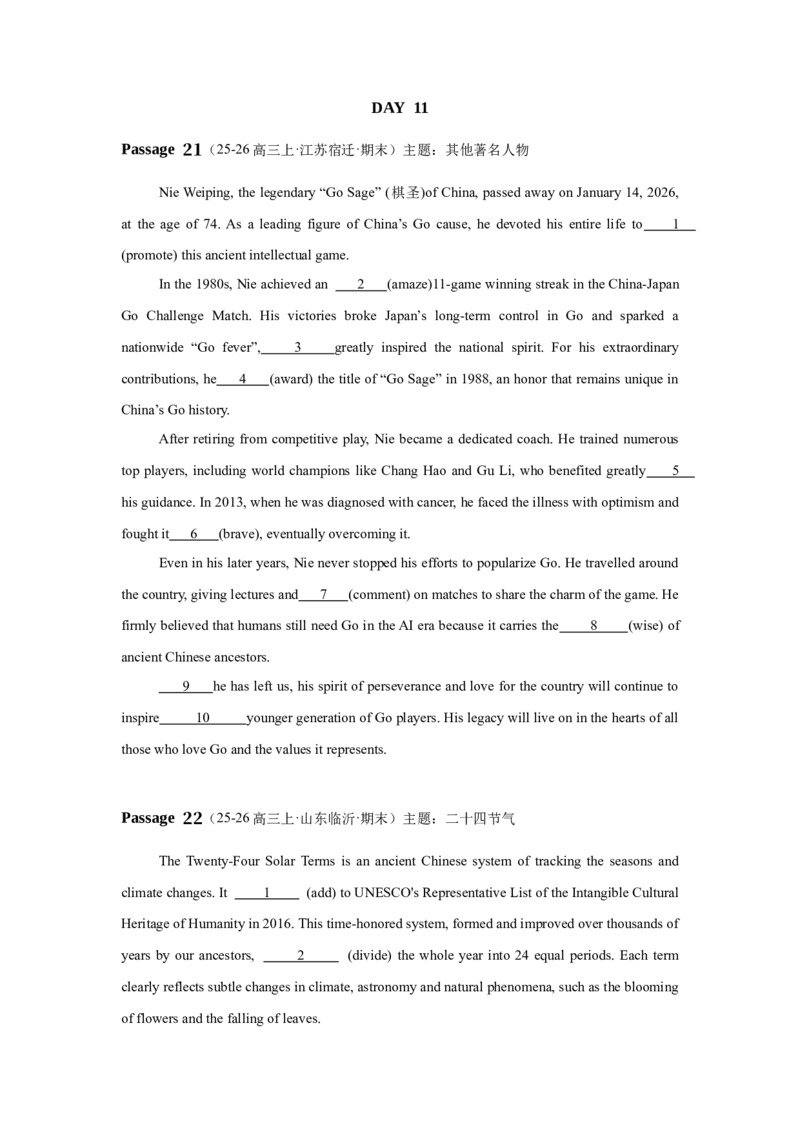
Nie Weiping, the legendary “Go Sage” (棋圣)of China, passed away on January 14, 2026,
at the age of 74. As a leading figure of China’s Go cause, he devoted his entire life to 1
(promote) this ancient intellectual game.
In the 1980s, Nie achieved an 2 (amaze)11-game winning streak in the China-Japan
Go Challenge Match. His victories broke Japan’s long-term control in Go and sparked a
nationwide “Go fever”, 3 greatly inspired the national spirit. For his extraordinary
contributions, he 4 (award) the title of “Go Sage” in 1988, an honor that remains unique in
China’s Go history.
After retiring from competitive play, Nie became a dedicated coach. He trained numerous
top players, including world champions like Chang Hao and Gu Li, who benefited greatly 5
his guidance. In 2013, when he was diagnosed with cancer, he faced the illness with optimism and
fought it 6 (brave), eventually overcoming it.
Even in his later years, Nie never stopped his efforts to popularize Go. He travelled around
the country, giving lectures and 7 (comment) on matches to share the charm of the game. He
firmly believed that humans still need Go in the AI era because it carries the 8 (wise) of
ancient Chinese ancestors.
9 he has left us, his spirit of perseverance and love for the country will continue to
inspire 10 younger generation of Go players. His legacy will live on in the hearts of all
those who love Go and the values it represents.
Passage 22(25-26高三上·山东临沂·期末)主题:二十四节气
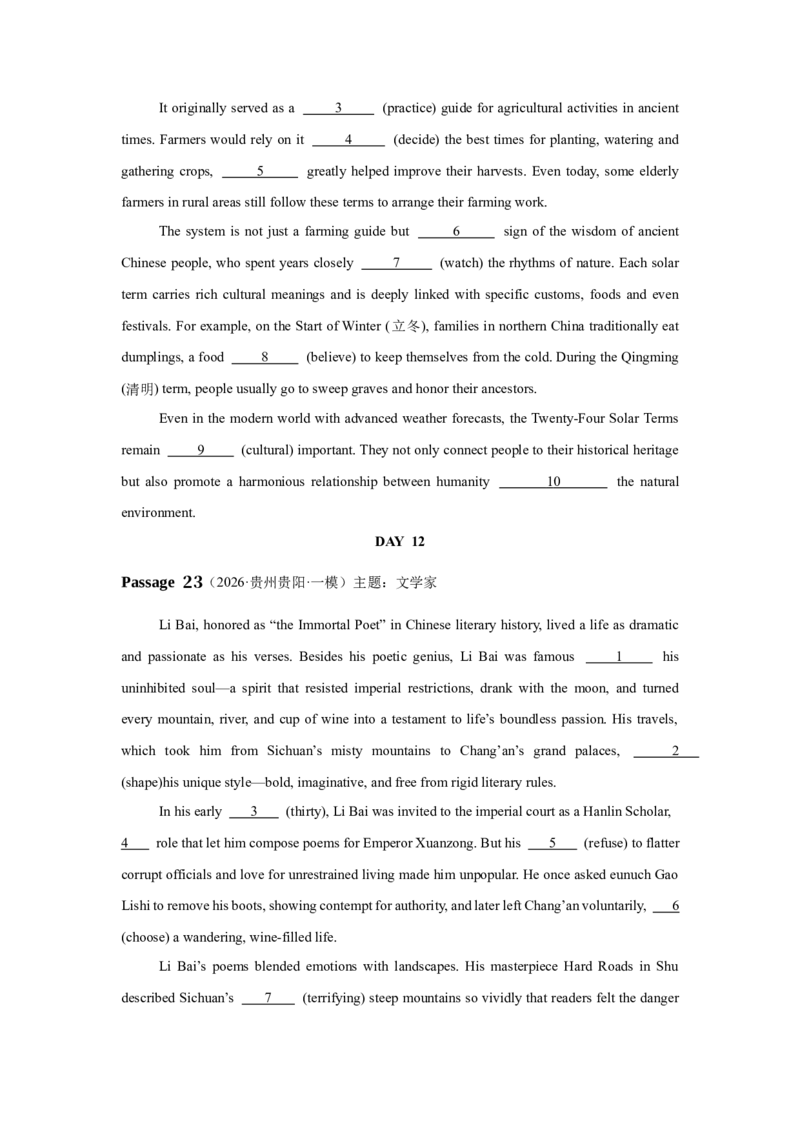
The Twenty-Four Solar Terms is an ancient Chinese system of tracking the seasons and
climate changes. It 1 (add) to UNESCO's Representative List of the Intangible Cultural
Heritage of Humanity in 2016. This time-honored system, formed and improved over thousands of
years by our ancestors, 2 (divide) the whole year into 24 equal periods. Each term
clearly reflects subtle changes in climate, astronomy and natural phenomena, such as the blooming
of flowers and the falling of leaves.It originally served as a 3 (practice) guide for agricultural activities in ancient
times. Farmers would rely on it 4 (decide) the best times for planting, watering and
gathering crops, 5 greatly helped improve their harvests. Even today, some elderly
farmers in rural areas still follow these terms to arrange their farming work.
The system is not just a farming guide but 6 sign of the wisdom of ancient
Chinese people, who spent years closely 7 (watch) the rhythms of nature. Each solar
term carries rich cultural meanings and is deeply linked with specific customs, foods and even
festivals. For example, on the Start of Winter (立冬), families in northern China traditionally eat
dumplings, a food 8 (believe) to keep themselves from the cold. During the Qingming
(清明) term, people usually go to sweep graves and honor their ancestors.
Even in the modern world with advanced weather forecasts, the Twenty-Four Solar Terms
remain 9 (cultural) important. They not only connect people to their historical heritage
but also promote a harmonious relationship between humanity 1 0 the natural
environment.
DAY 12
Passage 23(2026·贵州贵阳·一模)主题:文学家
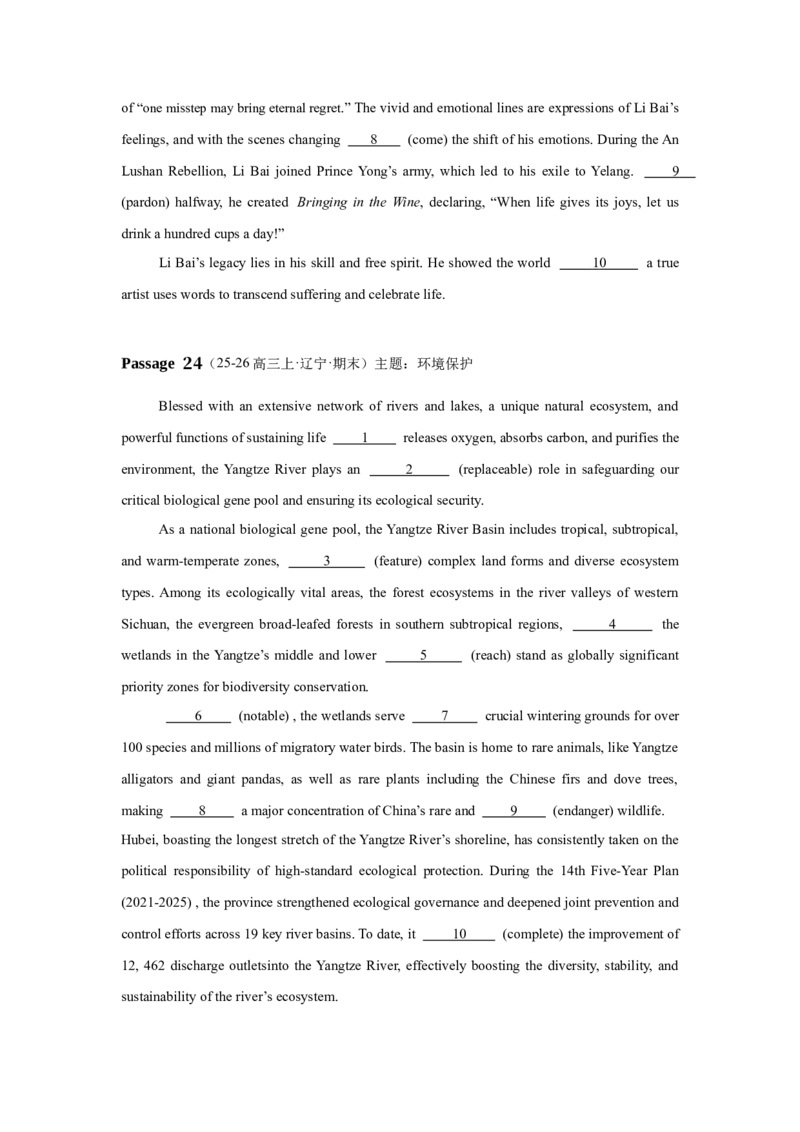
Li Bai, honored as “the Immortal Poet” in Chinese literary history, lived a life as dramatic
and passionate as his verses. Besides his poetic genius, Li Bai was famous 1 his
uninhibited soul—a spirit that resisted imperial restrictions, drank with the moon, and turned
every mountain, river, and cup of wine into a testament to life’s boundless passion. His travels,
which took him from Sichuan’s misty mountains to Chang’an’s grand palaces, 2
(shape)his unique style—bold, imaginative, and free from rigid literary rules.
In his early 3 (thirty), Li Bai was invited to the imperial court as a Hanlin Scholar,
4 role that let him compose poems for Emperor Xuanzong. But his 5 (refuse) to flatter
corrupt officials and love for unrestrained living made him unpopular. He once asked eunuch Gao
Lishi to remove his boots, showing contempt for authority, and later left Chang’an voluntarily, 6
(choose) a wandering, wine-filled life.
Li Bai’s poems blended emotions with landscapes. His masterpiece Hard Roads in Shu
described Sichuan’s 7 (terrifying) steep mountains so vividly that readers felt the dangerof “one misstep may bring eternal regret.” The vivid and emotional lines are expressions of Li Bai’s
feelings, and with the scenes changing 8 (come) the shift of his emotions. During the An
Lushan Rebellion, Li Bai joined Prince Yong’s army, which led to his exile to Yelang. 9
(pardon) halfway, he created Bringing in the Wine, declaring, “When life gives its joys, let us
drink a hundred cups a day!”
Li Bai’s legacy lies in his skill and free spirit. He showed the world 1 0 a true
artist uses words to transcend suffering and celebrate life.
Passage 24(25-26高三上·辽宁·期末)主题:环境保护
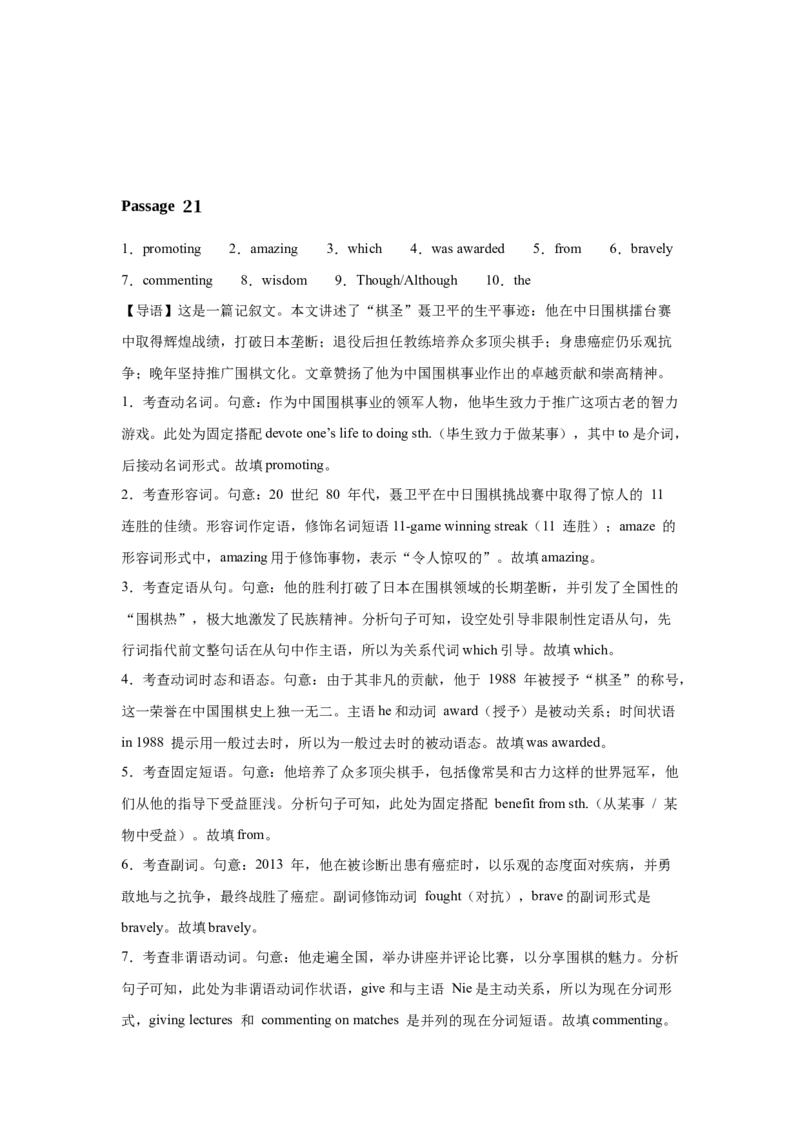
Blessed with an extensive network of rivers and lakes, a unique natural ecosystem, and
powerful functions of sustaining life 1 releases oxygen, absorbs carbon, and purifies the
environment, the Yangtze River plays an 2 (replaceable) role in safeguarding our
critical biological gene pool and ensuring its ecological security.
As a national biological gene pool, the Yangtze River Basin includes tropical, subtropical,
and warm-temperate zones, 3 (feature) complex land forms and diverse ecosystem
types. Among its ecologically vital areas, the forest ecosystems in the river valleys of western
Sichuan, the evergreen broad-leafed forests in southern subtropical regions, 4 the
wetlands in the Yangtze’s middle and lower 5 (reach) stand as globally significant
priority zones for biodiversity conservation.
6 (notable) , the wetlands serve 7 crucial wintering grounds for over
100 species and millions of migratory water birds. The basin is home to rare animals, like Yangtze
alligators and giant pandas, as well as rare plants including the Chinese firs and dove trees,
making 8 a major concentration of China’s rare and 9 (endanger) wildlife.
Hubei, boasting the longest stretch of the Yangtze River’s shoreline, has consistently taken on the
political responsibility of high-standard ecological protection. During the 14th Five-Year Plan
(2021-2025) , the province strengthened ecological governance and deepened joint prevention and
control efforts across 19 key river basins. To date, it 1 0 (complete) the improvement of
12, 462 discharge outletsinto the Yangtze River, effectively boosting the diversity, stability, and
sustainability of the river’s ecosystem.Passage 21
1.promoting 2.amazing 3.which 4.was awarded 5.from 6.bravely
7.commenting 8.wisdom 9.Though/Although 10.the
【导语】这是一篇记叙文。本文讲述了“棋圣”聂卫平的生平事迹:他在中日围棋擂台赛
中取得辉煌战绩,打破日本垄断;退役后担任教练培养众多顶尖棋手;身患癌症仍乐观抗
争;晚年坚持推广围棋文化。文章赞扬了他为中国围棋事业作出的卓越贡献和崇高精神。
1.考查动名词。句意:作为中国围棋事业的领军人物,他毕生致力于推广这项古老的智力
游戏。此处为固定搭配devote one’s life to doing sth.(毕生致力于做某事),其中to是介词,
后接动名词形式。故填promoting。
2.考查形容词。句意:20 世纪 80 年代,聂卫平在中日围棋挑战赛中取得了惊人的 11
连胜的佳绩。形容词作定语,修饰名词短语11-game winning streak(11 连胜);amaze 的
形容词形式中,amazing用于修饰事物,表示“令人惊叹的”。故填amazing。
3.考查定语从句。句意:他的胜利打破了日本在围棋领域的长期垄断,并引发了全国性的
“围棋热”,极大地激发了民族精神。分析句子可知,设空处引导非限制性定语从句,先
行词指代前文整句话在从句中作主语,所以为关系代词which引导。故填which。
4.考查动词时态和语态。句意:由于其非凡的贡献,他于 1988 年被授予“棋圣”的称号,
这一荣誉在中国围棋史上独一无二。主语he和动词 award(授予)是被动关系;时间状语
in 1988 提示用一般过去时,所以为一般过去时的被动语态。故填was awarded。
5.考查固定短语。句意:他培养了众多顶尖棋手,包括像常昊和古力这样的世界冠军,他
们从他的指导下受益匪浅。分析句子可知,此处为固定搭配 benefit from sth.(从某事 / 某
物中受益)。故填from。
6.考查副词。句意:2013 年,他在被诊断出患有癌症时,以乐观的态度面对疾病,并勇
敢地与之抗争,最终战胜了癌症。副词修饰动词 fought(对抗),brave的副词形式是
bravely。故填bravely。
7.考查非谓语动词。句意:他走遍全国,举办讲座并评论比赛,以分享围棋的魅力。分析
句子可知,此处为非谓语动词作状语,give和与主语 Nie是主动关系,所以为现在分词形
式,giving lectures 和 commenting on matches 是并列的现在分词短语。故填commenting。8.考查名词。句意:他坚信,在人工智能时代,人类仍然需要围棋,因为它蕴含着中国古
代先辈的智慧。分析句子可知,此处为名词作宾语,wise 的名词形式是 wisdom(智慧),
为不可数名词。故填wisdom。
9.考查让步状语从句。句意:尽管他已经离我们而去,但他的坚韧不拔的精神以及对国家
的热爱将永远激励着新一代的围棋选手。分析句子可知,此处为连词Though/ Although表
示“虽然;尽管”引导让步状语从句,从句与主句构成转折关系。故填Though/
Although。
10.考查冠词。句意:尽管他已经离我们而去,但他的坚韧不拔的精神以及对国家的热爱
将永远激励着新一代的围棋选手。分析句子可知,此处用于修饰 younger generation(年轻
一代),表示特指“围棋界的年轻一代棋手”。故填the。
Passage 22
1.was added 2.divides 3.practical 4.to decide 5.which 6.a 7.
watching 8.believed 9.culturally 10.and
【导语】这是一篇说明文。主要说明了中国二十四节气于2016年列入非遗,是古人总结的
季节气候体系,曾指导农业生产,承载丰富文化习俗,如今仍具文化意义,促进人与自然
和谐。
1.考查时态语态。句意:它于 2016 年被列入联合国教科文组织“人类非物质文化遗产代
表名录”。主语It与谓语add构成被动关系,结合后文in 2016可知为一般过去时的被动语
态,主语是it,谓语用单数。故填was added。
2.考查时态。句意:这一古老的体系是由我们的先辈历经数千年不断形成和完善而来的,
它将一年的时间划分成了 24 个相等的时段。陈述事实用一般现在时,主语为system,与
谓语divide是主动关系,主语是第三人称单数,谓语用第三人称单数。故填divides。
3.考查形容词。句意:它最初是古代农业活动中的一份实用指南。修饰名词guide用形容
词practical。故填practical。
4.考查非谓语动词。句意:农民们会依据它来确定播种、灌溉以及收获农作物的最佳时间,
这极大地有助于提高他们的收成。短语rely on sb./sth. to do sth.表示“依靠……做某事”,
用不定式作宾语补足语。故填to decide。
5.考查定语从句。句意:农民们会依据它来确定播种、灌溉以及收获农作物的最佳时间,
这极大地有助于提高他们的收成。此处为非限制性定语从句,修饰上文句子,从句缺少主
语,故填which。6.考查冠词。句意:这个系统不仅仅是一份农业指南,更是体现中国古代人民的智慧的标
志。他们花费了多年时间密切观察自然的规律。此处sign为泛指,且是发音以辅音音素开
头的单词。故填a。
7.考查非谓语动词。句意:这个系统不仅仅是一份农业指南,更是体现中国古代人民的智
慧的标志。他们花费了多年时间密切观察自然的规律。短语spend time (in) doing sth.表示
“花费时间做某事”。故填watching。
8.考查非谓语动词。句意:例如,在立冬这一天,中国北方的家庭通常会吃饺子,人们认
为这种食物有助于抵御寒冷。此处food与believe构成被动关系,用过去分词作定语。故填
believed。
9.考查副词。句意:即便在如今这个拥有先进气象预报技术的时代,二十四节气在文化层
面仍具有重要意义。修饰形容词important用副词culturally。故填culturally。
10.考查连词。句意:它们不仅将人们与他们的历史遗产紧密相连,还促进了人类与自然
环境之间的和谐关系。短语between... and...表示“在……和……之间”。故填and。
Passage 23
1.for; 2.shaped; 3.thirties; 4.a; 5.refusal; 6.choosing;
7.terrifyingly; 8.comes; 9.Pardoned; 10.how
【导语】本文是一篇记叙文。文章主要讲述了李白作为中国文学史上“诗仙”的传奇人生,
包括他的诗歌风格、在朝廷的经历、诗歌创作特点以及他在安史之乱后的遭遇等,展现了
他的才华和自由不羁的精神。
1.考查介词。句意:除了他的诗歌天赋,李白还以其无拘无束的灵魂而闻名——一种抵制
皇权限制、与月亮共饮、将每一座山、每一条河、每一杯酒都化作生命无限激情见证的精
神。“be famous for”是固定短语,意为“因……而闻名”,所以此处应填for。
2.考查时态。句意:他的旅行,从四川云雾缭绕的山脉到长安的宏伟宫殿,塑造了他独特
的风格——大胆、富有想象力、不受刻板文学规则的束缚。本句缺少谓语动词,且描述的
是过去的事情,应用一般过去时,所以此处应填shaped。
3.考查数词、固定短语。句意:李白三十出头时,被邀请到朝廷担任翰林学士,这个职位
让他为唐玄宗作诗。“in one's + 整十数的复数形式”为固定短语,表示“在某人几十岁
时”,所以此处应填thirties。
4.考查冠词。句意:同上。分析句子结构可知,“role”是可数名词单数,此处表示泛指
“一个职位”,且“role”是以辅音音素开头的单词,所以此处应填a。5.考查名词。句意:但他拒绝奉承腐败官员,热爱无拘无束的生活,这使他不受欢迎。此
处应用名词作主语,“refuse”的名词形式是“refusal”,意为“拒绝”,为不可数名词,所
以此处应填refusal。
6.考查非谓语动词。句意:他曾让宦官高力士为他脱靴,表现出对权威的蔑视,后来自愿
离开长安,选择了漂泊、饮酒的生活。本句已有谓语动词“left”,所以此处应用非谓语动
词,“he”与“choose”之间是主动关系,应用现在分词作结果状语,所以此处应填
choosing。
7.考查副词。句意:他的代表作《蜀道难》生动地描绘了四川陡峭的山脉,让读者感受到
“一失足成千古恨”的危险。此处应用副词修饰形容词“steep”,“terrifying”的副词形式
是“terrifyingly”,意为“令人恐惧地”,所以此处应填terrifyingly。
8.考查时态和主谓一致。句意:这些生动而富有情感的诗句是李白情感的表达,随着场景
的变化,他的情感也随之转变。分析句子结构可知,本句为全部倒装句,此处缺少谓语动
词,且描述的是客观事实,应用一般现在时,“the shift of his emotions”是单数,所以此处
应填comes。
9.考查非谓语动词。句意:中途获赦后,他创作了《将进酒》,宣称:“人生得意须尽欢,
莫使金樽空对月!”本句已有谓语动词“created”,所以此处应用非谓语动词,“he”与
“pardon”之间是被动关系,应用过去分词作状语,且位于句首,首字母应大写,所以此处
应填Pardoned。
10.考查宾语从句。句意:他向世界展示了一位真正的大文豪如何用文字超越苦难,赞美
生活。 “showed the world”后是宾语从句,从句缺少方式状语,应用“how”引导,所以此
处应填how。
Passage 24
1.that/which 2.irreplaceable 3.featuring 4.and 5.reaches 6.
Notably 7.as 8.it 9.endangered 10.has completed
【导语】这是一篇说明文。文章主要在讲长江流域独特的生态系统和生物多样性价值,以
及湖北等地在长江生态保护方面的努力和成效。
1.考查定语从句。句意:长江拥有广阔的河湖网络、独特的自然生态系统以及强大的生命
维持功能——释放氧气、吸收碳并净化环境,在守护我国重要生物基因库、保障生态安全
方面发挥着不可替代的作用。空处引导限定性定语从句,先行词是functions,指物,在从句中作主语,应用关系代词that或which引导。故填that或which。
2.考查形容词。句意同上。空处作定语修饰名词role,应用形容词irreplaceable,表示
“不可替代的”。故填irreplaceable。
3.考查非谓语动词。句意:作为国家生物基因库,长江流域涵盖热带、亚热带和暖温带地
区,具有复杂的地形和多样的生态系统类型。feature与逻辑主语the Yangtze River Basin构
成主动关系,应用现在分词,作状语。故填featuring。
4.考查连词。句意:在其生态关键区域中,川西河谷的森林生态系统、南亚热带地区的常
绿阔叶林,以及长江中下游的河段湿地,都是全球范围内具有重要意义的生物多样性保护
优先区域。forest ecosystems, evergreen broad-leafed forests和wetlands是三个并列的主语,
最后两个之间用 and 连接。故填and。
5.考查名词复数。句意同上。reach为可数名词,表示“河段”,由middle and lower可知,
应用名词复数形式。故填reaches。
6.考查副词。句意:值得注意的是,这些湿地是超过100种、数百万只迁徙水鸟的重要越
冬地。修饰整个句子,应用副词notably,作状语,位于句首,首字母大写。故填
Notably。
7.考查介词。句意同上。serve as为固定短语,表示“充当,作为”。故填as。
8.考查代词。句意:该流域栖息着扬子鳄、大熊猫等珍稀动物,还有杉木、珙桐等珍稀植
物,使它成为中国珍稀和濒危野生动植物的主要集中分布区。此处指代The basin,应用代
词it,作宾语。故填it。
9.考查形容词。句意同上。此处应用形容词endangered,表示“濒危的”,作定语修饰名
词wildlife。故填endangered。
10.考查动词时态。句意:截至目前,湖北已完成12,462个长江入河排污口的整治,有效
提升了长江生态系统的多样性、稳定性和可持续性。根据To date可知,应用现在完成时,
主语是it,助动词用has。故填has completed。