时文语法填空——电影篇(二)
Test 1
Remember History, Cherish Peace
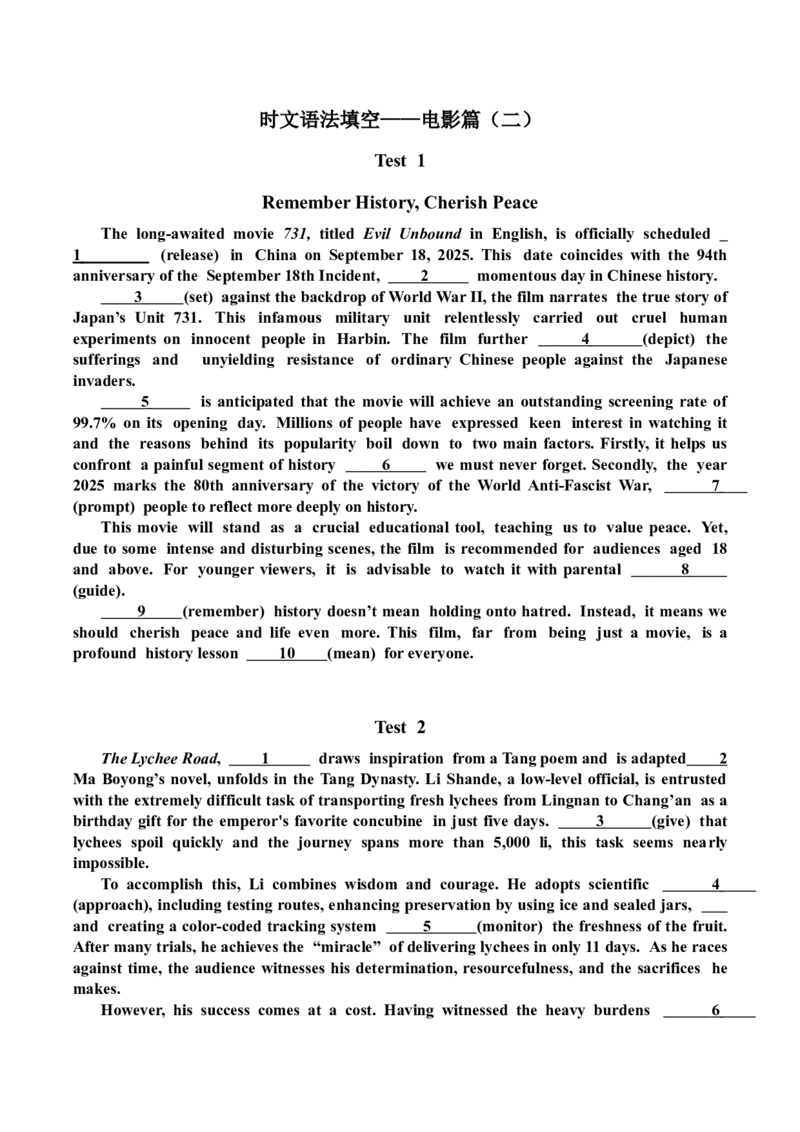
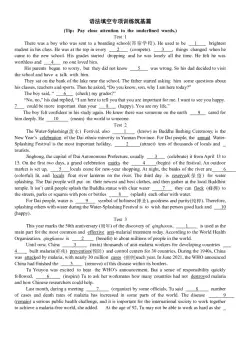
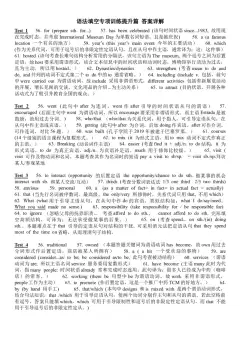
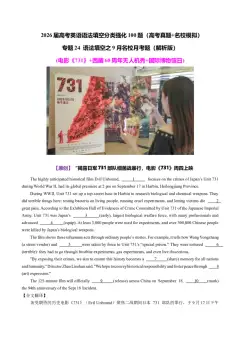
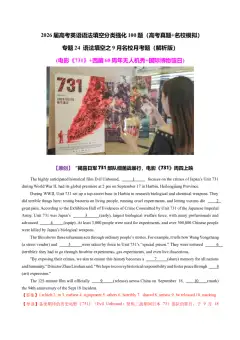
The long-awaited movie 731, titled Evil Unbound in English, is officially scheduled
1

  (release) in China on September 18, 2025. This date coincides with the 94th
anniversary of the September 18th Incident,
  2

  momentous day in Chinese history.

  3

 (set) against the backdrop of World War II, the film narrates the true story of
Japan’s Unit 731. This infamous military unit relentlessly carried out cruel human
experiments on innocent people in Harbin. The film further
  4

 (depict) the
sufferings and  unyielding resistance of ordinary Chinese people against the Japanese
invaders.

  5

  is anticipated that the movie will achieve an outstanding screening rate of
99.7% on its opening day. Millions of people have expressed keen interest in watching it
and the reasons behind its popularity boil down to two main factors. Firstly, it helps us
confront a painful segment of history
  6

  we must never forget. Secondly, the year
2025 marks the 80th anniversary of the victory of the World Anti-Fascist War,
  7
(prompt) people to reflect more deeply on history.
This movie will stand as a crucial educational tool, teaching us to value peace. Yet,
due to some intense and disturbing scenes, the film is recommended for audiences aged 18
and above. For younger viewers, it is advisable to watch it with parental

 8


(guide).

  9

 (remember) history doesn’t mean holding onto hatred. Instead, it means we
should cherish peace and life even more. This film, far from being just a movie, is a
profound history lesson
  10


 (mean) for everyone.
Test 2
The Lychee Road,
  1

  draws inspiration from a Tang poem and is adapted
  2
Ma Boyong’s novel, unfolds in the Tang Dynasty. Li Shande, a low-level official, is entrusted
with the extremely difficult task of transporting fresh lychees from Lingnan to Chang’an as a
birthday gift for the emperor's favorite concubine in just five days.
  3

 (give) that
lychees spoil quickly and the journey spans more than 5,000 li, this task seems nearly
impossible.
To accomplish this, Li combines wisdom and courage. He adopts scientific
  4

(approach), including testing routes, enhancing preservation by using ice and sealed jars,
and creating a color-coded tracking system
  5

 (monitor) the freshness of the fruit.
After many trials, he achieves the “miracle” of delivering lychees in only 11 days. As he races
against time, the audience witnesses his determination, resourcefulness, and the sacrifices he
makes.
However, his success comes at a cost. Having witnessed the heavy burdens
  6

(impose) on ordinary people to meet the imperial demands, Li
  7

 (fearless) speaks
out against injustice, showing moral courage that goes beyond personal interests.
Though set in the Tang Dynasty, the film
  8

 (mirror) contemporary life. The
struggles of Li, like finding it hard to afford a house and facing unfair work tasks, resonate
with the pressures faced by today’s young people. His journey conveys a message
  9
genuine growth doesn’t just come from success but from the resolve to strive despite
numerous obstacles. Overall, The Lychee Road is not just a historical film but a thought-
provoking and visually stunning work, making it
  10


  must-watch for both history
enthusiasts and movie lovers.
Test 3
Chen Peisi's film The Stage hit cinemas on July 25, 2025.
  1

 (adapt)from his
classic stage play, the movie marks a
  2

  (glory) comeback for Chen after his 32-year
absence from the big screen.
The story, set in the turbulent 1920s, revolves around Hou Xiting played by Chen Peisi
himself,
  3

  leads the Wuqing Peking Opera Troupe. Just when the actors are ready
to perform the famous Farewell My Concubine (Bawang Bieji in Chinese), a local warlord
bursts in. He replaces the lead performer with an unskilled assistant from a bun shop and
insists on making ridiculous revisions to the classic opera, thus
  4

 (throw) the
troupe into a desperate crisis.
Chen has put his lifelong passion for traditional art into every frame. The beautiful
costumes and genuine Peking Opera scenes preserve the essence of the original play,
showcasing both the origins of Chinese culture and people's
  5

 (resilient) during
tough times.

  6

  impresses audiences most is the performers’ dedication to their art. Even
when surrounded by gunfire and chaos, they still cling
  7

  (tight) to the dignity of
Peking Opera. The film conveys a clear message: although trends come and go in
  8

flash, the values deeply rooted in tradition will stand the test of time. As Hou Xiting puts
9

  "These ancient arts are our roots – we must hold onto them."
By blending subtle humor with sincere emotion, The Stage reignites our admiration for
traditional culture and urges us
  10


  (pass) it down to future generations.