ARTICLE · 1199353
高考英语阅读训练|2026-10-17:① 三北工程攻坚战 ② 成长型思维 ③ 校园义卖里,那本笔记本的旅程(完形)
高考英语阅读理解 · 每日训练
日期:2026-10-17(星期六) · 今日话题:中国时事生态民生 + 社会心理 + 成长叙事(完形)
Passage 1 · 新闻报道(中国时事·非科技)Passage 2 · 议论文(外刊 D 篇)完形 · 15 空对标新课标 I 卷 C / D 篇 + 完形
Passage 1三北工程攻坚战:绿进沙退,沙化土地年均净减少
体裁:新闻报道(中国时事·生态民生·非科技) 词数:约 382 难度:★★★☆(对标 C 篇中难偏上)
原文(先做后看解析;仅真超纲词就近标注,其余请语境自猜)
Along the northern edge of China, a green line is being drawn against the desert. The "Three-North" Shelterbelt Program, launched in 1978, is the world's largest tree-planting effort. For decades the sands advanced and villages retreated. Today the trend has turned. Fresh figures from the 2026 National Ecology Day show that, since the latest campaign began, the program has arranged 88.9 billion yuan in central investment and carried out 544 key projects, completing more than 80 million mu(亩,约 1/15 公顷) of work each year. The forested and grassy coverage in the project area has reached 40.76 percent, and 67.82 percent of treatable sandy land has been brought under control.
The change is visible on the ground. China's sandy land area, which once expanded by 5.15 million mu a year last century, now shrinks by 10 million mu annually, and has done so for four straight monitoring periods. Wind erosion across the eight major deserts and four sandy lands has fallen about 40 percent compared with 2000. Forest coverage in the region has climbed from 5.05 percent in 1978 to 13.84 percent today. In the key treated zones a historic reversal has taken place: the once-advancing sands have been pushed back, and green now holds the ground where yellow once ruled.
The program is also a jobs engine. Through "work-for-relief," it has created 1.526 million jobs for farmers and herders close to home, paying 10.24 billion yuan in wages. The green industry in the project area is worth over 800 billion yuan, while desert specialties have lifted rural incomes. "Photovoltaic plus sand control" has treated 5.3 million mu of desert, and more than 3,500 kilometers of roads built through the sands have themselves become barriers against drifting dunes. The closed green belt around the Tarim Basin was named among the "2025 Top Ten Global Engineering Achievements."
None of this happened by chance. Scientists divided the region into 136 ecological zones and bred drought- and salt-tolerant plant varieties, raising the use of improved seeds above 75 percent and boosting control efficiency more than threefold. What began as a fight against spreading sand has become a quiet lesson in how patient, science-based care can turn a shrinking frontier into a growing one — proof that a degraded land, given time and method, can be reclaimed.
题目(Q1–Q4)
What is the main achievement reported about the Three-North Shelterbelt Program?A. It built the world's largest single solar farm in the far north.B. It ended farming in the project area to protect the soil.C. It reversed desert expansion and raised green coverage through sustained effort.D. It moved 1.5 million villagers to coastal cities for safety. What can be inferred about the description "green now holds the ground where yellow once ruled"?A. The treated areas have shifted from sand gaining ground to vegetation gaining ground.B. Yellow crops now cover the former deserts and feed the region.C. The program has already finished its planned work ahead of schedule.D. Farmers were forced to leave the sandy regions and start anew. The word "reclaimed" in the last paragraph is closest in meaning to ______.A. to abandon and leave a place aloneB. to recover and bring something back into good useC. to measure and map a region preciselyD. to paint and decorate a worn surface What is the author's main purpose in writing this passage?A. To claim that afforestation is a key way to fight climate change worldwide.B. To compare the Three-North Program with foreign forestry projects.C. To criticise the high cost of the green industry in the region.D. To show how patient, science-based effort is turning degraded land green again.
逐题解析
Q1 答案:C
正确原因:跨段综合细节题。第1段"turned / arranged 88.9 billion yuan / 40.76 percent coverage / 67.82% sandy land under control"与第2段"sandy land shrinks by 10 million mu annually / forest coverage 5.05%→13.84%"共同说明工程逆转了沙漠扩张、提升了绿被覆盖,对应 C。
干扰项:A 张冠李戴——文中"光伏治沙"是治沙手段,非"最大单体光伏电站";B 歪曲——工程带动农牧民就业而非"终止农业";D 无中生有——文中是以工代赈就地就业,非"迁往沿海城市"。
Q2 答案:A ★踮脚
正确原因:推理判断题(推一步)。第2段"the once-advancing sands have been pushed back, and green now holds the ground where yellow once ruled"须推出:治理前是"黄沙进逼、绿退",治理后转为"绿进、黄退",即被治理区从"沙子得势"反转为"植被得势",原文无原句。
干扰项:B 无据——"yellow"指黄沙而非"黄色庄稼",且文中未说作物覆盖沙漠;C 反向/无据——六期中期目标完成≠"已提前完工";D 反向——是以工代赈就地就业,非"被迫迁离"。
Q3 答案:B
正确原因:词义猜测题。末段前文讲"退化土地经科学养护由缩减前沿变增长前沿","a degraded land... can be reclaimed"语义上指"被恢复、重新利用/焕发生机",目标词已加粗提示定位,B(恢复并重新善用)最贴合。
干扰项:A "放弃荒置"与"变增长前沿"相反;C "测绘"、D "粉饰表面"均与"退化土地经养护重获生机"的语境无关。
Q4 答案:D
正确原因:写作目的/主旨题。全文主线"工程成效(绿进沙退+数据)— 民生就业 — 科技支撑 — 升华(耐心科学的养护能让退化土地重生)",D 全面概括作者意图;A 夸大("key way worldwide"无据、偏离中国案例)、B 以偏概全(未做中外对比)、C 歪曲(肯定绿色产业惠民,非批评成本)。
干扰项:A 超出文本范围且弱化中国经验;B 文中无对比;C 与"绿色产业产值超 8000 亿、带动增收"的肯定基调相反。
语篇分析
体裁:新闻报道(成效数据—民生就业—科技支撑—意义升华 结构,非虚构改写)。
结构骨架:第1段亮数据(中央投资 889 亿、544 项目、林草覆盖率 40.76%、可治理沙地治理率 67.82%);第2段讲趋势反转(沙化土地由年均扩 515 万亩转为年均减 1000 万亩、森林覆盖率 5.05%→13.84%、"绿进沙退");第3段民生就业(以工代赈 152.6 万人、光伏治沙、环塔锁边工程);第4段科技支撑与全球意义,收束"退化土地可重生"。
难度提示:Q2 为踮脚推理题,需把"绿进黄退"的喻体推成"沙得势→植被得势"的语义反转,不可在原文找原句;长难句如 "Fresh figures from the 2026 National Ecology Day show that, since the latest campaign began, the program has arranged..." 含宾语从句嵌套 since 状语从句。
核心词汇(8–12 个,含派生词构词法)
词组 / 固定搭配
draw a line against 划出防线抵御villages retreated 村落退让(沙逼人退)bring...under control 把……控制住work-for-relief 以工代赈close to home 在家门口,就近drifting dunes 流动沙丘science-based care 基于科学的养护
阅读知识点
① 细节理解题——"跨段综合定位"法:Q1 的正确项 C 不在任何一句原话里,而需合并第1段"趋势反转+覆盖率+治理率"与第2段"沙化土地转净减少+森林覆盖率翻倍"两处证据,凡只盯一段的选项(A/B/D)必错。
② 推理判断题——"喻体→本意"推一步法(踮脚题):Q2 不能选原文原词,而要把"绿进、黄退、绿守阵地"的喻体推成"沙得势→植被得势"的语义反转,答案 A 是对形象措辞背后事实的判断,须在原文证据上向前走一步。
练习建议:做生态/民生类阅读时,先圈出"数据—反转—就业—意义"四类信息,推理题往往落在"意义/喻体"句,需把形象说法翻成事实判断。
Passage 2成长型思维:为什么夸努力比夸聪明更有效
体裁:议论文(外刊·社会心理) 词数:约 439 难度:★★★★☆(对标 D 篇外刊高难)
原文(先做后看解析;仅真超纲词就近标注,其余请语境自猜)
Some students shrug off a poor grade as proof they lack ability, while others treat it as a reason to study harder. The difference, says psychologist Carol Dweck of Stanford, lies in what she calls "mindset." In a fixed mindset, people see intelligence as a set trait — something you either have or do not. In a growth mindset, they see it as malleable(可塑的), a quality that grows with effort. Her 2006 book Mindset turned this idea into a widely used framework in schools and workplaces.
The case for the growth view rests on a striking experiment. In 1998, Dweck and Claudia Mueller gave ten- and eleven-year-old children a set of puzzles, then praised them in different ways. One group heard they must be "smart" — intelligence praise; another that they must have "tried really hard" — effort praise; a control group got plain praise. The result surprised even the researchers. The "smart" children soon avoided harder tasks, feared looking dull, and when later asked to report their scores, many inflated them. The effort-praised children stayed engaged, enjoyed the work, and improved. Praise, it turned out, can shape which theory of self a child adopts.
A 2007 follow-up by Blackwell, Trzesniewski and Dweck tested the idea in classrooms. Seventh-graders whose math grades were slipping joined an eight-session workshop. The growth-mindset group read that the brain is like a muscle and strengthens with use; the control group learned only study skills. By the next term, the growth group showed a clear rise in motivation and a recovery in math scores — an effect that held for two years. The study suggested mindset is not a fixed part of personality but a habit that can be taught, and that believing ability can grow changes how a learner meets challenge. Teachers noted that previously hesitant students began volunteering answers — a sign the habit had taken root well beyond the scoreboard.
Dweck's message is practical, not magical. Telling children to "be smart" can backfire by tying worth to a result they may fear losing; focusing on strategy, practice and progress builds resilience(韧性/抗挫力). Classrooms that celebrate effort over rank tend to see steadier engagement across the term, not just a temporary bounce. Schools that adopt the approach ask students to value the process over the verdict. Importantly, later researchers have urged care: mindset is one influence among many, and effects vary by context. Yet the core insight endures — that believing ability can grow reshapes how we face setbacks, and that belief itself can be learned.
题目(Q5–Q8)
What did Dweck and Mueller's 1998 study find?A. Children praised for effort stayed engaged and improved, while those praised for being smart avoided challenge.B. Both groups performed equally regardless of the kind of praise they received.C. Intelligence praise made children try even harder follow-up tasks.D. The control group showed the largest gains in later test scores. What can be inferred about why intelligence praise may backfire?A. It makes children value practice more than any final result.B. It shows that talent is the real measure of a person's worth.C. It teaches children that mistakes are signs of personal weakness.D. Linking worth to a fixed trait makes setbacks feel like proof of low ability. What is the author's attitude toward Dweck's mindset theory?A. Strong doubt, calling it unproven and misleading for schools.B. Dismissal, since talent is fixed and cannot be developed.C. Balanced support, noting its value while urging care about context.D. Enthusiastic certainty that it is the answer to most learning problems. What is the main idea of the passage?A. Praise often harms children's performance at school without exception.B. Believing ability can grow, and teaching that belief, changes how we face challenge.C. Intelligence is an inborn gift that cannot be developed over time.D. The 1998 puzzle study was the most important education research ever done.
逐题解析
Q5 答案:A
正确原因:细节理解题。第2段"effort-praised children stayed engaged, enjoyed the work, and improved"与"'smart' children soon avoided harder tasks... inflated (their scores)"直接说明努力表扬组投入并进步、智力表扬组回避挑战,对应 A。
干扰项:B 反向——两组表现明显不同;C 反向——智力表扬组回避更难任务,非"更努力";D 反向——文中未说控制组成绩提升最大,且成长组才有回升。
Q6 答案:D ★踮脚
正确原因:推理判断题(推一步)。第4段"Telling children to 'be smart' can backfire by tying worth to a result they may fear losing"结合第2段"fixed mindset 把智力当固定特质、遇挫即自认不聪明",可推一步:把价值绑在"固定特质"上,会让挫折显得像"我能力低"的证明,从而适得其反,原文无原句。
干扰项:A 反向——智力表扬恰恰让人更在意结果、轻视过程;B 以偏概全且非"适得其反"的机理;C 过度推断——文中说"怕显得笨"而非"把失误当人格弱点",且 D 更贴第4段"tying worth to a result"的因果。
Q7 答案:C
正确原因:态度/主旨题。全文既介绍成长型思维的实验证据(第2、3段)与"实际而非魔法"的价值(第4段"practical, not magical / builds resilience"),又明确"later researchers have urged care... effects vary by context",可知作者持"有保留的肯定"态度,C 最贴切。
干扰项:A "强烈怀疑/误导"与全文正面引述实验矛盾;B "天赋不可发展"恰是作者反对的固定型观点;D "解决多数学习问题"过度肯定,与"urged care / one influence among many"不符。
Q8 答案:B
正确原因:主旨大意题。首段点明"成长型思维=能力可塑"、中段实验证明"可教"、末段落点"相信能力可成长能重塑我们面对挫折的方式,且这信念本身可被习得",B 既概括核心主张又含"可教/可学"的落点,全面覆盖。
干扰项:A 夸大且绝对——"often harms... without exception"与文中"effort praise 有益"矛盾;C 是作者反对的固定型观点,非主旨;D "最重大研究"夸大,文中仅作一例。
语篇分析
体裁:议论文(提出现象—经典实验证伪常识—课堂干预—现实启示与边界 结构)。
结构骨架:第1段概念(fixed vs growth mindset,智力可塑 malleable);第2段 1998 实验(智力/努力/控制三组,智力组回避挑战、努力组进步);第3段 2007 课堂干预(七年级数学下滑生,成长组动机+成绩回升、效果持续两年);第4段启示与边界(夸聪明适得其反、夸过程建韧性、需结合语境、核心洞见恒在)。
难度提示:Q6 为踮脚推理题,须从第4段"把价值绑在结果上"与第2段"固定型遇挫自认不聪明"推"智力表扬适得其反的成因",跨段综合;长难句如 "The 'smart' children soon avoided harder tasks, feared looking dull, and when later asked to report their scores, many inflated them" 含并列谓语+时间状语从句。
核心词汇(8–12 个,含派生词构词法)
词组 / 固定搭配
shrug off a poor grade 对低分不以为意fixed / growth mindset 固定型/成长型思维intelligence praise 智力表扬effort praise 努力表扬stay engaged 保持投入inflated their scores 虚报分数backfire by tying worth to... 因把价值绑在……上而适得其反value the process over the verdict 重过程甚于结果
阅读知识点
① 推理题——"机制→成因"推一步法(踮脚题):Q6 不直接问实验结论,而问"智力表扬为何适得其反",须把第4段"把价值绑在结果上"与第2段"固定型遇挫自认不聪明"综合成一步因果推断,属合理推一步而非臆测。
② 态度/主旨题——"首尾段定位+语气词"法:Q7 抓第4段"practical, not magical / urged care / one influence among many",可知作者既非全盘赞美也非否定、而是"有保留的肯定",C 最贴切;含绝对全盘肯定/否定(A、B、D)的选项一律优先回文复核。
练习建议:遇心理类 D 篇,先标出"概念—实验—干预—启示"四段功能,推理题多落在"启示/边界"段的因果链条上;凡选项含 always/only/never 等绝对词,先回原文找反例。
完形校园义卖里,那本笔记本的旅程
体裁:记叙文(成长叙事·旧物流转善意) 词数:约 296 难度:★★★☆(15 空,含近义辨析/固定搭配/语境推理)
原文(阅读下列短文,掌握大意后从每题所给 A、B、C、D 四个选项中选出最佳选项)
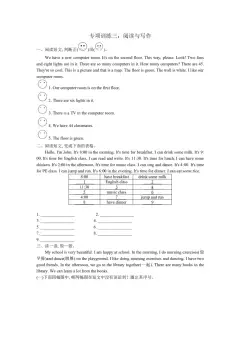
Our school held its annual charity bazaar last autumn, where students ____(1)____ their used books to raise money for a rural school. I brought a notebook my late grandmother had left me — its cover faded, its pages ____(2)____ with her neat handwriting.
At our stall, a shy boy ____(3)____ for a long time before picking it up. He turned the pages, then ____(4)____ if I would sell it. "It feels like it holds someone's story," he said. I nodded, and we agreed on a small price.
What I did not expect was that the notebook would ____(5)____ appearing. A month later, a classmate told me she had seen it in the library, now with lines by the boy. Then a teacher mentioned a student had ____(6)____ it to her, saying it should keep travelling.
By winter, the little book had passed through several hands, each leaving a few words — a wish, a thanks, a small ____(7)____ of their own. None of us had planned this; the notebook had become a quiet ____(8)____ of kindness on campus.
The bazaar finally raised enough for the rural school's library. But for me, the real lesson was the notebook itself. It taught me that when we give something away, we do not ____(9)____ lose it; sometimes an object carries more warmth in moving than in ____(10)____ still.
I still think of that faded cover and the hands it ____(11)____. Perhaps that is what charity truly is — not a one-time act, but a story that ____(12)____ long after the bazaar ends. If I ever hold such a thing again, I will let it ____(13)____, the way that notebook did, trusting that warmth can ____(14)____ far more than the thing itself, and that a gift can ____(15)____ a whole chain of goodwill.
题目(Blank 1–15)
____(1)____A. soldB. borrowedC. hidD. repaired ____(2)____A. coveredB. filledC. tornD. replaced ____(3)____A. ranB. laughedC. lingeredD. shouted ____(4)____A. doubtedB. forgotC. promisedD. asked ____(5)____A. keepB. stopC. avoidD. finish ____(6)____A. soldB. passedC. returnedD. locked ____(7)____A. secretB. problemC. noiseD. memory ____(8)____A. endB. wallC. chainD. rule ____(9)____A. simplyB. quietlyC. partlyD. wrongly ____(10)____A. runningB. speakingC. sittingD. falling ____(11)____A. washedB. touchedC. brokeD. counted ____(12)____A. endsB. failsC. beginsD. continues ____(13)____A. goB. breakC. stayD. hide ____(14)____A. weighB. costC. travelD. wait ____(15)____A. breakB. startC. stopD. hide
逐题解析
空 (1) 答案:A
语境推理。校园慈善义卖(charity bazaar)上,学生应是"售卖"旧书与杂物为乡村学校筹款,sold(售卖)与 raise money 呼应,符合义卖场景。
干扰项:B borrowed(借)/C hid(藏)/D repaired(修)均与"义卖筹款"的语境无关。
空 (2) 答案:B
固定搭配+语境。pages filled with handwriting 为"写满字迹的页",与"外婆遗留的笔记本、字迹工整"衔接,表达承载记忆。
干扰项:A covered(被盖住)/C torn(被撕破)/D replaced(被替换)均不表"写满"且破坏温情基调。
空 (3) 答案:C
语境逻辑。一个害羞的男孩在摊位前"逗留/端详良久"才拿起本子,lingered(徘徊、逗留)最贴合"shy + 慢慢翻看"的画面。
干扰项:A ran(跑)/B laughed(笑)/D shouted(喊)均与"害羞、缓慢翻页"的安静氛围冲突。
空 (4) 答案:D
语境逻辑。他翻看后抬头"问"我是否愿意卖,asked(询问)引出后文"我们议定一个小价钱",自然连贯。
干扰项:A doubted(怀疑)/B forgot(忘记)/C promised(承诺)都无法引出"是否出售"这一问句与议价。
空 (5) 答案:A
语境逻辑。后文说一个月后、后来又听说本子仍在流转,可知它"不断/持续出现",keep appearing(持续出现)与 would 搭配表"老是出现",符合"意料之外"。
干扰项:B stop(停止)/C avoid(避免)/D finish(结束)均使"不断出现"的惊奇感消失。
空 (6) 答案:B
语境复现+搭配。passed it to her 为"把它递/传给她",与后文 keep travelling(继续流转)、passed through several hands(经多人手)首尾呼应,是全篇"传递"意象的关键词。
干扰项:A sold(卖)弱化"传递善意"主题;C returned(归还)与"继续旅行"矛盾;D locked(锁)语义错。
空 (7) 答案:D
语义搭配。每经一手都留下几句话——一个愿望、一句感谢、一段属于自己的"记忆",memory(记忆)与"写几行字、载着故事"的情感一致。
干扰项:A secret(秘密)/B problem(问题)/C noise(噪音)均破坏"温柔留言"的语义。
空 (8) 答案:C
语境复现。本子串起多人善意,成了校园里一条安静的"善意链条",chain(链条)与末段 a whole chain of goodwill 首尾呼应,是全篇文眼。
干扰项:A end(终点)/B wall(墙)/D rule(规则)均不能表达"善意串联传递"。
空 (9) 答案:A
语境逻辑。把东西送出去,我们并不"就因此"失去它,simply(仅仅、简单地)修饰 lose,表达"送出≠失去"这一朴素领悟,语气克制。
干扰项:B quietly(安静地)/C partly(部分地)/D wrongly(错误地)代入后语义不通或偏离"送出未必失去"的哲理。
空 (10) 答案:C
对比搭配。moving(流转中)与 sitting still(静置不动)形成对照,说明物件在"流动"中比"静止"承载更多温度。
干扰项:A running(跑)/B speaking(说)/D falling(落)均不能与 still 构成合理对比。
空 (11) 答案:B
语境复现。我仍想起那本旧封皮和它曾"经手/触碰"过的手,touched(触碰、经手)呼应前文 pass through several hands,含蓄表达"被许多人温柔对待"。
干扰项:A washed(洗)/C broke(打破)/D counted(数)均破坏"经手流转"的意象。
空 (12) 答案:D
语境逻辑。慈善或许正在于:不是一次性行为,而是一个"延续/继续"很久的故事,continues(延续)与 long after 搭配,点明善意长效。
干扰项:A ends(结束)/B fails(失败)/C begins(开始)均与"long after the bazaar ends"的延续义相反或重复。
空 (13) 答案:A
语境逻辑。若再遇这样的物件,我会让它"流转/走下去",go(离去、继续前行)与外婆笔记本"keep travelling"的意象一致,表达放手让善意传递。
干扰项:B break(断)/C stay(留)/D hide(藏)均与"让其继续旅行"的放手态度相反。
空 (14) 答案:C
语境复现+搭配。温暖能比物件本身"传得更远",travel(传递、远行)与 keep travelling / pass through hands 形成"善意远行"的闭环隐喻。
干扰项:A weigh(称重)/B cost(花费)/D wait(等待)均不表"传递得更远"。
空 (15) 答案:B
语境逻辑。一个小礼物能"开启"一整条善意的链条,start(开启、发起)收束全篇,与 a chain of goodwill 构成"小善启链"的落点。
干扰项:A break(中断)/C stop(停止)/D hide(隐藏)均与"善意链条"的正向收束相反。
语篇分析
体裁:记叙文(个人成长叙事,第一人称)。
结构:起(校园义卖、外婆遗留的笔记本、写满字迹)→ 承(害羞男孩逗留、议价买下、本子开始流转)→ 转(一月后仍在图书馆、被传给老师、串成校园善意链)→ 合(筹款之外更懂"送出未必失去"、善意可远行、小礼启链)。
难度提示:15 空覆盖近义辨析(sold/borrowed、filled/torn、lingered/ran)、固定搭配(filled with、keep appearing、pass through hands、sitting still)、语境推理(asked、simply、touched、continues、go、travel、start);多处与"pass / travelling / chain / hands"首尾复现,须回语境判断,无"见搭配即选"的送分题。
核心词汇(8–12 个,含派生词构词法)
词组 / 固定搭配
charity bazaar 慈善义卖raise money for 为……筹款agree on a price 议定价格keep appearing 不断出现pass through hands 经多人手/转手keep travelling 继续流转give away 送出,捐赠a chain of goodwill 善意链条
阅读知识点
① 完形填空——"复现词+首尾呼应"法:如空 (8)(chain)、空 (14)(travel),答案常在全文反复出现(pass / travelling / hands / chain of goodwill),优先选与主题复现一致的词,而非孤立通顺的选项。
② 完形填空——"固定搭配+语境色彩"双锁:空 (2)(filled with)、空 (5)(keep appearing)、空 (10)(sitting still)均为英语固有搭配;同时须看语境色彩(外婆笔记本→写满字迹 filled;善意→持续出现 keep;流动 vs 静置→sitting),二者一致才落笔。
练习建议:完形先通读抓"起承转合"四步脉络,再逐空判断"搭配对不对、语境顺不顺、全文复现不",三关全过才选。