ARTICLE · 1279280
高考英语|非谓语动词精讲精练
获取word文档,可私信或+微信:cbjdrzh。还有更多实用内容等您拿!!!
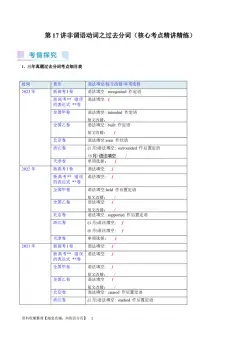
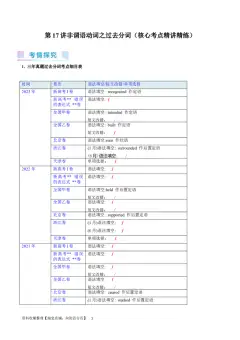
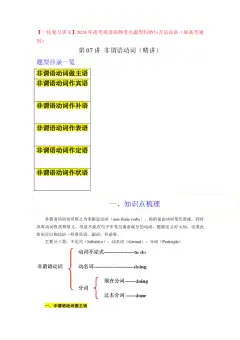
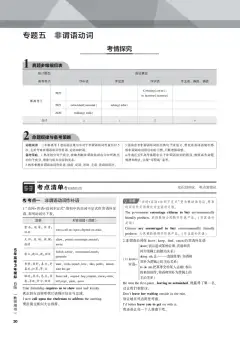
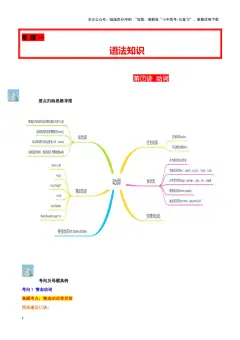
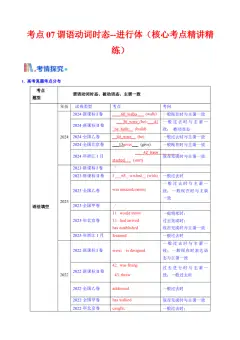
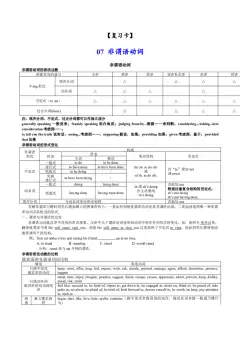
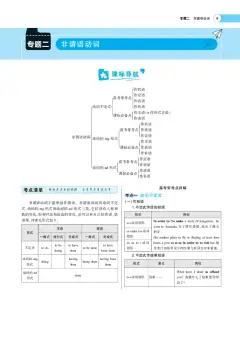
说明:高考非谓语三大类:to do(不定式)、doing(动名词 / 现在分词)、done(过去分词) 核心判断逻辑:找到谓语,确定除谓语外的动词为非谓语→找到该非谓语的该逻辑主语 → 判断主被动 → 判断时间先后。
一、核心精讲
(一)基础概念
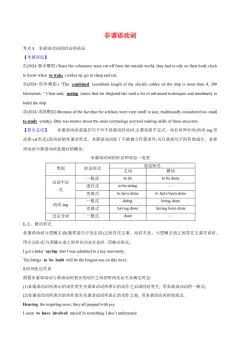
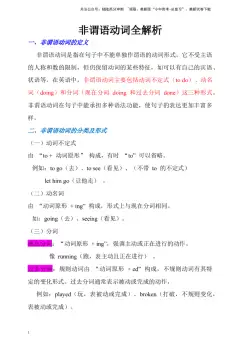
非谓语动词:在句中不作谓语的动词形式,不受主语人称、时态限制。
✅ 黄金规则:一个简单句只能有一个谓语动词;若无并列连词 / 从句引导词,多出的动词必须变为非谓语。
三大基础形式核心区分
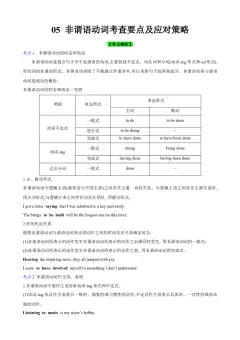
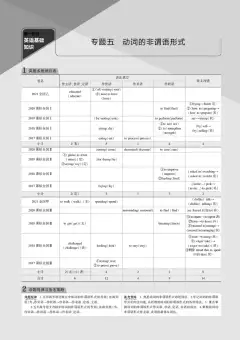
形式 核心含义 语态 时间关系
to do 不定式 目的、将来、有待发生;意料之外结果(多为only后) 主动 动作发生在主句谓语之后 / 尚未发生
doing(现在分词 / 动名词) 主动、同步进行;习惯、伴随、自然而然的结果 主动 和主句谓语同步;having done 表主动先于谓语完成
done(过去分词) 被动、可完成;表状态 被动 动作发生在主句谓语之前/表示状态(无动作先后)
✅ 高频变形(语法填空高频考点)
1. to be done:不定式被动 → 将要被……(将来 + 被动)
2. being done:现在分词被动 → 正在被……(进行 + 被动)
3. having done:主动完成 → 做完…… 之后(主动,明显先于主句动作)
4. having been done:被动完成 → 已经被……(被动先后,多用于状语,一般不作后置定语)(少考)
否定形式:not to do /not doing /not having done;否定词放在非谓语最前面
(二)四大考点板块
✅ 考点 1:作状语(最高频)
判断标志:逗号分隔(目的状语to do前无逗号分隔),无连词;主句主语就是非谓语的逻辑主语
1. 目的状语 → to do(为了……)
He got up early to catch the first bus.
2. 出乎意料的结果 → only to do
He rushed to the station, only to find the train had left.
3. 伴随、方式状语 → doing(主动、同步) He sat by the window, reading a novel.
4. 原因 / 条件 / 让步状语 → doing /done
Seen from the hill, the village looks beautiful.(village 和 see:被动 → done)
Seeing from the hill, we enjoy the beauty of the village.(we 和 see:主动 → doing)
5. 动作明显早于主句谓语 → having done
Having finished his report, he left the office.
拓展:独立主格结构(逻辑主语≠主句主语)
Time permitting, we will go for a walk.(time 是 permitting 的逻辑主语)
✅ 考点 2:作后置定语(修饰前面名词)
• to do:将来、有待完成;序数词、最高级、抽象名词后常用 the task to finish tomorrow 明天待完成的任务
• doing:主动、正在进行 the boy standing at the door 站在门口的男孩
• done:被动、已经完成 the house built last year 去年建成的房子
• being done:正在被…… the bridge being built now 现在正在修建的大桥
✅ 考点 3:作宾语(固定搭配,改错 + 填空必背)
🔹 只接 to do 作宾语:want, hope, decide, refuse, plan, pretend, manage, fail, offer, agree, promise
🔹 只接 doing 作宾语:enjoy, practise, finish, mind, avoid, suggest, imagine, risk, escape, consider (考虑), keep
🔹 to do /doing 含义差异(易混)
• remember to do 记得要做;remember doing 记得做过
• forget to do 忘记要做;forget doing 忘记做过
• stop to do 停下来去做另一件;stop doing 停止正在做的事
• regret to do 遗憾地要做;regret doing 后悔做过
• try to do 努力设法做;try doing 尝试做(试一试效果)
• 🔹 介词后面一律 + doing:about, of, for, without, before, after, on 等
✅ 考点 4:宾补、主语、表语
1. 宾语补足语
• ask/tell/invite/allow sb to do
• see/watch/hear sb do(看到全过程) /doing(看见正在做);被动语态中省掉的 to 必须还原
• have sth done 让某事由别人做;have sb doing 让某人一直做
2. 主语:To see is to believe. / Seeing is believing.
3. 表语:-ing 形容词(令人……,修饰事物);-ed 形容词(感到……,修饰人) We are moved at the moving story.
(三)考场三步解题法
① 找谓语,查连词:已有谓语、无连词 → 动词变非谓语 ② 锁定逻辑主语,判断主被动:主动→doing/to do;被动→done/to be done/being done ③ 判断时间先后:将来用 to do;同步进行用 doing;已完成被动用 done;动作明显提前用且主动用 having done
(四)高频避坑清单
1. 非谓语没有三单、时态变化!
2. having been done 一般不作后置定语,优先用 done
3. look forward to /pay attention to 里的 to 是介词,后面 + doing
4. with 复合结构:with + 宾语(名词/代词) + doing(主动进行)/ done(被动完成)/to do(有待去做,将来)
________________________________________
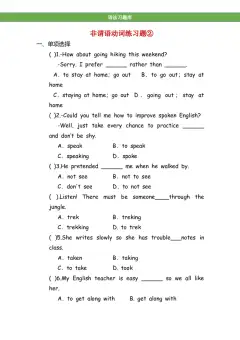
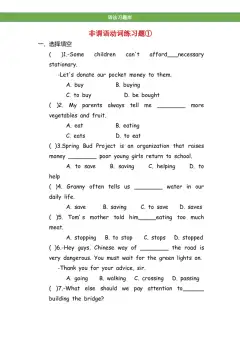
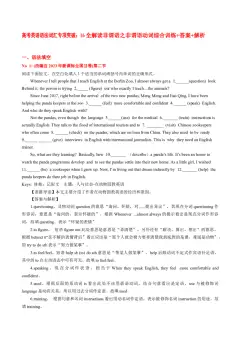
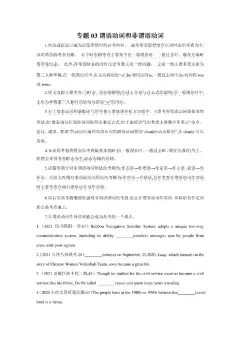
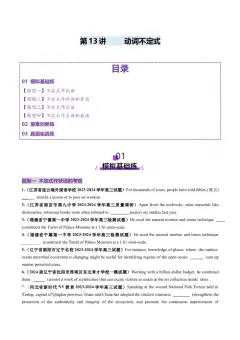
二、精练 30 题(高考难度)
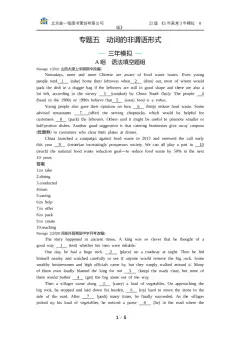
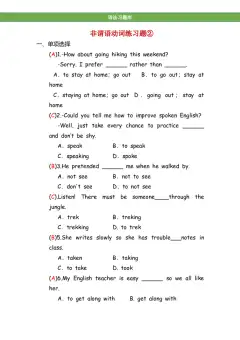
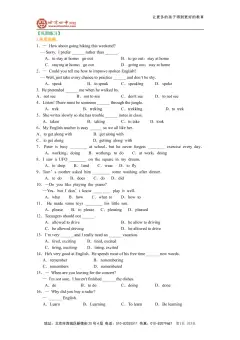
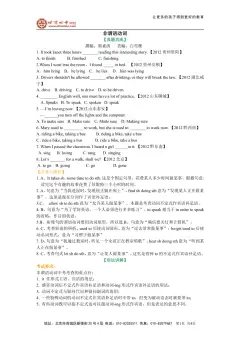
要求:用括号内动词的适当非谓语形式填空
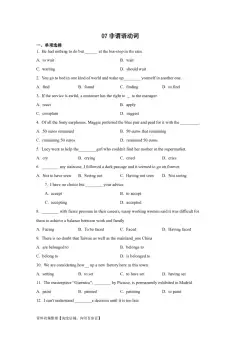
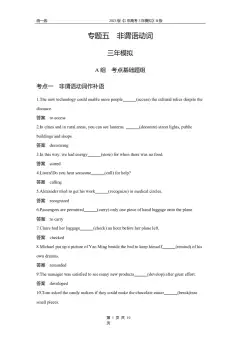
1. ________(see) from the top of the tower, the whole city looks amazing.
2. ________(see) from the top of the tower, we can enjoy the whole city.
3. He hurried to the station, only ________(find) that the train had gone.
4. I remember ________(lock) the door before I left, but I’m not sure.
5. The meeting ________(hold) tomorrow is about environmental protection.
6. The meeting ________(hold) now is very important.
7. The meeting ________(hold) last week was a great success.
8. ________(finish) all his work, Tom went home happily.
9. The teacher told us not ________(make) so much noise.
10. She enjoys ________(listen) to soft music when she is tired.
11. I have a lot of homework ________(do) tonight.
12. With many problems ________(solve), the manager felt worried.
13. With all problems ________(solve), the manager felt relaxed.
14. He had his car ________(repair) yesterday.
15. The boy was noticed ________(enter) the classroom just now.
16. It’s no use ________(cry) over spilt milk.
17. The film is so ________(move) that many viewers were ________(move) to tears.
18. He pretended ________(read) when his mother came in.
19. She avoided ________(talk) about that accident.
20. ________(not know) his address, I couldn’t get in touch with him.
21. ________(fail) to get in touch with them by phone, we sent an email instead.
22. The little child ________(weigh) less than 20 kilos needs special care.
23. He is said ________(study) abroad for two years, but I don’t know which country he stayed in.
24. ________(lose) in deep thought, he almost knocked into the tree beside the road.
25. The student referred to look forward to ______(participate) in the sports meeting.
26. It is worthwhile ________(take) time to read classic works.
27. The doctor advised him ________(give) up smoking as soon as possible.
28. The old man sat on the bench, ________(watch) children play in the park.
29. The project ________(complete) next month will bring great changes to the town.
30. Having been told many times, he still couldn’t understand how________(operate) the machine.
________________________________________
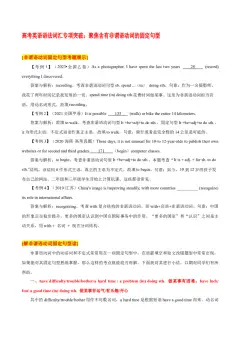
三、非谓语写作10 句(应用文 / 读后续写直接背诵)
1. Having realized the great value of reading, I decide to develop a regular reading habit. 意识到阅读的巨大价值,我决定养成规律阅读的习惯。
2. To improve my oral English, I take an active part in the school English corner every week. 为了提升英语口语,我每周积极参加学校英语角。
3. Inspired by his spirit of persistence, I made up my mind to stick to my own dream. 受到他坚持不懈精神的鼓舞,我下定决心坚守自己的梦想。
4. Walking along the river, we enjoyed the soft wind and beautiful sunset. 沿着河边漫步,我们享受着轻柔的晚风与美丽的落日。
5. Given more time and support, we can finish the task ahead of schedule. 如果给予更多时间和支持,我们可以提前完成这项任务。
6. Not knowing how to deal with the problem, she turned to her teacher for advice. 不知道如何处理这个难题,她向老师寻求建议。
7. The activity to be held next Sunday is intended to raise our awareness of environmental protection. 将于下周日举办的活动旨在提升我们的环保意识。
8. Having practiced for months, he finally won first prize in the speech competition. 经过数月练习,他最终在演讲比赛中获得一等奖。
9. Seen from this angle, the plan sounds practical and worthwhile. 从这个角度来看,这个方案听起来切实可行、值得一试。
10. Being invited to give a speech, I felt both excited and a little nervous. 受邀发表演讲,我既兴奋又有一点紧张。
________________________________________
四、答案 + 逐题解析(讲解和知识点完全对应上文精讲)
1. Seen 解析:逻辑主语 the city 和 see 为被动关系,过去分词作状语,表被动完成。
2. Seeing 解析:逻辑主语 we 和 see 是主动关系,现在分词作伴随 / 条件状语。
3. to find 解析:only to do 固定结构,表意料之外的结果。
4. locking 解析:remember doing sth 记得做过某事。
5. to be held 解析:tomorrow 表将来;meeting 和 hold 被动,不定式被动作后置定语。
6. being held 解析:now 表正在进行;meeting 和 hold 被动,being done 作后置定语,正在被……。
7. held 解析:last week 表已经完成;被动,done 作后置定语。
8. Having finished 解析:finish 动作先于 went home,主动先后,用 having done 作状语。
9. to make 解析:tell sb (not) to do sth 固定宾补搭配。
10. listening 解析:enjoy doing sth,固定搭配,只接 doing。
11. to do 解析:不定式作后置定语,表有待完成的动作:homework to do 要做的作业。
12. to solve 解析:with 复合结构,to do 表将来,有问题有待解决。
13. solved 解析:with 复合结构,problems 和 solve 被动完成,with sth done。
14. repaired 解析:have sth done 固定结构,让某物被(别人)修理。
15. to enter 解析:notice sb do 省 to;变为被动语态时,to 必须还原,be noticed to do。
16. crying 解析:It’s no use doing sth 固定句型,做某事没有用。
17. moving; moved 解析:moving 令人感动的(修饰事物 film);moved 感到感动的(修饰人 viewers)。
18. to be reading 解析:pretend to be doing sth,假装正在做某事(when 从句体现时间点)。
19. talking 解析:avoid doing sth,固定搭配,避免做某事。
20. Not knowing 解析:know 和主句主语 I 主动;否定非谓语,not 放在 doing 前面,作原因状语。
21. Having failed 解析:fail 动作发生在 sent 之前,主动先后,having done 作原因状语。
22. weighing 解析:child 和 weigh(重达)是主动含义,现在分词作后置定语。
23. to have studied 解析:be said to do;study 这个动作发生在 is said 之前,不定式完成式 to have done。
24. Lost 解析:be lost in thought 陷入沉思;lost 是过去分词化的形容词作状语。
25. participating 解析:referred to 是后置定语(被提到的学生);look forward to 中 to 是介词,后接 doing。
26. taking /to take 解析:It is worthwhile doing /to do sth,两种形式均可。
27. to give 解析:advise sb to do sth,建议某人做某事。
28. watching 解析:watch 和主语 the old man 主动同步,现在分词作伴随状语。
29. to be completed 解析:next month 将来,project 和 complete 被动,to be done 作后置定语。
30. to operate 解析:“疑问词 + to do” 结构,understand 后接 how/what 等 + to do。