夜雨聆风
夜雨聆风📌 阅读原文,请点击文末“阅读原文”
AI Voyage Optimization & Weather Routing Made Simple: 2026 Update
November 27, 2025
AI voyage optimisation is basically the “co-pilot” sitting on top of weather routing, noon reports, and charter constraints. The latest platforms take high-frequency vessel data, weather and currents, fuel and carbon prices, CII/ETS exposure and port congestion, then recompute speed and route every few hours to hit a target ETA with minimum fuel and carbon. Vendors like DeepSea (Pythia), ZeroNorth, StormGeo, Sofar’s Wayfinder, Orca AI and others report typical fuel and CO₂ savings in the mid-single digits, sometimes higher on good trades, while some operators also use the same tools to manage CII scores and EU ETS cost exposure on each voyage.
What is it and Keep it Simple...
AI voyage optimization for ships is like giving the master and operator a route-planning assistant that never sleeps. Traditional voyage planning picks a route and speed profile before departure and tweaks it when the weather or schedule changes. AI optimisation engines keep recalculating in the background, suggesting small changes to speed and track so the ship arrives safely, on time, and with less fuel and CO₂.
The core idea is simple: feed in live weather, currents, vessel performance, fuel and carbon prices, port and canal constraints, plus charter-party terms. The system then evaluates thousands of possible voyages, looking for combinations of route and speed that respect safety limits and contracts while cutting fuel burn, emissions and EU ETS or FuelEU exposure.
The software does not replace the bridge team or operations desk. Instead, it recommends “sail like this instead of that” – for example, slow-steam through heavy weather and speed up in better conditions – and lets humans accept, modify or reject each plan.
| AI Voyage Optimization: Advantages and Disadvantages | |||
 |  | ||
 |  | ||
 |  | ||
 |  | ||
 |  | ||
 |  | ||
 |  | ||
 |  | ||
 |  | ||
| Summary: |
2025–26 AI Voyage Optimization: What’s Really Working
- Savings are real but uneven:
Case studies across dry, tanker and liner fleets show consistent fuel and CO₂ reductions when recommendations are followed, typically in the mid–single digits per voyage, with higher gains on long or weather-exposed legs. The spread comes from route mix, hull condition and how strictly ships actually follow the plans. - From weather routing to performance routing:
The most effective setups combine high-quality weather routing with vessel-specific performance models and fouling awareness, so the “optimal” route and speed are tuned to the actual hull and engine, not an idealised sister. - CII and carbon cost are now inside the tool:
Modern platforms treat CII bands, EU ETS allowance cost and (where relevant) FuelEU Maritime limits as part of the voyage equation. Operators can see, before sailing, how a slower or alternative route changes both fuel bill and carbon cost. - Fleet rollouts are normal for larger owners:
For bigger dry, tanker and liner fleets, AI voyage optimisation has shifted from pilot to standard tool. Voyage desks and masters get regular “sail like this instead” recommendations rather than ad-hoc routing advice. - Behaviour change is the bottleneck:
The technical stack is usually ready before the organisation is. Where masters, charterers and operators are aligned, savings track close to modelled values; where adoption is patchy, realised gains lag. - Best results come from a narrow, focused start:
Owners that see strong ROI usually start on a handful of high-fuel lanes with good sensor data, define clear rules for when to accept or reject advice, and only then expand to more ships and trades. - What still blocks scale-up:
Poor data quality, weak integration to daily operations, unclear data ownership with vendors, and scepticism on the bridge if early recommendations clash with local knowledge or charter-party pressure.
Across multiple studies and case-study fleets, voyage optimisation tools consistently show fuel and CO₂ savings when used properly – research suggests average software-driven savings in the single-digit percent range, with some AI-driven performance-routing deployments reporting 5–8% reductions and occasional double-digit outliers on favourable routes. At the same time, platforms such as ZeroNorth and StormGeo are now wiring CII scores, EU ETS exposure and broader emissions reporting directly into voyage planning and monitoring, so carbon cost becomes a live voyage-economics variable rather than an after-the-fact report.
For an owner or operator, the real decision is less “does the technology work?” and more “on which ships and lanes does this move the needle after licences, integration and behaviour change?” The calculator above lets you plug in your own fuel, carbon and adoption assumptions and see whether AI voyage optimisation is a nice-to-have or a core lever in your fuel and compliance strategy for a given vessel.
***
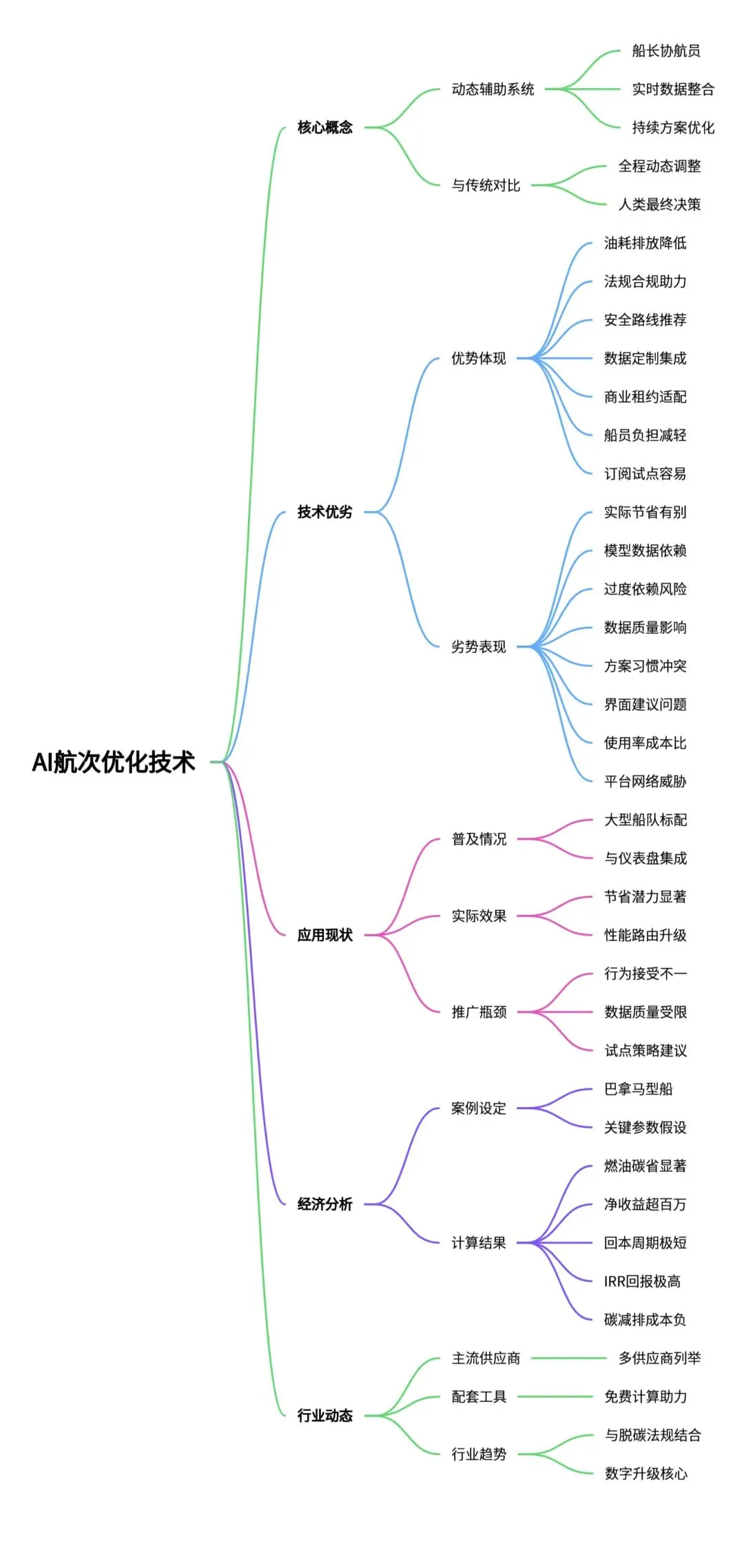
【总结】详细介绍了2025-2026年AI航次优化技术在航运业的应用现状、优势、挑战及经济回报。文章显示,AI航次优化技术已从概念验证进入主流应用阶段,其核心价值在于通过数据驱动决策降低运营成本和碳排放。然而,成功依赖三大支柱:高质量数据、系统与流程的深度融合以及船员与租家的行为适配。船东需通过小规模试点验证ROI(Return on Investment,投资回报率),逐步推广至全船队。
***
本公众号所载内容为原创或来源于研究机构报告、官方网站动态新闻等整理、翻译与转载,转载内容版权归原作者所有,如涉及作品内容、版权或其他问题,请与本公众号联系。转载内容不代表本公众号的观点。本公众号拥有对此声明的最终解释权。 |
***凡事多躬行,莫做纸上兵***