文档文本内容
Unit 1 Time to Relax 单元核心知识(背诵版)
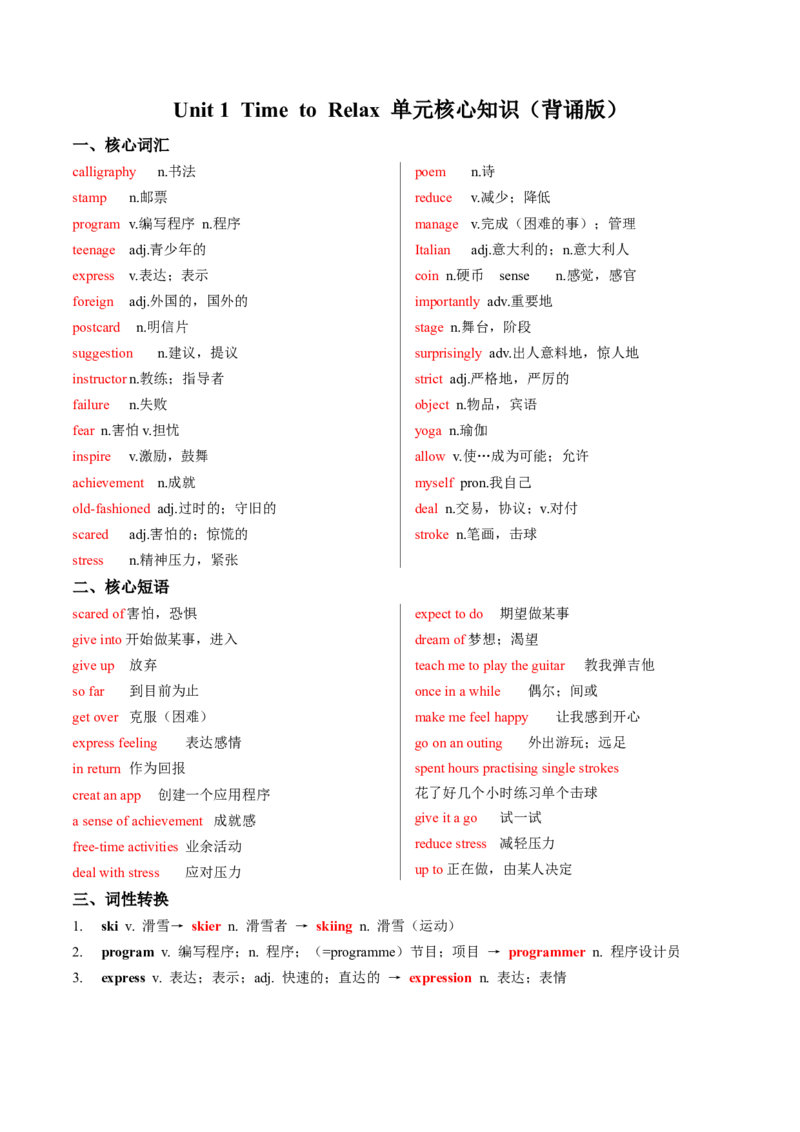
一、核心词汇
calligraphy n.书法 poem n.诗
stamp n.邮票 reduce v.减少;降低
program v.编写程序 n.程序 manage v.完成(困难的事);管理
teenage adj.青少年的 Italian adj.意大利的;n.意大利人
express v.表达;表示 coin n.硬币 sense n.感觉,感官
foreign adj.外国的,国外的 importantly adv.重要地
postcard n.明信片 stage n.舞台,阶段
suggestion n.建议,提议 surprisingly adv.出人意料地,惊人地
instructorn.教练;指导者 strict adj.严格地,严厉的
failure n.失败 object n.物品,宾语
fear n.害怕v.担忧 yoga n.瑜伽
inspire v.激励,鼓舞 allow v.使…成为可能;允许
achievement n.成就 myself pron.我自己
old-fashioned adj.过时的;守旧的 deal n.交易,协议;v.对付
scared adj.害怕的;惊慌的 stroke n.笔画,击球
stress n.精神压力,紧张
二、核心短语
scared of害怕,恐惧 expect to do 期望做某事
give into开始做某事,进入 dream of梦想;渴望
give up 放弃 teach me to play the guitar 教我弹吉他
so far 到目前为止 once in a while 偶尔;间或
get over 克服(困难) make me feel happy 让我感到开心
express feeling 表达感情 go on an outing 外出游玩;远足
in return 作为回报 spent hours practising single strokes
creat an app 创建一个应用程序 花了好几个小时练习单个击球
a sense of achievement 成就感 give it a go 试一试
free-time activities 业余活动 reduce stress 减轻压力
deal with stress 应对压力 up to正在做,由某人决定
三、词性转换
1. ski v. 滑雪→ skier n. 滑雪者 → skiing n. 滑雪(运动)
2. program v. 编写程序;n. 程序;(=programme)节目;项目 → programmer n. 程序设计员
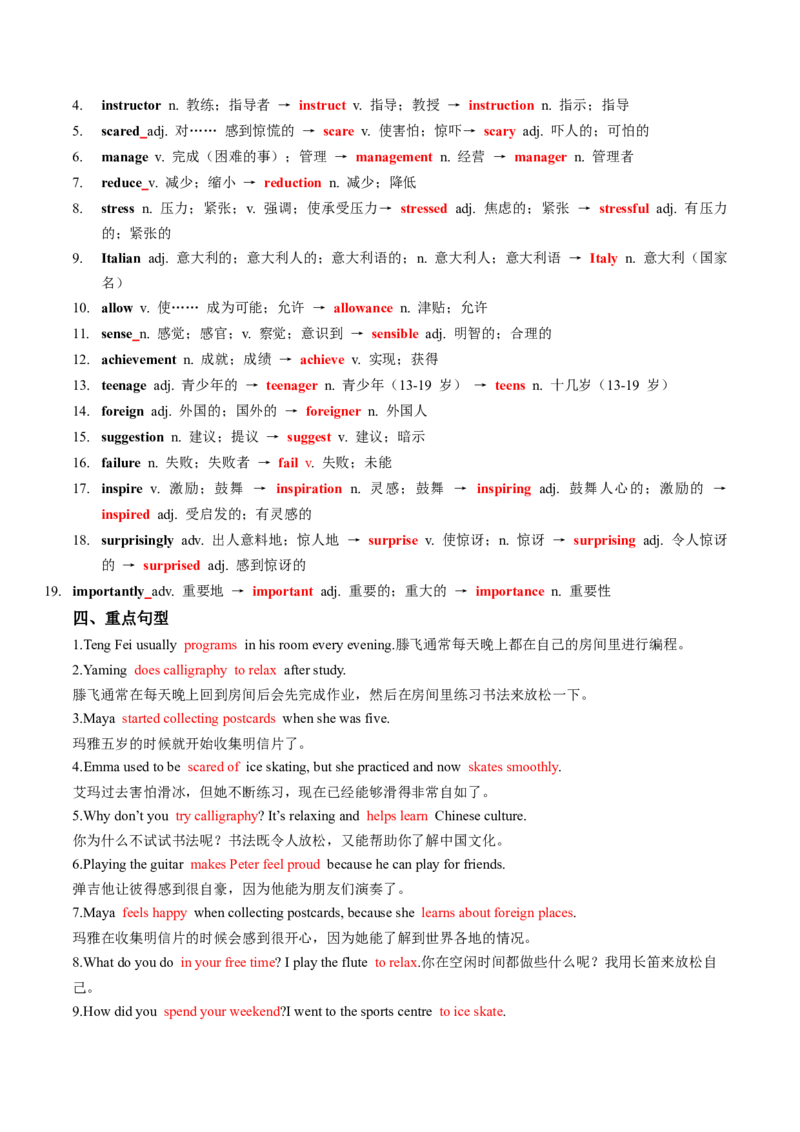
3. express v. 表达;表示;adj. 快速的;直达的 → expression n. 表达;表情4. instructor n. 教练;指导者 → instruct v. 指导;教授 → instruction n. 指示;指导
5. scared adj. 对…… 感到惊慌的 → scare v. 使害怕;惊吓→ scary adj. 吓人的;可怕的
6. manage v. 完成(困难的事);管理 → management n. 经营 → manager n. 管理者
7. reduce v. 减少;缩小 → reduction n. 减少;降低
8. stress n. 压力;紧张;v. 强调;使承受压力→ stressed adj. 焦虑的;紧张 → stressful adj. 有压力
的;紧张的
9. Italian adj. 意大利的;意大利人的;意大利语的;n. 意大利人;意大利语 → Italy n. 意大利(国家
名)
10. allow v. 使…… 成为可能;允许 → allowance n. 津贴;允许
11. sense n. 感觉;感官;v. 察觉;意识到 → sensible adj. 明智的;合理的
12. achievement n. 成就;成绩 → achieve v. 实现;获得
13. teenage adj. 青少年的 → teenager n. 青少年(13-19 岁) → teens n. 十几岁(13-19 岁)
14. foreign adj. 外国的;国外的 → foreigner n. 外国人
15. suggestion n. 建议;提议 → suggest v. 建议;暗示
16. failure n. 失败;失败者 → fail v. 失败;未能
17. inspire v. 激励;鼓舞 → inspiration n. 灵感;鼓舞 → inspiring adj. 鼓舞人心的;激励的 →
inspired adj. 受启发的;有灵感的
18. surprisingly adv. 出人意料地;惊人地 → surprise v. 使惊讶;n. 惊讶 → surprising adj. 令人惊讶
的 → surprised adj. 感到惊讶的
19. importantly adv. 重要地 → important adj. 重要的;重大的 → importance n. 重要性
四、重点句型
1.Teng Fei usually programs in his room every evening.滕飞通常每天晚上都在自己的房间里进行编程。
2.Yaming does calligraphy to relax after study.
滕飞通常在每天晚上回到房间后会先完成作业,然后在房间里练习书法来放松一下。
3.Maya started collecting postcards when she was five.
玛雅五岁的时候就开始收集明信片了。
4.Emma used to be scared of ice skating, but she practiced and now skates smoothly.
艾玛过去害怕滑冰,但她不断练习,现在已经能够滑得非常自如了。
5.Why don’t you try calligraphy? It’s relaxing and helps learn Chinese culture.
你为什么不试试书法呢?书法既令人放松,又能帮助你了解中国文化。
6.Playing the guitar makes Peter feel proud because he can play for friends.
弹吉他让彼得感到很自豪,因为他能为朋友们演奏了。
7.Maya feels happy when collecting postcards, because she learns about foreign places.
玛雅在收集明信片的时候会感到很开心,因为她能了解到世界各地的情况。
8.What do you do in your free time? I play the flute to relax.你在空闲时间都做些什么呢?我用长笛来放松自
己。
9.How did you spend your weekend?I went to the sports centre to ice skate.你这个周末是怎么度过的?我去了体育中心滑冰了。
10.How did you get into painting?I saw my mother paint.I decided to give it a go.
你是怎么开始从事绘画这项工作的呢?我曾看到母亲在作画。于是我就决定也尝试一下。
11.What did your instructor say?She told me not to give up so easil.
你的老师说了什么?她告诉我不要这么轻易就放弃。
三、核心语法:动词不定式
动词不定式的基本形式是“to+ 动词原形”,有时 to可省略。动词不定式没有人称和数 的变化。并
且,动词不定式(短语)不能在句中作谓语,属“非谓语动词”。在本单元中,
主要学习其作宾语补足语和状语的用法。
分类 用法 例句
1.作宾语补 1.My mother asks me to clean my room.
说明宾语所做的动作。常见动词
我妈妈要求我打扫房间。
足语(带to)
want,tell,ask,invite,encourage,allow等。
2.The teacher encourages us to speak English in
class.老师鼓励我们在课堂上说英语。
在一些使役动词或感官动词后作宾语补足
1.I saw him play football on the playground.
2.作宾语补足 语的动词不定式常省略动词不定式符号
语(不带to) to,常见的动词 我看见他在操场上踢足球。
2.Let me help you (to)carry the box.
let,make,see,watch,notice,hear,feel, have
让我帮你搬这个箱子。
等。
表动作目的,句首常用逗号隔开。 1.He gets up early to catch the first bus.
3.作目的状语
他早起是为了赶上第一班公交车。
4.作结果状语 1.The box is light enough for me to carry.
常见结构:“enough to do”(足够…去
这个箱子足够轻,我能搬得动。
做)、 “too...to do”(太……而不能)
5.作原因状语
用在表情感、心理状态的形容词(如 1. I'm glad to see you.见到你我很高兴。
happy,glad等)后,说明情绪产生的原
因。
【拓展】
(1)动词不定式常放在一些动词后作宾语,常见的动词有以下几种:
①表“打算、想要”:want, hope, wish, expect, would like
②表“决定、计划”:decide, plan, intend
③表“努力、设法”:try, manage
④表“同意、承诺”:agree, promise, refuse
⑤其他常用词:afford, choose, learn, pretend, offer
例句:
①I want to tell you a story.我想给你讲个故事。
②We decided not to give up our plan.我们决定不放弃我们的计划。
(2)特殊疑问词+动词不定式:动词不定式常与 what,how,when,where 疑问词连用。
· I’m sorry I don't know when to start.对不起我不知道什么时候开始。·With your help, I learned how to solve the problem. 在你的帮助下我学会了怎样解决问题。
(3)不带to的动词不定时口诀:
“一感(feel)、二听 (hear、listen to)、 三使(let、have、make)、四看(see、watch、notice、observe) 、“半
帮
助”(help)。