Unit4 I used to be afraid of the dark.
Section A 3 (GF-4c)教学设计
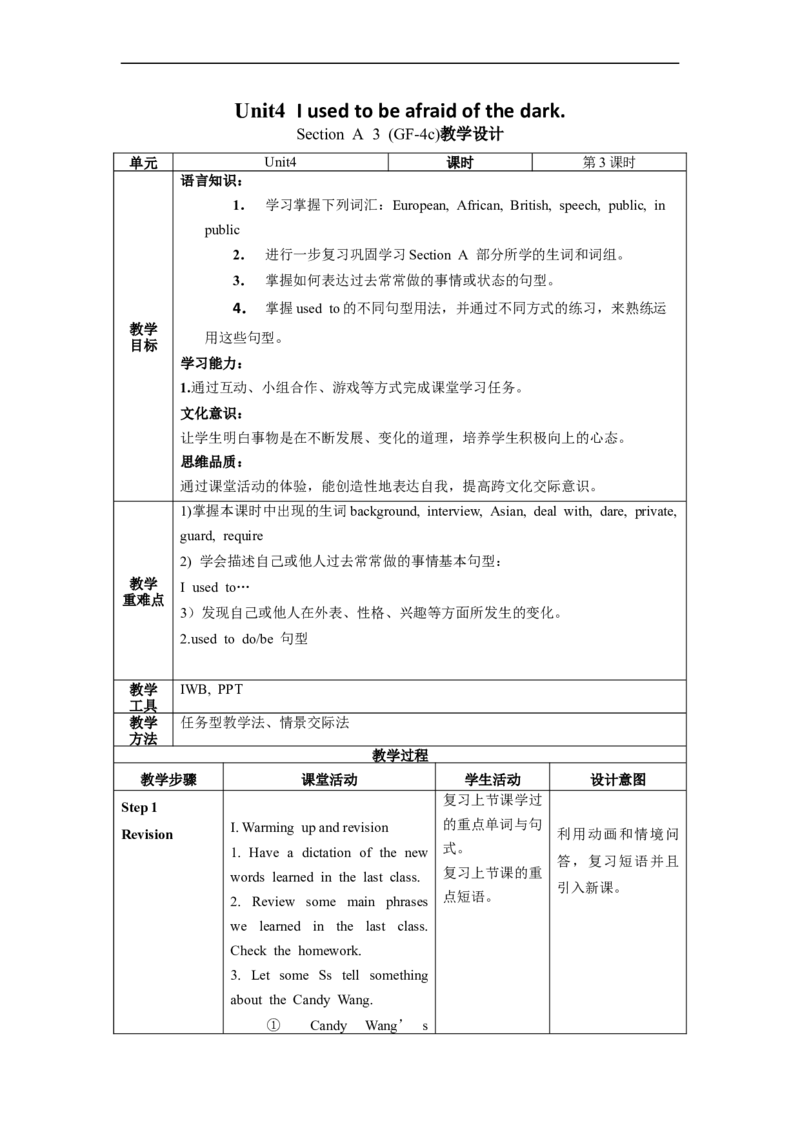
单元 Unit4 课时 第3课时
语言知识:
1. 学习掌握下列词汇:European, African, British, speech, public, in
public
2. 进行一步复习巩固学习Section A 部分所学的生词和词组。
3. 掌握如何表达过去常常做的事情或状态的句型。
4. 掌握used to的不同句型用法,并通过不同方式的练习,来熟练运
教学
用这些句型。
目标
学习能力:
1.通过互动、小组合作、游戏等方式完成课堂学习任务。
文化意识:
让学生明白事物是在不断发展、变化的道理,培养学生积极向上的心态。
思维品质:
通过课堂活动的体验,能创造性地表达自我,提高跨文化交际意识。
1)掌握本课时中出现的生词background, interview, Asian, deal with, dare, private,
guard, require
2) 学会描述自己或他人过去常常做的事情基本句型:
教学 I used to…
重难点
3)发现自己或他人在外表、性格、兴趣等方面所发生的变化。
2.used to do/be 句型
教学 IWB, PPT
工具
教学 任务型教学法、情景交际法
方法
教学过程
教学步骤 课堂活动 学生活动 设计意图
复习上节课学过
Step 1
Ⅰ. Warming up and revision
的重点单词与句
Revision 利用动画和情境问
1. Have a dictation of the new
式。
答,复习短语并且
words learned in the last class.
复习上节课的重
引入新课。
点短语。
2. Review some main phrases
we learned in the last class.
Check the homework.
3. Let some Ss tell something
about the Candy Wang.
① Candy Wang’ sbackground.
② The change of Candy
Wang’s life
** 错误的表达式 ** Candy
Wang’ s advice to young
people who want to succeed.
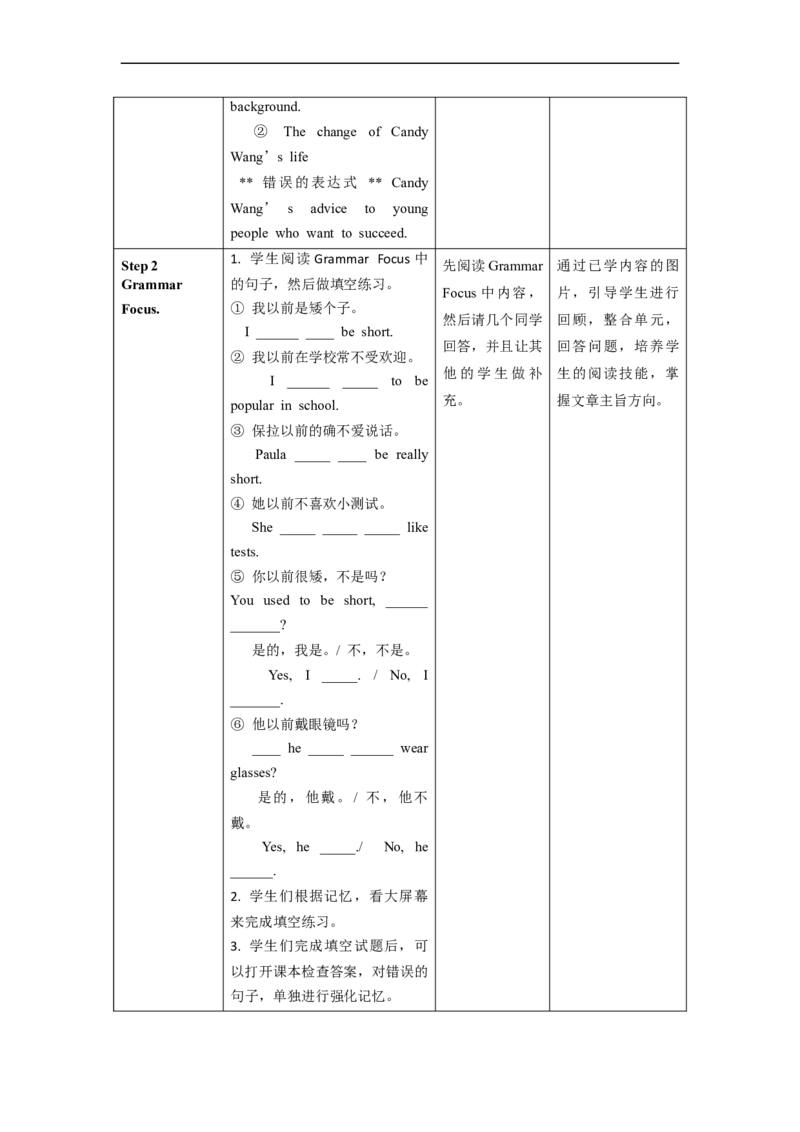
1. 学生阅读 Grammar Focus 中
Step 2 先阅读Grammar 通过已学内容的图
Grammar 的句子,然后做填空练习。
Focus 中内容, 片,引导学生进行
Focus. ① 我以前是矮个子。
然后请几个同学 回顾,整合单元,
I ______ ____ be short.
回答,并且让其 回答问题,培养学
② 我以前在学校常不受欢迎。
他的学生做补 生的阅读技能,掌
I ______ _____ to be
充。 握文章主旨方向。
popular in school.
③ 保拉以前的确不爱说话。
Paula _____ ____ be really
short.
④ 她以前不喜欢小测试。
She _____ _____ _____ like
tests.
⑤ 你以前很矮,不是吗?
You used to be short, ______
_______?
是的,我是。/ 不,不是。
Yes, I _____. / No, I
_______.
⑥ 他以前戴眼镜吗?
____ he _____ ______ wear
glasses?
是的,他戴。/ 不,他不
戴。
Yes, he _____./ No, he
______.
2. 学生们根据记忆,看大屏幕
来完成填空练习。
3. 学生们完成填空试题后,可
以打开课本检查答案,对错误的
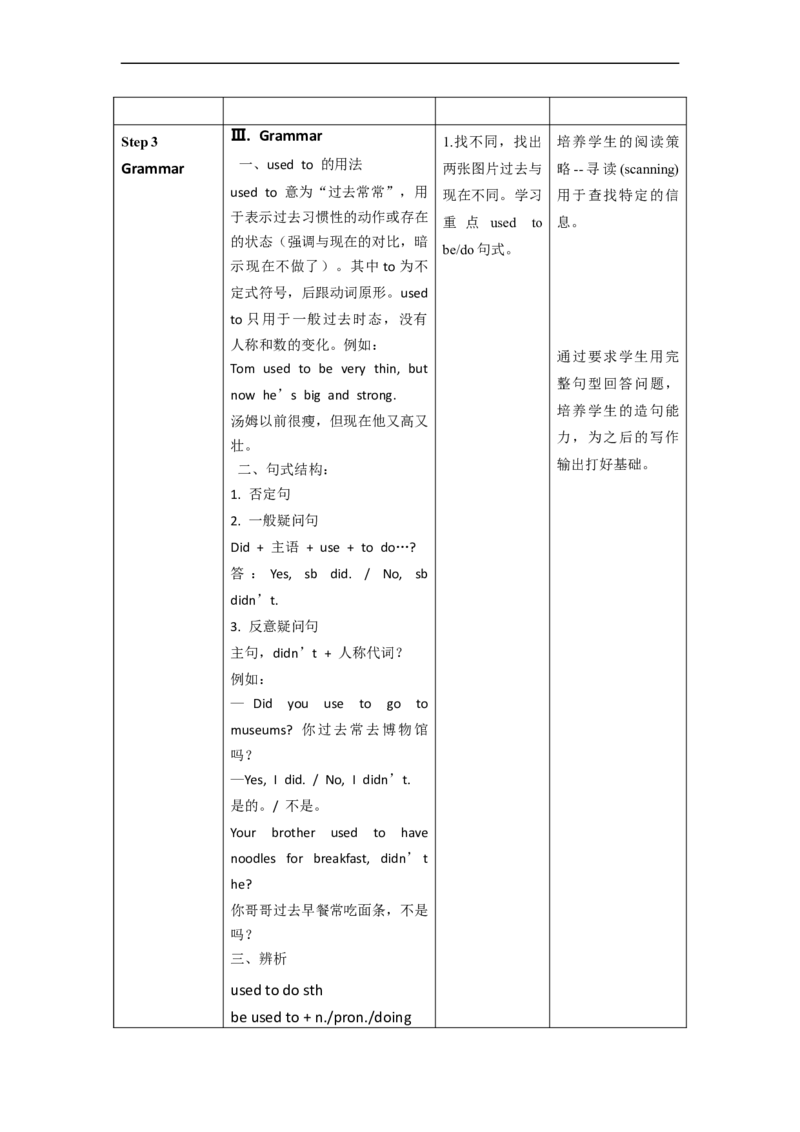
句子,单独进行强化记忆。Ⅲ. Grammar
Step 3 1.找不同,找出 培养学生的阅读策
Grammar 一、used to 的用法 两张图片过去与 略--寻读(scanning)
used to 意为“过去常常”,用 现在不同。学习 用于查找特定的信
于表示过去习惯性的动作或存在
重 点 used to 息。
的状态(强调与现在的对比,暗
be/do句式。
示现在不做了)。其中to为不
定式符号,后跟动词原形。used
to只用于一般过去时态,没有
人称和数的变化。例如:
通过要求学生用完
Tom used to be very thin, but
整句型回答问题,
now he’s big and strong.
培养学生的造句能
汤姆以前很瘦,但现在他又高又
力,为之后的写作
壮。
输出打好基础。
二、句式结构:
1. 否定句
2. 一般疑问句
Did + 主语 + use + to do…?
答 : Yes, sb did. / No, sb
didn’t.
3. 反意疑问句
主句,didn’t + 人称代词?
例如:
— Did you use to go to
museums? 你过去常去博物馆
吗?
—Yes, I did. / No, I didn’t.
是的。/ 不是。
Your brother used to have
noodles for breakfast, didn’t
he?
你哥哥过去早餐常吃面条,不是
吗?
三、辨析
used to do sth
be used to + n./pron./doingWork on 4a:
Step 4 快速浏览文章, 通过练习并给排
Practice 1. Check the answers with the
并完成3a。 序,帮助学生更好
Ss.
的消化记忆文本。
Work on 4b:
猜测句子的大 复述文本活动有利
1. Tell Ss to read the chart in
意,为编写句子 于学生对知识点和
4a and try to write sentences
做好准备。 目标语言的应用。
about Emily with information.
根据句意及
2. Ss try to write sentences by
其他相关信息确 描述 Emily 五
themselves.
定句子的时态。 年前的情况,应
学生们尝试 用 used to 句
写出正确的句
型,而描述现在
子。
的情况,应用一
最后,通读
般现在时态。并
一遍句子,进行
将第一个信息写
综合理解,看句
出一个例句。
子内容是否通顺
Work on 4c:
Step 5 细读,完成表 将本课文章汇总系
A: Did you use to be afraid of
Group Work 格。 统的进行讲解和分
the dark?
以小组为单位分
析,帮助学生形成
B: No, I didn’t. But I used to 别自主发挥,用
语言体系。
be afraid of being alone. 英语来相互询问C: Did you use to be afraid of 过去及现在所害
flying? 怕的事情。
D: No, I didn’t. But I used to 示例:
be afraid of high places.
Ⅰ. 根据括号内的汉语提示,完
Step6 完成练习,更好 让学生在课上练习
成下列英语句子,每空词数不
Exercises 的掌握课文。 消化知识点,及时
限。
操练重点知识点和
1. Mr Black
目标语言,让教师
_________________ (以前是一
把握学情。
位 医 生 ), but now he is a
singer.
2. Did your father
______________ (过去常常看电
视) after supper?
3. You used to have long curly
hair, ___________ (不是吗)?
4. I _______________________
(以前常常骑自行车去上学), but
now I
_________________________
(习惯走着去).
Ⅱ. 根据括号内的要求完成下列
句子,每空词数不限。
1. Mother used to grow flowers
in her garden. (改为否定句)
Mother _____________ grow
flowers in her garden.
2. Bill used to collect stamps
when he was in middle school.
(改为一般疑问句)
_____________ collect stamps
when he was in middle school?
Keys: I. used to be a doctor;
use to watch TV; didn’t you;
used to go to school by bike;am used to walking to school
II. didn’t use to; Did Bill use
to
Make a survey about students’
Step 7 分组完成采访, 总结本课所学内
family.
Homework 练习使用所学句 容,巩固加深印
式。 象。
给学生进行有序的
梳理。
板书设计:
New words Sentences
European, African, British, speech, public, in
used to be
public
教学反思:In the process of English teaching, teachers should try their best to encourage students
to participate in the discussion and do not overemphasize the correct answers. This can not only
broaden students' thinking space, help the development of creative thinking ability, but also help
students master the language in use.