2013
年专八真题详解
(新题型优化)
PART I LISTENING COMPREHENSION
SECTION A
What Do Active Learners Do?
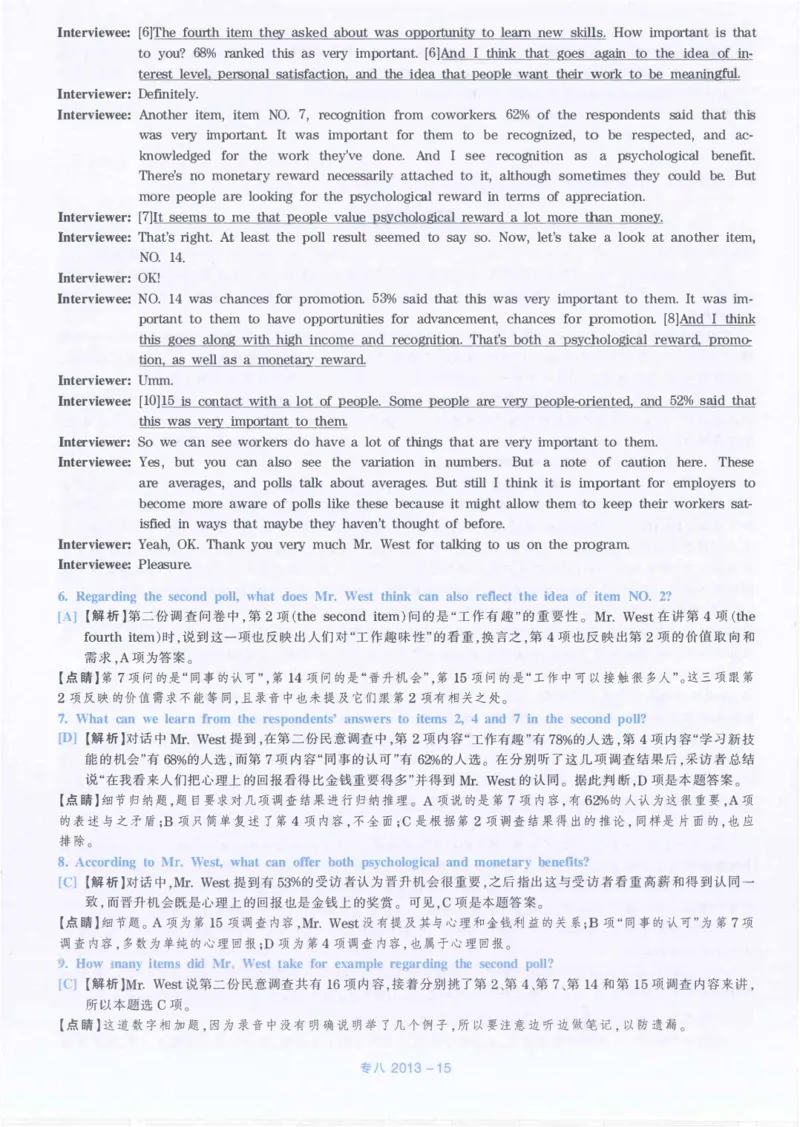
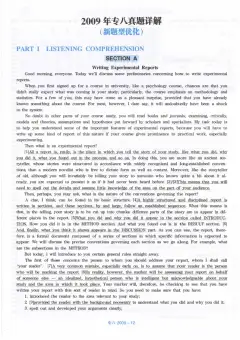
Good morning, today I will discuss what·is active learning, and, ah, what do active learners do. In or
der to defme active learning, I w出 look at the tliffe rences between active learning and passive learning by
examining six characteristics of active learners . and contrasting them with those of passive learners.
OK, let's start. With the first characteristic, [l]active learners tend to read with the ose of under-
standing and remembering. I bet that no one deliberately sits dowri to read with the purpose of not under
standing the text. However, I am sure that . some of you have been in a situation, probably more than once,
where you read - quote and unquote — an assignment, closed the text and thought "what the world was
that about?" When you interact with a text. in this manner, you are reading passively. [2]Active readers, on
the other hand set oals before the read and check their understandin as the read. When they fmish,
they can explain the main points, and know that they have understood what they have read.
[3]Now the second characteristic of active learners is to reflect on information and think criticall . Be
in . reflective is an im ortant art of active learnin because it means that ou are thinkin about the in
formation. In other words, you are processing the information. [4]For instance, you may make connections
between the new information and what ou alread know idenf conce ts that ou ma not understand
very well or [5]evaluate the im ortance of what ou are readin . An active learner reflects constantly in
this way. In contrast, passive learners may read the text and listen to lectures and even understand most
of what is read and heard, but they do not take that crucial next step of actually thinking about it.
[6]Let's move onto the third one. The third characteristic is to listen activel b takin com rehensive
notes in an organized way, like what you should be doing now. We lecturers are always amazed at the
number of students who engage in activities other than listening and note-taking in their lecture classes.
We've seen students reading newspapers, doing an assignment for another class, or chatting with their
classmates. Perhaps the all-time winner for passive learning, however, was a student who regularly came to
my class with a pillow and fell asleep. Unlike these students, active learners are engaged learners. They
listen actively to the professor for the entire class period, and they write down as much information as
possible. To be an active note taker, you must be more than simply present. You have to think about the
information before you write.
[7]The fourth characteristic is to get assistance when they are experiencing problems. [8]Because active
learners are constantl monitorin their understandin the know when their com rehension breaks down
and the ask for hel before the become lost. In addition, [9]active learners often redict the courses or
even articular conce ts within courses that ma ive them trouble. They have a plan in mind for getting
assistance should they need it. Active learners may seek assistance from their professors or peers, although
passive learners may seek help at some point, it is often too little, too late. In addition, because passive
·
learners do not reflect and think critically, they often don't even realize that they need help.
[lO]The next characteristic is to uestion information. This means that active learners raise questions on
information that they read and hear, while passive learners accept both the printed page and the words of
their professors as truth. Of course, active learners don't question everything, but they do evaluate what
they read and hear. [ll]When new information fails to fit in with what the alread know the ma differ
in the conclusions the draw or in the inferences the make.
The last characteristic, which I think is the most fundamental one, . is to accept much of the responsi
bility for learning. Active learners understand that the responsibility for learning must come from within,
专八2013 -11[12]while assive learners often want to blame others for their lack of motivation oor erformance time
mana ement . roblems and other difficulties that the mi ht e erience. [13]/[14]When active learners don't
erform as well as the 've ho ed the evaluate wh the didn't do well and chan e those stud · behav
iors the next time. Passive learners on the other hand often a roach eve course in the same manner
and then et an with rofessors when their erformance is oor. It is only when students accept the re
sponsibility for their own learning that they can truly be called active learners.
So, from what I have said so far, you can see that being an active learner involves both skill and will.
By• skill, I mean the tools to handle the studying and learning demands placed on you, like how to read
with purpose, when and where to get assistance if you are having difficulty. By will, I mean the desire and
motivation to follow through. [15]Here I'd like to em hasize that skill is nothin without will. For exam le
ou ma have a friend who is knowled ·eable ·but not motivated in the classroom even thou h he reads
widel and can intelli entl discuss a varie of issues he does little school work and rarel studies. In
other words, students, such as these, may have the skills to do well, but for some reason, they simply do
not have the w诅. And because skill and will go hand in hand, unmotivated·students, those who do not
have the will, may experience difficulty in college.
OK, today we discuss the differences between an active learner and a passive one, and some useful
study strategies that may eventually help you become an active learner.
1. reading with purpose 话人提到主动学习者会对阅读内容的重要性进行评
【解析】说话人提到主动学习者的第一个特点是 ,他们 估 (evaluate the importance of what you are
往往会带着理解和记忆的目的来阅读(read with the reading), 结合题目规定答案最多只能填三个词,故填
purpose of understanding and remembering) , 由 what is read。
第四、五点的 being able to 的形式可知,此处不能直 6. comprehensive and organized
接用read,而要用动名词 reading。 同时,由于字数限 [解析]说话人在介绍主动学习者第三个特点时提到,
制,空格处填上reading with purpose 即可。 主动学习者会积极听讲,并通过有条理的方法详尽地
2. checking understanding 做笔记 (taking comprehensive notes in an orga
【解析】说话人明确指出,主动学习者会在阅读前设定 nized way), 据此判断,记笔记的方式应是详尽且有
目标(set goals) 并在阅读过程中检查自己的理解 条理,故本空应填comprehensive and organized。
(check their understanding)。 A 项 提 纲 before 7. get assistance
reading: setting goals对应说话人提到的其中一点 [解析】 讲座提到的第四个特点是 当遇到问题时就去
信息,且使用了动名词形式,本空作为与此并列的内 寻求帮助 (get assistance when they are experi
容, 也应为动名词形式 ,故填入 checking under encing problems) , 故答案填 get assistance。
standing。 8. constant understanding monitoring // monitoring
3. reflective their understanding
【解析】 该空位于并列连词 and及形容词 critical之 【解析】空格位于介词短语 because of之后,应填入
前,应填入形容词。 说话人在介绍主动学习者的第二 名词或动名词。 说话人提到 ,因为主动学习者经常监
个特点时提到,主动学习者会对信息进行反思并做批 控自己的理解情况 (constantly monitoring their
判性思考 (reflect on information and think .criti understanding) , 一旦出现理解问题,他们就会知道并
cally), 反思(being reflective)是 主动学习的重要部 在迷失方向前寻求帮助。 结合对空格成分的分析及答
分。 结合前面对空格词性的分析, 确认该空应填re 案 不超过三个 词的规定 , 本空填 constant under
flect 的形容词形式,即 reflective。 standing monitoring最佳,monitoring their under
4. puzzling/confusing standing 也可接受。
【解析】该空位于 介词 of 之后,名词 concepts 之 前, 9. predict study difficulties // predict difficult points
应填入修饰 concepts 的前置形容词。 说话人提到主 【解析】讲座提到,主动学习者还经常会预测课程中一
动学习者会甄别出他们不能很好理解的概念(con 些难点(predict the courses, or . even particular
cepts that… very well), 此处 concepts 的修饰成分 concepts within courses that may give them
是一个后置定语从句, 不能照搬作为答案,应根据其 trouble), 原文内容较长,需要进行概括,答案可以写
意思将其同义转化为形容词,如 puzzling或 confus 成 predict study difficulties 或 predict difficult
ing等。 points等。
5. what is read 10. question information
【解析】空格位于介词of之后,应填入名词性成分。 说 【解析】讲座提到,主动学习者第五个 特点是质疑信
专八2013 -12息,答案照写录音中的 question information即可。 对学习责任的认知之后, 还对比了这两种学习者在
11. differ 面临学习成绩欠佳(don't perlorm as well; per
【解析】空格位于动词 evaluate及并列连词 and 之 formance is poor)时的不同表现,总结这些表达再
后,应填入动词原形。 说话人提到主动学习者会判断 结合空格分析,答案为poor perlormance。
看到或听到的信息, 如接收到的新信息与已有信息 14. change studying behaviors
不符,他们就可能得出不同结论或推论,故可填原词 【解析】说话人提到,主动学习者在表现不佳时,会作
differ。 出评估(evaluate why they didn't do well) , 并在
12. blame others 下一次改变学习方法(change those studying be
[解析】说话人在介绍最后一个特点时,对比描述了 haviors the next time) , 故答案填 change study
主动学习者和被动学习者对学习责任的认识, 其中 ing behaviors 即可。
提到主动学习者知道学习的责任在自身, 而被动学 15. school work // studies
习者则责怪他人。 空格处与提纲前面的 accept是并 [解析】说话人明确指出技巧(skill)不能与意愿(will)
列关系 , 故本空也应填动词原形, 答案为 blame 相比,并举例说明,如果没有学习动机,即便是一个
others。 博学的人也会does little school work and rarely
13. poor performance studies。 据此可见,意愿的重要性体现在学业上,所
【解析】本空位于介词 toward之后,应填入一个名词 以填school work或studies。
性成分。 说话人在对比了主动学习者和被动学习者
S�CTION B
Part One:
Interviewer: Good morning, Mr. West. Nice to have you on our program.
Interviewee: Good morning.
Interviewer: OK. We all work or very few people can get away with not working. Work is a fact of life
when we're adults. But before, there wasn't a lot of choice in the selection of work Now
things are different. [l]With reater mobili the mobili that is offered when eo le have
reater o ortunities for hi her education or trainin more and more eo le are able to
choose the fields that interest them. They can and do have opinions about what makes one
job for them better than another job. So, Mr. West, what do people actually want from their
jobs? What 扛e workers' opinions, you know, about what makes one job better than another?
Interviewee: Well, to answer your questions, I'd like to look at two polls, two smveys. They were both
done in the 1990s. The purposes were to find out what issues or job characteristics were es
pecially important to workers.
Interviewer: Umm. What were they?
Interviewee: Some of you might guess that the answer is obvious.
Interviewer: I think so.
Interviewee: You might say "oh people just want higher salaries, more money." But let's see if that's true.
Interviewer: OK.
Interviewee: Now, the first poll. The first poll was taken in 1990, and this poll asked respondents to choose
what was the most important to them among five items. And they were only allowed to
choose one out of the five items.
Interviewer: So what were the five items?
Interviewee: Alright. The first item was important and meaningful work. The second was high income. The
third was chances for advancement, promotion and so on. The fourth item was job security,
and the flfth was shorter work hours, OK?
Interviewer: It would be interesting to know the smvey results.
Interviewee: Yes, now let me tell you the results. [2C]50% considered important and meanin如W work the
most im ortant characteristic of a ·ob. The didn't choose hi h income. Interestin . [3]Anyway,
24% did sa hi h income was the most im ortant ch扛acteristic of a ·ob. Of the remaining,
[2B]16% said chances for advancement was most im ortant. Ma be these were oun er work
ers, starting out on a c扛eer. [2A]6% said job security and fmally [2D]4% said shorter work
专八2013 -13hours was most important.
Interviewer: I think what's striking about the results is that by far workers valued important and meaningful
work as more important than any of the other characteristics, that included sal叩
Interviewee: Yeah. Now I'm going to tell you about another poll, and this poll was taken a year later in
1991, and it asked the respondents to reflect on how important certain job characteristics were
in their work [ 4 ]And this is a cliffe rent e of. oll because whereas in the frrst oll res on
dents had to choose onl one out of five in this oll the wanted their res ondents to react
to each item separately. You know, this is to rank each item as "not important", "somewhat
important", "important" or "vecy important". [5]So they have four choices for each item.
1. How can the relationship between choice and mobility be best indicated?
[B] 【解析】本题询问 better education" 更好的教育 ",more choices" 更多的择业机会 ” 和 greater mobility" 更大的流
”
动性 三者之间的关系。 采访者指出当人们有更多机会接受更好的教育和培训时就有了更大的流动性,而更大的流
B
动性给予人们更多机会选择感兴趣的工作领域。 可见答案是 项,有更好的教育才有更多流动性,才有更多的
选择。
” ”” ” ”
【点睛]细节理解题。 由选项的形式来看,可推测本题可能问 更好的教育 更多的择业机会 “更大的流动性 之间 的先
mobility education choice
后关系或因果关系。 四个备选项的先后顺序各有不同,听录音时应 留意听清表明 、 和 关系的
词。 本题的解答关键是对 themobility that is . offered… education or training 的理解。
2. According to the interview, what detail about the first poll is INCORRECT?
[A]
【解析]在介绍第一份调查结果时,
Mr. West
指出只有
6%
的人认为工作的稳定性是工作的最重要方面,排第四位,
A “ ”
据此判断 项 民调结果显示工作稳定性排第二位 与调查结果不符,为本题答案。
【点睛]细节题。 四个选项的主语分别为工作稳定性、升职机会、高收入和较短工作时间 ,考生在听到这几个相关表述时,
要注意记下相应的信息。
3. Which came second for being the most . important issue for workers in the first poll?
[C]
[解析】第一份调查是让受访者选出他们认为在择业中最重要的因素,选择
“
工作有意义
”
的人最多(占
50%),
而选
“ ” 24%, “ “ C
择 高收入 的人次之,占 所以排第二位的应该是 收入 因素,选 项。
【点睛]在听音时要特别注意听与 四个选项相关的信息,并且要注意听题目 ,本题问的是居第二位的 因素,不要想当然地
觉得应该是问哪个排第一。
4. According to Mr. West, what's the main difference between the two polls?
[B] Mr. West
【解析]对话中 指出两份民意调查的不同之处在于:第一份民意调查要求受访者从五个选项中选出其中
一项,而第二份调查则要求受访者对每一项内容单独作出回答。 可见两份调查主要的不同之处在于问题的设计方
B
式,故 项为答案。
D “ ”
【点睛】细节题。 项 调查中 问题的数量 于扰性较强,两份调查的问题数量的确不同 ,但这并非其本质区别 ,其本质区
A
别应该是问题的设计方式的不同;对话中没有提及两次调查的受访人群是否有区别 , 项应抖卜除;两份调查都是针对人
“ “ C
们看重工作哪些方面的,故 问题的 内容范围 实质上是相同的, 项也排除。
5. How many choices were there for each item in the second poll?
[B] ]Mr. West “ ““
【解析 介绍第二份调查问卷时说,针对问卷的每一个调查项均设有四个选项,分别是 不重要 有点重
”“ ” “ “ B
要 重要 和 非常重要 。 所以本题选 项。
【点睛】本题不难,答案基本可以直接从录音原文中听出来。
Part Two:
Interviewer: Sorry to interrupt you. How many items altogether?
_
Interviewee: Oh, the poll had 16 items. Let me give you a few examples.
Interviewer: 0 K.
Interviewee: The second item they asked about is interesting work They asked how important is interesting
work to you. And again, I'm just going to tell you about how many people said it was very
important. In this case, 78% of the respondents ranked this as very important to them.
Interviewer: 78%?
Interviewee: Yes, 78%. This is a key point, I think One often sees people working for a lot less if they en
joy their work
Interviewer: That's true.
2013 -14
专八Interviewee: [6]The fourth item the asked about was o ortuni to learn new skills. How important is that
to you? 68% ranked this as very important. [6]And I think that goes again to the idea of in-
terest level ersonal satisfaction and the idea that eo le want their work to be meanin
Interviewer: Definitely.
Interviewee: Another item, item NO. 7, recognition from coworkers. 62% of the respondents said that this
was very important. It was important for them to be recognized, to be respected, and ac
knowledged for the work they've done. And I see recognition as a psychological benefit.
There's no monetary reward necessarily attached to it, although sometimes they could be. But
more people are looking for the psychological reward in terms of appreciation.
Interviewer: [7]It seems to me that eo le value s cholo ical reward a lot more than mone .
Interviewee: That's right. At least the poll result seemed to say so. Now, let's take a look at another item,
NO. 14.
Interviewer: OK!
Interviewee: NO. 14 was chances for promotion. 53% said that this was very important to them. It was im
portant to them to have opportunities for advancement, chances for promotion. [8]And I think
this oes alon with hi h income and reco nition. That's both a s cholo ical reward romo
tion, as well as a monetary reward.
Interviewer: Umm.
Interviewee: [10]15 is contact with a lot of eo le. Some eo le are ve eo le-oriented and 52% said that
this was very important to them.
Interviewer: So we can see workers do have a lot of things that are very important to them.
Interviewee: Yes, but you can also see the variation in numbers. But a note of caution here. These
are averages, and polls talk about averages. But still I think it is important for employers to
become more aware of polls like these because it might allow them to keep their workers sat
isfied in ways that maybe they haven't thought of before.
Interviewer: Yeah, OK. Thank you very much Mr. West for talking to us on the program.
Interviewee: Pleasure.
6. Regarding the second poll, what does Mr. West think can also reflect the idea of item NO. 2?
” ”
[A] 【解析]第二份调查问卷中,第 2项(the second item)间的是 工作有趣 的重要性。 Mr. West在讲第 4 项(the
“ ”
fourth item)时,说到这一项也反映出人们对 工作趣味性 的看重,换言之,第4项也反映出第 2项的价值取向和
需求,A项为答案。
“ " “ " ” ”
[点睛】第 7项问的是 同事的认可 ,第 14项问的是 晋升机会 ,第 15项问的是 工作中可以接触很多人 。这三项跟第
2 项反映的价值需求不能等同,且录音中也未提及它们跟第 2 项有相关之处。
7. What can we learn from the respondents' answers to items 2, 4 and 7 in the second poll?
” ” “
[D] 【解析]对话中 Mr. West提到,在第二份民意调查中,第 2项内容 工作有趣 有78%的人选,第 4项内容 学习新技
“ “ “
能的机会 有 68%的人选,而第 7项内容 同事的认可 有 62%的人选。 在分别听了这儿项调查结果后,采访者总结
“ ”
说 在我看来人们把心理上的回报看得比金钱重要得多 并得到 Mr. West的认同。 据此判断,D项是本题答案。
【点睛】细节归纳题,题目 要求对几项调查结果进行归纳推理。 A项说的是第 7项 内容,有 62%的人认为这很重要,A项
的表述与之矛盾;B 项只简单复述了第 4 项内容,不全面;C 是根据第 2 项调查结果得出的推论, 同样是片面的 ,也应
排除。
8. According to Mr. West, what can offe r both psychological and monetary benefits?
[C] [解析】对话中,Mr. West提到有 53%的受访者认为晋升机会很重要,之后指出这与受访者看重高薪和得到认同一
致,而晋升机会既是心理上的回报也是金钱上的奖赏。 可见,C项是本题答案。
【点睛】细节题。 A项为第 15 项调查内容,Mr. West没有提及其与心理和金钱利益的关系;B 项 “ 同事的认可 ” 为 第 7项
调查内容,多数为单纯的心理回报;D项为第 4项调查内容,也属于心理回报。
, . How nany items die Mr West take for example regarding the second poll?
[C] 【解析]Mr. West说第二份民意调查共有 16项内容,接着分别挑了第 2、第4、第 7、第 14和第 15项调查内容来讲,
所以本题选 C项。
【点睛】这道数字相加题,因为录音中没有明确说明举了 几个例子,所以要注意边听边做笔记 , 以 防遗漏。
专八 2013 -1510. Who is more likely to rank "contact with many people" as very important?
[B] 【解析】题目问谁更有可能会觉得”工作中可以接触很多人”这一项十分重要。这是第 项的内容,与之相关的信息
15
只有一句,关键是理解该句中 people-oriented这个词的意思。 people-oriented可表示”以人为中心的,注重人际交
往的”,由此推断这些应该是喜欢或注重人际交往的人, 项与之相符。
B
(点睛】相比 B项“好社交的(sociable)" , 具备“年轻”“勤奋”或“聪明”这些特征的人不一定会很注重工作中是否能接触
到很多人,所以排除A、C、D 三项。
PART II READING COMPREHENSION
SECTION- A
PASSAGE ONE 全文翻译画线点评
(1)
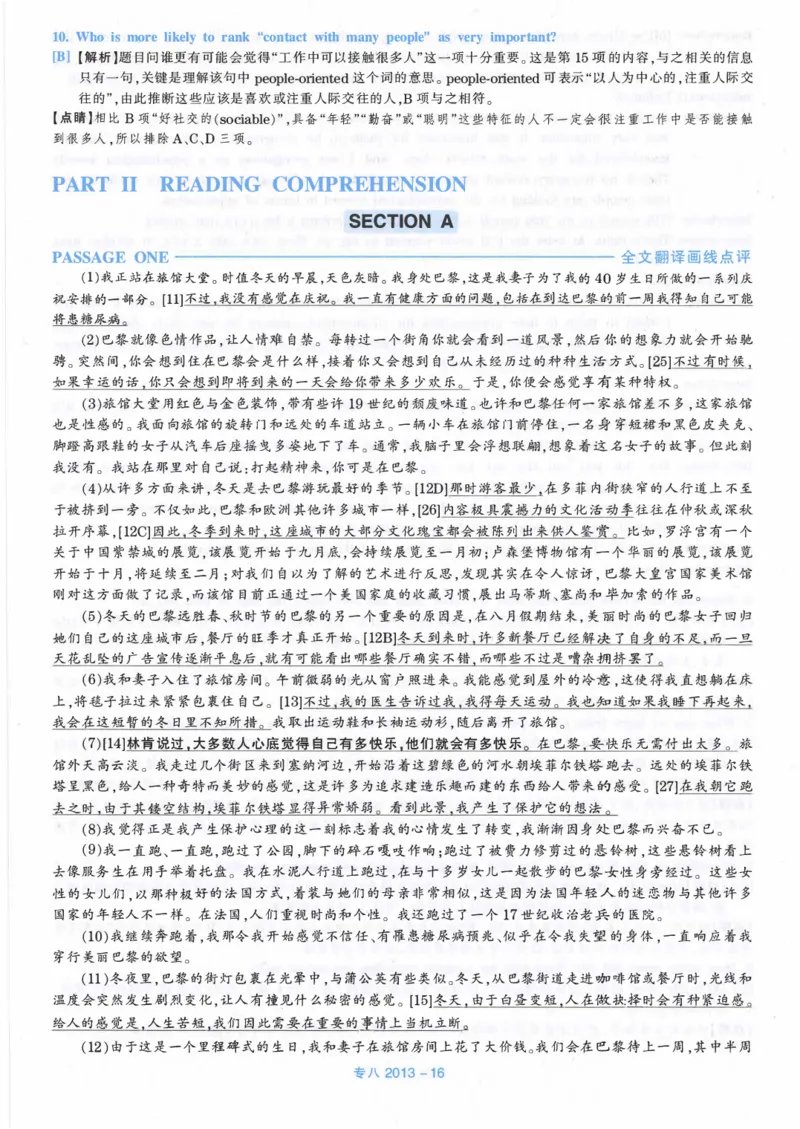
我正站在旅馆大堂。 时值冬天的早晨,天色灰暗。 我身处巴黎,这是我妻子为 了我的
40
岁生日所做的一系列庆
祝安排的一部分。 不过 我没有感觉在庆祝。 我一直有健康方面的问题 包括在到达巴黎的前一周我得知自 己可能
[11)
将患糖尿病。
(2)巴黎就像色情作品,让人情难自 禁。 每转过一个街角你就会看到一道风景,然后你的想象力就会开始驰
骋。 突然间 ,你会想到住在巴黎会是什么样,接着你又会想到 自 己从未经历过的种种生活方式。 不过有时候,
[25]
如果幸运的话 你只会想到即将到来的一天会给你带来多 少欢乐。 于是,你便会感觉享有某种特权。
(3)旅馆大堂用红色与金色装饰 ,带有些许 19世纪的颓废味道。也许和巴黎任何一家旅馆差不多 ,这家旅馆
也是性感的。 我面向旅馆的旋转门和远处的车道站立。 一辆小车在旅馆门前停住,一名身穿短裙和黑色皮夹克、
脚蹬高跟鞋的女子从汽车后座摇曳多姿地下了车。 通常,我脑子里会浮想联翩,想象着这名女子的故事。 但此刻
我没有。 我站在那里对自 己说:打起精神来,你可是在巴黎。
从许多方面来讲,冬天是去巴黎游玩最好的季节。 那时游客最少,在多菲内街狭窄的人行道上不至
(4) [12D]
于被挤到一旁。 不仅如此,巴黎和欧洲其他许多城市一样,[26]内容极具震撼力的文化活动季往往在仲秋或深秋
拉开序幕, 因此 冬季到来时 这座城市的大部分文化瑰宝都会被陈列 出来供人鉴赏 比如,罗浮宫有一个
[12C]
关于中 国紫禁城的展览,该展览开始于九月底,会持续展览至一月初;卢森堡博物馆有一个华丽的展览,该展览
开始于十月 ,将延续至二月 ;对我们 自 以为 了解的艺术进行反思,发现其实在令人惊讶, 巴黎大皇宫国 家美术馆
刚对这方面做了记录,而该馆 目 前正通过一个美国家庭的收藏习惯,展出马蒂斯、塞尚和毕加索的作品。
冬天的巴黎远胜春、秋时节的巴黎的另一个重要的原因是,在八月假期结束,美丽时尚的巴黎女子回归
(5)
她们 自 己的这座城市后,餐厅的旺季才真正开始。 冬天到来时 许多新餐厅已经解决了 自 身的不足 而一旦
[12B]
天花乱坠的广告宣传逐渐平息后 就有可能看出哪些餐厅确实不错 而哪些不过是嘈杂拥挤罢了
(6)我和妻子入住了旅馆房间。 午前微弱的光从窗户照进来。 我能感觉到屋外的冷意,这使得我直想躺在床
上,将毯子拉过来紧紧包裹住 自 己。 不过 我的医生告诉过我 我得每天运动。 我也知道如果我睡下再起来
[13]
我会在这短暂的冬日里不知所措。 我取出运动鞋和长袖运动衫,随后离开了旅馆。
(7)[14]林肯说过 大多数人心底觉得自己有多快乐 他们就会有多快乐 在巴黎 要快乐无需付出太多 。 旅
馆外天高云淡。 我走过几个街区来到塞纳河边,开始沿着这碧绿色的河水朝埃菲尔铁塔跑去。 远处的埃菲尔铁
塔呈黑色,给人一种奇特而美妙的感觉,这是许多为追求建造乐趣而建的东西给人带来的感受。 在我朝它跑
[27]
去之时 由于其镂空结构 埃菲尔铁塔显得异常娇弱 看到此景 我产生了保护它的想法。
(8)我觉得正是我产生保护心理的这一刻标志着我的心情发生了转变,我渐渐因身处巴黎而兴奋不 已。
(9)我一直跑、一直跑,跑过了公园 ,脚下的碎石嘎吱作响;跑过了被费力修剪过的悬铃树,这些悬铃树看上
去像服务生在用手举着托盘。 我在水泥人行道上跑过,在与十多岁女儿一起散步的巴黎女性身旁经过。 这些女
性的女儿们,以那种极好的法国方式,着装与她们的母亲非常相似,这是因为法国年轻人私}迷恋物与其他许多
国家的年轻人不一样。 在法国 ,人们重视时尚和个性。 我还跑过了一个 17世纪收治老兵的 医院。
(10)我继续奔跑着,我那令我开始感觉不信任、有罹患糖尿病预兆、似乎在令我失望的身体,一直响应着我
穿行美丽巴黎的欲望。
冬夜里,巴黎的街灯包裹在光晕中,与蒲公英有些类似。冬天,从巴黎街道走进咖啡馆或餐厅时,光线和
(11)
温度会突然发生剧烈变化,让人有撞见什么秘密的感觉。 冬天,由于白昼变短,人在做扶:择时会有种紧迫感。
[15]
给人的感觉是,人生苦短,我们因此需要在重要的事情上当机立断。
由于这是一个里程碑式的生 日 ,我和妻子在旅馆房间上花了 大价钱。我们会在巴黎待上一周 ,其中半周
(12)
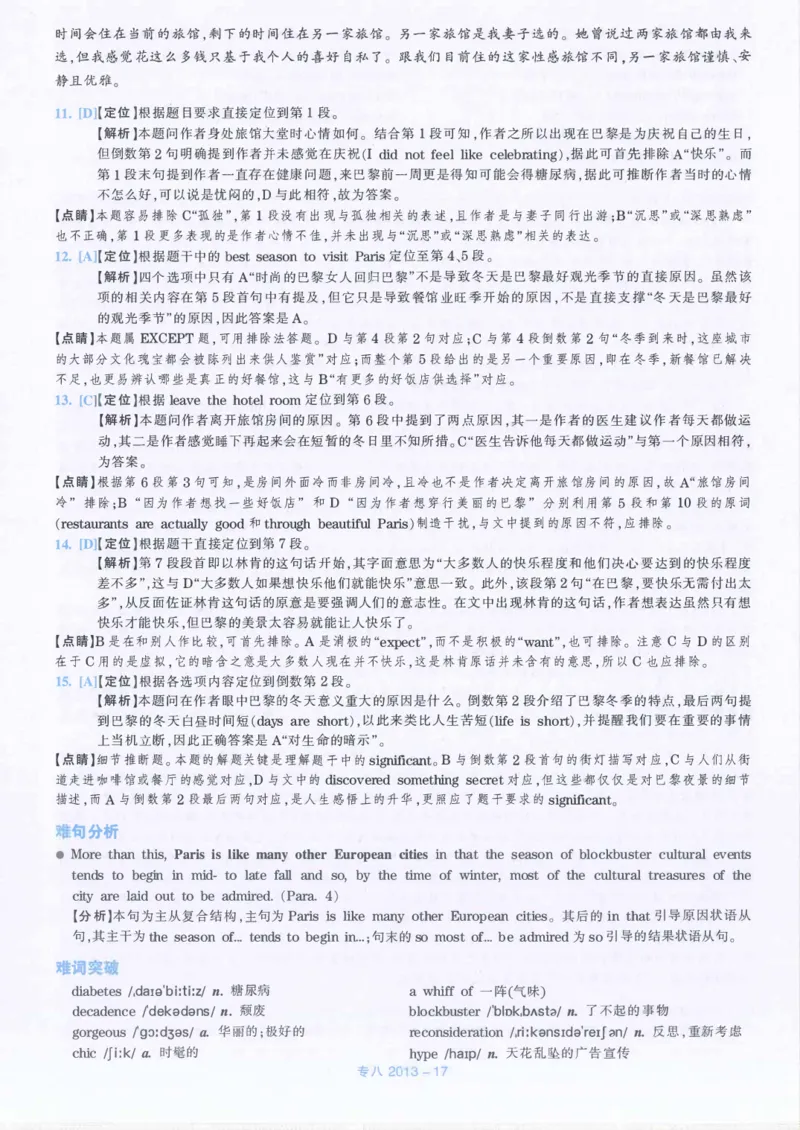
专八2013-16时间会住在当前的旅馆,剩下的时间住在另一家旅馆。 另一家旅馆是我妻子选的。 她曾说过两家旅馆都由我来
选,但我感觉花这么 多钱只基于我个人的喜好自私了。 跟我们 目 前住的这家性感旅馆不同 ,另一家旅馆谨慎、安
静且优雅。
11. [D] 1
【定位]根据题目要求直接定位到第 段。
1
【解析】本题问作者身处旅馆大堂时心情如何。 结合第 段可知,作者之所以出现在巴黎是为庆祝自己的生日 ,
2 (i' did not feel like celebrating) , A" ”
但倒数第 句明确提到作者并未感觉在庆祝 据此可首先排除 快乐 。 而
1
第 段末旬提到作者一直存在健康问题,来巴黎前一周更是得知可能会得糖尿病,据此可推断作者当时的心情
不怎么好,可以说是忧闷的,D与此相符,故为答案。
" ” “ ”
【点睛】本题容易排除 C"孤独 ,第 1 段没有出现与孤独相关的表述,且作者是与妻子同行出游;B"沉思 或 深思熟虑
“ ” “ ”
也不正确,第 1 段更多表现的是作者心情不佳,并未出现与 沉思 或 深思熟虑 相关的表达。
12. best season to visit Paris
[A]【定位】根据题干中的 定位至第4、5段。
”
【解析】四个选项中只有A"时尚的巴黎女人回归巴黎 不是导致冬天是巴黎最好观光季节的直接原因。 虽然该
“
项的相关内容在第 5段首旬中有提及,但它只是导致餐馆业旺季开始的原因,不是直接支撑 冬天是巴黎最好
”
的观光季节 的原因,因此答案是A。
EXCEPT 2 C 2 “
(点睛】本题属 题,可用排除法答题。 D 与第 4 段第 句对应; 与 第 4 段倒数第 句 冬季到来时,这座城市
”
的大部分文化瑰宝都会被陈列 出来供人鉴赏 对应;而整个第 5 段给出 的是另 一个重要原 因 ,即在冬季,新餐馆 巳解决
“
不足,也更易辨认哪些是真正的好餐馆,这与 B"有更多的好饭店供选择 对应。
13. [C]( leave the hotel room 6
定位】根据 定位到第 段。
6
【解析】本题问作者离开旅馆房间的原因。 第 段中提到了两点原因,其一是作者的医生建议作者每天都做运
C" ”
动,其二是作者感觉睡下再起来会在短暂的冬日里不知所措。 医生告诉他每天都做运动 与第一个原因相符,
为答案。
6 3 A"
【点睛】根据第 段第 句可知,是房间外面冷而非房间冷,且冷也不是作者决定离开旅馆房间 的原 因,故 旅馆房间
” B " ” D " “ 5 10
冷 排除; 因为作者想找一些好饭店 和 因为作者想穿行美丽的 巴黎 分别利用 第 段和第 段的原词
(restaurants are actually good through beautiful Paris)
和 制造于扰,与文中提到的原 因不符,应排除。
14. [D] 7
【定位】根据题干直接定位到第 段。
“
【解析】第 7段段首即以林肯的这旬话开始,其字面意思为 大多数人的快乐程度和他们决心要达到的快乐程度
差不多 ” 这与 D"大多数人如果想快乐他们就能快乐 ” 意思一致。 此外,该段第 2句 ” 在巴黎,要快乐无需付出太
”
多 ,从反面佐证林肯这句话的原意是要强调人们的意志性。 在文中出现林肯的这句话,作者想表达虽然只有想
快乐才能快乐,但巴黎的美景太容易就能让人快乐了。
"expect", "want", C
【点睛]B是在和别人作比较,可首先排除。 A是消极的 而不是积极的 也可排除。 注意 与 D 的区别
在于 C用的是虚拟,它的暗含之意是大多数人现在并不快乐,这是林肯原话并未含有的意思,所以 C 也应排除。
15. [A] 2
【定位】根据各选项内容定位到倒数第 段。
【解析】本题问在作者眼中巴黎的冬天意义重大的原因是什么。 倒数第 2段介绍了巴黎冬季的特点,最后两句提
(days are short) , (life is short) ,
到巴黎的冬天白昼时间短 以此来类比人生苦短 并提醒我们要在重要的事情
”
上当机立断,因此正确答案是A"对生命的暗示 。
significant 2 C
(点睛】细节推断题。 本题的解题关键是理解题干中的 。B 与倒数第 段首句的街灯描写对应, 与人们从街
discovered something secret
道走进咖啡馆或餐厅的感觉对应,D 与文中的 对应,但这些都仅仅是对巴黎夜景的细节
A 2 significant
描述,而 与倒数第 段最后两句对应,是人生感悟上的升华,更照应 了题千要求的 。
句分析
• More than this, Paris is like many other European cities in that the season of blockbuster cultural events
tends to begin in mid- to late fall and so, by the time of winter, most of the cultural treasures of the
city are d out to be admired. (Para.
1拉 4)
Paris is like many other European cities in that
【分析】本句为主从复合结构,主句为 。 其后的 引导原因状语从
the season of... tends to begin in so most of... be admired so
旬,其主干为 …;旬末的 为 引导的结果状语从句。
难词
diabetes /,da bi:ti:z/ n. a whiff of 一阵(气味)
卤 糖尿病
decadence /'dekadans/ n. blockbuster k sfa/ n.
颓废 /'加 尬 了不起的事物
gorgeous /'g:1:d3as/ a. reconsideration /,ri:kans1da're1J ;}n/ n.
华丽的;极好的 反思,重新考虑
chic /Ji:k/ a. hype /ha1p/ n.
时髦的 天花乱坠的广告宣传
专八么 J 17unpack 从n'paek/ v. 打开(包装)取出某物 swea岱hlrt /'swetJ 3:t/ n. 棉织长袖衫,长袖运动衫
lattice /'laehs/ n. 格子图案 crunch /krAntJ / v. 嘎吱作响;嘎吱嘎吱地咬(嚼)
beneath /b1'ni:8/ prep. 在……下面 cement /s1'ment/ n. 水泥
sidewalk /'sa1dw:J:k/ n. [pl.]人行道 stroll /straul/ vi. 散步,闲逛
fetish /'fehJ / n. 神物;迷恋之物 veteran /'vefaran/ n. 老兵;老手
milestone /'madstaun/ n. 里程碑 splash /spl叫I v. 溅,泼
discreet /d1'skri:t/ a. 谨慎的
PASSAGE TWO 全文翻译画线点评
(1)如果想知道为什么丹麦在风力发电方面世界领先,你可以从一次三小时的汽车旅行开始了解。从首都哥
本哈根出发——路上留意避开骑自行车的人 直到抵达位于 日德兰半岛西岸的小镇莱姆。 当你穿越 6.8公里
长的大贝 尔特桥之时,你就会有所感觉 了 :即便在一个平静的夏日 ,丹麦的大凤也猛烈到似乎能把你的车吹到
桥下的海浪中去。 [16D]但大凤本身只是部分原因。 在莱姆,工人们在有如飞机库大小的工厂建造维斯塔斯公司
售卖的风轮机。 维斯塔斯是一家丹麦公司 ,现已成为该行业全球领先的顶尖制造商。 建造工作既宏大又精细;工
人们将巨大的弧形钢板焊接起来制成 14层楼高的中轴,再装配起由 1.8 万个零部件组成的引 擎外罩。 最了不起
的是涡轮叶片 ,每转一大图就能把更多的凤收集起来。 每张重 7吨的叶片都光滑如奥运会专用泳衣,这是气流
学的完美体现。 正是它们使得维斯塔斯涡轮机成为世界顶级产品。 维斯塔斯一名执行官埃里克·特科尔森说:
“叶片是我们的秘密所在。 我们只要能把涡轮机造出来,它就能卖。 ”
(2)[16C]然而 技术如同凤本身一样 仅仅是丹麦称霸的又一部分原因。 [16B]/[l7]说到底 丹麦能称霸的原
因在于丹麦有成为领导者并一以贯之的政治和公众意志。 自 1979年始,丹麦政府开展了 一项坚定的津贴和贷款
担保政策以扶持凤电产业。 哥本哈根承担30%的投资成本,并给诸如维斯塔斯这样的大型涡轮机出 口商提供贷
款担保。 [28]政府还强制规定事业单位以优惠价格购买凤能—一-从而确保了投资者拥有稳定的客源。 能源税被
专门投入到研究中心,工程师们在此精心设计,最终创造了如维斯塔斯3 兆瓦V90 涡轮机这样尖端的庞然大物。
(3)其结果是,凤力涡轮机现在遍布丹麦。 丹麦有超过 19%的电从风能中获得(紧随其后风电比例最高的两
个国家,西班牙和葡萄牙,为 10%),并且丹麦的公司控制 了全球三分之一的凤电市场。 他们赚取了数十亿的外
汇,并从零开始把丹麦塑造成这个领域的领跑者。 “他们在推动可再生能源方面行动得早,这为他们成为技术带
头人和就业领头羊提供了机会,“杰克·施密特如是说。 他是总部设在纽约的 自然资源保护委员会国际气候政策
部主任。 “他们总比别人快那么一两步。 ”
(4)现在丹麦面临的挑战是如何帮助世界其他国家迎头赶上。 除凤能外,总人口为 550 万的丹麦在能效方面
也是世界领先的,其每瓦电能获得的 GDP 比欧盟其他任何国家都高。 丹麦在能源消耗总量几乎没有改变的情况
下,碳排放量相比 1990年的水平下降了 13.3%,而在此期间 ,丹麦经济保持着持续健康增长。 哥本哈根已被定为将
于 12 月进行的联合国气候变化会议的主办地-—-该会议非常重要,整个世界都希望在此期间能制定替代即将期
满失效的《京都议定书》的新协议 而全球性经济衰退正开始影响各国对环境计划的执行情况,[18]丹麦模式来
得真是再及时不过了。 “我们会努力将丹麦变成展示厅 “首相安德斯·福格·拉斯穆森说。 ``减少能源消耗和碳排放
的同时 也能保持经济增长。 ”
(5)人们很容易就会假定丹麦人天生绿色环保,似乎远自 ,哦,维京时代(8至 11世纪的北欧海盗时代)起,斯堪的
纳维亚就有了好名声 ,这使得它一直为世界人民喜爱。 [29]而事实上 丹麦相关国家政策的产生源起于完全不同的情
绪 这种情绪在当今世界相当普遍:恐慌。 当 1973年石油危机爆发时,丹麦9()>/4的能源来自石油,而其石油几乎全部都
依靠进口。 在遭受和其他发达国家一样的能源危机冲击之后,丹麦快速推动了能源保护计划 ,彻底到推行周 日 小车禁
行和要求所有商家打洋时间熄灯的地步。后未中东重新恢复石油输出,丹麦人自 己也开始在北海的石油和天然气中分
得一杯羹:这足以让丹麦自给有余。[29]但不同于其他大多数国家的是 丹麦从未忘记 1973年的教训 始终往更高的能
源效率和更多样的能源供给方式努力。丹麦国会提高能源税以鼓励节约能源,提供政府补贴和标准以支持更节能的建
筑。 “最初的时候我们完全没考虑气候或环境问题,“丹麦反对党社会民主党前党魁,20世纪 90年代国家环境政策的
制定者斯文特·奥肯如是说。 “但如今,需要建设可再生能源已成为我们的共识。 ”
(6)[19]对世界其他国 家而言 丹麦有其作为榜样的魅力 它向你展示在保持富有的 同 时 也可以变得更环
保。 自然资源保护委员会的施密特说:"丹麦已向世人证明 ,对气候采取行动并不只是痛苦的,它完全可以成为一
种积极的体验。 “真正的痛苦可能来自 没能效仿丹麦模式。
16. [A] [定位】根据题干中的leadership in wind power定位到第 1、2段。
【解析】本题要求选出不属于丹麦称霸世界风能领域的原因。 文中首段虽然讲到一些有关丹麦的地理情况,但没
专八2013 -18有线索表明A"地理位置”和丹麦在世界风能领域领先有什么关系,故A为答案。
【点睛】此题属于 EXCEPT题,用排除法解答更便捷。 第 2 段前两句说”技术如同风本身一样仅是丹麦称霸的又一部分
原 因。 说到底,丹麦之所以在风能领域称霸是因为丹麦的政治和公众意志”,这分别与 B、C 对应;文章首段第 3 句提到
“风本身仅是部分原因"'这与 D 对应。 故B、C、D 三项均应排除。
17. [D]【定位】根据题干中的 efforts, Government, wind industry等定位到第 2段。
【解析】题干所说的丹麦政府为推动风能产业所做的努力出现在第 2 段第 3旬至该段段末,具体包括:扶持大型
涡轮机出口 、资助风能企业及科研等,这些具体例证都是为该段的主题句(第 2句)的观点服务的,该主题句表
明政府的坚定决心最终促使丹麦在风能上领先别国,故D为答案。
[点睛】例证分析题。A"国家的资助及贷款政策”本身就是例证,应排除;B"出 口对国家的重要性”、C"税收在经济中扮演
的角色”均是对例证细节的胡乱猜想,并非作者举例想要说明的观点,都应排除。
18. [C] [定位】根据题干引语部分直接定位到第4段。
【解析】对第4段中“丹麦模式来得再及时不过了“这句话最好的理解来自紧随其后丹麦首相说的话:“我们会努
力将丹麦变成一个展示厅,说明减少能源消耗和碳排放的同时,也能保持经济增长。 ”据此判断,C"丹麦成功节
能为世界提供了榜样”是本题答案。
【点睛】注意斜体部分是 couldn't be more 的否定加比较的说法,实际表示的是肯定,A 的说法刚好与之相反,应排除;
由上下文可知,丹麦能起榜样作用 的是其节能成果,而非“风能涡轮机”或“经济的发展",故B 和 D 排除。
19.
[C]【定位】根据各选项内容各自定位。
【解析】文中末段第 1 句的后半旬说“丹麦的例子向你表明,保持富有的同时,也可以变得更环保",C 的说法”节
能与经济增长二者不可兼得” 与此刚好相反,故为答案。
[点睛】本题可用排除法答题。 从丹麦在 1973 年危机的例子及文章最后一句可知,不节约能量会导致严重后果,这是真
正的痛苦(real pain)所在,与 A 对应;最后一段的引语“对气候采取行动并不只是痛苦的,它完全可以成为一种积极的体
验“暗示,节能是痛苦的,但同 时也是有益的,与 B 对应;文章多处提及丹麦在风能领域的领先地位,与 D 对应。
难句分析
o With Copenhagen set to host all-important U.N. climate change talks in December—where the world
hopes for a successor to the expiring Kyoto Protocol—and the global recession beginning to hit
environmental plans in capitals everywhere, Denmark's example couldn't be more timely. (Para. 4)
【分析】 本句的主旬是Denmark's example couldn't be more timely。 句首的 With Copenhagen... in December
and the global recession... capitals everywhere为with引导的独立主格结构作状语,由并列连词and 连接,表示
两个原因。 两个破折号内的 where 引导非限制性定语从句,修饰前面的 talks。
难词突破
shove /JA V/ vt. 乱推,挤 hangar /'h年 1)8/ n. 飞机库
turbine /ta:bam/ n. 涡轮机 weld /weld/ v. 焊接
hone /haun/ vt. 磨 mandate /'m岔nda廿I vt. 勒令强制执行
PASSAGE THREE 全文翻译画线点评
(1)首先,我是在剪发的时候开始有所感觉的。 当我在等头发变干的时候 发型师不仅像往常那样给我端
[20]
来茶或咖啡 还免费为我涂指甲油。她也许希望,这点小小的福利可以减缓我们女士将剪发间隔时间延长至4 个
月 ,好让头发恢复早已被遗忘的本色的意愿。
(2)然后,是那位电器售货员 ,当他陪我在摆放微波炉的通道内转悠时,主动帮我扲包。 当我给丈夫打电话,
让他上网查一些相似规格的产品时, 这位售货员就抢先表示愿意给我打折 生怕网上会查到别家商店所售的
[30]
同款货品更便宜。 当天晚上,我生平笫一次看到这样一则广告:现代汽车在广告里承诺说,如果车主在购车次年
失业的话,他们可以退货。
突然间,所有东西都在打折。 经济衰退可喜的一面是它极大地刺激了零售商 让他们待你有如一 日
(3) [21]/[32]
凸财源广进时,售货员粗暴无礼,侍应生则极为势利。 而如今是顾客至上,光顾你那儿就是给你面子。 飞机
[31]
上有了更多伸展空间 甚至长途汽车里也如此 许多购物中心弥漫着久无人迹的空旷冷清氛围 难得见到购物者。
每次和任何一个售货员 (无论他/她卖的是什么)谈话都有如一出痛苦和虚张声势的哑剧。 你用手指随意捏捏围 巾 ,
然后开始离开的话,它的价格就会像丝绸般滑落。 如有机修师来电告知,更换刹车片和发动机皮带,外加一些保养
价格接近 美元,此时你便可以施展故作沉思这新近练得炉火纯青的招数了。你甚至根本不用说什么可怜兮兮
2000
的话,对方就会主动减掉几百美元。
专八
2013 -19(4)餐厅也一下子变得热情好客起来,尤其是华尔街周边的那些餐厅。 只要当天股市下跌,三角地酒吧就会在
“快乐时光”(黄昏到晚上 9 点)推出每杯售价仅3 美元的酒精饮料,还打出”市场大跌? 一醉方休! "的 口号,此举使
得交易所闭市铃声响过之后,这里便人头攒动。 俱乐部已经决定男士无须打领带便可入内 ,只要带上钱包就
"21"
行。 连食物本身都比以前“友好”了 :厨师与食客之间达成了“和平协议”,你注意到可口的食品增多 了 ,且更容易品
尝到,既然你几乎可以在任何一家餐厅找到位子,享用它们也更方便了。 《纽约时报》餐饮业评论员 弗兰克·布鲁尼
将餐饮业此种新做法形容为“透着不折不扣绝望的极度殷勤”。 “你得拥抱顾客,“一位店老板对他这样说。
(5)我们最终有可能以曾被强烈谴责,如今却人人希望借以重振经济的奢侈性消费回报此种殷勤。 然而,人
性就是这么有趣。 世道不佳时,我们往往会对那些看似不容错失的好交易既不舍放手又心存疑虑,觉得这好得
难以置信: 那家售卖特别便宜平板电视机的商店是不是要关门 大吉 因此无法再履行“免费“延期保修呢? 那
[22]
些免费奶酪是不是有什么 问题呢? [23]店老板会给你讲述一堆 自 以为是的购物者的恐怖行为 :一进门就要求打
折 而且处处炫耀其新权势。 意识到某些坏习惯正在形成,这些店老板不禁眉头紧皱:这是否意味着人们会永远
期待打折? 自 己来之不易的奢侈品,尤其是那些靠奇高价位彰显魅力的商品,是否将永远被迫折价?
(6)无疑,总有一天一切都会恢复“正常"'零售业甚至在连续下滑 6 个月后已于 1 月 份略有回升。但是,我想
知道怎样才能让我们将每双售价545 美元的“希格森·莫里森”带饰钉趾环凉鞋视为价格公道? 无论市场状况如
何,人们追求便宜货是会上瘾的 ,况且讨价还价还是一项低凤险、高回报的接触性运动呢。 创伤会转化为习惯,
就像我 85 岁的母亲至今还将放罐头食品的柜子称为“防空洞”。 经历过笫一次经济大萧条的人们即使在阴霾散
尽后好长时间里仍将针头线脑视为宝贝 ,并且提倡牺牲精神。最终他们被称为“最伟大的一代”。当我们学会珍惜
钱物资源后,谁知道又将会是一种怎样的景象? [24]我们生活在一个大肆浪费的时代里 厉行节约有着远超我们
自 身道德标准的价值。
20. [CJ(定位】根据题干中的the first clue定位到首段。
(解析】首段第2 句提到”在我等头发变干的时候,发型师不仅像往常那样给我端来茶或咖啡,还免费为我涂指
甲油”,此举无疑是店家为讨顾客欢心使尽手段的表现,故答案为 C。 注意,文中的complimentary使用的不是
其常见义“恭维的,赞美的”,而是“免费赠送的”意思。
(点睛】细节推断题。 the frrst clue是作者作为顾客观察到的商家的变化,而 A"女性倾向于不那么频繁修剪头发”和 D
“顾客停止冲动购物”讲的都是顾客的变化,可首先排除。 B"大小商冢都在大打折扣”不是首段可以直接推断出 的,因为
首段中店家增加的是免费服务,故排除 。
B
21. [CJ(定位】根据题干中 the retailers定位到第3段。
【解析】此题问哪个选项最好地描绘了现在的零售商,根据第3段第 2 旬“经济衰退中可喜的一面是它极大地刺
激了零售商,让他们待你有如一日女王”可知,零售商现在有着强烈的动机(highly motivated)优待顾客以争取
他们,故答案是C。 文中 incentive相当于motivation。
【点睛】A"过分友善”是强于扰项。 文章前4段的确都在描述retailers 一些异常取悦顾客的行为 ,包括免费涂指甲,帮顾客
扲包,失业可退车,对待顾客有如女王等,但文中作者(作为顾客)并没有觉得店冢友善“过头”,反而很享受能得到”女王般
的待遇",A排除;文中提到销售人员很粗鲁,但那是在生意好的时候,排除B;文中未提到零售 商是否有挫败感 , 至 多 在
倒数第 2 段段末说 ,店 主 因 意识到顾客变得难缠而难受 ,但这也远不是 deeply frustrated, D 也排除。
22. [A](定位】根据题目直接定位到第 5段。
【解析]本题问go bust这一短语可能的意思。go bust是一个非正式表达,意思是“生意失败,破产,倒闭"'在文
中表示顾客质疑售卖特别便宜平板电视机的商店是否要关门大吉。 如果不认识该短语,根据该短语所在句末尾
的 thus not be there to honour the "free" extended warranty"因此无法再履行`免费 '延期保修”也可大
致猜出 go bust表示“倒闭,关张”的意思。 答案选A。
【点睛扭”变得繁荣起来”与 文意相反;C表示“服务质量下降”和 D 意为“提价",两者均与 go bust 的意思不符。
23. [B]【定位】根据题干中的引语定位到第5段倒数第3句。
(解析】题干引语“处处炫耀其新权势”出现在"(顾客)一进门要求打折”之后,显然这种新权势指的是顾客已习
惯向商家要大折扣,且从下一旬店老板的忧虑”这是否意味着人们会永远期待打折”进一步得到证实,选B。
【点睛】细节判断题。A"顾客喜欢炫耀他们是有权势的”是对引语字面意思的理解;C"顾客喜欢炫耀他们的财富”与顾客
进店就要求打折不符;D"顾客疑心更多“虽在此段前半部分有所提及,但说的是对过于优惠的 商品的心理。
24. [A](定位】根据题干要求直接定位到最后两段。
【解析】文章最后两段的大意是,尽管人们可能会向以前的奢侈消费习惯回归,但在经济萧条期间养成的节俭、
讨价还价的习惯很可能会延续下去,且有其自身价值。 尤其全文最后一句的“我们生活在一个大肆浪费的时代
里,厉行节约有着远超我们自身道德标准的价值“直接点明了作者的观点,故A"厉行节俭有重大意义”是答案。
专八2013 -20【点睛)段落大意题。 此题考查学生寻找主题句 、把握主题的能力。 B"奢侈消费可能会促进经济增长”与 第 5 段首句的
extravagant spending… will restart economy 对应 ,C "一个人的经历可能会转化成其终身 习 惯” 与 第 6 段 中 的
Trauma digs deep into habit对应,但都属于文章细节,不是作者在最后两段传达的主 旨 ;D"顾客应该期望奢侈品打
,
折”与第 5 段末句相关,但该句只是商家提出的疑问 ,作者并没指出奢侈品是否该打折,故D 也应排除。
难句分析
癖 Maybe she hoped this little amenity would slow the growing inclination of women to stretch each haircut
to last four months while nursing our hair back to whatever natural color we long ago forgot (Para 1)
【分析】本旬主旬是 she hoped…,其后的 this little amenity would. .. 是从旬作 hoped 的宾语。 不定式短语 to
stretch each haircut to... months是inclination的后置定语。 while引导时间状语,表明女士们想把修剪头发的时
间间隔延长至4个月 同时想做的事情。 we long ago forgot是修饰color 的定语从旬。
难词突破
amenity 厄mi:mh/ n. [pl.] 福利 pre-emptive /pn'emphv/ a. 先发制人的
incentive /面senhv/ n. 刺激 surly /'s3:h/ a. 脾气坏的
snobby /'snob1/ a. 势利的 serene /si'ri: n/ a. 平静的
aura 心:ra/ n. 气氛 pantomime /'p岔ntama1m/ n. 哑剧
bluff /b从fl n. 虚张声势 ardent /'a:dant/ a. 热情的
demeanor /d1'mi:na/ n. 行为,风度 outright /'autrait/ a. 彻底的
flaunt /fb:n t/ v. 夸耀 wince /wms/ v. 皱眉蹙额
luster /'IAsta/ n. 光泽 allure /a'ljua/ n. 诱惑,魅力
haggle /'h年砰I v. 讨价还价 wanton /wontan/ a. 无节制的
SECTIO� �
PASSAGE ONE
25. Because one might expect many pleasures in a single day.
[定位】根据题目中的feel privileged定位到第 2段末。
【解析]feel privileged 出现在第 2段最后,之前有一个连词Then,该词实际上隐含了因果关系,故答案应从前一句
中概括出来。 该句提到,如果幸运的话,可以想象到即将到来的一天会带来多少欢乐,故答案应与此句同义。
26. Blockbuster. // Of large number and of great value.
【定位】根据题目直接定位到第4段。
【解析】本题问根据第4段的描述,可以用什么词来形容巴黎的文化活动。 该段从第 3句开始出现有关文化活动的
表述,其中第 3句明确提到“内容极具震撼力的文化活动(blockbuster cultural even氐)”,本题答案可沿用该句中
的原词表达,填Blockbuster;此外,结合该段随后提到的“这座城市的大部分文化瑰宝都会被陈列出来“以及所列
举的包括卢浮宫、卢森堡博物馆等地所举办的展览,可推测该地的文化活动繁多,鉴赏价值高,也可据此将答案归
纳为Of large number and of great value。
27. The delicateness of the Eiffel Tower.
【定位]根据题目中的 sense of protectiveness定位到第7段。
【解析】该段末提到,当作者走近埃菲尔铁塔时,发现该塔是缕空结构的(lattice structure) , 整个塔显得非常脆弱
(obviously delicate) , 由此产生保护的念头(sense of protectiveness) , 因此答案应讲述埃菲尔铁塔的脆弱性。
PASSAGE TWO
28. To guarantee investors a customer base.
【定位】根据题目中的 utilities purchase wind energy定位到第2段倒数第 2旬。
【解析】 本题询问丹麦政府命令事业单位购买风能的原因。 第 2段倒数第 2句中的It指代上一句的 Copenhagen
“哥本哈根"' 即丹麦政府。 该旬前半部分提到丹麦政府命令事业单位以优惠价格购买风能, 破折号后提到原因:
guaranteeing investors a customer base "保证有稳定的客源”。 因此答案可写成 To guarantee mvestors a
customer base。
29. The country's previous experience of oil shortage。
[定位】根据题目中的 policies stem from定位到第 5段。
专八 2013 -21【解析】 第 5段的中心内容就是丹麦节能政策是如何开始的, 起源自何处。 文中第 2 句总结性地指出此政策源于
fear"恐惧"'即对能源荒的恐惧;第 3至6旬具体说明丹麦在能源荒时期的节能举措;第 7句指出丹麦在度过能源
荒之后,不忘教训努力进一步节能,这些都清楚说明丹麦环保政策起源于石油短缺的经历,故“该国石油短缺的经
历”为答案,因此答案为The country's pr�vious experience of oil shortage。
PASSAGE THREE
30. For fear she might find the same model cheaper elsewhere.
【定位】根据题目中的 pre-emptive discount定位到第2段。
【解析】本题问售货员抢先表示愿意给作者打折的原因,答案可在第2段第 2旬找到。 该句提到作者当时给丈夫打
电话,想让丈夫上网查一些相似规格的产品,此时售货员抢先表示愿意给她打折,原因在于生怕网上会查到别家商
店所售的同款货品更便宜(lest the surfing turn up the same model cheaper in another store)。 由于原文的
表达超出题目 限定的字数要求, 答案可据此概括为诸如 For fe釭 she might fmd the same model cheaper
elsewhere这类表达。
31. There were fewer customers because of the economic do.wnturn.
【定位】根据the flight and the malls及P扛a. 3定位到第3段第5-6句。
[解析】本题问飞机及购物中心的例子说明了什么。 第 3段第5句提到飞机上有了更多伸展空间(more room to
stretch out on the flight) , 这表明乘坐飞机的人减少了; 第 6旬说许多购物中心弥漫着久无人迹的空旷冷清氛
围,难得见到购物者(have… of undisturbed wilderness, with scarcely a shopper in sight) , 这表明极少有顾客
光顾购物中心。 概括说来, 飞机和购物中心的顾客均缩减了 , 而由第 3 段第 1 旬可知 , 这是由于经济衰退
(economic downturn) 导致的 。 据此本题答案可概括为 There were· fewer customers because of the
economic downturn 或其他传达类似意思的表达。
32. The economic downturn.
【定位】题目中的引语出现在第4段末,但答案应在第3段找。
【解析]题目问的是让餐馆变得“透着不折不扣绝望的极度殷勤”的成因,这是餐馆过分好客的体现,实际上餐馆有
这个转变和上一段提到的商场中店家变得热情的举动类似,两者的原因一致。 由第3段第2句可知,顾客得到女王
般的待遇是经济衰退(economic downturn)的好处(upsitle), 故可知,上述举动的最终原因应是“经济衰退”。
PART III LANGUAGE USAGE
短文大意
本文节选自语言学论著 The Psychology of Language 笫一章 The Study of Language。 选文笫 1 段指出
语言心理学是研究语言中心理过程的学科,主要研究语言的理解、发生以及记忆过程,而语言心理学家关注听、
读、说、写以及与语言相关的记忆。第 2段是选文的主体部分,主要举例论述了在哪些特殊情况下,人们才会注意
到语言的复杂性。
1. production-producing 试比较most of the people 与 most people。
【解析]本题考查平行结构的掌握。 understanding 和 4. looking � look
remembering都带有共同的逻辑宾语language,与其 (解析】本题也是考查平行结构。 在when 引导的时间
并列的production是名词,不能后接宾语language, 状语从旬中,listen to和look at是由 or连接的并列
故把production改成动名词形式的producing。 结构,故两者的形式应该是一致的。 这行出现了动词
2. the language 一 师 分词speaking, 许多考生可能会误认为 speaking 和
【解析】language这个词用来泛指“语言”时,前面不需 looking是并列的;而实际上,通过语义可以判断出 ,
要冠词;而特指某一门或几门语言时,可以有冠词修 look at应和 listen to并列 ,故将 looking改成look。
饰,且有单复数形式,例如 Dr. Smith, as young as 5. circumstances /\ � that
twenty, has mastered a few languages。 如果考生 【解析】本题考查强调旬型。原文强调,只有在特殊情况
足够细心,就会发现在第 1 段出现language时,前面 下,人们才会意识到语言的复杂性,而在一般情况下,因
就是没有冠词的,用来泛指“语言”这个抽象概念。 为使用语言是不费劲的事,而人们认为语言是理所当然
3. most of /\ — the 的事。 本旬强调的是状语 only in exceptional cir
【解析】本题考查固定搭配most of the time。 "most cumstances, 因此要在circumstances后面加上that。
of+名词词组”结构中,后面的名词词组即是特指的, 6. influenced —� affected
专八2013·-22【解析】本题考查表示“影响”的两个词 influence 和 (解析]因为该旬是肯定句,要表达“某人“应用 some
affect 的区别。 虽然两者字面意思是 “影响",influ one, 而不是anyone。
ence 的英语定义是"to cause a change" , 即“左右, 9. evolved -----+ involved
影响,感化,产生作用"'侧重”导致发生变化"a affect (解析】 本行考点是容易混淆的词 evolve和involve,
除有influence的“影响”含义外,还表示“受疾病侵袭"。 两者在拼写上相近,但前者是”演变”的意思;后者是
句中表示”中风”对语言能力的影响,故用社fect。 ”与……相关的”。 注意本句与上文的 It is only…
7. acquire -+ acquiring become aware of the complexity involved为前后
【解析】observe 的用法与see 一样, 可以接动词原形 呼应,据此也提示,这里应用 involve,表示”涉及“。
也可以接动词的 ing 形式作宾语补足语, 前者强调 10. were -----+ are
“观察”到的结果,后者强调“观察”到的过程;根据上 【解析】本题考查时态。 全文论及科学客观现象用的
下文,旬中表示“观察孩子习得语言的过程”,因此应 都是现在时态, 因此无论是从主句和从句的时态一
一
用分词 acquiring作a child的补语。 致方面看,还是从句子本身的意义上看,都应该将从
8. anyone someone
句的时态改成一般现在时。
PART IV TRANSLATION
本文选自散文《热爱生活》。 文章把人生比拟成红酒,把生活的哲理和品酒之道进行了类比,措词清新淡雅,句式简
练整齐、节奏舒缓,用隽永的语言将深刻的人生哲学表达得恰到好处,发人深思。语篇中多处出现了比喻,英译时也要特
别注意。
1. 第一句由两个短旬组成,两个短旬分别用了不同的主语:“生活”和“热爱生活的人”。 可将两个短句合译成一个旬子,
有两种处理方法可以借鉴。 其一,用分号来连接两个部分,表示第二个部分是对前面部分的进一步阐述,例如:Life
is like a glass of wine; those who love it can always discover endless wonders from it; 其二,都用 life作
为主语,将“热爱生活的人“处理成宾语,如译文。 由于红酒常装玻璃杯中,故”一杯红酒”中的“杯”可选用 glass 或
goblet"高脚杯”。
2.
第二句由三个小短旬组成,第一个小短句没有主语,翻译时有多种处理方法。 其一,用泛指主语you,处理成条件从
句:If you hold it in the hand, …;其二,处理成非谓语动词的现在分词形式Holding it in the hand, you will心
其三,用祈使句Hold it in the hand and you will…o
3.
第三句的旬式和上一句相似,处理方法也可借鉴。 ”拫一口”可译成take
a
sip;"甘中有一丝苦涩”可译成
sweet
ness m议ed with a bit of bitterness。
4. 第四句“喝一口下肚”中“喝”和”下肚”为同义反复。 英译时要避免这种同义反复,译为 drink a mouth of wine 即
可,至于to your belly、to your stomach是不言自明的,没有必要译出。 ”沁人心脾”是成语,可以选择与“心脾“无
关的表达方法,比如:refresh\ one's mind、gratifying。 也可以选择与“心”有关的表达方法,比如permeate through
`令 one's heart、penetrate to one's heart。 但是不能按照“心脾”字面翻译。
5.
第五旬是一个类比,前半句讲酒道,后半句讲人理,为了加强衔接,可以酌情增译How
remarkably wine resembles
life, 并用冒号引出后面的类比,因为汉语的旬式比较工整,英语翻译也要尽量简洁对仗。 “红酒越陈越美味”中的
“陈”并非指“陈旧",故不可译作stale,该词实指“存放的时间长”,故译文用了转换译法,用了动词 age来表达。 “美
味”在文中特指酒的香醇,故选用mellow 一词,指“芳醇的",非常妥帖。
6. 最后一旬如果按原文结构翻译成四旬话,势必很松散罗嗦,不符合英语形合的特点。 根据整个段落布局的需要,仍然
可以用“人生”作为主语,“走向晚年”可以灵活地处理为后置定语in its twilight。 短句”其色彩是沉静的,味道中充
满慷慨与智慧”可译成形容词短语和介词词组后置加以连接。 为了平衡美,译文将“沉静“翻译成
calm and pro
found, 这样能更好地和后面的 generosity and wisdom相对称。
参考译文
Life is like a glass of w血, never ceasing to offer wonders to those who truly love it. Holding the
glass in the hand, you w川 observe that the dark red is reminiscent of blood, which justly symbols the
trace of life. Taking a sip and recollecting its aftertaste in the mouth, you w出 taste the sweetness mixed
with a bit of bitterness, a taste as complicated and elusive as life is. Once you swallow the sip, the linger
ing aroma w讥 refresh the heart and mind, leaving the drinker life-long benefits. How remarkably wine re-
专八2013-23sembles life: the longer the wine ages, the mellower it may taste; the more you experience, the more life
may reward you. Life, at its twilight, becomes a good wine waiting to be savored, calm and profound in its
color yet full of generosity and wisdom in its flavor.
PART V WRITING
写作指南
题目给出了两类人对Uber的合法性的评价,包括政府官员和普通市民。 在概括时,考生须注意总结出共性观点。
两名官员的意见侧重点不同,可分开讲述。 市民的看法比较统一,总体上都支持立法监管Uber。 根据题目的要求,考生
可采取以下的布局:
第一段:从两方面分述政府官员对Uber的看法。 第一,认为Uber服务损害出租车司机的利益;第二,官员对Uber
是否合法存在质疑。
第二段:概述普通市民的看法—一总体上支持立法监管,同时指出,监管这类进行出租业务的车不应与监管其他车
辆有区别。
第三~五段:提出 自 己的观点——-同意应立法监管,然后从两方面深入讨论该问题。
第六段:总结全文,指出只有立法监管 Uber,才能使这项新服务得到良好发展。
范文
Regulating Uber Digital Ride Finder�
Ride-hailing service like Uber has facilitated the transportation of citizens, but meanwhile it has raised
many regulation questions. Officials focus on the differences in regulating taxi drivers and Uber drivers. For
,
one thing, unlike taxi drivers, Uber drivers do not need any qualifications; they do not need to pay licens
ing and insurance fees. Therefore, they operate more cheaply than taxi drivers, which may be detrimental
to taxi drivers' income and consumers' interests. For another, presently in most countries such as the UK,
without a clearly stated law regulating Uber, the police are puzzled whether the Uber drivers have violated
the law or not.
Citizens treat the matter from different aspects. They say services such as Uber result from teclmologi
_
cal advances and what needs to be done is to ensure the safety of the Uber cars. They are also concerned
with distinguishing between rides-for-hire and driving-oneself-around legally.
I think the opinions stated in the given material are all reasonable and the regulation of Uber is in ur
gent need now. To tackle the issue more comprehensively, I would like to add the following points in the
regulation.
First, safety is the most critical issue fo� transportation, so the regulation of Uber service must com
bine the background check on the driver with the safety inspection of the car itself. Cases have been re
vealed that some Uber users were sexually abused when taking a Uber vehicle. Lessons must be learned
from. such tragedy in mal血g up relevant rules or laws.
Second, in regulating ride-hailing services, the interests of all related parties including taxi drivers,. Uber
drivers, passengers, and citizens should be taken into consideration. Attention also needs to be paid to the
protection of the enviromnent, with efforts made to reduce as much greenhouse gas emission as possible
and to meet the need for convenient transportation of all the citizens.
In short, it is unadvisable and impossible to ban the Uber service. However, strict and careful regula
tions are required if the new service industry is to be developed healthily.
亮点词汇
facilitate /fa's1hte廿I vt. 使变得(更)容易,使便利 detrimental / detnmentl/ a. 有害的,不利的
treat the matter from different aspects 从另外的角度看待问题
tackle the issue more comprehensively 更深入地应对该问题
it is unadvisable and impossible to do sth. 不建议也不可能去做某事
专八 2013-24