衔接点10
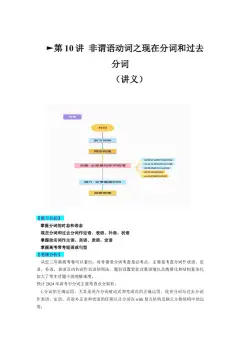
动名词
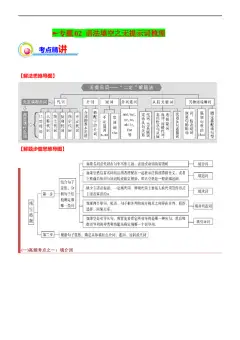
初中视角
高中展望
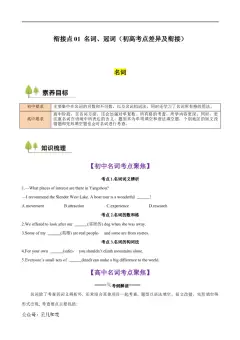
初中要求掌握动名词可以作为句子的主语或宾语。掌
握一些动词跟动名词作为宾语的固定搭配。
高中考查更复杂的用法,以及在一些特殊结构、
抽象概念表达中冠词的准确运用。
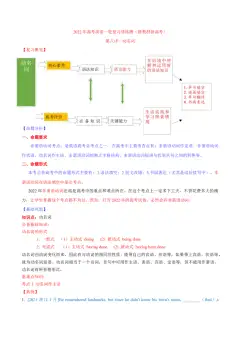
衔接引导
初中阶段考查形式:侧重语法知识的识记和简单运用,多以单句填空、选择题等基础形式考查语法知识。
高中阶段考查形式:注重语法知识的灵活运用和理解,更多地在语篇语法填空中综合运用语法知识。
【初中动名词考点聚焦】
形式:动词不定式基本形式“doing”构成。
功能:掌握动名词可以作为句子的主语或宾语及固定搭配。
考点1 动名词结构
1.She writes slowly so she has trouble ________ notes in class.
A.taken
B.taking
C.to take
D.took
2.We suggest parents ________ their children at home alone in order to keep them away from danger.
A.not to leave
B.leaving
C.not leaving
D.to leave
3.Chang An wins high praise from the public, so I think the film is worth ________ once again.
A.watch
B.to watch
C.watching
D.being watched
4.Do you mind _________ the window?
A.my closing
B.my close
C.my closed
D.me close
5.I could get the meaning by________ the conversations in the movies.
A.to listen to
B.listen to
C.listening to
D.to listening to
考点2 动名词用法
6.________ English every morning is a good way to improve your pronunciation.
A.Read
B.Reads
C.Reading
D.To reading
7.We are considering ________ a trip to the mountains next month.
A.taking
B.to take
C.take
D.taken
8.He is very interested in ________ basketball with his friends after school.
A.play
B.played
C.playing
D.to play
9.My hobby is ________ stamps. I have many stamps from different countries.
A.collect
B.collecting
C.collected
D.to collect
10.Cherry's favourite photo is the one of a girl________ an old woman across the street.
A.leads
B.led
C.leading
D.to lead
【高中动名词考点聚焦】
课标解读
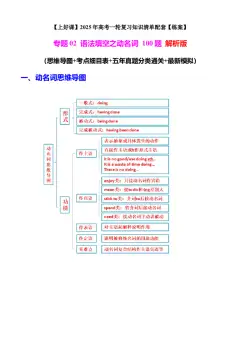
动名词是非谓语动词,它由“动词原形+ing”构成。有的动词-ing 形式在句中起名词的作用,有的则起形容
词或者副词的作用,所以在句子中可以做定语
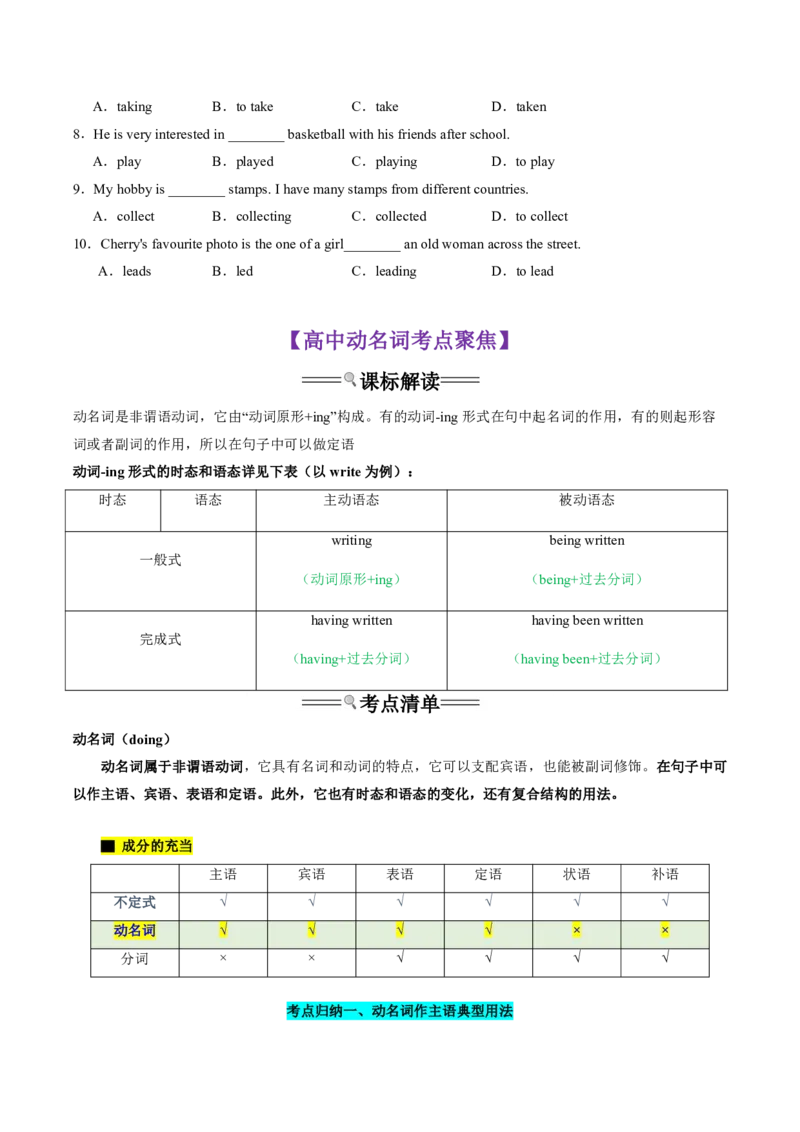
动词-ing 形式的时态和语态详见下表(以write 为例):
时态
语态
主动语态
被动语态
一般式
writing
(动词原形+ing)
being written
(being+过去分词)
完成式
having written
(having+过去分词)
having been written
(having been+过去分词)
考点清单
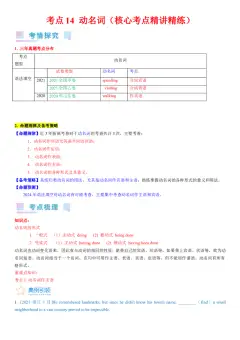
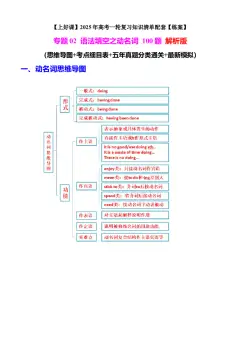
动名词(doing)
动名词属于非谓语动词,它具有名词和动词的特点,它可以支配宾语,也能被副词修饰。在句子中可
以作主语、宾语、表语和定语。此外,它也有时态和语态的变化,还有复合结构的用法。
▇成分的充当
主语
宾语
表语
定语
状语
补语
不定式
√
√
√
√
√
√
动名词
√
√
√
√
×
×
分词
×
×
√
√
√
√
考点归纳一、动名词作主语典型用法
动名词作主语时,可以表示某种习惯,而并非具体的某一次动作。
Playing with fire is dangerous.
玩火是很危险的。(用Playing 表示泛指)
To play with fire is dangerous.
玩火是很危险的。(可能只说明这一次是很危险的)
注意:
动名词作主语与动词不定式作主语的比较:
动词不定式和动名词都可以用作主语。在意义上相近。但动名词多用来表示泛指或抽象动作,不定式多用
来表示特指或具体动作。比较:
Smoking is not good for health. (泛指,习惯性的)
It is not good for you to smoke so much.(特指某一次)
要点精讲
1.动名词直接作主语,如:Seeing is believing. 百闻不如一见。
2.It 作形式主语,动名词作真正主语,用于It is no use/good complaining。抱怨无济于事。
It is no use crying over the split milk.
覆水难收。
还可以用在there be 句型中,例如:
There is no denying that coffee is not for everyone. 不容否认的是咖啡并不适合每个人。
用于布告形式的省略结构中。例如:
No smoking ( =No smoking is allowed (here) ). (禁止吸烟)
No parking. (禁止停车)
用括号内所给单词的适当形式填空。
1. ---What do you think made Mary so upset? ---________(lose) her new bicycle.
2. It’s no good _________( regret) your past mistakes.
3. __________________ (injure) in the leg made it impossible for me to walk as fast as usual.
4.In ancient China, the currency consisted mainly of precious metals, such as gold, silver and copper, so
____________ (carry) a large quantity of cash was not only a heavy burden but could also put the owner in danger
as robberies quite often happened along the way.
考点归纳二、动名词作宾语典型用法
(1).在以下动词后只能接动名词作宾语
建议冒险去献身,忍受期待抵逃跑;
suggest/advise/recommend,risk,devote oneself to,resist/tolerate,look forward to, deny,escape
放弃延期悔想像,坚持享受承实践;
quit/give up,delay,regret,imagine/fancy,keep,enjoy, admit ,practice
禁止原谅避卷入,考虑感激不自禁;
forbid/ban,excuse/pardon/forgive,avoid,involve,consider, appreciate, can’t help, can’t stand.
允许报告厌介意,承认回想含错过。
permit/allow, report, dislike, mind, acknowledge,recall,include,miss
如:I practise learning English every day.
(2).作介词的宾语
通常放在“动词+介词” 或“形容词+介词”的动词短语或形容词短语后,常见短语有:
look forward to(渴望,盼望)
be proud of(以……自豪)
be responsible for(对……负责)
insist on(坚持)
think of(考虑,想到)
dream of(梦想)
object to(反对,抗议)
hear of(听说)
prevent…from(防止,阻止)
keep…from(防止,阻止)
stop…from(防止,阻止)
be engaged in(从事于)
depend on(依靠,依赖)
thank…for(因……而道谢)
excuse…for(因……而道歉)
aim at(目的在于)
devote…to(献身于)
set about(着手做)
be/get used to(习惯于)
be fond of(喜欢)
be afraid of(害怕)
be tired of(对……厌烦)
succeed in(成功地做……)
be interested in(对……感兴趣)
可省略介词接动名词的短语:
have difficulty/trouble (in) doing
There is no point/use (in) doing
pend/waste time (in) doing.
(3).作形容词的宾语
The music is well worth listening to more than once. 这种曲子很值得多听几遍。
We are busy preparing for the coming sports meet. 我们正为马上到来的运动会忙着做准备。
考点归纳三、动名词作表语典型用法
动名词作表语时句子主语常是表示无生命的事物的名词或what 引导的名词性从句。表语动名词与主语通常
是对等的关系,表示主语的内容,主语、表语可互换位置。
Seeing is beliving.
My hobby is swimming.=Swimming is my hobby.
考点归纳四、动名词作定语典型用法
动名词作定语往往表示被修饰词的某种用途或功能。
swimming pool=a pool for swimming=a pool which is used for swimming,
reading room=a room for reading=a room which is used for reading 等
dining room 餐厅
drinking water 饮用水
reading room 阅览室
sitting room 起居室
sleeping car 卧铺车厢
smoking room 吸烟室
threshing ground 打谷场
waiting room 候车室
walking stick 手杖
writing desk 写字台
【扩展】
(1).只能接不定式作宾语的动词:
happen 碰巧,offer 主动提出,promise 答应,agree 同意,refuse 拒绝,decide 决定,
determine 决定、决心,pretend 假装,fail 未能够,learn,wish 希望,hope,expect,afford 负担得起。
口诀:
要想杜绝“忘记”,want, need, refuse, forget
决心努力学习。
decide, determine, try, manage, learn
希望主动帮助,
hope , wish, expect, long, offer, help
答应开始担起。
agree promise, begin, start, afford
(2).接动词-ing 形式作动词的宾语
admit 承认
allow 允许
appreciate 感谢,欣赏
avoid 避免
consider 考虑
delay 耽误
deny 否认
enjoy 喜欢
escape 逃脱
excuse 原谅
forgive 原谅
imagine 想像
keep(on)继续
keep 保持
mind 介意
permit 允许
practise 练习
prevent 阻挡,阻止
put off 推迟
resist 抵抗
risk 冒险
suggest 建议
can’t help(doing sth.)情不自禁
She doesn’t allow smoking in the room.她不允许在这个房间吸烟。
You must try your best to avoid meeting him in that street.你必须尽量设法避免在那条街上遇见他。
When I heard his voice,I couldn’t help thinking of my father.当我听到他的声音时,我不禁想起了我的爸爸。
I’m considering making a trip to Japan.我正考虑去日本旅行。
She denied making a mistake.她否认犯了一个错误。
I enjoy reading newspapers while I’m having breakfast.我喜欢在吃早饭时看报纸。
He narrowly escaped being killed.他险些丧命。
I can’t imagine doing that with them.我不能想象和他们在一起做那件事。
Would you mind my/me smoking here?你介意我在这儿抽烟吗?
She practises playing the piano every day.她每天练习弹钢琴。
I suggested putting the meeting off.我建议会议延期。
He suggested my/me staying here.他建议我呆在这儿。
用括号内所给单词的适当形式填空。
1. He got well-prepared for the job interview, for he couldn’t risk _______(lose)the good opportunity.
2. Sometimes students postpone ___________(do) their homework until the last minute.
3. I don't appreciate _________________(treat) as a second-class citizen.
4. As a new driver, I have to practise _____________(park) the car in my small garage again and again.
(3).接动名词和不定式均可,但意义不同的动词:forget,go on,mean,regret,remember,stop,try 等
stop to do 停下来去做
stop doing 停止做
forget to do 忘记要做
forget doing 忘记做过
remember to do 记得要做
remember doing 记得做过
regret to do 遗憾要做
regret doing 后悔做过
try to do 企图做,尽力做
try doing 试着做
go on to do 继续做(另一件事)
go on doing 继续做(同一件事)
mean to do 打算做
mean doing 意味做
(4).need, require, want 作“需要”讲,其后用动名词的主动式表示被动意义,be worth 也有类似用法。如:
The flowers need watering/to be watered.
The problem is worth discussing.
用括号内所给单词的适当形式填空。
1. “Not that way,” my mom tried _________(stop) me but failed. She was right. It didn’t turn out as I had wished.
2. I remembered _________(lock) the door before I left the office, but forgot to turn off the lights.
3. Because of my illness, I can’t help _________ (do) housework. Seeing my mother taking good care of me, I
can’t help ________ (cry).
4.After receiving the Oscar for Best Supporting Actress, Anne Benedict went on_________ (thank) all the people
who had helped in her career.
5. If you think that treating a woman well means always __________(get) her permission for things, think again.
(4). 动词-ing 形式作介词的宾语
add to 加上
be afraid of...为……而害怕
be ashamed of...为……感到羞耻
be busy (in) doing (sth.)忙于做(某事)
be engaged in 从事于
be fond of 喜欢
be good at...擅长于……
be interested in...对……感兴趣
be proud of...为……感到骄傲
be sentenced to 被宣判
be sick of...对……感到恶心
be tried of...厌烦……
be/get used to 习惯于
carry on 继续,不断
come to 谈到
contribute to 贡献
depend on 依靠
devote...to 把……贡献给
dream of 梦想
excuse...for 为……而辩解
feel like 愿意,想
give up 放弃
hear of 听说,知道
have trouble (in) doing...做……费力
insist on 坚持
keep...from 避免
keep on 继续,重复(做某事)
know of...对……了解
lead to 导致
look forward to 盼望
prevent...from 避免……
save...from 防止,避免
set about...动手去做……
stick to 坚持
stop...from 避免……
succeed in...在……方面成功
thank...for...为……而感谢……
think of 想到
spend...(in) doing sth.花……做某事
On hearing the manager’s voice,he turned off the switch at once.他一听见经理的声音,立刻把开关关了。
Before leaving here please call me.离开这儿之前,请给我打电话。
Now they are busy (in) preparing their lessons.现在他们正忙于准备功课。
考点归纳五、时态和语态(重点和难点)
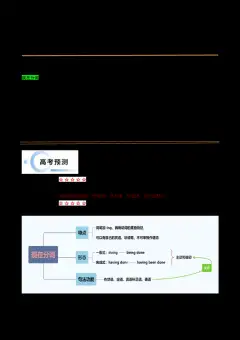
主动
被动
一般式
doing
being done
完成式
having done
having been done
1.被动式(being done)
动名词的被动形式是being+过去分词,它表示的动作与它的逻辑主语形成被动关系。
如:He came to the party without being invited.
However, there are people who don’t like being told what words they have to use.
There was a report of the bridge being climbed by a group of tourists in 1998.
2.否定式(not doing)
如:I regret not following his advice.
Not using the right words when we speak may offend some people.
Not climbing the Sydney Harbour Bridge would be a lifetime regret.
My job is not managing the office.
1.动名词的完成式(having done)
用动名词的完成式时,强调它表示的动作在位于所表示的动作之前发生,而且是主动关系。
如:We remembered having seen the film.
2.动名词的完成被动式(having been done)
用动名词的完成式时,强调它表示的动作在位于所表示的动作之前发生,但是和主语之间不再是主动关系,
而是被动关系。
如:He forgot having been taken to Guangzhou when he was five years old.
考点归纳六、动名词的复合结构
带有逻辑主语的动名词称为动名词的复合结构。当动名词的逻辑主语与句子的主语不一致时,要在动名词
前加上物主代词或名词所有格,这便构成了动名词的复合结构。
Her coming to help encouraged all of us.
他来帮忙鼓舞了我们所有人。
(=That she came to help encouraged all of us.)
Jane’s being careless caused so much trouble. 简的粗心惹来了不少麻烦。
(=That Jane was careless caused so much trouble.)
What’s troubling them is their not having enough food. 烦扰他们的是食物不足。
(=What’s troubling them is that they don’t haveenough food.)
e.g. His not knowing the foreign culture makes him embarrased.
His coming makes me happy.
I like her singing.
(
).The discovery of new evidence led to _________.
A. the thief having caught
B. catch the thief
C. the thief being caught
D. the thief to be caught
一、单句语法填空
1.I couldn’t help
(strike) by the beauty of the painting the moment I laid eyes on it. (所给词的适当形式
填空)
2.
(admit) his mistake bravely won him respect from his teachers and classmates. (所给词的适当形式
填空)
3.She was scared of
(walk) home alone in the fog,so she called a taxi. (所给词的适当形式填空)
4.She admitted
(take) my umbrella by mistake. (所给词的适当形式填空)
5.The nurse applied pressure to his arm to stop
(bleed). (所给词的适当形式填空)
6.
(tend) to plants is an exercise in patience and learning. (所给词的适当形式填空)
7.Instead, she recommends
(apply) a well-known concept among nutrition experts called the
“Division of Responsibility”, ... (所给词的适当形式填空)
8.Therefore, they do not feel the satisfaction of being academically
. (challenge) (所给词的适当形式填
空)
9.Nowadays many school children devote too much time to
(play) computer games. (所给词的适当形
式填空)
10.He devoted his life to
(possess) knowledge rather than material possessions. (所给词的适当形式填
空)
11.
(maintain) a positive attitude helps solve problems easily. (所给词的适当形式填空)
12.She spent hours
(contrast) the two job offers to choose the most suitable one. (所给词的适当形式
填空)
13.Upon
(hear) the exciting news, the whole class burst into cheers. (所给词的适当形式填空)
14.On
(invite) to the conference, the scholar prepared a detailed report carefully. (所给词的适当形式
填空)
15.He devotes most of his spare time to
(learn) traditional Chinese painting. (所给词的适当形式填
空)
16.Most teenagers enjoy
(share) their daily lives with friends on social media platforms. (所给词的适
当形式填空)
17.After hours of discussion, the team finally succeeded in
(solve) the difficult problem. (所给词的适
当形式填空)
18.You should avoid
(damage) the plumbing system when renovating the house. (所给词的适当形式
填空)
19.It’s a waste of time
(argue) with someone who never listens to reason. (所给词的适当形式填空)
20.We all look forward to
(observe) dragonflies to take inspiration for drone design. (所给词的适当形
式填空)
二、完成句子
21.________ (听音乐) before bed can help calm your mind and improve sleep quality. (根据汉语提示完成句子)
22.________ (看电影) at home on a rainy day is a cozy and relaxing activity. (根据汉语提示完成句子)
23.The two leaders agreed on the importance of ________________ (保持沟通) at all levels. (根据汉语提示完成
句子)
24.________ (他的到来) made me happy.
25.By ________ (积极看待) myself and my body, I became both happier and healthier. (根据汉语提示完成句子)
26.It is no use ______ ______ (抱怨) the exam results; what matters is how you prepare for the next one. (根据汉
语提示完成句子)
27.In order to keep healthy, I’m thinking of _______ (报名参加) a yoga course. (根据汉语提示完成句子)
28.To avoid ________________ (被理解为) being rude, he apologized immediately for his abrupt words. (根据汉
语提示完成句子)
29.The students are willing to ________________ (加入我们组织) the activity. (根据汉语提示完成句子)
30.____________________ (每天锻炼) is beneficial to our health. (根据汉语提示完成句子)
三、语篇填空(动名词专练)
1 (develop) good learning habits plays a key role in senior high life. I enjoy 2 (read) English articles and news
every morning.I am used to 3 (take) detailed notes in class. It’s worth 4 (do) so, for it helps me review lessons
easily. I avoid 5 (stay) up late to waste spare time.My biggest hobby is 6 (run) after school. Besides, I can’t stand 7
(waste) study time on meaningless games. I look forward to 8 (join) the school English club soon.Thank you for 9
(encourage) me when I fall behind. I keep 10 (work) hard to achieve my small goals step by step.
一、语法填空
阅读下面短文,在空白处填入1 个适当的单词或括号内单词的正确形式。
Tim and I talked a lot about his problems today, and I’m so glad that I could help my best friend. It also left
me
1
(think) about what it really means to be a “good friend”. In my opinion, the following
2
(quality) form the basis of a friendship.
A good friend needs to be
3
(support). I can see that Tim is having trouble
4
(balance)
his project and his schoolwork, and I can see that both are important to him. I must respect and support the choices
he makes. I should also encourage him
5
(take) action to get over these difficulties.
A good friend also needs to be selfless. Tim is someone whom I should try my best to help. When he’s
struggling
6
his schoolwork, I should do all I can to help him become a
7
(efficient) learner.
It’ll take up some of my spare time,
8
this friendship is worth my extra time and effort. I’m sure that
Tim would do the same for me.
To me, a good friend brings out the best in a person. And I think Tim is the one
9
brings out the
best in me. Through
10
(we) conversation today, I know that our friendship will grow stronger than
ever.
二、阅读理解
In 2013, I realised that I needed a break from the office work, so I set out travelling. But I had no idea how
much the decision would change me for the rest of my life!
Before travelling, I was always worried about what other people think of me. How I looked and dressed was
really important to me. I was always worried about putting on weight, getting darker, wondering if I was
good-looking enough to socialise and be one of the people I used to hang out with. It doesn’t matter now. I’m more
confident with my colour, my weight, and how I dress.
I used to compete a lot even when I was still a kid. I always wanted to impress people with how smart I was,
how I could handle any task... But now, why should I feel like I need to compete? I only need to impress myself.
My life is already complete; I just have to make sure that whatever I do will be positive (积极的) and make me a
better person.
I was a 24-year-old Filipina with a successful career (事业) and had all of the things I could buy. But when I
started travelling, I was no one. I have to learn a lot of things when travelling and I love it!
I thought the only skills I needed to improve were Microsoft Office and networking. Well I can now proudly
say that I know how to fix beds in a hotel style, how to cook breakfast for a lot of guests, and how to work in a
restaurant!
Besides the skills I’ve learned volunteering, I have completed several certifications (资格证) to start making
money to support my new lifestyle. I am now a yoga teacher, an Ayurveda massage therapist (按摩师) and an
English teacher. Now, with the new skills and certifications, I can work wherever I want!
11.Why did the author start travelling?
A.To escape from her then-job.
B.To make herself a better person.
C.To look for an interesting lifestyle.
D.To experience different kinds of jobs.
12.How did travelling change the author’s life?
A.It improved her socialising skills.
B.It made her more impressive to people.
C.It changed the way she saw herself.
D.It helped her realize the true meaning of life.
13.What does the author think of learning new things while travelling?
A.Difficult and Troublesome.
B.Necessary and Enjoyable.
C.Helpful but time-wasting.
D.Tiring but meaningful.
14.How is the text mainly organized?
A.By time.
B.By space.
C.By comparisons.
D.By examples.