专题 03 阅读理解——研究报告类说明文(阅读 D 篇)
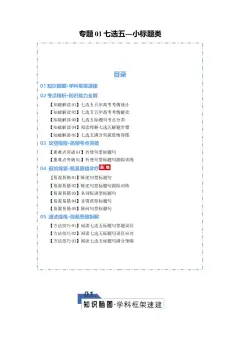
内容导航
命题透视·考情前瞻
01 对标素养,研判高考命题趋势
思维建模·脉络梳理
02 搭建知识框架,构建系统思维
考点精讲·靶向突破
03
拆解核心考点,归纳解题范式
考点一 考查研究报告problem--solution--result类
知识解构 知识点1 研究性报告特点 知识点2 problem--solution--result类研究报告
考向破译 考向 考查problem--solution--result类研究报告
考点二 考查研究报告Findings/discoveries--evidence(experiment, result)--
conclusion(application/evaluation)类
知识解构 知识点 解题指导
考向破译 考向 考查研究报告Findings/discoveries--evidence(experiment,result)--
conclusion(application/evaluation)类
考点三 考查研究报告Phenomenon--analysis--conclusion类
知识解构 知识点 Phenomenon--analysis--conclusion类研究报告分析
考向破译 考向 考查Phenomenon--analysis--conclusion类研究报告04 真题溯源·考向感知
溯源真题逻辑,感知高考考向
命题透视·考情前瞻
——对标素养,研判高考命题趋势
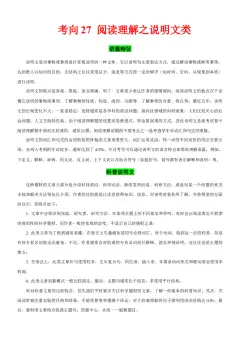
阅读理解之记叙文
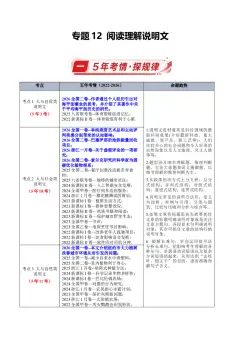
核心考点 2026年 2025年 2024年
人与自然 (2026高考二卷)D地 (2025高考I卷)D关于减少 (2024新高考I卷)D现代生物
铁能量回收(2026浙江 自来水中微塑料污染的新研究 采样数据的科学性
1月卷)D固碳优化植
物根系(2026高考一
卷)C植树与改善城市
环境
人与自我 (2024浙江1月卷)儿童棉花糖
实验引发思考
人与社会 (2026高考一卷)D对 (2025高考II卷)D介绍了食 (2024新高考I卷)C纸质阅读
比单纯观赏艺术品和主 物浪费问题(2025高考II卷) 与数字阅读在学习效果上的差异
动评判美感分别带来的
C室内植物对人们心理健康和 (2024新高考II卷)D图书《人
认知影响
工作效率的积极影响(2025浙 工智能设计:与人工智能共生的计
(2026浙江1月卷)C 江1月卷)D技术产品中的性 划》(2024新高考II卷)C巴比
关于虚假评论的研究 别化现象 伦微农场
考情分析:
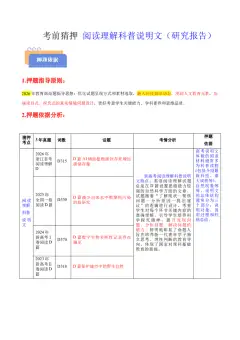
1.从命题内容上看,高考命题主要从以下几方面考查:研究报告是说明文类中重要的一种
形式,也是英语试题中最难的部分。是我们在一轮复习中最应该突破的部分,因为一轮复习
有时间攻坚克难。研究报告通常包括科普类、心理学类、语言类、宇宙探索类、社会交往
类、人工智能类等,涉及的内容比较广泛。
考情分析
2.从命题思路上看:
研究报告类说明文通常包括研究结果、研究方法、研究过程、结论阐述、专家评议。研
究结果通常会考查主旨大意,关键找中心句,研究方法、研究过程通常考查细节理解和推理
判断,专家评议通常考查情感态度、推理判断。
预计2027年研究报告类说明文仍然是试卷中的难点。预想英语得高分成功突破研究报告是关
键。
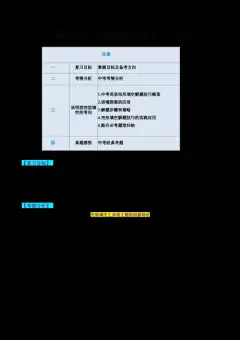
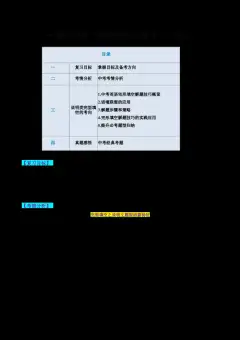
复习目标 复习目标:
1. 掌握研究报告说明文的文体特征。
2. 掌握研究报告说明文的命题规律及各种题型的解题要领和选项规律。
3. 熟练掌握研究报告说明文常用的框架结构、说明顺序和说明方法是解题的关键所在,这样
就能从整体着眼看清文章的脉络。
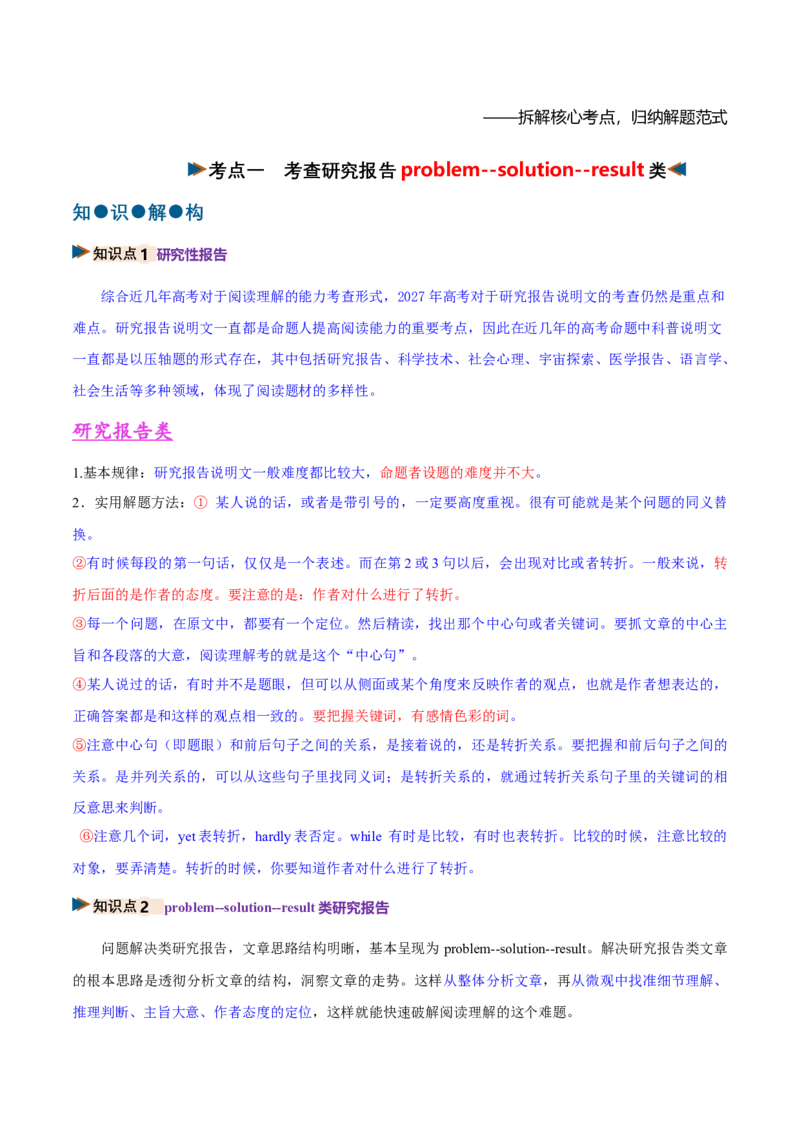
思维建模·脉络梳理——搭建知识框架,构建系统思维
考点精讲·靶向突破——拆解核心考点,归纳解题范式
考点一 考查研究报告problem--solution--result类
知●识●解●构
知识点1 研究性报告
综合近几年高考对于阅读理解的能力考查形式,2027年高考对于研究报告说明文的考查仍然是重点和
难点。研究报告说明文一直都是命题人提高阅读能力的重要考点,因此在近几年的高考命题中科普说明文
一直都是以压轴题的形式存在,其中包括研究报告、科学技术、社会心理、宇宙探索、医学报告、语言学、
社会生活等多种领域,体现了阅读题材的多样性。
研究报告类
1.基本规律:研究报告说明文一般难度都比较大,命题者设题的难度并不大。
2.实用解题方法:① 某人说的话,或者是带引号的,一定要高度重视。很有可能就是某个问题的同义替
换。
②有时候每段的第一句话,仅仅是一个表述。而在第2或3句以后,会出现对比或者转折。一般来说,转
折后面的是作者的态度。要注意的是:作者对什么进行了转折。
③每一个问题,在原文中,都要有一个定位。然后精读,找出那个中心句或者关键词。要抓文章的中心主
旨和各段落的大意,阅读理解考的就是这个“中心句”。
④某人说过的话,有时并不是题眼,但可以从侧面或某个角度来反映作者的观点,也就是作者想表达的,
正确答案都是和这样的观点相一致的。要把握关键词,有感情色彩的词。
⑤注意中心句(即题眼)和前后句子之间的关系,是接着说的,还是转折关系。要把握和前后句子之间的
关系。是并列关系的,可以从这些句子里找同义词;是转折关系的,就通过转折关系句子里的关键词的相
反意思来判断。
⑥注意几个词,yet表转折,hardly表否定。while 有时是比较,有时也表转折。比较的时候,注意比较的
对象,要弄清楚。转折的时候,你要知道作者对什么进行了转折。
知识点2 problem--solution--result类研究报告
问题解决类研究报告,文章思路结构明晰,基本呈现为 problem--solution--result。解决研究报告类文章
的根本思路是透彻分析文章的结构,洞察文章的走势。这样从整体分析文章,再从微观中找准细节理解、
推理判断、主旨大意、作者态度的定位,这样就能快速破解阅读理解的这个难题。考●向●破●译
考向 考查problem--solution--result类研究报告
例1 (2026年1月浙江卷)
Carbon removal is crucial for fighting climate change. Scientists at Salk Institute are making use of the natural
capacity of plants to absorb carbon dioxide by enhancing their root systems. This optimization (优化) aims to
increase the amount of carbon stored and extend the duration of its storage.
To design these climate-saving plants, the scientists are using a research tool called SLEAP — an AI software
that tracks multiple features of root growth. Created by Salk Fellow Talmo Pereira, SLEAP was initially designed
to track animal movement in the lab. Now, Pereira has teamed up with plant scientist Professor Wolfgang Busch to
apply SLEAP to plants.
In a study published in Plant Phenomics, Busch and Pereira establish a new procedure for using SLEAP to
analyze plant root phenotypes — how deep and wide they grow, how massive their root systems become, and other
physical qualities. Prior to SLEAP, tracking the physical characteristics of both plants and animals required a lot of
labor that slowed the scientific process. SLEAP uses computer vision (the ability for computers to understand
images) and deep learning (an AI approach for training a computer to learn and work like the human brain) to help
researchers process images much more quickly.
The application of SLEAP to plants has already enabled researchers to establish the most extensive catalog
(目录) of plant root phenotypes to date. What’s more, tracking these physical root system characteristics helps
scientists find genes (基因) associated with those characteristics, as well as whether multiple root characteristics are
determined by the same genes or independently. This allows the Salk team to determine what genes are most
beneficial to their plant designs.
“Our cooperation is truly proof of what makes Salk science so special and impactful,” says Pereira. “We’re not
just ‘borrowing’ from different disciplines — we’re really putting them on equal footing in order to create
something greater than the sum of its parts.”
【文章的结构分析】
The Structure of The Text
Problem: increase the amount of carbon stored and extend the duration of its storage增加碳储存量并延
长其储存时间
Solution: use SLEAP tracks multiple features of root growth用SLEAP 可追踪根系生长的多种特征
Process: SLEAP uses computer vision to help researchers process images much more quickly.SLEAP 利用计算机视觉技术,帮助研究人员大幅加快图像处理速度。
Result: establish the most extensive catalog (目录) of plant root phenotypes to date建立迄今为止最
全面的植物根系表型目录;what genes are most beneficial to their plant designs.哪些基因对
其植物设计最为有益。
Evaluation: special and impactful特别且具有深远影响的;create something greater than the sum of its parts
创造出比其各部分之和更为卓越的整体。
32. What do the scientists at Salk Institute hope to achieve?
A. Keeping more carbon in plants. B. Optimizing the use of energy.
C. Enhancing biological diversity. D. Reducing carbon absorption.
33. Why did Pereira create SLEAP?
A. To generate plant images. B. To conduct research on animals.
C. To study climate patterns. D. To track features of root growth.
34. What will SLEAP help the scientists do?
A. Pick out diseased plants in the forest. B. Collect samples of plant root systems.
C. Identify genes for desirable plant roots. D. Preserve the genes of endangered plants.
35. What can be inferred from Pereira’s words?
A. Academic disciplines are of equal importance.
B. Computer programming is a must for scientists.
C. Interdisciplinary approach promotes creativity.
D. Cooperation outweighs competition in research.
例2 (2024新课标Ⅰ卷)Microplastics have become a common source of pollution across the Earth —
they have settled in the deep sea and on the Himalayas, stuck inside volcanic rocks, filled the stomachs of seabirds
and even fallen in fresh Antarctic snow. They are even appearing inside humans.
Now, new research suggests that a simple, cheap measure may significantly reduce the level of microplastics
in water from your tap (水龙头): boiling and filtering (过滤) it. In a study published Wednesday in Environmental
Science & Technology Letters, researchers from China found that boiling tap water for just five minutes — then
filtering it after it cools — could remove at least 80 percent of its microplastics. Crucially, this process relies on the
water containing enough calcium carbonate (碳酸钙) to trap the plastics. In the study, boiling hard water containing
300 milligrams of calcium carbonate led to an almost 90 percent drop in plastics. But in samples with less than 60
milligrams of calcium carbonate, boiling reduced the level of plastics by just 25 percent. Additionally, the research
didn’t include all types of plastics. The team focused only on three common types — polystyrene, polyethylene and
polypropylene(聚苯乙烯、聚乙烯和聚丙烯) — and they didn’t study other chemicals previously found in
water such as vinyl chloride. (乙烯基氯,氯乙烯)Still, the findings show a potential path forward for reducing microplastic exposure — a task that’s becoming
increasingly difficult. Even bottled water, scientists found earlier this year, contains 10 to 1,000 times more
microplastics than originally thought. Scientists are still trying to determine how harmful microplastics are — but
what they do know has raised concerns. The new study suggests boiling tap water could be a tool to limit intake.
“The way they demonstrated how microplastics were trapped through the boiling process was nice,” Caroline
Gauchotte-Lindsay, an environmental engineer of the University of Glasgow in Scotland who was not involved in
the research, tells New Scientist. “We should be looking into upgrading drinking water treatment plants so they
remove microplastics.”
【文章的结构分析】
The Structure of The Text
Problem:Microplastics have become a common source of pollution across the Earth
Solution from China:boiling tap water for just five minutes — then filtering it after it cools
Process:boiling tap water for just five minutes — then filtering it after it cools;this process relies on the water
containing enough calcium carbonate (碳酸钙) to trap the plastics.focused only on three common types —
polystyrene, polyethylene and polypropylene
Serious problem:Even bottled water contains 10 to 1,000 times more microplastics than originally thought.
Caroline Gauchotte-Lindsay’ suggestion:We should be looking into upgrading drinking water treatment plants
so they remove microplastics.
32. How does the author present the issue in the first paragraph?
A. By quoting an expert. B. By defining a concept.
C. By giving examples. D. By providing statistics.
33. What determines the effectiveness of trapping microplastics in water?
A. The hardness of water. B. The length of cooling time.
C The frequency of filtering. D. The type of plastic in water.
34. What does the author try to illustrate by mentioning bottled water in paragraph 4?
A. The importance of plastic recycling. B. The severity of the microplastic problem.
C. The danger in overusing pure water. D. The difficulty in treating polluted water.
35. What is Gauchotte-Lindsay’s suggestion about?
A. Choice of new research methods. B. Possible direction for further study.
C. Need to involve more researchers. D. Potential application of the findings.
例3At a recycling center, two team members spend all day pulling items from a conveyor belt covered in
garbage. One pulls out juice cartons and plastic bottles that can be reprocessed, while the other searches forpollutants in the stream of paper products. They are AI-powered robots that each look like a supercharged
mechanical arm. Yes, even recycling has gotten involved in the AI revolution.
In theory, materials recovery facilities (MRFs) gather the wastes, sort them out, and then sell the materials to
companies that can reuse them. In practice, the MRFs aren’t all that good. The issue is that it’s long been too hard
for recycling plants to sort materials with the level of specificity needed to reuse them. The traditional recycling
methods succeed in separating waste into broad categories of paper, glass, and metal. But finer layers of detail often
go unnoticed, especially with plastic. It’s hard for recyclers to determine whether, say, a container is a milk
container or a pesticide (杀虫剂) container.
AI stands to make a change, giving recycling plants a far more detailed view into packaging. The AI-
powered recycling robots are “vision systems”: In the same way ChatGPT is trained, they ingest lots of
photographs of thrown- away items in various states of damage. The robots are then able to identify even tiny
differences in a product’s color, shape, texture, or logo. Recycling operators said that traditional systems tend to be
85 to 95 percent accurate, while robotics companies claim up to 99 percent accuracy.
That is not to say that the turn to AI has already fixed recycling. The high- tech systems won’t come cheap
— an individual robot can cost as much as $300,000. Even if costs eventually decrease, recycling robots can’t
change the fact that recycling, even at its best, is just not a particularly efficient way of dealing with single-use
products. From a plastics- pollution standpoint, what’s better than a recyclable single-use cup is not using one at all.
【文章结构分析】
Introduction Recycling has gotten involved in the AI revolution
para1
Problem para2 it’s long been too hard for recycling plants to sort materials with the level of specificity
needed to reuse them.
Solution para3 AI-powered recycling ingest lots of photographs of thrown- away items in various states of
damage.
Conclusion The high- tech systems won’t come cheap
(Limitation)para4
recycling robots can’t change the fact that recycling, even at its best, is just not a particularly
efficient way of dealing with single-use products.
1.What is described in the first paragraph?
A.A common sight of a recycling center. B.The application of AI tools in recycling.
C.The power of AI to change an industry. D.A display of difficulties in waste sorting.
2.What is the challenge faced by recycling plants?
A.The accuracy of waste sorting.B.The low profit from selling reusable materials.
C.The efficiency of waste management.
D.The unnoticeable danger in collecting waste materials.
3.What does the underlined word “ingest” in Paragraph 3 mean?
A.Edit. B.Copy. C.Absorb. D.Download.
4.What can be inferred from the last paragraph?
A.Single- use products should be restricted. B.Costs of high- tech systems will increase.
C.Recyclable products should be advocated. D.AI will be the final frontier of recycling.
考点二 考查研究报告Findings/discoveries--
evidence(experiment, result)--conclusion(application/evaluation)类
知●识●解●构
知识点 解题指导
一、三步定位核心信息
1.Findings/Discoveries(研究发现)
a. 定位关键词:
i. "The results show/indicate that..."
ii. "We found/observed that..."
iii. "The data suggest..."
b. 解题重点: 这是研究的直接成果,可能是数据、现象或新发现。
2.Evidence(实验证据)
c. 定位关键词:
i. "Experiment 1 demonstrated..."
ii. "As shown in Figure 2..."
iii. "Statistical analysis revealed..."
d. 解题重点: 支撑Findings的具体数据(如数字、图表)或实验方法。3.Conclusion(应用/评价)
e. 定位关键词:
i. "Therefore, we conclude..."
ii. "This implies/applicable to..."
iii. "Limitations include..."
f. 解题重点: 研究的实际意义、局限性或未来方向。
二、高频题型破解技巧
1. 事实细节题(直接答案)
1.问法:
o "What did the experiment prove?"
o "According to the study, which statement is true?"
2.方法:
直接匹配Findings或Evidence中的原句,避免主观推断。
2. 推理题(隐含逻辑)
1.问法:
o "What can be inferred from Paragraph 3?"
o "Which conclusion is supported by the data?"
2.方法: 将Evidence与Conclusion关联,排除无直接支持的选项。
3. 作者意图题(目的 / 评价)
1.问法:
o "Why did the author mention...?"
o "What is the purpose of the experiment?"
2.方法:
o 定位Conclusion中的评价性语言(如"This study fills a gap in...")。
4. 结构题(信息匹配) 问法:
o "Which paragraph contains the experimental results?"
方法:
o Findings通常在结果部分(Results),Evidence在方法部分(Methods)。
考●向●破●译
考向 考查研究报告Findings/discoveries--evidence(experiment,result)--
conclusion(application/evaluation)类
例1(2026年全国I卷C)In line with longstanding initiatives to expand the green spaces, New York City is
planting tens of thousands of trees each year. They provide shade, lower surface temperatures, absorb a
surprising amount of airborne carbon, remove tiny pollutants, and provide wildlife habitat along with just
plain beauty.
Something could go wrong, though, according to a new study. Oaks and sweetgums, which currently
account for a majority of the city's trees, produce huge amounts of a chemical substance called isoprene.
Harmless by itself, isoprene interacts rapidly with polluting nitrogen oxides released by vehicles, buildings and
industry to form ground- level ozone(臭氧)— a major factor in many breathing problems.
The research, carried out by scientists at the Columbia Climate School and other institutions, found that
if the city maintains past species patterns in new plantings, isoprene production in Manhattan in coming
decades will go up by about 140%, and resulting summer ozone levels as much as 30%.
"We're all for planting more trees. They bring so many good things," said study coauthor Róisín Commane.
"But if we're not careful, we could make air quality worse."
The Parks Department is not oblivious to the issue. A study carried out by some of its researchers several
years ago concluded that city trees did release isoprene. "We didn't make a big deal of that," said Novem
Auyeung, a Parks Department senior scientist. She said trees should not be viewed as the enemy: “We
could plant any trees we want to, if we just rethink our car-centric lifestyle," she said.
"We're not going to go cutting down any big old oaks," and neither will the department completely stop
planting new ones, said Auyeung. "You have to think about what you would lose if you do that." Oaks are
keystone species, she pointed out, providing food and habitat for native insects, birds and other animals.
【文章结构分析】
Discoveries Oaks and sweetgums produce isoprene and isoprene interacts rapidly with polluting
para1-2 nitrogen oxides to form ground- level ozone— a major factor in many breathing problemsif the city maintains past species patterns in new plantings, isoprene production in
Manhattan in coming decades will go up by about 140%, and resulting summer ozone
Result
levels as much as 30%. 若该市在新种植区域维持原有的物种分布模式,未来几十年曼哈
顿的异戊二烯产量将增长约140%,由此导致的夏季臭氧浓度最高可达30%。
Róisín Commane——bring so many good things;if we're not careful, we could make air
quality worse.
Novem Auyeung—— trees should not be viewed as the enemy;We could plant any
Opinions and trees we want to, if we just rethink our car-centric lifestyle
Attitudes
Novem Auyeung——We're not going to go cutting down any big old oaks, and neither will the
department completely stop planting new ones
28. What does the new study imply regarding oaks and sweetgums?
A. They affect the growth of other trees.
B. They absorb less carbon than expected.
C. They harm people's health indirectly.
D. They raise the local temperature slowly.
29. Which of the following may Commane suggest based on their study?
A. Cutting down the isoprene-producing trees.
B. Suspending tree-planting for a few decades.
C. Changing the species of trees in new plantings.
D. Removing isoprene released by existing trees.
30. What does the underline phase "oblivious to" in paragraph 5 mean?
A. Honest about B. Unaware of
C. Related to D. Optimistic about
31. What would Auyeung probably advocate?
A. Reducing car use in daily life. B. Providing animals with new habitats.
C. Controlling population growth. D. Doing more research on the problem.
例2(2026年全国I卷D)
A team of Cambridge psychologists conducted an experiment to compare the cognitive (认知的) effects of
merely seeing art with actively judging how beautiful it is.
In the study, 187 people were invited to visit Kettle's Yard gallery during an exhibition of handmade clay
objects. Participants were randomly divided into two groups: the "beauty" group was asked to actively consider and
then rate the beauty of each object they viewed, while the control group just matched a line drawing ofthe object with the artwork itself. All participants were then tested on how they process information, and
whether it's in a more practical or abstract way.
Across all participants, those in the beauty group scored almost 14% higher on average than the control
group in abstract thinking. While they were told the study was about cognitive processes, participants
were asked about interests, with around half saying they had an artistic hobby. Among those, the effect
was greater: those with an artistic hobby in the beauty group scored over 25% higher on average for abstract
thinking than those with an artistic hobby in the control group.
Emotional states of participants were also measured by asking about their feelings while completing the
gallery task. Across all participants, those in the beauty group reported an average of 23% higher levels
of "transformative and self-transcendent feelings" — such as feeling moved, enlightened and inspired
— than the control group. Importantly, however, the beauty group did not report feeling any happier than
the control group, suggesting that it was the engagement with beauty that influenced abstract thinking,
rather than any overall positivity from the experience.
"We usually think in very concrete terms when doing something on a screen," said Simone Schnall, senior
author of the study. "It's becoming much rarer to zone out and just let the mind wander, but that's when
we think in ways that broaden our minds. Admiring the beauty of art may be the ideal way to initiate the
abstract cognitive processes."
【文章结构分析】
compare the cognitive (认知的) effects of merely seeing art with actively judging how
Purpose para1 beautiful it is既要比较单纯观赏艺术作品所产生的认知效应,也要深入评估其美学价
值。
Participants were randomly divided into two groups:the "beauty" group and the control
Approach
group 受试者被随机分为两组:“美容组”与对照组。
the beauty group scored almost 14% higher on average than the control group in
abstract thinking;those with an artistic hobby in the beauty group scored over 25% higher
Result
on average for abstract thinking
it was the engagement with beauty that influenced abstract thinking, rather
than any overall positivity from the experience.正是对美的体验激发了抽象思维,而
Conclusion
非源于该体验本身的任何整体积极效应。
Admiring the beauty of art may be the ideal way to initiate the abstract cognitive processes. 欣
Evaluation
赏艺术之美或许是启动抽象认知过程的理想方式。
32. What was the beauty group asked to do with the clay objects?
A. Draw their outlines. B. Give each piece a rating.C. Compare their prices. D. Make a copy of each piece.
33. Which participants got the highest score on average in the test?
A. Beauty group, with an artistic hobby.
B. Beauty group, without an artistic hobby.
C. Control group, with an artistic hobby.
D. Control group, without an artistic hobby.
34. Why were the participants' emotional states measured?
A. To discover their attitudes towards art.
B. To identify their specific thinking patterns.
C. To examine the difficulty of the tasks.
D. To determine factors behind the test results.
35. What is the major finding of the study regarding the appreciation of art?
A. It enhances emotional ties.
B. It needs critical thinking skills.
C. It creates positive feelings.
D. It encourages abstract thinking.
例3(2022年1月浙江卷)The benefits of regular exercise are well documented but there’s a new bonus
to add to the ever-growing list. New researchers found that middle-aged women who were physically fit could be
nearly 90 percent less likely to develop dementia in later life, and as they did, it came on a decade later than less
sporty women.
Lead researcher Dr. Helena Horder, of the University of Gothenburg in Sweden, said : "These findings are
exciting because it’s possible that improving people's cardiovascular (心血管的)fitness in middle age could
delay or even prevent them from developing dementia. "
For the study, 191 women with an average age of 50 took a bicycle exercise test until they were exhausted to
measure their peak (最大值的) cardiovascular capacity. The average peak workload was measured at 103
watts.
A total of 40 women met the criteria for a high fitness level, or 120 watts or higher. A total of 92 women
were in the medium fitness category; and 59 women were in the low fitness category, defined as a peak workload of
80 watts or less, or having their exercise tests stopped because of high blood pressure, chest pain or other
cardiovascular problems.
These women were then tested for dementia six times over the following four decades. During that time, 44of the women developed dementia. Five percent of the highly fit women developed dementia, compared to 25
percent of the women with medium fitness and 32 percent of the women with low fitness.
"However, this study does not show cause and effect between cardiovascular fitness and dementia, it only
shows an association. More research is needed to see if improved fitness could have a positive effect on the risk of
dementia and also to look at when during a lifetime a high fitness level is most important. " She also admitted that a
relatively small number of women were studied, all of whom were form Sweden, so the results might not be
applicable to other groups.
【文章结构分析】
New researchers found that middle-aged women who were physically fit could be nearly 90
discoveries percent less likely to develop dementia in later life, and as they did, it came on a decade later
than less sporty women.
These findings are exciting because it’s possible that improving people's cardiovascular (心
血管的)fitness in middle age could delay or even prevent them from developing dementia.
For the study, 191 women with an average age of 50 took a bicycle exercise test until they
evidence were exhausted to measure their peak (最大值的) cardiovascular capacity. The average
peak workload was measured at 103 watts.
Five percent of the highly fit women developed dementia, compared to 25 percent of the
women with medium fitness and 32 percent of the women with low fitness.
However, this study does not show cause and effect between cardiovascular fitness and
dementia, it only shows an association. More research is needed to see if improved fitness
conclusion
could have a positive effect on the risk of dementia and also to look at when during a lifetime a
high fitness level is most important.
7.What is on the ever-growing list mentioned in the first paragraph?
A.Positive effects of doing exercises.
B.Exercises suitable for the middle-aged.
C.Experimental studies on diseases.
D.Advantages of sporty woman over man
8.Why did the researchers ask the women to do bicycle exercise?
A.To predict their maximum heart rate.
B.To assess their cardiovascular capacity
C.To change their habits of working out
D.To detect their potential health problems
9.What do we know about Dr Horder's study?
A.It aimed to find a cure for dementia.
B.Data collection was a lengthy process.C.Some participants withdrew from it.
D.The results were far from satisfactory.
10.Which of the following is the best title for the text?
A.More Women Are Exercising to Prevent Dementia
B.Middle-Aged Women Need to Do More Exercise
C.Fit Women Are Less Likely to Develop Dementia
D.Biking Improves Women's Cardiovascular Fitness
考点三 考查研究报告Phenomenon--analysis--conclusion 类
知●识●解●构
知识点 Phenomenon--analysis--conclusion类研究报告
理解“现象-分析-结论”(Phenomenon–Analysis–Conclusion)类研究报告文章并有效做题,关键在于把握文
章的结构逻辑、识别关键信息、理解各部分的功能及其相互关系。
核心原则: 这类文章遵循清晰的科学论述逻辑:
2. 现象 Pℎenomenon: 描述观察到的客观事实、问题、现象或研究背景。
3. 分析 Analysis: 对现象进行解释、探究原因、讨论机制、提出假设、验证过程或进行论证。
4. 结论 Conclusion: 基于分析得出的主要发现、总结、意义、推论或建议。
阅读理解与做题步骤:
第一步:预读与结构定位 快速浏览,把握框架
2. 看标题/副标题: 明确文章主题和研究对象。
3. 扫读首段/末段: 首段通常引入现象和研究目的;末段通常总结结论。
4. 关注段落首句/尾句和连接词:
o 寻找描述现象的信号词:observed, found, showed, it is known that, the problem is, background,
recent studies indicate 等。
o 寻找开启分析的信号词:the reason may be, to investigate, hypothesized that, analysis revealed,
mechanism, experiment was conducted, data suggests, furthermore, however, in contrast, this could
be explained by 等。
o 寻找引出结论的信号词:therefore, thus, in conclusion, consequently, the results indicate, we
conclude that, the study demonstrates, implications are, suggestions 等。5. 划分文章结构: 在心中或用笔简单标记出:
o 哪几段主要在描述 现象 P?
o 哪几段是核心的 分析 A 可能包括方法、数据、论证、讨论?
o 哪几段是明确的 结论 C?
第二步:精读与信息提取 带着问题,深度理解
2. 明确题目要求: 仔细阅读题目,判断题目是针对哪个部分(P/A/C)提问?是问细节、原因、方法、
推论还是主旨?
3. 定位关键信息:
o 现象部分 P:
具体现象是什么?(发生了什么?观察到了什么?问题是什么?)
现象的背景或重要性?
现象涉及的对象、时间、地点、程度等关键细节。
o 分析部分 A:
核心问题/假设: 研究者试图解释什么?验证什么?
研究方法/途径: 如何分析的?(实验、调查、模型、文献综述、逻辑推理?)关
键步骤是什么?
关键证据/数据: 支持分析的实验结果、统计数据、引用观点、逻辑论据是什么?
解释/机制: 分析得出的主要原因、内在机理、影响因素是什么?
讨论/对比: 分析结果与前人研究是否一致?有哪些局限性?有哪些不同的解释?
(这部分常与分析交织,有时也靠近结论)
o 结论部分 C:
主要发现: 研究最核心的结论是什么?(直接回答了分析的核心问题)
总结: 对现象和分析的简要重述。
意义/启示: 该结论有何理论或实际价值?对未来研究或实践的指导意义?
推论/建议: 基于结论提出的进一步推论或行动建议。
4. 理解逻辑链条: 特别注意分析部分如何一步步解释现象,并最终导向结论。思考:
o 现象提出了什么问题?
o 分析提供了哪些证据和推理来解答这个问题?
o 结论是如何从分析中自然得出的?它是否直接回应了现象提出的问题?
第三步:解题策略 (针对题型)2. 细节理解题 针对P/A/C中具体信息:
o 定位为王: 根据题目关键词(人名、地名、术语、数据、特定行为等)快速回原文定位。
o 同义替换: 答案往往是对原文信息的同义转述或概括,而非完全照抄原文。
3. 推理判断题 常基于A或C:
o 立足原文: 所有推断必须基于文章明确提供的信息和分析逻辑。
o 分析隐含意义: 理解作者未明说但通过分析、对比、语气等暗示的信息。
o 识别作者观点/态度: 注意分析讨论部分中体现作者倾向的词汇(significantly, surprisingly,
it is likely that, challenges the view等)和结论的确定性程度(proves vs suggests)。
o 排除法: 排除文中未提及、与文中信息矛盾或过度推断(超出原文支持范围)的选项。
4. 主旨大意题/最佳标题题 覆盖P/A/C:
o 聚焦结论: 结论通常是主旨的核心体现。
o 综合现象和分析: 思考文章从什么现象出发(P),通过什么核心分析(A),最终得出
了什么主要结论(C)。主旨句往往是这三者的凝练。
o 避免片面: 正确选项应涵盖研究的核心对象(现象)和核心发现(结论),有时也包括关
键方法(分析)。
5. 段落目的/结构题 (问某段作用):
o 联系上下文: 该段与前一段、后一段是什么关系?
是继续描述现象?开始分析原因?提供证据?引出结论?反驳观点?
o 判断归属: 该段内容主要属于P(描述现象/背景)、A(解释/论证/提供证据)、C(总
结/下结论/给建议)中的哪一部分?
6. 词义猜测题 常出现在A部分:
o 上下文线索: 利用定义(is, that is, meaning)、举例(for example, such as)、对比
(however, but, unlike)、因果(because, therefore)等逻辑关系推测生词含义。
o 词根词缀: 辅助手段。
7. 作者意图题 Wℎy did tℎe autℎor mention X?:
o 服务于核心逻辑: X(一个例子、一个数据、一个引用)是为了说明/支持/反驳分析部分
(A)的哪个关键点?最终如何服务于得出结论(C)?
第四步:验证与检查
答案回扣原文: 选出答案后,务必将其带回原文相关位置进行验证,确保理解准确无误。
整体逻辑一致性: 确认答案是否符合“现象-分析-结论”的整体行文逻辑。 排除干扰项: 再次审视错误选项,明确其错误原因(无中生有、张冠李戴、过度推断、以偏概全、
与原文矛盾等)。
关键总结:
结构意识是基础: 时刻清晰区分P、A、C部分及其功能。
定位能力是关键: 快速准确地找到题目对应的原文信息源。
逻辑理解是核心: 透彻理解分析部分如何解释现象并推导出结论。
结论是重中之重: 结论是文章的最终落脚点和主旨的集中体现。
题目导向是原则: 始终围绕题目要求进行阅读和思考。
考●向●破●译
考向 Phenomenon--analysis--conclusion类研究报告
例 1 (2026 年全国 II 卷)D 篇 The Barcelona subway pulls into the station, the doors slide open and
passengers pour out to go about their daily business. Little do they know that as they do so, a burst of energy is sent
up to street level to help charge an electric car.
Barcelona has put together a package of clean energy technologies to help public transportation go greener,
while also doing its part to tackle climate change and aid Europe’s difficult shift to the privately owned electric
vehicle market.
Sixteen stations of Barcelona’s subway system are part of its new MetroCharge project, whereby the energy
from the underground trains’ brakes (刹车) is used to power the trains and the stations themselves, while the
remainder is sent snaking through cables (电缆) to the surface to power plug-in stations for privately owned
vehicles.
Bernardo Espinoza, an engineer who takes the subway every day, owns an electric car. “I am pleasantly
surprised, because I am always looking for where to plug it in,” Espinoza said before catching the subway in a
working-class area of southern Barcelona. “And if it is from energy from the trains’ brakes, then even better.”
Regenerative brakes have been in trains for decades and are also used in some cars. They consist of an electric
motor which collects energy used in the braking action that would be lost as heat by conventional brakes. That
energy can be immediately used to accelerate (加速) the vehicle or, in the case of the Barcelona subway system,
sent along cables to supply electricity for the station or for electric car chargers.
Alvaro Luna, a professor of electrical engineering, said that the system is innovative in so far as it allows forrecycled energy to be redirected to specific local uses — in this case powering electric cars parked nearby. That, he
said, boosts efficiency.
【文章结构分析】
Phenomenon para1 a burst of energy is sent up to street level to help charge
an electric car 一股能量被输送至街道层面,用于为
电动汽车充电。
Introduction(para2-3) the energy from the underground trains’ brakes (刹
车 ) is used to power the trains and the stations
themselves, while the remainder is for privately owned
vehicles.地下列车制动系统产生的能量用于驱动列车
及车站设备,其余部分则供私营车辆使用。
Feedback para4 energy from the trains’ brakes, then even better.利用列
车刹车产生的能量,效果会更好。
technical principle para5 They consist of an electric motor which collects energy
used in the braking action that would be lost as heat by
conventional brakes. 该装置由电动机组成,可收集
传统制动系统中因摩擦作用而以热能形式损耗的能
量。
Evaluation para6 Innovative创新;boosts efficiency提高效率
32. Why does Barcelona launch the MetroCharge project?
A. To fuel the city’s economy. B. To enhance passengers’ experience.
C. To promote green transportation. D. To raise the quality of electric cars.
33. What is Espinoza’s concern?
A. How to cut his travel expenses. B. Where to get a parking space.
C. How to avoid rush-hour traffic. D. Where to find a charging point.
34. What aspect of regenerative brakes is discussed in paragraph 5?
A. Their operating conditions. B. Their conventional standard.
C. Their potential risks. D. Their working mechanism.
35. What did Luna say about the system?
A. It uses reclaimed energy creatively. B. It improves workers’ efficiency.
C. It prioritizes the safety of trains. D. It generates jobs for the locals.
例2 (2023年全国I卷)D篇On March 7, 1907, the English statistician Francis Galton published a paper
which illustrated what has come to be known as the “wisdom of crowds” effect. The experiment of estimation he
conducted showed that in some cases, the average of a large number of independent estimates could be quite
accurate.
This effect capitalizes on the fact that when people make errors, those errors aren’t always the same. Some
people will tend to overestimate, and some to underestimate. When enough of these errors are averaged together,they cancel each other out, resulting in a more accurate estimate. If people are similar and tend to make the same
errors, then their errors won’t cancel each other out. In more technical terms, the wisdom of crowds requires that
people’s estimates be independent. If for whatever reasons, people’s errors become correlated or dependent, the
accuracy of the estimate will go down.
But a new study led by Joaquin Navajas offered an interesting twist (转折) on this classic phenomenon. The
key finding of the study was that when crowds were further divided into smaller groups that were allowed to have a
discussion, the averages from these groups were more accurate than those from an equal number of independent
individuals. For instance, the average obtained from the estimates of four discussion groups of five was
significantly more accurate than the average obtained from 20 independent individuals.
In a follow-up study with 100 university students, the researchers tried to get a better sense of what the group
members actually did in their discussion. Did they tend to go with those most confident about their estimates? Did
they follow those least willing to change their minds? This happened some of the time, but it wasn’t the dominant
response. Most frequently, the groups reported that they “shared arguments and reasoned together.” Somehow,
these arguments and reasoning resulted in a global reduction in error. Although the studies led by Navajas have
limitations and many questions remain the potential implications for group discussion and decision-making are
enormous.
【文章结构分析】
phenomenon “wisdom of crowds”
analysis This effect capitalizes on the fact that ……. If people
are similar and tend to make the same errors, then their
errors won’t cancel each other out.
Further findings a new study offered an interesting twist (转折) on this
classic phenomenon. The key finding of the study was
that when crowds were further divided into smaller
groups that were allowed to have a discussion, the
averages from these groups were more accurate than
those from an equal number of independent individuals.
analysis In a follow-up study with 100 university students, ……
Somehow, these arguments and reasoning resulted in a
global reduction in error.
conclusion Although the studies have limitations and many
questions remain the potential implications for group
discussion and decision-making are enormous.
12. What is paragraph 2 of the text mainly about?
A. The methods of estimation. B. The underlying logic of the effect.
C. The causes of people’s errors. D. The design of Galton’s experiment.13. Navajas’ study found that the average accuracy could increase even if ________.
A. the crowds were relatively small B. there were occasional underestimates
C. individuals did not communicate D. estimates were not fully independent
14. What did the follow-up study focus on?
A. The size of the groups. B. The dominant members.
C. The discussion process. D. The individual estimates.
15. What is the author’s attitude toward Navajas’ studies?
A. Unclear. B. Dismissive. C. Doubtful. D. Approving.
例3 (2025年全国I卷)C篇While safety improvements might have been made to our streets in recent
years, transport studies also show declines in pedestrian (行人) mobility, especially among young children. Many
parents say there’s too much traffic on the roads for their children to walk safely to school, so they pack them into
the car instead.
Dutch authors Thalia Verkade and Marco te Brömmelstroet are bothered by facts like these. In their new book
Movement: How to Take Back Our Streets and Transform Our Lives, they call for a rethink of our streets and the
role they play in our lives.
Life on city streets started to change decades ago. Whole neighbourhoods were destroyed to make way for
new road networks and kids had to play elsewhere. Some communities fought back. Most famously, a Canadian
journalist who had moved her family to Manhattan in the early 1950s led a campaign to stop the destruction of her
local park. Describing her alarm at its proposed replacement with an expressway, Jane Jacobs called on her mayor
(市长) to champion “New York as a decent place to live, and not just rush through.” Similar campaigns occurred in
Australia in the late 1960s and 1970s as well.
Although these campaigns were widespread, the reality is that the majority of the western cities were
completely redesigned around the needs of the motor car. The number of cars on roads has been increasing rapidly.
In Australia we now have over twenty million cars for just over twenty-six million people, among the highest rate
of car ownership in the world.
We invest a lot in roads that help us rush through, but we fail to account for the true costs. Do we really
recognise what it costs us as a society when children can’t move safely around our communities? The authors of
Movement have it right: it’s time to think differently about that street outside your front door.
8. What phenomenon does the author point out in paragraph 1?
A. Cars often get stuck on the road. B. Traffic accidents occur frequently.
C. People walk less and drive more. D. Pedestrians fail to follow the rules.9. What were the Canadian journalist and other campaigners trying to do?
A. Keep their cities livable. B. Promote cultural diversity.
C. Help the needy families. D. Make expressways accessible.
10. What can be inferred about the campaigns in Australia in the late 1960s and 1970s?
A. They boosted the sales of cars. B. They turned out largely ineffective.
C. They won government support. D. They advocated building new parks.
11. What can be a suitable title for the text?
A. Why the Rush? B. What’s Next?
C. Where to Stay? D. Who to Blame?
【文章结构分析】
Phenomenon transport studies also show declines in pedestrian (行人) mobility, especially among
young children. Many parents say there’s too much traffic on the roads for their children
declines in pedestrian
to walk safely to school, so they pack them into the car instead.
(行人) mobility
analysis they call for a rethink of our streets and the role they play in our lives.
Whole neighbourhoods were destroyed to make way for new road networks and kids had
to play elsewhere.
Although these campaigns were widespread, the reality is that the majority of the western
cities were completely redesigned around the needs of the motor car.
Conclusion We invest a lot in roads that help us rush through, but we fail to account for the true
costs. Do we really recognise what it costs us as a society when children can’t move
roads that help us rush
safely around our communities? The authors of Movement have it right: it’s time to think
through, but
differently about that street outside your front door.
真题溯源·考向感知
——溯源真题逻辑,感知高考考向
阅读理解
1.【2025·全国I卷】C
When Sonja Detrinidad opened her online shop selling houseplants, she didn’t have high hopes for it. But the
opposite happened: She was flooded, shipping out 1,200 orders in June of 2020 alone. In the past year, Detrinidad
sent out more than 70,000 plants. Her success is just one example of increased time at home leading to an explosion
in the houseplant industry.
“Plants are in fashion right now,” says Dr. Melinda Knuth, a researcher from the University of Florida.
“People who live in plant-rich environments report a higher life satisfaction rating, ” she says. “Adding more natureto our environment can change our mood and how we think.” Plants can improve our state of mind in a few ways
but the biggest is by decreasing our level of cortisol, the stress hormone (激素) in our body.
“Students who are around plants perform better academically than students who are in a classroom without
plants,” says Knuth. “This productivity also translates into the workplace for adults. Our study showed that there
was a 30% decrease in sick leave for people who were in plant-rich workplaces.”
If you’re among the groups of people who are enjoying the mental and physical health benefits of surrounding
yourself with plants, don’t beat yourself up if one (or a few!) doesn’t make it. “Doctors practice medicine and
lawyers practice law and you should allow yourself the practice it takes to sustain a plant. Tending to plants is an
exercise in patience and learning. Be invested in taking care of it, but if it dies, go get another one,” Detrinidad
says.
8. How was Detrinidad’s business when it started?
A. It faced tough competition. B. It suffered a great loss.
C. It got lots of financial support. D. It went surprisingly well.
9. What is one of Knuth’s findings about plants?
A. They appeal more to students. B. They purify the environment.
C. They raise the cortisol level. D. They enhance productivity.
10. What does Detrinidad try to explain by mentioning doctors and lawyers?
A. The necessity of social skills. B. The meaning of sustainability.
C. The importance of repeated efforts. D. The value of professional opinions.
11. What can be a suitable title for the text?
A. Time to Replace Houseplants B. Plants Boost Your Mood
C. Tips on Choosing Houseplants D. Plants Brighten Your Home
2.【2025·全国I卷】D
Does your soul die a little every time you throw away unused food? Mine does. Maybe that feeling comes
from growing up in South Africa, where the phrase “there are children starving in Africa” was more of an
uncomfortable reminder of fact than a prayer at dinner time.
Food waste is a growing concern in the restaurant, supermarket, and supply chain industries. From
technological solutions to educational campaigns, food producers and sellers are looking for ways to use more of
what we’re already growing. But last month, one popular New York City restaurant tried a different way: It
changed its menu to exclusively (专门) offer food that would otherwise be thrown away.
For two weeks in March, Greenwich Village’s Blue Hill restaurant was renamed wastED, and served itemslike fried skate cartilage, a juice pulp burger, and a dumpster diver’s vegetable salad. Each dish was tailor-made to
raise awareness regarding food waste.
A study by the Food Waste Alliance determined that the average restaurant generates 33 pounds of food waste
for every $1,000 in revenue (收入), and of that waste only 15.7% is donated or recycled. Up to 84.3% is simply
thrown out. Restaurants like Silo in the UK have experimented with zero-waste systems, but wastED took the
concept to its logical conclusion.
It should be noted that none of the items on wastED’s menu was technically made from garbage. Instead, all
the ingredients (配料) used were examples of meat cuts and produce that most restaurants would never consider
serving. Things like kale ribs, fish collars, rejected sweet potatoes, and cucumber butts were all re-appropriated and,
with the help of a number of good chefs, turned into excellent cuisine.
Though wastED received enthusiastic reviews, it was designed from the start as a short-lived experiment; Blue
Hill has since returned to its regular menu. Nevertheless, it serves as a reminder that there are many ways to address
problems of sustainability, and that you can make an amazing meal out of almost anything.
12. What can be inferred about the author’s early life?
A. He witnessed food shortage. B. He enjoyed the local cuisine.
C. He donated food to Africans. D. He helped to cook at home.
13. Why did Blue Hill carry out the experiment?
A. To customize dishes for guests. B. To make the public aware of food waste.
C. To test a food processing method. D. To improve the UK’s zero-waste systems.
14. What is paragraph 5 mainly about?
A. Why the ingredients were used. B. Which dishes were best liked.
C. What the dishes were made of. D. Where the ingredients were bought.
15. What can we learn about wastED?
A. It has ended as planned. B. It is creating new jobs.
C. It has regained popularity. D. It is criticized by top chefs.
3.【2024新课标Ⅰ卷】In the race to document the species on Earth before they go extinct, researchers and
citizen scientists have collected billions of records. Today, most records of biodiversity are often in the form of
photos, videos, and other digital records. Though they are useful for detecting shifts in the number and variety of
species in an area, a new Stanford study has found that this type of record is not perfect.
“With the rise of technology it is easy for people to make observations of different species with the aid of a
mobile application,” said Barnabas Daru, who is lead author of the study and assistant professor of biology in theStanford School of Humanities and Sciences. “These observations now outnumber the primary data that comes
from physical specimens (标本), and since we are increasingly using observational data to investigate how species
are responding to global change, I wanted to know: Are they usable?”
Using a global dataset of 1.9 billion records of plants, insects, birds, and animals, Daru and his team tested
how well these data represent actual global biodiversity patterns.
“We were particularly interested in exploring the aspects of sampling that tend to bias (使有偏差) data, like
the greater likelihood of a citizen scientist to take a picture of a flowering plant instead of the grass right next to it,”
said Daru.
Their study revealed that the large number of observation-only records did not lead to better global coverage.
Moreover, these data are biased and favor certain regions, time periods, and species. This makes sense because the
people who get observational biodiversity data on mobile devices are often citizen scientists recording their
encounters with species in areas nearby. These data are also biased toward certain species with attractive or eye-
catching features.
What can we do with the imperfect datasets of biodiversity?
“Quite a lot,” Daru explained. “Biodiversity apps can use our study results to inform users of oversampled
areas and lead them to places — and even species — that are not well-sampled. To improve the quality of
observational data, biodiversity apps can also encourage users to have an expert confirm the identification of their
uploaded image.”
32. What do we know about the records of species collected now?
A. They are becoming outdated. B. They are mostly in electronic form.
C. They are limited in number. D. They are used for public exhibition.
33. What does Daru’s study focus on?
A. Threatened species. B. Physical specimens.
C. Observational data. D. Mobile applications.
34. What has led to the biases according to the study?
A. Mistakes in data analysis. B. Poor quality of uploaded pictures.
C. Improper way of sampling. D. Unreliable data collection devices.
35. What is Daru’s suggestion for biodiversity apps?
A. Review data from certain areas. B. Hire experts to check the records.
C. Confirm the identity of the users. D. Give guidance to citizen scientists.
4.【2024浙江1月卷】The Stanford marshmallow (棉花糖) test was originally conducted by psychologist WalterMischel in the late 1960s. Children aged four to six at a nursery school were placed in a room. A single sugary treat,
selected by the child, was placed on a table. Each child was told if they waited for 15 minutes before eating the
treat, they would be given a second treat. Then they were left alone in the room. Follow-up studies with the
children later in life showed a connect ion between an ability to wait long enough to obtain a second treat and
various forms of success.
As adults we face a version of the marshmallow test every day. We’ re not tempted (诱惑) by sugary treats, but
by our computers, phones, and tablets — all the devices that connect us to the global delivery system for various
types of information that do to us what marshmallows do to preschoolers.
We are tempted by sugary treats because our ancestors lived in a calorie-poor world, and our brains developed
a response mechanism to these treats that reflected their value — a feeling of reward and satisfaction. But as we’ve
reshaped the world around us, dramatically reducing the cost and effort involved in obtaining calories, we still have
the same brains we had thousands of years ago, and this mismatch is at the heart of why so many of us struggle to
resist tempting foods that we know we shouldn’t eat.
A similar process is at work in our response to information. Our formative environment as a species was
information-poor, so our brains developed a mechanism that prized new information. But global connectivity has
greatly changed our information environment. We are now ceaselessly bombarded (轰炸) with new information.
Therefore, just as we need to be more thoughtful about our caloric consumption, we also need to be more
thoughtful about our information consumption, resisting the temptation of the mental “junk food” in order to
manage our time most effectively.
12. What did the children need to do to get a second treat in Mischel’s test?
A. Take an examination alone. B. Show respect for the researchers.
C. Share their treats with others. D. Delay eating for fifteen minutes.
13. According to paragraph 3, there is a mismatch between ___________.
A. the calorie-poor world and our good appetites
B. the shortage of sugar and our nutritional needs
C. the rich food supply and our unchanged brains
D. the tempting foods and our efforts to keep fit
14. What does the author suggest readers do?
A. Absorb new information readily. B. Be selective information consumers.
C. Use diverse information sources. D. Protect the information environment.
15. Which of the following is the best title for the text?A. Eat Less, Read More B. The Bitter Truth about Early Humans
C. The Later, the Better D. The Marshmallow Test for Grownups
5.【2023年新高考全国Ⅱ卷】As cities balloon with growth, access to nature for people living in urban areas is
becoming harder to find. If you’re lucky, there might be a pocket park near where you live, but it’s unusual to find
places in a city that are relatively wild.
Past research has found health and wellness benefits of nature for humans, but a new study shows that
wildness in urban areas is extremely important for human well-being.
The research team focused on a large urban park. They surveyed several hundred park-goers, asking them to
submit a written summary online of a meaningful interaction they had with nature in the park. The researchers then
examined these submissions, coding (编码) experiences into different categories. For example, one participant’s
experience of “We sat and listened to the waves at the beach for a while” was assigned the categories “sitting at
beach” and “listening to waves.”
Across the 320 submissions, a pattern of categories the researchers call a “nature language” began to emerge.
After the coding of all submissions, half a dozen categories were noted most often as important to visitors. These
include encountering wildlife, walking along the edge of water, and following an established trail.
Naming each nature experience creates a usable language, which helps people recognize and take part in the
activities that are most satisfying and meaningful to them. For example, the experience of walking along the edge
of water might be satisfying for a young professional on a weekend hike in the park. Back downtown during a
workday, they can enjoy a more domestic form of this interaction by walking along a fountain on their lunch break.
“We’re trying to generate a language that helps bring the human-nature interactions back into our daily lives.
And for that to happen, we also need to protect nature so that we can interact with it,” said Peter Kahn, a senior
author of the study.
12. What phenomenon does the author describe at the beginning of the text?
A. Pocket parks are now popular. B. Wild nature is hard to find in cities.
C. Many cities are overpopulated. D. People enjoy living close to nature.
13. Why did the researchers code participant submissions into categories?
A. To compare different types of park-goers. B. To explain why the park attracts tourists.
C. To analyze the main features of the park. D. To find patterns in the visitors’ summaries.
14. What can we learn from the example given in paragraph 5?
A. Walking is the best way to gain access to nature.
B. Young people are too busy to interact with nature.C. The same nature experience takes different forms.
D. The nature language enhances work performance.
15. What should be done before we can interact with nature according to Kahn?
A. Language study. B. Environmental conservation.
C. Public education. D. Intercultural communication.
6.【2023年全国甲卷】Grizzly bears, which may grow to about 2.5 m long and weigh over 400 kg, occupy a
conflicted corner of the American psyche — we revere (敬畏) them even as they give us frightening dreams. Ask
the tourists from around the world that flood into Yellowstone National Park what they most hope to see, and their
answer is often the same: a grizzly bear.
“Grizzly bears are re-occupying large areas of their former range,” says bear biologist Chris Servheen. As
grizzly bears expand their range into places where they haven’t been seen in a century or more, they’re increasingly
being sighted by humans.
The western half of the U.S. was full of grizzlies when Europeans came, with a rough number of 50,000 or
more living alongside Native Americans. By the early 1970s, after centuries of cruel and continuous hunting by
settlers, 600 to 800 grizzlies remained on a mere 2 percent of their former range in the Northern Rockies. In 1975,
grizzlies were listed under the Endangered Species Act.
Today, there are about 2,000 or more grizzly bears in the U.S. Their recovery has been so successful that the
U.S. Fish and Wildlife Service has twice attempted to de-list grizzlies, which would loosen legal protections and
allow them to be hunted. Both efforts were overturned due to lawsuits from conservation groups. For now, grizzlies
remain listed.
Obviously, if precautions (预防) aren’t taken, grizzlies can become troublesome, sometimes killing farm
animals or walking through yards in search of food. If people remove food and attractants from their yards and
campsites, grizzlies will typically pass by without trouble. Putting electric fencing around chicken houses and other
farm animal quarters is also highly effective at getting grizzlies away. “Our hope is to have a clean, attractant-free
place where bears can pass through without learning bad habits,” says James Jonkel, longtime biologist who
manages bears in and around Missoula.
32. How do Americans look at grizzlies?
A. They cause mixed feelings in people.
B. They should be kept in national parks.
C. They are of high scientific value.
D. They are a symbol of American culture.33. What has helped the increase of the grizzly population?
A. The European settlers’ behavior.
B. The expansion of bears’ range.
C. The protection by law since 1975.
D. The support of Native Americans.
34. What has stopped the U. S. Fish and Wildlife Service from de-listing grizzlies?
A. The opposition of conservation groups.
B. The successful comeback of grizzlies.
C. The voice of the biologists.
D. The local farmers’ advocates.
35. What can be inferred from the last paragraph?
A. Food should be provided for grizzlies.
B. People can live in harmony with grizzlies.
C. A special path should be built for grizzlies.
D. Technology can be introduced to protect grizzlies.
7.【2023年北京卷】What is life? Like most great questions, this one is easy to ask but difficult to answer.
The reason is simple: we know of just one type of life and it’s challenging to do science with a sample size of one.
The field of artificial life-called ALife for short — is the systematic attempt to spell out life’s fundamental
principles. Many of these practitioners, so-called ALifers, think that somehow making life is the surest way to
really understand what life is.
So far no one has convincingly made artificial life. This track record makes ALife a ripe target for criticism,
such as declarations of the field’s doubtful scientific value. Alan Smith, a complexity scientist, is tired of such
complaints. Asking about “the point” of ALife might be, well, missing the point entirely, he says. “The existence of
a living system is not about the use of anything.” Alan says. “Some people ask me, ‘So what’s the worth of artificial
life?’ Do you ever think, ‘What is the worth of your grandmother?’”
As much as many ALifers hate emphasizing their research’s applications, the attempts to create artificial life
could have practical payoffs. Artificial intelligence may be considered ALife’s cousin in that researchers in both
fields are enamored by a concept called open-ended evolution (演化). This is the capacity for a system to create
essentially endless complexity, to be a sort of “novelty generator”. The only system known to exhibit this is Earth’s
biosphere. If the field of ALife manages to reproduce life’s endless “creativity” in some virtual model, those same
principles could give rise to truly inventive machines.Compared with the developments of Al, advances in ALife are harder to recognize. One reason is that ALife is
a field in which the central concept — life itself — is undefined. The lack of agreement among ALifers doesn’t
help either. The result is a diverse line of projects that each advance along their unique paths. For better or worse,
ALife mirrors the very subject it studies. Its muddled (混乱的) progression is a striking parallel (平行线) to the
evolutionary struggles that have shaped Earth biosphere.
Undefined and uncontrolled, ALife drives its followers to repurpose old ideas and generated novelty. It may
be, of course, that these characteristics aren’t in any way surprising or singular. They may apply universally to all
acts of evolution. Ultimately ALife may be nothing special. But even this dismissal suggests something:perhaps,
just like life itself throughout the universe, the rise of ALife will prove unavoidable.
31. Regarding Alan Smith’s defence of ALife, the author is .
A. supportive B. puzzled C. unconcerned D. doubtful
32. What does the word “enamored” underlined in Paragraph 3 most probably mean?
A. Shocked. B. Protected. C. Attracted. D. Challenged.
33. What can we learn from this passage?
A. ALife holds the key to human future. B. ALife and AI share a common feature.
C. AI mirrors the developments of ALife. D. AI speeds up the process of human evolution.
34. Which would be the best title for the passage?
A. Life Is Undefined. Can AI Be a Way Out?
B. Life Evolves. Can AI Help ALife Evolve, Too?
C. Life Is Undefined. Can ALife Be Defined One Day?
D. Life Evolves. Can Attempts to Create ALife Evolve, Too?
8.【2023 年浙江 1 月卷】According to the Solar Energy Industry Association, the number of solar panels
installed(安装)has grown rapidly in the past decade, and it has to grow even faster to meet climate goals. But all of
that growth will take up a lot of space, and though more and more people accept the concept of solar energy, few
like large solar panels to be installed near them.
Solar developers want to put up panels as quickly and cheaply as possible, so they haven’t given much thought
to what they put under them. Often, they’ll end up filling the area with small stones and using chemicals to control
weeds. The result is that many communities, especially in farming regions, see solar farms as destroyers of the soil.
“Solar projects need to be good neighbors,” says Jordan Macknick, the head of the Innovative Site Preparation
and Impact Reductions on the Environment(InSPIRE)project. “They need to be protectors of the land and
contribute to the agricultural economy.” InSPIRE is investigating practical approaches to “low-impact” solardevelopment, which focuses on establishing and operating solar farms in a way that is kinder to the land. One of the
easiest low-impact solar strategies is providing habitat for pollinators(传粉昆虫).
Habitat loss, pesticide use, and climate change have caused dramatic declines in pollinator populations over
the past couple of decades, which has damaged the U.S. agricultural economy. Over 28 states have passed laws
related to pollinator habitat protection and pesticide use. Conservation organizations put out pollinator-friendliness
guidelines for home gardens, businesses, schools, cities—and now there are guidelines for solar farms.
Over the past few years, many solar farm developers have transformed the space under their solar panels into a
shelter for various kinds of pollinators, resulting in soil improvement and carbon reduction. “These pollinator-
friendly solar farms can have a valuable impact on everything that’s going on in the landscape,” says Macknick.
32.What do solar developers often ignore?
A.The decline in the demand for solar energy.
B.The negative impact of installing solar panels.
C.The rising labor cost of building solar farms.
D.The most recent advances in solar technology.
33.What does InSPIRE aim to do?
A.Improve the productivity of local farms.
B.Invent new methods for controlling weeds.
C.Make solar projects environmentally friendly.
D.Promote the use of solar energy in rural areas.
34.What is the purpose of the laws mentioned in paragraph 4?
A.To conserve pollinators. B.To restrict solar development.
C.To diversify the economy. D.To ensure the supply of energy.
35.Which of the following is the best title for the text?
A.Pollinators: To Leave or to Stay B.Solar Energy: Hope for the Future
C.InSPIRE: A Leader in Agriculture D.Solar Farms: A New Development
9.【2022年新高考全国Ⅰ 卷】Human speech contains more than 2,000 different sounds, from the common
“m” and “a” to the rare clicks of some southern African languages. But why are certain sounds more common than
others? A ground-breaking, five-year study shows that diet-related changes in human bite led to new speech sounds
that are now found in half the world’s languages.
More than 30 years ago, the scholar Charles Hockett noted that speech sounds called labiodentals, such as “f”
and “v”, were more common in the languages of societies that ate softer foods. Now a team of researchers led byDamián Blasi at the University of Zurich, Switzerland, has found how and why this trend arose.
They discovered that the upper and lower front teeth of ancient human adults were aligned (对齐), making it
hard to produce labiodentals, which are formed by touching the lower lip to the upper teeth. Later, our jaws
changed to an overbite structure (结构), making it easier to produce such sounds.
The team showed that this change in bite was connected with the development of agriculture in the Neolithic
period. Food became easier to chew at this point. The jawbone didn’t have to do as much work and so didn’t grow
to be so large.
Analyses of a language database also confirmed that there was a global change in the sound of world
languages after the Neolithic age, with the use of “f” and “v” increasing remarkably during the last few thousand
years. These sounds are still not found in the languages of many hunter-gatherer people today.
This research overturns the popular view that all human speech sounds were present when human beings
evolved around 300,000 years ago. ”The set of speech sounds we use has not necessarily remained stable since the
appearance of human beings, but rather the huge variety of speech sounds that we find today is the product of a
complex interplay of things like biological change and cultural evolution,“ said Steven Moran, a member of the
research team.
12. Which aspect of the human speech sound does Damián Blasi’s research focus on?
A. Its variety. B. Its distribution. C. Its quantity. D. Its development.
13. Why was it difficult for ancient human adults to produce labiodentals?
A. They had fewer upper teeth than lower teeth.
B. They could not open and close their lips easily.
C. Their jaws were not conveniently structured.
D. Their lower front teeth were not large enough.
14. What is paragraph 5 mainly about?
A. Supporting evidence for the research results.
B. Potential application of the research findings.
C. A further explanation of the research methods.
D. A reasonable doubt about the research process.
15. What does Steven Moran say about the set of human speech sounds?
A. It is key to effective communication. B. It contributes much to cultural diversity.
C. It is a complex and dynamic system. D. It drives the evolution of human beings.
10.【2022年全国乙卷】Can a small group of drones(无人机)guarantee the safety and reliability of railways and,at the same time, help railway operators save billions of euros each year? That is the very likely future of applying
today’s “eyes in the sky” technology to making sure that the millions of kilometres of rail tracks and
infrastructure(基础设施)worldwide are safe for trains on a 24/7 basis.
Drones are already being used to examine high-tension electrical lines. They could do precisely the same thing
to inspect railway lines and other vital aspects of rail infrastructure such as the correct position of railway tracks
and switching points. The more regularly they can be inspected, the more railway safety, reliability and on-time
performance will be improved. Costs would be cut and operations would be more efficient(高效)across the board.
That includes huge savings in maintenance costs and better protection of railway personnel safety. It is
calculated that European railways alone spend approximately 20 billion euros a year on maintenance, including
sending maintenance staff, often at night, to inspect and repair the rail infrastructure. That can be dangerous work
that could be avoided with drones assisting the crews’ efforts.
By using the latest technologies, drones could also start providing higher-value services for railways, detecting
faults in the rail or switches, before they can cause any safety problems. To perform these tasks, drones for rail
don’t need to be flying overhead. Engineers are now working on a new concept: the rail drones of the future. They
will be moving on the track ahead of the train, and programmed to run autonomously. Very small drones with
advanced sensors and AI and travelling ahead of the train could guide it like a co-pilot. With their ability to see
ahead, they could signal any problem, so that fast-moving trains would be able to react in time.
8. What makes the application of drones to rail lines possible?
A. The use of drones in checking on power lines. B. Drones’ ability to work at high altitudes.
C. The reduction of cost in designing drones. D. Drones’ reliable performance in remote areas.
9. What does “maintenance” underlined in paragraph 3 refer to?
A. Personnel safety. B. Assistance from drones.
C. Inspection and repair. D. Construction of infrastructure.
10. What function is expected of the rail drones?
A. To provide early warning. B. To make trains run automatically.
C. To earn profits for the crews. D. To accelerate transportation.
11. Which is the most suitable title for the text?
A. What Faults Can Be Detected with Drones
B. How Production of Drones Can Be Expanded
C. What Difficulty Drone Development Will Face
D. How Drones Will Change the Future of Railways