文档文本内容
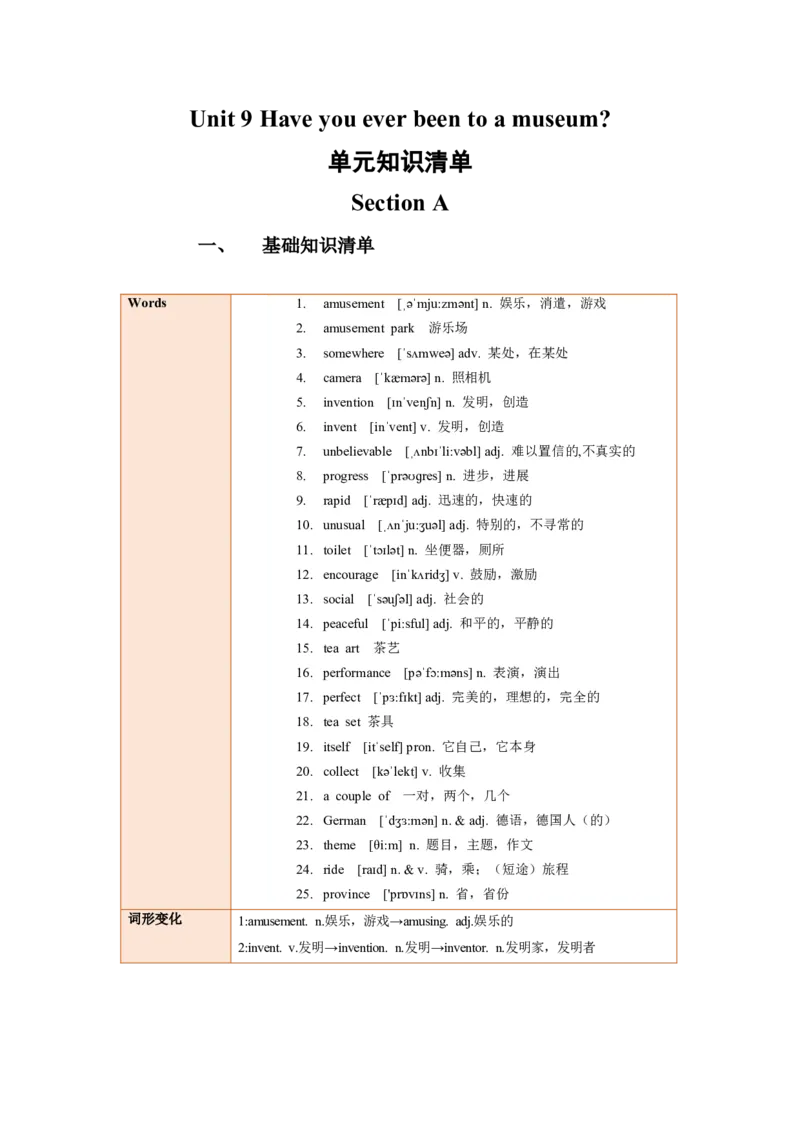
Unit 9 Have you ever been to a museum?
单元知识清单
Section A
一、 基础知识清单
Words 1. amusement [ˌəˈmju:zmənt] n. 娱乐,消遣,游戏
2. amusement park 游乐场
3. somewhere [ˈsʌmweə] adv. 某处,在某处
4. camera [ˈkæmərə] n. 照相机
5. invention [ɪnˈvenʃn] n. 发明,创造
6. invent [inˈvent] v. 发明,创造
7. unbelievable [ˌʌnbɪˈli:vəbl] adj. 难以置信的,不真实的
8. progress [ˈprəʊɡres] n. 进步,进展
9. rapid [ˈræpɪd] adj. 迅速的,快速的
10. unusual [ˌʌnˈju:ʒuəl] adj. 特别的,不寻常的
11. toilet [ˈtɔɪlət] n. 坐便器,厕所
12. encourage [inˈkʌridʒ] v. 鼓励,激励
13. social [ˈsəuʃəl] adj. 社会的
14. peaceful [ˈpi:sful] adj. 和平的,平静的
15. tea art 茶艺
16. performance [pəˈfɔ:məns] n. 表演,演出
17. perfect [ˈpɜ:fɪkt] adj. 完美的,理想的,完全的
18. tea set 茶具
19. itself [itˈself] pron. 它自己,它本身
20. collect [kəˈlekt] v. 收集
21. a couple of 一对,两个,几个
22. German [ˈdʒɜ:mən] n. & adj. 德语,德国人(的)
23. theme [θi:m] n. 题目,主题,作文
24. ride [raɪd] n. & v. 骑,乘;(短途)旅程
25. province ['prɒvɪns] n. 省,省份
词形变化 1:amusement. n.娱乐,游戏→amusing. adj.娱乐的
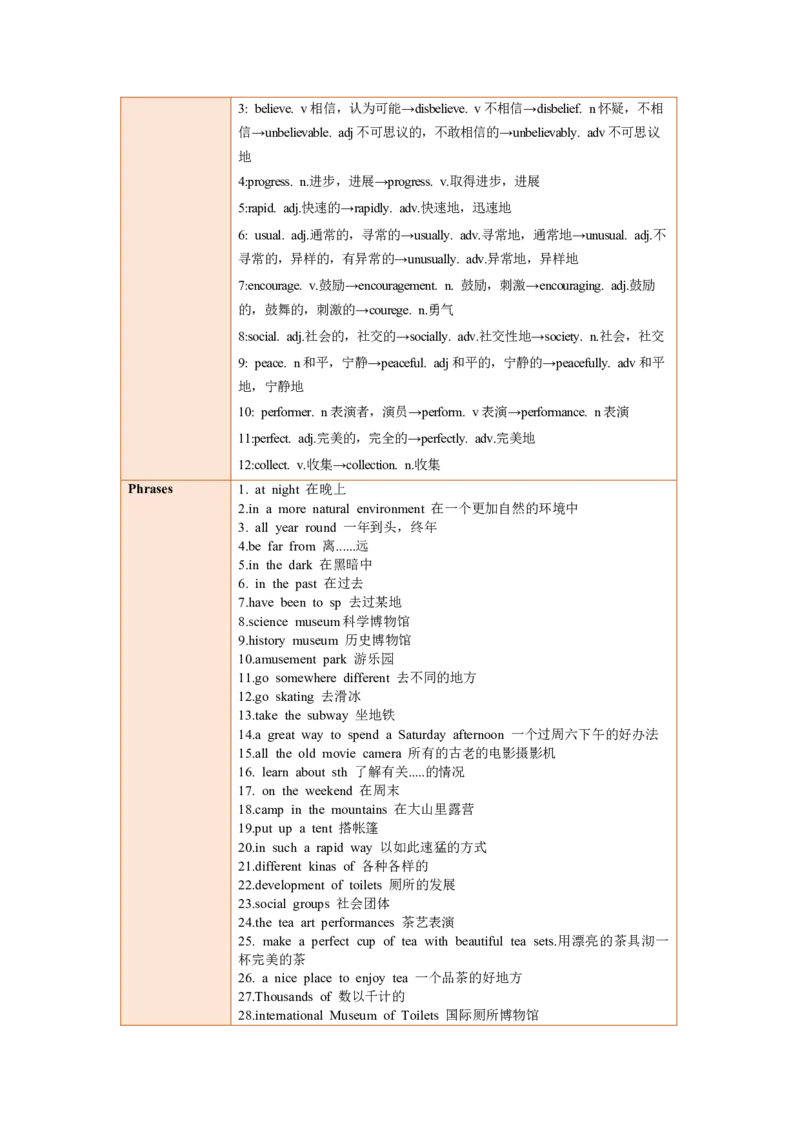
2:invent. v.发明→invention. n.发明→inventor. n.发明家,发明者3: believe. v相信,认为可能→disbelieve. v不相信→disbelief. n怀疑,不相
信→unbelievable. adj不可思议的,不敢相信的→unbelievably. adv不可思议
地
4:progress. n.进步,进展→progress. v.取得进步,进展
5:rapid. adj.快速的→rapidly. adv.快速地,迅速地
6: usual. adj.通常的,寻常的→usually. adv.寻常地,通常地→unusual. adj.不
寻常的,异样的,有异常的→unusually. adv.异常地,异样地
7:encourage. v.鼓励→encouragement. n. 鼓励,刺激→encouraging. adj.鼓励
的,鼓舞的,刺激的→courege. n.勇气
8:social. adj.社会的,社交的→socially. adv.社交性地→society. n.社会,社交
9: peace. n和平,宁静→peaceful. adj和平的,宁静的→peacefully. adv和平
地,宁静地
10: performer. n表演者,演员→perform. v表演→performance. n表演
11:perfect. adj.完美的,完全的→perfectly. adv.完美地
12:collect. v.收集→collection. n.收集
Phrases 1. at night 在晚上
2.in a more natural environment 在一个更加自然的环境中
3. all year round 一年到头,终年
4.be far from 离......远
5.in the dark 在黑暗中
6. in the past 在过去
7.have been to sp 去过某地
8.science museum科学博物馆
9.history museum 历史博物馆
10.amusement park 游乐园
11.go somewhere different 去不同的地方
12.go skating 去滑冰
13.take the subway 坐地铁
14.a great way to spend a Saturday afternoon 一个过周六下午的好办法
15.all the old movie camera 所有的古老的电影摄影机
16. learn about sth 了解有关.....的情况
17. on the weekend 在周末
18.camp in the mountains 在大山里露营
19.put up a tent 搭帐篷
20.in such a rapid way 以如此速猛的方式
21.different kinas of 各种各样的
22.development of toilets 厕所的发展
23.social groups 社会团体
24.the tea art performances 茶艺表演
25. make a perfect cup of tea with beautiful tea sets.用漂亮的茶具沏一
杯完美的茶
26. a nice place to enjoy tea 一个品茶的好地方
27.Thousands of 数以千计的
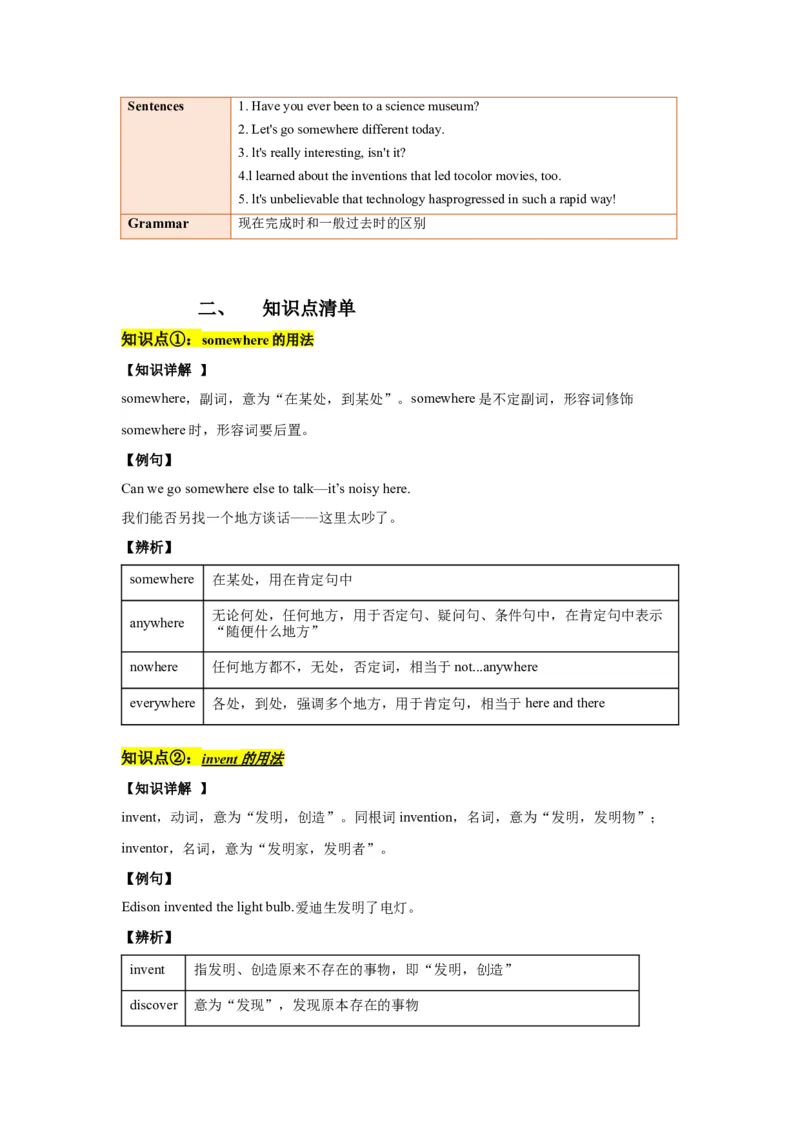
28.international Museum of Toilets 国际厕所博物馆Sentences 1. Have you ever been to a science museum?
2. Let's go somewhere different today.
3. lt's really interesting, isn't it?
4.l learned about the inventions that led tocolor movies, too.
5. lt's unbelievable that technology hasprogressed in such a rapid way!
Grammar 现在完成时和一般过去时的区别
二、 知识点清单
知识点①:somewhere的用法
【知识详解 】
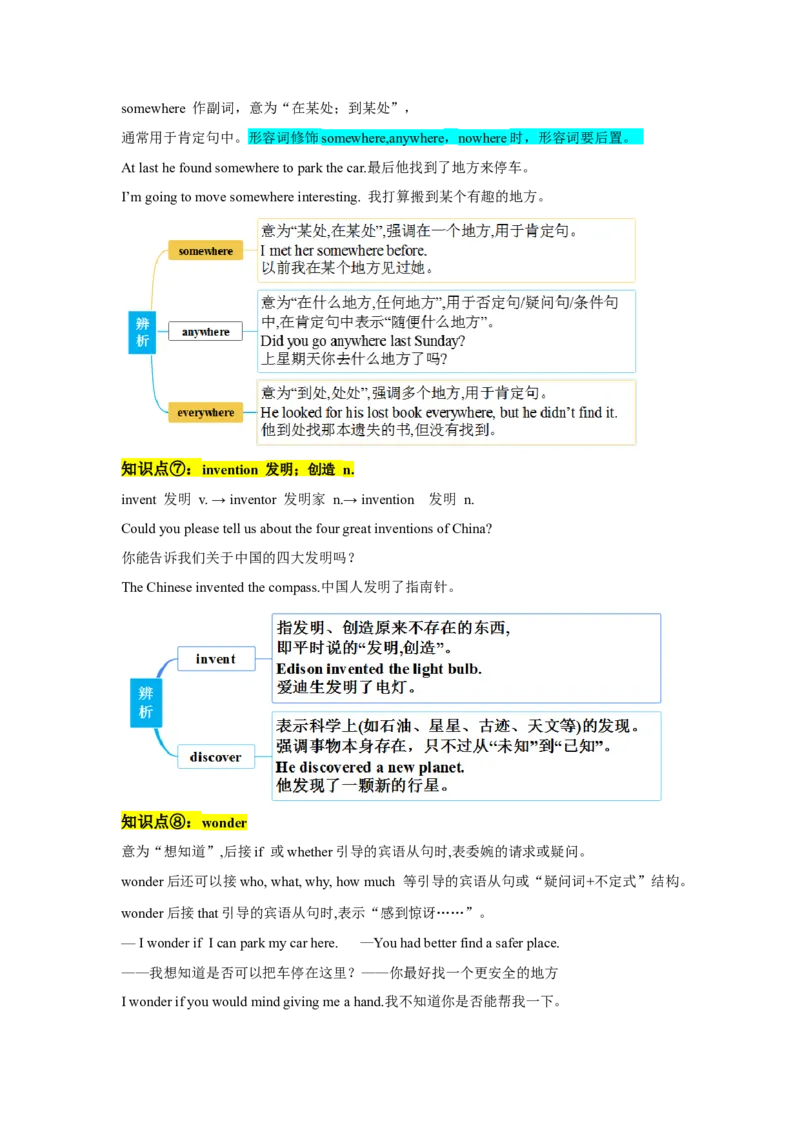
somewhere,副词,意为“在某处,到某处”。somewhere是不定副词,形容词修饰
somewhere时,形容词要后置。
【例句】
Can we go somewhere else to talk—it’s noisy here.
我们能否另找一个地方谈话——这里太吵了。
【辨析】
somewhere 在某处,用在肯定句中
无论何处,任何地方,用于否定句、疑问句、条件句中,在肯定句中表示
anywhere
“随便什么地方”
nowhere 任何地方都不,无处,否定词,相当于not...anywhere
everywhere 各处,到处,强调多个地方,用于肯定句,相当于here and there
知识点②: invent 的 用法
【知识详解 】
invent,动词,意为“发明,创造”。同根词invention,名词,意为“发明,发明物”;
inventor,名词,意为“发明家,发明者”。
【例句】
Edison invented the light bulb.爱迪生发明了电灯。
【辨析】
invent 指发明、创造原来不存在的事物,即“发明,创造”
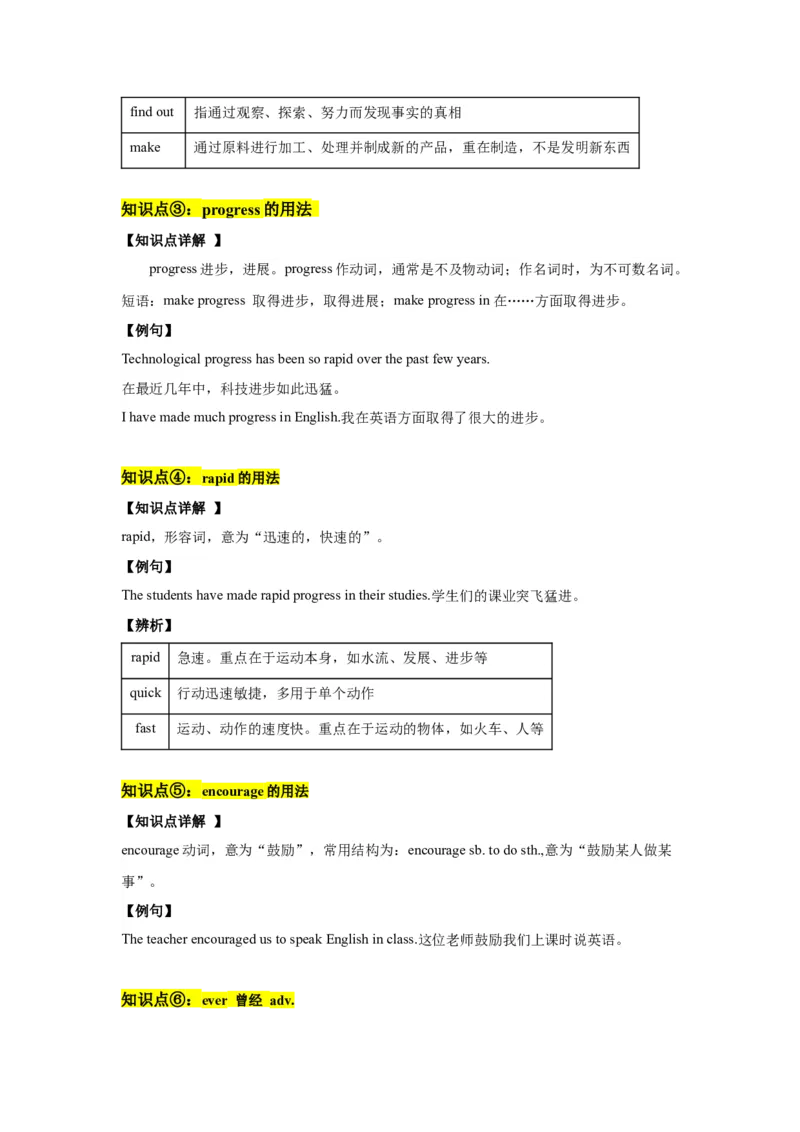
discover 意为“发现”,发现原本存在的事物find out 指通过观察、探索、努力而发现事实的真相
make 通过原料进行加工、处理并制成新的产品,重在制造,不是发明新东西
知识点③:progress的用法
【知识点详解 】
progress进步,进展。progress作动词,通常是不及物动词;作名词时,为不可数名词。
短语:make progress 取得进步,取得进展;make progress in在……方面取得进步。
【例句】
Technological progress has been so rapid over the past few years.
在最近几年中,科技进步如此迅猛。
I have made much progress in English.我在英语方面取得了很大的进步。
知识点④:rapid的用法
【知识点详解 】
rapid,形容词,意为“迅速的,快速的”。
【例句】
The students have made rapid progress in their studies.学生们的课业突飞猛进。
【辨析】
rapid 急速。重点在于运动本身,如水流、发展、进步等
quick 行动迅速敏捷,多用于单个动作
fast 运动、动作的速度快。重点在于运动的物体,如火车、人等
知识点⑤:encourage的用法
【知识点详解 】
encourage动词,意为“鼓励”,常用结构为:encourage sb. to do sth.,意为“鼓励某人做某
事”。
【例句】
The teacher encouraged us to speak English in class.这位老师鼓励我们上课时说英语。
知识点⑥:ever 曾经 adv.somewhere 作副词,意为“在某处;到某处”,
通常用于肯定句中。形容词修饰somewhere,anywhere,nowhere时,形容词要后置。
At last he found somewhere to park the car.最后他找到了地方来停车。
I’m going to move somewhere interesting. 我打算搬到某个有趣的地方。
知识点⑦:invention 发明;创造 n.
invent 发明 v. → inventor 发明家 n.→ invention 发明 n.
Could you please tell us about the four great inventions of China?
你能告诉我们关于中国的四大发明吗?
The Chinese invented the compass.中国人发明了指南针。
知识点⑧:wonder
意为“想知道”,后接if 或whether引导的宾语从句时,表委婉的请求或疑问。
wonder后还可以接who, what, why, how much 等引导的宾语从句或“疑问词+不定式”结构。
wonder后接that引导的宾语从句时,表示“感到惊讶……”。
— I wonder if I can park my car here. —You had better find a safer place.
——我想知道是否可以把车停在这里?——你最好找一个更安全的地方
I wonder if you would mind giving me a hand.我不知道你是否能帮我一下。He wondered what happened.他想知道发生了什么事。
I wonder that she has won the race.我对她赢了比赛感到惊讶。
【知识拓展】
wonder 想知道 v. →wonder n.奇迹 →wonderful adj.精彩的 → wonderfully adv.精彩地
The Great Wall is one of the wonders in the world.长城是世界上的奇迹之一。
知识点⑨:German的用法
【知识点详解 】
German作“德国人”讲时,是可数名词,其复数形式是Germans。German作“德语”讲
时,是不可数名词。
【例句】
A German scientist asked if I came from China.一位德国科学家问我是否来自中国。
【拓展】“某国”及“某国人(的)”
·America美国(American) ·China中国(Chinese) ·Britain英国(Englishman)
·Japan日本(Japanese) ·France法国(French) ·India印度(Indian)
国人的复数:中日不变,英法变,其余S加后面
Chinese (单数)----Chinese(复数);Japanese(单数)----Japanese(复数)
Englishman(单数)---Englishmen(复数) Frenchman(单数)----Frenchmen(复数)
American(单数)----Americans(复数) German (单数)----Germans(复数)
知识点10:perfect的用法
【知识点详解 】
perfect,形容词,意为“完美的,完全的”。
【例句】
No one in this world is perfect.世界上没有人是完美的。
【拓展】表示“好”的词汇
·good好的 ·great棒极了 ·excellent优秀的
·wonderful精彩的 ·outstanding出众的 ·fantastic可赞的;优秀的
知识点11:whether
conj.不管……(还是);或者……(或者)。whether与or连用引导让步状语从句,意思是"不管是……或是"。
This happens whether the children are in two-parent or one-parent families.
不管孩子是生活在双亲还是单亲家庭里,这种情况都会发生。
whether与if引导宾语从句时,二者可以互换。
He didn’t tell me if/whether he would come.
他没有告诉我他是否会来。
【易混辨析】whether与if
知识点12:put up表示“建造,搭起”
Do you know how to put up a tent?你知道怎么搭帐篷吗?
I want to put up a fence between our property and our neighbor’s.
我要在我们和邻居的房产之间修道篱笆。
【知识拓展】put up还表示“张贴(布告、公布等)”。
当后面接代词作宾语时,要把代词放于put与up之间。
We’d better put up a notice here.
我们最好在这儿贴一张通知。put的相关短语:
put away 收起来 put off 推迟
put on 穿上 put down 记下
知识点13:in a(an)…way
意为“以一个……方式(方法)”,
且当such(quite)与冠词a(an)连用时,冠词a(an)必须放在其后面。
We have never seen such an interesting film.
我们从未看过这么有趣的电影。
I spent this summer vacation in quite a different way.
我以一种完全不同的方式度过了今年暑假。
He told us such a funny story.他给我们讲了一个很有趣的故事。
【知识拓展】
“such+a/an+形容词+可数名词单数= so+形容词+a/an+可数名词单数”
意为“如此……的一个……”。
such a beautiful girl = so beautiful a girl 如此漂亮的一个女孩
三、 语法清单
语法①:现在完成时(二)
►►►1.含been, ever, never的现在完成时►►►2.have been to,have gone to,have been in 区别
►►►3.现在完成时和一般过去时的区别