文档文本内容
Unit 9 Have you ever been to a museum?
Section A (2d & GF-4c)导学案
班级: 姓名:
科目: 授课教师:
1. 语言能力:能够在多个语篇创设的情境中,通过观察归纳、同伴合作等方
式,正确理解和运用现在完成时表示是否去过某地,提问是否曾经做过某事和表示从
未做过某事。
2. 学习能力:能在学习活动中积极与他人合作,共同完成学习任务;能在学习
过程中积极思考,主动探究,发现并尝试使用多种策略解决语言学习中的问题,积极
进行拓展性运用。
学习目标
3. 思维品质:能够在老师的引导下,通过观察、讨论、归纳等课堂活动,探究
现在完成时态表示过去经历的用法,提高思维的逻辑性、批判性和创新性,加强语言
表达的准确性。
4. 文化意识:通过谈论过去经历的过程中,能够了解各类博物馆、主题公园等
地方,互相交流曾经去过的地方,增长知识,开阔视野,立志努力学习、积极进取,
读万卷书、行万里路。
重点:掌握含有been的现在完成时的陈述句、一般疑问句及其回答,含有ever的现在完成
学习
时的一般疑问句及其回答,以及含有never的现在完成时的句子;
重难点
难点:在讲述过去经历的过程中正确判断和使用不同情况下动词的时态和变化形式。
自学指导 自学检测及课堂展示
预习回答问题。
1、现在完成时的构成:
①现在完成时的肯定句式是 ________________________。
②现在完成时的否定句式是 ________________________。
③现在完成时的一般疑问句式是把助动词________或________提到________________。
回答用Yes, … have(has). /No, … ________________
2.你所知道的现在完成时态的标志有哪些?
_________________________________________________________________
课前预习
3.me, too和me, neither有什么区别?
_________________________________________________________________
1. ①主语+have/has+过去分词+其他 ②主语+have/has+not+过去分词+其他
③have has 主语前 主语+have/has (not)
2.for+时间段;since+时间点;already;yet;never;ever;just;before;so far
3.me, too表示“我也是”,表示肯定,用于后一句所述情况与前一句陈述的肯定情况相
同;me, neither表示“我也不”,表示否定,用于后一句所述情况与前一句陈述的否定情况
相同
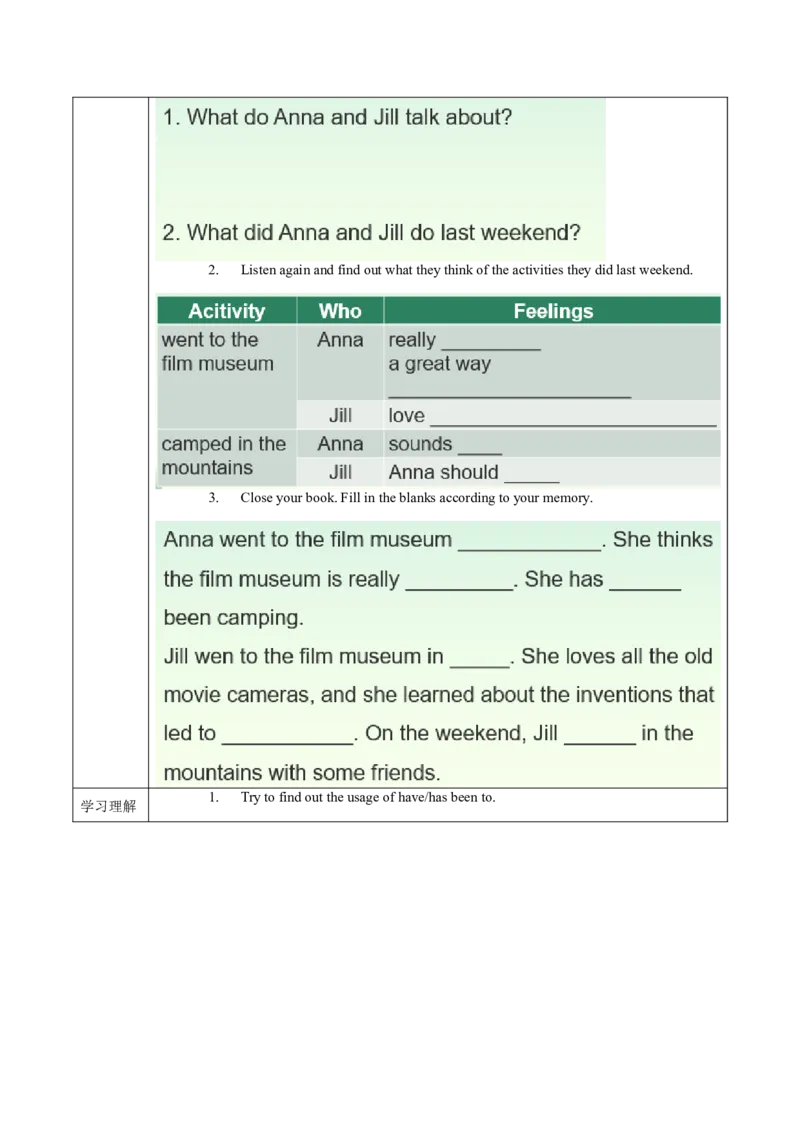
1. Now let’s listen to a conversation between Anna and Jill, then answer the questions.
情景导入2. Listen again and find out what they think of the activities they did last weekend.
3. Close your book. Fill in the blanks according to your memory.
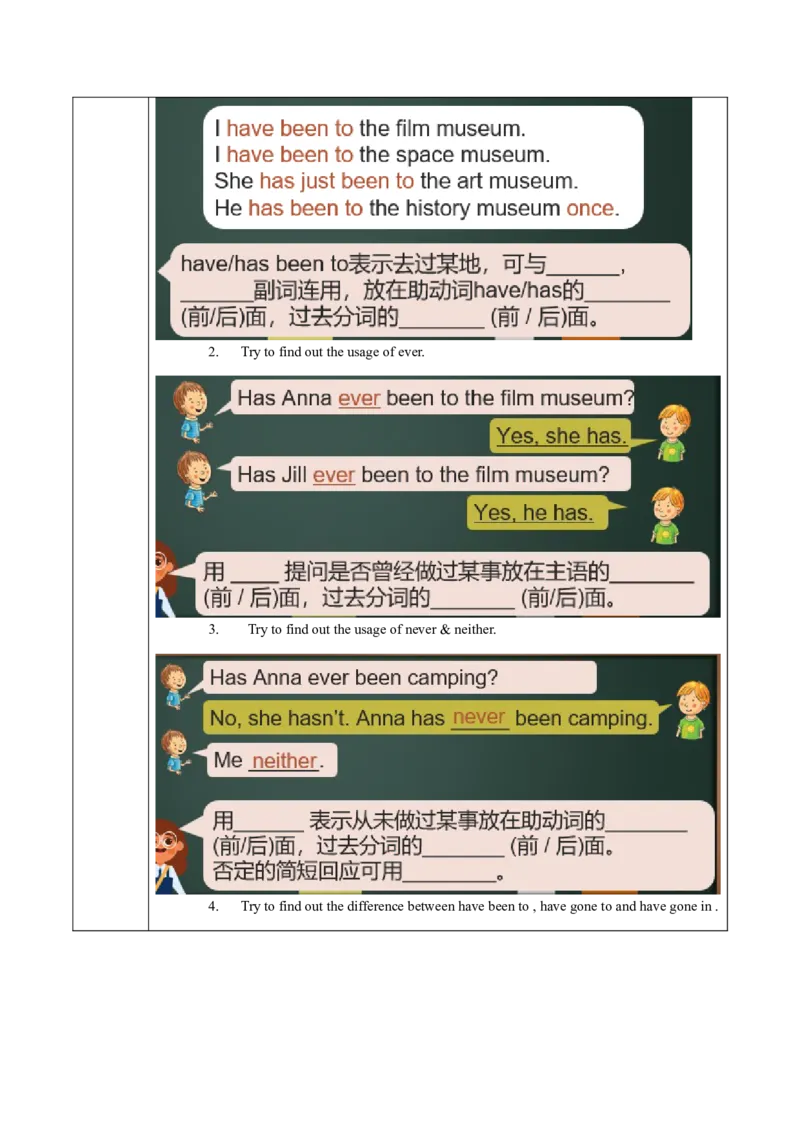
1. Try to find out the usage of have/has been to.
学习理解2. Try to find out the usage of ever.
3. Try to find out the usage of never & neither.
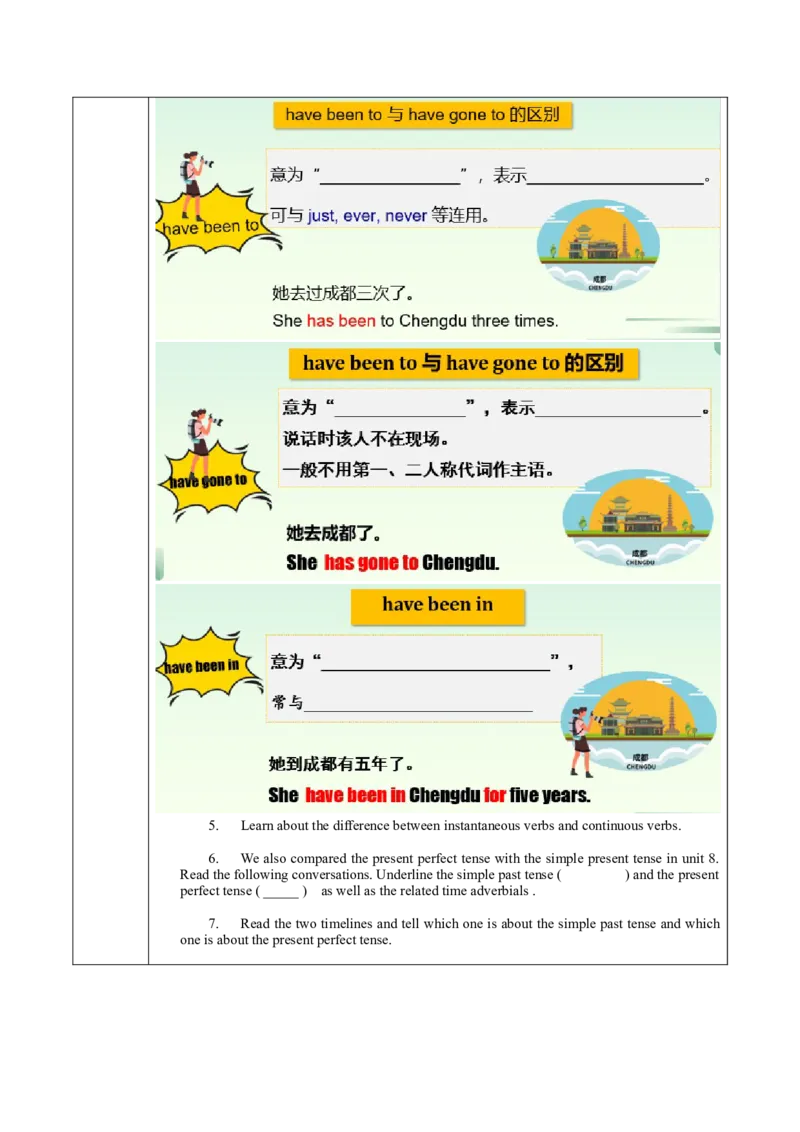
4. Try to find out the difference between have been to , have gone to and have gone in .5. Learn about the difference between instantaneous verbs and continuous verbs.
6. We also compared the present perfect tense with the simple present tense in unit 8.
Read the following conversations. Underline the simple past tense ( ) and the present
perfect tense ( _____ ) as well as the related time adverbials .
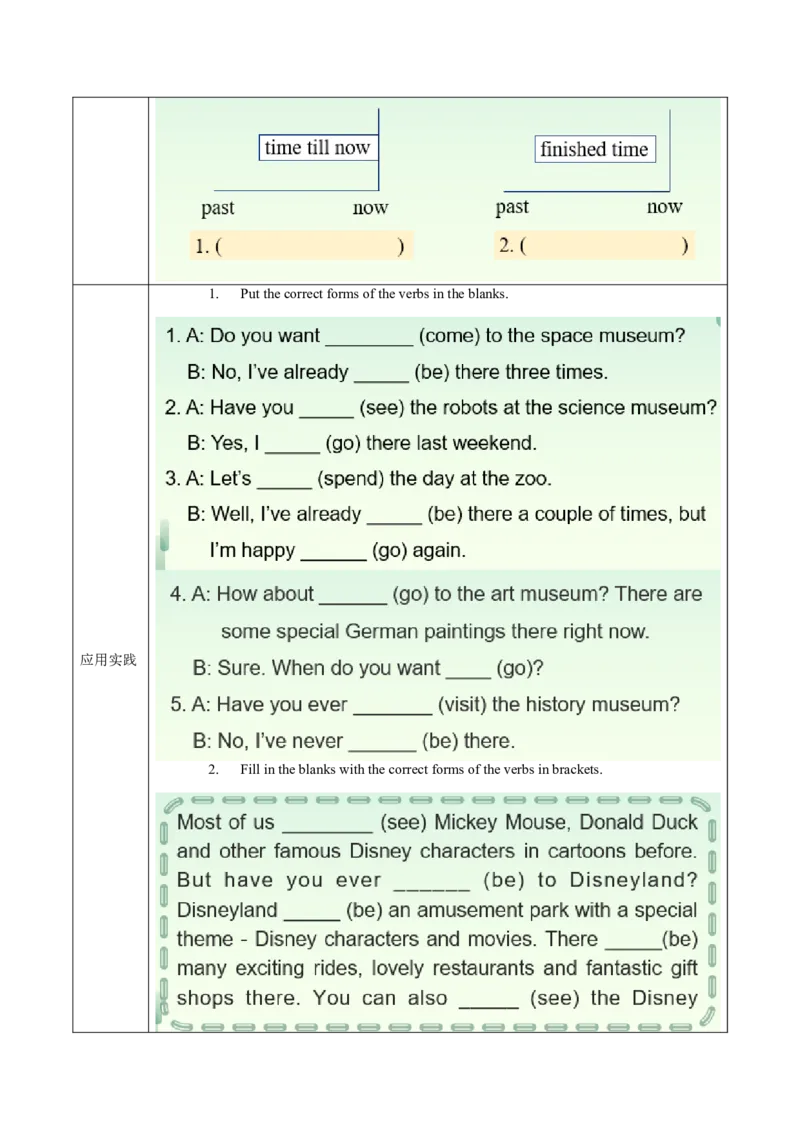
7. Read the two timelines and tell which one is about the simple past tense and which
one is about the present perfect tense.1. Put the correct forms of the verbs in the blanks.
应用实践
2. Fill in the blanks with the correct forms of the verbs in brackets.3. Millie’s classmates are talking about their friends and families. Help them complete
the sentences with have / has been to or have / has gone to.
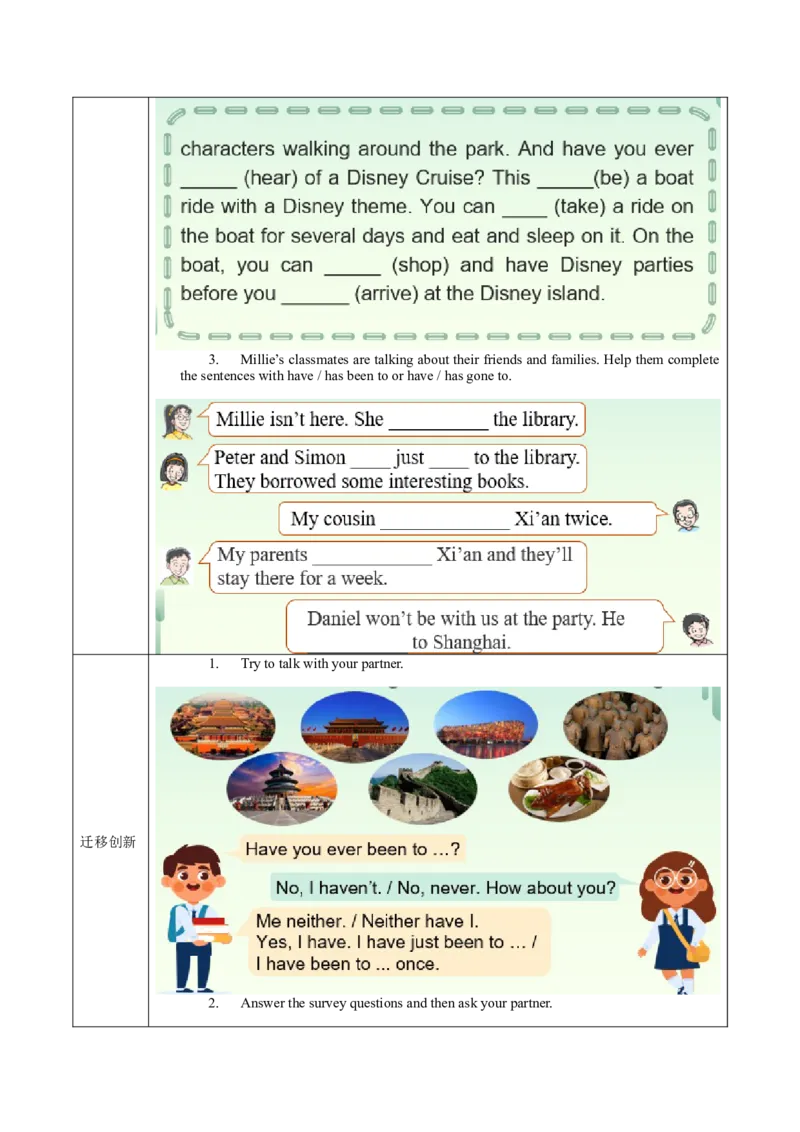
1. Try to talk with your partner.
迁移创新
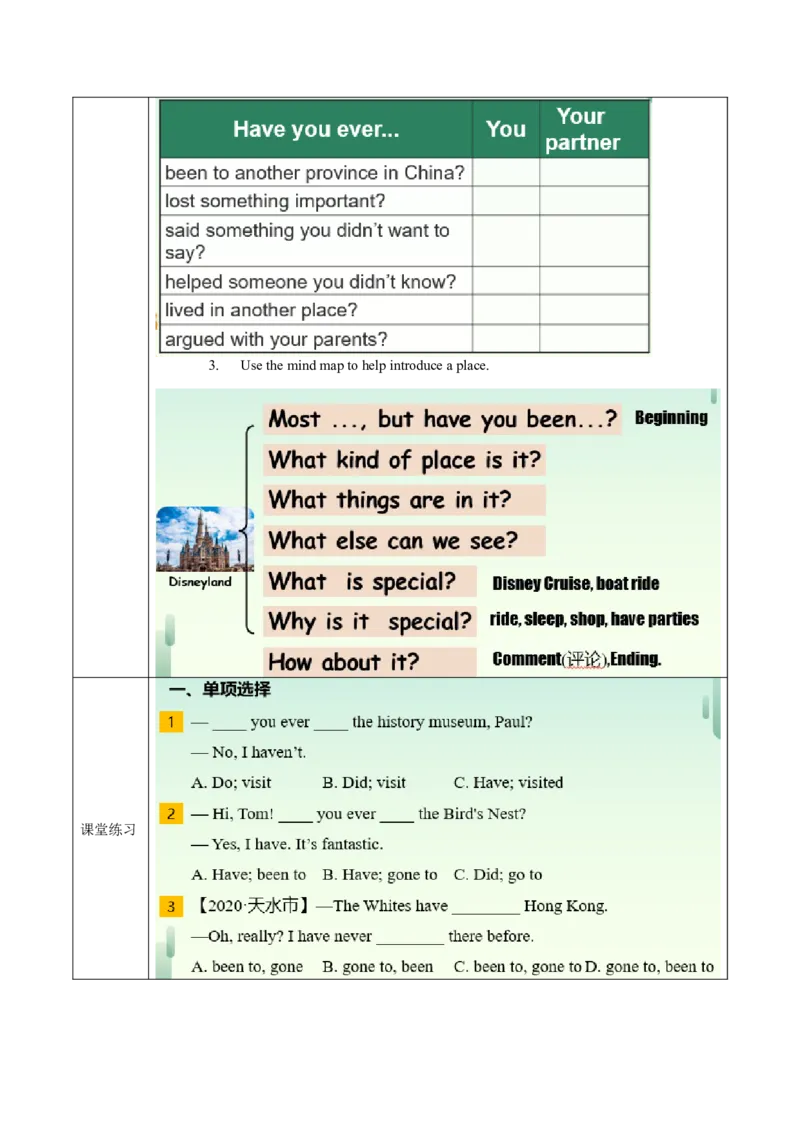
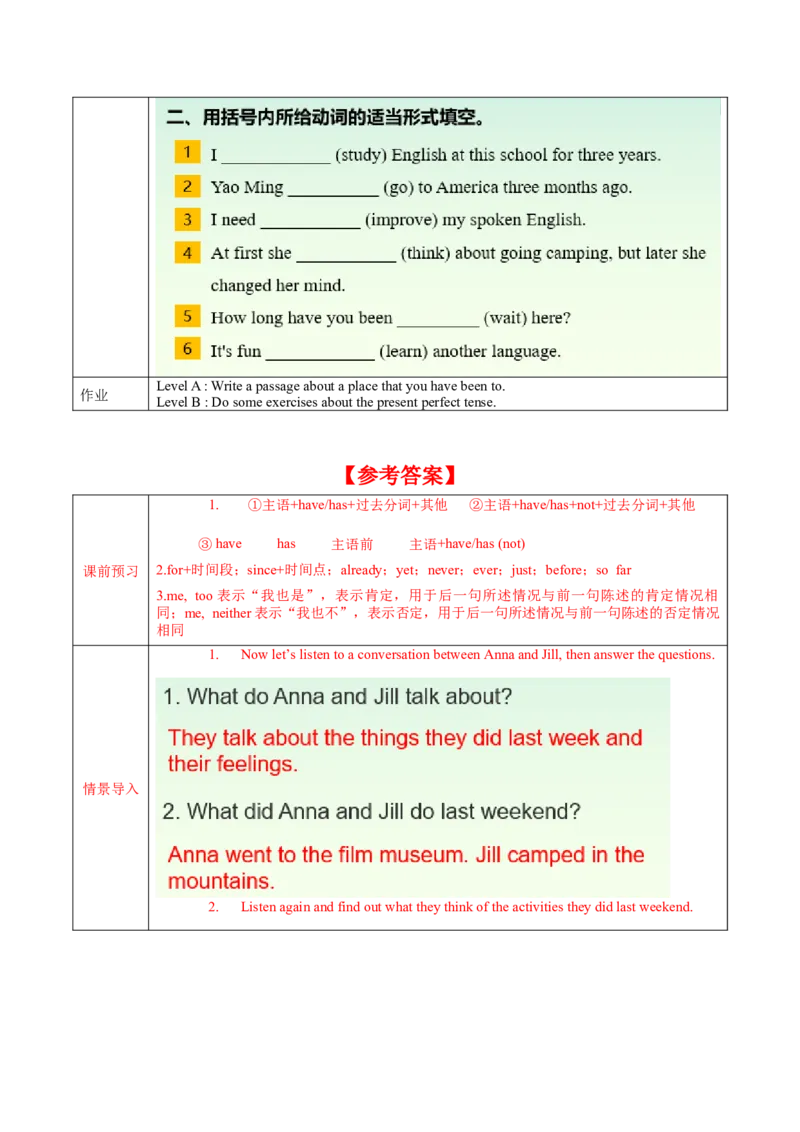
2. Answer the survey questions and then ask your partner.3. Use the mind map to help introduce a place.
课堂练习Level A : Write a passage about a place that you have been to.
作业
Level B : Do some exercises about the present perfect tense.
【参考答案】
1. ①主语+have/has+过去分词+其他 ②主语+have/has+not+过去分词+其他
③have has 主语前 主语+have/has (not)
课前预习 2.for+时间段;since+时间点;already;yet;never;ever;just;before;so far
3.me, too表示“我也是”,表示肯定,用于后一句所述情况与前一句陈述的肯定情况相
同;me, neither表示“我也不”,表示否定,用于后一句所述情况与前一句陈述的否定情况
相同
1. Now let’s listen to a conversation between Anna and Jill, then answer the questions.
情景导入
2. Listen again and find out what they think of the activities they did last weekend.3. Close your book. Fill in the blanks according to your memory.
1. Try to find out the usage of have/has been to.
2. Try to find out the usage of ever.
学习理解
3. Try to find out the usage of never & neither.
4. Try to find out the difference between have been to , have gone to and have gone in .5. Learn about the difference between instantaneous verbs and continuous verbs.6. We also compared the present perfect tense with the simple present tense in unit 8.
Read the following conversations. Underline the simple past tense ( ) and the present
perfect tense ( _____ ) as well as the related time adverbials .
7. Read the two timelines and tell which one is about the simple past tense and which
one is about the present perfect tense.
1. Put the correct forms of the verbs in the blanks.
应用实践2. Fill in the blanks with the correct forms of the verbs in brackets.3. Millie’s classmates are talking about their friends and families. Help them complete
the sentences with have / has been to or have / has gone to.
迁移创新 略
课堂练习作业 略