第20 讲 如何写出高分句式
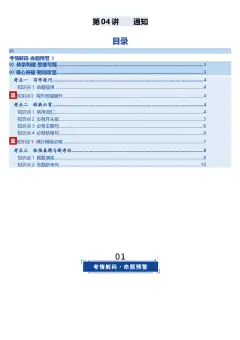
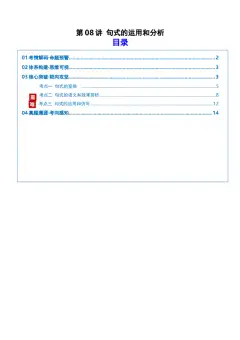
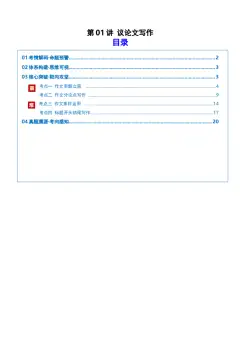
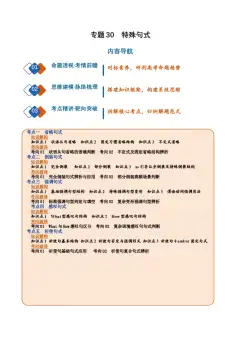
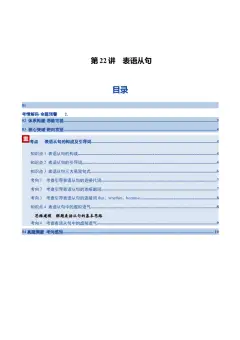
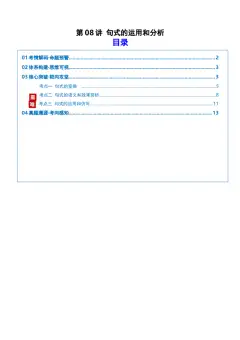
目录
知识点1 扩句魔法.......................................................................................................................................... 2
知识点2 形容词作状语..............................................................................................................................4
知识点3 非谓语动词having done............................................................................................................6
知识点4  with 复合结构............................................................................................................................7
知识点5 倒装结构....................................................................................................................................12
知识点6 并列句........................................................................................................................................15
知识点7 定语从句....................................................................................................................................15
知识点8 状语从句....................................................................................................................................16
知识点9 名词性从句................................................................................................................................18
知识点10 强调结构..................................................................................................................................19
知识点11 虚拟语气...................................................................................................................................19
知识点12 八大高分结尾句式..................................................................................................................20
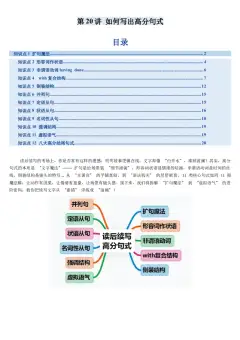
     读后续写的考场上,你是否常有这样的遗憾:明明故事逻辑在线,文字却像
白开水
,难掀波澜?其实,高分
“
”
句式的本质是
文字魔法
 扩句是给场景装
细节滤镜
,形容词状语是情绪的暗涌,非谓语动词是时间的丝
“
”——
“
”
线,倒装结构是镜头的特写
 从
主谓宾
 的平铺直叙,到
语法机关
 的层层嵌套,
…
“
”
“
”
11 类核心句式如同 11 根
魔法棒:让动作有因果,让情绪有重量,让场景有镜头感。接下来,我们将拆解
扩句魔法
 到
虚拟语气
 的进
“
”
“
”
阶密码,教你把续写文字从
素描
 淬炼成
油画
!
“
”
“
”
知识点1  扩句魔法
很多同学在读后续写里陷入
短句陷阱
:句子干巴巴,像流水账,既没画面感,又凑不够词。其实,只要给短
“
”
句
加装细节零件
,就能让文字从
火柴人动画
 进化成
“
”
“
”
“3D 电影
!以下六大
扩句公式
,教你给句子
”
“
”

穿花衣
“
”。
一、同位语:给名词贴
身份标签
“
”
魔法逻辑:用 名词短语 / 同位语从句,给核心名词追加 身份、动作、状态,让读者瞬间
看清细节
。
“
”
公式:名词 + 同位语(描述身份/动作/状态)
示例变形记
原句:She saw her husband.(干巴巴的
看见
)
“
”
扩写:There, she saw her husband, a man whose eyes lit up with relief as he stared at her, his face etched with exhaustion.
( 同位语 “a man...” 补充:丈夫的眼神(宽慰发亮)、表情(疲惫刻在脸上),画面瞬间立体!)
二、状语:给动作加
时空滤镜
“
”
魔法逻辑:用 副词、介词短语、非谓语、从句,给动作附加 时间、原因、伴随、方式,让场景
有因有果,有
“
滋有味
。
”
公式:动作 + 状语(时间/原因/伴随/方式)
示例变形记
原句:Jane walked on.(单调的
走
)
“
”
扩写:With branches scratching her arms and fog swirling around, Jane walked on for what felt like an eternity, her breath ragged
with fear.
状语分解:
原因:
•
With branches...(树枝刮擦手臂,环境危险)
时间:
•
for...eternity(走了仿佛一辈子,突出漫长)
伴随:
•
her breath ragged...(呼吸因恐惧急促,刻画情绪)
场景从
走
 变成
在迷雾中胆战心惊地跋涉
!
“
”
“
”
三、定语:给名词织
细节毛衣
“
”
魔法逻辑:用 形容词(前置)、非谓语 / 定语从句(后置),刻画名词的 特征、背景、经历,让人物 / 事物
自带故事
。
“
”
公式:名词 + 定语(前置形容词/后置从句/非谓语)
示例变形记
原句:His mother works in a big company.(平淡的
母亲工作
)
“
”
扩写:His loving mother, who once spent years teaching English at a village school before moving to the city, now works in a big
company, her eyes still carrying the warmth of a teacher.
 定语分解:
前置:
•
loving(慈爱的,先立人物印象)
后置从句:
•
who once...village school(补充背景:曾在乡村教书,经历丰富)
伴随定语:
•
her eyes...teacher(眼神带教师的温暖,细节封神!)
母亲从
抽象名词
 变成
有故事的鲜活人物
!
“
”
“
”
四、递进式:给动作串
连环扣
“
”
魔法逻辑:用 and/after that/what’s more 连接 连贯动作,让情节
像多米诺骨牌般推进
,凸显人物行动逻辑。
“
”
公式:动作1 + 连接词 + 动作2(递进动作,推动情节)
示例变形记
原句:Mac then jumped off the bicycle.(单一的
跳车
)
“
”
扩写:Mac then jumped off the bicycle, his hands already gripping the baseball bat, and charged at the wolf, eyes blazing
with defiance.
 递进分解:从
跳车
 到
战斗
,人物的 果敢和决心 瞬间立住!
“
”
“
”
动作
•
1:jumped off...(跳车)
连接:
•
his hands...bat(非谓语表伴随,动作衔接自然)
动作
•
2:charged at...(冲向狼,眼神喷火)
五、转折式:让情节踩
急刹车
“
”
魔法逻辑:用 but/however 制造 情绪 / 情节反转,给故事
埋悬念、掀波澜
。
“
”
公式:主句(动作/状态) + but + 转折句(反转情绪/情节)
示例变形记
原句:Jane kept moving.(平淡的
继续走
)
“
”
扩写:Jane kept moving, but the farther she walked, the more the forest seemed to swallow her, shadows stretching into
twisted shapes that made her heart race.
 转折分解:
主句:
•
kept moving(持续行动)
转折:
•
the farther...twisted shapes(环境反转:森林像要吞噬她,阴影扭曲,心跳加速)
从
走
 变成
陷入未知恐惧
,悬念拉满!)
“
”
“
”
六、因果式:给逻辑搭
桥梁
“
”
魔法逻辑:用 because/since/therefore/due to 明确 因果关系,让故事发展
有理有据,不突兀
。
“
”
公式:原因 + 连词/短语 + 结果
示例变形记
原句:He has broken his leg.(单一的
摔断腿
)
“
”
扩写:He had broken his leg in a fall, and as a result, he lay on the ground helplessly, watching the wolf approach with
growing terror.
因果分解:
原因:
•
in a fall(摔断腿的场景:摔倒)
结果:
•
lay...helplessly(只能无助躺地,看着狼逼近,恐惧升级)
从
受伤
 到
危机
,逻辑链清晰,张力拉满!
“
”
“
”
知识点2  形容词作状语
语法逻辑:用形容词(短语)传递动作背后的状态、原因或伴随情绪,让场景自带 情绪张力,无需额外铺垫即
“
”
可让读者感知人物处境。
公式:形容词(短语)+ 主句(表动作/状态)
1.回答不出老师的问题,学生们都保持沉默。
Unable to answer the teacher’s question, all the students kept silent.
解析:“Unable to answer...”(不能回答)是原因状语,解释学生 保持沉默 的直接原因,用形容词短语压缩因果
“
”
逻辑,让句子更紧凑。
2.在我回家的途中,我看到一个中年男子躺在路边,烂醉如泥。
On my way home, I saw a middle-aged man lying by the roadside, dead drunk.
解析:“dead drunk”(烂醉如泥)是伴随状语,补充男子 躺 的状态,用夸张形容词强化画面的冲击力。
“
”
3.因为害怕挨骂,Eric 起了逃学的念头。
Afraid of being scolded, Eric thought of playing truant.
解析:“Afraid of...”(害怕)是原因状语,点明 Eric “逃学念头 的动机,用形容词短语简化 因为害怕所以想逃
”
“
学 的逻辑。
”
4.他躺在床上,睡不着,听着外面呼啸的风声。
He was lying in bed, awake, listening to the roaring wind.
解析:“awake”(醒着)是伴随状语,与 “lying in bed” 同步,突出 睡不着 的状态,让静谧场景多了一丝焦灼。
“
”
5.Mary 满脸通红、气喘吁吁地从大门口跑了进来。
Flushed and breathless, Mary bounded in through the gate.
解析:“Flushed and breathless”(脸红气喘)是伴随状语,描绘 Mary “跑进来 时的生理状态,暗示她跑得急促。
”
6.Jack 在他的房间里来回踱步,陷入了沉思。
Jack paced up and down in his room, deep in thought.
解析:“deep in thought”(沉思)是伴随状语,解释 Jack “踱步 的状态
 因思考而不安,让动作有了心理依
”
——
据。
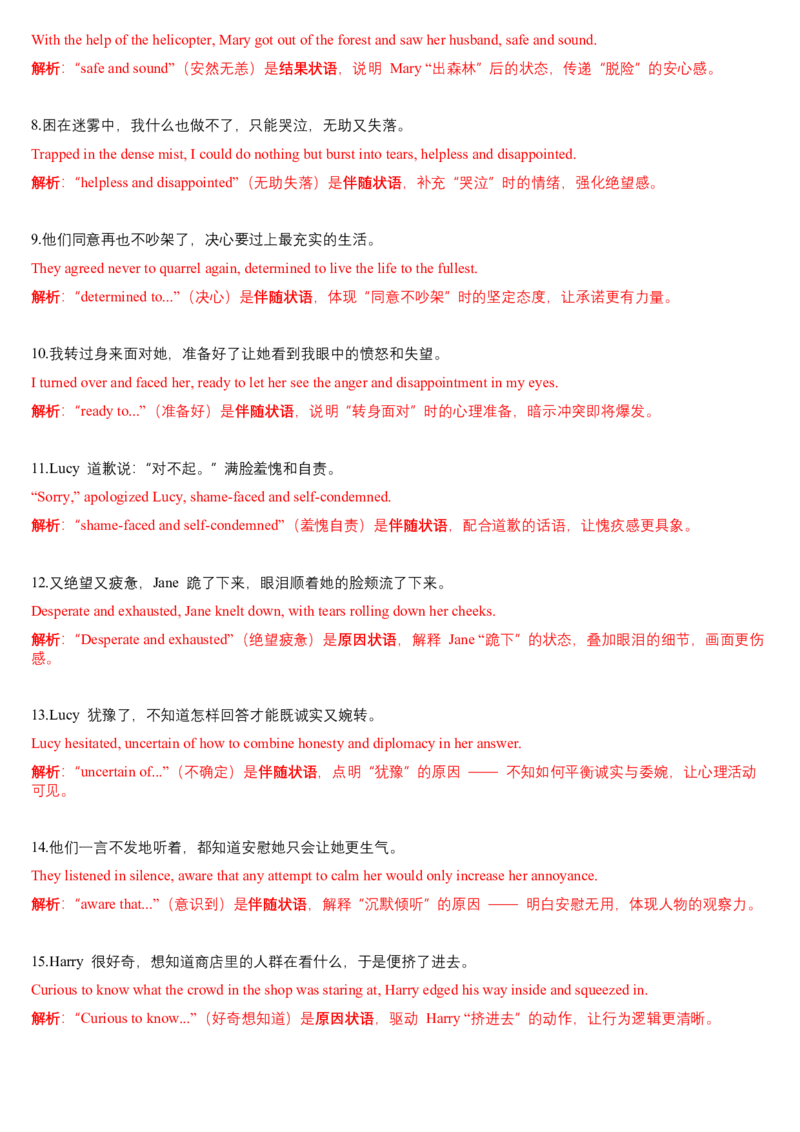
7.在直升飞机的帮助下,Mary 安然无恙地出了森林,见到了她的丈夫。
With the help of the helicopter, Mary got out of the forest and saw her husband, safe and sound.
解析:“safe and sound”(安然无恙)是结果状语,说明 Mary “出森林 后的状态,传递 脱险 的安心感。
”
“
”
8.困在迷雾中,我什么也做不了,只能哭泣,无助又失落。
Trapped in the dense mist, I could do nothing but burst into tears, helpless and disappointed.
解析:“helpless and disappointed”(无助失落)是伴随状语,补充 哭泣 时的情绪,强化绝望感。
“
”
9.他们同意再也不吵架了,决心要过上最充实的生活。
They agreed never to quarrel again, determined to live the life to the fullest.
解析:“determined to...”(决心)是伴随状语,体现 同意不吵架 时的坚定态度,让承诺更有力量。
“
”
10.我转过身来面对她,准备好了让她看到我眼中的愤怒和失望。
I turned over and faced her, ready to let her see the anger and disappointment in my eyes.
解析:“ready to...”(准备好)是伴随状语,说明 转身面对 时的心理准备,暗示冲突即将爆发。
“
”
11.Lucy 道歉说:对不起。 满脸羞愧和自责。
“
”
“Sorry,” apologized Lucy, shame-faced and self-condemned.
解析:“shame-faced and self-condemned”(羞愧自责)是伴随状语,配合道歉的话语,让愧疚感更具象。
12.又绝望又疲惫,Jane 跪了下来,眼泪顺着她的脸颊流了下来。
Desperate and exhausted, Jane knelt down, with tears rolling down her cheeks.
解析:“Desperate and exhausted”(绝望疲惫)是原因状语,解释 Jane “跪下 的状态,叠加眼泪的细节,画面更伤
”
感。
13.Lucy 犹豫了,不知道怎样回答才能既诚实又婉转。
Lucy hesitated, uncertain of how to combine honesty and diplomacy in her answer.
解析:“uncertain of...”(不确定)是伴随状语,点明 犹豫 的原因
 不知如何平衡诚实与委婉,让心理活动
“
”
——
可见。
14.他们一言不发地听着,都知道安慰她只会让她更生气。
They listened in silence, aware that any attempt to calm her would only increase her annoyance.
解析:“aware that...”(意识到)是伴随状语,解释 沉默倾听 的原因
 明白安慰无用,体现人物的观察力。
“
”
——
15.Harry 很好奇,想知道商店里的人群在看什么,于是便挤了进去。
Curious to know what the crowd in the shop was staring at, Harry edged his way inside and squeezed in.
解析:“Curious to know...”(好奇想知道)是原因状语,驱动 Harry “挤进去 的动作,让行为逻辑更清晰。
”
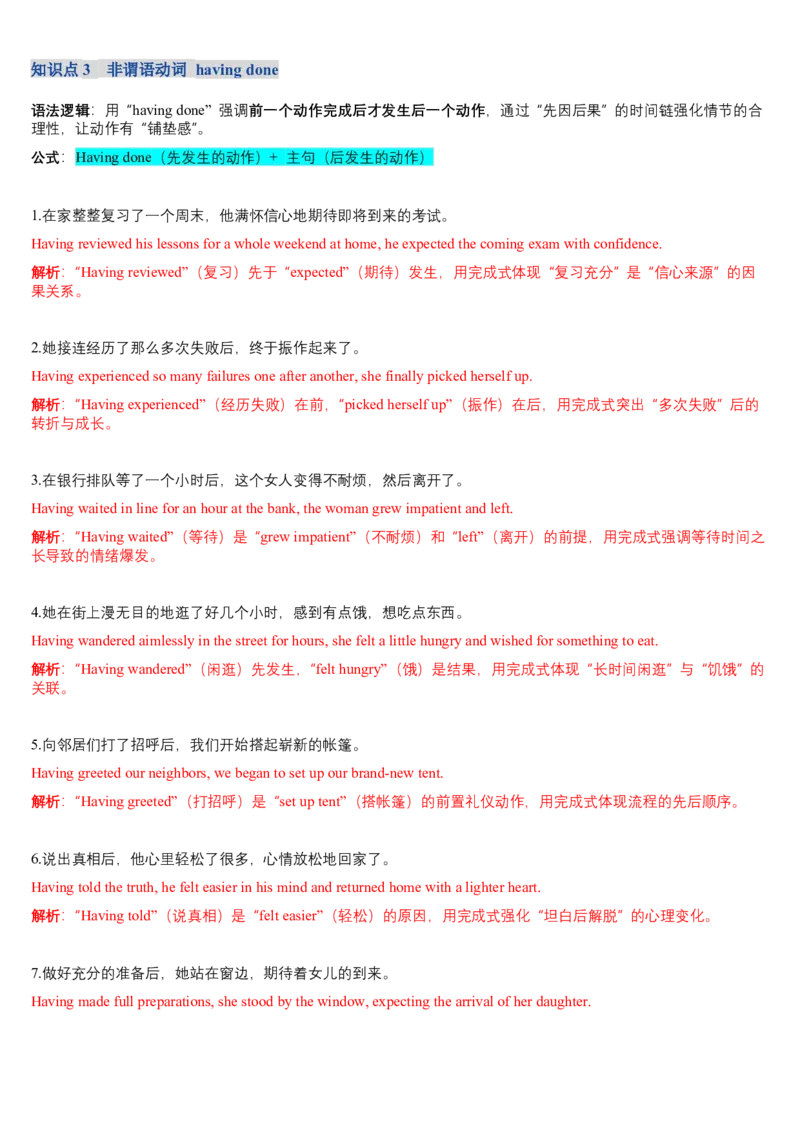
知识点3  非谓语动词 having done
语法逻辑:用 “having done” 强调前一个动作完成后才发生后一个动作,通过 先因后果 的时间链强化情节的合
“
”
理性,让动作有 铺垫感。
“
”
公式:Having done(先发生的动作)+ 主句(后发生的动作)
1.在家整整复习了一个周末,他满怀信心地期待即将到来的考试。
Having reviewed his lessons for a whole weekend at home, he expected the coming exam with confidence.
解析:“Having reviewed”(复习)先于 “expected”(期待)发生,用完成式体现 复习充分 是 信心来源 的因
“
”
“
”
果关系。
2.她接连经历了那么多次失败后,终于振作起来了。
Having experienced so many failures one after another, she finally picked herself up.
解析:“Having experienced”(经历失败)在前,“picked herself up”(振作)在后,用完成式突出 多次失败 后的
“
”
转折与成长。
3.在银行排队等了一个小时后,这个女人变得不耐烦,然后离开了。
Having waited in line for an hour at the bank, the woman grew impatient and left.
解析:“Having waited”(等待)是 “grew impatient”(不耐烦)和 “left”(离开)的前提,用完成式强调等待时间之
长导致的情绪爆发。
4.她在街上漫无目的地逛了好几个小时,感到有点饿,想吃点东西。
Having wandered aimlessly in the street for hours, she felt a little hungry and wished for something to eat.
解析:“Having wandered”(闲逛)先发生,“felt hungry”(饿)是结果,用完成式体现 长时间闲逛 与 饥饿 的
“
”
“
”
关联。
5.向邻居们打了招呼后,我们开始搭起崭新的帐篷。
Having greeted our neighbors, we began to set up our brand-new tent.
解析:“Having greeted”(打招呼)是 “set up tent”(搭帐篷)的前置礼仪动作,用完成式体现流程的先后顺序。
6.说出真相后,他心里轻松了很多,心情放松地回家了。
Having told the truth, he felt easier in his mind and returned home with a lighter heart.
解析:“Having told”(说真相)是 “felt easier”(轻松)的原因,用完成式强化 坦白后解脱 的心理变化。
“
”
7.做好充分的准备后,她站在窗边,期待着女儿的到来。
Having made full preparations, she stood by the window, expecting the arrival of her daughter.
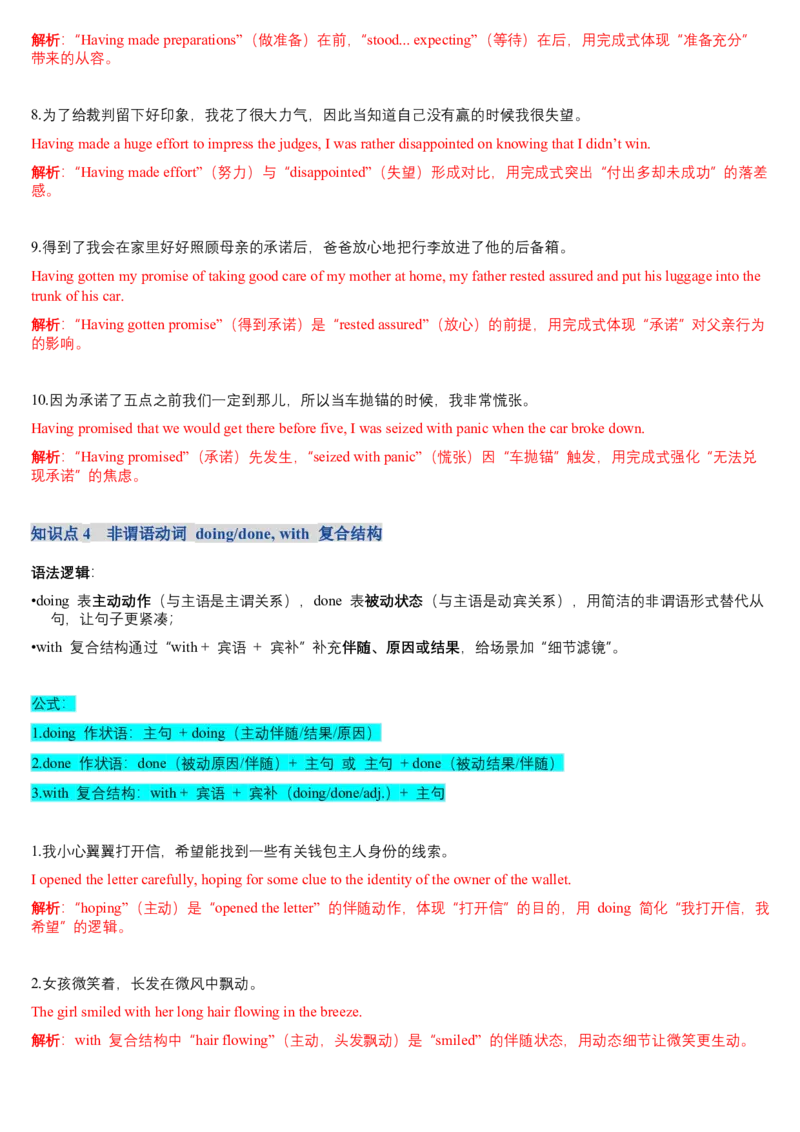
解析:“Having made preparations”(做准备)在前,“stood... expecting”(等待)在后,用完成式体现 准备充分
“
”
带来的从容。
8.为了给裁判留下好印象,我花了很大力气,因此当知道自己没有赢的时候我很失望。
Having made a huge effort to impress the judges, I was rather disappointed on knowing that I didn’t win.
解析:“Having made effort”(努力)与 “disappointed”(失望)形成对比,用完成式突出 付出多却未成功 的落差
“
”
感。
9.得到了我会在家里好好照顾母亲的承诺后,爸爸放心地把行李放进了他的后备箱。
Having gotten my promise of taking good care of my mother at home, my father rested assured and put his luggage into the
trunk of his car.
解析:“Having gotten promise”(得到承诺)是 “rested assured”(放心)的前提,用完成式体现 承诺 对父亲行为
“
”
的影响。
10.因为承诺了五点之前我们一定到那儿,所以当车抛锚的时候,我非常慌张。
Having promised that we would get there before five, I was seized with panic when the car broke down.
解析:“Having promised”(承诺)先发生,“seized with panic”(慌张)因 车抛锚 触发,用完成式强化 无法兑
“
”
“
现承诺 的焦虑。
”
知识点4  非谓语动词 doing/done, with 复合结构
语法逻辑:
•doing 表主动动作(与主语是主谓关系),done 表被动状态(与主语是动宾关系),用简洁的非谓语形式替代从
句,让句子更紧凑;
•with 复合结构通过 “with + 宾语 + 宾补 补充
”
伴随、原因或结果,给场景加 细节滤镜。
“
”
公式:
1.doing 作状语:主句 + doing(主动伴随/结果/原因)
2.done 作状语:done(被动原因/伴随)+ 主句 或 主句 + done(被动结果/伴随)
3.with 复合结构:with + 宾语 + 宾补(doing/done/adj.)+ 主句
1.我小心翼翼打开信,希望能找到一些有关钱包主人身份的线索。
I opened the letter carefully, hoping for some clue to the identity of the owner of the wallet.
解析:“hoping”(主动)是 “opened the letter” 的伴随动作,体现 打开信 的目的,用
“
”
doing 简化 我打开信,我
“
希望 的逻辑。
”
2.女孩微笑着,长发在微风中飘动。
The girl smiled with her long hair flowing in the breeze.
解析:with 复合结构中 “hair flowing”(主动,头发飘动)是 “smiled” 的伴随状态,用动态细节让微笑更生动。
3.他的妻子伤心极了,眼里满是泪水。
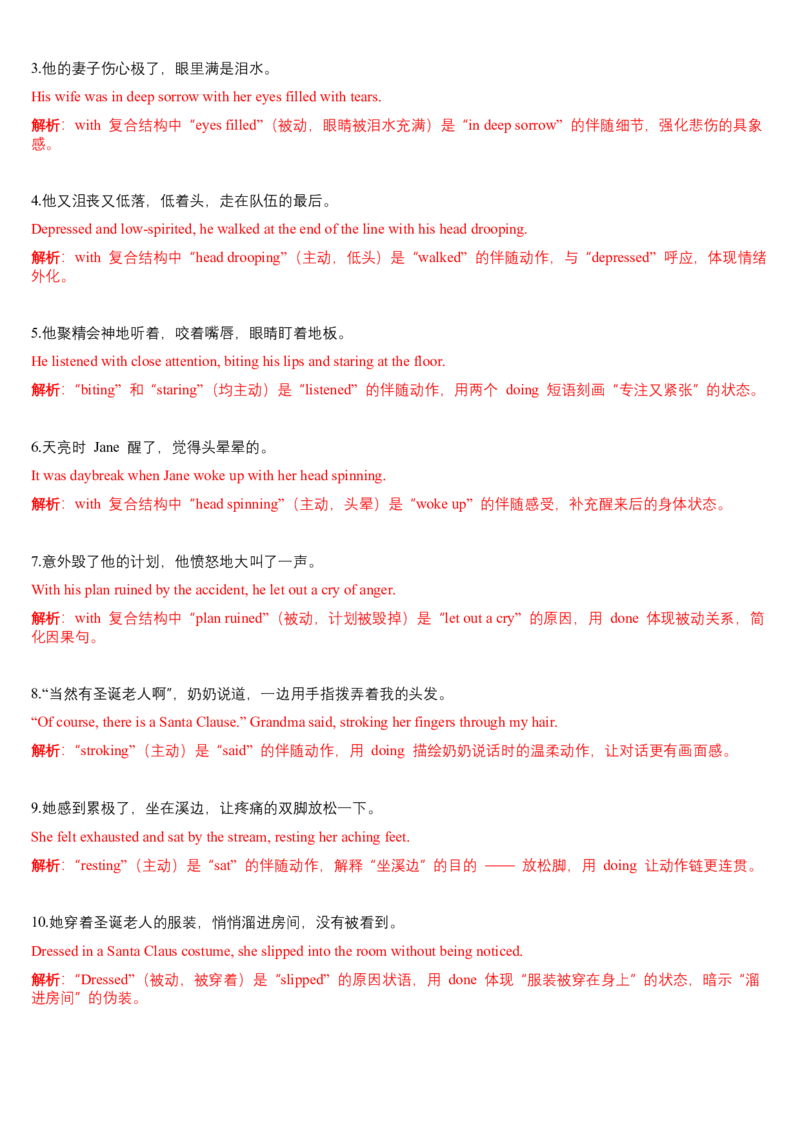
His wife was in deep sorrow with her eyes filled with tears.
解析:with 复合结构中 “eyes filled”(被动,眼睛被泪水充满)是 “in deep sorrow” 的伴随细节,强化悲伤的具象
感。
4.他又沮丧又低落,低着头,走在队伍的最后。
Depressed and low-spirited, he walked at the end of the line with his head drooping.
解析:with 复合结构中 “head drooping”(主动,低头)是 “walked” 的伴随动作,与 “depressed” 呼应,体现情绪
外化。
5.他聚精会神地听着,咬着嘴唇,眼睛盯着地板。
He listened with close attention, biting his lips and staring at the floor.
解析:“biting” 和 “staring”(均主动)是 “listened” 的伴随动作,用两个 doing 短语刻画 专注又紧张 的状态。
“
”
6.天亮时 Jane 醒了,觉得头晕晕的。
It was daybreak when Jane woke up with her head spinning.
解析:with 复合结构中 “head spinning”(主动,头晕)是 “woke up” 的伴随感受,补充醒来后的身体状态。
7.意外毁了他的计划,他愤怒地大叫了一声。
With his plan ruined by the accident, he let out a cry of anger.
解析:with 复合结构中 “plan ruined”(被动,计划被毁掉)是 “let out a cry” 的原因,用 done 体现被动关系,简
化因果句。
8.“当然有圣诞老人啊,奶奶说道,一边用手指拨弄着我的头发。
”
“Of course, there is a Santa Clause.” Grandma said, stroking her fingers through my hair.
解析:“stroking”(主动)是 “said” 的伴随动作,用 doing 描绘奶奶说话时的温柔动作,让对话更有画面感。
9.她感到累极了,坐在溪边,让疼痛的双脚放松一下。
She felt exhausted and sat by the stream, resting her aching feet.
解析:“resting”(主动)是 “sat” 的伴随动作,解释 坐溪边 的目的
 放松脚,用
“
”
——
doing 让动作链更连贯。
10.她穿着圣诞老人的服装,悄悄溜进房间,没有被看到。
Dressed in a Santa Claus costume, she slipped into the room without being noticed.
解析:“Dressed”(被动,被穿着)是 “slipped” 的原因状语,用 done 体现 服装被穿在身上 的状态,暗示 溜
“
”
“
进房间 的伪装。
”
11.Jane 觉得冷得无法忍受,精疲力竭,完全不知道该如何应对这种可怕的情况。
Feeling unbearably cold and extremely exhausted, Jane was quite at a loss as to how to cope with the terrible situation.
解析:“Feeling”(主动)是 “was at a loss” 的原因状语,用 doing 表达 Jane 的主观感受,解释她 不知所措 的
“
”
状态。
12.Ronny 沉浸在强烈的恐惧感中,一句话也说不出来。
Immersed in a strong sense of scare, Ronny couldn’t utter a single word.
解析:“Immersed”(被动,被沉浸)是 “couldn’t utter” 的原因,用 done 体现 被恐惧包围 的状态,强化无助
“
”
感。
13.他屏住呼吸,尽力不发出任何声音,免得让人知道他来了。
He held his breath, trying not to make the slightest sound that might betray his presence.
解析:“trying”(主动)是 “held his breath” 的伴随动作,说明 屏住呼吸 的目的
 不暴露自己,用
“
”
——
doing 让
行为逻辑更清晰。
14.好奇心切,她从河岸边跑开,穿过田野去追兔子。
Burning with curiosity, she ran away from the riverbank and across the field to chase after the rabbit.
解析:“Burning”(主动,燃烧着)是 “ran” 的原因状语,用 doing 将 好奇心 具象化为 燃烧,强化动机的强
“
”
“
”
烈性。
15.他痛苦地喘着气,强迫自己站了起来,迈着缓慢的步子,摇摇晃晃地开始走。
Gasping with pain, he forced himself to his feet and with slow, shaky steps, began to walk.
解析:“Gasping”(主动,喘气)是 “forced himself to stand” 的伴随动作,用 doing 描绘痛苦的生理反应,让场景
更真实。
16.充分利用这次近距离接触,我给这只熊拍了一些照片。(2020 年 7 月浙江卷)
Making the best of this close encounter, I took some pictures of the bear.
解析:“Making the best of”(主动)是 “took pictures” 的原因状语,用 doing 体现 主动利用机会 的行为,让动
“
”
作有目的感。
17.简在黑暗中躺在床上睡不着,她非常想和汤姆以及家人在一起。(2016 年 10 月浙江卷)
Lying awake in the dark, Jane wanted very much to be with Tom and her family.
解析:“Lying awake”(主动)是 “wanted” 的伴随状态,用 doing 描绘简的处境
 黑暗中醒着,强化她 想和
——
“
家人在一起 的渴望。
”
18.他站起来,拥抱父母,微笑着,努力不让情绪影响到自己。(2020 年 1 月浙江卷)
He stood up, hugged his parents, and smiled, trying not to let his emotions get the better of him.
解析:“trying”(主动)是 “smiled” 的伴随动作,用 doing 揭示微笑背后的克制
 努力不被情绪控制,让人物
——
更立体。
19.爬到高处后,她转过身,希望能看到湖泊。(2016 年 10 月浙江卷)
After she had climbed to a high place, she turned around, hoping to see the lake.
解析:“hoping”(主动)是 “turned around” 的目的,用 doing 简化 她转身,她希望 的逻辑,让动作链更流
“
”
畅。
20.母亲离开房间后,孩子们坐在那里想着伯纳德的事情。(2020 年新高考全国
 卷
Ⅰ
)
After their mother left the room, the children sat thinking about Bernard.
解析:“thinking”(主动)是 “sat” 的伴随动作,用 doing 体现 坐着 与 思考 的同步,让场景更安静且有张
“
”
“
”
力。
21.我害羞地环顾四周,只发现一个老人站在角落里。
I looked around shyly, only to find an elderly man standing at the corner.
解析:“only to find”(结果)是 “looked around” 的意外结果,用 doing 的特殊结构 “only to do” 强调 出乎意料
“
”
的发现。
22.既害怕又震惊,贝蒂一句话也说不出来。
Scared and shocked, Betty couldn't say a word.
解析:“Scared and shocked”(形容词作状语)是 “couldn’t say” 的原因,虽非谓语,但与 done 的被动情绪一致,
强化 吓傻 的状态。
“
”
23.他和安妮于 1960 年结婚,他们没有孩子。
Married in 1960, he and Anne were childless.
解析:“Married”(done,被动)是 “were childless” 的背景,用 done 体现 被婚姻绑定 的状态,补充人物关系
“
”
信息。
24.受到这些话的启发,他开始脱颖而出,并在整个学校生活中继续这门课程。
Inspired by the words, he began to excel and continued this course throughout his school life.
解析:“Inspired”(done,被动)是 “began to excel” 的原因,用 done 体现 被话语启发 的被动关系,强化外部
“
”
影响。
25.没有男孩住的房子如同一座坟墓一般安静。(2020 年 1 月浙江卷)
The house seemed quiet as a tomb without the boy living there.
解析:with 复合结构的否定式 “without the boy living”(没有男孩居住)是 “quiet” 的原因,用 doing 体现男孩
居住 的主动状态,反衬房子的寂静。
“
”
26.除了我们之外,没有其他人离开这个房子,这个地方可以找些乐子。(2020 年 1 月浙江卷)
Without anybody left in the house but us, this place could use a bit of fun.
解析:“without anybody left”(没有其他人被留下)中 “left” 是 done,体现 人被留下 的被动,用
“
”
with 的否定
式说明 找乐子 的前提。
“
”
27.他用一只手扶着栏杆,向狼喷了喷雾。(2017 年 6 月浙江卷)
With one hand on the bars, he fired the spray at the wolf.
解析:with 复合结构 “with one hand on the bars”(手在栏杆上)是 “fired” 的伴随方式,用介词短语描绘动作细
节,让场景更真实。
28.一切准备就绪,伯纳德开始了他的新业务。(2020 年新高考全国
 卷
Ⅰ
)
With everything ready, Bernard started out on his new business.
解析:with 复合结构 “with everything ready”(一切准备好)是 “started” 的原因,用形容词 “ready” 作宾补,简化
准备好后开始 的逻辑。
“
”
知识点5  倒装结构
语法逻辑:打破 主语
“
+ 谓语 的常规语序,通过
”
全部倒装(强调地点 / 方位)或部分倒装(强调情绪 / 时
间),让关键信息 跳出来,制造画面冲击或情感张力。
“
”
公式:
1.全部倒装:地点/方位短语 + 谓语 + 主语(主语为名词)
2.部分倒装(so...that):So + 形容词/副词 + 助动词 + 主语 + 谓语 + that...
3.部分倒装(not until):Not until + 时间/动作 + 助动词 + 主语 + 谓语
4.such 开头:Such + be + 主语 + 同位语
1.黑暗中传来一个他从来没有听过的声音。
Out of the darkness came a voice he had never heard before.
解析:全部倒装,“Out of the darkness”(地点)置于句首,谓语 “came” 提前,强调 黑暗中突然出现声音 的神
“
”
秘感,比 “a voice came...” 更有冲击力。
2.我震惊得睁大眼睛,目瞪口呆。
So shocked was I that I was dumbfounded with my eyes wide open.
解析:部分倒装(so...that),“So shocked” 置于句首,助动词 “was” 提前,强调 震惊 的程度,让情绪更强
“
”
烈。
3.这就是 有志者事竟成 这个真理。
“
”
Such is the truth that where there is a will, there is a way.
解析:such 开头的倒装,“Such” 置于句首,be 动词 “is” 提前,强调 真理 的重要性,让名言更有分量。
“
”
4.他非常绝望,借酒浇愁。
So desperate was he that he drowned his sadness.
解析:部分倒装(so...that),“So desperate” 前置,助动词 “was” 提前,突出 绝望 的程度,解释 借酒浇愁
“
”
“
”
的动机。
5.沉默之后,响起一阵掌声。
A storm of applause came after silence.
解析:主语 “a storm of applause” 后置(类倒装),强调 掌声 在 沉默后 突然爆发的对比感,比
“
”
“
”
“applause
came...” 更有戏剧性。
6.直到失去所有的财产,他才意识到自己被骗了。
It was not until he had lost all his possessions that he realized that he was cheated.
解析:强调句中的倒装逻辑,“not until” 引导的时间被突出,体现 失去一切后才醒悟 的迟滞感,强化悔恨情
“
”
绪。
7.他的脑中闪过一位英雄战士的形象。
Through his mind flashed the image of a heroic fighter.
解析:全部倒装,“Through his mind”(方位)置于句首,谓语 “flashed” 提前,强调 形象在脑中快速闪过 的动
“
”
态感,比 “the image flashed...” 更生动。
8.直到那只兔子完全消失在我们的视线中,我们才不追了。
Not until the rabbit got completely out of sight did we stop chasing after it.
解析:部分倒装(not until),“Not until...” 置于句首,助动词 “did” 提前,强调 兔子消失后才停止追赶 的时间
“
”
点,突出追赶的执着。
9.站在前门的是 Jane 的丈夫,他在找不到 Jane 的时候非常焦急。
At the front door stood Jane’s husband who suffered great anxiety when she was nowhere to be found.
解析:全部倒装,“At the front door”(地点)置于句首,谓语 “stood” 提前,强调 丈夫出现在前门 的场景,让
“
”
重逢的画面更突出。
10.她心事太重,因此没听到妈妈的问题。
So busily engaged was her mind that she failed to hear her mother’s question.
解析:部分倒装(so...that),“So busily engaged” 前置,助动词 “was” 提前,强调 心事重 的状态,解释 没听
“
”
“
到问题 的原因。
”
11.他的僵硬的脸上有一种恐惧和仇恨的表情。
On his rigid face there stood an expression of horror and hatred.
解析:全部倒装,“On his rigid face”(地点)置于句首,谓语 “stood” 提前,将 表情 具象化为 站在脸上,强
“
”
“
”
化狰狞感。
12.直到那时 Megan 才说出了困扰她一整天的事。
Not until then did Megan poured out what had been disturbing her the whole day.
解析:部分倒装(not until),“Not until then” 前置,助动词 “did” 提前,强调 直到那时才倾诉 的迟滞,暗示
“
”
情绪积压已久。
13.他的吼叫实在太猛烈、太可怕,吓得小猫从他身旁跳开了。
So fierce and dreadful was his roar that the cat jumped away from him in alarm.
解析:部分倒装(so...that),“So fierce and dreadful” 前置,助动词 “was” 提前,突出 吼叫 的恐怖程度,解释
“
”
小猫跳开的原因。
14.在她的前面是另一条长长的通道,她正好看到兔子匆匆向远处跑去。
In front of her was another long passage and she just managed to catch sight of the rabbit hurrying down it.
解析:全部倒装,“In front of her”(方位)置于句首,谓语 “was” 提前,强调 通道突然出现 的未知感,推动情
“
”
节发展。
15.这就是成功的秘诀,多一点点努力,多一点点决心,你就能创造出多一点点的奇迹。
Such is the key to success---a little bit more efforts and a little bit more determination will create a little bit more miracle.
解析:such 开头的倒装,“Such” 置于句首,be 动词 “is” 提前,强调 成功秘诀 的重要性,让观点更有说服
“
”
力。
16.她一生中从未尝过比这更好的味道。(2016 年 10 月浙江卷)
Never in her life had she tasted anything better.
解析:部分倒装(否定词前置),“Never in her life” 置于句首,助动词 “had” 提前,强调 从未有过的美味,突
“
”
出体验的独特性。
17.直到那时,我才意识到,尽管乔在做家务方面遇到了麻烦,但他还是懂得如何照顾我。
Only then did I realize Joe actually understood how to take care of me despite his trouble with the housework.
解析:部分倒装(only then),“Only then” 置于句首,助动词 “did” 提前,强调 直到那时才醒悟 的转折,突出
“
”
对乔的重新认识。
18.曾经有一位出色的老人,他热爱一切:动物、蜘蛛、昆虫和各种各样的生物。
There was once a wonderful old man who loved everything: animals, spiders, insects and all sorts of living things.
解析:there be 句型的倒装,“There was” 置于句首,强调 存在这样一位老人,引出人物时更有故事感。
“
”
19.我几乎没有意识到那天会发生一些异常的事情。
Little did I realize something different would happen that day.
解析:部分倒装(否定词前置),“Little” 置于句首,助动词 “did” 提前,强调 未意识到 的程度,为后续 异
“
”
“
常事件 铺垫悬念。
”
知识点6  并列句
语法逻辑:用连词(and, but, so, while 等)串联两个分句,通过并列、转折、因果、对比等关系,让情节有 节奏
“
感,避免单句的单调。
”
公式:分句1 + 连词(表关系)+ 分句2
1.我几乎每天都在学校遇见爱米丽,但从未与她交谈。
I met Emily in school almost every day and yet I never talked to her.
解析:“and yet” 表转折,连接 每天遇见 与 从未交谈,形成对比,暗示 熟悉又陌生 的关系,比两个单句
“
”
“
”
“
”
更有张力。
2.我从未有机会知道那个好心人的名字,但我永远会记得他出人意料的好意。
I never got an opportunity to know that kind man’s name, but I would always remember his unexpected kindness.
解析:“but” 表转折,连接 不知名字 与 记得善意,突出 善意比名字更重要,传递温暖感。
“
”
“
”
“
”
3.医院工作人员太忙了,没时间照顾我,所以我打电话给朋友告诉他这次事故。
The hospital staff was too busy to attend to me, so I called a friend to tell him about the accident.
解析:“so” 表因果,连接 工作人员忙 与 打电话给朋友,让行为逻辑清晰,情节更连贯。
“
”
“
”
4.早餐后,我去帮蒂娜姨妈喂鸡,而我的爸爸和保罗叔叔一起去放羊吃草。(2018 年 6 月浙江卷)
After breakfast, I went to help Aunt Tina feed the chickens, while my dad went with Uncle Paul to take the sheep out to
graze.
解析:“while” 表对比,连接 我喂鸡 与 爸爸放羊,同时展现不同人物的行动,让场景更丰满。
“
”
“
”
知识点7  定语从句
语法逻辑:用 who/which/that 等引导从句,给名词(先行词)添加背景、特征或动作,让人物 / 事物 自带故
“
事,避免描述干瘪。
”
公式:先行词 + 定语从句(who/which/that + 修饰内容)
1.饥饿的熊闻着味道来到我们的营地,营地被高高的铁丝网包围着。(2020 年 7 月浙江卷)
The hungry bear followed his nose to our camp, which was surrounded by a high wire fence.
解析:“which” 指代 “camp”,从句补充 营地被铁丝网包围 的特征,既解释熊难以进入的原因,又让场景更具
“
”
体。
2.有一位男子生病在床,他的妻子照顾他,不能出去工作,还有他们的小孩子。(2020 年新高考全国
 卷
Ⅰ
)
There was a man sick in bed, his wife, who took care of him and could not go out to work, and their little boy.
解析:“who” 指代 “his wife”,从句补充妻子 照顾丈夫不能工作 的状态,解释家庭困境,让人物关系更清晰。
“
”
3.他站起来,喊道:我有一个好主意!我有一个我们都可以帮助完成的解决方案。
“
”(2020 年新高考全国
 卷
Ⅰ
)
He sprang to his feet and cried, “I have a great idea! I have a solution that we can all help accomplish.”
解析:“that” 指代 “solution”,从句说明 解决方案需要大家帮忙完成,让 主意 更具体,有可行性。
“
”
“
”
4.他们开车把儿子送到离城里好几个小时车程的大学,他不久将要在那儿生活和学习。(2020 年 1 月浙江卷)
They had driven their son several hours out of town to the university where he would soon be living and studying.
解析:“where” 指代 “university”,从句补充 儿子将在大学生活学习 的信息,解释送儿子去大学的目的,逻辑更
“
”
完整。
知识点8  状语从句
语法逻辑:用连词(as, because, so that 等)引导从句,明确动作的时间、原因、条件、目的等,让情节 有因有
“
果,有始有终,避免逻辑断裂。
”
公式:
1.时间状语从句:As/When/By the time + 从句(表时间)+ 主句
2.原因状语从句:主句 + because/as + 从句(表原因)
3.条件状语从句:主句 + as long as/if + 从句(表条件)
4.目的状语从句:主句 + so that + 从句(表目的)
5.让步状语从句:Though/While + 从句(表让步)+ 主句
1.当他们靠近时,他们意识到那只狗是一头狼。(2017 年 6 月浙江卷) (时间状语从句)
As they got closer, they realized that the dog was a wolf.
解析:“As” 引导时间从句,说明 靠近 与 意识到是狼 的同步性,展现 从误解到真相 的过程,制造紧张
“
”
“
”
“
”
感。
2.由于经济衰退,该镇有些人失业了。(2020 年新高考全国
 卷
Ⅰ
) (原因状语从句)
As the economy was in decline, some people in the town had lost their jobs.
解析:“As” 引导原因从句,解释 失业 的背景
 经济衰退,让社会现象有依据,逻辑更严谨。
“
”
——
3.高中毕业后,詹妮弗上了当地一所技术学院,靠打工来支付学费,因为没有多余的钱用于大学教育。(2020 年新
高考全国
 卷
Ⅰ
) (原因状语从句)
After high school, Jennifer attended a local technical college, working to pay her tuition, because there was no extra money
set aside for a college education.
解析:“because” 引导原因从句,说明 打工付学费 的原因
 没钱,让人物行为更合理,凸显坚韧。
“
”
——
4.我问保罗叔叔我能不能骑马,他说可以,只要我爸爸和我一起去。(2018 年 6 月浙江卷) (条件状语从句)
I asked Uncle Paul if I could take a horse ride, and he said yes, as long as my dad went with me.
解析:“as long as” 引导条件从句,明确 可以骑马 的前提
 爸爸陪同,体现大人的谨慎,让对话更真实。
“
”
——
5.“晚饭不要迟到,顺着道儿走,这样你们就不会迷路! 保罗叔叔喊道。
”
(2018 年 6 月浙江卷) (目的状语从句)
“Don't be late for supper, and keep to the track so that you don't get lost!” Uncle Paul cried.
解析:“so that” 引导目的从句,说明 顺着道儿走 的目的
 不迷路,让叮嘱有明确指向,场景更生活化。
“
”
——
6.当他们到达湖边时,简非常生气,她对汤姆说: “我要为我们找到一个更好的露营地”, 然后就走了。(2016 年 10
月浙江卷) (时间状语从句 + 结果状语从句)
By the time they reached the lake, Jane was so angry that she said to Tom, “I'm going to find a better spot for us to camp”
and walked away.
解析:“By the time” 引导时间从句,“so...that” 引导结果从句,串联 到达湖边
生气
离开 的连锁反应,情
“
”→“
”→“
”
节更紧凑。
7.当夜幕降临时,简累得不得不停下来过夜。(2016 年 10 月浙江卷) (时间状语从句 + 结果状语从句)
As night was beginning to fall, Jane was so tired that she had to stop for the night.
解析:“As” 引导时间从句,“so...that” 引导结果从句,说明 夜幕降临 时 累到必须停下,体现旅程的艰辛。
“
”
“
”
8.尽管这是我生活中褪色的记忆之一,但有时我会清晰地记得他的脸,尤其是他的眼睛。(让步状语从句)
Though it is one of the faded memories of my life, there are times when I remember his face clearly, especially his eyes.
解析:“Though” 引导让步从句,对比 记忆褪色 与 清晰记得脸,突出 他 的重要性,情感更深刻。
“
”
“
”
“
”
9.虽然这次旅行大部分时间都很有趣,但是现在我在那里感到非常孤独沮丧。(让步状语从句)
While the trip had been fun for the most part, now that I was there I was feeling very isolated and depressed.
解析:“While” 引导让步从句,对比 旅行大部分有趣 与 现在孤独,展现情绪转折,让心理变化更真实。
“
”
“
”
知识点9  名词性从句
语法逻辑:用 that/if/what 等引导从句,在句中充当主语、宾语、表语、同位语,承载复杂信息(观点、事实、疑
问等),让表达更精准、简洁。
公式:
1.宾语从句:主句动词 + that/if/what + 从句
2.表语从句:主语 + be + that/as if + 从句
3.主语从句:What/That + 从句 + 谓语(或 It + 谓语 + that + 从句)
4.同位语从句:抽象名词 + that + 从句(解释名词)
1.我开始与她交谈,惊讶地发现我们有很多共同之处。(宾语从句)
I began to talk with her and was surprised to find that we had much in common.
解析:“that” 引导宾语从句,作 “find” 的宾语,说明 惊讶的内容
 有很多共同点,让发现更具体。
“
”——
2.我想知道无论后果如何,父母是否应该始终说实话。(2020 年全国
 卷
Ⅰ
) (宾语从句)
I wonder if parents should always tell the truth no matter the consequences.
解析:“if” 引导宾语从句,作 “wonder” 的宾语,表达疑问
 父母是否该始终说实话,让思考更明确。
——
3.看起来天要下雪了。(表语从句)
It seems that/as if it is going to snow.
解析:“that/as if” 引导表语从句,说明 “seems” 的内容
 天要下雪,用从句表达推测,比
——
“it seems snowy” 更
生动。
4.然而,在餐桌上迎接我的是一个微波炉包装。(主语从句)
However, what greeted me at the table was a microwave package.
解析:“what” 引导主语从句,指代 迎接我的东西,作句子主语,强调 微波炉包装 的意外性,比
“
”
“
”
“the thing
that greeted me...” 更简洁。
5.她突然想起可能在她离开家时没把门关上。(同位语从句)
The thought came to her that maybe she had left the door open when she left home.
解析:“that” 引导同位语从句,解释 “the thought”(想法)的内容
 没关门,让 突然想起 的内容更清晰。
——
“
”
知识点10  强调结构
语法逻辑:用 “it is/was...that...” 突出句中的主语、宾语、状语,让关键信息成为焦点,增强语气和感染力。
公式:It is/was + 被强调部分(主语/宾语/状语)+ that + 句子其他部分
1.正是它眼睛上的黄色斑点让我意识到它的存在。
It was the yellow spots on its eyes that made me realize its presence.
解析:强调 “the yellow spots”(黄色斑点),突出 斑点 是 意识到它存在 的关键,让细节更有辨识度。
“
”
“
”
2.然后亚瑟意识到也许那一刻正是他可以解决他的问题。
Then Arthur realized maybe it was he that could solve his problem at that very moment.
解析:强调 “he”(他自己),突出 亚瑟才是解决问题的关键,增强人物的主动性。
“
”
3.直到她到了医院才明白所发生的一切。
It was when she got in the hospital that she understood everything that had happened.
解析:强调 “when she got in the hospital”(到医院时),突出 到医院 这个时间点的重要性,解释 明白一切
“
”
“
”
的契机。
4.正是这些障碍和困难使我们变得强大,并为生活中的更大挑战做好准备。
It is these obstacles and difficulties that make us strong and get prepared for the greater challenges in our life.
解析:强调 “these obstacles and difficulties”(障碍和困难),突出 困难 对成长的意义,让观点更有力。
“
”
5.帮助动物园管理员捉住小偷的不是勇气,而是智慧。
It’s not the courage but the wisdom that helps the zoo keeper catch the thieves.
解析:强调 “wisdom”(智慧),对比 勇气,突出 智慧 是捉小偷的关键,让结论更鲜明。
“
”
“
”
知识点11  虚拟语气
语法逻辑:通过谓语动词的特殊形式(如过去式、had done、would do 等),表达未实现的愿望、假设的情况或建
议,放大情绪(遗憾、渴望、庆幸等),让情感更强烈。
公式:
1.建议 / 命令:主语 + suggest/order + (that) 主语 + (should) do
2.与现在 / 未来事实相反:If + 主语 + did, 主语 + would do
3.与过去事实相反:If only + 主语 + had done 或 Without + 名词, 主语 + would have done
4.愿望:主语 + wish + (that) 主语 + did/had done
1.营地管理者建议我用胡椒喷雾。(2020 年 7 月浙江卷)
The camp manager suggested I use pepper spray.
解析:suggest 后的宾语从句用虚拟语气(should use,should 可省),表达 建议,比
“
”
“suggested me to use” 更
正式、准确。
2.如果一个陌生的家庭出现在家门口,妈妈会很高兴的。(2017 年 11 月浙江卷)
If a strange family showed up on her front doorsteps, Mom would have been delighted.
解析:与过去事实相反的假设(实际未出现),用 “showed up” 和 “would have been”,表达对 妈妈会高兴 的推
“
”
测,带遗憾感。
3.要是她没有把手机忘在汤姆的包里就好了。(2016 年 10 月浙江卷)
If only she had not left her mobile phone in that bag with Tom.
解析:if only 引导与过去事实相反的虚拟(实际忘带了),用 “had not left”,强烈表达 遗憾 的情绪。
“
”
4.“我希望我们能帮助他赚钱, 克莱拉说。他的家人遭受着巨大的痛苦。
”
“
” (2020 年新高考全国
 卷
Ⅰ
)
“I wish we could help him to earn money,” said Clara. “His family is suffering so much. ”
解析:wish 后接与现在事实相反的虚拟(实际无法帮助),用 “could help”,表达 渴望帮助 的强烈愿望。
“
”
5.如果没有他的及时帮助,我肯定会误了飞机。
Without his timely help, I would have certainly missed my plane.
解析:without 引导与过去事实相反的虚拟(实际得到了帮助),用 “would have missed”,强调 及时帮助 的重
“
”
要性,带庆幸感。
知识点12  八大高分结尾句式
高分句式 1:强调句
结构:It is + 被强调部分 + that + 其他部分
1.正是这些障碍和困难使我们变得强大,并为生活中的更大挑战做好准备。
It is these obstacles and difficulties that make us strong and get prepared for the greater challenges in our life. (个人成长类)
2.正是疼爱和关怀温暖了世界,它触动了每个人的心。
It is love and care that warm the world, which touches everyone's heart.(助人为乐类)
3.正是理解、关心和相互之间良好沟通铸就和谐的社区 / 家庭。
It is understanding, caring and communicating with each other that makes for a harmonious community/family. (亲情关
爱类)
4.每次面对挑战,我想放弃时,是家人的支持给了我克服困难的勇气。
Every time I face challenges and want to give up, it is the support of my family that gives me the courage to overcome the
difficulties.(亲情关爱类)
5.正是这次独特的经历使我理解了无论我们面临什么困难,我们都不应该失去信心或放弃。
It was this unique experience that made me realize that no matter what difficulties we are facing, we should not lose heart or
give up.(遇险脱困类、个人成长类)
高分句式 2:经验教训式
结构:This unforgettable experience taught me a valuable lesson that... From then on, I became/grew...
1.这段难忘的经历使我学到了一个道理:只要我们不放弃希望,任何困境都有出路。从那天起,我变得更聪明,更
自信了。(个人成长类 / 脱困类)
The unforgettable experience taught me a valuable lesson that there’s always a way out as long as we never give up our
hope. From that day on, I grew wiser and more confident.
2.这段难忘的经历使我学到了一个道理:我们遇到困难时一定要有积极的态度。从那天起,我变得更勇敢,更乐观
了。(个人成长类)
This unforgettable experience taught me a valuable lesson that we should have a positive attitude when facing difficulties.
From that day on, I grew braver and more optimistic.
3.这段难忘的经历给她上了宝贵的一课:我们遇到危险时一定要保持冷静,并设法使自己摆脱困境。从那天起,
Marie 变得更强大,更明智了。
This unforgettable experience taught her a valuable lesson that we should stay calm when we are in danger and help
ourselves out. From that day on, Marie grew stronger and wiser. (遇险脱困类)
4.这段难忘的经历给我上了宝贵的一课:每个人都应该学点急救知识,因为这有助于你迅速对紧急情况作出反应。
在紧急情况下每一秒都很重要。(遇险脱困类)
This unforgettable experience taught me a valuable lesson that everyone should learn first aid because it will help you
respond quickly to emergencies. Every second counts in an emergency.
5.这段难忘的经历使她学到了一个道理:一个小小的善举也有重大的影响。从那时起,她像这对老夫妇一样,下定
决心去帮助需要帮助的人。只有这样,将来才能有越来越多的人互相帮助。
This unforgettable experience taught her a valuable lesson that a small act of kindness can make a big difference. From then
on, she made up her mind to help people in need, just like the old couple. Only in this way can more and more people help
each other in the future. (助人为乐类)
高分句式 3:Only then 倒装句
结构:Only then did sb. realize ...
1.直到那时,他才意识到原谅和爱 / 善意 / 友谊的重要性。
Only then did he realize the importance of forgiveness and love/kindness/friendship.
2.直到那时我才意识到真诚和诚实在友谊中的价值。
Only then did I realize the value of sincerity and honesty in friendship.
3.直到那时我才意识到生命中最重要的事情就是和家人在一起。
Only then did I realize the most important thing in life is to spend time with family.
4.直到那时他才意识到一次小小的善举对另一个人来说意义重大,甚至能照亮别人的生活。
Only then did he realize a small act of kindness could mean so much to another person and could even brighten someone's
life.
高分句式 4:感叹句
结构:What a + adj + experience!
1.多么难忘的 / 有趣的 / 刺激的 经历!
What an unforgettable/interesting/exciting experience!
2.多么 搞笑的 / 感人的 / 惊险的 经历!
What a funny/touching/thrilling experience!
3.多么难忘的经历啊!事实证明,只要我们保持冷静 / 不放弃希望 / 团结一致,就总有办法摆脱困境。
What an unforgettable experience! It turns out that there’s always a way out of any dilemma as long as we stay calm /never
give up hope / unite together.
4.多么难忘的经历啊!事实证明,只要我们不停止努力 / 以顽强的毅力坚持下去,就一定能实现梦想。
What an unforgettable experience! It turns out that our dreams will definitely come true as long as we never stop trying /
hold on with strong perseverance.
5.多么难忘的经历啊!事实证明,要想更上一层楼,唯一的途径就是艰苦奋斗,不屈不挠。
What an unforgettable experience! It turns out that the only way to improve is through hard work and dogged perseverance.
高分句式 5:提醒式
结构:The experience serves as a reminder that.....(这段经历提醒着我们
)
……
1.这段经历提醒我们在面对困难时永远不要失去信心。
The experience serves as a reminder that we should never lose heart when faced with difficulties.
2.这段经历提醒你现在追求你的梦想永远不会太晚。
The experience serves as a reminder that it is never too late to pursue your dreams.
高分句式 6:顿悟式
结构:It suddenly dawned on/struck/occurred to /hit sb that...(某人突然明白)
1.我突然意识到,正是勇敢帮助我们克服路途中的一切困难。
It suddenly dawned on me that it was bravery that helps us conquer whatever difficulty came in the way.
高分句式 7:画面定格
1.时间似乎停下来见证这动人的一刻。
Time seemed to pause/stop to witness the touching moment.
2.他们的笑声使房间充满了愉快的气氛。
Their laughter filled the room with a happy atmosphere.
3.尽管外面寒风凛冽,他们的家却充满了爱和团圆的温暖
Despite the chill wind outside, their home was filled with the warmth of love and reunion.
4.沐浴在灿烂的阳光下,一家人幸福地拥抱在一起。
Bathing in the brilliant sunlight, the family hugged in happiness.
高分句式 8:比喻句
1.我明白了一个忠实的朋友抵得上一万个亲戚。
It dawned on me that one loyal friend is worth ten thousand relatives.
2.那份亲情像一抹清茶,沁人心脾,温暖人心。
That affection towards our family is like a touch of green tea, refreshing and heartwarming.
3.善良就像一缕阳光,可以照亮我们的生活。
Kindness is like a ray of sunlight, which can light up our life.
4.没有爱的家庭就像没有灵魂的身体。
A home without love is no more than a body without soul.
5.生活是一盒巧克力,你永远不知道下一步你会得到。
Life is a box of chocolate. You never know what you will get.
6.朋友之于我犹如水之于鱼。
A friend is to me what water is to fish.
7.读书之于心灵,犹如食物之于身体。
Reading is to the mind what food is to the body.