专题 04 阅读理解记叙文之家庭,朋友与周围的人 9 篇+人与动植物 5
篇+著名人物 8 篇(模考好题 22 篇)
一、概述
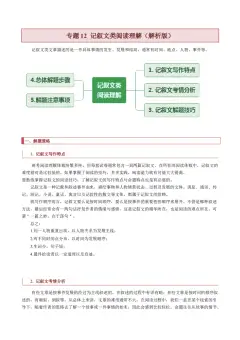
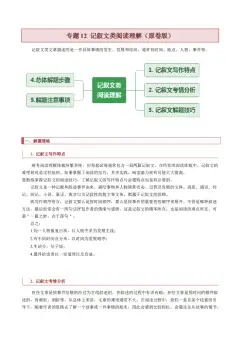
记叙文的命题形式常有细节理解、词义猜测、主旨大意、推理判断等题型。除了推理判断或词义猜测
题,记叙文的命题顺序一般都会按照文章的脉络和故事发展的顺序层层推进。每年的高考题中,特别是记
叙文的阅读题,主要是围绕记叙文六要素进行命题,以考查细节为主,但都会出现一至两道词义猜测题。
二、技巧点拨
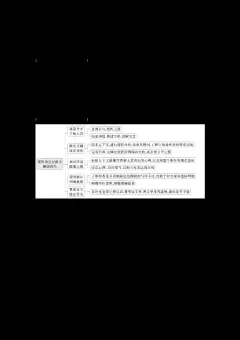
1、对于细节信息题,要抓住整体篇章,看懂主题。利用内容间的因果关系,梳理时间空间顺序,对
所考查细节进行剖析了解,确定主题,将零碎的细节组成一个有机的整体。
2、对于词句猜测题,要借助篇章中的词、短语或句子的理解来充分理解题意,遇到陌生词语尽量先
避过,遵循先略读再通读的原则,进行仔细推敲。尤其要注重对语境的把握。
3、对于主旨大意题,要注意主题句和主题段,绝大多数的篇章采用总分总结构,要注意段与段之间
的联系,注意隐藏的中心思想,研究文章结构,把握句与句之间的关系,注重逻辑关系,从整体把握文章
的脉络。
模拟演练
01人与自我--家庭,朋友与周围的人
Passage 1
(2024·湖南怀化·一模)Due to the fact that the average life expectancy in Ghana is 64 years old, and the most
common causes of death are largely treatable conditions, such as malaria, stroke, and respiratory infections.
Boateng, growing up in a small village in southern Ghana/struggling to access basic health care, felt an urgent call
to help and decided he would make it his life’s mission to bring health care to remote communities in Ghana.
Boateng worked hard in school, getting a scholarship to study biology at Cornell University in the US, and
ultimately earned his master’s in Healthcare Administration. Later he started his nonprofit, OKB Hope Foundation,
and converted a van into a mobile doctor’s office called the Hope Health Van to bring health care directly to those
in need in 2021.
A few times a week, the mobile clinic and medical team travel long distances to remote communities in
Ghana and provide free routine medical care. On each trip, Boateng’s team consists of a nurse, a physician’s
assistant, a doctor, and an operation assistant. In the van, they can run basic labs like bloodwork and urinalysis as
well as prescribe and provide medications. “It’s like a one-stop shop for people,” said Boateng, adding that most of
the people they see have one health issue or another.
Since its launch, Boateng says the Hope Health Van has served more than 4, 000 Ghanaians across more than
45 rural communities who otherwise don’t have easily accessible medical care. To supplement the mobile clinic,
Boateng’s organization has also trained 20 volunteers to serve as local health advocates. They check people’s vitals
and provide the medical team with timely data for assessing how to move forward with care and treatment,
especially for those whose health is at risk.
In the future, Boateng hopes to expand to provide more consistent and high-quality medical care not only to
those living in remote areas of Ghana but in other countries as well. “I believe that our model can be replicated insub-Saharan Africa,” he said.
1. What inspired Boateng to set his life goal?
A. He wanted to get a scholarship.
B. Many locals died of deadly diseases.
C. The birthplace of him was small and poor.
D. Basic health care was inaccessible for locals.
2. What is paragraph 3 mainly about?
A. How Boateng’s team functions. B. Why Boateng’s team was founded.
C. What Boateng’s team has achieved. D. Where Boateng’s team has travelled.
3. What is Boateng’s attitude to his team in the future?
A. Ambiguous. B. Ambitious. C. Indifferent. D. Doubtful.
4. What is the best title for the text?
A. A van bringing medical care to thousands
B. A country lacking basic health care
C. Efforts to provide people with medications
D. Mobile vans travelling through Ghana
Passage 2
(2024福建高三上·开学考试)Back in 1958, I was crazy about the Norfolk and Western 746. The smooth
bullet-nose engine with its orange and yellow lines and shiny streamline d black tender(车厢) seemed to have cast a
spell on me.
Together the engine and tender measured a little shy of 2 feet—enormous by the toy train standards of the
day. Even better, the 746 had a working headlight and smoker, and its tender sang high.
Unfortunately, the amazing 746 also had an amazing price—$50, equal to about $450 today. That was far
more than my grandfather could afford. Instead, I had to be content with his little Lionel plastic, which was SIX
INCHES shorter than the 746 and had no headlight, no smoker or no sound! But that was the best that my
grandfather could give me at that time.
Years passed, and I was in my 30s. Superior sound systems and computer controls dominated toy trains. I
never gave a look. My interest in toy trains, I firmly believed, had faded, so did my admiration for the 746, since
my grandfather was not with me. The 746 was never called to mind. On an ordinary day, however, I happened to
see the 746 outside the window of a train show. Just one-look, I could not look away. Childhood memories that I
tried to hide in the depths of my heart raced through my mind, happy or sad.
That day I took the 746 home and placed it in the center of the room, and let my childhood dream sing its
way around me. Smoke rose out from the engine and the soft song sounded from its tender. It seemed as if I could
see the soft light in grandfather’s eyes and hear his cheerful laughter.
1. Which best describes the 746 in the author’s eyes?
A. Its measurement was at a disadvantage.
B. Its price rocketed from $50 to $450.
C. Its beauty had a special appeal.
D. It was the largest train in 1958.2. How did the author feel when receiving his little Lionel plastic?
A. Visibly relieved. B. Slightly discontented.
C. Really delighted. D. Terribly ashamed.
3. What happened to the author in his 30s?
A. He left his grandfather alone.
B. He didn’t favor the 746 at all.
C. He admired advanced toy trains.
D. He attempted not to recall the past.
4. Which of the following is a suitable title for the text?
A. The 746: A Perfect Gift from My Grandfather
B. Toy Trains: Memories of A Generation
C. The 746: Childhood Memories of Love
D. Toy Trains: Childhood in History
Passage 3
(2024·河北沧州·一模)When Sourabh Jain first became a father to his daughter, he struggled with bonding
with her in the beginning. That’s when he realized that games and books are interactive and provide an opportunity
to spend hours with her. Thus he began the hunt for games and toys that not only helped him bond with his
daughter but also contributed to her cognitive(认知的) development.
During this search, he realized that not only are these toys and games hard to find, but they can also burn a
hole in one’s pocket. Another realization was that there is always some amount of plastic in the toys and it is
harmful to the environment and the little ones.
While he expected to give his daughter the world, he also wanted to leave behind a cleaner, greener, and more
sustainable world for her. Today, he owns The EleFant—a toy rental company, or in Sourabh’s words, “a labor of
love”.
Currently, the company has a customer base of more than 250 subscribers with over 2,000 downloads of the
application per day. They also have collaborations with 70 toy companies where they source their toys.
Among these 250 subscribers is Rahul Bhauwala who rents toys for his 6-year-old son. “I am a working
professional and I hardly get any time to go out and spend hours looking for and buying toys. I could use that
precious time to play with my child instead. This is why I love using The EleFant app. They have a wide range of
toys which are categorized by age group. The products are very well-packaged and my son loved opening them as it
looked like a present to him,” he says.
As for the future, Sourabh says, “Our intention was not to make it an expensive and exclusive service(专属服
务). Instead, we aimed to provide an opportunity for everyone to give their children everything in a sustainable
manner. The value is kept in this way, emphasizing inclusivity and accessibility for all.”
1. What did Sourabh find when searching for toys for his daughter?
A. Pockets often get damaged by toys. B. Eco-friendly toys are hard to find.
C. Toys could bond him with his daughter. D. Toys do good to cognitive development.
2. What aspect of The EleFant attracted Rahul Bhauwala most?
A. Its convenience. B. Its delivery service.C. Its popularity. D. Its cheap rental price.
3. What will Sourabh focus on?
A. Producing more toys. B. Expanding his company.
C. Making his service more accessible. D. Donating toys to poor families.
4. Which words best describe Sourabh?
A. Successful and humorous. B. Generous and modest.
C. Talented and creative. D. Responsible and business-minded.
Passage 4
(2024·山东·模拟预测)My grandmother knitted Christmas stockings for each of her five children in the 1960s.
Then, she made them for us, her grandchildren, too. When our grandmother died unexpectedly in 2017, it felt like
the end of a tradition of handmade personalized Christmas stockings and my cousins’ chances of joining us with
stockings on the fireplace were gone.
Grandma was an amazing woman, but she was hard to feel really close to when I was a child. She smiled
softly when the grandkids came noisily through the door to disturb her shy, quiet peace. And instead of covering us
with kisses like other grandmothers, she always had something ready for us. It took me a while to understand that
the things she made meant the same as “I love you” or “I missed you”. It wasn’t that she was cold — not at all.
Sometimes people as brilliant as Grandma have a hard time relating to others.
While we grew up, she was our personal Google. When I was in college, she asked if I studied the Romantic
poets or how familiar I was with Aristotle. I tried my best to keep up, but there was a lot I never knew about my
grandmother until she passed away. I knew and loved that every room and hallway in her house had a bookcase,
and these were filled with books on every subject in several languages.
This year, I began to learn to make the Christmas stocking. At first, I considered it as a nice way to keep apart
of Christmas I always loved as a child, but now I feel closer to my grandma than ever. And although my stockings
will be the gifts for my cousins this year, now I understand the love and thoughts of Grandma that goes into the
seemingly never-ending rows of knitting.
1. What does the author think the stockings made by Grandma were?
A. Ordinary Christmas presents. B. Personalized warm clothing.
C. The bonds between family members. D. A reminder of hard times.
2. How did Grandma express her love for her grandchildren?
A. By buying them gifts. B. By giving them kisses.
C. By offering books to them. D. By making things for them.
3. Which of the following words can best describe Grandma?
A. Determined. B. Difficult.
C. Responsible. D. Knowledgeable.
4. What was the author’s initial purpose in making the Christmas stocking?
A. To keep an old part of Christmas. B. To save money on Christmas presents.
C. To honor the memory of Grandma better. D. To pass Grandma’s knitting skills
Passage 5
(2024·湖南·二模)I was sitting in between my parents on a 15-hour flight from Toronto to Seoul, where I wasgoing to negotiate a book project. My Airbnb had enough room for us all. So when my parents brought it up as a
half-joke that they would come, too, I didn’t think it was unreasonable.
I was merely 8 when we embarked on our immigration journey. Korea was their country. They wouldn’t need
me there as they did in Canada. But the first week proved to be rough. We were upside down with the time change.
My father announced that the first thing they wanted to do was visit my grandma’s grave(坟墓). We had discussed
visiting a few relatives, but going to grandma’s grave had never come up. It was starting: family obligations seized
my work time. “You guys go,” I said. While my father showered, my mother took me aside. “Your dad has always
been counting the days for the moment when he can show her how well you grew up.” I laughed but I was deeply
moved. So I decided to accompany them.
As we approached the graveyard, I gathered some colored wildflowers from the parking lot and tied them with
a long piece of grass. My parents got busy weeding around the headstone. ”Your name is on the back, my father
said. “See here?” I looked, and there was my Korean name carved beside those of my siblings and cousins. It felt
odd to see our names on the headstone all of us, the living and dead, connected. I saw a link in a chain that stretches
generations back.
I didn’t know how to tell them that the trip was amazing. I realized how I was intertwined with them, and they
were interwoven into me. We don’t belong to languages or countries. My grandma died only four months before we
moved to Canada, when she was too frail(虚弱的) to make the trip. I hope she knows that we did take her, and that
maybe all we have is each other.
1. What was the main reason for the author’s trip to Seoul?
A. To visit grandma’s graveyard. B. To have a family reunion.
C. To work on a project. D. To accompany his parents.
2. Why did the author initially decline to visit his grandma’s grave?
A. He was exhausted from the flight. B. He had work commitments.
C. He liked visiting other relatives better. D. He preferred exploring alone.
3. Why did the author’s father want to take him to grandma’s grave?
A. To introduce the author to relatives. B. To fulfil a long-awaited wish.
C. To observe a family ceremony. D. To help with weeding.
4. What did the author realize during the trip?
A. Never forget our home country. B. Family is a bridge to our future.
C. The world is one big family. D. Home is the bond with people.
Passage 6
(2024·浙江高三下·阶段练习)It is October again. It has been a year since my mother was diagnosed with lung
cancer; a year since she started her good, brave fight. It has been a year marked with so many milestones, so many
shared smiles and secret fears.
Usually, children, with eyes that see all and minds that are still free to wonder, are extraordinarily accepting
the changes in routine, the shift in seasons. This week, however, when I took my two younger boys with me for a
visit to Mom’s without telling her in advance, Sean ran into her bedroom to greet her, then quickly returned to the
living room to talk to me. “Mom,” my four-year-old whispered, careful not to be overheard or offending, “Grandma
has no hair.”Mom came through her surgery that removed the tumor(肿瘤) in her lung with faith and grace. She also came
through thin and tired. And the side effect was total hair loss. It should grow back eventually, but my mother
decided to have a wig(假发) to cover her head. She wears it mostly for the comfort of others. When she is alone,
she usually leaves her head uncovered, finding the wig uncomfortable when unnecessary.
“Grandma has no hair,” Sean said, because we had caught her by surprise.
“I know, Sean. Isn’t it funny?” I asked him as my mom joined us in the living room. We explained to him that
Grandma had to take medicine that made her hair go away, but it would come back.
“Would you like to touch my head, Sean?” my mother asked as my son stared at her, his blue eyes filled with
questions and curiosity. It is surprising to see your mother—or anyone you love—without hair, but surprisingly it’s
something that you can get used to quickly. We are, after all, not really these bodies—these are just the shells that
transport who we are, and no matter what the physical changes, those connected by love seem to be able to
recognize their own.
1. What has happened to Grandma over the year?
A. She has refused others’ visits. B. She has pulled through the cancer.
C. She has lost her fight with the tumor. D. She has recovered without side effects.
2. Why was Sean surprised when visiting Grandma?
A. Because he found Grandma tired and thin.
B. Because just overheard Grandma’s cancer.
C. Because he couldn’t accept Grandma’s appearance.
D. Because he had never seen Grandma hairless before.
3. Which of the following can best describe Grandma?
A. Loving and optimistic. B. Loyal and honest.
C. Humble and committed. D. Generous and humorous.
4. What message does the author convey in the text?
A. Every cloud has a silver lining. B. Never judge a book by its cover.
C. Love goes beyond physical changes. D. What doesn’t kill us makes us stronger.
Passage 7
(2024江苏镇江高三下·阶段练习)In this age of Internet chat, videogames and reality television, there is no
shortage of mindless activities to keep a child occupied. Yet, despite the competition, my 8-year-old daughter
Rebecca wants to spend her leisure time writing short stories. She wants to enter one of her stories into a writing
contest; a competition she won last year.
As a writer I know about winning contests, and about losing them. I know what it is like to work hard on a
story only to receive a rejection slip from the publisher. I also know the pressures of trying to live up to a reputation
created by previous victories. What if she doesn’t win the con test again? That’s the strange thing about being a
parent. So many of our own past scars and dashed hopes can surface.
An enlightenment came last week when I asked her, “Don’t you want to win again?” “No,” she replied, “I just
want to tell the story of an angel going to first grade.”
I had just spent weeks correcting her stories as she spontaneously told them. Telling myself that I was merely
an experienced writer guiding the young writer across the hall, I offered suggestions for characters, conflicts andendings for her tales. The story about a fearful angel starting first grade was quickly “guided” by me into the tale of
a little girl with a wild imagination taking her first music lesson. I had turned her contest into mine without even
realizing it.
Staying back and giving kids space to grow is not as easy as it looks. Because I know very little about farm
animals who use tools or angels who go to first grade, I had to accept the fact that I was co-opting (借用) my
daughter’s experience.
While stepping back was difficult for me, it was certainly a good first step that I will quickly follow with more
steps, putting myself far enough away to give her room but close enough to help if asked. All the while I will be
reminding myself that children need room to experiment, grow and find their own voices.
1. What do we learn from the first paragraph?
A. Children do find lots of fun in many mindless activities.
B. Rebecca draws on a lot of online materials for her writing.
C. Rebecca is much too occupied to enjoy her leisure time.
D. A lot of distractions compete for children’s time nowadays.
2. What does the author say about her own writing experience?
A. She does not quite live up to her reputation as a writer.
B. Her way to success is full of pains and frustrations.
C. She is constantly under pressure of writing more.
D. Most of her stories are rejected by publishers.
3. Why does Rebecca want to enter this year’s writing contest?
A. She wants to share her story with readers.
B. She believes she possesses real talent for writing.
C. She is sure of winning with her mother’s help.
D. She has won a prize in the previous contest.
4. What’s the author’s advice for parents?
A. A writing career is not for every child to pursue.
B. Children should be allowed room to grow through experiences.
C. Parents should keep an eye on the activities their kids engage in.
D. Children should be given every chance to voice their options.
Passage 8
(2024福建高三下·开学考试)When I was in my second year in senior high school, I found a four-dollar-an-
hour part-time job at Villa-nova Pizza. Like many of my friends, I longed to earn some pocket money from the job
as well as gaining social experience. Just one week after I worked there, Stubby, the manager, called me into his
office. As the saying goes, “life isn’t a bed of roses”. My first job ended in failure, His reason was that I showed up
late twice and took more breaks than others. “Oh, I’m a loser,” I thought to myself. I believed that thought was
shared by my brothers, neither of whom had ever been fired, and my mother, though she would never express it in
those terms.
“I am too sad to do anything,” I complained to my father. After listening to my words, he laughed. “It’s not
funny; I’m a loser,” I said.“No, you’re not. This is a part of growing up. You will be all right, my dear daughter,” he said, patting my
shoulder. “Trust me. You are good enough.”
I looked into my father’s eyes and I could see he really trusted me. And I believed him. Since then, “Trust me.
You are good enough” are the only words I have repeated to myself. I have worked hard to be a better person and
cherished every chance I have got.
Finally, I succeeded in entering a good university. After graduation I found my dream job. I couldn’t wait to
call my father and show my gratitude.
Look ahead when you experience something unpleasant and there is always someone around believing in you.
When they believe in us, we begin to believe in ourselves, too. They tell us we are good enough over and over until
we can hear it.
1. Why was the author fired?
A. She was usually late for work,
B. She had no social experience,
C. She had too many breaks.
D. She failed to complete her task.
2. What did the author’s father do after knowing her failure?
A. He laughed at her.
B. He complained to the cruel boss.
C. He was too sad to do anything.
D. He comforted her and said he believed in her.
3. What did the author do as soon as she found her dream job?
A. She phoned her father and thanked him.
B. She returned home to have a celebration.
C. She showed her gratitude to her teacher.
D. She invited her family to a big party.
4. Which of the following can best describe the author’s father?
A. Strict and devoted.
B. Caring and kind.
C. Ambitious and brave.
D. Humble and humorous.
Passage 9
(2024·广东·模拟预测)When I was a child, my grandmother often said people and communication mattered.
She backed that up with her own behavior. When she walked down the street, she would speak to everyone. It
didn’t matter if you were an elderly person or a child, or if you spoke English or Spanish. She just smiled and
talked to everyone.
However, as she aged, she noticed that her approach was becoming rare.She talked about how, in the age of
technology, most people don’t think they have time for longer communications than text messages. In fact, people
barely speak to one another nowadays. As much as I hated to admit it, I had noticed it too.
My grandmother’s wisdom inspired me to have a pen pal. It all started in 2013. I went to the University ofSouthern California to meet with Kerstin Zilm, who wanted to interview me about being a student struggling
financially(经济上地). I didn’t know much about German culture or the German audience who would listen to the
show, but I agreed to do so because I remembered my grandmother’s wisdom. I felt that speaking about my story
was better than keeping it to myself. You never knew who could learn from your life experiences.
Soon after knowing my story from the show, a woman named Renate reached out to me, asking how she could
help me financially with college. I was grateful that Renate wanted to help, but my pride didn’t allow me to accept
money. Thinking of my grandmother’s wisdom, I didn’t let the communication stop. I emailed Renate back,
thanking her for her kindness sincerely.
From then on, Renate and I often emailed each other. She even sent me gifts and cakes on my birthday. And
whenever I was in trouble, she was always there. She sent me virtual(虚拟的) hugs at the moments when I needed
them most. Though I have never met her in person, she is one of the most important people in my life. And I
promise I will turn all the virtual hugs into real ones one day.
1. What can we know about the author’s grandmother?
A. She had made lots of foreign friends.
B. She valued good family relationships.
C. She enjoyed hanging about in the streets.
D. She considered connecting with others important.
2. What did the author notice about the people today?
A. They prefer to be alone.
B. They dream of having a pen pal.
C. They have limited communication with others.
D. They dislike sending each other long text messages.
3. Why did the author decide to do the interview?
A. She thought sharing her story might be helpful.
B. She wanted to spread her grandmother’s wisdom.
C. She hoped it would help her make some friends.
D. She expected to gain some work experience.
4. What happened to the author after the show was broadcast?
A. She was able to afford college.
B. She started to practice German with Renate.
C. She accepted financial help from Renate.
D. She developed a deep friendship with a stranger.
02 人与自然--人与动植物
Passage 1
(2024·浙江·二模)The sun near the equator is never-ceasing, bearing down as I lead Elaine, a dark brown
horse, through thick bushes. It’s been a long day on horseback. My legs ache and our camp signals across a ridge of
ancient folding hills in the Lolldaiga Range of northern Kenya, a mosaic(马赛克) of twisted landscapes and
communities.
Suddenly Elaine’s ears flick into alert, and the muscles of her body tense beneath me. Our guide Nicholusstretches out a lean arm toward a bush just meters away. My eyes focus, trying my best to see what the others
already have: two amber balls glowing from a shadowed form. It’s a young lion, quick and strong, in the middle of
the high grass.
A wild silence hangs between us.
Without the defensive hunting vehicle, I feel completely exposed. Peering into the bush, I’m suspended
between wonder and terror, the distance between myself and the Savannah’s most notorious hunter unbelievably
small. Usually, I’m the one tracking the lion, camera in hand. Now, the lion shifts in my consciousness from object
to subject. I shift, too, strongly aware of the soft flesh of my own body.
Nicholus nods his head in the other direction, a safer distance away. He points to shallow holes in the dust.
“Look, this is a big lion, and these are young ones, some cubs,” he says. “Probably a mother.” Pawprints marked
the earth, each telling the story of more lions, moving in different directions.
It was time to go.
Horseback safaris are still the most immersive way to view wildlife in Kenya. To journey on horseback is to
break down the walls—meant to protect, but also to separate us from the natural world. And as we’re absorbed in
the thrill of the experience, we’re vividly reminded of the importance of protecting these wild spaces.
Out here your horse is your translator, responding to the low hiss of a leopard, the soft scent of an elephant
herd, the cool morning breeze descending from Mount Kenya’s glacial peaks. Your job is to learn how to listen.
1. Which words can NOT describe my horseback journey?
A. Thrilling. B. Tiring. C. Breathtaking. D. Boring.
2. What can we learn from paragraph 3 and 4?
A. I regretted not having driven a vehicle.
B. I felt extremely tense in case of lions’ attack.
C. There will be a big battle between lions and us.
D. It was out of my expectation to break into a lion’s world.
3. Why do people still love engaging horseback travelling in Kenya today?
A. Horses are much cheaper than vehicles.
B. Visitors will experience the wildlife anytime.
C. It is a safe and exciting way to enjoy the wildlife.
D. It offers a chance to reconsider the connection between humans and wildlife.
4. What does the author suggest in the last paragraph?
A. Find more animals to feed. B. Ask your horse for translation.
C. Feel nature with your heart. D. Listen to the sound of every animal.
Passage 2
(2024·湖南·二模)The California sea otter(海獭), once hunted to the edge of extinction, has staged a thrilling
comeback in the last century. Now, scientists have discovered that the otters’ success story has led to something just
as remarkable: the restoration of their declining coastal marsh(沼泽) habitat.
Elkhorn Slough, a coastal marsh within Monterey Bay, had been experiencing severe damage. The root cause
was a growing population of shore crabs, which fed heavily on the marsh plants, weakening the structural integrity
of the habitat. Coastal marshes like these are not only natural defenses against storm waves but also serve asimportant carbon storage areas and water-cleaning systems.
The conservation-driven comeback of the sea otter has been crucial. California’s coastlines were once alive
with sea otters. Sadly, they were nearly wiped out at the hands of fur traders. In the 1980s, conservation efforts
aided these otters in re-occupying large areas of their former range. Now, Elkhorn Slough has the highest
concentration of sea otters in California, with a population of about 100. By naturally feasting on crabs, the otters
have helped a significant regrowth of plant life. Brent Hughes, a scientist working alongside Angelini, led a three-
year study. Their findings were clear: in areas with sea otters, crab numbers fell markedly. This led to a resurgence
in plant growth, which in turn stabilized the soil and lowered the rate of soil washing away.
As the sea otter population continues to restore, their positive impact on coastal ecosystems is likely to
increase. It not only showcases the sea otter as a central species—a species that has a significant effect on its natural
environment—but also highlights the essential nature of top predators (捕食者) in preserving ecological harmony.
“My honest reaction was—this could become a classic in the literature,” says scientist Lekelia Jenkins. She reveals
marsh restoration also helps people by reducing flooding. “Suddenly, sea otters go from just cute things we like to
something that can protect our livelihoods and our properties.”
1. What change did the disappearance of sea otters bring about?
A. Fewer predatory crabs. B. More coastal plant life.
C. Better water-cleaning effect. D. Worse coastal ecological balance.
2. What does the underlined word “resurgence” in paragraph 3 mean?
A. Barrier. B. Advancement. C. Expansion. D. Revival.
3. What is the author’s purpose in quoting Lekelia Jenkins?
A. To highlight the importance of coastal marshes.
B. To introduce a new research study on sea otters.
C. To demonstrate the practical benefits of sea otters.
D. To emphasize the need for increased conservation efforts.
4. What message is conveyed from sea otters’ impact?
A. The necessity for controlled hunting.
B. The interconnectedness of the ecosystem.
C. The drawbacks of wildlife reintroduction.
D. The need for human intervention in nature.
Passage 3
(2024·浙江金华·二模)Sometimes we only appreciate something when we realize we may lose it. That is the
story of the Everglades. A shallow slow-moving river, the Everglades once covered about 18,000 square miles of
southern Florida. Until the 1900s, few people lived in the grassy wetlands. Not much was understood about the
unique balance of nature that existed there. Plants, creatures, and water had formed a remarkable ecosystem.
By the early 1900s, Florida’s pleasant winters attracted more people. Visitors became new permanent
residents. They built homes and roads. The conditions looked good for farming, so the newcomers planted large
agricultural crops. But South Florida’s cycle of flooding was a problem. To address that, developers attempted to
drain(排水) the land. They also built structures to control water levels and flow.
Those changes made it easier for more people to live year-round in South Florida. However, they alsodisturbed life in the Everglades, which depends on freshwater regularly refilling the land. The area’s growing
human population needed freshwater. And large farms consumed large quantities of freshwater. By the mid-1900s,
water levels in southern Florida began to go down. Lack of freshwater wasn’t the only problem. As more and more
land was developed for people and farms, the Everglades’ historic boundaries contracted. Loss of habitat and
hunting threatened the survival of native species in the Everglades.
Some people hoped that the government’s recognition might save the Everglades. They fought for it.
Everglades National Park was established in 1947. It became the first park in the United States created for its
biodiversity.
Now, Everglades National Park protects 1.5 million acres along the southern tip of Florida. An amazing
variety of creatures live there. About 360 different species of birds have been sighted in the park. Nearly 300
different species of fish have been identified. About 40 species of mammals and 50 species of reptiles inhabit the
park. Nature still rules in the Everglades, a place worth understanding, appreciating, and protecting.
1. What was the Everglades like before the 1900s?
A. Naturally wild. B. Partly explored.
C. Completely lifeless. D. Thickly populated.
2. What problem did new residents cause for the Everglades?
A. A cycle of flooding.
B. Pollution of freshwater.
C. Possible extinction of native species.
D. The extension of historic boundaries.
3. Why are the figures mentioned in the last paragraph?
A. To attract visitors to the park.
B. To stress the great power of nature.
C. To call for more efforts to protect nature.
D. To show the successful conservation of the park.
4. What is the text mainly about?
A. How people adapted to life in the Everglades.
B. How Everglades National Park was established.
C. How humans harmed and saved the Everglades.
D. How the ecosystem of the Everglades was formed.
Passage 4
(2024·安徽池州·二模)In 1999, Giuliana Furci, founder and founding director of the Fungi(真菌) Foundation,
developed a deep interest in fungi. They were everywhere, and the 20-year-old took particular joy in the variety of
mushrooms: small and button-shaped; tall and umbrella-like; round with red caps topped with white flakes. Some
were commonly found in people’s diets, for they were rich in nutrients such as vitamin, fiber, minerals and protein.
But Furci also quickly realized that these fungi went largely ignored in Chile, where there were few
guidebooks and an almost total lack of policies and resources to protect them from over-harvesting and other
human activities. Determined to correct this, Furci wrote a field guide and set up the Fungi Foundation—a
nonprofit dedicated to fungi conservation. In her guide, special attention went to the role of fungi in the ecosystem.“Life on the planet wouldn’t exist without fungi,” said Greg Mueller, a mushroom conservation expert.
“Because of their relationship with forests and trees, we can’t survive without fungi. In terms of the health of the
planet, they’re incredibly important to humans and the overall ecosystem.” Fungi can break down plants and
animals, thus cycling nutrients and increasing their availability in the soil. They are also important contributors to
the soil carbon stock through the same process. What’s more, fungi have been found to help degrade (降解) various
pollutants, such as plastic. And mycelium(菌丝体), which is the root structure of mushrooms, is now being used to
replace unsustainable materials, such as plastic and animal-based products.
Because of these, exploration of fungi was expanded at a faster pace. However, some were already listed as
critically endangered. In 2010, Furci took an even bigger step—with other environmental nonprofits, she put
forward a proposal for the government to systematically assess how large new developments such as housing,
dams, and highways affect fungi. In 2012, a law was passed and Chile became the first country in the world to
protect fungi by law.
1. What can we learn about Furci from the first two paragraphs?
A. She enjoyed collecting mushrooms.
B. She was fond of cooking mushrooms.
C. She worried about the situation of fungi.
D. She had a habit of writing field guidebooks.
2. What is Paragraph 3 of the text mainly about?
A. The life on earth without fungi.
B. The importance of fungi on earth.
C. The relations between trees and fungi.
D. The practical uses of fungi in the future.
3. How did Furci protect the ecosystem?
A. By writing free instructions on plants.
B. By starting a non-profit ecotourism company.
C. By raising awareness of the importance of fungi.
D. By passing laws to ban over-harvesting mushrooms.
4. Which of the following best describes Furci’s work?
A. Ground-breaking. B. Debatable.
C. Romantic. D. Unmatched.
Passage 5
(2024·湖北·二模)I have discovered that I have a second shadow these days as I go outside. This one,
however, has four legs instead of two. It is my daughter’s adopted, black cat: Miss Alice. Every time I go out the
door she is waiting on my front porch, meowing to be petted. Then she follows me down the hill to my car
sometimes running in front so she can get in my way for even more petting. And when I finally return home she is
there asking for attention again.
It wasn’t always this way. The very first time I saw Miss Alice she was hiding under my house just having
had a family of kittens. When I looked under there I got an angry hiss(嘘声) from her, warning me I was in for a
clawing if I got near her kittens. It took a lot of time, patience, kindness, love, and cat food from my daughter totame her. At first she didn’t want to be touched at all. Then she would only allow an occasional petting. Now my
daughter can pick her up and carry her up the road to her house like a little baby. It still makes me smile to see how
my daughter’s loving, caring and sympathetic spirit tamed this wild cat and made her as lovable as the most
affectionate dog.
I guess that is the power of love. It can heal a hurting heart. It can save a broken spirit. It can uplift a sunken
soul. It can free you from fear. It can transform your life. It can even take a violent, wild cat and turn her into a
puppy dog in a cat suit.
Embrace(拥抱) the love in your own life then. Welcome the love of your family and friends into your life.
And let your own love flow through everything you think, everything you say, and everything you do.
1. What do we know about the cat from the first paragraph?
A. It enjoys staying with the author. B. It tends to be in the author’s road.
C. It is often ignored by the daughter. D. It gets well along with the daughter.
2. What does the underlined word “tame” probably mean in Paragraph 2?
A. Feed her up. B. Make her mild. C. Arrange for her. D. Dress her up.
3. What makes the author still smile?
A. The lovely dog. B. The daughter’s love. C. The cat’s babies. D. The harmonious family.
4. What message does the text convey?
A. Where there is life, there is hope.
B. A friend in need is a friend indeed.
C. Love is life in its fullness like the cup with its wine.
D. Do what you fear, and fear that nature will fade away.
03 人与社会-著名人物
Passage 1
(2024·浙江台州高三上·阶段练习)A brilliant theoretical physicist, J. Robert Oppenheimer was tapped to
head up a laboratory in Los Alamos, New Mexico, as part of U.S. efforts to develop nuclear weapons. He
succeeded — but would go on to advocate against developing even more powerful bombs.
Born in New York City in 1904, Oppenheimer studied theoretical physics at both Cambridge University and
the University of Göttingen in Germany, where he gained his doctorate at age 23. Soon the young physicist “Oppie”
rubbed shoulders with the greatest scientific figures of his age, and his academic work advanced quantum theory
and predicted everything from the neutron to the black hole.
After the United States joined the Allies in 1941, Oppenheimer was asked to participate in the top-secret
Manhattan Project, whose aim was to develop an atomic weapon.
On July 16, 1945, Oppenheimer and others gathered at the Trinity test site south of Los Alamos for the
world’s first attempted nuclear blast. Conducted in secret, the test worked. On August 6 and August 9, 1945, the
U.S. dropped two of the bombs Oppenheimer had helped develop over Hiroshima and Nagasaki. On the night of
the Hiroshima bombing, Oppenheimer was cheered by a crowd of fellow scientists at Los Alamos, and declared
that his only regret was that the bomb hadn’t been finished in time to use against Germany.
Twenty years after the attacks on both cities in Japan, Oppenheimer appeared in a 1965 NBC News
documentary called The Decision to Drop the Bomb. “We knew the world would not be the same,” he saidonscreen. “A few people laughed; a few people cried. Most people were silent. I remembered the line from the
Hindu scripture (印度梵经), ‘Now I am become Death, the destroyer of worlds.’ I suppose we all thought that, one
way or another.”
However, Oppenheimer opposed America’s attempts to develop a more powerful hydrogen bomb. Did he
really live to regret helping develop the atomic bomb? No one knows. He doesn’t come into easy categories of pro-
nuclear, anti-nuclear or anything like that. He’s a complicated figure.
1. What does the underlined phrase “rubbed shoulders with” in Paragraph 2 mean?
A. Thought highly of. B. Spent time with.
C. Taken the place of. D. Made trouble with.
2. What do we know about Oppenheimer according to the passage?
A. He got his doctor’s degree in the year 1930.
B. The atomic bomb he developed first struck Nagasaki.
C. He felt guilty when the bomb caused numerous deaths.
D. He was firmly against developing the hydrogen bomb.
3. What’s the writing pattern of the passage?
A. News. B. Fiction.
C. Biography. D. Journal.
4. What is the best title for the passage?
A. The Controversial Man behind the Atomic Bomb
B. The Most Brilliant Physicist in the 20th Century
C. How Oppenheimer Rewrote the History of WWII
D. How Oppenheimer Developed the Atomic Bomb
Passage 2
(2024·湖南长沙·阶段练习)Dr. Tatiana Erukhimova is a physics professor at Texas A&M who aims to
show her students, especially the young women, that there are no limits.
Only 25% of physics undergraduate students are female. Perhaps it is because boys grow up playing with
machines and making drawings of fast cars and rocket explosions. But girls are just as curious about the way the
world works — they just haven’t jumped into the culture of chemical reactions, energy and magnetic force with as
much enthusiasm. That is, until they see one of Tatiana’s videos showing the science behind real life’s magic.
Tatiana is really one of the few living female examples they could follow.
Her videos get millions of views. She is a ball of energy with a short haircut, a Russian accent and a lively
personality that makes physics accessible to the younger audience. Young girls are attracted to Tatiana’s attractive
demonstrations the way they flock to pop concerts. This is real. This is science they can participate in. This is an
open door to endless possibilities.
“These short clips are the spark that inspires,” Tatiana says with so much excitement that it lights up the
room. Everything she does involves students. She believes the magic in learning is when your peers are part of the
demonstration, when you are part of the teaching process.
“She wants everything to be a celebration of science,” says one of Tatiana’s former students. And indeed, the
classroom is in a party atmosphere, with students cheering when amazed by Newton’s law of motion, demonstratedby a spinning bicycle wheel held upright by the professor. It’s hard to tell who is more delighted, Tatiana or her
students. She is an attraction for female students who are graduating college and working in the sciences in higher
numbers than ever before.
Dr. Tatiana’s story began in Russia and her parents were both physicists. After the breakup of the Soviet
Union, Tatiana moved to Texas with her husband, also a physicist. They both teach at Texas A&M, and when
Tatiana isn’t in the classroom, she is doing outreach with schoolchildren, amazing them with spinning lights that
soon form words, liquid oxygen that shrinks objects and chemical reactions that expand matter to 10 times its size.
But most importantly, she is expanding the audience of female physicists.
1. According to the passage, why do girls sometimes hesitate to jump into the culture of physics?
A. Lack of interest in chemical reactions.
B. Cultural differences in curiosity.
C. Absence of female role models.
D. Fear of liquid oxygen demonstrations.
2. Which of the following is TRUE about the videos mentioned in the passage?
A. They were made by a female physician.
B. They feature engaging demonstrations.
C. They are meant for Tatiana’s homeland.
D. They have received millions of likes online.
3. What is the primary focus of Dr. Tatiana’s outreach activities with schoolchildren?
A. Appealing to students with fascinating demonstrations.
B. Teaching students some difficult physics concepts.
C. Explaining the history of Newton’s law of motion.
D. Encouraging girls to attend parties and pop concerts.
4. What is the best title for the passage?
A. Female Professor Rejecting Gender Barrier
B. Russian Physicist and Female Scientists
C. Physics Professor Stimulating Girls’ Passion
D. The Significance of Online Short Videos
Passage 3
(2024·广东东莞高三上·期末)Benjamin Spock was a famous doctor for children. He completed his medical
degree at Columbia University in New York City and began to treat babies and children in 1933. During the next
ten years he continued to fit the theories about how children develop with what mothers told him about their
children. What he found gave birth to his first book The Common Sense Book of Baby and Child Care.
Before Dr. Spock’s book appeared, the most popular guide to raising children was Psychological Care of
Infant and Child, whose writer was John B. Watson. He urged extreme firmness in dealing with children. The book
warned parents never to kiss, hug or physically comfort their children.
Dr. Spock’s book was very different. He gave gentle advice to ease the fears of new parents. Dr. Spock said his
work was an effort to help parents trust their own natural abilities in caring for their children. He emphasized that
parents’ “natural loving care” for their children is most important.Dr. Spock based much of his advice on the research and findings of the famous Austrian psychoanalyst(精神
分析学家), Sigmund Freud. “I was interested in how children grow emotionally. And I think Freud has given us a
very good explanation of development. ”
Dr. Spock’s book discusses the mental and emotional development of children. It urges parents to use that
information to decide how to deal with their babies when they are crying, hungry or tired. For example, Dr. Spock
dismissed the popular idea of exactly timed feedings for babies. Baby care experts had believed that babies must be
fed at the same times every day or they would grow up to be demanding children.
Dr. Spock said babies should be fed when they are hungry. He argued that babies know better than anyone
about when and how much they need to eat. He did not believe that feeding babies when they cry in hunger would
make them more demanding.
750, 000 copies of the book were sold during the year after its release.
1. What may contribute to Spock’s first book?
A. His fame.
B. His mother
C. His discovery.
D. His education.
2. In what way does Spock’s book differ from others?
A. Covering professional theories.
B. Offering expert suggestions.
C. Including comprehensive contents.
D. Building up parents’ confidence.
3. Which of the following statements would Dr. Spock agree with?
A. Parents should hug babies regularly.
B. Parents should warn babies of danger.
C. Parents should follow Watson’s opinions.
D. Parents should feed babies when necessary.
4. What does the passage mainly talk about?
A. An introduction to Spock and his book.
B. Stories about Spock as a famous doctor.
C. Differences between two baby care books.
D. Influences of Spock’s book on other experts.
Passage 4
(2024·山东济南高三上·期末)A rising star from Virginia has secured the title of “America’s Top Young
Scientist” for his groundbreaking creation — a bar of soap designed to battle against skin cancer. At just 14 years
old, Heman Bekele emerged as the victor of the 2023 Young Scientist Challenge, standing out among the ten
finalists with his innovative creation known as the Skin Cancer Treating Soap (SCTS).
Bekele’s brilliant concept centers on the development of a soap that is not only affordable, but also has the
potential to reactivate the body’s natural defenders of the skin to stop skin cancer. In Bekele’s own words, “Curing
cancer, one bar of soap at a time. ”He always has endless passion for biology and technology, and the YoungScientist Challenge just provided him with the perfect platform to display his ideas. Reflecting on his inspiration,
Bekele shared that his childhood played a significant role in shaping his innovative thinking. Having witnessed
people work tirelessly under the sun, he couldn’t help but wonder how many were aware of the risks associated
with constant sun exposure.
“I wanted to make my idea not only scientifically exceptional but also accessible to a broad audience,” Bekele
expressed during an interview with the media. He received invaluable guidance from Deborah Isabelle, a product
engineering specialist, who connected him with other scientists to aid him in reaching his ambitious plans.
During his presentation, Bekele passionately expressed his vision of turning the soap into “a symbol of hope,
accessibility, and a world where skin cancer treatment is within reach for all.”
Over the coming five years, Bekele longs to perfect his invention and establish a nonprofit organization
devoted to distributing his innovative creation to more places including undeveloped communities, offering hope
and a practical solution in the fight against skin cancer.
1. What made Bekele an instant hit?
A. Starting a soap fashion. B. Overcoming skin cancer.
C. Being the youngest scientist. D. Creating a soap against skin cancer.
2. What inspired Bekele to invent SCTS?
A. His concern for others. B. His adventure in childhood.
C. His enthusiasm for technology. D. His interest in medical knowledge.
3. What will Bekele do in the near future?
A. Obtain official approval. B. Visit undeveloped areas.
C. Increase the availability of the soap. D. Update the facilities of production.
4. Which of the following can best describe Bekele?
A. Inspiring and modest. B. Humorous and positive.
C. Creative and considerate. D. Curious and independent.
Passage 5
(2024·江苏高三上·阶段练习)In 1997, the Hungarian biochemist Katalin Kariko met another struggling
researcher, the American immunologist Drew Weissman, as they queued to photocopy scientific papers at the
University of Pennsylvania (UPenn). The two scientists found they followed the same research direction and
decided to cooperate. Now, their partnership achieved the peak of scientific recognition. They jointly won the
Nobel Prize in Medicine. But while both scientists endured years of professional struggle on the way to the huge
success, Kariko had to overcome greater setbacks than Weissman. For decades she never found a permanent
position.
Having grown up in a village in a house without running water or a refrigerator, Kariko got a biochemistry
doctorate in Szeged before she and her husband sold their car, sewed some cash into their toddler daughter’s teddy
bear and went to the U. S. on a one-way ticket. The daughter became a U. S. national rower and Olympic gold
winner.
Kariko worked in a few different research jobs before landing a junior position at the UPenn. And for many
years her career at the UPenn was fragile. She migrated from lab to lab, relying on one senior scientist after another
to take her in. She never made more than $60, 000 a year. She struggled to raise the grant funding essential for ascientific career. Kariko said she endured ridicule(奚落) from university colleagues for her pursuit. In 2013, Kariko
“was kicked out from UPenn— forced to retire”. The university told her that her work was not of faculty quality,
she said in an interview. Yet the scientist’s commitment to her work didn’t change at all. “When I was fired, I didn’t
feel sorry for myself, ”she said. “I have to focus all the energy on seeking out what’s next. ”
In a news conference held at UPenn, she encouraged young scientists to love learning to solve problems and to
be prepared for failure. “You have to learn how to handle the failure, because most of the time, we don’t
understand-we make an experiment and the outcome is not what we want, ” Kariko said. Researchers in Kariko’s
field are full of admiration for her generosity and persistence. “She is really the symbol of perseverance and what it
takes to be a great researcher, ”Elliot Barnathan, a cardiologist who hired Kariko, said.
1. What was a major contributor to the cooperation of Kariko and Weissman?
A. An accidental encounter. B. Shared scientific interest.
C. Pursuit of the Nobel Prize. D. Demand for photocopying.
2. What can be inferred from the underlined sentence in paragraph 3?
A. The research at the Upenn was rewarding.B. She was fired because of her casual attitude.
C. The career made her psychologically weak. D. She didn’t get the recognition she deserved.
3. How did Kariko react to her dismissal from UPenn?
A. She criticized her lab colleagues. B. She switched her career goal.
C. She stuck to her original belief. D. She abandoned her research work.
4. What’s the author’s purpose of writing this text?
A. To inform readers of Kariko’s latest research.
B. To reveal the fierce competition in universities.
C. To applaud the cooperation between scientists.
D. To highlight a scientist’s extraordinary quality.
Passage 6
(2024·湖北高三上·阶段练习)The year 2023 marks the 102th anniversary of Noether’s ring theory, a branch
of theoretical mathematics that is still fascinating and challenging numerous mathematicians today.
Neother was born in 1882 in Germany, whose father was a math professor, but it must have seemed unlikely to
a young Neother that she would follow in his footsteps because women were banned from academia and few took
classes at universities. After Neother graduated from a high school for girls, Erlangen University started to let
women enroll. She signed up and earned her doctorate in mathematics, which should have been the end of her
mathematical journey. Teaching at a university for women was still out of the question. But Neother stuck with
mathematics anyway, staying in Erlangen and unofficially guiding doctoral students without pay.
In 1915, she applied for a position at the University of Gottingen. Bill Nicholl, the dean at the university, also
a mathematician, was in favor of hiring Neother, although his argument was far from feminist(女权主义). “The
female brain is unsuitable for mathematical production,” he wrote, “but Neother stood out as one of the rare
exceptions.”
Unfortunately for Neother,the Ministry of Education would not give the university permission to have a
woman as their teacher. Neother stayed in Gottingen and taught courses listed under the name of a male faculty
teacher. During those years, she kept doing research and made important contributions to theoretical physics andEinstein’s theory of relativity. The university finally granted her lecturer status. Two years later, Neother published
revolutionary discoveries in ring theory, which is the study of mathematical objects called rings. Neotherian rings
show up all the time in modern mathematics. Mathematicians still use Neother’s map today,not just in ring
theory,but in other area such as number theory and algebraic geometry.
1. What do we learn about Neother from paragraph 2?
A. She taught at university as a teacher. B. She earned a degree in mathematics.
C. She was taught by her father at home D. She quit her mathematical journey early.
2. What can we infer from Bill Nicholl’s words ?
A. He was struggling for feminist. B. Females’brains differed from males’.
C. Neother was a giant in mathematics. D. Women mathematicians were superb.
3. What do we know about Noether’s ring theory?
A. It is still used by mathematicians today.
B. It opens up a new field in modern physics.
C. It is based on Einstein’s theory of relativity.
D. It lays the foundation for modern mathematics.
4. Which of the following can best describe Noether?
A. Gifted and generous. B. Sensitive and determined.
C. Committed and creative. D. Hardworking and honest.
Passage 7
(2024湖南·高三上·开学考试)Thomas Andrews was born in Belfast in 1813, son of a merchant. He was
described as “a modest, silent boy with a great capacity for general knowledge”. He had published the first of his
many scientific papers in the Philosophical Magazine entitled “On the action of a flame urged by the blowpipe on
other flames” at age 14. Shortly after this his second publication “On the detection of Baryta or Strontia when in
union with Lime” appeared in the same journal.
He started his formal study of chemistry in 1828 at Glasgow University under Thomas Thomson and
continued it later in Paris. There he worked in the laboratories of J. B. Dumas and L. J. Thenard, where he learned
chemical analysis from these most distinguished French analytical chemists. Returning to Dublin, he took a B. A.
degree at Trinity College Dublin before completing his medical studies in Edinburgh. At 23 he became a physician
in Belfast, as well as professor of chemistry at the Belfast Academical Institute. His medical commitments in the
next ten years meant he had little time for experimentation but he still managed to publish a number of scientific
papers.
When the Queen’s College opened in 1845, he became its first professor of chemistry, as well as its Vice-
President. As an outstanding experimentalist, he was the first to show that ozone is another form of oxygen. Using
narrow-bore, thick glass capillary tubes (毛细管), to contain gases under extreme conditions of temperature and
pressure, he was able to show that Boyle’s Law did not apply in these extreme conditions. He established the
crucial concept of critical temperature and critical pressure. His discoveries led to the liquefaction of all gases,
some of which had previously been thought not to be able to exist as liquids. Internationally recognized, he was
elected to many scientific academies, and in 1867, became president of the British Association for the Advancement
of Science.1. What can be known about teenage Thomas Andrews?
A. He was a faithful reader of Philosophical Magazine.
B. He was nationally famous.
C. He had strong interest in science.
D. He was excellent in every subject.
2. Why did Andrews go to Paris?
A. To complete one of his papers.
B. To learn from French scientists.
C. To earn a B. A. degree in chemistry.
D. To further his medical studies.
3. Why is Boyle’s Law mentioned in the last paragraph?
A. To analyse a phenomenon.
B. To demonstrate an old theory.
C. To introduce Andrews’ discovery.
D. To illustrate a chemistry experiment.
4. Which is the right order of the following events?
a. Thomas Andrews became a physician in Belfast.
b. Thomas Andrews published his first paper in a magazine.
c. Thomas Andrews studied chemistry at Glasgow University.
d. Thomas Andrews was appointed Vice-President of the Queen’s College.
A. d-a-b-c B. b-a-d-c C. d-b-a-c D. b-c-a-d
Passage 8
(2024 湖北黄冈高三上··开学考试)The daughter of a romantic poet and occasional freedom fighter, Ada
Lovelace had a famous but absent father. She never knew Lord Byron, as just weeks after her birth in 1815, he
divorced her mother Isabella Milbanke Byron and left to fight in the Greek War of Independence. In an effort to
prevent Ada from developing her father’s unpredictable temper, Isabella decided that her daughter should devote
her life to study.
Ada studied hard despite the fact that society did not encourage women pursuing interests in science. Her life
changed when she met inventor Charles Babbage at a party. As he demonstrated a working section of his
mechanical calculator, Ada was taken in by how it worked and wanted to know more. Impressed by the 17-year-
old’s obvious passion, Babbage became her tutor. Ada married in 1835 and became a mother, but she continued to
take an active interest in study, socialising in intellectual circles with the likes of Charles Dickens and Michael
Faraday.
Ada stayed in contact with Babbage, who in 1837 had proposed a new machine, the analytical engine. In 1843,
Ada was asked to translate a French text written by engineer Luigi Menabrea about Babbage’s new design. After
completing the translation, Ada was encouraged by Babbage to write her own notes on his work.
After nine months of hard work, Ada presented Babbage with a detailed list of notes that was three times
longer than the original article. In her calculations, Ada wrote what are considered the first ever computer
algorithms to be used in a new type of machine. She essentially provided the first ideas for computer programmingin what was a groundbreaking proposal on the potential of computers.
Ada died of cancer aged only 36 and her work was largely recognised until the 1950s when her notes were
republished. In 1979 the US Department of Defence named a programming language ‘Ada’ in her honour.
1. What can we learn about Ada from the first paragraph?
A. She had a devoted father. B. Her mother raised her up alone.
C. She had an unpredictable temper. D. Her parents divorced before her birth.
2. Who aroused her interest in mathematics and computer engineering?
A. Charles Dickens. B. Michael Faraday.
C. Luigi Menabrea. D. Charles Babbage.
3. Which words can best describe Ada?
A. Modest and outgoing. B. Talented and diligent.
C. Generous and considerate. D. Determined and independent.
4. What can be inferred from the last paragraph?
A. Ada’s notes were published only once.
B. Ada named a programming language after herself.
C. Ada earned a reputation nearly a century after her death.
D. Ada’s work was largely recognized when she was alive.