ARTICLE · 1109475
高考各大题型解题技巧-纯干货
高考各大题型解题技巧-纯干货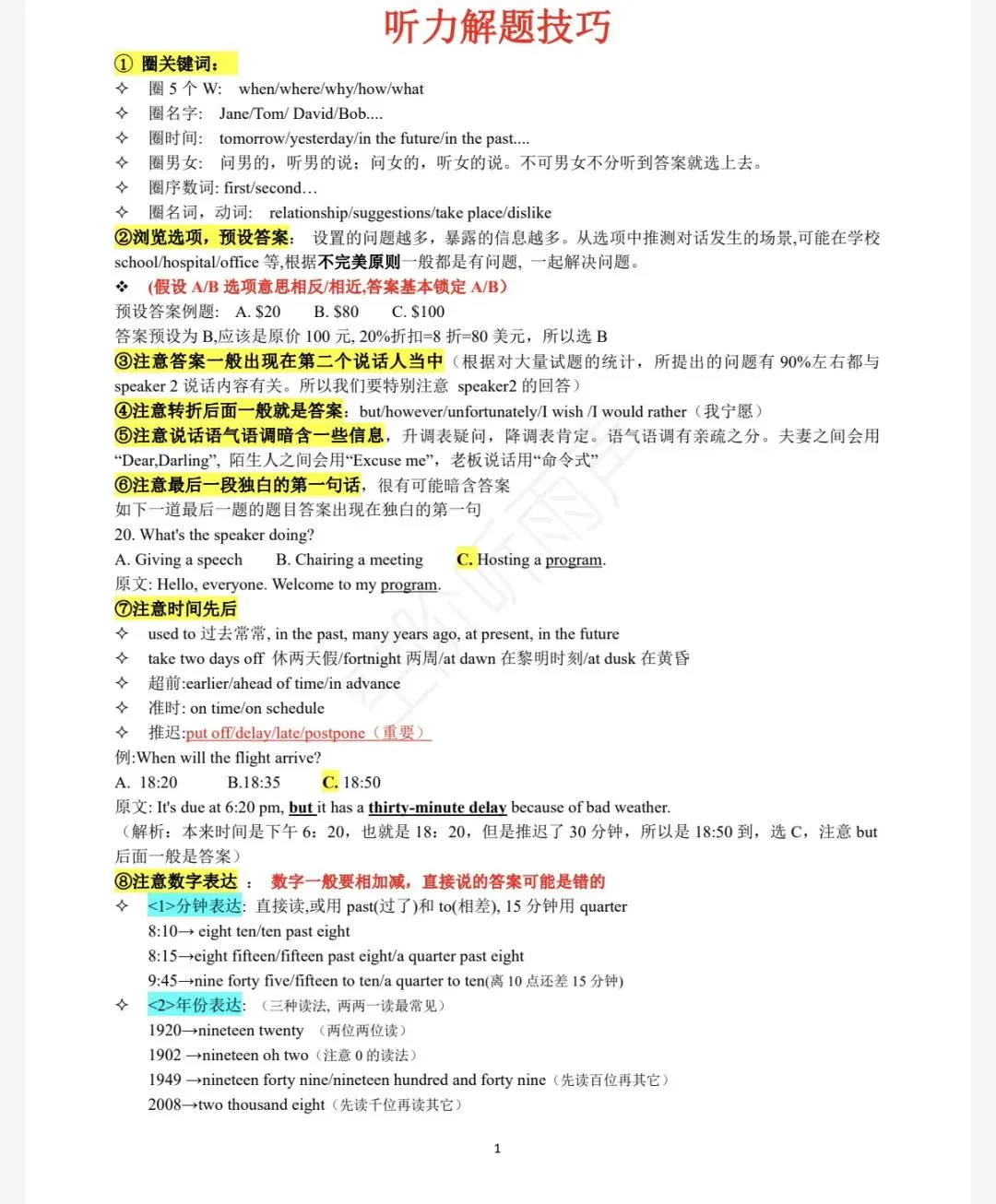
「完整版高考英语各大题型总结.pdf」,复制整段内容,打开最新版「夸克网盘APP」即可获取。 链接:https://pan.quark.cn/s/088725a9d5bf
提取码:6fqs 听力解题技巧
① 圈关键词:
• 圈5个W:when/where/why/who/how
• 圈名字:Jane/Tom/David/Bob...
• 圈时间:tomorrow/yesterday/in the future/in the past...
• 圈男女:问男的听男的;问女的听女的。不可男女不分听到答案就选上去。
• 圈序数词:first/second...
• 圈备注:动词、词组:relationship/suggestions/take place/difficult
② 浏览选项、预设答案
• 根据不完美原则一般都与生活有关,从选项中推测对话发生的场景,可能在学校/医院/office等。
• (假设A/B选项意思相反/相近,答案基本锁定A/B)
• 预设答案例题:
◦ 例:A.$20 B.$80 C.$100
◦ 答案预设为B,应该是原价100元,20%折扣=8折=80美元,所以选B。
③ 注意答案一般出现在第二个说话人当中
• (根据对大量试题的统计,所提出的问题有90%左右都与speaker 2说话内容有关,所以我们要特别注意speaker 2的回答)
④ 注意转折后面一般就是答案
• but/however/unfortunately/I wish/I would rather(我宁愿)
⑤ 注意说话语气语调暗含一些信息
• 升调表疑问,降调表肯定。语气语调有亲疏之分。夫妻之间会用"Dear Darling",陌生人之间会用"Excuse me",老板说话用"命令式"。
⑥ 注意最后一题独白的第一句话
• 如有一道题的题目答案出现在独白的第一句。
• 20. What's the speaker doing?
A. Giving a speech
B. Chairing a meeting
C. Hosting a program.
• 原文:Hello, everyone. Welcome to my program.
⑦ 注意时间先后
• used to/过去常常、in the past、many years ago、at present、in the future
• take two days off/休两天假/fortnight/两周、at dawn/在黎明时刻/at dusk/在黄昏
• 提前:earlier ahead of time/in advance
• 准时:on time/on schedule
• 推迟:put off/delay/postpone(重要)
• 例:When will the flight arrive?
A. 16:20
B. 18:35
C. 18:50
• 原文:It's due at 6:20 pm, but it has been put/thirty-minute delay because of bad weather.
• (解析:本来时间是下午6点20,也就是18:20,但是延迟了30分钟,所以是18:50到。选C,注意but后面一般是答案)
⑧ 注意数字表达
• 数字一般要相加减,直接说的答案可能是错的。
• <1>分钟表述:直接读,或用past(过了)和to(差)相关,15分钟用quarter
◦ 8:10→eight ten/ten past eight
◦ 8:15→eight fifteen/fifteen past eight/a quarter past eight
◦ 9:45→nine forty-five/fifteen to ten/差15分到10点还差15分钟
• <2>年份表述:(三种读法,两两一读最常见)
◦ 1920→nineteen twenty(两位两位读)
◦ 1902→nineteen o two(注意0的读法)
◦ 1959→nineteen fifty-nine/nineteen hundred and fifty nine(先读百位再其它)
◦ 2008→two thousand eight(先读千位再读其它)
------
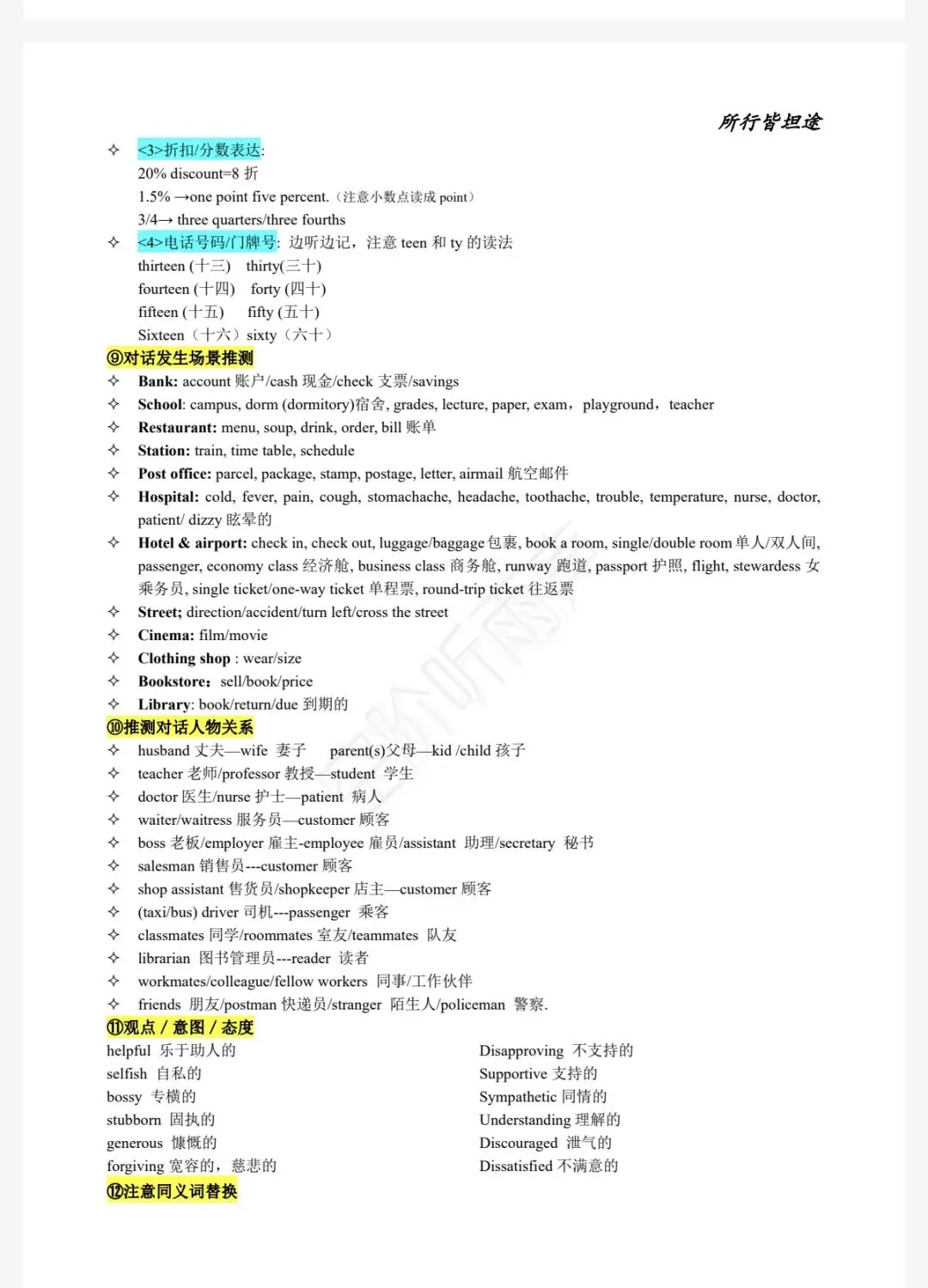
所行皆坦途
• <3>折扣/分数表述
◦ 20% discount=8折
◦ 1.5%→one point five percent(注意小数点读作point)
◦ 3/4→three quarters/three fourths
• <4>电话号码/门牌号:边听边记,注意teen和ty的读法
◦ thirteen(十三) thirty(三十)
◦ fourteen(十四) forty(四十)
◦ fifteen(十五) fifty(五十)
◦ sixteen(十六) sixty(六十)
⑨ 对话发生场景推测
• Bank: account/password/cash/check/支票/savings
• School: campus, dorm(dormitory)宿舍, grades, lecture, paper, exam-, playground,, teacher
• Restaurant: menu, soup, drink, order, bill, 账单
• Post office: train, time table, schedule
• Post office: parcel, package, stamp, postage, letter, airmail, 航空邮件
• Hospital: cold, fever, pain, cough, stomachache, headache, toothache, trouble, temperature, nurse, doctor, patient/ dizzy, 眩晕的
• Hotel & airport: check in, check out, luggage-baggage, 包裹, book a room, single/double room, 单人/双人间, passenger, economy class, 经济舱, business class, 商务舱, runway, 跑道, passport, 护照, flight, stewardess, 女乘务员, single ticket/one-way ticket, 单程票, round-trip ticket, 往返票
• Bookstore: film/movie
• Clothing shop - wear/size
• Library: book/return/due, 到期的
⑩ 推测对话人物关系
• husband-wife/father-child, 妻子-父母-kid/child, 孩子
• teacher, 老师/professor, 教授-student, 学生
• doctor, 医生/nurse, 护士-patient, 病人
• waiter/waitress, 服务员-customer, 顾客
• boss, 老板/employer, 雇主-employee, 雇员/assistant, 助理/secretary, 秘书
• salesman, 销售员-customer, 顾客
• shop assistant, 售货员/shopkeeper-customer, 顾客
• (taxi/bus) driver, 司机-passenger, 乘客
• classmates, 同学/roommates, 室友/teammates, 队友
• librarian, 图书管理员-reader, 读者
• workmates/college/fellow workers, 同事/工作伙伴
• friends, 朋友/postman, 快递员/stranger, 陌生人/policeman, 警察.
⑪ 观点/态度
• helpful, 乐于助人/appreciate, 欣赏
• selfish, 自私的
• bossy, 专横的
• generous, 慷慨的
• forgiving, 宽容的,慈悲的
• Disapproving, 不支持的
• Supportive, 支持的
• Sympathetic, 同情的
• Understanding, 理解的
• Discouraged, 气馁的
• Dissatisfied, 不满意的
⑫ 注意同义词替换
------
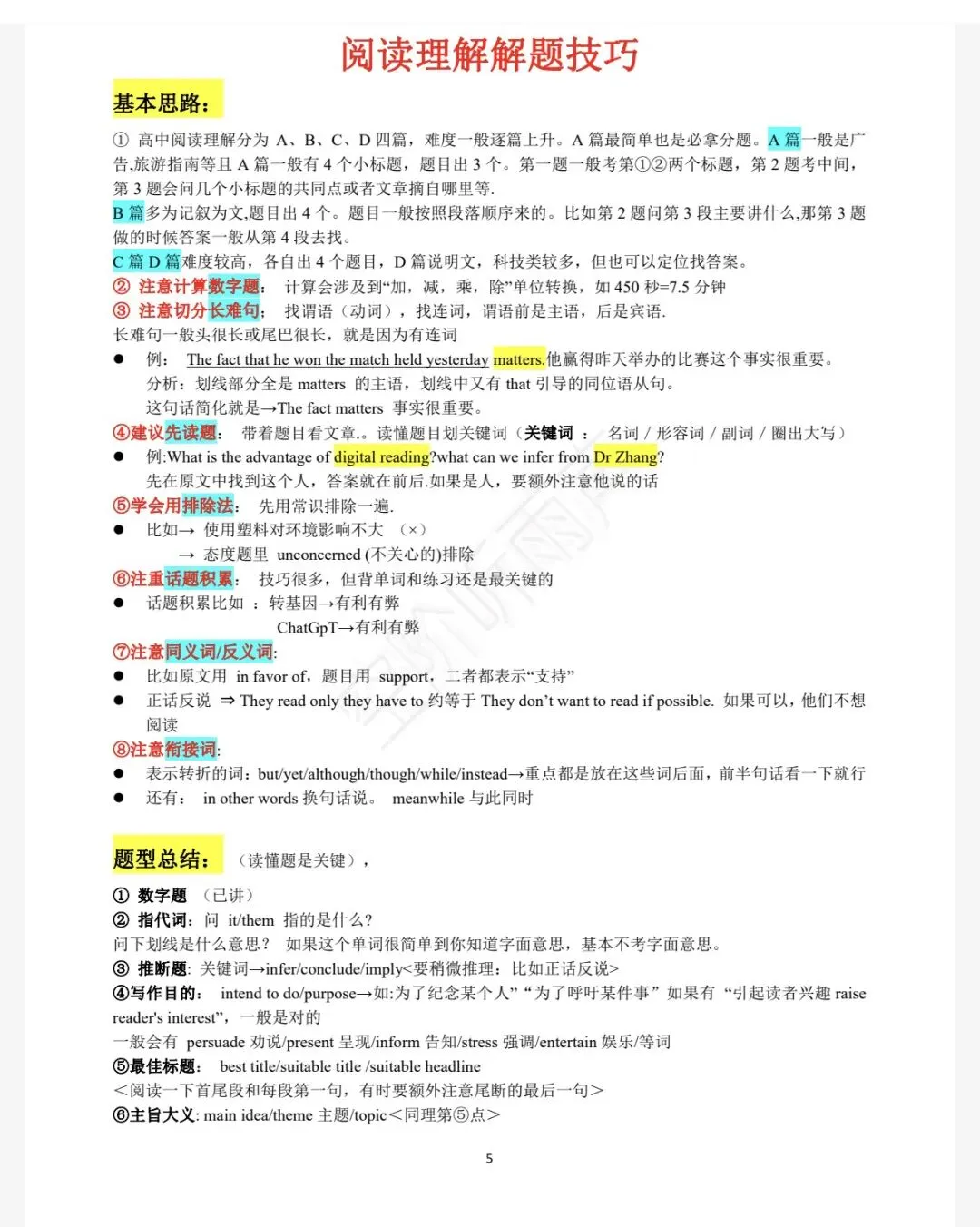
阅读理解解题技巧
基本思路:
① 高中阅读理解分为A、B、C、D四篇,难度一般逐渐上升。A篇最简单也是必拿分题。A篇一般是广告、旅游指南等且A篇一般有4个小标题,题目出3个。一般第1题考第①②个标题,第2题考中间,第3题多为记几个小标题的题目或者文章按照段落排序等。
B篇:每问为记叙文,题目出4个,一般找出线索来。
C篇:说明文难度较高,各自由4个题目。
D篇:说明文,科技类较多,也可以定位找答案。
② 注意计算数字题:计算会涉及到加、减、乘、除、单位转换。如450秒=7.5分钟
③ 注意切分长难句:找谓语(动词)、找连词,谓语前是主语,谓语后是宾语。
长难句一般头很长或尾巴很长,就是因为有连词。
• 例:The fact that he won the match held yesterday matters.他赢得昨天举办的这个比赛这个事实很重要。
• 分析:划线部分全是that matters的主语,划线中又有that引导的同位语从句。
• 这句话简化就是--The fact matters.事实很重要。
④ 建议先读题:带着题目看文章。读题目划关键词:关键词/名词/代词/副词/画出大写)
• 例:What is the advantage of digital reading/what can we infer from Dr Zhang?
• 先在原文中找到这个人,答案就在前后。如果是人,要额外注意他说的话。
⑤ 学会用排除法:先用常识排除一堆。
⑥ 注意态度积累:技巧很多,但背单词和练习还是最关键的。
• 比如→使用塑料对环境影响不大。(×)
• →态度题 unconcerned(不关心的)排除
• 话题积累比如:转基因→They read only what they have to约等于They don't want to read if possible.如果可以,他们不想阅读
• ChatGPT→有利有弊
⑦ 注意同义词/反义词:
• 比如原文用 in favor of,题目用 support,二者都表示"支持"
• 正话反说→Therefore, they read only what they have to. They don't want to read if possible.
⑧ 注意衔接词:
• 表示转折的词:but/yet/although/though/while/instead→重点都是放在这些词前面,后半句一看就行
• 还有:in other words, 换句话说。meanwhile, 与此同时
题型总结:(读懂题是关键。)
① 数字题(已讲)
② 指代词:问 sth/them 指的是什么?
问下划线是什么意思?如果这个单词很简单到你知道字面意思,基本不考字面意思。
③ 推断题:关键词-infer/conclude/imply→要做微调,比如正话反说>
④ 写作目的:intend to/depurpose→如:为了纪念某个人""为了呼吁某件事"如果有"引起读者兴趣raise readers'interest",一般是对的
一般会有 persuade, 劝说/present, 呈现/inform, 告知/announce, 强调/entertain, 娱乐等词
⑤ 最佳标题:best title/suitable title/baseline
<阅读一下首尾段和每段第一句,有时要额外注意尾段的最后一句>
⑥ 主旨大意:main idea/theme-topic/topic<同理第⑤点>
------
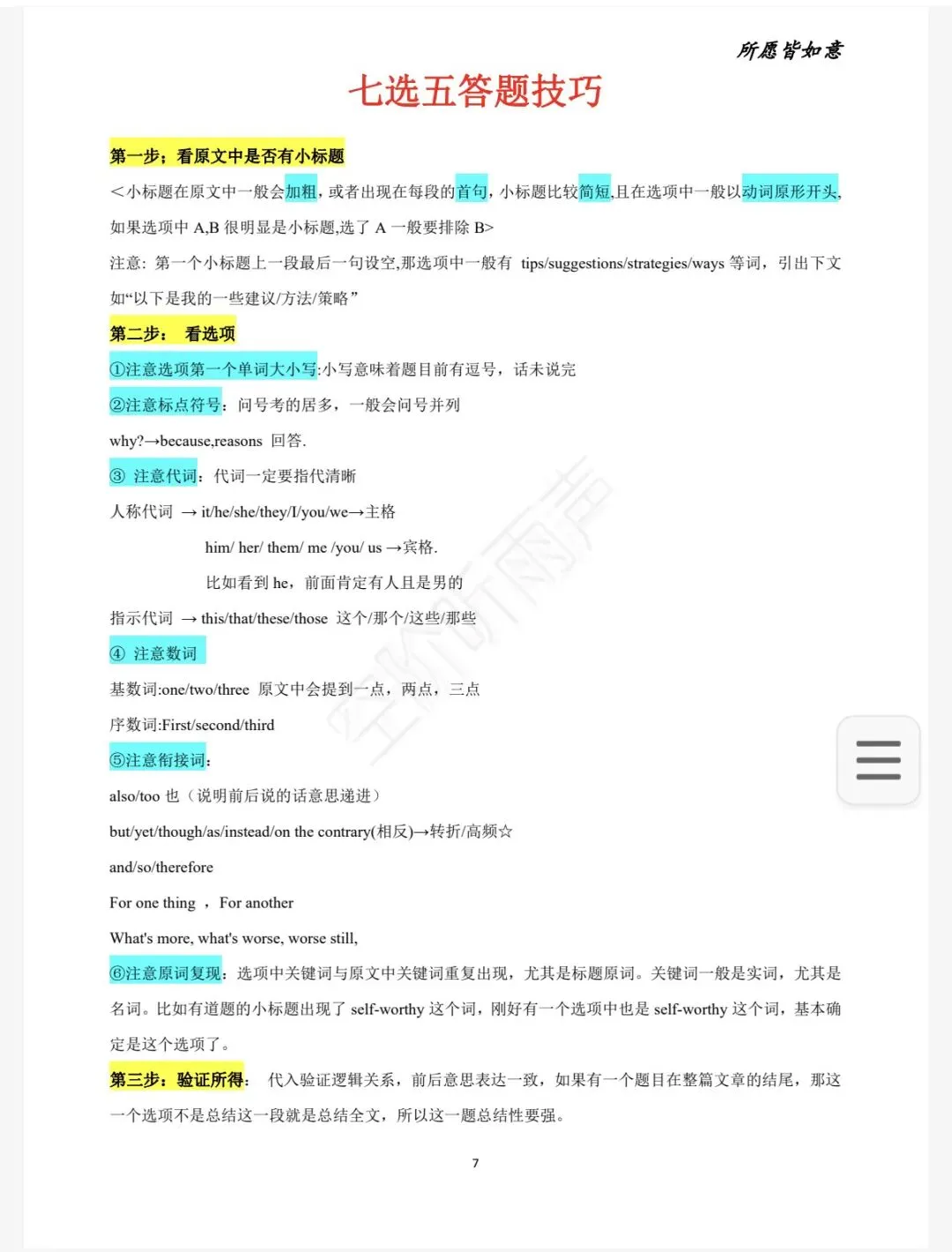
七选五答题技巧
第一步:看原文中是否有小标题
<小标题在原文中一般会加粗,或者出现在每段的首句。小标题比较简短,且在选项中一般以动词原形开头。
如果选项中A,B很明显是小标题,选了A一般要排除B>
注意:第一个小标题上一段最后一句设空,那选项中一般有 tips/suggestions/strategies/ways 等词,引出下文如"以下是我的一些建议/方法/策略"
第二步:看选项
①注意选项第一个单词大小写:小写意味着题目前有逗号,话没说完
②注意标点符号:问号考的居多,一般会问号并列
why?→because/reasons, 回答。
③ 注意代词:代词一定要指代清晰
人称代词→I/he/she/they/I/you/we→主格
him/ her/ them/ me/ you/us →宾格。
比如看到he,前面肯定有人且是男的
指示代词→this/that/these/those, 这个/那个/这些/那些
④ 注意数词:
基数词:one/two/three, 原文中会提到一点,两点,三点
序数词:First/second/third
⑤注意衔接词:
also/too, 也(说明前后说的话意思递进)
but/yet/though/as/instead/on the contrary(相反)→转折/高频☆
and/so/therefore
For one thing., For another
What's more, what's worse, worse still,
⑥注意原词复现:选项中关键词与原文中关键词重复出现,尤其是标题原词,关键词一般是实词,尤其是名词。比如有道题的小标题出现了self-worthy这个词,刚好有一个选项中也是self-worthy这个词,基本确定是这个选项中了。
第三步:验证所得:
代入验证逻辑关系,前后意思表达一致。如果有一个题目在整篇文章的结尾,那这一个选项不是总结这一段就是总结全文,所以这一题总结性要强。
------
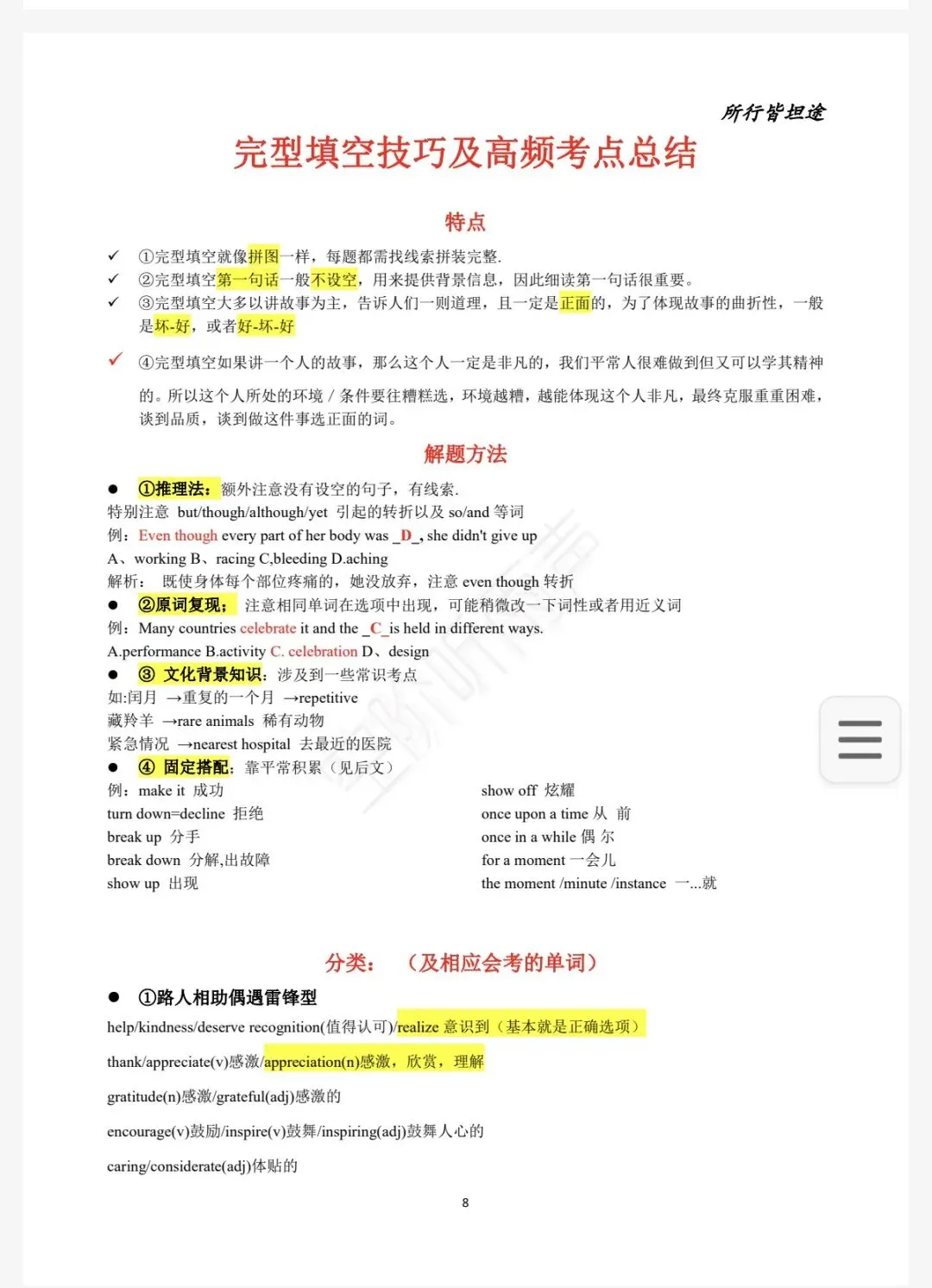
完型填空技巧及高频考点总结
特点
① 完型填空就像拼图一样,每题都需找线索拼凑完整。
② 完型填空第一句话一般不设空,用来提供背景信息,因此细读第一句话很重要。
③ 完型填空大多以讲故事为主,告诉人们一个道理,且一定是正能量的。为了体现故事的曲折性,一般是坏-好,或者好-坏-好。
④ 完型填空如果讲一个人的故事,那么这个人一定是非凡的,我们平常人很难做到但又可以学他精神的。所以这个人所处的环境/条件要往糟挑选,环境越糟,越能体现这个人非凡,最终克服重重困难,读到品质,读到做这件事正直面的词。
解题方法
① 推理法:额外注意没有设空的句子,有线索。
特别注意 but/though/although/yet, 引起的转折以及 so/and 等连词
例:Even though every part of her body was D, she didn't give up
A. working B. racing C. bleeding D. aching
解析:即使身体每个部位疼痛的,她没放弃。注意 even though 转折
② 原词复现:注意相同单词在选项中出现,可能稍微改一下词性或者用近义词
例:Many countries celebrate it and the C is held in different ways.
A. performance B. activity C. celebration D. design
③ 文化背景知识:涉及到一些常识考点
如润月→重复的一个月→repetitive
藏羚羊→rare animals, 稀有动物
紧急情况→nearest hospital, 去最近的医院
④ 固定搭配:靠平常积累(见后文)
make it, 成功
turn down-decline, 拒绝
break up, 分手
break down, 分解,出故障
show up, 出现
show off, 炫耀
once upon a time, 从前
once in a while, 偶尔
for a moment, 一会儿
the moment/minute/instant, 一..就
分类:(及相应会考的单词)
① 路人相助/偶遇雷锋型:
help/kindness/deserve recognition/值得认可/realize, 意识到(基本就是正确选项)
thank/appreciate(v.)感激/appreciation(n.)感激,欣赏,理解
gratitude(n.)感激/grateful(adj.)感激的
encourage(v.)鼓励/inspire(v.)鼓舞/inspiring(adj.)鼓舞人心的
caring/considerate(adj.)体贴的
------
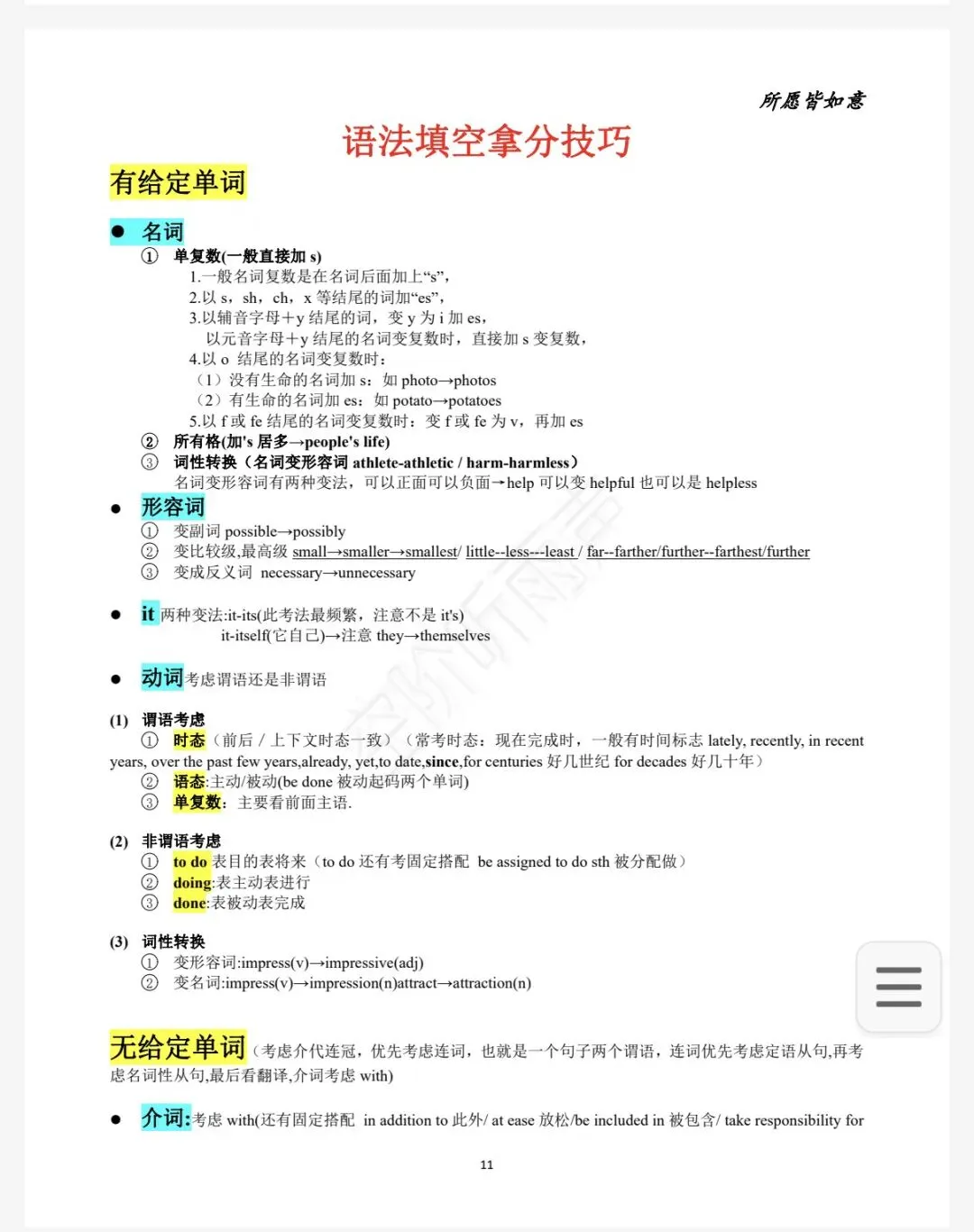
语法填空拿分技巧
有给定单词
● 名词
(1) 单复数(一般直接加s)
1. 一般名词复数是在名词后面加上"s"。
2. 以s, sh, ch, x等结尾的名词加"es"。
3. 以辅音字母+y结尾的词,变y为i加es。
4. 以o结尾的名词变复数时:
(1) 没有生命的名词加s:如 photo→photos
(2) 有生命的名词加es:如 potato→potatoes
5. 以f或fe结尾的名词变复数时,加s或变为ves,再加s
(2) 所有格(配's, 居多—people's life)
(3) 词性转换(名词变形容词 able-able-athletic/harm-harmless)
名词变形容词有两种变法,可以正面可以负面→help可以变helpful也可以是helpless
● 形容词
(1) 变副词 possible→possibly
(2) 变比较级、最高级 small→smaller→smallest/little→less→least/far→farther/further→farthest/furthest
(3) 变成反义词 necessary→unnecessary
(4) 两种变法in-/-out(此考点最频繁,注意不是l/O)
in→反义词自己/out→注意they→themselves
● 动词考虑谓语还是非谓语
(1) 谓语考虑
① 时态(前后/上下文时态一致)。(常考时态:现在完成时,一般有时间标志 lately, recently, in recent years, over the past few years, already, yet, so far, since/for centuries, 好几十世纪/for decades, 几十年)
② 语态主动/被动(be done/被动起码两个单词)
③ 单复数:主要看前面主语。
(2) 非谓语考虑
① to do, 表目的/将来(to do还有考固定搭配:be assigned to do sth, 被分配做)
② doing, 表主动进行
③ done, 表被动表完成
(3) 词性转换
① 变形容词:impress(v.)→impressive(adj)
② 变名词:impress(v.)→impression(n)/attract→attraction(n)
无给定单词 考虑介连代冠,优先考虑连词,也就是一个句子两个谓语,连词优先考虑定语从句,再考虑名词性从句,最后看翻译,介词考虑with
● 介词:考虑 with还有固定搭配 in addition to/此外 at ease/comfortable/be included in/被包含/take responsibility for
------
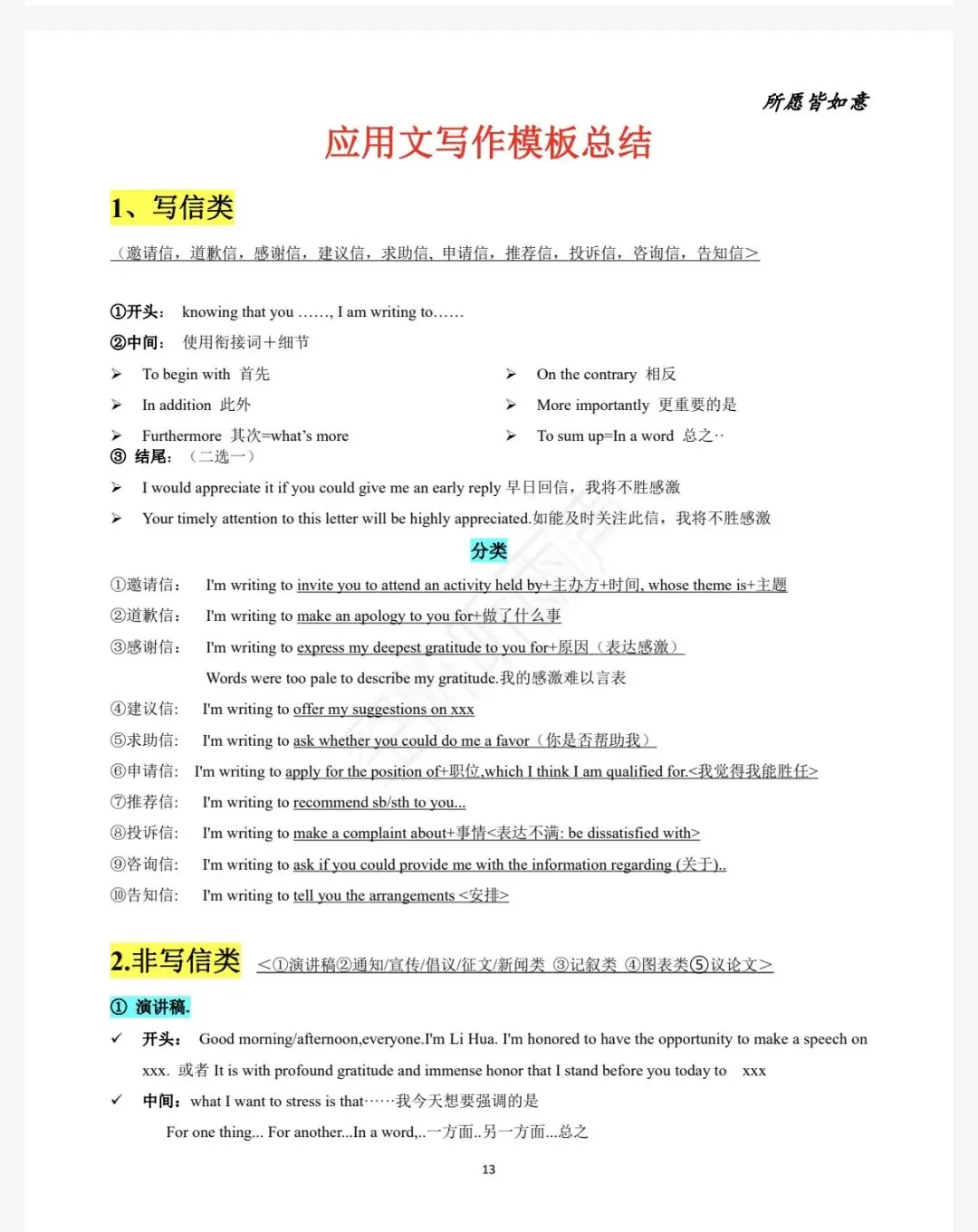
应用文写作模板总结
1、写信类
(邀请信、道歉信、感谢信、建议信、求助信、申请信、推荐信、投诉信、咨询信、告知信>)
①开头:knowing that you ......, I am writing to......
②中间:使用衔接词+细节
• To begin with, 首先
• In addition, 此外
• Furthermore, 其次-/what's more
• On the contrary, 相反
• More importantly, 更重要的是
• To sum up-/In a word, 总之
③ 结尾:(二选一)
• I would appreciate it if you could give me an early reply, 早日回信,我将不胜感激
• Your timely attention to this letter will be highly appreciated. 如能及时关注此信,我将不胜感激
分类
① 邀请信:I'm writing to invite you to attend an activity/hold by+主办方+时间, whose theme is+主题
② 道歉信:I'm writing to make an apology to you for+做了什么事
③ 感谢信:I'm writing to express my deepest gratitude to you for+原因(表达感激)
Words were too pale to describe my gratitude. 我的感激难以言表
④ 建议信:I'm writing to offer my suggestions on xxx
⑤ 求助信:I'm writing to ask whether you could do me a favor(你是否帮助我)
⑥ 申请信:I'm writing to apply for the position of+职位, which I think I am qualified for<我觉得我能胜任>
⑦ 推荐信:I'm writing to recommend sb/sth to you.
⑧ 投诉信:I'm writing to make a complaint about+事情/表达不满:be dissatisfied with-
⑨ 咨询信:I'm writing to ask if you could provide me with the information regarding(关于..)
⑩ 告知信:I'm writing to tell you the arrangements <安排>
2.非写信类 <①演讲稿②通知/宣传/倡议/征文/新闻类 ③记叙类 ④图表类⑤议论文>
① 演讲稿:
• 开头:Good morning/afternoon, everyone. I'm Li Hua. I'm honored to have the opportunity to make a speech on xxx. Or It is with profound gratitude and immense honor that I stand before you today to xxx.
• 中间:what I want to stress is that……我今天想要强调的是
For one thing.. For another.. In a word.. 一方面..另一方面.. 总之
------
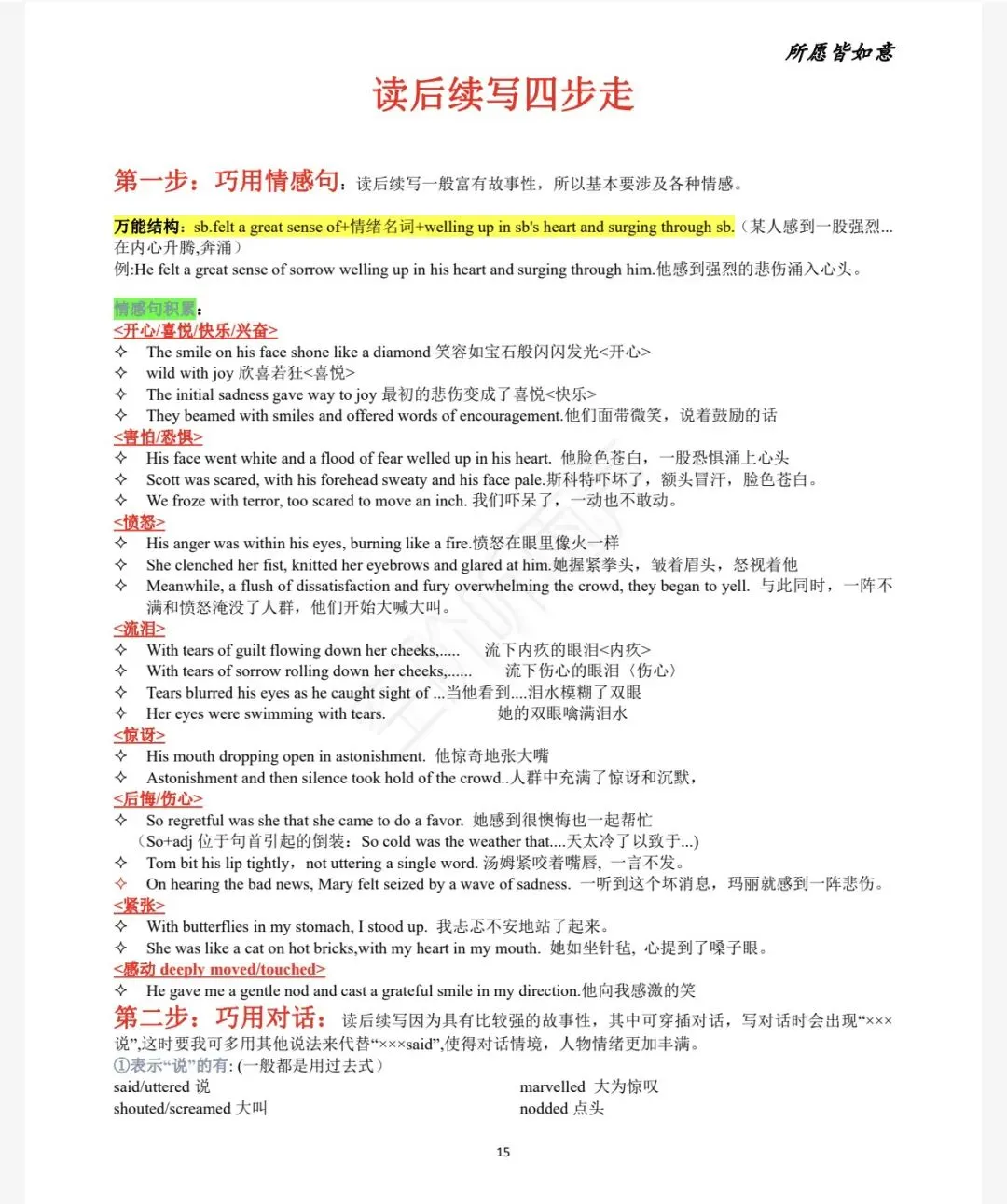
读后续写四步走
第一步:巧用情感句。读后续写一般富有故事性,所以基本要涉及各种情感。
万能结构:sb. felt a great sense of+情感名词+welling up in sb's heart and surging through sb.(某人感到一种强烈..在内心沸腾/奔涌)
例:He felt a great sense of sorrow welling up in his heart and surging through him.他感到强烈的悲伤涌入心头。
<开心/喜悦/快乐/兴奋>
• A big smile on his face shone like a diamond. 笑容像宝石般闪闪发光.-开心/
• Wild with joy. 欣喜若狂.-喜悦/
• The initial sadness gave way to joy. 最初的悲伤变成了喜悦.-快乐/
<害怕/恐惧>
• They beamed with smiles and offered words of encouragement. 他们面带微笑,说着鼓励的话
• His face went white and a flood of fear welled up in his heart. 他脸色苍白,一般恐惧涌上心头
• Scared with anxiety and his face pale. 焦急恐惧,脸色苍白。
• We froze with terror, too scared to move an inch. 我们吓坏了,一动也不敢动。
<愤怒>
• His anger was within his eyes, burning like a fire. 愤怒在眼睛里熊熊。
• She clenched her fist, narrowed her eyelids and glared at him. 她握紧拳头,皱着眉头,怒视着他
• Meanwhile, a flush of dissatisfaction and fury overwhelming us, they began to yell. 与此同时,一阵不满和愤怒淹没了人群,他们开始大喊大叫。
<内疚>
• With tears of guilt flowing down her cheeks..... 流下内疚的眼泪.-内疚/
• With tears of sorrow rolling down her cheeks..... 流下伤心的眼泪。-伤心/
• Tears blurred his eyes as he caught sight of..... 当他看到.....泪水模糊了双眼
• Her eyes were swimming with tears. 她的双眼噙满泪水。
<惊讶>
• His mouth dropping open in astonishment. 他惊讶地张大嘴巴
• Astonishment and then silence took hold of the crowd. 人群中充满了惊讶和沉默。
<后悔/伤心>
• So regretful was she that she came to do a favor. 她感到很懊悔也一起帮忙
• So pitiful at the sight of the dog. 看到狗引起了同情。So cold was the weather that..... 天太冷了以致于.....
• On hearing the bad news, Mary felt seized by a wave of sadness. 一听到这个坏消息,玛丽感到一阵悲伤。
<紧张>
• With butterflies in my stomach, I stood up. 我忐忑不安地站了起来。
• She was like a cat on hot bricks, with my heart in my mouth. 她如坐针毡,心提到了嗓子眼。
<感动/深受感动>
• He gave me a gentle nod and cast a warm smile in my direction.他向我感动的微笑。
第二步:巧用对话。读后续写因为有较强的故事性,其中可穿插对话。写对话时会出现"""说",这时要可多用其他说法来代替"""said",使得对话情境,人物性格更加丰满。
①表示"说"的有:(一般都是用过去式)
said/uttered, 说
shouted/screamed, 大叫
marvelled, 大为惊叹
nodded, 点头
提取码:6fqs
① 圈关键词:
• 圈5个W:when/where/why/who/how
• 圈名字:Jane/Tom/David/Bob...
• 圈时间:tomorrow/yesterday/in the future/in the past...
• 圈男女:问男的听男的;问女的听女的。不可男女不分听到答案就选上去。
• 圈序数词:first/second...
• 圈备注:动词、词组:relationship/suggestions/take place/difficult
② 浏览选项、预设答案
• 根据不完美原则一般都与生活有关,从选项中推测对话发生的场景,可能在学校/医院/office等。
• (假设A/B选项意思相反/相近,答案基本锁定A/B)
• 预设答案例题:
◦ 例:A.$20 B.$80 C.$100
◦ 答案预设为B,应该是原价100元,20%折扣=8折=80美元,所以选B。
③ 注意答案一般出现在第二个说话人当中
• (根据对大量试题的统计,所提出的问题有90%左右都与speaker 2说话内容有关,所以我们要特别注意speaker 2的回答)
④ 注意转折后面一般就是答案
• but/however/unfortunately/I wish/I would rather(我宁愿)
⑤ 注意说话语气语调暗含一些信息
• 升调表疑问,降调表肯定。语气语调有亲疏之分。夫妻之间会用"Dear Darling",陌生人之间会用"Excuse me",老板说话用"命令式"。
⑥ 注意最后一题独白的第一句话
• 如有一道题的题目答案出现在独白的第一句。
• 20. What's the speaker doing?
A. Giving a speech
B. Chairing a meeting
C. Hosting a program.
• 原文:Hello, everyone. Welcome to my program.
⑦ 注意时间先后
• used to/过去常常、in the past、many years ago、at present、in the future
• take two days off/休两天假/fortnight/两周、at dawn/在黎明时刻/at dusk/在黄昏
• 提前:earlier ahead of time/in advance
• 准时:on time/on schedule
• 推迟:put off/delay/postpone(重要)
• 例:When will the flight arrive?
A. 16:20
B. 18:35
C. 18:50
• 原文:It's due at 6:20 pm, but it has been put/thirty-minute delay because of bad weather.
• (解析:本来时间是下午6点20,也就是18:20,但是延迟了30分钟,所以是18:50到。选C,注意but后面一般是答案)
⑧ 注意数字表达
• 数字一般要相加减,直接说的答案可能是错的。
• <1>分钟表述:直接读,或用past(过了)和to(差)相关,15分钟用quarter
◦ 8:10→eight ten/ten past eight
◦ 8:15→eight fifteen/fifteen past eight/a quarter past eight
◦ 9:45→nine forty-five/fifteen to ten/差15分到10点还差15分钟
• <2>年份表述:(三种读法,两两一读最常见)
◦ 1920→nineteen twenty(两位两位读)
◦ 1902→nineteen o two(注意0的读法)
◦ 1959→nineteen fifty-nine/nineteen hundred and fifty nine(先读百位再其它)
◦ 2008→two thousand eight(先读千位再读其它)
------
所行皆坦途
• <3>折扣/分数表述
◦ 20% discount=8折
◦ 1.5%→one point five percent(注意小数点读作point)
◦ 3/4→three quarters/three fourths
• <4>电话号码/门牌号:边听边记,注意teen和ty的读法
◦ thirteen(十三) thirty(三十)
◦ fourteen(十四) forty(四十)
◦ fifteen(十五) fifty(五十)
◦ sixteen(十六) sixty(六十)
⑨ 对话发生场景推测
• Bank: account/password/cash/check/支票/savings
• School: campus, dorm(dormitory)宿舍, grades, lecture, paper, exam-, playground,, teacher
• Restaurant: menu, soup, drink, order, bill, 账单
• Post office: train, time table, schedule
• Post office: parcel, package, stamp, postage, letter, airmail, 航空邮件
• Hospital: cold, fever, pain, cough, stomachache, headache, toothache, trouble, temperature, nurse, doctor, patient/ dizzy, 眩晕的
• Hotel & airport: check in, check out, luggage-baggage, 包裹, book a room, single/double room, 单人/双人间, passenger, economy class, 经济舱, business class, 商务舱, runway, 跑道, passport, 护照, flight, stewardess, 女乘务员, single ticket/one-way ticket, 单程票, round-trip ticket, 往返票
• Bookstore: film/movie
• Clothing shop - wear/size
• Library: book/return/due, 到期的
⑩ 推测对话人物关系
• husband-wife/father-child, 妻子-父母-kid/child, 孩子
• teacher, 老师/professor, 教授-student, 学生
• doctor, 医生/nurse, 护士-patient, 病人
• waiter/waitress, 服务员-customer, 顾客
• boss, 老板/employer, 雇主-employee, 雇员/assistant, 助理/secretary, 秘书
• salesman, 销售员-customer, 顾客
• shop assistant, 售货员/shopkeeper-customer, 顾客
• (taxi/bus) driver, 司机-passenger, 乘客
• classmates, 同学/roommates, 室友/teammates, 队友
• librarian, 图书管理员-reader, 读者
• workmates/college/fellow workers, 同事/工作伙伴
• friends, 朋友/postman, 快递员/stranger, 陌生人/policeman, 警察.
⑪ 观点/态度
• helpful, 乐于助人/appreciate, 欣赏
• selfish, 自私的
• bossy, 专横的
• generous, 慷慨的
• forgiving, 宽容的,慈悲的
• Disapproving, 不支持的
• Supportive, 支持的
• Sympathetic, 同情的
• Understanding, 理解的
• Discouraged, 气馁的
• Dissatisfied, 不满意的
⑫ 注意同义词替换
------
阅读理解解题技巧
基本思路:
① 高中阅读理解分为A、B、C、D四篇,难度一般逐渐上升。A篇最简单也是必拿分题。A篇一般是广告、旅游指南等且A篇一般有4个小标题,题目出3个。一般第1题考第①②个标题,第2题考中间,第3题多为记几个小标题的题目或者文章按照段落排序等。
B篇:每问为记叙文,题目出4个,一般找出线索来。
C篇:说明文难度较高,各自由4个题目。
D篇:说明文,科技类较多,也可以定位找答案。
② 注意计算数字题:计算会涉及到加、减、乘、除、单位转换。如450秒=7.5分钟
③ 注意切分长难句:找谓语(动词)、找连词,谓语前是主语,谓语后是宾语。
长难句一般头很长或尾巴很长,就是因为有连词。
• 例:The fact that he won the match held yesterday matters.他赢得昨天举办的这个比赛这个事实很重要。
• 分析:划线部分全是that matters的主语,划线中又有that引导的同位语从句。
• 这句话简化就是--The fact matters.事实很重要。
④ 建议先读题:带着题目看文章。读题目划关键词:关键词/名词/代词/副词/画出大写)
• 例:What is the advantage of digital reading/what can we infer from Dr Zhang?
• 先在原文中找到这个人,答案就在前后。如果是人,要额外注意他说的话。
⑤ 学会用排除法:先用常识排除一堆。
⑥ 注意态度积累:技巧很多,但背单词和练习还是最关键的。
• 比如→使用塑料对环境影响不大。(×)
• →态度题 unconcerned(不关心的)排除
• 话题积累比如:转基因→They read only what they have to约等于They don't want to read if possible.如果可以,他们不想阅读
• ChatGPT→有利有弊
⑦ 注意同义词/反义词:
• 比如原文用 in favor of,题目用 support,二者都表示"支持"
• 正话反说→Therefore, they read only what they have to. They don't want to read if possible.
⑧ 注意衔接词:
• 表示转折的词:but/yet/although/though/while/instead→重点都是放在这些词前面,后半句一看就行
• 还有:in other words, 换句话说。meanwhile, 与此同时
题型总结:(读懂题是关键。)
① 数字题(已讲)
② 指代词:问 sth/them 指的是什么?
问下划线是什么意思?如果这个单词很简单到你知道字面意思,基本不考字面意思。
③ 推断题:关键词-infer/conclude/imply→要做微调,比如正话反说>
④ 写作目的:intend to/depurpose→如:为了纪念某个人""为了呼吁某件事"如果有"引起读者兴趣raise readers'interest",一般是对的
一般会有 persuade, 劝说/present, 呈现/inform, 告知/announce, 强调/entertain, 娱乐等词
⑤ 最佳标题:best title/suitable title/baseline
<阅读一下首尾段和每段第一句,有时要额外注意尾段的最后一句>
⑥ 主旨大意:main idea/theme-topic/topic<同理第⑤点>
------
七选五答题技巧
第一步:看原文中是否有小标题
<小标题在原文中一般会加粗,或者出现在每段的首句。小标题比较简短,且在选项中一般以动词原形开头。
如果选项中A,B很明显是小标题,选了A一般要排除B>
注意:第一个小标题上一段最后一句设空,那选项中一般有 tips/suggestions/strategies/ways 等词,引出下文如"以下是我的一些建议/方法/策略"
第二步:看选项
①注意选项第一个单词大小写:小写意味着题目前有逗号,话没说完
②注意标点符号:问号考的居多,一般会问号并列
why?→because/reasons, 回答。
③ 注意代词:代词一定要指代清晰
人称代词→I/he/she/they/I/you/we→主格
him/ her/ them/ me/ you/us →宾格。
比如看到he,前面肯定有人且是男的
指示代词→this/that/these/those, 这个/那个/这些/那些
④ 注意数词:
基数词:one/two/three, 原文中会提到一点,两点,三点
序数词:First/second/third
⑤注意衔接词:
also/too, 也(说明前后说的话意思递进)
but/yet/though/as/instead/on the contrary(相反)→转折/高频☆
and/so/therefore
For one thing., For another
What's more, what's worse, worse still,
⑥注意原词复现:选项中关键词与原文中关键词重复出现,尤其是标题原词,关键词一般是实词,尤其是名词。比如有道题的小标题出现了self-worthy这个词,刚好有一个选项中也是self-worthy这个词,基本确定是这个选项中了。
第三步:验证所得:
代入验证逻辑关系,前后意思表达一致。如果有一个题目在整篇文章的结尾,那这一个选项不是总结这一段就是总结全文,所以这一题总结性要强。
------
完型填空技巧及高频考点总结
特点
① 完型填空就像拼图一样,每题都需找线索拼凑完整。
② 完型填空第一句话一般不设空,用来提供背景信息,因此细读第一句话很重要。
③ 完型填空大多以讲故事为主,告诉人们一个道理,且一定是正能量的。为了体现故事的曲折性,一般是坏-好,或者好-坏-好。
④ 完型填空如果讲一个人的故事,那么这个人一定是非凡的,我们平常人很难做到但又可以学他精神的。所以这个人所处的环境/条件要往糟挑选,环境越糟,越能体现这个人非凡,最终克服重重困难,读到品质,读到做这件事正直面的词。
解题方法
① 推理法:额外注意没有设空的句子,有线索。
特别注意 but/though/although/yet, 引起的转折以及 so/and 等连词
例:Even though every part of her body was D, she didn't give up
A. working B. racing C. bleeding D. aching
解析:即使身体每个部位疼痛的,她没放弃。注意 even though 转折
② 原词复现:注意相同单词在选项中出现,可能稍微改一下词性或者用近义词
例:Many countries celebrate it and the C is held in different ways.
A. performance B. activity C. celebration D. design
③ 文化背景知识:涉及到一些常识考点
如润月→重复的一个月→repetitive
藏羚羊→rare animals, 稀有动物
紧急情况→nearest hospital, 去最近的医院
④ 固定搭配:靠平常积累(见后文)
make it, 成功
turn down-decline, 拒绝
break up, 分手
break down, 分解,出故障
show up, 出现
show off, 炫耀
once upon a time, 从前
once in a while, 偶尔
for a moment, 一会儿
the moment/minute/instant, 一..就
分类:(及相应会考的单词)
① 路人相助/偶遇雷锋型:
help/kindness/deserve recognition/值得认可/realize, 意识到(基本就是正确选项)
thank/appreciate(v.)感激/appreciation(n.)感激,欣赏,理解
gratitude(n.)感激/grateful(adj.)感激的
encourage(v.)鼓励/inspire(v.)鼓舞/inspiring(adj.)鼓舞人心的
caring/considerate(adj.)体贴的
------
语法填空拿分技巧
有给定单词
● 名词
(1) 单复数(一般直接加s)
1. 一般名词复数是在名词后面加上"s"。
2. 以s, sh, ch, x等结尾的名词加"es"。
3. 以辅音字母+y结尾的词,变y为i加es。
4. 以o结尾的名词变复数时:
(1) 没有生命的名词加s:如 photo→photos
(2) 有生命的名词加es:如 potato→potatoes
5. 以f或fe结尾的名词变复数时,加s或变为ves,再加s
(2) 所有格(配's, 居多—people's life)
(3) 词性转换(名词变形容词 able-able-athletic/harm-harmless)
名词变形容词有两种变法,可以正面可以负面→help可以变helpful也可以是helpless
● 形容词
(1) 变副词 possible→possibly
(2) 变比较级、最高级 small→smaller→smallest/little→less→least/far→farther/further→farthest/furthest
(3) 变成反义词 necessary→unnecessary
(4) 两种变法in-/-out(此考点最频繁,注意不是l/O)
in→反义词自己/out→注意they→themselves
● 动词考虑谓语还是非谓语
(1) 谓语考虑
① 时态(前后/上下文时态一致)。(常考时态:现在完成时,一般有时间标志 lately, recently, in recent years, over the past few years, already, yet, so far, since/for centuries, 好几十世纪/for decades, 几十年)
② 语态主动/被动(be done/被动起码两个单词)
③ 单复数:主要看前面主语。
(2) 非谓语考虑
① to do, 表目的/将来(to do还有考固定搭配:be assigned to do sth, 被分配做)
② doing, 表主动进行
③ done, 表被动表完成
(3) 词性转换
① 变形容词:impress(v.)→impressive(adj)
② 变名词:impress(v.)→impression(n)/attract→attraction(n)
无给定单词 考虑介连代冠,优先考虑连词,也就是一个句子两个谓语,连词优先考虑定语从句,再考虑名词性从句,最后看翻译,介词考虑with
● 介词:考虑 with还有固定搭配 in addition to/此外 at ease/comfortable/be included in/被包含/take responsibility for
------
应用文写作模板总结
1、写信类
(邀请信、道歉信、感谢信、建议信、求助信、申请信、推荐信、投诉信、咨询信、告知信>)
①开头:knowing that you ......, I am writing to......
②中间:使用衔接词+细节
• To begin with, 首先
• In addition, 此外
• Furthermore, 其次-/what's more
• On the contrary, 相反
• More importantly, 更重要的是
• To sum up-/In a word, 总之
③ 结尾:(二选一)
• I would appreciate it if you could give me an early reply, 早日回信,我将不胜感激
• Your timely attention to this letter will be highly appreciated. 如能及时关注此信,我将不胜感激
分类
① 邀请信:I'm writing to invite you to attend an activity/hold by+主办方+时间, whose theme is+主题
② 道歉信:I'm writing to make an apology to you for+做了什么事
③ 感谢信:I'm writing to express my deepest gratitude to you for+原因(表达感激)
Words were too pale to describe my gratitude. 我的感激难以言表
④ 建议信:I'm writing to offer my suggestions on xxx
⑤ 求助信:I'm writing to ask whether you could do me a favor(你是否帮助我)
⑥ 申请信:I'm writing to apply for the position of+职位, which I think I am qualified for<我觉得我能胜任>
⑦ 推荐信:I'm writing to recommend sb/sth to you.
⑧ 投诉信:I'm writing to make a complaint about+事情/表达不满:be dissatisfied with-
⑨ 咨询信:I'm writing to ask if you could provide me with the information regarding(关于..)
⑩ 告知信:I'm writing to tell you the arrangements <安排>
2.非写信类 <①演讲稿②通知/宣传/倡议/征文/新闻类 ③记叙类 ④图表类⑤议论文>
① 演讲稿:
• 开头:Good morning/afternoon, everyone. I'm Li Hua. I'm honored to have the opportunity to make a speech on xxx. Or It is with profound gratitude and immense honor that I stand before you today to xxx.
• 中间:what I want to stress is that……我今天想要强调的是
For one thing.. For another.. In a word.. 一方面..另一方面.. 总之
------
读后续写四步走
第一步:巧用情感句。读后续写一般富有故事性,所以基本要涉及各种情感。
万能结构:sb. felt a great sense of+情感名词+welling up in sb's heart and surging through sb.(某人感到一种强烈..在内心沸腾/奔涌)
例:He felt a great sense of sorrow welling up in his heart and surging through him.他感到强烈的悲伤涌入心头。
<开心/喜悦/快乐/兴奋>
• A big smile on his face shone like a diamond. 笑容像宝石般闪闪发光.-开心/
• Wild with joy. 欣喜若狂.-喜悦/
• The initial sadness gave way to joy. 最初的悲伤变成了喜悦.-快乐/
<害怕/恐惧>
• They beamed with smiles and offered words of encouragement. 他们面带微笑,说着鼓励的话
• His face went white and a flood of fear welled up in his heart. 他脸色苍白,一般恐惧涌上心头
• Scared with anxiety and his face pale. 焦急恐惧,脸色苍白。
• We froze with terror, too scared to move an inch. 我们吓坏了,一动也不敢动。
<愤怒>
• His anger was within his eyes, burning like a fire. 愤怒在眼睛里熊熊。
• She clenched her fist, narrowed her eyelids and glared at him. 她握紧拳头,皱着眉头,怒视着他
• Meanwhile, a flush of dissatisfaction and fury overwhelming us, they began to yell. 与此同时,一阵不满和愤怒淹没了人群,他们开始大喊大叫。
<内疚>
• With tears of guilt flowing down her cheeks..... 流下内疚的眼泪.-内疚/
• With tears of sorrow rolling down her cheeks..... 流下伤心的眼泪。-伤心/
• Tears blurred his eyes as he caught sight of..... 当他看到.....泪水模糊了双眼
• Her eyes were swimming with tears. 她的双眼噙满泪水。
<惊讶>
• His mouth dropping open in astonishment. 他惊讶地张大嘴巴
• Astonishment and then silence took hold of the crowd. 人群中充满了惊讶和沉默。
<后悔/伤心>
• So regretful was she that she came to do a favor. 她感到很懊悔也一起帮忙
• So pitiful at the sight of the dog. 看到狗引起了同情。So cold was the weather that..... 天太冷了以致于.....
• On hearing the bad news, Mary felt seized by a wave of sadness. 一听到这个坏消息,玛丽感到一阵悲伤。
<紧张>
• With butterflies in my stomach, I stood up. 我忐忑不安地站了起来。
• She was like a cat on hot bricks, with my heart in my mouth. 她如坐针毡,心提到了嗓子眼。
<感动/深受感动>
• He gave me a gentle nod and cast a warm smile in my direction.他向我感动的微笑。
第二步:巧用对话。读后续写因为有较强的故事性,其中可穿插对话。写对话时会出现"""说",这时要可多用其他说法来代替"""said",使得对话情境,人物性格更加丰满。
①表示"说"的有:(一般都是用过去式)
said/uttered, 说
shouted/screamed, 大叫
marvelled, 大为惊叹
nodded, 点头