ARTICLE · 1329228
【RSB学案31】人教版高中英语必修第二册 Unit1 Cultural Heritage 第1课时学案(Reading and Thinking 阅读精读课)
【RSB学案31】人教版高中英语必修第二册 Unit1 Cultural Heritage 第1课时学案(Reading and Thinking 阅读精读课)
作者:Risibo
本套学案遵循日思搏英语学习法(Reasonable English)“背、悟、用”模式,构建实用高效的特色课堂。RSB即Recite(背诵)、Study(领悟)、Build(运用)。
一、狂背阶段·素材输入(课前预习完成)
本阶段核心:音、形、义、用四位一体绑定背诵,拒绝孤立记单词。
1.篇章音频狂背:听课本Reading and Thinking课文录音3遍。第1遍盲听抓主旨,了解埃及阿斯旺大坝建设中文化遗产保护的故事;第2遍逐句跟读,模仿语音语调;第3遍合书尝试复述事件脉络,标记卡顿的生词与长句。
2.核心词句狂背:聚焦本课8组核心词汇与短语,边读边在草稿本写例句,建立"词—句"关联。核心词:heritage, preserve, application, proposal, protest, establish, contribute, conduct核心短语:take part in, give way to, lead to, make a proposal, turn to, prevent…from…
3.典型佳句狂背:提前背诵课文3个核心长句,做到流利口头复述,为课中真悟打基础。
二、真悟阶段·规律内化(课中探究完成)
本阶段核心:用理性思维拆解语言现象,归纳底层规律,标注考试易错陷阱。
(一)篇章真悟(落实RSB背悟用篇章秘笈)
本文是文化主题说明文,以"问题—挑战—解决方案—成果"为叙事主线:
• 问题提出:埃及拟建阿斯旺大坝,但会威胁阿布辛贝神庙等文化遗产
• 矛盾冲突:经济发展与文化保护产生冲突,民众抗议
• 解决方案:联合国教科文组织介入,多国合作,神庙整体搬迁
• 成果意义:项目成功,文化遗产得以保存,成为国际合作保护遗产的典范
理性思考:"问题—解决"类文本,阅读重点抓矛盾冲突点、关键人物/组织、解决措施、最终结果。长难句处理遵循"找主干—拆修饰—理逻辑"三步法,先锁定主谓,再剥离定语从句、分词结构等修饰成分。
(二)典型佳句真悟(落实RSB背悟用典型佳句秘笈)
每句拆解"句式结构+语法规律+考试易错点",从"看懂"到"吃透"。
1.But the proposal led to protests. Water from the dam would likely damage a number of temples and destroy cultural heritage that was an important part of Egypt's cultural identity.翻译:但这项提议引发了抗议。大坝的水很可能会损坏许多寺庙,并摧毁作为埃及文化认同重要组成部分的文化遗产。真悟解析:that引导定语从句,修饰先行词cultural heritage;lead to为固定搭配,to是介词,后接名词/动名词。⚠️ 高考易错坑:lead to中的to是介词,后接doing,不能接动词原形。
2.A committee was established to limit damage to the Egyptian buildings and prevent the loss of cultural relics.翻译:委员会成立了,以限制对埃及建筑的破坏,防止文物流失。真悟解析:被动语态was established;两个不定式to limit与(to) prevent并列作目的状语;prevent…from…为固定搭配,表"阻止……做……"。
3.The project brought together governments and environmentalists from around the world. Temples and other cultural sites were taken down piece by piece, and then moved and put back together again in a place where they were safe from the water.翻译:该项目汇集了来自世界各地的政府和环保人士。寺庙和其他文化遗址被一块一块地拆下,然后搬迁并重新组装在一个不受水威胁的安全地方。真悟解析:where引导定语从句,修饰先行词place,从句作地点状语;被动语态的连续使用体现了客观说明的文体特征。
课堂实操:合上书本,口头复述3个句子的结构规律,自行列举1个易错场景,完成"输入—拆解—内化"。
三、神用阶段·输出落地(当堂+课后练习)
本阶段核心:学什么练什么,题目直接对接考点,练一道会一类,拒绝无效刷题。
当堂巩固练习
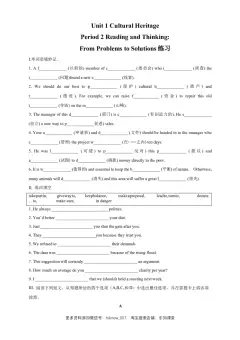
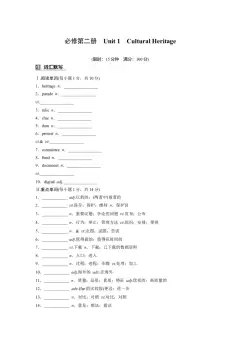
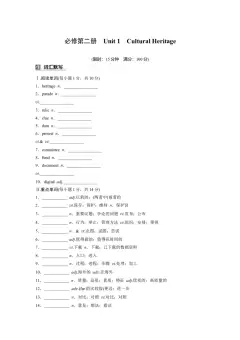
练习一语境填词(根据句意填单词/短语正确形式,共8题)
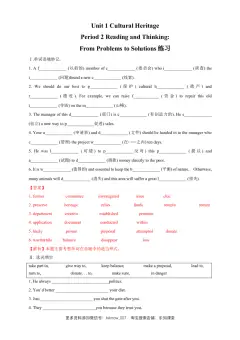
1.We should do our best to ________ (保护) our cultural heritage.
2.The new policy ________ ________ (导致) great changes in the city.
3.The government made a ________ (提议) to build a new museum.
4.Many people came out to ________ (抗议) the decision.
5.A special ________ (委员会) was set up to deal with the problem.
6.We must ________ the old buildings ________ (阻止……被破坏) being destroyed.
7.Many countries ________ (贡献) money and technology to the project.
8.The scientist ________ (进行) a lot of research on ancient relics.
练习二长难句改写(按要求改写句子,共7题)
示例:The proposal caused protests. It would damage temples.→The proposal led to protests because it would damage temples.
1.The dam was built. It threatened the cultural heritage.(合并为含because的复合句)
2.A committee was established. Its purpose was to limit damage.(合并为含不定式作目的状语的句子)
3.The temples were moved. They were safe in a new place.(合并为含where定语从句的句子)
4.The project was successful. It saved many cultural relics.(合并句子)
5.People from many countries worked together. They saved the temples.(合并为含现在分词作状语的句子)
6.The loss of cultural relics is serious. We must prevent it.(合并为含prevent…from的句子)
7.The project is a good example. It shows international cooperation.(合并为含定语从句的句子)
课后提升练习
练习三篇章信息简答(根据课文内容回答问题,共6题)
1.What problem did Egypt face when building the Aswan Dam?
2.Why did people protest against the proposal?
3.Who helped to solve the problem?
4.How were the temples saved?
5.What was the result of the project?
6.What can we learn from this project?
练习四句式仿写(用本课句型仿写文化保护场景,共7题)
1.用lead to仿写:过度开发会导致文化遗产的破坏。
2.用prevent…from…仿写:我们应该阻止游客触摸古老的壁画。
3.用where定语从句仿写:这是一个许多文物被保存下来的地方。
4.用被动语态仿写:一座新的博物馆已经建成了。
5.用make a proposal仿写:他提议建立一个文化保护区。
6.用contribute to仿写:每个人都可以为文化遗产保护做出贡献。
7.用不定式作目的状语仿写:政府采取措施来保护这些古老的建筑。
RSB背悟用复盘区(手写完成)
① 今日狂背核心3个短语:________② 今日真悟吃透的1个语法规律+易错坑:________③ 今日神用输出的错题归因(错在哪、正确规律):________
★本课时习题参考答案
练习一语境填词
1.preserve 2. led to 3. proposal 4. protest
5.committee 6. prevent; from 7. contributed 8. conducted
练习二长难句改写
1.The dam was built because it threatened the cultural heritage.
2.A committee was established to limit damage.
3.The temples were moved to a new place where they were safe.
4.The project was successful and saved many cultural relics.
5.Working together, people from many countries saved the temples.
6.We must prevent the loss of cultural relics from becoming more serious.
7.The project is a good example that shows international cooperation.
练习三篇章信息简答(参考)
1.Egypt faced the problem that building the Aswan Dam would damage and destroy important cultural heritage like temples.
2.Because the water from the dam would damage temples and destroy cultural heritage that was important to Egypt's cultural identity.
3.The UN and many countries around the world helped to solve the problem.
4.The temples were taken down piece by piece, moved to a safe place and put back together again.
5.The project was successful. The temples were saved and it became a successful example of international cooperation.
6.We can learn that cultural heritage protection needs international cooperation and that development should not come at the cost of cultural heritage.
练习四句式仿写(参考)
1.Overdevelopment will lead to the destruction of cultural heritage.
2.We should prevent tourists from touching the ancient murals.
3.This is a place where many cultural relics have been preserved.
4.A new museum has been built.
5.He made a proposal to set up a cultural protection zone.
6.Everyone can contribute to the protection of cultural heritage.
7.The government took measures to protect these ancient buildings.
英语学习法精华文章推荐:日思搏英语学习法是如何炼成的双语阅读精华文章推荐:【双语阅读131】第11世:孔子·求道·传仁(1)《我是谁——地球游戏场启示录》131