ARTICLE · 1249147
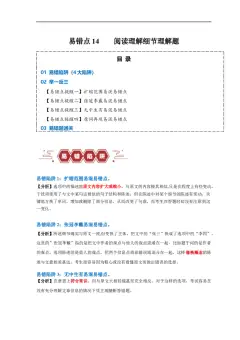
高考英语阅读理解之细节题

1
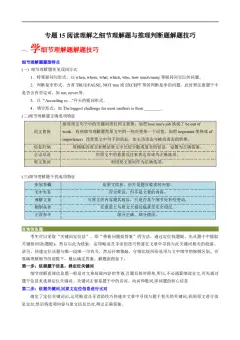
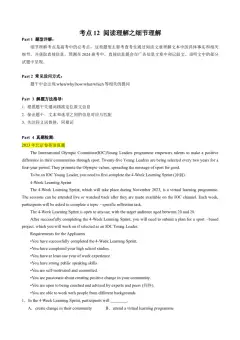
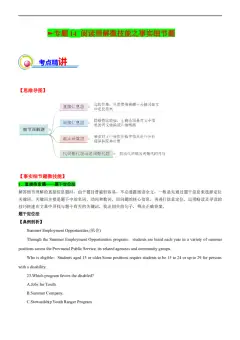
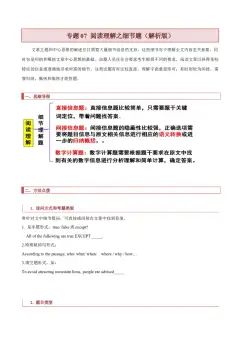
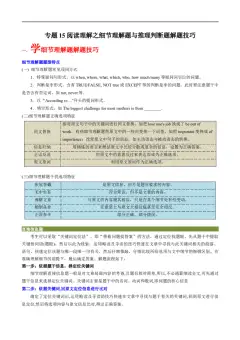
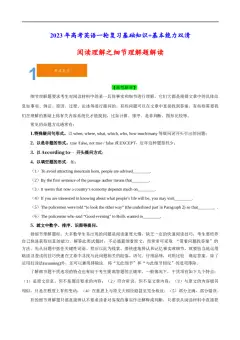
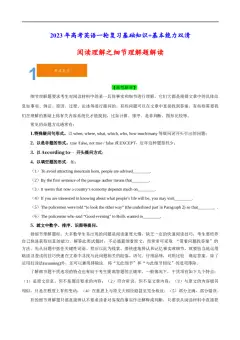
提问的“切入点”
1. 事实细节
直接询问文中明确陈述的信息,如人物、时间、地点、数据、事件等。
- What is ...?
- When did ... happen?
- Where is ... located?
- Who is responsible for ...?
- How many/much ...?
- According to the passage, when was the shared bike system first introduced in the city? (询问时间)
2. 原因/目的
询问某事发生的原因、理由或目的。
- Why did ...?
- What is the reason for ...?
- ... because ________.
- The purpose of ... is to ________.
- Why do many people prefer shared bikes for short trips?(询问原因)
-The government promoted shared bikes mainly to ________. (询问目的)
3. 方式/方法
询问某事是如何完成或实现的,涉及步骤、手段或过程。
- How did ...?
- In what way did ...?
- What is the process of ...?
-How can users unlock a shared bike according to the passage? (询问使用方式)
4.特征/属性
询问某人、某物或某事物的特点、性质或功能。
- What is the characteristic of ...?
- Which of the following is a feature of ...?
-Which of the following is mentioned as an advantage of shared bikes? (询问特性/优点)
5.引用与例证
询问文中引用的某人话语的具体内容,或某个例子是为了说明什么观点。
- What did ... say about ...?
-The example of ... is used to illustrate/show that ________.
-What does the expert say about the environmental impact of shared bikes? (询问引用内容)
-The author mentions the "last-mile" problem to show that ________. (询问例证目的)
6.观点 / 态度
针对文中人物(作者或其他角色)的观点、看法、态度或评价提问,需区分 “作者观点” 与 “他人观点”。
-What is the author's attitude towards ...?
-What does the expert think of ...?
7.是非判断
要求判断哪个选项与文章内容一致或不一致。这是细节题中最常见且易错的一种。
- Which of the following is TRUE?
- Which of the following is NOT true?
-All of the following are true EXCEPT ________.
- Which of the following is NOT mentioned as a problem caused by shared bikes? (反向筛选)
8.条件/前提
询问某事发生所需的条件或依赖的因素。
-What is the condition for ...?
- ... will happen only if ________.
-What is required for a user to rent a shared bike? (询问前提条件,如注册、押金等)
2
干扰选项的特点
1.偷梁换柱
替换原文中的关键词(如名词、动词、形容词),改变细节含义,形似神不似。
如:原文:The study focuses on high school students in urban areas.
干扰项:The study focuses on college students in urban areas.
tips:
①对比选项与原文的核心名词、动词,注意 “同义替换” 和 “形近词” 的区别;
②若选项中某个词与原文差异明显,大概率是偷换概念。
2.凭空捏造
选项内容在原文中完全未提及,或原文无相关线索支撑,属于凭空捏造的信息。
如:
原文:The app helps users track daily exercise.
干扰项:The app helps users manage personal finances.
tips:
①若选项中的信息在原文中找不到对应语句,直接标记为 “凭空捏造”;
②警惕 “符合常识但原文未提” 的选项,避免脱离文本判断。
3.夸大\缩小改变原文中细节的限定条件(如时间、地点、数量、程度),扩大或缩小适用范围。
如:
原文:Some teachers in the school support the new policy.
干扰项 1(扩大):All teachers in the school support the new policy.
干扰项 2(缩小):Some teachers in the math department support the new policy.
tips:
①重点关注原文中的限定词(如 some, most, sometimes, only);
②检查选项是否删除或添加了限定词,导致范围变化。
4.逻辑颠倒
混淆原文中的因果、条件、先后等逻辑关系,如 “因果倒置”或“把条件当结果”。
如:
原文:Some teachers in the school support the new policy.
干扰项 1(扩大):All teachers in the school support the new policy.
干扰项 2(缩小):Some teachers in the math department support the new policy.
tips:
①定位原文中的逻辑词(如 because, so, if, then);
②分析选项逻辑是否与原文一致,尤其注意 “导致” 类表述。
5.推理过度
基于原文细节进行超出文本范围的主观推断,选项内容 “看似合理但并非原文本意”。
如:
首先,定位原文中的逻辑词(如 because, so, if, then);
其次,分析选项逻辑是否与原文一致,尤其注意 “导致” 类表述。
tips:
①严格遵循 “原文有什么选什么”,不加入个人主观判断;
②若选项中出现 “肯定”“否定”“偏好” 等态度词,需确认原文是否明确提及。
3
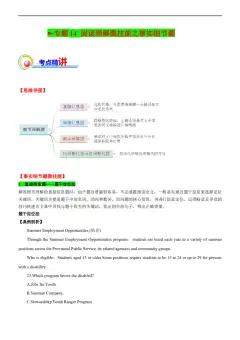
解题策略
01
定位是关键
首先,仔细阅读题干,找出 “关键词” 这些词通常是名词、动词、专有名词、数字等实词。
其次,带着关键词回到原文,进行 “扫读” ,找到关键词或其同义替换词出现的位置。答案一定在原文中。
02
理解是核心
①同义替换是王道:
正确选项很少会直接照抄原文,通常会使用 同义词、短语或不同的句式结构 来重新表述原文信息。
原文:
The project encountered numerous difficulties.
选项:
The project faced many challenges.
②警惕偷换概念:
干扰项常常会使用原文中的词汇,但篡改了细节(如时间、主语、因果关系),或加入了原文没有的信息(如“绝对词”all, never, only等)。
③注意否定词和转折词:
特别是对于“NOT true”或“EXCEPT”题型,要特别留意文章中的否定词(no, not, little, few, hardly)和转折词(but, however, yet),这些地方常设题。
03
顺序原则
高考阅读的题目顺序通常与文章的行文顺序一致。第一题的答案一般在文章前半部分,最后一题的答案在文章后半部分。这有助于缩小定位范围。
面对细节题,牢记 “答案就在原文中” 。
成功的关键在于:
• 精准定位:通过题干关键词快速找到原文出处。
• 仔细比对:将选项与原文信息进行逐字逐句的对比,识别同义替换和偷换概念。
• 理性判断:不受常识或自身经验的干扰,一切以文章为准。