ARTICLE · 1293261
小升初常考单词 300个(上):名词和动词就占了一半
小升初常考单词 300个(上):名词和动词就占了一半
人物与身份(名词 · 17 词)
小升初必考的"人",常出现在完形、阅读与写作的人物介绍里
- friendfrend
朋友 我最好的朋友经常帮我学英语。 My best friend often helps me with my English.
- classmateˈklɑːsmeɪt
同班同学 全班同学对新来的学生都很友好。 All my classmates are friendly to the new student.
- studentˈstjuːdnt
学生 我们班有四十五名学生。 There are forty-five students in our class.
- teacherˈtiːtʃə(r)
老师 我们的英语老师很严格,但很和蔼。 Our English teacher is strict but very kind.
- parentˈpeərənt
父亲;母亲;家长 我父母希望我多读书。 My parents want me to read more books.
- familyˈfæməli
家庭 我家有四口人。 There are four people in my family.
- brotherˈbrʌðə(r)
兄;弟 我弟弟只有五岁。 My little brother is only five years old.
- sisterˈsɪstə(r)
姐;妹 我和姐姐每天一起上学。 My sister and I go to school together every day.
- childtʃaɪld
孩子(复数 children) 每个孩子都需要爱和关怀。 Every child needs love and care.
- boybɔɪ
男孩 穿蓝外套的男孩是我表哥。 The boy in the blue coat is my cousin.
- girlɡɜːl
女孩 那个长头发的女孩歌唱得很好。 The girl with long hair sings very well.
- doctorˈdɒktə(r)
医生 如果你不舒服,应该立刻去看医生。 If you feel ill, you should see a doctor at once.
- nursenɜːs
护士 这位护士对老人很有耐心。 The nurse is very patient with the old man.
- farmerˈfɑːmə(r)
农民 农民早起去田里干活。 The farmer gets up early to work in the fields.
- workerˈwɜːkə(r)
工人 我叔叔是一家汽车厂的工人。 My uncle is a worker in a car factory.
- driverˈdraɪvə(r)
司机 公交司机让我们坐好。 The bus driver told us to sit down.
- neighbourˈneɪbə(r)
邻居 我们的邻居常送我们新鲜蔬菜。 Our neighbour often gives us fresh vegetables.
学校与学习(名词 · 15 词)
校园类词汇是听力、阅读和作文的高频场景
- schoolskuːl
学校 我们学校有一个大图书馆和两个操场。 Our school has a big library and two playgrounds.
- classklɑːs
班级;课 我们上午有四节课。 We have four classes in the morning.
- classroomˈklɑːsruːm
教室 请保持教室干净整洁。 Please keep the classroom clean and tidy.
- libraryˈlaɪbrəri
图书馆 我们可以从图书馆借故事书。 We can borrow storybooks from the library.
- playgroundˈpleɪɡraʊnd
操场 孩子们正在操场上做游戏。 The children are playing games on the playground.
- lessonˈlesn
课;一节课 我们每天有一节英语课。 We have an English lesson every day.
- homeworkˈhəʊmwɜːk
家庭作业 我在晚饭前完成作业。 I finish my homework before dinner.
- bookbʊk
书 这本书讲的是海洋里的动物。 This book is about animals in the sea.
- storyˈstɔːri
故事 奶奶常给我讲过去的故事。 Grandma often tells me stories about the past.
- wordwɜːd
单词;话 我每天学十个新单词。 I learn ten new words every day.
- questionˈkwestʃən
问题 我可以问你一个关于作业的问题吗? May I ask you a question about the homework?
- answerˈɑːnsə(r)
答案;回答 你第三题的答案是对的。 Your answer to Question 3 is right.
- subjectˈsʌbdʒɪkt
学科;科目 科学是我最喜欢的科目。 Science is my favourite subject.
- examɪɡˈzæm
考试 下周一我们有一次英语考试。 We will have an English exam next Monday.
- clubklʌb
俱乐部;社团 这学期我想加入阅读社团。 I want to join the reading club this term.
时间与节日(名词 · 16 词)
时间表达是所有时态题的"锚点",节日是文化类阅读的常客
- daydeɪ
天;日 一周有七天。 We have seven days in a week.
- morningˈmɔːnɪŋ
早晨;上午 我每天早晨大声读英语。 I read English aloud every morning.
- afternoonˌɑːftəˈnuːn
下午 我们周一下午有体育课。 We have PE class on Monday afternoon.
- eveningˈiːvnɪŋ
傍晚;晚上 晚上我通常做作业。 In the evening I usually do my homework.
- nightnaɪt
夜晚 村里夜里很安静。 It is very quiet at night in the village.
- weekendˌwiːkˈend
周末 你周末经常做什么? What do you often do at the weekend?
- holidayˈhɒlədeɪ
假日;假期 我们打算去海南过暑假。 We are going to Hainan for the summer holiday.
- birthdayˈbɜːθdeɪ
生日 我的生日是五月一日。 My birthday is on the first of May.
- festivalˈfestɪvl
节日 春节是中国最重要的节日。 The Spring Festival is the most important festival in China.
- springsprɪŋ
春天 春天许多花开了。 Many flowers come out in spring.
- summerˈsʌmə(r)
夏天 夏天是一年中最热的季节。 Summer is the hottest season of the year.
- autumnˈɔːtəm
秋天 秋天树叶变黄。 The leaves turn yellow in autumn.
- winterˈwɪntə(r)
冬天 这里冬天常下雪。 It often snows here in winter.
- yearjɪə(r)
年;岁 我爷爷七十岁了。 My grandpa is seventy years old.
- monthmʌnθ
月 一年有十二个月。 There are twelve months in a year.
- minuteˈmɪnɪt
分钟 公交车五分钟后到。 The bus will come in five minutes.
食物与健康(名词 · 10 词)
饮食与生活习惯类话题近年在完形、作文中反复出现
- foodfuːd
食物 中国菜在全世界都很受欢迎。 Chinese food is popular all over the world.
- breakfastˈbrekfəst
早饭 一顿好早饭给你一天的能量。 A good breakfast gives you energy for the day.
- lunchlʌntʃ
午饭 我们十二点在学校吃午饭。 We have lunch at school at twelve o'clock.
- dinnerˈdɪnə(r)
晚饭;正餐 我们全家每天晚上一起吃饭。 My family have dinner together every evening.
- vegetableˈvedʒtəbl
蔬菜 多吃蔬菜对你的健康有好处。 Eating more vegetables is good for your health.
- fruitfruːt
水果 店里有大量新鲜水果。 There is a lot of fresh fruit in the shop.
- juicedʒuːs
果汁 你想要一杯橙汁吗? Would you like a glass of orange juice?
- noodleˈnuːdl
面条 妈妈星期天给我做面条。 My mother cooks noodles for me on Sundays.
- habitˈhæbɪt
习惯 睡前阅读是个好习惯。 Reading before bed is a good habit.
- exerciseˈeksəsaɪz
锻炼;练习 每天锻炼使我们保持健康。 Doing exercise every day keeps us healthy.
地点·交通·自然(名词 · 16 词)
问路、出行、环保三类题的核心名词
- parkpɑːk
公园 我家附近有一个新公园。 There is a new park near my home.
- zoozuː
动物园 我们在动物园看到了一只熊猫幼崽。 We saw a baby panda at the zoo.
- hospitalˈhɒspɪtl
医院 医院在邮局旁边。 The hospital is next to the post office.
- cinemaˈsɪnəmə
电影院 这周六我们去电影院吧。 Let's go to the cinema this Saturday.
- museummjuˈziːəm
博物馆 这座科学博物馆值得参观。 The science museum is worth visiting.
- shopʃɒp
商店;购物 这家店卖书和文具。 The shop sells books and school things.
- cityˈsɪti
城市 上海是中国东部的一座大城市。 Shanghai is a big city in the east of China.
- countryˈkʌntri
国家;乡村 中国是一个历史悠久的国家。 China is a country with a long history.
- worldwɜːld
世界 英语在世界各地被广泛使用。 English is widely used around the world.
- homehəʊm
家 我通常五点半到家。 I usually get home at half past five.
- roomruːm
房间 我的房间小但很干净。 My room is small but very clean.
- bikebaɪk
自行车 我每天骑自行车上学。 I go to school by bike every day.
- busbʌs
公共汽车 5 路公交车开往火车站。 The No. 5 bus goes to the train station.
- traintreɪn
火车 去年夏天我们坐火车去了北京。 We took a train to Beijing last summer.
- treetriː
树 我们应该多植树来保护地球。 We should plant more trees to protect the earth.
- riverˈrɪvə(r)
河流 我家乡的河流又变干净了。 The river in my hometown is clean again.
其他高频名词(名词 · 12 词)
抽象名词是完形填空与写作提分的关键
- timetaɪm
时间;次 我们该回家了。 It is time for us to go home.
- moneyˈmʌni
钱 他攒零花钱买礼物。 He saved his pocket money to buy a gift.
- ideaaɪˈdɪə
主意;想法 对班级聚会来说,那是个好主意。 That is a good idea for the class party.
- wayweɪ
方法;路 你能告诉我去图书馆的路吗? Could you tell me the way to the library?
- dreamdriːm
梦想 我的梦想是当一名科学家。 My dream is to be a scientist.
- futureˈfjuːtʃə(r)
未来 未来机器人会替我们做更多工作。 Robots will do more work for us in the future.
- jobdʒɒb
工作 教书是辛苦但有意义的工作。 Teaching is a hard but meaningful job.
- planplæn
计划 我们制定了暑假计划。 We made a plan for the summer holiday.
- problemˈprɒbləm
问题;难题 遇到难题时我们应该求助。 We should ask for help when we meet problems.
- triptrɪp
旅行 去农场的旅行非常有趣。 The trip to the farm was great fun.
- partyˈpɑːti
聚会;派对 昨天我们为艾米办了生日聚会。 We had a birthday party for Amy yesterday.
- giftɡɪft
礼物 这条围巾是奶奶送的礼物。 This scarf is a gift from my grandma.
高频动作(动词 · 18 词)
时态与"动词适当形式"题的核心词,注意过去式、-ing 变化
- goɡəʊ
去;走(went, gone) 我每天步行上学。 I go to school on foot every day.
- comekʌm
来(came, come) 下课后过来加入我们吧! Come and join us after class!
- likelaɪk
喜欢(后接 to do / doing) 她喜欢放学后读英语故事。 She likes reading English stories after school.
- lovelʌv
爱;非常喜欢 我非常喜欢奶奶厨房里的饭菜。 I love the food in my grandma's kitchen.
- makemeɪk
制作;使(made, made) 我们给老师做一张卡片吧。 Let's make a card for our teacher.
- playpleɪ
玩;打球;演奏 我们放学后常踢足球。 We often play football after school.
- taketeɪk
拿;带;花费(took, taken) 我走路去学校要十分钟。 It takes me ten minutes to walk to school.
- helphelp
帮助(help sb. with sth.) 你能帮我做数学作业吗? Can you help me with my maths homework?
- wantwɒnt
想要(want to do) 我将来想当一名医生。 I want to be a doctor in the future.
- looklʊk
看;看起来(look like / look after) 看图片并回答问题。 Look at the picture and answer the question.
- seesiː
看见(saw, seen) 昨晚我和父母看了一部电影。 I saw a film with my parents last night.
- watchwɒtʃ
观看;注视 看电视不要看太久。 Don't watch TV for too long.
- getɡet
得到;到达;变得(got, got) 你每天几点到家? What time do you get home every day?
- giveɡɪv
给(gave, given) 请把这本书给露西。 Please give this book to Lucy.
- putpʊt
放;摆(put, put) 请把书放进书包里。 Put your books in the school bag, please.
- trytraɪ
尝试;努力(try to do) 你应该在课堂上尽量说英语。 You should try to speak English in class.
- keepkiːp
保持;保存(keep + 形容词) 我们应该保持教室干净。 We should keep our classroom clean.
- bringbrɪŋ
带来(brought, brought) 记得明天把作业带来。 Remember to bring your homework tomorrow.
学习与思维(动词 · 14 词)
"动词适当形式填空"和阅读题最爱考的一组
- readriːd
读;阅读(read, read) 他每天早上读二十分钟英语。 He reads English for twenty minutes every morning.
- writeraɪt
写(wrote, written) 请把名字写在纸上。 Please write your name on the paper.
- learnlɜːn
学习;学会(learn from) 我们能从这个故事里学到很多。 We can learn a lot from this story.
- studyˈstʌdi
学习;研究 她学习努力,考试成绩很好。 She studies hard and does well in exams.
- knownəʊ
知道;认识(knew, known) 你知道这个问题的答案吗? Do you know the answer to this question?
- thinkθɪŋk
想;认为(thought, thought) 我认为这是学单词的好方法。 I think it is a good way to learn words.
- sayseɪ
说(said, said;强调说的内容) 老师说我们应该准时。 The teacher says we should be on time.
- telltel
告诉(told, told;tell sb. sth.) 请告诉我怎么去博物馆。 Please tell me how to get to the museum.
- speakspiːk
说(语言);发言(spoke, spoken) 你会说英语和汉语吗? Can you speak English and Chinese?
- talktɔːk
交谈(talk with / talk about) 我们谈谈周末的计划吧。 Let's talk about our weekend plans.
- askɑːsk
问;请求(ask sb. for help) 上课别怕提问。 Don't be afraid to ask questions in class.
- teachtiːtʃ
教(taught, taught) 这学期李老师教我们科学。 Mr Li teaches us science this term.
- drawdrɔː
画(drew, drawn) 她会画漂亮的花。 She can draw beautiful pictures of flowers.
- findfaɪnd
找到;发现(found, found) 我找不到我的校牌了。 I can't find my school ID card.
生活与出行(动词 · 22 词)
日常活动类词汇,作文"我的一天"必备
- eatiːt
吃(ate, eaten) 我们应该多吃蔬菜少吃肉。 We should eat more vegetables and less meat.
- drinkdrɪŋk
喝(drank, drunk) 跑步后喝一杯水。 Drink a glass of water after running.
- livelɪv
居住;生活(live in / live with) 我住在河边的一个小镇上。 I live in a small town near the river.
- buybaɪ
买(bought, bought) 妈妈上周给我买了一辆新自行车。 Mum bought a new bike for me last week.
- usejuːz
使用 我们用水洗手洗脸。 We use water to wash our hands and faces.
- sleepsliːp
睡觉(slept, slept) 孩子应该睡十个小时左右。 Children should sleep for about ten hours.
- walkwɔːk
走;散步 我每天晚上和狗一起走去公园。 I walk to the park with my dog every evening.
- runrʌn
跑(ran, run) 他跑得比班上任何男孩都快。 He runs faster than any other boy in class.
- swimswɪm
游泳(swam, swum) 你会在河里游泳吗? Can you swim in the river?
- rideraɪd
骑(rode, ridden) 她每天骑自行车上学。 She rides her bike to school every day.
- drivedraɪv
驾驶(drove, driven) 下雨时爸爸开车送我上学。 My father drives me to school when it rains.
- wearweə(r)
穿;戴(wore, worn) 晴天你应该戴帽子。 You should wear a hat on sunny days.
- cleankliːn
打扫;清洁 我每周六上午打扫房间。 I clean my room every Saturday morning.
- cookkʊk
做饭;烹饪 我奶奶会做美味的面条。 My grandma can cook delicious noodles.
- waitweɪt
等待(wait for) 请在校门口等我。 Please wait for me at the school gate.
- spendspend
花费(时间、钱)(spent, spent) 我每天花一小时做作业。 I spend an hour on my homework every day.
- shareʃeə(r)
分享(share sth. with sb.) 好朋友会分享食物和想法。 Good friends share their food and ideas.
- growɡrəʊ
生长;种植(grew, grown) 我们在园子里种西红柿和胡萝卜。 We grow tomatoes and carrots in the garden.
- plantplɑːnt
种植 学生们在植树节种树。 Students plant trees on Tree Planting Day.
- joindʒɔɪn
参加;加入(join a club) 你想加入音乐社团吗? Would you like to join the music club?
- enjoyɪnˈdʒɔɪ
享受;喜欢(enjoy doing) 我们非常喜欢这次博物馆之行。 We enjoyed the trip to the museum very much.
- visitˈvɪzɪt
参观;拜访 上周末我去看望了祖父母。 I visited my grandparents last weekend.
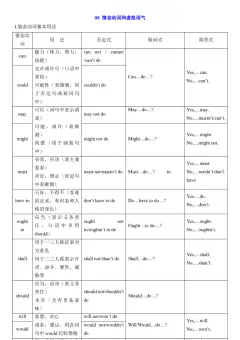
情态动词(动词 · 6 词)
语法填空与句型转换必考:后接动词原形,无人称变化
- cankæn
能;会(过去式 could) 我英语歌唱得很好。 I can sing English songs very well.
- mustmʌst
必须;一定(mustn't 表禁止) 你必须在晚饭前完成作业。 You must finish your homework before dinner.
- shouldʃʊd
应该(表建议) 感冒时你应该多喝水。 You should drink more water when you have a cold.
- maymeɪ
可以;可能 我可以用一下你的字典吗? May I use your dictionary for a minute?
- willwɪl
将要(表将来) 下周五我们将举行运动会。 We will have a sports meeting next Friday.
- have tohæv tu
不得不(第三人称 has to) 她不得不在家照顾弟弟。 She has to look after her little brother at home.