ARTICLE · 1318773
2026年10月24日雅思写作真题
Some people think that everyone has the right to access university education and that governments should make it free for all students, regardless of their financial background. To what extent do you agree or disagree with this opinion?
题型: Agree or Disagree(同意与否)
话题: Education / Government Spending / Social Equality
推荐立场: Partly Agree(部分同意)
这道题最重要的审题点是:教育机会平等(Equal Access)不等于所有人都应该享受免费教育(Universal Free Tuition)。
我们可以支持每个人都有接受高等教育的公平机会,同时反对政府无差别地承担所有学生的学费。
一、审题分析:两个不同的主张
题目实际上包含两个观点:

这里需要注意,the right to access university education 更适合解释为:每个人都应该拥有公平的高等教育机会,而不是所有人都可以不受入学条件限制直接进入大学。
而 regardless of their financial background 强调的是:无论家庭经济条件如何,都应该能够享受免费大学教育。
推荐立场
I partly agree.
同意:政府应该确保贫困学生不会因为经济困难而失去接受高等教育的机会。
不同意:政府没有必要为所有学生提供完全免费的大学教育。
替代方案:提供有针对性的奖学金、助学金和学费补贴。
核心观点:
Equal access to higher education does not necessarily require free tuition for everyone.
二、支持观点:为什么政府应该提供经济支持?
Reason 1:促进教育机会公平
Financial Barriers → Unequal Access → Social Inequality
高昂的大学学费
↓
低收入家庭学生难以负担
↓
优秀学生可能失去深造机会
↓
进一步扩大社会不平等
如果政府提供经济支持,就可以打破这一循环。
Government Support → Equal Opportunities → Social Mobility
高频表达
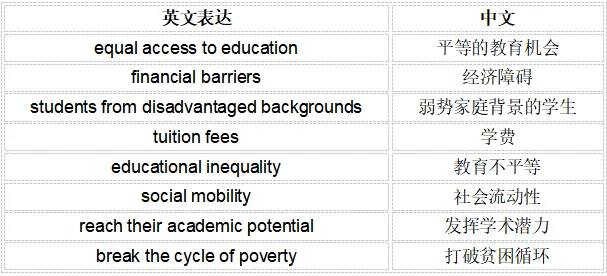
高分论证句
High tuition fees may prevent academically capable students from disadvantaged backgrounds from pursuing higher education, regardless of their abilities or potential.
这句话的重点在于:
Economic Background ≠ Academic Ability
一个学生是否有能力接受高等教育,不应该完全取决于家庭收入。
进一步展开:
By reducing financial barriers, governments can promote social mobility and enable more talented individuals to contribute to society.
三、反对观点:为什么不应该对所有人免费?
Reason 2:全民免费可能增加政府财政负担
Universal Free Tuition → Higher Public Spending → Pressure on Government Budgets
政府承担所有大学生的学费
↓
需要投入大量公共资金
↓
其他公共服务可能面临预算压力
例如,政府还需要为医疗、基础教育、公共交通等领域提供资金。
高频表达:
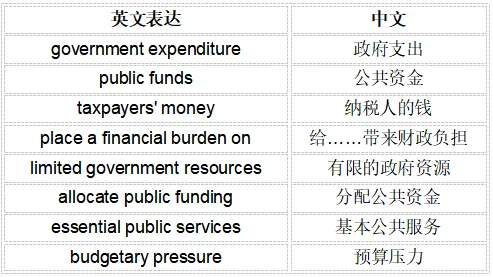
高分论证句
Providing free university education to all students would require substantial public expenditure, potentially diverting resources away from other essential services such as healthcare and primary education.
这句话体现了一个非常重要的政府政策类逻辑:
Limited Resources → Competing Priorities → Resource Allocation
政府预算有限,不同公共服务之间需要合理分配资源。
Reason 3:全民免费未必是最公平的资源分配方式
如果政府为所有学生支付学费,那么来自富裕家庭的学生同样可以获得补贴。
但这些家庭可能完全有能力承担教育费用。
因此:
Universal Subsidies → Benefits for Wealthy Families → Less Targeted Support
相比之下,政府可以把更多资源投入真正需要帮助的学生身上。
高分句:
Subsidizing students from wealthy families may be a less efficient use of public funds than directing financial assistance towards those who genuinely need it.
四、最推荐的解决方案:Targeted Financial Support
这道题非常适合提出一个替代方案:
Need-based Financial Aid(按经济需求提供资助)
Identify Financial Need → Provide Targeted Support → Ensure Equal Access
识别真正有经济困难的学生
↓
提供奖学金、助学金或学费减免
↓
让更多学生获得公平的教育机会
高频表达
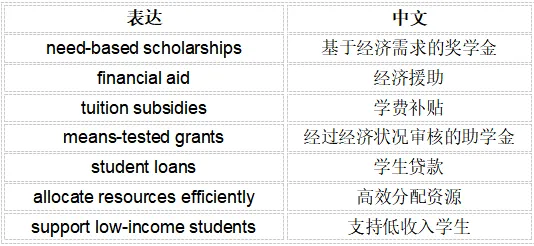
高分句
A more practical approach would be to offer need-based scholarships and tuition subsidies, ensuring that financial difficulties do not prevent qualified students from attending university.
这一方案同时回应了题目的两个核心问题:
既保障教育机会,又避免不必要的财政支出。
五、推荐写作结构
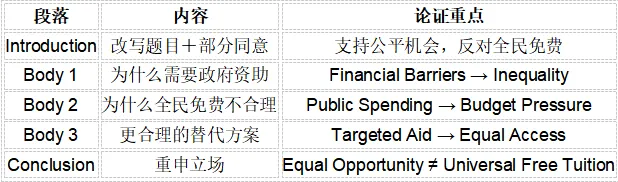
六、Band 8 参考范文
Should University Education Be Free for Everyone?
Access to higher education is widely regarded as an important factor in promoting individual development and social equality. While I agree that financial circumstances should not prevent qualified students from attending university, I do not believe that governments should necessarily provide free tuition to everyone.
One compelling argument for government support is that high tuition fees can create significant barriers for students from disadvantaged backgrounds. Many academically capable young people may be unable to pursue university degrees simply because their families cannot afford the costs. This not only limits their personal opportunities but also prevents society from benefiting from their potential contributions. By providing financial assistance, governments can make higher education more accessible and promote greater social mobility.
However, making university education completely free for all students could place considerable pressure on public finances. Governments have limited budgets and must also fund essential services such as healthcare, primary education and public infrastructure. Allocating substantial resources to universal free tuition might reduce the funding available for these other priorities. Furthermore, students from wealthy families would receive the same financial benefits as those from low-income households, even though they may not require government assistance.
A more balanced approach would be to provide targeted financial support based on students' economic circumstances. For example, governments could offer need-based scholarships, tuition subsidies and affordable student loans to ensure that qualified students are not excluded from higher education because of financial difficulties. Such policies would promote equal opportunities while allowing public resources to be distributed more efficiently.
In conclusion, I strongly support the principle that university education should be accessible regardless of financial background. Nevertheless, I believe that targeted financial assistance is a more practical and equitable solution than making university education entirely free for everyone.
约320词|Band 8目标参考范文,非官方评分

关注这个公众号
备考路上不孤单
Offer