ARTICLE · 1343466
高考英语阅读训练|2026-11-11:① 成都蓉城无缘2026中超冠军 ② 控制错觉 ③ 学会说「不」(七选五)
高考英语阅读理解 · 每日训练
日期:2026-11-11(星期三) · 今日话题:当下体育热点(中超)+ 社会心理(控制错觉)+ 生活指导(七选五) · 对标新课标 I 卷 C / D 篇 + 七选五
① 成都蓉城无缘2026中超冠军:领跑29轮却末轮憾失(体育热点) ② 控制错觉:为何在纯靠运气时误以为能掌控(Langer 1975) ③ 学会说「不」:守住边界(七选五)
Passage 1 · 热点报道(中国体育·非科技)Passage 2 · 议论文(外刊 D 篇·社会心理)七选五 · 5 空 7 选 2 多余
时事/理论来源:Passage 1 真实事件与数据(公开体育报道,非国家机关口径、不引用机关文件或工作人员表述):2026 赛季中超联赛 11 月 8 日收官;成都蓉城客场 2:3 不敌山东泰山,大连英博 3:1 胜天津津门虎,两队同积 52 分,英博凭相互战绩(双杀蓉城)夺冠,蓉城居亚;蓉城本季曾领跑积分榜 29 轮、上半程领先优势一度达 18 分、末轮只需 1 分即可夺冠却告失利、超 4000 名球迷远征济南、主帅公开表达失望、亚军为队史中超最佳排名、获 2027 亚冠二级联赛资格。来源:中新社、光明网、人民网体育等公开体育报道(2026-11 检索),未虚构。Passage 2 为外刊社会心理通识,依据:Langer (1975) "The illusion of control," Journal of Personality and Social Psychology 32(2):311–328(六研究、631 名成人);办公室彩票研究——自选型卡片者平均要价 $8.67、被分配者仅 $1.96,选择不改变中奖概率;四项技能线索 choice / competition / familiarity / involvement;赛马场投注者信心随开赛临近上升。事实均取索(APA/PsycInfo 摘要、科普平台),未虚构。七选五为通用生活指导,无需核验。
Passage 1成都蓉城无缘2026中超冠军:领跑29轮,却倒在最后一步
体裁:热点报道(中国体育·非科技) 词数:约 354 难度:★★★☆(对标 C 篇中难偏上)
原文(先做后看解析;仅真超纲词就近标注,其余请语境自猜)
When the final whistle blew in Jinan on 8 November 2026, Chengdu Rongcheng had just lost 2–3 to Shandong Taishan — and with that result, the Chinese Super League title slipped away. On the same evening Dalian Yingbo beat Tianjin 3–1; the two sides finished level on 52 points, but Yingbo claimed the championship on head-to-head record, leaving Chengdu in second place. Having held several match points in the closing weeks, the club let each one slip, so the final whistle felt less like a defeat than a chance missed.
The 2026 campaign had opened in a very different mood. Chengdu raced to a lead that at one stage stretched to 18 points over the nearest rival, so comfortable that some commentators hinted the trophy could be settled early. The team played fast, fearless football built on quick passing and a high press, and its home ground rang with the songs of devoted supporters who filled the stands week after week. After the summer, however, the momentum drained away. From early September the side managed just two league goals and a single point across many weeks — a stretch poorer than several teams later relegated.
What made the ending sting was how close the prize had been. Chengdu entered the last round still holding its fate in its own hands: a draw would have been enough to be crowned, and the squad looked poised to finish the job at last. Instead the players travelled north into a cold, rainy night, fell behind early, pulled one back before half-time through Felipe, then conceded again to a long-range strike and could not find a third. More than 4,000 travelling fans, soaked but singing, stayed until the end.
The club later posted an open letter of apology, telling supporters it was sorry not to have reached the highest podium, while the coach admitted deep disappointment. Yet second place remains the club's best finish since it joined the top flight, and a place in next year's AFC tournament offers a fresh beginning. The season seemed to show that sport rewards not the team that leads longest, but the one that keeps its nerve when the advantage is thinnest.
题目(Q1–Q4)
What happened to Chengdu Rongcheng on the final matchday of the 2026 season?A. It lost 2–3 to Shandong Taishan and finished as runners-up.B. It beat Dalian Yingbo to win the league title.C. It drew with Tianjin and kept its lead at the top.D. It failed to qualify for the top division altogether. Why did the final defeat feel especially painful to the club and its fans?A. The team had little previous experience at this level.B. The opponents were weaker and had won fewer matches.C. The referee made several decisions against Chengdu.D. The title had seemed within reach after a long spell at the top and a one-point need. What is the passage mainly about?A. How Dalian Yingbo built the strongest squad in the league.B. A season-long leader's sudden fall short of the title, and what it reveals about sport.C. Why football fans in Chengdu are the loudest in the country.D. The history of the Chinese Super League since it began. What does the word "poised" in the passage most probably mean?A. Worried and uncertain about what comes next.B. Forced by others to act against one's will.C. On the point of doing something; ready.D. Pleased with a result that was unexpected.
逐题解析
Q1 答案:A
正确原因:细节题。首段"When the final whistle blew ... Chengdu Rongcheng had just lost 2–3 to Shandong Taishan"与"leaving Chengdu in second place"直接说明:末轮客场 2:3 负于山东泰山、最终排名第二(亚军),A 项吻合。同段"Dalian Yingbo beat Tianjin 3–1 ... Yingbo claimed the championship"交代对手夺冠,故排除 B。
干扰项:B 张冠李戴——夺冠的是大连英博而非成都;C 与首段"lost 2–3"及"second place"相反;D 无中生有——文末明确"best finish since it joined the top flight",说明本就在顶级联赛。
Q2 答案:D ★踮脚
正确原因:推理判断题(推一步)。第二段"sat atop the table for 29 of the season's 30 rounds""lead that at one stage stretched to 18 points"与第三段"entered the last round still holding its fate in its own hands: a draw would have been enough to be crowned"三处合成:球队曾长期领跑、末轮只需 1 分即可登顶,冠军近在咫尺却痛失,原文无原句但可推其"痛"在于希望之大、失落之近,D 正确。
干扰项:A 与末段"best finish since it joined the top flight"及"队史最佳排名"相悖(球队本就在顶级联赛且有建树,非缺乏经验);B 与事实相反——对手英博末轮获胜夺冠,实力不弱;C 文中未提裁判,属无中生有。
Q3 答案:B
正确原因:主旨题。全文四段依次为"收官惨案(首段,负泰山、居亚)→ 前半程辉煌(第二段,领跑 29 轮、领先 18 分)→ 末轮痛失(第三段,仅需 1 分却失利、球迷远征)→ 题旨升华(末段,亚军虽最佳排名,启示'体育奖赏的是最后守住定力者')",B 项"长期领跑者戏剧性错失冠军,及其揭示的体育道理"三线全覆盖。
干扰项:A 仅第二段一处背景;C 将"球迷远征高歌"夸大成"全国最吵",文中无比较;D 文中未追溯联赛史,属无中生有。
Q4 答案:C
正确原因:词义猜测题。第三段"a draw would have been enough to be crowned, and the squad looked poised to finish the job at last"中,poised 与"只需平局即可加冕""at last(终于)"并列,描绘球队"蓄势待发、即将完成夺冠"的状态;且后句"Instead ..."转折写其未能如愿,反证 poised 指向"即将、准备好"而非"担忧/被迫/惊喜",C 项"即将做某事;准备好的"最贴切。目标词已加粗提示定位。
干扰项:A 恰与语境相反(球队当时信心在握,非忧疑);B 文中无"被强迫"语义;D "对意外结果高兴"与末段失望基调冲突。
语篇分析
体裁:热点报道(中国体育·非虚构改写,含数据、叙事张力与题旨升华)。
结构:起(8 日济南终场哨,蓉城 2:3 负泰山、英博凭相互战绩夺冠、蓉城居亚,收官如"错失良机"而非单纯失利)→ 承(前半程:曾领跑 29 轮、领先达 18 分、快打旋风+主场球迷助威;夏窗后势头顿失,9 月起数周仅 2 球 1 分,逊于多支保级队)→ 转(末轮痛失:手握主动权、平局即登顶、看似 poised 收官,却客场雨夜先丢球、费利佩半场前扳回、再被世界波反超、终未觅第三球;4000+ 球迷淋雨高歌至终场)→ 合(俱乐部致歉信、主帅失望;亚军仍队史最佳、获 2027 亚冠资格;点题"体育奖赏最后守住定力者")。
难度提示:数据密集且多套口径同现(2–3 / 3–1 / 52 分 / 29 轮 / 18 分 / 4000+ / 2027),忌见大数即选;注意第三段段首 "What made the ending sting was how close the prize had been" 是评价由"惨"转"惜"的枢纽,Q2 为★踮脚推理,须把"长期领跑"与"末轮仅需 1 分"合成为"希望越大、失落越痛"的推断。
核心词汇(8–12 个,含派生词构词法)
词组 / 固定搭配
slip away 溜走;错失sit atop the table 高居积分榜首draw level on points 积分持平on head-to-head record 凭相互战绩pull one back 扳回一城keep one's nerve 保持定力
阅读知识点
① 阅读——"热点报道多套数据"防错配:首段与末段 2–3(比分) / 3–1(比分) / 52(积分) / 29(领跑轮次) / 18(领先分差) / 4000+(远征球迷) / 2027(亚冠年份) 多套口径同现,细节题须回原文锁定"哪组数字答哪个问题",忌把"对手比分"当"自身比分"、把"领跑轮次"当"夺冠所需分"。
② 阅读——"长程反差+比喻题旨"推理(踮脚)法:Q2 需把第二段"29 轮领跑、领先 18 分"与第三段"末轮平局即登顶"合成为"希望越大、失落越痛"的推断;Q4 借并列结构 "a draw would have been enough ... and the squad looked poised to ..." 判定 poised 的"即将/准备好"义,避免落入"担忧/被迫"等反向干扰。
练习建议:体育/赛事热点按"结果—前半程—转折—题旨"四层读,遇到评价转折词(Yet / Instead / What made ... sting)先标出,它们往往是推理题与态度题的证据入口。
Passage 2控制错觉:为何在纯靠运气的局面里,我们误以为自己能掌控
体裁:议论文(外刊 D 篇·社会心理) 词数:约 437 难度:★★★★(对标 D 篇高难,长难句密)
原文(先做后看解析;生词请语境或词根推导)
In 1975 Ellen Langer published a paper in the Journal of Personality and Social Psychology that disturbed a tidy assumption: that people weigh pure chance by the odds alone. Expected-utility models had treated a lottery as nothing more than a lottery, yet her results hinted that something else was moving beneath the surface. Across six studies involving more than 600 adults, she showed that when a random task carries a flavour of skill, people quietly come to feel they can steer the result. She named this the illusion of control.
The best-known study ran in two offices. Workers were offered a one-dollar lottery ticket for a cash prize, and a single winner would be drawn later. Half the buyers were allowed to pick their own card; the other half were handed one by the experimenter. Before the draw, each person was asked the lowest price at which they would sell the ticket back. Those who had chosen their card asked an average of $8.67; those who had been given one asked just $1.96. The tickets were alike in the ways that mattered, and the winner would be chosen at random whatever card a person held. The act of choosing changed nothing about the draw, and both groups knew the rules — yet the chosen ticket felt worth more than four times as much.
Langer traced the effect to four cues we normally tie to skill: choice, competition, familiarity, and active involvement. In a separate task, people who bet against a nervous, plainly dressed opponent wagered more than those facing a confident one, as though the opponent's unease were a weakness to exploit. Familiar symbols printed on a ticket raised its perceived value; a few practice trials did the same. Each cue, on its own, lifted confidence without shifting a single probability. At a racetrack, bettors' confidence grew as post time approached, although the horse's chance had not moved.
The illusion is far from a laboratory curiosity. It helps explain why investors hold on to losing shares they selected themselves, why patients skip a medicine they declined to choose, and why a player who rolls the dice feels the throw is somehow theirs. The pattern repeats in casinos, where players insist on "their" numbers, and in medical choices, where people trust a treatment they picked over one assigned to them. Noticing the gap between what we can shape and what we merely witness is a quiet guard against costly bets. Langer's work appeared a quarter-century before behavioural economics reached the mainstream, yet it still warns clearly: when the setting resembles skill and the result is chance, our confidence tends to outrun the facts.
题目(Q5–Q8)
According to the passage, what did Langer's best-known 1975 study do?A. It asked people to estimate the odds of winning a lottery they had not joined.B. It let some buyers choose their ticket while others were given one, then asked each a selling price.C. It compared the moods of people who won a lottery with those who lost.D. It trained one group to calculate probabilities before they placed any bet. What can be inferred from the $8.67 versus $1.96 difference in selling prices?A. Merely choosing a ticket led people to value an identical chance far more highly.B. The chosen ticket actually had a higher mathematical chance of winning.C. Workers in offices care more about money than university students do.D. People who chose their card were richer than those who were handed one. Which situation best illustrates the illusion of control described in the passage?A. A runner trains harder after losing a race to a faster opponent.B. A student studies more when a test is known to be difficult.C. A shopper compares prices before deciding which brand to buy.D. A gambler who picks his own lottery numbers bets more on them than on assigned ones. What is the main purpose of the passage?A. To compare Ellen Langer with other researchers who studied human judgement.B. To argue that lotteries should be banned because they exploit ordinary players.C. To explain a finding in which people overestimate their control over chance events, and why it matters.D. To show that a confident opponent wins more often than a nervous one in contests of skill.
逐题解析
Q5 答案:B
正确原因:细节题。第二段"Half the buyers were allowed to pick their own card; the other half were handed one by the experimenter. Before the draw, each person was asked the lowest price at which they would sell the ticket back"明确:一半被试自选卡片、另一半由实验者发放,并各自被问转卖底价,B 项吻合。
干扰项:A 把"未加入的彩票"误植(被试都买了票);C 是"赢家 vs 输家情绪对比",文中无;D 的"训练计算概率"是文中没有的操作。
Q6 答案:A ★踮脚
正确原因:推理判断题(推一步)。第二段"Those who had chosen their card asked an average of $8.67; those who had been given one asked just $1.96"与"The act of choosing changed nothing about the draw ... yet the chosen ticket felt worth more than four times as much"合成:两张票中奖概率完全相同,仅因"是否亲自选"这一动作,人们便对完全相同的机会高估了四倍以上的价值,A 正确。
干扰项:B 反向——第二段明言选择"changed nothing about the draw"(概率未变);C 无中生有(未比较职业/学生群体);D 无据——文中未比较两组财富。
Q7 答案:D
正确原因:推理判断题(概念应用)。第三段"four cues we normally tie to skill: choice ..."与首段"when a random task carries a flavour of skill, people quietly come to feel they can steer the result"给出控制错觉定义:在随机任务中因"选择"等技能线索而误以为能掌控。D 项"自选号码者比被分配号码者下注更多"正是 choice 线索的迁移,正确。
干扰项:A 训练更刻苦是合理努力,非错觉;B 按难度调整学习是理性策略;C 比价是理性消费,三者均无"把随机当可控"的扭曲。
Q8 答案:C
正确原因:写作目的题。全文先破题引出"控制错觉"(首段),再以办公室彩票研究($8.67 vs $1.96)与四项技能线索、赛马场研究呈现发现(第二、三段),末段给出应用(投资/医疗/赌场)与"识别可控与不可控之差"的启示,目的在"解释这一关于掌控感的错觉及其现实意义",C 全面概括。
干扰项:A 片面——Langer 是提出者,文中未与其他研究者比较方法;B 误读——文中从未主张禁彩;D 夸大——末段说对手"unease"被当作可乘之机,并非主张自信者总胜,且偏离"控制错觉"主题。
语篇分析
体裁:议论文/说明文(外刊社会心理通识改写,实验复述+机制阐释+应用,长难句密)。
结构:提(1975 Langer 论文挑战"人按概率权衡纯运气"假设;六研究 600+ 成人;随机任务带"技能味"时人便觉可左右结果 → 命名 illusion of control)→ 证(办公室彩票研究:自选型卡片者平均要价 $8.67、被分配者仅 $1.96;票本身无异、中奖随机,选择未改概率却让同票贵四倍)→ 析(四项技能线索 choice/competition/familiarity/involvement;对紧张对手下注更多、熟悉符号增值、练习提升信心,各线索单独抬高信心却不改概率;赛马场投注者信心随开赛临近上升)→ 用(投资自留亏损股、患者跳过未自选的药、赌场认"自己"的号码、医疗偏好自选方案;识别可控与不可控之差是防坑护栏;Langer 早于行为经济学主流四分之一个世纪)。
难度提示:数字口径多($8.67 / $1.96 / 1975 / 600+ / four cues),须按"哪句讲哪个研究"定位;Q6 为★踮脚推理,需把"同概率却被高估四倍"与首段"带技能味便觉可控"合成为因果链;末段 "when the setting resembles skill and the result is chance, our confidence tends to outrun the facts" 是防过度推断的关键限定(应用举例不推出"应禁彩/自信者必胜")。
核心词汇(8–12 个,含派生词构词法)
词组 / 固定搭配
weigh by the odds 按概率权衡carry a flavour of 带有……的味道steer the result 左右结果on its own 独自;本身hold on to 持有;紧握outrun the facts 超出事实
阅读知识点
① 阅读——"单主实验+多线索支撑"定位法:实验类说明文常以"一个标志性研究(办公室彩票 $8.67 vs $1.96)+ 若干支撑线索(四项技能线索、赛马场)"结构展开,须建立"研究—人物—数字—结论"四元组:Langer 1975 / 六研究 600+ 成人 / 自选型 $8.67 vs 分配型 $1.96 / 四线索 choice·competition·familiarity·involvement / 赛马场信心随开赛升。Q5 考主实验设计本身,干扰项多从"赢家对比/训练"挪用,回原文按"谁被选、谁被发、问了什么价"切开即可排除。
② 阅读——"反直觉推论(踮脚)"法:Q6 须把"同概率却被高估四倍"这一表面矛盾,与首段"随机任务带技能味便觉可控"合成为因果解释;同时留意末段护栏句 "our confidence tends to outrun the facts" 与"应用举例不推出禁彩/自信者必胜",防止把结论推向绝对化表述(Q8 的 B、D 正是反向干扰)。
练习建议:遇到"主实验 + 支撑线索 + 应用 + 限定"结构,先画一张"研究者—年份—发现—数字"对照表,再做推理题;凡选项出现"应禁止/总胜过/无法……"等主张,回末段找限定句核对。
七选五学会说「不」:守住边界,关系反而更稳
体裁:说明指导(生活指导·边界) 词数:约 347 难度:★★★(中难说明,含衔接/逻辑)
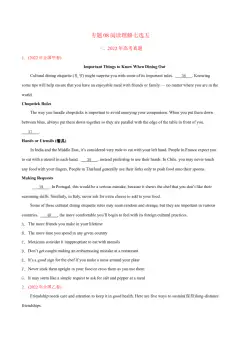
原文(5 空 7 选,2 项多余;先做后核对)
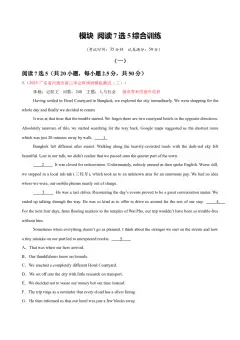
Most of us find it harder than we expect to turn down a request. We worry that a refusal will sound cold, or that the other person will think less of us. (1)____ We say yes to extra tasks, late invitations, and favours we cannot really afford, then quietly resent the hours we have lost. Learning to say no is less about shutting people out than about guarding the energy you need for what matters. The pattern is hard to spot: a single agreement feels harmless until a run of them crowds out the plans you made for yourself.
A useful first step is to change what the word means to you. (2)____ A "no" to a neighbour's favour is not a judgement on the neighbour; it is a statement about your own afternoon. Reframed this way, refusal becomes a form of honesty rather than a small cruelty. Seen this way, a boundary is less a wall between people than a clear signal of what you can give well.
When a request arrives, do not answer on the spot. (3)____ A breath, a promise to reply later, a moment to check your calendar — these small delays stop an automatic "yes" from slipping out before you have thought. A pause also lets the other person hear your answer as considered rather than as a reflex.
Once you have decided, keep the message plain. (4)____ A short reply leaves less room for misunderstanding and shows respect for the other person's time as well as your own. A long apology or a list of excuses often sounds like an invitation to argue. A simple, warm "I can't this time" is usually enough, and it respects both sides.
If you wish to help but cannot in the way asked, offer a different route. (5)____ Perhaps you cannot join the trip, but you can lend the car, or meet on another week. Such a reply keeps the bond intact while still protecting your limit, so saying no need not mean pulling away. Boundaries set with care do not end relationships; they make the ones we keep steadier.
题目(选项 A–G,选 5 填 (1)–(5),2 项多余)
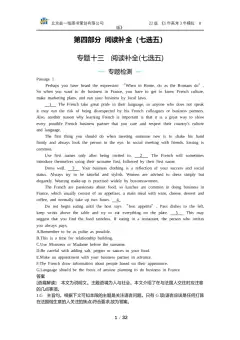
A. Start by giving yourself a short pause before you reply, so the answer comes from choice rather than habit. B. Keep the refusal brief, and do not feel the need to explain the reasons behind it. C. The busiest people are usually the ones who say yes the most. D. Some requests are worth clearing your schedule for, and you will know which ones. E. Remember that saying no to one thing means saying yes to another thing you care about. F. When possible, suggest a different way you could help instead of refusing outright. G. The price appears afterwards, in exhaustion and the nagging feeling that your time belongs to others.
逐题解析
(1) 答案:G
逻辑衔接(破题转折):空前把"难拒绝"归因于怕显得冷淡、怕被看低,空后"We say yes to extra tasks ... then quietly resent the hours we have lost"转入"答应后悄悄后悔"。G 项"The price appears afterwards, in exhaustion and the nagging feeling that your time belongs to others"以 the price / the nagging feeling 承接上句担忧、以 afterwards / resentment 领起后句"悄悄后悔",构成"担忧—代价—后悔"三角,衔接最紧。
干扰项:C 是泛泛观察(忙人最常说 yes),无具体空位承接;D 讲"值得清空日程的请求",与段落"拒绝的代价"基调不符,两处均无契合空位。
(2) 答案:E
逻辑衔接(释义展开):空前"change what the word means to you"提出"重新定义拒绝",空后"A 'no' to a neighbour's favour is not a judgement on the neighbour; it is a statement about your own afternoon"用具体场景解释。E 项"Remember that saying no to one thing means saying yes to another thing you care about"以 no-to-one / yes-to-another 的对称结构,正是对"重新定义"的展开,并为后句"不是对邻居的评判、而是对自己下午的声明"铺设逻辑,位置必在两者之间。
干扰项:A 的 pause 属第三段"别当场答应";F 的 different way 属末段"换种方式帮忙";C/D 为排除项。
(3) 答案:A
逻辑衔接(做法递进):空前"do not answer on the spot"提出"别当场答应",空后"A breath, a promise to reply later, a moment to check your calendar"是具体缓冲动作。A 项"Start by giving yourself a short pause before you reply, so the answer comes from choice rather than habit"以 a short pause 复现 on the spot 的反面、以 from choice 呼应后句"自动 yes 溜出",作"原则—动作"过渡最稳。
干扰项:E 已用于(2);G 已用于(1);B 的 brief 属第四段"简短";D/C 为多余项。
(4) 答案:B
逻辑衔接(做法归纳):空前"keep the message plain"提出"把话说直白",空后"A long apology or a list of excuses often sounds like an invitation to argue"从反面说"冗长解释像在邀辩"。B 项"Keep the refusal brief, and do not feel the need to explain the reasons behind it"以 brief / not explain the reasons 与空前 plain、空后 long apology / list of excuses 双重呼应,作段落内核最贴切。
干扰项:G 已用于(1)、E 已用于(2)、A 已用于(3);多余项 C(忙人常说 yes)、D(值得清空日程)与"简短拒绝"主线无关,放任一空都破坏衔接。
(5) 答案:F
逻辑衔接(总结+替代方案):本段为全文末段,空前"If you wish to help but cannot in the way asked, offer a different route"先设"想帮但帮不了原样"的前提,空后"Perhaps you cannot join the trip, but you can lend the car, or meet on another week"举例替代方案。F 项"When possible, suggest a different way you could help instead of refusing outright"以 a different way / instead of refusing 与空前 different route、空后举例完美咬合,且收束于"边界不终结关系",作末段落点最自然。
干扰项:A/G/E/B 已各有定位;多余项 C(忙人常说 yes)、D(值得清空日程的请求)与"换种方式帮忙"基调相悖,强插任一空都会破坏衔接。
语篇分析
体裁:说明指导(生活技能·边界沟通通识,结构清晰,含转折/释义/递进/归纳/总结衔接)。
结构:破题(难拒绝源于怕冷淡/怕被看低;G 引出代价:答应的疲惫与"时间不属于自己"的挥之不去感)→ 释义(E 展开:拒绝一事=对另一事的答应,重定义为诚实而非刻薄)→ 做法一(A 递进:别当场答应,先短暂停顿,让回答出于选择而非习惯)→ 做法二(B 归纳:话说直白,无需解释理由,免成邀辩)→ 收束(F 总结:能帮则换种方式,边界不终结关系,反令关系更稳)。
难度提示:七选五重"句间逻辑"而非生词;解题先抓每段功能(破题转折/释义展开/做法递进/做法归纳/总结替代),再看复现链:think less of us↔the price / nagging feeling↔resent the hours;change what the word means↔no-to-one / yes-to-another↔your own afternoon;on the spot↔a short pause↔slipping out;keep plain↔brief / not explain↔long apology / list of excuses;different route↔a different way / instead of refusing↔lend the car / meet another week。
核心词汇(8–12 个)
词组 / 固定搭配
turn down 拒绝think less of 看低;轻视on the spot 当场slip out 溜出(嘴)set with care 审慎地设立end relationships 终结关系
阅读知识点
① 七选五——"指代回指+功能归类"定位法:先判断每段功能(破题转折/释义展开/做法递进/做法归纳/总结替代),再找"指代词—复现词—逻辑词"三角支撑:G 的 the price / nagging feeling 回指上句担忧、领起下句后悔;E 的 no-to-one / yes-to-another 展开空前"重新定义";A 的 a short pause 回指 on the spot 的反面;B 的 brief / not explain 呼应空前 plain 与空后 long apology / list of excuses;F 的 a different way / instead of refusing 咬合空前 different route 与空后举例。凡空后出现 your own afternoon / the order 等定冠词或对称结构,正确答案多在前一句埋下指代基础。
② 七选五——"多余项反证"法:C(忙人最常说 yes)为泛泛观察、D(值得清空日程的请求)与"如何拒绝"主线无关,把二者强插任一空都会破坏衔接,故为真多余项;排除后反向锁定 G,E,A,B,F,且五字母集合与序列可一并核对(集合 {A,B,E,F,G} ≠ 近次 11-09 {A,C,D,F,G}、11-06 {A,B,C,D,G}、11-04 {B,C,E,F,G}、11-02 {A,C,D,E,F},亦非 {A,B,C,D,E};序列 G,E,A,B,F 非顺次 A,B,C,D,E)。
练习建议:七选五先圈出每空前后句的代词与对称结构(no-to-one / yes-to-another、brief / long apology),它们往往是"答案必须在上一句"的硬线索;再用"多余项反证"复核。
本页面为高考英语阅读理解练习材料,由「高考英语阅读每日训练生成器」自动生成。Passage 1 热点事件与数据经 WebSearch 核验(中新社、光明网、人民网体育等公开体育报道,未引用国家机关文件或工作人员表述);Passage 2 理论经核验(Langer 1975, Journal of Personality and Social Psychology 32(2):311–328,六研究 631 名成人,办公室彩票 $8.67 vs $1.96,四项技能线索,赛马场研究);七选五为通用生活指导,无需核验。本页仅作练习,不代写独立提交作业。