 夜雨聆风
夜雨聆风


雅思口语P3提分关键:举例说明“三步逻辑推导训练法”
在雅思口语Part 3 题型里,Why 类问题最值得反复训练。这类题目不考你“背了什么答案”,而是逼你现场完成一件事:从现象,推到原因,再形成表达。在考察英语能力的同时,还考察你能否完成逻辑闭环说服考官。而接下来我讲的方法尤其适合P3没话说、不知道如何拓展答案的考生。
下面我们用雅思口语P3高频话题举例说明如何用三步走推理框架,答出高分答案:
Q:Why do people use social media so much?
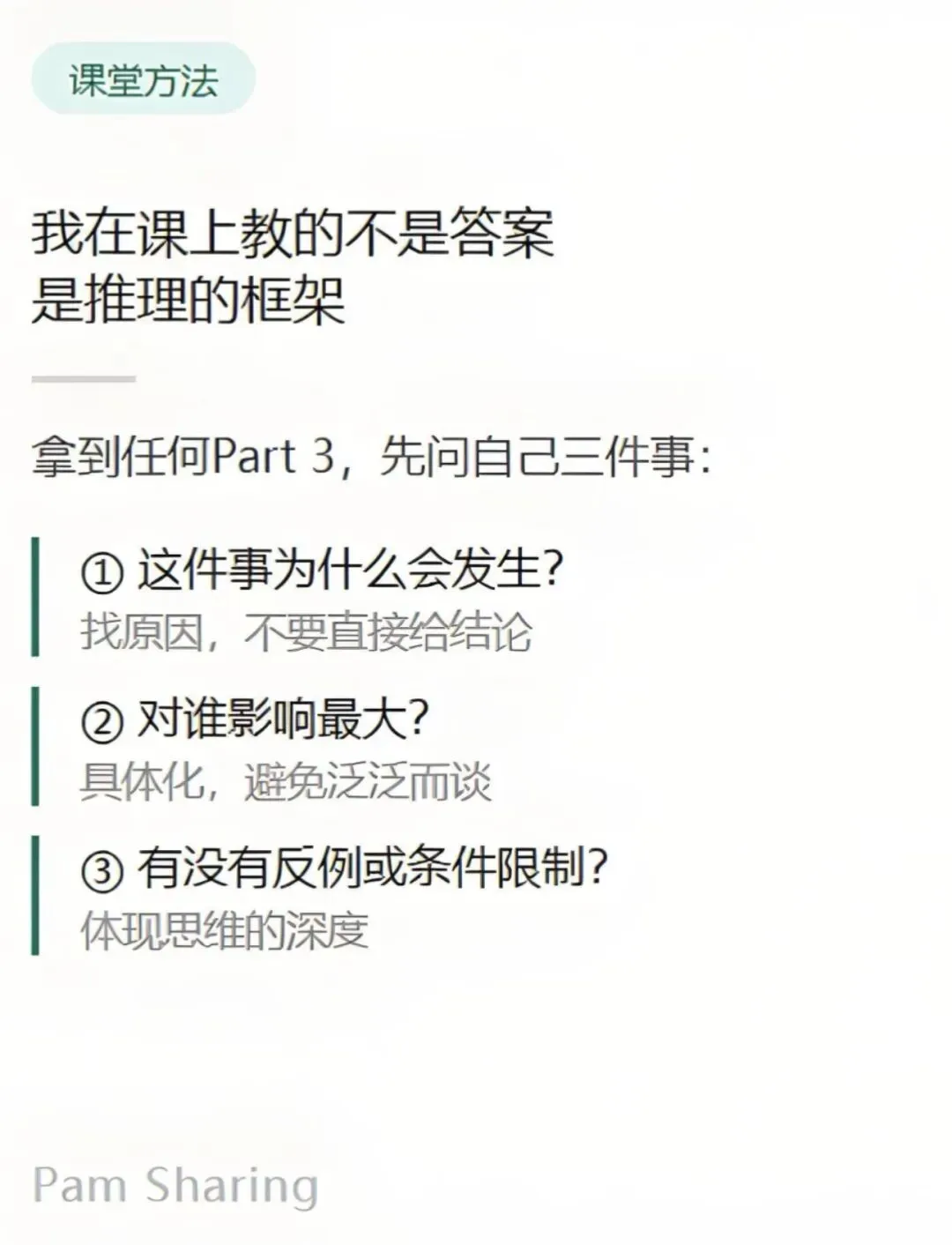
如图所示,这类题型我们训练答题逻辑时可以问自己三个问题:
- 为什么会发生(找原因,而不是给结论)
- 对谁影响最大(让表达具体)
- 有没有例外或限制(避免一刀切)
第一步:找原因(不要急着下结论)
关于people use social media的原因,很多学生会说:“因为它很方便,很有趣。”
👉 为什么“方便”会导致频繁使用?
👉 为什么“有趣”会让人停不下来?
不要只会生搬硬套后笼统概括,学会解释背后的底层逻辑才是关键。
那么我们可以从social media的性质出发解释第一个理由:
中文逻辑:
人们频繁使用社交媒体,是因为它提供即时反馈(点赞、评论),这种反馈机制容易让人产生依赖。
英文表达:I think one of the main reasons is that social media provides instant feedback, such as likes and comments, which can be quite addictive.
根据逻辑扩展后的8+ Model Answer:
I’d say the primary driver is the instant gratification these platforms provide. Social media is essentially designed to offer a constant stream of dopamine hits through likes, shares, and comments. This creates a sort of feedback loop that makes the experience incredibly compulsive, leading many to scroll mindlessly for hours.
亮点词汇:Instant gratification (即时满足), Dopamine hits (多巴胺奖励), Feedback loop (反馈循环), Compulsive (强迫性的/令人上瘾的).
第二步:具体到人(避免泛泛而谈)
那么顺着第一步往下说,哪些人会特别容易上瘾呢?如果你一直停留在people,你的答案会很空。你需要主动缩小范围,让表达“落地”。
中文逻辑:
其中青少年受影响最大,因为他们更在意他人的评价,也更容易被外界反馈影响。
英文表达:
It probably affects young people the most, because they tend to care more about how others see them and are more easily influenced by external feedback.
根据逻辑扩展后的8+ Model Answer:
This is particularly evident among the younger generation—Gen Z, for instance. Since they are at a stage where they are still shaping their identity, they tend to be more susceptible to peer pressure and validation-seeking behavior. For them, social media isn’t just a tool; it’s a digital stage where their self-worth is often tied to their online persona.
亮点词汇/句式:Shaping their identity (塑造自我认同), Susceptible to (易受…影响), Validation-seeking behavior (寻求认可的行为), Online persona (网络人设).
第三步:加限制或反例(避免答案过于绝对)
如果你的回答只有“社交媒体让人上瘾”,那就是单向结论,缺乏思考深度,可以补一个反例,也是所谓“延长答案”的一步哦~
So who are less likely to get addicted? E.g…
中文逻辑:
但并不是所有人都会沉迷,有些人只是把社交媒体当作获取信息的工具。
英文表达:
However, not everyone becomes dependent on it. Some people simply use it as a tool to access information.
根据逻辑扩展后的8+ Model Answer:
That said, it’s not a universal addiction. There’s a growing segment of users who are becoming more digitally conscious. They treat these apps purely as utility tools for networking or staying informed, and they’re quite disciplined about limiting their screen time to avoid the pitfalls of digital burnout.
亮点词汇/句式:That said (话虽如此 – 高级转折), Digitally conscious (有数字意识的), Utility tools (工具性设备), Digital burnout (数字化疲劳/倦怠).
Q:Why do people use social media so much?
最终答案(整合三步逻辑后可适当扩充)
I’d say the primary driver is the instant gratification these platforms provide. Social media is essentially designed to offer a constant stream of dopamine hits through likes and comments, creating a feedback loop that can be incredibly compulsive.
This is particularly evident among teenagers and young adults. Since they are still in the process of shaping their identity, they tend to be more susceptible to peer pressure and validation-seeking behavior. For many, their self-esteem becomes heavily tied to their online persona.
However, it’s not a universal addiction. There’s a growing number of people who are becoming more digitally conscious. They view these platforms purely as utility tools for staying informed or professional networking, and they are generally more disciplined about capping their screen time to avoid the negative effects of digital burnout.
⚠️Pam原创!