ARTICLE · 1374455
小升初数学:分数、百分数、比,为什么必须连起来学?


孩子学分数时会算,学百分数时也会算,可一到应用题,就开始犹豫:
“这道题用乘法,还是除法?”
“这里的单位‘1’,到底是谁?”
“男生和女生的比是3∶2,为什么男生不是全班的三分之二?”
这些疑问,往往指向同一个问题:孩子把分数、百分数、比分成了三个知识点,却没有看见它们之间的联系。
Some children can calculate fractions and percentages but struggle with word problems. Often, they have learned fractions, percentages, and ratios separately without seeing how they connect.
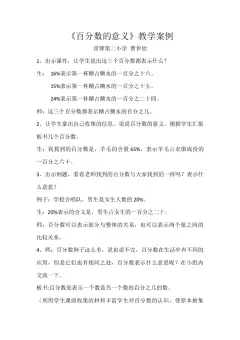
一、同一班学生,可以用三种方式来描述
假设一个班有40人,其中男生24人,女生16人。
我们可以说:
男生占全班人数的 3/5。 男生占全班人数的 60%。 男生与全班人数的比是 3∶5。
这三句话,表达的是同一个数量关系:把全班人数作为比较的标准,男生人数相当于其中的五分之三。
分数用“五分之三”来表示,百分数换成“每一百份中的六十份”,比则写成“3份对5份”。
In a class of 40 students, 24 are boys. Boys make up 3/5, or 60%, of the class. The ratio of boys to the whole class is 3:5. These are three ways to describe the same relationship.
但如果换一句话:
男生与女生的人数比是3∶2。
比较的对象就变了。前面是“男生与全班比较”,这里是“男生与女生比较”。
所以,学这三个知识点,不能只看数字,还要看清楚:谁和谁比?
However, the ratio of boys to girls is 3:2. The comparison has changed. Always ask: What two quantities are being compared?
二、最容易出错的地方:把“部分与部分”当成“部分与整体”
看到“男生与女生的人数比是3∶2”,有些孩子马上写:
“男生占全班人数的2/3。”
还有些孩子写成3/2。
为什么会错?因为孩子只盯着题目里的3和2,没有想清楚它们分别表示什么。
我们可以这样解释:
男生看作3份,女生看作2份。
全班一共就是:
3+2=5份。
因此:
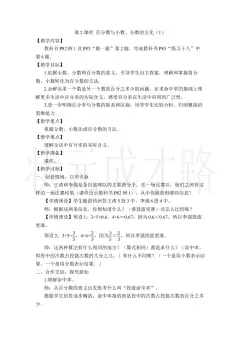
男生占全班的 3/5,也就是60%。 女生占全班的 2/5,也就是40%。 男生人数是女生的 3/2,也就是150%。
同一个3∶2,提问不同,答案就不同。
If the ratio of boys to girls is 3:2, the whole class consists of five equal parts. Boys account for 3/5 of the class, while the number of boys is 3/2 of the number of girls. The answer depends on the comparison.
教学时,不妨让孩子先说一句完整的话,再列式:
“我现在求的是________占________的几分之几。”
这句话说清楚了,分母该放谁,往往就清楚了。
Before calculating, ask the child to complete this sentence: “I am finding what fraction of ______ is ______.” Identifying the whole helps determine the denominator.

三、单位“1”,就是这次比较的标准
不少孩子听过很多遍“找单位‘1’”,还是不知道怎么找。
可以把它说得更生活化一点:
单位“1”,就是这道题里被当作一整份、用来比较的那个量。
例如:
“男生人数是女生人数的150%。”
这次以女生人数为标准,女生人数就是单位“1”。
“男生人数占全班人数的60%。”
这次以全班人数为标准,全班人数就是单位“1”。
男生还是那些男生,但比较标准变了,百分数也就变了。
The reference whole is the quantity used as the basis for comparison. Boys are 150% of the number of girls, but 60% of the whole class. The number of boys stays the same; the reference quantity changes.
也因此,不能只问孩子:“这题算出来是多少?”
还可以多问一句:
“这个百分数,是相对于谁来说的?”
能答清楚这一句,才说明孩子不只是套公式。
Ask not only “What is the answer?” but also “What quantity is this percentage based on?” This reveals whether the child understands the relationship.

四、乘法还是除法,要从关系里判断
继续用这个班级的例子。
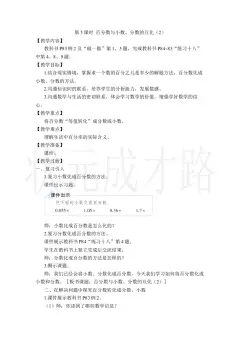
第一种:已知全班40人,男生占60%,求男生人数。
全班人数是标准量,求它的60%是多少:
40×60%=24(人)
第二种:已知男生24人,占全班的60%,求全班人数。
这时,24人只是全班的60%,要求出全班人数:
24÷60%=40(人)
第三种:已知男生24人,全班40人,求男生占百分之几。
这时,要比较男生人数与全班人数:
24÷40=60%
If the whole and the percentage are known, multiply. If the part and the percentage are known, divide to find the whole. If the part and the whole are known, divide the part by the whole to find the percentage.
三个问题,都来自同一个关系:
全班人数×男生所占的百分比=男生人数。
教学时,可以先让孩子把关系写出来,再判断哪一个量未知。这样,比单独背“什么时候乘、什么时候除”更有依据。
All three questions come from the same relationship: whole × percentage = part. Write the relationship first, then identify the missing quantity.
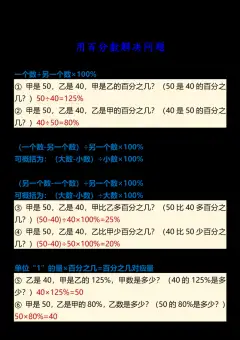
五、为什么“多百分之几”和“少百分之几”不能直接照搬?
这是很适合把分数、百分数和比连起来讲的一类题。
甲有30本书,乙有20本书。
甲比乙多10本,乙比甲少10本。
差的本数相同,但:
甲比乙多百分之几?
以乙的20本为标准:
(30-20)÷20=50%
乙比甲少百分之几?
以甲的30本为标准:
(30-20)÷30=1/3≈33.3%
所以:
甲比乙多50%,不等于乙比甲少50%。
If A has 30 books and B has 20, A has 50% more books than B. But B has about 33.3% fewer books than A. The difference is the same, but the reference quantities are different.
如果把甲、乙的书本数写成3∶2,关系会更清楚:
甲比乙多1份,这1份相对于乙的2份,是1/2。
乙比甲少1份,这1份相对于甲的3份,是1/3。
分数、百分数和比,在这里就连起来了。
The ratio 3:2 makes the difference easier to see. One extra part is half of B’s two parts, but one missing part is one-third of A’s three parts.
六、家庭复习,可以少换几道题,多换几个问法
复习时,不一定要马上拿出一整页练习题。
一盒彩笔就可以用来练。
例如:一盒有红色彩笔8支,蓝色彩笔12支,只有这两种颜色。
可以依次问孩子:
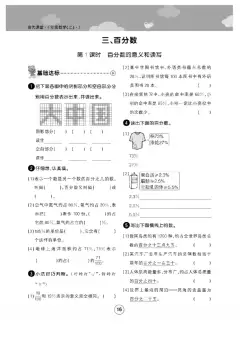
红色彩笔与蓝色彩笔的数量比是多少? 红色彩笔占总数的几分之几?百分之几? 蓝色彩笔的数量是红色彩笔的百分之几? 蓝色彩笔比红色彩笔多百分之几? 红色彩笔比蓝色彩笔少百分之几?
参考答案依次是:
2∶3;2/5、40%;150%;50%;1/3,约33.3%。
Use one simple situation to ask several different questions. With eight red pencils and twelve blue pencils, children can practise ratios, fractions, percentages, and percentage differences without changing the underlying numbers.
做完后,最值得追问的不是“记住了吗”,而是:
“都是这8支和12支彩笔,为什么有时除以8,有时除以12,有时又除以20?”
孩子如果能解释清楚,就说明他开始理解数量关系了。
The key question is: “Why do we sometimes divide by eight, sometimes by twelve, and sometimes by twenty?” A clear explanation shows understanding.

七、小升初真正需要衔接的,是看懂关系的能力
进入初中后,孩子还会接触比例、方程、函数等内容。
比如:
“男生人数是女生人数的1.5倍。”
到了初中,就可以设女生人数为x,写出:
男生人数=1.5x。
小学里学过的分数、百分数、比,正在为这样的表达打基础。
如果孩子能把一句话里的比较对象、标准量和倍数关系说清楚,后面学习用字母表示数、列方程,就多了一份理解的基础。
Fractions, percentages, and ratios prepare children for algebra. “The number of boys is 1.5 times the number of girls” can later be written as 1.5x when x represents the number of girls.
因此,小升初复习时,不妨把这三个知识点放到同一张桌面上:
用分数说一遍,用百分数说一遍,再用比说一遍。
但每说一次,都要带上比较对象,不能只做数字之间的转换。
Practise expressing the same relationship as a fraction, a percentage, and a ratio. Each time, name the quantities being compared.
Ideas for Education|教育小思考

孩子问“这道题到底用乘法还是除法”,我们可以先不急着告诉他答案。
陪他把题目读一遍,问三个问题:
谁和谁比较?
把谁看作单位“1”?
已知什么,要找什么?
分数、百分数、比连起来学,目的就是让孩子看到:看似不同的题目,常常在表达相通的数量关系。
把关系看懂了,计算才有方向,方法也更容易记牢。
When a child asks whether to multiply or divide, pause and ask: What is being compared? What is the reference whole? What is known, and what is missing? Understanding these relationships gives calculations a clear purpose.
今日互动
留言聊一聊:孩子做这类题时,最容易卡在哪一步——找单位“1”、判断乘除,还是分不清“占几分之几”和“多百分之几”?