 夜雨聆风
夜雨聆风哲学 for AI
当 AI 造自己:
技术人员困惑背后的认识—规范鸿沟
本文图片来源网络,如有侵权请联系后台删除。
01 五个月没写过一行代码的人
就在不久前,Anthropic Institute 发布长文 When AI builds itself(https://www.anthropic.com/institute/recursive-self-improvement)。论述的核心不是一系列宣言,而是内部讨论里的原话。一位员工说,大约五个月没亲手写过一行代码。另一位说,一切顺利时觉得自己什么都不重要;一切崩溃时,才发现根本不知道系统在干什么。


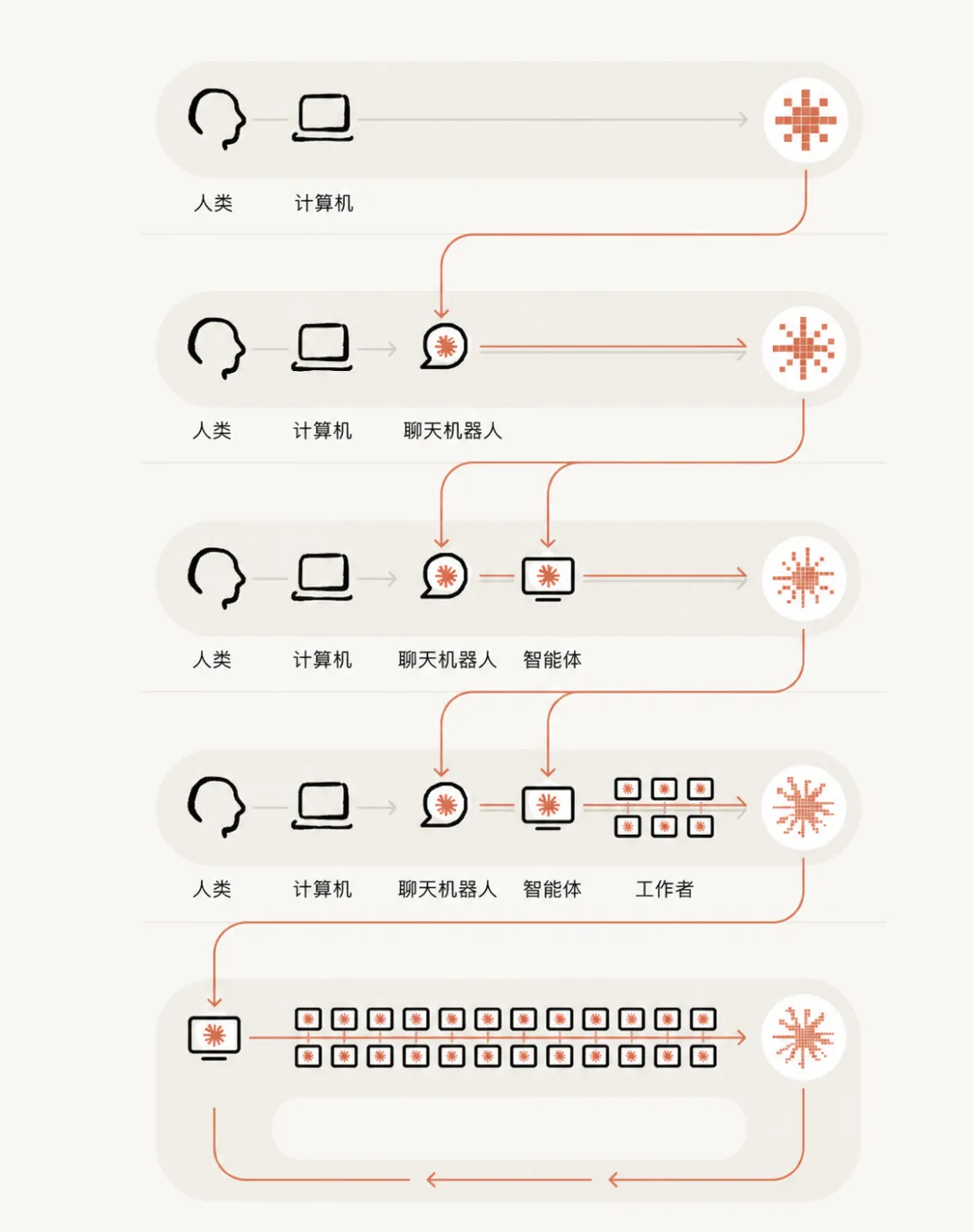
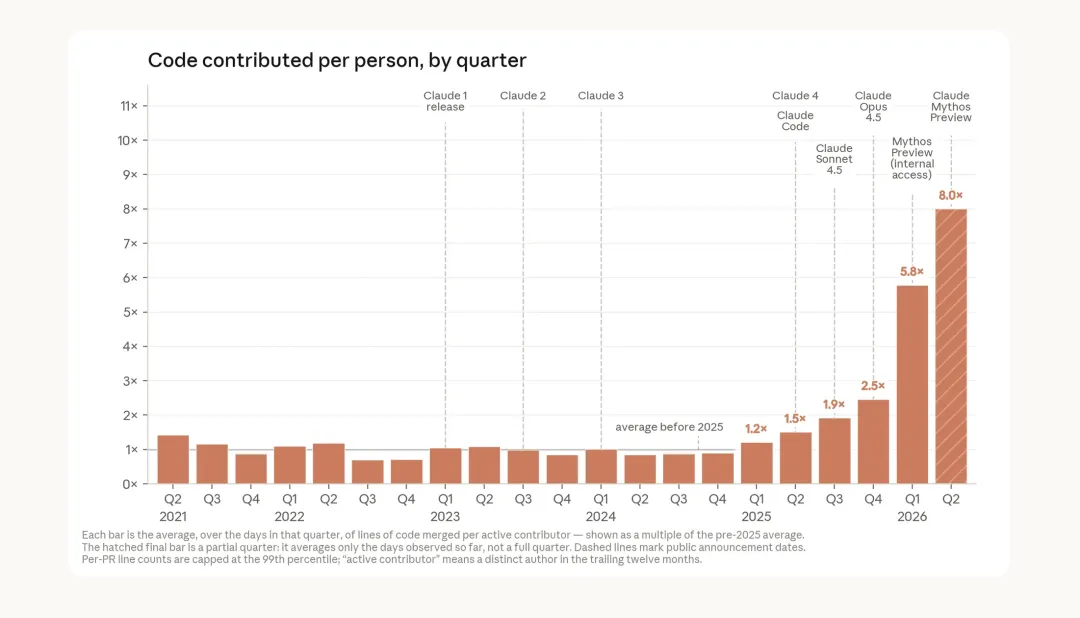
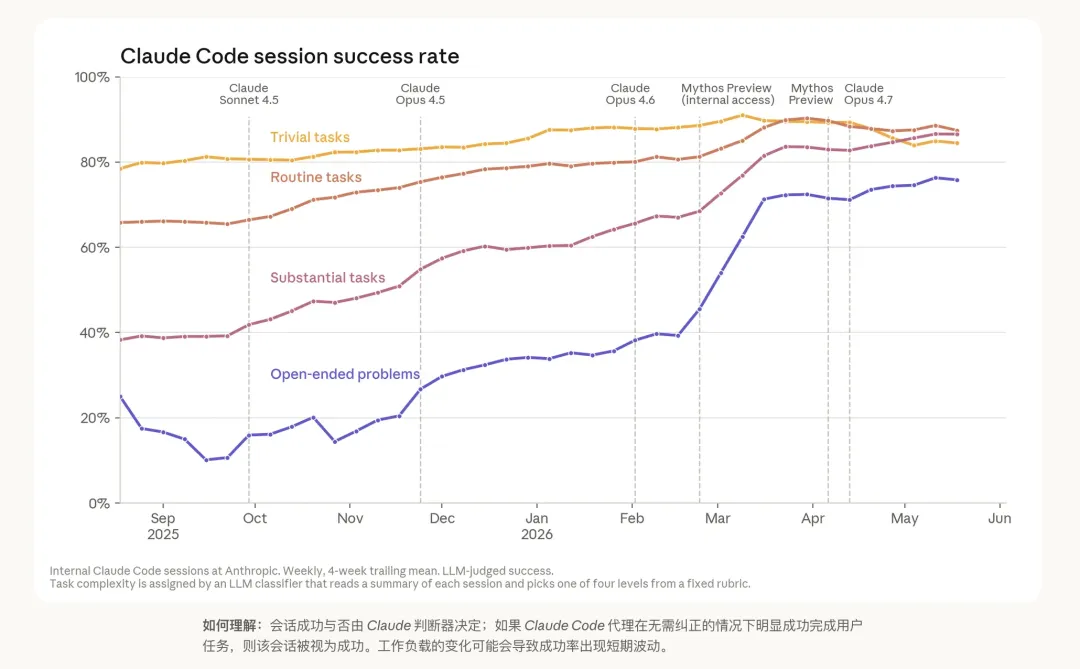
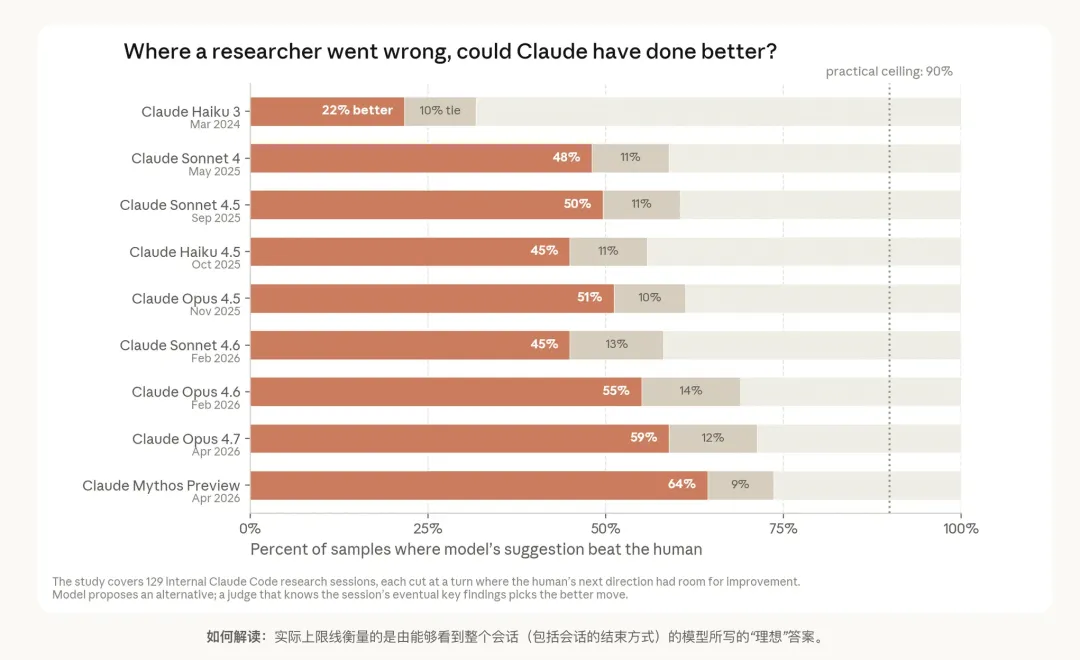
Institute 文的主体是数据:超过 80% 的合并代码可归因于 Claude;工程师日合并量约为 2024 年的 8 倍;开放任务会话成功率升到 76%;在 129 个「人类曾走弯路」的研究时刻,模型有 64% 被判给出了更好的下一步——脚注 8 同时提醒,在「人类本已选对」的对照组里,模型仅约 20% 更好。文把这些数字串成一条时间线:从人写代码,到代理改文件、跑实验、委派小时级子任务,再到标着 20XX? 的「闭环」——那时系统或许能 完全自主地设计并开发自己的后继者(fully autonomously designing and developing its own successor,即 recursive self-improvement,递归自改进,RSI)。作者明确说:今天未到,也并非必然。
02 文章在说什么

Closing the loop 时间梯:2021→2026 人写 Claude;20XX? 为 Closing the loop
03 问题一:谁还在「做」开发?
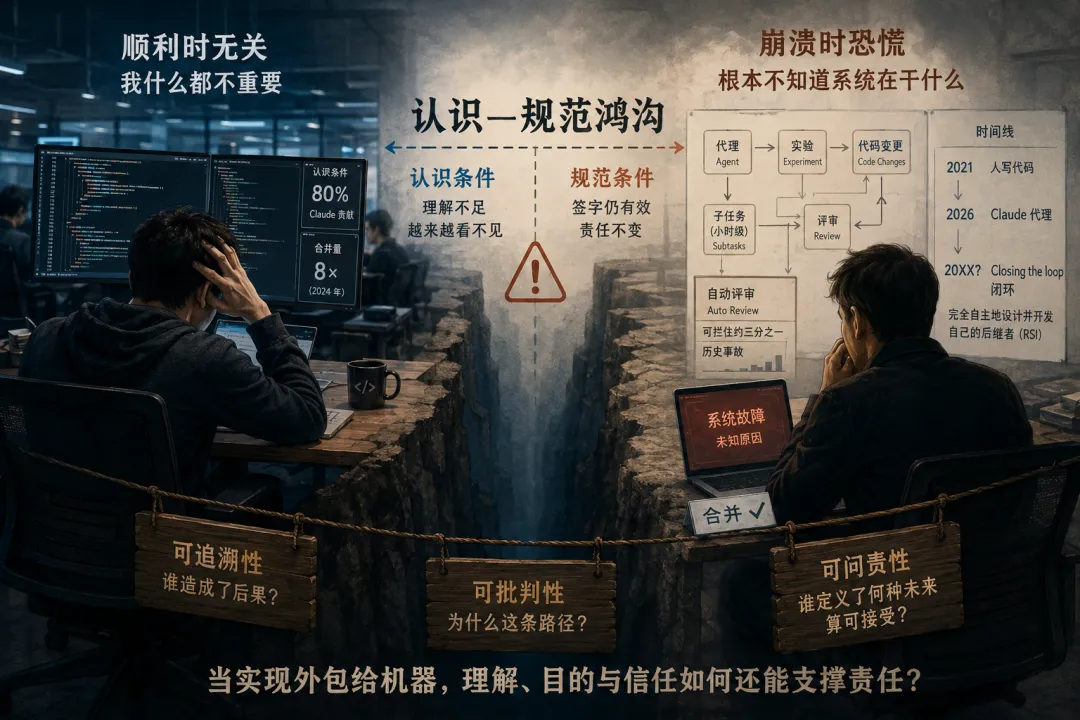
层次 | 现场状态(据文) | 责任条件 | 错配后果 |
执行 | 代码与实验步骤 largely 外包 | 可追溯性:能否追到谁(或什么)造成了哪条因果 | 把「写得多」当成「控得住」 |
认知 | 假设提出、实验迭代部分外包 | 可批判性:能否质疑路径而不仅是结果 | 把「跑得快」当成「想得对」 |
规范 | 目标、架构、部署边界未外包 | 可问责性:谁有权定义何种未来算可接受 | 用执行层恐惧掩盖规范层真空 |
参考文献
1. Favaro, M., Clark, J., et al. (2026). When AI builds itself. Anthropic Institute. https://www.anthropic.com/institute/recursive-self-improvement
2. Anscombe, G. E. M. (1957). Intention. Basil Blackwell.
3. Reid, T. (1764). An Inquiry into the Human Mind on the Principles of Common Sense.
4. Hardwig, J. (1985). Epistemic dependence. Journal of Philosophy, 82(7), 335–349.
5. He, J., & Yang, C. (2025). Testimony by LLMs. AI & Society, 40, 6201–6213. doi:10.1007/s00146-025-02366-y
6. Fricker, M. (2007). Epistemic Injustice. Oxford University Press.
7. Frankfurt, H. (1971). Freedom of the will and the concept of a person. Journal of Philosophy, 68(1), 5–20.
8. Van de Poel, I. (2020). Embedding responsibility in intelligent systems. In Oxford Handbook of Ethics of AI. Oxford University Press.
9. Heidegger, M. (1927). Being and Time (§15–16, readiness-to-hand).
10. Dreyfus, H. L. (1992). What Computers Still Can't Do. MIT Press.
11. Amdahl, G. M. (1967). Validity of the single processor approach. AFIPS Spring Joint Computer Conference.
12. ICLR 2026 Workshop on AI with Recursive Self-Improvement.
https://iclr.cc/virtual/2026/workshop/10000796
作者简介
裴检书,@哲学前沿philontier专栏作者
先拆锁,再评价。最恨「据研究表明」却不给 DOI。
本期责编 :边淮
分享「哲学×AI」动态,让哲学进入AI议程

读了好文,点亮「 」
」