《谷雨单词王》---成功破解单词密码,轻轻松松比普通人快20 倍记牢英语单词
单词记得快、记得牢、想忘掉都难!
官方网站:tui.guyuenglish.com/tg 官方客服QQ 或 微信: 16605168200
【内容简介】
《高考英语3500 词详解》,是一部较为完备的高考词汇详解
词典,内容包括“词条、音标、词性、词义、例句、用法、搭配、
辨析、说明、注意事项”等等。既可供高考总复习使用,也可
供高中各年级学生平时查阅学习之用。
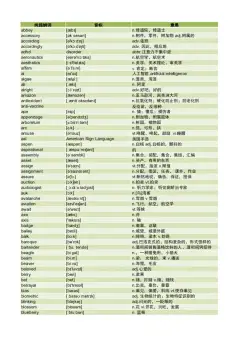
音标、词性、词义、例句
用法、搭配、辨析、说明
《高考英语3500 词详解》
A
a[], an[] art. 1. (泛指)一个:He is a friend of mine.他是我的一个朋友。2.(同类
事物中的)任何一个:A square has four sides. 正方形有四条边。3.(与表示单位的词连用)每
一:We meet twice a week. 我们每星期见两次面。4.某,某一个:A Mr Smith wants to see
you. 一位名叫史密斯先生的人想见你。 5.(用于某些抽象名词前,使其具体化)一种,一个:a
strong love of adventure 对冒险的一种酷爱 a pleasure 一件快乐的事6.(用于某些物质名词前,
使其种类化、数量化)一种,某种:a junk food 一种垃圾食品 a black tea 一种红茶 7.同一
(个):They are of an age.他们同岁。8. 用于一些固定词组:have a rest 休息一会 take a walk
散步 make a promise 许诺 in a hurry 匆忙 once in a while 不时地
【辨析】1. a用在以辅音音素开头的词前,a box, a university; an用在以元音音素开头的
词前, an umbrella, an honest man。以下两个句子帮助你记忆(根据之后单词的读音而不是字
母)用a还是用an的特殊情况:
(1) In a university,a European walks along a one-way road with a useful book, which is a
usual thing.在一所大学里,一个欧洲人拿着一本有用的书,沿着一条单行道走,这是一件很平
常的事。
(2) An hour ago,an honest man accepted an honorable task.一个小时以前,一个诚实的人
接受了一项光荣的任务。
2. 冠词a和数词one:(1)冠词a表示类属。如:This is a pen. That is a pencil. 这是钢笔,那
最受学生欢迎的全国各大网校英语VIP 课程一网打尽(全免费)
http://tui.guyuenglish.com 微信: CoursesFree
《谷雨单词王》---成功破解单词密码,轻轻松松比普通人快20 倍记牢英语单词
单词记得快、记得牢、想忘掉都难!
官方网站:tui.guyuenglish.com/tg 官方客服QQ 或 微信: 16605168200
是铅笔。one是数词,明确表示数量。如: Only one student came. 只有一个学生来了。(2)两者
都可以用,但着重点不同。试比较:A boy can do it. 男孩子可以做那事。(女孩子不一定能做)
One boy can do it. 一个男孩就可以做那事。(不必两个或更多)
3. 在序数词之前用the,表示“序数”:When I met her for the second time, she was
old.我第二次见到她时,她老了。 用a,表示数量或序数的增加:Do you want to read it a
second time? 你还想看第二次吗?
4. most之前有the时,most表示“最”之意;most之前有a时,most表示“非常”之意,相
当于very。例如:This is the most beautiful flower.这是最漂亮的一种花。This is a most
beautiful flower. 这是非常漂亮的一种花。
abandon[] vt. 1.抛弃,放弃,戒除:The enemy abandoned they city and the fled. 敌
军弃城逃跑。2.离弃,背弃:The cruel man abandoned his wife and child. 那个狠心的男人遗弃
了妻儿。3.纵情,恣意:He abandoned himself to grief. 他极度悲伤。
【搭配】abandon oneself to 沉溺于;纵情于
ability[] n. 1.[U]能力:She has the ability to speak English fluently. 她能够流利地说
英语。2.[U,C]才能,才智:a man of ability (many abilities) 有才能(多才能)的人
【搭配】the ability to do sth 做某事的能力,一般不说:the ability of doing sth
able[] adj. 有能力的,能够,能干的:He is an able teacher. 他是位有能力的老师。 He
was able to solve the problem quickly. 他很快把问题解决了。
【搭配】be able to do sth 能够做某事
【注意】able 的比较级和最高级通常是 abler 和ablest,也可以是 more able, better able 和
most able,但不如前者常见。
【辨析】be able to 与can 的区别,见 can。
abnormal[]adj. 反常的,不正常的,变态的:abnormal behavior 反常的行为。This
warm weather is abnormal for February. 在2月里,如此温暖的天气不正常。
aboard[] adv.& prep.上船(飞机、车),在船(飞机、车)上:Welcome aboard this flight to
London. 欢迎搭乘本班开往伦敦的飞机。He has gone aboard (the plane). 他上了飞机。
board n.木板;v.上船(车、飞机)
abroad adv.在(到)国外
broad adj.宽阔的
abolish[] vt.终止,废除:It was Abraham Lincoln who abolished slavery in the United
States.正是亚伯拉罕·林肯废除了美国的奴隶制度。Bad customs should be abolished. 坏的风俗
应当废除。
abortion[] n.[C,U]流产,堕胎:His attempt proved to be an abortion.他的企图没能
得逞。It will cause [produce] abortion. 这将引起流产。
about[] prep. 1.在…各处,到处:He traveled about the world. 他周游了全世界。2.
在…附近(周围):He looked about him now and then. 他不时地环顾四周。3.关于,涉及:He
talked about his family. 他谈到了他的家人。4.在…身上(边):Do you have a lighter about you?
你身上带有打火机吗? 5.从事于:What are you about? 你在干什么?adv. 1.大约,差不多:
She is about fifty.她大约50 岁。2.在周围,到处:I am used to going about alone.我习惯于独来独
往。3.在附近:There was nobody about.附近没有人。
【搭配】1.How [What] about… …怎么样:How about having a cup of tea? 喝杯茶怎
最受学生欢迎的全国各大网校英语VIP 课程一网打尽(全免费)
http://tui.guyuenglish.com 微信: CoursesFree
《谷雨单词王》---成功破解单词密码,轻轻松松比普通人快20 倍记牢英语单词
单词记得快、记得牢、想忘掉都难!
官方网站:tui.guyuenglish.com/tg 官方客服QQ 或 微信: 16605168200
么样? What about that matter the other day? 早几天的那件事怎么样了? 2. be about to do
sth 即将要做某事(不与具体的时间状语连用):They are about to start. 他们就要动身了。
【辨析】1.about 与 on(关于):about 指泛泛地或非正式地论及某事;on 则指比较系统地
或理论性较强地论述某事。比较:He wrote a book on mathematics. 他撰写了一本有关数学
的书。He wrote a report about this school. 他报道有关这所学校的情况。
I have told you much about the matter. You’d better read a book on it.关于这个问题我已
说了很多,你最好读一本论述它的书。
2. know sb 认识某人,know about sb 知道某人的情况;hear sb 听到某人(讲话),hear
about sb 听说过某人;write a book 写书,write about a book 写书评
above[] prep. 1.高于,高出,在…上方:I saw the moon above the roof. 我看见月亮在
屋顶上。We were flying above the clouds. 我们在云层上面飞行。2. 超过,胜过:Health is
above wealth. 健康胜过财富。The temperature has been above the average recently. 近来的气温
一直比平均温度高。3.不屑于,不至于,不会:He is above doing such things. 他不至于做出
这样的事来。adv.在上面,在前面:the plan mentioned above 上述计划。adj.上面的:the above
statement 如上所述(= the statement above)
【搭配】above all 首先,尤其是 above oneself 自高自大, 自命不凡above sea level 海
拔above the average 一般以上
【辨析】above, over, on:over 表示垂直在上的正上方,与under 相对,而above 则不一定
表示正上方,与below 相对,以上四个词跟物体都不接触。on 表示在上面,与beneath 相对,跟
物体接触。若含有动态或覆盖的意味,通常用 over,而不用 above:He flew over to France.
他飞到了法国。 Cover the baby over with a sheet. 用床单把婴儿盖起来。
abroad[] adv. 到(在)国外:He just came back from abroad. 他刚从国外回来。He
has been abroad many times. 他多次出国。
【搭配】at home and abroad 在国内外 be all abroad 感到莫名其妙;离题
abrupt[] adj. 1.突然的,意外的:The train came to an abrupt stop. 火车突然地停了
下来。2.(举止、言谈等)唐突的,鲁莽的:He has an abrupt manner. 他举止粗鲁。3.陡峭的;险
峻的:an abrupt peak一处险峰
absence[] n.[C,U]1.不在,缺席:Her absence was noticed by the teacher. 老师注意到
了她缺席。 In the absence of the manager I shall be in charge. 经理不在的时候,我将负责。2.
[U]缺乏:The police were delayed by the absence of information about the crime.警察由于未掌
握犯罪情报而延误了行动。3.[C]缺席的时间,外出期间:After an absence of seven years I went
home.外出7 年后我返回故乡。
【搭配】absence of mind 心不在焉 in the absence of(某人)不在时,(某物)缺乏时
absent[] adj. 1.缺席的,不在场的:Nobody is absent today. 今天没人缺席。2.(作定
语)心不在焉的;出神的:He looked at me in an absent way.他茫然地看着我。3.缺乏的:This
idiom is absent in that dictionary.那本词典里没有这个习语。vt.不到,不参与:He absented
himself from the meeting.他没有出席会议。
【搭配】be absent from 不在某处 absent oneself from 本人不参与,没参加 absent-
minded 心不在焉的。
【注意】表示“不在家”时,通常不用absent,而用out, not in, not at home, away from
home 等。
最受学生欢迎的全国各大网校英语VIP 课程一网打尽(全免费)
http://tui.guyuenglish.com 微信: CoursesFree
《谷雨单词王》---成功破解单词密码,轻轻松松比普通人快20 倍记牢英语单词
单词记得快、记得牢、想忘掉都难!
官方网站:tui.guyuenglish.com/tg 官方客服QQ 或 微信: 16605168200
absolute[] adj. 1.十足的,地道的:an absolute fool 十足的傻瓜 2.绝对的,完全的:
That’s absolute nonsense! 那完全是胡说。3.确实的,肯定的,无疑的:We have absolute proof.
我们有确凿的证据。4.无条件的:make an absolute promise 无条件答应。
absorb[] vt. 1.吸收:Dry sand absorbs water. 干沙吸水。2.汲取,理解(知识等):I
have no time to absorb what he said.我没有时间弄懂他所说的话。3.吸引…的注意,使全神贯注:
He is absorbed in study. 他专心学习。4.把…并入,并吞,同化:Most little shops have been
absorbed into big businesses. 大多数小店已被并入大公司。
【搭配】be absorbed in...全神贯注于……
abstract[] adj. 1. 抽象的:We may talk of beautiful things, but beauty itself is
abstract. 我们尽可谈些美的事物,但美本身却是抽象的。2.抽象派的:an abstract painter 抽象
派画家 n.1.[C]抽象派艺术作品 2.[C]摘要,梗概:Please write an abstract of this scientific
article. 请写一份这篇科学论文的摘要。
absurd[]adj. 荒谬的,愚蠢的,可笑的:It’s absurd not to wear a coat in such cold
weather. 这么冷的天气不穿外衣,真是荒唐。It is absurd to believe that the number 13 brings
bad luck. 相信数字13会带来恶运是荒诞不经的。
abundant[] adj.丰富的,充裕的:an abundant harvest 大丰收 Our country is
abundant in natural resources. 我国自然资源丰富。
abuse[] v.1.滥用:He was accused of abusing his position for personal gain. 有人指控
他以权谋私。2.辱骂,虐待:It’s said that he abused his wife. 据说他虐待他妻子。n.[]1.
[C,U]滥用,妄用。2.[C,U]辱骂,说坏话,侮辱
【搭配】the abuse of drugs 滥用药物 personal abuse 人身攻击
academic[] adj. 1.(学院或大学)教学的,学术的:academic research 学术研究 an
academic degree 学位 2.纯理论的;不切实际的:an academic point一个纯理论的观点。n. [C]
大学学生,大学教师
academy[] n. 1.(高等)专科院校:an academy of music 音乐院校 a military
academy 军事院校 2.研究院,学会:the Academy of Sciences of China 中国科学院
accelerate[] v.(使)加速,促进,增加:I accelerated and left the other cars behind.
我加速行驶,其他的车子抛在后面。I decided to accelerate our advertising. 我决定增加广告量。
accent[] n. 1.[C,U]口音,腔调:He speaks with a strong Shanghai accent.他说话带有
很重的上海口音。2.[C]重音:The word “lady” has its accent on the first syllable. lady 这
个词的重音在第一个音节。3.[C,U]强调,重点:In all our products the accent is on quality.
在我们的所有产品中,最重视的就是质量。
accept[] v. 1.接受:She offered him a lift and he accepted (it). 她请他坐她的车
他就领情了。2. 同意,录取:The news that he had been accepted to Beijing University spread
quickly.他已被北京大学录取的消息迅速传开。 3.认为,承认:accept sth as true 信以为真
【辨析】accept 与receive:前者指主观上的“接受”,后者指客观上的“收到”:He
received the gift, but he did not accept it. 他收到这件礼物,但没有接受。
【搭配】accept…as… 认为…是…
access['ækses]n.[U]1.接近,进入:You can easily get access to him.你很容易见他。2.通道,
入口(后接介词to):the access to a building 进入大楼的通路。3.(接近、进入或享用)的机会:
Only high officials had access to the Emperor.只有高级官员才可以接近皇帝。vt.存取(计算机
最受学生欢迎的全国各大网校英语VIP 课程一网打尽(全免费)
http://tui.guyuenglish.com 微信: CoursesFree
《谷雨单词王》---成功破解单词密码,轻轻松松比普通人快20 倍记牢英语单词
单词记得快、记得牢、想忘掉都难!
官方网站:tui.guyuenglish.com/tg 官方客服QQ 或 微信: 16605168200
文件):I accessed three different files to find the correct information.我存取了三个不同的文件
以寻找正确的信息。
【搭配】have/gain access to 可以获得/接近
accessible[ək'sesəbl]adj.1.可到达的,可接近的,可进入的:These documents are not
accessible to the public.公众无法看到这些文件。2.容易理解的,易懂的:His poems are always
very accessible.他的诗总是通俗易懂。
accident[] n.1.[C]事故,意外事件:Two people were injured in the accident. 这
次事故中有两人受伤。2.[C,U]意外;偶然:It is quite an accident.这是一件很偶然的事。The
police found the lost kid by accident.警察无意中找到了那个失踪的孩子。
【搭配】by accident (=by chance) 偶然地,无意中 by accident of 因为……的机会,由
于……的运气 without accident 平安无事地
【辨析】accident 与 incident:前者指偶然发生的不幸事件(事故);后者则指普通的小事件,
也指暴力性的政治事件:About ten people were killed in the car accident. 在这次车祸中大
约有10 个人丧生。 The book is about the July 7th Incident. 这本书是关于七七事变的。
accommodation[] n.住处,住宿,膳宿:Can we find accommodation(s) at a
hotel for tonight? 我们今晚能找到旅馆住宿吗? / This hospital has accommodation(s) for
500 patients. 这家医院有500个床位。
【注意】该词在英国英语中不可数,在美国英语中通常用复数,但不能与不定冠词连用。
accompany[] v.1.伴随,陪同:She accompanied her friend to the concert. 她陪同朋
友去听音乐会。2.为……伴奏:Her mother accompanied her on the piano.她的母亲用钢琴为她
伴奏。
【注意】1.该词不接不定式的复合结构作宾语,不可说:He accompanied her to go to the
station.(to go应去掉) 2. accompany的真正意思是: to go somewhere with someone,
especially to look after them,所以该词不表示呆在某处陪伴某人。
accomplish[] vt.做成功,完成,达成:accomplish one’s purpose 达到目的 / We
tried to settle the argument but accomplished nothing. 我们试图解决争端,但没起什么作用。
【辨析】accomplish, complete, finish 与achieve
accomplish指成功完成预期的目标、任务等,其后常接task,aim,journey等名词;complete
强调事情被完整地完成或终结,含有使某事完善、完整,补足缺少部分的含义;finish多指日
常事情的完成或结束,其后常接动名词;achieve多指排除困难完成宏伟计划或大业。
according [](只用于以下两个习语中)according to: prep.按照,根据:Everything
went according to plan. 一切按计划进行。According to the weather forecast, we'll have rain
tomorrow. 根据天气预报,明天会下雨。according as: conj. 根据……而定,按照……而定:
You will be praised or blamed according as your work is good or bad.将依照你工作的好坏对你
进行奖惩。
【注意】according to 后一般不接 view(看法)和 opinion(意见)这类词,也不接第一人称的
代词(me, us)。如:依我看,这部电影很不错。
In my opinion, the film is wonderful.(正)
According to my opinion, the film is wonderful.(误)
According to me, the film is wonderful.(误)
account[] n. 1.[C]账目,账户:open an account at [with] a bank 在银行开户 Put it
最受学生欢迎的全国各大网校英语VIP 课程一网打尽(全免费)
http://tui.guyuenglish.com 微信: CoursesFree
《谷雨单词王》---成功破解单词密码,轻轻松松比普通人快20 倍记牢英语单词
单词记得快、记得牢、想忘掉都难!
官方网站:tui.guyuenglish.com/tg 官方客服QQ 或 微信: 16605168200
on my account.= Add it to my account. 记在我的账上。2.[C]描述,说明,报导:I believe that is a
very good account of what happened. 我相信这对发生的情况作了很好的描述。3.[U]原因,理由:
He is angry on this account. 由于这个原因他很生气。4.[U]考虑:Never leave this point out of
account. 绝不可将这一点不列入考虑。 v. 认为:I account him lucky. 我认为他很幸运。
【搭配】account for 解释,说明 by [from] all accounts 据说,据报道,据各方面 on
account of 因为,由于on all accounts [on every account] 总之 on no account 绝不take
account of 考虑,重视 take sth into account 考虑,注意
accountant[] n. [C]会计师,会计:He signed the accountant to enter. 他示意叫会
计进去。
accumulate[] v.积累,收集,积储:Dust soon accumulates in the room. 房间里
很快积满了灰尘。 He accumulated a good library. 他积累了丰富的藏书。
accuracy[] n. [U]准确,精确:firing accuracy 命中率 / with accuracy 准确地 /
There is no need to check the accuracy of the report. 没有必要核实这份报告的准确性。
accurate[] adj.准确的,正确无误的:Is that clock accurate? 那钟准吗? / He is
accurate in his judgment. 他的判断正确无误。
accuse[] vt.指责,控告,指控:He accused her of cheating. 他指责她作弊。/ He was
accused as an accomplice. 他被指控为同犯。
【注意】表示因某事而控告、指控、指责某人,通常用 accused sb of (doing) sth,其中的
介词of 不能改为 for:The police accused him of theft [stealing]. 警方控告他偷盗。
accustomed[] adj. 习惯的,经常的:He is accustomed to hard work. 他习惯于苦干。
/ She was accustomed to getting up early. 她习惯于早起。
【说明】表示习惯于做某事,通常用 be accustomed to,其中的 to 通常被认为是介词,
后接名词或动名词,但在现代英语中,其后也可接动词原形(即 to 被视为不定式符号)。
ache[] n.[C,U]疼痛:I have an ache in the stomach. 我胃痛。vi. 痛:His back aches. 他背
痛。/ I’m aching all over. 我全身都痛。/ Her head ached all night. 她的头整夜都疼。
【辨析】ache 与pain:前者主要指肉体局部持续的疼痛或隐痛;而pain 的应用范围则较广,
可指轻微的痛或剧烈的痛,可指局部的痛或全身的痛,可指持续的痛或突发的痛等。
achieve[] vt. 1.达到,取得:He achieved good results. 他取得了好成绩。/ She
achieved no success. 她没有获得成功。2.完成,实现:I’ve achieved only half of what I hoped
to do. 我仅完成了我所希望完成的一半。
【说明】通常用作及物动词,偶尔用作不及物动词,表示“获得成功”或“如愿以偿”:
He achieved because he worked hard. 他因为工作努力获得了成功。
achievement[] n.1.[U]完成:Such a goal was impossible of achievement. 那样的
目标不可能实现。2.[C]成就,功绩:Landing on the moon was a remarkable achievement. 登上月
球是一大伟绩。
acid[] n.[C,U]酸 adj.1.酸的,有酸味的:Lemons have an acid taste. 柠檬有酸味。2.尖
刻的:acid remarks 刻薄话
acknowledge [] vt.1.承认:acknowledge one’s fault 认错,赔不是 / I acknowledge
the truth of his statement. 我承认他说的是事实。2.(公)认为:He was acknowledged to be [as]
the best player. 他被公认为是最佳选手。
acquaintance[] n.1.[C] 相识的人,熟人:He is not a friend, only an
最受学生欢迎的全国各大网校英语VIP 课程一网打尽(全免费)
http://tui.guyuenglish.com 微信: CoursesFree
《谷雨单词王》---成功破解单词密码,轻轻松松比普通人快20 倍记牢英语单词
单词记得快、记得牢、想忘掉都难!
官方网站:tui.guyuenglish.com/tg 官方客服QQ 或 微信: 16605168200
acquaintance. 他不是朋友,只是相熟。/ He has many acquaintances. 他交友很广。2.[U](可连
用a)熟悉,熟知:I have some acquaintance with the Russian. 我懂一点儿俄语。
acquire[] vt.1.获得,取得:She acquired a knowledge of the English by careful study.
她认真学习而精通英语。2.拥有,得到:Our company has recently acquired a new office building
in Chicago. 我们公司最近在芝加哥得到了一栋新办公楼。
acquisition[] n.1.[U]获得:He devotes his time to the acquisition of knowledge.
他把时间花在获取知识上。2.[C]得到的东西,得到的人:This motor-scooter is my latest
acquisition. 这辆摩托车是我最新购置的。
acre[] n.[C]英亩:a farm of 20 acres 占地20英亩的农场 / The total area of a soccer
field is about two acres. 一个足球场的总面积大约为两英亩。
across[] prep.1.穿过,到…的另一边:There is a bridge across the river. 河的两边有
桥相连。2.在…的另一边:The bus stop is just across the street. 公共汽车站就在街道的那边。3.
表示“交叉”:He sat there with his arms across his chest. 他坐在那儿,两臂交叉放在胸
前。adv. 1.穿过,跨过,从一边到另一边:Can you swim across? 你能游到对岸去吗?2.交叉:
He sat there with his arms across. 他交叉着手臂坐在那儿。
【辨析】across 与 through:前者指在面上穿过,后者指在里面或在一定空间范围内穿过:
walk across the playground 走过操场 / walk through a forest 走过森林
【说明】across 用作介词或副词,不能用作动词,cross 才是动词:go across a bridge 过桥 /
cross a bridge 过桥
act[] n.1.[C]行为,行动,举动:It’s a foolish act. 那是愚蠢之举。2.[C]法令,条例:
Social Security Act 社会保险条例 / under this Act 根据本条例3.[C](戏剧的)一幕:a play of
two acts 两幕剧 v. 1.行动,做事,举止:Think before acting. 三思而后行。/ It’s time to act.
该采取行动了。2.表演:He acts well. 他戏演得不错。3.担任,充当:A trained dog can act as
a guide to a blind person. 经过训练的狗可作盲人的向导。4.起作用,生效:The medicine
acts on the heart. 这药对心脏起作用。5.扮演:He acted (the part of) Hamlet very well. 他扮演哈
姆雷特(这个角色)很出色。■1. act as 充当,起…的作用:He acts as director of the
workshop. 他担任车间主任。2. act for 代理,代表:The chairman is ill, so I’m asking Mr
Smith to act for him. 因为主席有病,所以我请史密斯先生代理。
active[] adj.积极的,活泼的,活跃的:active measures 积极措施 / The market is
active. 市场活跃。/ Although he is quite old, he is still very active. 他虽然老了,可仍闲不
住。
【说明】在 take part in(参加)这一短语中,part 前通常不用冠词,但若有了active 的修饰,
则要用不定冠词:He takes an active part in school activities. 他积极参加学校各项活动。
activity[] n. 1.[U]活动(性),活力:The house has been full of activity all day. 房子
里整天都很热闹。 2.[C]行动,(具体)活动(常用复):school activities 学校活动 / social
activities 社会活动 / sports activities 体育活动 / outdoor activities 户外活动
【说明】侧重指一种繁忙或充满活力的状态时,不可数;侧重指具体所做的事情,如工作、
娱乐、消遣等,则可数,且通常用复数。
actor[] n.[C](男)演员:actor’s lines 台词 / a film actor 电影演员
【说明】actor 指男演员,也可泛指男演员和女演员,要专指女演员,用 actress。
actress[] n.[C]女演员:a famous actress 著名女演员
最受学生欢迎的全国各大网校英语VIP 课程一网打尽(全免费)
http://tui.guyuenglish.com 微信: CoursesFree
《谷雨单词王》---成功破解单词密码,轻轻松松比普通人快20 倍记牢英语单词
单词记得快、记得牢、想忘掉都难!
官方网站:tui.guyuenglish.com/tg 官方客服QQ 或 微信: 16605168200
actual[] adj. 实际的,真实的,现实的:in actual life 在现实生活中 / actual price
实价 / I’m not joking. These are his actual words. 我不是开玩笑,这都是他的原话。
【说明】通常不用作表语,且没有比较等级。
A.D.[] n.公元:Buddhism was introduced into China about A.D.67. 佛教是在公元67
年传入中国的。/ From 30 B.C. to A.D. 20 is 50 years. 公元前30 年到公元20 年之间有50 年。
【说明】A.D.放在年代之前或之后均可。比较:B.C.(公元前)通常应置于年代之后。
Ad[] n.[C]广告。参见 advertisement。
adapt[] v. 1.使适应,使适合:Can you adapt (yourself) to the new job? 你能适应
这新的工作吗? 2.改编,改装:The car was adapted for use as a taxi. 那辆车已改装成计程车。/
It is difficult to adapt this story for the film. 要把这故事改编为电影不容易。
【说明】adapt to 意为“适应”,其中的to是介词:Soon they adapted to living in the
country. 他们很快就适应了在乡下住。
adaptation[] n.1.[C]改编本:an adaptation of a novel for television 改编小说成
电视剧本 2.[U]适应:a period of adaptation 适应期
add[] v. 1.加,增加:Add some water. 加点水吧。/ That was adding fuel to the fire.
那是火上加油。2.接着说(或写):I have two points to add. 我有两点补充意见。3.加起来,增加,
做加法:The child can’t add yet. 这小孩还不会做加法。■1. add in 包括:Don’t forget to add me
in. 别忘了把我也算上。2. add to 增加:This adds to our difficulties. 这增加了我们的困难。
3.add up 加起来:You haven’t added the figures up right. 这些数字你没有加对。4. add up
to 加起来等于,总之就是…:The figures add up to 500. 这些数字加起来等于500。/ Your
long answer just adds up to a refusal. 你的冗长回答简直等于拒绝。
addicted[] adj.沉溺于,醉心于:He was addicted to all sorts of vice. 他无恶不作。/
He was addicted to poetry and hoped to be a poet. 他醉心于诗歌,希望能成为诗人。
addition[] n1.[U]加,附加,加法:The boy is still not good at addition. 这个小男孩加
法仍然不好。2.[C]增加物,附加物:They’ve got a new addition to the family. 他们家又多了一
位成员。■1. in addition 另外,加之:You need money and time, in addition, you need diligence.
你需要金钱和时间,此外,你还要努力。2. in addition to 除…外(还):In addition to English, he
has to study a second foreign language. 除了学习英语之外,他必须学习第二外语。
address[] n.1.[C]住址,通讯处:a return address 回信地址 / change one’s address 改
变地址 / What’s your home address? 你的住宅地址是哪儿?2.[C]演说,致辞,讲话:Who will
give the opening (closing) address? 谁致开(闭)幕辞? vt.1.(在信封等上)写收件人的姓名地址:
The letter is addressed to you. 这封信是写给你的。2.称呼:How should I address her? 我该怎样
称呼她?
【说明】1.询问某人的地址时,通常说 What’s your address? 不说 Where’s your address?
当然,若说 Where do you live? 则完全可以,且更通俗。2.用作动词时,无论表示哪个意思,均
及物,后接宾语时,不要误加介词,如要表示给某人致辞,不说 address to sb,而说 address
sb。
adequate[] adj. 1.足够的:The supply is not adequate to the demand. 供不应求。2.
恰当的,胜任的:I hope you will prove adequate to the job. 我希望你能胜任这工作。3.尚可的,
差强人意的:Your work is adequate but I’m sure you could do better. 你的工作表现不错,但我
肯定你还能够做得更好。
最受学生欢迎的全国各大网校英语VIP 课程一网打尽(全免费)
http://tui.guyuenglish.com 微信: CoursesFree
《谷雨单词王》---成功破解单词密码,轻轻松松比普通人快20 倍记牢英语单词
单词记得快、记得牢、想忘掉都难!
官方网站:tui.guyuenglish.com/tg 官方客服QQ 或 微信: 16605168200
【说明】一般不与 enough 连用,以免语义重复。
adjust[] v.1.调整,调节,校正:I must adjust the watch; it is slow. 我必须把表调
一下,它走慢了。2.(使)适应:He soon adjusted (himself) to her way of life. 他很快适应了
她的生活方式。
【说明】表示“适应”时,主要用于 adjust oneself to 这一结构,其中的反身代词可省略。
adjustment[] n. [C,U]调整,调节,适应:I’ve made a few adjustments to the plan.
我对计划作了些小小的调整。/ She made a quick adjustment to her new job. 她很快就适应了
新的工作。
administration[] n.[U]经营,管理,施政,行政:You will need some
experience in administration. 你需要管理方面的经验。/ Master of Business Administration
(=MBA) 工商管理学硕士
admirable[] adj.令人钦佩的,值得赞赏的:an admirable example of good planning
一个周详计划的范例 / His behavior was admirable. 他的行为令人钦佩。
admire[] vt. 钦佩,赞美,羡慕:I admire his bravery. / I admire him for his
bravery. 我羡慕他的勇敢。/ His cleverness was much admired. 大家都佩服他的聪明。
【说明】其后不接双宾语或 that 从句,即不说I admire him his bravery.或I admire that
he is brave.
admission[] n. 1.[U]准入,接纳,入学:Admission by ticket only. 凭票入场。/ He has
the requirements for admission into the university. 他具备了进入该大学的条件。2.[U]入场费,
入学费:Admission to the lecture is $10. 听演讲入场费为10 美元。3.[C]承认,招供:He made a
full admission of his crime. 他全盘招供他的罪行。
admit[] v.1.承认:Dare he admit his mistake? 他敢承认错误吗? / This meant
admitting defeat. 这就意味着承认失败了。2.接纳,招收:They are all admitted to college. 他们
都进了大学。3.让…进入:Each ticket admits two people to the party. 每张票可供两个人入场参
加聚会。■admit of 容许:It admits of no other explanation. 这不容作其他解释。
【说明】1.表示“承认做了某事”时,其后通常接动名词,但不接不定式:She admitted
having seen us. 她承认看到过我们。2.通常及物,有时也可不及物,后接介词to:He admitted
(to) stealing. 他供认了偷盗。3.表示“允许…进入”时,不接不定式的复合结构,即不说
admit sb to enter a place 之类的。
adolescence[] n.[U] 青春期(指童年与成年之间的过渡期):during (one’s)
adolescence 在(某人的)青春期 / sex education of adolescence 青春期性教育 / Adolescence is
often a difficult time in one’s life. 青春期常常是人生中一个困难的阶段。
adolescent[] n.[C]青少年,少男,少女:the problem of adolescents 青少年问题
adj.青春期的,青少年的,少男的,少女的:adolescent problems 青少年问题,青春期问题
adopt[] vt.1.收养,领养:adopt a child 收为养子 2.采取,采用:They adopted our
methods. 他们采用了我们的办法。
【说明】1.adopt 表示“收养”时,指法律意义上的正式收养,如指一般的认养,则用
foster。2.汉语中的“养子(女)”说成英语是 adopted son (daughter),但是“养父母”却是
adoptive parents / adoptive father / adoptive mother。但若用 foster(adj.)则没有此区别:a
foster child(养子),a foster father(养父)
adore[] vt.1.爱慕,敬爱,崇拜:He adores his parents. 他敬爱父母。2.非常喜欢:He
最受学生欢迎的全国各大网校英语VIP 课程一网打尽(全免费)
http://tui.guyuenglish.com 微信: CoursesFree
《谷雨单词王》---成功破解单词密码,轻轻松松比普通人快20 倍记牢英语单词
单词记得快、记得牢、想忘掉都难!
官方网站:tui.guyuenglish.com/tg 官方客服QQ 或 微信: 16605168200
adores (going to) the cinema. 他非常爱看电影。/ She adores going to the volleyball match. 她非
常喜欢看排球比赛。
【说明】表示“非常喜欢”时,后接动词要用动名词(不用不定式)。
adult[] n.[C]成年人:This novel is suitable for adults. 这本小说适合成年人看。/
Admission for adults is three dollars. 成人入场费是3 美元。adj. 成年的,成熟的(只作定语):
adult life 成人生活 / adult education 成人教育 / adult movie 成人电影
advance[] v. 1.前进,进展:advance in one’s studies 学业进步 / The work didn’t
advance at all. 工作一点没有进展。2.提升,上涨:advance in price 涨价 / advance in one’s
position 职位晋升 3.推进,促进:advance the growth of wheat 促进小麦的生长 4.提早,提前
(日期):The date of the meeting was advanced from 10 to 3 June. 会议日期已由6 月10 日提前
到6 月3 日。 n.[C,U] 前进,进展,进步:stop the enemy’s advance 阻止敌军前进 / China has
made great advances in industry. 中国在工业方面进步很大。■1.in advance 事先,提前:The
rent must be paid in advance. 租金必须预付。2. in advance of 在…前头:He is far in
advance of his class. 他在班上遥遥领先。
advantage[] n. 1.[C]优点,优势,好处:It is a great advantage to be able to drive a
car. 能开车是很有利的。/ There are several advantages in city life. 都市生活有几个优点。2.[U]
利益,益处:There is little advantage in buying a dictionary if you can’t read. 如果你不识字,买
字典也没什么用。■1.have the [an] advantage over (of) 优于,比…占有优势:You have the
advantage over (of) me in experience. 你经验比我丰富。2. take advantage of 利用,欺骗,
占便宜:They took advantage of the fine weather to play tennis. 他们利用好天气去打了网
球。/ He has always been taking advantage of me. 他老是在占我的便宜。
adventure[] n.[C,U]冒险,冒险活动,奇遇:a young man looking for adventure
一个寻求冒险的年轻人 / Sherlock Holmes had many adventures. 福尔摩斯有过很多奇遇。
【说明】表示抽象意义的“冒险”,不可数;表示具体意义的“冒险的经历或事件”,则
可数:a sense of adventure 冒险意识 / an adventure on sea 海上冒险
advertise[] v. 1.登广告,做广告:We don’t actually advertise very much. 我们不多
做广告。/ He advertised for a secretary. 他登广告招聘一名秘书。2.为…做广告:If you want to
sell your product you must advertise it. 你要想卖掉你的产品,你就得为此登广告。/ Jobs
are advertised in the papers. 在报纸上有招聘广告。
【说明】用作及物或不及物动词,含义不同,比较:advertise sth 为…做广告,登广告宣
传…;advertise for sth 登广告征求或寻找某物(其中的 for 表目的)。如:advertise a job 登广告
招聘 / advertise for a job 登广告求职
advertisement[] n.[C]广告:He put an advertisement in the paper. 他在报上登
广告。/ The wall was covered with advertisements. 墙上贴满了广告。
【说明】1. advertisement 也可略作 advert 或 ad:ads for selling cars 销售汽车的广告2.
advertisement 是可数名词,不可数名词用advertising :The magazine contains a lot of
advertising [advertisements]. 这本杂志广告很多。
advice[] n.[U]忠告,建议:He asked for her advice. 他向她征求意见。/ He followed
[took] my advice. 他听了我的意见。/ Let me give you a piece of advice. 我给你进一句忠言吧。/
I want your advice on [about] the matter. 我想听听你对这个问题的意见。/ Good advice is
beyond price. 有益的忠告是无价之宝。
最受学生欢迎的全国各大网校英语VIP 课程一网打尽(全免费)
http://tui.guyuenglish.com 微信: CoursesFree
《谷雨单词王》---成功破解单词密码,轻轻松松比普通人快20 倍记牢英语单词
单词记得快、记得牢、想忘掉都难!
官方网站:tui.guyuenglish.com/tg 官方客服QQ 或 微信: 16605168200
【说明】是不可数名词,要表示数量,需借助单位词 piece:a piece of advice, two pieces of
advice
advise[] v. 1.忠告,建议:He did what the doctor advised. 他听从医生的吩咐。/ He
advised going to London. 他建议去伦敦。/ He advised me to go to London. 他建议我去伦敦。2.
通知,告知:He advised me that I won the prize. 他通知我得奖了。/ Could you advise us of the
arrival of the goods? 货物到达时,请通知我们好吗?
【说明】1.后接动词作宾语时,要用动名词,不要用不定式,即说advise doing sth;但是若
后接名词或代词作宾语后再接动词时,动词要用不定式,即说 advise sb to do sth。2.表示建议
后接宾语从句时,从句谓语通常要用“should + 动词原形”这样的虚拟语气:I advise he
(should) start early. 我劝他早点动身。
advocate[] n.[C]提倡者,鼓吹者:He is a strong advocate of the new method of
teaching. 他是新教学方法的积极倡导者。vt.[]提倡,鼓吹,主张:He advocates higher
salaries for teachers. 他主张提高教师的工资。
【说明】后接动词作宾语时,动词要用动名词(不用不定式):He advocates building more
schools. 他主张多建几所学校。
aeroplane[] n. [C] (英)飞机:fly an aeroplane 驾驶飞机 / travel to Paris by
aeroplane 飞往巴黎 / He flew 10 miles a minute in his aeroplane. 他以一分钟10 英里的速度驾
机飞行。
【说明】aeroplane 为英国英语,美国英语用 airplane,两者均可简化为 plane。
affair[] n. 1.[C]事情,事件:I know how to take care of my own affairs. 我知道如何去
处理自己的事。/ The affair wasn’t so easily settled. 这件事不那么容易解决。2. (常用复)事
务,事态:He is very interested in public affairs. 他对公众事务很感兴趣。
【说明】表示一般性的“事”或“事情”,与 thing, matter, business, event 等大致同义,
在口语也可以模糊地表示“活动”、“事件”、“东西”等。表示重要的事情、事务或复杂含
混的情况、事态等,通常用复数形式,且一般不与定冠词连用。
affect[] vt. 1.影响:Thousands of people were affected by the floods. 成千上万的人受
到了洪水的影响。/ Her personal problems seem to be affecting her work. 她的个人问题影响到
工作。2.(在情感方面)打动,感动:The story affected us deeply. 故事深深地打动了我们。
【辨析】affect, effect 与influence:1. affect 与 effect 的区别是:前者是动词(及物),后者
是名词(可数或不可数),两者的关系为:affect=have an effect on。如:To affect a policy is to
have an effect on it. 影响一项政策就是对该政策具有一种影响。2. influence 表示“影响”,
主要指对行为、性格、观点等产生间接的或潜移默化的影响。可用作动词(及物)或名词(通常
不可数,但有时可连用不定冠词)。
affection[] n. [U,C]友爱,亲爱,疼爱,爱情:He won her affection(s). 他得到了她
的爱情。/ He felt great affection for his sister. 他很疼爱他妹妹。
afford[] vt.1.买得起,花得起:We can’t afford (to buy) a new car. 我们买不起新车。/
Are you able to afford the time for a holiday? 你有时间去度假吗?2.给予,提供:It will afford
me great pleasure to have dinner with you. 跟你一道吃饭太让我高兴了。
【说明】1.表示“买得起”、“花得起”时,通常与 can, could, be able to 连用,但表示
“给予”时,则无需与之连用。2.表示“买得起”、“花得起”时,其实质意思是指有足够的
时间、金钱等,其后可接名词、代词或不定式,意思明确时,可有所省略:afford to take a taxi
最受学生欢迎的全国各大网校英语VIP 课程一网打尽(全免费)
http://tui.guyuenglish.com 微信: CoursesFree
《谷雨单词王》---成功破解单词密码,轻轻松松比普通人快20 倍记牢英语单词
单词记得快、记得牢、想忘掉都难!
官方网站:tui.guyuenglish.com/tg 官方客服QQ 或 微信: 16605168200
=afford a taxi 坐得起计程车 / afford the time for a holiday=afford a holiday 抽得出时间去度假
afraid[] adj. 1.害怕的:Don’t be afraid. 别怕。/ He is afraid of snakes. 他怕蛇。/
She is afraid of flying [to fly]. 她害怕坐飞机。/ He was afraid to go into the house and
meet his father. 他不敢进屋去见他父亲。2.担心的:He was afraid of losing face. 他担心丢面
子。/ I’m afraid that he won’t help us. 我担心他不会帮我们。/ “Is he not coming?” “I am
afraid not.(I’m afraid so.)” “他不来吗?”“看来不会(怕是这样)。”
【说明】be afraid to do sth 与be afraid of doing sth 有所不同,前者表示害怕做某事或不
敢做某事,后者有两个意思,一是表示害怕做某事(与be afraid to do sth 同义),二是表示担心
会发生某情况(所担心的情况不一定会发生,此时不能与 be afraid to do sth 互换)。
Africa[] n. 非洲:They went to West Africa to see the wild animals. 他们到西
非去看野生动物。
African[] adj.非洲的,非洲人的:African countries 非洲国家 n.[C]非洲人
after[] prep.1.在…之后:He came back after dark. 天黑后他才回来。/ Shut the door
after you. 请随手关门。2.追赶,追求,寻找:The cat ran after the mouse. 猫追老鼠。3.依照,用…
的名字:Please make some sentences after this model. 请仿照例子造句。/ She was named
Elizabeth after her grandmother. 她依从祖母的名字取名为伊丽莎白。4.由于,鉴于:After what
has happened, he will not go. 鉴于已经发生的事情,他不愿去了。5.合乎(想法等):She is a
woman after my own heart. 她真是个合乎我心意的女子。6.接连不断:She saw play after play.
她接连不断地看戏。/ Day after day they worked on. 他们日复一日地工作下去。adv.在后,后
来:He arrived soon after. 他不久就到了。conj.在…以后:After she got married,she changed
completely. 她结婚之后完全变了。
【辨析】1. after 与behind:前者主要指位次的先后,后者主要指位置的前后。2. after 与in:
两者均可表示在一段时间之后,区别是:after 以过去时间为起点,通常连用过去时态;in 以现
在时间为起点,通常连用将来时态。注意:若表示在某一点时间之后,则只能用after(无论是
现在还是过去):I’ll come back after 4 o’clock. 我4 点钟以后回来。
【说明】after 用作连词引导时间状语从句时,要用一般现在时表示将来意义,而不能直接
使用将来时态。
afternoon[] n.[C,U]下午,午后:He had an afternoon sleep. 他午睡了。/ The
meeting was held on the afternoon of March 16. 会议于3 月16 日的下午举行。
【说明】1.泛指一般下午,其前用介词in,若特指具体某天的下午,则用介词 on。2.当
afternoon 与 this, that, each, every, yesterday, tomorrow, one 等连用时,其前不用in, on 等介词,
也不用冠词。3.在美国英语中,当表示每天下午或在任何一个下午时,可用复数形式(用作副
词):I’m always busy afternoons. 我下午总很忙。(注:morning, evening 用法同此)
afterward(s)[] adv. 后来:I’m busy now. I’ll go there afterward(s). 我现在很忙,
待会儿再过去。
again[] adv.再一次;又,再:Try again. 再试一次。/ When do we meet again?
我们什么时候再见面? / Never did I see him again. 后来我再也没见过他了。
【说明】通常不能与那些已含有again 意义的词语(如:renew 续借,repeat 重说,rewrite 重
写,等)连用。
against[] prep.1.反对,违反:Are you for or against the plan? 你对这个计
划是赞成还是反对?/ That’s against the law. 那是违法的。2.逆:He swam against the tide. 他逆
最受学生欢迎的全国各大网校英语VIP 课程一网打尽(全免费)
http://tui.guyuenglish.com 微信: CoursesFree
《谷雨单词王》---成功破解单词密码,轻轻松松比普通人快20 倍记牢英语单词
单词记得快、记得牢、想忘掉都难!
官方网站:tui.guyuenglish.com/tg 官方客服QQ 或 微信: 16605168200
流而游。3.倚着,靠着:He stood with his back against the door. 他背靠门站着。4.衬着,与…对
比:It is difficult to see anything against this bright light. 对着这种强光很难看到任何东西。
5.防备:Wear a warm coat against the cold. 穿上保暖的外衣以防寒。
【说明】against 是介词,不是动词,所以要说 Are you against the plan?而不能说 Do you
against the plan?
age[] n.1.年龄:What’s your age? 你多大了?(= How old are you?) / He is 50 years of
age. 他50 岁了。(= He is 50 years old.) / He got married at the age of 28. 他28 岁时结婚。2.长时
间:I haven’t seen her for ages. I must phone her (up). 好久没见到她了,我得给她打个电
话。3.时代,时期:the Middle Ages 中世纪 / in a scientific age 在科学时代
【说明】1.表示年龄的 age 通常不用 young 来修饰,如不说 young age 或 His age is
young 等,但有趣的是old age(老年)和 middle age(中年)却是符合习惯的表达。2.表示“长时
间”时,通常用复数,也可以用单数:I waited for ages [an age]. 我等了很久。
agency[] n. [C]代理处,经销处,代办处:a travel agency 旅行社 / an advertising
agency 广告代理商 / a general agency 总代理店
agent[]n. [C]代理人,代理商,力量:Our agent in Rome deals with all our Italian
business. 我们在罗马的代理商处理我们在意大利的一切事务。/ Rain and sun are the agents
which help plants to grow. 雨水和阳光是植物生长的促进力量。
agenda[] n [C]议程:They agreed on an agenda. 他们就议事日程取得一致意见。/
The next item on the agenda was how to cut down the cost of production. 议程上的下一个项目
是讨论如何降低生产成本。
aggression[] n.[C,U]侵略,侵犯:This is an aggression upon his rights. 这是对他的
权利的侵犯。/ The whole nation rose to resist foreign aggression. 举国奋起抗击外来侵略。
【说明】表示“对…的侵犯”,其后通常接介词 on, upon, against。
aggressive[] adj.1.侵略的,好斗的,咄咄逼人的:It was an aggressive war. 那是一
次侵略战争。/ Some people get aggressive after drinking alcohol. 有些人喝了酒后会变得咄咄
逼人。2.有进取心的,强有力的:If he wants to succeed, he has to be aggressive. 他要想成功,就
得有闯劲。
ago[] adv.以前:How long ago did he leave? 他走了多久?/ That was over 20 years
ago. 那是20 多年前的事了。/ He got married ten years ago today. 他是10 年前的今天结婚
的。
agree[] v.同意,赞同:Do you agree? 你同意吗? / We agree with what you say. 我
们同意你说的。/ They agree that our plan is worth trying. 他们同意我们的计划值得一试。■1.
agree with:同意,对…适宜,与…一致:I quite agree with you. 我完全同意你的意见。/
Hard work does not agree with him. 艰苦的工作对他不适宜。/ A verb must agree with its
subject in person and number. 动词必须和它的主语在人称和数方面保持一致。2. agree to:
同意,答应,接受:He agreed to the plan. 他同意了这个计划。/ We agreed to their
arrangement. 我们同意了他们的安排。3. agree on[upon] (通过协商)达成协议:Can we agree
on a price (a date)? 我们能不能商定一个价格(日期)?
【说明】1.其后可接不定式,但不能接不定式的复合结构,即不能说 agree sb to do sth。
如汉语的“他同意我早点回家”,不能译为 He agreed me to go home early,可译为 He
agreed to let me go home early.
最受学生欢迎的全国各大网校英语VIP 课程一网打尽(全免费)
http://tui.guyuenglish.com 微信: CoursesFree
《谷雨单词王》---成功破解单词密码,轻轻松松比普通人快20 倍记牢英语单词
单词记得快、记得牢、想忘掉都难!
官方网站:tui.guyuenglish.com/tg 官方客服QQ 或 微信: 16605168200
agreement[] n. 1.[U]同意,一致:I’m quite in agreement with your decision. 我完
全同意你的决定。/ The two things are in agreement. 这两件事是一致的。2.[C]协定,协议,合同:
Please sign the agreement. 请签协议。/ We reached an agreement. 我们已达成协议。
agricultural[] adj.农业的:an agricultural university 农业大学 / some new
agricultural machines 一些新的农业机械
agriculture[] n.[U]农业:agriculture and industry= industry and agriculture 工
农业
ahead[] adv. 在前面,向前:two miles ahead 前方两英里 / Look out. There’s danger
ahead. 当心,前面有危险。■1.ahead of 在…之前:We’ll finish it ahead of time. 我们将提前完
成它。2.go ahead 前进,进行;(单独使用,表同意)行,可以:Go ahead, we are all listening.
继续讲吧,我们都在听呢! / “Can I borrow your dictionary?” “Yes, go ahead.” “我可以用你
的词典吗?”“可以。”
aid[] n. 1.[U]帮助,援助:He came to my aid. 他来帮我。/ Nurses learn to give first aid to
people who are hurt. 护士们学习急救伤员。2.[C]助手,辅助器具:A dictionary is an
important aid in learning a new language. 词典是学习一种新语言的重要工具。vt.帮助,援助:
I will aid him in this matter. 在这件事上我会帮他。
【说明】1.表示凭借或依靠某种帮助,用介词 with:We may travel with the aid of a
good map. 我们可以靠一张好地图去旅行。2.表示帮助某人做某事,可用aid sb to do sth(其
中的to 不可省略),也可用于aid sb in doing sth。比较:help sb (to) do sth 中的 to 可以省略。
AIDS[] n.[U]艾滋病(获得性免疫缺损综合症):Thousands of people have died of AIDS.
数以千计的人死于艾滋病。
【背景】1.AIDS 为 Acquired Immune Deficiency Syndrome 之缩写。2.国际艾滋病防治日
为12 月1 日。
aim[] n.1.[U]瞄准,对准:He took aim at the bird, but missed. 他瞄准那只鸟,但没有打
中。2.[C]目标:He has one aim in life — to be a poet. 他人生只有一个目标——当一名诗人。 v.
1.瞄准,对准:He couldn’t aim. 他瞄不准。/ He aimed a blow at me. 他一拳向我打来。2.指望,
目的在于:What are you aiming at? 你的用意何在?
air[] n. 1.[U]空气,天空,大气:We should die without air. 没有空气人就会死。/ in the
open air 在户外 2.[C]态度,外貌,神态,气氛:He has an air of importance. 他一副了不起的样
子。■1.by air 乘飞机(=by plane):We decided to go by air. 我们决定乘飞机去。2. in the air
在空中,悬而未决,在流传:build castles in the air 建空中楼阁,想入非非 / Our plans are still
quite in the air. 我们的计划还很渺茫。3.on the air 在广播:The match was on the air last night.
比赛于昨晚播出。
aircraft[] n.[C]飞机,飞艇,航空器:aircraft carrier 航空母舰 / go by aircraft 乘
飞机去
【说明】单复数同形:five enemy aircraft 5 架敌机
airport[] n.[C]航空站,飞机场:at the airport 在机场
airspace[] n.[U]空域,领空:restricted airspace 空中禁区
alarm[]n. [C]警报,闹钟:a fire alarm 火警 / The alarm went off at five. 闹钟在5点
闹响。 v. 使…惊慌,惊动:I don’t want to alarm you, but there’s a strange man in your garden. 我
并不想吓着你,不过你的花园里可有个生人。
最受学生欢迎的全国各大网校英语VIP 课程一网打尽(全免费)
http://tui.guyuenglish.com 微信: CoursesFree
《谷雨单词王》---成功破解单词密码,轻轻松松比普通人快20 倍记牢英语单词
单词记得快、记得牢、想忘掉都难!
官方网站:tui.guyuenglish.com/tg 官方客服QQ 或 微信: 16605168200
album[] n.[C]集邮本,照相簿,签名纪念册:photo album 影集 / stamp album 集邮
册
alcohol[] n.1.[U]酒精,乙醇:This sort of wine contains 20 percent of alcohol. 这种
酒含酒精20%。2.[U]含酒精的饮料,酒:I never drink alcohol. 我从不喝酒。
alcoholic[] adj.含酒精的:an alcoholic drink 含酒精的饮料 n.[C]嗜酒者,酗酒
者,酒鬼:He is really an alcoholic. 他是一个十足的酒鬼。
algebra[] n. [U]代数(学):advanced algebra 高等代数
alike[] adj.相似的,相同的:The two sisters are very alike. 两姐妹非常相像。adv.同样
地,相同地:They dress and walk alike. 他们的穿着和走路姿态十分相似。
【说明】1.用作形容词时,为表语形容词,不能置于名词前作定语。2.许多以 a- 开头的表
语形容词(如 asleep, awake, alone 等)不能受 very 修饰,但 alike 是例外,它不仅可受 much,
very much的修饰,也可受 very 的修饰(类似地还有 very afraid, very ashamed 等)。
alive[] adj.1.活着的:He must be still alive. 他一定还活着。/ The man was buried
alive. 这个人被活埋了。2.活泼的,活动的,有活力的:She is very much alive. 她非常活泼。3.充
满…的:The woods are alive with birds. 林中到处是鸟。
【说明】通常不用 very 修饰,但可用 much 或 very much 修饰。
【辨析】alive, living 与 live:alive 不用于名词前作定语(但可用于名词后作后置定语,如
the greatest man alive 当今伟人),主要用于人和动物;living 可用作表语或定语,可用于人
或物;live 表示“活的”,主要用于动物和植物,且主要用作前置定语:live fish (tree) 活鱼
(树)
all[] adj.全部的,整个的:He stole all our money. 他偷走了我们所有的钱。/ Are all the
students here today? 今天所有的学生都到了吗? / It rained all day yesterday. 昨天下了一天
的雨。pron.全体,全部:all of them 他们当中所有人 / all of the money 所有的钱 / That’s all I
wanted to say. 我想说的就那些。adv.全部地,都:I’m all for it. 我完全赞成。/ The road is all
covered with snow. 道路全都被雪覆盖。■1.above all 首先,最重要的是:Above all, he was
not rich. 最重要的是他没钱。 2.after all 毕竟,终究:After all it is not so hard as it looks.
毕竟不像看起来那样难。3.all along 一直,一向:I know (knew) it all along. 我一直知道这
事。4.all over 到处,结束:all over the country 遍及全国 5.in all 总计,全部:There were
twenty students in all. 总共有20 个学生。6.not at all (用于加强not 的语气)一点也不,根本
不;没关系,别客气:It’s not difficult at all. 一点也不难。/ “Thank you.” “Not at all.” “谢谢
你。”“不客气。”
allergic[] adj.过敏的:He is allergic to penicillin. 他对青霉素过敏。/ I can’t drink
cow’s milk. I’m allergic to it. 我不能喝牛奶,我对它过敏。
alley[] n. [C]胡同,小巷:John did not take the job because it was a blind alley. 约翰没有
接受那份工作,因为那是一份没有前途的工作。
allocate[] vt.分派,分配:We must allocate the money. 我们必须分好这笔钱。/ That
space has been allocated for a new hospital. 这块地皮已经拨作建一座新医院。
allow[] vt.1.允许,准许:I can’t allow such a thing. 我不允许发生这样的事。/ We
don’t allow smoking here. 我们不许在此吸烟(此地禁止吸烟)。/ We do not allow people to
smoke here. 我们不许(人们)在此吸烟。/ He didn’t allow her any freedom. 他不允许她有任
何自由。2.给予,让…得到:How much money do your parents allow you for books? 你父母给你
最受学生欢迎的全国各大网校英语VIP 课程一网打尽(全免费)
http://tui.guyuenglish.com 微信: CoursesFree
《谷雨单词王》---成功破解单词密码,轻轻松松比普通人快20 倍记牢英语单词
单词记得快、记得牢、想忘掉都难!
官方网站:tui.guyuenglish.com/tg 官方客服QQ 或 微信: 16605168200
多少钱买书?
【说明】其后可接名词、代词、动名词或不定式的复合结构等作宾语, 但不直接跟不定式
或从句作宾语。
【辨析】permit 与allow(允许):前者指上级、规则或法令等表示的准许,其语气较重;
allow 指消极地不加反对,有时含有听任或默许之意,语气较轻:The nurse allowed him to
remain there,though it was not permitted. 护士让他留在那儿,而按规定那是不许可的。
allowance[] n. 1.[C] 津贴,补助:an allowance of $5000 5000 美元的津贴 /
overtime allowance 加班补贴 2.[C](美)零用钱(=pocket money):My weekly allowance is $50.
每周我的零花钱是50美元。
almost[] adv. 几乎,差不多:I almost dropped the plate. 我差点把碟子掉了。/
We saw almost all of them. 我们差不多见到了他们的全体。/ Dinner is almost ready. 饭差不
多做好了。/ Almost no one believed her. 几乎没有人相信她。/ I almost never see her. 我
几乎从未见过她。
【辨析】almost 与nearly:1.前者可以与 no, none, nobody, nothing, never 等否定词连用,
而后者不这样用。 但是在否定动词之前两者均可用:They almost [nearly] didn’t catch the
bus. 他们差点没赶上公共汽车。2.nearly 前可用 very, pretty, not 等词修饰,但 almost 之前
不能用这些词。3.有时 almost 可表示十分相似(但又不完全相同),此时不用 nearly:I almost
wish I’d stayed at home. 我真有点后悔没在家里呆着。
alone[] adj.单独的,独自的:I want to be alone. 我想一个人呆着。/ We are not
alone in thinking that he is a cheat. 不只是我们认为他是骗子。adv. 1.独自地,单独地:He
lives alone. 他单独生活。/ I had to work all alone. 我得独自一人工作。2.(用于名词或代词
后)只有,仅仅:He alone can do it. 这事只有他能做。/ Money alone cannot make you happy. 光
是金钱不可能使你幸福。
【辨析】alone, lone 与lonely:1.alone 用作形容词,表示客观上的一个人或没有外人,通
常不表示寂寞或孤独等感情色彩,在句中用作表语。2.lone 表示“孤单的”、“单独的”、
“无伴的”等,通常只用作定语。3.lonely 表示“寂寞的”、“孤寂的”,带有较强感情色彩,
可用作表语或定语。
along[] prep.沿着,顺着:We walked along the river. 我们沿着河往前走。/ There
are trees along the river banks. 河岸上种着树。adv. 一道,向前:Come along! 来吧! / Let’s
walk along. 我们往前走吧。/ He asked me to pass the note along. 他叫我把条子传过去。/ I
took my camera along. 我带了照相机去。
【说明】表示“(与某人)一起”等,有时可看作是省略了(或包含有) with sb:Bring your
girlfriend along, too. 把你的女朋友也一起带来。
alongside[] adv.横靠着,傍着地,并排地:We brought our boat alongside. 我们把
船靠边。prep.横靠,与…并肩,在…旁边:He parked his car alongside the fence. 他把车停靠在
围墙边。■alongside of 在…的侧面,与…并排:The two ships lay alongside of each other. 两条
船并排靠着。
aloud[] adv.出声地,大声地:Please read aloud. 请大声朗读。/ The pain made her
cry aloud. 疼痛使她大声叫喊。/ He cried aloud for help. 他高声呼救。
【说明】aloud 有两个用法,一是表示“出声”,即把话说出来,而不是在心里默默地
“说”,通常与动词 read, speak, think 等动词连用;二是表示“大声”,通常与动词 cry,
最受学生欢迎的全国各大网校英语VIP 课程一网打尽(全免费)
http://tui.guyuenglish.com 微信: CoursesFree
《谷雨单词王》---成功破解单词密码,轻轻松松比普通人快20 倍记牢英语单词
单词记得快、记得牢、想忘掉都难!
官方网站:tui.guyuenglish.com/tg 官方客服QQ 或 微信: 16605168200
laugh, shout, call 等连用。
alphabet[] n.[C]字母表:The English alphabet has 26 letters. 英语全套字母共26个。
already[] adv.已经:He already knew about it. 那时他已知道此事了。/ We have
finished our work already. 我们已经完成了工作。/ She had already gone when I arrived. 我到
的时候她已经走了。
【说明】一般用于肯定句,不用于否定句或疑问句(此时用 yet),不过有时在疑问句中也
用它,主要是用来表示惊讶(且多用于句末):Is he back already? 他怎么就回来了?
also[] adv. 也,还,而且:He is also ill. 他也病了。/ He has also seen the film. 他也
看过这部电影。/ The Japanese also eat rice. 日本人也吃米饭。/ That dress is pretty, and cheap
also. 那件衣服很漂亮,而且便宜。■not only…but also… 不但…而且…:She likes not only
music but also sport. 她不但喜欢音乐而且喜欢运动。
【辨析】also, either, too 与as well(也):also, too 和 as well 都用于肯定句和疑问句,但
位置不同,also 大多放在主要动词之前或动词be、情态动词、助动词之后;too 一般放在句末,
可用逗号隔开,也可不用;as well 通常置于句末,通常不用逗号隔开;either 只用于否定句,
且只能放在句末。
alternative[] adj.可替代的,其他的:We have an alternative plan. 我们还有一
个方案。n.[C]替换物,可能的选择,可能性之一:There are three alternatives. 有三者可供选择。
/ There is no other alternative. 别无他法。
【说明】have no alternative to doing sth 与 have no alternative but to do sth 大致同义,
均表示“除了做某事外没有其他的办法”,但前一结构中的 to 是介词,后接动词要用动名
词,后者的 but 后要接带 to 的不定式:He had no alternative to staying at home.= He had
no alternative but to stay at home. 他没有别的办法,只好呆在家里。
although[] conj.尽管,虽然:Although it was snowing, it was not very cold. 虽
然在下雪,但并不是很冷。/ There is air around us, although we can’t see. 尽管我们看不见,但
我们的周围全是空气。
【说明】不要根据汉语习惯,在后面使用连词but, 不过有时它可与 yet, still,
nevertheless 等副词连用:Although we are poor, yet we are happy. 尽管我们穷,但我们很快
活。
【辨析】although 与though:1.用作连词表示“虽然”时,两者常可换用。2. although 一般
不用作副词,而 though 可用作副词:It’s hard work; I enjoy it though. 工作很辛苦,可是我
乐意干。3.在as though(好像,仿佛),even though(即使,纵然)等固定短语中不能用 although。
4. though 引导的让步状语从句可用部分倒装的形式,但 although 不这样用:Child though
he was, he did quite well. 他虽是孩子,但干得很好。
altitude[] n.1.[C]海拔,高度:What is the altitude of this village? 这个村子海拔多
少? 2.(常用复)海拔很高的地方:In these altitudes, snow never melts. 在这么高的地方,积雪终
年不化。
altogether[] adv.1.总共:Altogether there were 12 people in the bus. 公共汽车上
总共有12 个人。2.完全:I forget it altogether. 我全忘了。/ The visitors felt not altogether
satisfied. 客人们并不完全满意。
aluminium[]n. 铝:aluminium saucepans 铝锅
最受学生欢迎的全国各大网校英语VIP 课程一网打尽(全免费)
http://tui.guyuenglish.com 微信: CoursesFree
《谷雨单词王》---成功破解单词密码,轻轻松松比普通人快20 倍记牢英语单词
单词记得快、记得牢、想忘掉都难!
官方网站:tui.guyuenglish.com/tg 官方客服QQ 或 微信: 16605168200
always[] adv. 1.总是,一直,永远:The sun always rises in the east. 太阳总是从东方
升起。/ They will always be friends. 他们将永远是朋友。2.(用于进行时态)老是,总是:She’s
always helping people. 她老是帮助别人。/ Their children are always fighting. 他们的孩子
老打架。
【说明】1.有时可与现在完成时连用,表示“一向”、“早就”:We have always believed
he is honest. 我们一直认为他是诚实的。2.与not 构成部分否定,此时always 总是要放在not
之后(而不能放在其前):He doesn’t always come late. 他并非总是迟到。
amateur[] n. [C]业余爱好者,非职业的:a radio amateur 业余无线电爱好者 /
Only amateurs can complete in the Olympic Games. 只有非职业运动员才能参加奥运会比赛。
amaze[]v. 使大为吃惊,使惊奇:Your knowledge amazes me. 你丰富的知识令我吃惊
/ It amazed us to hear that you were leaving. 听到你要走,我们都大为吃惊。
amazing[] adj.令人惊奇的:She has showed amazing courage. 她表现出惊人的勇
气。
【辨析】amazing与amazed:前者指令人惊奇,后者指感到惊奇:He was amazed at the
amazing news. 听到这个惊奇的消息他很惊奇。
America[] n.美国,美洲:America is the home of baseball. 美国是棒球的发源地。
【背景】America 的本意是“美洲”,如“南美洲”是South America,“北美洲”是
North America,但是人们实际上也经常用它来表示“美国”, 如“美国之音”的英文便是
the Voice of America (VOA)。严格说来,“美国”的全称是 the United States of America(美
利坚合众国),这是美国正式的完整的国名,但人们通常将其简称为the United States 或缩写
为 the U.S.或只用 US,在口语中也可用 the States。美国位于北美洲南部,由本土48 个州、
一个直属区(首都所在的哥伦比亚特区)和阿拉斯加(Alaska)、夏威夷(Hawaii)两个州组成,首
都是华盛顿(Washington D.C.)。
American[] n.[C]美国(洲)人:The Americans like it. 美国人喜欢它。adj.美国(人)
的:She’s an American citizen but lives in Canada. 她是美国公民,但居住在加拿大。
ambassador[]n.[C]大使:the Spanish Ambassador to Britain 西班牙驻英国的大使
ambiguous[] adj.暧昧的,含糊的,不明确的:an ambiguous reply 意思含混的答
复 / This is an ambiguous sentence. 这是一个含意不清的句子。
ambition[] n. [U,C]雄心,野心,理想,抱负: One problem of young people today
is their lack of ambition. 现在年轻人有一个毛病,就是缺乏野心。/ Until all is over ambition
never dies. 不到黄河心不死。
【用法】1.视含义的具体与抽象可分别用作可数或不可数名词。2.表示想做某事的雄心,
其后通常接不定式,有时也接of doing sth:In his youth he had the ambition to be [of
being] a pianist. 他青年时代曾有过想当钢琴家的雄心。
ambulance[] n.[C]救护车,救伤车:The ambulance is carrying wounded people
to the nearest hospital. 救护车正在把受伤的人送到最近的医院。
among[] prep.1.在…中间,在…(三个以上)之间:I didn’t find her among the crowd. 我
没在人群中找到她。/ Among them, he studies the hardest. 他们中间他学习最努力。2.…之一:
She is among the best of our typists. 她是我们最好的打字员之一。/ You are only one among
many who need help. 你不过是许多需要帮助的人之一。
【辨析】among 与 between 的区别,见between。
最受学生欢迎的全国各大网校英语VIP 课程一网打尽(全免费)
http://tui.guyuenglish.com 微信: CoursesFree
《谷雨单词王》---成功破解单词密码,轻轻松松比普通人快20 倍记牢英语单词
单词记得快、记得牢、想忘掉都难!
官方网站:tui.guyuenglish.com/tg 官方客服QQ 或 微信: 16605168200
amount[] n. [C]数量:The amount of rain this year has been below average. 今
年的降雨量低于平均水平。/ The amount you pay depends on where you live. 你付多少钱
要看你住什么地方。vi.总计,等于(to):Your words amount to a refusal. 你的话等于回绝了。/
Their expenses amount to fifty dollars. 他们的消费共计50美元。■an amount of / a large [great]
amount of 许多,大量:I spend an amount of time for the exam. 我花了很多时间准备考试。
【用法】1. a great [large] amount of 后通常接不可数名词,用作主语,谓语的数取决于
amount 的数。但在现代英语中(尤其在美国英语中),有时其后也可接可数名词,不过此用法
尚有争议,学生应试中最好避免。2. amount to 中的to为介词,后接动词时要用动名词形式:
This amounts to cheating the teacher. 这等于欺骗老师。
ample[] adj.充足的,充分的:We have ample money for the journey. 我们有足够的钱
去旅游。/ We have got ample time to make a decision. 我们有足够的时间做决定。
amuse[]v. 使开心,使发笑:The joke amused the children. 这个笑话把孩子们逗乐了。
/ We were greatly amused to hear abut him sitting on the wet paint. 听到他坐了一屁股油漆,我
们都觉得很好笑。/ The children amused themselves by playing games. 孩子们做游戏取乐。
amusement[] n.[U,C]开心,乐趣,娱乐:I listened in amusement. 我听得十分开
心。/ To our great amusement, the teacher sang a funny song during the class. 老师在课堂上唱了
一首滑稽的歌,令我们非常愉快。 / There were lots of amusements at the fair. 那展览会场有很
多有趣的东西。
analyze[] vt.分析,分解:She analyzed the situation and then decided what to do. 她
分析情况之后,就决定怎么办。/ We analyzed the cause of our failure. 我们分析了失败的原因。
/ We can analyze water into hydrogen and oxygen. 我们可以把水分解为氢和氧。
analysis[] n.[C,U]分析,分解:chemical analysis 化学分析 / an analysis of the
milk 对牛奶的分析 / We made a careful analysis of the problem. 我们仔细分析了那个问题。
ancestor[] n.[C]祖先,祖宗:His ancestors came from France. 他的祖先来自法国。/
This machine is the ancestor of the modern computer. 这台机器是现代电脑的始祖。
anchor[] n.[C]锚:Anchors are used to hold a ship in place. 锚用以使船不漂移。v. 使
(船)停泊,使(东西)固定:The ship anchored [was anchored] in the bay. 那条船停泊在港湾里。
ancient[]adj.古代的:ancient Rome 古罗马 / He is familiar with Chinese ancient
history. 他通晓中国古代史。
and[] conj.1.和,又,而且:We were cold and hungry. 我们饥寒交迫。/ He played the
piano and she sang. 他弹钢琴,她唱歌。2.然后,接着又:She read for an hour and went to bed.
她读了一小时的书,然后就去睡了。/ I woke up and got out of bed. 我醒了就起床了。3.(用于
连接两个相同的词语,表连续性):The train ran faster and faster. 火车开得越来越快。/ We
waited for hours and hours. 我们一直等了好几个小时。4.(用在少数动词后表目的):Come and
have tea with me. 过来和我一起喝杯茶。/ We ought to stop and think. 我们应该停下来想
一想。5.(用在祈使句后)那么:Work hard, and you’ll succeed. 努力干吧,你会成功的。6.而,
却:He is rich, and (yet) leads a modest life. 他很富有,但却过着朴素的生活。
【说明】1.用在 good, nice, fine 等之后,表示“很”、“挺”:good and fast 很快 /
nice and warm 挺暖和 2.注意以下各句有无 and 的差别:It being fine, we went out for a
walk. = It was fine, and we went out for a walk. 天气很好,我们出去散步了。/ In the
classroom there are five people, the teacher included.=In the classroom there are five
最受学生欢迎的全国各大网校英语VIP 课程一网打尽(全免费)
http://tui.guyuenglish.com 微信: CoursesFree
《谷雨单词王》---成功破解单词密码,轻轻松松比普通人快20 倍记牢英语单词
单词记得快、记得牢、想忘掉都难!
官方网站:tui.guyuenglish.com/tg 官方客服QQ 或 微信: 16605168200
people, and the teacher i s included
. 教室里包括老师有五个人。/ He bought a lot of books,
most of which are about history. = He bought a lot of books, and most of them are about
history. 他买了很多书,其中大多数是关于历史的。
anecdote[] n.[C]趣闻,奇闻,轶事:anecdotes of famous characters 名人轶事 /
She knows many anecdotes of Bacon. 她知道许多有关培根的轶事。
anger[] n.[U]生气,愤怒:He was filled with anger. 他满腔怒火。/ He left home in
anger. 他愤然离家出走。/ He couldn’t hold back his anger any longer. 他再也抑制不住怒火。
angle[] n. 1.[C]角,角度:a right angle 直角 2.[C]角落,墙角:the utmost angle of the
world 天涯海角 / The two roads lie at an angle of about 45 degrees. 这两条路交叉成45度角。
3.方面,角度:Consider all angles of the question. 请考虑这问题的各个方面。/ The reporter
wrote the story from the political angle. 记者从政治角度写了这篇报道。
angry[] adj. 生气的,愤怒的:Please don’t get angry. 请不要生气。/ He was angry
at being kept waiting. 他因久等而生气。/ I felt angry that they had left me out. 他们没把
我包括进去我很生气。
【说明】1.表示“对某人生气”,一般用介词 with,有时也用 at,但不能用to:Don’t be
angry with me. 请别生我的气。2.表示“对某事生气”,一般用介词 at 或about:He was
rather angry at [about] what you said. 他对你说的话相当生气。
animal[] n.[C]动物:plants and animls 动植物 / The lion is a wild animal. 狮子是一
种野生动物。
【说明】表示“动物”,有以下几层意思:1. 表示与植物相对的“动物”:Dogs, cats and
monkeys are all animals, and man is also an animal. 狗、猫和猴子都是动物, 而且人也是动
物。2. 表示与人相对的“动物”:Was it a man or an animal? 那是人还是野兽? 3. 表示与
鸟、鱼、虫等相对的“四足动物”或“兽”:The boys saw both large animals and beautiful
birds in the zoo. 孩子们在动物园里既看到了大动物又看到了美丽的鸟。
ankle[] n. [C]脚踝:I tripped and sprained my ankle. 我摔了一跤,扭伤了脚踝。
anniversary[] n.[C] 周年,周年纪念日:the hundredth anniversary of the
country’s independence 国家独立一百周年纪念日 / a twenty-fifth wedding anniversary 结婚
25周年纪念日
announce[] vt.宣布,宣告:He announced that he would get married soon. 他宣布他
很快就要结婚。/ Have they announced when the race will begin? 他们宣布比赛什么时候开始
了吗?
【说明】其后不接双宾语,可说He announced to her the good news. / He announced
the good news to her. 他向她宣布了这个好消息。但不说He announced her the good
news。
【辨析】announce 与declare(宣布):announce 主要指宣布大家期待的或与大家有关的事情,
所涉及的情况通常是别人原来不知道的事,含有预告的意思;declare 含有庄严宣告或交代清
楚的意思,所涉及的事情不一定是别人不知道的。
announcement[] n.1.[C,U]通告,通知:Ladies and gentlemen, may I have your
attention, I have an important announcement to make. 各位请注意,我有重要消息要宣布。2.(用
单数)宣布,公布:The announcement of the election result takes place at the Town Hall. 选举结果
将在市政厅宣布。
最受学生欢迎的全国各大网校英语VIP 课程一网打尽(全免费)
http://tui.guyuenglish.com 微信: CoursesFree
《谷雨单词王》---成功破解单词密码,轻轻松松比普通人快20 倍记牢英语单词
单词记得快、记得牢、想忘掉都难!
官方网站:tui.guyuenglish.com/tg 官方客服QQ 或 微信: 16605168200
【说明】表示宣布的动作,通常用单数;表示通知或通告等宣布的内容,为可数名词。
annoy[] vt.1.使生气,使烦恼:I was much annoyed. 我很不高兴。/ It annoys me
when people forget to say “thank you”. 遇到有人忘记道谢的时候,我就不痛快。2.打扰,骚扰:
Close the door if the noise is annoying you. 要是觉得太吵,就把门关上。
【辨析】annoyed 与annoying:前者表示感人生气的,后者表示令人生气的:He was
annoyed at your saying that. 他对你说的那番话很生气。/ The rain was annoying. 那雨真让人扫
兴。
【说明】对某事生气或烦恼,其后通常接介词at, about, by;对某人生气,其后通常接介词
with(不用to):He got annoyed with me about my carelessness. 我太粗心大意,他很生气。
annual[] adj.一年一次的,每年的:an annual income 年收入 / the company’s annual
report 公司的年报 n. [C]年刊,年鉴:the 1993 Football Annual 1993年的足球年刊
another[] adj. 1.再一个,另一个:Would you like another drink? 要再来一杯吗?/
Don’t lose heart. Have another try. 别灰心,再试一次。2.别的,不同的:We can do it another
time. 我们可以下次做。pron.另一个人(物):Please give me another. 请另外给我一个。/ Then
another rose to speak. 接着另外一个人又起来发言。■1.one after another 一个接一个地,相
继地:One after another all his plans have failed. 他的计划都一一失败了。2. one another
互相,彼此:Students should help one another. 学生应该互相帮助。
【说明】1.another 泛指多个中的“另外一个”,若特指两个当中的另一个,则用the
other:Please close the other eye. 请把另一只眼睛也闭上。2.后接名词时,通常应是单数,若
修饰复数名词,则复数名词前应有数词或few 等修饰:another three questions 另外3 个问题 /
another few days 另外几天 3.有人认为 one another 只用于三者或三者以上,each other 只
用于两者,但在现代英语中,两者常可换用。
answer[] n.[C]1.回答,回信:Have you had an answer to your letter? 你那封信有回音
了没有?2.(以行动)回应:I rang the bell but there was no answer. 我按了门铃,但没有人来开门。
3.答案,解决办法:What was the answer to question 4? 第4 个问题的答案是什么? v. 1.回答,回
信:I asked her the time but she didn’t answer. 我问她时间,可是她没回答。2.以行动回应:She
answered with a smile. 她报以一笑。/ I telephoned this morning, but nobody answered. 今天上午
我打过电话,但是没有人接。3.满足于:This tool will answer our needs. 这工具能满足我们的
需要。■1.answer for 对…负责,保证,代表:I will answer for it (him). 我愿对它(他)负责。
2. in answer to 作为对…的回答(回应):In answer to his question, she shook her head. 对
于他的问题,她以摇头作答。
【辨析】answer 与reply:两者均可表示“回答”,但 answer 属常用词,多用于一般性应
答,而 reply 则较正式,多指经过考虑而作出答复,若不细分,两者可换用。但是,answer 可
自由地用作及物或不及物动词,而 reply 除后接 that 从句或引出直接引语是及物动词外,
一般只用作不及物动词,其后若接名词或代词作宾语,应借助介词 to:answer [reply to] a
question 回答问题
ant[] n. [C]蚂蚁:an army of ants 一群蚂蚁
Antarctic[] adj.南极的:an Antarctic expedition 南极探险 / the Antarctic Circle
南极圈 / the Antarctic 南极,南极地区
【说明】Antarctic 是形容词,但the Antarctic 为名词,指“南极”、“南极地区”。比较:
Arctic 北极的,the Artic 北极,北极地区。
最受学生欢迎的全国各大网校英语VIP 课程一网打尽(全免费)
http://tui.guyuenglish.com 微信: CoursesFree
《谷雨单词王》---成功破解单词密码,轻轻松松比普通人快20 倍记牢英语单词
单词记得快、记得牢、想忘掉都难!
官方网站:tui.guyuenglish.com/tg 官方客服QQ 或 微信: 16605168200
Antarctica[] n.南极洲(=Antarctic Continent)
antique[] n.[C]古董,古玩:an antique shop 古玩店 / They were collectors of
antiques. 他们是古董收藏家。
anxiety[] n. 1. [U,C]挂虑,忧虑:I felt anxiety about [for] his safety. 我很担心他的
安全。2.[U]渴望:The teacher praised her for her anxiety for knowledge. 老师称赞她求知欲强。
anxious[] adj. 1.忧虑的,焦急的:We are anxious about his safety. 我们为他的安全
而忧虑。/ For a few anxious moments we thought we’d missed the train. 我们以为错过了火车,
担心了一会儿。2.渴望的: He is anxious to study at that university. 他渴望到那所大学上学。
【辨析】anxious 与eager:两者均可表示“渴望的”,意思比较相近,有时可互换;但表示
“担心的”、“焦虑的”时,只能用 anxious:We’re anxious about [for] her health. 我们担
心她的健康。
any[] adj.1.(用于否定句、疑问句或条件句)一些,任何:Are there any letters for me?
有我的信吗? / He worked hard but without any success. 他做了努力,但没有成功。2.任何
(一个):Any child would know that. 任何孩子都知道这事。pron. 1. (用于否定句、疑问句或条
件句中)一些,任何:Is there any left? 还有剩的吗? / There won’t be any trouble. 不会有
麻烦。 2.任何一个:Take any you like. 你喜欢哪个就拿哪个。adv.完全,任何程度:Do you
feel any better today? 你今天感觉好点儿了吗? / The children didn’t behave any too well. 孩子
们的表现并未见好。
【说明】1.表示“任何”,指三者或三者以上当中的任何一个,不能指两者中的任意一个,
指两者中的任意一个,要用either,因此可说either of my parents,但不说 any of my
parents。2.按英语习惯,any 用于否定句时,应出现在否定词之后而不是之前,如可说 I
haven’t any friends,但不能说 Any friend didn’t help me。
anybody[] pron.任何人,谁,无论谁(=anyone)
anyhow[] adv.1.无论如何,不管怎样:The door won’t open anyhow. 这门无论用何
种方法也打不开。/ Anyhow, let’s try again. 不管怎样,我们再试一次吧。2.随便地,胡乱地:He
left his books and papers anyhow. 他的书籍和报纸放得很乱。
【说明】表示“无论如何”、“不管怎样”时,可与 anyway 互换。
anyone [] pron. 1.(用于疑问句、否定句或条件从句中)任何人,谁:Has anyone seen
my pen? 有谁看见我的钢笔了吗?/ I won’t tell anyone what happened. 发生的事我谁也不
告诉。/ Has anyone anything more to say? 还有谁有更多的话要说? 2.无论谁:Anyone can
cook—it’s easy. 烹饪很容易,谁都会。
【说明】1.不要受汉语习惯的影响将“无论谁来都受欢迎”这类句子直译为Anyone
comes is welcome,正确的译文为Anyone who comes is welcome。2.用于否定句时,必须要
出现在否定词之后而不是之前,如不说 Anyone didn’t go there. 要表达此意可说 No one
went there(没有人去那儿)。3.其后通常不能接 of 短语,若语义上需要接这类短语,可用any
one(分开写):I don’t know any one of these children. 这些孩子当中我一个也不认识。
anything[] pron. 1.(用于疑问句、否定句或条件句中)什么事(物),任何事:Did he
say anything? 他说什么了吗?/ I can not do anything like that. 我不能做那样的事。2.任何事
(物):We could talk about anything. 我们谈什么都可以。/ I’m very hungry — I’ll eat anything.
我饿极了,什么都能吃。■1.anything but 根本不,一点不,绝对不:He is anything but polite.
他一点不懂礼貌。/ He is anything but a poet. 他绝不是诗人。2.anything like 有些像:He
最受学生欢迎的全国各大网校英语VIP 课程一网打尽(全免费)
http://tui.guyuenglish.com 微信: CoursesFree
《谷雨单词王》---成功破解单词密码,轻轻松松比普通人快20 倍记牢英语单词
单词记得快、记得牢、想忘掉都难!
官方网站:tui.guyuenglish.com/tg 官方客服QQ 或 微信: 16605168200
isn’t anything like his father. 他一点也不像他父亲。
【说明】与否定词连用时,否定词应置于其前,而不是其后。如不能说 Anything cannot
prevent me from going. 可改用Nothing can prevent me from going. 什么也不能阻挡我去。
2.修饰anything 的形容词应置于其后:Has anything special happened? 发生什么特别的事情
了吗?
anyway[] adv. 不管怎样(=anyhow)
anywhere[] adv. 1.(用于否定句、疑问句或条件句中)在(或往)什么地方,某个地方:
Did you go anywhere yesterday? 你昨天去没去过什么地方?/ If you want to go anywhere else,
let me know. 你要到别的什么地方去,就告诉我一声。2.任何地方:You can sit anywhere you
like. 你坐哪儿都行。/ Put the box down anywhere. 把箱子放在哪儿都行。
【说明】虽为副词,但有时可引导一个从句,相当于连词wherever,而有时可用作主语或
宾语,相当于名词 any place:You can go anywhere you want. 你想去什么地方就去什么地
方吧。/ “Where should I put it?” “Anywhere will do.” “我把它放什么地方?”“随便哪里
都行。”
apart[] adv. 1.分开,分离:He stood far apart from me. 他远离我站着。/ He and his
wife are living apart. 他和他的妻子不住在一起。2.相距,相隔:I’m afraid our ideas are too far
apart. 恐怕我们的意见相差太远。 / New York and Tokyo are thousands of miles apart. 纽约和
东京相距数千英里。3.撇开,除去:Consider a question apart from the others. 撇开其他问题而单
独考虑某一问题。■apart from 除…外:Apart from water there is sugar in apples. 苹果里除了
水以外还有糖。
apartment[] n.[C]公寓,一套房间:an apartment on the fourth floor 四楼的一个
套间 / I live in a three-room apartment. 我住在有3 个房间的公寓里。
【辨析】apartment 与flat:两者都可表示“公寓”、“套房”,前者主要用于美国英语,后
者主要用于英国英语。
apologize[] vi. (美apologise)道歉,认错:She apologized to her teacher for
coming to school late. 她因迟到而向老师道歉。/ I do apologize for taking so long to reply to
your letter. 这么久才回信,我实在过意不去。
apology[] n.[C, U]道歉,歉意:accept an apology 接受道歉 / refuse an apology
拒绝道歉 / Please accept my apologies. 请接受我的歉意。/ I must make an apology to
your aunt for forgetting her birthday. 我把你婶婶的生日给忘了,得向她道歉。
apparent[] adj. 1.明显的,显而易见的:It was apparent that she didn’t hear what I
said. 很明显她没听见我说的话。2.表面的,外观上的:His reluctance was only apparent. 他不过
是表面上不愿意罢了。
appeal[] vi. 1.呼吁,要求:The government is appealing to everyone to save water. 政
府呼吁每个人节约用水。2.对…有吸引力,引起兴趣(连用to):She appeals to me. 我对她感兴
趣。3.诉诸于,向…求助:appeal to force 诉诸武力 n.1.[U,C]呼吁,恳求:an appeal for help to
the public 向公众求援的呼吁 2.[U]吸引力:Music has little appeal for me. 音乐引不起我的兴
趣。
appear[] vi.1.出现,露面:The stars appear at night. 星星在晚上出现。2.看来,似乎:
She appeared very tired. 她显得很疲劳。/ She appeared to know everything. 她似乎什么都
知道。3.出版:Most newspapers appear daily. 大多数的报纸每天出版。
最受学生欢迎的全国各大网校英语VIP 课程一网打尽(全免费)
http://tui.guyuenglish.com 微信: CoursesFree
《谷雨单词王》---成功破解单词密码,轻轻松松比普通人快20 倍记牢英语单词
单词记得快、记得牢、想忘掉都难!
官方网站:tui.guyuenglish.com/tg 官方客服QQ 或 微信: 16605168200
【说明】1.是不及物动词,因此不能带宾语,也不能用于被动语态。2.比较同义句:It
appears that he is ill.=He appears to be ill. 他似乎病了。
appearance[] n. 1.[C]出现,露面,到场:His sudden appearance surprised her. 他的
突然出现使她吃惊。2.[C,U]外表,外貌:Never judge by [from] appearance(s). 切勿以外貌取人。
/ He always has a calm appearance. 他总是很安详的样子。
appendix[] n. 1.[C]附录,附言,补遗:appendix at the end of a book 书后的附录
2.[C]阑尾
【说明】其复数有两种形式:表示“附录”时,通常用 appendices;表示“阑尾”时,通常
用 appendixes。但在现代英语两者常可混用,从使用的情况来看,以用 appendixes 居多:The
book has several useful appendices [appendixes]. 这本书有好几个有用的附录。
appetite[] n. 1.[C,U]食欲,胃口:He lost his appetite. 他食欲不振。/ He has a good
appetite. 他的胃口好。2.[C,U]欲望,渴望:He has a great appetite for knowledge. 他渴望知识。
applaud[] v.1.鼓掌,欢呼:Everyone applauded when the play ended. 演出结束时,
大家都热烈鼓掌。2.称赞,赞成:I applaud your decision. 我赞成你的决定。
【用法】表示“为…鼓掌或欢呼”时,为及物动词,可直接跟宾语,不要根据汉语意思误
用介词for:The audience applauded the perform for 5 minutes. 观众为演出鼓掌喝彩达五分
钟。
apple[] n.[C]苹果:an apple pie 苹果馅饼
applicant[] n.[C]请求者,申请者:an applicant for a situation=a job applicant 求职
者 / an applicant for admission to a school 入学申请者 / an applicant for Party membership 入
党申请者
application[] n.1.[U]申请,请求:Application must be made this afternoon.
申请必须在今天下午提出。2.[C]申请表,申请书:Please fill in this application form. 请填写这
份申请表。3.[C,U]应用,运用:I don’t know the application of this word. 我不知道这个词的用
法。
apply[] v.1.申请:I’m going to apply for that job they advertised. 他们登广告招聘的
那个职位,我打算申请。2.应用,使用,适用:These methods apply to learning English. 这些
方法适用于英语学习。3.集中精神,专注:She applied herself to learning English. 她专心学
习英语。
appoint[] vt.1.委派,任命:He was appointed ambassador. 他已被任命为大使。2.指
定,约定(时间、地点等):Let’s appoint a time for the meeting. 我们约定一个开会的时间。
appointment[] n.1.[C,U]约会,约定:keep (break) an appointment 守(违)约 / He
had an appointment to see the head of school. 他约定去见校长。2.[C]职务,职位:He has an
appointment in the Foreign Office at present. 他目前在外交部任职。
appreciate[] vt. 1.欣赏,鉴赏:It’s very hard for the children to appreciate the
poetry. 让孩子们欣赏这样的诗很难。2.感激:Thanks for your help. We did appreciate it. 谢谢你
的帮助。我们真的很感激。3.意识到:We appreciate the danger ahead. 我们意识到危险临头。
【说明】1.后接动词时用动名词,不用不定式:We shall appreciate hearing from you
again. 能再次收到你的来信,我们将十分感激。2.表示感激时,其宾语通常是 help, kindness
等表“事物”的名词,不能是指人的名词(比较:thank 后接要感谢的人)。3.是及物动词,其后
必须有宾语,如下句中的 it 不能省略:I would appreciate it very much if you would help
最受学生欢迎的全国各大网校英语VIP 课程一网打尽(全免费)
http://tui.guyuenglish.com 微信: CoursesFree
《谷雨单词王》---成功破解单词密码,轻轻松松比普通人快20 倍记牢英语单词
单词记得快、记得牢、想忘掉都难!
官方网站:tui.guyuenglish.com/tg 官方客服QQ 或 微信: 16605168200
me with it. 如果你能帮助我做这事,我将十分感激。
appreciation[] n.1.[U](可用a)评定,鉴赏:She has an appreciation of art and
music. 她对于美术和音乐有了解。2.[U](可用a)感激,感谢:She showed an appreciation of my
help. 她感谢我的帮助。
approach[] v.1.走近,靠近,逼近:Spring is approaching. 春天快到了。/ He
approached the children slowly. 他慢慢走近那些小孩。2.开始考虑,开始着手:He approached
the idea with caution. 他开始认真地考虑那个主意。n.1.[U]走近,靠近:The approach of winter
brings cold weather. 冬天快到了,天气要转冷了。2.[C]通路,入口:All approaches were
blocked. 所有的入口都堵塞了。3.[C]方法,手段:the best approach to study English 学习英语
的最佳方法
【用法】表示靠近或走近某人或某事物时,可直接用作及物动词,直接说 approach a place
即可,不要按汉语意思误加介词 to, near 等。
appropriate[] adj.适当的,合适的:It’s not an appropriate example. 那不是一个
合适的例子。/ His remarks were appropriate to [for] the occasion. 他的话应景适时。
【用法】后接 that从句时,从句谓语通常要用“(should)+动词原形”:It is appropriate
that he (should) be present. 他应到场才对。
approval[] n.1.[U]赞成,同意:He showed his approval by smiling. 他用微笑表示
赞成。2.[U]批准,认可:The mayor gave approval to the plan. 市长批准了这个计划。
approve[] v.1.赞成,赞同:I approve of your choice. 我赞成你的选择。/ I don’t
approve of smoking. 我不赞成抽烟。2.批准,认可:He approved the building plans. 他批准了
建筑计划。
【用法】1.表示“赞成”、“同意”时,通常不及物,若后接宾语,通常要借助介词of(偶尔
也用作及物动词,省略介词of,但在现代英语中已很少见)。2.表示“批准”时,总是及物动词,
后跟宾语时无需任何介词。3.不要按汉语的“赞成某人做某事”而说 approve sb to do sth,因
为它是不及物动词,不能直接跟sb作宾语,可改说 approve of sb’s doing sth:I do not approve
of your going out with him. 我不赞成你同他一起出去。
approximately[] adv.大体,大致,大约:It cost approximately five million
dollars. 大约花了500万美元。
【说明】用法与 about 相似,但比 about 更正式。
apron[] n. [C]围裙:He is tied to his wife’s apron strings. 他这个人是“妻管严”。
arbitrary[] adj.1.任意的,任性的,随心所欲的:My choice was quite arbitrary. 我
的选择相当随意。2.霸道的,专横的,独断独行的:arbitrary arguments 强词夺理的争论
arch[] n.[C]拱廊,拱门,弓形:an arch bridge 拱桥 v. (使)弯成弓形:The rainbow
arches the heaven. 虹在天上成弓形。/ The cat arches its back when it sees the dog. 猫看到狗,
便把背拱起。
architect[] n.[C]建筑师,设计师
architecture[] n.1.[U]建筑学(术):study architecture 学习建筑 2.建筑样式(风
格),建筑物:modern architecture 现代建筑 3.构造,结构:the architecture of a beehive 蜂窝的
结构
Arctic[] adj.1.北极的:the Arctic Ocean 北冰洋 2.极冷的:What arctic weather we
are having! 天气冷极了!
最受学生欢迎的全国各大网校英语VIP 课程一网打尽(全免费)
http://tui.guyuenglish.com 微信: CoursesFree
《谷雨单词王》---成功破解单词密码,轻轻松松比普通人快20 倍记牢英语单词
单词记得快、记得牢、想忘掉都难!
官方网站:tui.guyuenglish.com/tg 官方客服QQ 或 微信: 16605168200
【说明】参见Antarctic。
area[] n. 1.[C,U]面积:What’s the area of the field? 这块地面积多大?2.[C]地区,区
域:The low area is flooded very often. 这低地经常被淹。3.[C]范围,领域,方面:There are many
developments in the area of language teaching. 在语言教学方面有许多进展。
【说明】表示某地的具体面积时,可用含有 area 的多种表达:The room has an area of
ten square meters.=The area of the room is ten square meters.=The room is ten square
meters in area. =The room covers an area of ten square meters. 这个房间的面积为10 平方
米。
argue[] v.1.争辩,争论:No use arguing with him about the matter. 和他争论这件事
是徒劳的。/ Do as you are told. Don’t argue (with me). 照吩咐行事,不要(与我)争论。2.争辩
(说),据理力争:I argued that we needed a large office. 我据理力争我们需要一个大办公室。
argument[] n. 1.[C,U]争论,辩论:After a long argument, we decided where to go
for our holiday. 经过长时间争论,我们决定了在哪里度假。/ We agreed without much further
argument. 我们没怎么争论就达成了一致意见。2.[C]论点,论据,理由:There are many
arguments against smoking. 有许多理由反对抽烟。
arise[] vi.1.出现,发生:A new difficulty has arisen. 新的困难出现了。2.造成,引起:
Accidents can arise from carelessness. 意外事件可能因疏忽而引起。
arithmetic[] n.[U]算术,计算:Can you work out this arithmetic problem? 你能算
出这道算术题吗?
【链接】geometry=几何,algebra=代数,function=函数
arm1[] n.[C]手臂,臂状物:The mother carries her baby in her arms. 母亲怀抱婴儿。
■arm in arm 臂挽着臂:He was seen walking arm in arm with a lady. 有人看见他与一位女士臂
挽着臂同行。
arm2[] v.以…装备,武装(起来):The enemy is arming. 敌人正在备战。n.(用复数)武器,
武力:Lay down your arms or we’ll fire. 放下武器,不然我们就要开枪了。
armchair[] n.[C]扶手椅:in an armchair 在椅子上
【说明】通常说 sit in the armchair,而不说 sit on the armchair。
army[] n.1.[C]军队,陆军:army and navy 陆军和海军 / The two armies fought for
control of the bridge. 两军为占领那座桥而战。2.[C]大群,大批:an army of workers (ants) 一大
群工人(蚂蚁)
around[] adv.1.在周围,在附近:He looked around. 他向四周看看。2.到处,各处:
Children were playing around on the sand. 孩子们在沙地上到处玩。3.环绕,绕圈: The tree
measures two meters around. 这树周长2 米。4.转身:He turned around and saw her. 他转过身就
看见了她。5.到某地方(某人家):Come around to my place sometime. 找个时间来我家玩。
prep.1.在…周围,环绕:He put his arms around her shoulders. 他搂抱着她的双肩。2.在…的各
处,朝…的四处,遍及:The boy left his toys around the room. 男孩把玩具丢得满屋都是。3.
在…的附近,在…身边:He lives somewhere around London. 他住在伦敦附近。4.大约:He left
his homeland around 1945. 他大约在1945 年离开家乡。5.绕过,拐弯:Let’s get around the most
difficult part. 我们跳过最难的部分吧。
arrange[] v. 1.安排,准备:Can you arrange for a car to take us there? 你能安
排一辆车送我们去那儿? 2.商定,约定:We arranged with him to meet at the station. 我们与他
最受学生欢迎的全国各大网校英语VIP 课程一网打尽(全免费)
http://tui.guyuenglish.com 微信: CoursesFree
《谷雨单词王》---成功破解单词密码,轻轻松松比普通人快20 倍记牢英语单词
单词记得快、记得牢、想忘掉都难!
官方网站:tui.guyuenglish.com/tg 官方客服QQ 或 微信: 16605168200
约好在车站见面。3.整理,排列:We arranged them in pairs. 我们把它们成对地排好。
【说明】其后可接不定式,但不接不定式的复合结构,如“我已安排他去参加会议”不能
译为I’ve arranged him to attend the meeting,可改为I’ve arranged for him to attend the
meeting 或I’ve arranged that he (should) attend the meeting.
arrangement[] n. 1.[C] (常用复)安排,准备工作:I’ll make arrangements for
you to be met at the station. 我将安排人到火车站接你。2.[C,U]排列,整理:That’s a beautiful
flower arrangement. 那花插得很美。3.[C,U]商定,约定:come into an arrangement 谈妥,商定
【说明】表示“排列”、“整理”时,若侧重指排列或整理的动作,为不可数名词;若指排
列或整理的结果,则为可数名词。
arrival[] n. 1.[U]到来,到达:On (your) arrival at the hotel please wait for further
instructions. 到达旅馆后,请听候进一步指示。2.[C]到达者:He was the first arrival. 他是第一
个到的。
arrive[] vi. 1.到达,达到:arrive in a city 到达一个城市 / arrive at a station 到达
一个车站 / arrive home 到家 2.来临:The time has arrived for action. 行动的时刻到了。3.达到,
达成:At last we arrived at an agreement. 最后我们达成了协议。
【辨析】arrive, get 与reach:1. arrive 和 get 不及物,前者较正式,后者则较口语化。两
者之后均不可接宾语,但可接 here, there, home 之类的表地点的副词作状语。要表示“到
达某地”,需借助适当介词:arrive at / in a place (at 通常用于较小的地方,in 通常用于较大
的地方),get to a place 等。2. reach 为及物动词,其后可直接跟地点名词作宾语(不能用介词),
同时它也可后接 here, there, home 等词。
arrow[] n.[C] 1.箭:He shot arrows one by one, but each missed. 他射了一箭又一箭,
但都未射中。2.箭头,箭号:Follow the arrows for Central Station. 到中心车站请按箭号走。
art[] n.1.[U,C]艺术,美术:modern art 现代艺术 / fine arts 美术 2.[C,U]技艺,技术:He
is good at the art of making friends. 他善于交友。/ Language teaching is both a science and an
art. 语言教学既是一门科学又是一门艺术。3.(用复数)人文学科:College of Arts 文学院
article[] n.1.[C]文章,论文:write articles for a newspaper 为报社写文章2. [C]物品,
物件,东西:articles for daily use 日用品 / The shop sells articles of all kinds. 这家商店卖各种
商品。3. [C]条款,项目:articles of an agreement 协议的条款 4. [C]冠词:The word takes no
article before it. 这个单词前不用冠词。
artificial[] adj. 1.人工的,人造的:an artificial tooth 假牙 / artificial flowers 假花
/ artificial rain 人工降雨 2.不自然的,做作的:an artificial smile 不自然的微笑
artist[] n.[C]1.艺术家,美术家 2.艺人(如歌星,演员等)
as[] prep. 1.好像,如同:He was dressed as a policeman. 他打扮得像个警察。2.看作,当
作:I only said it as a joke. 我说那话只是开玩笑的。3.以…身份,作为:He was famous as a
scholar. 作为一位学者他很著名。4.当…时:As a child he was sent to six different schools. 他儿
时前后上过6 所学校。conj. 1.当…的时候:He fell asleep as he was reading. 他看书时睡着了。
2.一边…一边:He sang as he was taking a bath. 他一边洗澡一边唱歌。3.随着:As time
passed, things seemed to get worse. 随着时间的推移,情况似乎变得更糟了。4.因为,由于:
As you weren’t there, I left a message. 由于你不在,我留了个信儿。5.如同,像…一样,按照:Do
as I do. 照我的样子做。/ Leave the table as it is. 不要动这桌子。6.虽然,尽管:Young as I am, I
know this well. 虽然我很年轻,但这点我很清楚。adv. 1.和…一样,同样地:He swims fast, but I
最受学生欢迎的全国各大网校英语VIP 课程一网打尽(全免费)
http://tui.guyuenglish.com 微信: CoursesFree
《谷雨单词王》---成功破解单词密码,轻轻松松比普通人快20 倍记牢英语单词
单词记得快、记得牢、想忘掉都难!
官方网站:tui.guyuenglish.com/tg 官方客服QQ 或 微信: 16605168200
swim as fast (as him). 他游泳游得快,但我也游得(他)那样快。2.例如:I was wearing clothes for
dirty work, as when gardening. 我穿着做粗活的衣服,如栽花种草时所穿的衣服。pron. 1.(与
such, as, the same 连用)像…的,凡是…的,…一类的人(物):He is not such a fool as he looks. 他
并不像看起来那样傻。/ Such men as (=Those men who) heard of him praised him. 听说过
他的人都赞扬他。2.这件事,这一点:He is late, as is often the case. 他迟到了,这是经常的
事。■1. as...as 与…一样,不但…而且(在否定句中,也可换成 so…as):He gets up as early
as I [me]. 他起床与我一样早。/ She is as clever as (she is) beautiful. 她既聪明又漂亮。2.
as for / as to 至于:As for the cost, that will have to be considered. 至于费用,那是需要考虑的。/
There is no doubt as to his honesty. 对于他的诚实,那是没有疑问的。3. as if / as though 好像,
仿佛:We’ve missed the bus. It looks as if we’ll have to walk. 我们错过了公共汽车,看来
我们得走路了。/ They treat me as though I were a stranger. 他们待我如陌生人。
【说明】1.用作副词表示“虽然”时,也可换成 though,但不能换成 although,总是用于
倒装句式,置于句首的单数可数名词,通常不用冠词:Child as (=though) he was, he did
quite well. 他虽是个孩子, 但已干得很不错了。2.用作连词表示“随着”时,后接句子;若其
后接的是名词,则用介词 with 表示“随着”。People’s ideas change with the change of the
times. 时代变了,人们的观念也会变化。
【辨析】1. as 表示原因时与 because, since, for 的区别,参见 because。2. as 表示时间时
与 when, while 的区别,参见 when。
ash[] n. 1.[U]灰,灰末:cigarette ash 烟灰 2.(用复数)骨灰:Her ashes were scattered over
the sea. 她的骨灰撒在海上。
【说明】ash 表示“灰”、“灰烬”,本来是不可数名词,但有趣的是它却通常可以用复
数形式代替单数形式,且意思不变:Drop your cigarette ash [ashes] into the ashtray. 把烟灰弹在
烟灰缸里。
ashamed[] adj. 惭愧的,难为情的:You should be ashamed of your behavior. 你应该
为你的行为感到羞愧。 / Don’t be ashamed of making mistakes. 别为犯错误而难为情。/ I am
quite ashamed to have to trouble you. 真不好意思,我得要麻烦你。
【说明】be ashamed of sth =对某事感到难为情,be ashamed to do sth =不好意思(做)…的。
若不定式用完成式,则表示对已做过的事感到难为情:He was ashamed of having lied. /
He was ashamed to have lied. 他因说谎而感到羞愧。
Asia[] n. 亚洲:South East Asia 东南亚
Asian[] adj.亚洲的,亚洲人的 n.[C]亚洲人
aside[] adv. 在旁边,向一边:He stepped aside to let them pass. 他往旁边站,好让
他们过去。■aside from 除…以外:Aside from being fun and good exercise, swimming is a very
useful skill. 除了是乐趣和有益的锻炼外,游泳还是一种很有用的技能。
【说明】aside from 为美国英语,在英国英语中用apart from 代之。
ask[] v.1.问,询问:She asked who would like to go. 她问谁愿意去。/ You must ask
if you don’t know. 你不懂就得问。2.请求,要求:Ask him to come early. 请他早点来。/ If you
need any help, just ask. 你若需要帮忙,尽管说。3.邀请,约请:I asked her to dinner. 我请她吃
饭。■1. ask about 询问:She asked about his health. 她询问他的健康状况。/ Can I ask
about the exam results? 我可以问问考试结果吗? 2. ask for 要求,请求:He was asking for
the manager. 他要找经理。
最受学生欢迎的全国各大网校英语VIP 课程一网打尽(全免费)
http://tui.guyuenglish.com 微信: CoursesFree
《谷雨单词王》---成功破解单词密码,轻轻松松比普通人快20 倍记牢英语单词
单词记得快、记得牢、想忘掉都难!
官方网站:tui.guyuenglish.com/tg 官方客服QQ 或 微信: 16605168200
asleep[] adj.睡着的:He was asleep with his head on his arms. 他头枕着手臂睡
着了。
【说明】1.是表语形容词,通常不能单独放在名词前作定语,不说 an asleep child,可改说
a sleeping child。2.汉语的“睡得很熟”,英语习惯上用 fast [sound] asleep,而不说 very
(much, very much) asleep。
aspect[] n 1.[C]方面:We should consider a problem in all aspects. 我们应该全
面地考虑一个问题。2.[C](建筑物的)方面,方位:The house has a southern aspect. 这房子朝南。
3.[C,U]外观,外貌,容貌:His face had an angry aspect. 他面带怒容。
assess[] vt.估定,评定:His annual income was assessed at ten thousand dollars. 他的年
收入估定为1万美元。/ He can quickly assess a person’s character. 他可以很快地对一个人
的性格作出评价。
assessment[] n.[C,U]评定,估定,意见,看法:What is your assessment of the
situation? 你对时局的看法如何?
assist[] vt.帮助,援助:She assisted him in correcting the proof. 她帮助他做改校样的
工作。/ I assisted my son with his homework. 我帮助儿子做作业。
【辨析】help 与 assist:1.前者为常用词,指以积极态度给予帮助;后者为正式用语,多指
在提供帮助时帮助者起次要或起协助作用:Please help me arrange these papers. 请帮我整理
这些文件。/ She assisted him in his experiments. 她协助他做实验。2.help (sb) to do sth和help
sb in doing sth 都可用,但以前一结构为普通,且前一结构中的to通常可以省略:I helped him
(to) repair [in repairing] his bike. 我帮他修自行车。3. assist (sb) to do sth 和 assist sb in doing
sth 都可用,但以后一结构为普通,且前一结构中的to不可以省略:He assisted his father to
wash [in washing] the car. 他帮助他父亲洗车子。
assistance[] n.[U]援助,帮助:come to sb’s assistance 援助某人 / give assistance
(to) 给以援助 / The plan was carried out with the assistance of foreign experts. 该计划是
在外国专家的帮助下进行的。
assistant[] n.[C]助手,助理,助教:Who is going to be his assistant? 谁将当他
的助手?/ Mary is working as my assistant. 玛丽在给我当助手。adj.助理的,辅助的:
assistant engineer 助理工程师
associate[] v.1.结交,参加,联合:Don’t associate with dishonest boys. 不要和不
诚实的孩子结交。2.联想:People always associate Hangzhou with the West Lake. 提起杭州,人
们就联想到西湖。
association[] n.1.[C] 协会, 社团:the Chinese People’s Association for
Friendship with Foreign Countries 中国人民对外友好协会 2.[U]合伙,交际,交往:I benefited
much from my association with him. 我和他结交受益匪浅。3.[U]联合,联系,联盟:in
association with 与…联合(有关联)
assume[] vt. 1.假定,以为,想当然:He’s not such a fool as you assumed him to be. 他
并非你所以为的那样愚蠢。2.担任(职务等),承担(责任等),带有(某性质等),采用(某形式等):
The motion of matter always assumes certain forms. 物质的运动总是表现为一定的形式。
assumption[] n.[U,C]假设,想当然:Your assumption is wrong. 你的假定是错的。
astonish[] vt.使惊讶:His words astonished everybody. 他的话使大家感到惊讶。/ I
was astonished at [by] the loud sound. 我被那巨大的声音吓了一跳。
最受学生欢迎的全国各大网校英语VIP 课程一网打尽(全免费)
http://tui.guyuenglish.com 微信: CoursesFree
《谷雨单词王》---成功破解单词密码,轻轻松松比普通人快20 倍记牢英语单词
单词记得快、记得牢、想忘掉都难!
官方网站:tui.guyuenglish.com/tg 官方客服QQ 或 微信: 16605168200
astronaut[] n.[C]宇航员,太空员
astronomer[] n.[C]天文学家
astronomy[] n.[U]天文学
at[] prep. 1. (表示地点、场所、活动等)在:I saw him sitting at the window. 我看见他坐
在窗户边。/ Everybody, we begin at page 50 today. 各位,我们今天从第50 页开始。2. (表时间、
年龄等)在:What were you doing at that time? 当时你在干什么?/ He got married at (the age of)
36. 他36 岁时结婚。3. (表目标、方向等)对,向,朝:He looked at her curiously. 他好奇地看着
她。/ Someone is knocking at the door. 有人在敲门。4. (表从事)做,忙于,正在:What are the
children at? 孩子们在忙些什么?/ He was at dinner when I came. 我来时他正在吃饭。5. (表原
因)因为:At the news he became excited. 一听到这消息,他变得很激动。/ She was delighted at
the chance. 她很高兴有这个机会。6. (表价格、数量、速度等)以:He sells the cloth at a dollar a
yard. 他以每码1 美元的价格卖布。/ It flies at (the speed of) 10 km a second. 它以每秒10 公里
的速度飞行。7.在(某方面):She is quick at learning languages. 她学语言学得很快。/ He is a
genius at maths. 他是学习数学的天才。
athlete[] n.[C]运动员:an all-round athlete 全能运动员
【链接】coach=教练员,judge=裁判员,marker=记分员
athletic[] adj.运动的,体育的:an athletic meet 运动会
Atlantic[] adj.大西洋的:the Atlantic (Ocean) 大西洋
atmosphere[] n. 1.(连用the)大气(层):The atmosphere has been damaged by man.
人类已破坏了大气。2.(用单数)(某地的)空气:The atmosphere is very stuffy in here. Can we
open a window? 这里的空气很闷,我们打开一扇窗户好吗?3. (用单数)气氛,环境:Her
family has a Christmas atmosphere. 她家有圣诞节日的气氛。
atom[] n.1.[C]原子:Everything on the earth is made up of atoms. 地球上的一切东西
都是由原子构成的。2.[C]微粒,微量:The vase was broken to atoms. 花瓶被敲得粉碎。
【链接】molecule=分子,proton=质子,neutron=中子
attach[] vt. 1.贴上,系上,拴上:The tourist attached labels to all his bags. 旅游者把他
的行李都贴上标签。2.使…附属于:The normal school has a primary school attached to it.
这所师范学校有一所附属小学。■be attached to 附属于,爱慕,依恋:The hospital is attached
to that university. 这医院附属于那所大学。
attack[] v.1.攻击,进攻:We decided to attack at night. 我们决定夜晚进攻。2.攻击,袭
击:I was suddenly attacked from behind. 我突然被人从后面袭击。3. (疾病等)侵袭,侵害:He
has been attacked by [with] diseases for ten years. 10 年来他一直病魔缠身。n.1.[C,U]进攻,攻击:
an air attack 空袭 / We defended him against attack. 我们使他免受攻击。2.[C]发病,(病)发作:a
heart attack 心脏病发作
attain[] vt. 1.获得,实现:He attained his goal(s) at last. 他终于实现了目标。2.到达
(场所、年龄等):Soon we attained the top of a mountain. 我们不久就到了山顶。
attempt[] vt.试图,尝试,努力:The prisoner attempted to escape [escaping] but
failed. 犯人企图逃跑,但没成功。n.[C]企图,试图,努力:He failed in his attempt to finish [at
finishing] it in time. 他企图要及时完成它,却失败了。
【说明】用作动词时,其后可接不定式或动名词作宾语,但以用不定式为普通;用作名词
时,要表示做某事的努力或尝试,其后可接不定式或at doing 作定语,也以用不定式为普通。
最受学生欢迎的全国各大网校英语VIP 课程一网打尽(全免费)
http://tui.guyuenglish.com 微信: CoursesFree
《谷雨单词王》---成功破解单词密码,轻轻松松比普通人快20 倍记牢英语单词
单词记得快、记得牢、想忘掉都难!
官方网站:tui.guyuenglish.com/tg 官方客服QQ 或 微信: 16605168200
attend[] v. 1.出席,参加:attend school 上学 / He didn’t attend the meeting. 他没有出
席会议。2.看护,照料:attend the sick 照料病人 / Which doctor is attending you? 哪个医生
在给你治疗? 3.护理,服侍:She attended on the wounded soldiers. 她护理着受伤的战士。4.专心,
注意:Attend carefully to what he is saying. 注意他说的话。
attention[] n.1.[U]注意,关心:May I have your attention, please? 请各位注意。/
Pay attention to what you are doing. 当心你所做的事。2.[U]照料,护理,治疗:He received
attention at the hospital. 他在医院接受治疗。
【说明】在 pay attention to, give attention to, bring attention to 等短语中的 to 是介词,
后接动词时用动名词:He gives all his attention to making money. 他的注意力完全集中在
赚钱上。
attentive[] adj.注意的,留神的,关心的:He was attentive to his duty. 他忠于职守。/
Please be more attentive to your studies. 请更加专心学习。
attentively[] adv. 注意地,专心地:He listened attentively. 他很专心地听。
attitude[] n.1.[C]态度,看法:Her attitude to [towards] me has changed. 她对我的
看法改变了。/ Don’t take that attitude with me. 别用这种态度对我。2.[C]姿势:He sat in an
easy attitude. 他舒适地坐着。
attract[] vt.吸引,引起,引诱:He shouted to attract attention. 他高声喊叫以引起
人们注意。/ Babies are attracted to bright colors. 婴儿喜欢鲜艳的颜色。
attraction[] n. 1.[U]吸引(力):She felt a strong attraction to him. 她感到他(对
她)有强烈的吸引力。2.[C]有吸引力的人或物:One of the main attractions of the job is the high
salary. 这份工作最吸引人的是薪水高。
【说明】“A have attraction for B”这一结构表示的是A 对B 有吸引力或诱惑力,即B
喜欢A,而不是其相反:Money and women had no attraction for him. 他不为金钱和美女所
动。
attractive[] adj. 迷人的,有吸引力的:Her dark eyes are very attractive. 她的黑眼
睛很迷人。
audience[] n.[C]观众,听众:There was a large audience of young people at the
pop concert. 流行音乐演奏会上有许多青年听众。
【说明】用作主语时,谓语可用单数(视为整体)或复数(视为个体):The audience is [are]
listening attentively. 听众都在聚精会神地听着。
aunt[] n.[C]伯母,舅母,婶,姑,姨:Aunt Polly 波莉姑妈
authentic[] adj.1.可信的,可靠的,确实的:authentic news 可靠的消息 2.真的,真
正的:an authentic friend 真正的朋友
author[] n.[C]作者,作家:Like author, like book. 文如其人。
authority[] n. 1.[U]权力,权威,职权:The leader must be a person of authority. 领
袖必须是有权威的人。/ We have the authority to search the building. 我们有权搜查这座建
筑物。2.[C](常用复)有权力发号施令的人或团体,当局,官方:The health authorities are
investigating the matter. 卫生局正在调查此事。3.[C]权威,专家 4.[C]权威著作,可靠出处:
What’s your authority for your statement? 你的说法出处何在?
automatic[] adj.自动的,机械的:automatic alarm 自动报警 / The heating
system in the hotel has an automatic temperature control. 旅馆里的取暖系统是自动调温的。
最受学生欢迎的全国各大网校英语VIP 课程一网打尽(全免费)
http://tui.guyuenglish.com 微信: CoursesFree
《谷雨单词王》---成功破解单词密码,轻轻松松比普通人快20 倍记牢英语单词
单词记得快、记得牢、想忘掉都难!
官方网站:tui.guyuenglish.com/tg 官方客服QQ 或 微信: 16605168200
autonomous[] adj.自治的,有自治权的,自主的:Guangxi Zhuang Autonomous
Region 广西壮族自治区
autumn[] n.[C,U]秋天,秋季:It’s been one of the coldest autumns for years. 这是多年
来最冷的一个秋天。
available[] adj. 1.可得到的:Tickets are available at the box office. 票房有票。2.可
利用的,有效的:This is the only available room. 只剩这个房间可用了。/ These tickets are
available for one month. 这些票有效期一个月。3.可接受探访的,可见客人的:Is the manager
available? 经理在不在? / The lawyer is not available now. 律师现在没空。
avenue[] n. 1. [C]大道,林阴道,大街:There is an avenue all the way to her house.
有一条林阴道直通她家。2.[C]途径,手段:Books are avenues to knowledge.书是通向知识的道
路。
average[] n.1.[C]平均,平均数:An average of 10 students are absent each day.
平均每天有10 个学生缺席。2.[U, C]一般标准,平均标准:Tom’s work at school is above
(the) average, Jim’s is below (the) average and Jack’s is up to (the) average. 汤姆的学习
成绩属于中上水平,吉姆的学习成绩属中下水平,杰克的学习成绩属中等水平。adj. 1.平均的,
中等的:What was the average temperature yesterday? 昨天的平均气温是多少? 2.平常的,
普通的:He is just an average student. 他只是个普通的学生。vt.平均,均分:He averages
two trips a year. 他平均每年旅游两次。
avoid[] vt. 避免,回避,躲避:I think she is avoiding me. 我想她是在躲着我。/
Try to avoid accidents. 尽量防止发生事故。/ It was impossible to avoid being affected. 要
想不受影响是不可能的。
【说明】后接动词时要用动名词,不能用不定式。
awake[] v.醒来,唤醒,弄醒:I usually awake early. 我通常醒得很早。/ The noise
awoke me. 那声音把我吵醒了。adj.醒的,清醒的:He wasn’t awake yet. 他还没醒。 / Are you
fully awake to the danger you’re in? 你充分意识到你自己所处的危险了吗?
【说明】1.用作动词时,相当于 wake up,但本身通常不与副词 up 连用。2.用作形容词时,
只用作表语,不作定语;要表示“完全醒着”,不用 very 修饰,而用 wide, fully, thoroughly
等修饰:I was wide awake then. 我当时完全是醒的。
award[] n.[C]奖(品),奖励:The film won an Oscar award for 1985. 这部电影获1985
年奥斯卡金像奖。 vt.1.颁发,发给,授予:He was awarded the prize for being the fastest runner.
他跑得最快,所以得了奖。2.判给(赔偿):The court awarded him damages of $5000. 法庭判给他
5000 美元赔偿费。
away[] adv.1.离开,不在:He is away on holiday. 他外出度假了。2.(距)…远:The
station is two kilometers away. 车站离此两公里远。/ My birthday is two months away. 我的
生日还有两个月。3.…掉,到别处:Don’t throw the box away. 别把盒子扔掉。
【说明】与某些表示运动的动词(如 run, walk, go, rush, ride, drive, move 等)连用,相
当于off:He rushed away (=off). 他跑开了。
awesome[] adj.可怕的,有威严的,令人敬畏的:an awesome storm 可怕的风暴 /
His strength was awesome. 他的力气大得吓人。
awful[] adj.1.可怕的,吓人的:It was an awful accident. 那是一次可怕的事故。2.(口
语)极差的,糟糕的:That’s an awful book. 那是一本很糟糕的书。adv. (口语)非常,极其:I’m
最受学生欢迎的全国各大网校英语VIP 课程一网打尽(全免费)
http://tui.guyuenglish.com 微信: CoursesFree
《谷雨单词王》---成功破解单词密码,轻轻松松比普通人快20 倍记牢英语单词
单词记得快、记得牢、想忘掉都难!
官方网站:tui.guyuenglish.com/tg 官方客服QQ 或 微信: 16605168200
awful glad you came. 你来了,我非常高兴。
awkward[] adj.1.笨拙的,不灵活的,不熟练的:I was always an awkward dancer. 我
跳舞一向笨手笨脚的。2.设计不当的,使用不便的:The pan is an awkward shape. 这个锅的形
状用起来不方便。3.造成尴尬(困难、不便)的:He came to visit us at an awkward time. 他在我们
很不方便的时候来了。4.感到尴尬(难为情、不好意思)的:I realized they wanted to be alone
together so I felt very awkward. 我意识到他们想要单独在一起,所以觉得很尴尬。
B
baby[] n.[C]婴儿 2.(作定语)小型,微型,婴儿用的:a baby car 小型汽车 / baby
food 婴儿食物
bachelor[] n. 1.[C]单身汉:He remained a bachelor all his life. 他做了一辈子单身
汉。2.学士:bachelor’s degree 学士学位
back[] adv. 回(原处),向后:She walked away without looking back. 她头都没回就走了。
adj.后面的:He came in by the back door. 他从后门进来。n.[C]背,后部:Let’s go round to the
back. 让我们绕到后面去。
backache[] n.[C,U]背痛:suffer from (a) backache 患背痛
background[] n.背景,幕后:I’ll need a bit more background information. 我需要
再了解一点背景情况。
backward[] adj.向后的,落后的:He is backward in his studies. 他功课落后。adv.向
后地,相反地(=backwards):Your hat is on backwards. 你把帽子戴倒了。
bacon[] n.[U]咸猪肉,熏猪肉
bacterium[] n.[C]细菌:Many bacteria cause diseases. 许多细菌能致病。
【说明】通常以复数形式出现,复数为bacteria。
bad[] adj. 1.坏的,不好的:Bad news has wings. (谚语)坏消息传得快。2.有害的:
Smoking is bad for your health. 抽烟有害健康。3.腐烂的,变质的:Don’t eat bad fish. 不要吃腐
烂的鱼。4.严重的:He has got a bad cold. 他患了重感冒。
【说明】为不规则副词,其比较级和最高级分别为worse 和worst:I am bad at English, but
she is worse. 我的英语不好,她的就更糟了。
badly[] adv. 1.不好地,恶劣地:She did badly in the exams. 她考试成绩很糟。2.大大
地,严重地:The bridge was badly damaged by the flood. 桥被洪水损坏得很严重。3.非常,
极度:He wants to go abroad badly. 他非常想出国。/ She was badly hurt when she fell from the
ladder. 她从梯子上跌下来,伤得很厉害。
【说明】为不规则副词,其比较级和最高级分别为worse 和worst:He did worse than you.
他比你做得更糟。
badminton[] n. [U]羽毛球:The kids are playing badminton. 孩子们在打羽毛
球。
bag[] n. [C]书包,提包,袋子:She carried the bag upstairs. 她把袋子扛到了楼上。
baggage[] n.[U]行李:How much baggage do you have? 你有多少行李?
【说明】不可数名词,要表示几件行李,要借助piece:I have five pieces of baggage. 我有5
件行李。
bake[] v.烤,烘(面包):She bakes fresh bread every morning. 她每天早上都烤新鲜面包。
最受学生欢迎的全国各大网校英语VIP 课程一网打尽(全免费)
http://tui.guyuenglish.com 微信: CoursesFree
《谷雨单词王》---成功破解单词密码,轻轻松松比普通人快20 倍记牢英语单词
单词记得快、记得牢、想忘掉都难!
官方网站:tui.guyuenglish.com/tg 官方客服QQ 或 微信: 16605168200
bakery[] n. [C]面包店(房)
balance[] n.1.[U,C]平衡:I found it hard to keep my balance on the icy path. 我觉得
在结冰的路上保持平衡很困难。2.[C]天平:Will you weigh it in the balance? 你用天平称一称
好吗?
balcony[] n.[C]阳台:You can see the sea from our balcony. 你从我们的阳台上就能
看到大海。
ball[] n. 1.[C]球,球形物:The earth is like a ball. 地球是个球状物。2.[C]舞会:Men and
women put on their best clothes to go to a ball. 男人和女人参加正式舞会时都穿上最好的衣服。
ballet[] n.[C,U]芭蕾舞:I like opera but I’m not keen on ballet. 我喜欢歌剧,但不特别
喜欢芭蕾舞。
balloon[] n. [C]气球:Blow the balloon up. 把气球吹起来。
ballpoint[] n. [C]圆珠笔
bamboo[] n. [C,U]竹:a bamboo leaf 竹叶
ban[] n. [C]禁令:There is a ban on smoking in petrol stations. 加油站禁止吸烟。v.禁止,
取缔:Smoking is banned in school. 在学校禁止吸烟。
【说明】1.用作名词时,其后通常接介词on,表示对某事的禁止。2.用作动词时,表示禁止
某人做某事,通常用ban sb from doing sth:He was banned from driving. 他被禁止开车。
banana[] n. [C]香蕉:Are bananas sold by weight or at how much a piece? 香
蕉是按重量出售, 还是按多少钱一根出售?
band[] n. 1.[C]带,绳,条形物:an iron band 铁箍 2.[C]群,帮,伙:a band of robbers 一
伙强盗 3.[C](吹奏)乐队:a military band 军乐队 v.(与together连用)团结起来,联合在一起
bandage[] n.[C]绷带:a first-aid bandage 急救绷带 v.(用绷带)包扎:His hand was
bandaged. 他手上缠着绷带。
bang[] interj. 砰:Bang! Another firework flew into the air. 砰!又一枚烟花飞向天空。n.
[C]砰的一声:The door shut with a bang. 门砰然一声关上了。v.猛敲,猛撞:They were banging
on the door with their fists. 他们用拳头砰砰地猛敲门。
bank[] n. 1.[C]岸,堤:We walked along the river bank. 我们沿着河岸行走。2.[C]银行:
open a bank account 开存款账户
bar[] n.1.[C]条,(长方)块,棒:a bar of soap 一条肥皂 / There is a bar on the gate. 门上
有个门闩。2.[C]酒吧,柜台:There are several bars in the hotel. 旅馆中有好几个酒吧。
barbecue[] n. [C]烤肉野餐:We had a barbecue on the beach. 我们在海滩上举行
了烧烤野餐。
barber[] n.[C] 理发师:Your hair’s getting rather long. It’s time you went to the
barber’s. 你的头发很长,该去理发店了。
【说明】主要指为男人理发和刮胡子的理发师。为女人做发式的叫hairdresser(理发师,美
容师)。
bare[] adj.1.赤裸的:Don’t walk on that broken glass with bare feet. 不要光着脚走在那
些碎玻璃上。2.空的,无…的:a bare and barren land 不毛之地 3.仅有的:One bare word would
be enough. 只要一句话就够了。
bargain[] n.1.[C]廉价买到的东西:I found a lot of bargains in the sale. 我发现大减
价中有许多便宜货。2.[C]交易:We’ve made a bargain that he will do the shopping and I’ll cook.
最受学生欢迎的全国各大网校英语VIP 课程一网打尽(全免费)
http://tui.guyuenglish.com 微信: CoursesFree
《谷雨单词王》---成功破解单词密码,轻轻松松比普通人快20 倍记牢英语单词
单词记得快、记得牢、想忘掉都难!
官方网站:tui.guyuenglish.com/tg 官方客服QQ 或 微信: 16605168200
我们讲定了,他买东西我做饭。v.讨价还价:We bargained with him about the price. 我们跟他讨
价还价。
bark[] v .狗叫,吼叫:The dog always barks at the postman. 这只狗老朝着邮递员叫。n.
[C]狗叫声:The dog next door has a very loud bark. 隔壁的狗吠声很大。
barrier[] n. [C]障碍:The police put a barrier across the road. 警察设了路障。/ the
language barrier 语言上的隔阂
base[] n.1.[C]底,基础:The country needs a strong economic base. 国家需要稳固的经
济基础。2.[C]基地,本部:That company has offices all over the world, but their base is in Paris.
这个公司的办事处遍布全世界,但本部在巴黎。vt.根据,基于:This news report is based on
fact. 这篇新闻报导是根据实际情况写成的。
baseball[] n.[U]棒球:Baseball is the national game of the US. 棒球运动是美国全
民性的运动。
basement[] n.[C]地下室:She lives in the basement of the apartment house. 她住在
公寓的地下室。
basic[] adj. 基本的,简单的:He has a basic understanding of the problem. 对于这个
问题他有基本的了解。
basin[] n.[C]水盆,脸盆:The cook mixed the pudding in a basin. 厨师在盆里搅拌布
丁。
basis[] n. [C] 基础,根据:on the basis of 以…为基础 / What is the basis of your
opinion? 你的观点的根据是什么?
【说明】1.复数是 bases。2. base 和 basis 均可表示“基础”,区别是:base 主要指具体的
“基础”(有时也用于比喻义),basis 则主要指抽象的“基础”。
basket[] n. [C]篮子:a shopping basket 购物篮 / a basket of eggs 一篮鸡蛋 / The
basket was full of flowers. 那篮子装满了花。
basketball[] n. [U]篮球:Let’s go and play basketball. 我们去打篮球吧。
bat[] n.1.[C]球棒:He hit the ball with the bat.他用球拍击球。2. [C]蝙蝠:as blind as a
bat 睁眼瞎
bath[] n. 1.[C]洗澡:I took a hot bath last night. 我昨天晚上洗了个热水澡。2.[C]浴缸,
浴室:Is the bath clean? 这浴缸干净吗? v.洗澡:I usually bath at night. 我通常晚上洗澡。
【辨析】bath 与bathe 的区别,见bathe。
bathe[] v. 1 游泳:He’s bathing in the river. 他在河里游泳。2.用水洗(泡):Bathe the
wound twice a day. 伤口一天洗两次。n.(用单数)游泳:It’s a sunny day. Let’s go for a bathe.
天气晴朗,我们去游泳吧。
【辨析】bath 与bathe:前者主要指在室内“洗澡”,后者则通常指到室外的河里或湖里
等去游泳。
bathrobe[] n. [C]浴衣
bathroom[] n. [C]浴室,盥洗室:Is there a bathroom in this restaurant? 餐馆内有洗
手间吗?
bathtub[] n. [C]澡盆
battery[] n. [C]电池:I need a new battery for my walkman. 我的随身听需要换一节
新电池了。
最受学生欢迎的全国各大网校英语VIP 课程一网打尽(全免费)
http://tui.guyuenglish.com 微信: CoursesFree
《谷雨单词王》---成功破解单词密码,轻轻松松比普通人快20 倍记牢英语单词
单词记得快、记得牢、想忘掉都难!
官方网站:tui.guyuenglish.com/tg 官方客服QQ 或 微信: 16605168200
battle[] n. [C’U]战斗,斗争:Man is fighting a battle against pollution. 人类正在同污
染进行斗争。
battleground[] n. [C]战场(=battlefield):on the battleground 在战场上
bay[] n. [C]湾,海湾:the Bay of Tokyo =Tokyo Bay 东京湾 / We went swimming in the
bay. 我们去了海湾游泳。
BC[] n.公元前:Rome was founded in 753 BC. 罗马建立于公元前753 年。/ From
500 BC to 500 AD is 1000 years. 从公元前五百年到公元五百年共计一千年。
【说明】BC 通常应置于年代之后,而不置于年代之前。
be[] v. 1.是,在,成为:He used to be very fat. 他过去很胖。/ I promise to be there
on time. 我保证及时到那里。2.(构成被动语态):There are a lot of things to be done. 有很
多事要做。
beach[] n.[C]海滨,海滩:We spent the whole afternoon on the beach. 我们整个下
午都在海滩上度过。
【说明】表示“在海滨”或“在海滩上”,一般用介词on,有时也用介词at。
beam[] n. 1.[C]光线,光束:She swept the flashlight beam back and forth. 她用手电筒来
回照着。2.[U]梁:Steel beams are put together to make the insides of buildings. 建筑物的内部结
构是由钢梁连接而成的。
bean[] n. [C]豆,豆科植物:We cook and eat green beans. 我们煮青豆吃。/ The beans
have cropped well this year.今年的豆子收成好。
bean curd[] n. [U]豆腐:Do you like bean curd? 你喜欢吃豆腐吗?
bear1[] v. 1.承受,负担:I don’t think that branch will bear your weight. 我想那树枝承受
不住你的体重。2.忍受,容忍:He cannot bear the pain of a toothache. 他忍受不了牙痛。/ I can’t
bear living alone. 一个人独居我受不了。3.生(孩子),结(果实):Different trees bear different
fruits.什么样的树结什么样的果。
bear2[] n. [C]熊:a brown bear 棕熊 / a polar bear 北极熊
beard[] n. [C](下巴上的)胡须: He wears a long beard. 他留了长胡须。/ Men and goats
have beards. 人和山羊都有胡子。
【说明】是一个比较特殊的可数名词,a beard 指的是一个人的所有胡须,而不是指一根胡
须;同样,它的复数形式,指的是多个人的胡须,而不是指多根胡须。
beast[] n. [C]野兽,牲畜:The lion is the king of the beasts. 狮子为百兽之王。/ I’m
sorry. I was a beast. 对不起,我不是人。
beat[] v. 1.敲打:Waves are beating the rocks. 波浪拍打着岩石。2.(心脏等)跳动:My
heart beat fast at the sight of him. 一看见他,我的心跳就加快。3.打赢,打败:You beat me in
physics. 你物理学得比我强。n. 1.[C]敲打,敲击声,(心脏的)跳动:Can’t you hear the beat of
my heart? 你听不见我心脏跳动的声音吗?2.[C](音乐)节拍:Keep in time with the beat of the
music. 合着音乐的节拍。
beautiful[] adj.美丽的,美观的:Beijing is one of the most beautiful cities in the
world. 北京是世界上最美丽的城市之一。
beauty[] n. 1.[U]美丽:Beauty is in the eye of the gazer. 情人眼里出西施。2.[C]
美人,美好的东西:The rose is a real beauty. 这朵玫瑰真是美丽。/ She grew up to be a beauty.
她已长大成为一个美人儿。
最受学生欢迎的全国各大网校英语VIP 课程一网打尽(全免费)
http://tui.guyuenglish.com 微信: CoursesFree
《谷雨单词王》---成功破解单词密码,轻轻松松比普通人快20 倍记牢英语单词
单词记得快、记得牢、想忘掉都难!
官方网站:tui.guyuenglish.com/tg 官方客服QQ 或 微信: 16605168200
because [] conj. 因为:I went to bed early because I was tired. 我因为疲倦所以早睡了。
/ They can’t have gone out because the light is on. 他们不可能出去了,因为灯还亮着。
■because of 因为:We put off the picnic because of the rain. 我们的野餐因下雨延期了。/
Because of her warning, I was careful. 由于她的提醒,我很小心。
【辨析】because, since, as 与for:1.回答why 提出的问题时,只用because。2. because 语
气最强,表示必然的因果关系;since 和as 是对已知事实提供理由,而不表示直接原因;至于
for,它是并列连词(其余三者为从属连词),它有时可表示因果关系,有时表示对前面分句内容
的解释或推断,总是放在主句之后。
【考点】1.不要按汉语习惯将其与so(所以)连用,如不说Because I was tired’ so I went to
bed.(应去掉because 或so) 2. because 是连词,后接句子;而because of 是复合介词,后接名词、
代词或动名词,不过有时也接what 引导的句子(不能接其他形式的句子):He knew she was
crying because of what he had said. 他知道她哭是因为他说的话。
become[] v. 1.变得,成为:The room soon became crowded. 房间很快变得拥挤起来。
2. 适合(某人),与…相称:That dress becomes you. 那件衣服很合你身。■become of 发生,遭
遇(常与 what 连用):What has become of the girl? 这个女孩后来怎样了?
【说明】其后不接不定式表示“逐渐”,可改用come [begin]+不定式:He began [came]
to like the girl. 他开始喜欢起这个女孩来。(不能用became)
bed[] n. 1.[C,U]床,卧床,睡觉:This bed is fairly soft. 这个床还算软。/ A cold kept
him in bed for three days. 一次感冒让他卧床三天。2.[C]河底,底座:The river bed is dry. 河
床干涸了。
【说明】1.表示“睡觉”时,通常不用冠词或其它限定词;表示“床”时,则可用: It is
too early for bed. 现在睡觉太早了。/ He sat by the bed, watching TV. 他坐在床边看电视。
2.与介词in, into, out of 等连用时,也通常不用冠词:I like reading in bed. 我喜欢躺在床上看书。
/ He got into (out of) bed quickly. 他很快上(下)了床。
bedclothes[] n.(复数)铺盖,床上用品:He woke up when all his bedclothes fell off.
他的床单、毯子都掉下来时,他醒了。
【说明】指除床垫以外的床单、毯子、枕头等,是床上用品的总称;使用时视为复数。
bedding[] n.1.[U]铺盖,床上用品:summer bedding 夏天床上用品 2.[U](家畜的)垫
草
bedroom[] n.[C]寝室,卧室:You can sleep in the spare bedroom. 你可以在那间空置
的卧室里睡。
bee[] n. [C]蜜蜂:as busy as a bee 很忙
beef[] n.[U]牛肉:beef steak 牛排 / Which do you like better, beef or pork? 你喜欢吃牛
肉还是猪肉?
beehive[] n.[C]蜂箱
beer[] n. [U,C]啤酒:Would you like a (glass of ) beer? 您要不要喝(杯)啤酒?/ Three
beers, please. 请来三杯啤酒。
【说明】1.作为物质名词,不可数;若指一杯(一瓶、一罐、一种)啤酒,则可数。2.说two
glasses of beer,意思很清楚,它指“两杯啤酒”;而two beers 在没有特定的上下文时,可指
“两杯啤酒”、“两瓶啤酒”或“两种啤酒”。
before [] prep. 1.(时间、位置、顺序)在…以前,在…前面:Your name is before mine
最受学生欢迎的全国各大网校英语VIP 课程一网打尽(全免费)
http://tui.guyuenglish.com 微信: CoursesFree
《谷雨单词王》---成功破解单词密码,轻轻松松比普通人快20 倍记牢英语单词
单词记得快、记得牢、想忘掉都难!
官方网站:tui.guyuenglish.com/tg 官方客服QQ 或 微信: 16605168200
on the list. 在名单上你的名字在我的前面。/ Take the medicine before bedtime. 这药在睡觉之
前吃。2. (地位、价值、重要性等)重于,在…之上:He put quality before quantity. 他重质量甚于
重数量。/ He put his work before everything. 他把工作放在第一位。3. (宁可…)也不愿:They
would die before surrendering. 他们宁死不屈。adv.(时间、位置)以前:Why didn’t you tell me
before? 为什么你以前不告诉我呢?conj. 在…之前:Turn the lights off before you leave. 离开
前请关灯。/ Put on more clothes before you go out. 加件衣服再出去。
beg[] v.请求,乞求,乞讨:I beg you to leave here. 我求你离开这儿。/ She begged me
not to tell her parents. 她求我不要告诉她的父母。/ He was so poor that he had to beg for his
meals. 他那么穷,只好讨饭吃。
begin[] v. 开始,着手:He is going to begin a new business. 他将开展新事业。/ The
film begins at two o’clock. 电影两点钟开始。/ Knowledge begins with practice. 认识从实践开始。
【说明】1.有时用于进行时态,表示“逐渐”、“正要”:I am glad you are beginning to
see it. 我很高兴你慢慢认识到了这一点。2.其后接不定式或动名词均可,含义基本相同:She
began to read [reading]. 她开始看书。但是,当begin 本身是-ing 形式时或后接表心理活动的
动词时,则只能接不定式:I was beginning to cook the dinner. 我正要开始做饭。/ He began
to like poetry when he was a boy. 他还是孩子时就开始喜欢诗歌。
beginning[] n. [C]开始,开端:He disliked it at [in] the beginning. 他开始时不喜
欢它。/ I’ve read the article from beginning to end. 我将文章从头到尾读了一遍。/ A good
beginning makes a good ending.(谚)有好的开始才有好的结果。
behalf[] n. [U]利益,好处:I paid the money on your behalf. 我替你付了钱。/ My
husband could not be here tonight, but I want to thank you on his behalf. 我丈夫今晚因故不能前
来,我代表他向你们致谢。
【说明】该词主要用于 on the behalf of sb 或 on one’s behalf (为了,代替,代表)短语中,
其中的介词 on 在美国英语中可换成 in。
behave[] v.1.行为,举止:The boy behaved very well last night. 孩子昨天晚上表现
挺好。/ He behaved as if nothing had happened. 他装作若无其事的样子。2.守规矩:Her son
behaved (himself) all day. 她的儿子整天都很守规矩。
behavio(u)r[] n. [U]行为,举止:Such behavior lost him our trust. 他这种行为使得
我们不再信任他了。
behind[] prep. 1. (场所)在…后面:Don’t hide behind others. 不要躲在别人后面。
2. (时间)迟于:He arrived 10 minutes behind me. 他比我晚到10 分钟。3. (程度、能力、进度
等)次于,不如,落后:The boy is behind the others in maths. 这男孩的数学比别人差。4.通
过(房门、大门等)之后:Please close the door behind you. 请随手关门。5.走后留下:Someone
has left an umbrella behind him. 有人掉了把伞。6.支持,作为…的后盾:My parents are behind
me. 我的父母支持我。adv. 1.在后,向后:He went in front and I walked behind. 他在前面走,我
在他后面。2.迟,落后:I’ve got behind with my homework. 我的家庭作业落下了。
being[] n. 1.[C]人,生物:Men, women, and children are human beings. 男人、女人、孩
子都是人。2.[U]生存,存在:I don’t know the meaning of my being. 我不知道我生存的意义是
什么。■1.come into being 产生,发生:When did the universe first come into being? 宇宙是何
时开始形成的?2. for the time being 暂时,目前:All is well, for the time being. 眼下一切
顺利。
最受学生欢迎的全国各大网校英语VIP 课程一网打尽(全免费)
http://tui.guyuenglish.com 微信: CoursesFree
《谷雨单词王》---成功破解单词密码,轻轻松松比普通人快20 倍记牢英语单词
单词记得快、记得牢、想忘掉都难!
官方网站:tui.guyuenglish.com/tg 官方客服QQ 或 微信: 16605168200
belief[] n. [C,U]信念,相信,信仰:He had no great belief in his doctor. 他不太信任
他的医生。/ I hold a firm belief that he will win. 我坚信他会获胜。
believe[] v. 1.相信:I don’t believe you. 我不信你说的话。2.认为,想:I believe him
(to be) right.=I believe that he is right. 我认为他是对的。■1. believe in 相信,信任:I can
believe him, but I can’t believe in him. 我相信他说的话是真的,但是不相信他的为人。/
He believes in getting plenty of exercise. 他相信多做运动必有好处。2. believe it or not
信不信由你:Believe it or not, they got married soon. 信不信由你,他们不久就结婚了。
bell[] n. [C]钟,铃,钟(铃)声:Ring the bell and see if they’re in. 按一下门铃,看他们在
不在。
belly[] n. [C]肚子:I have a pain in my belly. 我肚子痛。
belong[] vi.属于,附属:That car belongs to me. 那辆车是我的。/ Which door does
this key belong to? 这把钥匙是哪个门的?
【说明】不用于进行时态,也不用于被动语态。
below[] prep. 1.低于,在…下面:Shall I write my answer above or below the line? 我
把答案写在线的上方还是下方? / His work is well below the average. 他的工作大大低于一般
水平。2.少于,小于:The temperature is five degrees below zero. 温度是零下5 度。3.在…的下游
belt[] n. [C]皮带,腰带,传送带:I’ve lost the belt for this dress. 我丢失了这件连衣裙的
腰带。/ Fasten your seat belt. 系好安全带。
bench[] n. [C]长凳,工作台
bend[] v.1.(使)弯曲,(使)顺从于:I bent a stick and broke it in two pieces. 我把一根棍子
折成两段。2.弯腰:I bent over to pick it up. 我弯下腰,把它捡起来。3.专心于:He bent his mind
to the job. 他专心于他的工作。n.[C]弯曲,转弯:There is a sharp bend in the road. 这条路
在这里有一个急转弯。
beneath[] prep.在…下方(面):He wore a woolen vest beneath his jacket. 他在短大衣
里面穿了一件毛背心。/ Let’s take a rest beneath the tree. 我们在树下休息一会儿吧。
beneficial[] adj.有益的,有用的:beneficial birds (insects) 益鸟(虫) / Sunshine is
beneficial to plants. 阳光对植物有益。
benefit[] n.[C,U]利益,好处:I did it for his benefit. 我做这个是为了帮助他。v.1.
对…有益,使…受益:Sea air will benefit you. 海边的空气将会对你有益。2.获益,得益于(连
用from, by):Will the AIDS patients benefit by [from] the new drug? 这种新药对爱滋病人
有效吗?
bent[] adj. 1.弯的:That piece of metal is bent. 那块金属是弯的。2.决心的,专心的:He
is bent on becoming a doctor. 他决心当医生。
beside[] prep. 1.在…旁边,在…附近:The town is beside the sea. 城镇坐落在海
边。2.与…相比:My share seems small beside his. 我这一份与他那份相比似乎要少些。3.离
(题),与(本题)无关:That’s beside the point [question]. 离题了。
besides[] prep. 1.除…之外(还有):Mary knows Japanese besides French. 除法语
外,玛丽还懂日语。/ Did he do anything besides hitting you? 除了打你之外,他还有没有别的
什么举动?2.(用于否定句)除…之外(不再有):I care for nothing besides this. 除此之外,我什
么也不要。/ No one writes to me besides you. 除你之外,没有人给我写信。 adv.还有,此外:
I don’t like this cloth and, besides, it costs too much. 我不喜欢这种布,而且也太贵。
最受学生欢迎的全国各大网校英语VIP 课程一网打尽(全免费)
http://tui.guyuenglish.com 微信: CoursesFree
《谷雨单词王》---成功破解单词密码,轻轻松松比普通人快20 倍记牢英语单词
单词记得快、记得牢、想忘掉都难!
官方网站:tui.guyuenglish.com/tg 官方客服QQ 或 微信: 16605168200
【辨析】but, except 与besides 的区别,见except。
best[] adj.最好的:The best way to learn English is to use it. 学英语最好的办法是运用
它。adv. 1.最:She speaks English (the) best of all my friends. 在我的朋友当中,她英语说得最
好。2.最好地:He works best in the mornings. 他早上工作效率最好。n.(连用the, one’s)最好的
(人或物):He is the best in the class. 他是班上最优秀的学生。■1. at (the) best 至多,充其量:
At best a few hundred people attended the meeting. 充其量只有几百人参加了会议。2. do
[try] one’s best 尽力:As long as you do your best, we’ll be happy. 只要你尽力,我们就
满意了。3. had best 最好,应该:You had best stay here. 你最好呆在这儿。4. make the
best of 充分利用,将就用:We must make the best of the fine weather. 我们必须要充分利
用这好天气。
best-seller[] n. 畅销书:Let’s look at the best-seller list. 我们来看看这畅销书目
录。
better[] adj.较好的,更好的:Nothing is better than that. 那再好不过了。/ Better late
than never.(谚)迟做总比不做好。adv.更,更多,更好地:You know him better than anyone
else. 你比其他任何人都更了解他。n.[C]较好的事物,较优者:Which is the better of these two
books? 这两本书,哪一本比较好?v.改善,胜过:She has bettered herself by getting a good
education. 通过获得更好的教育,她提高了自己的水平。■had better 最好,应该:You’d
better go home now. 你最好现在回家去。/ We’d better not tell her about it. 我们最好不要
把这事告诉她。
between[] prep. 1.在…之间:This plane flies between London and Paris. 这班飞机
飞行于伦敦与巴黎之间。/ He felt something between laughter and anger. 他既觉得好笑,也感
到气愤。2.分配,分享:Divide it between the children. 把它分给孩子们。3.协力,共同,共有:
They caught the thief between them. 他们合力抓住了小偷。
【辨析】among 与between:1.前者一般用于三者或三者以上的“在…中间”,其宾语通常
是一个表示笼统数量或具有复数(或集合)意义的名词或代词;而between 一般指两者之间,其
宾语往往是表示两者的名词或代词。2. between 有时也可用于三者,主要见于两个以上的人
或物用 and 连接时;涉及事物之间的区别或各国之间的关系时;表示“由于…合作的结果”
时;在 divide, share 等表示“分享”之类的动词之后。3.指多者当中的每两者之间时,也用
between:Don’t eat anything between meals. 正餐之间不要吃零食。/ He could read between the
lines. 他能在字里行间看出问题。
beyond[] prep. 1.在(到)…另一边:The lake is beyond the park. 湖在公园那边。2.晚
于,超过:Don’t stay there beyond midnight. 不要过了午夜还留在那儿。3.为…所不能及,超出:
Good advice is beyond price. 良言忠告是无价之宝。
bicycle[] n.[C]自行车:by bicycle 骑自行车
bid[] v.出价,投标:He bid $5 for [on] an old book. 他为一本旧书出价5美元。n.[C]出价,
投标:He made a bid of 50 dollars for [on] the table. 他出价50美元买那张桌子。
big[] adj.1.大的:Ours is a big family. 我们家人口很多。2.重要的:I have some big
news! 我有重要消息!
bike[] n.[C]自行车(=bicycle):by bike 骑自行车
bill[] n. 1.[C]议案,法案:The bill was passed. 这法案获得通过。2.[C]账单,票据:How
much was the bill for the electricity? 电费是多少?3.[C]纸币,钞票:He gave me a 10-dollar
最受学生欢迎的全国各大网校英语VIP 课程一网打尽(全免费)
http://tui.guyuenglish.com 微信: CoursesFree
《谷雨单词王》---成功破解单词密码,轻轻松松比普通人快20 倍记牢英语单词
单词记得快、记得牢、想忘掉都难!
官方网站:tui.guyuenglish.com/tg 官方客服QQ 或 微信: 16605168200
bill. 他给我一张10 美元的钞票。4.[C]传单,广告:Stick No Bills. 禁止张贴。
【说明】表示账单的数额,其后通常用介词for:The shop sent me a bill for $200. 商店
给我送来了一张200 元的账单。
billion[] num. 十亿:billions of stars 数十亿的星星
bingo[] n.1.[U]宾戈游戏,排五点(一种赌博性游戏):He won 20 dollars at bingo. 他
玩宾戈游戏赢了20美元。2.[U]白兰地酒:I love bingo only. 我对白兰地酒情有独钟。
biochemistry[] n.[U]生物化学
biography[] n.[C,U]传,传记:the biography of Byron 拜伦传
biology[] n. [C]生物(学):In biology we study plants and animals. 生物学研究植
物和动物。
bird[] n. [C]鸟:Most birds can fly. 鸟类大多能飞。
birdcage[] n. [C]鸟笼
birth[] n. [U,C]出生,诞生:What’s your date of birth? 你的生日在什么时候?/ Last
year there were more births than deaths. 去年的出生人数多于死亡人数。
birthday[] n. [C]生日:Happy birthday! 生日快乐!
birthplace[] n. [C]出生地,故乡:Her birthplace is San Francisco. 她的出生地是
旧金山。
biscuit[] n. [C]饼干:a packet of biscuits 一包饼干
bishop[] n.1.[C](基督教的)主教,(佛教的)住持
bit[] n. [C]一点,一些,少量:Could you give me a bit of advice? 你能不能给我一点建议?
■1. a bit 有点儿,相当:The coat costs a bit too much. 这外套太贵了一点。2. a bit of 一
点儿,有点像: He knows a bit of Russian. 他懂点儿俄语。/ He is a bit of a poet. 他多
少有点儿像诗人。
bite[] v. 咬,叮:I was afraid the dog might bite me. 我怕那狗会咬我。/ Barking dogs
seldom bite. 爱叫的狗不咬人(或真人不露相)。
bitter[] adj.1.苦的:The coffee tasted bitter. 这咖啡尝起来有苦味。2.痛苦的,不开心
的:He felt very bitter about the way he was treated. 别人那样待他,他很不开心。3.(寒冷等)刺
痛的:It’s really bitter out there today. 今天外边冷极了。
black[] n. 1. [U]黑色:Black stands for mourning. 黑色表示哀悼。2.[C]黑人:There
were both blacks and whites at the meeting. 参加会议的有黑人也有白人。adj. 1.黑色的:
We have a black and white TV. 我们有一台黑白电视。2.很糟的:It’s a black day for us. 今天我
们不走运。
blackboard[] n. [C]黑板:look at the blackboard 看黑板
blame[] n. [U]责备,责难:He put all the blame on me. 他把一切都归咎于我。/ We
were ready to take the blame for what had happened. 我们准备对所发生的事负责。v.责备,
责怪:The teacher blamed me for the accident. 老师因那意外事件责备我。
【说明】1.通常用主动形式表被动意义:Nobody was to blame for the accident. 这个事
故谁也不能怪。2。比较同义句:He blamed the failure on me.=He blamed me for the
failure. 他把失败归咎于我。
blank[] n.[C]空格,空白(处):Fill in all the blanks on the form. 请填写表上全部空栏。
adj.1.空白的:Please write your name in the blank space at the top of the page. 请把姓名写在这
最受学生欢迎的全国各大网校英语VIP 课程一网打尽(全免费)
http://tui.guyuenglish.com 微信: CoursesFree
《谷雨单词王》---成功破解单词密码,轻轻松松比普通人快20 倍记牢英语单词
单词记得快、记得牢、想忘掉都难!
官方网站:tui.guyuenglish.com/tg 官方客服QQ 或 微信: 16605168200
一页上端空白的地方。2.茫然的,无表情的:She looked completely blank. 她看上去一片茫然。
blanket[] n.[C]毛毯,毯子:She wrapped herself in a blanket. 她用毛毯裹住身子。
bleed[] v. 1.出血,流血:My wound bled freely. 我的伤口流了很多血。2.为…流血(牺
牲):He bled for the country. 他为国流血(牺牲)。
bless[] vt.保佑,降福:Goodbye! May God bless you. 再见,愿上帝保佑你。
blind[] adj. 瞎的:She had been blind from birth. 她天生眼瞎。/ The blind man had a
dog to help him. 这个盲人有一条狗帮助他。
【说明】1.表示“眼瞎”时,不以眼睛(eye)作主语,而以人或动物作主语,并在blind 之后
用介词in 或of:He is blind in [of] both eyes. 他双目失明。2. the blind 指“盲人”,表复数意义:
The blind are supposed to be helped. 盲人应该得到帮助。
block[] n.1.[C](大)块:A block of wood fell on his foot. 一大块木头砸在他脚上了。2.
[C]街区:We live on the same block. 我们住在同一个街区。3.[C]路障:My car almost stood still
because of a traffic block. 我的车子因为交通阻塞而几乎动弹不得。vt.阻塞,阻挡:Something’s
blocking the pipe. 有东西塞住了管道。
blood[] n.[U]血,血液:Blood is thicker than water. 血浓于水(亲人要比外人亲)。
blouse[] n.1.[C]女衬衫 2.[C](宽大的)工作服
blow1[] v. 吹,刮风:She blew on her coffee to cool it down. 她把咖啡吹凉。/ The wind
blew my hat off. 风把我的帽子刮走了。
blow2[] n.[C]击,打击:He struck the man a heavy blow with his fist. 他用拳头把那人重
重地打了一下。/ The news was a terrible blow to us all. 这消息对我们大家是一个可怕的打击。
blue[] n.[U,C]蓝色:I’d like some curtains with some blue in them. 我想要几块带点儿
蓝色的窗帘。adj.1.蓝色的:The sky is bright blue. 天空是蔚蓝色的。2.沮丧的,忧郁的:He
looks blue. 他看上去情绪低落。
board[] n.1.[C]木板,板子2.[U]膳食,伙食:How much do you pay for board? 你付
多少伙食费? 3.[C]委员会,董事会v. 1.上(船、火车、飞机):We said goodbye and boarded the
train. 我们道别后就登上了火车。2.供膳宿:We boarded at our school because we lived too far
away. 因为住得太远,我们便在学校寄宿。■on board 在车(船等)上,上车(船等):As soon as
I’m on board, I always feel sick. 我一上船就想呕。
boat[] n.[C]小船:They crossed the river by boat [in a boat]. 他们坐小船渡河。vi. 坐小
船游玩:Let’s go boating on the lake. 我们到湖里去划船吧。
body[] n.1.[C]身体,躯体:We wear clothes to keep our bodies warm. 我们穿衣以保持
身体温暖。2.[C]尸体:A man’s body was found in the woods this morning. 今天早上在这个树
林里发现了一具男尸。3.[C]主体部分:We sat in the body of the hall. 我们坐在会场的大厅中。
【说明】body 是相对于精神(mind, spirit, soul)的身体以及侧重指躯体的身体,不用于指
健康状况的“身体”,如“他身体健康”不能译为His body is healthy,可译为He is in
good health.或 He is healthy.
boil[] v.煮,煮沸:The soup is boiling. 汤在沸腾。/ Could you boil some water for me to
make tea? 你能否烧点开水让我沏茶?
【比较】boiling water=正在沸腾的水,boiled water=开水(开过的水)
bomb[] n.[C]炸弹:The enemy dropped bombs there. 敌人在那儿投放了炸弹。v.轰炸:
The city was bombed. 这座城市遭到轰炸。
最受学生欢迎的全国各大网校英语VIP 课程一网打尽(全免费)
http://tui.guyuenglish.com 微信: CoursesFree
《谷雨单词王》---成功破解单词密码,轻轻松松比普通人快20 倍记牢英语单词
单词记得快、记得牢、想忘掉都难!
官方网站:tui.guyuenglish.com/tg 官方客服QQ 或 微信: 16605168200
bond[] n.1.[C](具有法律效力的)书面协定,合同:enter into a bond 订契约 2.[C](政府
或公司发行的)有息债券:4.5% National Savings bonds 年利四分五厘的国家储蓄券 3.[C]联
系,关系,纽带:the bonds of friendship 友谊的纽带 4.(用单数)连接,接合,结合:This new
glue makes a firmer bond. 新胶水粘得更牢。
bone[] n. [C]骨(头),(鱼)刺:He broke a bone in the leg. 他摔断了腿骨。/ This fish
has got a lot of bones in it. 这种鱼的鱼刺很多。
bonus[] n 1.[C]红利,奖金,额外津贴:December bonus 年终奖金 / bonus goods 奖
励物资 2.[C]意外收获,(购货时的)奉送品
book[] n. 1.[C]书:I’ve read your book with pleasure. 我已高兴地拜读了你的大作。
2.[C]卷,册:This is Book One. 这是第一册。 v.预订:I’ve booked a hotel room for you. 我给你
在一家旅馆订了房间。
bookcase[] n. [C]书橱,书架:Put the bookcase in that corner. 把书柜放在那个角落
里。
bookmark[] n. [C]书签:serve as a bookmark 用作书签
bookshelf[] n.[C]书架
bookshop[] n. [C]书店(=bookstore)
bookstore[] n. [C]书店:This is Hunan Xinhua Bookstore 这就是湖南新华书店。
boom[] n.1.[C]隆隆响:the boom of the guns 大炮的隆隆声 2.[C]繁荣,景气:a
building boom 建筑业的兴旺 / the war boom 战争景气 vi.1.隆隆响:Guns are booming. 炮声
隆隆。2.迅速增长,趋于繁荣:Business is booming. 生意日趋繁荣。
boot[] n. [C]长统靴,靴:a pair of boots 一双长筒靴
booth[] n. [C](为某种用途而设的)亭或小隔间:a ticket booth 售票亭 / She went into
a telephone booth to make a phone call. 她到电话间里去打电话。
border[] n. 1.[C]边缘:She wore a blue dress with a white border. 她穿着一件镶有白
边的蓝衣服。2.[C]边境,国界:We crossed the border into Switzerland. 我们从边境进入瑞士国
境。
bored[] adj.感到无趣(或无聊)的,厌烦的:I’m bored with this job. 我对这件工作厌烦
了。/ I was bored to death before the first day was out. 第一天还没过去我就烦得要命了。
【辨析】bored 与 boring:前者指感到厌烦,后者指令人厌烦。
boring[] adj.乏味的,无聊的:It’s a boring film. 这是一部枯燥乏味的影片。/
Writing was very boring. 写作使人厌烦。
born[] adj.天生的,出生的:She is a born poet. 她是个天生的诗人。/ The baby was
born at 8 o’clock. 这婴儿是八点钟出生的。
【说明】表示“天生的”,只用于名词前作定语,不用作表语;表示“出生的”,只用作表
语,不用作定语。
borrow[] v.(向别人)借:Don’t borrow money from me. 别向我借钱。/ Some people
neither borrow nor lend. 有的人既不借也不贷。
boss[] n.[C]领班,老板:I’m going to ask the boss for a day off work. 我要向老板请一天
假。/ You’ll have to see the boss about that. 这事你得问老板。
botanical[] adj. 植物(学)的:botanical fiber 植物纤维 / a botanical garden 植物
园
最受学生欢迎的全国各大网校英语VIP 课程一网打尽(全免费)
http://tui.guyuenglish.com 微信: CoursesFree
《谷雨单词王》---成功破解单词密码,轻轻松松比普通人快20 倍记牢英语单词
单词记得快、记得牢、想忘掉都难!
官方网站:tui.guyuenglish.com/tg 官方客服QQ 或 微信: 16605168200
botany[] n.[U]植物学:Botany is the study of plants. 植物学是研究植物的。/ He is
not interested in botany. 他对植物学不感兴趣。
both[] adj. 两者的,双方的,两个的:There are shops on both sides of the street. 街的两
边都有商店。pron. 两者,双方:Why not use both? 何不两者都用? conj.(用于both…and…)…
和…都:The food was both bad and expensive. 食物既差又贵。
【说明】1.在both 后接名词时用不用定冠词均可,但是在 both of 后接名词时,该名词必
须有定冠词或其他表特指的限定语(如my, her, these 等)。2. both 与 not 连用,通常表示部分
否定:Not both the boys were ill./Both the boys were not ill. 并不是两个孩子都病了。4.
both… and…(既…又…)的否定式是 neither…nor…或 not either…or…:I like both English
and French. 我喜欢英语和法语。/ I like neither English nor French. 我既不喜欢英语也不喜欢
法语。/ I don’t like either English or French. 我既不喜欢英语也不喜欢法语。
bother[] v.1.打扰,烦扰:Don’t bother him. He’s very busy. 不要打扰他,他很忙。
2.麻烦,费心,操心:Don’t bother with [about] it. 别为此操心。n.[U]麻烦,焦虑:We had a lot
of bother finding our way. 我们经过很多麻烦才找到这里。
【说明】表示费心做某事,动词bother 后可接不定式或动名词,也可接about doing sth:
You needn’t bother to come up [(about) coming up]. 你不必费心来了。
bottle[] n.1.[C]瓶子:He took the empty bottles back to the shop. 他把空瓶送回店里。
2.(用单数)酒,瓶中之物:He is fond of the bottle. 他喜欢喝酒。
bottom[] n.1.[C]底(部):He is at the bottom of the class. 他在班上排名最后。2.
[C]尽头,远处:The cinema is at the bottom of the street. 电影院在街的尽头。
bounce[] v.(使)弹起,弹回:The ball bounces well. 这个球弹性很好。n. 1.[C]弹起,弹
回:The ball gave a high bounce. 球高高地弹起来。2.[U]弹力:The ball has plenty of bounce. 球
的弹力很好。
bound[] adj. 1.被束缚的:He is bound to his family. 他被家庭限制住了离不开。2.有义
务的:We are bound to obey the law. 我们有义务遵守法律。3.一定的:It’s bound to rain soon.
不久就会下雨的。4.去,开往:I’m bound for home. 我正要回家。vi. 1.跳,跃:The young animals
were bounding about the field. 这些小动物在地上跳着跑。n.[C]跳跃:He cleared the hedge at
one bound. 他一跃跳过了篱笆。■1.be bound to do sth 一定做某事,有义务做某事:They are
bound to be defeated. 他们一定会被打败。2. be bound for 驶(开、飞)往某地:This train is
bound for Shanghai. 这列火车是开往上海的。
boundary[] n. 1.[C]界线,边界:the boundary between Canada and the United States
美加国界 2.[C]界限,范围:It’s beyond the boundaries of human knowledge. 它超出了人类的
知识范围。
bow[] v.鞠躬,鞠躬表示:He bowed his thanks. 他鞠躬致谢。n.[C]鞠躬,点头:He
answered with a bow. 他点头表示回答。
bowl[] n.[C]碗:a bowl of soup 一碗汤
bowling[] n.[U]保龄球运动:go bowling 去打保龄球
box[] n.1.[C]盒,箱,匣:He bought a box of fruit. 他买了一箱水果。2.[C]小房间,包厢:
a box at the theatre 戏院的包厢 3.[C](与其他名词连用)小亭:money box 收费亭 / telephone
box 电话亭
boxing[] n.[U]拳击(运动):I hate boxing. 我讨厌欢拳击。
最受学生欢迎的全国各大网校英语VIP 课程一网打尽(全免费)
http://tui.guyuenglish.com 微信: CoursesFree
《谷雨单词王》---成功破解单词密码,轻轻松松比普通人快20 倍记牢英语单词
单词记得快、记得牢、想忘掉都难!
官方网站:tui.guyuenglish.com/tg 官方客服QQ 或 微信: 16605168200
boy[] n.[C]男孩:Is he your boy friend? 他是你的男朋友?
boycott[] vt.1.联合抵制,经济抵制:They’re boycotting the shop. 他们联合抵制那
家商店。2.拒绝出席,拒绝参加:He boycotted the meeting. 他拒绝出席会议。
brain[] n.[C’U]脑(子),头脑,智力:He hasn’t got much brain. 他没什么头脑。/ He
has very little brains. 他没什么头脑。/ Use your brain(s). 动动脑子。/ Where’s your brains?
你的脑子到哪里去了(你怎么不动动脑子)?
【说明】表示“头脑”、“智力”等,是不可数名词,但也可拼写 brains(仍不可数),所以
可以说 much brain(s)或 little brain(s),但不能说 many brains 或 few brains。但值得注意的
是,brain 表示此义时虽为不可数名词,但却可与不定冠词连用:He has a good brain. 他头
脑好。
brake[] n.[C]闸:I stepped on the brakes and slowed the car down. 我踩煞车,把车速放
慢。v.刹车:The driver braked quickly to avoid an accident. 司机紧急刹车来避免一场车祸。
branch[] n.1.[C]树枝,分枝:A bird is standing on a branch of the tree. 有只鸟落在树
枝上。2.[C]分公司,分店,支部:The bank has branches all over the country. 这家银行在全国都
有分行。
brave[] adj. 勇敢的:It’s brave of you to come. 你能来真勇敢。
bravery[] n.[U]勇气:He showed great bravery in face of danger. 在危险面前
他表现出非常勇敢。
bread[] n.[U]面包:I baked a loaf of bread. 我烤了一个面包。
break1[] n.1.[C]间隙,裂缝:The sun shone through a break in the clouds. 阳光从云缝
中照射出来。2.[C](工间、课间)休息时间:Let’s take a ten-minute break. 我们休息10 分钟吧。
break2[] v.1.打破,折断,打碎:The stone broke the window. 石头打坏了窗户。2.弄坏,
损坏:I broke my watch when I fell over. 我跌倒时摔坏了手表。3.违背,违犯:Don’t break the
rules. 别犯规。4.破(纪录),超过:He broke the world record. 他打破了世界记录。5.中断:Let’s
break for a meal. 让我们休息一下去吃饭吧。■1. break away (from) 突然逃掉,断绝往来,脱
离,改掉(旧习惯),破除(旧作法):The thief broke away from the policeman. 小偷从警察那
逃脱了。/ You must break away from such habits. 你必须改掉那些习惯。2. break down (机
器、车辆等)坏了,(计划、谈判等)失败,(谈话、通讯等)中断:The car broke down after an
hour’s driving. 车子开了一个小时就坏了。/ She broke down as she was singing. 她没唱完,
就突然停住了。3. break in 突然进来,强行进入,插嘴:He broke in and stole my money. 他
闯进来偷了我的钱。/ The secretary broke into say that a telegram had just arrived. 秘书插
话说刚收到一个电报。4. break into 强行进入,突然…起来,打断,插嘴:The thieves planned
to break in to a bank. 这些小偷计划闯银行。/ Hearing the news, she broke into tears. 听
到这个消息,她就哭了起来。5. break out (火灾、战争等)突然发生、爆发:The 2nd World
War broke out in September, 1939. 第二次世界大战爆发于1939 年9 月。/ Influenza usually
breaks out in winter. 流感通常发生在冬季。
breakfast[] n.[C, U]早餐:He drinks tea at breakfast. 他在早餐时喝茶。/ Breakfast
is on from 8 to l0. 八点至十点之间开早饭。/ What shall we have for breakfast? 我们早饭
吃什么?
【考点】1.泛指一般意义的“早餐”时,其前不用冠词:We usually have breakfast at 7
o’clock. 我们通常七点钟吃早餐。2.若特指某一顿“早餐”,则可在其前加定冠词或其他限定
最受学生欢迎的全国各大网校英语VIP 课程一网打尽(全免费)
http://tui.guyuenglish.com 微信: CoursesFree
《谷雨单词王》---成功破解单词密码,轻轻松松比普通人快20 倍记牢英语单词
单词记得快、记得牢、想忘掉都难!
官方网站:tui.guyuenglish.com/tg 官方客服QQ 或 微信: 16605168200
词(如this, that 等):Thank you for the breakfast. 谢谢你的这顿早餐。/ After that breakfast,
I never saw her again. 吃了那顿早餐后,我就再没有看到过她。3.若受到形容词的修饰,其
前一般要用不定冠词:After a quick breakfast, he hurried to the station. 匆匆忙忙吃完早餐,
他就赶到车站去了。
breast[] n.1.[C]乳房:breast cancer 乳腺癌 / She gave the breast to her baby. 她给婴儿
吃奶。2.[C]胸部
breath[] n.[C,U]气息,呼吸:The patient’s breath grew stronger. 病人的呼吸强些了。
/ I’ll love you as long as I have breath. 我终身爱你。■1. get one’s breath back 喘过气来:
Let me get my breath back. 让我喘口气。2. hold one’s breath 屏住气:How long can you hold
your breath? 你能屏住气多久?3. out of breath 上气不接下气:I was out of breath after
running for the bus. 我因为追赶公共汽车,弄得上气不接下气。
breathe[] v.呼吸:A plant breathes through its leaves. 植物通过叶子呼吸。/ I went out
to breathe the fresh air. 我走出户外呼吸新鲜空气。
breathless[] adj.1.气喘吁吁的,透不过气来的:He was breathless from running. 他
跑得上气不接下气的。2.(紧张得)屏住气息的:breathless listeners of the mystery story 屏息静
听神秘故事的听众
brewery[] n. [C]啤酒厂
brick[] n.[C’U]砖块:The bread was as hard as a brick. 这面包硬得像块砖。/ The house
is made of red bricks. 这房子是用红砖造的。
bride[] n.[C]新娘:She became a bride at age 24. 她在24 岁时成为新娘。
bridegroom[] n.[C]新郎:The bridegroom arrived before the bride. 新郎比新娘先
到。
bridge[] n.[C]桥:They built a bridge over [across] the river. 他们在河上架了一座桥。/
crossed a bridge 过桥 / Don’t cross the bridge until you come to it. (谚)不要杞人忧天。/
You’ll find English a bridge to so much knowledge. 你会发现英语是通向如此丰富知识的
桥梁。
brief[] adj.简洁的,短暂的:News in Brief 新闻摘要 / Please be brief. We don’t have
much time. 我们时间不多,你就大略说说吧。
bright[] adj. 1.聪明的:The child is very bright. 这小孩非常聪明。2.明亮的,晴朗的:
What a bright sunny day! 好一个艳阳天!3.鲜艳的:She likes bright clothes. 她喜欢鲜艳的衣
服。4.愉快的:Her face was bright with happiness. 她喜气洋洋。5.美好的,前途光明的:He
has a bright future as a poet. 作为一名诗人,他前途光明。
brilliant[] adj.1.光辉的,辉煌的:brilliant achievements 辉煌的成就 2.卓越的,令
人羡慕的:a brilliant speaker 一位卓越的演说家 3.有才能的:a brilliant scientist 一位才华横
溢的科学家
bring[] vt. 1.拿来,带来:You are welcome to bring your girlfriend to the party. 欢迎你
带你的女朋友来参加聚会。2.引起,导致:The sad news brought tears to her eyes. 这个伤心
的消息使她哭了起来。3.引来,带来:Her cries brought the neighbors. 她的叫喊声引来了邻居。
■1. bring about 引起,实现,导致:What brought about his illness? 他的病是怎样引起的?
2. bring back 送还,带回:Please bring back the book tomorrow. 请明天送还这本书。3.
bring down 击落,降低,推翻:We managed to bring down three of the enemy planes. 我
最受学生欢迎的全国各大网校英语VIP 课程一网打尽(全免费)
http://tui.guyuenglish.com 微信: CoursesFree
《谷雨单词王》---成功破解单词密码,轻轻松松比普通人快20 倍记牢英语单词
单词记得快、记得牢、想忘掉都难!
官方网站:tui.guyuenglish.com/tg 官方客服QQ 或 微信: 16605168200
们设法击落了三架敌机。/ The government tried to bring down the price. 政府设法降低价
格。4. bring forth 产生,引起:Trees bring forth fruit. 树结果实。5. bring in 收获,得到,引
进:We brought in a good harvest last year. 我们去年获得了好的收成。6. bring on 带来,
造成,促使:Dirt often brings on diseases. 脏东西常常引起疾病。7. bring out 拿出,显出,
出版:He has brought out two new books at the same time. 他同时出版了两本新书。8.
bring up 提出,抚养,呕吐:Why bring that up again? 又提它干吗? / He was brought up in
the country. 他在农村长大。
【辨析】bring, take, get, fetch 与carry:1. bring 和 take 是一对反义词。bring 表示从别
处把某人或物“带来”,而take 则指把某人或物“带走”(到别处):Please take the empty
cup away and bring me a cup of tea. 请把这个空杯子拿走,给我拿杯茶来。但是,bring
out=take out 拿出来。2. fetch 与 get 大致同义,均指到别处把某人或物带来,在意义上相当
于 go and bring,口语中多用 get:It’s time to get [fetch] the children from school. 是把孩
子们从学校接回来的时候了。3. carry 指“随身携带”(如搬,提,拿,扛,抬,抱,背,带等),
不具体说明来去的方向,有时含有沉重或麻烦之意:Let me carry the box for you. 请让我替你
拿这个箱。4. 以上是一些最基本的区别,有时可能有例外,bring 有时并不表示把东西带到说
话这儿来,而是带到说话人要去的地方:Can we bring the children too? 我们也可以把孩子带
去吗?另外,当它与动词go 连用时,还可表示fetch 的意思:Go and bring [get,fetch] some
water. 去弄点水来。
Britain[] n.英国,不列颠:Britain includes England, Wales, and Scotland. 不列颠包
括英格兰,威尔士和苏格兰。
British[] adj.英国的,大不列颠的,英国人的
【说明】the British 相当于名词,指“英国国民”:The British drink a lot of tea. 英国人喝
很多茶。
broad[] adj. 1.宽的,宽广的:How broad is the river? 这条河有多宽? 2.广泛的,广
博的:That professor has a broad knowledge of history. 那位教授有广博的历史知识。3.概括的:
The book gives a broad introduction to Chinese history. 这本书概括地介绍了中国历史。
【辨析】broad 与wide 的区别,参见wide。
broadcast[] v.广播,报道:The Olympics are broadcast live by satellite. 奥运会实
况通过人造卫星直播。n.[C]广播(节目):The news broadcast will be at 9:00. 新闻广播将在9 点
开始。
brochure[] n. [C]小册子:a holiday brochure 度假指南
broken[] adj. 1.破碎的,损坏的,折断的:Be careful of the broken glass. 小心碎玻
璃。2.违反的,不守约的:a broken promise 背弃的诺言 3.(语言)拙劣的:broken English 蹩脚
的英语
broom[] n.[C]扫帚:We sweep with brooms. 我们用扫帚扫除。/ A new broom
sweeps clean. 新扫帚扫得干净(新官上任三把火)。
brother[] n.[C]兄,弟
brotherhood[] n.[U]兄弟般的关系:Promote the brotherhood of nations. 增进各国
人民的亲善关系。
brown[] n.[C, U]褐色,棕色:She likes to wear dark brown. 她喜欢穿深棕色衣服。adj.
褐色的,棕色的:He’s very brown after his holiday. 他度假回来后,皮肤晒成了褐色。
最受学生欢迎的全国各大网校英语VIP 课程一网打尽(全免费)
http://tui.guyuenglish.com 微信: CoursesFree
《谷雨单词王》---成功破解单词密码,轻轻松松比普通人快20 倍记牢英语单词
单词记得快、记得牢、想忘掉都难!
官方网站:tui.guyuenglish.com/tg 官方客服QQ 或 微信: 16605168200
brunch[] n.[U, C]早午饭(晚早饭):We had brunch on Sunday at 11:00 am. 我们星期
日上午11 点吃早午餐。
【说明】brunch=breakfast(早餐)+lunch(午餐)。
brush[] v. 刷,擦:Make sure you brush your teeth twice a day. 牙齿每天都要刷两遍。/
She brushed the dust off my coat. 她给我刷掉外套上的灰尘。n.1.[C]刷子:He was painting
with a brush. 他在用刷子刷漆。2.[C](一)刷:Give my hat a brush. 给我的帽子刷一刷。
bucket[] n.[C]提桶,水桶:The children carried water from the river in their buckets.
孩子们用桶从河里提水。
Buddhism[] n.[U]佛教:Buddhism began as a form of Hinduism. 佛教开始时是印
度教的一种形式。
Buddhist[] n.[C]佛教徒:Tom is a Buddhist. 汤姆是一位佛教徒。/ We visited
several Buddhist temples. 我们参观了一些佛教寺庙。
budget[] n.1.[C]预算:educational budget 教育预算 / A new car will not be part of
our budget this year. 买一辆新车不在我们今年的预算之内。2.[C]专用开支,专款:the monthly
budget for a family of three 一家三口的每月生活费 v.(将款项)编入预算,(为某目的)存钱:We
budget for buying a new house. 我们为买新房编列预算。
buffet[] n.1.[C]快餐柜台 2.[C]自助餐
buffet[]vt.打击,冲击:The wind buffeted the boats. 风冲击着小船。
build[] v.1.建筑,建造:The ancient temple was built of wood. 这座古庙是木结构的。/
We built a large ship last year. 我们去年造了一艘大轮船。2.建设:We are building
socialism. 我们正在建设社会主义。
building[] n.[C]建筑物,房屋,大楼:That building has sixty floors. 那栋大楼有60
层高。
bun[] n.[C]馒头,小甜面包
burial[] n.[C, U]埋葬,葬礼:The dead sailor was given a burial at sea. 死去的水手被
海葬。
bunch[] n. 1.[C]一束,一串:a bunch of flowers 一束花 2.[C]一群:The whole bunch
of thieves was arrested. 一伙窃贼全部被捕。
bungalow[] n. [C](有凉台的)平房
burden[] n.[C]重担,重负,责任,义务:A donkey can carry a heavy burden. 驴子能
负重载。/ Life has become a burden to him. 生活对他来说已经成了负担。vt.使…负重担,加负
担于…:burden a horse with a load 让马驮东西 / He was burdened with worries. 他忧心忡忡。
bureaucratic[] adj.官僚的,官僚主义的,官僚作风的:bureaucratic tone 官腔
burglar[] n. [C](夜间闯入室内的)夜盗:How would you deal with an armed burglar?
遇到持有武器的盗贼,你将如何对付?
burn[] v. 1.燃烧:Paper burns easily. 纸容易燃烧。2.烧焦,烧伤,烧坏,烧毁:The
meat has burned. 肉烧焦了。/ He burned her letter. 他把她的信烧了。3.晒黑:She was badly
burnt by the sun. 她被太阳光严重晒伤。4.发光,照亮:He slept with the light burning. 他睡觉时
让灯亮着。5.发热,炙热:the burning sand 炙热的沙子 6.热衷:Everybody is burning to know
the good news. 大家都急于想知道这则好消息。n.[C, U]烧伤,晒伤:The fireman suffered
severe burns. 消防员严重烧伤。
最受学生欢迎的全国各大网校英语VIP 课程一网打尽(全免费)
http://tui.guyuenglish.com 微信: CoursesFree
《谷雨单词王》---成功破解单词密码,轻轻松松比普通人快20 倍记牢英语单词
单词记得快、记得牢、想忘掉都难!
官方网站:tui.guyuenglish.com/tg 官方客服QQ 或 微信: 16605168200
【说明】其过去式和过去分词有burned 和burnt 两种形式,使用时注意:1.作定语时只用
burnt。2.作不及物动词时通常用burned,作及物动词时两者均可用。
burst[] v.突然发生,突然发作:A broad smile burst forth on his face. 他顿时笑容
满面。/ Don’t burst into my bedroom without knocking. 请不要不敲门而冒然闯入我的卧室。
/ She burst into tears (laughter). 她突然哭(笑)起来。/ She burst out crying (laughing). 她
突然哭(笑)起来。
【说明】burst into 和burst out 都可表示突然进入某种状态或发生某种情况,但前者通常
后接名词,后者通常后接动名词。
bury[] vt. 1.埋葬:They buried the dead after the battle. 战斗结束他们把死者掩埋了。
2.隐藏,掩蔽:The paper was buried under a pile of books. 那份文件被埋在书堆下。
【说明】be buried in=bury oneself in 埋头于,专心于:The man buried himself in work.
这个人埋头工作。/ He was buried in thought. 他在沉思。
bus[] n.[C]公共汽车:He must be coming by bus. 他一定是坐公共汽车来。/ You can
take Bus No. 106. 你可以乘106 路公共汽车。
bush[] n.[C]灌木丛,矮树丛:A bird in the hand is worth two in the bush. 二鸟在树上不
如一鸟在手中(多得不如现得)。
business[] n.1.[C, U]工作,职业:Selling books is my business. 卖书是我的本行。2.
[U]生意,买卖:Business has been bad this year. 今年生意很糟糕。3.[C]商店,公司:He has a
business in the town. 他在城里有一家商店。4.[U, C]职责,本分:It’s a teacher’s business to help
children learn. 教师的责任就是要帮助孩子们学习。5.[U, C]事务,事情:What’s your business
here? 你来干什么? ■1. business is business 公事公办(即不讲交情等) 2. get down to
business 认真干事,开始谈正经事:It’s time we got down to business. 我们该认真办事了。
3. mind one’s own business 管自己的事,不干涉别人的事 4. none of one’s business 与某
人无关,不关某人的事:It’s none of your business. 这不关你的事(你少管闲事)。5. on
business 因公,出差,办事:I’m here on business, not for pleasure. 我是来办公事,不是来玩
的。
businessman[] n. [C](男)商人,(男)企业家
businesswoman[] n. [C](女)商人,(女)企业家
busy[] adj.忙(碌)的:He’s always busy with [at, in, over, about] his work. 他总是
忙于工作。
【说明】要表示“忙于做某事”,be busy 要接动名词(不接不定式):He is busy getting
ready for his journey. 他正忙着为旅行做准备。
but[] conj.但是,可是:She is American but she lives in England. 她是美国人,但住在英
国。prep.除了,除…外:There is no one here but me. 除了我以外,这里没别人。/ We had no
choice but to wait. 我们除了等待之外别无其他选择。/ I want nothing but the truth from you.
我只需要你说出真相。■1. can but 只能,只好:I can but wait. 我只能等着。2. cannot but
不得不,禁不住:I cannot but admire him. 我不得不佩服他。3. but for 若不是,要不是(通常
连用虚拟语气):But for the atmosphere plants would die. 如果没有大气,植物就会死亡。
【说明】用作介词时,注意以下几点:1.一般不能用于句首。2.通常只用于all, none, what,
who, where 以及no, any, every 及其复合词之后,否则会出错,如“除夏天外,这扇窗户从未
打开”就不能译为The window is never opened but in summer.(可将but 改为except) 3.其
最受学生欢迎的全国各大网校英语VIP 课程一网打尽(全免费)
http://tui.guyuenglish.com 微信: CoursesFree
《谷雨单词王》---成功破解单词密码,轻轻松松比普通人快20 倍记牢英语单词
单词记得快、记得牢、想忘掉都难!
官方网站:tui.guyuenglish.com/tg 官方客服QQ 或 微信: 16605168200
后可接不定式,而一般不接动名词,且该不定式有时带to(当其前没有动词do 的某种形式时),
有时不带to(当其前的动词有do 的某种形式时):We had no choice but to wait. 我们除了等待
之外别无其他选择。/ He never did anything but watch TV. 除了看电视,他从不干任何事。
【辨析】but, beside 与except 的区别,见except。
butcher[] n. [C]肉店,屠夫:I’m going to the butcher’s. 我到肉铺去。vt.屠宰(动物),
残杀(人):butcher pigs 宰猪
butter[] n.[U]黄油,奶油:Do you want some butter on your bread? 你的面包上要不要
抹点黄油?
butterfly[] n.[C]蝴蝶:Butterflies are the most beautiful of all insects. 蝴蝶是所有
昆虫中最美的。
【说明】与定冠词连用,可表示“蝶泳”。
button[] n.[C]纽扣,(电铃等的)按钮:A button of my blouse has come off. 我上衣的一
个纽扣掉了。v.扣(纽扣):It’s cold today so button your coat. 今天天冷,你把上衣扣上吧。
buy[] vt. 买:Let me buy you a drink.= Let me buy a drink for you. 让我请你喝杯酒
吧。/ Buy whichever is cheapest. 买最便宜的。
【说明】表示花钱买某物用介词for,有时也用at:He bought them for [at] 10p each. 他
以每个10 便士的价格买下了它们。
by[] prep. 1.(表场所)在…旁边:Will you sit down here by the fire? 请过来坐在火边好吗?
2.(表行为者)被,由:The thief was caught by the police. 小偷被警察抓住了。3.(表手段、方式等)
用,以,凭,靠:I don’t like traveling by train. 我不喜欢坐火车旅行。4.(表通过)沿着,经过:He
came in by the back door. 他从后门进来。5.(表部位)抓(握)…的地方:She held the child by the
hand. 她抓住小孩的手。6.(表时间)最迟在…之前:By the time the doctor arrived the patient had
died. 在医生到达时,病人已经死了。7.在…期间,在…环境下:Cats sleep by day and hunt by
night. 猫白天睡觉,夜里捉老鼠。8.(表单位)以…计:They are paid by the hour (by the
month). 他们所得报酬按小时(月)计。9.(表基准或标准)根据,借着,按照:Never judge a person
by his looks. 千万不要以貌取人。10.(表数量或程度)相差,增减:He is older by five years than
me. 他比我大5 岁。/ The population of the city has increased by 20 percent. 这个城市的人口已
增长了20%。11.(表示连续或渐变)逐渐,依次:It’s getting colder day by day. 天气一天天冷起
来了。12.(表原因)由于:He did it by mistake. 他做那事是由于疏忽。13.(表乘、除、面积等):Ten
divided by two makes five. 10 除以2 得5。■by and by 不久:He will come back by and by.
他不久就会回来。/ By and by they got married. 不久他们就结了婚。
【说明】1.后接交通工具或与交通工具密切相关的名词表示方式时,其中不用冠词或其它
限定词:by bus 乘公共汽车,by water 走水路。但若表示交通工具的名词前插有定语,则可
以用冠词:They came by the first bus. 他们是坐第一班车来的。/ We’re going by the 9:30
train. 我们坐9:30 的火车去。2.类似以下表示方式的说法也不用冠词或其他限定词:by
phone 用电话,by telegram 用电报,by letter 用信件,by post 用邮寄,by machine 用机器
bye[] interj. 再见:Bye! See you tomorrow. 明天见。/ Bye, Ellen. 爱伦,再见。/Bye-bye!
再见!
C
最受学生欢迎的全国各大网校英语VIP 课程一网打尽(全免费)
http://tui.guyuenglish.com 微信: CoursesFree
《谷雨单词王》---成功破解单词密码,轻轻松松比普通人快20 倍记牢英语单词
单词记得快、记得牢、想忘掉都难!
官方网站:tui.guyuenglish.com/tg 官方客服QQ 或 微信: 16605168200
cab[] n.[C]出租车,计程车:Shall we walk or take a cab? 咱们走路还是坐计程车?/
Let’s go by cab. 我们坐计程车去吧。
cab-driver[] n.[C]计程车司机
cabbage[] n. [C,U]卷心菜,洋白菜:She bought two cabbages [two heads of
cabbage]. 她买了两棵卷心菜。/ Give me some more cabbage. 再给我一点洋白菜。
【说明】作为植物的“卷心菜”,可数或不可数均可;作为疏菜吃的“卷心菜(叶)”,不可
数。
café[] n.[C]咖啡馆,餐馆
cafeteria[] n.[C]自助餐厅:This cafeteria serves good food. 这家自助餐厅供应
的饭菜不错。
cage[] n.[C]笼,鸟笼,兽槛:Put the dog in a cage. 把这条狗关入笼中。v.关入笼中或
槛内:I felt terribly caged in that office. 我呆在那个办公室里感觉真像在笼子里一样。
calculate[] v.1.计算:Have you calculated the result? 你算出结果了吗? 2.估计,
认为:I calculate you’ll get there in time. 我认为你们赶到那里是来得及的。3.计划,打算:The
room is not calculated for such use. 这房间不是打算做这种用途的。4.指望,依靠:We cannot
calculate on his help. 我们不能指望他的帮助。■be calculated to do sth 打算或计划做某事:
This advertisement is calculated to attract the attention of housewives. 这个广告是为引起家庭
主妇们的注意而设计的。
cake[] n.1.[C,U]蛋糕,糕点:Help yourself to more cake. 再吃一点蛋糕。 2.[C]饼:
fish cakes 鱼肉饼 / potato cakes 马铃薯饼
call[] v. 1.喊,叫:Someone is calling for help. 有人在大声呼救。2.叫,点名:I’ll call the
numbers. 我会叫号码。3.大声叫(某人)来,呼唤: Please call me a taxi. 请给我叫辆计程车。4.
取名,称呼:We’ll call the baby David. 我们给这婴儿取名大卫。5.拜访,经常来访(如卖东西):
Let’s call (in) on John[at John’s house]. 咱们去拜访约翰吧。6.举行,进行:The president
called an election. 总统宣布举行选举。7.打电话:I’ll call (you) again later. 我稍后再(给你)打电
话。n. 1.[C]呼喊,喊叫:I heard a call for help. 我听到有人呼救。/ They came at my call. 我把
他们喊来了。2.[C]电话:Were there any calls for me while I was out? 我出去的时候有人打电话
给我吗?3.[C](短暂)访问:You should make[pay] a call on your uncle. 你应该去看看你的叔叔。
■1. call back 唤回,回电话:He’s not in. Please call back later. 他不在家,请过一会儿再打
来。2. call for 叫某人,需要:This problem calls for careful thought. 这问题需要好好想一想。
3. call in 找来,来访,收回:Call in the doctor at once. 马上去请医生来。/ Please call in
at five. 请在五点来访。4. call off 叫走,取消:Call your dog off. 把你的狗叫走。/ The
match was called off because of bad weather. 由于天气不好,比赛取消了。5. call (up)on
sb 拜访,看望:He called on them that evening. 他那天晚上去拜访了他们。6. call out 大声
叫:He called out with pain. 他痛得大叫。7. call up 打电话,想起:Please call me up this
evening. 请今晚给我打电话。
【说明】1.表示拜访或看望某人,其后接介词(up)on;表示到某地拜访,其后接介词at。2.
call sb 既可表示“叫某人”,也可表示“给某人打电话”。
calm[] adj. 1.(指天气)无风的,无浪的:The lake was calm. 湖面风平浪静。2.镇静的,
最受学生欢迎的全国各大网校英语VIP 课程一网打尽(全免费)
http://tui.guyuenglish.com 微信: CoursesFree
《谷雨单词王》---成功破解单词密码,轻轻松松比普通人快20 倍记牢英语单词
单词记得快、记得牢、想忘掉都难!
官方网站:tui.guyuenglish.com/tg 官方客服QQ 或 微信: 16605168200
沉着的:He always remains calm when he meets difficulties. 遇到困难时,他总是保持镇静。
n.[C,U]平静:After the storm came a calm. 风暴过后,万籁俱寂。v.(使)平静,沉着:Calm
yourself. 请别激动。/ The situation calmed down. 局势平静了。
calmly[]adv.平静地,镇静地:He walked into the shop and calmly stole a pair of
gloves. 他走进商店若无其事地偷了一副手套。
calmness[]n.[U]平静,冷静:The wind failed and the sea returned to calmness. 风停
了,海面上恢复了一片寂静。
camel[] n. 1.[C]骆驼 2.[U]驼色,浅棕色
camera[] n.[C]照相机,摄像机,摄影机:Camera! 开摄!
camp[] n.[C]野营,营地:a holiday camp 度假营 / We have to go back to camp now. 我
们现在该回营去了。v.(使)扎营(宿营):They camped themselves on the grasslands. 他们在草原
上扎营住宿。/ They camped out in the woods. 他们在树林里露宿。
campaign[] n. 1.[C]战役:the Huai-Hai Campaign 淮海战役 2.[C]活动,运动:a
campaign to stop people smoking 一项阻止人们吸烟的运动 vi.参加活动,从事活动,作战:
She spent her life campaigning for women’s rights. 她毕生致力于女权运动。
can1[]v. aux. 1. (表能力)能,会:Everyone here can speak English. 这儿人人会说英语。
/ He couldn’t answer the question. 他不能回答那个问题。2.(表推测)可能:It can’t be true. 那
不可能是真的。/ Can he be serious? 他当真是这个意思吗?3.(表许可)可以:Can I come in?
我可以进来吗? / You can go home now. 你可以回家了。
【辨析】can 与be able to:1. can 只有现在式和过去式两种形式,而be able to 则有多种时
态形式。2. could 和 was / were able to 作为过去式,均可表示过去的能力,但除非在否定句中,
could 通常只表示过去一般性的能力,而不表示过去特定场合下的能力,表示过去特定场合
的能力要用was[were] able to 结构:I was able to swim to the bank when the ship sank. 当船沉
时,我设法游到了岸边。3. can 有时可用没有生命的东西作主语,而be able to 则不可以。
【说明】1.表推测时,can 通常只用于否定句和疑问句,一般不用于肯定句,如可说Can he
be at home? 他会在家吗?但不说He can be at home. 不过有时也用于肯定句,表示理论上的
可能性或表示“有时”:Even experienced teachers can make mistakes. 即使是有经验的教
师也可能出错。/ It can get very hot here. 这里有时会很热。2.若对过去可能已经发生的情
况作推测,不能只用can 的过去式could,而应后接动词的完成式:He can’t[couldn’t] have sold
his house. 他不可能已把房子卖了。
can2[] n. 1.[C](美)罐头,听头,一罐之量:He drank four cans of beer. 他喝了四罐啤酒。
2.[C]罐子:an oil can 油罐 v.装于罐头内
canal[] n. 1.[C]运河:The Suez Canal joins the Mediterranean and the Red Sea. 苏伊
士运河连接着地中海和红海。2.[C]水道,管道:The canals take water to the rice fields. 水渠把
水送到稻田里。
cancel[] vt. 1.取消,废除:He has to cancel his plan. 他不得不打消他的计划。2.删
除:Cancel that last sentence. 把最后一句删掉。
cancellation[] n.1.[U]取消,注销:Her cancellation of her trip to Paris upset
our plan. 她取消了巴黎之行打乱了我们的计划。2.[C]作废的事物:Are there any
cancellations for this evening’s performance? 今晚演出的节目有取消的吗?
cancer[] n. 1.[C,U]癌,毒瘤:Is there a certain cure for cancer yet? 迄今癌症有无
最受学生欢迎的全国各大网校英语VIP 课程一网打尽(全免费)
http://tui.guyuenglish.com 微信: CoursesFree
《谷雨单词王》---成功破解单词密码,轻轻松松比普通人快20 倍记牢英语单词
单词记得快、记得牢、想忘掉都难!
官方网站:tui.guyuenglish.com/tg 官方客服QQ 或 微信: 16605168200
有效的治疗办法? 2.[C]弊端,社会恶习:Violence is the cancer of our society. 暴力是我们
社会的痼疾。
【说明】下面两句同义:He’s got a cancer in his throat.=He’s got cancer of the throat.
他得了喉癌。
candidate[] n.1.[C]候选人:He was the only candidate; therefore, he was elected. 他
是惟一的候选人,因此他当选了。2.[C]应试人:Most candidates passed in grammar. 大多数考
生语法及了格。
candle[] n.[C]蜡烛:We lit the candle and the candle lit the room.我们点着了蜡烛,蜡
烛照亮了房间。
candy[] n. 1.[U]冰糖 2.[C,U]糖果:mixed candies 什锦糖
canteen[] n.[C]餐厅,食堂
cap[] n. 1.[C]帽子:put on a cap 戴上帽子 2.(瓶子的)盖,(钢笔等的)笔套:It’s better
to put the cap back on the bottle. 最好把瓶盖盖上。vt.给…戴帽,覆盖:Snow capped the
mountains. 雪覆盖着山顶。
capital[] n. 1.[C]首都,省会:Each state of the United States has a capital. 美国
的每个州都有一个首府。2.(在某方面有领导地位的)都市,中心:New York is the financial
capital of the U.S. 纽约是美国的金融中心。3.[C]大写字母:Write your name in capitals. 用大写
字母写你的名字。4.[U]资本,资金,本钱:capital and interest 本金和利息
capsule[] n. 1.[C](植物)蒴果 2.[C](内装口服药的)胶囊:He swallowed two
capsules at a time. 他一次吞下两粒胶囊。3.[C]太空舱,航空舱
captain[] n. 1.[C](海军)上校,(陆军)上尉:A captain is below a general. 上尉级
别比将军低。2.[C]船长,舰长:Are we ready to sail, Captain? 船长,我们准备开航吗? 3.[C]
队长,组长:He was (the) captain of the football team for five years. 他当了五年的足球队长。
caption[] n.1.[C]标题:splash caption 显眼的大标题 2.[C](插图等的)说明文字:I
didn’t understand the drawing until I read the caption. 读了文字说明,我才明白那幅画的意思。
3.[C](电影等的)字幕:Chinese captions 中文字幕
car[] n. 1.[C]汽车,小汽车:What kind of car do you have? 你的汽车是什么样的?2.[C]
火车车厢:This train has a restaurant car (a sleeping car). 这火车有餐车(卧车)。3.(电梯,缆车等
的)厢,舱
carbon[] n.1.[U]碳 2.[C]复写纸:Have you got any carbon paper? 你有复写纸吗?
card[] n. 1.[C]卡片:a birthday card 生日贺卡 2.[C]名片:Could you please give me
your card? 请给我一张你的名片好吗?3.[C]明信片:I sent her a get -well card. 我给她寄了
一张祝她康复的明信片。4.[C]请柬:a wedding call 婚礼请帖 5.[C]纸牌,纸牌戏
care[] n. 1.[U]小心,谨慎,注意:Please do this with care. 你做这事时请格外小心。2.
[U]关怀,爱护,照料:The library is under the care of Mr. Green. 图书馆由格林先生管理。3.
[C,U]忧虑,烦恼:He was free from all cares. 他无忧无虑。v. 1.喜欢,想要:I don’t care to play
football. 我不喜欢踢足球。2.介意,在乎,关心,忧虑:I don’t care a bit. 我一点儿也不在乎。/ I
don’t care what she thinks. 她怎么想我不管。■1. care about 关心,担心:The only thing
he cares about is money. 他只在乎钱。/ Don’t you care about your country’s future? 你难
道不为自己国家的前途担忧吗? 2. care for 喜欢,愿意,照看,爱护,关心,担心:Would you
care for a drink? 你想喝一杯吗? / They cared for the child day and night. 他们日夜照看
最受学生欢迎的全国各大网校英语VIP 课程一网打尽(全免费)
http://tui.guyuenglish.com 微信: CoursesFree
《谷雨单词王》---成功破解单词密码,轻轻松松比普通人快20 倍记牢英语单词
单词记得快、记得牢、想忘掉都难!
官方网站:tui.guyuenglish.com/tg 官方客服QQ 或 微信: 16605168200
这个孩子。/ How the Party cares for us! 党多么关心我们啊!/ We don’t care for his
safety. 我们不担心他的安全。3. take care 当心,小心,照看:Take care that you don’t drink
too much. 当心别喝多了。/ Take care not to catch cold. 小心别感冒。/ He is old enough
to take care of himself. 他大了,能照顾自己了。
careful[] adj. 1.当心的,小心的,谨慎的:He’s careful with his work. 他工作很仔
细。/ Be careful not to break it. 小心不要把它打碎了。2.审慎的,仔细的,细心的:The
doctor made a careful examination. 医生作了仔细的检查。
【说明】1.表示“对…注意(留意)”,be careful 后可以接介词 of 或about,但不接介词
for:I hope you’ll be more careful of[about] your health. 我希望你要多注意身体。2. be
careful to do sth 与be careful in doing sth 不同,前者指注意要做某事,后者指在做某事时很小
心:He’s careful to read every sentence. 他注意读(即不漏读)每一个句子。/ He is careful in
reading every sentence. 他读每个句子都很仔细。3.后接从句时,从句谓语通常用现在时表示
将来意义:Be careful (that) you don’t break it. 注意不要把它打破了。
carefully[]adv. 小心地,仔细地:Glass must be treated carefully. 玻璃必须小心使用。
carefulness[]n.[U]细心,仔细:These young people are full of vigor, but fail in
carefulness. 这些年轻人干劲十足,但还不够仔细。
careless[] adj. 1.粗心的,不谨慎的:He is careless in speech. 他说话欠思考。/ He’s
careless of [about] his appearance. 他不修边幅。2.漫不经心的,不在乎的:He is careless in
everything. 他对任何事都漫不经心。/ He’s careless about money matters. 他对用钱的事毫不在
意。
【说明】1.下面两句同义:It was careless of you to leave the room unlocked.= You
were careless to leave the room unlocked. 你没有把门锁上真是太粗心了。2. be careful to do
sth 与be careful in doing sth 不同,前者指粗心地做了某事(不定式为结果状语),后者指做某事
时很粗心:He was careless to make some mistakes. 他很粗心,结果出了些错。/ He was
careless in typing the letter. 他打印这封信时很粗心。
carelessness[] n.[U]疏忽,粗心大意:Your only fault is carelessness.你惟一的缺点
是粗心大意。/ He showed great carelessness in everything he did. 他做什么事都非常马虎。
carpenter[]n. [C]木匠,木工
carpet[] n. 1.[C,U]地毯:The floor is covered with a carpet. 地板上铺着地毯。2.
[C]地上一层厚的东西,像地毯铺的东西:A carpet of leaves covered the ground. 地上铺满一
层树叶。
【链接】carpet=(与房间同大小的)地毯,rug=(铺在某一小地方)小地毯,runner=(铺在走廊
等细长处)=长地毯
carriage[] n. 1.[C](四轮)马车:an open carriage 敞蓬马车 2.[C](火车)客车厢:The
carriages at the back of the train were empty. 这列火车后面的客车厢都是空的。3.[U]货物
运费,货运
carrier[] n. 1.[C]搬运者,货运公司,航空公司:Your carrier for this flight is British
Airways. 你的这一班机是英国航空公司的飞机。2.[C]带菌者,(传播疾病的)媒介:Flies are
carriers of infectious diseases. 苍蝇是传染病的传播者。
carrot[] n.[C,U]胡萝卜:Would you like some more carrot(s)? 再来点胡萝卜好吗?
【说明】作为植物看待,可数;作为食物看待,可数或不可数均可。
最受学生欢迎的全国各大网校英语VIP 课程一网打尽(全免费)
http://tui.guyuenglish.com 微信: CoursesFree
《谷雨单词王》---成功破解单词密码,轻轻松松比普通人快20 倍记牢英语单词
单词记得快、记得牢、想忘掉都难!
官方网站:tui.guyuenglish.com/tg 官方客服QQ 或 微信: 16605168200
carry[] v. 1.带,背,提,抱,扛,抬,运:The monkey carried her baby on her back. 猴子
把她的婴儿背在背上。/ Pipes carry oil across the desert. 管道将油送过沙漠。2.持有,带有,佩
带: In Britain police do not usually carry guns. 在英国警察通常不带枪。/ He always carries
some money about him. 他身上总是带些钱。3.登载,刊出,播出:Today’s papers carry full
reports of the President’s visit. 今天报纸上登载了总统访问的详尽报道。4.有(某种结果),含有,
承担:Such a crime carries a serious punishment. 这种罪通常要判重刑。5.支撑,承载:This
pillar carries the whole roof. 这柱子支撑着整个屋顶。■1.carry away 搬去,失去自控,非常兴
奋:The table were carried away. 桌子搬走了。/ He was carried away by success. 他被胜利冲昏
了头脑。2. carry on 继续,进行:Please carry on with your work. 请继续工作。/ We will
carry on our discussion tomorrow. 我们明天将继续讨论。3. carry out 进行,完成,实现:
The operation was carried out successfully. 手术进行得很成功。/ We expect her to carry
out her promises. 我们希望她履行诺言。4. carry through 成功地完成,帮助渡过(难关):He
carried through the work in a month. 他在一个月之内就完成了工作。。
cartoon[] n. 1.[C]漫画,讽刺画:a political cartoon 一幅政治漫画2.[C]卡通片,动
画片:a Walt Disney cartoon 迪尼斯动画片
carve[] vt. 1.刻,雕刻:Her father carved a little horse for her out of wood. 她父亲
用木头给她刻了一匹小马。2.切,(把熟肉)切成碎片(供食用):He carved me some very nice
pieces of chicken. 他为我切了几块上好的鸡肉。
case1[] n. 1.[C]情况,状况,情形:If that is the case, you will have to work much harder.
如果情况真是那样的话,你就得加倍努力。2.[C]实情,真相;事例,实例:That’s not the case.
事实并非如此。3.[C]案件:The case will be heard in court next week. 这一案件下星期审理。4.
[C]病例,病症:There are three cases of fever in school. 学校有三个发烧病人了。5. (常用单)辩
护事实,理由:The police have a clear case against the prisoner. 警方对这犯人的控诉有明确的
根据。■1. in any case 无论如何:In any case, catch the train tomorrow. 无论如何明天要搭上火
车。2. in no case 绝不:In no case should you give up. 你绝不能放弃。3. in this (that) case 若
是这样(那样)的话:In that case come a little earlier. 若是那样的话,早点来。
【说明】1.短语in case 用作连词可引导条件状语从句(=如果,万一)和目的状语从句(=以
防),也可直接用作状语(=以防万一):In case it should rain, don’t expect me. 如果下雨的话,我
就不来了。/ Wear a raincoat (just) in case. 穿上雨衣以防万一。2. 与in case 类似,复合介词in
case of 也可表示条件(=如果)或目的(=以防):In case of fire, call 119. 万一失火,就打119
电话。/ Take an umbrella with you in case of rain. 带把雨伞,以防下雨。
case2[] n.[C]箱,盒,容器,套子:a dressing case 梳妆盒
cash[] n.[U]现金,现钞:Unless (you are) paying by credit card,please pay in cash.
除非你用信用卡付款,否则你得付现金。vt.把…兑现:Can you cash this postal order for me
now? 你现在能帮我兑现这张邮政汇票吗?■cash in 兑现:I’d like to cash in this check . 请将这
张支票兑成现金。
【说明】比较(两者所用介词不同):in cash=用现金(付款),by check=用支票(付款)。如:I’d
like to pay by check rather than in cash. 我想用支票而不用现金付款。
cast[] vt. 1.投,扔,抛,撒: / The fishermen cast their nets into the sea. 渔夫把网撒到海
中。2.脱落,掉:Every year the snake casts (off) its skin. 蛇每年都蜕皮。3.投射(影子、目光等):
The evening sun cast long shadows. 夕阳投下长长的影子。n. 1.[C]投,掷,抛:The fisherman
最受学生欢迎的全国各大网校英语VIP 课程一网打尽(全免费)
http://tui.guyuenglish.com 微信: CoursesFree
《谷雨单词王》---成功破解单词密码,轻轻松松比普通人快20 倍记牢英语单词
单词记得快、记得牢、想忘掉都难!
官方网站:tui.guyuenglish.com/tg 官方客服QQ 或 微信: 16605168200
caught a fish at his first cast. 渔夫第一次掷钓线就钓到一条鱼。2.(常用单)(目光)投射,瞥见:
give a cast with one’s eye 用眼瞥了一下
castle[] n.[C]城堡:On the hill in front of them stood a castle. 他们前面的山丘
上耸立着一座城堡。
casual[] adj. 1.偶然的,碰巧的:a casual visitor 不速之客 2.临时的,不定期的:a
casual laborer [worker] 临时工 3.随便的,非正式的:casual clothes 便服 / casual decisions 草率
的决定
cat[] n.[C]猫,猫科动物:A cat has nine lives. 猫有九命。■rain cats and dogs 下倾盆
大雨
catalogue[] n. [C](图书或商品)目录,目录册:a catalogue card 目录卡 / a library
catalogue 书目目录 vt. (为…)编目录,(把…)编目:catalogue the paintings in a museum 为博物
馆的藏画编目
catastrophe[] n. [C]灾祸,灾难,惨事:The flood was a terrible catastrophe in
which many people died. 那场水灾真是一场可怕的灾难,使许多人丧失生命。
catch[] v. 1.逮住,捉住,挂住,接住:He was caught and sent to prison. 他被捕入狱。
/ The nail caught my dress. 那钉子挂住了我的衣服。2.赶上,乘坐:We had to drive very
quickly in order to catch the train. 我们要开快车才能赶上火车。3.传染,感染(疾病),患(病等):
She caught the disease from a patient. 她的病是从一位病人那儿传染的。4.偶然(或突然)撞见,
当场抓住:The teacher caught him sleeping in class. 老师发现他在上课时睡觉。5.听见,听
清,听懂,理解:I didn’t catch what you said. 我听不清你的话。6.惹得,引起:The boy knocked
on the window to catch my attention. 小孩敲窗户引起我的注意。n. 1.[C]捕捉,把握:The
goalkeeper’s catch was quick and sure. 守门员接住球又快又准。2.[C]接球:That was a difficult
catch. 那是一个难接的球。■1. catch at 抓住,采纳:They caught at the idea. 他们采纳了
这个意见。2. catch on 钩住,受欢迎,领会:Her coat caught on the nail. 她的大衣给钉子钩
住了。/ I don’t quite catch on to what he is saying. 我不大理解他在讲什么。3. catch up
赶上,追上:If you miss a lot of lessons, it’s very difficult to catch up. 要是你耽误很多课,
你会很难赶上的。
cathedral[] n.[C]大教堂:The cathedral is the oldest building in the city. 这座
教堂是城里最古老的建筑。
category[] n. [C]种类,类别,范畴:There are different categories of books in a
library. 图书馆里有各种不同种类的书籍。/ You should learn to place things in categories. 你应
该学会分门别类。
cater[] v.承包伙食,(为)承办酒席:Fifty is a lot of people to cater for. 承包50人的伙
食可够多了。/ Who is catering your daughter’s wedding? 谁承办你女儿的婚宴?
catholic[] adj.普遍的,广泛的:His tastes are very catholic. 他的嗜好很广泛。
Catholic[] n.& adj.[C]天主教的(教徒):Catholic schools 天主教会(办的)学校 /
Is he (a) Catholic or (a) Protestant? 他是天主教徒还是新教教徒?
cattle[] n. (总称)牛:The cattle are grazing. 牛在吃草。/ The road ahead was full of
cattle. 前面的路上挤满了牛。
【说明】1.是cows, bulls, oxen 等的总称,虽为单数形式,但总表示复数意义。2.要表示
“牛”的头数,可借助head(单复数同形):thirty (head of) cattle 30 头牛
最受学生欢迎的全国各大网校英语VIP 课程一网打尽(全免费)
http://tui.guyuenglish.com 微信: CoursesFree
《谷雨单词王》---成功破解单词密码,轻轻松松比普通人快20 倍记牢英语单词
单词记得快、记得牢、想忘掉都难!
官方网站:tui.guyuenglish.com/tg 官方客服QQ 或 微信: 16605168200
cause[] n. 1.[C]原因:Smoking is one of the causes of heart disease. 吸烟是引起心脏病
的一种原因。2.[U]理由:He is never absent from work without good cause. 他绝不无故缺勤。vt.
引起,导致:Careless driving often causes accidents. 开车大意常常造成事故。
【说明】用作动词时,其宾语后可接不定式(必须带to)作宾补,但不接形容词作宾补,如不
能说The news caused her sad,可改为The news made her sad.或The news caused her to
be sad. 这消息使她伤心。
caution[] n.1.[U]小心,谨慎:Open the box with caution. 小心打开这个盒子。2.[C]
告诫,警告:He often offered us useful cautions. 他经常给我们提出有益的告诫。vt.警告,告诫:
I cautioned him not to be [against being] late. 我警告他不要迟到。
cautious[] adj.谨慎的,小心的:He was cautious about his work. 他对工作非常谨慎。
【辨析】careful 与 cautious:前者属为常用语,指小心谨慎,以免粗枝大叶而出错;后者指
小心谨慎以防出现危险或差错,暗含“提防”之意。
cave[] n.[C]洞,穴,地窖 v. 1.洞穴探险运动:He likes caving. 他喜欢洞穴探险运动。2.
(使)塌下,(使)倒塌:The flood caved in the wall. 大水冲倒了墙。
CD[] 光盘,激光唱片:He is playing CD. 他在放CD。
CD-ROM[]信息储存光盘
ceiling[] n.[C]天花板,顶篷:The light hangs from the ceiling above you. 电灯从
你头上的天花板上吊下来。/ He hung a lamp from a hook in the ceiling. 他把灯挂在天花
板的钩子上。
celebrate[] v.庆祝,祝贺:If you pass your exams, we’ll have a party to
celebrate. 你要是考及格了,我们就开个庆祝会。
celebrated[] adj.有名的,有口皆碑的:Venice is celebrated for its beautiful
building. 威尼斯以建筑美观而闻名。
celebration[] n. 1.[U]庆祝:The victory deserves celebration. 这一胜利值得庆
祝。2.[C]庆祝会,庆典:We held a celebration in honor of Mr. Smith. 我们为史密斯先生举行了
庆祝会。■in celebration of 为庆祝:The party was in celebration of Mother’s silver
wedding. 这次晚会是为庆祝母亲的银婚。
cell[] n. 1.[C](监狱的)单人牢房,(修道院等的)单人小室:He was imprisoned in a one-
room cell. 他被关押在单间小牢房里。2.[C](政治活动)小组织:the local party cell 地方基层组
织 / a terrorist cell 恐怖分子的小组 3.[C](生物)细胞 4.[C]电池:a dry cell 干电池
cellar[] n.[C]地窖,地下储藏室:a coal cellar 地下煤窖
cent[] n. 1.[C]美分:There are 100 cents in a dollar. 1 美元合100 美分。/ Sugar has
advanced 2 cents a pound. 食糖一磅涨了2 分钱。2. (作单位的) 百分率,百分之:five per cent
百分之五
centigrade[] adj.摄氏温度的:Water boils at 100 degrees centigrade. 水在摄氏
100 度时沸腾。
centimetre ( 美centimeter)[] n.[C] 公分,厘米:A meter is equal to 100
centimeters. 1 米等于100 厘米。
central[] adj.1.中心的,中央的:This is the central city of the whole area. 这就是整
个地区的中心城市。2.最重要的,主要的,中心的:Who is the central figure of the novel?
谁是这本小说的中心人物?
最受学生欢迎的全国各大网校英语VIP 课程一网打尽(全免费)
http://tui.guyuenglish.com 微信: CoursesFree
《谷雨单词王》---成功破解单词密码,轻轻松松比普通人快20 倍记牢英语单词
单词记得快、记得牢、想忘掉都难!
官方网站:tui.guyuenglish.com/tg 官方客服QQ 或 微信: 16605168200
centre(美center)[] n. 1.[C]中心点,中心,中央:the center of a circle 圆心 2.[C](活
动、购物等)场所,中心:a shopping center 购物中心 / Beijing is the political, economic and
cultural center of China. 北京是中国的政治、经济和文化中心。3.[C] (引力,注意力等的)中心:
She likes to be the center of attention. 她喜欢成为引人注意的中心人物。v. 1. 把…集中,使聚
集:All his hopes are centered in her. 他的一切希望都寄托在她身上。2.(使)居中
century[] n.[C]世纪,百年:The 18th century was the golden age of the novel.
18 世纪是小说的黄金时代。
ceremony[] n.1.[C]典礼,仪式:The marriage ceremony took place in the church.
婚礼在教堂举行。2.[U]礼仪,礼节:They use much ceremony with each other. 他们彼此之间彬
彬有礼。
certain[] adj. 1.某,某一:For certain reasons I will be unable to attend the meeting.
因为某些原因,我不能出席这次会议。2.确定的,无疑的:It’s certain that the earth is round. 毫
无疑问,地球是圆的。3.一定的,必然的:She’s certain to do well in the examination. 她考试一
定考得好。/ It’s certain that he will come. 他一定会来。4.确信的,有把握的:I’m certain she saw
me. 我确信她看到我了。/ Are you certain of [about] that? 你对此有把握吗?■1. for certain
有把握,肯定地:I don’t know for certain. 我知道得不确切。2. make certain 弄清楚,弄得
有把握,核实:Make certain (that) you know what time the train leaves. 你要弄清楚火车开
出的确切时间。
【说明】1.表示“某一”,只用于名词前作定语;表示“确信的”、“有把握的”等,只用
作表语。2. be certain to do sth 与be certain of doing sth 不同:前者主要表示说话者的看法,意
为“肯定会发生某事”,后者表示句子主语的信念,意为“自信会发生某事”:He is certain
to win. 他肯定会赢。/ He is certain of winning. 他自信会赢。
certainly[] adv. 1.一定,无疑地:He certainly doesn’t know. 他一定不知道。/ She
is certainly the best swimmer in the team. 她的确是队里游得最好的。2. (用于回答)当然,
是的:“Would you help me?” “certainly!”“你可以帮我个忙吗?”“当然!”
certificate[] n. [C]证明,证明书:a birth (death, health, graduation, marriage)
certificate 出生(死亡,健康,毕业,结婚)证书
chain[] n.1.[C,U]链,链条:a lot of chain 很多链条 / a watch chain 表链 2.[C]一连串,
一系列:chain stores 连锁店 / a chain of accidents 一连串的事故 vt.用链条拴住;束缚住:It’s
time the dogs were chained up for the night. 该是把狗拴起来过夜的时候了。
chair[] n. [C]椅子:Won’t you take a chair? 你请坐好吗?
chairman[] n.[C]主席,会长,议长
chairwoman[] n.[C]女主席,女会长,女议长
chalk[] n. 1.[U]粉笔 2.[U]粉笔灰,粉笔末
【说明】表示“粉笔”,通常不可数,但有时表示各种不同颜色的粉笔也可用作可数名词:
There are some colored chalks on the desk. 讲台上有几支彩色粉笔。
challenge[] vt.向…挑战,要求…做(某事):The boys challenged the girls to a race.
男孩子们向女孩子们挑战,进行赛跑。/ I challenged him to a game of chess. 我邀他跟我下棋。
n.[C]邀请比赛,竞赛,挑战:a challenge tennis match 网球邀请赛 / This examination is a real
challenge. 这次考试是一次真正的挑战。/ He accepted his friend’s challenge to swim across
the river. 他接受朋友的挑战,比赛游过河去。
最受学生欢迎的全国各大网校英语VIP 课程一网打尽(全免费)
http://tui.guyuenglish.com 微信: CoursesFree
《谷雨单词王》---成功破解单词密码,轻轻松松比普通人快20 倍记牢英语单词
单词记得快、记得牢、想忘掉都难!
官方网站:tui.guyuenglish.com/tg 官方客服QQ 或 微信: 16605168200
challenging[] adj. 1.具有挑战性的:His new book is full of challenging ideas. 他
的新著作充满挑战性观念。2.有吸引力的:She’s a challenging woman, isn’t she? 她真是一
个有吸引力的女人,不是吗?
champion[] n. [C]冠军,优胜者:the boxing champion of the world 世界拳击冠军
【说明】指参加比赛获得冠军的人或队,不指“冠军地位”、“冠军称号”,表示后者要
用championship:The championship is ours. 冠军是我们的(即冠军属于我们)。
chance[] n. 1.[C,U]机会,运气:I wish to have a chance to go [of going] to
college. 我希望有个机会上大学。/ Chance plays an important part in many card games. 在
许多牌赛中运气很重要。2.[C,U]可能性:She has a good chance (not much chance) of
winning. 她大有希望(没什么希望)获胜。/ There is a chance that I will see him these days. 这几
天我有可能见到他。v. 冒…的险,试试看:I don’t know if we can get it, but let’s chance
it. 我不知道能不能成功,不过我们试试看吧。/ She chanced to be in when he called. 他打
电话时碰巧她在。■1. by chance 偶然,意外地:I met her quite by chance. 我遇见她完全
是偶然的。2. take chances 冒险:You should never take chances when driving a car. 开车
时绝不要冒险。
change[] n.1.[U]零钱,找头:Don’t forget your change! 不要忘了找你的钱!2.
[C,U]变化,改变,变动:There is a sudden change in the situation. 形势突然发生变化。3.[C]
更换,交换;换车,转车:Don’t forget to take a change of clothes. 别忘了带一套换洗的衣服。
/ He had to make a quick change at Crewe. 他得在克鲁迅速换车。v. 1.改变,变化: At
this restaurant they change the menu every day. 这个饭馆天天换菜单。2.更换,交换,兑换:
Why does it take women so long to change a dress? 为什么女人换一件衣服要这么久? /
Shall we change seats? 我们换换座位好吗?■1. change...for… 用…去换…:You’d better
change that shirt for a large one. 你最好把那件衬衣去换件大号的。2. change...into… 把…
变成(换成)…:We can change ice into water by heating it. 通过加热我们可以把冰变成水。
3. for a change 为了改变一下,换换花样:Let’s go to a restaurant for a change. 我们换个
花样,去餐馆吃一顿吧。
【说明】change sth 与change sth for sth 不同,前者指换某物,后者指用某物去换另一物,
如“这部照相机不够好,我想换一部”,译成英语是The camera isn’t good enough; I want
to change it (for another),而不能是The camera isn’t good enough; I want to change
another.
changeable[] adj. 1.(天气)易变的,变化无常的:The weather is changeable. 天
气变化无常。2.多变的,喜怒无常的:His temper’s been very changeable this week so don’t
annoy him. 他这个星期脾气喜怒无常,最好不要惹他。
channel[] n. 1.[C]航道,水渠,水沟:Ships must follow the channel into the port.
船只必须顺着深水处航行入港。2.[C]海峡:The English Channel separates English and
France. 英吉利海峡隔开了英法两国。3.[C]频道,电视台:I don’t like this show; let’s see
what’s on the other channel. 我不想看这个节目,我们看另一个频道的节目吧。
chapter[] n.[C](书中)章,篇,回:the last chapter of a book 书的最后一章 /
Open your books at Chapter 4. 把你们的书翻到第四章。
character[] n.1.[C,U]性格,品质,人格:He has a strong character. 他性格刚强。2.
[C,U]特色,特性:The new buildings have changed the character of the village. 新建筑改变了这
最受学生欢迎的全国各大网校英语VIP 课程一网打尽(全免费)
http://tui.guyuenglish.com 微信: CoursesFree
《谷雨单词王》---成功破解单词密码,轻轻松松比普通人快20 倍记牢英语单词
单词记得快、记得牢、想忘掉都难!
官方网站:tui.guyuenglish.com/tg 官方客服QQ 或 微信: 16605168200
个村庄的特点。3.[C]人物,角色:I find all the characters in this play funny and interesting.
我发现这个剧中所有人物都很滑稽有趣。4.[C](汉)字,字符,字体:Chinese character 汉字
charge[] v.1.收费,要价:How much do you charge for this? 这个东西怎么卖?/
He charges high for it. 他对此要价高。2.指控,控告:He was charged with stealing. 他被指
控偷盗。n. 1.[C]指控,控告:What’s the charge against the prisoner? 这个犯人被指控犯什么
罪?2.[C]费用,价钱:Your charges are too high. 你收费太贵了。3.[U]保护,管理,看管:
Doctors have charge of the sick people. 医生负责照顾病人。■1. in charge of 负责管理,
主管:Mr. Smith is in charge of the factory. 史密斯先生负责管理这个工厂。2. in the
charge of 由…管理(负责):The factory is in the charge of my father. 这家工厂由我父亲负
责。3. take charge of 管理,负责:Soon he will take charge of the department. 他很快会来
负责管理这个部门。
【说明】表示“收费”和“控告”时,所搭配的介词不同:charge some money for sth=
因为某事物而收费,charge sb with sth=指控某人做某事,因为某事而控告某人。
chart[] n. 1.[C]图,图表:a weather chart 气象图 / a sales chart 销售图 2.[C]航海
图,水路图
chat[] vi.聊天,闲谈:Then we got chatting together. 后来我们在一起聊了起来。n.
[C,U]聊天,闲谈(指事例):Let’s have a good chat. 我们好好聊聊吧。
cheap[] adj. 廉价的,便宜的:That restaurant is very good and quite cheap. 这个饭
馆物美价廉。adv. 廉价地,便宜地:I was very lucky to get it so cheap. 我运气好,买到这
么便宜的货。
cheat[] n.[C]骗子,作弊者:My questions showed him up as a cheat. 我的问题揭
露出他是一个骗子。v. 1.欺骗,骗取:He cheated me (out) of my money. 他骗了我的钱。/
He cheated her into marrying him. 他骗她嫁给他。2.作弊:She cheated in the exam. 她考
试作弊。
【说明】1.表示骗取某人某物,不能直接以某物作宾语,而应说cheat sb (out) of sth。2.表
示骗某人做某事,不用cheat sb to do sth,而用cheat sb into (doing) sth。
check[] n. 1.[C]检查,核对:Have a quick check to see that you haven’t forgotten
anything. 快快检查一下,确保不要忘记什么东西。2.[C]支票(=cheque):draw a check 开支票
/ cash a check 支票兑现v.1.核对,检查:Please check and see if the money is right. 请你
把钱点一点。3.批改:check the examination papers 阅考卷 4.寄存,托运:Have you checked
your baggage? 你已将行李托运(寄存)了吗?■1. check in 报到,签到,(在旅馆或机场柜台)
办理登记手续 2. check…in 托运,寄存:I’ll check in my baggage. 我将把行李托运。3.
check out (在旅馆)结账后退房,清点:Will you be checking out (from the hotel) this
afternoon? 你要在今天下午结账退房离开旅馆吗?
cheek[] n. [C]面颊,脸蛋:Her cheeks turned red after she ran up the stairs. 她跑
上楼梯后双颊都红了。/ It brought a blush to her cheeks. 这使她脸上泛起红润。
cheer[] n.1.[C]欢呼,喝彩:The crowd gave a loud cheer as the singer came onto
the stage.歌手一上台群众就大声欢呼起来。2.[U]高兴,愉快:Christmas should be a time of
great cheer. 圣诞节应是欢乐的时刻。v.1.欢呼,喝彩:The crowd cheered loudly when the
President arrived. 总统抵达时,群众高声欢呼。2.使振奋,使高兴:He was greatly cheered by
the news. 他听到这个消息非常高兴。■1. cheer on 鼓励,激励2. cheer up (使)高兴起来
最受学生欢迎的全国各大网校英语VIP 课程一网打尽(全免费)
http://tui.guyuenglish.com 微信: CoursesFree
《谷雨单词王》---成功破解单词密码,轻轻松松比普通人快20 倍记牢英语单词
单词记得快、记得牢、想忘掉都难!
官方网站:tui.guyuenglish.com/tg 官方客服QQ 或 微信: 16605168200
【用法】口语中cheers 可用作感叹词,表示“谢谢”、“再见”、“为你干杯”等:That’s
just what I want. Cheers! 这正是我想要的,谢谢!/ See you tonight, then. Cheers! 那么,
晚上见!
cheerful[]adj.高兴的,令人高兴的:You don’t look very cheerful today. What’
the matter? 你今天不太高兴,怎么啦?
cheese[] n.[C,U]奶酪,干酪:Two cheeses, please. 请来两客干酪。/ Cheese is made
of milk. 干酪是牛奶做的。
chef[] n. [C]厨师,厨师长:the head chef 总厨师
chemical[] adj.化学的:a chemical plant 化工厂 / chemical change 化学反应n.
[C](常用复)化学制品
chemist[] n. 1.[C]化学家,化学师2.[C]药剂师,药品商:He has gone to the
chemist’s (shop). 他去药店了。
chemistry[] n. 1.[U]化学:Did you pass your chemistry exam? 你化学考试及格了
吗? 2.[U]化学反应,化学性质:He’s trying to learn more about the chemistry of lead. 他想多知
道一点铅的化学性质。
cheque[] n.[C,U]支票:a cheque for $50 一张50 美元的支票 / I’d like to pay by
cheque rather than in cash. 我想付支票代替现金。
chess[] n.[U]棋,国际象棋:Chinese [Chinese-rule] chess 中国象棋 / He’s bad at chess.
他象棋下得不好。
chest[] n.1.[C]箱子,盒子:a medicine chest 药箱 2.[C]胸部: I have a pain in the
chest. 我感到胸痛。
chew[] v.咀嚼:You must chew your food well before you swallow it.食物要细嚼慢咽。
chick[] n.[C]小鸡: a hen with her chicks 母鸡和小鸡
chicken[] n. 1.[C]鸡,小鸡:Don’t count your chickens before they are hatched.
小鸡未孵出,还算不得数(不要过早乐观,别先打如意算盘)。2.[U]鸡肉:Do you like roast
chicken? 你喜欢吃烤鸡吗?
chief[] adj.1.主要的,首要的:The chief meal of the day is dinner. 一天中主要的
一餐叫正餐。n. [C]领导,头:a chief of state 国家首脑
child[] n.[C]孩子,儿童:children’s hospital 儿童医院 / Children’s Palace 少年宫
/ Every child knows it. 每个小孩都知道。
childhood[] n.[C,U]幼年时代,童年:She had a happy childhood. 她童年很幸
福。/ Childhood is a period of rapid growth. 幼年是生长迅速的时期。
chimney[] n. [C]烟囱,烟筒:Why is the chimney smoking so much?为什么这烟筒冒
这么多烟?
China[] n.中国:Make the past serve the present and foreign things serve China. 古为
今用,洋为中用。
Chinese[] adj. 1.中国的,中国人的:He is familiar with Chinese ancient history.
他通晓中国古代史。2.汉语的:a Chinese dictionary 汉语字典 n. 1.[C]中国人2.[U]汉语,中文:
Chinese differs greatly from Japanese in pronunciation. 汉语发音跟日语大不相同。
chip[] n. 1.[C]碎片,碎屑:When you sharpen a pencil, you make chips. 削铅笔时
会削下许多木屑。2. (用复数)油煎土豆片:We had fish and chips for lunch. 我们午饭吃的
最受学生欢迎的全国各大网校英语VIP 课程一网打尽(全免费)
http://tui.guyuenglish.com 微信: CoursesFree
《谷雨单词王》---成功破解单词密码,轻轻松松比普通人快20 倍记牢英语单词
单词记得快、记得牢、想忘掉都难!
官方网站:tui.guyuenglish.com/tg 官方客服QQ 或 微信: 16605168200
是鱼和炸土豆条儿。
chocolate[] n.[U,C]巧克力(糖):Do you like chocolate?你喜欢吃巧克力吗?/
Never eat chocolates before dinner. 饭前决不要吃巧克力糖。
choice[] n. 1.[C,U]选择,抉择:We are faced with a difficult choice. 我们面临困难
的抉择。/ They have no choice left. 他们别无选择。2.[C]入选者,被选者:Which is your
choice? 你选哪一个? ■have no choice but 除了…外别无选择(后接不定式):We had no
choice but to do what we were asked to do. 我们只好照办。
choir[] n.[C](尤指教堂的)唱诗班,歌唱队:The church choir sing(s) every Sunday
morning. 每周星期天上午教堂歌唱队要唱诗。
choke[] v. 1.(使)窒息,(使)不能呼吸:Her voice was choked with anger. 她气得说
不出话来。2.阻塞,塞满(空间或通道):The pipe was choked by [with] the mud. 污泥堵塞了
管道。
choose []v. 1.选择,挑选:There’s nothing to choose between the two. 两者一样,没
什么可选的。2.(接不定式)决定,意愿:He chose to stay where he was. 他决定留在他原来
的地方。
chopsticks[] n.[C](常用复)筷子:use chopsticks instead of a knife and fork 用
筷子而不用刀叉
chorus[] n. [C]合唱,合唱歌(曲):join in a chorus 参加合唱 / a female (male)
chorus 女(男)声合唱 / a mixed chorus 男女(混声)合唱
Christian[] n. [C]基督教徒 adj. (信)基督教的,基督的
Christmas[] n.圣诞节(12 月25 日)
【说明】1.表示“在圣诞节”有两种说法:at Christmas 或on Christmas Day。2.“圣诞快
乐”用Merry Christmas 或 Happy Christmas 均可以。
church[] n.1.[C]教堂 2.[U]礼拜仪式,礼拜:We go to church every Sunday. 我们
每个星期天都去做礼拜。/ They are in [at] church. 他们在做礼拜。/ What time does church
begin? 礼拜什么时候开始?
cigar[] n.[C]雪茄烟:Have a cigar? 抽支雪茄烟好吗? / He stood there with a
cigar in his mouth. 他站在那儿,嘴里叼着一支雪茄烟。
cigarette[] n.[C]纸烟,香烟:How many cigarettes do you smoke a day? 你一
天抽多少支香烟?
cinema[] n. 电影,电影院:Let’s go to the cinema tonight. 咱们今晚上去看电影
吧。/ Do you care for the cinema? 你喜欢看电影吗?
circle[] n. 1.[C]圆,圈,环:They sat in a circle. 他们围成一个圈坐着。2.[C]团体,
圈子:She has a large circle of friends. 她交友很广。v.盘旋,环绕:The birds circled around
in the air. 鸟在空中盘旋。
circuit[] n. 1.[C]绕行一周:He used to run three circuits of the track every morning.
他以前每天早晨沿跑道跑三圈。2.[C]电路,线路
circular[] adj.圆形的,圆的:a circular table 圆桌 / The lamp stands on a
circular base. 这盏灯的底座是圆的。
circulate[]v. 1.循环:Blood circulates in [round, through] our bodies. 血液在
我们体内循环。2.流通,流传:Rumors circulated rapidly. 谣言迅速散布开来。
最受学生欢迎的全国各大网校英语VIP 课程一网打尽(全免费)
http://tui.guyuenglish.com 微信: CoursesFree
《谷雨单词王》---成功破解单词密码,轻轻松松比普通人快20 倍记牢英语单词
单词记得快、记得牢、想忘掉都难!
官方网站:tui.guyuenglish.com/tg 官方客服QQ 或 微信: 16605168200
circumstance[] n.1.[C](常用复)情况,情形,环境:The circumstances forced me
to accept. 环境迫使我不得不同意。2.(用复数)经济情况:What are his circumstances? 他的经济
情况如何? / He lives in good [easy] circumstances. 他生活优裕。■1. in [under] the
circumstances 在这种情况下,情形既然如此:Under [In] the circumstances I had to stay. 在
这种情况下,我只好留下。2. in [under] no circumstances 在任何情况下都不,决不:In
[Under] no circumstances will I lend money to him. 无论如何我也不会再借钱给他了。
circus[] n. 1.[C]马戏团 2.(用单数)马戏(表演):They took us to the circus. 他们带
我们去看马戏。
citizen[] n. 1.[C]市民:a citizen of shanghai 上海市民 2. 居民,公民:She’s a
British citizen but lives in India. 她是英国公民,但住在印度。
city[] n. [C]城市:This is an industry city. 这是一个工业城市。
civil[] adj. 1.公民的:What are civil rights (duties)? 公民权利(义务)是什么? 2.平民
的(非军人):He returned to civil life. 他退役了。3.文明的,礼貌的:Be civil to the headmaster.
对校长要礼貌些。4.民事的5.国内的:civil war 内战
civilian[] n.[C]平民,百姓:In modern wars civilians as well as soldiers are killed.
在现代战争中,老百姓和士兵一样遭到杀害。adj.平民的,民用的,民间的:civilian technology
民用技术
civilization[] n. 1.[U]开化,教化:The civilization of mankind has taken
thousands of years. 人类经数千年才文明开化。2.[U]文明:material civilization 物质文明 /
spiritual civilization 精神文明 / 3.[C](某一国家或民族等的)文化与生活方式:the civilizations
of ancient Egypt and Babylon 古埃及和巴比伦文化
clap[] v. 1.拍手,鼓掌:She clapped her hands to attract the class’s attention. 她拍
拍手引起全班的注意。2.以手轻拍:He clapped his son on the back. 他轻轻地拍了拍儿子的背。
n. [C]鼓掌,掌声,轻拍:Let’s give her a big clap. 咱们给她用力鼓掌。
clarify[] v. 1.(使)清楚易懂,讲清,阐明:Will you clarify that statement? 请你把那
句话的意思讲清楚好吗? 2.澄清:The cloudy solution clarifies on standing. 混浊的溶液经静置
后澄清。
class[] n. 1.[C]班,班级:The whole class passed the exam. 全班都及格了。2.[C,U]
课:It’s time for class. 是上课的时间了。/ What time does the next class begin? 下一堂课什
么时候开始?3.[C]类别:There are many different classes of animals. 动物有很多种。4.[C]
等级:It costs more to travel first class. 头等舱票价高。5.[C,U]阶级:Class differences can
divide a nation. 阶级差异会造成国家的分裂。
classic[] n.[C]名著,经典著作:She enjoys reading the classics. 她喜欢读经典著
作。adj. 1.最优秀的,一流的:They are modern classic writers. 他们是第一流的当代作家。2.
传统的,古典的:a classic building 古典建筑
classical[] adj. 1.传统的:Classical scientific ideas about light were changed by
Einstein. 爱因斯坦改变了有关光的传统科学观念。2.古典的:She loves classical music. 她喜
欢古典音乐。
【辨析】classic 与classical:1.两者均可用作形容词表示“古典的”,常可互换,以用
classical 为常见,但表示“古典音乐”时,通常只用classical music。2.用作名词表示“名
著”时,只用classic。
最受学生欢迎的全国各大网校英语VIP 课程一网打尽(全免费)
http://tui.guyuenglish.com 微信: CoursesFree
《谷雨单词王》---成功破解单词密码,轻轻松松比普通人快20 倍记牢英语单词
单词记得快、记得牢、想忘掉都难!
官方网站:tui.guyuenglish.com/tg 官方客服QQ 或 微信: 16605168200
classify[] vt.把…分类(分等):classify by sex (age) 根据性别(年龄)分类 / They are
classified in sorts. 它们是按品种分类的。
classmate[] n.[C]同班同学
classroom[] n.[C]教室
claw[] n.[C](动物的)爪:Cats have sharp claws. 猫有尖爪。vt.(用爪子)撕,拉:The cat
clawed the chair. 猫用爪子抓椅子。
clay[] n.[U]黏土,泥土:The earth here is mostly clay. 这儿的土大部分是黏土。
clean[] v. 弄干净,擦干净:He helped his mother to clean the kitchen. 他帮助母
亲把厨房打扫干净。adj. 1.清洁的,干净的:You must keep your clothes clean. 你必须保持
衣服清洁。2.纯洁的,清白的:He has a clean record. 他历史清白。adv. 彻底地,完全地:I
clean forgot about it. 我把它忘得一干二净。/ The bullet went clean through his shoulder.
子弹穿过他的肩膀。
cleaner[] n. 1.[C]清洁工,清洁器,清洁剂:an office cleaner 办公室清洁工 2. (用
复数)洗衣店
clear[] adj. 1.清澈的,透明的,清晰的:She spoke in a loud clear voice. 她说话声音
又洪亮又清楚。2.晴朗的,无云的:In the afternoon the sky became clear.下午天晴了。3.清楚
的,明白的:Have I made myself clear? 我讲清楚了没有? 4.显然的,明显的:It’s clear from his
actions that he loves her. 从他的行为明显可看出他是爱她的。5.确定的,确信的:Are you
clear that he will come? 你确信他今天会来吗? 6.无障碍(危险等)的:The road is clear of
snow now. 现在路上已无积雪。v.1.收拾,清除:When you have finished your meal, clear
the table. 吃完饭把桌子收拾干净。2.使清洁,变清洁;使清澈,变清澈:The soap will help
clear your skin. 肥皂会有助于清洁你的皮肤。3.变晴,转晴:After the storm the sky cleared.
暴风雨过后,天空变晴。adv. 1.清楚地,明显地:Speak loud and clear! 大声清楚地说!2.完
全地,彻底地:The prisoner got clear away. 囚犯逃之夭夭。
clearly[] adv. 1.清楚地,明确地:It’s too dark to see clearly. 天太黑,看不清楚。2.显
然地,无疑地:It was clearly a mistake. 它显然是个错误。/ That clearly cannot be true. 显然
那不是真的。
【说明】下面两句词序不同,含义不同:Clearly he didn’t say so. 显然他没有这样说。/
He didn’t say so clearly. 他说得没有那么清楚。
clerk[] n.1.[C]办事员,职员:a bank clerk 银行职员工2.[C]书记员,秘书3.[C]售货
员,店员:a store clerk 店员
clever[] adj. 1.聪明的:It’s clever of her to refuse him.=She is clever to refuse
him. 她拒绝他是明智的。2.熟练的,灵巧的:He is clever with money. 他擅长理财。3.精明的:
He was too clever for me. 他太聪明,我斗不过他。
cleverly[] adv.聪明地,巧妙地:The book is cleverly written. 这本书写得很妙。/
He did it very cleverly. 他干得很巧妙。
click[] n.[C]咔嗒声:I heard a click as someone switched the light on. 我听到有
人咔嗒一声把灯拉开了。v. 1.(使)发出咔嗒声:The door clicked shut. 咔嗒一声关上门。/
The new part clicked into place. 新零件咔嗒一声就装好了。2.(计算机用语)点击:Click here.
请点击这儿。
climate[] n. 1.[C,U]气候:Britain has a temperate climate. 英国气候温和。/ Hot
最受学生欢迎的全国各大网校英语VIP 课程一网打尽(全免费)
http://tui.guyuenglish.com 微信: CoursesFree
《谷雨单词王》---成功破解单词密码,轻轻松松比普通人快20 倍记牢英语单词
单词记得快、记得牢、想忘掉都难!
官方网站:tui.guyuenglish.com/tg 官方客服QQ 或 微信: 16605168200
climate disagrees with me. 炎热的气候对我不适合。2.[C](具有某种气候的)地方:He wants to
move to a warmer climate. 他想搬到一个气候较温暖的地方去住。
【辨析】climate 与weather:前者指一个地方长期的较为固定的气候状态,包括阴晴、干湿、
风雨等情况;后者指某特定日子的天气情况。
climb[] v. 1.爬,攀登:Monkeys can climb well. 猴子善于攀爬。2.升高,上升:The
plane climbed to 20 000 feet. 飞机上升到20 000 英尺。3.爬山,登山:He likes to go
climbing at weekends. 他喜欢在周末去登山。n.(常用单) 攀爬,爬升:It was a long climb
from the village to the top of the mountain. 从村子到山顶要走很长的上坡路。
clinic[] n. [C](私人)诊所,门诊:He is being treated at a private clinic. 他正在私
人诊所接受治疗。
clock[] n. [C] (时)钟:an alarm clock 闹钟 / What does the clock say? 现在是几点?
/ The clock struck twelve. 钟敲12 点。
clone[] n. 1.[C,U]克隆2.[C]仿制的计算机
close1[] adj. 1.亲密的,亲近的:be close as fish and water 鱼水情深2.接近的,靠近
的:You’re too close to the fire. 你离炉火太近了。3.仔细的,密切的:Keep a close watch
on the children. 仔细看好孩子。 adv.靠近地,紧密地:Don’t come too close. 不要靠得太近。
【说明】用作形容词时不表示“关闭的”,要表示此义,要用closed。
close2[] v. 1.关,闭:Close your eyes! 把眼闭上。2.关门,不开放:When does the
shop close? 店铺何时关门? 3.结束,终止,停业:The speaker closed (the meeting) with a
word of thanks to the chairman. 演讲者向主席道了谢,(会议)就结束了。
closed[] adj.关闭的:The bank is closed now. 银行现在已经关门了。/ In England
most of the shops are closed on Sundays. 在英国大部分商店星期天不营业。
cloth[] n. 1.[U]布,衣料:How much cloth does it take to make a dress for the girl?
这个女孩做件连衣裙要多少布? 2.[C]布块,桌布:Wipe the floor with a cloth. 用抹布擦地
板。
【说明】表示用作衣料的“布”时,不可数;表示用作某种特殊用途的布(如桌布, 台布,
揩布等)时,可数。
clothes[] n. (复数)衣服:school clothes 校服 / put on (take off) one’s clothes 穿
上(脱下)衣服 / She changed her clothes. 她换了衣服。/ Warm clothes are a must in the
mountains. 住山里必须备有厚衣服。
【说明】1.是衣服的统称,不仅包括coat, shirt, dress 等这样的“衣服”,而且还包括
trousers, socks 等穿在身上的所有东西。2.是一个没有单数形式的复数名词,但不与数词连用。
clothing[] n.[U](总称)衣服:The soldiers didn’t have warm clothing. 士兵们没有
暖和的衣服。/ They wear very little clothing. 他们衣服穿得很少。
【辨析】clothes 与clothing:1.前者为复数名词,后者为不可数名词。2.前者较具体,后者比
较抽象。3.“一套衣服”是a suit of clothes,“一件衣服”是a piece [an article] of clothing。
cloud[] n. 1.[C,U]云:There’s more cloud today than yesterday. 今天的云比昨天要
多。2.[C]烟雾,云状物:Clouds of smoke rose above the bombed city. 烟雾从遭受轰炸的城
市升上天空。v.(使)遮盖,(使)模糊:The thick mist clouded the mountain tops. 浓雾笼罩着山
顶。
cloudy[] adj.多云的,阴天的:The sky looks a bit cloudy now but I think it will
最受学生欢迎的全国各大网校英语VIP 课程一网打尽(全免费)
http://tui.guyuenglish.com 微信: CoursesFree
《谷雨单词王》---成功破解单词密码,轻轻松松比普通人快20 倍记牢英语单词
单词记得快、记得牢、想忘掉都难!
官方网站:tui.guyuenglish.com/tg 官方客服QQ 或 微信: 16605168200
clear up. 天空现在看起来有点云,但我相信会放晴的。
club[] n. [C]俱乐部:a stamp club 集邮俱乐部
clumsy[] adj.行动笨拙的:You are clumsy! You’re knocked over my cup of coffee!
你真笨手笨脚!把我的这杯咖啡撞翻了。
coach[] n. 1.[C]教练,私人教师:an English coach 私人英文教师 2.[C]马车:The
Queen traveled to the wedding in the royal coach. 女王乘坐皇室马车光临婚礼。3.[C]长途
(旅游)车:We went by coach. 我们乘旅游车去。v.辅导,训练:She has talent but she will
need coaching. 她有天分,但需要指导。
coal[] n. [C,U]煤,煤块:Put some more coal on the fire. 往火里再加点煤。/ A coal
fell from the fire and burnt the mat. 一块煤炭从火中掉出来,烧坏了席子。
coast[] n.[U]海岸,海滨,沿岸地区:There are many islands off the coast. 沿海有许
多岛屿。/ I live ten miles from the coast. 我住在离海岸10 公里的地方。
coat[] n. 1.[C]外套,大衣,上衣:Put your coat on—it’s cold today. 穿上大衣吧,今
天冷。2.[C]表层,涂层:a coat of dust 一层灰
cock[] n. 1.[C]公鸡:The cock crows at dawn. 黎明鸡叫。2.[C]水龙头,开关:Please
turn the cock on (off). 请把水龙头打开(关上)。
cocoa[] n. 1.[U] 可可粉,巧克力粉 2.[C,U](一杯)可可与牛奶或水调成的热饮料:a mug
of cocoa 一大杯可可
coffee[] n. [C,U]咖啡粉:Would you like coffee or tea? 你喜欢咖啡还是茶?/ She
brought us three coffees. 她给我们端来三杯咖啡。
【说明】1.通常不可数,但表示“(一杯)咖啡”时,可数:Three coffees, please. 请来三杯咖
啡。2.不要从字面意义误解以下说法:black coffee 纯(清)咖啡 / white coffee 牛奶咖啡 3.
形容咖啡的浓淡,可用strong 和weak,但不能用thick 和thin。
coin[] n.[C,U]硬币,钱币:He collects foreign coins. 他收集外国硬币。/ He has
plenty of coin. 他有很多钱。
coincidence[] n.[C,U]巧合(的事):What a coincidence to meet you here. 在这儿
见到你真是太巧了。/ By coincidence we arrived at the same time. 我们恰巧同时到达。
coke[] n.[C,U]可口可乐(=Coke-Cola)
cold[] adj. 1.冷的:Would you like tea or a cold drink? 你要茶还是冷饮?2.冷淡的,冷
酷的:We had rather a cold welcome. 我们受到相当冷淡的接待。n.1.[U]冷,寒冷:He was
shivering with cold. 他冷得发抖。2.[C,U]感冒,伤风:Be careful not to take (a) cold. 小心别着
凉。
【说明】表示“感冒”时,在have (got) a cold 这一词组中a 不能省略,但在 take (a)
cold, catch (a) cold, get (a) cold 这类表达中a 却可以省略。但是即使是后一种情况,若cold
前有形容词修饰,则其中的a 也不能省略。
coldly[] adv.不友善地,冷淡地:We received them coldly. 我们很冷淡地接待他们。
cold-blooded adj. 1.(动物)冷血的:Snakes are cold-blooded. 蛇是冷血的。2.残酷的,无情
的:a cold-blooded murmur 残酷的谋杀者
collar[] n.[C]衣领:What’s your collar size? 你的衣领尺寸是多少?/ I seized the
thief by the collar. 我抓住小偷的领口。
colleague[] n.[C]同事:David is a colleague of mine.=David and I are colleagues. 大
最受学生欢迎的全国各大网校英语VIP 课程一网打尽(全免费)
http://tui.guyuenglish.com 微信: CoursesFree
《谷雨单词王》---成功破解单词密码,轻轻松松比普通人快20 倍记牢英语单词
单词记得快、记得牢、想忘掉都难!
官方网站:tui.guyuenglish.com/tg 官方客服QQ 或 微信: 16605168200
卫和我是同事。
collect[] v. 1.收集,搜集:He likes collecting stamps. 他喜欢集邮。2.领取,接走:
She collected her child from school on her way home. 她在回家的路上到学校接回了自己
的小孩。3.收钱,收账:The bus conductor collected money from the passengers. 公共汽车售
票员向乘客收钱。4.募集,聚集:He collected a crowd of children around him. 他把一大群孩子
聚集在他周围。5.使(思想)集中,使(心神)镇定:I tried to collect my thought but was too excited.
我想集中思想,但是我太激动了。
collection[] n. 1.[C,U]收集,搜集:make a collection of rare books 收藏精品书 2.
[C]收藏品,收集物:The Tate Gallery has a large collection of modern paintings. 塔特陈列馆里
收藏了大量现代绘画作品。
college[] n.[C] 1.(综合大学中的)学院,独立学院,专科学校:a medical college 医学
院 / Merton is a college of Oxford University. 默顿是牛津大学的一个学院。2.[C,U]大学:
We were at [in] college together. 我们大学是同学。3.[C]社团,学会:She’s a member of the
Royal College of Nurses. 她是皇家护士学会的会员。
collision[] n. [C,U]碰撞,冲突,抵触:come into collision with 和…相撞 / in
collision with 和…相撞(冲突) / a collision between two trains 一次两列火车相撞事件
colo(u)r[] n. 1.[C,U]颜色,色彩:Red and black are both colors. 红和黑都是颜色。/
You need more color in this room. 你这房间的色调需要丰富些。2.[C,U]颜料:The artist painted
in water-colors. 这画家用水彩作画。3.[U]脸色:She has a high color. 她气色很好。v. 1.给…着色,
涂色:The boy coloured his pictures with crayons. 小男孩用蜡笔在图画上涂颜色。2.变色,脸红:
She coloured up to the temples. 她面红耳赤。
colored[] adj. 1.着色的,彩色的:colored flags 彩旗 / colored chalk 彩色粉笔 /
colored paper 彩色纸 2.带…色的,有色的:a cream-colored dress 一件乳白色的衣服
【说明】汉语说“彩色的…”,根据情况可以用color, colored, colorful 等词语修饰,但
有区别:color 用作定语,通常指它所修饰名词能够产生color 的效果,如:color TV(彩电),
color film(彩色电影);colored 用作定语,通常指它所修饰的名词具有color 的特征,如:
colored flags(彩旗),colored chalk(彩色粉笔);而colorful 用作定语,则指颜色的多样性或色
彩的鲜艳性,意为“丰富多彩的”、“多彩的”、“艳丽的”,如:colorful wings(五颜六色的
翅膀),colorful clouds(彩云)。
colo(u)rful[] adj. 1.鲜艳的,鲜明的:The garden is colorful in summer. 这个花园在
夏天五彩缤纷。2.丰富多彩的:She wanted to make it more colorful and attractive. 她想让它更
富有色彩,更吸引人。
colo(u)rless[] adj.无色的,苍白的:Water is a colorless liquid. 水是无色液体。/ He
was so colorless that we thought he was ill. 他脸色很苍白,我们都以为他病了。
comb[] n. 1.[C]梳子:a fine-tooth comb 细齿梳 2.(用单数)梳(头发),梳:Your hair
needs a good comb. 你的头发得好好梳一梳。vt.梳(头发),刷(毛):Have you combed your hair?
你梳头了吗?
combine[] v.(使)联合,(使)结合:Combine the eggs with a little flour and heat the
mixture gently. 把鸡蛋和少量面粉调匀,用文火加热。/ Hydrogen and oxygen combine to form
water. 氢与氧化合成水。
come[](came, come) vi. 1.来,来到:Come and have tea with us. 请过来和我们一起用茶。
最受学生欢迎的全国各大网校英语VIP 课程一网打尽(全免费)
http://tui.guyuenglish.com 微信: CoursesFree
《谷雨单词王》---成功破解单词密码,轻轻松松比普通人快20 倍记牢英语单词
单词记得快、记得牢、想忘掉都难!
官方网站:tui.guyuenglish.com/tg 官方客服QQ 或 微信: 16605168200
2.发生,来到,降临:Her death comes as a terrible shock (to us). 她的死使我们极为震惊。/ June
comes after May. 五月过后是六月。3.达到:The water came (up) to my neck. 水深及我的脖子。
4.变成,开始:She came to realize that she was wrong. 她终于认识到是她自己错了。/ Thus
I came to like her. 就这样我就慢慢喜欢起她来了。5. (事物)出现,(想法等被)想到:A good
plan came to me. 我想起一个好办法。6.合计为,归结为:What you say comes to this. 你的话归
结起来就这样。7.变成,证实是:Their dream has finally come true. 他们的梦想终于实现了。
■1. come about (偶然)发现或遇见,(某情况)发生:Perhaps I shall come across him in
Paris. 也许我会在巴黎见到他。2. come along 一道去,赶快:Come along, it’s getting dark.
赶快,天快黑了。3. come for 来取,来拿,来找:I have come for the dictionary. 我来拿词典。
4. come from 来自,出生于:Wool comes from sheep. 羊毛取自羊身上。5. come on 跟着来,快
点,来吧:You go first and I’ll come on later. 你先走,我随后就来。6. come out 出来,出
现,开花:The truth has come out at last. 终于真相大白。/ The flowers are coming out. 花
要开了。7. come up with 赶上,提出,想出:She came up with a new idea for increasing sales. 他
想出了增加销售量的新主意。8. come to 来到(某地),来参加(某活动),合计,苏醒,谈到:
That comes to five yuan. 一共五元钱。/ I was just to come to it. 我正要谈这个问题。
comfort[] n. 1.[U]舒适,安逸:They did everything for our comfort. 他们尽量使我们
觉得舒适。2.[U]安慰,慰问:We could give him no comfort. 我们无法安慰他。3.[C]给人以安慰
的人或物:Your help has given me much comfort. 你的帮助给了我很大的安慰。vt.安慰,使
舒适:Say something to comfort her. 说几句话宽慰她。
comfortable[] adj. 舒服的,自在的:I don’t feel comfortable here. 我在这儿感
到不舒服。/ Sit down and make yourself comfortable. 坐下,别拘束。
【说明】其意为“舒服的”、“自在的”,不表示“安慰的”,所以“他的话让我颇感安
慰”,不宜译为What he said made me very comfortable,可译为What he said gave me great
comfort.
comma[] n.[C]逗号:Put a comma here. 在这里加个逗号。
【链接】full stop=句号,semicolon=分号,question mark=问号,quotation mark=引号
command[] v.命令,指挥,统率:He commanded us to leave immediately. 他命令我
们马上离开。/ She commanded that we (should) attack at once. 她下令我们立即攻击。n.1.[C]命
令:All his commands were quickly obeyed. 他下的所有命令很快就被执行。2.[U]统率,指挥
(权):The general has command over the army. 将军对军队有指挥权。3.[C,U]掌握,精通:She
has a good command of the French language. 她精通法语。
comment[] n.[C,U]评论:He made no comment. 他未做任何评论。v.评论,发表意
见:He commented that he thought it was time for us to leave. 他发表意见说,他认为我们该离开
了。
commercial[] adj.1.商业的,贸易的:commercial school 商业学校 / commercial
company 贸易公司 / English for commercial purposes 商业英语 2.商业性的,营利的,以营
利为目的的:The play was a commercial success. 这出戏从营利角度看很成功(即赚钱)。
commit[] vt. 1.犯(法、罪等);干(坏事、蠢事等):commit robbery 抢劫 / commit
suicide by taking poison 服毒自杀 2.将…置于(某状态),交…保留(或处理):They committed
him to jail. 他们将他监禁起来。/ The task was too important to be commited to a child. 此任务
太重要而不能托付给儿童。■1.commit oneself on 对…表态(承诺或表明意见):He didn’t want
最受学生欢迎的全国各大网校英语VIP 课程一网打尽(全免费)
http://tui.guyuenglish.com 微信: CoursesFree
《谷雨单词王》---成功破解单词密码,轻轻松松比普通人快20 倍记牢英语单词
单词记得快、记得牢、想忘掉都难!
官方网站:tui.guyuenglish.com/tg 官方客服QQ 或 微信: 16605168200
to commit himself on that matter. 他不想就那样做任何承诺。2.commit oneself to 保证,承诺:
Sorry, I’ve committed myself to working for Jim. 对不起,我已答应为吉姆做事。
【说明】commit oneself to 后接动词时通常用动名词,有时也可接动词原形:The
government commited itself to reduce [reducing] taxes. 政府已承诺减轻赋税。
commitment[] n. 1.[U]委托,委任,监禁 2.[C,U]承诺,约定:He made a
commitment to pay $50,000 to Red Cross. 他承诺向红十字会提供50,000美元。3.[C]责任,义务,
致力:I’ve taken on too many commitments. 我承担的事情太多了。
committee[] n. [C,U]委员会,(全体)委员:class committee 班委会 / educational
committee= the committee on education 教育委员会
【用法】1.表示是委员会的成员,通常用 (be) on the committee,注意用介词on。2. the
committee 作为集合名词,若视为整体,表单数意义;若考虑其个体,则表示复数意义。另外,
若后接定语从句,视为复数时,关系代词用 who;视为单数时,关系代词用 that 或 which:
The committee who were [which was] responsible for this decision would consider it over
again. 对这一决定负责的委员会是会重新考虑它的。
common[] adj. 1.普通的,一般的,常见的:It’s a mistake quite common among
students. 这是一个学生常犯的错误。/ It’s too common to mention. 这是司空见惯的,不值
一提。2.共有的,共同的,共用的:It’s a common cup. 这是公用茶杯。/ Britain and America
share a common language. 英国和美国共用一种语言。■1. in common (with) (与…)有共同
之处,共用:The two sisters have a bike in common. 两姐妹共用一辆自行车。2. common
sense 常识,情理:That shows a lack of common sense. 那表明缺乏常识。
commonly[] adv. 一般地,通常:That very commonly happens. 那事经常发生。
commonplace[] adj. 平凡的,平庸的:Soon it will be commonplace for man to
travel to the moon. 到月球旅行不久就会变得很普通。n. [C]平常的事:Travel by air is now a
commonplace. 航空旅行现在是一件平常的事。
communicate[] v. 交际,联系,传达(感情,信息等):A politician must be able to
communicate. 政治家必须善于表达自己的观点。/ We communicate with each other by letter.
我们用书信彼此联络。
【说明】不用于双宾语句型,要表示将某情况传达给某人,通常用communicate sth to
sth:He communicated the news to me. 他把那消息告诉(传达给)了我。
communication[] n. 1.[U]交际,交往,传达,联络:Communication is difficult
when two people don’t speak the same language. 两个人语言不同就很难交往。2.[C]信息,消息:
We have received many communications from many people about this. 我们从许多人那里
得到了有关这件事的消息。
communism[] n. [U] 共产主义:build communism 建设共产主义 / The
ultimate aim of the Communist Party of China is the realization of communism. 中国共产
党的最终目的是要实现共产主义。
communist[] n. & adj.共产主义者(的):Many people who are not members of the
Communist party have communist beliefs. 许多人不是共产党员,但有共产主义思想。
companion[] n. [C]同事,同伴,伴侣:They were working companion. 他们是工
作上的伙伴。/ She longs to be his companion through. 她渴望成为他的终身伴侣。
company[] n. 1.[C]公司,商行:Are there any companies here you’ve dealt with
最受学生欢迎的全国各大网校英语VIP 课程一网打尽(全免费)
http://tui.guyuenglish.com 微信: CoursesFree
《谷雨单词王》---成功破解单词密码,轻轻松松比普通人快20 倍记牢英语单词
单词记得快、记得牢、想忘掉都难!
官方网站:tui.guyuenglish.com/tg 官方客服QQ 或 微信: 16605168200
before? 这里有没有曾和你有过来往的公司? 2.[U]陪伴,交往:She lives alone so she likes
company at weekends. 她独自生活,所以很喜欢周末和别人在一起。/ I’m lonely if I have no
company. 如果没有人做伴我感到孤独。3.[U]伙伴,客人:Company is coming for dinner. 有
客人要来吃饭。4.[C]一群人:A great company came to church. 许多人来教堂(做礼拜)。
【说明】表示“客人”,可指一人或多人,此时是不可数名词,且一般不与冠词连用:
We’re expecting company this evening. 我们今晚有客人要来。
compare[] v. 1.比较,对照:Compare your answers with those at the back of the book.
把你的答案同书后的答案对照一下。2.比喻,比作:Shakespeare compared the world to a stage.
莎士比亚将世界比作舞台。/ The poet compared her teeth to pearls. 诗人把她的牙齿比作珍
珠。3.比得上,相比:This can’t compare with that. 这个不能和那个相比。/ Nothing can
compare with wool for warmth. 没有比羊毛更暖和的东西了。■compared to [with] 与…相
比:Compared to [with] many women,she was very fortunate. 和许多女人相比她是很幸运
的。
【说明】1.表示“把…比作…”,通常用 compare...to…。2.表示“把…与…比较”,通常
用 compare...with...,但在现代英语中,也可用 compare...to...,或者用 compare...and...:
Having compared the new dictionary with [to] the old one, he found the new one more
helpful. 将新旧词典比较之后,他发现新词典更有用。
compass[] n.1.[C]指南针:the points of the compass 罗盘上的方位 2.[C](常用复)圆
规:She drew her circle with a pair of compasses. 她用圆规画圆。
【说明】表示“圆规”,是可数名词,不过通常用复数形式。要表示“一只(副)圆规”,可
以用 a compass 或 a pair of compasses。
compensate[] v.补偿,赔偿:The company compensates her for extra work. 公司
因她的额外工作而给她报酬。/ Nothing can compensate for the loss of one’s health. 失去健康
是无法补偿的。
compete[] vi. 比赛,竞争:They competed for the gold medal. 他们争夺金牌。/
Teams from many countries compete in the World Cup. 很多国家的球队参加世界杯比赛。
【说明】是不及物动词,意思是“竞争”,不是“与…某人竞争”,要表示后者的意思,需
借助介词against 或with,即用compete with [against] sth:Several companies are competing
with [against] each other for the contrast. 几家公司在为一项合同而互相竞争。
competence[] n.[U]能力,胜任:I have no doubt about his competence. 我不怀疑
他的能力。
【用法】表示做某事的能力,其后可接不定式或 in doing sth:one’s competence to solve [in
solving] problems 某人解决问题的能力
competition[] n. 1.[C,U]比赛,竞争:He takes part in a swimming competition.
他参加游泳比赛。2.[U]竞争者:There was a lot of competition for the job. 这项工作有很
多竞争者。
competitor[] n.[C]竞赛者,比赛者,对手:There were 10 competitors in the race.
有10 个人赛跑。/ The firm has better products than its competitors. 公司的产品比其他对手的
好。
complete[] adj. 1. 完整的,完全的,整个的:I have got a complete set of
Shakespeare’s plays. 我有一套莎士比亚全集。2.完成的,结束的:When will the building work
最受学生欢迎的全国各大网校英语VIP 课程一网打尽(全免费)
http://tui.guyuenglish.com 微信: CoursesFree
《谷雨单词王》---成功破解单词密码,轻轻松松比普通人快20 倍记牢英语单词
单词记得快、记得牢、想忘掉都难!
官方网站:tui.guyuenglish.com/tg 官方客服QQ 或 微信: 16605168200
be complete?建筑工作何时完成?/ This term is now complete. 本学期到此结束。3.十足的,
彻底的:The room was a complete mess. 屋子里乱得一塌糊涂。vt.完成,结束:Complete the
following sentence with the correct words. 用正确的词完成下列句子。
【辨析】complete 与finish:1.两者都可表示“完成”,有时可通用。2.finish 可用作不及物
动词,但complete 不能。3. finish 后可接动名词,complete 一般不这样用。4.当表示通过填补失
掉或缺陷的部分来配齐或完成,用complete,不用 finish:I need one more stamp before my
collection is completed. 我再需一张邮票就可以把我的邮票配齐了。
completely[] adv.完整地,完全地:Traffic was completely stopped. 交通完全停
止。/ I completely forgot about it. 这事我全忘了。
【说明】与否定词连用构成部分否定:She hasn’t closed the door completely. 她没有把
门完全关上。
complex[] adj. 1.复杂的,错综的:A computer is certainly a complex machine. 电
脑当然是一种结构复杂的机器。2.费解的:His political ideas were too complex. 他的政见太令
人费解。3.复合的(词、句):a complex sentence 复合句
component[] n.[C]部分,成分:Each of the components is useful in its degree. 每
一个元件都各有程度不同的用处。adj.(作定语)组成的,构成的:Blade and handle are the
component parts of a knife. 刀身和刀柄是一把刀的组成部分。
composition[] n.1.[C]作文,作品:The teacher told the student to write a
composition about his holiday. 老师叫这个学生写一篇关于度假的作文。2.[U]写作,作曲:
He’s good at English composition. 他善于英语写作。/ I learn composition at school. 我在
学校学习写作。
compress[] vt.压缩,浓缩:In her anger she compressed her lips so tightly that they
went white. 她生气时把嘴唇压得很紧,嘴唇都变白了。/ Can you compress your speech into 5
minutes? 你能在5 分钟之内把话讲完吗?
compressed[] adj. 压缩的,压缩过的:compressed biscuit 压缩饼干 / compressed
air 压缩空气
compromise[] vi.妥协,和解:We can not compromise with him on such terms. 我
们不能以这样的条件与他和解。n.[C,U]妥协,和解:He had to make compromise with her. 他只
好向她妥协。
compulsory[] adj.1.强迫的,强制的:compulsory measures 强迫手段 2.义务的:
compulsory education 义务教育 3.必修的:Which subjects are compulsory in your school? 在
你们学校里,哪些课程是必修的?
computer[] n.[C]计算机,电脑:He uses a computer to write. 他用电脑写作。/
The computers can be programmed to do translation. 经过编程计算机可以进行翻译。
【链接】host computer=主机,monitor=显示器,keyboard=键盘,mouse=鼠标,printer=打印
机,disk=磁盘
computerize[] vt.(使)计算机化,用计算机做某事:The firm has decided to
computerize its wages department. 公司已决定用电脑管理发薪部门的作业。
comrade[] n. 1.同志:We must fight for our right, comrade! 同志们,我们必须为自
己的权利而奋斗!2.战友,伙伴:We were comrades in the war. 我们以前是战友。
conceit[] n. [U]骄傲,自满:That girl is full of conceit. 那个女孩子非常自负。/
最受学生欢迎的全国各大网校英语VIP 课程一网打尽(全免费)
http://tui.guyuenglish.com 微信: CoursesFree
《谷雨单词王》---成功破解单词密码,轻轻松松比普通人快20 倍记牢英语单词
单词记得快、记得牢、想忘掉都难!
官方网站:tui.guyuenglish.com/tg 官方客服QQ 或 微信: 16605168200
Conceit is the enemy of [to] progress. 骄傲是进步的大敌。
conceited[] adj.骄傲自满的:Be sure not to become conceited. 切不可骄傲。/ Joan
became very conceited after she passed the examinations. 琼通过考试后变得很自负。
concentrate[] v.1.全神贯注,精神集中,专心致志:Concentrate on your work. 集
中精神工作。/ A driver should concentrate on the road when driving. 开车时驾驶员的注意力要
集中在路上。2.集合,集中,集结:The troops concentrated near the station. 军队集结在车站
附近。
concept[] n. [C]概念,观念,思想:the concept of space 空间概念 / He didn’t grasp
the basic concepts of maths. 他没有掌握数学的基本概念。
concern [] vt. 1.是…的事,对…重要,影响…,与…有关:Don’t trouble about
things that don’t concern you. 不要操心那些与你无关的事。/ Pay attention to what concerns
you. 注意与你有关的事物。/ This concerns us deeply. 这事对我们影响极大。2.使有关系,使
参与(常用被动语态):Don’t concern yourself with [about] other people’s affairs. 别干涉他人的
事。3.使担心,使操心,使不安(常用被动语态):We’re rather concerned about father’s health. 我
们相当担心父亲的健康。n.1.[C,U]关系,利害关系:I’ve no concern with [in] the company. 我与
该公司没有任何关系。2.[U,C]担心,挂念,关怀:She showed great concern about [for] you. 她
很为你担心。3.[C]关心的事,重要的事:It’s no concern of mine. 这事与我无关。■as [so] far
as sb (sth) is concerned 关于,至于,就…来说:So far as I’m concerned, you can do what
you like. 就我个人而言,你喜欢做什么就做什么。
concert[] n. 1.[C]音乐会,演奏会:Admission to the concert is $10. 音乐会的门票是
10 美元。2.[U]合作,一致:They shouted in concert. 他们齐声高喊。
conclude[] v. 1.结束:The story concludes with the hero’s death. 这故事随主人公死
亡而告终。/ He concluded by giving us some advice. 他结束时给我们提了些建议。2.推断,
断定
【说明】比较同义句:We concluded that he was the murderer.=We concluded him to be
the murderer. 我们断定他就是凶手。
conclusion[] n. 1.[C]结束,结尾:I found the conclusion of her story very exciting.
我觉得她那故事的结尾很激动人心。2.[C]结论:We came to the conclusion that you were right.
我们判定是你对。
concrete[] adj.具体的,实在的,有形的:Beauty is not concrete but a door is. 美丽
不是具体的事物,但门是。/ Have you any concrete suggestions on how to do it? 对如何做
这事你有没有什么具体建议?
condition[] n. 1.[U,C]状况,状态:That depends on the condition of my health.
那要看我的健康情况。2.(常用复)情况,环境,形势:He was brought up in very difficult
conditions. 他是在十分困难的环境中长大的。3.[C]条件:One of the conditions of the job is that
you agree to work on Saturdays. 做这份工作的一个条件是要同意星期六上班。■1.(up)on
condition that 如果,只要,条件是:I will come on condition (that) she is invited too. 如果
邀请她来, 那我就来。2.on no condition 在任何情况下都不:On no condition should we tell
her about it. 在任何情况下我们都不能把此事告诉她。
condemn[] vt. 1.谴责,指责:We all condemn cruelty to children. 我们一致谴责虐待
儿童的行为。2.(官方)宣告…有缺陷或不宜使用:This house is condemned. 这房子已被宣布不
最受学生欢迎的全国各大网校英语VIP 课程一网打尽(全免费)
http://tui.guyuenglish.com 微信: CoursesFree
《谷雨单词王》---成功破解单词密码,轻轻松松比普通人快20 倍记牢英语单词
单词记得快、记得牢、想忘掉都难!
官方网站:tui.guyuenglish.com/tg 官方客服QQ 或 微信: 16605168200
能住人了。3.判(其人)罪,宣告(死刑等):His looks condemn him. 他的模样显得是有罪的。
conduct[] v. 1.引导,带领:A guide conducted the visitors round the museum. 导游带
领游客参观博物馆。2.经营,管理:She conducts her business very successfully. 她把企业经营得
很成功。3.指挥(乐队) n.[U]行为,品德:the rules of conduct 行为准则 / He is a man of very
good conduct. 他品行端正。
conductor[] n.1.[C]管理人,指导者,(车上的)售票员,列车员:The bus
conductor collected money from the passengers. 公共汽车售票员向乘客收钱。2.乐队指挥:
act as conductor 担任指挥 3.[C]导体,导线:Wood is a poor conductor. 木头是不良导体。
confidential [] adj. 1.机密的,秘密的:a confidential order 密令 / strictly
confidential 绝密 2.极信任的,参与机密的:a confidential secretary 机要秘书 / Don’t become
too confidential with strangers. 不要太信任陌生人。
conference[] n.1.[C](正式的)会议:a news conference 新闻发布会 / Many
international conferences are held in Geneva. 许多国际会议在日内瓦举行。2.[C,U]讨论,磋商:
He was busy with conferences. 他忙于和人会谈。
confirm [] vt.1.证实,证明,确认:It needs yet to be confirmed. 还待确证。2.坚定(想
法、决心等):Their advice confirmed my decision. 他们的劝告更坚定了我的决心。
conflict[] n. [C,U]冲突,矛盾,抵触:come into conflict with 和…冲突 / in conflict
with 同…相冲突(有抵触,有矛盾) vi.有矛盾,不一致,有分歧:A conflicts with B.=A and B
conflict. A与B相冲突。/ Our political views conflict. 我们的政治观点不一致。
confuse[] vt. 1.使混乱,使迷惑:We tried to confuse the enemy. 我们试图迷惑敌人。
/ I was confused by all the noise. 一片嘈杂声把我弄得昏头昏脑。2.混淆,混同,分不清:to
confuse black and white 混淆黑白 / Don’t confuse Austria with [and] Australia. 不要把奥地利
与澳大利亚弄混淆了。
congratulate[] vt.祝贺,庆贺:I congratulated Susan on passing her exam. 苏珊
考及格了,我向她祝贺。/ They congratulated him on his 70th birthday. 他们祝贺他的70 寿辰。
【说明】1.其宾语通常是人,不是事;要表示因某事而祝贺,用介词 on [upon],如“我祝
贺他取得成功”应译为I congratulate him on his success. 不能译为I congratulate his
success. 2.不接不定式的复合结构作宾语,即不说congratulate sb to do sth,而说congratulate
sb on doing sth。
congratulation[] n. [C,U]祝贺,庆贺:It’s a matter for congratulation. 那
是一件值得庆贺的事。/ Congratulations on your success. 祝贺你取得了成功。/ We sent
Mary our congratulations when she passed her examination. 玛丽考试合格后我们去信向她
祝贺。
【说明】除表示抽象意义的“祝贺”为不可数名词外,在具体场合下的祝贺或表示祝贺
辞等,通常要用复数形式。
connect[] v.1.连接,联系:A railway connects Oxford and [with] Reading. 牛津与雷
丁之间有铁路相通。/ A good student must connect what he reads with what he sees
around him. 一个好学生必须将他所读到的东西与他周围所看到的东西联系起来。2.相通,衔
接:The two trains connect here. 这两列火车在这里衔接。3.给…接电话:The telephone
operator connected us. 话务员给我们接通了电话。
connection[] n.1.[C,U]接触,连结:The light gets on and off because there is a loose
最受学生欢迎的全国各大网校英语VIP 课程一网打尽(全免费)
http://tui.guyuenglish.com 微信: CoursesFree
《谷雨单词王》---成功破解单词密码,轻轻松松比普通人快20 倍记牢英语单词
单词记得快、记得牢、想忘掉都难!
官方网站:tui.guyuenglish.com/tg 官方客服QQ 或 微信: 16605168200
connection. 电灯一会儿亮一会儿灭,因为接触不良。2.[C,U]关系,关联:What’s the connection
between the two ideas? 这两个主意之间有何关联?3.[C](常用复)亲戚,亲属
conscience [] n.[C,U]良心:His conscience troubled him after he took the money. 他
拿走了钱以后,他的良心使他不安。/ A quiet conscience sleeps in thunder. (谚)没做亏心事,不
怕鬼叫门。
consensus[] n. [C,U]一致意见,共同看法:What is the consensus of opinion at the
afternoon meeting? 下午会议上一致的意见是什么? / The two parties reached a consensus. 两
个政党达成了一致意见。
consequence [] n. 1.[C](常用复)结果,后果,影响:It will cause a serious
consequence. 这会导致严重的后果。/ He must take the consequences of his own deeds. 他得自
食其果。2.[U]重要性,价值:Is it of any consequence to you? 对你重要吗?■1. in consequence
因此,结果 2. in consequence of 由于…的结果
conservation[] n. [U]保存,保护,管理:the conservation of soil and water 水土
保持 / There is a need for the conservation of trees, or there will soon be no forests. 有必要保护
树木,否则不久将会没有森林了。
conservative[] adj. 保守的,谨慎的:conservative ideas 保守思想 / Old people
are usually more conservative than young people. 老年人通常比年轻人保守。/ He was very
conservative in his guess. 他的这一估计很保守。n.[C]保守的人,保守主义者
consider[] v. 1.考虑,细想:Let me consider. 让我考虑一下。/ I’m considering going
to Italy on holiday. 我正在考虑到意大利去度假。2.认为,觉得:I consider it a great honor to be
here with you today. 今天在这里跟你们一起是我的荣幸。3.考虑到,顾及:We must consider the
feelings of other people. 我们必须顾及他人的感受。
【说明】1.表示“考虑”时,后接动词作宾语要用动名词,不用不定式,除非其前有疑问
词:Have you considered how to get there? 你是否考虑过如何到那儿去? 2.表示“认为”
时,可接不定式的复合结构作宾语:He considered me to be [=as] honest. 他认为我是诚实的。
considerable[] adj. 相当大的,相当多的:The losses are considerable. 损失颇大。
/ The car cost a considerable amount of money. 这辆汽车价钱很高。
considerate[] adj. 1.考虑周到的:He is considerate in this matter. 他对此事考虑
得很周到。2.体贴的:Please be more considerate and don’t play loud music late at night. 请多为
别人着想,夜深时音乐声别太大。
consideration[] n. 1.[U]考虑,关心,体贴:After much consideration I
accepted the offer. 经过仔细考虑,我接受了这个提议。2.[C]需要考虑的事:Several
considerations have influenced my decision. 有好几个因素影响了我的决定。
consist[] vi. 1.包含,组成,构成:The book consists of three parts. 这本书包含三
部分。/ A week consists of seven days. 一个星期有7 天。2.在于,存在于:Happiness consists in
contentment. 幸福在于知足(知足常乐)。
【说明】1.不及物,表示“包括”时,连用介词of;表示“在于”时,连用介词in。2.不用于
进行时态。
consistent[] adj. 1.与…一致的:What you say is not consistent with what you do.
你言行不一。2.一贯的,始终如一的:He is not consistent in his statement. 他的陈述前后不符。
constant[] adj. 1.经常的,不断发生的,不停的:Constant dripping wears away a
最受学生欢迎的全国各大网校英语VIP 课程一网打尽(全免费)
http://tui.guyuenglish.com 微信: CoursesFree
《谷雨单词王》---成功破解单词密码,轻轻松松比普通人快20 倍记牢英语单词
单词记得快、记得牢、想忘掉都难!
官方网站:tui.guyuenglish.com/tg 官方客服QQ 或 微信: 16605168200
stone. 滴水穿石2.不变的,恒定的:He drove at a constant speed. 他驾车速度稳定。
construct[] vt. 1.构筑,建造,建设:The bridge was constructed out of stone. 这座
桥是用石头修筑成的。2.建立,构造:a well-constructed novel 结构完善的小说
construction[] n. 1.[U]建造,建设,建筑:This factory is of very solid
construction. 这个工厂结构坚固。2.[C]构造物,建筑物:A chair is a simple construction. 椅
子是一种结构简单的东西。
consult [] vt. 1.参考,查阅:I consulted the telephone book for his address. 我查
阅电话簿找他的地址。2.请教:I’ll consult the teacher about this problem. 这个问题我要向
老师请教一下。3.向(医生)求诊:You’d better consult a doctor about it. 你最好找医生看看。4.商
量:I must consult my wife on this matter. 这事我要与我妻子商量一下。
【比较】consult sb 与 consult with sb 不同:前者指向某人请教,后者指与某人商量(即以
对等的关系互相发表意见)。
consultant[] n. 1.[C]会诊医生,顾问医生:a consultant surgeon 外科顾问医生 2.
[C]顾问:The consultant committee met at the call of the chairman. 顾问委员会应主席的召集而
开会。
consume[] vt. 1.消耗,消费,耗费,耗尽:The paper has been consumed. 纸已用光。
2.吃光,喝光:He consumed four eggs. 他吃掉四个鸡蛋。3.(火)将…烧尽:The fire soon
consumed the old wooden buildings in the neighbourhood. 大火很快就烧毁了这一带的旧木房
子。
contain[] vt. 1.包含,包括:Sea water contains salt. 海水中含有盐分。2.装,容纳:
This box contains pens and pencils. 这个盒子里盛着钢笔和铅笔。
container[] n.1.[C]容器:a food container 食品箱 2.[C]集装箱:a container ship
(train) 集装箱船(列车)
contemporary[] adj. 1.同时代的,同年龄的:Marlowe was contemporary with
Shakespeare. 马洛与莎士比亚是同时代的。2.当代的:contemporary literature 当代文学 n.[C]
同时代的人,同龄人:Shelley and Keats were contemporaries. 雪莱和济慈是同一时代的人。
content[] adj.甘愿的,满意的,满足的:I should be well content to do so. 我很
乐意这样做。/ Are you content with your work? 你对你的工作满意吗? vt.使满足,使满意:
Nothing will ever content him. 什么也不会使他满足。
【说明】1.用作形容词时,只用作表语。若用于名词前作定语,要用contented:He took it
away with a contented smile. 他面带满意的笑容拿走了它。2.它不像satisfied 那样表示欲望
得到满足的状态,而是表示没有什么特别值得一提的牢骚或不满,如下例的content 就不宜换
成satisfied:She is content with very little. 她易于满足。
content[] n.1.[C,U]内容:Mother smiled over the contents of the letter. 在看信
的内容时母笑了。2.(常用单)含量,容量:Eggs have a very high food content. 蛋的营养含量很
高。3.(用复数)目录:Before buying a book, I look at the table of contents. 我买书之前要先
看看目录。
【说明】1.表示“内容”时,若指抽象意义,不可数;若指具体意义或具体所装的东西,则
可数(通常用复数)。2.表示“目录”时,总是用复数形式,用作名词前作定语也是如此:the
contents page(目录页)。
continent[] n. 1.[C]大陆,大洲:the continent of Asia 亚洲(大陆) 2.(连用the)欧洲
最受学生欢迎的全国各大网校英语VIP 课程一网打尽(全免费)
http://tui.guyuenglish.com 微信: CoursesFree
《谷雨单词王》---成功破解单词密码,轻轻松松比普通人快20 倍记牢英语单词
单词记得快、记得牢、想忘掉都难!
官方网站:tui.guyuenglish.com/tg 官方客服QQ 或 微信: 16605168200
大陆:The Whites have gone for a holiday on the Continent. 怀特一家去欧洲大陆度假了。
【链接】Asia=亚洲,Europe=欧洲,Africa=非洲,South America=南美洲,North America=北
美洲,Oceania=大洋洲,Antarctica=南极洲
continue[] v. 1.继续,持续,延续:We continued working until five o’clock. 我们一
直工作到五点钟。/ The rain continued all afternoon. 雨不停的下了一下午。2.继续走,继续说:
We continued along the path until we came to the river. 我们沿着小路一直走到河边。
【说明】后接动词时,用动名词或不定式均可:Will you continue reading [to read] after
dinner? 饭后你会继续看书吗?
contradict[] v. 1.反驳,否认,顶嘴:Don’t contradict! 不要反驳! / He
contradicts everything I say. 我说什么他都反驳。2.同…矛盾,同…抵触:contradict oneself 自
相矛盾 / The reports contradict each other. 这些报告相互矛盾。
contradictory[] adj.相互矛盾的,相互对立的:contradictory statements 相互
矛盾的陈述 / be contradictory to each other 互相矛盾
contrary[] n.(连用the)相反:Hot is the contrary of cold. 热是冷的反面。/ The
contrary is true, too. 反之亦然。adj. 对立的,相反的:We must hear opinions contrary to ours. 我
们必须听取相反的意见。■1. on the contrary 相反:It doesn’t seem ugly to me; on the contrary, I
think it’s rather beautiful. 我觉得它并不丑, 恰恰相反,它挺美。2. to the contrary 相反的(地):I
know nothing to the contrary. 我不知道任何相反的情况。
【说明】on the contrary 与to the contrary 均可表示“相反”,但前者主要用于加强语气,
用以强调说话者对前面所提出的情况完全不同意;而后者则仅指反面的情况。
contribute[]v.1.贡献,提供,捐献:He contributed a lot to the study of physics. 他
对物理学的研究做出了巨大的贡献。2.投稿:She has contributed to a newspaper. 她向一家
报社投稿。3.有助于:Plenty of fresh air contributes to good health. 多呼吸新鲜空气有益于
健康。
【说明】无论用于哪个意义,都通常连用介词to 表示对象。
contribution[] n.1.[C,U]贡献,捐赠:He made great contribution to the
science of engineering. 他对工程学有巨大贡献。2.[U]投稿3.[C]捐赠物,稿件:The editor is
short of contributions. 编辑缺少稿件。
control[] vt. 1.控制,操纵:The machine is automatically controlled. 这机器是自动
控制的。/ The government controls the price of rice. 政府控制米价。2.抑制,克制:Control
yourself; don’t get angry. 你要克制自己,不要发火。n. 1.[U]控制,支配:The plane was out of
control and crashed. 飞机失去控制坠毁了。2.[C]操纵装置,管理手段
controversial[] adj.引起争论的,有争议的:a controversial movie 一场有争
议的电影 / a controversial question 引起争论的问题
convenience[] n. 1.[U] 适合,方便,便利:You may pay me at your
convenience. 你可以在方便的时候付款给我。2.[C]方便的事物,厕所:There is a public
convenience on the corner of the street. 在街道拐角处有公共厕所。
【说明】“方便食品”,英语习惯上用 convenience food,即用名词作定语,而不用形容
词convenient。
convenient[] adj. 1.合适的,方便的:It’s more convenient to eat in the canteen.
在食堂吃饭比较方便。/ Let’s meet on Friday. What’s the most convenient time for you? 咱们星
最受学生欢迎的全国各大网校英语VIP 课程一网打尽(全免费)
http://tui.guyuenglish.com 微信: CoursesFree
《谷雨单词王》---成功破解单词密码,轻轻松松比普通人快20 倍记牢英语单词
单词记得快、记得牢、想忘掉都难!
官方网站:tui.guyuenglish.com/tg 官方客服QQ 或 微信: 16605168200
期五见吧。几点钟对你最方便?2.容易到达的,方便的:This place is convenient to [for] the
street-car. 这儿乘电车很方便。
【说明】实际意思是“使人感到方便的”,而不是“(自己)感觉到方便的”,如可说
Railway is convenient. 铁路方便,但不说I’ll come if you are convenient,可改为I’ll come
if it is convenient for [to] you. 你若方便,我就来。
conventional[]adj. 1.因袭的,传统的:He is conventional in his views. 他的观点
很保守。/ He made a few conventional remarks. 他说了几句客套话。2.常规的:conventional
weapon 常规武器
conversation[] n.[C,U]谈话,交谈:She had a long conversation with her friend
on the phone. 她和朋友打电话说了很长时间。/ They carried on conversation in English. 他们用
英语交谈。
convey[] vt. 1.运送,运输:The truck conveyed machinery across the country. 这辆卡
车在全国各地运送机器。2.通知,传达:I will convey the information to him. 我将把这消息通
知他。/ Please convey to him my best wishes. 请向他转达我最良好的祝愿。
convince[]vt.使相信,信服,说服:He convinced me that I should study law. 他劝我
应该学法律。/ He was convinced of the truth of the report. 他相信报导是真实的。
cook[] n.[C]炊事员,厨师:work as a cook 当厨师 v.烹调,做饭,烧菜:She cooked me a
good dinner. 她给我做了一顿好饭。
cooker[k] n.[C]炊具(锅、炉灶、烤炉等):a gas cooker 煤气灶 / a pressure cooker 高
压锅/ an electric cooker 电炉
【说明】作为动词cook 派生出来的名词,它表示的是“做饭的东西”(=炊具),而不是
“做饭的人”(=厨师)。
cookie[] n.[C]小甜饼(相当美式英语biscuit)
cool[] adj. 1.冷的,凉的,凉爽的:I’d like a cool drink. 我想要个冷饮。/ A cool wind
blew off the sea. 凉风从海边吹来。2.冷静的,镇定的:Keep cool! 镇静(沉住气)!3.满不在乎,
冷淡的,冷漠的:You should have seen the cool way she took my radio without even asking. 你没
瞧见她那满不在乎的样子,连问都不问就把我的收音机拿走了。4. 帅,酷:You look really
cool in that new dress. 你穿那件衣服显得很帅。v.(使)某物变凉:Open the windows to cool the
room. 打开窗户,让室内凉快些。
cop[] n.[C](美俚)(男)警察(=policeman)
copy[] n. 1.[C]一本(份,册…):a copy of China Daily. 一份《中国日报》 / Two million
copies of the newspaper are sold every day. 这种报纸每天卖200 万份。2.[C]复制品,抄本:
Make three carbon copies of the letter. 将此信复印三份。v.1.抄写,复写,复制:Please copy
these words in(to) your exercise book. 请把这些单词抄到练习本上去。2.模仿,抄袭:She
always copies the way I dress. 她总是模仿我穿衣服的样子。
coral[] n. 1.[U]珊瑚:coral island 珊瑚岛2.[C]珊瑚虫
cord[] n. [U,C](细)绳:parcels tied with cord 用绳子捆扎的包裹 / an electric cord 电线
cordless[] adj.1.无线的:a cordless phone 无线电话 2.不用电线的,用电池供电的,
交直流两用的:a cordless electric shaver 干电池剃须刀
corn[] n.[U]谷物,谷粒,玉米:grow [raise] corn 种谷物 / In September the farmers
gather the corn. 农民九月份收玉米。
最受学生欢迎的全国各大网校英语VIP 课程一网打尽(全免费)
http://tui.guyuenglish.com 微信: CoursesFree
《谷雨单词王》---成功破解单词密码,轻轻松松比普通人快20 倍记牢英语单词
单词记得快、记得牢、想忘掉都难!
官方网站:tui.guyuenglish.com/tg 官方客服QQ 或 微信: 16605168200
corner[] n. 1.[C]角,角落:The number is in the top right-hand corner of the page. 号
码在这一页的右上角。2.[C]拐角:There is a shop at [on] the street corner. 街道拐角处有家
商店。
corporation[] n.[C]公司,企业:John works for a large American chemical
corporation. 约翰为一家美国大化学公司工作。/ The corporation has branch offices in
several cities. 这家公司在几个城市里都有办事机构。
correct[] vt. 改正,纠正:Please correct me if I make a mistake. 要是我出错儿,请您
纠正。adj.1.正确的,对的:Am I correct in saying this? 我这样说对吗?2.合乎礼节的,适当的:
It’s not correct to speak while one’s mouth is full. 一面吃一面讲话是不合礼节的。
correction[] n. 1.[U]改正,纠正,校正:These papers are in need of correction. 这些
试卷需要批改。2.[C]错误之处的批改记号:When the teacher gave my homework back to me it
was full of corrections. 老师把我的作业发还给我,批改之处比比皆是。
correspond[] vi. 1.一致,与…相称:His words correspond with his action. 他言行一致。2.
相当,相等:The wing of a bird corresponds to the arm of a man. 鸟的翅膀相当于人的手
臂。3.通信,有书信往来:We’ve corresponded (with each other) for years but I’ve never actually
met him. 我们已(互相)通信多年了,可我从未见过他本人。
corrupt[] adj.不道德的,贪污的,腐败的:a corrupt judge 腐败的法官 / corrupt
behaviour 腐败的行为 vt.使变坏,使腐败:You are corrupted at heart. 你心术不正。
cost[] n. 1.[C,U]价格,费用,成本:cost price 成本价格 / The cost of living is going up.
生活费用在提高。2.(用单数)代价,牺牲,损失:He saved the child at the cost of his own life. 他
以自己生命的代价救了那个孩子。vt. 1.值(多少钱),花费:How much [What] does it cost? 这东
西值多少钱?/ Learning a foreign language costs a lot of time and effort. 学习一门外语要花很
多时间和很大努力。2.使失去,丧失,牺牲:One mistake cost him his job. 他这一个错误让他丢
了工作。
【说明】1.用事或物作主语(包括形式主语it),不以人作主语。2.不用于被动语态。3.主要用
于花钱的情形,有时也用于花时间,但通常用于笼统时间(如much time 等)。
cosy[](=cozy) adj.舒适的,舒服的,安逸的: a cosy job 容易的工作 / a cosy little
house 温暖而舒适的小房子
cottage[] n.1.[C](郊外的)小屋,村舍 2.[C]别墅
cotton[] n.[U]棉花:grow [raise] cotton 种棉花 / They are picking cotton. 他们在
摘棉花。/ How much cotton do I need for a quilt? 我要做一床棉被,需要多少棉花?
【说明】汉语说“棉衣”,通常是指内填棉花的保暖衣,其英语是wadded clothes,不是
cotton clothes,后者指“布衣”(棉布做的衣服)。
cough[] n. [C]咳嗽:He has a bad cough. 他咳嗽咳得很厉害。vi.咳,咳嗽:She was
coughing (away) all night. 她咳了一整夜。/ Have you coughed much today? 今天你咳得厉害吗?
could[] v. aux. 1.(表能力)可以:I can’t sing now, but I could when I was young. 我现
在不会唱,但我年轻时会。/ I couldn’t get the tickets yesterday. 昨天我买不到票。2.(表许可或请
求)可以:Could I have another drink, please? 请给我再来一杯,好吗?/ Do you think I could
have a cigarette? 我可以吸烟吗?3.(表推测)可能:It could rain tomorrow. 明天可能要下雨。4.
(用于虚拟语气):If I could go with you, I should feel very glad. 假如我能跟你们一起去,我会感
到非常高兴。
最受学生欢迎的全国各大网校英语VIP 课程一网打尽(全免费)
http://tui.guyuenglish.com 微信: CoursesFree
《谷雨单词王》---成功破解单词密码,轻轻松松比普通人快20 倍记牢英语单词
单词记得快、记得牢、想忘掉都难!
官方网站:tui.guyuenglish.com/tg 官方客服QQ 或 微信: 16605168200
【说明】1. could 有时是can 的过去式,有时不是。表示能力和允许时,could 可用作can 的
过去式,但通常只表示一般性的能力或允许,除非在否定句中,它通常不表示特定场合下的
能力和允许。2. 表示可能性或客气地表示请求时,could 本身可用于现在:You could be right,
but I don’t think you are. 你可能是对的,但我不这样认为。/ Could you tell me how to get to
the station? 请问去车站怎么走?3. 表示可能性时,can 通常只用于否定句和疑问句,而不用于
肯定句,但could 却不仅可用于否定句和疑问句,也可用于肯定句。
count[] v. 1.数,点数:Count the students, please. 请数一下有多少学生。 / Don’t
forget to count your change. 别忘了数一数你的零钱。2.把…计算在内:There are 20 of us, not
counting those who are sick. 不算生病的,我们一共20 人。3.视为,认为:She counts him as a
friend. 她把他看作朋友。
counter[] n.1.[C]柜台,结账处:an information counter 问询处 2.[C]计算机,计数机,
计数器:Every machine is equipped with a counter. 每台机器都装有计数器。
country[] n.1.[C]国家:Italy is a European country. 意大利是个欧洲国家。2.(常用
单)农村,乡下:Do you live in the town or the country? 你住在城里还是乡下?
countryside[] n. (常用单)乡下,农村:The English countryside looks at its best in
spring. 英国的乡村春天最美丽。
couple[] n. 1.[C]夫妇,一对:Several couples were on the dance floor. 有几对舞伴在跳
舞。/ He bought five couples of rabbits. 他买了五对兔子。2.[C]一两个,两三个:I’ll come
again in a couple of days. 我过两天再来。
courage[] n.[U]勇气:I had not the courage to tell him. 我没有勇气告诉他。/ He
showed great courage in battle. 他在战斗中表现得十分勇敢。
course[] n.1. (常用单)过程,经过:In the course of my long life I’ve known many
changes. 我在漫长的一生中饱经沧桑。2.[C] 课程:He’s taking a course in computer
programming. 他正在学习计算机程序设计课程。■1. in course of 在…过程中,在…时:The
new railway is in course of construction. 新铁路正在兴建当中。2. in the course of 在…期
间,在…过程中:He hopes to visit China in the course of this summer. 他希望在今年夏天
访问中国。3.of course 当然:Of course he’ll come to the meeting. 他当然会来开会。
coursebook[] n. [C]课本
court[] n. 1.[C,U]法庭,法院:a civil court 民事法庭 / The case will be settled out of
court. 这件案子将在法庭外私了。2.[C]庭院,球场
courtyard[] n. [C]庭院,院子(=court):These bricks are to pave the courtyard. 这些
砖要用来铺院子。
cousin[] n. [C]堂(表)兄弟,堂(表)姐妹:She is a cousin of mine. 她是我的表姐(表姐,
堂姐,堂妹)。/ We are cousins. 我们是表亲。
cover[] n. 1.封面:The book had a blue cover. 这本书有一个蓝色的封面。2.[C]覆盖物,
套子,盖子:Some chairs are fitted with loose covers. 有些椅子配有椅套。3.[U]掩蔽处:The hare
was able to find cover in the grass. 野兔在草丛中找到了藏身处。v.1.覆盖,掩盖:Dust covered
all the furniture. 家具上盖满了灰尘。2.占(时间或空间):The town covers 5 square miles. 小镇
占地5 平方英里。3.行过(路程),通过:We covered 20 miles yesterday. 我们昨天走了20 英
里。4.够付(费用):Will 4000 dollars cover the bill? 4000 美元够付账了吗? 5.看完(多少页
书):How many pages have you covered? 你已看了多少页? 6.包括,包含,论及:The review
最受学生欢迎的全国各大网校英语VIP 课程一网打尽(全免费)
http://tui.guyuenglish.com 微信: CoursesFree
《谷雨单词王》---成功破解单词密码,轻轻松松比普通人快20 倍记牢英语单词
单词记得快、记得牢、想忘掉都难!
官方网站:tui.guyuenglish.com/tg 官方客服QQ 或 微信: 16605168200
covered everything we learned last term. 这次复习包括上学期我们所学的全部课程。
cow[] n. 1.[C]母牛,奶牛:A cow gives us fresh milk. 奶牛提供给我们新鲜牛奶。/
Can you milk a cow? 你会给奶牛挤奶吗? 2.[C]大的雌性动物:That elephant is a cow. 那只
象是母的。
cowboy [] n.[C](美国)牛仔:a cowboy movie 牛仔影片
co-worker[] n.[C]合作者;同事
crash[] v. 1.突然轰击,猛使破裂,轰然作响:The cars crashed into each other. 小汽车
轰然相撞。/ The building crashed to the ground. 那楼坍塌了。/ 2.闯入,冲进:The elephant
crashed through the forest. 大象冲进森林。n.1.[C]突然的响声:The car hit the tree with a crash.
汽车轰隆一声撞到树上。2.[C]撞坏,严重意外:a car crash 汽车撞车事故
crayon[] n.[C]蜡笔:The child was drawing pictures with crayons. 孩子在用蜡笔画
画。
crazy[] adj. 1.疯狂的:He is crazy with delight. 他高兴得发狂。2.荒唐的,糊涂的:
You were crazy to lend that man your money. 你把钱借给那个人,真糊涂。3.狂热的,着迷的:
She’s crazy about dancing. 她对跳舞很热衷。
cream[] n. 1.[U]奶油,乳脂:Do you want cream in your coffee? 你咖啡里要加奶油吗?
2.[C,U]含奶油的食品:chocolate creams 巧克力奶糖 / ice cream 冰淇淋 3.[U]乳霜,乳膏:face
cream 面霜 / cold cream 冷霜 adj.1.含奶油的:a cream cake 奶油蛋糕 2.奶油色的,淡黄色的
create[] vt. 1.创造,创作,建立:Labour creates the world. 劳动创造世界。2.造成,引起:
Her new dress created much excitement. 她的新衣服引起了很大的骚动。
creature[] n.1.[C]动物,生物:Birds are creatures which fly. 鸟是会飞的动物。2.
[C]人:She was a poor creature. 她是个可怜的女人。
credit[] n. 1.[U]信任,信用,信赖:I place full credit in the government’s abilities. 我
对政府的能力完全相信。2.[U]赊购:No credit is given at this shop. 本店概不赊欠。3.[U]荣誉,
表扬:The credit is due to you. 荣誉应该归于你。
crew[] n. 1.[C]全体船员,全体乘务员:The ship had a crew of 48, including officers. 船
上有乘员48 人,包括军官。2.[C]一起工作的人
【说明】1. 表示飞机或轮船的全体工作人员,是集合名词,用作主语时其谓语用单数(视
为整体)或复数(考虑其个体)均可:The crew is large. 工作人员众多。/ The crew of the plane
are ten in all. 这架飞机的机组人员一共10 人。2.本身通常不用复数,除非是表示不同船或
不同飞机的全体工作人员:the crews of two ships 两艘船的船员
crime[] n. 1.[C]罪,犯罪:Killing people is a crime. 杀人是一种罪行。2.[U]犯罪活动,
犯罪行为:an increase in crime 犯罪活动的增加 / It is the job of the police to prevent crime. 警
察的工作是防止犯罪。
criminal[] n.[C]罪犯:a habitual criminal 惯犯 / The judge sent the criminal to
prison for 4 years. 法官判了罪犯四年徒刑。
criterion[] n. (评判的)标准,准则:by our criterion 按我们的标准来看 /
admission criterion 录取标准
【说明】复数形式通常为 criteria,也可以是criterions。
crop[] n. 1.[C]收成,产量:a rich (poor) crop 丰(歉)收 / There was a good crop of
potatoes last year. 去年马铃薯收成很好。2.[C]庄稼:a food (industrial) crop 农(经济)作物 /
最受学生欢迎的全国各大网校英语VIP 课程一网打尽(全免费)
http://tui.guyuenglish.com 微信: CoursesFree
《谷雨单词王》---成功破解单词密码,轻轻松松比普通人快20 倍记牢英语单词
单词记得快、记得牢、想忘掉都难!
官方网站:tui.guyuenglish.com/tg 官方客服QQ 或 微信: 16605168200
Wheat is a widely grown crop in Britain. 在英国,小麦是很普遍的农作物。
cross1[] adj. 脾气不好的,易怒的:She gave me a cross look. 她瞪了我一眼。/ She is
very cross about your staying out so late. 她对你这么晚不回家很生气。/ Why are you cross with
me? 你为什么对我生气?
cross2[] n. [C]十字形的东西:The place is marked on the map with a cross. 该地在地图
上以十字记号标出。v.1.越过,穿过:The soldiers took 3 days to cross the desert. 士兵们花了3
天才越过沙漠。2.交叉,错过:We crossed each other on the way. 我们在途中错过了。
crossing[] n. 1.[C]十字路口,人行横道:Be careful when you get to the railway
crossing. 到铁路道口时要小心。2.[C]横渡:a rough crossing from Dover to Calais 从多佛港到
加来港之艰险横渡
crossroads[] n.[C]交叉路口:We came to a crossroads. 我们来到了十字路口。
【说明】虽为复数形式,但表示单数意义。
crowd[] n.[C]群,人群:There were crowds of people at the theatre. 剧院里满是人群。v.
拥挤,群聚:People crowded the hall. 人们挤满了大厅。/ Don’t all crowd together. 不要统统
挤在一起。
【说明】用作名词时为集合名词,若用作主语,谓语用单数(看作整体时)或复数(考虑其个
体成员时)均可:The crowd move(s) on, and no one tries to stop it. 人群向前移动,谁也没
试图阻止。
crowded[] adj. 1.拥挤的:crowded cities 拥挤的城市 / crowded trains 拥挤的火
车 2.密集的:the crowded trees 茂密的树林
【说明】表示“拥挤的交通”,不用 crowded traffic,而用busy [heavy] traffic。
cruel[] adj. 残忍的,无情的:He was cruel to his parents. 他虐待父母。/ It’s cruel
of you to bully your friends like that.=You are cruel to bully your friends like that. 你这
样欺负你的朋友太残忍了。
cry[] n. [C]叫喊(声),哭(声):We heard a cry for help. 我们听到了求救声。/ With a
cry he dashed out. 他大叫一声就冲了出去。vi. 喊叫,哭:He cried loudly. 他大声叫喊。
cube[] n. 1.[C]立方体:A cube has 6 sides. 一个立方体有6 个面。2.[C]立方:The
cube of 3 is 27. 3 的立方是27。
cubic[] adj.立方体的,立方形的:The volume of this container is 2 cubic meters. 这
个容器的容量是两立方米。
cuisine[] n. [U]烹饪(法):a lecture on cuisine 烹饪讲座
culture[] n.[U,C]文化:She is a woman of considerable culture. 她是个文化修养很高
的女子。/ These two countries have different cultures. 这两个国家有着不同的文化。
cup[] n. 1.[C]茶杯,一杯之容:a coffee cup 咖啡杯 / Have a cup of tea. 喝杯茶吧。2.[C]
奖杯:Which team do you think will win the cup this year? 你认为今年哪个队会获胜?
cupboard[] n.[C]碗柜,橱柜:Put the dishes in the cupboard, please. 把碟子放在
碗柜里。
cure[] v.治愈,医好:The wound cures easily. 这伤容易治好。/ The doctor cured the pain
in my back. 医生治好了我的腰疼。n.1.[C]治疗,治愈:Her cure took six week. 治好她的病花了
六星期。2.[U,C]疗法:He had tried all sorts of cures. 他已试过各种疗法。
curious[] adj. 1.好奇的,感兴趣的:I am curious to know where she found the
最受学生欢迎的全国各大网校英语VIP 课程一网打尽(全免费)
http://tui.guyuenglish.com 微信: CoursesFree
《谷雨单词王》---成功破解单词密码,轻轻松松比普通人快20 倍记牢英语单词
单词记得快、记得牢、想忘掉都难!
官方网站:tui.guyuenglish.com/tg 官方客服QQ 或 微信: 16605168200
money. 我奇怪她在哪儿找到钱的。2.奇异的,不寻常的:He is suffering from a curious disease.
他患了一种怪病。
currency[] n. 1.[C,U]货币,现金:The dollar is American currency. 美元是美国
的货币。 2.[U]流通,流行:Such words have little currency now. 这些词现在已很少使用。
current[] adj. 1.现行的,当前发生的:the current price 市价 / the current month’s
account 本月账目 2.流行的,通用的:current opinions 普遍的看法 / The belief is still current.
这种信念仍然流行。
curriculum[] n. [C] 课程,全部课程:curriculum schedule 课程表 / Our
curriculum comprises Politics, Chinese, English and History. 我们的课程共有四门,即政治、语
文、英语和历史。
【说明】复数形式通常为curricula,也可以是curriculums。
curtain[] n. 1.[C]窗帘:Please draw the curtain. 请拉开(拉上)窗帘。2.[C]幕状物,掩
蔽物:Pull the curtains round the patient’s bed. 把病床周围的床帷拉上。
cushion[] n.[C,U]垫子:sofa cushion 沙发垫 / The children sat on cushions on the
floor. 孩子们坐在地板上的垫子上。
custom[] n. 1.[C,U]习俗,习惯:Eating hot dogs is an American custom. 吃热狗
是美国人的习俗。2.[C](个人)习惯:It is his custom reading English aloud in the morning.
他每天早上总要大声朗读英语。3.(用复数)关税,海关:It took us an hour to get through
[pass] the customs. 海关检查花了我们一个小时。
【辨析】custom 与habit:habit 指一个人长时间养成的自然“习惯”;custom 有两个意思,
一是指一个民族或一个社会在发展过程中长期沿袭下来的礼节、风俗和习惯(此时与habit 不
同),二是指一个人有规律的行为或习惯(此时等于habit):It’s my custom [habit] to get up
early every morning. 每天早起是我的习惯。
customer[] n.[C](商店等的)顾客,主顾:He is a regular customer of ours. 他是
我们的老主顾。/ The customer is always right. 顾客至上。
cut[] v.(cut, cut ) 1.切,剪,削,割:The knife does not cut well. 这把刀(切起来)不快。/
She cut her finger on a piece of broken glass. 她被一块碎玻璃划伤了手指。2.删节,削减,缩短:
Your story is too long; it needs cutting. 你的故事太长,需要删短。n.[C]伤口:a deep cut in the
leg 腿上很深的伤口■1. cut down 砍倒,削减,压缩,缩减:Expenses ought to be cut down
in every way. 应该在一切方面减少开支。2. cut in 插入,插话,插队,超车:Don’t cut in
when others are talking. 别人说话时别插话。/ He cut in at the head of the line. 他在队伍
的前面插队。3. cut off 切断,隔断,断绝:We were cut off in the middle of our telephone
conversation. 我们在电话里谈话谈了一半就被切断了。4.cut out 剪成,戒掉:I must cut out
smoking. 我必须戒烟。
cycle[] vi.骑自行车:Will you cycle to school today? 今天你骑自行车上学吗?n.[C]
循环,周期:the cycle of the seasons 季节循环
cyclist[] n.[C]骑自行车的人
D
dad[] (=daddy) n. 爸爸,爹爹
最受学生欢迎的全国各大网校英语VIP 课程一网打尽(全免费)
http://tui.guyuenglish.com 微信: CoursesFree
《谷雨单词王》---成功破解单词密码,轻轻松松比普通人快20 倍记牢英语单词
单词记得快、记得牢、想忘掉都难!
官方网站:tui.guyuenglish.com/tg 官方客服QQ 或 微信: 16605168200
daily [] adj.每日的,日常的:He gets a daily wage. 他领的是日薪。adv. 每天:I’m
in the habit of brushing my teeth twice daily. 我习惯每天刷两次牙。n.[C]日报:China Daily
中国日报
dam[] n.水坝,堰堤:The government is planning to build a dam there. 政府打算在
那里建一座水坝。
damage[] n.1.[U]损失,损坏:The storm did a lot of damage to the crops. 暴风雨使
庄稼受到了很大损失。2.(用复数)赔偿费:He paid $500 in damages for the accident. 他付
了500 美元的事故赔偿费。vt.损害,损坏:Smoking can damage your health. 吸烟会对你的
健康有害。
damp[] adj. 潮湿的:Use a damp cloth to clean the table. 用块湿布擦桌子。n.[U]湿
气,潮湿:There is still damp in these clothes. 这些衣服还有点湿。vt.使潮湿:Damp the
shirt before you iron it. 在烫衬衣之前,先把它喷湿。
dance[] v.跳舞,跳(舞):Would you like to dance with me? 请你同我跳曲舞好吗?
n. [C]跳舞,舞会:May I have your next dance? 下一曲我可以和你跳舞吗?
【说明】用作名词,只表示具体意义的“跳舞”,不表示抽象意义的“跳舞”,要表示后
者的意思用dancing,如要表示“跳舞对你的健康有益”,可说成Dancing does good to your
health. 但不能说成Dance does good to your health.
danger[] n.1. [U]危险:Red is for danger. 红色代表危险。2.[C]危害,威胁:
Smoking is a danger to health. 吸烟对健康有害。■1. in danger 在危险中:She is still in
danger. 她还处于危险之中。2. in danger of 有…的危险:He was in danger of losing his
life. 他有丧失性命的危险。/ You’re in danger of catching cold. 你有着凉的危险。3. out of
danger 脱离危险:The patient is now out of danger. 病人已脱离危险。
dangerous[] adj. 危险的,有危险性的,引起危险的:This lake is dangerous for
swimmers. 在这个湖里游泳危险。/ It’s dangerous for children to play on the street. 孩子们
在街上玩很危险。
【说明】该词指本身具有危险性或会引起危险,而不是处于危险之中,要表示后者的意思
用in danger:He is dangerous. 他是个危险人物。/ He is in danger. 他处境危险。
dare[] v.1.(用作情态动词)敢:Dare you tell her the truth? 你敢告诉她事实真相吗? /
He dared not do it again. 他不敢再做了。2.(用作实义动词)敢,敢于:We must dare to
think, speak and act. 我们必须敢想、敢说、敢干。■I dare say 我想,大概,很可能:I dare
say (that) it’ll rain tomorrow. 明天可能下雨。
【说明】1.用作情态动词,主要用于否定句、疑问句、条件从句及由连接副词或 whether 等
引起的从句中(一般不用于肯定句中)。2.尽管有过去式,但通常用现在式表示过去或后接完成
式:I didn’t like their new house though I daren’t have said so. 我不喜欢他们的新房子,虽
然我没敢这样说过。3.用作实义动词,其后通常接带to 不定式,但这个to 有时可以省略(尤其
在否定句或疑问句中):We don’t dare (to) say anything. 我们什么也不敢说。
dark[] adj. 黑暗的:It began to grow dark. 天开始黑了起来。/ n. 1. (连用the)黑暗,
暗处:She was afraid of the dark. 她害怕黑暗。2. [U]黄昏,傍晚,黑夜:We turn the light on
at dark. 我们在黄昏时开灯。
darkness [] n.黑暗,阴暗:Darkness was falling fast. 黑暗很快来临。/ She saw a
figure in the darkness. 她看见黑暗中有个人影。
最受学生欢迎的全国各大网校英语VIP 课程一网打尽(全免费)
http://tui.guyuenglish.com 微信: CoursesFree
《谷雨单词王》---成功破解单词密码,轻轻松松比普通人快20 倍记牢英语单词
单词记得快、记得牢、想忘掉都难!
官方网站:tui.guyuenglish.com/tg 官方客服QQ 或 微信: 16605168200
【辨析】dark 与darkness:1. dark 前通常用定冠词,而darkness 除in the darkness 这一短语
外,其前通常不用冠词。2.表示“在黑暗中”,用 in the dark 或 in the darkness 均可:Cats
can see in the dark(ness). 猫在黑暗中能够看见。但若用于引申义表示“对…一无所知或被
蒙在鼓里”,只用in the dark:We are still in the dark about the cause of the fire. 我们还
不清楚起火的原因。
dash[] v.1. 急奔,猛冲:With a cry he dashed out. 他大叫一声就冲了出去。2.猛撞,
冲撞:The boat was dashed against the rocks. 那船猛地撞到礁石上。n.1.(连用a)急奔,猛冲:He
made a dash for the bus. 他急忙冲向公共汽车。2.[C]短跑:the 100-meter dash 百米短跑
data[] n. 资料,数据:So data of this kind can be valuable. 因此这样的资料可能
很有价值。/ The data is not enough to be convincing. 资料不足,难令人信服。
【说明】1.可用作不可数名词,也可视为复数:Very little data is useful. 有用的资料很少。/
Thank you for offering us so many data. 谢谢你为我们提供了这么多资料。2.用作主语时谓语
用单数或复数均可以:The data are (is) all ready for examination. 资料已全准备好供查考。
database[] n. [C]资料库,数据库
date1[] n.[C]枣,枣树
date2[] n. 1.[C]日期,年月日:What’s the date today? =What date is it today? 今天
是几号? 2.[C]约会,会晤:I have a date with her. 我同她有个约会。v.1.写日期:Don’t forget to
date your check. 不要忘记在支票上写上日期。2.回溯:This church dates back to the 13th
century. 这个教堂是13 世纪建的(即可以回溯到13 世纪)。/ The custom dates from ancient
times. 这个习俗是从古代开始的。■1. out of date 过时的,不再用的:These words have
gone out of date. 这些词已经不再用了。2. to date 到目前为止:We haven’t got any further
information to date. 到目前为止我们尚未获得进一步的消息。3. up to date 新式的,适合目
前的,载有最新资料的:The book is up to date. 这本书载有最新资料。
【说明】表示回溯到过去某时,用date back to 或 date from 均可,尽管其后接的是过去
时间,但用作谓语的date 却通常要用一般现在时,而不用一般过去时,除非所谈论的主体现
在已不复存在:The church, which dated back to the 13th century, was destroyed in an
earthquake two years ago. 那座教堂是13 世纪建成的,两年前在一次地震中被毁了。
daughter[] n. [C]女儿
dawn [] n. [U,C]黎明,拂晓:It’s almost dawn. 天快亮了。/ The dawns here in the
mountains are beautiful. 这里山区的黎明十分美丽。
day[] n. 1. [C]日,一天:I hope it keeps fine for a few more days. 希望还能晴几天。
2. [U,C]白天,昼:This made the street as light as day. 这使街道亮得如同白昼。3. (特定)日
子,节日:Mother’s Day 母亲节 / Teachers’ Day 教师节 / National Day 国庆节 ■1. by
day 日间,在白天:He works by night and sleeps by day. 他晚上工作,白天睡觉。2. day and
night 日夜不停地,昼夜兼行地: The machines kept running day and night [night and
day]. 机器日夜不停地运转。3.day after day 日复一日,多日(强调时间长久):Day after day
went by, and still no message arrived. 一天天过去了,一直还没有消息。4. day by day 一天
一天地,逐日(强调变化):Things are getting worse day by day. 情况一天天变糟。5. one day
有一天(可指过去或将来):One day last week I met her in the street. 上周的一天我在街上
遇到了她。6. some day 有一天(只指将来):I hope to see him some day [one day]. 我希望有
一天我能见到他。7. the other day 几天前,早几天:I lost my watch the other day. 早几天
最受学生欢迎的全国各大网校英语VIP 课程一网打尽(全免费)
http://tui.guyuenglish.com 微信: CoursesFree
《谷雨单词王》---成功破解单词密码,轻轻松松比普通人快20 倍记牢英语单词
单词记得快、记得牢、想忘掉都难!
官方网站:tui.guyuenglish.com/tg 官方客服QQ 或 微信: 16605168200
我把表丢了。
daylight [] n. 1.[U]日光,白昼:How many hours of daylight do we have in a day?
一天中我们有多少小时的阳光? 2.[U]黎明:He went out before daylight. 他黎明前出去。
dead[] adj. 1.死的,无生命的:He has been dead for years. 他死了好几年了。2.无感
觉的,麻木的 3.失灵的:The television’s been dead since the storm. 暴风雨过后那台电视机就
坏了。adv. 全然地:He was dead asleep. 他睡得很死。
【说明】the dead 相当于名词,意为“死人”(表复数意义):Do the dead come back to
life? 死人会复活吗?
deadline[] n. [C]最后期限,截止日期:I hope you can finish this before the deadline.
我希望你能在最后期限前完成这工作。/ The deadline for making application is next Friday. 申
请截止日期为下周星期五。
【说明】表示“做某事的最后日期”,其后通常接for doing sth。
deaf[] adj. 聋的:He is deaf in [of] one ear. 他一只耳朵聋了。/ He was deaf to all
advice. 他不听一切劝告。
deal[] n. 1.(常用单)量,数额,程度:A great deal of money has been spent on the
new hospital. 为建这所医院已经花了大量的钱。/ He is cleverer than you by a great deal.
他远比你聪明。2.[C]交易,买卖,协议:The company has done [made] a deal with a
Japanese firm. 这家公司跟一家日本商行做成了一笔买卖。v.1.分发,分配:The money was
dealt out fairly and justly. 钱分配的公平合理。2.交易,买卖,经营:The shop deals in goods of
all kinds. 这家商店经营各种货物。■deal with 处理,对付,对待;论述;做买卖;与…打交道:
How shall we deal with this matter? 这事我们怎么处理? / The next chapter deals with
verbs. 下一章论述动词。/ We often deal with that shop. 我们经常在那家商店买东西。
【说明】1. a good [great] deal of(许多)后接不可数名词,不接可数名词。2. a great
[good] deal(许多,大量,经常,…得多)可用作主语、宾语、状语(修饰动词或形容词,尤其是比
较级):At the end of the year there was a great deal to do. 年底有很多事要做。/ I’ve
heard a great deal about him. 关于他的情况我听说了很多。/ He was a good deal
surprised. 他非常吃惊。/ She’s a great deal better today. 她今天好多了。
dear1[] interj. 哎呀,唷
dear2[] adj. 1.亲爱的:Dear Sir (Madam, John) 亲爱的先生(夫人,约翰) 2.珍贵的:
Life is very dear to him. 生命对他来说十分珍贵。3.贵的:Clothes are getting dearer. 衣服
越来越贵了。n.[C]亲爱的人
death[] n. 1.[C,U]死,死亡:The man was put to death. 这个人被处死了。/ There
are thousands of deaths in car accidents every year. 每年都有成千上万的人死于车祸。2.
[C]致死原因:Drinking will be the death of him. 他会被酒醉死的。
debate[] v.讨论,争论,辩论:The more truth is debated, the clearer it becomes.
真理愈辩愈明。n. [C,U]讨论,辩论,争论:After much debate, we decide to move to Oxford.
我们经过充分讨论决定迁往牛津。
debt[] n. [U,C]债务,欠款:It’s easier to get into debt than to get out of debt. 借债
容易还债难。■in debt 欠债:He was heavily in debt. 他负债累累。
decade[] n. [C]十年:Several decades have passed since I graduated from the college.
我大学毕业已有数十年了。/ Prices have risen steadily during the past decade. 过去十年间物价
最受学生欢迎的全国各大网校英语VIP 课程一网打尽(全免费)
http://tui.guyuenglish.com 微信: CoursesFree
《谷雨单词王》---成功破解单词密码,轻轻松松比普通人快20 倍记牢英语单词
单词记得快、记得牢、想忘掉都难!
官方网站:tui.guyuenglish.com/tg 官方客服QQ 或 微信: 16605168200
一直在上涨。
decide [] v.1.决定,下决心:It’s not decided who will go. 谁去还没有定。/ We’ve
decided on [to go to] Paris for our next holiday. 我们决定下次去巴黎度假。2.裁决,判决:
The judge decided the case. 审判员判决了案件。
【说明】表示决定做某事,后接不定式,不能接动名词,但可接on doing sth:He decided
to go abroad.= He decided on going abroad. 他决定出国。
decision[] n. [C,U]决定,决心:In political matters, decision can be very difficult. 政
治上的事务有时很难下决定。/ I must make a decision about what I’m going to do when I leave
school. 我中学毕业之后做什么,得有个打算。
【说明】表示做某事的决定,后接不定式作定语(不用of doing sth):His decision to
become an actor surprised us. 他决定要当演员让我们大吃一惊。
declare[] vt. 1. 声明,断言:She declared (that) she knew nothing about the
robbery. 她声称她对这个抢劫案一无所知。2.宣布,宣告:The chairman declared the exhibition
open. 主席宣布展览会开始。
【说明】类似下面句子中to be 可以省略,不能换用as:They declared John (to be) the
winner of the game. 他们宣布约翰是比赛的获胜者。
decline[] v.1.婉拒,拒绝:I declined their offer of help. 我谢绝了他们提出的帮助。/
He never declines to do what his mother asks him to do. 母亲叫他做什么,他从来不拒绝。2.变
弱,变小,衰退:The standard of education had declined in the country. 这国家的教育水平下降
了。/ Prices begin to decline. 物价开始下降。n. [C,U]衰退,消减:on the decline 没落,在衰退中
/ the decline of the Roman Empire 罗马帝国的衰亡
【辨析】decline, refuse 与 reject(拒绝):decline 指较正式地、有礼貌地谢绝;refuse 为普
通用语,指坚决、果断或坦率地拒绝;reject 指以否定、敌对的态度而当面拒绝。
decorate[] vt.装饰,修饰:We decorated the house for May Day. 我们装饰房子过五一节。/
We decorated the room with flowers. 我们用花朵把屋子装点了一下。
【说明】decorate 的意思是 make sth more attractive by putting sth pretty on it,即指
通过加上某种好看的东西使其更具吸引力,所以其宾语应是被装饰的对象,而不是用来装饰
的东西,所以“这座建筑物有旗子作装饰”不能译为Flags were decorated on the building,
可译为The building was decorated with flags。
decoration[] n.1.[U] 装饰,修饰:When will they finish the decoration of the
bathroom? 他们什么时候才把盥洗室装饰好? 2.[C]装饰品,装饰物:Christmas decorations 圣
诞节用的装饰物
decrease[] vi. 减少,降低:His interest in the subject gradually decreases. 他对这门
科学的兴趣逐渐衰减。n.[C,U]减少,降低:There was a decrease in the number of children in
school. 在校儿童人数有所减少。
deed[] n. [C]行为,事迹:Deeds are better than words. 行动胜于言论。/ He promises to
do one good deed every day. 他保证每天做一件好事。/ His deeds do not answer to his words.
他言行不一致。■in deed 事实上,真正地,在行动上:A friend in need is a friend indeed.
患难朋友才是真正的朋友。
deep[] adj.1.深的:There were deep cuts in his face. 他脸上的伤口很深。2.深刻的,深奥
的,深厚的:Her love for the child was very deep. 她对孩子的爱很深。adv.深深地,深厚地:His
最受学生欢迎的全国各大网校英语VIP 课程一网打尽(全免费)
http://tui.guyuenglish.com 微信: CoursesFree
《谷雨单词王》---成功破解单词密码,轻轻松松比普通人快20 倍记牢英语单词
单词记得快、记得牢、想忘掉都难!
官方网站:tui.guyuenglish.com/tg 官方客服QQ 或 微信: 16605168200
cruel remark cut me deeply. 他无情的话伤透了我的心。
deeply[] adv. 深深地:He was deeply impressed. 他被留下很深的印象。/ Her
story moved me deeply. 她的故事使我深受感动。
【辨析】deep 与deeply:1.修饰具体的动作,两者常可互换:The doctor asked me to
breathe deep [deeply]. 医生叫我做深呼吸。2.修饰静止状态一般用deep:He sat there deep
in thought. 他坐在那儿深思。3.修饰形容词或过去分词,以及某些带感情色彩的动词(如hate,
dislike, love, admire, hurt, regret 等),通常要用deeply:He deeply hates fish. 他很不喜欢吃
鱼。/ I am deeply grateful to you. 我衷心感谢你。
deer[] n. [C]鹿:Male deer have antlers. 公鹿有角。
【说明】单复数同形:a deer 一只鹿 / some deer 一些鹿
defeat[] vt. 1.击败;战胜:They were defeated in the football match. 他们在足球赛中
输了。2.使落空,使受挫:Our hopes were defeated. 我们的希望破灭了。n.[C,U]失败,击败:The
football team suffered a defeat. 该足球队被击败了。
defence (美defense)[] n. 1.[U]防御,保卫,防护:The defense of the country is
everyone’s affair. 保卫祖国,人人有责。2.[C]防御工事,防御物:The defenses of the city are
strong. 城市的防御工事很稳固。
defend[] v.1.防守,保卫:They defend their side of the field very well. 他们防守得很
好。2.辩护,辩解:He had a good lawyer to defend him. 他有一个好律师为他辩护。
degree[] n.1.[C]度数:There are 90 degrees in a right angle. 一个直角等于90 度。2.
[C,U]程度:I agree with you to a certain degree. 我在某种程度上同意你的意见。3.[C]学位:a
bachelor’s degree 学士学位 / a master’s degree 硕士位学 / a doctor’s degree 博士学位
delay[] n. [C,U]拖延,延误,耽搁:Nobody knew the reason for the delay. 没有人
知道延误的原因。v.拖延,延误,耽搁:The train was delayed by heavy snow. 火车因大雪误点了。
【说明】1.用作动词后接动词作宾语时,通常用动名词(偶尔有人用不定式,但不普通):
They delayed leaving. 他们推迟动身。2.用作名词时,其后可接 in doing sth,但一般不能接
of doing sth 或to do sth:Excuse me for my delay in answering your letter. 迟复为歉。
delete[] vt. 删去,删除:If you delete 50 words, we can put the whole story on one
page. 你若删去50 个字,我们便可以把全文登在一页上了。/ His name was deleted from the
list. 他的名字从名单上删除了。
deliberately[] adv.故意地,蓄意地:I didn’t break it deliberately. 我不是故意打
破的,这完全是意外。/ He has deliberately deceived us. 他有意地欺骗我们。
delicate[] adj. 1.易损的,易破碎的:a delicate glass 容易破碎的玻璃杯 2.微妙的:
a delicate subject 微妙的主题 2.优美的,优雅的,纤细的:She has long delicate fingers. 她的手
指修长纤细。3.柔和的,柔软的,娇嫩的:as delicate as silk 柔软如丝 4.(身体)易病的,娇弱的,
体质差的 a delicate looking child 看起来瘦弱的小孩 5.微妙的, 需慎重处理的:The
international situation is very delicate at present. 当前的国际形势十分微妙。6.精美的,精致的,
精巧的:a delicate small box 精致的小盒子 7.(仪器等)灵敏的,精密的 8.关心的,得体的:
delicate feeling 温情
delicious[] adj.美味的,可口的:The soup is delicious. 这个汤好喝。/ She cooked
us a delicious meal. 她为我们做了一顿美餐。
delight[] n. 1.[U]快乐:To my delight my novel was accepted for publication. 使我高
最受学生欢迎的全国各大网校英语VIP 课程一网打尽(全免费)
http://tui.guyuenglish.com 微信: CoursesFree
《谷雨单词王》---成功破解单词密码,轻轻松松比普通人快20 倍记牢英语单词
单词记得快、记得牢、想忘掉都难!
官方网站:tui.guyuenglish.com/tg 官方客服QQ 或 微信: 16605168200
兴的是我的小说被接受出版了。2.[C]乐事:Raising flowers is a great delight. 养花是件很快
乐的事。v.(使)高兴,(使)快乐:I’m really delighted to see you. 见到你我真高兴。/ He
delights in traveling. 他喜欢旅行。
【说明】delight in doing sth 与be delighted to do sth 不同,前者意为“喜欢做某
事”(delight 不及物),后者意为“做某事感到很高兴”(多指一时的高兴)。
delighted[] adj.高兴的,快乐的:I’m delighted at your success [to hear of your
success, that you’ve succeeded]. 对你已获成功我感到很高兴。
【辨析】delighted 与delightful:前者指“感到高兴的”,后者指“使人高兴的”:It is
really a delightful party. 那确实是一次令人愉快的聚会。
deliver[] vt. 投递,递送,传送:Letters are delivered every day. 信件每天递送。/ We
can deliver goods to your door. 我们可以送货上门。
【说明】习惯上不接双宾语,即不说deliver sb sth,可改为deliver sth to sb:Would you
deliver my message to her? 请你帮我把口信传给她好吗?
demand [] vt. 要求,需要:The workers are demanding more money. 工人要求增加
工资。n.1.[C]要求,请求:It is impossible to satisfy all your demands. 满足你所有的要求是不可
能的。2.[U,C]需要,需求:There is a great demand [much demand] for teachers in this
town. 这个城镇急需教师。■in demand 有需求:Oil is in great demand these days. 现今对
石油的需求量很大。
【说明】1.后接that 从句时,从句谓语多用“should+动词原形”:I demand that John
(should) go there at once. 我要求约翰马上去那儿。2.一般不接不定式的复合结构,即不用
于demand sb to do sth,遇此情况可改用从句或在sb 之前加介词of:He demanded of us to
tell him everything. / He demanded that we (should) tell him everything. 他要求我们把一
切都告诉他。
dentist[] n. [C]牙科医生:I’ve got toothache so I’m going to the dentist’s. 我牙疼,
现在看牙去。
department[] n.1.[C](政府机构的)部,司,局,科:the State Department 国务院 /
the Department of Defense 国防部 2.[C](企业等机构的)部,司,局,科:the women’s clothing
department 女子服装部 / the X-ray department 放射科 / the business department 营业科
3.[C](学校或学术机构等的)系,室,所:the physics department 物理系 / the department of
English teaching and research 英语教研室(所) ■department store 百货商场,百货公司:
Harrods is a famous department store in London. 哈罗德公司是伦敦著名的百货公司。
departure[] n.1.[U,C]离开,启程:departure and arrival 开出和到达 / His
departure was quite unexpected. 他这一走很出人意料。2.违背,脱离:The new system is a
departure from our usual methods. 新体制与我们的通常方法不同。
depend[] vi. 1.依靠,依赖,指望:He is a man to be depended on. 他这个人靠得
住。2.取决于:Whether the game will be played depends on the weather. 球赛是否进行要看
天气而定。
【说明】1.不及物,后接宾语时需借助介词(up)on,但在It (all) depends (up)on+从句中,
介词(up)on 有时可省略:It all depends how you do it. 那要看你怎么办。2.要表示“依赖某
人做某事”,英语不用depend sb to do sth,可用depend (up)on sb to do [doing] sth:We all
depend on you to come [on you coming, on your coming]. 我们都指望你来。3.口语中说It
最受学生欢迎的全国各大网校英语VIP 课程一网打尽(全免费)
http://tui.guyuenglish.com 微信: CoursesFree
《谷雨单词王》---成功破解单词密码,轻轻松松比普通人快20 倍记牢英语单词
单词记得快、记得牢、想忘掉都难!
官方网站:tui.guyuenglish.com/tg 官方客服QQ 或 微信: 16605168200
(all) depends. / That depends,其意为“那要看情况”。
deposit[] vt. 1.放下,置下:Deposit the box here. 把箱子放在这儿。2.存放,储蓄,
寄存:She deposited her money in the bank. 她把钱存在银行里。n.1.[C]存款,储蓄:a $500
deposit 500美元的存款 2.[C]定金,押金:He put a deposit on a house. 他给一所房子付了押金。
depth[] n. [U,C]深,深度,深奥:What is the depth of the lake? 那湖有多深?/
Nobody knew the depth of her love for him. 谁也不知道她对他的爱有多深。
describe[] vt. 1.描写,描述:Describe briefly the film you saw last night. 把你昨晚
看的电影简单地描述一下。2.作图,画:He described a circle with a pair of compasses. 他用圆规
画了一个圆圈。3.叫做,称做:He described himself as a doctor. 他自称是医师。
【说明】不能接双宾语,若语义需要,要用介词to 或for 来引出间接宾语:Can you
describe what you saw to [for] me? 你能将你所见到的情况描述给我听听吗?
description[] n. [C,U]描述,描写,形容:Can you give me a description of the
thief? 你能给我描述一下这个小偷的模样吗?■beyond description 无法形容:The scenery of
Beijing is beautiful beyond description. 北京的景色难以形容。
desert[] n. [C,U]沙漠,不毛之地:the Sahara Desert 撒哈拉沙漠 / a cultural desert
文化沙漠
desert[] vt.舍弃,遗弃:He deserted his wife and children. 他抛弃了妻子和儿女。/
On no account should we desert our ship. 我们无论如何都不能弃船而逃走。
deserve[] vt. 值得,应受,应该得到:He deserves to be punished severely for such a
crime. 他犯了那种罪行应该受到严厉的惩罚。/ He deserves his fate. 他命该如此。
【用法】1.在现代英语中通常只用作及物动词,且不用于进行时态。注意,现在分词
deserving (值得的)在现代英语中已转化为形容词,be deserving of是一个常用句式,与用作
动词的 deserve 同义:She deserves death.=She is deserving of death. 她该死。2.后接动词
时,可用不定式也可接动名词(动名词总是用主动形式表示被动意义):The man deserves to
be punished.=The man deserves punishing. 他这个人是罪有应得。
design[] v. 1.设计,绘制:She designs for a famous shop. 她为一家名店搞设计。2.
计划,策划:Can anyone design a better timetable? 有人能定出更好的时间表吗? n. 1.[U]设计,
布局:These buildings are of poor design. 这些座建筑物设计很差。2.[C]设计图,图样:We
studied the design for the new house. 我们研究了这所新房子的设计图。3.[U,C]谋划,计划,企
图:Do you think the house was burnt down by accident or by design? 你认为这房子是意外烧毁
的还是有人故意放火的?4.(用复数)阴谋,野心:They have designs on your money. 他们对你
的钱有企图。
desire[] vt. 期望,要求,请求:We all desire happiness and health. 我们都希望幸福和
健康。n. [U,C]意欲,愿望,要求:I am filled with desire to go back there. 我心中充满了回去的
欲望。
【说明】后接that 从句时,谓语通常用“should+动原形”:He desires you to come at
once.=He desires that you (should) come at once. 他要你马上来。
desk[] n. 1.[C]书桌,写字台:an office desk 办公桌 2.[C]柜台,服务台:Ask at the
information desk. 到问讯处询问。
desperate[] adj.1.不顾一切的,铤而走险的,令人绝望的: His failure made him
desperate. 他因失败而铤而走险。2.极度渴望的:The man lost in the desert was desperate for
最受学生欢迎的全国各大网校英语VIP 课程一网打尽(全免费)
http://tui.guyuenglish.com 微信: CoursesFree
《谷雨单词王》---成功破解单词密码,轻轻松松比普通人快20 倍记牢英语单词
单词记得快、记得牢、想忘掉都难!
官方网站:tui.guyuenglish.com/tg 官方客服QQ 或 微信: 16605168200
water. 在沙漠中迷失方向的人极度渴望得到水。3.(事态)严重的:a desperate situation 严重的
形势
dessert[] n. [C,U]甜点,(一道)点心:a pine apple dessert 菠萝甜食 / What kind of
desserts do you serve? 你们供应哪些甜食?
destination[] n. [U]目的地,目的:I finally reached my destination two hours
later. 我最后迟了两小时才到达目的地。/ The destination of his study is the law. 他打算学法律。
destroy[] vt.破坏,毁坏:They’ve destroyed all the evidence. 他们销毁了一切证据。
/ You have destroyed my life and my hopes. 你毁掉了我的一生和我一切的希望。
detective[] n. [C]侦探:He employed a private detective. 他雇用了一名私人侦探。
/ Sherlock Holmes is a famous detective in stories. 故事中的福尔摩斯是著名的侦探。
determination[] n.[U]决心,决定,决断:She has shown great determination
to succeed. 她表现出了争取成功的决心。/ His determination to marry her is now much
stronger than ever. 他想娶她的决心比从前更强烈了。
determine[] v.决定,决心:We have determined to get the work done before May
Day. 我们已经决定在“五一”节前完成这项工作。/ Weather determines the size of the crop.
气候决定收成好不好。
【说明】1.其后可接不定式或on doing sth,但不直接跟动名词:He determined to start
[on starting] early. 他决定早些动身。2.后接that 从句时,从句谓语可用陈述语气或虚拟语气,
区别为:强调事实,用陈述语气;强调愿望,用虚拟语气。如:She determined that she
(should) go abroad. 她决定去出国。/ The court determined that the man was guilty of
assault. 法庭判这个人有威胁罪。
develop[] v.1.发展,成长:Plants develop from seeds. 植物从种子长大。2.培养,发
扬:We must provide good materials for developing the students’ reading skills. 我们必须
提供好的阅读材料来培养学生的阅读能力。3.开发:We must develop the natural resources
of our country. 我们必须开发我们国家的自然资源。4.养成:He developed the habit of
making notes. 他养成了做笔记的习惯。5.患(病):Sure enough, most of the plants developed
the disease. 果然大部分植物染上了这种病。6.冲洗(照片):These photographs should be good
when they’re developed. 这些相片冲好后一定很好。
【辨析】developing 与developed:前者指“发展中的”,后者指“发达的”:The United
States is a developed country while China is a developing one. 美国是一个发达国家,而
中国是一个发展中国家。
development[] n. [U,C]发展,进展,发达,发育:Trade helps the development of
industry.贸易促进工业的发展。/ What is the latest development? 最近发展的情况怎么样?
devote[] vt. 1.把…奉献(给),致力于:They devoted a great deal of money to the
improvement of the railway station. 他们花了一大笔钱来改善火车站的条件。2.把…专用于:
This magazine is devoted to science. 这个杂志专门刊载科技文章。
【说明】在devote oneself to(献身于,致力于),be devoted to(献身于,专用于)等结构中,to
是介词,后接动词时要用动名词:She devoted herself to helping the poor. 她献身于帮助穷
人。/ This dictionary is devoted to explaining word usage. 这本词典是解释词的用法的。
devotion[] n. [U]奉献,献身,热爱,专心:He works with greater devotion. 他工作
更专心了。/ Her devotion to her mother was beyond words. 她对母亲的爱非言语所能形容。
最受学生欢迎的全国各大网校英语VIP 课程一网打尽(全免费)
http://tui.guyuenglish.com 微信: CoursesFree
《谷雨单词王》---成功破解单词密码,轻轻松松比普通人快20 倍记牢英语单词
单词记得快、记得牢、想忘掉都难!
官方网站:tui.guyuenglish.com/tg 官方客服QQ 或 微信: 16605168200
diagram[] n. [C]图表,图样:I made a diagram to show how to get to my house. 我
画了这张示意图,说明到我家怎么走。
dial[] v.拨(电话号码):You have dialed the wrong number. 你拨错号了。/ To get the
police, dial 110. 报警(请)拨110 号。n. [C]刻度盘,拨号盘,键盘:a radio dial 收音机刻度盘
dialog(ue)[] n. 1.[U,C]对话:Most plays are written in dialogue. 大多数戏剧都是用
对话写的。2.[C,U]意见交换
diamond[] n.[U,C]钻石,金刚石:The ring has a large diamond in it. 这
枚戒指上镶着个大钻石。
diary[] n. 1.[C]日记:I keep a diary of my work. 我记工作日记。2.[C]日记簿,记
事簿
【说明】表示“写日记”,英语通常用keep a diary,有时也用write a diary:I keep
[write] a diary in English. 我用英语写日记。
dictation[] n. [C,U]听写:We’ll have a dictation today. 我们今天要听写了。/
Hand in your dictations, please. 请把你们的听写交来。/ The teacher gave us two French
dictations today. 老师今天给我们作了两次法文听写。
【说明】表示听写这一行为或过程,不可数;表示听写的内容或材料,可数。
dictionary[] n.[C]词典,字典:an English-Chinese dictionary 英汉词典 / a
dictionary of place names 地名词典 / You can look the word up in the dictionary. 你可
以在词典里查这个词。
【说明】汉语说“查字典”,英语一般用look up a word in the dictionary 或consult a
dictionary。
die[] v. 1.死:People, animals and plants will die if they don’t have water. 人和动植
物没有水就会死亡。2.渴望,巴不得马上:He is dying for something to eat. 他极想弄点东
西吃。■1. die away (声音、风、光线等)渐息,渐弱:The sound of the car died away in the
distance. 汽车的响声消失在远处。2. die down (慢慢)熄灭,平静下来:The fire died down.
火慢慢熄了。3. die out (家族、习俗、观念等)灭绝,绝迹:Many old customs are dying out.
许多旧习俗正在消失。
【说明】表示死因时,其后可接介词from 或of:He died from a heart attack. 他死于心
脏病发作。/ Her grandfather died of cancer. 她祖父死于癌症。
diet[] n. 1.[C,U]饮食,食物:The Irish used to live on a diet of potatoes. 爱尔兰人
过去以吃马铃薯为主。2.[C]特种饮食,保健食谱:go on a diet 节食 v.节食,吃限定食物:You
ought to diet and take more exercise. 你应该节食并多做运动。■on a diet 用规定食谱,节食:
People who are on a diet mustn’t have chocolate. 正在节食的人不能吃巧克力。
differ[] vi. 1.相异,有区别:Tastes differ. 人各有所好。/ Wisdom differs from cunning.
智慧不同于狡猾。2.不同意,持异议:I’m sorry to differ from you about [on, over] this
question. 对不起,关于这个问题我与你的看法不同。
【说明】表示“与…有区别”,后接介词from;表示“与…意见不同”,可后接介词from
或with:Steel differs from iron. 钢与铁不同。/ He always differs with [from] me about
how to spend the vacation. 有关如何度假的事,他和我的意见总是不和。
difference[] n.1.[C,U]不同,差别,差异:There is much difference in character
between the two men. 这两个人在性格上有很大差别。2.[C]不同意见,分歧 ■make a (no)
最受学生欢迎的全国各大网校英语VIP 课程一网打尽(全免费)
http://tui.guyuenglish.com 微信: CoursesFree
《谷雨单词王》---成功破解单词密码,轻轻松松比普通人快20 倍记牢英语单词
单词记得快、记得牢、想忘掉都难!
官方网站:tui.guyuenglish.com/tg 官方客服QQ 或 微信: 16605168200
difference 有(没有)差别,有(没有)影响,起(不起)重要作用:The sea air has made a
difference to her health. 海上的空气改善了她的健康状况。
different[] adj.不同的,有差异的:There are three different answers. 有三种不同
的答案。/ Mary is different from [than, to] Jane. 玛丽和简不同。
【说明】表示“与…不同”,英国英语可后接to,美国英语可后接than,但两者均不如用
from 普遍。但是,当后接一个句子(没有引导词)时,通常用than,但是若是一个以what 引导
的从句,则也可用from 或to:She is quite different from [to] what we thought.=She is
quite different than we thought. 她跟我们原来想象的大不一样。
difficult[] adj. 1.困难的:I find it difficult to do the job well. 我发现做好这件事不
容易。2.不易相处的:a difficult child 难对付的孩子 / Don’t be difficult; just lend us the money.
别难为人了,还是把钱借给我们吧。
【说明】表示做某事有困难,通常用It is difficult to do sth:It’s difficult (for me) to
answer the question. 要(我)回答这个问题是困难的。这类句型的主语通常是it,不能是具体
的人或事物,除非这个人或物与其后的不定式有动宾关系(且这个不定式必须用主动式表示
被动意义):English is difficult to learn. 英语难学。/ He is difficult to work with. 他不好共事。但
不能说He is difficult to learn English.
difficulty[] n. 1.[U]困难,费力:Can we get over this difficulty? 我们能克服这个
困难吗?/ I find some difficulty in learning English. 我觉得学习英语有些困难。2.[C]难题,困
境:I’m in a bit of a difficulty over paying my rent. 我正为了房租有点伤脑筋。■1. have
difficulty with [in] 对某事有困难:Do you have any difficulty with [in] English? 你对(学
习)英语有困难吗? 2. have difficulty (in) doing sth 做某事有困难:We have much difficulty
(in) understanding what he says. 我们要理解他说的话有不少困难。
【说明】表示做某事有困难,其后通常接in doing sth,不接to do sth。
dig[] v.挖,掘:He is digging in his garden. 他正在花园里挖地。
digest[] v. 1.消化:This food digests well. 这食品易消化。2.领会:Have you
digested the report yet? 这个报告你吃透了吗?
digital[] adj. 数字的,数码的:digital camera 数码照相机
dine[] v. 吃饭,请(人)吃饭:I request her to dine with me tonight. 今晚我请她吃饭。/
Don’t talk about business while we’re dining. 进餐时不要谈生意。
dignity[] n. 1.[U]高尚,高贵,体面:Ladies and gentlemen should always act with
great dignity. 太太先生们的举止应该总是十分端庄体面的。2.[U]威严,尊严:Although she is
very poor, she has not lost her dignity. 她虽然很穷,但没有失去她的尊严。
dilemma[] n. [C]进退两难:be in a dilemma 进退维谷,左右为难 /I am in an
awkward dilemma. 我现在进退两难,非常尴尬。
dimension[] n.1.[C,U]长度,宽度,高度:Time is sometimes called the fourth
dimension. 时间有时被称为第四度空间。2.(用复数)面积,容积,大小:What are the dimensions
of this language laboratory? 这个语言实验室的有多大?
dinner[] n. 1.[U,C]正餐:They are at dinner. 他们正在用餐。/ 2.[C]宴会:They are to
give a dinner in honor of Mr Smith. 他们准备设宴招待史密斯先生。
【说明】通常不可数,也不连用冠词,但若特指可用定冠词,若受形容词修饰表示具有某
种特点的饭餐,可用不定冠词:The dinner was badly cooked. 这顿饭做得不好。/ We had a
最受学生欢迎的全国各大网校英语VIP 课程一网打尽(全免费)
http://tui.guyuenglish.com 微信: CoursesFree
《谷雨单词王》---成功破解单词密码,轻轻松松比普通人快20 倍记牢英语单词
单词记得快、记得牢、想忘掉都难!
官方网站:tui.guyuenglish.com/tg 官方客服QQ 或 微信: 16605168200
good dinner. 我们吃了一顿好饭菜。
dinosaur[] n. [C]恐龙:How long ago did the dinosaur live? 恐龙生活在多久以前?
dioxide[] n. [U]二氧化物:copper dioxide 二氧化铜
dip[] v.浸,蘸,把…放入又取出:Dip your hand in the water to see how hot it is. 把手伸
进水里试试看热不热。
diploma[] n.[C]毕业文凭,学位证书:get a diploma 取得文凭 / She has a diploma
in engineering. 她有工程学毕业文凭。
direct[] adj. 1.直接的,直达的:He took the most direct route. 他走了最近的一条路。
2.直截了当的:He gave a direct answer to my question. 他直截了当的回答了我的问题。adv.径
直地,直接地:I must go direct home. 我必须直接回家。vt. 1.指挥,指导:Who is directing the
work? 谁在指导这项工作?2.指挥(演奏),导演(电影):Who directed that movie on television
last night? 昨晚电视里的影片是谁导演的?3.指点,指方向:Will you direct me to the station?
请问车站往哪走?
direction[] n. 1.[C,U]方向,方位:He drove away in the direction of Boston. 他开车
朝波士顿的方向驶去。2.[U]指导,指挥:The singing is under the direction of Mr Blair. 歌唱团
由布莱尔先生指挥。3.(用复数)说明书,指引:Full directions inside. 内有详细说明书。
director[] n.1. [C]管理者,所长,处长,局长,主任:I hate to trouble the director. 我
不想去麻烦主任。2.[C]董事,导演:He is one of the directors of the company. 他是这个公司的
董事之一。
directory[] n.[C]姓名地址录:Her name is listed in the telephone directory. 她
的名字被列在电话簿上。
dirt[] n. 1.[U]污物,脏物:Wash the dirt off. 把污垢洗掉。2.[U]泥土:The children came
in from the garden covered in dirt. 孩子们从花园进来,满身是泥。
dirty[] adj.脏的:Your hands are dirty—go and wash them! 你的手很脏,快洗去! /
Repairing cars is a dirty job. 修理车子是个脏活。
disability[] n. 1.[C]残疾,伤残:He gets money from the government because of
his disabilities. 他向政府领取伤残救济金。2.[U]无能,无力:He knew his disability in this
direction. 他知道自己在这方面无能。
disabled[] adj.残废的,残疾的:Those studying there are mostly disabled
children. 在那里学习的多数是残疾儿童。/ The disabled will receive more money. 残疾人将得
到更多钱。
disadvantage[] n. [C,U]不利,弱点:take sb. at a disadvantage 乘人不备,乘
人之危 / His bad health is a great disadvantage to him. 身体差是他的大短处。
disagree[] vi. 1.意见不一致:They disagree with each other over this plan. 他们对
这个计划相互意见不一致。2.不一致,不相符:What he says disagrees with the fact. 他说的
与事实不符。3.不适合:The food disagrees with my taste. 这食物不合我口味。
【说明】与动词agree 后可接不定式和that 从句不一样,disagree 后即不能接不定式,也不
能接that 从句,要表示“不同意做某事”,不用disagree to do sth,可改用refuse to do sth 等;
后接that 从句时可改为agree 的否定式。
disagreement[] n. [C,U]意见不一致,争论:We have been having a few
disagreements lately. 近来我们有些争执。
最受学生欢迎的全国各大网校英语VIP 课程一网打尽(全免费)
http://tui.guyuenglish.com 微信: CoursesFree
《谷雨单词王》---成功破解单词密码,轻轻松松比普通人快20 倍记牢英语单词
单词记得快、记得牢、想忘掉都难!
官方网站:tui.guyuenglish.com/tg 官方客服QQ 或 微信: 16605168200
disappear[] vi.消失:The sun disappeared behind the clouds. 太阳消失在云层中。/
The worried expression has disappeared from his face. 他脸上的愁容消失了。
disappoint[] vt. 1.使失望:I was much disappointed at his absence. 他不在,我
很失望。2.使受挫:I’m sorry to disappoint your plans. 对不起,我阻碍了你的计划。
disappointment[] n. 1.[U] 失望,沮丧:He left the station in [with] great
disappointment. 他非常失望的离开了火车站。2.[C]令人失望的人(物):The child is a
disappointment to his parents. 这孩子真叫他父母失望。■ to one’s disappointment 令人失望的
是:To his disappointment, she didn’t come. 使他失望的是,她没有来。
disappointed[] adj.失望的:They are very disappointed that they can’t stay
longer. 他们未能多呆些日子,感到很失望。/ My parents will be disappointed in / with me if I
fail to get the master degree. 如果我得不到硕士文凭,我的父母将为我感到失望。/ Are you
very disappointed about [at] losing the game? 你是不是因为比赛输了而感到很失望?
【辨析】disappointing 与 disappointed:前者表示“令人失望的”,指的是事物给人的感
受;而后表示“失望的”、“感到失望的”,指的是人自己的感受。比较:a disappointed look
失望的表情 / a disappointing look 令人失望的表情 / He was very disappointing. 他很令
人失望。/ He was very disappointed. 他感到很失望。
disaster[] n. [C,U]灾难,祸患:Thousands died in the disaster. 数千人死于这场灾难。
/ It was a disaster for [to] the farmers. 这对于农民是一场灾难。
discount[] n. [C,U]折扣:we give (a) 10 per cent discount for cash. 现金付款,九折
优惠。/ We give a discount for cash. 现金交易可打折扣。
discourage[] vt. 1.(使)气馁,(使)沮丧:He is easily discouraged by difficulties. 他
遇到困难就容易泄气。2.打消(念头):Jenny’s parents tried to discourage her from leaving school.
珍妮的父母想办法让她别退学。
discover[] vt. 发现,发觉,了解:Columbus discovered America in 1492. 哥伦布于
1492 年发现了美洲。/ It was never discovered how he had died. 始终没有弄明白他是怎么死
的。
【辨析】discover 与invent:前者主要表示“发现”原来已经存在的东西,后者主要表示
“ 发明” 原来不存在的东西:Franklin discovered electricity, but Edison invented the
electric light bulb. 弗兰克林发现了电,而爱迪生发明了电灯泡。
discovery[] n.1. [C,U]发现:Scientists have made an important new discovery. 科
学家有个重大的新发现。2.[C]被发现的事物
discrimination[] n. 1.[U]歧视:Discrimination against women is not allowed.
歧视妇女是不能允许的。2.[U]辨别,区别:discrimination between right and wrong 辩明是非
discuss[] vt.讨论,议论,谈论:I want to discuss your work with you. 我想和你一起
讨论你的工作。/ Now I’m too busy to discuss it with you. 我现在太忙,没时间和你讨论。
【说明】1.不及物动词,后接宾语时不要按汉语意思在其后误加介词about。2.后接动词作
宾语时,要用动名词,不用不定式(除非其前有疑问词):They discussed selling the house. 他
们商量过卖房子的事。/ We discussed how to do it. 我们讨论了该如何做此事。3.其后可接
whether 引导的宾语从句,不用if 引导的宾语从句:We discussed whether we should close
the shop. 我们讨论了是否应该把店关掉。
discussion[] n. [C,U]讨论,辩论:Education is under discussion today. 现在正在讨
最受学生欢迎的全国各大网校英语VIP 课程一网打尽(全免费)
http://tui.guyuenglish.com 微信: CoursesFree
《谷雨单词王》---成功破解单词密码,轻轻松松比普通人快20 倍记牢英语单词
单词记得快、记得牢、想忘掉都难!
官方网站:tui.guyuenglish.com/tg 官方客服QQ 或 微信: 16605168200
论教育问题。
disease[] n. [C,U]病,疾病:Disease is usually caused by germs. 疾病一般是由细菌
引起的。/ Some skin diseases are difficult to treat. 有些皮肤病很难治。
disgusting[] adj.令人厌恶的,令人作呕的:What a disgusting smell! 这气味真令
人作呕!
dish[] n. 1.[C]盘,碟,盘形物:Can I give you a hand with the dishes? 我帮你洗碟子好吗?
2.[C]一道菜:a cold dish 冷盘
disk[] n. [C]磁盘,圆盘:a computer dish 软盘
dislike[] vt.不喜爱,厌恶:I like cats but dislike dogs. 我喜欢猫但不喜欢狗。/ He
disliked me [my] working late. 他不喜欢我工作到很晚。n. [C,U]不喜爱:She took a strong
dislike to him. 她很讨厌他。
【说明】1.与动词like 后可接不定式和动名词不一样,dislike 后接动词时,在现代英语中
通常只用动名词,不用不定式。2.后接when 或if 引导的从句时,要借用it 作形式宾语:I
dislike it when you whistle. 我不爱听你吹口哨。
dismiss[] vt. 1.让…离开,解雇:He was dismissed from the service for his careless
behaviors. 他因玩忽职守而被解雇职务。2.遣散,解散:The teacher dismissed the class early. 老
师下课早。3.消除,不理:Dismiss such thoughts from your mind. 要从心理上消除这样的思想。
disobey[] v.不服从,违抗:He disobeyed his mother and went to the party. 他不听
母亲的话,去参加聚会了。/ The son disobeys. 儿子不听话。/ Soldiers must never disobey. 军
人绝对不能不服从。
distance[] n. 1.[C,U]距离:Keep a safe distance between cars! 保持车距! 2.[C,U]远
方,远处:It cannot be seen from a distance. 从远处看不见它。■1. at a (some) distance 隔开
一些距离:The picture looks better at a distance. 这幅画远些看更好些。2. from a distance
从远处(方):Many guests came from a distance. 许多客人从远方来。3. in the distance 在
远处(方):I saw some smoke in the distance. 我看到远处有烟。
distant[] adj. 1.远的,遥远的:The moon is distant from the earth. 月亮离地球
很远。2.不相近的,不密切的:She is a distant cousin of mine. 他是我的一位远房堂姐妹。
distinction[] n.[U,C]不同,区别:the distinction between the rich and the poor 贫
富差别 2.[U]特点,特色,非凡,卓越:He has great distinction of manner. 他的举止非凡。
distinguish[] v.1.辨认,看清,听出:I can distinguish them at a distance. 从远处
我能认出他们。2.区别,区分:People who are color-blind often can’t distinguish red from green.
色盲的人通常不能辨别绿色和红色。
distribute[] v.1.分发:Protesters were distributing leaflets in the street. 抗议者街
上散发传单。2.分布,散布:Make sure that the weight is evenly distributed. 要确保重量分布均
匀。3.分配,分送
district[] n. [C]区,地区,区域:She doesn’t live in this district. 她不住在这个区。
disturb[] vt. 1.扰乱,打扰:I’m sorry to disturb you. 对不起打扰你了。2.弄乱:A
light wind disturbed the surface of the water. 微风吹皱了水面。/ Don’t disturb the papers on
desk. 不要乱动我桌上的文件。
disturbing[]adj.令人不安的:These disturbing developments suggest that war is a
possibility. 这些令人不安的事态发展预示出,战争有可能爆发。
最受学生欢迎的全国各大网校英语VIP 课程一网打尽(全免费)
http://tui.guyuenglish.com 微信: CoursesFree
《谷雨单词王》---成功破解单词密码,轻轻松松比普通人快20 倍记牢英语单词
单词记得快、记得牢、想忘掉都难!
官方网站:tui.guyuenglish.com/tg 官方客服QQ 或 微信: 16605168200
dive[] vi. 1.跳水,潜水:He dived from the bridge into the river. 他从桥上跳入河中。
2.俯冲:The eagle dived down on the rabbit. 那只雄鹰向兔子猛扑下来。n.[C]跳水,潜水,俯冲
diverse[] adj.各种各样的,不同的:many diverse interests 很多不同的兴趣爱好 /
He is of a diverse nature from the rest of his family. 他和他家里别的人气质不同。
【辨析】different, various 与 diverse:different 为普通用语,指事物间的区别或本质上的
不同,侧重“相异的”;diverse 指性质或种类的不同;various 强调种类或性质的不同与多样,
而不强调其本质的差别。
divide[] v.1.分,划分:We divided the work between us. 我们分担这工作。2.隔开,分
开:The English Channel divides England from France. 英吉利海峡把英法两国分隔开来。3.(算
术用语)除:15 divided by 3 is 5. 15 除以3 等于5。
division[] n.1.[U](算术用语)除,除法:Have you learnt division? 你学会除法了吗?
2.[C,U]划分,分配:The river forms the division between the old and new parts of the city. 这条河
把新城和旧城分开。3.[C]部分,部门:Which division of the company do you work in? 你在这
个公司的哪个部门工作?
divorce[]n.[U]离婚:She got a divorce after years of unhappiness. 在多年不愉快的生
活之后她离婚了。vt.1.使离婚,与(丈夫或妻子)离婚:She divorced her husband. 她和丈夫离了
婚。2.分离,分割:Never be divorced from real life. 千万不要脱离现实生活。
dizzy[] adj. 1.(使)头昏眼花的,(使)头晕目眩的:She was a bit dizzy from lack of
sleep. 由于睡眠不足,她有点头晕。2.被弄糊涂的,愚蠢的:He was dizzy with shame. 他羞愧
得变糊涂了。
do[] v. 1.做,干,办,为:Do as you please. 你愿意怎么做就怎么做。/ All that needs to
be done has been done. 该干的都干完了。2.有益,产生效果:That won’t do you any harm. 那不
会对你有害的。3.尽(力):He did his best to help us. 他尽力帮助我们。4.处理,收拾,洗刷,整理:
do one’s teeth 刷牙 / do the dishes 洗碗碟 5.(对)适合,行,可以:That would do me very well.
那对我很适合。v. aux. 1.构成疑问、附加疑问或否定):He doesn’t think so, does he? 他不那么
想,是吗? 2.(用于加强语气或倒装语序中):I do like him! 我真的喜欢他!/ Never did I see
such a thing. 我从来没有见过那样一种东西。3.(用以代替重复词语):You saw him and so did I.
你看见了他,我也看见了他。■1. do away with 废除,除去:The company did away with
private offices. 公司取消了私人办公室。2. do up 扣,结,系,包,扎,梳妆,整理:This skirt
does up at the back. 这条裙子从后面系扣子。/ He told me to do up the package. 他叫我
把包裹捆好。/ Mary did herself up for the party. 玛丽为参加聚会而打扮。3. do with 处置,
放置,利用,想要,忍受,将就:What shall I do with it? 怎样处置它好呢? / What have you
done with my umbrella? 你把我的雨伞放到哪里去了?
doctor[] n. 1.[C]医生:You should see a doctor. 你得看看医生。2.[C]博士:Doctor of
Science (Medicine) 理(医)学博士
document[] n. [C]文件,文献,证件:Show me your documents, please. 请出示您
的证件。
dog[] n. [C]狗,犬:a hunting (police) dog 猎(警)犬
doll[] n. 1.[C]玩偶,玩具娃娃:play with dolls 玩洋娃娃 2.[C]漂亮女子:She is quite a
doll! 她真是个美人!
dollar[] n. [C]美元:How is the U.S. dollar today? 今天美元市价多少? / He took out
最受学生欢迎的全国各大网校英语VIP 课程一网打尽(全免费)
http://tui.guyuenglish.com 微信: CoursesFree
《谷雨单词王》---成功破解单词密码,轻轻松松比普通人快20 倍记牢英语单词
单词记得快、记得牢、想忘掉都难!
官方网站:tui.guyuenglish.com/tg 官方客服QQ 或 微信: 16605168200
a five-dollar bill. 他拿出一张五美元的钞票。
donate[] vt.捐赠,捐献:She donated a large sum of money to Cancer Research. 她捐
了一笔巨款给癌症研究基金会。/ He donated 1000 dollars for church expense. 他捐赠1000美元
作教会的经费。
door[] n. 1.[C]门:the fire door 防火门 / Will you show him to the door? 你送他到门口?
2.[C](一)户,(一)家:He sells books (from) door to door. 他挨家挨户地推销书籍。
【比较】show [see] sb to the door=送某人到门口,show sb the door 驱赶某人
dormitory[] n. [C]学生宿舍,大寝室:Children sleep in dormitories when they live
at school. 孩子们住在学校时,在宿舍睡觉。
dot[] n. [C]点,小点,圆点:On the map towns were marked by a red dot. 在地图上,城
镇是用小红点标出的。vt.在…打点:Cut along (the) dotted line. 沿虚线剪开。
double[] adj. 1.双的,两个的:double doors 双层门 / double-decker 双层公共汽车
2.双人的:a double bed 双人床 / a double room 双人房间 3.双重的,两用的:The word
has a double meaning. 这个词有双重意思。adv. 1.双倍地:We can pay double. 我们可以加
倍付钱。2.两人一道地:The two children sleep double. 这两个小孩合睡一床。n. 1.[U]两倍
(的数或量),加倍:Ten is the double of five. 10 为5 的两倍。2.[C]两倍之物,酷似的人或物:He
is the double of his father. 他酷似他父亲。3.(用复数)双打:mixed doubles 混合双打 v.(使)
加倍,(使)翻番:Sales doubled this year. 今年销售额增加了一倍。
doubt[] n. [C,U]怀疑,疑惑:There is no doubt that he will win. 毫无疑问,他会赢。v.怀
疑,疑惑:I doubt whether [if] it’s true. 我怀疑此事是否真实。/ I don’t doubt that you are
honest. 我不怀疑你是诚实的。
【说明】若为肯定式,后接whether 或if 引导的从句;若为否定式,后接that 引导的从句。
有时肯定式也用that 引导宾语从句,此时that 则含有类似whether 或if 的意思:I doubt that
[=if / whether] he’s coming. 我怀疑他是否会来。
down[] prep. 1. (表动态)往…的下方,沿着…往下(往远处):He fell down the stairs.
他从楼梯上摔下来。2. (表静态)在…下面,在…的下方:The bathroom is down those stairs. 浴
室在那楼梯下面。adv. 1.向下:The sun went down. 太阳落了。2.抑制,减缓:The wind died
down. 风势渐渐弱了。/ His passion has gone down. 他的情绪平静了下来。
download[] n. & v. (计算机用语)下载
downstairs[] adv.在(到)楼下:go downstairs 下楼 / Is anyone downstairs yet? 有
人在楼下吗?/ They’re waiting for us downstairs. 他们在楼下等我们。adj.楼下的:The
downstairs rooms are already full of people. 楼下的房间已住满了人。
【说明】用作形容词时只用于名词前作定语,用作副词时可用于名词后作定语:the
downstairs rooms=the rooms downstairs 楼下的房间
downtown[] adj. 城市的商业区的,中心区的,闹市区的:a downtown street 一条
城市商业区的街道 / He lives in downtown New York. 他住在纽约闹市区。adv.住(在)城市的
商业区(或中心区、闹市区):Let’s go downtown. 我们去市商业区吧。n.城市的商业区,中心区
downward[] adj.向下的:He is on the downward path. 他正在走下坡路。adv.
(=downwards)向下:He looked downwards. 他向下看。/ She was lying face downward on the
grass. 她脸向下趴在草地上。
dozen[] n. 1.[C]12 个,一打:He bought a dozen red roses. 他买一打红玫瑰 / These
最受学生欢迎的全国各大网校英语VIP 课程一网打尽(全免费)
http://tui.guyuenglish.com 微信: CoursesFree
《谷雨单词王》---成功破解单词密码,轻轻松松比普通人快20 倍记牢英语单词
单词记得快、记得牢、想忘掉都难!
官方网站:tui.guyuenglish.com/tg 官方客服QQ 或 微信: 16605168200
eggs are 60 cents a half dozen. 这些鸡蛋半打60 分。2.(用复数)许多,几十:I’ve been there
dozens of times. 我去过那里几十次。
【说明】1.与具体数字连用时,复数不加词尾-s,后接名词时通常也不用介词of(除非其后
的名词带有限定词):three dozen eggs 三打鸡蛋 / three dozen of these eggs 三打这种鸡蛋 2.
与 a few, several, many 等数目不很具体的词连用时,其复数带不带复数词尾-s 均可,但是
注意:若不带复数词-s,其后的介词of 可以省略;若带复数词尾-s,则其后介词of 不宜省略:
several dozen (of) pencils= several dozens of pencils 几打铅笔
draft[] n. 1.[C]草稿,初稿,底稿:the first draft of a speech 演讲的初稿2.[U]汇票,支
票:a bank draft 银行汇票 vt.起草:Can you draft out a plan for us? 你能替我们起草一个计划
吗?
drag[] v. 拖,拽:He couldn’t lift the sack, so he dragged it out of the of the shop. 他提
不动那个袋子,只好把它拖出商店。
draw[](drew, drawn) v. 1.绘画,绘制:He drew a straight line. 他画了一条直线。2.取,拉,
拖:He drew a knife from his pocket. 他从口袋里掏出一把小刀。
drawback[] n. [C]缺点,毛病:His lack of experience is a major drawback. 他经验
不够,这是主要缺点。/ Everything has its drawback. 凡事皆有不足之处。
drawer[] n.[C]抽屉:Shut a drawer. 关上抽屉。
drawing[] n. 1.[C]图画,素描(画):She had done a drawing of her mother. 她给他母亲
画了像。2.[U]绘画,制图:Drawing is my favorite lesson. 画图画是我最喜欢的课程。
dream[](dreamt, dreamt or dreamed, dreamed) v. 1.做梦,梦见:Do you dream at night?
你晚上做梦吗?/ Last night I dreamed you. 我昨晚梦见你。2.梦想,向往:I never dream that
such a thing could happen! 我从没想到会出这种事。/ She dreams of becoming a famous actress.
她梦想成为名演员。n.1.[C]梦:She had a bad dream. 她做了一个噩梦。2. [C]梦想,空想:He
has dreams of being a hero. 他抱着做英雄的梦想。
【说明】表示梦想做某事,其后不能接不定式,而接of doing sth:A great many young
people dream of going abroad. 许多年轻人梦想出国。注意此用法的否定式:Little did I
dream of succeeding so well. 我做梦也没想到会这样成功。
dress[] n. 1.[C]女服,连衣裙:She makes all her own dresses. 她的连衣裙都是自己做的。
2.[U](统指)服装,礼服:He doesn’t care much about dress. 他不太注意衣着。v.给…穿衣,穿
衣:Are you dressed yet? 你穿好衣了吗?
drier[] n. [C]烘干机,吹风机(=dryer)
drill[] n. 1.[C]钻头:a road drill 路钻 2.[C,U](反复的)训练,演习:a fire drill 消防训练
(演习) / a drill in spelling 拼写练习 v. 1.钻(孔),在…上钻孔:The thief drilled a hole in the
iron box. 这个小偷在铁箱子上钻了一个孔。2.(反复)训练:Let’s drill them in English
pronunciation. 我们来教他们练习英语发音吧。
drink[] (drank, drunk) v.1.喝,饮:What do you want to drink? 您要喝什么?2.喝酒:
He never drinks. 他从不喝酒。n. 1.[U,C]饮料,酒:food and drink 饮食 2.[U]酒:He is too fond
of drink. 他太喜欢喝酒。
drive[](drove, driven ) v. 1.驾驶,开(车):Can you drive me to the town? 你能开车送
我进城吗? / I never learned to drive a car. 我从没学过开车。2.驱赶,迫使:He drove off [away]
the dog. 他把狗赶走了。
最受学生欢迎的全国各大网校英语VIP 课程一网打尽(全免费)
http://tui.guyuenglish.com 微信: CoursesFree
《谷雨单词王》---成功破解单词密码,轻轻松松比普通人快20 倍记牢英语单词
单词记得快、记得牢、想忘掉都难!
官方网站:tui.guyuenglish.com/tg 官方客服QQ 或 微信: 16605168200
driver[] n. [C]司机:driver’s license =driving-licence 驾驶执照 / a learner driver 实
习司机
drop[] n. [C]滴,一滴:He emptied the glass to the last drop. 他干了一杯,一滴不留。v.
1.丢下,掉下,落下:I dropped my watch and it broke. 我把手表掉在地上摔坏了。2.滴下,掉下,
落下:The glass dropped from her hands. 玻璃杯从她手中掉下来。3.投递,放弃:Please drop me
a line. 请寄封便信给我。4.变低,变少:Prices dropped in the first half of the year. 上半年物价下
降了。■drop in 探望,串门:Drop in to see me the next time you are in London. 你下次来伦敦顺
便到我这来坐坐。
【辨析】drop 与fall:1.表示从高处往下掉或降,两者有时可互换: The temperature has
dropped [fallen]. 气温降低了。2. fall 表示“落下”,多指无意识的行为,有自然坠落之意,
且通常是不及物动词;drop 既可指无意的行为,即表示“落下”(不及物),也可指有意的行
为,即表示“投下”(及物),如下例就不宜用fall:He dropped the letter into the mail-box.
他把信投入信箱。
drown[] v. 溺死,淹没:It’s possible to drown in three feet of water. 三英尺水就可以淹
死人。/ Cheers drowned his voice. 欢呼声淹没了他的声音。
drug [] n. [C,U]药,药物;毒品:a pain-killing drug 止痛药 / She takes drugs. 她吸毒。
drum[] n. [C]鼓,鼓声:He plays the drum in a band. 他在乐队中打鼓。/ He gave
three taps on the drum. 他击鼓3 下。
drunk[] adj.醉的:If you drink too much of that wine, you will get drunk. 那种酒喝多
了你会醉的。
dry[] v.擦干,弄干,变干:Dry your hands. 把你的手擦干。adj. 1.干的,干燥的:Don’t
use this door until the paint is dry. 油漆未干,别走这个门。2.干涸的:The river has gone dry. 河
干了。
dryer[] n. [C]干燥机,吹风机
duck[] n. 1.[C]鸭子:a wild duck 野鸭 2.[U]鸭肉:Shall we have chicken or duck for
dinner? 正餐我们吃鸡还是吃鸭?
duckling[] n. [C]小鸭子:an ugly duckling 丑小鸭
due[] adj. 1.到期的,应付(给)的,到期应付的:The bill is due. 这张票据已到期。/ My
salary is due tomorrow. 我明天领薪。2.预定的,约定的:When are you due to go home?
你准备什么时候回家? 3.适当的,合适的,应得的:He has his due reward. 他得到了应得的
报酬。■due to 由于,应给与,应属于:He arrived late due to the storm. 由于暴风雨他迟到
了。/ Our grateful thanks are dueto you. 我们衷心感谢你。
dull [] adj.1.阴暗的:It’s a dull day; it’ll probably rain. 天气阴沉,很可能要下雨。2.单调
无味:The play we saw last night was very dull. 我们昨晚看的那出戏很乏味。
dumpling[] n. [C]饺子,汤圆:dumpling with meat and vegetable 菜肉馅饺子
during[] prep.在…期间,在…时候:The sun gives us light during the day. 太阳在白
天给我们光明。/ He fell asleep during the lesson. 他在上课时睡着了。
【说明】是介词不是连词,所以不用于引导句子,如不能说During he was in Shanghai, he
went swimming every day,可把其中的during 改为while 或改为During his stay in Shanghai, he
went swimming every day。
dusk[] n. [U]黄昏:The street lights go on at dusk. 黄昏时分街灯就亮了。/ The park is
最受学生欢迎的全国各大网校英语VIP 课程一网打尽(全免费)
http://tui.guyuenglish.com 微信: CoursesFree
《谷雨单词王》---成功破解单词密码,轻轻松松比普通人快20 倍记牢英语单词
单词记得快、记得牢、想忘掉都难!
官方网站:tui.guyuenglish.com/tg 官方客服QQ 或 微信: 16605168200
close to the public at dusk. 公园每天黄昏时刻停止开放。
dust[] n. [U]灰尘,尘土:He became ill after breathing coal dust for many years. 他因多
年吸入煤灰而生病了。
dustbin [] n. [C]垃圾箱
dusty[] adj.尘土般的,尘土多的:The furniture was very dusty. 家具上的灰尘很多。
duty[] n. 1.[U,C]责任,义务:the rights and duties of citizens 公民的权利和义务 2.
[C]职责,工作:It’s my duty to help you. 帮你忙,是我份内该做的事。■on (off) duty 上(下)
班,当(不当)班:The policeman is on (off) duty now. 这个警察现在值班(下班了)。
DVD[]数码影碟(digital versatile disk)
dynamic[] adj.1.精力旺盛的:a dynamic person 一个生气勃勃的人 2.动态的,动
力的:a dynamic population 动态人口
dynasty [] n. [C]朝代,王朝:the Ming Dynasty 明王朝 / change a dynasty 改朝换
代 / the fall of the Sui Dynasty and the rise of the Tang Dynasty 隋朝的覆灭和唐朝的兴起
E
each [] adj.每,每个,每件:Each day passed without any news. 每天都没有任何消
息。pron.每人,每个,每件:Each is in his proper place. 各得其所。/ Each goes his own
way. 各行其是。adv.每人,每个:These bags cost 5 dollars each. 这些包每个5 美元。■each
other 互相,相互:The two stories agree with each other. 这两种说法完全一致。
【辨析】each 与every:1.两者都可用来概括全体,但强调重点不同:every 侧重整体(与all
接近),each 侧重个体。2. each 既可用作形容词也可用作代词,而every 只能用作形容词,即其
后必须修饰名词。3. each 指两者或两者以上的“每个”,every 指三者或三者以上的“每
个”,因此指两者时只能用 each:There are new houses on each side of the street. 街道两边有
新楼房。4. every 可受almost, nearly 等副词的修饰,但each 不能:Almost every student has
read the book. 差不多每个学生都读过这本书。
eager[] adj.渴望的,热切的:He is eager for success. 他渴望成功。/ He is always
eager to help those in need. 他总是急人所难。
eagle[] n. [C]鹰
ear[] n. 1.[C]耳朵:Elephants have big ears. 象的耳朵很大。2.(常用单)听力,听觉:
She has a good ear for language. 她学语言的听力很好。
early[] adj.早的,早期的:It is still quite early. 还早着呢。/ She was in her early
twenties. 她二十出头。adv. 早地,在初期:Why didn’t you say so earlier? 你干吗不早说呢?
earn[] vt. 1. 挣得,赚得:She earns a high salary. 她挣高工资。/ 2. 赢得:His
achievements earned him respect. 他的成就使他受到尊敬。
earth[] n. 1.(用单数)地球,世界:The moon goes round the earth. 月亮绕着地球转。
2. [U]泥土:The water sinks into the earth. 水渗入泥土。3.(用单数)大地:The balloon burst
and fell to earth. 气球破裂而落到地上。■on earth 世界上,人世间;究竟,到底:I must be
the happiest woman on earth. 我一定是世界上最幸福的女人了。/ What on earth are you
doing? 你究竟在做什么?
earthquake[] n. [C]地震:A fire broke out after the earthquake. 地震后发生了
最受学生欢迎的全国各大网校英语VIP 课程一网打尽(全免费)
http://tui.guyuenglish.com 微信: CoursesFree
《谷雨单词王》---成功破解单词密码,轻轻松松比普通人快20 倍记牢英语单词
单词记得快、记得牢、想忘掉都难!
官方网站:tui.guyuenglish.com/tg 官方客服QQ 或 微信: 16605168200
火灾。
ease[] v.减轻,缓解:The medicine eased the pain. 这种药镇疼。n.1.[U]舒适,悠闲:He is
living a life of ease. 他过着舒适的生活。2.[U]容易,不费力:He passed the examination with
ease. 他轻松地通过了考试。■at ease 轻松的(地):She was not at ease. 她感到不安。
easily[] adv. 1.容易地:He catches cold easily. 他易患感冒。/ Dry wood burns
easily. 干柴易燃。2.无疑地:She is easily the prettiest girl in the class. 她无疑是班上最漂
亮的女孩。
east[] n. [U]东,东方:The sun rises in the east. 太阳从东方升起。adj. 1.东方的,东
部的:They live on the east coast of Scotland. 他们住在苏格兰的东岸。2.朝东的,从东方来
的:an east wind 东风 adv.在(向,从)东方:We are traveling east. 我们向东方旅行。
Easter[] n. [U]复活节:at Easter 在复活节
【背景】复活节(Easter)是基督教纪念耶稣(Jesus)复活的重大节日,其重要性仅次于圣诞
节,时间是每年春分月圆后的第一个星期日(the first Sunday following the first full moon
after March 21)。虽然复活节的日期并不确定,但总是在星期日,所以它可以叫做 Easter 或
Easter Day,也可叫做Easter Sunday。复活节的典型礼物是彩蛋(Easter eggs)。
eastern[] adj.东方的,东部的:Cambridge is in eastern England. 剑桥在英格兰东
部。
eastward[] adj.向东的 adv.向东(=eastwards):We sailed eastwards. 我们向东航行。
easy[] adj. 1.容易的,不费力的:That man is easy to deal with. 那人容易打交道。2.舒
适的,安逸的:He has had an easy life. 他一直过着舒适安逸的生活。adv.(用于某些习语):
Take it easy. 不要紧张。/ Easy come, easy go. 来得容易,去得快。/ Easier said than done.
说说容易做起来难。/ Stand easy. 稍息。
【说明】表示做某事很容易,通常用It is easy to do sth:It’s easy (for me) to answer
the question. 要(我)回答这个问题是容易的。这类句型的主语通常是it,不能是具体的人或事
物,除非这个人或物与其后的不定式有动宾关系(且这个不定式必须用主动式表示被动意义):
English is easy to learn. 英语易学。/ He is easy to work with. 他容易相处。但不能说He is easy
to learn English.
easygoing[] adj.随和的,温和宽容的:My mother doesn’t mind who comes to
stay, she’s very easy-going. 我母亲不在乎与什么人来往,她非常随和。
eat[](ate, eaten ) v. 吃,吃饭:Eat to live, but do not live to eat. 吃是为了活着,而活
着不是为了吃。■eat up 吃完:Eat up your food. 吃完你的食物。
ecology [] n.[U]生态学:animal ecology 动物生态学 / applied ecology 应用生态
学 / chemical ecology 化学生态学
edge[] n. 1.[C]边(缘),棱:The edge of the plate was blue. 这盘子的边是蓝色的。/ A
cube has 12 edges. 一个立方体有12 条边。2.[C](刀器的)刃:The knife has a very sharp
edge. 这把小刀的刀刃很锋利。
【说明】汉语说“请随便吃”, 说成英语是Please help yourself. 不是 Please eat。
edition[] n. [C](发行物的)版(本):the first edition 初版 / The story was in the
evening edition of the newspaper. 这件事刊登在这份报纸的晚版上。
editor[] n. [C]编辑:the sports (fashion) editor 体育(时装)栏编辑 / He was the
paper’s editor-in-chief. 他是这家报纸的主编。
最受学生欢迎的全国各大网校英语VIP 课程一网打尽(全免费)
http://tui.guyuenglish.com 微信: CoursesFree
《谷雨单词王》---成功破解单词密码,轻轻松松比普通人快20 倍记牢英语单词
单词记得快、记得牢、想忘掉都难!
官方网站:tui.guyuenglish.com/tg 官方客服QQ 或 微信: 16605168200
【链接】the editor office =编辑部,reporter=记者
educate[] vt.教育,培养:She educated herself in English. 她自修英语。/ She
was well-educated. 她受过良好的教育。
education[] n. [U,C]教育,培养:moral (intellectual, physical, art) education
德(智,体,美)育 / A child receives its early education at home. 幼儿在家接受早期教育。
【说明】通常不可数,但有时可与不定冠词连用(尤其是有定语修饰时), 表示一段教育或
一种教育:He has had a good education. 他受过良好的教育。
educator[] n.[C]教育(学)家,教育工作者:An educator must first educate himself.
教育者必须自己先受教育。
effect [] n. [C,U]效果,作用,影响:Did the medicine have curative effects? 这种药
有疗效吗?/ Her illness has had a bad effect on her work. 她的病对工作有很大影响。vt.1.
引起,招致 2.实现
【辨析】effect, affect 与influence 的区别,见affect。
effort [] n.[C,U]努力,尽力,费力:I decided to make one more effort. 我决定再作
一次努力。/ It doesn’t need much effort. 这事不需要费什么力气。
【说明】1.表示一次一次具体的努力,可数;表示泛指一般性的努力,不可数。2.表示努力
做某事,其后通常接不定式,有时也用“at+动名词”:I will make every effort to arrive
[at arriving] there in time. 我会尽一切努力及时赶到那儿。
egg[] n. 1.[C]蛋:a duck egg 鸭蛋 2.[U](指食物)蛋:You’ve got some egg on your
shirt. 你衬衣上沾了些鸡蛋。/ After breakfast the baby had egg all over his face. 吃了早餐
后,这个婴儿满脸是蛋。
eggplant[] n. [C,U]茄子(=aubergine)
either[] adj. (两者)任一方的:You may go by either way. 两条路哪条都可以
走。pron. (两者)任一方:I don’t agree with either of you. 你们两人的意见我都不同意。conj.
要么,或者:Either say you’re sorry or else get out! 你要么道歉,要么滚开! adv.(用于否定句或
短语后)也:She can’t explain it and I can’t either. 她不能解释,我也不能解释。
■either...or... 是…还是…,不是…就是…:We can either fly there or go by train. 我们可
以坐飞机去也可坐火车去。
【说明】1.指两者中的任意一方,不能指三者中的任何一个,如可说either of the two
books,但不能说either of the three books。 2. either of 后接复数名词时,名词必须要有 the,
my, your 等之类的词修饰,如可说either of my parents,但不可说either of parents。3.用作主
语时,谓语一般用单数,但在口语或非正式文体中也可以用复数:Either of them is [are]
cheap. 两个都很便宜。4. either…or…连接两个主语时,其后谓语通常与靠近的一个主语保持
一致:Either you or I am wrong. 不是你错了,就是我错了。
elder[] adj.年长的:elder brother 哥哥 / the elder son 大儿子 n. 1.(常用单)长者:
Which is the elder (of the two sisters)? (两姊妹)哪位年纪较大呢?2.(常用复)前辈:We
learn from our elders. 我们向长辈学习。
【说明】1.只用于指人,不用于指物,且不用于比较句型。2.用作形容词时只用作定语,不
用作表语,用作名词时可用作表语(此时其前通常要有the, my 等修饰语)
elect[] vt.1.(投票)选举:They elect him mayor. 他们选他当市长。2.决定:He elected
to leave. 他决定离开。
最受学生欢迎的全国各大网校英语VIP 课程一网打尽(全免费)
http://tui.guyuenglish.com 微信: CoursesFree
《谷雨单词王》---成功破解单词密码,轻轻松松比普通人快20 倍记牢英语单词
单词记得快、记得牢、想忘掉都难!
官方网站:tui.guyuenglish.com/tg 官方客服QQ 或 微信: 16605168200
electric[] adj. 1.发电的:an electric generator 发电机 2.由电产生的:an electric
current 电流 3.用于导电的:an electric wire 电线 4.使用电力的:an electric fan 电扇 / an
electric bell 电铃
electrical[] adj.电的,与电有关的:electrical work 与电有关的工作 / an
electrical engineer 电气工程师
electricity[] n.[U]电:Do you use electricity for cooking? 用电做饭吗?/ The
machine is worked by electricity. 这机器是电动的。
electronic[] adj. 1.电子的:electronic mail 电子邮件 2.电子学的,关于电子的:
an electronic engineer 电子工程师
elegant[] adj. 优雅的,雅致的,讲究的:an elegant piece of furniture 一件雅致的家
具 / an elegant woman 一位高雅的女士
elephant[] n. [C]象:The elephant is the largest land animal. 大象是最大的陆生
动物。
else[] adv. 别的,其他的:Who else was at the party? 聚会上还有谁?/ Little else
remains to be done today. 今天没有什么事要做的了。■or else 否则,要不然:Hurry up, or
else you’ll miss the last bus. 赶快,要不你会赶不上最后一班车。
【说明】1.通常要置于下列词语之后:(1) much, little, all(= everything), a lot, a great
deal 等;(2)以-one, -body, -thing, -where 结尾的词;(3) who, what, where, how, why 等疑
问词(但不包括which)。2.可以有所有格形式(else’s):I’ve taken somebody else’s umbrella. 我
拿了别人的雨伞。3.一般不用在whose 后,遇此情况可用 who else’s: Who else’s fault could
it be? 这会是其他什么人的错吗? 若其后不修饰名词,也可用whose else:Whose else could
it be? 这会是其他什么人的吗?
email / e-mail[] n.[U]电子邮件(=electronic mail):What’s your email address? 你
的电子邮件地址是什么?/ by email 通过电子邮件vt.发电子邮件:Will you email me about it?
请把这事通过电子邮件告诉我好吗?
【说明】用作名词时不可数,要表示“一份电子邮件”通常说成a piece of email。
embarrass[] vt.1. 使难堪( 为难) :I don’t like make speeches in public; it’s so
embarrassing. 我不喜欢在公众面前讲话,太难为情了。2.使感到拮据:He was embarrassed by
debts. 他因债务而局促不安。
embassy[] n. [C]大使馆,大使馆全体成员:To get a visa to travel in America,
you should apply to the American embassy. 要领取到美国的签证,就得到美国大使馆申请。
【链接】legation=公使馆,consulate=领事馆, ambassador=大使
emergency[] n. [C,U]紧急情况(状态):an emergency exit 太平门 / I can lend
you some money in an emergency. 你急需用钱的时候我可以借你一些。
emperor[]n. [C]皇帝:the Roman emperor 罗马皇帝
empire[] n. [C]帝国:the Roman Empire 罗马帝国
employ[] vt. 1.雇用:We employ her as a secretary. 我们聘她担任秘书。2.使用,利用:
The police had to employ force to break up the crowd. 警方为了驱散群众,不得不使用武力。
■be employed in 从事,忙于:They were employed in watering the garden. 他们在忙于浇
花园。
empty[] adj. 空的:There are 3 empty houses in our street. 我们街上有三间空屋。v.
最受学生欢迎的全国各大网校英语VIP 课程一网打尽(全免费)
http://tui.guyuenglish.com 微信: CoursesFree
《谷雨单词王》---成功破解单词密码,轻轻松松比普通人快20 倍记牢英语单词
单词记得快、记得牢、想忘掉都难!
官方网站:tui.guyuenglish.com/tg 官方客服QQ 或 微信: 16605168200
(使)变空:The waiter emptied the ashtrays. 服务员把烟灰缸里的烟灰都倒了。
encourage[] vt. 1.鼓励:The teacher encouraged me to study hard. 老师鼓励我努力
学习。2.助长:Don’t encourage bad habits in a child. 不要助长孩子的坏习惯。
encouragement[]n.1.[U] 鼓励:He owed his success to his wife’s
encouragement. 他的成功归功于太太的鼓励。2.[C]鼓励的话或行为:Praise act as an
encouragement to the young. 表扬对于青年可起鼓舞作用。
end[] n. 1.[C]终点,尽头:It was the end of a dream. 美梦告终。2.[C]结束,结尾:He
said he’d love her till the end of time. 他说天长地久永远爱她。 v.结束,终止:The war
ended in 1975. 战争于1975 年结束。■1.at the end (of) 在(…的)末端:I’m going on
holiday at the end of June. 我六月底去度假。2. by the end of 到结束时,到末尾时:By
the end of the chapter, you’ll have guessed the meaning of this word. 等你读完这一章时,
你就会猜出这个词的意思了。3.come to an end 结束,完结:The war came to an end in
1948. 战争于1948 年结束。4.end up 结束,完事:How does the story end up? 这个故事是
怎样结束的? 5.in the end 最后,终于:In the end she married a singer. 最后她嫁给了一个
歌手。6.on end 不停地,竖立:He sat there for hours on end. 他连续几小时坐在那儿。/
Place the log on end. 把这根木头竖着放。7.without end 永远的,没有完结的:They had
trouble without end. 他们的麻烦无穷无尽。
ending[] n. [C]结局,结尾:The film has a happy ending. 这场电影的结局皆大欢
喜。
endless[] adj.无止境的,没完的:The journey seemed endless. 这个路程好像没完没
了似的。
enemy[] n. 1.[C]敌人:Better an open enemy than a false friend. 宁要公开敌人,
不要虚伪朋友。2. [C]敌军:The enemy is attacking from the north. 敌军正在从北边进攻。
energetic[] adj.精力旺盛的,充满活力的:You should exercise more so as to keep
energetic. 你应当多锻炼以保持精力充沛。
energy[] n.精力,干劲:It’s a waste of time and energy. 那简直是浪费时间和精力。/
He devoted all his energies to his job. 他集中全部精力干工作。
【说明】泛指一般意义的“精力”,不可数;具体指某人做事的“精力”,用复数。
engine[] n. 1.[C]发动机,引擎:Who invented the steam engine? 谁发明了蒸气机?
2. [C]机车,火车头
engineer[] n. [C]工程师,技师:He is an assistant engineer. 他是助理工程师。/
Who is the chief engineer? 谁是总工程师?
English[] adj.英格兰的,英国的,英国人的,英语的:the English Channel 英吉利
海峡 / He is very English in his attitudes. 他的态度英国味十足。n. 1.[U]英语:spoken English
英语口语 / American English 美国英语 / What is the English for this word? 这个词在英语中
怎么讲? 2.(连用the)英国人:The English are famous for liking tea. 英国人以喜欢喝茶出名。
English-speaking[]adj.说英语的:English-speaking peoples 说英语的民族/
English-speaking countries 说英语的国家
enjoy[] vt. 1.欣赏,喜欢:Did you enjoy the film? 你喜欢这电影? 2.享有,享受…之
乐趣:Women enjoy equal rights with men. 妇女享有同男子平等的权力。■enjoy oneself 过得
愉快,玩得痛快:I really enjoyed myself at the party last night. Did you? 我昨天晚上在聚会上玩
最受学生欢迎的全国各大网校英语VIP 课程一网打尽(全免费)
http://tui.guyuenglish.com 微信: CoursesFree
《谷雨单词王》---成功破解单词密码,轻轻松松比普通人快20 倍记牢英语单词
单词记得快、记得牢、想忘掉都难!
官方网站:tui.guyuenglish.com/tg 官方客服QQ 或 微信: 16605168200
得很高兴。你呢?
【说明】1.后接动词时,只能用动名词形式,不能用不定式,如不能说 She enjoyed to be
praised. 她喜欢别人赞扬她。(应将to be 改为being) 2.其后紧跟when 从句时,应先接it:She
didn’t enjoy it when her husband drove fast. 她不喜欢她丈夫开快车。(其中的it 不能省)
enjoyable[] adj.愉快的,有趣的:an enjoyable holiday 愉快的假期 / It was an
enjoyable journey. 那是一次愉快的旅行。
【说明】指令人愉快的,不指感到愉快的,如可说It was enjoyable news,但不说He was
enjoyable at the news。
enlarge[] v.扩大,增大,变大:The dictionary has been enlarged to 1500 pages.
这本词典的篇幅已增加到1500 页。/ I’d like to enlarge this colour photo. 我想放大这张彩
照。
enough[] n.[U]足够,充分:Not enough is known about this subject. 关于这个问题
知道不多。adj. 足够的,充分的:We have enough seats for everyone. 我们有足够的座位给
大家坐。adv. 足够地,充分地: I have talked quite enough. 我已谈得够多了。/ Would you
be kind enough to open the window? 请你打开窗户好吗?
【说明】1. 用作形容词时,通常放在被修饰名词之前,但在正式文体中也可放被修饰名词
后:enough money=money enough 2.用作副词时,只能放在被修饰词语之后,如可说old
enough,但不能说enough old。
enquire[k] v.询问(=inquire)
enquiry [] n. [C]询问(=inquiry)
enter[] v. 1.进,入:Knock before you enter. 进来时请先敲门。2.加入:He entered the
army at 18. 他18 岁参军。3.把…记入,登记:enter details in a book 把细节记入账簿 ■enter
for 报名,登记:John entered (himself) for the examination. 约翰报名投考。
【说明】表示进入某一具体场所、机构、建筑物等,是及物动词,其后一般不接介词into。
2.若是表示开始进入或从事某一状态或活动,或用于较抽象的概念,则可后接into:The
country entered into a state of war. 这个国家进入战争状态。
enterprise[] n.1.[C](冒险性的)计划,事业:It’s a very exciting new enterprise. 这
是一个令人振奋的新计划。2.[U]进取心,事业心:He is a man of enterprise. 他是一个有进取心
的人。3.[C]企业,公司:parent enterprise 母公司 4.[U]企业形态,企业方式:This government
supports private enterprise. 这里的政府支持私人企业。
entertainment[] n. [U,C]娱乐,消遣:A cinema is a place of entertainment.
电影院是娱乐场所。/ This is a serious political story, not an entertainment. 这是一个严肃的政
治故事,不是供消遣的。
enthusiastic[] adj.热心的,满腔热情的:You don’t seem very enthusiastic
about the suggestion. 你好像对这项建议不无热心。/ He is enthusiastic in his manner of speech.
他讲话的态度很热情。
entire[] adj.整个的,全部的:We spent the entire day on the beach. 我们一整天
都是在海滩上过的。/ The entire surface of the lake is frozen. 整个湖面都结冰了。
entrance[] n. 1.[C]入口,入场:I’ll meet you at the entrance to the museum. 我
在博物馆门口和你见面。2. [U]进入的权利,入学许可:Entrance to the college is by
examination.进入大学要经过考试。
最受学生欢迎的全国各大网校英语VIP 课程一网打尽(全免费)
http://tui.guyuenglish.com 微信: CoursesFree
《谷雨单词王》---成功破解单词密码,轻轻松松比普通人快20 倍记牢英语单词
单词记得快、记得牢、想忘掉都难!
官方网站:tui.guyuenglish.com/tg 官方客服QQ 或 微信: 16605168200
【说明】表示“…的入口”,其后通常接介词 to,有时也接of。
entry[] n. 1.[C,U]进入,入场:No entry! 不得入内! / The thieves had forced an
entry into the building. 窃贼闯进了楼内。2. [U]进入的权利:He finally gained entrance to the
inner palace. 他终于进入了内宫。
envelope[] n. [C]信封,封皮:Have you written his address on the envelope? 你
把他的地址写在信封上了吗?
environment[] n.1.[U,C]环境:social environment 社会环境 / Children need
a happy home environment. 这些儿童需要有愉快的家庭环境。2.(连用the)自然环境:We
must prevent the pollution of the environment. 我们必须防止环境污染。
【辨析】surrounding 与environment:两者均可表示“环境”,有时可互换,但相比之下前
者侧重指人周围具体的(物质的)东西,而后者虽然也可指周围具体的东西,但它更强调这些
周围的东西对人的心情、情感、品德、思想等影响(即强调精神方面的因素)。使用时,前者总是
用复数形式,而后者通常用单数形式:grow up in beautiful surroundings 在风景秀丽的环境
中长大 / grow up in a happy environment 在幸福愉快的环境中长大
envy[] vt.忌妒,羡慕:How I envy you! 我真羡慕你!/ I envy (you) your good
luck. 我羡慕你的好运。 n.[U]忌妒,羡慕:He did that only out of envy. 他这样做是因为妒忌。
equal[] adj. 1.平等的:Men and women have equal rights in China. 在中国男女
都有平等的权利。2.相等的,同等的:Women want equal pay for equal work. 妇女要求同工同酬。
/ Mary is quite equal to Bill in brains. 玛莉跟比尔一样聪明。vt.1.等于:Eight times eight equals
sixty-four. 八乘八等于六十四。2.比得上:None of us can equal her. 没人比得上她。n. [C]相等
的人,同等的人:I’m not Mary’s equal [the equal of Mary] in beauty. 我不及玛莉漂亮。
【说明】1.be equal to(等于)中的to 是介词,后接动词时要用动名词:This is equal to
saying that he’s a cheat. 这就等于说他是个骗子。2.用作动词时,及物,不要受形容词用法的
影响,在其后误加介词to。
equality[] n. [U]平等,相等,同等:In some countries black people are still fighting
for equality. 在某些国家,黑人仍在争取和白人享有同等的权利。
equip[] vt.装备,配备:Before you go climbing, you must equip yourselves with things
like boots and ropes. 登山前得准备好靴子、绳子之类的东西。/ Our laboratory is well equipped.
我们的实验室设备很好。
【说明】要以被装备的对象作宾语,不能以装备物作宾语,其句型通常为“equip+装备对
象+with+装备物”:We are going to equip the room with air-conditioning. 我们打算给这个
房间装上空调。注意不说We’re going to equip air-conditioning in the room.
equipment[] n. [U]装备,设备:Our school has been given some new equipment.
我们学校有了一些赠送的新设备。
eraser[] n. 1.[C]擦除器:a pencil eraser 橡皮2. [C]黑板擦
error[] n. [C]错误,差错:The accident was caused by human error. 这次事故是由人为
过错造成的。/ The secretary was free from all blame for the errors. 这些失误完全不能怪秘书。
erupt[] vi. 1.(指火山)喷发,爆发:Enough lava had erupted from the volcano to bury
the entire village. 火山喷发出大量熔岩,把整个村子都掩埋了。2.(指暴力、愤怒等等)突然发作:
The demonstration erupted into violence. 示威突然引发了暴力。
escape[] n.1.[C,U]逃跑,逃脱:The thief jumped into a car and made his escape.
最受学生欢迎的全国各大网校英语VIP 课程一网打尽(全免费)
http://tui.guyuenglish.com 微信: CoursesFree
《谷雨单词王》---成功破解单词密码,轻轻松松比普通人快20 倍记牢英语单词
单词记得快、记得牢、想忘掉都难!
官方网站:tui.guyuenglish.com/tg 官方客服QQ 或 微信: 16605168200
小偷跳上汽车逃走了。2.[C]逃路,出口:a fire escape 太平梯,安全出口 3.[C](液体等)漏出:
There is an escape for air. 有个地方漏气了。v.1.逃跑,逃脱:They escaped from [out of]
the burning house. 他们从失火的房屋中逃出。2.(液体等)漏出:The gas is escaping
somewhere. 煤气有个地方漏气了。3.逃脱,避免:How can we escape being seen? 我们怎样
才能躲开这群人?
【说明】1.后接动词要用动名词:There is no way to escape doing the work. 没有办法
逃脱做这项工作。2.表示从某场所逃走、从管制或监禁中逃走、液体或气体从管中漏出等,均
不及物,应与介词from 连用;表示逃避或躲避不愉快的事(如危险,处罚,不幸,灾难等),及物,
其后无需用介词。比较:He escaped prison. 他躲避了监禁。(逃避不愉快的事) / He escaped
from prison. 他越狱了。(从管制或监禁中逃走)
especial[] adj. 1.特别的,特殊的:He was told for especial duty. 他被分派去从事特
殊任务。2.特有的,专有的:He has an especial car because he cannot walk. 他有一辆专车,因为
他不能走路。
especially[] adv.1.专门地,特地:I came here especially to ask you a question. 我是
专门来问你一个问题的。2.特别地,尤其:I’m especially busy on Tuesdays. 我在星期二特别
忙。
essay[] n. [C]文章:He wrote an essay on football. 他写了一篇足球方面的文章。
【说明】主要指小品文、散文等短小的文章。
Europe[] n.欧洲:East(ern) Europe 东欧
European[] adj. 欧洲的,欧洲人的:He looks European. 他看起来像欧洲人。
n. [C]欧洲人
evaluate[] vt.评估,评价:She evaluates people by his clothes. 她根据衣着来评价
人。
even[] adv. 1.甚至,连:He never even opened the letter. 他甚至都没把信打开。/
Even a child can understand the book. 连孩子都能看懂这本书。2.更,还:It’s even faster than
the fastest plane. 这甚至比最快的飞机还要快。■1.even as 恰恰在…的时候:Even as he
spoke, she entered. 就在他说话的时候,她进来了。2.even if / even though 即使,尽管:I like
her even though she can be annoying. 尽管她有时很恼人,但我还是喜欢她。3.even so 即
使如此,尽管如此:It’s raining; even so, I think we should go. 下雨了,虽然如此,我想我
们还是应该走。
【说明】是副词,不是连词,不要用它代替even if 或even though(即使)引导让步状语从
句,如“即使你再去问他,他也不会告诉你”不能译为He won’t tell you even you ask him
again.(应在even 后加上if 或though)
evening[] n. 1.[C,U]傍晚,晚上:By the time he gets home there won’t be much
evening left. 等他回到家时,已接近夜深了。2.[C]晚会:The music evening is very interesting.
音乐晚会很有趣。
event[] n. 1.[C]事件,大事:What were the chief events of last year? 去年主要的大事
有哪些?2.[C]比赛项目:Which events have you entered for? 你参加了哪几项竞赛?■1.at all
events / in any event 无论如何,不管怎样:At all events you had better try. 无论如何你最
好试一试。
eventually[] adv.最后,终于:I waited for him for three hours, and eventually he
最受学生欢迎的全国各大网校英语VIP 课程一网打尽(全免费)
http://tui.guyuenglish.com 微信: CoursesFree
《谷雨单词王》---成功破解单词密码,轻轻松松比普通人快20 倍记牢英语单词
单词记得快、记得牢、想忘掉都难!
官方网站:tui.guyuenglish.com/tg 官方客服QQ 或 微信: 16605168200
came. 我等了他三个小时,他终于来了。
ever[] adv. 1.曾,曾经:Have you ever been there? 你曾到过那里吗?2.无论何时:
Nothing ever makes him angry. 从来没有一件事情使他生气。3.以前:He studied harder than
ever. 他学习比以前更努力了。4.(用于疑问词后加强语气)究竟:What ever do you mean? 你
究竟什么意思?5.(与so, such 连用)十分,非常:Thank you ever so much. 多谢你了。
【说明】表示“曾经”主要用于否定句和疑问句中,不用于肯定句中,如“我曾经见过大
象”,不能译为I ever saw an elephant(可将ever 改为once)。
every[] adj. 1.每一:He enjoyed every minute of his holiday. 假日的每一分钟他都
过得很愉快。2.所有的:Every house in this street has been sold. 这条街上所有的房子都卖掉了。
3.每隔;每逢:The buses go every 10 minutes. 公共汽车每隔10 分钟一趟。
【说明】1.通常修饰单数名词,但若复数名词受数词修饰,也可用every 修饰:every four
days = every fourth day 每隔三日=每逢第四日 2.修饰两个并列名词用作主语时,谓语要用单
数:Every boy and (every) girl likes the film. 每个男孩女孩都喜欢这部电影。
everybody[] pron.每人,人人(=everyone)
everyday[] adj. 1.每日的:School is an everyday event for most children. 对大
多数孩子来说,上学是每天都要做的事。2.日常的,普通的:everyday English 日常用语 /
Computers are now part of everyday life. 计算机现在是日常生活中的一部分了。
【辨析】everyday 与every day:前者为形容词,只用于名词前作定语;后者为副词性短语,
主要用作状语。
everyone[] pron. 每人,人人:Everyone expressed his views freely. 大家无拘无
束地发表意见。
【说明】1.其后一般不接表示范围的of 短语,若接可用every one:Every one of the
students passed the exam. 每个学生考试都及了格。2.使用代词时,在口语或非正式文体中通
常用复数:Everybody warned you, didn’t they? 大家都警告过你,不是吗? 3.受形容词的修
饰时,形容词置于其后:Everyone intelligent can do the work. 每一个有智力的人都可以做
这工作。
everything[] pron. 1.每件事,事事:I’ll tell you everything I know. 我将把我知
道的一切都告诉你。2.最重要的事:Money is not everything. 金钱并不万能。/ Health means
everything. 健康是最重要的。
【说明】1.使用代词时,用it:Everything is nice, isn’t it? 一切都是美好的,不是吗? 2.与
not 连用构成部分否定:Not everything is ready.=Everything is not ready. 并不是每件东西
都准备好了。3.受形容词修饰时, 形容词应后置:Everything useful should be kept. 每一件
有用的东西都应该保存好。
everywhere[] adv.到处:She follows me everywhere I go. 我到哪儿,她就跟到
哪儿。
evidence[] n. 1.[U]证据,证词:Can you show me any evidence for your statement?
你能给我看你供词的证据吗? 2.[C,U]迹象,行迹:There was no evidence of a struggle in the
room. 房间里找不出搏斗的痕迹。
evident[] adj.明显的,明白的:It’s evident that you are tired. 显然你累了。
evolution[] n. [U]进化,演变:Some people do not believe in evolution. 有些人
不相信进化论。
最受学生欢迎的全国各大网校英语VIP 课程一网打尽(全免费)
http://tui.guyuenglish.com 微信: CoursesFree
《谷雨单词王》---成功破解单词密码,轻轻松松比普通人快20 倍记牢英语单词
单词记得快、记得牢、想忘掉都难!
官方网站:tui.guyuenglish.com/tg 官方客服QQ 或 微信: 16605168200
exact[] adj. 1.精确的,确切的:Do you know the exact meaning of the word? 你知道
这个词的准确含义吗? 2.精密的,严谨的:She is a very exact person. 她是个一丝不苟的人。
exactly[] adv. 1.精确地,确切地:Tell me exactly where she lives. 告诉我她的
确切地址。2.正好,完全地:It’s now exactly ten o’clock. 此刻恰好是10 点钟。/ I feel
exactly like you. 我的感受和你一样。
exam[] n.考试(=examination)
examination[] n.1.[C]考试,测试:When will we know the examination
results? 什么时候告诉我们考试结果? 2.[C,U]检查,审查,调查:She went to hospital for an
examination. 她到医院检查身体去了。
【说明】表示“参加考试”用一般动词 take,不用take part in:I have to take a
history exam next week. 下周我要参加历史考试。
examine[] vt. 1.检查,调查:They examined all baggage at the airport. 他们在机
场检查了所有行李。2.诊察:The doctor examined her carefully. 医生给她作了仔细的检查。
example[] n. 1.[C]例子,例证:Give me an example of what you mean. 给我举
个例子说明你的意思2.榜样,模范:His politeness is a good example for others to follow.
他的礼貌行为是大家学习的好榜样。■for example 例如:Do you speak any other
languages, for example French or German? 你会说别的语言吗,例如法语或德语?
【说明】1.表示“给某人树立榜样”,英语通常要用 set an example to sb,有时也用介
词for 代替to,但较少见:You should set an example to [for] them.=You should set them an
example. 你应该给他们树立一个榜样。2.表示“学习…的榜样”,可用动词follow 或copy,
但不用learn 或study。
excellent[] adj. 极好的,优秀的:He is in excellent health. 他身体非常好。/ She
speaks excellent Japanese. 她说日语说得非常漂亮。
【说明】1.通常用于肯定句,一般不用于否定句、疑问句或条件句。2.本身已有“极”、
“最”这样的极限意义,所以一般不用于比较结构,同时也不用 very, extremely 等副词修饰。
except [] prep.除…之外:Everyone except me got an invitation. 除了我之外,所有
的人都收到了请柬。/ I can do everything except cook. 除了做饭我什么事都会做。/ He gets up
early every day except Sunday. 除星期日外他每天早起。
【说明】1.其后除接名词或代词外,还可接副词、介词短语、that 从句、when 从句、what 从
句、why 从句、where 从句等:Peter has been always present except quite recently. 除了最近几天
之外,彼得经常出席。/ He cannot spare any time except on Sunday. 除星期日外,他抽不出时间。
/ It had no effect except to make him angry. 除惹他生气外,没产生任何效果。/ I know nothing
about it except what I read in the paper. 除了我在报上读到的情况外,我对此一无所知。/ He’s
good-looking except when he smiles. 他长得不错,可一笑就不行了。/ My papers seem to be
everywhere except where they ought to be. 我的文件似乎完全不在它们应该放置的地方。/ I
understand everything except why she killed him. 我一切都明白,只是不理解她为什么把他杀
死了。2.后接动词时,通常不用动名词,而用不定式。该不定式有时带to,有时不带to,情形比
较复杂,大致原则是:其前有do,不定式不带to;其前没有do,不定式通常带to。
【辨析】1. besides, but 与except:(1)besides 表示一种累加关系,意指“除了什么之外,还
有…”;而 except 或 but 则表示一种排除关系,意指“除了什么之外,不再有…”。但在否
定句中,besides 也表示“除…之外不再有… ”,与but, except 同义:No one passed the
最受学生欢迎的全国各大网校英语VIP 课程一网打尽(全免费)
http://tui.guyuenglish.com 微信: CoursesFree
《谷雨单词王》---成功破解单词密码,轻轻松松比普通人快20 倍记牢英语单词
单词记得快、记得牢、想忘掉都难!
官方网站:tui.guyuenglish.com/tg 官方客服QQ 或 微信: 16605168200
exam besides [except] Jim. 除吉姆外,没一个人通过考试。(2) but 与except 均表示“除…外
不再有…”,其区别是:but 侧重指意义的几乎完整性,而 except 则侧重指后面除去的部分:
All are here but one. 除一个人都到了。/ All are here except one. 还有一个人没到。另外,
在现代英语中, but 的介词用法十分有限,只能用于某些词语之后(详见but),而except 则无
此限制。2. except 与except for:(1)用于句首时,通常只用except for:Except for Jim, everyone
went there.除吉姆外,大家都去了。(2)前者主要用来谈论同类的东西;后者主要用来谈论不同
类的东西,在说明情况后作细节上的修正,有时含有惋惜之意:We had a pleasant time, except
for the weather. 我们玩得很高兴,只是天气不太好。(3)当用于all, every, no, everything,
anybody, nobody, nowhere, whole 等表示概括性的词语后面时,两者可互换:You couldn’t hear
anything except (for) the noise of Louise typing. 除了路易丝打字的声音外,你什么也听不到。
但是下面一句要用except for,因为其前没有上面提到的概括性的词语:The house was quiet
except for the noise of Louise typing. 除了路易丝打字的声音外,房里安安静静的。
exchange[] n. 1.[C,U]交换,互换:He gave me an apple in exchange for a
piece of cake. 他用一个苹果换我一块蛋糕。2.[U]兑换:What’s the rate of exchange today?
今天的外汇率是多少? vt.交换,互换:We exchanged telephone numbers at the end of the
holiday. 假期结束的时候,我们彼此记下了对方的电话号码。
【说明】1.用作动词表示“交换”时,若交换的对象为可数名词,通常要用复数形式:
exchange seats(交换座位),exchange ideas(交换意见);若交换的对象为不可数名词,则不用
复数:exchange information(交换信息)。2. exchange A for B=用A 换B,其中A 是被更换的
东西,B 是要换来的东西:I bought this coat yesterday and I wanted to exchange it for a
blue one. 这件外套我是昨天买的,我想换件蓝色的。
excite[] vt.使兴奋,使激动:Don’t excite yourself. 不要激动。/ The news excited
everybody. 这消息使每个人都很兴奋。
excited[]adj.激动的,兴奋的:What are you so excited about? 什么事你这样激
动? / The excited children were opening their presents. 孩子们兴奋地拆开他们的礼物。
exciting[]adj.令人激动的,令人兴奋的:The idea was very exciting. 这想法是
非常激动人心。/ That was the most exciting film of the year. 这是这一年最激动人心的电
影。
【辨析】excited 与exciting:前者指感到兴奋的,后者指令人兴奋的。比较:an exciting
voice=令人激动的声音(指该voice 会使听话人激动),an excited voice=激动的声音(指发出这
个voice 的人很激动)。
excuse[] n. [C,U]借口,托辞:He found an excuse and left. 他借故离开。/ Do you
have any excuse for coming so late? 你来这么晚,有什么理由吗? vt.[]1.原谅,宽恕:
Please excuse my bad handwriting. 请你原谅我的字写得不好。2.免除(做),同意(不做):The
teacher excused me from (attending) the meeting. 老师同意我不参加会议。
【说明】后接动词作宾语时,要用动名词(可带逻辑主语):Excuse me for coming
late.=Excuse my coming late. 来迟了,对不起。
exercise[] n. 1.[U]锻炼,运动,训练:Walking is good exercise. 散步是很好的运动。
2.[C](常用复)做操,体操:Have you done your exercises today? 你今天做操了吗?3.[C]练习
(题),训练:You’re to hand in your exercises tomorrow. 你们明天要交练习。vi.锻炼:He
exercises twice a day. 他每天锻炼两次。
最受学生欢迎的全国各大网校英语VIP 课程一网打尽(全免费)
http://tui.guyuenglish.com 微信: CoursesFree
《谷雨单词王》---成功破解单词密码,轻轻松松比普通人快20 倍记牢英语单词
单词记得快、记得牢、想忘掉都难!
官方网站:tui.guyuenglish.com/tg 官方客服QQ 或 微信: 16605168200
exhibition[] n. [C]展览,展览会:have [hold, give, put on] an exhibition 举办
展览 / go to an exhibition 去看展览 / a painting exhibition 画展■on exhibition 展览中:
Some of the children’s paintings are now on exhibition at the school. 学生的一些图画正在学校
展览。
exist[] vi.存在,有:We don’t believe that God exists. 我们不相信有上帝存在。/ Salt
exists mostly in sea water. 海水中存在的盐分最多。
existence[] n. [U]存在,生存:Do you believe in the existence of ghosts? 你相信有鬼
吗?The elephant is the largest land animal in existence. 大象是现有的最大的陆地动物。
exit[] n. 1.[C]出口,太平门:Where’s the exit? 出口在哪儿?/ 2.[C]退场,离去:He
made his exit from the room with a bow. 他鞠了个躬就走出房间。
expand[] v.(使)扩大,(使)膨胀:Iron expands when it is heated. 铁加热就膨胀。/
The company has expanded its operations in Atlanta by building a new factory there. 公司在亚特
兰大建了一座新工厂扩大了业务。
expect[] vt. 1.预料,期望:It’s not so difficult as I expected. 这不如我所想像的那么
困难。/ She’s expecting a baby in June. 她六月份就要生孩子了。2.认为,猜想:“Will he come
today?” “ I expect (don’t expect) so. ”“他今天会回来吗?”“我想会来(不会来)。”
【说明】1. do you expect 与疑问词连用时,疑问词应位于句首,而不是位于句中:When
do you expect to leave? 你想什么时候离开?(不说Do you expect when you will leave?) 2.
可用过去完成时表示过去未曾实现的想法和打算:I had expected to come early, but I
missed the early bus. 我本来想早点来的,但未赶上早班车。
expectation[] n. [C,U] 预料,期望:Everything has gone against their
expectations. 一切都和他们预料的不一样。
expedition[] n. [C]远征(队),探险(队):go on an expedition 去远征(探险) / Food
supplies are running low in the expedition team. 探险队里的食品日益减少。
expense[] n. 1.[U]消费,支出:Having a car is big expense. 有汽车开销很大。2.(用
复数)费用:holiday expenses 度假费用 / How much do you need for school expenses? 你需要
多少钱作学费?■at the expense of 以…为代价:He finished the job at the expense of his health.
他完成了工作但损害了健康。
expensive[] adj.昂贵的:Houses are very expensive in the area. 这地区房价很高。/
Buying that car was an expensive mistake. 买那辆新汽车是个代价巨大的错误。
experience[] n. 1.[U]经验:Experience is the mother of science. 经验为学问之母。
2.[C]经历:Our journey by camel was quite an experience. 骑骆驼旅行真是一种难忘的经历。
experiment[] n. [C,U]实验,试验:Scientific truths are found by experiment. 科
学的真理是从实验中发现的。vi.做实验:He experiments on mice. 他用老鼠做实验。
expert[] n. [C]专家,能手:She is an expert with the needle. 她是缝纫能手。adj. 熟
练的:He is expert at [in, on] teaching children. 他是教小孩的能手。
explain[] v.解释,说明:The teacher usually explains the new words to us. 老师通常
给我们解释生词的意思。/ Please explain this rule to me. 请将这条规则给我说明一下。
【说明】不能后接双宾语,要表示给某人解释某事,可用explain sth to sb:I explained
this matter to her. 我给她解释了这件事。
explanation[] n.[C,U]解释,说明:She is giving an explanation of how the
最受学生欢迎的全国各大网校英语VIP 课程一网打尽(全免费)
http://tui.guyuenglish.com 微信: CoursesFree
《谷雨单词王》---成功破解单词密码,轻轻松松比普通人快20 倍记牢英语单词
单词记得快、记得牢、想忘掉都难!
官方网站:tui.guyuenglish.com/tg 官方客服QQ 或 微信: 16605168200
machine works. 她在说明这机器的使用原理。/ He left the room without explanation. 他离开了
房间而未加解释。
explicit[] adj.清楚的,明确的:to give explicit directions 给予明确的指示 / He
would not be more explicit about the matter. 他对那件事不愿说清楚。
explode[] v.爆炸:He exploded a bomb. 他引爆了炸弹。/ The firework exploded
in his hand. 爆竹在他手里响了。
exploit[] vt. 1.开采;开发:They decided to exploit the oil under the sea. 他们
决定开发海底石油。2.剥削,(不正当)利用:The capitalists exploit workers. 资本家剥削工人。
explorer[] n. [C]探险者:The first European explorers arrived in American in the
15th century. 在15 世纪,欧洲第一批探险者到达美洲。
export[] n. 1.[U]外销,出口:The export of gold is forbidden. 禁止黄金出口。2.[C]
(常用复)出口商品,输出品:Wool is one of the chief exports of Australia. 羊毛是澳大利亚的主
要出口货物之一。v.[]出口,输出:The blood exports waste products from the tissues. 血
液把身体组织里的废物排出。/ This country exports fruit. 这个国家出口水果。
expose[] vt. 1.曝露;暴露:Don’t expose it to the sun. 别把它曝露在阳光下。2.揭露:
The newspaper exposed his terrible secret. 报纸揭露了他骇人听闻的秘密。
express[] vt. 1.表达,表示:His actions expressed his love more than any words could
do. 他用行动表示的爱胜过于任何语言。2.表明,说明:The signs on the buses are expressed in
both English and Spanish. 公共汽车上的标志用英语和西班牙语说明。n. 1.[C]快车:The next
day I left for London on the express. 第二天我搭了快车赴伦敦。2.[U]快件,特快专递:Send the
letter by express. 这封信寄快件。
expression[] n.1.[U,C]表达,表示:She gave expression to her sadness. 她显出
忧伤的样子。2.[C]词句,说法:It’s a favorite expression of the day. 这是当今的热门说法。3.
[C]表情,神情:She always has a sleepy expression. 她总是一副懒洋洋的表情。■1. beyond
[past] expression 无法形容:She was beautiful beyond expression. 她美得无法形容。2.
without expression 毫无表情:His face was without expression. 他的脸上毫无表情。
extension[] n.1.[U]延长,伸展,扩大:the extension of our foreign trade 我们对外
贸易的扩大 2.[C]延长部分,扩建部分:to build an extension onto the house 扩建房子 3.[C](电
话)分机:Could I have extension 828, please? 请接828号分机。
extra[] adj. 1.额外的,另加的:We don’t have any extra money. 我们没有多余的
钱。2.另外收费的:Dinner costs 50 dollars, and wine is extra. 饭菜50 美元,酒费在外。adv.
1.特别地,格外地,非常:Children were extra glad to see the foreign visitors. 孩子们见到外国客
人高兴极了。2.额外地,另加地:She had to pay 10 yuan extra. 她只好另外付了10 元。n. 1.
[C]额外的钱或费用(即附加费),另收费项目:At this hotel a hot bath is an extra. 在这个旅
馆洗热水澡要另外收费。2.[C](报纸的)另外
extraordinary[] adj. 离奇的,使人惊奇的:What an extraordinary idea! 多么离奇的想
法! / It was extraordinary that he lost the match. 他比赛输了,实在是没想到。
extremely[] adv. 极其,非常:I’m extremely sorry for that. 我为此非常抱歉。/
It’s extremely cold. 天气冷极了。
extreme[] adj.1.极端的,过激的:extreme heat 极热 / extreme danger 极度危险
2.尽头的,末端的,开头的:He lives at the extreme edge of the forest. 他住在森林的最边上。n.
最受学生欢迎的全国各大网校英语VIP 课程一网打尽(全免费)
http://tui.guyuenglish.com 微信: CoursesFree
《谷雨单词王》---成功破解单词密码,轻轻松松比普通人快20 倍记牢英语单词
单词记得快、记得牢、想忘掉都难!
官方网站:tui.guyuenglish.com/tg 官方客服QQ 或 微信: 16605168200
[C](常用复)极端:Joy and grief are extremes. 喜与悲是两个极端。
eye[] n. 1. [C]眼睛:She’s got blue eyes. 她的眼睛竟是蓝色的。2.(用单数)眼力,眼光:
He has an eye for the beautiful. 他有审美眼光。3.[C]见解,观点:We are children in his
eyes. 在他眼里我们都是孩子。
eyesight[] n. [U]视力,视觉:He has good (poor) eyesight. 他有很好(很差)的视力
eyewitness[] n. [C]目击者,证人:Were there any eyewitnesses to the crime? 这件案
件有目击证人吗?
F
face [] n. 1.[C]脸:She had a smile on her face. 她面露笑容。2. [C]脸色,面部表情:
I just can’t call his face to mind. 我就是想不起他的面容。3. [U]尊严,面子:save one’s
face 保全面子 / lose face 丢面子v. 1.朝向,面向:Our house faces (to the) south. 我们的房
子朝南。2.面对,对付,面临:He faced the difficulty with courage. 他勇敢的面对困难。■1.
face to face (with) 面对面,面临:He stood face to face with her. 他与她面对面站着。2.
make a face / make faces (at) 皱眉头,做鬼脸:The children made faces at one another. 孩
子们相互做鬼脸。3. in (the) face of 面对着,在(危险困难的)情况下:He showed great
bravery in face of danger. 在危险面前他表现得非常勇敢。4. be faced with 面临:They are
all faced with the same problem. 他们都面临同样的问题。
facial[] adj.面部的,面部用的:facial cream 雪花膏 / facial expressions 面部表情
fact[] n. 1.[C]事实,现实:It’s a fact that the earth travels around the sun. 地球围绕
着太阳运行是事实。/ Facts speak louder than words. 事实胜于雄辩。2.[U]真实性,确实性:
His statement is not based on fact, but merely on imagination. 他的发言不是根据事实,只
凭想象。■in fact 事实上,实际上:He doesn’t mind. In fact, he is very pleased. 他不介意,
实际上他很高兴。
factory[] n.[C]工厂:manage [run] a factory 管理工厂 / start a factory 创办工厂
/ He works at the car factory. 他在汽车厂工作。
fade[] v. (使)褪色,枯萎:Cut flowers soon fade. 剪下来的花朵容易枯萎。/ The strong
sunlight had faded the curtains. 强烈的阳光把窗帘晒得褪色了。
fail[] v. 1.失败:He was ashamed of having failed. 失败了他很羞愧。2.(使)不及格:
He failed (in) the exams. 他考试不及格。/ The teacher failed half the students. 老师给了班上半
数的学生不及格。3.未能,不能,忘记:Never fail to write to me. 别忘了给我写信。4.使失望:He
failed the trust of the people. 他辜负了人们的信任。
failure[] n. 1.[U]失败:Failure is the mother of success. 失败是成功之母。2.[U,C]
没做到,怠慢:His failure to help us was disappointing. 他未能帮助我们真是令人失望。3.
[C]失败者,失败:As a writer, he was a failure. 他作为作家是个失败者。
【说明】表示抽象意义的“失败”,不可数,表示具体意义的“失败的人或事”,则可数。
类例:success=成功(不可数),success=成功的人或事(可数)。
fair1[] adj. 1.公平的,合理的:Her suggestion is fair and just. 她的建议合情合理。2.尚
好的,相当的:His knowledge of the language is fair. 他对这种语言的了解相当不错。3.晴
朗的:It will be fair tomorrow. 明天会天晴。4.(肤色)白皙的,(头发)金色的:English people
最受学生欢迎的全国各大网校英语VIP 课程一网打尽(全免费)
http://tui.guyuenglish.com 微信: CoursesFree
《谷雨单词王》---成功破解单词密码,轻轻松松比普通人快20 倍记牢英语单词
单词记得快、记得牢、想忘掉都难!
官方网站:tui.guyuenglish.com/tg 官方客服QQ 或 微信: 16605168200
usually have fair skin. 英国人通常是白皮肤。adv.公平地,公正诚实地:You must play fair. 你
必须公正处事(正大光明地比赛)。
fair2[] n. [C]集市,庙会,展览:The village has a fair once a month. 那村庄每月有一
次集市。/ a trade fair 交易会 / a book fair 书籍展销会
fairly [] adv. 1.公正地,正当地:I felt that I hadn’t been treated fairly. 我觉得对
待我不公平。2.相当(程度)地:She speaks French fairly well. 她法语说得不错。
【辨析】fairly, quite, rather, very 与pretty(相当,很)。1.从语气上看:这些词语气的轻重可
大致描述为 (not) →fairly→quite→rather / pretty→very。2.从用法上看:(1)修饰比较级和副
词too (太)时必须用rather,惟一的例外是quite better (身体好)。(2)修饰动词时要用rather
和quite:I quite agree with you. 我完全同意你的意见。/ We rather like the book. 我们很
喜欢这本书。(3)修饰不可分级的形容词(如right, wrong, ready, full, empty, impossible,
alone 等),通常只用quite,此时quite 并不表示“相当”,而表示“完全”:That’s quite
impossible. 那完全不可能。
fairness[] n. [U]公平,公正:In all fairness, she works quite hard. 平心而论,她
工作还是比较努力的。
faith[] n. 1.[U]信仰,信念,信任:He kept (broke) faith with us. 他对我们守信(不守
信)。2.[U]宗教信仰:Faith is stronger than reason. 宗教信仰比推理劝说更具威力。
fall1[] n. [C](美)秋季:since last fall 从去年秋天到现在 / by late fall 到深秋时节 /
We’ve had a beautiful fall this year. 今年我们的秋季晴朗宜人。
fall2[](fell, fallen) vt. 1.落(下),降落:Night fell. 夜幕降临。2.跌倒,晕倒:She fell
down the stairs and broke her arm. 她从楼梯上跌下来,把胳膊摔断了。3.陷于,变成:He
fell in love with her. 他爱上了她。4.减少,降低:Prices have fallen again. 又减价了。■ fall
behind 落后,拖欠:We are likely to fall behind (them). 我们很可能会落后(于他们)。/ He
fell behind with his payment for the car. 他未能按时偿付买汽车的钱。
【说明】表示“变成”时为连系动词,其后常接ill, sick, asleep, silent 等形容词或in,
into 等介词。
【辨析】fall 与drop 的区别,见drop。
false[] adj. 1.不正确的,假的:She gave a false name to the police. 她向警方供出
的是假名字。2.虚伪,捏造的:a false friend 无信义的朋友 / a false charge 诬告 3.假的,人
造的:false hair 假发
familiar[] adj. 1.(为某人所)熟悉的:His name is familiar to many people. 他的
名字许多人熟悉。2.(某人)熟悉的,通晓的:Are you familiar with the rules of football? 你熟悉
足球规则吗? 3.亲密的,随便的:He’s familiar with his boss. 他与他的老板关系很友好。
【说明】若主语为“人”,表示某人熟悉某事物,其后用介词 with;若主语为“物”,表
示某事物为某人所熟悉,其后用介词 to。比较:We are familiar with the saying. 我们熟悉这
条格言。/ The saying is familiar to us. 这条格言我们熟悉。
family[] n. 1.[C]家庭:The army and the people are of one family. 军民一家。2.[C]家
属成员,子女:My family are all well. 我全家都好。3.[C]家族
famous[] adj.出名的,著名的:He returned to England to find himself famous. 他
回到英国,发现自己竟出了名。
【说明】表示“因…出名或著称”,其后用介词 for,表示“作为…出名或著称”,其后用
最受学生欢迎的全国各大网校英语VIP 课程一网打尽(全免费)
http://tui.guyuenglish.com 微信: CoursesFree
《谷雨单词王》---成功破解单词密码,轻轻松松比普通人快20 倍记牢英语单词
单词记得快、记得牢、想忘掉都难!
官方网站:tui.guyuenglish.com/tg 官方客服QQ 或 微信: 16605168200
介词 as:This place is famous for its scenery. 这个地方以风景出名。/ He is rather famous
as a poet. 作为一位诗人,他是相当有名的。
fan1[] n. [C](电影、运动等的)迷,热心的爱好者(支持者):football fans 足球迷 / She
was a fan of the Beatles. 她是披头士乐迷。
fan2[] n. [C]风扇:It’s so hot—please turn the fan on. 这么热,请把电扇打开。vt.(用扇子)
扇:He fanned his face with a magazine. 他用一本杂志向脸上扇风。
fancy[] n.1.[U,C]幻想,空想:I think he would come but it’s only a fancy of mine. 我
想他会来的,不过这仅是我的设想罢了。2.[C]想法,爱好,偏爱:He took a fancy to the
house as soon as he saw it. 他一看到这房子就非常喜欢它。vt. 1.想,认为:I fancy that it’s
going to rain today. 我看今天会下雨。2.想像,设想:I can’t fancy him doing such a thing. 我
不能想像他做出这样的事。3.想要,渴望:I don’t fancy going out this evening. 我今晚不想
出去了。4.喜欢,喜爱:I fancy that girl. 我喜欢那个女孩。5.(用于祈使句表惊奇):Fancy you
having noticed! 没想到你注意到了! adj. 1.花式的,装饰的:They are too fancy for me. 对我来
说它们太花哨了。2.奇特的,精致的,精美的:fancy vegetables 精选蔬菜
【说明】1.用于祈使句,表示惊奇、诧异、不满等,其后总是接动名词(动名词前可有逻辑主
语),不能接不定式:Fancy him knowing my name! 没想到他还记得我的名字。2.表示“想
象”时,其后可接不定式的复合结构,但其中的不定式通常为to be:I can’t fancy him to be
(=as) an English teacher. 我无法想象他教英语会是什么样子。
fantastic[] adj. 1.(口语)极好的,美妙的,很棒的:She’s a fantastic swimmer. 她游
泳游得非常好。2.空想的,荒诞的,离奇的: He told us fantastic stories about his adventures. 他
给我们讲了一些他亲身经历的怪事。
fantasy[] n. 1.[U]空想,幻想,梦想:He lives in a world of fantasy. 他生活在幻想的
世界里。2.[C]幻想出来的东西,荒诞的想法:The story is a fantasy. 这只是一个幻想故事。
far[] (farther, farthest / further, furthest) adj. 1.远的,遥远的:Shall we walk? It’s not
far. 不太远,我们走着过去好吗?2.(两者中)较远的,另外的:They live on the far side of
town. 他们住在城的另一边。adv. 1.远,远地:How far have we walked? 我们走了多远? 2.非常,
…得多:He is far too busy. 他太忙。/ She sings far better than the others. 她唱得比别人好
得多。■1. as far as (1)与…一样远,一直到:We walked as far as the river. 我们一直走到
河边。/ We didn’t go as [so] far as the others. 我们走得不如其他人远。(2)就…而言,从…
来看,尽…所能,只要:There are no mistakes as far as I can see. 在我看来没有什么错。/
We will help you as far as possible. 我们会尽可能帮你。2. by far (1)…得多:He is
cleverer by far than her. 他比她聪明得多。(2)最最:He is by far the tallest among us. 他
是我们当中最高的。3. far from (1)离…远:Our school is far from the railway station. 我们
学校离火车站很远。(2)远非,不但不:He is far from a fool. 他决不是笨蛋。/ His work is
far from (being) satisfactory. 他的工作丝毫不令人满意。4. so far (1)到目前为止:So far the
work has been easy but things may change. 到目前为止,这工作很容易,但情况可能有变
化。(2)到这种程度或范围:I can only help him so far. 我只能帮他到这种程度。
【辨析】farther, further 与farthest, furthest。1.表示距离时,四个词都可用:I can throw
much farther [further] than you. 我可以比你扔得更远。/ What’s the farthest [furthest]
distance you’ve ever run? 你跑过最远的距离是多少? 2.若用于引申义,表示“更进一步”、
“更多”、“此外”等义,则只能用further:We’ll further discuss it. 我们会进一步讨论它。/
最受学生欢迎的全国各大网校英语VIP 课程一网打尽(全免费)
http://tui.guyuenglish.com 微信: CoursesFree
《谷雨单词王》---成功破解单词密码,轻轻松松比普通人快20 倍记牢英语单词
单词记得快、记得牢、想忘掉都难!
官方网站:tui.guyuenglish.com/tg 官方客服QQ 或 微信: 16605168200
Are there any further questions? 还有问题吗? 3. further 可用作动词,意为“增进”、“推
进”等(其他几个词一般不这样用):His support furthered my career. 他的支持促进了我的
事业。
fare[] n. [C](乘交通工具的)费用,票(价):a single (double) fare 单(双)程票价 / All
fares, please. (公共汽车售票员用语)请买票。
【辨析】fare 与fee(费用):前者指乘坐车辆或飞机等交通工具所需的费用,后者指服务费、
手续费、报名费、学费等。
【说明】1. fare 虽然也是一种money(钱),但它与money 有所不同,fare 可数,money 不可
数。2.询问票价时,可用what 或how much:What [How much] is the fare (for a trip) to
Beijing? 到北京的车费是多少?
farm [] n. [C]农场;农庄:a pig farm 养猪场 / We work on the farm. 我们在农场工作。
v.务农,耕作:My friend is farming in Wales. 我的朋友在威尔士种地。/ He farms 200 mu. 他耕
种200 亩地。
【说明】表示“在农场”,其前通常用介词 on。但是,若不是在农场干农活,而是干其他
方面的工作或在某个具体的(比如有定语修饰或是专有名词等)农场工作, 也可以用介词at:
The carpenters are working at the farm. 木匠们在农场工作。/ He works at the Red Star
State Farm. 他在红星国营农场工作。
farmer[] n.[C]农民:a landed farmer 自耕农 / That farmer employs many farm
laborers. 那位农民雇用很多农场工人。
fast[] adj. 1.快的,迅速的,(钟表)走得快的:He is a fast runner. 他是跑得很快的运动
员。2.紧密的,紧的:a fast friend (friendship) 忠实的朋友(牢不可破的友谊) adv. 1.快地,迅速
地:They drive very fast. 他们开车开得很快。2.紧密地,紧地:The door was fast shut. 门紧闭着。
【辨析】fast, quick 与rapid(快):1.表示人的动作之迅速,三者都可用,有时可换用:a fast
[rapid, quick] worker 做事手脚快的人 2. fast 表示“快”,侧重指速度方面:She ran as
fast as she could. 她有好快就跑好快。3. quick 通常表示某一动作来得突然或时间持续很
短,有时还含有匆忙之意(但通常不指动作的频率):He gave her a quick kiss. 他突然吻了
她一下。4. rapid 比另外两词要稍正式些,通常指突然或急速(且连续不断)的动作:He asked
questions in rapid succession. 他连珠炮似地发问。
fasten[] v. 1.系牢,扣住:Please fasten your seat-belts. 请系好你的安全带2.注视,盯
住,集中注意力:She fastened her eyes on him. 她的眼睛紧盯着他。
【说明】1.用于本义,表示把某物系于另一物上,通常与介词to 连用:He fastened the ox
to a tree. 他把牛拴在树上。2.用于引申义,表示“注视”、“集中注意力于”等,则通常与介
词on [upon]连用:He fastened his eyes (up)on the stranger. 他的眼睛盯着这个陌生人。
fat[] n. [U]脂肪,肥肉:Cut the fat off the meat. 把这块肉上的膘切掉。adj. 胖的,肥的:
She’s growing fat. 她越来越胖了。
father[] n.[C]父亲:The wish is father to the thought. 希望是思想之父(有希望就有想
法)。
【说明】1.汉语的“父母”译成英语时可以是father and mother 或mother and father。
2.“父亲节”是每年的六月的第三个星期日。
fault[] n. 1.[C]缺点,毛病:I love her for her faults as well as for her virtues. 我爱她的
缺点也爱她的优点。2.[C]错误:find a fault or two in the book 在书中发现一两处错误 3.[U]过
最受学生欢迎的全国各大网校英语VIP 课程一网打尽(全免费)
http://tui.guyuenglish.com 微信: CoursesFree
《谷雨单词王》---成功破解单词密码,轻轻松松比普通人快20 倍记牢英语单词
单词记得快、记得牢、想忘掉都难!
官方网站:tui.guyuenglish.com/tg 官方客服QQ 或 微信: 16605168200
失,过错,责任:The fault lies with me. 过失在我身上,责任应由我负。■1. find fault (with)
挑(…的)毛病:He is always finding fault with me. 他老是挑我的毛病。2. (be) at fault 有错,
有责任,应受责备:Which driver was at fault in the car crash? 这起撞车事故是那个司机的过错
【说明】在find fault with 和be at fault 两个短语中,fault 不用复数,其前也不用冠词。
favo(u)r [] n. 1.[C]恩惠,帮助:Will you do me a favour? 你愿意给我帮帮忙吗?2.
[U]好感,喜欢:He did all he could to win her favour. 他尽其所能去赢得她的好感。vt.1.赞同,
支持:Of the two possible plans I favor the first. 在这两个可行方案中我赞成前者。2.帮助,促
进:Darkness favored his escape. 黑夜有助于他的逃亡。■in favor of 赞成,支持:I am in favor
of leaving now. 我赞成现在离开。
【说明】1. do sb a favour 和 do a favour for sb 均可表示“帮助某人”,注意favor 前
用不定冠词,但当favor 后有定语短语修饰时,则其前用定冠词。比较:Do me a favour and
open the window. / Do me a favour by opening the window. / Do me a favour—open
the window, please. / Do me the favour to open the window. / Do me the favour of
opening the window. 劳驾请把窗户打开。2. do sb a favour 习惯上不能说成give sb a favour。
favo(u)rite[] adj.最喜爱的:Swimming is my favorite sport. 游泳是我最喜爱的运
动。n. [C]最喜爱的人(物):He is a general favorite. 他是受众人欢迎的人。
【说明】用作形容词时,通常不与 most 连用,以免语义重复。
fax[] n. 1.[U]传真,传真系统:It was sent to you by fax. 它是由传真发给你的。2.[C]传
真件:I’ve just sent a fax to them. 我刚刚发给他们一份传真。vt.用传真机送信件或图像:
The drawings were faxed from New York. 这些图是从纽约传过来的。
fear[] n. [C,U]害怕,恐惧,担忧:She could not speak for fear. 她吓得说不出话来。v.害
怕,担心,恐怕:She has always feared mice. 她一向怕老鼠■1. for fear of 由于怕…,以防…:
He left an hour early for fear of missing the train. 他提前一小时离开,以免错过火车。2.
for fear (that) 恐怕,以免:Shut the window for fear (that) it may rain. 恐怕下雨把窗户关上。3.
in fear of 害怕…,担心…:We’re in fear of more snow. 我们担心会再下雪。
【说明】表示害怕做某事,其后通常接不定式,有时也接动名词:Women fear to go
[going] out at night. 妇女害怕晚上出去。
feast[] n.1.[C]宴会,盛宴:The king gave a feast. 国王举行宴会。2.[C](宗教)节日:
Christmas is an important feast for Christians. 圣诞节是基督徒的重要节日。v.1.大吃大喝,享受
美食(on):We feasted on chicken and coconuts. 我们吃鸡肉和椰子,大饱口福。2.(正式)款待:
He feasted his friends on turkey. 他宴请朋友吃火鸡。
feather[] n. [C]羽毛:as light as a feather 轻如鸿毛,很轻 / Fine feathers make fine
birds. 佛靠金装,人靠衣装。
federal[] adj. 中央的(政府等),联邦的:the Federal Government (of the U. S.) (美
国)联邦政府 / Federal officers 美国中央机关公务人员 / Switzerland is a federal republic. 瑞
士是联邦共和国。
fee[] n. [C]费,费用:a school fee 学费 / The lawyer’s fee was £200. 律师费是200 英
镑。/ How much [What] is the membership fee? 会员费是多少?
【辨析】fare 与fee 的区别,见fee。
【说明】fee 指一笔费用,故是可数的,且在表示“服务费”、“酬金”时通常用复数。
feed[](fed, fed) v. 1.喂(养),饲(养),供养:Will you feed my cat for me? 请帮我喂我的猫
最受学生欢迎的全国各大网校英语VIP 课程一网打尽(全免费)
http://tui.guyuenglish.com 微信: CoursesFree
《谷雨单词王》---成功破解单词密码,轻轻松松比普通人快20 倍记牢英语单词
单词记得快、记得牢、想忘掉都难!
官方网站:tui.guyuenglish.com/tg 官方客服QQ 或 微信: 16605168200
好吗?2.(动物或婴儿)吃:Sheep feed mostly on grass. 羊吃草。
【说明】表示“给某人或动物喂某物”,通常的表达是feed sb on [with] sth 和 feed sth
to sb:Please feed some grass to the cow. / Please feed the cow on [with] some grass. 请
给牛喂点草。在现代英语中,有时也将其用于双宾语句型,如说 Please feed the cow some
grass,但该结构尚有人反对,建议学生慎用。
feel[](felt, felt) v. 1.感觉,感到,觉得:He felt somebody touch his arm. 他觉得有人摸他
的胳膊。2.摸,触:The doctor felt my arm to find out if it was broken. 医生摸我的手臂看是否骨
折。3.以为,认为:I feel it my duty to do so. 我认为这样做是我的责任。4.摸上去(有某种感觉),
给(人)某种感觉:Her hand feels cold. 她的手冰凉的。5.感觉是,觉得:You’ll feel better after a
good night’s sleep. 你好好睡一觉就会觉得好些。■1. feel as if 觉得:I felt as if my leg had
been broken. 我觉得仿佛我的一条腿断了。2. feel like 想,想要,摸起来像,像是…的样子:I
don’t feel like taking a walk. 我不想散步。/ The material feels like velvet. 这料子摸起来像丝
绒。/ It feels like rain. 像是要下雨。
【说明】其后可接带现在分词或不定式的复合结构:We all felt the house shake
[shaking]. 我们都感觉这房子在震动。注意其中的不定式不带to,不过,当不定式为to be 时,
则应带to:They felt the plan to be unwise. 他们认为这个计划不明智。
feeling[] n. 1.[C,U]感觉,感触,知觉:I have a feeling that he is still alive. 我觉得他
还活着。2.(常用复)感情,情绪:I didn’t mean to hurt your feelings. 我不是有意伤害你的感情。
fell[] vt.伐木:Felling trees is forbidden. 禁止砍伐树木。
fellow[] n. 1.[C]同伴,伙伴:She doesn’t know many of her fellow students. 她认识的
同学并不多。2.[C]男人,老兄,家伙:Poor fellow! 可怜的家伙!/ He’s a nice fellow. 他是个很
好的人。
female[] adj.女的,女性的,雌性的:This rose is female. 这种玫瑰是雌性的。
fence[] n. [C]栅栏,围栏,篱笆:a bamboo fence 竹篱笆 / They were talking across the
garden fence. 他们隔着篱笆说话。
ferry[] n. 1. [C]渡船:cross the river by ferry 搭渡船过河 2.[C]渡口:We had to wait
three hours at the ferry. 我们不得不在渡口等了3 小时。v.用船送:He ferried us across the river.
他用船送我们过河。
festival[] adj.节日的,喜庆的 n. 1.[C]节日,喜庆日:the Spring festivals 春节 2.
[C]文化活动,…节:Our school holds a music festival every year. 我们学校每年举办音乐节。
【说明】表示中国的传统节日通常用festival,且其前用定冠词:the Mid-autumn Festival
中秋节。比较:National Day(国庆节),May Day(五一节) (均不用冠词)。
fetch[] vt. 取来,拿来,叫来:Fetch the doctor! 快去请医生来! / Will you fetch some
water? 你拿点儿水来好吗?/ Please fetch the children from school. 请到学校把孩子接回来。
【说明】可以带双宾语,若双宾语易位,通常用介词 for 来引出间接宾语:Fetch me the
dictionary. / Fetch the dictionary for me. 给我把那本字典拿来。
【辨析】bring, take, get 与fetch 的区别,见bring。
fever[] n. [C,U]发烧,发热:She is running [has] a very high fever. 她正发高烧。/
Aspirin can reduce fever. 阿斯匹林可以退烧。
few[] pron. 1.(与a 连用)不多,少数:I met a few my friends there. 我在那里遇见了几
个朋友。2.几乎没有,很少数:Few were at the seaside because it rained. 海边人很少因为下雨了。
最受学生欢迎的全国各大网校英语VIP 课程一网打尽(全免费)
http://tui.guyuenglish.com 微信: CoursesFree
《谷雨单词王》---成功破解单词密码,轻轻松松比普通人快20 倍记牢英语单词
单词记得快、记得牢、想忘掉都难!
官方网站:tui.guyuenglish.com/tg 官方客服QQ 或 微信: 16605168200
adj. 1.几乎没有的,少数的:a man of few words 沉默寡言的人 2.(与a 连用)有些:We need a
few eggs and a little milk. 我们需要几个鸡蛋,一点儿牛奶。
【用法】few 与a few:两者均用于表示数量,连用或代替可数名词(复数),前者表示数量
很少甚至几乎没有,强调“少”,含有否定意味;后者表示数量虽不多,但毕竟还有,强调
“有”,含有肯定意味:He has few friends here, does he? 他在这儿几乎没什么朋友,是吗?/
He has a few friends here, doesn’t he? 他在这儿有几个朋友,是吗?
fibre(美fiber)[] n. 1.[U]纤维质,纤维质料:Eating cereals and fruit will give you
plenty of fibre in your diet. 吃谷类食物和水果能多摄取纤维素。2.[C]纤维:Cotton is a natural
fibre; nylon is a man-made fibre. 棉花是天然纤维,尼龙是人造纤维。
fiction[] n.1.[U]小说,创作:a writer of popular fiction 通俗小说家 2.[U,C]杜撰,虚
构:The newspaper’s account of what happened was a complete fiction. 那家报纸对发生事情的
报道纯属虚构。
field[] n. 1.[C]田地,牧场:fields of corn 玉米地 / The sheep are grazing in the field.
羊在牧场里吃草。2.[C]场地:an athletic field 运动场3.[C]范围,领域,界:That’s outside my
field. 那超出我的研究领域。
fierce[] adj. 1.强烈的,凶猛的:That tiger looks very fierce! 那只老虎看起来很凶。2.
猛烈的:There was fierce competition between the two firms. 那两家公司有过激烈的竞争。
fight[] n. 1.[C]争论:We had quite a fight on the subject. 在这个问题上我们争论颇为激烈。
2.[C]打架,打仗:There was a fight outside the restaurant last night. 昨天晚上饭馆外面有人打起
来了。v.(fought, fought) 1.打仗,战斗:England fought with France against Germany. 英国曾同
法国对德国作战。2.打架:What are the boys fighting about? 这些男孩儿们为什么打架?3.
与…作斗争:He fought against the illness for two years. 他跟疾病斗争了两年。4.争论:He and
his wife are always fighting. 他和妻子老是争论不休。5.抵抗,力图阻止:to fight a fire 救火
fighter[] n. 1.[C]战士,斗士,奋斗者:a freedom fighter 自由战士 2.[C]战斗机,歼击
机:a jet fighter 喷气式战斗机
figure[] n. 1.[C]数字,数目:He has an income of six figures. 他有六位数字的收入。2.
[C]图,图形:a square figure 方形3.[C](人的)身型:She’s got a good figure. 她身材好。4.[C]人
物,(绘画、雕刻的)人物像:the great figures of history 历史上的大人物vt. 1.认为,判断,(在心
里)想像:I figured (that) you’d want to go out. 我猜你想出去。2.描绘,计算:They figured it
would be two years to finish the project. 他们算了一下这项工程需要两年才能完成。
file[] n. 1.[C]公文柜,文件箱,文件夹:Put the papers in the file there. 请把文件放进那
边的公文箱里。 2.[C](计算机)文档,档案:Here’s our file on the Middle East. 这是我们有关中
东的资料。
fill[] v.装满,填满:He filled his pockets with chestnuts. 他在口袋里装满栗子。/ Her
eyes (were) filled with tears. 她眼泪盈眶。■1. fill in 填写内容或答案:She gave me a form
and told me to fill it in. 她给我一份表格让我填写。2. fill out 填写:Please fill out (in) these
forms, and sign your name. 请填写这些表格(单据)并签上姓名。3. fill up 装满,挤满:The room
soon filled up with people. 房里不久挤满了人。
film[] n. 1.[C]电影,影片:a silent film 无声电影 / What’s your favorite film? 你最喜欢
那部电影?2.[C,U]胶卷,底片:I bought a roll of black and white film. 我买了一卷黑白胶卷。v.
拍摄,把…拍成电影
最受学生欢迎的全国各大网校英语VIP 课程一网打尽(全免费)
http://tui.guyuenglish.com 微信: CoursesFree
《谷雨单词王》---成功破解单词密码,轻轻松松比普通人快20 倍记牢英语单词
单词记得快、记得牢、想忘掉都难!
官方网站:tui.guyuenglish.com/tg 官方客服QQ 或 微信: 16605168200
final[] adj. 1.最后的,终极的:Z is the final letter in the alphabet. Z 是字母表的最后
一个字母。2.决定的:the final round 决赛 / The judge’s ruling is final. 法官的判决是不可改变
的。
finally[] adv.最后,终于:She finally agreed with me. 她最终同意了我(的意见)。
【辨析】finally, at last 与in the end:1.三者均可表示经过一些曲折、拖延、等候等的“最
后”或“终于”,有时可换用:I tried hard and finally [at last, in the end] I managed it.
我努力试了,并且终于成功了。2.表示先后顺序的“最后”或用于列举事物引出“最后”一
项内容时,通常只用 finally:Finally he thanked them and took his leave. 最后他向他们道
了谢就离开了。/ First I get dressed, next I bring in the paper, then I feed the cat, and
finally I fix my breakfast. 我首先穿好衣,接着就拿来报纸,然后再喂猫,最后我准备早餐。
3.谈论将来的事情时,通常要用 in the end:I’m sure everything will turn out all right in
the end. 我相信最后一切都会好起来的。
finance[] n.1.[U]财政,金融,财政学:People who work in banks know about
finance. 在银行工作的人懂金融。2.(用复数)资金,财力,经费:Are the firm’s finances
sound? 这家公司的财力可靠吗? vt.为…提供资金:Who finances the organization? 谁为这
个组织提供经费?
find[] (found, found) vt. 1.找到,发现:We’ve found oil under the South China Sea. 我们
在南海发现了石油。2.感到,发觉:They found her a sensible woman. 他们发觉她是个明理的
女人。
【辨析】find 与find out:1. find 主要指偶然发现或通过寻找而找到某人或某物等,find
out 主要表示通过调查或观察询问等而查明情况或弄清事实真相等。2. find 有时也可指发现
某一事实或某一情况等,但它仍与find out 不同:后者往往暗示通过调查或观察询问等方式
去查明情况或弄清事实等,而前者则没有此意味,如下面一句就不宜用find out:I found the
baby (was) asleep. 我发现这婴儿睡着了。
fine[] adj. 1.细的:fine hair 细发 / fine lines 细线 2.晴朗的:The weather turned out
fine again. 天气又转晴朗了。3.美好的:A fine friend you have been. 你真够朋友。4.(身体)健康
的:“How are you? ” “I’m fine, thank you!” “你好吗?”“我很好,谢谢你。”
fine[] n.[C]罚款,罚金:You’ll get a fine if you park your car there. 要是把汽车停放在
那儿就得罚款。vt. 罚款:The man was fined $50. 这个人被罚款50 美元。
finger[]n.[C]手指:His fingers are all thumbs. 他笨手笨脚的。
fingernail[] n. [C]指甲:Your fingernails need cutting. 你的指甲该剪了。
finish[] v. 1.结束,做完:I must finish reading the book before I go to bed. 我得在睡觉
前看完这本书。2.吃光,吃完:He finished the cake in a few bites. 他几口就把蛋糕吃完了。3.结
束,停止:What time does the concert finish? 音乐会什么时候结束?
【说明】后接动词时不用不定式,而用动名词,且该动名词要用一般式,不用完成式。
fire[] n. 1.[U]火:Keep away from fire! 切勿近火! 2.[C]火炉:Cook the meat over the
fire. 把肉放在炉子上炖着。3.[C,U]火灾:A fire broke out. 发生了火灾。vi.开火,开(枪,炮等),
射击:The guns were firing all night. 一夜枪声不断。■1.catch [take] fire 着火,开始燃烧:
Cotton catches fire easily. 棉花容易着火。2. on fire 着火:The house is on fire. 房子着火
了。3. set fire to sth / set sth on fire 使燃烧,放火烧:He set fire to the house.=He set
the house on fire. 他放火烧了房子。
最受学生欢迎的全国各大网校英语VIP 课程一网打尽(全免费)
http://tui.guyuenglish.com 微信: CoursesFree
《谷雨单词王》---成功破解单词密码,轻轻松松比普通人快20 倍记牢英语单词
单词记得快、记得牢、想忘掉都难!
官方网站:tui.guyuenglish.com/tg 官方客服QQ 或 微信: 16605168200
firefighter[] n. [C]消防人员:Firefighters have to wear special uniforms. 消防队员
必须穿特别的制服。
fireplace[] n. [C]壁炉:Come and sit by the fireplace. 来壁炉边坐吧。
firewood[] n. [U] 木柴:One day the oldest son had to go into the forest to cut
firewood. 有一天大儿子到森林中去砍柴。
firework[] n. 1.[C]烟火:We set off a few fireworks. 我们放了几个烟火。2.(用复
数)烟火表演 3.(用复数)愤怒,怒火
firm1[] n. [C]公司,企业:a printing firm 印刷公司 / My father works for a building
firm. 我父亲在建筑公司工作。
firm2[] adj. 1.坚固的,坚定的:Some soft foods become firm when cold. 某些软性食品
冷后变硬。2.坚定的,严格的:He is firm in the view that he will succeed. 他坚信他会成功。
adv.牢牢地,坚定地: Always hold firm to your beliefs. 一定要坚守信仰。
firmly[] adv.牢牢地:Fix the post firmly in the ground. 把这柱子牢固地固定在
地上。
【辨析】firm 与firmly:前者主要用作形容词,用作副词时其用法十分有限,通常只与
stand, hold 等少数动词连用;而后者作为firm 的副词形式,其用法十分广泛:If we stand
firm, I firmly believe we shall succeed. 只要我们立场坚定,我坚信我们会成功的。
first[] num. 第一:the first lesson 第一课 adj. 第一的,最初的,首先的:It was the first
time they had ever met. 那是他们初次会面。adv. 1.第一,最初:When we first lived here there
were no buses. 我们最初住在此地时没有公共汽车。2.先,首先,第一次:Let me say a few
words first. 我先说几句。n. 1.(只用单)开始,开端:from first to last 自始至终 2.(连用the)第一
个人(物):He was the first to arrive. 他是第一个到的人。
【辨析】first 与at first:前者意为“先…”,用来说明顺序,暗示接下去还有其他动作或
事件要发生;后者意为“起初”、“开始”,强调前后对照,暗示接下去的动作与前面的动词
有所不同甚至相反:Think first, then act. 先想清楚再做。/ At first I didn’t like her, but
now I do. 起初我不喜欢她,但我现在喜欢了。
fish[] n. 1.[C]鱼:Never offer to teach fish to swim. 不要班门弄斧。2.[U]鱼肉:Fish
was served after the first course. 第一道菜之后就上了鱼。vi.钓鱼:I often fish [go fishing] at
weekends. 我常在周末去钓鱼。
【说明】用作名词时,单复数同形,但有时也可用fishes 这样的复数形式,主要用来强调
鱼的种类:There are many kinds of fish(es) around the island. 这个岛附近有许多种鱼。
fisherman[] n. [C]渔民,渔夫
fist[] n. [C]拳(头):He shook his fist angrily. 他愤怒地挥拳。
fit[] adj. 1.健康:I hope you’re keeping fit. 我希望你保持健康。2.适合的:Is he fit for
work yet? 他还能工作吗?/ This food isn’t fit to eat. 这种食物不适宜吃。vt. 1.(使)适合,配合:
This coat does not fit me. 这件上衣我穿着不合身。2.安装:We’re having new locks fitted on all
the doors. 我们在给所有的门装上新锁。
【用法】be fit 后接不定式时,可用主动式表示被动,也可直接用被动式:The water is not
fit to drink [to be drunk]. 这水不适合饮用。
【辨析】fit 与suit:前者指尺寸、大小、形状等方面的适合,后者指款式或花色等方面的适
合:This dress doesn’t fit me. Have you got a larger size? 这件连衣裙不合我的身,你有大
最受学生欢迎的全国各大网校英语VIP 课程一网打尽(全免费)
http://tui.guyuenglish.com 微信: CoursesFree
《谷雨单词王》---成功破解单词密码,轻轻松松比普通人快20 倍记牢英语单词
单词记得快、记得牢、想忘掉都难!
官方网站:tui.guyuenglish.com/tg 官方客服QQ 或 微信: 16605168200
一点尺寸的吗? / This dress doesn’t suit me. Have you got another style? 这件连衣裙不
适合我穿,你还有其他的式样吗?
fitting[] n.[C]试衣,试穿:fitting room 试衣间 adj.适合的,合适的
fix[] v. 1.修理;安装:He fixed the picture in position with a nail. 他用钉子把画钉牢。2.
确定,决定,安排:We’re fixed the date for the wedding. 我们已决定结婚的日子。3.凝视,专心
于:fix one’s thoughts on sth 把思想集中在某物上 4.决定,决择:Have you fixed up your
holiday yet? 你度假的事安排好了吗?
flag[] n. [C]旗,标志:the national flag 国旗 / A red flag was placed there as a sign
of danger. 那里插了一面红旗, 表示有危险。
flame[] n. [C,U]火焰,光辉:The whole city was in flames. 整个城市成了一片火海。/
The moon began to show her silver flame. 月儿开始发出银色的光辉。
flaming[] adj.火红的,火焰般的:a flaming August 炎热的八月 / a flaming red
sunset 火红的落日
flash[] n. 1.[C]闪,闪光:a flash of hope 一线希望 / There were flashes of lightning and
much thunder. 电光闪闪,雷声隆隆。2.[C]转瞬间:Wait for me — I’ll be back in a flash. 等我一
会儿,我马上就来。
flashlight[] n. [C]手电筒:Shine your flashlight over here. 把你的手电筒往这里照。
flat[] adj. 平的,平坦的:The countryside in Holland is very flat. 荷兰的旷野十分平坦。
n. [C]楼中一套房间,公寓:They’re renting a furnished flat on the third floor. 他们租了三楼的
一套带家具的房间。
flee[](fled, fled ) v.逃走,逃离:They all fled (from) the burning house. 他们全从着火的
房子逃出。/ During the civil war thousands of people fled the country. 在内战期间成千上万的人
逃离了这个国家。
flexible[] adj.易弯曲的,灵活的:We need a foreign policy that is more flexible. 我
们需要更为灵活的外交政策。
flesh[] n. [U]肉:Tigers are flesh-eating animals. 虎是肉食动物。/ The spirit is willing
but the flesh is weak. 心有余而力不足。
flight[] n.1.[U,C]飞,飞行:The bird had been shot down in flight. 这只鸟是在飞行中
打下来的。2.[C]航班,坐飞机旅行:Did you have a good flight? 你这次飞行愉快吗?
flight[] n. [C]楼梯的一段:My bedroom is two flights up. 我的卧室要上两段楼梯。
float[] v.漂浮,浮流:Clouds were floating across the sky. 朵朵云彩在天空中飘来飘去。
flood[] n.1.[C](常用复)洪水:There is a flood in the next valley. 旁边的山谷被水淹了。
2.[C]大量:a flood of rain 一阵大雨 / a flood of tears 泪水汪汪 v.1.淹没,泛滥:Every
spring the river floods (the valley). 每年春季河水泛滥(淹没山谷)。2. (像洪水一样)涌进或
充满:Letters of thanks flooded in. 感谢信大量涌来。■in flood 洪水泛滥
floor[] n. 1.[C]地面,地板:sit on the floor 坐在地上 2.[C](楼房的)层:We live on the
third floor. 我们住在第三层。
flour[] n. [U]面粉,粉:rice flour 米粉 / Bread is made from flour. 面包是用面粉做的。
flow[] vi.流动:Blood was flowing from his wound. 血从他的伤口往外流。/ Rivers flow
into the sea. 江河流入海。
flower[] n.[C]花:The flowers are all out [open]. 花都开了。
最受学生欢迎的全国各大网校英语VIP 课程一网打尽(全免费)
http://tui.guyuenglish.com 微信: CoursesFree
《谷雨单词王》---成功破解单词密码,轻轻松松比普通人快20 倍记牢英语单词
单词记得快、记得牢、想忘掉都难!
官方网站:tui.guyuenglish.com/tg 官方客服QQ 或 微信: 16605168200
flu[] n.[U]流行性感冒:He has (the) flu. 他得了流感。
【说明】在美国英语中可连用定冠词,但在英国英语中通常不同。
fluency[] n.[U]流畅,流利:He speaks English with great fluency. 他的英语说得非
常流畅。
fluent [] adj. 流利的,流畅的:He is fluent in five languages. 他能流利地说五种语
言。
fly[](flew, flown) v. 1.飞,飞奔:In autumn some birds fly to warmer countries. 秋天有些
鸟飞到暖和的地方去。2.(人乘飞机)飞行:We flew from Beijing to Guangzhou. 我们从北京飞
到了广州。3.(旗子等)飘动:A flag flies in the wind. 旗在风中飘扬。4.空运,放(风筝等):He’s
flying his car to Europe. 他把车空运到欧洲。n. 1.[C]飞行:Did you have a good fly? 你这次飞
行愉快吗?2.[C]苍蝇:Flies buzz. 苍蝇嗡嗡叫。
focus[] n. 1.[C](光或声的)中心点,源 2.[C]焦距 3.[C]聚焦,调焦 4.[C](常用单)兴
趣中心,注意的中心,焦点:Her beauty makes her the focus of attention. 她长得漂亮,很惹人注
目。v.1.能看得清楚:Gradually his eyes focused. 他渐渐看清楚了。2.调焦距:I focused on the
person in the middle of the group. 我把焦点对准站在人群中央的那个人。3.使集中于,集中:
All eyes were focused on the speaker. 大家的目光都集中在发言人身上。■in focus 清晰 /
out of focus 不清晰
【说明】1.用作名词时,其复数 focuses 或 focuci。2.用作动词时,其过去式、过去分词及
现在分词可双写s也可不双写(focused / focussed, focusing / focussing)。
fog[] n.[U,C]雾:The fog will clear by late morning. 快到中午的时候大雾就会消失。/
The fog was so thick that I could not see my way. 雾很大,我都看不见路了。
【说明】作为物质名词,表示“雾”,不可数;若表示“有雾的一段时间”,则可数。
foggy[] adj. 1.多雾的:a foggy day 大雾天 2.模糊的:I have only a foggy idea of the
matter. 我对那件事情只有一个模糊的概念。
fold[] v. 1.折叠:She folded the letter up [in half]. 她把信对折起来。2.合拢:The bird
folds its wings. 鸟收拢翅膀。
folk[] n.1.[C]人们:Some folk seem unable to spend money. 有些人似乎不会花钱。2.
(用one’s folks)家人,父母:I’d like you to meet my folks. 我要你见见我的父母。adj.民间的:
folk songs 民歌 / a folk singer 民歌手 / the folk-dances of Turkey 土耳其民间舞蹈
【说明】folk 表示“人们”与people(人们), police(警察)一样,是一个永远表示复数意义
的名词,但有所不同的是,folk 可后加词尾-s:Some folk(s) are never satisfied. 有些人永远
不满足。
follow [] v. 1.跟随,跟着:Go on ahead and I’ll follow. 前面走着吧,我跟着你。2.仿效,
遵循:The villages still follow the customs of their grandfathers. 村民仍然遵循他们祖先的习俗。
3.顺着,沿着:Follow this road to the bridge. 沿着这条路到桥头去。
following[] adj. 1.接着的:I came back from holiday on Sunday and went to work on
the following day. 我星期日度假回来,第二天就上班了。2.以下的:Answer the following
questions. 回答下列问题。n.(连用the)下面的人或物:The following is my full name. 下面是
我的全名。prep.在…后:Following the lecture, a discussion was held. 讲座之后开了讨论会。
■as follows 如下:The results were as follows. 结果如下。
fond[] adj.喜爱的,爱好的:He is fond of dogs. 他喜欢狗。
最受学生欢迎的全国各大网校英语VIP 课程一网打尽(全免费)
http://tui.guyuenglish.com 微信: CoursesFree
《谷雨单词王》---成功破解单词密码,轻轻松松比普通人快20 倍记牢英语单词
单词记得快、记得牢、想忘掉都难!
官方网站:tui.guyuenglish.com/tg 官方客服QQ 或 微信: 16605168200
【用法】表示“喜欢做某事”,可用be fond of doing sth,但不能用be fond to do sth:
She is fond of collecting stamps. 她喜欢集邮。
food[] n. [U,C]食物,食品:Milk is the natural food for young babies. 乳(奶)是婴儿的天
然食品。
【用法】通常为不可数名词,但若表示某种特殊种类的食物,则可用作可数名词:breakfast
foods 早餐食物 / frozen foods 冰冻食物
fool[] n.[C,U]傻,傻子:Don’t act the fool. 别发傻了。v.愚弄,欺骗:He fooled me into
giving him money. 他欺骗我,要我给他钱。
【说明】在be fool enough to do sth 结构中,fool 具有形容词的性质,其前不用冠词:He
was fool enough to believe her. 他真笨,竟然去相信她的话。
foolish[] adj.愚蠢的,傻的:It was foolish of her to say such a thing.=She was
foolish to say such a thing. 她说那样的话,真是太蠢了。
【辨析】foolish, stupid, silly:foolish 指无头脑,缺乏常识或判断力,相当汉语的“愚蠢”;
stupid 指智力、理解力或学习能力很差,相当汉语的“笨”;silly 指头脑简单,傻头傻脑或令
人发笑,相当于汉语的“傻”:She is a silly woman, but not a stupid one. 她是个头脑简
单的女人,但不能算笨。
foot[] n. 1.[C]足,脚 2.[C]英尺:The building is 40 feet [foot] high. 这栋大厦四十英尺
高。■1. at the foot of 在…的底部:They camped at the foot of the mountain. 他们在山脚下露营。
2. on foot 步行:Will you go there by bus or on foot? 你们是坐车去还是步行去?
【说明】表示“脚”时,其复数为feet;表示“英尺”时,其复数是feet 或foot。
football[] n.1.[C] (英式)足球,(美式)橄榄球2.[U]足球运动:Football is a team
game. 足球是一项集体运动。
for[] prep. 1.为了:That’s what we’re here for. 这正是我们来的目的。2.给(某人),供
(某人)用:Here is a letter for you. 这是你的信。3.用于,用来:This knife is for cutting bread. 这
把小刀是用于切面包的。4.因为,由于:You can’t see the wood for the trees. 你只见树木,不见
森林。5.去:They set off for the shops. 他们买东西去了。6.达,计:I’m going away for a few
days. 我要走开几天。7.对,对于:Reading in bed is bad for your eyes. 躺在床上看书对你的眼睛
不好。8.适于,适合:Do you have any books for children? 你有适合小孩子看的书吗? 9.换,
以…作交换:He gave her some magazines for her dictionary. 他用几本杂志换她的字典。10.作
为,当作:He mistook a rope for a snake. 他把一条绳子误认为是蛇。11.支持,赞成:Are you for
or against the plan?你是支持还是反对这个计划?12.就…来说,以…而言:He’s done well for
a beginner. 作为新手,他干得很好。13.代表,代替:Red is for danger. 红色代表危险。14.(表安
排的时间)在,于:The appointment is for 10:30. 约会定在十点半。15.尽管,虽然:For all his
money, he’s a very lonely man. 他虽然富有,可是非常寂寞。16.(与不定式连用引出逻辑上的主
语):He spoke too fast for her to follow. 他说得太快,她跟不上。conj. 因为,由于:We can’t go
for it is raining. 我们不能走,因为正在下雨。
【辨析】for, because, since, as 的区别,见because。
forbid[](forbade, forbidden) vt. 1.禁止,不许:Her father forbade their marriage. 她父
亲不允许他们俩结婚。2.妨碍,阻止:High walls forbid all approach. 高墙遮断,难以接近。
【用法】1.后接动词要用动名词(不用不定式):We forbid smoking during office hours.
我们不准在办公时间抽烟。2.虽不能接不定式作宾语,但可接不定式作宾语补足语:He
最受学生欢迎的全国各大网校英语VIP 课程一网打尽(全免费)
http://tui.guyuenglish.com 微信: CoursesFree
《谷雨单词王》---成功破解单词密码,轻轻松松比普通人快20 倍记牢英语单词
单词记得快、记得牢、想忘掉都难!
官方网站:tui.guyuenglish.com/tg 官方客服QQ 或 微信: 16605168200
forbade his wife to use his car. 他不准他妻子用他的车。
force[] vt.强迫,迫使:They forced him to give them the money. 他们强迫他给他们钱。
2.强行,强加:You mustn’t try and force people into doing things they don’t want to. 不要强人所
难。n. 1.[C, U] (自然)力,力量:The force of the explosion broke all the windows in the building.
爆炸的力量使这建筑物的全部窗户都破坏了。2. [U]暴力:The thief took the money from the
old man by force. 那盗贼用暴力抢走了老人的钱。
forecast[] n. [C]预告,预测:The weather forecast said that it would snow today. 天
气预报说今天要下雪。vt.预测,预报:The teacher forecast that 90% of his pupils would pass the
examination. 老师预测他的学生中会有90%的通过考试。
forehead[] n. [C]前额:I knew he was having a high fever by the feel of his forehead.
一摸他的前额,我就知道他在发高烧。
foreign[] adj.外国的:Are you able to speak a foreign language? 你能讲外语吗? /
He’s our foreign minister. 他是我们的外交部长。
foreigner[] n. [C]外国人:Many foreigners have become citizens of the United
States. 许多外国人都已成为美国公民。
foresee[](foresaw, foreseen) vt.预见,预知:This is something I didn’t foresee, and
therefore failed to provide for it. 这是未能预料的一种情况,因此没有做准备。
forest[] n. [C,U]森林:Very little forest is left unexplored nowadays. 如今未经勘测的
森林已是少之又少。/ They can’t see the forest for the trees. 他们见树不见林(一叶障目)。
forever[] adv. 1.永远,永恒的:Once a use, forever a custom. 习惯成自然。2.不断,
总是:She’s forever complaining. 她总是发牢骚。
forget[](forgot, forgotten) v. 1.忘记,忘掉:I’ve forgotten his name. 我忘记了他的名
字。2.忘记带:I forgot my umbrella. 我忘记带伞了。■forget about 忘记,不把…放在心上:He
forgot about the meeting. 他忘了去开会。
【用法】1.后接不定式或动名词含义上有区别:接不定式表示忘记要做的事情,接动名词
表示忘记已经做过或已经发生过的事情:I forgot to pay him. 我忘记付给他钱了。(钱未付)
/ I forgot paying him. 我忘记曾给他付过钱了。(钱已付) 2.表示忘记带某物时,通常不与具
体的地点连用,遇此情况可改为动词leave 等:He left his wallet in the office. 他把钱包忘
在办公室了。
forgetful[] adj. 1.健忘的:Old people are sometimes forgetful. 老年人有时健忘。2.
不留心的,疏忽的:He was forgetful of sleep and meals. 他废寝忘食。
【比较】forgetful 与unforgettable:前者指“(人)健忘的”,后者指“(令人)难忘的”。注意
两者使用的后缀不同。
forgive[](forgave, forgiven) v. 原谅,宽恕:I’ll never forgive you. 我永远不原谅你。/
They forgave his being rude.=They forgave (him) his rudeness.=They forgave him for
being rude. 他们原谅了他的鲁莽。/ Please forgive me for interrupting [my interrupting]. 对不起,
打搅了。
fork[] n. [C]叉,餐叉:a knife and fork 一副刀叉
form[] n. 1.[C]表格:Please fill out this form, giving your name, age, and address. 请填
写这张表格,写上你的姓名,年龄和地址。2.[C,U]形式,结构:It’s merely a matter of form. 这不
过是形式问题。v.形成,构成:A plan began to form in his mind. 一个计划开始在他头脑中形成。
最受学生欢迎的全国各大网校英语VIP 课程一网打尽(全免费)
http://tui.guyuenglish.com 微信: CoursesFree
《谷雨单词王》---成功破解单词密码,轻轻松松比普通人快20 倍记牢英语单词
单词记得快、记得牢、想忘掉都难!
官方网站:tui.guyuenglish.com/tg 官方客服QQ 或 微信: 16605168200
format[] n.1.[C](书刊的)开本,版式:loose-leaf format 活页(散装)本 2.[C]格式:
code format 代码格式 vt.编排(常指为计算机磁盘编排格式化):format a disk 把磁盘格式化
former[] adj. 1.以前的,从前的:the former president 前总统 2.(两者之中的)前者:
They keep horses and cattle, the former for riding, the latter for food. 他们养着马和牛,前者供乘
骑,后者供食用。
fortnight[] n. [C]十四日,两星期:I’m going on holiday for a fortnight. 我要休假两
星期。
【说明】fortnight 来自于fourteen nights (14 个晚上)。
fortunate[] adj.幸运的,侥幸的:She’s fortunate in having [to have] a good job. 她
很幸运,有一个好工作。/ She’s fortunate enough to have very good health. 她真幸运,有个健康
的身体。/ He is fortunate to have escaped unharmed. 他真幸运,毫发未伤地逃了出来。
fortune[] n. 1. [U]运气,机会:I had the good fortunate to get the job. 我得到了这
份工作,真有运气。2.[C]财产,巨款:He made a fortune by selling houses. 他靠卖房子发了财。
3.[C]命运:They agreed to join fortunes. 他们同意同甘苦共命运。
forward[] adv. 1.将来,今后:They never met again from that day forward. 从那天以
后,他们就没见过面。2.向前,前进:Move forward carefully, or you’ll slip. 小心地往前走,不然
会滑倒。
found[] vt.成立,建立:He has founded a small family. 他建立了一个小家庭。/ The
Communist Party of China was founded on July 1, 1921. 中国共产党成立于1921 年7 月1
日。
【注意】不要与动词find(发现)的过去式及过去分词found 混淆。
founding[f] n. [U]成立,建立:Louis Pasteur was one of the founding fathers of
modern medicine. 路易斯·巴斯脱是现代医学的创始者之一。
fountain[] n. [C]喷泉,喷水池:The children played in the fountain in the park. 小孩
子在公园的喷水池里玩耍。
fox[] n. [C]狐狸:The fox is known for its cleverness and cunning. 狐狸的机敏和狡猾是
人所共知的。
franc[] n. [C]法郎:It cost only a few francs. 只花了几法郎。
【背景】为法国、比利时、瑞士等国的货币单位。
fragile[] adj. 1.易碎的,易坏的:The thin glass is fragile. 薄玻璃容易碎。2.虚弱的:
fragile health 虚弱的体质 3.软弱的,无力的:I’m feeling rather fragile after all that beer last
night. 昨晚喝了啤酒,现在我感到软弱无力。
fragrant[g] adj.香的,芬芳的:The air in the garden was warm and fragrant. 花园
里的空气又温暖又芬芳。
framework[]n.1.[C]骨架,框架,结构:This bridge over the river has a steel
framework. 这座跨江大桥是钢骨结构。2.[C]方案,蓝图:The plan may be changed but it will
provide a framework on which we can build. 这个方案也许会变,但不失为我们的基本框架。
free[] adj. 1.自由的,无约束的:You are free to go or stay. 去留随你便。2.(时间或空间)
空闲的:Have you any rooms free? 你有空房间吗?3.免费的:Children under five travel free on
trains. 五岁以下的儿童可免费乘坐火车。
freedom[] n. [U]自由:They were fighting for [to gain] their freedom. 他们为获
最受学生欢迎的全国各大网校英语VIP 课程一网打尽(全免费)
http://tui.guyuenglish.com 微信: CoursesFree
《谷雨单词王》---成功破解单词密码,轻轻松松比普通人快20 倍记牢英语单词
单词记得快、记得牢、想忘掉都难!
官方网站:tui.guyuenglish.com/tg 官方客服QQ 或 微信: 16605168200
得自由而斗争。/ They gave their children too much freedom. 他们对孩子太放任了。
freeway [] n. [C]高速公路: This is one of the longest freeways in Britain. 这
是英国最长的高速度公路之一。
【提醒】汉语说“高度公路”,说成英语可以是 motorway,freeway, expressway 等,但不
能是 highway。highway 表示“公路”。
freeze[](froze, frozen) v. 1.结冰,冻结:Fresh water freezes at 0℃. 淡水在摄氏零度结
冰。2.冻僵:I am simply freezing. 我简直冻僵了。
freezing[] adj.冻结的,极冷的:I’m freezing. 我觉得冷极了。/ What freezing
weather! 天气冷极了! / It’s freezing cold. 天气冷极了。
【说明】在be freezing cold(冰冻一样地冷)这一表达中,freezing 具有副词性质。
frequent[] adj. 经常的,频繁的:Sudden rainstorms are frequent on this coast. 海岸
地区经常有骤来的暴风雨。/ His visits became less frequent as time passed. 他渐渐地不常登门
了。
fresh[] adj.新的,新鲜的,清新的:a fresh hand 新手 / fresh milk 鲜奶 / fresh meat 鲜
肉 / It’s healthy to spend time in the fresh air. 在清新空气中活动对健康有好处。
fridge[] (=refrigerator) n. [C]冰箱:Is there any milk in the fridge? 冰箱里还有牛奶吗?
fried[] adj.油煎(炸)的:fried noodles (rice) 炒面(饭) / fried cake 油煎饼 / fried
chicken 炸鸡
friend[] n. [C]朋友:He has no girl friends. 他没有女朋友。/ A friend in need is a friend
indeed. 患难朋友才是真正的朋友。■1. be friends with sb 与某人友好:Mary is friends
with Bill. 玛丽与比尔要好。2. keep friends (with sb) (与某人)保持友好关系:I think we
should keep friends (with her). 我想我们应该 (与她)保持友好关系。3. make friends (with
sb) (与某人)交朋友:He’s made friends with her. 他已跟她交上朋友了。
friendly[] adj.友好的,和蔼可亲的:He received me in a very friendly manner. 他很
友好的接待我。/ He is not very friendly to [towards] newcomers. 他对新来的人不太友好。
【注意】虽以-ly 结尾,却是形容词(可用作定语或表语),不是副词(不用作状语)。
friendship[] n. [U,C]友谊,友情:True friendship is worth more than money. 真正的
友谊比金钱更宝贵。
fright[] n. [C,U]惊恐,恐吓:You gave me quite a fright. 你吓了我一跳。
frighten[] vt.使惊恐,吓唬:He frightened the old lady into (out of) signing the
paper. 他吓唬老太太,让她在文件上签字(不签字)。/ He was frightened of losing power. 他
害怕失去权力。
【辨析】frightened 与frightening:前者指“感到害怕”,后者指“令人害怕或使人害怕”:
The man was frightened. 这个人很害怕(即被吓住了)。/ The man was frightening. 这个人
很恐怖(好像要伤人似的)。
frog[] n. [C]青蛙:experiment on frogs 用青蛙做实验
from[] prep. 1.从:They flew from Paris to Rome. 他们坐飞机从巴黎到罗马。2.出自,
来自,从…来:There’s a man from the bank to see you. 银行有人来找你。3.由于,因为:Last
week she fell ill from cold. 上星期她着凉生病了。4.距离:The house is five miles from the town.
这房子离市镇有5 英里路。5.用,由:Steel is made from iron. 钢是铁炼成的。6.避免,防止,以
免:She saved the child from drowning. 她救了那个孩子,使他免于淹死。7. (表区别、差异)由,
最受学生欢迎的全国各大网校英语VIP 课程一网打尽(全免费)
http://tui.guyuenglish.com 微信: CoursesFree
《谷雨单词王》---成功破解单词密码,轻轻松松比普通人快20 倍记牢英语单词
单词记得快、记得牢、想忘掉都难!
官方网站:tui.guyuenglish.com/tg 官方客服QQ 或 微信: 16605168200
与(…不同):I can’t tell one twin from the other. 我分不出双胞胎中谁是谁。8.由(…来看),根据
(…判断):I’m speaking from experience. 我是在凭经验说。
front[] adj.前面的,前部的:Write your name on the front cover of the book. 在书的封
面上写上你的名字。n. 1.[C]前面;前部:The front of the postcard shows a picture of our hotel.
明信片正面的照片就是我们的旅馆。2.[C]前线:Both of them have been to the front. 他们两人
都到过前线。■1. at the front (of) 在(…的)前部(前面):This dress fastens at the front. 这
件衣服在前面扣钮扣。2. in front of 在…前面:The bus stops right in front of our house.
公共汽车正停在我们房前。3. in the front of 在…的前部或前面:The introduction is always
in the front of the book. 书的前言总是在书的前面。
【辨析】in front of 与in the front of:两者均指“在…前面”,前者指范围之外,后者指范
围之内。
frontier[] n. 1.[C]前沿,边界,前线:They were shot trying to cross the frontier. 他们企图
越过边境时被射杀。2.(科学文化等)新领域:the frontiers of medicine 医学新领域
frost[] n. [C,U]霜,严寒:There was a frost last night. 昨天夜里结了霜。/ Young
plants are often killed by frost. 植物的幼苗常因严寒而冻死。
fruit[] n. 1.[C,U]水果:fruit juice 果汁 / He doesn’t eat much fruit. 他不大吃水果。
/ Some fruits have thick thins. 有些水果皮很厚。2.(连用the,常用复)果实:The old man
enjoyed the fruits of his life’s work. 这老人享受他一生辛勤劳动的成果。
【说明】通常表示集合意义,不可数;但若表示种类,则是可数:The potato is a
vegetable, not a fruit. 土豆是一种蔬菜,而不是一种水果。
fry[] v.用油煎,用油炸:Shall I fry the fish for dinner? 我要不要炸那条鱼做晚饭吃?
fuel[] n. [C,U](一种)燃料:That is to add fuel to the fire. 那是火上加油。/ Petrol is no
longer a cheap fuel. 汽油不再是廉价的燃料。
full[] adj. 1.(充)满的:Her eyes were full of tears. 她的眼里充满泪水。2.完全的:The
train is running at full speed. 列车在飞速前进。■in full 完全地,完整地:Please write your name
in full. 请您把姓名写全。
fun[] n. 1.[U]有趣的事:Skating is great fun. 滑冰太有意思了。2.[U]娱乐,玩笑:Have
fun at the party tonight. 今晚的晚会上玩得很开心。■1. for fun 为了高兴,为了好玩:He’s
learning French for fun. 他学习法语是为了好玩。2. in fun 闹着玩的,开玩笑地:I’m not
saying it in fun. 我说这话不是开玩笑的。3. make fun of 拿…开玩笑,取笑:People made
fun of her because she wore such strange clothes. 人们取笑她穿那样奇怪的衣服。
function[] n.1.[C]职能,功能,作用:The function of the ear is to listen. 耳的功能是
听。2. [C]宴会,重大社交聚会:speak at a function 在盛大的集会(宴会)上讲话 vi.活动,运行,
发挥作用:My pen does not function very well. 我的笔书写得不太流利。
fundamental[] adj.1.基础的,基本的,根本的:a fundamental rule 基本原则 2.
重要的:There is a fundamental difference between your opinion and mine. 你我的意见有重大
的分歧。3.必要的:Fresh air is fundamental to good health. 空气新鲜是身体健康之必需。
funeral[] n.[C]葬礼:When is his funeral? 他的葬礼何时举行?/ Many friends
attended the old lady’s funeral. 很多朋友参加了这位老妇人的葬礼。
funny[] adj. 1.有趣的,滑稽可笑的:That’s the funniest thing I’ve ever heard. 那是我
听说过的最可笑的事。2.古怪的,料想不到的:They laughed at his funny idea. 他们嘲笑他的古
最受学生欢迎的全国各大网校英语VIP 课程一网打尽(全免费)
http://tui.guyuenglish.com 微信: CoursesFree
《谷雨单词王》---成功破解单词密码,轻轻松松比普通人快20 倍记牢英语单词
单词记得快、记得牢、想忘掉都难!
官方网站:tui.guyuenglish.com/tg 官方客服QQ 或 微信: 16605168200
怪想法。
fur[] n. 1.[U]毛:The puppies haven’t got much fur yet. 小狗还没有长出多少毛。2.[C,U]
毛皮,皮子:a coat made of fur 毛皮大衣
furnish[] vt.配备(家具等),布置(房间):The room was furnished with antiques. 房间
里摆着古董。
furnished[] adj.配备了家具的:I live in a furnished flat. 我住在备有家具的公寓里。
/ Are the rooms furnished? 那些房间有家具吗?
furniture[] n. [U](总称)家具:There is not much furniture in the room. 屋里家具不
多。/ It’s a useful piece of furniture. 那是一件有用的家具。
future[] n. 1.[C,U]将来:Who knows what will happen in the future? 谁知道将来会
发生什么事? 2.[C]前途:I wish you a very happy future! 祝你未来生活快乐!adj.将来的,未来
的:Have you met John’s future wife? 你看见过约翰未来的妻子吗?
G
gain[] v. 1.得到,获得:gain wealth 获得财富 / gain the first prize 获得一等奖 2.挣
得:He’s earning $800 a week at present. 他现在每周赚800 美元。3.获益,增加:He gained
weight after his illness. 病后他的体重增加了。4.(钟、表)走快:This clock gains five minutes a
day. 这钟每天快5 分钟。n. [C]收获:No gains without pains. 不劳无获。
gale[] n. 1.[C]强风:The old tree was blown down in a gale. 老树在强风中被吹倒
了。2.[C](一)阵:a gale of wind 一阵大风
gallery[] n. [C]画廊,美术品陈列室:We visited the art galleries in Florence. 我们
参观了佛罗伦萨艺术博物馆。
gallon[] n. [C]加仑:five gallons of wine 五加仑葡萄酒
【背景】液量单位,英加仑=4.546 升,美加仑=3.785 升。
game[] n. 1. [C]游戏,运动:Let’s play a game of cards. 我们打牌吧。2.[C]比赛,比
赛得分(成绩):They lost their game. 他们比赛输了。/ The game is 7 to 6. 比赛成绩是7 比
6。3.(用复数)运动会,体育活动:Mary never played games at school. 玛丽在学校从不参加
体育活动。
【用法】表示“运动会”的games 用作主语时,谓语通常用复数(有时也用单数):The
1984 (Olympic) Games were [was] held in Los Angeles. 1984 年奥运会在(美国)洛杉矶举
行。
garage[] n.[C]汽车库:The garage is at the back of the house. 车库在房屋后面。
garbage[] n. [U]垃圾:No garbage here! 此处禁止倒垃圾!
garden[] n. [C]花园,果园,菜园:a back garden 后院 / Let’s have lunch in the
garden. 咱们在花园吃饭吧。
gardening[] n. [U]园艺(学),从事园艺:Do you know anything about gardening?
你懂园艺吗?/ Are you going to continue gardening after dinner? 吃饭后你会继续搞园艺
吗?
garlic[] n.[U]蒜:a clove of garlic 一个蒜瓣儿
garment[] n.[C]衣服,外衣:This garment must be dry-cleaned. 这件衣服只可以干
最受学生欢迎的全国各大网校英语VIP 课程一网打尽(全免费)
http://tui.guyuenglish.com 微信: CoursesFree
《谷雨单词王》---成功破解单词密码,轻轻松松比普通人快20 倍记牢英语单词
单词记得快、记得牢、想忘掉都难!
官方网站:tui.guyuenglish.com/tg 官方客服QQ 或 微信: 16605168200
洗。/ This garment should be washed carefully. 这件衣服应该小心地洗涤。
gas[] n. 1.[U]煤气:Do you use electricity or gas for cooking? 你做饭用电还是用煤
气?2.[C]气体,气态:Hydrogen and oxygen are gases. 氢和氧都是气体。
gate[] n. 1.[C]大门:2. [C]登机入口
gather[] v. 1.聚集,积累:Gather around, and I’ll tell you a story. 大家都过来,我给你
们讲个故事。2.收集,搜集:He is gathering information. 他在搜集资料。3.采集,收拾,收获:
Gather your toys up. 把你的玩具收拾起来。4.渐增,增长:As we came onto the open road we
gathered speed. 来到宽敞的马路时,我们渐渐加速。
gay[] adj. 1.(男)同性恋的:I don’t know he was gay. 我不知道他是同性恋者。2.愉快的:
We were all gay at the thought of the coming holidays. 我们一想到即将来临的假期便高兴起来。
n.[C](男)同性恋者
general[e] adj. 1.一般的,普遍的:general knowledge 一般知识,常识 / The
general feeling is that it’s wrong. 多数人认为这是错误的。2.大体的,笼统的:My general
impression was that it was quite good. 大致上我觉得那相当好。3.总的,综合的:the general
manager 总经理 / It is a general hospital for the district. 它是那个地区的综合医院。n.[C]将军:
Here’s the report, General. 将军,这是报告。■in general 总的说来,大体上:I don’t eat much
meat in general. 我一般很少吃肉。
generation[] n.[C]代,一代:the second generation computers 第二代电脑 /
This photo shows three generations of my family. 这张照片是我们家三代同堂的合影。
【说明】汉语说老一代和年轻一代,并无比较意味,但英语却通常说成the older
generation 和the younger generation。
generous[] adj.1.慷慨的,大方的:It was very generous of your parents to lend us all
that money. 承蒙你父母慷慨借给我们这么多钱。2.丰盛的,大量的:a generous harvest 丰收
gentle[] adj.温柔的,轻轻的:Be gentle when you brush the baby’s hair. 给婴儿梳头
时要轻轻的。
gentleman[] n. 1.[C]绅士,先生:There is a gentleman here to see you. 有位先生要
见您。2.[C]有身份(教养)的人
geography[] n.[U]地理(学)
geometry[] n. [U]几何学:The geometry test is easy. 几何测试很容易。
【链接】arithmetic=算术,algebra=代数,function=函数 / plane geometry=平面几何,solid
geometry=立体几何,analytical geometry=解析几何
gesture[] n. [U,C]姿势,手势:He always uses a lot of gestures when he’s telling a
joke. 他说笑话时总是做许多手势。v.做手势:He gestured angrily at me. 他气愤地对我做手势。
get[](got, got ) v. 1.收到,获得,得到:He got a better job. 他获得一份更好的工作。 2.弄
来,找来:I’ll get something to eat before I get out. 我出去之前要找点东西吃。3.具有,拥有:
I’ve got very little money. 我没有多少钱。4.使,使得:I can’t get the car started. 我无法发
动车子。5.变得,变成:Mum got angry. 妈妈生气了。6.到达,抵达:She got there at six. 她六
点钟到达那里。7.放进;取出:Get that cat out of the house! 把那猫从屋里赶出去!8.患(病):
He’s got a bad cold. 他得了重感冒。9.听懂,明白:Do you get me [what I mean]? 你明白我的话
吗?10.被,受:He got punished. 他受了惩罚。■ 1. get about [around] (能)到处走动,(消息
等)传播,流传:He didn’t get about much after the operation. 手术后他不常外出走动。2.
最受学生欢迎的全国各大网校英语VIP 课程一网打尽(全免费)
http://tui.guyuenglish.com 微信: CoursesFree
《谷雨单词王》---成功破解单词密码,轻轻松松比普通人快20 倍记牢英语单词
单词记得快、记得牢、想忘掉都难!
官方网站:tui.guyuenglish.com/tg 官方客服QQ 或 微信: 16605168200
get along 相处,过日子,进展:How are you getting along (with her)? 你(与她)过得怎样?
3. get away 离开,逃离,逃避:I won’t be able to get away (from the office) before 7. 我
七点以前离不开(办公室)。4. get back 返回,取回,拿回:He got back the watch he lost. 他
丢的表找回来了。5. get down 下来,取下,放下,弄下,写下,打下,吞下:He spoke too fast
and I couldn’t get down all he said. 他说得太快,我无法记下他所说的所有东西。6. get
down to (doing) 开始(做):It’s time we got down to some serious work. 我们该认真干点
正事了。7. get in 进站,到达,回来,请来,插话,收获:The train got in late. 火车晚点了。8.
get off 起飞,动身,出发,下班,下车:The plane got off on time. 飞机准时起飞。9. get on
上车,进行,相处,进展:The bus came and we got on. 公共汽车来了,我们就上了车。10.
get out 出来,出去,离开,拿出,出版:The door was locked and we couldn’t get out. 门被
锁上了,我们无法出去。11. get out of 逃避,躲掉:He tried to get out of helping me. 他企
图逃避给我帮助。12. get through 做完,用完,吃完,看完,通过:Did you get through your
driving test? 你的驾驶测验通过了吗? 13. get together 聚会,联欢:When can we get
together? 我们什么时候可以聚一聚? 14. get up 起床,起身:I get up at six every
morning. 我每天早上六点钟起床。
get-together[] n. [C]聚会:Will you help me prepare for the get-together of the old
classmates? 你能否帮我为这次老同学聚会做好准备工作?
gift[] n. 1.[C]赠品,礼物:New Year’s gifts 新年礼物2.[C]天赋,天才:He has many
outstanding gifts. 他多才多艺。
gifted[] adj.有天赋的,有才华的:He is gifted at writing. 他有写作天资。/ He is a
gifted poet. 他是一位很有才华的诗人。
giraffe[] n. [C]长颈鹿:The giraffe is the tallest land animal. 长颈鹿是陆地上最高
的动物。
girl[] n. [C]女孩
give[](gave, given) vt. 1.给,交给:Can you give me some paper? 你能给我些纸吗?2.赠
送,送给:She gave me a watch for my birthday. 我过生日时她给我一块手表。3.付给:She gave
him a pound for his help. 她付给他一英镑作为帮忙的酬金。4.引起,招惹:The news gave us a
shock. 这消息使我们感到震惊。5.生产,供给:Cows give milk. 奶牛产牛奶。6.传染,引起:
Cows can give sickness to human beings. 牛能把疾病传染给人类。7.给予,献给:Please give me
all the help you can. 请你多多帮助。8.显示,出示:That clock gives the right time. 那钟显示准
确的时间。■1. give away 分发,赠送,出卖,泄漏:He gave away all his money to the
poor. 他把所有的钱都给了穷人。2. give in 上交,让步,投降:Give in your examination
papers now. 现在请把考卷交上来。3. give off 发出(光、热、声音、气味等):The gas gave
off an unpleasant smell. 这种气体有一种难闻的气味。4. give out 分发,散发,用完,垮掉,
失灵:Give the apples out to the children. 把苹果分给孩子们。/ Our money soon gave out.
我们的钱很快就用完了。4. give up 放弃,戒掉,交出,投降:He’s given up the idea. 他已放
弃这个想法。/ They gave up without a fight. 他们不战而降。
glad[] adj.高兴的,乐意的:Glad to see you. 见到你很高兴。/ I’m so glad you could
come. 你能来我很高兴。
glance[] vi.匆匆一看,一瞥:She glanced down the list of names. 她匆匆地看了一下
名单。n. [C]一看,一瞥:One glance was enough. 看一眼就够了。
最受学生欢迎的全国各大网校英语VIP 课程一网打尽(全免费)
http://tui.guyuenglish.com 微信: CoursesFree
《谷雨单词王》---成功破解单词密码,轻轻松松比普通人快20 倍记牢英语单词
单词记得快、记得牢、想忘掉都难!
官方网站:tui.guyuenglish.com/tg 官方客服QQ 或 微信: 16605168200
glare[] vi. 1.瞪眼,怒目而视:They stood there glaring at each other. 你们站在那儿互相
怒视着。2.闪耀:The sun glared out of the blue sky. 蓝天中的太阳发出耀眼的光芒。
glass[] n. 1.[C]玻璃杯,一杯(之量):Could I have a glass of water, please? 请给我倒杯
水,可以吗?2.[U]玻璃:I cut my hand on some broken glass. 破碎的玻璃割伤了我的手。3.(用
复数)眼镜:I have to wear glasses for reading. 看书时我得戴眼镜。
glasshouse[] n. [C]温室,暖房(=greenhouse)
globe[] n. 1.(连用the)地球:He has traveled all over the globe. 他周游了世界。2.[C]地
球仪 3.[C]球状物
glory[] n. 1.[U](巨大的)光荣,荣誉,赞美:Win glory for our motherland! 为祖国争光!
glove[] n. [C]手套:a pair of gloves 一副手套 / He has gloves on. 他戴着手套。
glue[] n. [U]胶水:This glue sticks fast. 这种胶水粘性强。vt.粘合,粘牢:Glue the two
pieces of wood together. 把两块木头粘在一起。
go1[](went, gone) vi. 1.去,走:It’s late; I must be going. 不早了,我该走了。2.(后接
现在分词)去(活动),做(动作):go swimming 去游泳 / go shopping 去购物 3.运转,转动:The
car won’t go. 这辆汽车不动。4.通到,到达:All roads go to Rome. 条条大路通罗马。5.变成,
处于…状态:go mad (blind) 发疯(失明) / Her hair’s going gray. 她的头发开始变白了。6.
发生,进展:Everything went according to plan. 一切按照计划进行。7.(时间等)消失,过去,
(距离)走过,经过:My headache has gone. 我的头已经不痛了。/ There are eight miles to
go. 还有八英里。8.花费,用在:Half of our money goes on food. 我们有一半的钱花在食物上。
9.变坏,衰退:His sight is going. 他的视力在衰退。■1. go down 下落,下降,降低,减低,
减弱:Eggs are going down in price./The price of eggs is going down. 鸡蛋价格下跌了。2.
go in for 参加(考试等),从事,爱好:I’d like to go in for a more advanced examination if
I can. 如果可能的话,我想参加更高级的考试。/ I don’t go in for sports. 我不爱好体育活
动。3. go into 从事,参加,调查,研究:We need to go into the question of costs. 我们有必
要研究一下费用问题。4. go out 出去,熄灭:The fire has gone out. 火熄了。5. go over 复
习,温习,检查,核对:Let’s go over the new words again. 我们把生词再复习一遍。/ Go
over your work carefully before you hand it in. 交作业前要仔细检查一下。6. go through
通过,检查,审查,经历,做完:I’ve gone through all my pockets but can’t find my keys.
我把所有的口袋都找遍了,但就是找不到我的钥匙。/ Let’s go through the exercises. 咱们
把这些练习做完。7. go up 上升,上涨:Prices have gone up again. 物价又上涨了。
【用法】1.用作连系动词,表示变化,通常指不好的变化:Something has gone wrong
with the radio. 这台收音机什么地方出毛病了。2. be going to 既可表示主观上的意图(=打
算),也可表示根据迹象进行预测(=即将):How long is he going to stay here? 他打算在这
里呆多久? / Look at these black clouds; there’s going to be a storm. 看这些乌云,要下暴
雨了。
【辨析】go on to do sth 与go on doing sth:前者指做完某事后接着做另一事,后者指不中
断地一直做某事或中断后继续做某事:You can’t go on working all night without a rest.
你不能通宵工作而不休息。/ Go on to do the other exercises after you have finished this
one. 你做完这个练习后,请接着做其他的练习。/ She nodded, smiled, and went on stitching.
她点了点头,笑了笑,又继续缝衣服。
go2[] n. 1.[C]尝试(做某事):He had several goes at the examination before he
最受学生欢迎的全国各大网校英语VIP 课程一网打尽(全免费)
http://tui.guyuenglish.com 微信: CoursesFree
《谷雨单词王》---成功破解单词密码,轻轻松松比普通人快20 倍记牢英语单词
单词记得快、记得牢、想忘掉都难!
官方网站:tui.guyuenglish.com/tg 官方客服QQ 或 微信: 16605168200
passed. 他经过几次尝试,考试才及格。2.(常用单)轮到某人(做某事):Come on, it’s your go!
来吧,轮到你了。
goal[] n. 1.[C](足球)球门:He kicked the ball into the goal. 他把球踢进球门。2.[C]
目标,目的:I wish I could achieve my goal of writing 100 books. 我希望能达到写100 本
书的目标。
goat[] n. [C]山羊:Men and goats have beards. 人和山羊(的下巴上)都长胡子。
god[] n. 1.[C]神:the god of love 爱神2. (用单数)上帝:God only knows! 天晓得!/
Thank God you’re safe! 谢天谢地,你平安无事!
gold[] n.[U]黄金:Is your ring made of gold? 你的戒指是金的吗?/ Gold is found in
rock and streams. 在岩石和溪流中可找到黄金。adj. 1.金质的:a gold ring 金戒指 2.金色的:
The sign was written in gold letters. 这招牌是金字写的。
golden[] adj. 1.金色的:golden hair 金发 2.金质的:a golden crown 金皇冠 3.黄金
般的,可贵的:The 18th century was the golden age of the novel. 18 世纪是小说的黄金时
期。
【辨析】gold 与golden:1.表示“金质的”和“金色的”,两者均可用(见相关词条),但总
的说来,表示“金质的”多用gold,表示“金色的”,多用golden。注:golden 尤其用于
golden hair(金黄色的头发),a golden crown(金皇冠),golden apple(金苹果[出自希腊神话]),
golden egg(金蛋[出自伊索寓言])等典型搭配。2.用于比喻义,表示“黄金般的”、“可贵的”
等,通常只用golden。
goldfish[] n.[C]金鱼:My goldfish has died. 我的金鱼死了。
golf[] n. [U]高尔夫球(运动):My mother plays golf on Sundays. 我母亲星期日经常打
高尔夫球。
good[](better, best) adj. 1.好的:These books are all in good condition. 这些书都完好无
损。2.美好的,令人愉快的:Have a good time! 祝你过得愉快!3.有益的,有效的:Exercise is
good for health. 运动有益健康。4.友好的,好心的,善良的:She’s always been very good to me.
她一向对我很好。5.大大的,充分的,十足的:These goods are in good demand. 这些货物的需
求量很大。6.熟练的,精通的:She’s good at languages. 她通晓多种语言。7.新鲜的:Pork
doesn’t keep good in summer. 夏天猪肉容易变坏。n. 1.[U]利益,好处:I am saying this for your
good. 我说这句话就是为你好。2.[U]好事,善事:He is willing to do good for the collective. 他
乐意为集体做好事。
【用法】1. good and 用于形容词或副词之前,可以表示程度(=very): He was good and
angry. 他非常生气。2. It’s no good (没有用)后通常接动名词:It’s no good talking to him
because he never listens. 跟他谈无用,因为他从来不听。
good-bye[] interj. 再见,再会 n. [C,U]再见,再会:They said their good-byes and
left. 他们说了再见就离开了。
goodness[] n. 1.[U]善良,美德:Will you have the goodness to do so? 请您这样做好
吗? 2.(表示惊讶、恼怒)天哪,哎呀:Thank goodness! 谢天谢地!
goods[] n.(复数)商品,货物:two pieces of goods 两件货 / That shop sells electrical
goods. 那个商店买电器用品。
【用法】1.只有复数形式,用作主语时,谓语要用复数:The goods are of poor quality. 这
些货质量不好。2.虽为复数,但不能与数词连用。
最受学生欢迎的全国各大网校英语VIP 课程一网打尽(全免费)
http://tui.guyuenglish.com 微信: CoursesFree
《谷雨单词王》---成功破解单词密码,轻轻松松比普通人快20 倍记牢英语单词
单词记得快、记得牢、想忘掉都难!
官方网站:tui.guyuenglish.com/tg 官方客服QQ 或 微信: 16605168200
goose[](复geese) n.[C]鹅:goose egg 鹅蛋
govern[] v. 1.统治,管理:In Great Britain the queen does not govern. 在英国,女王不
执政。2.支配,决定:The law of supply and demand governs the prices of goods. 供求关系决定
商品的价格。
government[] n. 1.[C]政府:the People’s Government 人民政府 2.[U]统治方式,
统治,管辖:The country has always had fair government. 这个国家的治理方式一向公正。
gown[] n.[C]礼服,长外衣,睡衣:How much is an evening gown? 买件晚礼服要多少
钱? / He bought a beautiful silk gown. 他买了一件漂亮的丝绸长外衣。
grade[] n. 1.[C]等级:grade A milk 甲级牛奶 / Apples are sold in grades. 苹果分等级
出售。2.[C](中小学的)学年:An elementary school in America has eight grades. 美国小学采取八
年制。3.[C]成绩,分数:She got excellent grades in her exams. 她考试成绩优异。
gradually[] adv. 逐渐地:Gradually they became silent. 他们逐渐沉默起来。/
Things gradually improved. 情况正逐渐改善。
graduate[] v.毕业:He graduated at Oxford. 他在牛津大学毕业。/ Smith (was)
graduated from Harvard. 史密斯毕业于哈佛大学。
【用法】表示从某校毕业,可用介词at(英)或from(美)。
graduation[] n. 1.[U]毕业:a graduation certificate 毕业证 / He fell ill before
his graduation exams. 毕业考试前夕他病倒了。2.[C]毕业典礼:graduation ceremony 大学毕业
典礼
grain[] n. 1.[U]谷物,谷类:Bring in every single grain. 颗粒还仓。2.[C]谷粒:a few
grains of rice 几颗谷物
gram[] n.[C]克(重量单位)
grammar[] n. 1.[U]语法:Take more care of your grammar in your writing. 你在写作
时要多留神点语法。2.[C]语法书:This is the best English grammar I’ve seen. 这是我见过的最
好的英语语法书。
grand[] adj. 1.宏伟的,壮丽的:They live in a grand house in the center of London. 他
们住在伦敦中部一所深宅大院里。2.愉快的,痛快的:We had a grand time at the party. 我们在
晚会上玩得很开心。
grandchild[] n. [C](外)孙或孙女,孙辈
granddaughter[] n. [C](外)孙女:Her granddaughter is lovely. 她的孙女很可爱。
grandma[] / grandmother[] n. [C]奶奶,外婆:Grandmother has a
good memory. 奶奶的记忆力很好。
grandpa[] / grandfather[] n. [C]爷爷,外公:The naughty boy had his
grandpa’s glasses on. 这淘气的男孩带上了他祖父的眼镜。
grandparent[] n. [C]祖父(母),外祖父(母):I visit my grandparents once a
month. 我每月看我爷爷奶奶一次。
grandson[] n. [C](外)孙子:Her grandson is kind to her. 她的外孙对她很好。
granny[] n. [C]老奶奶,祖母,外婆:Granny, please sit here. 奶奶,请坐这儿。
grape [] n. [C]葡萄:Wine is made from grapes. 葡萄酒是用葡萄酿的。
graph[] n.[C]曲线图,座标图,图解:They made a graph of how hot the weather was
every day for a month. 他们画了一幅表示一个月内每天天气有多热的曲线图。
最受学生欢迎的全国各大网校英语VIP 课程一网打尽(全免费)
http://tui.guyuenglish.com 微信: CoursesFree
《谷雨单词王》---成功破解单词密码,轻轻松松比普通人快20 倍记牢英语单词
单词记得快、记得牢、想忘掉都难!
官方网站:tui.guyuenglish.com/tg 官方客服QQ 或 微信: 16605168200
grasp[] v. 1.抓住,紧握:He grasped at the rope but missed it. 他想抓绳子,但没抓到。
2.掌握,领会:I did not grasp the main points of the speech. 我没有理解讲话的要点。
【用法】通常及物,有时可不及物,比较:grasp sth=抓住某物,grasp at sth=想抓住某物。
grass[] n. [U,C]草,草地,草场:Keep off the grass. 勿踏草地。/ We sat on the grass to
have our picnic. 我们坐在草地上野餐。
grateful[] adj. 感激的,感谢的:I was most grateful to John for bringing the books.
我很感激约翰把书带来了。/ I can’t express how grateful I am to you. 我无法表达我对你多么感
激。
【辨析】grateful 与thankful:前者含义较具体,通常用于人们在得到好处、恩惠、善待等情
况下表达的感激之情;后者含义较抽象,含有感谢上帝、 运气、命运等意味,有类似于汉语的
谢天谢地之意,主要用于表示人们因避开了危险或结束了不愉快的经历等的宽慰心情:I’m
very grateful (to you) for all your help. 非常感谢你的一切帮助。/ I’m thankful to know
that he’s safe. 得知他很安全,我感到很欣慰。
gravity[] n.1.[U]引力:the force of gravity 引力2.[U]重要性,严重性 3.[U]庄严,严
肃:the gravity of his appearance 他外表的严肃
great[] adj. 1.伟大的:Einstein was a great scientist. 爱因斯坦是位伟大的科学家。2.巨
大的,重大的:It was a great loss to us all. 那对我们大家是一大损失。3.好极了:I feel great
today! 我今天觉得精神好极了。adv. (口语)很好:Things are going great. 事情进展顺利。
greedy[] adj. 1.贪婪的:The boss is too greedy. 这个老板太贪。2.嘴馋的:He is not
hungry, merely greedy. 他并不饿,只是嘴馋。
green[] adj.绿色的,青的:green plants 绿色植物n.[U]绿色:She was dressed in green.
她穿绿色衣服。
greengrocer[] n. (英)蔬菜水果商:I bought some oranges at the greengrocer’s.
我在蔬菜水果店买了些橙子。
greet[] vt. 问候:He greeted me with a smile. 他见到我时向我微笑致意。/ Emily
greeted me warmly. 埃米莉热情地和我打招呼。
greeting[] n. 1.[C,U]招呼,问候:He didn’t return my greeting. 他没有理睬我的招
呼。2.(常用复)祝词,贺词:We sent her a card with birthday greetings. 我们寄给她一张生日贺卡。
grey / gray[] adj. 灰色的,灰白的:Her hair is going grey. 她的头发在变灰白。/ The
sky was grey. 天空灰暗。
grill[] n. [C]烤肉,(烧食物的)烤架:an electric grill 电烤架
grocer[] n. [C]杂货店,杂货店的售货员:Go down to the grocer’s and get me some
sugar. 去杂货店给我买点儿糖来。
ground[] n. 1.(常用the)地面:He was lying on the ground. 他躺在地上。2.[C](作某
用途的)场地:a pleasure ground 娱乐场
group[] n.[C]组,群:People stood about in small groups. 人们三五成群地站着。/
Our discussion group is [are] meeting this week. 我们的讨论小组本周开会。
grow[](grew, grown) v.1.生长,发育,成长:Plants grow out of the earth. 植物从地上长
出来。2.种植:We grow potatoes and carrots in our garden. 我们在园子里种了些土豆和胡萝卜。
3.变成,变得:It’s growing dark; we must go home soon. 天就黑了,我们必须赶快回家。
【用法】其后可接不定式(主要是动词be, like, hate, believe 等):The little girl is
最受学生欢迎的全国各大网校英语VIP 课程一网打尽(全免费)
http://tui.guyuenglish.com 微信: CoursesFree
《谷雨单词王》---成功破解单词密码,轻轻松松比普通人快20 倍记牢英语单词
单词记得快、记得牢、想忘掉都难!
官方网站:tui.guyuenglish.com/tg 官方客服QQ 或 微信: 16605168200
growing to be more and more like her mother. 这个小姑娘长得越来越像她妈妈了。/
You’ll grow to like the place. 你会变喜欢这个地方的。
growth[] n. 1.[U]生长,发育:All living things depend on the sun for their growth. 万物
生长靠太阳。2.增长:the growth of production 生产的发展
gruel[] n. [U]麦片粥,简易食品:Many people like gruel. 许多人喜欢喝麦片粥。
guarantee[] vt.1.保修:This washing-machine is guaranteed for three years. 这台
洗衣机保修三年。2.保证:They have guaranteed delivery within one week. 他们保证一个星期
内送到。/ I guarantee that you’ll like this book. 我管保你会喜欢这本书。n.1.[C]担保,保证:
bank guarantee 银行担保 2.[C]保证书:The new television had a guarantee with it. 这台新电视
机有保修单。
guard[] n.1.[C]卫兵,哨兵:The camp guards are changed every night. 营地的哨兵
每晚轮换。2.[U]防卫,警戒:The soldiers were on guard outside the airport. 士兵在机场外面警
戒。3.[U]监视,看守:They are keeping guard over the house. 他们看守着房子。v. 1.保卫,防卫:
A helmet guards your head against [from] injuries. 头盔可以保护你的头部免受伤害。2.监
视,看守:The soldiers guarded the prisoners. 士兵看守犯人。
guess[] v. 1.猜,猜出,猜对:He guessed right (wrong). 他猜对(错)了。2.想,认为:I
guess it’s going to rain. 我猜天要下雨了。n.[C]猜测:Have [Take] a guess at the answer. 你
猜猜这答案看。
guest[] n. [C]客人,宾客:We’re expecting guests to dinner. 我们等客人吃饭。
【链接】guest=(被邀请的)客人,(旅馆的)客人:customer=顾客(商店的客人);caller /
visitor= (来访的)客人;passenger=(交通工具上的)乘客
guidance[] n.[U]引导,指导:I want some guidance on how to find a job. 我想请教
怎样找工作。
【用法】表示在某人的指导下,通常用介词under:We did the experiment under our
teacher’s guidance. 我们在老师的指导下做实验。
guide[] n. [C]向导,导游者:Experience is a good guide. 经验就是很好的导师。v.引导,
引路,指导:A blind man is sometimes guided by a dog. 盲人有时靠狗来引路。
guilty[] adj. 1.有罪的,犯法的:I am sure that he is guilty. 我确信他有罪。/ He is
guilty of murder. 他犯有谋杀罪。2.做错事的,内疚的:I fell guilty about visiting her so rarely. 我
因极少去看望她而感到惭愧。
guitar[] n. [C]吉他,六弦琴:I play the guitar in a band. 我在乐队里弹吉他。
gun[] n. [C]枪,炮:Look out, he’s got a gun! 当心,他拿着枪呢!/ In Britain police do
not carry guns. 在英国警察不带枪。
gym[] n.1.[C]体育馆,健身房(=gymnasium):Our school has a large gym. 我们学校
有一个大体育馆。2.[U]体操,体育(课) (=gymnastics):I don’t like gym. 我不喜欢体操。/ We
have gym at 11: 00. 我们11 点上体育课。
【链接】gymnast=体操选手,体操老师,体操专家
gymnastics[] n. [U]体操:artistic gymnastics 艺术体操
【用法】1.口语中通常略为gym。2.虽以-s 结尾,但表单数意义。
最受学生欢迎的全国各大网校英语VIP 课程一网打尽(全免费)
http://tui.guyuenglish.com 微信: CoursesFree
《谷雨单词王》---成功破解单词密码,轻轻松松比普通人快20 倍记牢英语单词
单词记得快、记得牢、想忘掉都难!
官方网站:tui.guyuenglish.com/tg 官方客服QQ 或 微信: 16605168200
H
ha[] interj. 哈(笑声):Ha, you are here. 哈,你在这儿。
habit[] n. [C,U]习惯:It is not easy to break off a bad habit. 要改掉一个坏习惯不容易。
/ It’s a good habit to go for a walk after supper. 晚饭后散步是个好习惯。
【用法】表示做某事的习惯,其后接 of doing sth,不接to do sth:He has broken off [got
rid of] the habit of drinking. 他戒掉了喝酒的习惯。
hair[] n.[C, U]头发,毛:Your hair needs cutting. 你的头发该理了。/ The cat has
left her loose hairs all over my clothes. 猫掉下的毛布满在我的衣服上。
【用法】表示“头发”的总称,是集合名词(不可数);表示一根根的头发,是可数名词:He
wears his hair long. 他留长发。/ He found a hair in the soup. 他发现汤里有一根头发。比
较:He has grey hair. 他满头白发。/ He has grey hairs. 他有些白发了。
haircut[] n. [C](男子)理发,发型:You ought to have a haircut. 你该理发了。/ I
like your new haircut. 我喜欢你的新发型。
【链接】hairdo=女子发型,(女子)做发型
half[] adj.半,一半:We bought the book at half the price. 我们半价买了这本书。/
He spends half his time watching TV. 他花一半的时间看电视。n.[C,U]半,一半:Half of ten
is five. 10 的一半是5。/ Cut the cake in half [into halves]. 把蛋糕切成两半。adv.部分地,一半
地:He was half asleep. 他半醒半睡。
【用法】表示“一个半…”,可用“one and a half+复数名词”或用“a+单数名词+and
a half”,这类结构若用作主语,其谓语的数用单数还是复数似乎尚有争议,国内出版的多数
词书都认为一律要用单数,但是国外出版的大多数词书则认为应根据该结构中名词的数来
决定其后谓语的数:One and a half years has [have] passed. / A year and a half has
passed. 已经过去一年半了。
hall[] n. 1.[C]门厅,过道:Hang your coat in the hall. 请把你的外套挂在门厅里。2.[C]
大厅,礼堂:the Great Hall of the People 人民大会堂 / We did our exams in the school
hall. 我们考试是在学校大礼堂举行的。
ham[] n. [C,U]火腿:a ham 一只火腿 / two whole hams 两只完整的火腿 / a slice
of ham 一片火腿
hamburger[]n.[C] 汉堡包:The favorite food in the United States is the
hamburger. 在美国最受欢迎的食物是汉堡包。
hammer[] n. [C]锤子:A hammer is a sort of tool. 锤子是一种工具。v.1.用锤敲击:
Hammer the nail in. 把钉子钉进去。2.反复敲打:The police hammered the door. 警察用力
地拍打门。
hand[] n. 1.[C]手:He shook hands with all of us. 他和我们一一握手。2.[C]指针:
The minute hand is longer than the hour hand. 分针比时针长。3.[C]人手,工人:We are
short of hands. 我们人手不足。4.[C]援手:Give me a hand with this, please. 请帮我拿一下这
个东西。vt.递给:Hand me the key, please. 请把钥匙递给我。■1. at hand 在手边,在附近,
即将到来:He lives close at hand. 他就住在附近。2. by hand 用手工,用专人:The letter
was written by hand. 这封信是用手写的(即不是打印的)。3. give [lend] sb a hand 帮某人
一把:It’s really heavy; can you give [lend] me a hand? 这东西确实很重,能帮一下忙吗?
最受学生欢迎的全国各大网校英语VIP 课程一网打尽(全免费)
http://tui.guyuenglish.com 微信: CoursesFree
《谷雨单词王》---成功破解单词密码,轻轻松松比普通人快20 倍记牢英语单词
单词记得快、记得牢、想忘掉都难!
官方网站:tui.guyuenglish.com/tg 官方客服QQ 或 微信: 16605168200
4. on the one (other) hand 一方面(另一方面):On the one hand this job doesn’t pay very
much, but on the other (hand) I can’t get another one. 从一方面来说这份工作工资不高,
但另一方面我又找不到另外的工作。5. hand in 交来,交上去(给老师或上级):Hand in your
examination papers now, please. 现在请把考卷交上来。6. hand on 传递给另一个人:Please
read this notice and hand it on. 本通知看后请传阅。7. hand out 散发,分发:The teacher
handed out the examination papers. 老师分发试卷。
【说明】by hand 和with one’s hand(s)均可表示“用手”,但侧重点不同:前者与by
machine(用机器)相对,后者表示“用手”,指不是“用脚”、“用棍”等:My shoes were
made by hand. 我的鞋是手工做的(即不是机器做的)。/ He stroke the child with his hand.
他用手打这个小孩。
handbag[] n. [C]女用皮包,手提包:Whose handbag is this? 这是谁的手提包?
handful[] n. 1.[C](一)把:I picked up a handful of letters and began to open them. 我
拣起一把信,开始把它们拆开。2.[C]少数,少量:We invited 12, but only a handful of them
came. 我们邀请12 人,但只有几个人来。
handkerchief[] n. [C]手帕:I saw her wipe her eyes with a handkerchief. 我看见她
用手帕擦眼睛。
【说明】复数可用handkerchiefs 或handkerchieves,以前者为多见。
handle[] n. [C]柄,把手:It has a free handle. 它有个活动把柄。v. 1.触,摸,拿:
Please wash your hands before you handle food. 请先洗手后拿食物。2.处理,对待:She can
handle this by herself. 这点事她一个人办得过来。
handsome[] adj. 1.(男子)英俊的:He is a handsome young man. 他是一个英俊的
年轻人。2.(女子)标致的,健美端庄的:Do you describe her as beautiful or handsome? 你是
说她貌美还是说她健美?
【说明】主要用于说明男性;若用于女性,则指体态健美、端庄稳重等,即指健美而非貌美;
若用于儿童,则指“外貌俊秀”;用于其他事物;则指“悦目或大方”。
handtruck[] n. [C]手推运货车
handwriting[] n. [U]书法,笔迹:Her handwriting is difficult to read. 她写的字很
难认。
handy[] adj. 1.便于使用的,方便的:This bag will be handy for carrying my books. 用
这个袋子装我的书一定很方便。2.手巧的,敏捷的:A handy man can turn his hand to anything.
手巧的人什么事都能做。3.手边的,在附近:The shops are quite handy. 商店就在附近。
hang[]v.绞死,上吊:He hanged himself in sorrow after his wife died. 妻子死后,他因悲
伤而自缢。2.悬挂,吊着:Hang your coat (up) on that hook. 把你的外衣挂在那个挂钩上。【短
语】hang on 稍等,别挂断(电话):Hang on a minute—I’m nearly ready. 稍等片刻,我这就完。
【说明】表示“绞死”时,是规则动词,过去式和过去分词均为hanged;表示“悬挂”时,
为不规则动词,过去式和过去分词均为hung。
【用法】由于可用作及物和不及物动词,所以下面一例用现在分词和过去分词意思差不
多:He saw a photo hanging [hung] on the wall. 他看见墙上挂着一张照片。
happen[] v. 1.(偶然)发生:An accident happened to him. 他出了事。/ No one knows
what will happen in the future. 谁也不知道将来会发生什么事。2.碰巧:I happened to see him
yesterday. 我昨天碰巧碰到他。■happen on [upon] 巧遇,偶然发现:He happened on the
最受学生欢迎的全国各大网校英语VIP 课程一网打尽(全免费)
http://tui.guyuenglish.com 微信: CoursesFree
《谷雨单词王》---成功破解单词密码,轻轻松松比普通人快20 倍记牢英语单词
单词记得快、记得牢、想忘掉都难!
官方网站:tui.guyuenglish.com/tg 官方客服QQ 或 微信: 16605168200
book in the bookstore. 他在书店偶然发现了这本书。
【用法】1.不及物,不用于被动语态。2.下面两句同义:I happened to have no money
with me.=It (so) happened that I had no money with me. 碰巧我没带钱。3.Do you happen
to…?是一种委婉的表达:Do you happen to know his new telephone number? 你可知道他的新
电话号码?
happily[] ad. 1.幸福地,快乐地:He lived happily with his family. 他与他的家人
幸福地生活在一起。2.幸运地,幸亏:Happily, the accident was prevented. 幸亏事故没发生。
【用法】表示“幸福地”,用于修饰动词,通常紧跟在动词之后或位于句末;表示“幸
亏”,用于修饰句子,通常置于句首。比较:He didn’t die happily. 他死得很惨。/ Happily he
didn’t die. 幸亏他没死。
happiness[] n. 1.[U]幸福:We are fighting for the happiness of the greatest number.
我们为了最大多数人的幸福而奋斗。2.[U]愉快:Her face was bright with happiness. 她喜气洋
洋。
happy[] adj. 1.幸福的:They lived a happy life. 他们过着幸福的生活。2.高兴的,愉
快的:I’m very happy to see you. 见到你我很高兴。3.满意的:Are you happy with his
work? 你对他的工作满意吗? 4.(祝…)快乐:Happy New Year. 新年快乐。/ Happy Birthday. 生
日快乐。
harbo(u)r[] n. [C,U]港口:an air harbor 航空港 / We reached (the) harbor at
sunset. 日落时我们抵达了港口。
hard[] adv. 1.努力地:Think hard and work hard. 多思苦干。2.用力地:Hit the ball
hard. 使劲击球。3.猛烈地:It is raining harder and harder. 雨下得越来越大。adj. 1.困难的:
Everything’s hard in the beginning. 万事开头难。2.用力的:Give it a hard push, then it will move.
用力推它,它就会移动。3.坚硬的:This ground is too hard to dig. 这块地硬得挖不动。
hardly[] adv. 几乎不,简直不:I hardly ever heard him singing. 我几乎从未听他
唱过歌。/ The clock is hardly worth repairing. 这台钟简直不值得修理。■1. hardly ever 很
少:He hardly ever goes to bed before midnight. 他很少在午夜以前就寝。2. hardly…when 一…
就…:She had hardly arrived when it began to snow. 她刚到就下起雪来了。
【用法】若置于句首,则句子用倒装: Hardly did he sleep last night. 他昨晚几乎没睡。
hardship[] n.[C,U]困难,苦头:without fear of hardship or death 不怕苦, 不怕死 /
During the war we suffered many hardships. 我们在战争期间吃了许多苦头。
hardworking[] adj. 用功的,勤勉的:The Chinese are a hardworking and
brave people. 中华民族是一个勤劳勇敢的民族。
harm[] n. [U]伤害,损伤:There is no harm in trying. 试一试没有害处。/ A few late
nights never did anyone any harm. 熬几个晚上对任何人绝无害处。v.伤害,损伤:There was a
fire in our street, but our house wasn’t harmed at all. 我们这条街上发生了火灾,但我家的房子
丝毫没有受到损害。
【用法】1.类似以下句子中harm 后的in doing sth 不宜换成to do sth:What’s the harm in
having a little fun?开点玩笑有什么不好? / There’s no harm in going to see him. 去看看
他没什么害处。2.以下三句同义:Getting up early won’t harm you. = Getting up early
won’t do you harm.= Getting up early won’t do harm to you. 早起不会对你有害。
harmful[] adj.有害的,致伤的:Strong sunlight can be harmful to young babies. 强
最受学生欢迎的全国各大网校英语VIP 课程一网打尽(全免费)
http://tui.guyuenglish.com 微信: CoursesFree
《谷雨单词王》---成功破解单词密码,轻轻松松比普通人快20 倍记牢英语单词
单词记得快、记得牢、想忘掉都难!
官方网站:tui.guyuenglish.com/tg 官方客服QQ 或 微信: 16605168200
烈的阳光对幼儿有害处。/ Smoking is harmful to your health. 吸烟有害健康。
harmless[] adj.无害的,不致伤的:It is harmless for the health. 它对健康无害。/ It’s
a harmless snake. 那是一条无毒蛇。/ It’s harmless to animals. 这对动物无害。
harmony [] n. 1.[U]和睦,和谐,和平相处:My cat and dog live in perfect harmony.
我的猫和狗相处得十分和睦。2.[C,U]和声:They sang in harmony. 他们唱和声。
harvest[] n. 1.[C,U]收割,收获(期):The weather changed at (the) harvest. 收获时节
天气变坏。2.[C]收成,收获物,收获量:There was a large apple harvest this year. 今年的苹
果获得大丰收。v.收割,收获:The farmers are out harvesting (the corn). 农民们在地里收割(作
物)。
hat[] n. [C] (有边的)帽子:He is wearing a hat. 他戴着帽子。
hatch[] v. (鸟、鸡)孵蛋:Three eggs have already hatched. 三个蛋已经孵化。/ When
will the eggs hatch (out)? 这些蛋什么时候孵化?
hate[] vt. 1.恨,憎恨:I hate such cruelty. 我憎恨这种残酷的事。2.不喜欢,不愿意:We
hate such people. 我们不喜欢这样的人。n. [U]憎恨,厌恶:She looked at me with hate in her
eyes. 她以憎恨的眼光看着我。
【用法】1.其后可接不定式或动名词作宾语或宾语补足语:I hate to trouble [troubling] him.
我不想去麻烦他。/ I hate women smoking [to smoke]. 我不喜欢女人抽烟。2.若与would,
should 连用,则其后只接不定式:I’d hate to move to another house now. 我不想现在搬到
别处去。3.通常只用作及物动词,若后面直接跟if 和when 引导的状语从句,习惯上先接it:I
hate it when people ask me for money. 我不喜欢别人向我要钱。/ I hate it when people
talk with their mouths full. 我不喜欢人们嘴里含着饭说话。
have[](had, had) v. 1.有,拥有,具有:She has got a good memory. 她记性很好。2.吃,
喝,吸(烟):We usually have a sandwich for lunch. 我午饭时通常吃块三明治。3.进行,从事:
May I have the first dance (with you)? 我可以请你跳第一个舞吗?4.忍受,允许:I won’t
have it. 我受不了。5.拿,受,取得,体验:She had a good education. 她受过良好教育。6.经
历,遭受:She has got a bad headache. 她头痛得厉害。7.让,使:I had my hair cut. 我理了
发。/ I had them all laughing at my jokes. 我的笑话使他们捧腹大笑。 8.(用作助动词构成
完成式):He has lived here since 1990. 1990 年以来他一直住在这里。9.(构成虚拟语气):If
I had been present, I should have corrected him to his face. 如果我当时在现场,我会当面
纠正他。■1.have on 穿着,戴着;有安排,有计划:He had nothing on except a hat. 他身上
一丝不挂,只是戴了顶帽子。/ I have nothing on for tonight. 我今晚没什么事。2. have
(got) to 不得不,必须:We don’t have to [haven’t got to] get up early tomorrow. 我们明天
不必早起。
【用法】表示“使”、“让”时,注意以下相似结构的用法区别:1. have sb do sth 叫(请,
使)某人做某事,容忍或允许某人做某事:He had his son clean the car. 他叫他的儿子擦车。
/ I won’t have you tell me what to do. 我不能让你对我做的事指手划脚。(该结构中的动
词do 不能带to,比较:I have a lot of work to do. 我有许多工作要做。) 2. have sb (sth) doing
sth 使(让)某人(某物)一直做在做某事;容忍或允许某人做某事;说服或命令某人做某事:He
had the light burning all night. 他让灯亮了一整夜。/ He won’t have boys arriving late. 他
不允许孩子们迟到。/ He had me doing all kinds of jobs for her. 他叫我为她做各种事情。
3. have sth done 请(让)别人做某事;经历或遭遇某情况;完成或解决某事:We had the
最受学生欢迎的全国各大网校英语VIP 课程一网打尽(全免费)
http://tui.guyuenglish.com 微信: CoursesFree
《谷雨单词王》---成功破解单词密码,轻轻松松比普通人快20 倍记牢英语单词
单词记得快、记得牢、想忘掉都难!
官方网站:tui.guyuenglish.com/tg 官方客服QQ 或 微信: 16605168200
machine repaired. 我们请人修理了机器。/ I had my watch stolen yesterday. 我的表昨天被
人偷去了。/ I’ve had all my mistakes corrected. 我已把所有的错误都改正过来了。/ We
won’t have anything said against the Party. 我们不允许有人这样攻击党。
hawk[] n. [C]鹰:as hungry as a hawk 饿极了 / The hawk snatched the chicken and
flew away. 老鹰叼了小鸡就飞走了。
hay[] n. [U]作饲料用的干草:a pile of hay 一堆干草 / Make hay while the sun
shines. 趁太阳好垛干草(把握时机;趁热打铁)。
he [] pron. 1.他:He must be more careful. 他必须更仔细。2.它(指雄性动词):Be
careful of that dog-he sometimes bites. 小心那只狗,它有时会咬人。3.人,那个人:Everyone
should do what he considers best. 人人都应做他认为最好的事。
head[] n. 1. [C]头:My head aches. 我头疼。2.[C]头脑,才智:Use your head. 动动脑子。
3.[C]首脑,头目:the head of a firm 公司老板v. 1.站在…前头,率领:His name heads the
list.他名列前茅。2.出发,(船等)驶向:We headed him towards the field. 我们让他朝田野走。
headache[] n.1. [C]头疼:I’ve got a headache. 我头痛。2.[C]头疼的事:Trying to
make her eat is one big headache. 想设法使她吃饭是令人头痛的事。
【链接】backache=背痛,toothache=牙痛,stomachache=肚子痛 / 胃痛。(均可用作可数[美]
或不可数[英]名词:She very often gets stomachache(s). 她时常胃痛。但在现代英语中,
headache 总是可数的)
headline[] n. 1.[C](报刊的)大字标题:His invention hit [made] the headlines. 他的
发明成为报纸的头条新闻。2.(常用复)新闻内容提要:Here are news headlines. 以下是新闻内
容提要。
headmaster[] n. [C](英)中小学校长
headmistress[] n. [C]女校长
headteacher[] n. 1.[C]中小学班主任 2.[C]中小学校长
【链接】head boy=(学校)(男)班长;headman=村长,头目;headwaiter=服务生领班
health[] n. 1.[U]健康(状况):He is in good (poor) health. 他身体健康(不好)。/ Health is
better than wealth. 健康胜过财富。2.(敬酒时用语):Here is to your health. 祝你健康。
healthful[] adj.保健的, 有益于健康的:healthful exercise 健身运动 / healthful air
at seaside 海边有益于健康的空气
【说明】此词在现代英语中用得不多,已属过时用法。
healthy[] adj. 1.健康的,健壮的:You look very healthy. 你看上去很健康。2.有益于
健康的,有益于身心的:It is healthy to eat fruit. 吃水果对身体有好处。/ The book is not
healthy reading for children. 这本书对小孩来说不属健康读物。3.显示健康的:a healthy
appearance 健康的外表
【辨析】healthful 与healthy:1.两者均可表示“有益于健康的”,但在现代英语中一般用
后者,因为前者已属过时用法。2.表示“健康的”、“表示健康的”等,只用后者。
heap[] n. 1.[C]堆:He left his clothes in a heap on the floor. 他把衣服扔在地板上
堆成一堆。2.(用复数)许多,大量:He has heaps of trouble. 他有许多烦恼。v.堆积,堆满:
Let’s heap the snow up. 我们把雪堆起来。
hear[](heard, heard) v. 1.听(见):She doesn’t [can’t] hear very well. 她听觉不灵。2.
听说,得知:I hear (that) she has gone to the south. 我听说她到南方去了。■1. hear about
最受学生欢迎的全国各大网校英语VIP 课程一网打尽(全免费)
http://tui.guyuenglish.com 微信: CoursesFree
《谷雨单词王》---成功破解单词密码,轻轻松松比普通人快20 倍记牢英语单词
单词记得快、记得牢、想忘掉都难!
官方网站:tui.guyuenglish.com/tg 官方客服QQ 或 微信: 16605168200
听说,得知:I’ve never heard about this. 我从未听人说起过这件事。2. hear from 从…听来,
收到…的来信: Have you heard from him recently? 你最近收到他的信了吗? 3. hear of 听
说,了解:Have you ever heard of him? 你听说过他吗?
【用法】在“hear+宾语+动词(作宾语补足语)”结构中,用作宾补的动词可以是动词原形
(不带to 的不定式)、现在分词(表示动作正在进行)、过去分词(表示与其前的宾语有被动关系):
I heard him sing [singing]. 我听见他唱歌。/ I heard your name called, Jim. 吉姆,我听见叫
你的名字了。(但是在被动语态中,不定式要带 to:She was heard to say so. 有人听见她这
样说。)
hearing [] n. 1.[U]听力:His hearing is very sharp. 他的听觉很灵敏。2.[U]听力范围
之内:Don’t talk about it in his hearing. 不要在他听得见的地方说这件事。
heart[] n. 1.[C]心,心脏:My heart beats fast (slow). 我的心跳得快(慢)。2.[C]心地,心
情,心肠,感情:He has a kind heart. 他心地善良。3.(用单数)中心,实质,要点:the heart of a
city 市中心■1. by heart 默记地,记下:You have to know all the music by heart. 你得把
整个曲子都记住。2. heart and soul 全心全意地,全部心思地,完全地:We must serve the
people heart and soul. 我们必须全心全意地为人民服务。3. lose heart 灰心:Don’t lose
heart. 不要灰心。4. lose one’s heart to 倾心于,爱上:She lost her heart to her teacher. 她
爱上了自己的老师。
heat[] n. [U,C]热,热度,高温:What is the heat of the water? 水温多少?/ Metals melt
with heat. 金属在高温下熔化。/ The heat from the fire dried their clothes. 火的热力把他们的衣
服烤干了。v. 变热,把…加热:The office will soon heat up. 办公室很快就会暖和气来。/
We’ll heat some milk for (the) coffee. 我们会热一些牛奶来冲咖啡。
heaven[] n. 1.(常用复)天空:Just as the game started, the heavens opened and it
poured with rain. 球赛刚一开始,天门就大开,大雨倾盆而下。2.(只用单)上帝,神:It was the
will of Heaven. 这是天意。/ Heaven knows! 天晓得!■Good Heavens! (表惊奇):Good
Heavens! I’ve won £100! 天呀!我赢了100 英镑!
heavily[] adv. 1.重重地,沉重地:He fell heavily and twisted his ankle. 他重重地摔
了一跤,扭伤了脚踝。2.猛烈地,大量地,十分地:It snowed heavily last winter. 去年冬天雪
下得很大。
heavy[] adj. 1.重的:Lead is a heavy metal. 铅是重金属。2.繁重的,心情沉重的:I’ve
had a heavy day at the office. 我今天在办公室紧张的工作了一天。3.大的,大量的:The traffic
was very heavy this morning. 今天上午非常拥挤。
【用法】与The rope is 10 meters long, The river is 200 meters wide 等不同,形容词heavy 不
用于类似表达,如要表示“这个箱子重10 公斤”,不说The box is 10 kilos heavy.(去掉
heavy)
heel[] n. [C](鞋袜)后跟,脚后跟:She likes wearing high heels. 她喜欢穿高跟鞋。/ He
followed on my heels. 他紧跟着我。
height[] n.[C, U]高,高度:The wall is two metres in height. 这堵墙有两米高。/ The
aircraft was gaining height. 飞机在不断升高。
helicopter[] n. [C]直升飞机:We decided to go by helicopter. 我们决定乘直升飞
机前往。
hello[] interj. 喂,你好:Hello! This is Mr. Brown speaking. 喂!我是布朗。n.
最受学生欢迎的全国各大网校英语VIP 课程一网打尽(全免费)
http://tui.guyuenglish.com 微信: CoursesFree
《谷雨单词王》---成功破解单词密码,轻轻松松比普通人快20 倍记牢英语单词
单词记得快、记得牢、想忘掉都难!
官方网站:tui.guyuenglish.com/tg 官方客服QQ 或 微信: 16605168200
(表问候):Say hello to your mother. = Tell your mother “hello” for me. 代我问候你母亲。
helmet[] n. [C]头盔:Motor cyclists in Britain must wear helmets. 在英国骑摩托车必
须戴头盔。
help[] n. 1.[U]帮助,帮忙,援助:He gives me a lot of help. 他给我许多帮助。2.[C]
帮手,有益的事物:He was a great help to me when I was ill. 我生病的时候他可帮了大
忙了。v. 1.帮助,帮忙,援助:I helped him (to) repair his bike. 我帮他修自行车。/ Please
help me with this luggage. 请帮我搬这行李。2.替(某人或自己)取(食物,饮料等):He helps
himself to some tea. 他自己动手弄点茶喝。3.促进,助长:Trade helps the development of
industry. 贸易促进工业的发展。■1. cannot help 忍不住,禁不住:It was so funny that I
couldn’t help laughing. 太有意思了,我忍不住笑了起来。2. with one’s help / with the help of
在某人的帮助下:With the help of the neighbors the fire was at last brought under control. 在邻
里们的帮助下,火势终于被控制住了。
【比较】can’t help doing sth 与can’t help to do sth:前者表示“禁不住做某事”,后者表示
“不能帮助做某事”。如:I’m too busy, and I can’t help to do the work. 我太忙,不能帮忙做这
工作。
helpful[] adj. 有帮助的,有益的:The woman in the shop was very helpful. 商店里
的那个女子非常热心。/ He’s always very helpful to his mother. 他一向都是母亲的得力帮手。
【说明】下面两句所用介词不同,含义不同:It was helpful of you to do that. 你那样做
可帮了大忙。/ It’s helpful for you to do that. 那样做对你是有帮助的。
hen[] n. [C]母鸡:Hens lay eggs. 母鸡下蛋。
her[] pron. 她(宾格),她的(所有格)
herb[] n. [C]草本植物,草药:No herb will cure love. 相思病无药可治。
here[] adv. 1.这里,在这里,向这里:She’ll stay here for a week. 她将在这里待一星
期。2.(用于句首并引出倒装):Here comes the bus. Let’s get on. 车来了,咱们上去吧。/
Here it comes! 它来了! 3.在这点上:Here we agree. 在这一点上我们意见一致。■here
and there 到处:There were people here and there along the beach. 海滩上到处是人。
hero[] n. 1.[C]英雄,勇士:I don’t want to be an unknown hero. 我不想当无名英雄。
2. [C]男主角,男主人公
heroine[]n. 1.[C]女英雄,女豪杰 2.[C]女主角,女主人公
hers[] pron. (名词性物主代词)她的
herself[] pron. (反身代词)她自己
hey[] interj. 嘿:Hey, come and look at this! 喂,来瞧瞧这个。
hesitate[] vi.踌躇,犹豫:He hesitated before going into the room. 他犹豫了一下才
走进房间。/He hesitated about joining the expedition. 他对于是否参加远征队犹豫不决。/ Don’t
hesitate to phone if you have any problems. 如有问题,请随时来电查询。
hi[] interj. 喂,你好
hibernate[] vi.冬眠:Some animals hibernate. 有的动物有冬眠的习性。
hibernation[h] n. [U]冬眠:They have gone into hibernation. 它们已进入冬眠
状态。
hide[](hid, hidden) v.把…藏起来,隐藏: The moon was hidden by clouds. 月亮被
乌云遮蔽了。/ She tried to hide her feelings. 她设法掩藏她的感情。
最受学生欢迎的全国各大网校英语VIP 课程一网打尽(全免费)
http://tui.guyuenglish.com 微信: CoursesFree
《谷雨单词王》---成功破解单词密码,轻轻松松比普通人快20 倍记牢英语单词
单词记得快、记得牢、想忘掉都难!
官方网站:tui.guyuenglish.com/tg 官方客服QQ 或 微信: 16605168200
high[] adj. 1.高的:The building is nine stories high. 那座楼有九层高。/ He studied
hard and got high marks. 他学习努力,因此得了高分。2.高级的,高等的:a high school 高级
中学 / higher education 高等教育 adv.高:They climbed high up the tree. 他们爬树爬得很高。
【辨析】high 与tall 的区别,见tall。
highly[] adv.高度地,非常:He spoke very highly of her (work). 他高度赞扬了她(的
工作)。/ His report is highly scientific. 他的报告是很科学的。
hike[] v.远足,徒步旅行:I’ve hiked all over Beijing. 我徒步走遍了北京。n.[C]远足,徒
步旅行:It’s a four-mile hike to the camp. 去营地要步行4 英里。
highway[] n.[C]公路,大道:The new highway will reduce the driving time to the
beach. 新建公路将缩短驾车前往海滩的时间。/ a highway to success 成功之道 / highway
traffic 公路交通
hill[] n. 1.[C]小山,丘陵:The house is on the side of a hill. 那所房子坐落在山坡上。2.
[C]土堆,斜坡:I pushed my bike up the hill. 我推着自行车上山坡。
hillside[] n. [C](小山)山腰,山坡:The children are on the hillside flying their
kites. 孩子们在山腰放风筝。
hilly[] adj.丘陵的,多小山的:The countryside is very hilly where I live. 我住的地方是
丘陵地带。
him[] pron. (宾格)他,它(雄性)
himself[] pron. (反身代词)他自己
hire[] vt.租用,雇用:Let me hire a taxi for you! 让我去帮你雇一辆出租汽车吧!
his[] pron. 1. (所有格)他的2.(物主代词)他的,他的东西 3.(泛指一般人):Everyone
must do his best. 人人都应尽全力。
history[] n. 1.[U]历史,历史学:It was an important moment in history. 那是历史上
的重要时刻。2.(用单数)来历,经历:This sword has a strange history. 这剑有一段奇怪的来历。
【说明】汉语说“中国史”,英语用Chinese history 或the history of China 表示(注意冠词
的有无)。
hit[](hit, hit) v. 1.打,打击,击中:I was hit by a falling stone. 我被落下的石块击中了。2.
撞,碰撞:His head hit against the wall. 他的头撞在墙上。3.抵达,到达:We hit the main road 2
miles further on. 再向前走两里,我们便到了大路。4.袭击,侵袭:The area was constantly hit by
drought. 这个地区经常遭受旱灾。
hive[] n. [C]蜂房,蜂箱,(比喻)喧闹而繁忙的场所:a hive of bees 一窝蜜蜂/ The
construction site was a hive of activity. 建筑工地上一片繁忙。
hobby[] n. [C]业余爱好,嗜好:He has a good hobby. 他有良好的业余爱好。/ Her
hobby is growing roses. 她的爱好是种植玫瑰。
hold[](held, held) v. 1.拿,抱,握:The mother held the child tightly in her grasp. 母亲把
孩子紧紧抱住。2.举行,进行:We held a discussion. 我们开了讨论会。3.容纳:This room can
hold 50 people. 这个房间可以容纳50 人。4.持续,耐久:How long will this good weather hold?
这好天气将继续多久?n. (用单数)掌握,把握:Take [Get, Catch] hold of the rope, and we’ll
pull you up. 抓住绳子,我们把你拉下来。■1. hold back 阻止…前进,抑制:The police held
back the crowd. 警察把人群拦住了。2. hold on 继续,等一等,别挂断(电话):If you hold on for
a mount, I’ll get him for you. 请你等一会儿,别挂断,我去找他。3. hold up 阻滞,耽搁:I was
最受学生欢迎的全国各大网校英语VIP 课程一网打尽(全免费)
http://tui.guyuenglish.com 微信: CoursesFree
《谷雨单词王》---成功破解单词密码,轻轻松松比普通人快20 倍记牢英语单词
单词记得快、记得牢、想忘掉都难!
官方网站:tui.guyuenglish.com/tg 官方客服QQ 或 微信: 16605168200
held up in the rush hour for nearly an hour. 交通高峰时我因堵车而耽搁了将近一个小时。
hole[] n. [C]洞,坑:The men have dug a hole in the road. 这些人在路上挖了个洞。/
There’s a hole in my sock. 我的袜子上有个洞。
holiday[] n. 1.[C]假日:Last Tuesday was a holiday. 上周星期二放假了。2.[C]假
期:We had a brief holiday. 我们过了一个短暂的假期。■on holiday 度假;休假:The typist is
away on holiday this week. 打字员本周休假。
【用法】1.既可表示“假日”(如星期日、元旦、 国庆等),也可表示“假期”(如寒假、暑
假等);表示“假期”时,其前通常用定冠词、物主代词或所有格,并且可用单数也可用复数:
When do the winter holidays begin? / When does the winter holiday begin? 寒假什么时候开
始? 2. on holiday 是习语,其意为“度假”或“休假”,其中不用冠词,也不用复数。比较:on
holidays=假日(如元旦、国庆)。如:Travel is very heavy here on holidays. 假日这里的交通
很拥挤。
holy[] adj. 圣洁的,神圣的,上帝的:live a holy life 过圣洁生活 / The Bible is the
holy book of Christians. 《圣经》是基督徒的关于上帝的书。
home[] n. 1.[C,U]家:The nurse visits patients in their homes. 护士对病人进行家访。
2.[C,U]家乡,故乡:She was born in England, but she now looks on Hong Kong as her home. 她
生于英国,但现在把香港当作她的家乡。adv.到家,回家,在家:What time did you arrive home
last night? 昨天晚上你几点钟回家的?■1. at home 在家,在家会客:He’s in, but he’s not at
home. 他在家,但他不会客。2. be [feel] at home 觉得舒适,精通:He doesn’t feel at home
here. 他在这儿感到不习惯。
【用法】英国英语用at home,美国英语只用 home:Is anybody (at) home? 有人在家吗?
homeland[] n.[C]祖国
hometown[] n.[C]家乡,故乡
homework[] n.[U]家庭作业:The children have too much homework to do. 孩子们
家庭作业太多。
honest[] adj. 诚实的,坦诚的:Let us be honest with each other. 让我们真诚相待。
/ It was honest of you to tell me your troubles. 你很坦诚,把你的苦衷告诉了我。
honey[] n. [U]蜂蜜:Bees collect honey. 蜜蜂采蜜。/ It’s as sweet as honey. 它像蜜一
样甜。
Hong Kong[] n.香港:Hong Kong is an SAR. 香港是一个特别行政区。
hono(u)r[] n. 1.[C,U]荣誉,光荣:He has won honor for the country. 他替国家争了光。
2.[U]尊敬,敬意:They stood in silence as a mark of honor to her. 他们肃立向她致敬。vt.尊敬,
给予荣誉:I’m honored that you should remember me. 你竟然记得我,使我感到荣幸。■1. do
sb honor / do honor to sb 对某人表示敬意或纪念:We attended his birthday party to do
him honor.=We attended his birthday party to do honor to him. 我们参加了他的生日晚会
以表示对他的敬意。2. do sb the honor of doing [to do] sth 给某人面子做某事,给某人做
某事的荣幸:Would you do me the honor of dancing with me?=Would you do me the
honor to dance with me? 能请你跳曲舞吗? 3. have the honor of doing [to do] sth 有幸做
某事或荣幸地做某事:That year I had the honor of being admitted into the Party. 那一年
我荣幸地被接受入了党。4. in honor of 为向…表示敬意,为纪念…,为祝贺…,为了欢迎…,
为招待…:We had a party in honor of his birthday. 为了祝贺他的生日我们举行了一个晚
最受学生欢迎的全国各大网校英语VIP 课程一网打尽(全免费)
http://tui.guyuenglish.com 微信: CoursesFree
《谷雨单词王》---成功破解单词密码,轻轻松松比普通人快20 倍记牢英语单词
单词记得快、记得牢、想忘掉都难!
官方网站:tui.guyuenglish.com/tg 官方客服QQ 或 微信: 16605168200
会。
hook[] n. [C]钩子:Hang your coat on the hook. 把你的外套挂在那钩子上。v. 用钩钓住,
挂到钩上:Hook it over that nail. 把它挂在那个钉子上。
hooray[] interj. 好哇,万岁
hope[] n. [C,U]希望:This is our last hope. 这是我们最后的希望。v.希望:Hope for
the best, prepare for the worst. 作最好的打算,作最坏的准备。■1. have hopes [the hope] of
doing sth 有做某事的希望:He has hopes [the hope]of winning. 他对胜利充满信心。2. in
the hope of doing sth / in hopes of doing sth 希望做某事:He came in the hope of
seeing her.=He came in hopes of seeing her. 他来是希望能见到她。
【用法】1.可接不定式作宾语,但不接不定式的复合结构,即可说hope to do sth,但不能说
hope sb to do sth,如不说 I hope him to go with us,可改为I hope that he will go with us. 或I
hope for him to go with us. 2.可用作及物动词,后接宾语从句,但不接名词或代词作宾语,遇
此情况可用hope for:We are hoping for good weather. 我们希望有好天气。3.表示做某事的
希望,用作名词的hope 可接of doing sth,但不接不定式,如可说 I have no hope of going
(我没有去的希望),但不说I have no hope to go。
hopeful[] adj.有希望的,有前途的:I’m still hopeful that he will come. 我仍然
相信他会来。We are hopeful about the future. 我们对未来充满希望。
hopeless[] adj. 1.没有希望的,不可救药的:It seems to be a hopeless case. 看来没
有希望了。2.无用的,无益的:Your work is hopeless. 你的工作一无是处。3.没有能力的:The
rain is coming into my house and I am helpless. 雨水进了我的房间,我一点办法也没有。
horrible[] adj.1.令人恐惧的,可怕的:There was a horrible accident here yesterday.
昨天在这里发生了一起可怕的事故。2.令人讨厌的,糟透的:This medicine tastes horrible. 这
种药味道难吃极了。
horse[] n. [C]马:Can you ride a horse? 你会骑马吗?
hospital[] n. [C,U]医院:I’m going to the hospital to visit my uncle. 我要去医院看
望我的叔叔。
【用法】表示“住院”、“进医院”、“出院”等,在英国英语中不用冠词,而在美国英语
中可用冠词:She is ill in (the) hospital. 她生病住在医院里。
host[] n. [U,C]主人,东道主,节目主持人
hostess[] n. [C]女主人:He thanked his hostess before he left the party. 他在离
开晚会时向女主人道了谢。
hot[] adj. 热的:How hot is the water? 水有多热呢?
hot dog[] n. [C]热狗:There is a hot dog shop around there. 这附近有一家卖热狗的
商店。/ I want a hot dog. 我想要一节热狗。
hotel [] n. [C]旅馆,饭店,宾馆,酒店:the Peace Hotel 和平饭店 / This is a five-
star hotel. 这是一家五星级宾馆。
hour[] n. 1.[C]小时:An hour in the morning is worth two in the evening. (谚)一日
之计在于晨。2.[C]一小时所行的路程:The city is two hours away. 该城离此两小时路程。3.[C]
时间,时刻:the rush hour 交通拥挤时刻 / office hours 办公时间 / business hours 营业时间
■by the hour 按小时,按钟点: He was paid by the hour. 他按钟点领薪。
house[] n. 1.[C]房子,住宅 2.[C]家:We’re having dinner at Jenny’s house tonight. 我们
最受学生欢迎的全国各大网校英语VIP 课程一网打尽(全免费)
http://tui.guyuenglish.com 微信: CoursesFree
《谷雨单词王》---成功破解单词密码,轻轻松松比普通人快20 倍记牢英语单词
单词记得快、记得牢、想忘掉都难!
官方网站:tui.guyuenglish.com/tg 官方客服QQ 或 微信: 16605168200
今天晚上在珍妮家吃饭。
housewife[] n. [C]家庭主妇
housework[] n. [U]家务活:She does all the housework herself. 她亲自做一切
家务。
how[] adv. 1.怎样,如何,怎么:She didn’t know how to answer. 她不知道该怎么回
答。2.多…:Tell me how old is he. 告诉我他多大年级。3.多么:How well he speaks! 他说得
多好!■1. how about …怎么样:How about having a rest? 休息一会儿怎么样? 2. how many
多少(接复数可数名词):How many students are there in this class? 这个班有多少学生? 3.
how much 多少:How much money does he have? 他有多少钱? / How much is the coat?
这件上衣多少钱? 4. how often 每隔多久:How often does he come here? 他(每隔)多久来
一次? 5. how soon 再过多久:How soon will he be back? 他要多久才回来? 6. How do
you do? 你好!(用于初次见面)
【注意】不用作关系副词,所以不能引导定语从句,不要想当然地用于the way 后引导定
语从句表示方式,如不说That’s the way how he speaks to his parents,可改为That’s how
he speaks to his parents 或That’s the way (that, in which) he speaks to his parents(他跟他
父母说话就是那个样子)。
however[] adv.可是:I don’t know what he said; however, I’ll ask him.=I don’t
know what he said. However, I’ll ask him. 我不知道他说了些什么,不过我要问问他。2.无
论多么,无论如何:However cold it is, she always goes swimming. 不论天气多冷,她总去游泳。
conj.不管怎样,无论以何种方式:However you use it, it won’t break. 不管你怎么用,它都不用
坏。
【说明】1.用作副词且位于两个之间表示“可是”时,其前通常用句号或分号,其后通常
用逗号;若位于句中,则前后均用逗号:He hasn’t arrived. He may, however, come later. 他还未
到,不过,他可能过一会儿来。2.表示“无论多么”时,其词序通常是“however+形容词或副
词+主语+谓语”。
howl[] v.嚎叫,嚎哭,狂笑:The wind howled through the trees. 风呼啸着穿过树林。/
The dogs howled all night. 那几只狗整夜狂吠。
hug[] vt.1.紧抱,搂抱:He hugged his daughter. 他紧紧拥抱他的女儿。2.靠近走,紧靠:
The road hugs the river. 道路紧靠河边。n.[C]搂抱:He gave her a hug. 他紧紧拥抱她。
huge[] adj.巨大的,庞大的:Canada is a huge country. 加拿大是一个幅员辽阔的国家。
human[] adj.人的,人类的:It’s beyond human power. 这是人力所不能及的。2.
有人性的,通人情的 n.[C]人(=human being)
human being[]n.[C]人:Human beings have lived on earth for thousands of
years. 人在地球上已经生存了千百万年。
humorous[] adj.富于幽默的:Everyone knows the humorous joke. 这个幽默笑话
大家都知道。
【说明】既可用于指人“富于幽默感的”,也可指事“幽默的”、“可笑的”。
humo(u)r[] n. 1.[U]幽默,幽默感:Dave has a good sense of humour. 戴夫很有幽默
感。2.[C]心情,情绪:He is in a good (bad) humor. 他心情好(不好)。
hundred[] num.百:The book has three hundred pages. 这本共有300 页。n.[C]
一百:The old man lived to a hundred. 那位老人活到一百岁。
最受学生欢迎的全国各大网校英语VIP 课程一网打尽(全免费)
http://tui.guyuenglish.com 微信: CoursesFree
《谷雨单词王》---成功破解单词密码,轻轻松松比普通人快20 倍记牢英语单词
单词记得快、记得牢、想忘掉都难!
官方网站:tui.guyuenglish.com/tg 官方客服QQ 或 微信: 16605168200
【用法】与具体数字连用时,不用复数形式,但若表示泛指数时,只用复数形式,且通常要
有of 短语:We have been there hundreds of times. 我们去过那儿几百次。
hunger[] n. [U]饥饿,饥荒:They died of [from] cold and hunger. 他们因饥寒交迫而
死。2.[C]渴望,盼望:He has a hunger for success. 他渴望成功。
hungry[] adj. (饥)饿的,渴望的:You ought to be hungry by now. 你现在该饿了吧。
hunt[] v. 1.寻找:He hunted in vain for a job. 他找不到工作。2.狩猎,猎取:Wolves
hunt in packs. 狼是成群猎取食物的。
hunter[] n.[C]猎人
hurricane[] n. [C]飓风,十二级风:It blew a hurricane. 刮飓风。
【背景】根据蒲福风级标准,“风”被分为12 级:0 级(calm 平静);1 级(light air);2 级
(light breeze);3 级(gentle breeze);4 级(moderate breeze);5 级(fresh breeze);6 级(strong
breeze 风);7 级(moderate gale);8 级(fresh gale);9 级(strong gale);10 级(whole gale);11 级
(storm);12 级(hurricane)
hurry[] v. 1.赶快,急忙:You needn’t hurry. There’s plenty of time. 你不必着急,时
间多着哩。2.催促,使加快:He refused to be hurried. 他不要人催。n.[C]匆忙:Don’t drive so
fast; there’s no hurry. 车别开得那么快,不用着急。■1. hurry up 赶快,赶紧:Hurry up or else
you’ll be late. 赶快,否则你就会迟到了。2. in a hurry 匆忙地,急于要:Don’t be in a hurry to
succeed. 不要急于求成。
【用法】表示“匆忙到某处去”,通常在hurry 之后接副词或介词短语即可,习惯上不接
go, come, move 等之类的表示运动方向的动词,如要表示“他匆忙去上学”,可说成He
hurried to school,不说He hurried to go to school 等。
hurt[](hurt, hurt) v. 1.受伤:He hurt his arm while playing tennis. 他打网球时把膀
子扭伤了。2.(使)伤痛,(使)疼痛:Does your leg hurt? 你的腿疼吗? 3.伤害:My feelings were
hurt when he didn’t ask me to the party. 他没邀我参加宴会我很伤心。
【用法】既可以表示身体上的“受伤”、“疼痛”,也可表示感情上的“伤害”,表示前
者通常用badly, bitterly, seriously, slightly 等副词修饰;表示后者通常用 (very) much,
deeply, greatly 等副词修饰。
【辨析】hurt, injure 与wound:1. hurt 属普通用词,指身体上的受伤,常带有较强的疼痛
感;另外它还经常用于比喻义,表示精神或感情上的伤害。2. injure 比hurt 正式,也可指身体
或精神上的伤害,有时两者可换用:She was badly injured [hurt] in the accident. 她在事故
中受了重伤。3. wound 主要指外界暴力或用武器造成的较重的身体上的伤害。有时也用于精
神上的伤害,但不如用hurt 或injure 普通。
husband[] n.[C]丈夫:husband and wife 夫妻
hydrogen[] n.[U]氢:Water is made of hydrogen and oxygen. 水是由氢和氧构成。/
Hydrogen and oxygen are gases. 氢和氧是气体。
I
I[] pron. (人称代词)我:I’m early, aren’t I? 我很早吧,是不是?
最受学生欢迎的全国各大网校英语VIP 课程一网打尽(全免费)
http://tui.guyuenglish.com 微信: CoursesFree
《谷雨单词王》---成功破解单词密码,轻轻松松比普通人快20 倍记牢英语单词
单词记得快、记得牢、想忘掉都难!
官方网站:tui.guyuenglish.com/tg 官方客服QQ 或 微信: 16605168200
ice[] n. 1.[U]冰:Her hands were as cold as ice. 她的手像冰一样冷。2.[C]一份冰淇淋:
Two ices, please. 请来两份冰淇淋。
ice-cream[] n. [C,U]冰淇淋:Will you take some ice-cream? 你吃冰淇淋吗?/
I want a strawberry ice-cream. 我要一份草莓冰淇淋。
Iceland[] n. 冰岛:Iceland is an island country in the North Atlantic near the Arctic
Circle. 冰岛是北大西洋中的一个岛国,位于北极圈附近。/ The capital of Iceland is Reykjavik.
冰岛的首都是雷克雅未克。
idea[] n. 1.[C]主意,想法,意见:An idea struck me. 我想起了一个念头。2.[C]打算,
计划:I have an idea for a new book. 我打算写一本新书。3.[C,U]思想,概念:What is the central
idea of the story? 这个故事的中心思想是什么?4.[C]了解,明白:You have no idea how
worried I was! 你不知道我有多着急!
【用法】表示“做某事的想法”或“想做某事”,其后接of doing sth,不接不定式:I am
excited at the idea of going abroad. 我对出国这个想法感到很激动。
identity[] n.1.[U]相同,一致:the identity of interests 利益的一致 2.[C,U]身份,
本身,本体:identity card 身份证(ID)
identification [] n. 1.[U] 验明,鉴别:children’s identification with TV
heroes 儿童对电视英雄的认同 2.身份证明文件,身份证(=ID):Do you have any identification?
你有没有身份证明文件?
idiom[] n.1.[C]习语,成语,惯用语:Pay attention to these idioms. 注意这些习语。2.
[U]语言用法:This expression is against idiom. 这一表达方式不合乎语言习惯。
if[] conj. 1.如果,假如:If you ask him, he will help you. 如果你向他请求,他会帮助你。
2.即使,虽然:We’ll go even if it rains. 即使下雨我们也要去。3.是否:She asked if that was
enough. 她问那是否够了。/■1. even if 即使,纵使:He will not reveal the secret even if he
knows it. 即使他知道这个秘密,他也不肯说出来。2. as if 好像,似乎:She looks as if she has
been on holiday. 看她那样子,好像刚放过假似的。3. if only 但愿,要是…就好了,只要:If
only it would stop raining. 真希望雨能停。
【用法】引导条件状语从句时,有时表示真实条件,有时表示虚拟条件:If I were a bird, I
could fly. 假使我是只鸟,我就会飞了。
【辨析】if 与whether 的区别,见whether。
ignore[]vt.不理睬,忽视:I tried to tell her but she ignored me. 我打算告诉她,可是她
不理睬我。
ill[] adj. 1.有病的,不健康的:She fell ill [was taken ill] suddenly. 她突然病了。2.不好的,
有害的:ill luck 噩运
【用法】表示“有病的”,用作表语;表示“不好的”,用作定语。
【辨析】ill 与sick 的区别,参见sick。
illegal[] adj.不合法的,非法的:It is illegal to steal things. 偷东西是违法的。
illness[] n. [C,U]疾病:Cancer is a serious illness. 癌症是重病。
【说明】汉语说“重感冒”,说成英语是a heavy [bad] cold,但汉语说“重病”,英语却
习惯上不用heavy 来说明illness,可用serious illness。
imagine[] v.1.想像,设想:Imagine yourself (to be) on a desert island. 设想你处在一
个荒岛上。2.以为,推测:He imagines that people don’t like him. 他自以为没有人喜欢他。
最受学生欢迎的全国各大网校英语VIP 课程一网打尽(全免费)
http://tui.guyuenglish.com 微信: CoursesFree
《谷雨单词王》---成功破解单词密码,轻轻松松比普通人快20 倍记牢英语单词
单词记得快、记得牢、想忘掉都难!
官方网站:tui.guyuenglish.com/tg 官方客服QQ 或 微信: 16605168200
【用法】1.表示想像做某事,其后不接不定式,而接动名词(有时带逻辑主语):Can you
imagine living without electricity? 你能想像没有电的生活吗? 2.表示“认为…是…”,可用
imagine…to be [as]…:I always imagine her as [to be] a kind person. 我总是认为她是一
位善良的人。
immediate[] adj. 1.立即的,马上:The situation demands immediate action. 形势
要求立即行动。2.最接近的,紧靠着的:immediate information 第一手资料 / an immediate
cause 直接原因
immediately[] adv. 立即,即刻:She answered almost immediately. 她几乎当下
就答应了conj.一…就:I told him immediately he came. 他一来我就告诉他了。
immigration[] n. [C,U]移民:the immigration office at the airport 机场的移民办事处 /
restrictions on immigration 对外来移民的限制
import[] vt.输入,引进,进口:We import wool from Australia. 我们从澳大利亚进口
羊毛。n. 1.[U]进口,输入:They are engaged in import and export. 他们做进出口贸易。2.[C]进
口品,进口货:Machinery is one of our imports. 机械是我们的进口货物之一。
importance[] n.[U]重要性:The matter is of great (no, not much) importance. 这
件事极(不,不很)重要。
important[] adj. 重要的:The book is important to [for] me. 这本书对我很重
要。
【用法】在It’s important 后接that 从句时,从句谓语通常用“should+动词原形”这样的
虚拟语气:It is important that we (should) help each other. 我们要互相帮助,这是很重要
的。
impossible[] adj. 不可能的:Nothing is impossible to a willing mind. 天下无难事,
只怕有心人。
【用法】1. it’s impossible 后接that 从句时,从句谓语通常用“should+动词原形”这样的
虚拟语气:It is impossible that he (should) go with her. 他不可能会同她去。2.类似以下这
样的句子,句子主语(指人或事物)应是其后不定式的逻辑宾语:The boy is impossible to
teach. 这孩子不可教。也可说It’s impossible to teach the boy,但不能说The boy is impossible
to do the work.(因句子主语不是其后不定式的逻辑宾语)
impress[] vt. 1.留下(极深)印象:I was very impressed by [at, with] his performance. 他的
表演给我留下了很深的印象。2.铭记:His words are strongly impressed on my memory. 他的话
深深地印入我的记忆中。
【用法】在impress sb as ...(给某人的印象是…)这一表达中,as 后的情况指的通常是句
子主语,而不是impress 后的宾语,如She impressed me as being very rude 的意思是“在我
的印象中,她很粗鲁”,而不是“她对我的印象是我很粗鲁”。
impression[] n. [C,U]印象,感觉:He gave her a good impression. 他给她留下了很好
的印象。
improve[] v.改进,改善:He has improved much in his English. 他的英语大有进步。
■improve on [upon] 对…改进,比…更好:I’m unable to improve on his suggestion. 我提
不出比他更好的建议了。
【注意】表示“改善”、“改进”,相当于make better 或get better,习惯上不再与better
连用,以免造成用词重复。
最受学生欢迎的全国各大网校英语VIP 课程一网打尽(全免费)
http://tui.guyuenglish.com 微信: CoursesFree
《谷雨单词王》---成功破解单词密码,轻轻松松比普通人快20 倍记牢英语单词
单词记得快、记得牢、想忘掉都难!
官方网站:tui.guyuenglish.com/tg 官方客服QQ 或 微信: 16605168200
in [] prep. 1.(表时间)在,在…期间,在…内,在…后:It happened in the past. 这是过去发
生的事情。2. (表地点、位置、范围、空间等)在…内,在…中,在…上:Let’s have a rest in the
shade. 我们在树阴下休息一会儿吧。3. (表动作的方向)向…之中,向…里:She put the keys in
her pocket. 她把钥匙放在口袋里。4. (表比率)…之中,每(一)…:The losses were nine in ten. 损
失了十之八九。5. (表方式、手段、材料)用:You must pay the bill in cash. 你必须用现金付账。6.
穿着,戴着:The policeman is in uniform. 警察穿着制服。7. (表状况、状态、环境等)在…状态中,
处于…之中:His life is in danger. 他有生命危险。8. (表职业或活动)从事于,做:Her husband
was in business. 她丈夫是经商的。9.在…方面:China is very rich in natural resources. 中国自然
资源丰富。10. (表形式)以…的形式,按照:Water exists in three forms. 水以三种形态存在。11.
(表进行)在…中,…在进行中:The motor is not yet in action. 发动机还没开始运转。12.(后接动
名词)在…时,在…过程中:In crossing the street he was run over. 他在穿过马路时被汽车撞倒。
/ There was no difficulty (in) finding her house. 找到她的家没费一点事。
inch[] n. [C]英寸:There are twelve inches in one foot. 1 英尺等于12 英寸。/ I am five
foot six inches tall. 我身高五尺六英寸。
incident[] n. 1.[C]事情,小事件:That was one of the strangest incidents in my life.
那是我一生中最奇怪的事件之一。2.[C]事变,事件:the Lugouqiao Incident 卢沟桥事变
include[] vt.包含,包括:I included eggs on the list of things to buy. 我把鸡蛋列进了
购物单。/ There are 10 present including myself. 连我在内共有十人出席。
【用法】1.后接动词通常用动名词形式:My job doesn’t include making coffee for the
boss.我的工作不包括给老板冲咖啡。2.是及物动词,在引出一个解释性短语时,要注意分清是
用现在分词(其后应有宾语)还是用过去分词(其宾语变为逻辑主语,注意其被动关系):
Everyone laughed, including the teacher.=Everyone laughed, the teacher included. 大家都笑
了,包括老师在内。
income[] n. [C,U]收入,所得:The government tax on income is called income tax.
政府对收入所征收的税叫做所得税。
【说明】形容income 的多少,通常用 large, high, small, low 等,习惯上不用 much,
little:Her father earns a large (small) income. 她父亲收入高(低)。
incorrect[] adj.不正确的,错误的:That is an incorrect account of the matter. 那是一份对
该事情不正确的报道。
increase[] v.增加,增多,增大:They have increased the price of oil again. 他们又把
油价提高了。[]n. [C,U]增加:There has been an increase in road accidents. 交通事故增
多了。
【说明】用作动词,表示增加了多少,一般与介词 by 连用;用作名词,表示增加了多少,
一般与介词of 连用:The number of students increased by 1000. =The number of students
had an increase of 1000. 学生的人数增加了1000。若表示增加到多少,则连用介词to:The
number of students increased to 1000. 学生人数增加到了1000 人。
indeed[] adv. 确实,实在:“It’s cold.” “It is indeed.” “天很冷。”“的确很
冷。”/ That’s indeed remarkable! 那可真了不起! / The results are very good indeed. 结果真
是很好。
【用法】主要用于加强调语气,通常用三类句型:一是用于肯定回答中加强语气(如上面
第一句);二是用于感叹句中加强调形容词、副词和名词的语气(如上面第二句);三是用于受
最受学生欢迎的全国各大网校英语VIP 课程一网打尽(全免费)
http://tui.guyuenglish.com 微信: CoursesFree
《谷雨单词王》---成功破解单词密码,轻轻松松比普通人快20 倍记牢英语单词
单词记得快、记得牢、想忘掉都难!
官方网站:tui.guyuenglish.com/tg 官方客服QQ 或 微信: 16605168200
very 修饰的形容或副词后加强语气(如上面第三句)。
independence[] n. [U]独立:America declared its independence from Britain in
1776. 美国于1776 年脱离英国而宣告独立。
【说明】与dependent on(依靠)和independent of(不依靠)不同,名词independence 后通常
接介词 from 表示“从…中独立出来”。
independent[] adj. 独立的,有主见的:Although she is young, she is very
independent. 虽然她很年轻,但是很有主见。
【说明】与be dependent on(依靠)不一样,independent 后不接介词on,而接of:He is
dependent on his parents. 他依靠父母。/ He is independent of his parents. 他不依靠父母。
India[] n.印度: The capital of India is New Delhi. 印度的首都是新德里。/ The
largest city of India is Calcutta. 印度最大的城市是加尔各答。/ India was the site of one of the
oldest civilizations in the world. 印度是世界上古老文明的发源地之一。
indicate [] v.1.指出,指示,标示:A signpost indicated the right road for us to follow.
一个路标给我们指出应走的路。2.表明,暗示:I indicated that his help was not welcome. 我表
示他的帮助不受欢迎。3.象征:If a horse has its ears forward, that indicates that it is happy. 马的
耳朵向外闪表示它的心情好。4.显示(读数、位置等):In this map, the towns are indicated by a
red dot. 在这张地图上,城镇是用小红点标的。5.发出改变行车方向的信号:Why don’t you
indicate? 你为什么不打信号?
industry[] n.1.[C,U]工业:heavy industry 重(轻)工业2.[U]勤奋,勤劳:He won
the prize through his industry. 他靠勤奋获奖。
【说明】表示“工业”,其相应的形容词是industrial(工业的);表示“勤奋”,其相应的形
容词是industrious(勤劳的)。
influence[] n. 1.[C,U]影响:Television has a strong influence on people. 电视对人有很
大的影响。2.[C]有影响的人或事物:Paul’s new girlfriend is a good influence on him. 保罗的新
女朋友对他有好的影响。vt.影响:The weather influences crops. 天气影响收成。
【说明】用作名词时,表示“对…有影响”,其后根据情况可跟多个介词:若指一种潜移
默化的影响,则用on 或upon;若指一种支配、控制、 约束某人行为的能力,则用over;若指一
种权力、势力、威信等方面的作用,则通常用介词with:A teacher has a great influence on
his pupils. 老师对学生有很大的影响(指潜移默化的影响)。/ A teacher has great influence
over his pupils. 老师对学生有很大的影响力(指左右或控制学生的能力)。/ A teacher has
great influence with his pupils. 老师在学生当中很有影响(即威信较高)。
inform[] vt.告诉,通知:He has not yet informed me of his plans for holidays.
他尚未把他的度假计划告诉我。/ Please inform me how to find his house. 请告诉我怎样找
到他的家。
【用法】1.与tell sb sth 和 tell sth to sb 不一样,inform 既不接双宾语,也不用于inform
sth to sb,要表示告诉某人某情况,通常用inform sb of [about] sth。2.其宾语通常只能是人,
所以当后接从句时,其前的sb 不能省略。3.不能将“通知某人做某事”按汉语意思直译为
inform sb to do sth,可将其中的不定式改为从句,如不说I’ve informed them to leave at
once,可改为I’ve informed them that they must leave at once 等。
information[] n. 1.[U]信息:information desk 问讯处 2.[U]通知,告知
initial[] adj.开始的,最初的:the initial letter of a word 一词起首的字母n.[C]姓名起
最受学生欢迎的全国各大网校英语VIP 课程一网打尽(全免费)
http://tui.guyuenglish.com 微信: CoursesFree
《谷雨单词王》---成功破解单词密码,轻轻松松比普通人快20 倍记牢英语单词
单词记得快、记得牢、想忘掉都难!
官方网站:tui.guyuenglish.com/tg 官方客服QQ 或 微信: 16605168200
首的大写字母:Steven Lane’s initials are S.L. Steven Lane. 这姓名的首字母是S.L.。
injure[] vt.损害,伤害:He injured his left hand in a fire. 他在火灾中伤了左手。
【用法】1.是及物动词,所以要表示“他没受伤”,可说成He wasn’t injured,但不能说成
He didn’t injure 等。2. the injured 表示“伤员”,具有复数意义:The injured were taken to
the hospital. 伤员已被送往医院。
【辨析】hurt, wound 与injure 的区别,见hurt。
injury[] n.1.[C]受伤处,伤口:The nurse dressed his injury. 护士给他包扎了伤口。2.[C,U]
伤害,损害:There is no fear of his getting any injury. 不要担心他会受伤。
ink[] n.[C,U]墨水,油墨:The words on this page are printed in red ink. 本页的字是用红
色油墨印刷的。
inland[] adj.内陆的,内地的:an inland town 内地城市 adv.在内地,到内地:There
are mountains inland. 内地有许多高山。
inn[] n. [C]小旅店,小饭店:a small roadside inn 路边小客栈
inquire[](=enquire) v.询问,问:I didn’t inquire his name. 我没有问他叫什么名
字。
【用法】可及物或不及物,及物时,其宾语不能是“人”,若语义上需要“人”作其宾语,
则应在“人”前用介词 of:He inquired of me the way to the post office. 他问我去邮局怎
么走。
inquiry[] n. [C]询问(=enquiry):Why didn’t you make further inquiry about it?
你为什么没有对此作进一步的了解?
innocent[] adj.1.无罪的,无辜的,清白的:An innocent man was arrested by mistake.
有一个无辜的人被误捕了。2.无害的,没有恶意的:Do you call these innocent amusements? 你
把这些叫做无害的娱乐吗? 3.单纯的,天真无邪的:an innocent child 天真的孩子
insect[] n. [C]昆虫:an insect bite 昆虫咬伤 / Ants, flies, butterflies and beetles are
all insects. 蚂蚁、苍蝇、蝴蝶、甲虫都是昆虫。
insert[] vt.插入:They inserted too much advertisement in the newspaper. 他们的报纸插的
广告太多。
inside[] prep.在…里面:Inside the box there was a gold coin. 盒子里面曾有一块金
币。adv.在里面:There is nothing inside. 里面什么都没有。/ He opened the box and looked
inside. 他打开箱子向里面看。
insist[] v. 1.坚持,坚决要求:He insisted on my staying there.= He insisted that I
(should) stay there. 他坚持要我留在那儿。/ I said I would walk to the station, but Paul insisted
on driving me there. 我说我要走到车站去,可是保罗坚持要开车送我去。2.坚决认为,坚决主
张:I insist that he is innocent. 我坚持认为他是无罪的。
【说明】1.其后既不接不定式也不接动名词,遇此情况要用 insist on [upon] doing sth。2.
可及物或不及物,但及物时通常只接that 从句作宾语,而不接一般普通的名词或代词作宾语。
3.不可将“坚持要某人做某事”直译为insist sb to do sth,遇此情况可改用从句的形式。4.后
接that 从句时,有时用陈述语气,有时用虚拟语气,其区别是:若表示“坚持要”、“一定
要”,从句所指内容为尚未成为事实的想法,此时从句谓语通常要用虚拟语气 (即用
should+动词原形);若表示“坚持说”、“坚持认为”,从句所指内容为既成事实或完全能成
为事实的决心等,此时从句谓语要用陈述语气:The doctor insisted that he (should) take the
最受学生欢迎的全国各大网校英语VIP 课程一网打尽(全免费)
http://tui.guyuenglish.com 微信: CoursesFree
《谷雨单词王》---成功破解单词密码,轻轻松松比普通人快20 倍记牢英语单词
单词记得快、记得牢、想忘掉都难!
官方网站:tui.guyuenglish.com/tg 官方客服QQ 或 微信: 16605168200
medicine, but he insisted that he was not ill. 医生坚持要他服此药,但他坚持说他没有病。
inspect[] v. 1.检查,审查:Please come in and inspect my goods. 请进来看看我的货。2.检
阅,视察:inspect a school 视察学校
inspire[] v.1.鼓舞,激励:I was inspired to work harder. 我受到鼓励更加努力工作。2.赋予
某人灵感(尤指写作),启示,启迪:His wife inspired him to write this poem. 他妻子激发了他的
灵感创作出了这首诗。
instant[] adj.即刻的,立即的:instant coffee 速溶咖啡 / He was sentenced to instant
death. 他被判为立即处死。n.[C]瞬间,刹那:I shall be back in an instant. 我立刻就回来。■the
instant 一…就:The instant he opened the door he saw the thief. 他一开门就看见了这个
贼。
instead[] adv.代替,顶替:Come another day instead. 改日再来吧。■instead of 代替,
而不是:I’ll go instead of you. 我愿代你去。
institute[] n. 1.[C](研究)所,院,学院:the Research Institute for English Teaching
英语教学研究所 / institute of higher learning 高等院校 2.[C]协会,学会:a scientific institute
科学协会
institution[] n. 1.公共机构,学校:medical institution 医疗机构 / institution
of higher learning 高等学校 2.[C]风俗,习惯:Giving presents on Christmas is an institution. 圣
诞节送礼是一种风俗。
instruct[] vt. 1. 通知:I will instruct him whether (he needs) to come today or
tomorrow. 我会通知他该今天来还是明天来。2.指示,教:I’ve been instructed to wait here until
the teacher arrives. 我奉命在这里等老师来。
【辨析】instruct 与teach(教):1. teach 的使用范围很广,可用于正式或非正式文体;
instruct 主要指传授实践知识(尤其指针对集体受训者)。2. teach 可用于teach sb sth 或teach
sth to sb,但instruct 不用于类似句型,要表示类似意思可用instruct sb in (doing) sth:She
instructed the trainee nurses in giving injections. 她教实习护士练习注射。
instruction[] n. 1.[U]教导,教授:He’s not yet trained, but still under instruction.
他还未训练好,还在接受教导。2.[C]命令,指示:He gave instructions to leave at once. 他下
达指示说要马上离开。3.(用复数)说明,须知:a book of instructions 说明书
instrument[] n. 1.[C]乐器:He asked how to play the instrument. 他问这乐器
怎样弹奏。2.[C]工具,器械:medical instruments 医疗器械 / scientific instruments 科学仪器 /
Language is an instrument for communication. 语言是交际的工具。
insurance[] n.1.[U] 保险:fire insurance 火险 / life insurance 人寿保险 /
accident insurance 意外事故保险 2.[U]保险费:She received $5000 (in) insurance. 她得到
5000 美元的保险金。
insure[] vt. 1.给…保险:My car isn’t insured. 我的汽车没买保险。2.保障,保证:
Their support will insure me success. 他们的支持保证让我成功。
intelligence[]n.1.[U]智力,才智:an intelligence test 智力测试 2.[U]情报:The
British intelligence service is called MI5. 英国的情报机构叫做MI5。
intend[] vt.1.想要,打算:Where did you intend him to go? 你打算让他去哪里? 2.打
算供…使用,打算使…成为:This dictionary is intended for elementary learners of English. 本词
典是为初学英语的人编写的。
最受学生欢迎的全国各大网校英语VIP 课程一网打尽(全免费)
http://tui.guyuenglish.com 微信: CoursesFree
《谷雨单词王》---成功破解单词密码,轻轻松松比普通人快20 倍记牢英语单词
单词记得快、记得牢、想忘掉都难!
官方网站:tui.guyuenglish.com/tg 官方客服QQ 或 微信: 16605168200
【用法】1.表示打算做某事,其后可接不定式或动名词:He intends to buy [buying] a car.
他打算买辆汽车。2.表示打算要某人做某事,可后接不定式的复合结构或从句:He intended
her to go there.=He intended that she should go there. 他打算让她去那儿。3.表示过去未曾实
现的想法或打算,通常用过去完成时:We had intended to go to London. 我们本来打算到伦
敦去的。有时也可将完成式移至其后的不定式上:We intended to have gone to London.
intention [] n.[C,U]意图,打算:Our intention was to leave early in the morning. 我
们打算一早就走。/ He has no intention of marrying yet. 他还没有要结婚的打算。
interest[] n. 1.[C,U]兴趣,趣味:He is showing an interest in music. 他表现出对音
乐的兴趣。2.[U]利息:He lent me the money at 5% interest. 他以百分之五的利息借给我这笔钱。
3.[C,常用复]利益:They only looked after their own interests. 他们只顾自己的利益。vt.使…感
兴趣:I’m not interested in politics. 我对政治不感兴趣。
【比较】be interested in doing sth 与be interested to do sth:前者表示对做某事感兴趣,后者
表示很想做某事:They are interested in playing football. 他们对踢足球感兴趣。/ I’d be
interested to hear your opinion about this. 我很想听听你对这事的意见。
interesting[] adj.有趣的:That’s an interesting idea! 这个主意真有意思! / Tell
us something interesting. 给我们讲点有趣的事。
【辨析】interested 与interesting:前者表示“感兴趣的”,后者表示“令人感兴趣的”或
“有趣的”:Children are interested in interesting stories. 孩子们对有趣的故事感兴趣。
international[] adj.国际的:international affairs 国际事务 / international law
国际法 / international trade 国际贸易
internet[] n. 互联网,英特网:We often search the internet for information. 我们经
常上互联网上搜索信息。
interpreter[] n. [C]译员,口译者:His speech was translated into English by his
interpreter. 他的演说由翻译员译成了英语。
interrupt[] v. 1.打扰,打断:It is rude to interrupt. 打断别人的话,是不礼貌的。2.
中断,阻断:Traffic in the city was interrupted by a snowstorm. 市内交通被暴风雪所阻断。
interval[] n. [C](时间、空间等)间歇,间隔:There was a long interval before he
replied. 他隔了许久才回答。■at intervals 每隔…时间:The bell rang at 20 minute intervals. 铃
声每隔20 分钟响一次。
interview[] n. 1.[C]采访:There was an interview with the Prime Minister on TV
last night. 昨天晚上有个采访首相的电视节目。2.[C]面试,会见:Your interview for the job is
tomorrow. 你求职的面试定在明天。v. 1.会见,面试:They interviewed six people for the job. 他
们面试了六个申请这份工作的人。2.采访:How do you feel about being interviewed on TV? 在
电视上接受采访你觉得怎么样?
【说明】表示“面试”通常是指对应试者进行“面试”,而不是面试者去参加“面试”,
所以下面一句用了被动语态:I was interviewed for a job last week. 上个星期我为申请一
个职位而去面试了。
into[] prep. 1.进入,到…里面:He fell into the sea. 他掉进海里。2.朝着,对着:
Please speak into the microphone. 请用话筒说话。3.成为,变成:She burst into laughter (tears).
她突然笑(哭)了起来。4.持续到:He worked far [deep, late] into the night. 他工作到深夜。5.
以致,导致:He scared them into silence. 他把他们吓得不敢出声。6.分成:He divided the
最受学生欢迎的全国各大网校英语VIP 课程一网打尽(全免费)
http://tui.guyuenglish.com 微信: CoursesFree
《谷雨单词王》---成功破解单词密码,轻轻松松比普通人快20 倍记牢英语单词
单词记得快、记得牢、想忘掉都难!
官方网站:tui.guyuenglish.com/tg 官方客服QQ 或 微信: 16605168200
students into six groups. 他把学生分为6 组。
introduce[] vt.1.介绍:Let me introduce myself, my name is Steve Orlando. 请让
我介绍一下,我叫史帝夫。2.使认识,使了解:The teacher introduced the students to the
pleasure of reading. 老师让学生们尝到了读书的乐趣。3.引进,引入:Many new designs
have been introduced. 已经采用了许多新设计。
【说明】通常不接双宾语,要表示给某人介绍另一人,通常用introduce sb to sb:Let me
introduce my friend to you. 让我把我的朋友介绍给你。
introduction[ ]n. 1.[U]采用,引进:The word is a recent introduction. 这个词是
新传来的词。2.[U,C]介绍:He made the introductions and we all shook hands. 他作了介绍,我们
都互相握手。3.[C]序言:There is a long introduction to the book. 这本书有篇很长的序言。
invent[] vt. 1.发明,创造:Morse invented the telegraph. 摩尔斯发明电报。2.捏造,编
造:He invented an excuse for his absence. 他为缺席找了个借口。
【辨析】discover 与invent 区别,参见discover。
invention[] n. 1.[U]发明,创造:Necessity is the mother of invention. 需要是发明
之母。2.[C]发明物,创造物:The telephone is a wonderful invention. 电话是一项很奇妙的发明。
3.[C,U]捏造,编造:The whole story is a pure invention. 这一切纯属虚构。
inventor[] n. [C]发明者,创造者:Bell was the inventor of the telephone. 贝尔是电
话的发明者。
invitation[] n. 1.[U]邀请:Many thanks for the kind invitation. 非常感谢你的邀
请。2.[C]请帖:We had three invitations to parties. 我们有三张参加聚会的请柬。
invite[]vt. 1.邀请,招待:Anna invited me to her party. 安娜邀请我去参加她的聚
会。2.请求,征求:Questions are invited. 欢迎提问。
iron[] n. 1.[U]铁:Strike while the iron is hot. 趁热打铁。2.[C]熨斗:She bought an
electric iron. 他买了个电熨斗。v.熨烫:This material irons well (easily). 这种材料很好烫。
irrigate[] vt.灌溉:irrigate crops with water 用水浇灌庄稼
irrigation[] n.[U]灌溉:bring the farmland under irrigation 使农田水利化
island[] n.[C]岛:Britain is an island. 英国是个岛国。
it[] pron. 1.它:How much did it cost? 它花了多少钱? 2.(表示天气、时间、距离等的词):
It’s very cold today. 今天很冷。3.(指上文提到的情况):He smokes in bed and I don’t like
it. 他在床上抽烟,我不喜欢他这样。4.(笼统地谈论某情况):I cannot help it. 没办法了。5.
(指性别或身份不明的人):They got a baby and it was very lovely. 他们生了个孩子,很可
爱。/ There is a knock on the door. It must be the postman. 有人在敲门,一定是邮递员。6.(用作
形式主语):It’s a pity that you forget. 你忘记了,太遗憾了。7.(用作形式宾语):We found it
difficult to persuade her. 我们发现很难说服她。8.(用于强调句型):It was yesterday that he
got married. 他是昨天结婚的。
its[] pron.它的:The dog hurt its foot. 这条狗伤了它的脚。/ France is famous for its
wines. 法国因它的酒而出名。
itself[] pron.它自己,它本身:The theory itself is all right. 这理论本身没有问题。
/ The box itself is not so heavy. 箱子本身并不重。
最受学生欢迎的全国各大网校英语VIP 课程一网打尽(全免费)
http://tui.guyuenglish.com 微信: CoursesFree
《谷雨单词王》---成功破解单词密码,轻轻松松比普通人快20 倍记牢英语单词
单词记得快、记得牢、想忘掉都难!
官方网站:tui.guyuenglish.com/tg 官方客服QQ 或 微信: 16605168200
J
jacket[] n.[C]短上衣,夹克衫
jam[] n. 1.[U]果酱 2.[C]阻塞:a traffic jam 交通阻塞 v. 1.挤进,塞入:The bus was
jammed full. 公共汽车挤得满满的。2.夹住,卡住,阻塞:He jammed his finger in a door. 他的
手指被门缝夹伤了。
jar[] n.[C]罐子,广口瓶子:a jar of oil 一罐油
jaw[] n. [C]颌,下巴:the upper (lower) jar 上(下)颌
jazz[] n.[U]爵士音乐,爵士舞曲:modern jazz 现代爵士乐
jeans[] n.(用复数)牛仔裤:Lots of students wear jeans nowadays. 现在很多学生穿牛
仔裤。
jeep[] n. [C]吉普车:by jeep 乘吉普车
jet[] n. 1.[C]喷气式飞机:by jet. 乘喷气式飞机2.[C]喷射(器)
jewel[] n.1.[C]宝石:He bought her a ring set with a jewel. 他为她买了一只嵌
有宝石的戒指。2.(常用复)(镶有宝石的)首饰:wear one's finest jewels 戴着最好的珠宝饰物
jewelry[] n. [U](总称)珠宝:She wears a lot of jewelry. 她带着很多首饰。
【辨析】jewelry 与jewel:前者为总称名词,不可数;后者表示“宝石”时可数,表示“首
饰”时,通常用复数。
job[] n. 1.[C]工作:He is out of a job. 他失业了。2.[C]事情3.[C]难做的工作,费力做
的事:It was a (real) job to see the teacher. 去见老师(真)是件难事。
jog[] vi.慢跑:I go jogging every morning. 我每天早晨都慢跑。Time keeps jogging
on. 时间不断地消磨掉。
join[] v. 1.参加,加入:He joined the army. 他参军了。2.连接,结合:Join the two
ends of the rope together. 把绳子的两头打个结给接起来。3.会合:The brook joins the
river. 小川同河流汇合。
【辨析】join, take part in 与attend(参加):1. join 主要指参加或加入某团体、党派、组织
等,并成为其中的一个成员:join the Party 入党。另外,还表示与某人在一起或伴随某人做
某事,通常用 join sb 或 join sb in (doing) sth。2. take part in 主要表示参加某项工作或
事业,并在其中起一定作用:take part in the sports meet 参加运动会3. attend 主要表示参
加会议等活动:attend a report 参加报告会
joke[] n. [C]笑话:That’s nothing but a joke. 这只不过是笑话。■play a joke on
sb 拿某人取笑:They played a joke on their teacher—they hid his books.他们跟老师开个
玩笑——把他的书藏起来。
journalist[] n. [C]记者,新闻工作者:The journalists asked a lot of questions.
记者们问了很多问题。
journey[] n.1. [C]旅行,路程:A pleasant journey to you! = I wish you a good
journey! 祝你一路顺风。2.[C]路程:It’s about two hours’ journey. 大约有两小时的路程。
【辨析】travel, trip 与journey 的区别,见travel。
joy[] n. 1.[U]欢乐,高兴:He jumped for [with] joy. 他高兴得跳了起来。2.[C]令人快
乐的人(事):My children are a great joy to me. 我的孩子是我的一大喜悦。■to one’s joy 使某
人高兴的是:To our joy, we succeeded at last. 使我们高兴的是我们最后成功了。
最受学生欢迎的全国各大网校英语VIP 课程一网打尽(全免费)
http://tui.guyuenglish.com 微信: CoursesFree
《谷雨单词王》---成功破解单词密码,轻轻松松比普通人快20 倍记牢英语单词
单词记得快、记得牢、想忘掉都难!
官方网站:tui.guyuenglish.com/tg 官方客服QQ 或 微信: 16605168200
judge[] n. 1.[C]裁判:He was a judge of a beauty contest. 他是选美比赛裁判员。2.
[C]审判员,法官:The judge sent the man to prison for 20 years for killing his wife. 法官
判处那个杀死妻子的男子入狱20 年。v.判断,断定:Don’t judge by [from] appearances. 不要
从外表下判断。■judging by [from] 根据…判断:Judging from [by] his accent, he may be
from the south. 听他的口音,他可能是南方人。
judg(e)ment[] n. 1.[C,U]判断,意见,想法:He has no judgement of his own.
他没有主见。2.[U]判断力:He is a man of poor judgement. 他判断力很差。3.[U,C]判决,宣
判:The court passed [gave] judgement on him. 法院对他作了判决。
juice[] n.[C,U]汁,果汁:One tomato juice and one soup, please. 请来一份番茄汁
和一份汤。/ May I have tomato juice? 给我番茄汁好吗?
juicy[] adj.多汁的,水分多的:The pears are very juicy. 这种梨子水分多。
jump[] n.[C]跳,跳跃 v. 1.跳,跳过:The horse jumped (over) the fence. 马跳过篱
笆。2.猛扑:The lion jumped on the trainer. 狮子朝训狮员扑去。
jungle[] n. [C]丛林,密林:There are jungles in South America. 南美洲有茂密的
丛林。
junior[] adj. 1.初级的:a junior middle school 初级中学 2.地位较低的:He is
junior to many other people who work here. 他比在这里工作的许多人职位都低。3.年少的:
He is junior to me. 他比我年纪小。n. [C]年纪较小或地位较低的人:I am his junior in
life. 我是他的晚辈。
【用法】1.用作形容词时,因本身已含有比较意义,所以不再与 more 连用;要对两者进
行比较要用介词to, 不用 than。2.用作名词时,通常与物主代词或名词所有格连用:He’s my
junior (by two years). 他比我岁数小(两岁)。3.有时用于姓名后表示同名父子中的子或同姓
两人中的较年幼者,此时通常大写第一个字母,也可略作Jr 或jr:John Smith Junior is the
son of John Smith. 小约翰·史密斯是约翰·史密斯的儿子。
junk[] n. [U](口语)废品,破烂货:junk mail 塞到邮箱里的广告宣传品 / The
cupboard is full of junk. 柜子里净是没用的东西。
Just1[] adv.1.刚才,刚刚:The bell just rang. 铃刚响过。2.正好,刚好:He came just
as I was leaving. 他来的时候我正好要走。3.不过,仅仅:That’s just an idea of hers. 这仅
仅是她一个想法而已。4.(引起注意或加强语气):Just a moment, please. 请稍等片刻。
【用法】1.表示“刚刚”时,在英国英语中与现在完成时连用,在美国英语中与一般过去
时连用:He (has) just arrived here. 他刚到这儿。2.短语just now 有两个意思,一是表示“刚
刚”,常与过去时连用;二是表示“此刻”、“目前”(可视为now 的加强说法):He came
back just now. 他刚刚回来。/ I know nothing about it just now. 目前我什么也不知道。
Just2[] adj.公平的,公正的:You are a just person. 你是一个公正的人。/ He
received a just punishment. 他受到了公正的惩罚。
justice[] n.[U]正义,公正:The justice of these remarks was clear to everyone.
每个人都很清楚,这些话是公平的。
K
kangaroo[] n. [C]大袋鼠:The kangaroo is a native of Australia. 袋鼠是澳大
最受学生欢迎的全国各大网校英语VIP 课程一网打尽(全免费)
http://tui.guyuenglish.com 微信: CoursesFree
《谷雨单词王》---成功破解单词密码,轻轻松松比普通人快20 倍记牢英语单词
单词记得快、记得牢、想忘掉都难!
官方网站:tui.guyuenglish.com/tg 官方客服QQ 或 微信: 16605168200
利亚动物。
keep[] v. 1.保留,保管:You may keep the change. 请不用找(零钱)了。2.保持,继续:
Please keep quiet. 请保持安静。3.遵守,保守:She kept her promise. 她遵守诺言。4.供养,饲养:
Farmers keep sheep for their wool. 农民为羊毛而养羊。5.使得,(使…)保持:Keep the fire
burning. 让火燃着。6.保护,防守:Who keeps the goal? 谁守球门?7.记载,纪录:Keep an
account of what you spend. 把你花的钱记个账。■1. keep back 阻止,后退,忍住:The police
kept the crowd back. 警察使群众后退。/ She couldn’t keep back her tears. 她忍不住哭了。
2. keep (…) from 忍不住,阻止,使…不(能):I couldn’t keep from laughing. 我忍不住笑了。
3.keep off 避免,(使)不接近:Keep off the grass! 请勿踏草!4. keep on 继续:The rain kept
on for several days. 雨一连下了好几天。5. keep out (of) 遮挡,使不进入:The trees keep
out the wind. 这些树可以挡风。6. keep up 保持,继续:Rain kept up all night. 雨下了一整
夜。7. keep up with 跟上,不落后:Try to keep up with the others. 设法不要落在别人后面。
【用法】后接动词时要用动名词,不能用不定式,如不能说He kept to think about it,应将
其中的to think 改为thinking。另外它也不能后接不定式的复合结构,即不说keep sb to do
sth,如不能说He kept me to wait,应将其中的to wait 改为waiting。
【比较】keep doing sth 与keep on doing sth:1.两者均可表示反复发生的动作(即动作之间
略有间隔),两者可互换:They kept (on) talking about it. 他们一直在谈论此事。2.若表示持
续的状态或连续不断的动作(动作之间没有间隔), 通常只用 keep doing sth:He kept
standing during the meeting. 开会时他一直站着。3.表示将一直在做的事继续做下去,通常
只用 keep on doing:Don’t give up; keep on trying. 别灰心,继续努力。
keeper[] n. [C](动物园中的)饲养员,看守人
kettle[] n. [C](烧水用的)水壶
key[] n. 1.[C]钥匙:Have you got the key to the strongbox? 你有开保险箱的钥匙吗?2.
[C]键:Pianos have black and white keys. 钢琴上有黑的和白的键。3.[C]要害,关键,秘诀:This
is the key to the problem. 这是问题的关键。4.[C]答案:This is the key to the puzzle. 这是谜
底。
【用法】1.表示“…的钥匙”,其后可用介词 to 或of:Have you got the key to [of] the
door? 你有这门的钥匙吗?2.用于比喻义表示“答案”、“解答”、“秘诀”、“关键”等,
一般后接介词to。
keyboard[] n. [C]键盘:We need a new computer keyboard. 我们需要一个新的电脑
键盘。
kick[] v. 1.踢:I kicked the ball to Chris. 我把球踢给克里斯了。2.踢球得分n.[C]踢:
Give the door a kick to open it. 一脚将门踢开。
kid[] n. [C]小孩,年轻人:school kids 学童
kill[] v. 1.(被)杀死,(被)弄死:He was killed in the battle. 他战死沙场。2.消磨:While
waiting for the training she killed time by going for a walk. 在等火车的时候,她以散步来消磨时
间。
kilo[] n.[C]千克,公斤(=kilogram):He weighs 52 kilos. 他重52 公斤。/ The fruit
costs 30 pence per kilo. 水果每公斤30 便士。
kilogram[] n. [C]千克:3 kilograms of eggs 3 公斤鸡蛋
kilometer[k] n. [C]千米,公里
最受学生欢迎的全国各大网校英语VIP 课程一网打尽(全免费)
http://tui.guyuenglish.com 微信: CoursesFree
《谷雨单词王》---成功破解单词密码,轻轻松松比普通人快20 倍记牢英语单词
单词记得快、记得牢、想忘掉都难!
官方网站:tui.guyuenglish.com/tg 官方客服QQ 或 微信: 16605168200
【说明】可缩略为km,其复数形式加不加词尾-s 均可,但以不加为普通。
kind[] n.[C] 种,类:There are many kinds of animals in the zoo.=There are
animals of many kinds in the zoo. 动物园里有很多种动物。adj.善良的,友好的:She has a
kind heart. 她心地善良。/ Will you be so kind as to shut the door?= Will you be kind
enough to shut the door? 请你关一下门好吗?
【用法】用作名词表示“种类”时,用于kind of 后的名词通常要用单数,且不用冠词:
This kind of computer is cheap. 这种电脑很便宜。
kindergarten[] n. [C]幼儿园
kind-hearted[] adj.好心肠的:He is a kind-hearted person. 他是个心肠好的人。
kindness[] n. 1.[U]仁慈,善良:Will you have the kindness to let me know? 请你告
诉我好吗?2.[C]仁慈的行动,友好的行为:Will you do me a kindness? 你能帮我的忙吗?
king[] n. 1.[C]国王,王:The lion is the king of beasts. 狮子被称为百兽之王。2.[C]
重要人(物):Barolo is the king of Italian red wines. 巴罗洛是意大利红葡萄酒之王。
kingdom[] n. [C]王国:the United Kingdom 英国 / The mind is the kingdom of
thought. 头脑是思想的王国。
kiss[] n. [C]吻,亲吻:She gave him a kiss. 她亲吻了他一下。v.吻,亲吻,接吻:She
kissed me on the cheek. 她吻了吻我的面颊。
kitchen[] n.[C]厨房
kite[] n. [C]风筝:fly a kite 放风筝
knee[] n. [C]膝盖:I fell and cut my knee. 我把膝盖摔破了。
knife[] n. [C]小刀:This knife does not cut well. 这把刀不好用。
knock[] n.[C]敲,打:Someone is knocking at the door. 有人在敲门。v. 敲,打:Please
knock (on the door) before entering. 请先敲门再进来。/ I knocked my head on the car door. 我的
头撞在汽车门上了。
knock[] n. [C]敲,打:Did you hear a knock at the door? 你听见有人敲门了吗?v. 1.敲,
打:Please know (on the door) before entering. 请先敲门再进来。2.撞,碰:I knocked my head on
the car door. 我的头撞在汽车门上了。
know[] v. 1.懂得,知道,了解:She doesn’t know which to choose. 她不知该选哪一
个。2.认识,熟悉:I have known him for more than 10 years. 我已认识他十几年了。3.能识别,
能区分:He doesn’t know a friend from an enemy. 他不分敌友。4.听到:I’ve known him to run
faster than that. 我听说他跑得比较快。5.经历:She has known both grief and happiness. 悲伤和
喜悦她都经历过。■1. be known as 作为…出名:She was well known as an excellent
dancer. 她作为一个杰出的舞蹈家非常有名。2. know about 了解,知道…的情况:I don’t
know about that. 那事我不知道。3. be known for 因为…出名:He is known for his
poems. 他以他的诗出名。4. know of 听说:I know of him, but I can’t really say that I know him.
我听说过他,可是我并不认识他。5. be known to 为…所知:He is known to everyone. 大
家都熟悉他。
【用法】1.其后一般不直接跟不定式作宾语,除非其前有连接代(副)词,如不说He knows
to play the piano,而说He knows how to play the piano(他会弹钢琴)。2.关于“know+宾语+不
定式”:①若 know 为现在式,该结构中的不定式只限于to be(此时to 不能省略):I know
him to be ill. 我知道他病了。②若know 完成式或过去式,则该结构中的不定式可以用除 to
最受学生欢迎的全国各大网校英语VIP 课程一网打尽(全免费)
http://tui.guyuenglish.com 微信: CoursesFree
《谷雨单词王》---成功破解单词密码,轻轻松松比普通人快20 倍记牢英语单词
单词记得快、记得牢、想忘掉都难!
官方网站:tui.guyuenglish.com/tg 官方客服QQ 或 微信: 16605168200
be 外的其他动词 (此时不定式的 to 可省可留,但若know 被动式,则必须带to):I’ve never
known him (to) tell a lie. 我从未听说过他撒过谎。/ He has never been known to do such
a thing. 人们从未听说过他做过那样的事。
knowledge[] n. 1.[U]知识,学问:Knowledge is power. 知识就是力量。2.[U]知道,了
解,熟悉:It has not come to my knowledge. 这我还不知道。/ She has a good knowledge of
London. 她很熟悉伦敦。
【用法】1.是不可数名词,但有时可与不定冠词连用,表示某种程度的知识:It’s said that
he has a knowledge of politics. 据说他懂点政治。2.要表示“有关…的知识”,通常要用
the (one’s) knowledge of:My knowledge of English is very poor. 我的英语知识很贫乏。3.
汉语说“学习知识”,英语习惯上不说study knowledge,而用get, gain, obtain, acquire 等动
词。
L
lab[](=laboratory) n.[C]实验室
labo(u)r[] n. 1.[U]劳动:Labour conquers all things. 劳动征服一切。2.[C](常用复)(辛
苦的)工作:They have succeeded by their own labours. 他们通过自己的艰苦的劳动获得了
成功。
labo(u)rer[] n.[C]体力劳动者:a contract labourer 合同工
lack[] vt.缺乏:We lacked food. 我们缺乏粮食。n.[U,C]缺乏:The plants died for lack of
water. 那些植物因缺水而枯死了。■be lacking 缺乏:Money was lacking for the plan. 这
项计划缺乏资金。
ladder[] n. [C]梯子,阶梯:Some people say it is unlucky to walk under a ladder.
有人说在梯子下面走过去是不吉利的。
lady[] n. 1.[C]女士,夫人:Ladies and gentlemen . 女士们,先生们。2.(作定语)女性
的:a lady doctor 女医生 / ladies’ wear 女装
【用法】“女厕所”可以说成Lady room, Ladies room, Ladies’ room 等,有时甚至只用
ladies 表示(被视为单数):Is there a ladies near here? 这附近有女厕所吗?
lake[] n. [C]湖(泊):We took a boat across the lake. 我们乘船渡湖。/ Around the lake
are a huge number of farms. 湖的四周有大量农场。
【说明】中国的湖名英译时通常加the:the Dongting Lake 洞庭湖
lamb[] n. 1.[C]羔羊,小绵羊:like a lamb 羔羊般的温柔 / as innocent as a lamb 像羔
羊一样清白2.[U]羔羊肉:roast lamb 烤羔羊肉
lame[] adj. 跛的,瘸的,残废的:He is lame in the right leg. 他的右脚跛着。
lamp[] n.[C] 灯,油灯:an alcohol lamp 酒精灯
land[] n. 1.[U]陆地:I came here by land. 我是经陆路来的。2.[U]土地:Much of the
land was flooded. 很多土地被水淹了。3.[C]国家,地区 v.1.上岸,着陆:They landed at
London from the ship. 他们在伦敦离船上岸。2.使着陆;使上岸:The pilots landed the airliner
safely. 驾驶员使客机安全降落。
language[] n.[C,U]语言:Language is a means of intercourse between people. 语言
是人们交际的工具。/ Music has been called the universal language. 人们称音乐为世界的语言。
最受学生欢迎的全国各大网校英语VIP 课程一网打尽(全免费)
http://tui.guyuenglish.com 微信: CoursesFree
《谷雨单词王》---成功破解单词密码,轻轻松松比普通人快20 倍记牢英语单词
单词记得快、记得牢、想忘掉都难!
官方网站:tui.guyuenglish.com/tg 官方客服QQ 或 微信: 16605168200
【用法】表示具体的语言,可数;表示抽象意义的语言,不可数。
lantern[] n.[C]灯笼,提灯:the Feast of Lanterns=the Lantern Festival 元宵节, 灯节
lap[] n.1.[C](人坐时的)膝部:She was sitting on her mother’s lap. 她坐在母亲的膝上。
2.[C](跑道的)一圈
large[] adj.大的,宽大的,大量的:Canada is much larger than Britain. 加拿大比英国
大得多。
laser[] n.[C]激光:a laser disc 光盘 / laser printer 激光打印机
last1[] adj. 1.最后的:December is the last month of the year. 十二月是一年的最后一
个月份。2.(表时间)上一个,刚过去的:He came last week. 他是上星期来的。3.最不…的:He’s
the last man I want to see. 他是我最不想见的人。4.决定性的,最终的:Who has the last word
in the argument? 在辩论中谁起决定性作用呢?adv. 1.最后:Who came in last? 谁最后进来的?
2.上一次,最近一次:When did you last see him? 你最近一次见到他是什么时候? n.(连用the)
最后一个:He was the last to arrive. 他是最后一个到达的。
【用法】in [for, during, over] the last five years(在过去五年中)之类的短语通常与完成时连
用:Great changes have taken place in my home town in the last few years. 在过去几年中
我的家乡发生了巨大的变化。
Last2[] vi. 1.延续,持续,维持:The hot weather lasted until September. 炎热的天气一
直持续到九月。2.足够维持,够用(吃):Will the petrol last (out) till we reach London? 我们的汽
油够开到伦敦的吗?
late[] adj. 1.迟的,晚的:The train was 10 minutes late. 火车晚点10 分钟。2.(一段时间)
靠后一点的,晚一些的:She is in her late thirties. 她已近40 岁了。3.最近的,刚到的:Some late
news has just come in. 一些最新的消息刚刚才到。4.前任的,已故的:He has a daughter by his
late wife. 他有一个女儿,是已故妻子生的。adv.迟,晚:He got up very late this morning. 他今天
早晨起得很晚。
【辨析】be late for 与be late with:前者表示做某事迟到,后者表示做某事做晚了(=be late
in doing sth)。比较:We were late for dinner. 我们吃饭迟到了。/ We were late with dinner
[=in having dinner]. 我们吃饭吃得迟。
lately[] adv.近来,最近:I haven’t seen him lately. 我近来没有看见他。/ It has been
very cold lately. 近来天气一直很冷。
later[] adv. 1.…之后,过了…:He arrived in London on Monday, two days later he left
for New York. 他星期一到了伦敦,两天后他出发去纽约。2.后来,以后:He sold his house and
later bought it back. 他把房子卖了,后来又买了回来。adj.后期的,晚期的:his later works 他的
后期作品■later on 以后,后来,将来:I’ll call again later on. 我以后再打电话来。/ Later
on he realized his mistake. 后来了意识到了自己的错误。
latest[] adv.最晚,最迟:He came the earliest and left the latest. 他来得最早,走得最
迟。adj. 1.最迟的,最晚的:the latest comer 来得最迟的人 2.最新的,最近的:the latest Paris
fashion 巴黎的最新时装款式n.(连用the)最新消息(时装等):Have you heard the latest about
the war? 你听到有关战争的最新消息了吗?
latter[] adj. 1.后期的,后来的:the latter half of the year 后半年2.(两者中的)后者(可
作代词用):Did he walk or swim? The latter seems unlikely. 他散步了还是游泳了?后者似乎不
大可能。
最受学生欢迎的全国各大网校英语VIP 课程一网打尽(全免费)
http://tui.guyuenglish.com 微信: CoursesFree
《谷雨单词王》---成功破解单词密码,轻轻松松比普通人快20 倍记牢英语单词
单词记得快、记得牢、想忘掉都难!
官方网站:tui.guyuenglish.com/tg 官方客服QQ 或 微信: 16605168200
laugh[] v. 1.笑,大笑:He laughs best who laughs last. 笑到最后的人笑得最好。2.嘲笑,
对…一笑置之:People laughed at him for being poor. 人们都讥笑他穷。n.[C]笑,笑声:When I
mentioned Jim, he let out a loud laugh. 我提到吉姆时,他大笑起来。
laughter[] n.[U]笑,笑声:She burst into laughter. 她突然笑起来。/ The incident
ended in laughter. 这件事最后一笑了之。
laundry[] n. 1.[C]洗衣店,洗衣房2.[U](连用the)洗好的衣物,待洗的衣服:Has
the laundry come back? 东西洗回来了吗?
lavatory[] n. [C]洗手间,厕所:Where is the ladies’ lavatory, please? 请问女卫生间
在哪儿?
law[] n. 1.[U]法律:It was against the law. 这是违法的。2.[C](具体的)法律条款:There is
a law against murder. 有一条针对谋杀的法律。3.[C]法则,定律
lawyer[] n. [C]律师:My lawyer will appear for me in court. 我的律师将为我出
庭。
lay[](laid, laid) v. 1.放,搁,摆:Lay your coat on the bed. 把你的外衣放在床上。2.使处
于某种状态:The country was laid in ruins. 这国家成了废墟。3.产卵:Are your hens laying yet?
你的母鸡下蛋了吗? 4.把…加于,把…归(罪)于:He laid the failure to me. 他把失败归罪于我。
lazy[] adj. 1.懒惰的,偷懒的:He is too lazy to do anything. 他太懒,什么都不做。2.
令人懒散的:We spent a lazy day at the beach. 我们在海滩上度过了闲散的一天。
lead[](led, led) v.1.领导,带领,牵引:Sidney led us through the wood. 西德尼带领我们
穿过树林。2.领先,率先:Who’s leading in the race? 谁在赛跑中领先? 3.过…生活:I want to
lead my own life. 我要过我自己的生活。n.(连用the)领导地位,领先地位 ■lead to 通向(某
地);导致(某结果):All roads lead to Rome. 条条道路通罗马。
【用法】1. lead sb to do sth 的意思是“使某人做某事”(有时含有误导之意):What he
said led us to believe that he had a lot of money. 他说的话使我们相信他有很多钱。2.
lead sb in doing sth 的意思是“领导(带领)某人做某事”:Our Party leads us in building
socialism. 我们党领导我们建设社会主义。
leader[] n. 1.[C]领先者:The leader of the race is just coming into view. 这次赛跑跑
在最前面的人刚刚出现在我们眼前。2.[C]领袖,领导人:He was acknowledged as their leader.
他被公认为他们的领袖。
leading[] adj. 1.最重要的,主要的:The leading members of the departments are
having a meeting. 各有关部门的负责人正在开会。2.指导的,领导的:a new leading post 新的
领导岗位
leaf[](leaves) n. 1.[C]叶,树叶:In autumn the leaves turn brown. 秋天叶子变成黄色。2.
[C](书刊等的)张(包括正反两面,相当于two pages):A leaf has been torn out. 一张书纸被
撕下来。
league[] n. 1.[C]同盟,联盟:the Community Youth League 共青团2.[C](足球等)联合
会,联赛:Our team is top of the football league this year. 我们队是今年足球联赛中最好的队。
leak[] v. 1.渗(出),漏(出):The rain began to leak in. 雨开始漏进来了。2.泄露:Who
leaked the news to the press? 谁将这消息泄漏给新闻界的? n.1.[C]漏洞,漏处:stop a leak 堵漏
洞2. [C]漏出物:I can smell a gas leak. 我闻到了漏煤气的味道。
最受学生欢迎的全国各大网校英语VIP 课程一网打尽(全免费)
http://tui.guyuenglish.com 微信: CoursesFree
《谷雨单词王》---成功破解单词密码,轻轻松松比普通人快20 倍记牢英语单词
单词记得快、记得牢、想忘掉都难!
官方网站:tui.guyuenglish.com/tg 官方客服QQ 或 微信: 16605168200
learn[](learnt, learnt / learned, learned) v. 1.学习,学会:We all learn by experience. 我
们都从经验中学习。2.听到,意识到,了解到:I learnt from her letter that she was ill. 我从她信
里得知她病了。3.记住:I’ve learned this poem by heart. 这首诗我记熟了。
learned[] adj. 1.有学问的,博学的:Our teacher is a learned man. 我们的老师是个有
才华的人。2.学术上的,学问上的:a learned report 学术报告 / learned journals 学术刊物
least[] adj.最少的,最小的:He has least money of us all. 我们当中他的钱最少。adv.最
少,最小:He is one who worked least and was paid most. 他是工作最少而得报酬最多的人。n.
(连用the)最少,最小,最少量:Buy the one that costs the least. 买那个最便宜的。■1. at least
至少:You might at least have written to me. 你至少应该给我来封信。2. in the least 一点
(也不),丝毫(不)(主要用于否定句):They don’t in the least understand this. 他们一点也不
理解这事。
【说明】用作形容词时,其后通常接不可数名词。但在现代英语中,也有人接可数名词的
复数形式,学生宜慎用。
leather[] n.[U]皮革:The suitcase is made of leather. 这个提箱是皮制的。adj.皮革的,
皮革制的:leather goods 皮革制品
leave[](left, left) v. 1.离开,舍弃:He left Paris for New York. 他从巴黎出发到纽约。2.
留下,忘带:She left a letter for us. 她给我们留下一封信。3.把…留给,托给,委托:I’ll leave the
key with you. 我把钥匙留给你。4.使…处于…状态,听任:Did you leave the window open? 你
让窗户开着的吗? 5.剩下,留给:They left me no food.=They left no food for me. 他们没
有给我留食物。6.去,出发:We are leaving for Beijing soon. 我们不久要去北京。n.1.[C,U]假,
假期:Can I have an hour’s leave? 我可以请一个小时的假吗? 2.[U]准许,批准:In case you give
me leave I will start at once. 如你许可,我立即出发。
【比较】1. leave sb to do sth 与leave sb doing sth:前者表示要某人去做某事,后者表示使
某人处于做某事的状态中:He left me to wash the clothes. 他让我去洗衣服。/ His letter
left me feeling pretty bad. 他的信让我感到很难受。2. leave sth for sb 与leave sth to sb:前者
表示给某人留下某物(可换成双宾语结构),后者表示把某物委托给某人(其中的to 可换成
with):Someone left this note for you.= Someone left you this note. 有人给你留下了这张
条子。/ You’d better leave the matter to [with] me. 你最好把这事交给我办。leave sth to
sb 有时还可表示某人死后把某物留给某人:My aunt left a large fortune to me.=My aunt
left me a large fortune. 我姑妈死后给我留下一大笔财产。
lecture[] n. [C]1.讲演,讲课 2.训斥 v.演讲,讲课:She lectures on English history.
她讲授英国历史。
left[] adj. 1.(作定语)左边的:The post office is on the left side of the street. 邮局在街道
左侧。2.左派的,左翼的:He’s very left. 他非常左倾。adv.向左,向左侧:Turn left when you
reach the corner. 在拐角处向左转。n. 1. (连用the)左边,左方:Turn to the left! 向左转! 2. [U]左
派
left-handed[]adj.惯用左手的
leftover[] adj.剩余的,剩下的:I made the curtains, and there was enough leftover
material for some cushion covers. 我做完窗帘,剩下的布料还足够做几个垫子。n.(用复数)剩饭
菜:She made a stew out of leftovers. 她用剩菜做了个杂烩。
left wing[] adj.&n.[U]左翼(的):The left wing hasn’t voted yet. 左派政党还没有投
最受学生欢迎的全国各大网校英语VIP 课程一网打尽(全免费)
http://tui.guyuenglish.com 微信: CoursesFree
《谷雨单词王》---成功破解单词密码,轻轻松松比普通人快20 倍记牢英语单词
单词记得快、记得牢、想忘掉都难!
官方网站:tui.guyuenglish.com/tg 官方客服QQ 或 微信: 16605168200
票。/ She’s very left wing. 她的思想左倾。
leg[] n. [C]腿
lemon[] n. [C,U]柠檬:It tastes of lemon. 它有柠檬味道。
lemonade[] n. [U]柠檬(汽)水:I’d like to have a cup of lemonade every day. 我喜
欢每天喝杯柠檬汽水。
【构词】后缀-ade 附加于某些水果名后表示由该水果制成的饮料:orangeade 橘子水,橘子
汁
lend[](lent, lent) vt. 借给:Please lend me this book for a week. 请把这本书借给我一星
期。
length[] n. [U,C]长,长度:The length of the bridge is 200 meters. 这座桥有200 米长。
less[] adj.较少的,更少的:Eat less meat and more vegetables. 少吃些肉,多吃些蔬菜。
adv.较不,更少地:Would you please speak less quickly? 请你讲得慢一点,好吗?■1. less and
less 越来越小(少):He did less and less work. 他做的工作越来越少。2. less than (数量)不
到,比…少:It’s less than a mile to the station. 去车站不到一英里。3. less...than 不如,
比…少,与其…不如:He is less honest than his brother. 他不如他哥哥聪明。/ I regard him
less as my teacher than as my friend. 与其说我把他当作老师,不如说我是把他当作朋友。4.
no less than 多达,有…之多(强调数量之多):No less than 1000 people attend the meeting.
参加会议的多达1000 人。5. no less...than 与…一样,不比…差(强调有同等性):She is no
less wise than you. 他跟你一样聪明(他并不比你笨)。
【说明】用作形容词时,其后通常接不可数名词。但在现代英语中,也有人接可数名词的
复数形式,学生宜慎用。
lesson[] n. 1.[C]课,功课:model lesson 示范课 / practice lesson 实习课(练习课) /
reading lesson 阅读课2.[C]教训:Let this be a lesson to you. 让这件事作为你的一个教训吧
let[](let, let) v. 1.允许,让:I’ll let you know. 我会让你知道的。2.出租:This house is to
let. 这栋房子出租。
【用法】1.用作使役动词,其后复合结构中的不定式不带 to,如不说Let him to do it.(应
去掉to) 2.一般不用于被动语态。3.let’s 的否定式可以是 let’s not 或don’t let’s:Let’s not
hurry.=Don’t let’s hurry. 我们不要太急。4.表示“出租”时,通常用主动式表示被动意义。
letter[] n. 1.[C]字母:Start the sentence with a capital letter. 句子的第一个字母要大写。
2.[C]信:a love letter 情书
letter-box[] n. [C]信箱,邮筒
level[] n. 1. [C,U]水平面,层面:The top of this mountain is two miles above sea level.
这个山顶海拔两英里。2. [U,C]水准,程度,级别:The nation is at a high level of culture. 该国的
文化水准高。
liberate[] vt.解放,释放:Lincoln liberated American slaves. 林肯解放了美国的(黑
人)奴隶。
liberation[] n. [U]解放,释放:The Chinese People’s Liberation Army 中国人民
解放军 / women’s liberation 妇女解放运动
librarian[] n.[C]图书管理员,图书馆馆长
library[] n.[C]图书馆,图书室:a free library 免费图书馆 / The library is
closed on weekends. 周末图书馆关门。
最受学生欢迎的全国各大网校英语VIP 课程一网打尽(全免费)
http://tui.guyuenglish.com 微信: CoursesFree
《谷雨单词王》---成功破解单词密码,轻轻松松比普通人快20 倍记牢英语单词
单词记得快、记得牢、想忘掉都难!
官方网站:tui.guyuenglish.com/tg 官方客服QQ 或 微信: 16605168200
license / licence[] n.1.[C]执照,许可证:business licence 营业执照 / You must not
drive without a license. 你不得无证开车。
【说明】在美语中,名词和动词均为license;而在英语中,license 用作动词,licence 用作名
词。
lid[] n.[C]盖子:Where is the lid of the teapot? 茶壶盖儿在哪儿?
lie1[] vi.说谎:You are lying! 你撒谎!n.[C]谎言,假话:Lies have short legs. 谎言总是站
不住脚的。/ Don’t tell a lie! 别撒谎!
lie2[](lay, lain) vi. 1.躺,卧,平放:He lay on the grass enjoying the sunshine. 他躺在草地
上享受阳光。2.位于,在…位置:The small town lies among the mountains. 小镇位于群山之中。
3.保持…状态:He lay in prison for 7 years. 他在狱中呆了7 年。
【说明】1.动词lie 表示“说谎”时,是规则动词;表示“趟”、“卧”、“平放”、“位
于”等,是不规则动词。但无论表示哪个意思,其现在分词均为lying。2.用于本词条的意思时,
其过去式为lay,注意不要将其与动词原形lay(放,置,下蛋)混淆。
life[] n. 1.[C]人命,性命:Five lives were lost in the car accident. 车祸中有五人丧命。2.
[U]生命,生物:Where there is life, there is hope. 留得青山在,不怕没柴烧。3.[U]人生:Life
isn’t all fun. 人生并不全是欢乐。4.[C,U]一生,终生:Have you lived in China all your life? 你这
一辈子都住在中国吗?5.[C,U]生活,生计:They have very busy lives. 他们过着十分忙碌的生
活。
【说明】life 的可数性注意以下几点:表示一条条的生命,可数;表示某种方式的生活(通
常会有形容词修饰),可数;泛指一般意义的“生活”、“生命”、“人生”等, 不可数。
lifetime[] n. [C]一生,终生:It’s the chance of a lifetime. 这是一生中难得的机会。
lift1[] vt.提升,抬起,举起:I couldn’t lift the stone. 我搬不起那块石头。
lift2[] n. 1.[C]升举,提:the lift of the waves 波浪的升起 2.[C](英)电梯:I took the lift to
the 10th floor. 我搭电梯上10 楼。3.[C]搭便车:He gave me a lift to the station in his car. 他让我
搭他的汽车去火车站。
light[] n. 1.[U]光,光线,光亮:The sun gives light and heat. 太阳发出光和热。2.[U]白
昼,日光:I want to finish this painting before the light goes. 我要趁着在天色未暗以前把这张画
完成。3.[C]电灯,电筒:Turn off the light when you go out of the room. 离开房间时关上灯。v. 1.
点火,点燃:He lit (up) a cigarette. 他点着一支香烟。2.照亮:The candle lit up the room. 蜡烛照
亮了房间。3.(使…)出现喜色:A smile lit up her face. 她笑容满面。adj. 1.轻的:Oil is lighter
than water. 油比水轻。2.浅色的:Blue and white make light blue. 蓝色和白色合在一起就成了浅
蓝色。
【说明】light 用作动词时,其过去式或过去分词有lighted 和lit 两种形式,其区别是:多用
lit,但若用于名词前作定语,则通常用lighted(如a lighted match 点燃的火柴)。
lightning[] n.[U]闪电:The lightning flashed in the sky. 空中电光闪闪。
like1[] prep.1.像,跟…一样:Do it like this. 照这样做。2.例如,诸如:There are lots of
people interested, like Mr. Jones and Mr. Simpson. 许多人感兴趣,诸如琼斯先生和辛普森先生。
conj.(口语)像…一样:I can’t speak English like you do. 我说英语无法像你那样说得好。
like2[] v. 1.喜欢,愿意:On Sundays I like to sleep [sleeping] late. 星期天我爱睡懒觉。2.
想要:We would like you to come and visit us. 我们希望你到我们这里来做客。■1. How do
you like...? 你觉得…怎么样:How do you like the film? 你觉得这部电影怎么样? 2. if
最受学生欢迎的全国各大网校英语VIP 课程一网打尽(全免费)
http://tui.guyuenglish.com 微信: CoursesFree
《谷雨单词王》---成功破解单词密码,轻轻松松比普通人快20 倍记牢英语单词
单词记得快、记得牢、想忘掉都难!
官方网站:tui.guyuenglish.com/tg 官方客服QQ 或 微信: 16605168200
you like 如果你愿意,随你的便:If you like, we could go out this evening. 如果你愿意,
今晚我们可以出去。
【用法】1.表示“喜欢”时,后接动词不定式或动名词作宾语或宾语补足语均可,且含义
大致相同。但当它与would 或should 连用时,其后接动词只能用不定式:I’d like you to stay
here. 我想要你留在这儿。3.在以下这类句型中的it 通常不能省略:I don’t like it when she
tells me how to do things. 我不喜欢她对我做事指手划脚。
likely[] adj. 1.很可能的:He is likely to come. 他很可能会来。2.有希望的:She is the
most likely girl to win the prize. 她是最有希望得奖的女孩。adv.很可能:She will very likely
come by bus. 她很可能乘公共汽车来。
【用法】1.比较同义句:He is likely to come to the meeting.=It’s likely that he will
come to the meeting. 他可能会来开会。2.用作副词时,通常与most 或very 连用:He will
most likely be late. 他很可能会迟到。
limit[] n.1.[C](事物的)界限,限度,极限:There is a limit to everything. 任何事情都
有个限度。2.[C]范围:No fishing is allowed within a twenty-mile limit. 20 英里范围内不准垂钓。
vt.限定,限制:We must limit ourselves to an hour. 我们必须把自己限定在一个钟头之内。
line[] n. 1.[C]线,线条:Sign your name on the dotted line. 请在虚线上签名。2.[C]绳:
Hang the clothes on the line. 把这些衣服挂在晾衣绳上。3.[C]排,行:There are 38 lines on
this page. 这一页有38 行。4.[C]线路,路线,电话线:Hold the line, please! 请不要挂断电话!
5.(常用复)台词:Have you learnt your lines yet? 你的台词背熟了吗? v.1.划线(于):lined paper
印有横格的纸2.(使)沿…排成行:The side of the lake was lined by trees. 湖岸边种着一排
树。■line up (使)排队,(使)排成一行:We lined up to buy tickets. 我们排队买票。
link[] n.[C]连接物,链环:A lot of links fitted together form a chain. 许多链环连在一起
组成链条。v.连接,联系:The bridge will link the two islands. 那座桥将会把两座岛屿连接起来。
【用法】表示“把…与…连接(联系)起来”,可用link...to [with]...:We should link up
theory with practice. 我们应该理论联系实践。
lion[] n.[C]狮子:The lion is the king of the beasts. 狮子是百兽之王。
lip[] n. [C]嘴唇:He kissed her on the lips. 他吻了她的嘴唇。
liquid[] n.[C,U]液体:Water is a liquid. 水是液体。adj.液体的:I’d like to have some
liquid food. 我想吃点儿稀的。
list[] n.[C]一览表,清单:He made a list of their names. 他把他们的名字列成一个名单
vt.把…列表(造册):He listed all the things he has to do. 他列出了所有他要做的事情。
listen[] vi. 1.听,留神听:I listened but heard nothing. 我侧耳细听,但什么也听不见。
2.听取(意见),听…话:Listen to me, I won’t get you into trouble. 听我的话,我不会让你陷入困
境的。■1.listen to 听:We listened to the old man tell his story. 我们听这位老人讲述他的
经历。2. listen for 留神等着听(某声音):The mother listened for the baby’s cry. 这位妈妈听
着,怕孩子哭。
literary[] adj.1.文学的:a literary magazine 文学杂志
literature[] n. 1.[U]文学,文学作品:I major in American literature. 我专攻美国文
学。2.[U]文献,资料
litre (美liter)[] n. [C]升,公升:a litre of oil 一升油
litter[] n.[U]乱扔的东西:No litter, please. 请勿乱丢垃圾。v.乱丢(…于):The children
最受学生欢迎的全国各大网校英语VIP 课程一网打尽(全免费)
http://tui.guyuenglish.com 微信: CoursesFree
《谷雨单词王》---成功破解单词密码,轻轻松松比普通人快20 倍记牢英语单词
单词记得快、记得牢、想忘掉都难!
官方网站:tui.guyuenglish.com/tg 官方客服QQ 或 微信: 16605168200
littered the garden with cans and bottles. 孩子们把罐子和瓶子弄得满园都是。
little[](less, least) adj.1.小的,矮小的:It’s only a little house. 这只是一所小房子。2.短
暂的:Won’t you stay a little time with me? 你不愿意陪我一会儿? 3.幼小的,年幼的:She is too
little to ride a bicycle. 她年龄太小,还不能骑自行车。4.不重要的:Don’t worry about little
things. 别为了琐事而烦恼。5. (表否定)几乎没有,少到几乎没有:We need little help. 我们不
需要什么帮助。6.(连用a)一点:I have a little money. 我有一点儿钱。n.& pron. 1.(连用a) (表
肯定)一点,少许:He knows a little of everything. 他什么都懂一点儿。2. (表否定)少到几乎没
有:Little remains to be said. 几乎没有什么可说的了。adv. 1. (表否定)几乎没有,几乎不,毫不:
Little did they know that the truth would be discovered. 他们一点也不知道实情会被发现。2.(连
用a)稍许,有点:Could you give me a little more attention to spelling? 你稍微注意一下拼写好
吗?
【用法】1.用作形容词表示“小”时,后接可数名词(单数或复数);表示“少”时,后接不
可数名词。2.表示量“少”时,little 与a little 有区别:前者表示否定意义,表示很少或少到几
乎没有;后者表示肯定意义,表示量虽少,但毕竟还有:He knows a little about it, doesn’t
he? 他对此事略知一二,是吗? / He knows little about it, does he? 他对此事几乎一无所知,
是吗?
live[] v. 1.活,生存:She lived a long time. 她活到很大岁数。2.活下去,活着经过:He
managed to live through two world wars. 他经历过两次世界大战竟然活了下来。3.生活,居住:
Kangaroos live in Australia. 袋鼠生活在澳洲。4.过…样的生活:She lived a quiet, country life.
她过着安静的乡村生活。
live[] adj. 1.活的,有生命的,活生生的:You won’t see live animals in a museum. 在博
物馆里你看不到活动物。2.带电的,燃着的:The wire is live. 这电线通着电呢。3.实况的,直播
的,现场的:It wasn’t a recorded show; it was alive. 那不是表演的录像,而是现场的转播。
【辨析】alive, living 与 live 的区别,见alive。
lively[] adj. 1.活泼的:She is a lively child and popular with everyone. 她是个活泼的
孩子,大家都喜欢她。2.生动的:She gave a lively account of her adventures. 她生动叙述了自己
惊险刺激的事。
living[] adj.活的,活着的:She has no living relatives. 她已没有还健在的亲属了。n.
1.(连用a 或one’s)生计,收入:What do you do for a living? 你靠干什么维持生活的? 2.[U]生活
His way of living is very healthy. 他的生活方式很有益于健康。
【辨析】alive, live 与living 的区别,见alive。
load[] n.[C]负担,担子,重载:A tanker carries a load of oil. 油轮装载石油。v.装载,载
满:We loaded the furniture into the truck.=We loaded the truck (up) with furniture. 我们
把家具装进货车。
loaf[] n. [C](通常较大的)长面包,一个面包:Half a loaf is better than no bread. 半块面
包总胜于全无面包(有比没有好)。
【辨析】bread, roll 与loaf 的区别,见bread。
local[] adj. 当地的,地方的:She’s a local girl. 她是本地姑娘。n. [C](非正式)本地人,
当地居民:I asked one of locals which way to go. 我问一个当地人该走哪条路。
lock[] n. [C]锁:He put new locks on the doors. 他给门上了新锁。v.锁,锁上:At night we
lock the door. 夜晚我们锁上门。
最受学生欢迎的全国各大网校英语VIP 课程一网打尽(全免费)
http://tui.guyuenglish.com 微信: CoursesFree
《谷雨单词王》---成功破解单词密码,轻轻松松比普通人快20 倍记牢英语单词
单词记得快、记得牢、想忘掉都难!
官方网站:tui.guyuenglish.com/tg 官方客服QQ 或 微信: 16605168200
locust[] n. [C]蝗虫
London[] n. 伦敦(英国首都)
lonely[] adj. 1.孤独的,寂寞的:She felt lonely among strangers. 在陌生人当中,
她感到孤寂。2.(地方)无人烟的,荒凉的:He was taken to a lonely island. 他被带到一个荒
岛上。
【辨析】alone, lone 与lonely 的区别,见alone。
long[] adj.1.长(的),长期的:It’s a long time since I met you last. 好久不见了。adv.
长久地,长期地:I won’t stay here long. 我不会在这里待很长时间。■1. as long as 与…一
样长(久),长达;只要:As long as it doesn’t rain we can go. 只要不下雨,我们就可以去。
2.no longer / not...any longer 不再:She doesn’t live here any longer.=She no longer lives
here. 她不住在这里了。
【用法】1.用作副词表示时间,通常用于否定句或疑问句,且放在句末(very long 的用法
也一样),在肯定句中通常用(for) a long time 来代替。但是,若本身为比较级,或受so, too,
enough, as…as 等的修饰,或与现在完成时连用等,也可用于肯定句:You have to work
longer. 你得工作更长点时间。2.比较下面两句在含义上的区别:He didn’t speak for long.
他没说很久(即只讲了很短时间)。/ He didn’t speak for a long time. 他很长时间没讲话了。
3. as long as 用于引申义表示“只要”时,也可说成so long as(不限句型);用于本义表示
“与…一样长(久)”时,在否定句中可换成so long as,但在肯定句中只用as long as。
【比较】before long 与long before:前者表示“不久”、“很快”,后者表示“很久以
前”、“在…前很久”:I hope to see you again before long. 我希望不久再见到你。/ I had
known him long before. 很久以前我就认识他了。
look[] n. 1.[C]看,瞧:May I come in for a look? 我可以进来看看吗?2.[C]表情,脸
色,外表:He had a serious look. 他看起来很严肃。v. 1.看,瞧,注意看:She looked but saw
nothing. 她看了看,但没什么。/ He looked the stranger up and down. 他上下打量这个陌生
人。2.看起来,显得:He isn’t as old as he looks. 他不是看上去那么老。■1. look
about[around] 环顾四周,到处看:The man kept looking about. 这个人不停地环顾四周。/
I’m just looking around. 我只是随便看看。2. look after 照顾,照料:Who is looking after
the luggage? 谁在照看行李? 3. look at 看,注视,看待:Look at him jump [jumping]. 请看
他跳。4. look down on [upon] 看不起,瞧不起:You shouldn’t look down upon the poor. 你
不应该瞧不起穷人。5. look for 寻找,期待:You are looking for trouble. 你是在自找麻烦。
6. look forward to 期待,盼望:We looked forward to seeing him again. 我们盼望再次见
到他。7. look in (顺便)来访:Why don’t you look in (on me) next time you’re in town?
你下次进城来顺便来串串门好吗? 8. look into 调查,了解:We’ll look into that right away.
我们会马上调查此事。9. look like 看起来像,好像要:It looks like rain [raining]. 好像要下
雨了。10. look on 旁观;看作:We looked on this as useless. 我们认为这个东西毫无用处。
11. look out 向外看,当心:Don’t look out of the window. 别往窗外看。/ Look out.
There’s a car coming! 当心!汽车来了! 12. look over 审阅,翻阅,打量,检查:Would you
mind looking over my exercises? 请你帮我看一下我的练习好吗? 13. look through 翻阅,
浏览:Before the meeting he looked through the reports. 开会前他把报告看了一遍。14.
look up 查阅,查找:Look up this word in the dictionary. 这个词查查词典吧。
loose[] adj.松散的,宽松的:He was wearing a loose sweater. 他穿着一件宽松的毛
最受学生欢迎的全国各大网校英语VIP 课程一网打尽(全免费)
http://tui.guyuenglish.com 微信: CoursesFree
《谷雨单词王》---成功破解单词密码,轻轻松松比普通人快20 倍记牢英语单词
单词记得快、记得牢、想忘掉都难!
官方网站:tui.guyuenglish.com/tg 官方客服QQ 或 微信: 16605168200
衣。
lorry[] n.[C]卡车,载重汽车
lose[] v.1.丢失,失去:He lost a great quantity of blood. 他大量失血。2.迷失:She
lost her way in the darkness. 她在黑暗中迷失了方向。3.(比赛中)输,失利:Our team lost the
match. 我们队比赛输了。4.(钟表)走慢:This watch loses (5 minutes a day). 这表走得慢(一
天慢5 分钟)。
loss[] n. 1.[U]丢失,遗失,丧失:Loss of health is worse than loss of wealth. 丧失健
康比丢失金钱更糟。2.[C,U]损失:It was a great loss to us. 这对我们是很大的损失。■at a
loss 不知所措:He was at a loss for an answer [how to answer]. 他不知如何回答是好。
lost[] adj.迷途的,丢失的:Don’t get lost! 不要迷路了! / Our dog was lost. 我们的狗
丢失了。■be lost in 全神贯注于:She stood there, lost in thought. 她站在那儿沉思。/ He is
lost in books. 他专心读书。
【说明】Lost and Found 相当于名词,意思是“失物招领处”。
lot[] n.[C]许多,大量(主要用于某些短语) ■1. a lot 很,非常;许多;经常:Thanks a
lot. 多谢。/ I’m feeling a lot better today. 我今天感觉好多了。2. a lot of / lots of 许多;
难以:I haven’t got a lot of time. 我时间不多。/ I picked lots of flowers. 我摘了许多花。
loud[] adj.大声的,响亮的:He always speaks in a loud voice. 他老是大声说话。
adv.响亮地,大声地:Don’t talk so loud. 别说得那么响。
loudly[] adv.大声地,吵闹地:Don’t talk so loudly. 别这么大声讲话。/ Read
slowly and loudly. 慢慢地大声读。
【辨析】loud 与loudly:1.两者均可表示“大声地”,常可互换,但比较而言,loud 多与动
词 speak, talk, sing, shout, scream 等连用,且必须放在这些动词之后;而loudly 的用法较广
且可放在这些动词之前或之后。2.当暗示有喧闹或抱怨之意时,通常要用loudly:They all
complained loudly. 他们都大声抱怨。3.当用于比较级或最高级时,通常用 loud,较少用
loudly:Who laughed loudest? 谁笑的声音最大?
loudspeaker[] n.[C]扬声器,喇叭
lounge[] n.(剧院、旅馆、机场等公共场所的)休息厅(室)
love[] n. 1.[U]爱,热爱:He has little love of [for] money. 他不太爱财。2.[U]爱情:
The boy fell in love with the girl. 这小伙子爱上了这姑娘。3.[C,U]喜爱,爱好:He has a great
love for sports. 他十分爱好运动。v. 1.爱:She deeply loves her husband. 她深深地爱着她的
丈夫。2.喜爱:Children love to play [playing]. 小孩子爱玩。3.(与would 或should 连用)想要,
愿意:I’d love to have a word with you. 我想同你说句话。
【说明】1.表示“喜爱”时,后接动词不定式或动名词均可,意义没有多大差别。但是,当
它与would 或should 连用时,则只能后接不定式:I would love to stay here. 我想留在这儿。2.
若要表示过去本想做某事,但实际未做某事,则在would [should] love 后接不定式的完成式:
I’d love to have taken him round the factory, but I was too busy. 我本想带他去厂里看看,
但我太忙了。3.在以下这类句型中的it 通常不能省略: She won’t love it if you arrive late.
她不喜欢人迟到。
lovely[] adj.可爱的,美好的,美丽的:What a lovely child! 多可爱的小孩! / We
had a lovely weekend. 我们度过了一个愉快的同末。
low[] adj.低的:He sold his car at a low price. 他低价卖掉了他的汽车。/ In winter
最受学生欢迎的全国各大网校英语VIP 课程一网打尽(全免费)
http://tui.guyuenglish.com 微信: CoursesFree
《谷雨单词王》---成功破解单词密码,轻轻松松比普通人快20 倍记牢英语单词
单词记得快、记得牢、想忘掉都难!
官方网站:tui.guyuenglish.com/tg 官方客服QQ 或 微信: 16605168200
temperatures are low. 冬天气温很低。adv. 低,低声地,低价地:speak low 低声说话 / buy
things low 东西买得便宜
luck[] n.1.[U]运气,机遇:Good luck! 祝你好运!2.[C]好运:Luck was with us and
we won easily. 我们有好运气,轻易地就赢了。
luckily[] adv. 幸运地,幸亏,幸好:Luckily, the police came in time. 幸亏警察及时赶
到。/ Luckily for us, the rain held off all day. 我们很幸运,一整天都没有下雨。
lucky[] adj.幸运的,运气好:I’m not so lucky as you. 我不像你那么幸运。/ I was
lucky that I met you here. 我在这儿见到你真走运。/ He was lucky to escape being punished.
他很幸运未受处罚。
luggage[] n.[U]行李(=baggage)
lunch[] n.[U]午餐,午饭:What did you eat for lunch? 你中餐吃了什么? / He was at
lunch when I arrived. 我到达时他正在吃午饭。
【用法】参见breakfast 后的有关用法说明。
lung[] n.[C]肺,肺脏:I’ll have my lungs X-rayed. 我要把肺部透视一下。/ Lung fever
develops from flu. 肺炎由流感引起。
M
m. (缩) (=male) 雄的,男性的
【用法】主要用于表格中表示性别。女性用f 表示(=female)。
machine[] n. [C]机器,机械:a washing machine 洗衣机 / Can this be done by
machine? 这可以由机器来做吗?
mad[] adj. 1.疯狂的,精神错乱的:She went mad after the death of her son. 她在儿
子死后就疯了。2.对…着迷:He’s mad about [on] football. 他对足球着迷。3.生气的,恼火的
madam[] n.夫人,女士:This way please, madam. 小姐,请这边走。
【用法】主要用作呼语,是对妇女(已婚或未婚)的尊称,通常以单数形式出现,其复数一般
用ladies 代之:Please come in, ladies. 女士们,请进。
madame[] n. [C](对妇女的尊称)夫人,女士:Madame Curie 居里夫人
magazine[] n.[C]杂志:a monthly magazine 月刊
magic[] adj. 1.有魔力的,不可思议的:a magic weapon 法宝 2.巫术的,魔术的:a
magic mirror 魔镜 n. 1. [U]魔法,巫术:black magic 妖术 2. [U]魔术,戏法:He pulled the
rabbit out of the hat by magic. 他从帽子里变出一只兔子来。
magical[] adj. 1.巫术的,魔术的 2.有魔力的,迷人的,不可思议的:magical
beauty 迷人的美女 / Her sudden disappearance seemed magical. 她像变戏法似的突然消失
了。
maid[] n. 1. [C]女仆,侍女:He asked an hour maid servant to clean the windows. 他叫
了一位女钟点工擦窗户。2. 少女
mail[] n. 1.[U]邮政:Express Mail Service (=EMS) 邮政特快专递 2.[U]邮件:The
mail arrived late today. 邮件今天来晚了。3.[C]邮件的一次发送(或收集) vt. (美)邮寄:I’ll mail
the book to you. 我会把书寄给你。■by mail 通过邮寄:Send it by air mail if possible. 如
最受学生欢迎的全国各大网校英语VIP 课程一网打尽(全免费)
http://tui.guyuenglish.com 微信: CoursesFree
《谷雨单词王》---成功破解单词密码,轻轻松松比普通人快20 倍记牢英语单词
单词记得快、记得牢、想忘掉都难!
官方网站:tui.guyuenglish.com/tg 官方客服QQ 或 微信: 16605168200
有可能请用航空邮件寄。
mailbox[] n. 1.邮箱(=[英]postbox 或letter box) 2. (收信人的)信箱(=[英]letter
box)
main[] adj.主要的,最重要的:We have our main meal in the evening. 我们晚上吃
正餐。
【注意】通常只用作定语,不用作表语,且没有比较等级。
mainland[] n. 大陆,本土
mainly[] adv.主要地:He is interested mainly in sports. 他主要爱好运动。/ He
talked mainly about work. 他主要谈论工作。。
major[] adj.较大的,主要的:a major operation 大手术 n. 1.[C](陆军或空军)少校
2. [C](美)(学院或大学的)主修课程,专业:History is her major. 历史是她的专业。vi. 主修
(大学里某一科目):He is majoring in physics. 他主修物理。
majority[] n. [C,U]大多数:The majority of doctors believe that smoking is
harmful to health. 大多数医生都认为吸烟对身体有害。■in the majority 占大多数
【用法】1.单独用作主语,谓语用单数或复数均可以:The majority were [was] against
the plan. 大多数人反对这个计划。但若其后的表语是复数,则谓语通常也要用复数:The
majority are students. 大多数是学生。2.“the majority of+复数名词”用作主语,其谓语动
词要用复数;“the majority of+单数名词”用作主语,其谓语动词通常用单数:The
majority of the damage is easy to repair. 这次的损害大部分容易补救。
make1[](made, made) v. 1.制造,做:She’s always making trouble for her friends. 她
总给朋友惹麻烦。2.使得,致使:The news made her happy. 这消息使她很高兴。3.(做某动
作):We’ll make an early start. 我们要早点动身。4.构成,组成:Oxygen and hydrogen make
water. 氧和氢构成水。5.变成,成为:I’m sure you’ll make a good soldier. 我相信你会成为
一个好军人。6.等于:A hundred pence make one pound. 一百便士为一镑。7.猜想,计算,认
为:What do you make the time? 你看(现在)几点钟了? 8.到达:We made the airport in an hour.
不到一小时我们就到了机场。9.前进, 向…去:They were making towards the river. 他们正向
河边走去。■ 1. make it 及时赶到,成功,办成:You can make it if you hurry. 如果你快点
还可以及时赶到。2. make out 理解,明白,看清:Can you make him (it) out? 你能理解他
(它)吗? 3. make up 构成,组成,占;编(造);弥补:Farmers make up only 30% of the total
population of the country. 这个国家的农业人口仅占30%。
【用法】1.用作使役动词,其后接不定式的复合结构时,不定式不带to;但若变为被动语
态,不定式必须带to:He made me go there alone. 他要我一个人去那儿。/ I was made to
go there alone. 要我一个人去那儿。2.其后不能接带现在分词的复合结构,但若语义需要可
接过去分词(表被动关系)的复合结构:He could not make his voice heard. 他讲话别人听不
清。3. be made of 与be made from 有区别:前者主要指在制成品中看得出原材料,而后者则
主要指在制成品中看不出原材料:The chair is made of wood. 这椅子是用木头做的。/
Some paper is made from wood. 有些纸是用木材做的。
make2[] n.[C,U]牌子,产品:She disliked the make of her coat. 她不喜欢她衣服的样式。
male[] n [C]男性,雄性动物 adj.男性的,雄性的:a male voice 男声 / a male
monkey 一只公猴
man[] n. 1.[C]男人:Men and women have similar abilities and needs. 男人和女人
最受学生欢迎的全国各大网校英语VIP 课程一网打尽(全免费)
http://tui.guyuenglish.com 微信: CoursesFree
《谷雨单词王》---成功破解单词密码,轻轻松松比普通人快20 倍记牢英语单词
单词记得快、记得牢、想忘掉都难!
官方网站:tui.guyuenglish.com/tg 官方客服QQ 或 微信: 16605168200
的能力和需要是相似的。2. [C]人(男或女):All men must die. 人都是会死的。3. (常用单)人
类:Man cannot live by bread alone. 人类不能只靠面包生活。
【用法】1.用在名词前作定语,若被修饰的名词为复数形式,则用作定语的man 也要变为
复数:some men servants 一些男仆 2.泛指“男人”时,可用man, a man, men 等形式;但
表示“人类”时,通常用单数,且其前不用冠词(在现代英语偶尔也有用复数的):Man has
[Men have] existed for thousands of years. 人类已存在若干万年了。
manage[] v. 1.管理,经营:She manages money very well. 她把钱安排得很好。2.
能应付:The box is heavy, but I can manage it. 这箱子很重,可是我能拿得动。3.能吃,能
用:Can you manage another slice of cake? 你能不能再吃一块蛋糕?
【注意】后接动词不用动名词,要用不定式;manage to do sth 的意思是“设法把某事做
成”,相当于succeed in doing sth,与try to do sth (设法做某事——不一定成功)不同,如下面
一句不用manage:He tried to persuade her to stay, but she wouldn’t listen. 他设法要说服
她留下,但她不听。
manager[] n. 1.[C] 经理:May I speak to the manager? 我可否和经理谈谈? 2.
[C]管理人,当家人
mankind[] n. [U]人类,(总称)人:We struggle for the happiness of mankind.
我们为人类的幸福而奋斗。
【注意】1.其前习惯上不用冠词,其后的代词通常用 it / its,不用 he / his(比较:man 表示
“人类”时,其后则用代词he, his) 2.为不可数的集合名词,没有复数形式,但有趣的是,有
时可表示复数意义(尤其是其表语是复数时):Mankind are intelligent animals. 人类是理智的
动物。
man-made[] adj. 人造的,人工的:a man-made earth satellite 人造地球卫星 /
Nylon is a man-made fiber. 尼龙是一种人造纤维。
manner[] n. 1.(用单数)方法,方式:Why are you talking in such a strange manner? 你
为什么用这种奇怪的方式谈话?2.[C]态度,举止:I don’t like his manner; it’s very rude.
我不喜欢他的举止,太粗鲁了。3. (用复数)礼貌,礼节:table manners 餐桌礼节,用餐的规矩 /
Please remember your manners. 请您别忘了规矩。
【用法】表示“礼貌”时,要用复数形式;若用作主语,谓语通常用复数:Where are your
manners? 你的礼貌到哪里去了? 但不能用 many 或few 来修饰,而用 much 或 (a) little 等
修饰:He does not have much manners. 他没有多少礼貌。
map[] n.[C]地图:If you don’t know where it is, look it up on the map. 如果你不
知道它在什么地方,请查地图。
maple[] n. [C]枫树:
marathon[] n. 1.[C]马拉松赛跑:I’ve never run a marathon. 我从未参加过马拉松
赛跑。 2. (用作定语)冗长的,很长的:a marathon speech of six hours 一篇长达六小时的马
拉松演说
【背景】马拉松赛跑为一种越野跑步比赛,总长约26 或42 公里。
marble[] n. 1.[U]大理石:The floor is made of marble. 这个地板是用大理石制成
的。2.[C](常用复)玻璃弹子
march[] n. 1. (连用the)行进,行军:The soldiers had a long march ahead of them.
士兵有很长一段路要行进。2. [C]路程,行程,距离:It was a day’s march from the city to
最受学生欢迎的全国各大网校英语VIP 课程一网打尽(全免费)
http://tui.guyuenglish.com 微信: CoursesFree
《谷雨单词王》---成功破解单词密码,轻轻松松比普通人快20 倍记牢英语单词
单词记得快、记得牢、想忘掉都难!
官方网站:tui.guyuenglish.com/tg 官方客服QQ 或 微信: 16605168200
the camp. 从城市到营地是一天的路程。3.[C]游行:a peace march 为争取和平的游行 v.行
进,前进,行军:The soldiers marched along the road. 士兵们沿着大路行进。
mark[] n.1.[C]斑点,疤痕,痕迹:His feet left dirty marks all over the floor. 地板上
到处都留下他的脏脚印。2. [C]标记,痕迹,符号 3.[C]分数,评分,成绩:Did you get a good
mark? 你有没有得到高分?v. 1.弄污,留下痕迹:The hot cups have marked the table. 热烘
烘的杯子在桌上留下了痕迹。2.标志,表示:Three of the pupils were marked absent. 三名学
生被注明缺席。3.打分,给分:I’ve got a pile of exam papers to mark. 我有一堆试卷要批改。
market[] n. 1.(交易)市场,集市:The house is in the market. 这座房子正待出售。
/ Monday is a market day. 星期一是集市日。2.销路
market-place[] n. [C]市场,集市
marriage[] n. 1.[C,U]结婚:The marriage took place in the church. 婚礼在教堂
举行。2. [C,U]婚姻,婚姻生活:Their marriage was a very happy one. 他们的婚姻非常美满。
married[] adj. 1.已婚的,有配偶的:Is he married? 他结婚了吗? / He has been
married for 20 years. 他结婚已20 年。2.婚姻的
【注意】表示与某人结婚,可用be married to sb 或get married to sb (其中的to 不能换成
with),前者延续性动词(可连用一段时间),后者为终止性动词(不能连用一段时间)。
marry[] v. 1. (使)结婚,嫁,娶:Will you marry me? 你会和我结婚吗?2. (指牧师
或官员)为…主持婚礼3.使结婚,把(女儿)嫁出去
【注意】可直接用作及物动词,要表示与某人结婚,可直接说marry sb,不要想当然在其
后误加介词 with 或 to。比较:be [get] married to sb (同某人结婚)中用介词to (仍不能按汉
语意思用 with),这里的 married 可视为形容词。
mask[] n.[C]口罩,(防护)面具:In winter people wear white masks to keep out the
dust and cold. 冬天人们戴着口罩防尘御寒。
mass[] n. 1.[C]团,块,堆,群:There were masses of dark clouds in the sky. 天空布
满团团乌云。2.[C]许多,大量,众多:I’ve masses of work to do. 我有大量工作要去做。3.(用复
数)群众:If we are to succeed, we must rely on the masses. 我们要成功必须依靠群众。
【比较】1. a mass of 与the mass of:前者表示“许多”(也可说成masses of),后者表示
“大多数”(=the majority of) 2. in the mass 与 in mass:前者表示“总体上”、“大体
上”,后者表示“整个地”、“全部地”。
master[] n.1.[C]主人,雇主:We have become masters of our country. 我们已经
做了国家的主人。2. [C](英)男教师:She studies French under masters. 她在几位教师的指导
下学习法语。3.(艺术)大师,(工厂等)师傅,能手 adj.主要的,最重要的:the master bedroom
主卧室 / a master switch 总开关 vt.精通,掌握,控制:It takes years to master a new
language. 要花多年的时间才能掌握一门新的语言。
mat[] n. 1.[C]地席,小地毯:a straw mat 草席 / bath mat 浴室脚垫 2.[C]小垫子(用
于桌上,垫起茶具、碗碟等)
match1[] v.1. (与…)相配,(与…)相称:The curtains and paint don’t match. 窗帘和油
漆颜色不协调。2.使相配,使相称:I’m trying to match this yellow wool; do you have
anything like it? 我正在找能配上这黄毛线的线,你有这样的吗?
match2[] n. 1. [C]比赛,竞赛:Our side won at the last match. 最后一场比赛我们这
边赢了。2. (用单数)对手,敌手:He’s no match for you. 他不是你的对手。3. (用单数)相配
最受学生欢迎的全国各大网校英语VIP 课程一网打尽(全免费)
http://tui.guyuenglish.com 微信: CoursesFree
《谷雨单词王》---成功破解单词密码,轻轻松松比普通人快20 倍记牢英语单词
单词记得快、记得牢、想忘掉都难!
官方网站:tui.guyuenglish.com/tg 官方客服QQ 或 微信: 16605168200
之物,匹配物:The hat and shoes are a perfect match. 这帽子配这鞋子,完美无缺。
match3[] n. [C]火柴:a box of matches 一盒火柴
material[] n. 1. [C,U]材料,原料:Rubber is a widely used material. 橡胶是一
种广泛使用的材料。2. [C,U]布料:She bought some material(s) to make herself a dress. 她
买了些布料要做件衣服。3. [U]资料,素材:She’s collecting material for a book. 她正在为
写书收集素材。
mathematics[] n.[U]数学
math(s)[](=mathematics) n.数学
matter[] n. 1.[U]物质,物体:Air is matter. 空气是物质。2. [C]事情,问题:There
are several important matters I wish to talk to you about. 有几件重要的事情我想跟你谈
谈。3. (用单数)麻烦,毛病,问题:There seems to be something the matter with him. 他好
像出了什么事。vi.重要,要紧:I don’t think the rain matters. 我认为下雨没有什么关系。
maximum[] n.[C]最大量,最大数,最大限度:He smokes a maximum of 15
cigarettes a day. 他一天最多抽15 支烟。adj.(作定语)最大的,最多的,最高的:What’s the
maximum distance you’ve ever walked? 你最多走过多远?
may[] v. aux. 1.(表可能)也许,可能:He may know the answer. 他可能知道答案。2.(表
允许)可以,允许:May I sit here? 我可以坐在这里吗? 3. (表祝愿)愿,祝:May you succeed.
祝你成功。■1. may well 很可能:You may well be right. 你很可能是对的。2. may (just) as
well 不妨,还是…为好:There’s nothing to do, so I may as well go to bed. 既然没什么事
可做,我还是去睡觉为好。
【用法】1.表示推测时,主要用于肯定句或否定句;用于否定句时,may not 表示“可能
不”,而不是表示“不可能”,表示后者的意思要用can not:It may not be true. 这可能不是真
的。/ It cannot be true. 这不可能是真的。2.表示允许时,其否定式may not 的意思是“不可
以”,而不是表示“可以不”:You may not go. 你不可以去。3.对过去情况进行推测时,应在
其后接动词完成式:She may have read it in the papers. 她可能在报上已读到过此事。
maybe[] adv.可能,大概,也许:Maybe I ought to phone her. 也许我该给她打个电
话。/ Maybe it’s going to rain. 可能要下雨了。
【辨析】maybe 与may be:maybe 是副词,意为“可能”、“也许”,通常用于句首,有时
也放在句中或句末;may be 是情态动词may 加动词be,意为“可能是”、“可能在”等:
Maybe you are right.= You may be right. 你可能是对的。
me[] pron. 我(宾格):He brought me a drink. 他请我喝了一杯。
meal[mi:l] n. 1.[C]一餐(饭):We have three meals every day. 我们每天吃三餐。2.[C]进
餐时间,吃饭时间:The whole family meets at meals. 全家在进餐时聚在一起。
mean[mi:n](meant, meant) v. 1.意思是,意指:I don’t mean you. 我不是指你。2.意欲,想
要:What do you mean to do? 你打算干什么?3.是…迹象,表明:The dark clouds mean
rain. 乌云是下雨的迹象。adj. 1.讨厌的,不通人情的:It was very mean of you not to let
the children play in the snow. 不让孩子们在雪地里玩耍,你太不通人情了。2.吝啬的,小气
的:He’s very mean with his money. 他用钱很小气。■1. be meant to do sth 必须或应该做
某事:You are meant to take off your shoes when you enter. 进屋时应该脱鞋。2. be meant
for 为某一目的而安排,适合于做某事:These chairs are meant for guests. 这些椅子是为客
人们安排的。
最受学生欢迎的全国各大网校英语VIP 课程一网打尽(全免费)
http://tui.guyuenglish.com 微信: CoursesFree
《谷雨单词王》---成功破解单词密码,轻轻松松比普通人快20 倍记牢英语单词
单词记得快、记得牢、想忘掉都难!
官方网站:tui.guyuenglish.com/tg 官方客服QQ 或 微信: 16605168200
【用法】mean doing sth 与mean to do sth 不同:前者表示“意味着做某事”、“需要做某
事”;后者表示“打算(或有意要)做某事”:This illness will mean going to hospital. 得了
这种病就意味着要住院。/ He did not mean to hurt you. 他不是有意要伤害你。以上结构有
时可带逻辑主语:This new order means us working overtime. 这一新的定单就意味着我们
要加班加点。/ His father meant him to be a doctor. 他父亲要他当医生。
meaning[] n. 1. [C,U]意思,含义:One word can have several meanings. 一个词
可以有几个含义。2. [C,U]重要性,价值,意义:He says his life has lost its meaning (for
him) since his wife died. 他说自从他的妻子去世后,生活(对他)已经失去了意义。
means[] n. 1. [C]方法,方式,手段:Only by this means can you do it well. 只有用
这种办法你才能做好它。/ Taking a plane is the quickest means of getting there.去那儿最
快的方式是坐飞机。2.(复数)财富,财产,收入:Have you the means to support a family? 你
的收入能养活全家吗?■ 1. by all means 一定要,当然可以:This plan must be realized
by all means. 这个计划必须千方百计予以实现。2. by means of 用,依靠:Thoughts are
expressed by means of words. 思想靠语言来表达。3. by no means 完全不是,绝不:By no
means should he be left alone. 绝不能把他单独留下。
【用法】1.表示“方式”、“方法”、“手段”时,根据情况可视为复数或单数:若句意为
单数则视为单数,若句意为复数则视为复数,若句意看不出单复数则用单复数均可以:All
possible means have been tried.=Every means has been tried. 所有(每一种)可能的办法都已经
试过了。/ Is [Are] there any other means of doing it? 做这事还有其他的什么办法吗? 2.表
示“财产”,只表示复数意义:His means are small (limited). 他的财产不多(有限)。
meantime[] n.其间,在此期间 adv.在此期间(=meanwhile)■in the meantime 同
时,在此期间:Please find a taxi, and in the meantime I’ll pack some food. 请你叫辆出租汽车,
趁这功夫我包上些食物。
meanwhile[] adv. 与此同时,在此期间:They’ll be here in ten minutes.
Meanwhile, we’ll have some coffee. 他们十分钟后到这儿。现在我们先喝点咖啡。n.在此期
间(=meantime)
【辨析】meantime 与meanwhile:从理论上看,两者均可用作名词和副词,表示“其间”、
“与此同时”,但在现代英语中,前者主要用作名词(且主要用于in the meantime),而后者主
要用作副词。
measure[] v. 1.量,测量:He measured (the height of) the desk. 他量了书桌(的高
度)。2.有…大小:The picture measures 10 by 14 inches. 这张照片有10×14 英寸大小。n.[C]
计量单位
meat[] n. [U](食用)肉:She never eats meat. 她从来不吃肉。
【说明】1.主要指供食用的动物的“肉”,但是一般不指鱼肉(fish):Would you like meat
or fish for dinner? 晚餐想吃肉还是鱼? 2.有些动物的“肉”有相应的专用词: pork 猪肉 /
beef 牛肉 / mutton 羊肉 / lamb 羔羊肉 / chicken 鸡肉 3.有的动物的“肉”没有相应的专
用词, 此时人们通常就在这种动物名称后加上 meat 来表示其“肉”:dog meat 狗肉 /
horse meat 马肉 / snake meat 蛇肉 4.有些动物名与其相应的“肉”用同一个词表示:rabbit
兔子,兔子肉 / duck 鸭,鸭肉
medal[] n.[C]奖牌,纪念章,勋章:The first three runners won medals. 头三名赛跑
的人获得奖牌。/ She won a gold medal at the Olympic Games. 她在奥林匹克运动会上荣
最受学生欢迎的全国各大网校英语VIP 课程一网打尽(全免费)
http://tui.guyuenglish.com 微信: CoursesFree
《谷雨单词王》---成功破解单词密码,轻轻松松比普通人快20 倍记牢英语单词
单词记得快、记得牢、想忘掉都难!
官方网站:tui.guyuenglish.com/tg 官方客服QQ 或 微信: 16605168200
获一枚金牌。
medical[] adj. 医学的,医疗的,医术的:He is a medical student. 他是医科学生。/
The doctor gave him a medical examination. 医生给他作了体格检查。n.(非正式)体检(=medical
examination)
medicine[] n. 1. [C,U]药,内服药:The doctor gave me some medicine for my
cold. 医生给了我一些治感冒的药。2. [U]医学:He wants his son to go into medicine. 他要
儿子学医。
【说明】表示“吃药”,一般用动词take 或have,不用eat 或drink。
medium[] n. (传播)媒介,(艺术)形式:Air is the medium of sound. 空气是传播
声音的媒介。/ Commercial television is an effective medium for advertising. 商业电视是有
效的广告宣传工具。adj.(指大小尺寸等)中等的,中间的:He is of medium height. 他中等身
材。
meet[] (met, met) v. 1.遇见,碰到:I met a lot of difficulties in the work. 在工作中我遇
到许多困难。2.相识,被(首次)介绍:Pleased to meet you. 认识你很高兴。3.交叉,会合:The
two roads meet just north of the city. 两条马路就在城市的北面汇合。4.遭受,遭到:She met
her death in a plane crash. 她在一次飞机失事中遇难。5.满足,符合:He didn’t meet the
qualifications. 他不符合条件。n.[C]集会,运动会
【辨析】meet 与meet with:1.表示偶然遇到某人,两者均可用;表示偶然遇到某物,通常
用 meet with:I met (with) an old friend in the street yesterday. 昨天我在街上遇到一位老
朋友。/ I sometimes met with such fish in the market. 我有时在市场上见到那样的鱼。2.表
示约见某人、迎接某人、认识某人等,通常要用 meet:We went to the station to meet her.
我们去车站接她。3.对于困难、不幸、失败、拒绝、反对、暴力等不利的东西,若是指主观上的
应付通常用 meet,若是指客观上的遭遇则通常用 meet with,有时也用 meet:We’ll try our
best to meet the difficulty. 我们将尽力对付困难。/ He met (with) an accident on his way
home. 他在回家的路上出了意外(车祸)。
meeting[] n. 1.[C]会,会议:Who will speak at the meeting? 谁会在会上发言? 2.
[C]会面,会合:Our meeting at the station was quite by chance. 我们在车站会面纯属偶然。
melon[] n.[C]瓜,甜瓜:water melons 西瓜
member[] n. [C]成员,会员:Interested members will meet at two. 有兴趣的会员
两点钟碰头。
memorial[] n. 1.[C]纪念物(碑、馆):a war memorial 战争纪念碑2. 纪念仪式
memory[] n. 1. [C,U]记忆,记忆力:She’s got a good memory for faces. 她对面
孔有很好的记忆力。2.[C]回忆:He had happy memories of his school. 他对他的学校有着幸福
的回忆。3. (计算机或计算器的)存储器,储存
mend[] v. 修理,修补,缝补:I had my watch mended. 我把表修了。/ I hate
mending socks. 我讨厌补袜子。
mental[] adj. 精神的,智力的:mental powers 智力 2. (定语)心内做的(尤指不靠
书写的),脑力做的:mental arithmetic 心算 3.(作定语)精神病的:a mental hospital 精神病院
/ a mental patient 精神病人
【链接】metal=金属,medal=奖章。
mentally[] adv. 精神上,智力上:He is mentally affected. 他精神上受到了影响。/
最受学生欢迎的全国各大网校英语VIP 课程一网打尽(全免费)
http://tui.guyuenglish.com 微信: CoursesFree
《谷雨单词王》---成功破解单词密码,轻轻松松比普通人快20 倍记牢英语单词
单词记得快、记得牢、想忘掉都难!
官方网站:tui.guyuenglish.com/tg 官方客服QQ 或 微信: 16605168200
He added the numbers mentally; he did not need a pencil and paper. 他心算数字,不需要纸和笔。
mention[] n. [U,C]提及,说起:He brightened up at the mention of his son’s
success. 一提到他儿子的成功,他就喜形于色。/ I got a mention in the list of helpers. 在
帮助者的名单中提到了我。vt.提及,说起:He mentioned their interest in sport. 他提到过他
们对运动的兴趣。/ You didn’t mention this before. 你以前没说过这事。■1. Don’t mention
it. 不用谢(回答感谢),没关系(回答道歉)。2. not to mention 更不用说,还不算:There are ten
of us ready to help, not to mention the children. 我们有10 个人愿意帮忙, 还不算小孩。
【用法】1.习惯上不接双宾语,要表示向某人提及某事,可用mention sth to sb:He never
mentioned his girlfriend to me. 他从未向我提及他的女朋友。2.后接动词要用动名词,不用
不定式:He mentioned seeing her often. 他提到过经常见到她。3.以下两个习语的意思不同:
not to mention=更不用说;not to say=虽不能说,即使不能说。
menu[] n.[C]菜单:Could we see the menu, please? 请你给我们看看菜单好吗? /
Let’s see what is on the menu today. 让我们看看今天菜单上有什么菜。
merchant[] n.[C]商人(尤指批发商),生意人:He is a jewelry merchant. 他是珠
宝商。/ The merchant deals in silk goods. 这个商人经营丝织品。adj.商人的,商业的:
merchant ship 商船 / merchant bank 商业银行,(英)证券银行
merciful[] adj.仁慈的,宽大的,宽容的:The merciful king saved him from
death. 仁慈的国王免他一死。/ She was merciful to the prisoners. 她对犯人很仁慈。
mercy[] n.1. [U]怜悯,宽恕:We were given no mercy. 我们没有得到宽恕。/ They
had no mercy on the poor.=They show no mercy to the poor. 他们对穷人没有同情心。2.
[C,用单数]幸运,侥幸:It’s a mercy the accident happened so close to the hospital. 真幸运,
事故就发生在医院附近。/ What a mercy that you didn’t go! 幸亏你没去!
merely[] adv.仅仅,只不过:He merely wants to know the truth. 他只不过想要知
道实情。/ I meant it merely as a joke. 我原意只不过是开个玩笑。
merry[] adj.欢乐的,欢快的,兴高采烈的:a merry person 一个愉快的人 / a merry
laugh 愉快的笑声 / A merry Christmas to you! 恭贺圣诞!
mess[] n. 1.(用单数)杂乱无章,混杂,肮脏:This room is (in) a mess. 这房子又脏又
乱。/ The children have made an awful mess in the lounge. 孩子们把起居室弄得凌乱不堪。
2. [C](非正式)邋遢的人:You look a mess—you can’t go to the office like that. 你看上去
很邋遢——你不能这样到办公室去。
message[] n. [C]消息,音讯,口信:She left a message for him. 她给他留了个口信。
/ I sent a message to her. 我给她捎了个信去。/ Shall I take your message to her? 要我把
你的口信捎给她吗? / We have a message for you. 我们给你带来了口信。/ I’ve just
received a message from her. 我刚收到她的信。
messy[] adj. 不整洁的,凌乱的:What a messy bedroom! 卧室真凌乱!/ The
manuscript is too messy. How about copying it out? 这篇稿子太乱,是不是给抄一下? / I
can’t find anything on this messy desk. 在这张堆放得乱七八糟的桌子上我什么也找不到。
metal[] n. [C,U]金属:Copper and silver are both metals. 铜和银都是金属。/ Is it
made of wood or metal? 这是木头做的还是金属做的? / Heat expands metal. 热使金属膨胀。
adj.金属制成的:a metal ring 金属戒指 / a metal box 金属盒
【链接】mental=智力的,精神的;medal=奖章
最受学生欢迎的全国各大网校英语VIP 课程一网打尽(全免费)
http://tui.guyuenglish.com 微信: CoursesFree
《谷雨单词王》---成功破解单词密码,轻轻松松比普通人快20 倍记牢英语单词
单词记得快、记得牢、想忘掉都难!
官方网站:tui.guyuenglish.com/tg 官方客服QQ 或 微信: 16605168200
method[]n. 1. [C]方法,办法:We use new methods so that we can do the job
quickly and cheaply. 我们使用新方法以便把工作干得又快又省钱。2. [U]条理,秩序:His
idea is all right, but he lacks method. 他的思想不错,但缺乏条理。
【用法】1.表示做某事的方法,其后通常接of doing sth,较少接不定式:Mr Smith
invented a new method of teaching English. 史密斯先生发明了一种新的教英语的方法。2.
表示用某种方式或方法,通常用介词by:The examination is conducted by the oral method.
考试以口试方式进行。
metre (美meter) [] n.[C]米,公尺:He cut off a meter of cloth from the roll. 他
从那卷布上剪下一米。/ The stream is six meters across. 这小河宽6 米。/ She jumped two
meters. 她跳了两米远。
【链接】kilometer=千米,公里;centimeter=厘米
Mexican[] adj.墨西哥(人)的:Mexican War lasted from 1846 to 1848. 墨西哥战争
从1846 年打到1848 年。n.[C]墨西哥人:They are Mexicans. 他们是墨西哥人。
Mexico[] n.墨西哥:Mexico lies in south-central North America. 墨西哥位于北美洲中南部。
/ Mexico City is the capital and the largest city of Mexico. 墨西哥市是墨西哥的首都,也是其
最大城市。
microcomputer[] n. [C]微机:We each have a microcomputer. 我们每人都
有一台微机。
microscope[] n. [C]显微镜:In the biology class students looked at leaves under a
microscope. 上生物学课时,学生们用显微镜看叶子。
【构词】micro-(前缀)=微小的,-scope(构成合成词)=观测…的器具,…镜:microbus (约12
个座位的)小型公共汽车 / telescope=望远镜,射电望远镜
microwave[] n. [C]微波(波长极短的电波,用于无线电传播信息、雷达和烹饪):
a microwave oven 微波炉 / microwave radar 微波雷达
mid-autumn[] n.中秋:the Mid-autumn Festival 中秋节
midday[] n. [U]中午,正午:We have lunch at midday. 我们在正午吃午饭。/
Check out is at midday in this hotel. 这家旅馆结账离去的时间是正午。
middle[] n. 1.(用单数)中间,中央:He planted rose trees in the middle of the
garden. 他在花园中央种上了玫瑰。/ Here’s a photo of them—he’s the one in the middle.
这是他们的照片——中间的那个就是他。2.(用单数)腰部:He’s getting fatter around the
middle. 他的腰部越来越胖。adj.中间的,中央的,正中的:Ours is the middle house in that
row of five. 那排房子共有五间,我们的房子在中间。/ He wears a ring on his middle
finger. 他中指上戴着指环。■in the middle of 在…中间,在…过程中,正忙于…:He got
here in the middle of the night. 他半夜到达这里。/ They were in the middle of dinner
when I called. 我去拜访时,他们正在吃中饭。
midnight[] n.[U]午夜,夜里12 点:It’s getting on for midnight. 快到半夜了。/
The party continued until midnight. 晚会直到午夜才结束。
might[] aux. v. 1.(may 的过去式,表推测或允许)可能,可以:I thought it might rain.
我想可能会下雨。/ He said that she might use it. 他说她可以用它。2. (代替may,礼貌地请
求)可以:“Might I come in?” “Yes, you may.” “我能进来吗?”“行,可以进来。”/
Might I make a suggestion? 我可以提个建议吗?3.(表推测)可能:He might come, but it’s
最受学生欢迎的全国各大网校英语VIP 课程一网打尽(全免费)
http://tui.guyuenglish.com 微信: CoursesFree
《谷雨单词王》---成功破解单词密码,轻轻松松比普通人快20 倍记牢英语单词
单词记得快、记得牢、想忘掉都难!
官方网站:tui.guyuenglish.com/tg 官方客服QQ 或 微信: 16605168200
very unlikely. 他可能会来,但是可能性不大。4. (用法像ought)应该:You might at least say
"thank you" when someone helps you. 人家帮你的忙,你至少应该说声“谢谢”。■1.
might well 很可能:He might well go there. 他很可能会去那儿。2. might (just) as well 不妨,
还是…为好:You might as well stay with us. 你不妨和我们一道住。
【用法】1.表示推测时,既可视为may 的过去式,也可直接作为现在式用,只是语气比
may 委婉。2.表示对过去可能发生的情况进行推测,其后要接动词完成式(也可换成may):He
might [may] have read it. 他也许读过它。3.对于过去可能发生而实际上却并没发生的情况,
其后也要接动词的完成式(此时不能换成may):A lot of men died who might have been
saved.很多人本来可以获救的却死了。/ It was really very dangerous. I might have killed
myself. 那真的是太危险了,我差点没命了。4.有时用于进行委婉的批评或责备(也不能换成
may):You might have made greater progress. 你的进步本来可更大一些的。
mild[] adj. 1. (指人)温和的,温柔的:He has too mild a nature to get angry, even
if he has good cause. 他的性格太温和了,即使他有充足的理由也不生气。2.暖和的,凉爽的:
The weather is mild today;it is neither hot nor cold. 今天天气很暖和,不冷也不热。
mile[] n. [C]英里:He has a 10-mile drive each day to and from his work. 他每天
上下班要开十英里的车。/ Give him an inch and he will take a mile. 他会得寸进尺。
【背景】1 mile(1 英里)=1.609 kilometers(1.609 公里)=5280 feet(5280 英尺)=1760 yards
(1760 码)
milk[] n. [U]奶,乳:Cows give milk. 奶牛产奶。/ I had some milk for breakfast. 我
早餐喝了点牛奶。v. 1.挤奶:The farmer milks (the cows) twice a day. 农民一天挤两次(牛)
奶。2.产奶:The cows are milking well. 那些奶牛产奶很多。
million[] num.百万:Our country has a population of 1,200 million people. 我国
有12 亿人口。n.百万个(人或物):She’s a wife in a million. 她是百里挑一的妻子。
【用法】1.用于读数时,其复数不加词尾-s:five million three thousand 五百万零三千 2.
用作中心词时,其复数形式有时可加词尾-s:The population of New Zealand is now three
million(s). 新西兰现有人口300 万。/ They want several million(s). 他们需要几百万。
millionaire[] n. [C]百万富翁,巨富:It’s said that she was secretly married to a
millionaire. 据说她已与一百万富翁秘密结婚。
mind[] n. 1.[U]心,精神:mind and body 身心,精神与肉体 2.[C,U]思想,头脑:He
has a very quick mind. 他头脑反应很快。3.[C,U]心思,注意力:Keep your mind on your
work. 把你的心思放到工作上。/ Now Let’s turn our minds to tomorrow’s meeting. 现在我们把
注意力转移到(开始考虑)明天的会议吧。4.[C]意见,想法:We are of the same mind on this
matter. 在这个问题上我们意见一致。v. 1.照料,照看:Could you mind the phone for five
minutes? 你能替我守五分钟电话吗?2.介意,在乎,反对:Do you mind the noise? 这声音
影响你吗?/ I don’t mind what you do. 我对你做什么毫不在乎。/ Do you mind if I
smoke here?=Do you mind my smoking here? 我在这儿抽烟你在意吗? 3.小心,注意:Mind
you don’t drop it! 小心,别掉了! ■1. change one’s mind 改变主意:Nothing will make
me change my mind. 什么也不能使我改变主意。2. make up one’s mind 决定,决心:We
made up our minds to spend our holiday in the country. 我们决定到乡下去度假。
【用法】1.用作动词,表示“介意”、“在乎”时,主要用于否定句或疑问句,此时若后接
名词,要用动名词,不用不定式:We don’t mind waiting. 我们不介意等候。2. Do you mind
最受学生欢迎的全国各大网校英语VIP 课程一网打尽(全免费)
http://tui.guyuenglish.com 微信: CoursesFree
《谷雨单词王》---成功破解单词密码,轻轻松松比普通人快20 倍记牢英语单词
单词记得快、记得牢、想忘掉都难!
官方网站:tui.guyuenglish.com/tg 官方客服QQ 或 微信: 16605168200
if…? 中的do 也可换成would,但用would 时,if 从句的谓语要用过去式:Do you mind if I
sit here? / Would you mind if I sat here? 我坐在这儿你介意吗? 3.口语中说never mind,意
思是“没关系”,可用于回答道歉、表示劝慰等,但通常不用于回答感谢。
mine[] pron.我的(名词性物主代词):This is your coat, and mine is over there. 这是
你的外套,我的在那儿。/ He is a friend of mine. 他是我的一个朋友。
mine[] n. [C]矿山,矿藏,矿井:Many men were buried underground when there was
an accident at the mine. 那个矿井出了事故,许多人被埋在了地下。v.采矿:They’re mining
for diamonds. 他们在开采钻石。/ Coal is mined in Pennsylvania. 在宾夕法尼亚采煤。
mineral[] n. [C,U]矿物,矿石:Coal and iron are minerals. 煤和铁都是矿物。
minibus[] n.[C]小巴(乘坐6 到12 人),小面包车:The children go to school in a
minibus. 孩子们坐小巴去上学。
【构词】mini-(前缀)=小型的:minicab 小型出租车 / miniskirt 迷你裙,超短裙
minimum[] n. [C]最小量,最小数,最低程度:The price is his minimum; he
refuses to lower it any further. 这是他的最低价,他不肯再降。/ Repairing your car will
cost a minimum of £100. 修理你的汽车最低限度要100 英镑。adj.(作定语)最小的,最少的,
最低的:The minimum pass mark in the examination is 60 out of 100. 考试的最低及格分数是
100 分中答对60 分。
miniskirt[] n. [C]超短裙:She was wearing a miniskirt. 她当时穿着一件超短裙。
【构词】参见minibus。
minister[] n. 1.[C]部长,大臣:the Foreign Minister 外交大臣 / She is a private
secretary to the minister. 她是部长的私人秘书。2.[C]牧师
minority[] n. 1.少数,不够半数:The nation wants peace; only a minority
wants the war to continue. 全国都要和平,只有少数人希望战争继续下去。/ Only a
minority of British households do [does] not have a car. 英国只有少数家庭没有汽车。2.
[C]少数民族,少数派:minority language 少数民族语言
【用法】1.用作主语,其谓语可用单数(视为整体)或复数(考虑其个体)。2.汉语说“少数民
族”,说成英语可以是minority, national minority, minority people, minority nationality 等。
minus[] prep. 1.减,减去:17 minus 5 leaves 12. 17 减5 剩12。2.负数,零下:The
temperature was minus 10 degrees. 温度是零下十度。3.缺少:Now the team is minus a
goal-keeper. 眼下这个队缺少一个守门员。adj.负数的,负的:minus electricity 负电,阴电 /
the minus sign 减号n. [C]减号,负号
minute[] n. [C]分钟:The clock is five minute fast. 这钟快了5 分钟。/ The train
arrived at exactly four minutes past eight. 火车在八点零四分正点到达。/ It’s about a 20-
minute walk from here. 从这里去大约20 分钟的路程。2.(常用单)一会儿,马上:Please wait a
minute. 请等一会儿。/ It will just take a minute. 只要花一会儿工夫。
mirror[] n. [C]镜子:The driver saw in his mirror that a police car was following
him. 司机从反光镜里看见一辆警车正在跟踪他。/ He examined himself carefully in the
bathroom mirror. 他在浴室的镜子前仔细地打量自己。
miss[] v. 1.错过,失去:The falling rock just missed my head. 那块掉下来的岩石差
点砸到我的脑袋。/ He arrived too late and missed the train. 他到得太晚,没赶上火车。2.怀
念,想念:Her children have gone to California and she misses them very much. 她的几个
最受学生欢迎的全国各大网校英语VIP 课程一网打尽(全免费)
http://tui.guyuenglish.com 微信: CoursesFree
《谷雨单词王》---成功破解单词密码,轻轻松松比普通人快20 倍记牢英语单词
单词记得快、记得牢、想忘掉都难!
官方网站:tui.guyuenglish.com/tg 官方客服QQ 或 微信: 16605168200
孩子已经到加利弗尼亚去了,她非常想念他们。/ I miss living in the country. 我怀念以前
住在乡村的日子。3.发现不在(遗失):I didn’t miss the key until I got home and found it
wasn’t in my bag. 直到我回家发现钥匙不在口袋里才知道丢了。
【用法】1.后接动词要用动名词,不用不定式:We only missed seeing each other by five
minutes. 我们只因差五分钟而未能见面。2.表示“发现…不在或遗失”,是及物动词,但有趣
的是,由此转化来的形容词却是 missing(不见的,下落不明的),而不是 missed:When did
you first miss your purse? 你开始是在什么时候发现钱包不见的? / Her purse was
missing. 她的钱包不见了。
miss[] n.小姐,女士:Miss Brown 布朗小姐 / The Miss Browns are sisters. 这两位
布朗小姐是姐妹。
【用法】通常用于姓或姓名之前,称呼未婚女子(第一个字母通常大写);有时也不与姓或
姓名连用, 用于作为店员对年轻女顾客、仆人对未婚女主人、或顾客对女店员、女服务员等的
称呼, 在英国也用作小学生对女教师的称呼(第一个字母小写):Two cups of coffee, miss.
来两杯咖啡,小姐。
missile[] n. 1.[C]导弹:a long-range missile 远程导弹 / a cruise missile 巡航导弹
/ missile guidance center 导弹控制中心 2.投掷的物体,发射的武器:Bottles and other
missiles were thrown at the police. 用瓶子和其他东西投向警察。
missing[] adj.丢失的,缺少的:My wallet is missing. 我的钱包不见了。/ Is anything
else missing? 还丢了什么东西吗? / How long has the child been missing? 孩子丢失有多
久了?
mist[] n.[C,U](薄)雾:The mountain top was covered in mist. 山顶被薄雾笼罩着。/
We couldn’t see through the mist. 薄雾挡住了我们的视线。
mistake[](mistook, mistaken) n. [C]错误,过失,误解:There must be some
mistakes in this bill. 这份账单肯定有错。/ I made a mistake in bringing you up here. 我
错了,不该把你带到这儿来。vt. 1.弄错,误解:She doesn’t speak very clearly so I mistook
what she said. 她说话不清楚,所以我误解了她的意思。2.把…误认为…:She mistook a rope
for a snake. 她把一条绳子误认为蛇。■by mistake 错误地,弄错地:I took his umbrella by
mistake. 我错拿了他的伞。/ He put salt in her cup of tea by mistake. 他错把盐放进了她
的茶里。
mistaken[] adj.错误的,不正确的:If you thought she intended to be rude, you
were mistaken. 如果你认为她有意无礼,那你就错了。/ I had the mistaken idea that it
would be quicker to take the train. 我误认为坐火车要快些。
misunderstand[](misunderstood, misunderstood) v.1.误解,曲解:I think
you misunderstood what I said. 我想你误解了我的话。/ Have I misunderstood? 是不是我
理解错了? 2.不了解,不理解:His wife misunderstands him. 他妻子不了解他。
mix[] v. (使)混合,搀和:Oil and water don’t mix. 油不能和水混到一起。/ You can
mix blue and yellow to produce green. 把蓝色和黄色加在一起便会变成绿色。
mixture[] n. [C,U]混合(物):This tobacco is a mixture of three different sorts.
这种烟是三种不同烟叶混合而成。/ Air is a mixture, not a compound of gases. 空气是气体的混
合物, 不是化合物。
mm(缩)(=millimeter) n.毫米:The rainfall averages 800 mm. a year. 平均每年降雨量为
最受学生欢迎的全国各大网校英语VIP 课程一网打尽(全免费)
http://tui.guyuenglish.com 微信: CoursesFree
《谷雨单词王》---成功破解单词密码,轻轻松松比普通人快20 倍记牢英语单词
单词记得快、记得牢、想忘掉都难!
官方网站:tui.guyuenglish.com/tg 官方客服QQ 或 微信: 16605168200
800 毫米。/ He bought a 35 mm camera. 他买了一部35 毫米的照相机。
【用法】作为缩略语,其复数通常不加词尾-s,但在现代英语中也可加词尾-s。
mobile[] adj.可移动的,可活动的,运动的,流动的:No one here has a mobile
phone. 这儿没人有手机。/ It’s a mobile library. 这是一个流动图书馆。/ Out here in the
country, we buy all our food from the mobile shop. 在乡下这个地方,我们所有的食品都
是从流动商店买来的。
model[] n. 1.[C]模型:model plane 飞机模型 2.[C]模特儿:She left school to go to
work as a dress model for a company. 她离校后给一家公司当时装模特儿。3.[C]模范,典范:
This is the model answer. 这是标准答案。/ He is a model teacher. 他是模范教师。/ The teachers
always held him up as a model of diligence. 老师总是把他提出来,作为用功学习的榜样。
4.[C]样式,型号:The new model is smaller than a match-box. 新型号比火柴盒还小。
modern[] adj.现代的,近代的:It must be the only modern house in the district. 这一定
是本地区惟一的现代化住宅。/ The modern history of Italy began in 1860, when the
country became united. 意大利近代史自1860 年开始,那年意大利实现了统一。
modest[] adj. 1.谦虚的,谦逊的:She’s very modest about her success and says
it’s just the result of good luck. 她对自己的成功很谦虚,说这只不过靠运气好。2.不大的,
不过分的,价值不高的:Please accept this modest gift. 请接受这份薄礼。3.(尤指妇女或其服
装)端庄的,庄重的:She is modest in speech, dress and behavior. 她在谈吐、衣着、举止方
面都很端庄典雅。
mom[] / mum [] n.妈妈:Could I borrow your car, mom? 妈妈,我能借用一下你
的汽车吗?
moment[] n.1. [C]片刻,瞬间:Wait a moment, please. 请等一下。/ He left a
moment ago. 他刚离开。/ It will only take a moment. 这只要一会儿工夫。2. (用单数)某一
特定时刻:Just at that moment, the door opened and the teacher walked in. 就在那个时候,
门开了,老师走了进来。■1. at any moment 随时(可能有某情况):You can go to see him
at any moment. 你可以随时去看他。2. at the moment 现在,此时:I am busy at the
moment. 我此刻很忙。3. for a moment 一会儿:Please wait for a moment. 请稍等片刻。4.
for the moment 暂时,目前:We can leave it open for the moment. 我们可以暂时让它开着
5. in a moment 不久,很快,马上,立即:I will be back in a moment. 我马上回来。
【用法】the moment (that)可用作连词,意为“一…就…”(=as soon as):I started the
moment I got your letter. 我一收到你的信就动身了。/ The moment I saw him I knew that
there was no hope. 我一见到他就知道没有希望了。
mommy[] / mummy[] n.妈妈:I want my mommy! 我要妈咪!
Monday[] n.[C,U]星期一:National Day falls on a Monday this year. 今年国庆节是在
星期一。/ He’ll arrive on Monday evening. 他将在星期一晚上到达。/ It rained all Monday,
but stopped raining during the night. 星期一整天下雨,但夜里雨停了。
money[] n. 1.[U]钱:He doesn’t usually carry much money on him. 他身上通常不
带很多钱。/ He earns a lot of money as a TV presenter. 作为一名电视节目主持人,他钱
挣得很多。2.[U]财富:Money doesn’t always bring happiness. 财富不总是带来幸福。
monitor[] n. 1.(班级内的)班长:He is monitor of Class Three. 他是三班班长。2.
监视器
最受学生欢迎的全国各大网校英语VIP 课程一网打尽(全免费)
http://tui.guyuenglish.com 微信: CoursesFree
《谷雨单词王》---成功破解单词密码,轻轻松松比普通人快20 倍记牢英语单词
单词记得快、记得牢、想忘掉都难!
官方网站:tui.guyuenglish.com/tg 官方客服QQ 或 微信: 16605168200
monkey[] n. 1.[C]猴子:Children like animals, especially monkeys. 小孩子喜欢动
物,尤其是猴子。2.[C](非正式)顽童,淘气鬼:He’s a little monkey. 他是个小淘气。
month[] n. 1.[C]月,月份:A monthly paper is printed every month. 月刊是每月印刷的。
/ It happened sometime last month. 这件事发生在上个月的某一个时候。2.[C]一个月的时间:
The baby will be exactly six months old tomorrow. 明天这婴儿正好满半岁。
monument[] n. [C]纪念碑,纪念物,纪念馆:the Monument to the People’s Heroes
人民英雄纪念碑 / This pillar is a monument to all those who died in the civil war. 这座纪念碑
是献给所有在国内战争中牺牲的人。
moon[] n. 1.(用单数)月球,月亮:Is there any life on the moon? 月球上有生命吗?/
The moon circles the earth. 月球绕着地球转。2.[U]月光:walk in the moon 在月光下散步 3.
[C]卫星:Saturn has several moons. 土星有好几个卫星。■moon cake 月饼
【说明】其前通常用定冠词,但表示某种状态的月亮时,其前可用不定冠词:Last night
there was a full moon. 昨晚是满月。
mop[] n. [C]拖把,洗碗刷:Clean the floor with a mop. 用拖把把地板弄干净。v.用拖
把拖洗(擦):I usually mop the kitchen floor twice a week. 通常我每周拖洗两次厨房的地
板。
moral[] adj. 1.道德上的,有道德的:moral standards 道德标准 / moral, intellectual
and physical education 德育、智育、体育 2.合乎道德的,品行端正的(尤指性关系):He lives a
moral life. 他过规矩的生活。n. 1.[C]寓意,教训:Every story he tells has a moral. 他讲的
每一个故事都有一个寓意。2.(用复数)道德,品德:We should follow social morals. 我们应该
按社会公德行事。/ Business morals nowadays are very low. 眼下商业道德极差。
more[] adj. 1.更多的:He has more money than us. 他的钱比我们多。2.另外的,多余的:
There is more food in the kitchen. 厨房里还有多余的食物。adv. 1.更加,越发:This book is
more interesting than that one. 这本书比那本书更有趣。/ I like football more than swimming.
我喜爱足球胜过游泳。2.再次,再:I’ll repeat the question once more. 我把问题再重复一遍。
pron.较大量,较多量,较多的数目:I’m afraid I’ve eaten more than enough. 我怕我是吃得过多
了。
morning[] n. [C,U]早晨,上午:I must go shopping sometime this morning. 今天
上午我必须找时间去买东西。/ Can’t the decision wait until morning? 能不能到上午再做决
定?/ Doing morning exercises will build up your health. 做早操会增进你的健康。
Moscow[] n.莫斯科:It is really cold in Moscow in winter. 莫斯科的冬天确实很冷。
Moslem[] n.[C]伊斯兰教徒,回教徒:He later turned Moslem. 他后来改信了伊斯兰
教。
mosquito[](mosquitoes) n.[C]蚊子:He was bitten by a mosquito. 他被蚊子叮了。
/ I wonder if I need bring my mosquito net. 不知我是否有必要带蚊帐。
most[] adj. 1.最多的,最高程度的,最大量的:Who has the most need of help? 谁
最需要帮助? / You made most mistakes. 你的错误最多。2.大多数的,大部分的:Most
people think so. 大家都这么想。adv. 1.最:I like the last song most. 我最喜欢最后那首歌。2.非
常,颇:It’s most annoying. 这实在令人非常气恼。pron. 1.最多,最大量:This is the most I can
do for you. 我最多只能为你做这些。2.大多数,大部分:He spends most of his time traveling.
他把大部分时间花在旅行上。
最受学生欢迎的全国各大网校英语VIP 课程一网打尽(全免费)
http://tui.guyuenglish.com 微信: CoursesFree
《谷雨单词王》---成功破解单词密码,轻轻松松比普通人快20 倍记牢英语单词
单词记得快、记得牢、想忘掉都难!
官方网站:tui.guyuenglish.com/tg 官方客服QQ 或 微信: 16605168200
mother[] n.母亲:His mother and father are both doctors. 他的父母都是医生。/
Experience is the mother of wisdom. 经验是智慧之母。
【说明】1.汉语的“父母”译成英语时可以是father and mother,也可以是mother and
father。 2.“母亲节”是每年五月的第二个星期日。
motherland[] n.祖国:We love our socialist motherland. 我们热爱我们的社会主义
祖国。/ Win glory for our motherland! 为祖国争光!
motor[] n. [C]发动机,马达:This machine is driven by a small electric motor. 这
台机器是由一个小的电动马达驱动的。/ The pilot shut off the motors. 飞行员关了发动机。
adj. 1.机动的:a motor mower 机动割草机 2.(英)机动车的:the motor industry 汽车工业
motorbike[] n. [C]摩托车:I can’t imagine George riding a motorbike. 我不能
想像乔治会骑摩托车。
motorcycle[] n. [C]摩托车:I go to work by motorcycle. 我骑摩托车上班。
motto[] n. [C]箴言,格言,座右铭:The school motto is “Never lose hope.” 这所
学校的座右铭是“永不灰心”。/ “Waste not, want not.” Was my mother’s motto. “勤俭节约,
吃穿不愁”是我母亲的格言。
mountain[] n.[C] 高山,山岳:The town lies among the mountains. 这座小镇处群
山环抱之中。/ The highest mountain in the world is in China. 世界上最高的山在中国。
【用法】若用于“山名+Mountains”,其前常用定冠词;若用于“Mount / Mt+山名”,则
通常不用冠词:the Jinggang Mountains 井冈山 / Mount Tai 泰山
mountainous[] adj. 1. 多山的:a mountainous country 多山的国家 / Because
of mountainous nature of the country, the army couldn’t advance quickly. 由于这国家多山,
军队无法迅速推进。2. 如山的,巨大的:mountainous waves 滔天巨浪 / The difficulties in
the path to success are often mountainous. 在走向成功的路上往往困难重重。
mourn[] v.哀痛,哀悼:The whole nation mourned her death. 整个国家为她的逝世
哀悼。/The old woman still mourns for her son. 这老妇人仍在为她死去的儿子伤心。
mouse[](mice) n.[C] 鼠,耗子,(计算机)鼠标:I think we’ve got mice in the
kitchen. 我想我们厨房里有耗子。/ Our computer needs a new mouse. ■as quiet as a mouse 很
安静:The children are as quiet as mice. 孩子们很安静。
moustache[] n.[C](小)胡子:grow [raise, wear] a moustache 留小胡子/ a pair of
moustaches 八字胡
【链接】beard =下巴上的“胡须”,moustache =嘴上有“胡须”,whiskers =腮上有“胡
须”
mouth[] n.[C]嘴,口:Keep your mouth shut and your ears open. 多听少说。/ The dog
caught the ball in its mouth. 狗用嘴接住了那球。/ None of your mouth! 住嘴! ■1. from
mouth to mouth 口口相传,人传人地:The news spread rapidly from mouth to mouth. 消息很快
就传开了。2. from hand to mouth 赚一点吃一点,仅能糊口:They can only live from hand to
mouth. 他们的日子是只能糊口。
mouthful[] n. [C]满口;一口: a mouthful of wine 一口红酒 / I’m so full I
couldn’t eat another mouthful. 我太饱了,一口也吃不下了。
move[] v. 1.移动,动:Who has moved my book? 谁动了我的书?/ Keep still; don’t
move. 安静,别动。/ Move along, please. 请往前走。2.感动:Her story moved us to tears. =We
最受学生欢迎的全国各大网校英语VIP 课程一网打尽(全免费)
http://tui.guyuenglish.com 微信: CoursesFree
《谷雨单词王》---成功破解单词密码,轻轻松松比普通人快20 倍记牢英语单词
单词记得快、记得牢、想忘掉都难!
官方网站:tui.guyuenglish.com/tg 官方客服QQ 或 微信: 16605168200
were moved to tears by her story. 她的故事使我们感动得流泪。3.搬家,搬迁:Most people
dislike moving. 大多数人不喜欢搬家。/ I’m going to move to [in, into]a new house. 我将迁往新
居。n.1.(用单数)动,移动:If you make a move, I’ll shoot. 要是你动一动,我就开枪。2.迁移,搬
家:The move went very smoothly. 搬家进行得很顺利。3.[C]下棋,走棋:One careless move
loses the whole game. 一着不慎,全盘皆输。
movement[] n. 1. [C, U]运动,活动:Movement can be painful when you’ve
hurt your back. 如果你的背受了伤,一动就会痛。/The police are watching this man’s
movements very carefully. 警察正在密切监视这个男人的活动。2. [C](社会、政治的)运动:
women’s movement 妇女运动 / the May 4 Movement 五四运动
movie[] n. [C]电影(= film):His book was made into a movie. 他的书被制成了电影。
2. (用复数连用the)电影院:I don’t feel like going to the movies. 我不想去看电影。
【说明】1.主要用于美国英语中,表示“电影”时相当于英国英语中的film;表示“电影
院”时,相当英国英语中的cinema。2.表示“看电影”,可用go to the movie(s) 或go to a
movie 等;在英国英语中通常用go to the cinema 或go to the pictures 等。
Mr./Mr[] (= mister) n.先生:Mr and Mrs Black is kind to me. 布莱克夫妇对我很好。/
Mr is used before the names of men. Mr 用在男性姓名前。/ A Mr. Black just came to see you. 刚
才一个叫布莱克先生的人来看你。
【用法】1.用于姓前或姓名前,不用教名前,如一位名叫John Smith 的人,可以称他为Mr
Smith 或Mr John Smith,但不能称他为Mr John。2.在口语中(尤其是美国英语中)可独立地用
作呼语,此时必须用其完整形式:What’s the time, mister? 先生,请问几点了?
Mrs./Mrs[] (=mistress ) n. 夫人,太太:Mrs. Jones 琼斯夫人 / Mrs Sarah Jones 莎
拉·琼斯太太 / Hello! This is Mrs. Green speaking. (打电话)喂!我是格林太太。
Ms[] n. 女士:This is Ms (Mary) Jones. 这是(玛丽·)琼斯女士。/ Not all women like
the word Ms. 并非所有的女性都喜欢Ms 这个词。/ Generally, young women like Ms better than
older women do. 一般说来,年轻妇女比起年长的妇女来更喜欢用Ms。
【用法】用在婚姻状况不明的女子姓名前。有的女性喜欢用它而不用Miss 或Mrs,因为她
们认为婚姻状况属于私生活范围。
much[](more, most ) adj.许多的,大量的:He doesn’t eat much fruit. 他水果吃得不
多。/ There isn’t much time left. 时间不多了。/ There is not much hope. 没有多大希望。adv.
1. 非常,很,更加:She’s much cleverer than I am. 她比我聪明得多。/ Plants need food, such
as animals do.植物需要养料,就像动物一样。pron.许多,大量:How much does it cost? 这要
花多少钱? / Much still remains to be done. 还有很多工作要做。■1.be too much for sb 对
某人太难,为某人力所不能及:That’s too much for me.这我受不了。2.how much 多少,多少钱:
How much is the coat? 这件上衣多少钱?3.so much for 到此为止,到此结束:So much for that.
Let’s talk about something else now. 此事就谈到这,我们谈点别的什么吧。
【用法】1.用作形容词或代词时,只用于修饰或代替复数不可数名词,不用于修饰或代替
可数名词。2.用作副词时,可修饰形容词或副词的比级或最高级:He’s much better today. 他今
天好多了。/ This is much the most difficult. 这是最最困难的。3.修饰动词时,通常只用于否定
句或疑问句中,一般不用于肯定句中(除非前面有very, too, so 等修饰语), 如可说I don’t like
it much. / Do you like it much? / I like it very much 等,但不能说I much like it. / I like it much.
【辨析】much too 与too much:前者是too 的强势语(用法与too 相似),而后者是much 的
最受学生欢迎的全国各大网校英语VIP 课程一网打尽(全免费)
http://tui.guyuenglish.com 微信: CoursesFree
《谷雨单词王》---成功破解单词密码,轻轻松松比普通人快20 倍记牢英语单词
单词记得快、记得牢、想忘掉都难!
官方网站:tui.guyuenglish.com/tg 官方客服QQ 或 微信: 16605168200
强势语(用法与much 相似):You are much too kind to me. 你对我实在太好了。/ You have
given me too much. 你已经给太多了。
mud[] n.[U]泥,泥浆,泥泞:You’ve got mud on your trousers. 你裤子上有泥浆。/The
car got stuck in the mud. 汽车陷在泥里。
multiply[] v. 1. 乘,使相乘,做乘法:You added when you should have
multiplied. 你该用乘法,而你却用了加法。2.增加,增多:We can multiply our chances of
success. 我们可以增加成功的机会。
【用法】表示两数相乘时,可用multiply, 也可用times:Five times eight is forty. =Five
multiplied by eight is forty. 5 乘以8 等于40。
murder[] vt. 1.谋杀,凶杀:a murdered man 被谋杀的人 / She was sent to prison
for murdering her husband. 她因谋杀她丈夫被关进了监狱。n.1. [U]谋杀,凶杀,谋杀罪:She
was found guilty of murder. 她犯有谋杀罪。/ Police are still looking for the murder
weapon. 警方仍在寻找谋杀案的凶器。/ The police accused him of murder. 警方控告他谋
杀。2.[C]凶杀案:There have been several murders this year. 今年发生了数宗凶杀案。
museum[] n.[C] 博物馆,博物院:children’s museum 儿童博物馆 / the Palace
Museum in Beijing 北京故宫博物馆 / the British Museum 大不列颠博物馆(或大英博物馆) /
the Museum of Modern Art 现代艺术博物馆
mushroom[] n.[C]蘑菇,菌类食物:dried mushrooms 干蘑菇;香菇 vi. 呈蘑菇状
扩散,迅速生长:The smoke mushroomed into the sky. 烟呈蘑菇状散到天空中。/ New houses
have mushroomed on the edge of the town. 城市边缘的新建房屋犹如雨后春笋。
music[] n. [U]音乐:That’s a beautiful piece of music. 那是一曲优美的音乐。/
What’s your favorite kind of music? 你最喜爱哪种乐曲?/ Can you read music? 你识乐谱
吗?
musical[] adj. 1. 音乐的:musical instruments 乐器 / He has no musical
knowledge. 他不懂音乐。2. 精通音乐的,爱好音乐的:The Blacks were a musical family. 布莱
克家是热爱音乐的家庭。/ She’s not at all musical. 她根本不喜欢音乐。n.[C]音乐喜剧,歌舞片,
音乐片
【说明】表示“音乐的”,只用作定语;表示“爱好音乐的”,可用作表语或定语。
musician[] n.[C] 音乐家;作曲家:Beethoven was a great musician. 贝多芬是一位
伟大的音乐家。/ A musician can appreciate small differences in sounds. 音乐家能辨别声音中极
细微的差别。
must[] v.aux. 1.必须,一定要:Soldiers must obey orders. 军人必须服从命令。/ We
must keep our word. 我们必须遵守诺言。/ We mustn’t think only of ourselves. 我们不可能只
考虑自己。/ The work must be finished by the end of the month. 这工作必须在月底前完成。2.
准是,一定是:He must be wrong. 他一定错了。/ He must have a lot of money. 他一定有不少
钱。/ You must be joking. 你准是在开玩笑。/ He must have arrived already. 他一定已经到了。/
Someone must have been smoking here. 一定有人一直在这时吸烟。3.偏偏:Why must you
always interrupt me? 你为什么硬是要打断我?/ After I gave her my advice, she must go and do
the opposite. 在我给她出主意之后她偏反着干。n.(用单数)必须做的事,必不可少的东西:
Warm clothes are a must in the mountains. 在山里厚衣服是必不可不的。
【用法】1.表示“必须”时,可用于肯定句、否定句或疑问句;用于否定句时,mustn’t 的意
最受学生欢迎的全国各大网校英语VIP 课程一网打尽(全免费)
http://tui.guyuenglish.com 微信: CoursesFree
《谷雨单词王》---成功破解单词密码,轻轻松松比普通人快20 倍记牢英语单词
单词记得快、记得牢、想忘掉都难!
官方网站:tui.guyuenglish.com/tg 官方客服QQ 或 微信: 16605168200
思是“一定不要”、“不能”,而不是“不必”。2.表示“一定是”时,通常只用于肯定句,
在否定句或疑问句中要用can 代之;用于此义时,根据情况其后可接动词的一般式、进行式、
完成式等,并且这类句子若要变反意疑问句,其疑问部分的动词不能用must, 而应根据其后
动词的时态来确定适当的动词形式:He must be mad, isn’t he? 他一定是疯了,是不是?/ He
must know her, doesn’t he? 他一定认识她,是吗?/ You must have read it, haven’t you? 你一定
读过它,是吗?
【辨析】must 与have to:1.强调重点不同:两者都表示“必须”,但must 侧重于说话者的
主观看法,认为有必要或有义务去做某事;have to 则重于客观需要,含有“不得不”或“被
迫”之意。2.时态形式不同:must 只有现在时一种形式(在宾语从句中可以表示过去),而have
to 则有多种时态形式。3.否定式的意义不同:must 的否定式mustn’t 意为“不准”、“不允
许”,而have to 的否定式don’t have to 意为“不必”(=needn’t)。
mustard[] n. [U]芥末,芥子粉:Pepper and mustard are hot. 胡椒和芥末很辣。/ I
don’t like mustard; it’s too hot. 我不爱吃芥末,这东西太辣了。
mutton[] n. [U]羊肉:roast mutton 烤羊肉 / mutton chop 羊排 / braised mutton 红烧
羊肉
【链接】pork 猪肉;beef 牛肉;lamb 羔羊肉;chicken 鸡肉
my[] pron. 我的:I was sitting drinking my coffee. 我正坐着喝咖啡。
myself[] pron.我自己:I’m feeling pleased with myself. 我对自己感到满意。/ I
decided to buy myself some new clothes. 我决定给自己买些新衣服。
N
nail[] n.1.[C]钉,钉子:He drove a nail into the wood. 他把钉子钉进木头。2.[C]指
甲,趾甲:cut one’s nails 剪指甲vt.用钉子钉
name[] n. [C]名字,名称:A person by [of] the name of Smith wants to see you.
一个名叫史密斯的要见你。vt.1.命名,名叫:name after one’s mother 以某人母亲的名字命名
2.叫出…的名字:Can you name all the plants in this garden? 你能说出这花园里所有植物
的名字吗?
narrow[] adj. 1.狭窄的:a narrow bridge 狭窄的桥2.范围小的,圈子小的:He has
a narrow circle of friends. 他交友不广。
nation[] n.[C]国家,民族,(全国)人民:The Chinese nation has a long history. 中
华民族历史悠久。
【辨析】nation, country 与state。三者均可表示“国家”,但侧重点不同:nation 侧重国民
或民族,country 侧重指国土或疆域,而state 则侧重指政权或国家机器。
national[] adj.国家的,民族的:National Day 国庆节 / national pride 民族自豪感
/ national news 国内新闻
nationality[] n.1.[U,C]国籍:What is your nationality? 你是哪国人? / They
have [are of] different nationalities. 他们具有不同的国籍。2.[C] 民族:There are 56
nationalities in China. 中国有56 个民族。
nationwide[] adj.& adv.全国性的(地):a nationwide broadcast 全国性广播 /
Police are looking for him nationwide. 警方正在全国各地寻找他。
最受学生欢迎的全国各大网校英语VIP 课程一网打尽(全免费)
http://tui.guyuenglish.com 微信: CoursesFree
《谷雨单词王》---成功破解单词密码,轻轻松松比普通人快20 倍记牢英语单词
单词记得快、记得牢、想忘掉都难!
官方网站:tui.guyuenglish.com/tg 官方客服QQ 或 微信: 16605168200
native[] adj.本土的,本国的:native products 土特产 / Are you a native of
Shanghai? 你是上海人吗?
natural[] adj. 1.自然的,天然的:Milk is the natural food for young babies. 牛奶
是婴儿的天然食品。2.天生的:It’s natural for a child to love its mother. 孩子爱母亲,这是
常情。3.正常的,通常的:It’s natural for a child to love its mother. 孩子爱母亲,这是常情。
4.自然的,不做作的:Try to look natural for your photograph. 拍照时要自然一点。
【用法】在It's natural 后接的that 从句,其谓语通常用“(should+)动词原形”这样的虚拟
语气:It is natural that a child (should) love its mother. 但如果只是叙述事实而不表示个人
情感,也可用陈述语气。
nature[] n.1.[U]自然,自然界:We enjoy the beauty of nature. 我们欣赏自然之美。
2.[C,U]性质,本性3.[C]种类
navy[] n.[C]海军:army, navy and air force 陆、海、空军
near[] adj.近的:The post office is quite near. 邮局就在附近。adv. 附近,邻近:We
found some shops quite near. 我们发现附近有几个商店。prep. 1.在…附近,靠近:Come and
sit near me. 过来坐在我身旁。2.快要,差点:She came [went] near being drowned. 她差点
淹死了。
【用法】由于可用作形容词和介词,所以类似以下这样的句子中的to 可以省略:He stood
near (to) the door. 他站在门附近。/ I tried to get nearer (to) the fire. 我试图向火边靠近些。
但从实际使用情况来看,near 之后不用to 的情况居多,而nearer, nearest 之后保留介词to 的
情况居多。
nearby[] adj.附近的:a nearby town=a town nearby 附近的村庄adv.附近:There is
a hospital nearby. 附近有家医院。
【用法】1.用作形容词修饰名词时,可放在名词之前或之后。2.用作副词时,也可分开写成
near by:She lives nearby [near by]. 她住在附近。
nearly[] adv.将近,几乎:I’m nearly finished. 我差不多干完了。/ The boy nearly fell
into the river. 那男孩险些掉入河中。
neat[] adj. 1.整洁的:Cats are neat animals. 猫是爱整洁的动物。2.灵巧的,简洁的
necessary[] adj. 1.必需的,必要的:Great care is necessary in doing it. 做这件
事必须非常小心。/ Food is necessary for [to]life. 食物对生命是必要的。2.必然的,必定的:
Death is the necessary end of life. 死亡是生命必然的终结。
【用法】1.It’s necessary 后接that 从句时常用虚拟语气:It’s necessary that we (should)
buy a computer.= It’s necessary for us to buy a computer. 我们买台电脑是有必要的。3.可
与if, when, wherever 等连词构成省略句(可以看成是省略了it is):This discussion can, if
necessary, be continued tomorrow. 如有必要,这个讨论明天可以继续进行。
neck[] n. [C]颈,脖子:broke one’s neck 摔断脖子
necklace[] n.[C]项链:a diamond necklace 钻石项链
necktie[] n.[C]领带,领花:Men are supposed to wear coats and ties to the party.
男士参加晚会要穿西装和打领带。
need[] n.1.[C,U]需要,需求:We have no need to be afraid of them. 我们没必要怕
他们。2.[C](常用复)必需品:material needs 物质上的必需品v.需要:All plants and animals
need water. 所有的植物和动物都需要水。v. aux. 有必要:Need you go so soon? 你有必要
最受学生欢迎的全国各大网校英语VIP 课程一网打尽(全免费)
http://tui.guyuenglish.com 微信: CoursesFree
《谷雨单词王》---成功破解单词密码,轻轻松松比普通人快20 倍记牢英语单词
单词记得快、记得牢、想忘掉都难!
官方网站:tui.guyuenglish.com/tg 官方客服QQ 或 微信: 16605168200
那么早走吗?■ in need of 需要:Are they in need of money (help)? 他们需要钱(帮助)吗?
【用法】1. needn’t do sth 与needn’t have done sth 不同,前者表示不必做某事,后者表示本
来不必做的事却做了(含有责备或遗憾之意):You needn’t go so early. 你不必去那么早。(即可
以晚点去) / You needn’t have gone so early. 你本来不必去那么早的。(即你去得太早了) 2.
用作情态动词时,后接动词原形,通常只用于否定句或疑问句,一般不用于肯定句;用作实义
动词时,可用于否定句、疑问句和肯定句,后接动词时通常用不定式,若该不定式含有被动意
味,也可用动名词的主动形式表示:My coat needs to be mended.= My coat needs mending.
我的外套需要修补了。
needle[] n.[C]针,指针:a needle and thread 针和线
negotiate[] v.1.谈判,协商,商谈:negotiate with sb 与某人谈判 2.商定,达成协
议
neighbo(u)r[] n.[C]邻居,邻国:Don’t make so much noise or you’ll wake the
neighbors. 别那么大声,否则会把邻居吵醒的。
neighbo(u)rhood[] n.[C]四邻,街坊,附近:The whole neighborhood was there. 街
坊都在那里。/ You’ll find it somewhere in the neighbourhood (of the station). 你会在(车
站)附近找到它。
【用法】1.表示“街坊”或“近邻的人”时,是集合名词,其前要用定冠词;用作主语时,
谓语通常用单数。2. in the neighborhood (of) 可视为短语,意为“在(…)附近”。
neither[] pron.两者都不:I like neither. 两个我都不喜欢。/ Neither of us
could help laughing. 我们两人都禁不住笑了。adj.(两者)都不:Neither answer is correct. 两
个答案都不对。adv.也不:I don’t know and neither do I care. 我不知道,我也不在乎。conj.
(用于neither… nor…)也不:He neither drinks nor smokes. 他既不喝酒,也不抽烟。
【说明】1.只能指两者,不能指三者或多者。2.用作形容词后接名词时,名词要用单数形式。
3.用作副词表示“也不”时,总是用于否定句之后;若在肯定句后要用so 表示类似意思:He
can do it and so can I. 他会做,我也会。
nephew[] n.[C]侄子,外甥(比较:niece 侄女,外甥女)
nervous[] adj. 紧张的,害怕的:Don’t be nervous! 别紧张! He’s nervous about
[of] staying alone at night. 他害怕晚上一个人呆着。
nest[] n.[C]巢,窝,穴:a bird’s nest 鸟窝 / The husband and wife built themselves
a comfortable nest. 夫妻共筑了一个安乐窝。
net[] n.[C]网:a fishing net 鱼网 / a mosquito net 蚊帐
network[] n.1.[C]网络,网状系统:a network of computers 计算机网络2.[C]广播
网,电视网:a TV network 电视网
never[] adv.从未,永不:Better late than never. (谚)晚做也比不做好。/ Never forget
to lock the door at night. 千万不要忘记晚上锁门。
【说明】除祈使句外一般不用在句首,假若用于句首,此时句子要用倒装语序:Never did
I see him again. 后来我再也没见过他。
new[] adj.1.新的:Happy New Year! 新年快乐!2.新鲜的:new milk 鲜牛奶 3.初次
(听到)的,生疏的:That information is new to me. 那消息我还初次听到。
news[] n.[U]新闻,消息:foreign news 国外消息 / home news 国内消息 / Here is the
news. 现在报告新闻。
最受学生欢迎的全国各大网校英语VIP 课程一网打尽(全免费)
http://tui.guyuenglish.com 微信: CoursesFree
《谷雨单词王》---成功破解单词密码,轻轻松松比普通人快20 倍记牢英语单词
单词记得快、记得牢、想忘掉都难!
官方网站:tui.guyuenglish.com/tg 官方客服QQ 或 微信: 16605168200
newspaper[] n.[C,U]报纸:He was reading a newspaper. 他在看报纸。/ Wrap
it up in newspaper. 把这个用报纸包起来。
【说明】若将其当作一种供阅读或传递信息的东西,是可数的;若将其仅仅当作一种
“纸”来看待,则不可数。
next[] adj.1.最近的,紧挨着的:May I have the next dance? 我能和您跳下一个舞吗?
2.下一次,下一个:Who’s the next speaker? 下一个谁发言? adv. 1.随后,下一步:My turn
comes next after yours. 你之后轮到我。2.下次,其次:Whose turn is it to treat next? 下次该谁
请客? n.[C]下一个人(东西):Mary came first and Jim was the next to come. 玛丽是第一个
来的,吉姆是跟着到的。■1. (the) next time 下一次:Come to see us next time you are in
town. 下次进城来,到我们这里来玩。2. next to 紧挨着;仅次于;几乎:It is the largest city
next to London. 它是仅次于伦敦的最大城市。
【说明】next time(下次)有两个用法,一是句中起副词作用,用作状语,此时其前不能用定
冠词;二是在句中起连词作用,引导时间状语从句,此时其前可用定冠词(也可省略)。
nice[] adj. 1.令人愉快的,宜人的:What a nice day! 多么好的天气! 2.好的,漂亮的:
This soup tastes very nice. 这汤味道很好。3.友好的,好心的:She was nice to me. 她对我很
好。/ It’s very nice of you to come and see us.=You are very nice to come and see us.
你来看我们,实在太好了。■nice and 很:It’s nice and warm by the fire. 火炉边很暖和。
niece[] n.[C]侄女,外甥女(比较:nephew=侄子,外甥)
night[] n.[C,U]夜,夜间,晚上:Night fell quickly. 夜色很快降临。/ He passed a
sleepless night. 他度过一个不眠之夜。■1. all night (long) 整夜,通宵:The nurse sat by the
patient all night (long). 护士整夜守在病人身旁。2. at night 在晚上:These animals only
come out at night. 这些动物只在晚上才出来。3. night and day 日夜,日日夜夜(=day and
night):The earth moves night and day. 地球昼夜不停地转。
nightclub[] n. [C]夜总会:the boss of a nightclub 夜总会老板
no[] adv. 1.不,不是:A man cannot lift it, no, nor half a dozen. 一个人举不起,不,五六
个人也举不起。2.(与比较级连用)并不,毫不:The sick man is no better. 那病人一点也没有好
转。adj. 1.没有:No words can express my grief. 我的忧伤无法用语言表达。3.不准:No
smoking! 禁止吸烟!2.并非,绝不:This is no joke. 这绝不是开玩笑。
【注意】用于“no+比较级+than”结构时,通常用于否定两者,意为“与…一样不”:no
richer than(与…一样不富裕) = as poor as(与…一样穷),no taller than (与…一样不高)=as
short as(与…一样矮)
No.[](=number) n.[C]数字,号码:Room No. 805 805 房间 / Bus No. 106 106 路
公共汽车 / Nos. 1-5 第1 至5 号 / He lives at No. 68 Hongxing Street. 他住在红星街68
号。
noble[] adj. 1.高贵的,贵族的:a man of noble birth 贵族出生的人 2.高尚的,崇
高的:a noble mind 崇高的思想
nobody[] pron.没有人,谁也不:She likes nobody and nobody likes her. 她不喜欢别
人,也没人喜欢她。
【用法】其后一般不接表示范围的of 短语,遇此情况可用none of 代之:None of them
went to see the film. 他们当中没有一个人去看电影。
nod[] v.1.点头:She nodded (her head) when she passed me in the street. 在街上她
最受学生欢迎的全国各大网校英语VIP 课程一网打尽(全免费)
http://tui.guyuenglish.com 微信: CoursesFree
《谷雨单词王》---成功破解单词密码,轻轻松松比普通人快20 倍记牢英语单词
单词记得快、记得牢、想忘掉都难!
官方网站:tui.guyuenglish.com/tg 官方客服QQ 或 微信: 16605168200
从我身旁经过时,向我点了点头。2.点头表示:I nodded him a welcome. 我向他点头表示欢
迎。
noise[] n.[C,U]声音,噪声,喧闹声:Don’t make any noise! 别吵闹! / This noise will
send me mad. 这吵声会使我发疯。
【辨析】noise, sound 与voice:1.在一般情况下,凡是能听到的声音都可以叫sound, 另外,
当把“声音”作为一种抽象概念来使用时,也要用sound:Sound travels slower than light.
声音传播不如光快。
2. noise 主要指大声的、令人不愉快的声音,尤指噪音:He can’t bear city noise(s). 他受
不了城市的噪音。3. voice 主要指人讲话或唱歌的声音:He has a loud voice. 他讲话声音
很大。
noisily[] adv.喧闹地:He ate his dinner noisily. 他吃饭的时候发出很大的声音。
noisy[] adj.喧闹的,嘈杂的:The children are very noisy. 这些孩子太吵了。/ It’s
very noisy in this office. 办公室很吵。
none[] pron. 1.无任何人(物):None were left when I came. 我来时谁也不在。/ We
none of us said anything. 我们谁也没说话。2.毫无:The salary they pay me is none too
high. 他们付给我的薪水一点也不高。
【用法】1.可用于指可数名词和不可数名词;指可数名词时,只能指三者或三者以上,不
能指两者。2.与nobody 和no one 不一样,它的后面通常要接表范围的of 短语。3.用作主语时,
若指不可数名词,谓语一般用单数;若指可数名词,谓语可用单数(较正式)或复数(用于非正
式文体):None of the money is mine. 这笔钱没有一分是我的。/ None of my friends has
[have] ever been to Paris. 我的朋友谁也没去过巴黎。
non-stop[] adj.不停的,不断的:a non-stop flight to Tokyo 直达东京的航线 adv.
不停地,不断地:You can now fly non-stop from London to Singapore. 你现在可以从伦敦
直飞新加坡。
non-violent[] adj.非暴力的:a non-violent struggle 非暴力斗争
【说明】non-为否定前缀,通常用于名词、形容词或副词前,表示“非”、“无”、“不”:
non-stop 不停的 / non-business 非商业的 / nonmetal 非金属 / nonnatural 非天然的
noodle[] n.[C](常用复)面条:fried noodles 炒面
noon[] n.[U]中午,正午:at noon 在中午
【说明】其前通常不用冠词或其他限定词。
nor[] conj.也不:He neither drinks nor smokes. 他既不喝酒,也不抽烟。adv.也不:He
didn’t go there and nor did I. 他没去,我也没去。
normal [] n.[U]常态,正常,标准:Things will then be back to normal. 到那时情
况将恢复正常。adj.正常的,通常的,普通的:He is a normal child in every way. 他在一切
方面都是个正常的孩子。
north[] adj.北的,朝北的,从北来的:The north wind is very cold. 北风很冷。adv.
向(在、从)北方:We travelled north from London to Scotland. 我们从伦敦北行至苏格兰。
n.1.[U]北:from north to south 从北向南 2.(连用the)(一国的)北部,北方
northeast[] n.(连用the)东北(部):The wind is in the northeast. 风从东北方向
吹来。adj.东北的,东北方的,向东北方的:northeast wind 东北风 / northeast Airlines (美)东
北航空公司 adv.向东北,在东北:The road goes northeast. 这条路通往东北方向。
最受学生欢迎的全国各大网校英语VIP 课程一网打尽(全免费)
http://tui.guyuenglish.com 微信: CoursesFree
《谷雨单词王》---成功破解单词密码,轻轻松松比普通人快20 倍记牢英语单词
单词记得快、记得牢、想忘掉都难!
官方网站:tui.guyuenglish.com/tg 官方客服QQ 或 微信: 16605168200
【说明】汉语说“东北”,英语要倒过来说成northeast,而不是eastnorth,类似地:
northwest =西北,southeast=东南,southwest=西南
northern[] adj.北方的,北部的:The northern half of the Earth is called the
Northern hemisphere. 地球的北半部称为北半球。
northward(s)[] adv.向北:travel northward 向北旅行
northwest[] n.(连用the)西北(部) adj.西北的,西北方的,向西北方的 adv.向西
北,在西北
【说明】见northeast 的有关说明。
nose[] n.1.[C]鼻:Your nose is running. 你在流鼻涕。2.[C]嗅觉:This dog has a good
nose. 这条狗嗅觉灵敏。
not[] adv. 不,没:She told me not to wait. 她让我别等。/ Please excuse him not
writing to you. 请原谅他没给你写信。/ Not knowing, I cannot say. 我不知道,所以我说不
出来。
note[] n.1.[C]短信,便条 2.[C]注释:It is explained in the notes. 这在注释中有说明。
3.[C]笔记,纪录,备忘录:The teacher asked us to take notes in class. 老师叫我们上课记笔
记。4.[C]票据,钞票,纸币:He gave me a ¥50 note. 他给我一张50 元的钞票。
notebook[] n.[C]笔记本
nothing[] pron. 没有东西,没有什么:Nothing is impossible to a willing mind. 世上
无难事,只怕有心人。n.[C]无足道的事或人:My trouble is nothing to theirs. 我的困难比起
他们的来说算不了什么。adv.一点也不,并不:It is nothing like what it used to be. 这完全
不是老样。■1. for nothing 不用钱,免费,徒劳:You can have these apples for nothing. 你
可以拿走这些苹果,不用付钱。2. nothing but 仅仅,只:Nothing but some trees were seen. 只
看到一些树。
notice[] n.1.[C]布告,通告 2.[U]注意:I warned him, but he took no notice of it.
我警告过他,但他不听。v.注意(到):She noticed him look [looking] at her a couple of
times. 她注意到他朝她看了好几次。
【说明】后接不定式作宾语补足语时,不定式不能带to,但若不定式为完成式,则要带to:
I noticed them to have come early. 我注意到他们早已来了。
novel[] n.[C](长篇)小说
novelist[] n.[C]小说家:Leo Tolstoy was a famous novelist. 利奥·托尔斯泰是著
名小说家。
November[] n.[U,C] 十一月:November 1 is All Hallows Day [All Saints’ Day].
11 月1 日为万圣节。/ The last Thursday of November is Thanksgiving Day. 11 月的最后一个星
期四为感恩节。
now[] adv. 1.现在,此刻:She is out of danger now. 她现在脱离危险了。2.(语气词)好,
好了:Now, let’s move on to the next question! 好,让我们继续谈下一个问题。n.[U]现在,
此刻,目前:Now is the best time for action! 现在是行动的(最好)时刻。■1. from now on
从现在起:From now on I will try to do better. 从现在开始我要尽量做好些。2. just now
刚才,此刻:I saw him just now. 我刚才看到过他。/ I’m busy just now. 我此刻很忙。3.
now and then 时而,有时:He appears on TV now and then. 他不时在电视上出现。4. now
that 既然,由于:Now that you’re well again, you can travel. 既然你身体好了,你现在可以
最受学生欢迎的全国各大网校英语VIP 课程一网打尽(全免费)
http://tui.guyuenglish.com 微信: CoursesFree
《谷雨单词王》---成功破解单词密码,轻轻松松比普通人快20 倍记牢英语单词
单词记得快、记得牢、想忘掉都难!
官方网站:tui.guyuenglish.com/tg 官方客服QQ 或 微信: 16605168200
旅行了。5. right now 马上:You must go there right now. 你必须马上就去。
nowadays[] adv.当今,现在:Nowadays, children often prefer watching TV to
reading. 如今小孩子喜欢看电视而不爱看书。
nowhere[] adv. 任何地方都不:He is nowhere to be seen. 任何地方都见不着他。/ I
could find her nowhere. 我到处都没能找到她。
【说明】用于句首时,句子要倒装:Nowhere did he go that afternoon. 那天下午他哪里
也没有去。
nuclear[] adj.原子核的,原子能的,核动力的:nuclear physics 核物理学 / nuclear
weapons 核武器
numb[] adj.麻木的,失去知觉的:My fingers were numb with cold. 我的手指冻僵了。vt
.使麻木,使失去知觉:The whole family was numbed and shocked by the news. 全家人都给那消
息吓得目瞪口呆。
number[] n.[C]数,数字,号码:He lives at number 518. 他住在518 号。/ My
telephone number is 7226109. 我的电话号码是7226109。2.[C,U]数量:We are fifteen in
number. 我们共计15 人。
【说明】a number of(许多)和the number of(…的数量)后均接复数名词(代词),但用作主
语时,前者与复数谓语连用,后者与单数谓语连用:The number of people invited was fifty,
but a number of them were absent for different reasons. 被邀请的人数为50,但其中有一
些人由于各种原因没有来。
nurse[] n.[C]护士:a student nurse 实习护士
nursery[] n.[C]托儿所,幼儿园
nursing[] n.[U] (职业性的)保育,护理:the nursing father (mother) 养父(母) /
nursing child 养子 / train for nursing 进行护理培训
nut[] n.[C]坚果,坚果仁
nutrition[] n.[U]营养品,营养:Good nutrition is essential for children’s growth.
营养充足对于儿童的成长很重要。
nylon[] n.[U]尼龙:nylon stocking 尼龙袜
O
obey[] v.服从,听从:Obey the law, or you’ll be punished. 遵守法律,否则你将受
到处罚。/ A car obeys the driver. 车辆听司机左右。
object1[] n.1.[C]物体,东西:A chair is an object of simple construction. 椅子是
一种结构简单的东西。2.[C]目标:His object in life is to become rich. 他的人生目标是成为有
钱人。3.[C]宾语:Some verbs take two objects. 有些动词带两个宾语。
object2[] v.反对:He objected to being treated like a child. 他反对被当作小孩子
看待。
【用法】1.可及物或不及物,但及物时,其后通常只接that 从句作宾语,而不接名词或代词
等作宾语。若要接这类词作宾语,则应后接介词to(若后接动词要用动名词)。2.用作及物动词
后接that 从句,其后从句所表示的内容不是“反对”的内容,而是反对的理由:I wanted to
climb the hill, but he objected that he was too tired. 我要去爬山,但是他却以太累为由表
最受学生欢迎的全国各大网校英语VIP 课程一网打尽(全免费)
http://tui.guyuenglish.com 微信: CoursesFree
《谷雨单词王》---成功破解单词密码,轻轻松松比普通人快20 倍记牢英语单词
单词记得快、记得牢、想忘掉都难!
官方网站:tui.guyuenglish.com/tg 官方客服QQ 或 微信: 16605168200
示反对。
observe[] v. 观察,监视,观测:He has observed the stars all his life. 他一辈子都在
观察星星。/ We observed that it had turned cloudy. 我们注意到天已转阴。
【说明】在observe sb (sth) do sth 中,用作宾语补足语的不定式不带to,但若变为被动语
态,则不定式要带to:He was observed to leave the room. 有人注意到他离开了屋子。
obtain[] vt. 获得,得到:Where can I obtain tickets for the boxing match? 我到哪儿
能买到拳击赛的票?
obvious[] adj.显然:It’s obvious that he is telling a lie. 他显然是在说谎。/ He
made a obvious mistake. 他犯了一个明显的错误。
occupation[] n. [C]职业,工作:Please state your occupation on the form. 请在
表格上申明你的职业。
occupy[] v.1.占有,占用(房屋、土地等):She occupied a big house. 她占用了一
座大房子。2.占据,充满(时间、空间等):The speech occupied three hours. 发言占去了3个小时。
3.(军事)占领:The army occupied the enemy’s capital. 军队占领了敌国首都。4.使忙于:The
newcomers were occupied in writing letters home. 新来的人正忙于给家里写信。
occur[] vi.发生:I hope this won’t occur again. 我不希望再发生这种事。/ The
accident occurred late last night. 事故于昨天深夜发生。
ocean[] n. [C]海洋:Hawaii is in the Pacific ocean. 夏威夷在太平洋中。/ an ocean of
大量, 许多
Oceania[] n. 大洋洲
o’clock[] adv. …点钟:at twelve o’clock 在12 点
of[] prep. 1.(表所属)…的:He knew the result of the exam yesterday. 他昨天知道了考
试成绩。2.(表部分)…之中的:One of my friends has gone abroad. 我的一个朋友出国了。3. (表
数量或份量等)…之量的:We need five tons of coal. 我们需要5 吨煤。 4.(表材料)由…组成:
She bought a dress of silk. 她买了件丝连衣裙。5.(表起源或出处)从…来的:He was born of
German parents. 他的父母是德国人。6.(表原因)因为,由于:We’re proud of our motherland. 我
们为祖国感到骄傲。7. (表品质或特点):It is very kind of you to say so. 你这样说真是太
好了。8.(表涉及)关于:He told us of his travels. 他给我们讲了他的旅行见闻。9. (表同位关系):
We live in the city of Beijing. 我们住在北京市。10. (表动宾关系):Loss of health is worse
than loss of wealth. 失去健康比失去财富更糟。11. (表主谓关系):We waited for the arrival of
the next train. 我们等待下班火车的到来。
off[] prep. 1.(表距离)离开,隔开:Keep off the grass. 勿踏草地。2.(表脱离)从…脱落,
从…掉下:The picture fell off the wall. 画从墙上掉了下来。3.缺席,休假:She is off work with a
cold. 她因伤风而没有上班。adv.离开,(电,自来水等)停了,中断:Please make sure the lights
are off. 请确保电灯已经关闭。
offer[] n.[C]提供,建议:Thank you for your offer of help [to help]. 谢谢你愿意提
供帮助。vt.提供,给予:Never offer to teach fish to swim. 不要班门弄斧。/ He offered her
his chair.=He offered his chair to her. 他把他的椅子给她坐。
office[] n.[C]办公室:go to the office 去办公室(上班)
officer[] n. [C]1.军官 2.警察,警官3.公务员,官员
official[] n. [C](公司、团体或政府的)官员,高级职员 adj.官方的,政府的:The
最受学生欢迎的全国各大网校英语VIP 课程一网打尽(全免费)
http://tui.guyuenglish.com 微信: CoursesFree
《谷雨单词王》---成功破解单词密码,轻轻松松比普通人快20 倍记牢英语单词
单词记得快、记得牢、想忘掉都难!
官方网站:tui.guyuenglish.com/tg 官方客服QQ 或 微信: 16605168200
scheme has not yet received official approval. 那计划还没有得到官方的批准。
offshore[] adj.近海的:an offshore island 近海岛屿
often[] adv. 经常,常常:Do you often have chicken for dinner? 你就餐时常吃鸡吗?
oh[] interj. 哦,啊
oil[] n.[U]油:cooking oil 烹调用油 / lamp oil 灯油
OK[](=okay) adj.好,对,不错:Is it OK to park my car here? 我可以在这儿停车吗?
adv.良好地,顺利地:That car goes OK now. 那辆车现在行驶情况良好。interj. 好,行:OK,
you can go. 好,你去吧。n.同意,允许:I got his OK. 我得到了他的同意。v.同意:He okayed
[OK’d] my idea. 他同意了我的想法。
【说明】口语中说That’s [It’s] OK,可用于回答感谢或回答道歉。
old[] adj. 老的,旧的:It is dangerous for an old man to run fast. 老人快跑是危险的。/
This computer is old. 这台电脑是旧的。
【说明】1. the old 表示“老人”,具有复数意义:The old are not as strong as the young.
老年人不如年轻人强壮。2.与 young 并列时,位置可颠倒,且通常不用冠词:Both old and
young [young and old] enjoyed themselves at the party. 晚会上无论老少都玩得开心。
Olympic[] adj. 奥林匹克的:Olympic champions 奥林匹克冠军 / She won an
Olympic gold. 她赢得一枚奥运会金牌。
【说明】the Olympic Games 意为“奥林匹克运动会(奥运会)”,现在也可写成the
Olympics,用作主语时,谓语通常用复数(原来也用单数,但现在很少见):The 1984 Olympic
Games were held in Los Angeles. 1984 年奥运会在(美国)洛杉矶举行。
omelet(t)e[] n.[C]煎蛋卷,炒蛋
on[] prep. 1.(表位置)在…上:Leave the glasses on the table. 杯子就在桌上放着吧。2.(表
地点)在:on the street 在街上 / on the farm 在农场 3. (表接近)接近,靠近:The hotel is on the
lake. 旅馆在湖边。4. (表方向)朝,向:She smiled on him. 她向他微笑。5. (表方式)乘,坐:We
came on the bus. 我们坐公共汽车来的。6. (表时间)在:on Monday 在星期一 / on October 1st
在10 月1 日7.有关,关于:He wrote a book on African animals. 他写了一本关于非洲动物的书。
8.(表活动、状态等)在…中,从事:She is still on holiday. 她还在休假。/ The building is on fire.
那幢房子着火了。9. (表花费)在…方面:They spent their money on books. 他们把钱花在买书
上。10. (表方式)通过,凭借:I heard it on the radio. 我从收音机上听到的。11. (表携带)拥有,带
着:I’ve got no money on me. 我没有带钱。12. (表根据或原因)根据,由于,因为:I congratulate
you on your success. 我祝贺您的成功。13. 是…的成员,在…供职:My brother is on the
committee. 我哥哥是委员会的成员。adv. 1.穿上,穿着:What did she have on? 她穿了什么(衣
服)? 2.继续着:They worked on and on all night. 他们连续不断地干了个通宵。3.更远地,再向
前地:Shall we go on? 我们继续向前吗? 4.开着,处于工作状态中:Turn on the radio. 打开收音
机。
once[] adv. 1.一次:I’ve seen him only once. 我只见过他一次。2.一度,从前:He
once [Once he] lived in the country. 他一度住在乡下。conj. 一旦:Once you begin you must
continue. 你一旦开始, 便不可停下来。■at once 立即,马上:Need he do it at once? 他需要
马上就做吗?
one[] pron.1.一个(只…):This one will do. 这个就行了。2.某一:One hot afternoon 一
个炎热的下午3.任何人:One should not be too proud. 人不应该太骄傲。num.一:one hour 一
最受学生欢迎的全国各大网校英语VIP 课程一网打尽(全免费)
http://tui.guyuenglish.com 微信: CoursesFree
《谷雨单词王》---成功破解单词密码,轻轻松松比普通人快20 倍记牢英语单词
单词记得快、记得牢、想忘掉都难!
官方网站:tui.guyuenglish.com/tg 官方客服QQ 或 微信: 16605168200
小时
oneself[] pron. 自己:One can see oneself in the mirror. 人照镜子可以看见自己。/
One should not praise oneself. 人不该自吹自擂。
【说明】根据不同人称和单复数,可以有myself, himself, herself, yourselves, ourselves,
themselves 等形式,除了表示某人自己外,还可表示“亲自”、“(情绪、健康等)处于正常情
况”:I spoke to the director himself. 我和局长本人谈过话。/ She is herself again. 她恢复了正
常。
onion[] n. [C,U]洋葱,洋葱头:There is too much onion in the salad. 色拉里的洋葱太
多。
only[] adj.惟一的,仅有的:He is an only child. 他是独生子。adv.仅仅,只:She
only likes pop music. 她只喜欢流行音乐。
【用法】1.通常应放在它所修饰的词语之前(如果它所修饰的词在句末,则也可将它放在
该词之后),否则会造成歧义:Only I kissed her last night. 昨晚只有我吻了她(即别人没吻
她)。/ I only kissed her last night. 昨晚我只是吻了她(即没干别的事)。/ I kissed only her
last night. 昨晚我吻的只有她(即没吻过别人)。/ I kissed her only last night [last night
only]. 我只是在昨晚才吻了她(即其他时候未吻过她)。2.后接状语置于句首时,其后句子要倒
装:Only in this way are you able to do it well. 你只有用这种方法才能把它做好。
onto[] prep.到…上,在…上:The dog jumped onto the chair. 这条狗跳到了椅
子上面。
【说明】1.意义上相当于 to + on, 即表示某物向另一物运动(to),然后停落在另一物之上
(on)。2.有时可分写成 on to:He put the dictionary onto [on to] the desk. 他把字典放到桌
上。但是,当on 为副词时必须分开写:We drove on to the town. 我们把车一直开到镇上。
open[] adj. 1.开着的,开放的:The front door is open. 前门是开着的。/ The museum
is open to foreign visitors. 博物馆对外宾开放。2.开阔的,空旷的:open fields 空旷的田野
3.敞开的,露天的:an open market 露天市场 / an open shirt 宽松的恤衫 4.开通的,开明的:an
open mind 豁达的心胸 5.公开的,公然的:an open secret 公开的秘密 6.坦诚的,直率的:
Let’s be open with each other. 让我们彼此坦诚相见吧。7.正在营业的:The bank isn’t open yet.
银行还未开门(营业)。v. 1.开,打开:Please open the door for me. 请帮我把门打开。2.打开,翻
开:Open your book at page 55. 把书翻到第55 页。3.营业:The shops usually open at nine
o’clock. 商店一般在九点钟开始营业。
opening[] n. 1.[C,常用单]开头,开端:The opening of this book is not very good.
这本书的开头不够精彩。2.[C]通道:An opening in the trees leads to a large garden. 树林中有一
条道路通向一个大花园。
opera[] n.[C,U]歌剧:Do you like opera? 你喜欢歌剧吗?/ Some elder people enjoy
Beijing opera. 有些上了年纪的人喜爱京剧。
【用法】指歌剧剧本时,可数;指歌剧作品或歌剧艺术时,不可数。
operate[] v. 1.做手术:The doctor will operate on her leg tomorrow. 医生明天给她
的腿动手术。2.操作,经营:Can you operate a computer? 你会操作电脑吗?
【用法】表示“做手术”,不及物;要表示给某人(或部位)做手术,应后接介词on。
operation[] n. 1.[C]手术:She’s had an operation on her foot. 她的脚动了手术。
2.[U]操作:The operation of these machines is quite simple. 这些机器的操作很简单。
最受学生欢迎的全国各大网校英语VIP 课程一网打尽(全免费)
http://tui.guyuenglish.com 微信: CoursesFree
《谷雨单词王》---成功破解单词密码,轻轻松松比普通人快20 倍记牢英语单词
单词记得快、记得牢、想忘掉都难!
官方网站:tui.guyuenglish.com/tg 官方客服QQ 或 微信: 16605168200
operator[] n. [C]接线员
opinion[] n. [C]看法,见解:What is your opinion about her work? 你对她的工作有
什么看法?
【用法】表示根据某人的看法,不能直译为according to,而用in one’s opinion:In my
opinion, you’re wrong. 依我看,你错了。
oppose[] vt. 反对,反抗:They all opposed the plan. 他们都反对这项计划。/ The
President opposed giving military aid to this country. 总统反对对这个国家给予军事援助。
【用法】1.后接动词时,通常要用动名词,不用不定式。2. be opposed to(反对)中的to 是介
词,后接动词时,要用动名词。
opposite[] n.[C]相反,对面:Black and white are opposites. 黑白是对立面。adj.相反
的,对面的:Her house is opposite to mine. 她的房子在我的房子对面。
【用法】用作形容词表示“对面的”时,可放在被修饰名词之前或之后,但表示“相反
的”,则只能置于被修饰名词之前:He lives in the opposite house. / He lives in the house
opposite. 他住在对面的房子里。/ He hurried away in the opposite direction. 他匆匆忙忙朝
相反的方向走了。
optimistic[] adj.乐观的:be optimistic about 对…乐观
optional[] adj.可选择的,非强制的:an optional subject at school 学校里的选修课 /
It is optional with you. 那是你的自由。
or[] conj. 1.或者,还是:Will you have tea or coffee? 你喝茶还是喝咖啡? 2.否则:Don’t
drive so fast or you’ll have an accident. 不要开那么快,否则就会出事。
oral[] adj.口述的,口头上的:He had to give an oral report at the meeting. 他必须在会
上做口头的汇报。/ oral English 英语口语
orange[] n. 1.[C]橘子,橙子 2.[C,U](一杯)橘汁:A fresh orange, please. 请来一杯
鲜澄汁。adj. 橘色的,橙色的
orbit[] n. [C,U](天体等的)运行轨道:go into orbit 进入轨道
order[] n.1.[U]顺序:These numbers are in order. 这些数字是按顺序排列的。2.[U]
秩序:keep order 维持秩序3.(常用复)命令,指挥:give orders 下命令 / take orders 接受命
令 4.[C]定购,定货:I placed an order for 500 pairs of shoes with the factory. 我向这家工
厂定购了500 双鞋。v. 1.定购,定货:He ordered himself a new suit. / He ordered a new suit
for himself. 他为自己订购了一套西装。2.点菜:Are you ready to order yet, madam? 太太,你
可以点菜了吗?3.命令,要求:He ordered them to stop. 他命令他们停下。■1.in order 按顺
序;整齐,井然有序,有秩序;处于良好状态:Put your books in order. 把你的放整齐。2.in
order to 为了…(后接动词原形):We used the computer in order to save time. 我们用电脑
节约时间。3.in order that 为了…(后接句子):In order that he should not be late, his
mother woke him up at 6. 为了让他不迟到,他母亲六点就叫醒了他。4. out of order 顺序
乱的(地),情况不好,坏了:The machine is out of order. 这机器坏了。
【用法】后接that 从句时,从句谓语通常用“should+动词原形”这样的虚拟语气:He
ordered that the man should be sent to prison. 他命令把这个人关进牢房。
ordinary[] adj. 1.通常的,惯常的:An ordinary work day is eight hours. 正常
的工作日是8 小时。2.普通的,平凡的:He is just an ordinary man. 他只是个普通人。3.平淡
的,平庸的:His speech was just ordinary. 他的演讲很平淡。
最受学生欢迎的全国各大网校英语VIP 课程一网打尽(全免费)
http://tui.guyuenglish.com 微信: CoursesFree
《谷雨单词王》---成功破解单词密码,轻轻松松比普通人快20 倍记牢英语单词
单词记得快、记得牢、想忘掉都难!
官方网站:tui.guyuenglish.com/tg 官方客服QQ 或 微信: 16605168200
organise(美organize) [] v. 1.组织:The National Games were well organized. 这
次全国运动会组织得很好。2.组织起来
organization[] n. 1.[U]组织2.[C]团体,协会
origin[] n. [U,C]起源,由来,出版:Many Americans are African by origin. 许多美
国人是非洲血统。
other[] pron. 别人,别的东西:Two of them were boys and the other was a girl. 他们中
间两个是男孩,另一个是女孩。adj.别的,另外的:Have you got any other questions? 你还有其
他的问题吗?■1. each other 相互,彼此:We should help each other. 我们应该互相帮助。
2. every other 每隔一:We go there every other day. 我们每隔一天去一次。3.no [none] other
than 不是别的,正是:The man was none other than my husband. 这个人正是我丈夫。4.other
than 除…之外:There’s nobody here other than me. 除了我这里没别人。5. the other day 前
不久的一天:I met her at the cinema the other day. 早几天我在电影院见到了她。
【用法】1.若需特指,其前应有定冠词(有时也可能是物主代词):Shut the [your] other
eye, too. 另一只眼也闭上。2.若不特指,则不用冠词,但通常有some, any, no 等修饰。3.其复
数为others,见others 词条。
others[] pron.1.别人,其他人(事物):We should think of others. 我们应该多为别人
着想。/ This dictionary is better than the others. 这本字典比别[其余]的好。2.有的(与some
对比使用):Some cleaned the windows, others mopped the floor. 有的擦窗户, 有的擦地板。
【用法】若特指,其前用定冠词;若泛指,其前不加定冠词。
otherwise[] conj. 要不然,否则:You must pay your taxes on time; otherwise, you
will be punished. 你必须及时交税,否则会被罚款。adv.除此以外,在其他方面:He is noisy, but
otherwise a nice boy. 他爱吵闹,但在其他方面倒是一个好孩子。
ought[] v. aux. 应该,应当:We ought to obey the law. 我们应当守法。/ There ought to
be a comma here. 这儿应有一个逗号。/ You ought to have come earlier. 你本该来得早一点儿。
【比较】ought to do sth=应该要去做某事,ought to have done sth=本来应该要做某事
(结果未做):She ought to look after her children better. 她应该把自己的孩子照顾得好些。/
You ought to should have helped him. 你本来应该帮助他的。
out[] adv. 1.不在家:Mother is out. 母亲不在家。2.在外面,向外面:He is out in the
garden. 他在外面的花园里。3.熄灭:The fire’s gone out. 火熄灭了。4. 完全地:I’m tired out.
我极度疲倦。
out of[] prep. 1.从…里面(出来),从…当中:walk out of the room 从房间出来 / I
don’t get great pleasure out of it. 我没有从这里面得到很大的乐趣。2.在…的范围外:Soon
the ship was out of sight. 不久轮船就看不见了。3.离开,脱离:The patient is not yet out of
danger. 病人尚未脱离危险。4.用完,没有:We are out of money. 我们的钱用完了。5.出于,
由于:I only helped them out of pity. 我帮他们只是出于同情。6.用…制成:We can make many
things out of bamboo. 我们可以用竹子做成许多东西。7. (表比例)每,从(某数量)中:One apple
out of ten is bad. 每十个苹果中,就有一个是坏的。8. 用完,缺乏:We’re out of food. 我们的食
物吃完了。9. (表放弃等)失去,放弃,不要:I talked her out of marrying him. 我劝她不要嫁给
他。
outcome []n.(常用单)结局,结果:The outcome was not what he fondly expected. 结
果并不象他天真地希望的那样。
最受学生欢迎的全国各大网校英语VIP 课程一网打尽(全免费)
http://tui.guyuenglish.com 微信: CoursesFree
《谷雨单词王》---成功破解单词密码,轻轻松松比普通人快20 倍记牢英语单词
单词记得快、记得牢、想忘掉都难!
官方网站:tui.guyuenglish.com/tg 官方客服QQ 或 微信: 16605168200
outdoor[] adj.户外的,野外的:an outdoor concert 露天音乐会 / Football is an
outdoor game. 足球是室外运动。
【注意】通常只放在名词前作定语,不用作表语。
outdoors[] adv. 在户外,在野外:Children usually prefer playing outdoors. 孩子
们通常喜欢在室外玩。
outer[] adj. 外部的,外面的:The outer walls of the house were made of brick. 房子的
外墙是砖砌的。
outgoing[] adj. 1.友善而好交际的,外向的:She is an outgoing girl. 她是一个外
向的女孩。2.外出的,离开的:an outgoing ship 离岸的船 3.外寄的,外发的:Pull all the
outgoing mail in a pile on that table. 将所有要寄出的邮件摞好放在那个桌子上。4.即将离职的
outing[] n. [C]郊游,远足:We went for an outing to the sea on Sunday. 星期天我们
到海边去玩了。
outside[] n.外面:The outside of the car is blue. 汽车的外壳是蓝色的。adv.在外面,
向外面:It was dark outside. 外面很暗。prep. 在…外面:Leave my mail outside my door. 把我
的邮件放在门外。
outspoken[]adj.直言不讳的,坦率的:She was very outspoken about her wish to
be married. 她毫不掩饰自己的结婚愿望。
outstanding[] adj. 1.杰出的,著名的:The results in the exams were quite
outstanding. 考试的成绩很突出。2.未完结的,未清的,未付的:Some of the work is still
outstanding. 有些工作还未完成。
outward[] adj. 外面的,外表的:the outward appearance of things 事物的外表 adv.
(=outwards)向外地,外出地:Does that window open inwards or outwards? 那个窗户是向里开
还是向外开。
oval[] n. & adj. 椭圆(形的):an oval face 鹅蛋脸
over[] prep. 1.(表位置)在…之上,在…的(正)上方:The sky was a clear blue over our
heads. 我们头顶上是蔚蓝的天空。2.(表覆盖)盖在…上:She put a rug over the sleeping child. 她
给睡着的孩子盖上了毯子。3.横过,从…上面越过,从一边到另一边:The dog jumped over the
fence. 狗跳过了篱笆。/ He saw a stone bridge over the river. 他看到河上有一座石桥。4.遍及,
到处:Snow is falling all over the country. 全国各地都在下雪。5.(表数量)超过,多于:You have
to be over 18 to see this film. 超过18 岁的人才能看这部电影。6.(表时间)在…期间,直到…过
后:He has been ill in bed over the past week. 整个星期以来,他一直卧病在床。7. (表原因等)因
为,关于:Don’t be sad over your bad luck. 不要为你的运气不好难过了。8.(表方式)通过:She
wouldn’t tell me over the phone. 她不愿在电话里告诉我。adv. 1.翻,翻转:Turn the page over.
翻过这一页。2.遍布:Your clothes are dust all over. 你的衣服上全是尘土。3.结束:Winter is
over and spring has come. 冬去春来。4.完全地,从头到尾地:I have read it over. 我曾读过一遍。
5.横过,过来:I asked her over. 我请她过来的。■over and over (again) 一再地,反复地:He
read the letter over and over again. 他反复读着这封信。
overcoat[] n.[C]大衣
overcome[] vt. 1.克服,战胜:overcome one’s shortcomings 克服缺点 / She tried
hard to overcome her fear of flying. 她努力克服对飞行的恐惧。2.使软弱(不适,失去控制)
overhead[] adj. 在头顶上的,架空的:An aeroplane flew overhead. 一架飞机从头
最受学生欢迎的全国各大网校英语VIP 课程一网打尽(全免费)
http://tui.guyuenglish.com 微信: CoursesFree
《谷雨单词王》---成功破解单词密码,轻轻松松比普通人快20 倍记牢英语单词
单词记得快、记得牢、想忘掉都难!
官方网站:tui.guyuenglish.com/tg 官方客服QQ 或 微信: 16605168200
上飞过。
overlook[]vt.1.俯瞰,俯视:The house on the hill overlooks the village. 从小山上
的房子可以俯视村庄。2.忽略,没注意,漏看:You have overlooked several of the mistakes in
this work. 你忽略了这个工作中的几个错误。3.宽恕,原谅:I will overlook your behavior this
time but don’t let it happen again. 这次我原谅你的行为,但不要再这样了。
overweight[] adj.太肥胖,超重:an overweight luggage 过重行李 / This parcel is
overweight by two kilos. 这包裹超重两公斤。
owe[] vt. 1.欠(钱):How much do you owe (him)? 你欠(他)多少债款? / He owed
her $100.=He owed $100 to her. 他欠她100 美元。2.应感激:We owe our parents a
lot.=We owe a lot to our parents. 我们应大大感谢我们的父母。3.应给予:I owe you my
best thanks. 我非常非常感谢你。4.应归功于:I owe my life to you. 全亏你我才能活下来。
own[] adj.& pron.自己的:I want to have my own room. 我想有自己的房间。/ I
want a room of my own. 我要一间属于我自己的房间。
【说明】无论用作形容词还是代词,其前都必须要有名词所有格或形容词性物主代词。
owner[] n.[C]物主,所有人:I’m the owner of the house. 我是房主。/ Who is the owner
of that red car? 谁是那辆红色小汽车的主人?
ownership[] n. [U]所有权,所有制:collective ownership 集体所有制 / ownership
by the whole people 全民所有制
ox[](oxen) n. [C]牛,公牛
oxygen[] n. [U]氧,氧气:People must breathe oxygen in order to live. 人必须呼吸
氧气才能活。
P
pace[] n.1.[C]一步,步幅:Take two paces forward and then stop. 向前走两步然后停下
来。2.(用单数)步速,节奏:I can’t walk at that pace. 我不能按那样的速度步行。
Pacific[] adj.太平洋的:China faces the Pacific on the east. 中国东临太平洋。
【说明】the Pacific (Ocean) (太平洋)中的ocean 可省略,但其中的冠词不可省略。
pack[] n. [C]包,捆:The climber carried some food in a pack on his back. 这位登
山者在背包里带了些食物。v.包装:Pack them in dozens. 把它们成打地包起来。
【辨析】pack, packet, package 与parcel:1. pack 主要指背在背上的“背包”,在美国英语
中也可指“小包”。2. packet 主要指“小包”,与用于美国英语的pack 同义。3. package 和
parcel 主要表示包捆在一起可供携带或邮寄等的东西,常可换用( package 多用于美国英语,
parcel 多用于英国英语。如:a pack [packet, package] of cigarettes 一包香烟 / I’m taking
this package [parcel] to the post office. 我要把这个包送到邮局去。
package[] n.[C]一包,一袋,一盒:The mail carrier delivered a package for you. 邮递
员给你送来了一个邮包。
packet[] n. [C]小包裹,袋:Please buy me a packet of tea. 请给我买一包茶叶。
paddle[] n. [C]桨(状物),蹼:They moved the boat with paddles. 他们用桨划船。
page[] n. [C]页,页码:The letter was three pages long. 这封信有3 页长。/ Open your
book at page 9. 打开书翻到第9 页。
最受学生欢迎的全国各大网校英语VIP 课程一网打尽(全免费)
http://tui.guyuenglish.com 微信: CoursesFree
《谷雨单词王》---成功破解单词密码,轻轻松松比普通人快20 倍记牢英语单词
单词记得快、记得牢、想忘掉都难!
官方网站:tui.guyuenglish.com/tg 官方客服QQ 或 微信: 16605168200
【用法】表示从第几页到第几页时,要用复数pages(可略作pp):See pages 10-15. =See pp
10-15. 请见第10 至15 页。
pain[] n. 1.[C,U]疼痛:I have pain [a pain, pains] in my stomach. 我胃痛。2.[U]痛苦:
The memory of her mother’s illness caused her great pain. 想起妈妈的疾病她就感到痛苦。3.(用
复数)努力,劳苦:He takes great pains over [to do] his work. 他工作兢兢业业。v.疼痛,痛苦:
My foot is still paining me. 我的脚还在痛。
【说明】表示“努力”、“辛苦”时,必须用复数形式;若用作主语,谓语用复数:Great
pains have been taken to do this. 做这事费了不少苦心。但有趣的是,pains 虽为复数形式,
但在选择修饰语时,却总是被视为不可数名词,即不用 many, few 等修饰,但可用 much,
little 等修饰。
painful[] adj.使痛(苦)的:His head was very painful. 他的头很疼。/ It’s a painful
lesson. 那是一次惨痛的教训。
【注意】表示“令人感到疼痛或痛苦的”,不表示“感到疼痛或痛苦的”,所以不能用来
修饰人。如“我感到背有点痛”译成英语是I feel a pain in my back,不是I feel painful in
my back;“他仍很痛苦”译成英语是He is still in pain,不是He’s still painful。
paint[] n.1.[U]油漆,颜料:Wet paint. 油漆未干。v. 1.油漆,粉刷:The bathroom
needs painting. 浴室需要油漆。2.绘画
【用法】用作名词时通常不可数,但若表示一套管装或块状的颜料,则通常用复数形式:
He bought a box of paints. 他买了一盒颜料。
painter[] n.[C]绘画者,(油)画家
painting[] n. 1.[U]绘画2.[C]画,油画,水彩画:Visitors are requested not to
touch the paintings. 参观者请勿触摸油画。
pair[] n. 一双,一对:a pair of shoes 一双鞋 / a pair of gloves 一副手套 / a pair of
glasses 一副眼镜 / a pair of wings 一对翅膀 / This pair of trousers is old. 这条裤子旧
了。
【用法】用来指由两者组成的“一双”或“一对”,或由两半合成的“一条”、“一副”、
“一把”等。
palace[] n.[C]宫,宫殿:the Children’s Palace 少年宫 / the Summer Palace 颐和园
pale[] adj.苍白的,灰白的:He entered the room, his face pale. 他走进屋来脸色苍白。
pan[] n.[C]平底锅
pancake[] n. [C]薄煎饼
panda[] n.[C]熊猫:lesser panda 小熊猫 / giant panda 大熊猫 / We had a panda as
our mascot. 我们把熊猫作为吉祥物。/ Giant pandas are indigenous to China. 大熊猫产于中国。
panic[] n. 1.[C, U]恐慌,惊慌:When the theater caught fire, there was a panic. 剧院
失火时,引起一阵恐慌。vt.使恐慌,使惊慌:The crowd panicked at the sound of the guns. 枪炮
声使群众惊慌失措。
paper[] n. 1.[U]纸:All difficulties are also paper tigers. 一切困难也都是纸老虎。2.
[C]报纸:an evening paper 晚报 3.[C]试卷,考卷:The teacher was marking the papers. 教
师在批改考卷。
paperwork[] n. [U]文书工作:She’s good at paperwork. 她善做文书工作。
paragraph[] n.[C]段落:Read your book, starting at the second paragraph. 朗读书
最受学生欢迎的全国各大网校英语VIP 课程一网打尽(全免费)
http://tui.guyuenglish.com 微信: CoursesFree
《谷雨单词王》---成功破解单词密码,轻轻松松比普通人快20 倍记牢英语单词
单词记得快、记得牢、想忘掉都难!
官方网站:tui.guyuenglish.com/tg 官方客服QQ 或 微信: 16605168200
本,从第二段读起。
parallel[] adj. 1.平行的:The railway line runs parallel with [to] the highway. 铁路
线和那条公路平行。2.相同的,类似的:My experience in selling is parallel to yours. 在销售方
面,我的经验和你相仿。n.1.[C]平行线(=parallel line) 2.[C,U]相似之物,可相比拟的事(人):
There are few parallels between American football and European football. 美国足球和欧洲足球
没有什么相似之处。vt.1.相等,匹敌:2.可与…比较,与…相似:Her daily life parallels mine. 她
的日常生活与我的相同。
parcel[] n.[C]包裹:Please send the parcel to the above address. 请把包裹寄到
上述地址。
【辨析】pack, packet, package 与parcel 的区别,见pack。
pardon[] n.[U,C]原谅,宽恕:Beg pardon, I didn’t quite catch your meaning. 对不起,
我没听清楚你的意思。v.原谅,宽恕:Please pardon me for not arriving sooner. 请原谅我没
早些到。
【用法】1.口语中说I beg your pardon?(用升调),可用于请对方重说一遍自己说过的话。
2.要表示“原谅某人做某事”,不能用pardon sb to do sth,而用pardon sb doing sth, pardon
sb’s doing sth 或pardon sb for doing sth。
parent[] n.[C]父(母),双亲之一
【说明】表示父亲或母亲,要表示父母双亲,要用复数。
Paris[] n.巴黎:Paris is the capital and largest city of France. 巴黎是法国首都,也是其最大
的城市。
park1[] n.[C]公园:in the park 在公园
【用法】构成专有名词时,通常不用冠词:Hyde Park (伦敦)海德公园 / Beihai Park 北
海公园。比较:the People’s Park 人民公园
park2[] n.[C]停车场(=parking lot):I drove out of the car park. 我把车从停车场开
了出来。v.停车:You can’t park (your car) in this street. 这条街不准停车。
parking[] n. 1.[U]停车:Please park your car in the parking lot. 请把车停在停车场。
2.[U]停车处:There is plenty of parking behind the building. 这建筑物后面有许多车位。
parrot[] n.[C]鹦鹉:Parrots imitate human speech. 鹦鹉学语。
part[] n. 1.[C,U]部分:Parts of the book are interesting. 书中有些部分很有趣。2.[C]
部件:a factory that makes radio parts 一家制造无线电零件的工厂 3.[C]角色:Which part do
you play? 你演哪个角色? ■take part in 参加:He takes an active part in sports. 他积极参
加体育活动。
【用法】1.表示“一部分…”时,可用part of 或 a part of:I read only (a) part of the
novel. 这部小说我只看过一部分。3. part of...作主语时,谓语通常与of 后的名词的数保持一
致:Only part of the story is true. 这个故事只有部分情节是真实的。/ Part of the pupils
are interested in English. 部分学生对英语感兴趣。
participate[] vi.参加,参与:Did you participate in the discussion? 你参加了
讨论吗? / How many countries will be participating in the Olympic Games? 有多少个国
家要参加奥运会?
【说明】不及物,若后接宾语,需接介词 in。
particular[] adj.特殊的,特别的:He took particular trouble to get it right. 他费了
最受学生欢迎的全国各大网校英语VIP 课程一网打尽(全免费)
http://tui.guyuenglish.com 微信: CoursesFree
《谷雨单词王》---成功破解单词密码,轻轻松松比普通人快20 倍记牢英语单词
单词记得快、记得牢、想忘掉都难!
官方网站:tui.guyuenglish.com/tg 官方客服QQ 或 微信: 16605168200
好大劲才把它弄好。
particularly[] adv.特别地,格外,尤其:It is particularly hot today. 今天特别热。
/ He isn’t particularly clever but industrious. 他并不特别聪明,但很勤奋。
partly[] adv.部分地,在一定程度上:He is partly right in what he says. 他的话有些
是对的。/ It’s partly my fault, and partly yours. 这事部分是我的错,有部分是你的错。
partner[] n. [C]搭档,合作者:dancing partner 舞伴 / He is my friend and tennis
partner. 他是我的朋友,也是网球搭档。
part-time[] adj. & adv.兼职的(地):a part-time teacher 兼职教师 / Do you work
full-time or part-time? 你干全职工作还是兼职工作?
party[] n. 1.[C]聚会,晚会:a birthday party 生日聚会 / a send-off party 欢送会 2.
[C]党派:join the Party 入党
pass[] v. 1.传,递:Please pass me the salt. 请把盐递给我。2.经过,通过:I hope you
will pass the exam. 我希望你通过考试。3. (时间)流逝,度过(时间),消磨(时间):Time passed
quickly. 时间过得很快。/ We played cards to pass the evenings. 我们晚上经常打牌消磨时
间。
passage[] n. 1.[C]一节,一段:I knew the passage she meant and found the page. 我知
道她指的是哪一段,我找到了那一页。2.[C]通道,走廊:Go along this passage to the library. 顺
着这条通道可到图书馆。
passenger[] n. [C]乘客,旅客:All passengers are required to show their tickets.
所有乘客都要求出示车票。
passer-by [](passers-by) n.[C]过客,过路人:A few passers-by witnessed the
accident. 有几个过路人目睹了这次事故。
passive[] adj. 1.被动的:the passive voice 被动语态 / passive smoking 被动吸烟 2.
消极的:How can you be so passive? 你怎能如此消极?
passport[] n. [C]护照:Before leaving for Japan, I have to get a passport. 去日本前
我必须先办护照。
past[] adj.1.过去的,刚过去的:Don’t worry about past mistakes. 不要担心过去的错
误。2.完了的,结束的:Winter is past. 冬天结束了。adv.过去,经过:We couldn’t get on the bus
because it drove past. 我们搭不上汽车了,因为它开过去了。n.[U]过去,昔日,往事:We know
nothing of his past. 我们对他的过去一无所知。 prep.过…,走过(某处):It’s past midnight
now. 现在已过了午夜。■in the past 过去,以前:In the past, he wrote with a pen; now he uses
a computer. 过去他用笔写作,现在用电脑。
【用法】in[for] the past five years 之类的时间状语通常与现在完成时连用:He has lived
here in the past ten years. 过去10 年他一直住在这儿。
patent [] n.[C]专利(权、证):a patent on a new invention 一项新发明的专利 adj. 1.
专利的:patent medicine 专利药品 2.清楚的,明显的:a patent lie 明显的慌言 vt.取得…专利,
给予…专利权
path[] n.[C]小道,小径:Keep to the path or you may get lost. 沿着小路走,否则你可能
会迷路。
patience[ns] n. [U]忍耐,耐心:She was soon out of patience. 很快她失去了耐心。
patient1[] n.[C]病人:The patient was operated on yesterday. 病人昨天动的手术。
最受学生欢迎的全国各大网校英语VIP 课程一网打尽(全免费)
http://tui.guyuenglish.com 微信: CoursesFree
《谷雨单词王》---成功破解单词密码,轻轻松松比普通人快20 倍记牢英语单词
单词记得快、记得牢、想忘掉都难!
官方网站:tui.guyuenglish.com/tg 官方客服QQ 或 微信: 16605168200
patient2[] adj. 忍耐的,有耐心的:Be patient with children. 对孩子要有耐心。/
They are patient of hardships. 他们能吃苦耐劳。
【用法】表示“对…有耐心”,其后可接介词with(对人)或of(对物),但在现代英语中,趋
向于一律用介词with。
pattern[] n.[C]式样,图案,花样:a sentence pattern 句型
pause[] n. [C]中止,暂停,停止:He made a pause and then went on reading. 他停顿了
一下,随后又继续往下念vi. 暂停,停顿:She paused to tie her shoe. 她停下来系鞋带。
【辨析】stop, cease 与pause:1.从用法上看,stop 为常用词,指某一行为、活动或进程突然
或断然地停止;cease 为正式用语, 主要指状态逐渐或突然中止;pause 主要指行为短暂地停
止或指两个行为之间的间歇。2.从结构上看,stop 后接不定式或动名词均可,但含义不同(stop
to do sth=停下来去做某事,stop doing sth=停止做某事);cease 也可接不定式或动名词,且两
者含义相同(均表示停止做某事);pause 后通常不接动名词,但可接不定式(pause to do sth=停
下来去做某事)。
pavement[]n.[C]人行道
pay[] (paid, paid) v.1.付钱,给…报酬:Who will pay the bill? 谁来付账? 2.做,致,给,
说:pay a visit 访问 / pay one’s respects 致敬 / pay attention to 注意 n.[U]工资:How much
pay do you get? 你的工资是多少? ■1.pay back 偿还(借款):Have I paid (you) back the
$10 you lend me? 我借你的那10 美元还你没有? 2. pay for 为…而付钱(代价):John paid
dearly for his mistake. 约翰为自己的错误付出了很大的代价。3.pay off 还清(债务等):She
expects to pay all her debts off shortly. 她预计不久就能还清全部欠债。
P.C./PC[](=personal computer) n. [U]个人电脑
P.E./PE[](=physical education) n.[U]体育(课)
【链接】PT=physical training 体育锻炼
pea[] n.[C]豌豆:green peas 青豌豆
peace[] n.[U,C]和平,平静:We love peace. 我们热爱和平。
【用法】通常为不可数名词,但若表示一种和平或一段和平的时间,可连用不定冠词:
After a brief peace, war broke out again. 在短暂的和平之后, 战争又爆发了。/ a peace of
50 years 长达50 年的和平时期
peaceful[] adj.和平的,安宁的:Make them live peaceful lives. 让他们过安宁的生
活。/ After the war, Radar was put to peaceful uses. 战后雷达用于和平用途。
peach[] n. [C]桃(子):Peaches grow well in hot weather. 桃子在高温天气中生长良好。
pear[] n. [C]梨子,梨树
peasant[] n.[C]农民,佃农
pedestrian[] n.[C]步行者,行人:Pedestrians Only. (告示语)行人专用。
pen[] n.[C]钢笔,笔:He lives by his pen. 他以写作为生。
【用法】表示用钢笔写,通常用with a pen,也可说成in ink,有时还可用in pen。
pencil[] n. [C]铅笔:Please sharpen this pencil. 请削尖这支铅笔。/ Write in pencil,
not in ink. 用铅笔写,不要用墨水笔。
【用法】表示用铅笔写,通常with a pencil 或in pencil。
pencil-box[] n. [C]铅笔盒
pen-friend[] n. [C]笔友
最受学生欢迎的全国各大网校英语VIP 课程一网打尽(全免费)
http://tui.guyuenglish.com 微信: CoursesFree
《谷雨单词王》---成功破解单词密码,轻轻松松比普通人快20 倍记牢英语单词
单词记得快、记得牢、想忘掉都难!
官方网站:tui.guyuenglish.com/tg 官方客服QQ 或 微信: 16605168200
pence[] n.便士(penny的复数) (见penny)
penny[] n.[C]便士:One pound equals 100 pence. 1 英镑等于100 便士。
【用法】有pennies 和pence 两种复数形式:前者主要用来指一便士的硬币数,后者主要用
于数词后构成复合词或用来谈论钱的价值:Give me five pennies for this five-pence. 请把
这个5 便士硬币换成5 枚1 便士硬币。/ It only costs a few pence. 它只值几分钱。
pension[] n.[C,U]养老金:The pension is not sufficient for living expenses. 养老金不
够应付生活费用。
people[] n. 1.[C]人,人们:People are not interested in such things. 人们对那样的事
不感兴趣。2.[C]民族:the oppressed peoples 被压迫民族 / the Hui people 回族 3.(连用the)
人民:Victory certainly belongs to the people. 胜利一定属于人民。
【用法】1.表示“人”或“人们”,只用单数形式,但表示复数意义;作主语时谓语用复
数。2.表示“一个人”时,不能用one people,可根据情况改用one person, one man, one
woman, one boy 等。3.表示“民族”时,为可数名词,其前可用不定冠词,也可有复数形式:
The Chinese are a hard-working people. 中国人是一个勤劳的民族。
pepper[] n.[U]胡椒粉:You always find salt and pepper on a restaurant table. 饭店的桌
上总摆着盐和胡椒。
per[] prep.每,每一:The fruit costs 30 pence per kilo. 水果每公斤30 便士。/ To hire a
boat costs £5 per hour. 租船每小时5 英镑。
percent[] n.[C]百分之…:Ten percent of the papers were written in English. 百分之
十的论文是用英语写的。
【说明】1.其符号形式为%:45 percent=45%。2.其单数与复数同形,如可说 80 percent,但
不说80 percents。3.用作主语时,其谓语的数与of 后的名词或代词的数保持一致:Fifteen
percent of it is gone. 其中的15%不见了。/ Thirty percent of the doctors are women. 百分
之三十的医生是女性。
percentage[] n. [C]百分率:What percentage of your salary do you spend for rent?
你的薪水百分之多少花在房租上?
【辨析】percent 与 percentage:1.两者含义不同,前者表示“百分之一”,后者表示“百
分率”。2.前者可用数词修饰:30 percent=30 个百分之一(即百分之三十);后者通常用 large,
small, good, great, low, high 等形容词修饰:a small percentage=很小的百分比,即小部分。
3.与what 连用时,两者都可以用(但以percentage 为多见):What percentage [percent] of the
students wear glasses? 戴眼镜的学生占多少比例?
perfect[] adj.完美的,极好的:Nobody is perfect. 人无完人,金无足赤。/ Her
English is perfect. 她的英语很棒。
【注意】因本身已含有“极端”和“最”的意义,所以通常不用于比较等级,也不受副词
very 的修饰。
perform[] v. 1.做,实行,执行:perform an operation 做手术 / perform a task 执行
任务 / perform an experiment 做实验
performance[] n. [C]演出,表演:The pianist gave a fine performance. 钢琴家演
奏得很出色。
performer[] n. [C]表演者,执行者
perfume[] n.1.[C,U]香味,芳香:She was wearing a strong perfume. 她身上有浓烈
最受学生欢迎的全国各大网校英语VIP 课程一网打尽(全免费)
http://tui.guyuenglish.com 微信: CoursesFree
《谷雨单词王》---成功破解单词密码,轻轻松松比普通人快20 倍记牢英语单词
单词记得快、记得牢、想忘掉都难!
官方网站:tui.guyuenglish.com/tg 官方客服QQ 或 微信: 16605168200
的香水味。2.[C,U]香水:French perfume 法国香水 vt.使发香,洒香水于:perfume one’s hair 在
头发上洒香水
perhaps[] adv. 可能,或许:Perhaps our team will win. 也许我们队会赢。/ Perhaps
they are in need of money. 也许他们需要钱。
period [] n. 1.[C]时期,时代:We lived in Beijing for a period of time. 我们在北京
住了一段时间。2.[C]一节(课)
permanent[] adj.永久的,固定的,不变的:The accident left him with a permanent
scar. 那起意外留给他一个永久的伤疤。
permission[] n.[U]允许,许可,同意:I gave him permission to do it. 我许可他做这
件事。
【说明】表示“得到允许做某事”,可用have [get] permission to do sth,尽管受不定式
的修饰,permission 前通常不用定冠词,且其中的不定式不能换成of [for] doing sth。
permit[] v.许可,允许:We do not permit smoking here. 不准在此吸烟。/ Permit
me to explain. 请让我解释一下。n.[C]许可证,执照:■time (weather) permitting 如果时
间(天气)允许的话:Time permitting, we’ll come and see you. 如果时间允许,我们就来看你。
【用法】用作动词时,其后可接动名词或不定式的复合结构作宾语,但不能直接跟不定式
作宾语,即可用permit doing sth 或permit sb to do sth,但不能说permit to do sth。
person[] n.[C]人:You’re looking a different person. 你看起来像换了一个人。
【说明】是可数名词,但其复数形式persons 通常用people 代之: There were many
people there. 那儿有许多人。
personal[] adj. 个人的,私人的:a personal letter 私人信件 / The car is for your
personal use only. 这辆车只供你个人使用。
personnel[] n.1.(集合用法)人员,职员:Our office has an efficient personnel. 我们
办公室的工作人员办事效率很高。/ Our personnel are very highly trained. 我们的职员都受过
很好的训练。2.[U]人事部门:I want to speak to someone in personnel. 我想同人事部门的人说
说。/ personnel manager 人事经理
【用法】1.表示复数意义,所以不说 a personnel;要表示多少人员,可用类似以下表达:
Our office needs 10 personnel [a personnel of 10]. 我们办公室需要10个人。(注意不能说 10
personnels) 2.用作主语时,谓语可用单数(视为整体)或复数(考虑其个体)。3.表示“人事部
门”,不可数,且其前不用冠词。
personally[] adv. 就自己而言:Personally speaking, I’d like him to stay. 就个人而
言,我想要他留下。
persuade[] vt.说服,劝说:I persuaded him to stop drinking. 我说服了他戒酒。
【说明】1.表示“说服”,若指说而不服,则用try to persuade 之类的。2.表示“说服某人
做某事”, 一般用 persuade sb to do sth / persuade sb into doing sth:How can we
persuade him to join [into joining] us? 我们怎样才能说服他参加我们的活动呢? 3.通常要有
“人”作宾语,所以后接that 从句时,不要漏掉其前的sb:He persuaded her that she should
go with him. 他说服了她同他一起去。
pest[] n. [C]害虫
pet[] n. [C]宠物,爱畜:Dogs are very popular as pets. 狗是很受欢迎的宠物。
petrol[] n. [U]汽油:You have no more petrol left in the tank. 你的油箱里没有汽油
最受学生欢迎的全国各大网校英语VIP 课程一网打尽(全免费)
http://tui.guyuenglish.com 微信: CoursesFree
《谷雨单词王》---成功破解单词密码,轻轻松松比普通人快20 倍记牢英语单词
单词记得快、记得牢、想忘掉都难!
官方网站:tui.guyuenglish.com/tg 官方客服QQ 或 微信: 16605168200
了。
phenomenon[](phenomena)n.1.[C]现象:A rainbow is a natural phenomenon.
彩虹是自然现象。/ a social phenomenon 社会现象
phone[] v.打电话:Did anybody phone? 有人打电话了吗? / Can I phone you up? 我能
打电话找你吗? n. 1.[U]电话:Will you answer the phone? 你去接电话好吗? / Who’s on the
phone? 谁来的电话? / You are wanted on the phone. 有人叫你听电话。2.[C]电话机
photo[] n.[C]照片(=photograph):She had her photo taken. 她去照相了。/ I took
some photos of my children. 我给孩子们照了几张相。
【比较】1. a photo of Mr. Smith=史密斯先生的照片,a photo of Mr. Smith’s 史密斯先
生收藏的一张照片 2. take a photo=自己拍照,have a photo taken=请人拍照
photograph[] n. [C]照片(=photo)
photographer[] n. [C]摄影师
phrase[] n. [C]短语,词组, 成语:a noun phrase 名词短语 / Now repeat the words and
the phrases. 现在把单词和短语重说一遍。
physical[] adj. 1.身体的:physical education 体育 / physical punishment 体罚2.物
理的:It’s a physical change. 这是物理变化。3.物质的,自然的:physical support 物质支持 n.
[C]体检
physician[] n. [C](内科)医生:My physician told me to stop smoking cigarettes. 我
的医生让我戒烟。/ a chief physician 主任医师
【链接】doctor=医生(普通用词),surgeon=外科医生,vet=兽医
physicist[] n. [C]物理学家
physics[] n. [C]物理(学):The laws of physics are true throughout the universe. 物理
学定律适用于整个宇宙。
pianist[] n. [C]钢琴家
piano[] n.[C,U]钢琴:He bought a piano for his son. 他为他儿子买了台钢琴。/ I
can’t play the piano, but I can play the guitar. 我不会弹钢琴,但会弹吉他。
【用法】若指具体的钢琴,可数;若指钢琴演奏、钢琴理论等,不可数,但用定冠词。
pick[] v. 1.采,摘:The girl is picking wild flowers. 那女孩正在采野花。2.挑选:I picked
a book to read. 我选了一本书读。■pick up 拿起,捡起;学会,获得;(用车)来接,去取;收拾;
改善;感染(疾病等):Pick up all your toys when you’ve finished playing. 玩完后把所有玩
具都收起来。/ I’ll pick you up at your office. 我到你办公室来接你。/ The weather may
pick up. 天气会好转的。/ He picked up a bad cold yesterday. 他昨天患了重感冒。
picnic[] n.[C]野餐:That would be an ideal place for a picnic. 这是野餐的理想
地方。v.野餐:picnic by the river 河边野餐
picture[] n.[C]图片,照片
pie[] n.[C,U]馅饼:fruit pies 水果馅饼
【说明】若指烘烤出的一整块馅饼,可数;若被视为物质名词,则不可数。
piece[] n.[C]一块(片,张,件…):a piece of bread 一块面包 / Here are two pieces
of advice. 这是两条建议。
【用法】用于a piece of 之类的名词通常是bread, chalk, paper, wood, glass, coal 等非
液体性的物质名词,或news, advice, work, information, music 等抽象名词。
最受学生欢迎的全国各大网校英语VIP 课程一网打尽(全免费)
http://tui.guyuenglish.com 微信: CoursesFree
《谷雨单词王》---成功破解单词密码,轻轻松松比普通人快20 倍记牢英语单词
单词记得快、记得牢、想忘掉都难!
官方网站:tui.guyuenglish.com/tg 官方客服QQ 或 微信: 16605168200
pig[] n. [C]猪:raise twenty pigs 养20 头猪
pile[] n.1.[C]堆:His clothes lay in a pile on the floor. 他的衣服堆放在地上。v.堆放:He
piled his books on his desk. 他把书堆在书桌上。
pill[] n.[C]药丸,药片:Take the pills three times a day after meals. 这些药丸每天吃
三次,饭后吃。
pillow[] n. [C]枕头
pilot[] n. [C]飞行员
pin[] n. [C]别针 v.别住,钉住:He pinned a flower to her dress. 他在她的衣服上别了一
朵花。
pine[] n. [C]松树:pine needles 松叶
pineapple[] n. [C]菠萝:pineapple ice cream 菠萝冰淇淋
ping-pong[] n.[U]乒乓球:play ping-pong 打乒乓球 / Ping-pong is a very fast
game. 乒乓球是一项动作很快的运动。
pink[] adj.粉红色的:A rose is pink. 玫瑰是粉红色的。
pint[] n. [C](液量单位)品脱:A pint of liquid is about four cupfuls.一品脱的液体大约
是四满杯。
【背景】1 品脱= 0.5 夸脱(quart),相当于英制0.57 升,美制0.47 升。
pioneer[] n.[C]先锋,开拓者:Young Pioneers 少先队员
pipe[] n. 1.[C]管子,输送管:The hot water pipe has burst. 热水管裂开了。2.[C]烟斗:
The man was smoking a pipe. 这个人在抽烟斗。
pity[] n.1.[U]怜悯,同情:He married her out of pity. 他出于同情与她结了婚。/ I
feel no pity for you at all. 我一点也不同情你。/ Do have pity on me. 千万要可怜可怜我。
2.[C]可惜的事,遗憾的事:It’s a pity that you have to go so soon. 真遗憾你这么快就得走了。
place[] n.1.[C]地方,地点:He has no place to live (in). 他没有地方住。/ I can’t be
in two places at once. 我不能同时在两个地方。2.[C]住所:Come round to my place this
evening. 今晚请到我家来。3.[C]座位:Go back to your place. 回到你的位子上去。4.[C]空地:
Here is an empty place, put the box here. 这里有个空地方,把箱子放在这里吧。5.[C]名次:
He got (the) first place in a contest. 他比赛获第一名。v.放,安置:She placed a book on the table.
她把一本书放在桌子上。
plain[] adj. 1.清楚的,明白的:He made it plain that he did not like me. 他很明白地说
他不喜欢我。2.易懂的,平易的:Explain it in plain English. 用简易的英语解释它。3.朴素的,
俭朴的:She is in plain clothes. 她衣着朴素。4.普通的,平常的:plain people 平民 5.坦率的:in
plain words 坦率地说 6.完全的,全然的:plain cheating 彻头彻尾的欺骗
plan[] n. 计划,打算:He has a special plan to make [for making] money. 他有赚钱
的特殊办法。v. 计划,打算:They planned a big meeting to be held next year. 他们计划明年召
开一次大会。/ We are planning to start [on starting] next month. 我们打算下个月动身。
【说明】有时虽然用了复数,但并不表示多项计划:He was talking about his plans for a
new building. 他在谈论他想建一幢新楼的打算。
plane[] n.[C]飞机:He can fly [pilot] a plane. 他会驾驶飞机。/ Are you going by
plane [by air]? 你坐飞机去吗?
planet[] n. [C]行星:Mars and Venus are planets of the sun. 火星和金星是太阳的两
最受学生欢迎的全国各大网校英语VIP 课程一网打尽(全免费)
http://tui.guyuenglish.com 微信: CoursesFree
《谷雨单词王》---成功破解单词密码,轻轻松松比普通人快20 倍记牢英语单词
单词记得快、记得牢、想忘掉都难!
官方网站:tui.guyuenglish.com/tg 官方客服QQ 或 微信: 16605168200
个行星。
【链接】satellite=卫星(围绕行星运行的天体),star=恒星(自身能发出光和热的天体)
plant[] v.种植,播种:April is the time to plant. 4 月是种植的时候。n.[C]植物:
plants and animals 动植物(注意词序) / All plants need water and light. 植物都需要水和阳光。
plastic[] adj.塑料的:He bought a plastic raincoat. 他买了一件塑料雨衣。
n.[C,U]塑料:Some toys are made of plastic. 有些玩具是用塑料做的。
【用法】作名词时,可用作可数或不可数名词;可数时,通常用复数:Plastic is [Plastics
are] sometimes use instead of wood and metal. 塑料有时被用来代替木材和金属。
plate[] n.[C]盘子,碟子
platform[] n. [C]讲台,(车站的)站台:Which is the platform for the London train.
往伦敦去的火车在哪个站台?
play[] v. 1.玩:The children are playing in the garden. 孩子们在花园里玩。2.打(球):
Do you play tennis? 你打网球吗?3.演奏:He plays the violin very well. 他的小提琴拉得很
好。4.下(棋),打(牌):We often play chess together. 我们常常一道下棋。5.播放:I didn’t
notice the song that was playing. 我没有注意正在播放的歌曲。n. 1.[U]玩耍:Is it time for play?
该玩了吗?2.[C]戏剧:Let’s go to the play. 我们去看戏吧。
【用法】表示“弹”、“拉”、“演奏”时,后接乐器名词,此时乐器名词前要用the;但表
示打球、打牌、下棋等时,其后接的球类运动名词、牌类或棋类名词前通常不用冠词。
playroom[] n. [C]儿童游戏室
player[] n. [C]比赛者,选手
playground[] n.[C]操场,运动场:They played on [in] the playground. 他们在操
场上玩。
pleasant[] adj.令人愉快的,招人喜欢的,舒适的:She is not very beautiful but
very pleasant. 她不很漂亮,但很讨人喜欢。
【辨析】pleasant 与pleased:前者指令人愉快,后者指感到愉快。比较:He was pleased. 他
很高兴。/ He was pleasant. 他讨人喜欢。
please[] adv.1.请:Pay attention, please. 请注意。/ This way, please. 请这边走。2.好的:
“May I help you?” “Please.” “我可以帮你吗?”“好的。” v. 1.使人高兴,使人满意:I was
still trying to please him. 我仍在设法让他高兴。2.喜欢,愿意:Do what you please. 随你的便。
pleased[] adj.高兴的:I’m pleased to see you. 见到你真高兴。/ I was pleased that
you could come. 你能来我很高兴。
【辨析】pleasant 与pleased,见pleasant。
pleasure[] n.[U]高兴,愉快:He can find pleasure in just watching TV. 他只要看电视
就满足了。2.令人高兴的事:It is a pleasure to work with you. 和你一道工作是很愉快的事。
【说明】其后通常不接不定式作宾语,要表示类似意思可用of doing sth:May I have the
pleasure of dancing with you? 我可以和你跳舞吗? 但是,像下面的句子,其后的不定式不
是定语而是主语(注意句首的形式主语):It’s a pleasure to teach children. 教小孩是件乐事。
【比较】1.have the pleasure of doing sth 与take pleasure in doing sth:前者意为有幸能
做某事(有定冠词,用介词of),后者意为“以做某事为乐或喜欢做某事”(没有定冠词,用介
词in):I had the pleasure of meeting your parents yesterday. 我昨天有幸遇见你的父母。/ He
takes great pleasure in going to the theatre. 他很喜欢去看戏。2. my pleasure 与with
最受学生欢迎的全国各大网校英语VIP 课程一网打尽(全免费)
http://tui.guyuenglish.com 微信: CoursesFree
《谷雨单词王》---成功破解单词密码,轻轻松松比普通人快20 倍记牢英语单词
单词记得快、记得牢、想忘掉都难!
官方网站:tui.guyuenglish.com/tg 官方客服QQ 或 微信: 16605168200
pleasure:前者意为“别客气或不用谢”(回答感谢),它也可说成:It’s my pleasure, It’s a
pleasure, Pleasure was all mine, The pleasure is mine 等;后者意为“好的,没问题”(回答
请求或邀请)。
plenty[] pron.充足,大量:I have plenty to do. 我有许多事要做。/ “How many
eggs are there in the fridge?” “There are plenty.” “冰箱里有多少鸡蛋?”“有很多。”adv.
相当,足够:There’s plenty more paper. 纸还多得很。■plenty of 许多,大量:There is plenty of
time. 时间很充足。2.in plenty 许多地,丰富地:We have time in plenty. 我们有充分的时间。
【用法】1. plenty of 后可接可数或不可数名词;用作主语时,谓语与其后名词的数保持
一致。2.通常用于肯定句中,在否定句或疑问句中常用enough, much, many 等代之。
plot[] n.[C]1.情节:I can’t follow the plot of this novel. 我看不懂这本小说的情节。2.
[C]阴谋,密谋(多指坏事):The plot was discovered in time. 阴谋被及时发现。3.[C]小块土地:a
vegetable plot 一小块菜地 v.密谋,秘密计划
plug[] n. [C]塞子:Pull the plug out of the bath. 拔掉浴池的塞子。vt.(用塞子)把…塞住
plus[] prep. 加,加上:This work needs experience plus care. 这件工作需要经验和
细心。n.[C]加号,正号:mistake a plus for a minus 把正号误作负号 adj.加的,正的:plus
number 加数
【说明】1.反义词是minus(减;减号)。2. “A plus B”用作主语时,其谓语的数应与A 保持
一致:His pension plus his earnings comes to 9000 dollars. 他的养老金加上他的收入共九
千美元。
p. m. / pm[] n.下午,午后:Open from 8 a.m. to 6 p.m. (营业时间)从上午8 点到
下午6 点 / Afternoon lessons begin at 2 pm. 下午的课2 点钟开始。
【说明】1.意义相当于in the afternoon,所以不能与in the afternoon 连用,如不说at 6
p.m. in the afternoon。2.不单独使用,要与表示时间的数字连用(置于数字之后)。3.不能与
o’clock 连用,如不说at 4 o’clock p.m.
pocket[] n. [C](衣服的)口袋:He always walks with his hands in his trouser(s) pockets.
他走路时经常把手插在裤袋里。
【用法】1.有时放在名词前定语,表示“小型的”、“袖珍的”:a pocket dictionary 袖珍
字典 2. pocket money 是常用表达,意思是“零用钱”。
poem [] n. [C]诗
poet[] n. [C]诗人:A poet writes poems. 诗人写诗。
poetry[] n.[U]诗:a book of poetry 诗集
【辨析】poetry 与poem:前者为诗之总称,不可数;后者为具体的诗,可数。比较:a poem
/ a piece of poetry 一首诗,some poems / some poetry /some pieces of poetry 一些诗
point[] n.1.[C]尖(端),末端:the point of a nail 钉尖2.[C]点,小数点:Read 4.7 as four
point seven. 4.7 读作四点七。3.[C]场所,地点:Stop at this point. 停在此地。4.[C](比赛等的)分
数,得分:We won by 5 points. 我们赢了5 分。5.[C]要点,含义,寓意:I don’t see your point. 我
不懂你的意思。6.[C]特点,特质:Painting isn’t her strong point. 绘画非她的特长。7.[U]用处,
意义:There’s no point in wasting time. 耗时间没用。v. 1.指向,使对准:He pointed at the door.
他用手指门。2.指着,朝向:The building points (to the) east. 这座大楼面朝东。3.指出:He
pointed out my mistake. 他指出了我的错误。
poison[] n. [U]毒药:She tried to kill herself by taking poison. 她试图服毒自杀。
最受学生欢迎的全国各大网校英语VIP 课程一网打尽(全免费)
http://tui.guyuenglish.com 微信: CoursesFree
《谷雨单词王》---成功破解单词密码,轻轻松松比普通人快20 倍记牢英语单词
单词记得快、记得牢、想忘掉都难!
官方网站:tui.guyuenglish.com/tg 官方客服QQ 或 微信: 16605168200
poisonous[n] adj.有毒的,致命的:poisonous smoke 有毒的浓烟 / The bite of
certain snakes is poisonous. 被某些蛇咬后会中毒。
pole[] n. 1.[C]杆,电线杆 2.(地球的)极,极地:The North Pole is a cold and icy place.
北极是寒冷多冰的地方。
police[] n.警察:The thief has been caught by the police. 窃贼已被警方抓获。/
In Britain police do not carry guns. 在英国警察不带枪。
【用法】1.表示“警察”的总称,含有“警方”、“警察当局”之意,其前通常用 the(有
时也可省略),形式上是单数,但含义上为复数;用作主语时,谓语用复数。2.表示“一个警
察”时不能用它,即不说a [one] police,而应根据情况用 a policeman / a policewoman;但
表示多个警察时,可用它,如 60 police,several hundred police 等。
policeman[] n. 警察,巡警
policewoman[] n. 女警察
policy[] n.[C,U]方针,政策:It is the policy of the government to improve education.
改进教育是政府的政策。
polish [] vt.1.磨光,擦亮:He polished the car. 他擦亮小汽车。2.润饰,使优雅:His
essay needs polishing. 他的论文尚需润饰。n.1.[C,U]擦亮剂,上光剂: a tin of shoe polish 一罐
鞋油 2.[C,U]磨光,擦亮
polite[] adj.有礼貌的:It’s polite of him to do so. = He is polite to do so. 他那
样做很有礼貌。/ Don’t answer back; it’s not polite. 别顶嘴,这样不礼貌。
political[] adj.政治的:Beijing is the political, economic and cultural center of
China. 北京是中国的政治、经济和文化中心。
politician[] n. [C]政治家
politics[] n. [U]政治:Are you interested in politics? 你对政治感兴趣吗? / He
decided to go into politics. 他决定从政。
【用法】有时表单数意义,有时表复数意义,大致原则为:1.表示“政治学”,为单数:
Politics is an important subject. 政治学是一门重要学科。2.表示“政治活动”、“政治事
务”、“政治生活”等,可为单数或复数:International politics interest(s) more and more
people. 国际政治让越来越多的人感兴趣。3.表示“政治观点”、“政治信仰”、“政见”等,
为复数:What are your politics? 你的政见如何?
pollute[] vt. 污染:polluted rivers 被污染的河流
pollution[] n. [U]污染:environment pollution 环境污染
pond[] n. [C]池塘(尤指人造的池塘)
pool[] n. [C]水塘,水池(一般指自然形成的)
poor[] adj. 1.贫穷的:Poor people can’t buy it. 穷人买不起它。2.可怜的:That poor man
has no friends. 那可怜的人没有朋友。3.不好的,差的:He is in poor health. 他身体不好。
【用法】1.表示“贫穷”时,可用作表语或定语,也可有比较等级变化;表示“可怜”时,
通常只用作定语,不用作表语,且一般没有比较等级变化。2.与定冠词连用表示“穷人”,具
有复数意义:The rich ought to help the poor. 富人应该帮助穷人。
pop[](=popular) adj.(音乐、艺术等)大众的,通俗的:a pop song 通俗歌曲,流行歌曲 /
A pop group plays pop music. 流行音乐乐队演奏流行音乐。n.[U]流行音乐
popcorn[] n. [U]爆米花
最受学生欢迎的全国各大网校英语VIP 课程一网打尽(全免费)
http://tui.guyuenglish.com 微信: CoursesFree
《谷雨单词王》---成功破解单词密码,轻轻松松比普通人快20 倍记牢英语单词
单词记得快、记得牢、想忘掉都难!
官方网站:tui.guyuenglish.com/tg 官方客服QQ 或 微信: 16605168200
popular[] adj. 1.受欢迎的,讨人喜欢的:He is popular among men, though not,
perhaps, with ladies. 他很受男士们的欢迎,虽然也许不一定讨女士们的喜欢。2.大众化的,
民众的,流行的:Young people like popular music. 年轻人喜欢流行音乐。
【说明】表示受某人欢迎或讨某人喜欢,其后通常接介词 with, 有时也接 among。
population [] n. 1.[C,U]人口:What’s the population of London? 伦敦的人口
是多少? / The population of this city is very large. 这个城市人口很多。/ China has a
population of more than twelve hundred million. 中国有12 亿多人口。2.[C,U]某一国家或地
区的所有人:The population in these villages still uses well water. 住在这些乡村里的人依然饮
用井水。
【说明】 1.形容人口数的多少,通常不用 many 或few,而用 large, small, huge, high 等。
2.询问某地的人口数,通常用疑问词 how large 或 what:How large [What] is the
population of Europe? 欧洲有多少人口? 3.表示某地拥有多少人口,通常用“have a
population of+基数词”,而不能直接用基数词修饰 population。4.为集合名词,若表示“人
口”,表单数意义;若表示某一国家或地区的所有人,既可表示单数意义(视为整体)也可表示
复数意义(考虑其个体):The local population support(s) birth control. 本地人赞成节育。/
More than one third of the population here still live(s) under the poverty line. 这里有三
分之一多的人仍然生活在贫困线以下。但像下面这样的句子,谓语最好用复数,因为其表语
为复数:One third of the population here are farmers. 这里三分之一的人口是农民。
pork[] n. [U]猪肉:a slice of pork 一块猪肉 / I enjoy roast pork for dinner. 晚饭我喜
欢吃烤猪肉。
porridge[] n. [U]稀饭,粥
【说明】汉语说“喝粥”,英语通常用动词have 或eat,不用drink。
port[] n. [C,U]港口,码头:enter (a) port 入港
portable[] adj.易于携带的,轻便的:a portable television set 手提电视机 / a
portable book-computer 便携式笔记本电脑
porter[] n. [C](火车站或旅馆等处的)搬运工
position [] n. 1.[C]方位,位置:Can you find our position on this map? 你能在这幅
地图上找到我们的位置吗? 2.[C]姿势,姿态:Are you sitting in a comfortable position? 你
坐的姿势舒服吗? 3.[C]处境,情势:He was in a very difficult position. 他处境十分困难。4.
[C]职业,职务:He’s got a good position. 他谋得一份好工作。■1. in position 在应在的位置,
在适当的位置:Is everyone in position? 大家都各就各位了吗? 2. out of position 位置没放
好,不得其所:One of the chairs is out of position. Put it back in position. 有一把椅子没
放好位置,把它放回原处。
positive[] adj.1.确定的,肯定的:Are you positive that you saw him? 你有把握断言
你见过他吗? 2.明确的,清楚的:There is no positive evidence that he is guilty. 没有确凿的证据
证明他有罪。3.有效的,有帮助的:The teacher tried to make positive suggestions. 那位老师尝
试提出一些有建设性的建议。4.(语法)原级的(形容词或副词),(数学)正数的,(照片)正片的,
正像的,(医学)阳性的
possess[] vt. 占有,拥有:They lost everything they possessed in the fire. 他们在火灾
中失去了所有财产。
【说明】不用于进行时态。
最受学生欢迎的全国各大网校英语VIP 课程一网打尽(全免费)
http://tui.guyuenglish.com 微信: CoursesFree
《谷雨单词王》---成功破解单词密码,轻轻松松比普通人快20 倍记牢英语单词
单词记得快、记得牢、想忘掉都难!
官方网站:tui.guyuenglish.com/tg 官方客服QQ 或 微信: 16605168200
possession [] n. 1.[U]所有,拥有:Does the possession of wealth bring happiness?
拥有财富就可以带来幸福吗? 2.[C](常用复)财产,所有物:He was a poor man and with
few possessions. 他是个穷光蛋,没什么财产。
【比较】注意冠词的有无及含义的差异:in possession of sth=拥有某物,in the
possession of sb=被某人拥有(=in sb’s possession);come into possession of sth=获得某物,
come into the possession of sb=被某人获得(=come into sb’s possession)。
possibility[] n. 1.[U](有时用a)可能,可能性:What is the possibility of
having a sunny weekend? 周末天晴的可能性有多大? 2.[C]可能发生的事:Let’s consider the
possibilities. 让我们来讨论一下可能发生的事。
【说明】表示发生某事的可能性,其后习惯上不接不定式作定语,但可接of doing sth 或
that 从句:There is a possibility of his coming late. / There is a possibility that he may
come late. 他有可能迟到。
possible[] adj. 可能的:Please come as soon as possible. 请尽快来。/ I’ll help you if
(it is) possible. 如果可能我会帮助你。
【用法】按英语习惯,可说It is possible that we will win the match 或It is possible for
us to win the match(我们可能会赢得这场比赛),但不能说We are possible to win the
match。
possibly[] adv.可能,也许:Possibly you are right. 也许你是对的。/ It may
possibly be fine. 也许会天晴。
post[] n.1.[U]邮政,邮寄:Are you going to the post office? 你到邮局去吗? 2.[U,
有时用a]邮件:We had a lot of post today.=We had a large post today. 我们今天收到很多
邮件。3.[C]工作,职位:She has a post as a cook. 她当厨师。vt.投寄,邮寄:post a letter 寄信
postage[] n. [C]邮费:What is the postage for an air letter? 一封航空信的邮费是多
少?
postbox[] n. [C]邮箱,信箱
postcard[] n.[C]明信片
postcode[] n.[C]邮政编码
poster[] n. [C](贴在公共场所的大型)招贴,广告(画)
postman [] n. [C]邮递员,邮差
postpone[] vt. 推迟,延期:The ball game was postponed because of rain. 球赛因雨
延期。
【用法】后接动词时,动词用动名词,不用不定式:We’ve decided to postpone leaving.
我们决定推迟动身。
pot[] n. [C]锅,壶,瓶,罐
potato[] n.[C,U]土豆,马铃薯:They live on potatoes. 他们以吃土豆为生。
【背景】在英美等国家,potato 有很多种吃法,比如有水煮的 boiled potatoes,有烘烤的
roast(ed) potatoes / baked potatoes,有捣烂如泥的 mashed potatoes,有油炸的 fried potatoes 等
等。但最有名的还是所谓的“油炸土豆片”(通常装在袋里出售),英国英语称之为potato
crisps,美国英语称之为 potato chips。
potential[] adj.可能的,潜在的:Every seed is a potential plant. 每粒种子都可能长
成植物。
最受学生欢迎的全国各大网校英语VIP 课程一网打尽(全免费)
http://tui.guyuenglish.com 微信: CoursesFree
《谷雨单词王》---成功破解单词密码,轻轻松松比普通人快20 倍记牢英语单词
单词记得快、记得牢、想忘掉都难!
官方网站:tui.guyuenglish.com/tg 官方客服QQ 或 微信: 16605168200
pound[] n. 1.[C]磅:Tea is sold by the pound. 茶叶按磅出售。2.[C]英镑:He exchanged
dollars for pounds in London. 她在伦敦把美元换成英镑。
【背景】1.用作重量单位(磅)时,1 磅=16 盎司(ounce)=0.4536 千克(kg)。2.用作货币单位
(英镑),1 英镑=100 便士(pence)。
pour[] v. 1.倒,斟:Shall I pour you some water? 要不要我给你倒点水? 2.倾泻,不断流
出:Sweat poured down from her face. 汗珠不断从她脸上流下。3.(雨)倾盆而下,下倾盆大雨
powder[] n. [U]粉,粉末:ice cream powder 冰淇淋粉 / skim milk powder 脱脂奶粉
/ soap powder 肥皂粉
power[] n. 1.[U]力,能力:the power of hearing 听力 / Carrying the box requires a lot
of power. 搬这个箱子很需要力气。2.(常用复)体力,智力:His powers are failing. 他的体力在衰
退。3.[U]权力,势力:the power of law 法律的威力 4.动力,电力:electric power 电力■1.
come into [to] power 掌握政权,得势:The present government came into power last year. 现政
府是去年上台的。2. in power 握有政权,当权:The Labour Party is in power. 工党在执政。
【用法】表示做某事的能力时,其后通常接不定式:Some animals have the power to see in
the dark. 有些动物具有在黑暗中能看见东西的本领。
powerful[] adj. 效力大的,强有力的,强大的:He is powerful to persuade others. 他
说服他人的本领很强。
practical[] adj. 1.实际的,实践的:practical difficulties 实际困难 2.实用的,可行的:a
practical plan 切实可行的计划 3.老练的,经验丰富的:a practical teacher 经验丰富的教师4.事
实上的,实质上的:He is the practical owner of the company. 他是公司真正的老板。
practice[] n. 1.[U]实行,实践:We must put our plans into practice. 我们必须将计划
付诸实践。2.[U,C]实习,练习,经验:It took a lot of practice to play the piano well. 弹好钢琴需
要大量的练习。3.[C,U]惯例,常规:the practice of going to bed late 晚睡的习惯
practise(美practice) [] v. 1.实践,实行,实施,惯做,常做:practise economy 实行
节约 / He advised us to practise getting up early. 他劝我们早起。2.实习,练习,训练:You must
practise speaking English more. 你必须更多地练习说英语。3.开业,从业
【用法】后接动词时,习惯上要用动名词,不用不定式。
prairie[] n. [C]大草原:A single spark can start a prairie fire. 星星之火,可以燎原。
praise[] n.[U]赞美,赞扬:She was full of praise for your work. 她对你的工作赞不绝
口。vt.赞扬,表扬:He praised (you for) your hard work. 他表扬你工作努力。
pray[] v. 祈祷,祈求:He prays every night for the safety of his family. 他每晚祷告,祈
求家人平安。/ He was kneeling down and praying. 他正在跪着祈祷。
prayer[] n. [C,U]祈祷:He knelt down in prayer. 他跪下祈祷。
precious[] adj. 宝贵的,珍贵的:Gold is a precious metal. 黄金是贵重金属。/
Nothing is more precious than time. 没有什么比时间宝贵。
precise[] adj.1.精确的,确切的:Try to be precise in your measures. 测量结果请尽
量精确。2.严谨的,严格的,谨慎的:He is very precise.他是个十分严谨的人。
predict[] vt.预料,预言:predict the results of the election 预测选举的结果 / predict
rain for tomorrow 预告明天有雨
prefer[] vt.宁愿(选择),更喜欢:Would you prefer tea or coffee? 你喜欢喝茶还是咖
啡? / I prefer standing. 我情愿站着。/ I prefer to take the next train. 我宁愿坐下一班火车。
最受学生欢迎的全国各大网校英语VIP 课程一网打尽(全免费)
http://tui.guyuenglish.com 微信: CoursesFree
《谷雨单词王》---成功破解单词密码,轻轻松松比普通人快20 倍记牢英语单词
单词记得快、记得牢、想忘掉都难!
官方网站:tui.guyuenglish.com/tg 官方客服QQ 或 微信: 16605168200
【说明】1.其过去式、过去分词及现在分词要双写字母r 再加-ed 或-ing。2.后接动词时,用
不定式或动名词均可,但若它连用了would 或should,则只能后接不定式:I would prefer to
stay home. 我宁愿呆在家里。3.要表示“宁愿…而不愿…”、“喜欢…而不喜欢…”,有两类
句型可选用:若待比较的是两个名词或动名词,则用prefer…to…;若待比较的是两个不定式,
则用prefer…rather than…:I prefer the town to the country. 我喜欢城市而不喜欢乡下。/ I
prefer to go with them rather than (to) stay at home. 我宁愿同他们一道去而不愿呆在家里。
/ I’d prefer playing outdoors to watching television. 我宁愿在外面玩而不愿看电视。4.在现
代英语中,通常只用作及物动词,所以当后面接if 或when 状语从句时,应借助代词it:I’d
prefer it if I didn’t have to do so much work. 要是我不必做那么多工作,那就太好了。
preference[] n. [U,C]偏爱(的事物),喜爱(的事物),优侍:A teacher should not
show preference for any one of his pupils. 老师不应偏爱任何一个学生。■in preference to 优
先于,胜过
pregnant[] adj.怀孕的:She is five months pregnant. 她怀孕已有五个月了。
prejudice[] n. [U,C]偏见,成见:A judge must be free from prejudice. 法官不应存
有偏见。2.[U](法律)损害,侵害:I will do nothing to the prejudice of my friend in this matter. 我
在此事上不会伤害我的朋友。
premier[] n.总理,首相:Premier of the State Council 国务院总理 adj.首要的:the
premier division of the football league 足球甲级联赛
preparation[] n. [U,C] 准备:He has never done enough preparations for his
examinations. 他对考试从来不作好充分准备的。■1. in preparation for 作…的准备,为…作
准备:They have sold their house and car in preparation for leaving the country. 他们卖掉了房子
和汽车准备出国。2. make preparations for sth / to do sth 为做某事作准备:Then we began to
make preparations for the journey. 然后我们就开始为旅行作准备。
【说明】若指抽象意义的准备,通常不可数;若指具体意义的准备,通常可数(但多用复数)。
prepare [] v. 准备,预备:Mother is preparing us a meal.=Mother is preparing a meal
for us. 母亲在给我们准备饭菜。/ Hope for the best and prepare for the worst. 存最好的希望,作
最坏的准备。■1. be prepared against sth 对(某种不好的东西)作好准备:We must be
prepared against war. 我们必须备战。2. be prepared for sth 准备(有某种情况),防备(某情况):
We were not prepared for the heavy rain. 我们没有提防要下这么大一场雨。3. be prepared to
do sth 准备做某事,打算做某事,愿意做某事:I’m prepared to accept it. 我准备接受。
prescription[] n.[C]处方,药方:She wrote out the prescription. 她开了处方。
present1[] adj. 1.出席的,在场的:I was present when accident happened. 事故发生时
我在场。2.现在的:What is your present job? 你现在的工作是什么?n.[U,C]现在:At present,
he is on holiday. 目前,他正在度假。/ I don’t want to say anything for the present. 我暂时不打算
说什么。
present2[] n. [C]礼物,赠品:The tie is a present from my sister. 这条领带是我妹妹
送的礼物。vt.[] 1.赠予,颁予:They presented flowers to their teacher. 他们献花给老师。
2.提出,呈递:The baker presented his bill. 面包师呈上他的账单。
presentation[] n. [U,C]赠送,引见,提出,出席,演出:the presentation of the
Academy Awards 奥斯卡金像奖的颁赠
preserve [] vt.1.保护,防护,维护:preserve peace 维护和平 / Fishing is strictly
最受学生欢迎的全国各大网校英语VIP 课程一网打尽(全免费)
http://tui.guyuenglish.com 微信: CoursesFree
《谷雨单词王》---成功破解单词密码,轻轻松松比普通人快20 倍记牢英语单词
单词记得快、记得牢、想忘掉都难!
官方网站:tui.guyuenglish.com/tg 官方客服QQ 或 微信: 16605168200
preserved. 严禁捕鱼。2.保持,维持:Efforts to preserve peace have failed. 维持和平的努力已告
失败。3.保存,保藏,防腐:Ice helps to preserve food. 冰有助于保存食物。
president[] n. 1.[C]总统,主席:The president must handle many problems. 总统必
须处理很多问题。2.[C]大学校长,学院院长 3.[C]会长,社长 4.[C]总裁,董事长,(银行)行长
press[] v. 1.压,按:He pressed the doorbell. 他按了门铃。2.挤:He pressed his way
through the crowd. 他挤过人群。3.熨,熨平:I’ve pressed your trousers with the iron. 我用熨斗
熨了你的裤子。4.紧迫:Time presses. 时间紧迫。n.1.(常用单)压,推,压挤:He gave the
switch a press. 他按了一下开关。2.[C]熨烫 3.(连用the)新闻界,报界:freedom of the press
新闻自由 4.[C]出版社,印刷厂,印刷机:the University Press 大学出版社
pressure[] n. [U]压迫,压力,压强:Did your father put pressure on you? 你父亲给你
施加压力了吗? / The pressure of the wind forced the door open. 风力强行把门推开。
pretend[] v. 1.假装,装作:He pretended to be asleep. 他假装睡着了。/ She decided
to pretend she hadn’t noticed. 她决定假装没注意。2.(孩子在游戏中)假扮:Let’s pretend we’re
cats. 让我们假扮成猫。3.伪称,佯称 4.自称,自命
pretty [] adj. 漂亮的,俊俏的:She has a pretty face. 她有一张秀丽的脸庞。adv.相当,
颇:a pretty serious accident 相当严重的事故
prevent[] vt. 1.预防:Cleanliness helps prevent disease. 清洁有助于预防疾病。2.防
止,妨碍: Nothing will prevent my marrying her. 我要娶她为妻,什么也阻止不了。
【用法】要表示阻止某人做某事,英语习惯上说prevent sb (from) doing sth 或prevent sb’s
doing sth:The rain prevented him (from) coming.=The rain prevented his coming. 大雨使他不能
来。但不能说prevent sb do sth sth,如不能说The rain prevented him to come.
preview[] vt. 预习,试演,预展:preview one’s lessons 预习功课 n. [C]预习,试映,
预展:preview of new books 新书预告
previous[] adj.以前的,先前的:Do you have previous experience of this type of
work? 你以前有过这方面的工作经验吗?■previous to 在…以前:I had collected material
previous to writing. 我在写作以前先搜集了材料。
price[] n.[C]价格,价钱:Prices are rising. 物价在上涨。/ That stamp was sold at the
price of $4,000. 那张邮票以4000 美元的价格售出。
【说明】1.表示价格的高低用high 和low,一般不用dear, expensive, cheap 等。2.询问价钱,
可用how much 或what,但句型不同:How much is the coat? / What is the price of the coat? /
What [How much] does the coat cost? 这件外套什么价? 但是不说How much is the price of the
coat?
pride[] n.[U](有时连用a)自豪,骄傲,得意:She takes (a) great pride in her beauty. 她
对自己的美貌感到很自豪。/ Pride will have a fall.=Pride goes before a fall. 骄者必败。vt.(仅用
于pride oneself)自豪,骄傲:She prides herself on her cooking. 她以会做菜而自豪。
primary[] adj. 1.初等的,初级的:a primary school 小学 / 2.主要的,首要的:a
matter of primary importance 头等重要大事 3.最初的,原始的,第一级的:primary forest 原始
森林
primitive[] adj. 1.原始的,远古的:primitive society 原始社会 2.简单的,简陋的:
The washing facilities in the camp were very primitive. 营地的洗涤设施十分简陋。
principle[] n. 1.[C]原则:It is a principle of mine to help people when I can. 我的一
最受学生欢迎的全国各大网校英语VIP 课程一网打尽(全免费)
http://tui.guyuenglish.com 微信: CoursesFree
《谷雨单词王》---成功破解单词密码,轻轻松松比普通人快20 倍记牢英语单词
单词记得快、记得牢、想忘掉都难!
官方网站:tui.guyuenglish.com/tg 官方客服QQ 或 微信: 16605168200
个原则是在我能够帮助人的时候帮助人。2.[C](用单数)原理:These two medical instruments
work on the same principle. 这两种医疗仪器的工作原理是一样的。3.(用复数)一般原理:This
course teaches the principles of cooking. 这课程讲授烹调的一般原理。4.[C](常用复)规范,准则:
We live according to our principles. 我们按自己的准则行事。■1. in principle 原则上,大致上,
通常 2.on principle 按照原则(或道德标准)
print[] vt. 1.印刷:They print the newspaper daily. 他们天天印刷报纸。2.刊载,发表:
All today’s newspapers have printed the President’s speech in full. 今天的报纸全文刊载了总统
的讲话。
printer[] n. [C]打印机:The printer sits on her desk next to her computer. 打印机放在
她桌子上的电脑旁边。
printing[] n. 印刷,印刷术
prison[] n.1.[C]监狱2.[U]监禁:cast [put, throw] sb into prison 把某人关入监狱 /
send [take] sb to prison 把某人关入监狱 / He has been in prison for 5 years. 他已坐了5 年牢。/
He was let out of prison. 他被释放出狱。
prisoner[] n.[C]囚犯
private[] adj. 私人的,属于个人的:private property 私人财产 / private school 私
立学校■in private 私下地,秘密地
privilege[] n. 1.[C,U]特权,优待:He gave his friend the privilege of using his
car. 他特许他的朋友用他的汽车。2.[C]荣幸:It is a great privilege to know you. 非常荣幸认识
你。
【说明】表示做某事的特权或优待,其后通常不接不定式作定语,而接“of+动名词”:
He had the privilege of taking part in the research. 他有权参加这项研究工作。比较:It
was his privilege to take part in the research. 其中的不定式不是修饰其前名词的定语,而
是句子的真正主语(注意句首 it 为形式主语)。
prize[] n.[C]奖赏,奖品:win [get, gain] first prize 获得头等奖 / She received the
Nobel Prize for physics. 她获得了诺贝尔物理奖。
probable[] adj.很可能的,很有希望的:Success is possible, but hardly probable. 成
功是可能的,但把握不是很大。/ It’s very probable that it will rain today. 今天很有可能会下雨。
【用法】1. be probable 不用人作主语,但可用事作主语:Colder weather is probable. 更冷的
天气是可能的。2.其后一般不接不定式,如不说We are probable to have colder weather.
probably[] adv.很可能,大概:Probably he will pass the exam. 他很可能会通过考
试。/ She is very ill and will probably die. 她病得很重,有可能会死。
problem[] n.[C]问题,难题:Can you work out this problem? 你能算出这道题目吗?
■no problem 没问题,没关系(可用于回答道歉、感谢或表示“没问题”等)。
procedure[] n. [C,U]程序,手续,步骤:The new work procedure is a great
improvement on [over] the old one. 新工序比起老工序来是一个巨大的改善。/ They followed
the usual procedure. 他们遵循通常的程序。
process[]n.1.[C](大自然的)作用,活动:the process of breathing 呼吸作用 2.[C]方
法,步骤:the process of learning to read 学习阅读的步骤 3.[U]过程,进程:the process of
digestion 消化过程 / The house is still in the process of being built. 房子还正在建造。4.
(生产中的)工序,工艺:Building a car is a long process. 制造一辆小汽车有很长的工序。■in
最受学生欢迎的全国各大网校英语VIP 课程一网打尽(全免费)
http://tui.guyuenglish.com 微信: CoursesFree
《谷雨单词王》---成功破解单词密码,轻轻松松比普通人快20 倍记牢英语单词
单词记得快、记得牢、想忘掉都难!
官方网站:tui.guyuenglish.com/tg 官方客服QQ 或 微信: 16605168200
(the) process of (doing) sth 在做某事的过程中:We’re in the process of moving house. 我
们正在搬家。
【说明】表示做某事的方法,其后通常接 of [for] doing sth,一般不接不定式;表示在做
某事的过程中,通常用in the process of doing sth,其中的of doing sth也不能换成to do sth。
produce[] vt. 1.生,产,生产:A hen produces eggs and a cow produces milk. 母鸡产
蛋,奶牛产奶。2.产生,创造,制造:Labor produces wealth. 劳动创造财富。3.导致,带来,引起:
Hard work produces success. 努力工作会带来成功。4.拿出,出示: Produce your tickets! 请出
示车票。5.创作
product[] n. 1.[C]产品,制品,产物:These products are in great demand. 这种产
品需求很大。2.[C]结果,成果,产物:He was the product of his period. 他是他那个时代的产物。
3.积(两数相乘后所得的数目):The product of three and five is fifteen. 三乘五的积是十五。
production[] n. 1.[U]生产,制造:He was for cutting down the cost of production.
他主张降低生产成本。2.[U]产量
profession[] n. [C](主要指需要有高深教育或专门训练的)职业:Her profession is
accounting. 她的职业是会计。/ He is a doctor by profession. 他是做医生的。
professor[] n. [C]教授:a chemistry professor=a professor of chemistry 化学教授
/ an associate professor 副教授
profit[] n.1.[C,U]利润:I make a penny profit on each orange. 我每只橘子盈利一便
士。2.[U]利益,益处:I have read it to my profit. 我读了它大有收益。v.1.获利,获益(from, by):
Who will profit most from the tax reforms? 税制改革对谁最有利?/ You may profit by the
experience of others. 你可以吸取其他人的经验教训。2.使…获益,有益于:All his wealth did
not profit him. 他所有的财富于他无益。
program(me)[] n. 1.[C]节目单,程序表:All the actor’s names were listed in the
program. 节目单中列出了所有演员的名字。2.[C]节目:What is your favorite television
program? 你最喜欢的电视节目是什么? 3.[C]活动计划,日程安排:What is the program for
this afternoon?=What is on the programme this afternoon? 今天下午有什么活动? 4.[C](计
算机)程序
progress[] n.[U]进步,上进:He made great progress in speaking English. 他在英
语口语方面大有进步。vi. 进展,进行:How is your work progressing? 你的工作进展情况怎样?
prohibit []vt.1.禁止,不准:That sign means that smoking is prohibited. 那个标志
的意思是禁止吸烟。2.妨碍,使…不能:His small size prohibits his becoming a policeman. 他的
个子太矮使他不能当警察。
【说明】1.后接动词要用动名词,不用不定式:Heavy fog prohibited flying. 大雾妨碍了
飞行。2.表示禁止某人做某事,其后不能接不定式的复合结构,而用prohibit sb from doing
sth或prohibit sb’s doing sth:His poor eyesight prohibited him from becoming a pilot.= His
poor eyesight prohibited his becoming a pilot. 他因视力不好而不能当飞行员。
project[] n. 1.[C]工程:The road-building project was discussed at the meeting. 在
会上讨论了造路工程。2.[C]计划,设计:His current project is to build a swimming pool. 他目前
的计划是建一个游泳池。
promise[] n.[C]答应,允诺:He made a promise not to tell anyone what he had seen.
他承诺不把看见的事告诉任何人。v.1.答应,保证,允诺:He promised not to be late again. 他保
最受学生欢迎的全国各大网校英语VIP 课程一网打尽(全免费)
http://tui.guyuenglish.com 微信: CoursesFree
《谷雨单词王》---成功破解单词密码,轻轻松松比普通人快20 倍记牢英语单词
单词记得快、记得牢、想忘掉都难!
官方网站:tui.guyuenglish.com/tg 官方客服QQ 或 微信: 16605168200
证不再迟到。/ I promise you that I will be there. 我答应你我会去。2.有希望,有可能:It
promises to be fine tomorrow. 明天有可能是个晴天。
【注意】He has promised me to go 的意思是“他已答应我他去”,而不是“他已答应
让我去”,要表示后者的意思,可用He has promised to let me go 等。
promote[] vt.1. 提升,使晋升:He’s been promoted from assistant manager to
manager. 他已由助理经理晋升为经理。2.促进,推动:The meeting of the leaders has helped to
promote good relations between the two countries. 两国领袖的多次会谈有助于增进两国的关
系。3.宣传,推销:The company is promoting their new products on television. 这家公司在电视
上宣传他们的新产品。
pronounce[] vt.发音:He pronounces English badly. 他英语发音不好。/ How do
you pronounce this word? 这个词你怎么读法?
pronunciation[] n.[U,C]发音:The pronunciation of words is shown in the
dictionary. 词典里标明了词的发音。/ There are many words that have more than one
pronunciation. 有很多单词不止一种发音。
proper[] adj. 1.适当的,合适的:Everything was in its proper place. 一切均已各就
各位。2.合乎礼节的,合乎规矩的:It’s not proper for you to wear a cap while eating.=It is
not proper that you (should) wear a cap while eating. 你用餐时戴着帽子是不妥当的。
properly[] adv. 适当地,正确地:The teacher said I hadn’t done my homework
properly. 老师说我没有好好做课外作业。
protect[] vt.保护:We should protect frogs. 我们应该保护青蛙。/ He raised his arm
to protect his face. 他举起手臂护住脸部。
【用法】表示“保护…免遭…”,英语通常用protect…from…:You should protect the
children from catching cold. 你应该防备孩子们受凉。
protection[] n.1.[U]保护:flood protection 防洪,防汛 / 2.[C]保护物:Shoes are
a protection for the feet. 鞋是保护脚的。
proud[] adj.自豪的,骄傲的:We are proud of our great motherland. 我们为我们的伟
大祖国而感到自豪。/ He is proud of being rich. 他以富有而自豪。/ I’m proud to be your
friend. 能与你交朋友我感到很自豪。
provide[] vt.提供:That hotel provides good meals. 那家饭店提供上好的饭菜。/
You must provide yourselves. 你们必须自备必需品。
【用法】1.要表示“为A 提供B”,通常用provide B for A 或用provide A with B:Sheep
provides wool for us.=Sheep provides us with wool. 羊为我们提供羊毛。2.比较:provide
for sb=供养某人,provide for sth=为某事可能发生而作准备,provide against sth=预防某事,
防备发生某事。
province[] n.[C]省:southern provinces 南方省份 / Hunan Province 湖南省
psychology[] n.1.[U]心理学:child psychology 儿童心理学 2.[U]心理:If we
understood the psychology of the killer we would have a better chance of catching him. 如果我们
懂得凶手的心理,捉到他的可能性就会大一点。
pub[] n. [C]酒店,酒吧
public[] adj.公共的,公众的:Don’t be so noisy; this is a public place. 别这样大声喧
哗,这是公共场所。n. (连用the)公众:The museum is open to the public. 这家博物馆是对
最受学生欢迎的全国各大网校英语VIP 课程一网打尽(全免费)
http://tui.guyuenglish.com 微信: CoursesFree
《谷雨单词王》---成功破解单词密码,轻轻松松比普通人快20 倍记牢英语单词
单词记得快、记得牢、想忘掉都难!
官方网站:tui.guyuenglish.com/tg 官方客服QQ 或 微信: 16605168200
公众开放的。■in public 公开地,在公众面前:She is too shy to sing in public. 她太腼腆,
不敢在众人面前唱歌。
【用法】the public 用作主语时,谓语可用单数(侧重整体)或复数(侧重个体):The public is
[are] requested not to walk on the grass. 请大家不要在草地上行走。
publicly[] adv. 当众地,公开地:The company refused to admit publicly that it had
acted wrong. 那家公司拒绝公开承认犯错。
publish[] vt. 1.出版,发行:The dictionary was published in 2001. 这本词典是2001
年出版的。2.公开,发表:When will the dictionary be published? 这本词典什么时候出版?
pull[] v. 拉,拖:You push and I will pull. 你来推,我来拉。/ Don’t pull my hair. 别扯
我的头发。/ She pulled the door open. 她把门拉开了。
pulse[] n. [C]脉搏,搏动:The doctor took [felt] her pulse. 医生给她把脉。/ The
patient has a weak pulse. 这病人的脉搏很弱。
pump[] n. [C]抽水机,打气筒 v.用抽水机抽(吸),用打气筒打(气):They pumped the
well dry. 他们把井水抽干了。
punctual[] adj. 准时的:It is important to be punctual for classes. 准时上课很重要。
punctuation[] n. [U]标点:Her writing is clear and her punctuation is accurate.
她的文章清晰,标点准确。
punish[] vt. 惩罚,处罚:The teacher punished him for cheating on the exam. 他因考试
作弊受到老师的处罚。
punishment[] n. [C,U]惩罚:The punishment for stealing is going to jail. 对盗窃
的处罚是坐牢。
pupil[] n. [C](小)学生:To be a good teacher, one must first be a good pupil. 要作好
先生,首先要作好学生。
purchase[] vt.买:They are rather keen to purchase Chinese goods. 他们渴望购买中
国货。n.1.[C,U]购买:hire purchase 分期付款 / 2.[C]所购之物:It is a recent purchase of mine.
那是我前几天买来的。
pure[] adj. 1.纯的,纯粹的,纯净的:This looks like pure gold. 这看起来像纯金。2.纯
洁的,清白的:She is pure in body and mind. 她身心纯洁。3.纯正的,正确的,完美的:He
speaks pure English. 他说纯正的英语。4.完整的,完全的,仅仅的,全然的:It was a pure
accident. 这完全是一次意外事故。
purple [] n.& adj. 紫色,紫色的
purpose [] n. [C]目的,意图:What was the purpose of his visit? 他来访的目的
是什么? / She learns Japanese for business purposes. 她学习日语是为了做生意。■on
purpose 有意地,故意地,特意:I came here on purpose to see. 我是特意来看你的。
【用法】1.表示“做某事的目的”,通常用 the purpose of (doing) sth:He came here
with [for] the purpose of seeing his family. 他来这里的目的是探亲。但是若 purpose 前用
了物主代词,则通常后接 in (doing) sth:Her purpose in going to the U.S. is to look for
her uncle. 她去美国的目的是找她叔叔。2.表示“为了…的目的”,通常用 for...purposes(其
中的purpose 一般用复数):for selfish purposes 为了利己的目的 / for scientific purposes 为
了科学的目的 / for medical purposes 为了医学的目的,但语义上明显为单数,也可用单数形
式:for that purpose 为了那个目的。
最受学生欢迎的全国各大网校英语VIP 课程一网打尽(全免费)
http://tui.guyuenglish.com 微信: CoursesFree
《谷雨单词王》---成功破解单词密码,轻轻松松比普通人快20 倍记牢英语单词
单词记得快、记得牢、想忘掉都难!
官方网站:tui.guyuenglish.com/tg 官方客服QQ 或 微信: 16605168200
purse[] n.[C]钱包
push[] n.[C]推:She gave the door a push to open it. 她推了一下,把门推开了。v.推:You
can pull a rope, but you can not push it. 你可以拉绳子,但不能推绳子。
put[] vt.放,置,摆:Put the coat there. 把外衣搁在那里。/ I hope I’m not putting you
to much trouble. 我希望不会给你添太多的麻烦。■1. put away 收拾;放弃,打消;存蓄:I
asked him to put away such foolish ideas. 我叫他放弃这种愚蠢的想法。2. put down 放下,
使下车,写下:Put me down at the next stop, please. 请让我在下一站下车。/ Everything he
said was put down at once. 他说的话马上被记下来。3. put off 推迟,推脱,搪塞;使不高兴:
He put off leaving. 他推迟动身。/ I put him off with a promise to pay him next week.
我搪塞他一下,答应下周还他钱。/ What he said put her off. 他说的话使她不高兴。4. put
on 穿,戴;上演;开(电、灯等);增加:He put on his glasses to read the letter. 他戴上眼镜
读信。/ They are going to put on the play next week. 他们计划下周上演这出戏。/ Please
put on the light. 请把灯打开。5. put out 扑灭,使熄灭;生产;公布;打扰;使不高兴:He put
out the light and went out. 他关了灯就出去了。/ He is very put out. 他很不高兴。6. put
up 举起,架起;修建;张贴:Put up your hand if you have any questions. 有问题请举手。
puzzle [] n. 1.[C]难题:She has always been a puzzle to me. 她一直是个令我费解的
人。2. [C]谜:The cause of the plane crash is still a puzzle. 飞机失事的原因仍旧是个迷。v.使困
惑,使伤脑筋:This letter puzzles me. 这封信使我迷惑不解。
puzzled[] adj. 迷惑的,困惑的:She was puzzled as to what was going on. 她对发生
的事感到莫名其妙。
pyramid[] n. 1.[C]金字塔:One of the seven wonders of the world is the Pyramid.
金字塔是世界七大奇迹之一。2.[C](几何)锥体
Q
quake[] vi.震动,颤抖:quake with fear 害怕得发抖n.[C]地震:bge destroyed during
the quake 在地震中遭毁
qualification[] n.1.[U]赋予资格,获得资格:Even after qualification jobs
were hard to find. 即使在取得资格之后工作也不容易找。2.[C]资格,资历,文凭,执照:
Please list your qualifications on your CV. 请在履历上填写你的学历。3.[C,U]限制,条件:Is
there a height qualification for the police? 当警察是否有身高要求?
【说明】表示具体做某工作所需要的某种资格、能力、素质、条件等,通常是可数的,若指
做某工作所需的综合素质或综合资格,则通常要用复数,如:Good handwriting is one
qualification for a teacher. 字写得好是当教师的一个条件。/ He has the qualifications for a
teacher. 他具备当教师的资格(如会说普通话、身体健康、品行端正、口齿清楚、语言风趣、热爱
学生、扎实的专业知识、广泛的兴趣爱好、漂亮的书法修养等)。
quality[] n. 1.[U]质量:The price depends on the quality. 价格因质量而异。/ This
paper isn’t (of) very good quality. 这张纸质地不大好。2.[C]性质,品质,特性:He is a man with
many good qualities. 他是一个具有许多优秀品质的人。
quantity[] n. [C,U] 数量,量:Quality is more important than quantity, but
without quantity there can be no quality. 质量比数量更重要,但没有数量就没有质量。■1.a
最受学生欢迎的全国各大网校英语VIP 课程一网打尽(全免费)
http://tui.guyuenglish.com 微信: CoursesFree
《谷雨单词王》---成功破解单词密码,轻轻松松比普通人快20 倍记牢英语单词
单词记得快、记得牢、想忘掉都难!
官方网站:tui.guyuenglish.com/tg 官方客服QQ 或 微信: 16605168200
quantity of 一些,一批:We need a quantity of baskets. 我们需要一批篮子。2. in quantity
在数量方面;大量地:These goods are greater in quantity than in quality. 这些货数量多,质
量一般。3. quantities of 许多,大量:Quantities of books were on the desk. 在桌上有很多
书。/
【用法】1.指相对于质量来说的“数量”,不可数;指具体的数量,可数。2. a quantity of /
quantities of 后主要接不可数名词,但有时也接复数名词。3. 表示“大批量地”除可用习语
in quantity 外,也可用 in large quantities:It’s cheaper to buy goods in large quantities. 大批量购
货比较便宜。
quarrel [] vi. 争吵,吵架:They often quarrel about [over, for] trifles. 他们经常为
小事争吵。n.[C]争吵,吵架:He had a quarrel with his wife. 他与他妻子吵架了。
quarter[] n. 1.[C]四分之一:a quarter of a mile 四分之一英里2.[C]一刻钟:We left
at a quarter past six. 我们是六点一刻离开的。
queen[] n. [C]皇后,女王:the movie queen 影后 / Paris is regarded as the queen of
cities. 巴黎被认为是城市中的皇后。
question[] n.[C]问题:Put up your hand if you want to ask a question. 想发问就举
手。vt.询问,审问:The police questioned him for several hours. 警方审问了他几个小时。
questionnaire[] n.[C]问卷,调查表:What you have to do is (to) fill in the
questionnaire. 你要做的是把问卷填好。
queue[] n.[C]行列,长队:It’s not polite to jump the queue. 不按次序排队是不礼貌的。
vi.排队,排队等候:We queued for the bus. 我们排队等公共汽车。
【用法】用作动词时不及物,后接宾语时通常借助介词for。
quick[] adj.快的,敏捷的:Be quick about your work. 把活干得快点。adv.快地,敏捷
地:Don’t talk too quick. 别说得太快。
quickly[] adv.快,迅速地:He quickly changed his clothes. 他迅速地换了衣服。
【辨析】quick 与quickly:两者均可用作副词,表示“快”,在口语中,一般多用quick(尤
其在需要用比较级或最高级时),并且总是放在动词之后;若放在动词之前,一般用quickly。
quiet[] adj. 安静的,寂静的:a quiet evening 宁静的夜晚 / Be quiet. 请安静。n.
[U] 安静,寂静,平静:I enjoy the quiet(ness) of the country. 我喜欢乡下的宁静。
quilt[] n. [C]被子,被状物
quit[] v.1.辞职,离去:I’ve quit my job. 我已辞职。2.停止(做某事):He told me to quit
smoking. 他叫我戒烟。/ He asked them to quit talking. 他叫他们不要说话。3. (计算机程序)关
闭,退出
【说明】后接动词时,要用动名词,不用不定式
quite[] adv. 1.十分,相当:We are quite tired. 我们相当累了。2.完全:That’s quite
impossible. 那完全不可能。
【用法】1.与不定冠词连用时,通常置于其前,但有时也可置于其后:He is quite a clever
boy. / He is a quite clever boy. 他是相当聪明的男孩。2.除用于quite better(身体好)外,一般
不用来修饰比较级,如不说quite colder 等。3.习惯上不用于修饰副词too(太),如不说He is
quite too fat(可改用rather, much 等)。4. 用于修饰a few / a little 时,其意为“相当多”,而
不是“相当少”:He has quite a few friends. 他朋友相当多。
quiz[] n. 1.[C]测验,小型考试:The teacher gave us a five-minute quiz. 老师给我们来
最受学生欢迎的全国各大网校英语VIP 课程一网打尽(全免费)
http://tui.guyuenglish.com 微信: CoursesFree
《谷雨单词王》---成功破解单词密码,轻轻松松比普通人快20 倍记牢英语单词
单词记得快、记得牢、想忘掉都难!
官方网站:tui.guyuenglish.com/tg 官方客服QQ 或 微信: 16605168200
一个五分钟的测验。2.[C]比赛,竞赛(尤指电视或电台中人们竞相回答问题以测试其知识的竞
赛) vt.(盘)问:He quizzed me about where I had been last night. 他询问我昨晚在哪儿。
【说明】用作名词时,复数是quizzes;用作动词时,其过去式和过去分词为quizzed。
R
rabbit[] n. 1.[C]兔子 2.[U]兔肉,兔皮,兔毛
race[] n.1.[C,U]种族,民族:They are of many different colors and races. 他们有不同肤
色,属不同种族。2.[C](动植物的)种,属:the race of fishes 鱼类 / a new race of plants 植物的
新品种
race[] v. 1.(与…)赛跑,比赛:I’ll race you home. 我要与你赛跑回家。2.(使)疾走,赶快:
The child had to be raced to hospital. 那小孩得迅速送往医院。n.[C]赛跑:I had a race with him.
我曾和他赛过跑。
【用法】主要用于速度方面的比赛,如赛跑、赛马、划船等。
racial[] adj. 种族的,有关种族的:Racial tensions are greater in southern Africa. 南
非种族关系紧张。
radiation[] n. 1.[U]放射,散发:Nuclear radiation can be very harmful. 核辐射
可以造成很大的危害。2.[C]放射物,辐射线:This apparatus produces harmful radiations. 这仪
器散发有害的辐射物。
radio[] n. 1.[C]收音机:He bought a radio to study English. 他买了部收音机学英语。
2.[U]无线电(广播):She listens to the news on the radio each morning. 她每天早上听新闻广播。
radioactive[] adj. 放射性的:a radioactive substance 放射性物质 /
radioactive wave 放射波
radium[] n. [U]镭:He is having radium treatment. 他在接受镭放射治疗。
rag [] n. 1.[U,C]破布,抹布:I use a rag to clean the furniture. 我用一块抹布擦家具。2.
(常用复)破旧的衣服:The beggar was in rags. 乞丐身上穿着破烂的衣裳。
rail[] n.1.[C,U]铁轨,铁路:Trains run on two rails. 火车在两条钢轨上奔驰。2.[C]扶手,
栏杆:Hold on to the hand rail. 握紧扶手。
railway[] n.[C]铁路,铁道:an underground railway 地铁 / travel by railway 乘火
车旅行 / the railway station 火车站
rain[] n. [U]雨,雨水:We have had too much rain this summer. 今年夏天雨水太多
了。vi.下雨:It rained all day long. 下了一整天的雨。
【说明】1.用作名词通常不可数,但表示某种具体状态下的雨,可用不定冠词(此时通常有
定语修饰):There was a heavy rain last night. 昨晚下了场大雨。2.有时用复数,表示“大阵
雨”、“雨季”:The river rises after heavy rains. 河水在暴雨后上涨。
rainbow[] n. [C]虹,彩虹:After a storm there was a rainbow. 大雨之后天空出现彩
虹。
raincoat[] n.[C]雨衣
rainfall[] n. 1.[C]一场雨:This area had a heavy rainfall last month. 这个地区上个
月下了一场大雨。2.[U]降雨量:The rainfall is below average. 降雨量低于平均水平。
rainy[] adj.下雨的,多雨的:I don’t like rainy days. 我不喜欢雨天。/ It’s a very
最受学生欢迎的全国各大网校英语VIP 课程一网打尽(全免费)
http://tui.guyuenglish.com 微信: CoursesFree
《谷雨单词王》---成功破解单词密码,轻轻松松比普通人快20 倍记牢英语单词
单词记得快、记得牢、想忘掉都难!
官方网站:tui.guyuenglish.com/tg 官方客服QQ 或 微信: 16605168200
rainy place. 这是个多雨的地方。
raise[] vt. 1.举起,抬起,拿起:Please raise your hand. 请举手。2.增加,提高:He raised
his voice. 他提高了嗓音。/ He raised the price of the sugar. 他提高了糖价。3.饲养,种植:
In New Zealand sheep are raised for wool and meat. 新西兰人养羊以供羊肉及羊毛。4.唤起,唤
醒:His long absence raised a fear about his safety. 他久未露面,令人担心他是否平安。5.提出,
提起:I would like to raise the subject of money. 我想提出金钱方面的问题。
【辨析】raise 与rise:前者为及物动词,后者为不及物动词。比较:I can’t raise the box.
我举不起这个箱子。/ The sun rises in the east. 太阳从东方升起。
random[]adj.胡乱的,任意的:make a random choice 任意选择 / For the opinion
poll they interviewed a random selection of people in the street. 他们在街上随意抽出一些人来
做民意调查。■at random 随意,无规则:Choose any number at random. 请随便选个号码。
range[] n. 1.[C](山丘等的)绵亘,系列:a mountain-range 山脉 / A range of hills rose
on the left. 连绵的小山耸立在左边。2.[C]成套或成系列的东西,种类:a range of buildings 一
排楼房 / The course will cover a whole range of topics. 课程包括一系列的课题。3.[C]范围,幅
度,限度:There’s a very wide range of ability in the class. 这班学生的能力参差不齐。4.[U]可
达到的距离,视力(听力)范围:Keep out of range of the guns. 不要走进那些枪的射程范围。v.1.
使…排成行(队),排列,整理:range the goods neatly in the shop window 把货物整齐地排列在
商店橱窗里 2.使…站在某人一方:They were ranged against us. 他们站在反对我们的一边。3.
(在…)漫游:The children ranged the hills. 孩子们在小山中漫游。4.在…范围内变化:The ages
of the students range from 15 to 50. 学生的年龄从15 岁到50 岁不等。5.射程达到:The gun
ranges over five miles. 这炮的射程可达五英里多。
rank [] n. 1.[C]职衔,军衔 2.[C,U]等级,地位,身份:He attained the rank of prime
minister. 他登上首相的高位。3.[C]列,行,(军队的)横排:Taxis stand in a rank waiting to be
hired. 出租汽车排成队等候顾主。v.分类,分等级:This town ranks high among beauty spots. 这
城市在风景区中享有盛名。
rapid[] adj.快的,迅速的:a rapid train 快车 / rapid reading 快速阅读 / make
rapid progress 进步很快
rare[] adj. 罕见的,稀有的:Snow is quite rare in this area. 此地难得下雪。
rat[] n. [C]老鼠
rate[] n.1.[C]比率:The birth rate is falling. 出生率在下降。2.速度;进度:at a steady
rate 以稳定的速度 3.[C]费用,价格:What is the rate for printed matter? 邮寄印刷品的邮资是
多少?■at any rate 无论如何,不管怎样:At any rate they might help. 不管怎样他们可能
有帮助。
rather[] adv. 相当,有点儿:It’s rather difficult. 它相当难。/ He is rather careless.
他相当粗心。■1. would rather 宁愿:I would rather not tell him. 我宁愿不告诉他。2.
would rather...than... 宁愿(做)…而不愿(做)…:I’d rather walk than take a bus. 我宁愿走
路而不愿乘公共汽车。3. rather than 而不,与其…不如…:He ran rather than walked. 他
不是在走而是在跑。/ It was what he meant rather than what he said. 这是他的意思,而不
是他说的话。
【用法】1.可修饰形容词或副词的原级,也可修饰其比较级:She is rather better today.
她今天好多了。2.可修饰副词too(太):It’s rather too big. 它太大了。3.以下两句词序不同,含义
最受学生欢迎的全国各大网校英语VIP 课程一网打尽(全免费)
http://tui.guyuenglish.com 微信: CoursesFree
《谷雨单词王》---成功破解单词密码,轻轻松松比普通人快20 倍记牢英语单词
单词记得快、记得牢、想忘掉都难!
官方网站:tui.guyuenglish.com/tg 官方客服QQ 或 微信: 16605168200
相同:It’s rather a good idea.=It’s a rather good idea. 这可真是个好主意。4. would rather
后接动词要用原形;若谈论过去情况,要用动词完成式;若后接从句,从句谓语要用虚拟语气
(指现在或将来用过去时,指过去用过去完成时):I’d rather have left yesterday. 昨天我本来
宁愿离开的。/ I’d rather you went tomorrow. 我宁愿你明天去。
raw[] adj. 1.生的,未煮过的 2.未加工的:raw silk 生丝 / The raw material is very
cheap. 原料很便宜。
ray[] n. 1.[C]光线 ,射线:X rays X 光 2.[C]一线光明,光辉:There is not a ray of
hope. 没有一点希望。
razor[] n. [C]剃须刀:a safety razor 安全剃刀
reach[] v. 1.到达:Telephone me when you reach London. 到了伦敦就给我打电话。
2.延伸,达到(某处):The sound reached to the back of the hall. 声音直传到大厅后面。3.伸
(手),伸手拿或碰到:He reached (out) for the book. 他伸手去拿那本书。4.递给:Please
reach me the dictionary.=Please reach the dictionary for me. 请把那本字典递给我。5.与…
取得联系:I haven’t been able to reach Kate for days. 好几天没跟凯特取得联系了。n.[U]伸手,
伸手可拿到的范围:You must put it out of the children’s reach [out of the reach of the
children]. 你必须把它放在孩子们伸手拿不到的地方。
【辨析】reach, arrive 与get 的区别,参见arrive。
react[] vi. 1.做出反应,回应:The eye reacts to light. 眼睛对光起反应。/ The
audience reacted readily to his speech. 观众对他的讲演立即起了反应。2.反对,反抗:She
reacted against the strict way she had been brought up. 她反抗那种管制她的严厉方式。3.对…起
作用(产生影响):Unkindness often reacts on the unkind person. 恶人有恶报。
【比较】react to=对…做出反应,react (up)on=对…有影响(起作用):He didn’t react to
the news. 他对这消息没作反应。/ The news didn’t react on him. 这消息对他没有影响。
read[] v. 1.读,朗读:I have read everything he wrote. 他的作品我全读过。2.读起来:
The story reads well. 这个故事读起来不错。3.辨认,辩读:My son can read the clock. 我儿子
会看钟。4.了解,觉察:It’s hard to read him.了解他很难。5.显示,内容是:The clock read 11:57.
时钟显示的时间是11:57。
reading[] n.[U]阅读,读书:Reading and writing are necessary skills. 读和写是必备
的技能。
ready[] adj. 1.准备好的:Are you ready for the journey? 你准备好去旅行了吗?2.愿
意,乐于:I am always ready to help you.我随时可以帮你。3.简直要,就要:She seems ready to
cry. 她似乎要哭了。4.即刻的,迅速的:give a ready answer 立即回答
【说明】1.表示“准备好的”、“愿意”等,只用于表语;表示“即刻的”,只用于名词前
作定语。2.后接不定式且不定式的逻辑宾语就是句子的主语时,该不定式用主动式或被动式
均可:The cake is ready to eat [to be eaten]. 这饼可以吃了。
real[] adj. 1.真实的,确实的:Tell me the real reason. 告诉我真实的理由。2.现实的,实
际的:The story was based on real life. 那个故事是根据现实生活来写的。
【辨析】real 与true 的区别,见true。
reality[] n. 1.[U]现实,真实性:You shouldn’t escape from reality. 你不应该逃避
现实。2.[C]现实的事物,事实:Her dream became a reality. 她的梦想变为现实。
realise(美realize)[] vt. 1.认识到,意识到:People seldom realize the value of
最受学生欢迎的全国各大网校英语VIP 课程一网打尽(全免费)
http://tui.guyuenglish.com 微信: CoursesFree
《谷雨单词王》---成功破解单词密码,轻轻松松比普通人快20 倍记牢英语单词
单词记得快、记得牢、想忘掉都难!
官方网站:tui.guyuenglish.com/tg 官方客服QQ 或 微信: 16605168200
health till they have lost it. 人待失去了健康,才懂得健康的可贵。2.实现: His dream of
becoming a policeman was realized. 他当警察的梦想实现了。
【说明】表示“实现”,其宾语通常为“梦想”、“愿望”、“理想”等美好的东西,但有
时也指恐惧、不安等不好的东西成为现实:My worst fears were realized when I saw what
the exam questions were. 当我看到考试是些什么题目时,我最害怕发生的事发生了。
really[] adv. 1.真正地,确实地:There’s really nothing to be said. 的确没话可说。/
The show was really good. 表演的确很精彩。2.事实上,实际上:The question looked easy,
but it was really the hardest one. 那个问题看似容易,实际上却是最难的。
【用法】1.在句中位置不同会导致含义不同:I really don’t like her. 我确实不喜欢她。/ I
don’t really like her. 我不大喜欢她。2.口语中说not really,可用于表示怀疑或轻微的否定:
“Are you busy now?” “Not really.” “你现在忙吗?”“不怎么忙。”
reason [] n.[C,U]理由,原因:He has two reasons for doing this. 他这样做有两个原
因。v. 1.推理,思考:A man can reason but an animal can not. 人能推理,动物不能。2.劝说:He
tried to reason with his students. 他想法子说服学生。
【说明】后接定语从句,通常用why (=for which)引导,有时也可用that,在非正式英语中
甚至可以省略:The reason (that, why) he died was lack of medical care. 他死的原因是缺
少医疗。
reasonable[] adj. 合乎情理的,有道理的:a reasonable price 合理的价格 / Man is
a reasonable creature. 人是理性的动物。
rebuild[] vt. 重建:Was the old cathedral rebuilt? 这座旧教堂重建了吗?
receipt[] n. 1.[C]收据:Can I have a receipt, please? 我想要收据,可以吗? 2.[U]领受,
领取:I will pay the money on receipt of the goods. 货到即付款。
receive[] vt. 1.收到,得到,受到:She received a good education. 她接受过良好的教
育。2.承认,接纳,同意:He was received into the League. 他被批准入团。3.接见,招待:The
mission was warmly received. 使节团受到热情的招待。
【辨析】accept 与receive 的区别,见accept。
receiver[] n. [C]电话听筒
recent[] adj. 近来的,最近的:I paid a recent visit to my parents, last month in fact.
我最近探望了父母,实际上就是上个月。
【注意】可说in recent years(最近几年),in recent months(最近几个月),in recent
weeks(最近几周)等(均不用冠词),但不说 in recent days(最近几天),要表示此义,通常用
recently。
recently[] adv.最近,近来:We hear that he went abroad recently. 我们听说他
最近出国了。/ I’ve only recently begun to learn French. 直到最近我才开始学法语。
【说明】通常与一般过去时或现在完成时连用,不与一般将来时或一般现在时连用,如
“最近他要去巴黎”可译为He will go to Paris soon,但不能译为He will go to Paris
recently.
reception[] n. 1.[C](常用单)接待,接纳:I got a friendly reception from them. 我受
到他们友好的接待。2.[C]招待会:She appeared at the reception wearing her finest jewels. 她戴
着她最好的首饰出现在招待会上。 3.[U]接待处:Please wait for me at [in] reception. 请在接
待处等我。4.(收音机、电视机等的)收听效果:TV reception is poor in this area. 这个地区的电视
最受学生欢迎的全国各大网校英语VIP 课程一网打尽(全免费)
http://tui.guyuenglish.com 微信: CoursesFree
《谷雨单词王》---成功破解单词密码,轻轻松松比普通人快20 倍记牢英语单词
单词记得快、记得牢、想忘掉都难!
官方网站:tui.guyuenglish.com/tg 官方客服QQ 或 微信: 16605168200
收视效果不好。
【说明】表示“接待处”,为不可数名词,且其前通常不用冠词,但在 at the reception
desk (在接待处)中要用冠词;表示“在接待处”,视范围的大小可用at (指具体的接待处)或
in(指包括具体接待处在内的一个较大的范围)。
receptionist[] n.[C]接待员:I gave the receptionist my name and waited for my
appointment.我告诉接待员我的姓名,然后就等着会面。
recipe[] n.1.[C]食谱,烹饪法:In the recipe, it says that I must use two eggs. 这个食
谱上说我必须用两个鸡蛋。2.[C]处方:tried recipe 验方 3.[C]秘诀:a recipe for success 成功
的诀窍
recite[] v. 1.背诵:She recited the poem to the class. 她背诵那首诗给学生听2.列举,
细叙: He can recite all the names of all the capital cities of Europe. 他能列述所有欧洲国家的
首都。
recognise(美recognize)[] vt. 1.认出,辨出:We recognized her as [to be] a
cheat. 我们认出她是个骗子。2.承认:He didn’t recognize that he had made a big mistake.
他不承认他犯了个大错误。
recommend[] v. 1.推荐:Would you recommend me a good dictionary?=Would
you recommend a good dictionary to me? 你能给我推荐一本好词典吗? 2.劝告,忠告:My
doctor has recommended a long period of rest. 医生嘱咐我长时间休息。
【说明】表示“劝告”时,与动词advise(建议)的用法相似,后接动词作宾语时,动词要用
动名词,不用不定式,但是却可接不定式的复合结构作宾语,另外还可接that 从句(从句谓语
多用should+动词原形):I recommend you to buy this book. / I recommend that you
(should) buy this book. 我建议你买这本书。
record[] n. 1.[U,C]记录:record holder 记录保持者 2.[C]唱片:She found a record in
Discount Discs. 她在减价唱盘中找到一张唱片。v. 1.录制:His speech was recorded on a tape.
他的演讲录在录音带中。2.记录:In his diary he recorded everything he did. 在他的日记里,
他记载了他所做的一切事情。
recorder[] n. [C]录音机:Most reporters have a tape recorder to use in interviews.
多数记者都有录音机供采访时使用。
recover[] v. 1.痊愈,恢复:Soon he recovered his strength (health, weight). 他很
快就恢复了力气(健康、体重)。2.取回(失物):recover the stolen money 取回被偷走的钱
rectangle[] n. [C](长)方形,矩形
rectangular[] adj.(长)方形的,矩形的
recreation[] n.[C,U]消遣,娱乐:recreation activities 文娱活动 / His only
recreation is watching TV. 看电视是他的惟一娱乐。
recycle[] v. 回收,再利用:We took our empty bottles to the bottle bank for
recycling. 我们把瓶送到瓶子集收站以便循环使用。
red[] n.[U]红色:She was dressed in red. 她穿着红色的衣裳。adj.红色的:The sky is
red when the sun rises. 太阳升起时,红霞满天。
redirect[] vt. 1.使改变(方向):He was good at redirecting children’s energy into
something useful. 他善于引导孩子们将精力用于做有用的事情。2.改寄,更改(信等)的地址:
We had to redirect the parcel to her new home. 我们只好将包裹上的地址改写成她的新居地址。
最受学生欢迎的全国各大网校英语VIP 课程一网打尽(全免费)
http://tui.guyuenglish.com 微信: CoursesFree
《谷雨单词王》---成功破解单词密码,轻轻松松比普通人快20 倍记牢英语单词
单词记得快、记得牢、想忘掉都难!
官方网站:tui.guyuenglish.com/tg 官方客服QQ 或 微信: 16605168200
reduce[] vt.1.减少,缩减:We have reduced expenses this year. 今年我们压缩了开支。
2.(连用to)使陷入某种状态,使变成:She was reduced to begging. 她被迫乞讨。
refer[] v.1.(连用to)参考,查阅:I often refer to these books. 我经常查阅这些书。
2. (连用to)提到,说到,涉及到,关系到:Don’t refer to the matter again. 不要再谈这事了。3.
意指,适合于:Are you referring to me? 你指的是我吗(即你在说我吗)? 4. 叫(某人)去(某处)
委托:They referred me to the Enquiry Office. 他们要我去找问讯处。
refreshments[] n. (复数)点心,简单茶点招待:Light refreshments will be served
after the meeting. 会议之后有简单茶点招待。
referee[] n.[C]裁判:chief referee 总裁判 v.担任裁判:Who refereed the match?
谁是比赛的裁判?
reference[] n. 1.[U,C]提及,涉及:Avoid (making) any reference to his illness. 千万
别提起他的病。2.[U]参考,查询:Keep this dictionary for reference. 这本词典留着查阅用。3.[C]
参考资料,出处:He failed to give references in his thesis. 他的论文未注明引文出处。4.证明,
鉴定 ■in [with] reference to 关于:He spoke in reference to the new plan. 他就新计划发表了
讲话。
【说明】与其相应动词的用法相似,其后接介词时通常为 to;若 to 后接动词,动词要用
动名词:In reference to investing in this project, we must hold a general meeting of
shareholders. 关于投资这一工程之事,我们必须召开一次全体股东会议。
reflect[] v.1.反射:A mirror reflects a picture of you when you look in it. 当你照镜
子时,镜子映出你的形象。2.表达,反映:Does this letter reflect how you really think? 这封信是
否表达了你真实的想法?3.仔细考虑:He reflected before answering my question. 他在回答我
的问题之前仔细考虑了一下。
reform[] v. 1.改革,改良:to reform the examination system 改革考试制度 2.改正
(缺点),改过(自新):He promised to reform if given another chance. 他答应只要再给他一次机
会就一定改过。n.[C,U]改革,改良:a major reform to the system 制度上的一大改革
refresh[] vt.使精神焕发,恢复精神:He looked refreshed after a night’s sleep. 睡了
一夜之后,他又容光焕发了。/ A hot bath will refresh you. 洗个热水澡可消除疲劳。
refrigerator [] n. [C]冰箱
refusal[] n. [C,U]拒绝:Refusal to pay the new tax may result in imprisonment. 拒
绝缴付新税可能被判入狱。
refuse [] v. 拒绝,不愿:He refused to help me. 他不肯帮助我。/ The door refused
to shut. 这门关不住。
【用法】1.有时可接双宾语:He refused her nothing. 她要什么他就给什么。2.汉语说拒绝
某人做某事,英语不能直译为refused sb to do sth(即不用接不定式的复合结构),如“他拒绝
让我去”,不能译为He refused me to go,可译为He refused to let me go。
【辨析】reject 与refuse 的区别,见reject。
regard[] v.1.把…看作:I regard him as my best friend. 我把他当作我最好的朋友。
2.看待:They regarded his attitude with suspicion. 他们以怀疑的眼光看待他的态度。3.尊重注
意,关心:I’ve always regarded him highly. 我一向看重他。n. 1.(用复数)问候,致意:My father
sent his best regards to you. 我父亲向你问好。2.[U]关心,注意:She shows no regard for
others. 她对别人不关心。3.[U](有时连用a)尊重,赞赏:They have a great regard for him. 他
最受学生欢迎的全国各大网校英语VIP 课程一网打尽(全免费)
http://tui.guyuenglish.com 微信: CoursesFree
《谷雨单词王》---成功破解单词密码,轻轻松松比普通人快20 倍记牢英语单词
单词记得快、记得牢、想忘掉都难!
官方网站:tui.guyuenglish.com/tg 官方客服QQ 或 微信: 16605168200
们很尊重他。
【用法】1.用作动词表示“把…看作”时,不要按汉语意思后接双宾语,要表示类似意思,
需借助介词as( as 后不仅可接名词或代词,也可接形容词、介词短语、分词等):My mother
still regards me as a child. 我母亲还把我当小孩看。(as 不省略) / We can’t regard the
matter as settled. 我们不能认为这事已经解决。/ I don’t regard you as (being) dangerous.
我觉得你这个人并不危险。2. regard…as 中的as 习惯上不能换成to be。
regardless[] adv.不顾一切地:We’ll go regardless. 我们无论如何都要去。
■regardless of 不管:She says what she thinks, regardless of other people’s feelings. 她想
到什么就说什么,毫不考虑别人的感受。
register[] n. 1.[C]记录,名单:a register of births and deaths 出生和死亡记录 2.
[C]登记簿,花名册:a hotel register (旅馆的)住宿登记簿 v.1.登记,注册:He registered the birth
of his child. 他申报了孩子的出生。2.(机器)显示,记录:The machine registered how fast we
were going. 这台机器显示出我们进行得有多快。
regret[] vt. 后悔,遗憾,遗憾:He regretted his carelessness. 他对自己的粗心大意感
到懊悔。n.后悔,懊悔,痛惜:I felt great regret about what I said to him. 我真的后悔对他说了那
些话
【用法】1.表示对将要说的话感到“遗憾”或“抱歉”,其后接不定式(通常接to say, to
tell, to inform 等):I regret to say that I can’t help you. 很抱歉我不能帮助你。2.表示对已
经发生的事感到“后悔”或“遗憾”,其后通常接动名词(可用一般式或完成式),有时也接
不定式的完成式:We regretted leaving [having left] early. 我们后悔离开太早。/ I regret not
having [to have] worked harder. 我后悔当初没有更努力些。3.为及物动词,后接宾语时不要
按汉语意思在其后误加about 之类的介词。
regular[] adj. 1.有规律的,规则的:He leads a regular life. 他过着有规
律的生活。2.经常的,频繁的:John’s our regular caller. 约翰是我们家的常客。3.不变的,固定
的:He has no regular work. 他没有固定工作。4.正规的,职业的:The maid did the cooking
while the regular cook was ill. 大师傅(专业厨师)有病时,女仆代替他做饭。5.匀称的,整齐
的:He has regular teeth. 他的牙齿很整齐。
regulation[] n. 1.[C] 规则,规章:school regulations 校规 / rules and
regulations 规章制度2.[U]管理,控制
reject[] vt. 拒绝:He rejected my offer of help. 他拒绝了我的援助协议。/ She
rejected my suggestion. 她拒绝了我的建议。
【辨析】reject 与refuse:1.两者均表示“拒绝”,但前者比后者语气强硬,后者为普通用
词。2. reject 只用作及物动词,而refuse 可及物或不及物。3. refuse 后可接名词(代词)或不定式
作宾语,但reject 后通常只接名词或代词,不接不定式。
relate[] v. 1.(与to 连用)讲述,叙述:I related my adventure to my family. 我向家人
讲述了我的奇遇。/ This paragraph relates to the October Revolution. 这个段落讲的是十月
革命。2.(与to 连用)有关,有关系:This letter relates to the sale of the house. 这封信与卖房有关。
3.(常与to, with 连用)把…联系起来:I think we can relate these two accident. 我认为我们可把
这两起事故联系在一起。
【比较】1.比较relate to 与be related to:两者表示“与…有关”,但前者往往含有“涉
及”或“关于”之意,而后者则往往暗示两者之间有性质上的内在联系:How is this fact
最受学生欢迎的全国各大网校英语VIP 课程一网打尽(全免费)
http://tui.guyuenglish.com 微信: CoursesFree
《谷雨单词王》---成功破解单词密码,轻轻松松比普通人快20 倍记牢英语单词
单词记得快、记得牢、想忘掉都难!
官方网站:tui.guyuenglish.com/tg 官方客服QQ 或 微信: 16605168200
related to that one? 这个事实与那个事实有什么联系? 2.比较以下三个结构:(1) A is related
to B=甲与乙相关或有联系(related 为形容词,表示状态,用介词to 不用with) (2) relate A to
[with] B=把甲与乙联系起来(虽把它们联系起来,但它们未必有联系) (3) A is related to
[with] B=甲和乙被联系起来(此结构为前一结构之被动形式,related 为过去分词)
relation[] n. 1.[C]家人,亲人:He is a near relation of mine. 他是我的近亲。2.[U]
(有时连用a)关系,联系:the relation between cause and effect 因果关系 / The relation
between mathematics and physics is close. 数学和物理的关系很密切。3.[C](常用复)关系,交往:
friendly relations 友好关系 / The relations between the two countries are improving. 两国
之间的关系在不断改善。■in [with] relation to 关于,涉及:I have a lot to say in relation
to that. 关于此事我有好多话要说。
【用法】1.表示“亲属”、“亲戚”,与表示类似意义的relative 用法完全相同,两者可换
用。2.表示“关系”时,可以是可数或不可数,其区别是:若只是客观(抽象)地描述两个对象
之间的关系,通常不可数;若所表示的关系暗示一种往来关系、人际关系、利害关系、外交关
系等,则通常要用复数。
relationship[] n. 1.[U]亲戚,亲戚关系:Do you know her relationship to that
girl? 你知道她和那个女孩有什么亲戚关系吗? 2.[C,U]关系,联系:economic relationship 经
济关系 / She has a very good relationship with her students. 她与她的学生关系很好。
【说明】与relation 用法相似,常可互换。
relative[] adj. 1.相对的,比较的:After his troubles, he’s now in relative comfort.
困境过后,他现在比较舒服了。2.(与to 连用)关于…的,有关…的:They are relative to each
other. 他们彼此有关。n. [C]亲属,亲戚:My parents and my brother are my only living relatives.
我父母和兄弟是我仅有的活着的亲属。
【辨析】relative 与relation:表示“亲属”、“亲戚”时,两者常可互换;表示抽象意义的
“亲属关系”时,通常要用 relation 而不用relative。
relax[] v. 1.放松,轻松,休息:Don’t worry about it, just try to relax. 不要为这事担
心,放松些。/ This song relaxes me. 这首歌使我心情舒畅。2.松弛:His muscles relaxed. 他的
肌肉松弛下来了。3.松懈,减少:You must not relax your efforts for a moment. 你一刻也不能松
劲。
【说明】可及物或不及物,及物时通常不能接反身代词作宾语,如不说Sit down and
relax yourself.(应去掉yourself)
relay[] n.1.[C]接替,接替人员:a relay race 接力赛 / work in [by] relays 轮班工
作 2.[C]无线电转播,转播的节目:a relay from Radio Hamburg 汉堡广播电台的转播 v. 转播,
转告:The pop music was relayed all round the world. 流行音乐会的实况向全世界作了转播。
relevant[] adj.有关的,切题的:relevant details 有关细节 / not relevant to the
present question 和目前的问题无关的
reliable[]adj.可靠的,确实的:It’s not reliable to judge a man only by his looks. 单
凭容貌来判断一个人是不可靠的。/ Public transport isn’t always very reliable. 公共交通工
具并不总是很可靠的。
relief [] n. 1.(用单数)(痛苦等)缓和,减速,减轻:The drugs brought him some relief
from the pain. 药物稍为缓和了他的痛楚。2.(用单数)宽慰,慰藉,休息,休养:I felt great relief
when I heard I had passed the examination. 听说我已经通过了考试,感到很宽慰。3.[U]救助,
最受学生欢迎的全国各大网校英语VIP 课程一网打尽(全免费)
http://tui.guyuenglish.com 微信: CoursesFree
《谷雨单词王》---成功破解单词密码,轻轻松松比普通人快20 倍记牢英语单词
单词记得快、记得牢、想忘掉都难!
官方网站:tui.guyuenglish.com/tg 官方客服QQ 或 微信: 16605168200
救援:relief troop 援兵 4.[U]替换:a relief driver 替班司机 5.[C]换班者,替换者 ■to one’s
relief 使某人安心(感到宽慰)的是:To my relief, he didn’t argue with my suggestion at all. 他完
全没有反驳我的建议,令我舒了一口气。
religion[] n. 1.[C]宗教 2.[U]宗教信仰:Almost every country has some form of
religion. 几乎每个国家都有某种宗教信仰形式。3.[C]非常认真的事:Tennis is a religion with
John. 约翰打网球非常认真。
religious[] adj. 宗教的:The islanders celebrate many religious festivals. 岛上的居
民庆贺许多宗教节日。
rely[] vi. 1.依靠,依赖:The old lady had to rely on other people to do the shopping for
her. 那位老太太在依靠别人替她购物。2.相信,指望:Can I rely on you to keep a secret? 我可
以相信你会保守秘密吗? / You may rely on me. 你可以相信我。
remain [] vi. 1.留下,遗留:A few apples remained on the tree. 树上还剩有几个
苹果。2.继续,保持,仍是:It remains to be proved. 这有待证明。/ He remains poor [a poor
man]. 他仍然很穷。
【用法】1.是不及物动词,因此没有被动语态;当需要用于名词(代词)前作定语时,通常要
用现在分词,不用过去分词:You may have the remaining ones. 剩下的几个就给你了。2.一
般不与continue, still 连用,以免语义重复。3.有时与there 连用构成类似于there be 之类的句
型:There remained just a little money.(=There is just a little money left.) 只剩下一点点钱
了。4.其后可接不定式,注意要根据语义的主动或被动使用适当的不定式形式:He remained
to direct the battle. 他留下来指挥战斗。/ Much remains to be done. 尚有许多事要做。5.表
示“(继续)保持”、“仍处于(某种状态),是连系动词,其后可接名词、形容词、分词、介词短
语等:He remained listening. 他一直在听。/ These matters remain in doubt. 这些事情仍然值
得怀疑。
remark[] v.1.说:He remarked that it was getting late. 他说天色渐晚了。2.(常连用
on, upon)谈论,评论:The guests remarked on her new dress. 来宾对她那件新衣服品头论足。n.
[C]评论,意见:rude remarks 粗鲁的话 / He made a few remarks. 他讲了几句话。
remember[] v.1.记得,想起:I can’t remember her name. 我记不起她的名字了。/
Remember that we’re having visitors tonight. 记住我们今晚有客来。2.代向…致意:Please
remember me to your mother. 请代我向你母亲致意。
【用法】表示“记住”将要做的事,后接不定式;表示“记得”曾经做过的事,后接动名
词(可用一般式或完成式):Please remember to post the letter. 请记住把这封信寄出去。/ I
remember posting [having posted] the letter. 我记得曾把那封信寄出去了。有人认为其可接不
定式完成式表示已经发生的动作,但此用法尚争议,建议学生避免使用。
remind[] vt. 提醒,使记起:Remind me to mail this letter. 记得提醒我寄这封信。/
She reminded me of my promise. 她提醒我对她许下的诺言。
remote[] adj.1.遥远的:the remote future 遥远的未来 2.边远的,偏僻的:a remote
village 偏僻的村落 3.离得很远的,间接的:His idea was remote from reality. 他的想法很不现
实。4.冷淡的,兴趣不大的:He seemed rather remote. 他看来很冷漠。5.(用最高级)极少的
remove[] vt. 1.移动,拿走,去掉:You should remove all the furniture from the room
before you clean the rug. 你应该把所有的家具挪出室外再清洗地毯。2.脱掉(衣服等):You
should remove your hat in the church. 在教堂里你应该脱去帽子。
最受学生欢迎的全国各大网校英语VIP 课程一网打尽(全免费)
http://tui.guyuenglish.com 微信: CoursesFree
《谷雨单词王》---成功破解单词密码,轻轻松松比普通人快20 倍记牢英语单词
单词记得快、记得牢、想忘掉都难!
官方网站:tui.guyuenglish.com/tg 官方客服QQ 或 微信: 16605168200
【说明】表示“脱下”(=take off)、“拿走”(=take away)等义时,通常不与off, away 等
副词连用,以免累赘。
rent[] n. [C,U]租金:This is free of rent. 这是免付租金的。v. 租用,向…租,出租:Do
you own or rent your television? 你的电视机是租的还是买的?■for rent 出租,招租(广告用
语)
repair[] vt.修理:Repairing cars is a dirty job. 修理汽车是个脏活。n.[C,U]修理:The
road is under repair. 道路正在整修。
【用法】1.用作名词表示“修理”,一般不可数,主要用于in need of repair(需要修理),
under repair(在修理中),in (good) repair(修好),in bad repair(失修),out of repair(失修)等短
语中;若表示具体的“修理工作”,通常用复数,主要用于during repairs(修理期间),for
repairs (为了修理),make [do, carry out] repairs on [to] sth(修理某物)等短语中。2. beyond
repair 与out of repair 不同:前者表示“无法修理”,后者指“坏了”、“处于不能使用的状
态”(=in bad repair)。
repeat[] vt. 重说,重做:Will you repeat the number? 请你再说一次号码好吗?
■repeat oneself 重说自己的话,重做自己做过的事:Am I repeating myself? 我以前说过这事
吗? / History will not repeat itself. 历史不会重演。
【说明】其义相当于say again, write again, do again 等,因此一般不再与again 连用,以免
构成用词重复。若要说repeat again,则表示“重复第三次”。
replace[] vt. 1.取代:The surprise in her face was replaced by joy. 她脸上的表情由
惊转为喜。2.把…放回原处,送还:She replaced the book on the shelf. 她把书放回了书架。
reply[] v.回答,答复:Be kind enough to reply early. 请早日答复。n.[C]回答,答复:I
have received no reply. 我没有得到答复。
【用法】用作动词时,可及物或不及物:及物时,主要用于引出直接引语或后接that 从句;
若后接名词或代词作宾语,则通常要后接介词to(此时不及物),如可说reply to a letter,但不
能说reply a letter。
report[] v. 1.公布,发表,报导:The weather bulletin reports the roads (to be)
clear of snow. 气象简报说道路无雪。2.(与to 连用)报告:I’ll report to him what we are
doing at present. 我将向他报告我们目前正在进行的工作。3.(常与to 连用)告发,揭发:He
reported me to the head. 他向领导告发我。n.[C] 报告,报告书,报道:Her report was very
accurate. 她的报告很准确。
【说明】1.比较:report sb=告发某人,report to sb=向某人报告,report sb to sb=向某人告
发另一人 2.后接动词作宾语,动词要用动名词,不要用不定式:They reported seeing [having
seen] UFOs. 他们宣称看见了飞碟。3.虽不接不定式作宾语,但可接不定式作宾语补足语,尤
其是被动式be reported 后接不定式(此时作主语补语)更常见:He was reported to have
broken the world record. 据报道他打破了世界纪录。
reporter[] n. [C]记者,新闻通讯员
represent[] vt.1.表现,描写:This painting represents a storm. 这幅画描绘暴风
雨。2.代表:The yellow lines on the map represent mini roads. 地图上的黄线代表小路。
representative[] adj.典型的,有代表的:be representative of the people 代表
人民 n. [C]代表:He is a representative of our company. 他是我们公司的代表。
【说明】表示“代表…”,通常用 be representative of…:Are your opinions representative
最受学生欢迎的全国各大网校英语VIP 课程一网打尽(全免费)
http://tui.guyuenglish.com 微信: CoursesFree
《谷雨单词王》---成功破解单词密码,轻轻松松比普通人快20 倍记牢英语单词
单词记得快、记得牢、想忘掉都难!
官方网站:tui.guyuenglish.com/tg 官方客服QQ 或 微信: 16605168200
of those of the other students? 你的意见是否代表了其他学生的意见?
republic[] n. [C]共和国:The official name of China is the People’s Republic of
China. 中国的正式名称是中华人民共和国。
reputation[] n. [C] 信誉,名誉,声誉:He has a good reputation. 他信誉很好。
request[] n. [C]请求,请求之事:She made a request for some water. 她请求给点水。
v.1.(郑重或正式)请求,要求,恳求,邀请:Gentlemen are requested not to smoke. 先生们请勿吸
烟。
【说明】后接从句时,从句谓语通常用“(should)+动词原形”这样的虚拟语气形式:He
requested that we (should) come before 8. 他要求我们8 点以前到。/ He made a request
that the prisoners (should) be set free. 他要求释放犯人。/ My request is that he (should)
stay. 我请求他能留下。
require[] vt.1.需要:Do you require any assistance? 你需要帮忙吗?2.要求:He
requires my appearance. = He requires me to appear. = He requires that I (should) appear.
他要求我出场。
【用法】1.表示“需要”时,其后可接动名词(用主动形式表示被动意义)或不定式(用被动
式表示被动意义):The room requires cleaning [to be cleaned]. 这房间需要打扫了。2.表示
“要求”时,其后可接that 从句(从句谓语通常用should+动词原形),但从句前不能有sb。
requirement[] n. [C]必需(品);需求(物),必要条件:I cannot meet your
requirements. 我无法满足你的需求(要求)。
rescue[] vt. 营救,援救:They rescued a boy from drowning. 他们把溺水的男孩救
起来了。n.[U,C]营救,救出:The rescue team made 10 rescues in a week. 营救队一星期进行了
10 次救援。■come [go] to sb’s rescue 援救某人:We came to his rescue and pulled him out of
the river. 我们来救他,把他从河里拉了出来。
research[] n. [U]研究,调查:I’m engaged in cancer research. 我从事于癌症研究。
v. 研究:He is researching into [on] the effects of cigarette smoking. 他在研究吸烟的影响。
【说明】虽不可数,但有时可用复数形式(注意不能受数词或many 的修饰)。
resemble[] vt.与…相似(类似):They resemble each other in shape but not in colour.
它们的形状相似,但颜色不同。
【注意】是及物动词,不要其后误加介词 to, like, with 等;另外,虽为及物动词,但不能
用于被动语态。
reservation[] n. 1.[C]预订的座位(住处等),(座位或住处等的)预约:Do you
have a reservation? 你预约了吗?2.[U,C] 保留( 意见或态度) ,限制:I accept without
reservation(s). 我毫无保留地接受。
【说明】表示“保留”时,可数或不可数均可,但可数时常用复数。
reserve[] vt. 1.预订,预约:I have reserved a room for you at the hotel. 我已在旅馆
为你预订了一个房间。2.保留,留给:These seats are reserved for old and sick people. 这些座位
是留给老弱病人的。n.[C]储备,预备品
resign[] v.1.辞职,辞去职位:She’s threatening to resign if she doesn’t get a pay
increase. 她扬言如果得不到加薪就要辞职。2.委托,把…交托给:I resign my children to your
care. 我把孩子们委托你来照顾。■resign oneself to 听从,顺从:You must resign yourself
to waiting a bit longer. 你必须要耐心多等一会儿。
最受学生欢迎的全国各大网校英语VIP 课程一网打尽(全免费)
http://tui.guyuenglish.com 微信: CoursesFree
《谷雨单词王》---成功破解单词密码,轻轻松松比普通人快20 倍记牢英语单词
单词记得快、记得牢、想忘掉都难!
官方网站:tui.guyuenglish.com/tg 官方客服QQ 或 微信: 16605168200
resist[] v. 1.抵抗,抵御,阻止:She resisted his kiss. 她不让他亲吻。2.忍住,顶住:I
could hardly resist laughing. 我真忍不住要笑。
【用法】1.后接动词时,动词要用动名词:The child resisted being carried off. 那个小孩
反抗被带走。2.表示“忍受”,主要指克制自己对某种想要事物的需求;若要表示忍受某种令
人不愉快的事时,通常不用 resist,而用 bear 或 stand:She is such a foolish woman that I
can’t bear her. 她是一个那样蠢女人,我受不了她。/ She is such a charming woman that I
can’t resist her. 她是那样一个有魅力的女人,我无法拒绝她。
respect[] vt. 尊敬,尊重:I promise to respect your wishes. 我保证尊重你的意愿。
n. 1.[U]尊敬,尊重:We have been told to show respect for our elders. 我们被教导要尊敬
长辈。2.[U]关心,注意:He has no respect for the feelings of others. 他毫不在意别人的感受。3.
(用复数)敬意,问候:Please give [send] her my respects.=Please give [send] my respects to
her. 请代我问候她。4.[C]方面:Her performance was brilliant in every respect. 她的表演在各方
面都很出色。
【用法】1.表示“尊敬”、“尊重”,不可数,但其前有形容词修饰时可与不定冠词连用:I
had much [a great] respect for him. 我非常尊敬他。2.表示“问候”、“敬意”,总是用复数
形式。
respect[] v.尊敬,尊重:I respect his courage. 我敬佩他的勇气。n.1.[U]尊敬,尊重:I
had much [a great] respect for him. 我非常尊敬他。2.[C]方面,点:In many respects this is an
important decision. 从许多方面看这都是一项重要的决定。3.(用复数)问候,敬意:Please give
[send] her my respects.=Please give [send] my respects to her. 请代我问候她。
respond[] v.回答,回复,回应:They still haven’t responded to my letter. 他们还
没有给我回信。/ He responded that he wouldn’t agree. 他回答说他不会同意。
【说明】在现代英语中,主要用作不及物动词,若后接宾语应借助介词to。偶尔用作及物
动词,但通常不接名词或代词作宾语,而应接 that 从句或引出直接引语。(注:与动词 reply
的用法相似,但比 reply 更正式)
responsibility[] n.[U,C]责任,职责,义务:He refuses all responsibility for
the mistake. 他对这一错误拒绝承担任何责任。/ A doctor has a responsibility to his
patients. 医生对自己的病人负责。
【说明】表示做某事的责任或负责做某事,其后通常不接不定式,而接“of [for]+动名
词”:Mr Smith will take the responsibility of [for] doing the experiment. 史密斯先生将负
责做这个实验。但是在 have a [the] responsibility 后可以接不定式:Every citizen have a
responsibility to vote. 每个公民都有投票选举的责任。
rest[] n.1.[U,C]休息:I never get enough rest. 我从来得不到足够的休息。2.(连用
the)剩余的部分,其余的人(物):You can eat the rest of the meal. 你可以把剩余的食物吃光。v.1.
休息,歇息:We rest for an hour after lunch. 我们在午饭后休息一小时。2.(与on, upon, against
连用)把…靠在,倚靠:I rested my elbows on the table. 我把胳臂肘放在桌子上。
【用法】1.用作名词通常不可数,但若表示“一段休息”或“一次休息”,则可数:We
had several rests on our way up the mountain. 我们在上山的途中休息了几次。2.表示“其
余的人或物”、“剩下的部分”,其前必须有the,用作主语时,其谓语要根据它所指的内容
来决定其单复数:The rest of the money was stolen. 剩下的钱被偷了。/ The rest of the
children had to walk home. 其余的孩子只好走路回家。
最受学生欢迎的全国各大网校英语VIP 课程一网打尽(全免费)
http://tui.guyuenglish.com 微信: CoursesFree
《谷雨单词王》---成功破解单词密码,轻轻松松比普通人快20 倍记牢英语单词
单词记得快、记得牢、想忘掉都难!
官方网站:tui.guyuenglish.com/tg 官方客服QQ 或 微信: 16605168200
restaurant[] n. [C]饭馆,饭店:Trains usually have a restaurant car. 通常火车有一
节餐车。
restrict[] vt. 限制:They were restricted the freedom of speech. 他们被限制了言论
自由。
restriction[] n.[C,U]限制,约束:This ticket permits you to travel anywhere,
without restriction. 凭这票你可到处旅游,不受限制。/ He urges that the restrictions be lifted.
他敦促取消这些限制。
【说明】表示抽象意义的“限制”,不可数;表示具体的限制性规定或条款,则可数,且常
用复数。
result[] n. [C]结果,效果:The result of the election surprised everyone. 选举结果使
大家都感到意外。vi. 1.(连用from)由…而造成:His failure resulted from his carelessness. 他
的失败是由他的粗心造成的。2. (连用in)结果,致使,导致:The accident resulted in the death
of two people. 这场意外事故造成两人死亡。■1. as a result 结果,因此:He had some bad
food. As a result, he felt ill. 他吃了些不好的食物,结果感到不舒服。2. as a [the] result
of 由于…的结果:As a [the] result of his hard work, he got a pay rise. 由于他工作勤奋,
所以他加了工资。
retell[] vt. 重复,复述
retire[] v. 退休:My father will retire at the age of 60. 我父亲将在60 岁退休。/ He
retired from the army. 他从部队退休了。
return[] v. 1.回来,回去:Spring will return. 春天会再来的。2.归还:I have returned
her the money.=I’ve returned the money to her. 我已把钱还给她了。3.回答:“No!” she
returned.“不!”她回答。n.1.(用单数)归来,返回:Many happy returns of the day. 祝您长寿
(祝贺生日用语)。2.[U,C]归还:the return of the stolen books 归还被偷的书 3.[C,U]回报:
These flowers are a small return for your kindness. 向您献花聊表谢忱。■1. in return (for)
(作为…的)报答或交换:What can I do in return for your kindness? 我怎样做才能报答你
的好意呢? 2. on [upon] one’s return 回来的时候:On his return he went to see her. 他
一回来就去看她。
reuse[] vt. 重新使用,循环使用:The same water was reused after chemical treatment.
原来的水经过化学处理之后再度使用。
review[] v. 1.复习:Review today’s lesson for tomorrow. 复习今天的课程准备明天
上。2.重新调查,审查:She reviewed the contract. 她审查了这份合同。3.回顾:The old man
reviewed his life. 那老人回顾他的一生。n. 1.[C,U]复习 2.[C,U]复查,回顾 3.[C,U]评论
reviewer[] n. [C]评论者,书评家
revision [] n. 1.[U]复习,温习:I’ve done a lot of revision for history. 我用了很多时
间温习历史。2.[U,C]校订,修订:after four revisions 经过四次修订 3.[C]校订本,修订本
revolution[] n. [U,C]革命,变革:A revolution broke out that year. 那年爆
发了一场革命。
reward[] n.[U,C]奖赏,酬谢:He gave me a reward of $100. 他给我100 美元的报酬
vt.酬谢,报答:How can I reward your kindness? 我如何酬谢你的好意呢?■in reward for 为
酬答…,作为…的奖励
【说明】其后可接名词或代词作宾语,但不接双宾语,即可说 reward sb (报答某人),
最受学生欢迎的全国各大网校英语VIP 课程一网打尽(全免费)
http://tui.guyuenglish.com 微信: CoursesFree
《谷雨单词王》---成功破解单词密码,轻轻松松比普通人快20 倍记牢英语单词
单词记得快、记得牢、想忘掉都难!
官方网站:tui.guyuenglish.com/tg 官方客服QQ 或 微信: 16605168200
reward sth(报答某事),reward sb for sth (因某事报答人),但是不说 reward sb sth。
rewind[] vt. 回转或倒卷(磁带等):Please rewind the tape at the end of the film. 电影
结束后请将磁带倒回。
rewrite[] vt. 重写
rhyme[] n. 1.[U]押韵 2.[C]押韵的词 v.押韵
rice[] n.[U]稻米,米饭:early rice 早稻 / half-boiled rice 夹生饭
rich[] adj. 1.富裕的,有钱的:He is very rich. 他很富有。2.富饶,丰富:This country is
rich in oil. 这个国家盛产石油。
【用法】与定冠词连用,表示“富人”,具有复数意义:The rich are not always happy.
有钱人并不一定总很快乐。
rid [] vt. 使摆脱:You should rid yourself of that bad habit. 你必须改掉那个坏习惯。
■be [get] rid of 消除,摆脱:She was glad to be rid of him. 她很高兴摆脱了他(的纠缠)。
riddle[] n. [C]谜(语):Can you guess the answer to the riddle? 你能猜出谜语的答案吗?
/ The affair rests a riddle. 这件事仍然是个谜。
ridiculous[] adj.荒唐的,荒谬的:That’s a ridiculous suggestion! 那个提议荒谬
极了。
ride[] v.骑(马、自行车),乘车:She gets sick when she rides in a bus. 她坐公共汽
车时晕车。n.[C]乘车旅行:We’ve had a pleasant ride. 我们骑马(或乘车)玩得很高兴。
【说明】不要认为ride 只用于骑马,其实也可表示搭乘交通工具。
right[] n. 1.[U]右,右边,右方:Turn to the right!向右转! 2.[C,U]权利:You have
the [a] right to keep [of keeping] silent. 你有权保持沉默。3.[U]正确:He knows right from
wrong even though he is only five. 尽管他只有五岁,但他能够明辨是非。adj. 1.对的,正确的:
He was right in selling [to sell] the farm. 他把农庄卖掉是对的。2.恰当的,合适的:He is
the right man for the job. 他是合适这职位的人。3.右边的:Take a right turn at the crossroads. 在
十字路口右转弯。adv. 1.适当地,正确地:You did quite right. 你做得很对。2.恰恰,正好:The
train was right on time. 列车十分准时。3.一直,直接:Go right to the end of the road. 一直
走到这条路的尽头。4.向右:Then he turned right. 然后他向右转。■1. all right 很好,行,没问
题:Is it all right if I go now? 我现在去行吗? 2. That’s all right. 不用谢(回答感谢),没
关系(回答道歉)。
right-handed[] adj. 惯用右手的
ring[] v. 1.(钟、铃等)响:按(铃),铃响:He went to the door and rang the bell. 他走
向门前按了门铃。2.打电话:We’ll ring you up tomorrow. 我们明天打电话给你。n. 1.[C]按铃,
铃声 2.[C]电话:I’ll give you a ring tonight. 我今晚给你打个电话。3.[C]戒指 4.[C]圈,圆
圈
【说明】1.表示“给某人打电话”,通常只说 ring sb(即 ring 为及物动词),一般不说ring
to sb。2.表示打电话时,其宾语除可以是人外,也可以是地点或号码:Please ring the number
again. 请再拨这个号码。/ You must ring the hospital at once. 你必须马上给医院打电话。
rigid[] adj.1.严格的,严厉的:a rigid examination 严格的审查 2.不易弯曲的,硬的:
She was rigid with fear. 她害怕得全身僵硬。3.顽固的,固执的:rigid ideas 固执的看法
ripe[] adj. 1.(果实等)成熟的:The wheat is ripe for harvest. 小麦熟了,可以收割了。
2.(时机等)成熟的
最受学生欢迎的全国各大网校英语VIP 课程一网打尽(全免费)
http://tui.guyuenglish.com 微信: CoursesFree
《谷雨单词王》---成功破解单词密码,轻轻松松比普通人快20 倍记牢英语单词
单词记得快、记得牢、想忘掉都难!
官方网站:tui.guyuenglish.com/tg 官方客服QQ 或 微信: 16605168200
ripen[] v. 成熟:Grapes ripen in autumn. 葡萄在秋天成熟。
rise[] vi. 1.上升,升起:The sun rises in the east. 太阳从东方升起。2.上涨:The river is
rising after the rain. 雨后河水涨了。3.起立:She rose to her feet. 她站了起来。4.起床:He rises
very early. 他起床很早。n. 1.[C]升高,提高:There has been a rise in prices. 价格上涨了。2.
[C](工资)提高,(地位)上升:I’ve got two rises this year. 我今年提了两次工资。
【辨析】raise 与rise 的区别,见raise。
river[] n.[C]江,河:There is a bridge across [over] the river. 河上有座桥。/ Let’s
go swimming in the river. 我们到河里去游泳吧。
【用法】用于专有名词时,英国英语通常将River 加在名称之前;而美国英语则通常将
River 加在名称之后,但不管是英国英语还是美国英语,在含有River 的专有名词前,一般用
定冠词:the River Thames 泰晤士河 / the Hudson River 哈德逊河 / the Yellow River 黄
河
road[] n.[C]路,道路:He crossed the road. 他横穿过马路。/ He lives at 411 Hongxin
Road. 他住在红星路411 号。
【说明】表示“在路上”,其前可用介词in (英)或on (美):Don’t play in [on] the road.
不要在路上玩。/ I live in [on] Jack Road. 我住在杰克路。但若具体表明了门牌号码,则只
用at。
roast[] v. 烤(肉):The meat is roasting. 肉正烤着。adj. 烤过的,烤制的:roast beef
(ducks) 烤牛肉(烤鸭)
rob[] vt. 抢劫:They robbed the rich to help the poor. 他们劫富济贫。/ While he was
away, his house was robbed. 他外出时,家被盗了。
【用法】为及物动词,其宾语通常只能是人或场所,而不能是被抢的东西;要表示所抢的
东西,用介词of 引出,如“他抢了她的钱包”,应译为He robbed her of her wallet,不能译
为He robbed her wallet.
robot[] n. [C]机器人
rock1[] n.[C,U]岩石,大石头
rock2[] vt. 1.摇,摇晃:A mother rocks her baby in her arms. 妈妈轻轻晃动怀中的婴儿。
2.震动,震惊:The President’s murder rocked the nation. 总统遇刺震惊了全国。
rocket[] n. [C]火箭:launch a rocket 发射火箭
role[] n. [C]角色,作用,职责,任务:She played the leading role in a television show. 她
在电视节目里担当主角。
roll[] v. 1.滚动,翻滚:The ball rolled across the football field. 球滚过足球场。2.卷,卷
成筒状:He rolled up the map. 他把地图卷起来。3.摇摆,摇晃 n. [C]面包圈,小圆面包;卷状
物:a toilet roll 一卷手纸
roof[] n. [C]屋顶,顶部:We share the same roof. 我们住在一起。
room[] n. 1.[C]房间,室:He lives at Room 805. 他住在805 房。/ Who’s in the
room? 谁在屋里? 2.[U]空间,地方,余地:Leave room for the big box. 留个地方放这个大箱
子。
rooster[] n. [C](美)公鸡
root[] n. [C]1.根:The roots of tree grow deep into the earth. 树根深深扎在地下。2.根源,
起源:the root of a problem 问题的根源
最受学生欢迎的全国各大网校英语VIP 课程一网打尽(全免费)
http://tui.guyuenglish.com 微信: CoursesFree
《谷雨单词王》---成功破解单词密码,轻轻松松比普通人快20 倍记牢英语单词
单词记得快、记得牢、想忘掉都难!
官方网站:tui.guyuenglish.com/tg 官方客服QQ 或 微信: 16605168200
rope[] n. [C]绳,索
rose[] n. [C]玫瑰花:There is no rose without a thorn. 没有不带刺的玫瑰。
rot[] v. (使)烂,(使)腐败:Some apples rotted on the tree. 有些苹果在树上就腐烂了。
rough[] adj. 1.粗糙的,不平的:The cloth feels rough. 这布摸起来很粗糙。2.粗野的,
粗暴的:Play nicely and don’t be rough. 好好玩, 不要撒野。3.狂暴的,汹涌的:The sea was
rough in the storm. 大海在风暴中波涛汹涌。4.粗略的,大概的:a rough drawing 草图 5.倒霉
的,难熬的:We’ve had a pretty rough day. 我们这一天过得很不愉快。6.不舒服的 ■be
rough on 对…粗暴或苛刻,使…倒霉:You’re rough on her. 你对她太粗暴苛刻了。/ It’s a
bit rough on him! 他真有点不幸!
round[] prep. 1.环绕,围绕:She had a blanket round her. 她身裹毯子。2.绕过,转过:
There’s a post-box just round the corner. 邮筒就在拐角那边。3.四处,在…的附近:Let’s take a
look round the exhibition. 我们去展览会看看吧。4.大约,左右:I’ll be back round May Day. 我
将在五一节前后回来。adv. 1.到处:Let’s go into the hall and have a look round. 让我们进大厅
转一转。2.转过来:Don’t look round. 别回头看。/ Turn the picture round. 将这幅画转过来。3.
环绕地,围绕地:The hands of a clock move round. 时钟的指针绕着圈走。adj.圆形的:Balls
are round. 球是圆形的。/ The girl has a round face. 这个女孩的脸是圆的。
roundabout[] adj. 绕道的,不直接的:We got lost and came by a roundabout
route. 我们迷了路,绕了远路才到。n.[C]转盘路
routine[] n. [C,U]例行的工作,日常之事,惯例:daily routine 例行公事 / break
the routine 打破常规 adj.例行的,常规的,一般的:a routine medical examination 常规的体检
row1[] n. [C](一)排,(一)行 :in the front row 在前排
row2[] v. 划船:go rowing on the Thames 在泰晤士河划船 n.[C]划船:Let’s go for a row
on the lake. 我们去划船游湖吧。
royal[] adj. 1.王室的,皇家的 2.盛大的,极好的
rubber[] n.1. [U]橡胶,合成橡胶 2.[C]橡皮擦
rubbish[] n. [U]拉圾,废物:Pick up the rubbish and burn it. 把拉圾捡起来烧了。
/ Don’t talk rubbish. 别胡说八道。
rude[] adj. 1.无礼的,粗鲁的:He made a rude reply. 他的回答很不礼貌。2.粗陋的:a
rude hut 简陋的小屋 3.未加工的
rugby[] n.[U](英)橄榄球(运动)
ruin[] vt.1.(使)毁坏,(使)毁灭:Heavy smoking ruined his health. 吸烟过量损坏了
他的身体。n. 1.[U]毁灭,破灭:the ruin of his hopes 他的希望的破灭 2.[C](用复数)废墟,遗迹
rule[] n. 1.[C]规则,规定:You must obey the rules. 你必须服从规定。2.[C]习惯,惯例:
He makes it a rule to get up early.=He makes a rule of getting up early. 他有早起的习惯。
v.统治:He was always ruled by money. 他总是受制于金钱。■as a rule 通常:As a rule
young people like beer. 一般说来,年轻人喜欢喝啤酒。
ruler[] n. [C]1.统治者 2.直尺
run[] vi. 1.跑,奔跑:running water 自来水2.(车船等)行驶,(溪河等)流动,(机器等)运
转,(钟表等)走动:Buses run every 5 minutes. 公共汽车每5 分钟一班。3.(颜色)褪色
runner[] n. 1.[C]赛跑者 2.[C]操作者3.[C]滑行装置
running[] n. 跑步:running shoes 跑鞋 / go running 去跑步
最受学生欢迎的全国各大网校英语VIP 课程一网打尽(全免费)
http://tui.guyuenglish.com 微信: CoursesFree
《谷雨单词王》---成功破解单词密码,轻轻松松比普通人快20 倍记牢英语单词
单词记得快、记得牢、想忘掉都难!
官方网站:tui.guyuenglish.com/tg 官方客服QQ 或 微信: 16605168200
rush[]v. 1.冲,奔跑2.仓促,匆忙:Don’t rush into marriage. 不要匆忙结婚。3.催促:
Don’t rush me. 别催我。
S
sacred[] adj.1.神圣的,宗教的2.严肃的,郑重的:a sacred promise 郑重的诺言
sacrifice[] n.1. [U]供奉,祭祀2.[C]供品,祭品:kill a sheep as a sacrifice 宰羊用作
祭品3. [C,U]牺牲:Parents often make sacrifices for their children. 父母常为子女们作出种种牺
牲。vt. 牺牲:She is not willing to sacrifice her career in order to have children. 她不想为了生孩
子而放弃自己的事业。
【用法】用作名词表示“牺牲”,有时可数,有时不可数:若具体指牺牲的事物,则通常可
数;若指抽象意义的牺牲或指为获得某物而牺牲(即放弃)另一物,则通常不可数。
sad[] adj. 1.悲伤的,悲痛的,难过的:Why does he look so sad? 他为什么愁容满面?2.
令人悲伤的,令人难过的:We were sad at the sad news. 听到这个令人伤心的消息我们都很难
过。3.(作定语)糟糕的,不像话的■sad to say 不幸的是
sadly[] adv. 1. 悲哀地,难过地:He looked at her sadly. 他难过地看着她。2.令人遗憾
地,不幸地:Sadly, our plan failed. 我们的计划不幸失败了。/ Sadly, we have no more money. 可
惜我们没有钱了。
sadness[] n.[U]悲哀,忧伤:What’s the reason for his sadness? 他为什么忧伤?
safe[] adj. 1.安全的,牢靠的:Is the rope safe? 这绳子牢靠吗?2.安然无恙的,完整无
缺的 3.谨慎的,不冒险的:He is a very safe driver. 他开车很谨慎。n.[C]保险柜:crack a safe 撬
开保险箱■safe and sound 平安无事:They came through the storm safe and sound. 他们
平安地度过了风暴。
safety[] n.[U]安全,保险:safety belt 安全带 / Safety first. (标语等)安全第一。/
Don’t worry about his safety. 别为他的安全担心。■in safety 安全的(地):We are now in
safety. 现在我们安全了。
sail[] n. 1.(常用单)航行:Let’s go for a sail this afternoon. 我们今天下午去乘船游玩吧。
2.[C]帆,帆状物:We lowered the sails. 我们降下了帆。v. 开航,驾(船),航行(于):go sailing 坐
船航行
sailing[] n. 1.[U]航海(术) 2. [U]帆船运动:I love sailing. 我喜欢帆船运动。3.[C]航
程,航行
sailor[] n. [C]水手,海员:a sailor hat (尤指小孩戴的)水手帽
salad[] n. [C,U]色拉(西餐中的一种凉拌菜):prepare (mix) a salad 调配(调拌)色拉 /
apple salad 苹果色拉 / chicken salad 鸡丁色拉
salary[] n. [C,U]薪金,薪水:How much salary does the job pay? 这一工作薪水
多少? / He has a large [high] salary. 他薪水很高。
sale[] n. 1.[U,C]卖,出售:The sale of his old house made him sad. 卖掉老房子使他很
难过。2.[C]销量,销售额:Sales of cars have increased. 汽车销售量增加了。3. [C]减价出售,拍
卖:I got these trousers cheap in a sale.这些裤子是我在大减价期间便宜买回来的。■1. for
sale 待售,出售的:The car is for sale. 此车出售。2. on sale (有货)售卖,上市;减价时:I
got it on sale. 这是我减价时买的。
最受学生欢迎的全国各大网校英语VIP 课程一网打尽(全免费)
http://tui.guyuenglish.com 微信: CoursesFree
《谷雨单词王》---成功破解单词密码,轻轻松松比普通人快20 倍记牢英语单词
单词记得快、记得牢、想忘掉都难!
官方网站:tui.guyuenglish.com/tg 官方客服QQ 或 微信: 16605168200
salesgirl[] n.[C]女售货员
salesman[] n. [C]男售货员
saleswoman[] n. [C]女售货员
salt[] n. [U] 盐:She put salt into her coffee by mistake. 她错把盐放到咖啡里。vt.加盐
于,用盐腌:salt down pork 腌猪肉
salty[] adj. 盐的,咸的,含盐的:I don’t like the meat, it was too salty. 这肉太咸了,
我不喜欢吃。/ Sea-water is salty. 海水是咸的。
salute[] v. 敬礼:The soldiers saluted the general. 士兵向将军行礼致敬。n.[C]敬礼:
The two soldiers exchanged salutes. 这两位士兵互致敬礼。/ Salute to the heroic Chinese
People! 向英雄的中国人民致敬!
same[] adj.1.同一的:We have lived in the same house for fifty years. 我们50 年来一直
住在这栋房子里。2.相同的,同样的:They are the same size. 它们同样大小。pron. 同样的人,
同一件事:I would do the same again. 我愿意重做一次。adv. 同样地,不变地:I think the same
of him as you do. 我对他的看法和你一样。■1. all the same 尽管如此(仍然),无所谓:Thank
you all the same. (不管怎样)我还是要谢谢你。2. (the) same to you 你也一样:“Have a good
weekend.” “The same to you.” “周末愉快。”“也祝你愉快。”
【用法】1.其前通常要用定冠词,但在个别口语表达中有时可省略the:“Merry
Christmas.” “Same to you.” “祝圣诞快乐。”“也祝你圣诞快乐。”2.除与定冠词外,有时
也可与 this, that, these, those 等连用:He has worked in this same school for 30 years. 他
在这所学校已工作30 多年了。3.要表示“与…一样”,要用 the same as,不能想当然地用as
same as 或the same with [like]:Is this book the same as that one? 这本书与那本书是一
样的吗? 4. It is the same with…的意思是“…也一样”:He likes music but doesn’t like
sports. It is the same with his brother. 他喜欢音乐,但不喜运动。他弟弟也是一样。(此句中
的 It is the same with...不宜改为So does his brother,因为前面一句既包括肯定又包括否
定) 5. 关于 the same as 与 the same that:其原则区别是,表示同类物用 as,表示同一物用
that,但在现代英语中有时也不完全遵循此原则。但是当从句没有动词时(即从句为省略句)或
the same 不修饰名词时,通常只用as:You have made the same mistake as last time. 你又
犯了与上次一样的错误(as 后省略动词)。He spoke the same as you did. 他说的跟你一样
(the same 不修饰名词)。
sand[] n. 1.[U]沙,沙子 2.(常用复)沙滩,沙地:We lay on the sand(s) and
sunbathed. 我们躺在沙滩上日光浴。
【比较】play in the sand 与 play on the sand(s):前者表示在一堆沙子上玩或玩沙子,
后者表示在沙滩上玩(=play by the seashore)。
sandwich[] n.[C]三明治,夹心面包:I made a chicken sandwich. 我做了个鸡肉三
明治。
【背景】指一种夹心面包,即在两块面包(通常先涂黄油)之间夹入某种食物(通常为冷食),
如果酱(jam)、干酪(cheese)、火腿(ham)等,并分别叫做果酱三明治(jam sandwich)、干酪三明
治(cheese sandwich)、火腿三明治(ham sandwich)等。
SAR[] n.特别行政区:Hong Kong is an SAR. 香港是一个特别行政区。
satellite[] n. [C]卫星:communication satellite 通信卫星 / A satellite moves
round a planet. 卫星绕着行星转。
最受学生欢迎的全国各大网校英语VIP 课程一网打尽(全免费)
http://tui.guyuenglish.com 微信: CoursesFree
《谷雨单词王》---成功破解单词密码,轻轻松松比普通人快20 倍记牢英语单词
单词记得快、记得牢、想忘掉都难!
官方网站:tui.guyuenglish.com/tg 官方客服QQ 或 微信: 16605168200
satisfaction[] n.1.[U]满意:We get great satisfaction from improving the house
ourselves. 我们从自己动手装修房子中得到极大的满足。2.[C]乐事,趣事:It’s a satisfaction
(to me) to know that he is well again. 得知他已痊愈,(我)深感欣慰。
satisfy[] vt. 满足,使满意:The new dress satisfied her. 那件新衣服令她满意。
【用法】1.表示“对…满意”,用be satisfied with(其中的with 不能换成to):They weren’t
satisfied with the answer. 他们对这个回答并不满意。2. satisfied 与satisfying 不同:前者指感
到满意,后者指令人满意(=satisfactory)。
sauce[] n. [C,U]酱汁,调味汁:What sauces go best with fish? 吃鱼配哪种调味汁最好?
/ Hunger is the best sauce. (谚)饥者口中皆佳肴。
saucer[] n.[C]茶碟,茶托,小圆盘:flying saucer 飞碟
sausage[] n. [C]香肠,腊肠
savage[] n. [C]野蛮人,未开化的人 adj.1.野蛮的,未开发的:savage tribes 原始部
落 2.凶猛的,残忍的
save[] v. 1.救,挽救 2.节省,存钱:Children should learn to save. 小孩子应该学会存
钱(节约)。3.免去,省去:That will save us a lot of trouble. 那将省去我们许多麻烦。4.保全,保留:
save face 保全面子 / Save me some milk.=Save some milk for me. 给我留点牛奶。
【用法】表示“省去”时,其后可接动名词(通常有逻辑主语):Soap saves rubbing. 使用
肥皂可以减少搓擦。/ I’ll telephone and that will save me writing a letter. 我将打个电话,
这可以省得我写信。也可用于 save sb from doing sth(其中的from 省略即为上面的句型):If
you do it tonight, it will save you from having to get up early. 你如果今晚做这事,明天
早上你就不必早起了。
say[] vt. 1.说,讲:He said (that) she was ill in bed. 他说她卧病在床。2.指示,显示,提供:
What time does it say on that clock? 看那个钟现在是几点了? 3.(文字材料)记载,写道:The
paper says that there was a terrible plane crash this morning. 报纸报导说今天早上有一起可怕的
飞机坠毁事件。4.念,背诵:say a short prayer 背诵简短的祈祷文 5.(常用于插入语)比如说:
We will need, say, £50,000 for a new car. 我们大概需要50,000 英镑买一辆新车。6.假若:Say
(that) war breaks out, what do you do? 假若爆发战争,你怎么办? n.发言权,决定权
【用法】1.一般只用作及物动词,偶尔用作不及物动词,主要见于某些惯用表达中:It’s
hard to say. 很难说。/ I’d rather not say. 我不想说。/ Who can say? =I can’t say. 说不准(不
知道)。2. 以下两句同义,say 表示“据说”(注意用被动语态):It’s said that he stole the
money.=He is said to have stolen the money. 据说是他偷了这笔钱。3. What do [would] you
say to...意为“你认为…如何”,其中的to 为介词:What do you say to playing tennis? 打
网球怎么样?
saying [] n. 1.[C]俗话,谚语:As the saying goes, “There’s no smoke without fire.” 正
像俗话所说的:“无风不起浪。”2. [U,C]言语:Saying and doing should agree with each other.
言行应该一致。
scan[] vt.1.审视,细看:scan one’s face 审视某人的脸 2.迅速地看,浏览:He scanned
the newspaper while having his breakfast. 他在吃早饭的时候浏览了一下报纸。3.扫描,扫视 n.
[C]扫描,扫视:The scan showed the baby was in the normal position. 扫描显示胎儿处于正常
的位置。
scar[] n. [C]伤疤,疤:The operation didn’t leave a very big scar. 那手术没有留下很大
最受学生欢迎的全国各大网校英语VIP 课程一网打尽(全免费)
http://tui.guyuenglish.com 微信: CoursesFree
《谷雨单词王》---成功破解单词密码,轻轻松松比普通人快20 倍记牢英语单词
单词记得快、记得牢、想忘掉都难!
官方网站:tui.guyuenglish.com/tg 官方客服QQ 或 微信: 16605168200
的伤疤。v.留下疤痕:His face was scarred for life in the accident. 那次事故在他的脸上留下了
永久的疤痕。
scare[] v.1.(使)受惊,惊恐:That noise scared me. 那声音吓了我一跳。2.把…吓跑:The
dogs scared the thief away. 那些狗把贼吓跑了。n.[C]惊恐,恐慌:It wasn’t a serious heart attack
but it gave him a scare. 虽然这次心脏病发作不严重,但已使他紧张了一阵子。
scarf[] n. [C]领巾,围巾
scene[] n. [C]1.(戏剧、电影等的)一场,场景 2.[C]布景 3.[C]风景,景色:The night
scene in Honolulu was quite fantastic. 檀香山的夜景绝佳。4. [C](事件或事故的)发生地点
scenery[] n. [U]自然景物,风景:I like mountain scenery very much. 我很喜欢山景。
/ What beautiful scenery! 真是风景如画!
sceptical / skeptical[] adj.怀疑的:I’m very skeptical about [of] your prospects of
success. 我对你成功的希望甚表怀疑。
schedule[] n.1.[C,U]时间表,日程表:a train schedule 火车行车时刻表 / He
always has a full schedule. 他的时间表一向排得很紧。2.[C]清单,明细表,一览表:class
schedule 功课表,课表 vt.安排,排定:We’ve scheduled the meeting for Monday. 我们已安排在
星期一开会。
scholar[] n. 1.[C]学者2.[C]奖学金获得者:As a scholar you will not have to pay
college fees. 作为接受奖学金的学生, 你不必付大学的费用。
scholarship[] n.1.[C]奖学金:She got a scholarship. 她获得了奖学金。2. [U]学问,
学
school[] n. 1.[C]学校:a (senior) high school 高中 / evening schools 夜校 2.[U]上学,
学业,上课:Is she still at school, or has she left? 她仍在上学还是已经毕业? / School begins at
eight. 学校8 点开始上课。
【用法】1.表示具体的学校,可数,其前可用冠词;表示与学校有关的活动(如上课、求学
等),不可数,其前通常不用冠词:He likes school. 他喜欢上学。/ He likes the school. 他喜
欢这所学校。2.go to school 有时可以有修饰语:go to Hongxing Middle School 上红星中学
schoolboy[] n. (中、小学)男生
schoolgirl[] n. (中、小学)女生
school-leaver[] n.[C](英)(受完法定义务教育后)刚刚或即将离校的学生:jobs
for school-leavers 为刚离校者提供的工作
schoolmate[] n. [C]同校同学
science[] n.[U]1.(统称)科学,科学研究:He is interested in science. 他对科学感兴
趣。2.[C,U](一门)科学,学科:Biology is a science. 生物是一门科学。3.[U](统称)自然科学,理
科:There’s a need for more science teachers. 需要更多的理科教师。
【用法】1.表示统称或泛指意义的科学,为不可数名词,且其前不用冠词;表示一门科学,
则为可数名词。2.类似以下表达通常不用冠词,虽然指明了某门科学,但是其含义仍然较泛:
computer science(计算机科学),medical science(医学),life science(生命科学)等,但若用the
science of 这样的形式,则用冠词:the science of history(历史学),the science of physics(物
理学),the science of language(语言科学)。
scientific[] adj. 1.科学的:All animals are given scientific names. 所有的动物都
给了科学的名称。2.合乎科学的:a scientific method 科学方法 / scientific farming 科学种田
最受学生欢迎的全国各大网校英语VIP 课程一网打尽(全免费)
http://tui.guyuenglish.com 微信: CoursesFree
《谷雨单词王》---成功破解单词密码,轻轻松松比普通人快20 倍记牢英语单词
单词记得快、记得牢、想忘掉都难!
官方网站:tui.guyuenglish.com/tg 官方客服QQ 或 微信: 16605168200
scientist[] n. [C]科学家
scissors[] n.(复)剪刀:First cut along the dotted line with (a pair of) scissors. 先
用剪刀沿虚线剪开。
scold[] v.责骂:The teacher scolded her for being late. 老师责备她迟到。
score[] n.[C]1.(比赛或考试中所得的)分数:My score on the test was 85. 我考试的
成绩是85 分。2.[C]二十:a score of people 二十人 v. (在游戏、比赛中)给人评分,记分:He
scored high in the IQ test. 他在智商测验中得分很高。■scores of 许多,大量:I have heard of
that scores of times. 那件事我已听过很多遍了。
【用法】1.表示“二十”时,其复数形式通常不加词尾-s,且其后一般不接介词of:two
score eggs 40 只鸡蛋2. 当其后的名词前有the, these, those 等表示特指的限定词修饰时,
或当其后接的是us, them, you 等人称代词时,score 后必须有介词of:three score of these
eggs 这些鸡蛋中的60 只 3. scores of 是习语,其中的score 要用复数。
scratch[] v.1.搔,抓伤:The cat scratched me. 猫把我抓伤了。2.搔(痒处等):He
scratched the insect bite on his leg. 他在他腿上搔虫咬的地方。3.(从…)撕下,刮掉:scratch the
paint off the wall 从墙上刮掉油漆 n.1.[C]抓痕,刮痕:There’s a scratch on the car door. 车门有
刮痕。2.[C]抓,搔:The dog had a good scratch. 那只狗痛痛快快地搔痒。
scream[] n.1.[C]尖叫 v.1.尖叫:She screamed for help. 她尖叫救命。2.(机器、汽笛等)
发出尖锐刺耳的声音,(风)呼啸
screen[] n. [C]银幕,荧光屏2.[C]屏风,隔板,遮帘:She changed clothes behind the
screen. 她在屏风后换了衣服。3.[C]遮掩物
sculpture[] n. 1.[U]雕塑(术),雕刻(术) 2. [C,U]雕刻作品,雕像:Athens had the
finest sculptures. 雅典有最优秀的雕塑作品。
sea[] n.1.[U]海,海洋:My love for you is deeper than the sea. 我对你的爱比海深。
2.[C]许多,大量:a sea of faces 人山人海
【用法】构成专有名词时,其前通常要用定冠词:the Black Sea 黑海 / the South China
Sea 南海 / the Sea of Japan 日本海
seagull[] n. [C]海鸥(=gull):
seal[] n. 1.[C]海豹 2.[U]海豹皮
seal[] n.1. [C]印章,图章 2.[C]封印,封条 vt.密封,封闭:Seal the back of the envelope.
把信封的背面封上。
seaman[] n. [C]水手,海员:a brave seaman 勇敢的水手
search[] n. 1.[C,U]搜索,搜寻:After a long search, they found the lost child. 经过很长
时间的寻找,他们发现了这个走失的小孩。/ The search for the missing men was given up. 搜寻
失踪者的行动已经放弃了。v.搜寻,搜查:He searched his mind for some words of comfort.
他搜索枯肠想找到几句安慰的话。■in search of 搜找:He glanced about as if in search
of something. 他向周围望了一眼,仿佛在找寻什么。
【比较】search sb=搜某人(指搜身),search a place=搜某地方(在某地方搜),search for sb=
搜找某人(搜的目的是要找到某人),search a place for sb=为了找到某人而搜某个地方。
seashell[] n. [C]海贝,贝壳
seaside[] n. [U]海滨:at [by] the seaside 在海滨
season[] n. 1.[C]季,季节:There are four seasons in a year. 一年有四季。2.[C]以天气
最受学生欢迎的全国各大网校英语VIP 课程一网打尽(全免费)
http://tui.guyuenglish.com 微信: CoursesFree
《谷雨单词王》---成功破解单词密码,轻轻松松比普通人快20 倍记牢英语单词
单词记得快、记得牢、想忘掉都难!
官方网站:tui.guyuenglish.com/tg 官方客服QQ 或 微信: 16605168200
或某种活动为特征的季节:The rainy season has set in. 雨季开始了。■1.in season 当令,及
时,正是时候,正合适,在旺季:Fruit is cheapest in season. 水果在上市季节最便宜。2. out
of season 不当令,不上市,在淡季,不是时候:Hotel charges are lower out of season. 在淡
季旅馆收费较低。
seat[] n.[C]座位:Excuse me, is this seat taken? 请问这座位有人坐吗? vt. 1.使就座:
Seat the child next to me. 让这个孩子坐在我旁边。2.能容纳…人:The hall can seat 500
people. 这个大厅能坐500 人。
【用法】用作动词时,及物,其后应有宾语或用被动结构,如不能说Please seat,但可说
Please seat yourself. / Please be seated. 请坐。
seaweed[] n. [C,U]海草,海藻,海带
second1[] n. 1.[C]秒 2.[C]片刻:Every second counts. 一寸光阴一寸金(分秒必争)。
second2[] adj. 1.第二的 2.再一的,又一的:A second student stood up. 又一个(第二
个)学生站了起来。adv.第二:The Yellow River is China’s second longest river. 黄河是中国
第二长河。pron.第二个人(物):He is the second to come. 他是第二个来的人。
secondhand[] adj.二手货,旧货 adv.当旧货地
secret[] n.1.[C]秘密,内情:Our plan must remain a secret. 我们的计划必须保密。2.
[C]奥秘:the secrets of nature 自然的奥秘 3.[C]秘诀,诀窍,窍门:The secret of his success was
hard work. 他成功的秘诀是勤勉工作。adj.秘密的:It’s a secret plan. 这是一个秘密计划。
【说明】可用作名词和形容词,所以下面一句中的a 可省略:Please keep it (a) secret.
secretary[] n.1.[C]秘书:He is a private secretary to the Minister. 他是部长的私人
秘书。2.[C](政府机关等的)秘书官,书记,干事:He was secretary of this Party branch. 他是
这个党支部的书记。
【用法】担任某人的秘书,一般后接介词to;担任某组织、机构或团体等的秘书或书记,一
般后接介词of。(见上例)
section[] n.1.[C]部分:Mother cut a melon into four equal sections. 妈妈把甜瓜分成
4 等份。2.[C] 部门,(政府机关等的)科,处,组:an accounts section 会计科 3.[C](书,论文等)段,
(报纸的)栏: in the sports section of the paper 报纸上的体育版 4.[C]地区,区域,地段
secure[] adj.1.安全的:I don’t feel secure when I am alone in the house. 我一个人在
家时感到不安全。2.牢靠的,稳固的:Is this ladder secure? 这梯子牢靠吗?3.无忧虑的,无疑
虑的:He hoped for a secure old age. 他希望有一个无忧无虑的晚年。4.有把握的,确定的:Are
you secure of that? 你对此有把握吗? v.1.使安全,保护:Extra men are needed to secure the camp
against attack. 需要增加兵力保卫兵营免受攻击。2.使固定,系住:He secured the doors and
windows. 他把门窗关得死死的。
security[] n. 1.[U]安全,安稳:a sense of security 安全感 2.[U]安全(保安)措施:
Security in the prison is very tight. 这座监狱的防卫措施很严密。3.[C,U]抵押品:lend money on
security 抵押贷款
see[] v.1.看见,看到:There was a person who saw the man killed. 有一个人目击了那个
男子被杀。2.领会,明白:You see? (你)明白吗?/ Oh, I see. 哦,我明白了。/ I don’t see what
you mean. 我不懂你的意思。3.看望,拜会:I’ll go and see her. 我要去看看她。4.查看,检查:
Please see who is at the door. 请去看看谁在门口。5.观看(电影),参观:He saw the sight of Hong
Kong. 他游览了香港。6.陪送,送别:You should see her home. 你应该送她回家。7.想想,看看:
最受学生欢迎的全国各大网校英语VIP 课程一网打尽(全免费)
http://tui.guyuenglish.com 微信: CoursesFree
《谷雨单词王》---成功破解单词密码,轻轻松松比普通人快20 倍记牢英语单词
单词记得快、记得牢、想忘掉都难!
官方网站:tui.guyuenglish.com/tg 官方客服QQ 或 微信: 16605168200
Let me see. 让我想想看。8.际遇,目睹:The 19th century saw many changes. 许多变革发生于
19 世纪。■1. see much (little, nothing, etc) of sb 见到某人的机会很多(很少):I see little
of Mr Smith. 我很少见到史密斯先生。2.see about 负责处理(安排):It’s time for me to see
about (cooking) dinner. 我该去安排晚饭了。3.see sb off 为某人送行:I went to the airport
to see her off. 我到机场去送了她。4. see through 看穿,识破;帮助度过(困难等);进行到
底:I see through your little game. 我看穿了你那套把戏。5. seeing that 因为,由于:Seeing
that he’s ill, he’s unlikely to come. 因为他病了,大概不会来了。
【用法】1.后接不定式作宾语补足语时,不定式不带to:He saw her go into a shop. 我看
见她进了一家商店。但在被动语态中,不定式要带to:He was seen to go into shop. 有人看见
他走进一家商店。2. see sb do sth 与see sb doing sth:前者表示看见某人做了某事(强调动
作的全过程),后者表示看见某人正在做某事(强调动作在进行):I saw her play the piano.
我看她弹了钢琴。/ I saw her playing the piano. 我看见她正在弹钢琴。3. see sb (sth) done
则表示see 后的宾语与其后的过去分词有被动关系:I’ve never seen the word used that
way before. 我从来没有看见这个词这样用过。4. see (to it) that…意为“当心”、“注意”,
that 从句的谓语通常要用现在时表示将来意义:See (to it) that children don’t catch cold. 当心
别让孩子感冒。
seed[] n.[C,U]种子
seek[] v.1.寻找,寻求,探寻:She will seek (after) the truth in the matter. 他将弄清
事实的真相。2.企图,试图:He has sought to explain it. 他一直想对此做出解释。3.(正式)请
求,征求
seem[] vi.似乎,好像:It seems (to be) a good idea. 那似乎是个好主意。/ It seems
(as if ) it’s going to rain. 天好像要下雨。
【用法】1.后接不定式to be 时,to be 通常可以省略。2.比较以下同义句:He seems (to be)
ill.=It seems that he is ill. 他似乎病了。/ She seemed to have forgotten the whole thing.=It
seemed that she had forgotten the whole thing. 她似乎把整个这件事都忘掉了。
seesaw[] n. 1.[C]跷跷板2.[U]跷跷板游戏
seize[] v.1.(突然)抓住: He seized the pickpocket by the collar. 他抓住那个扒手的衣领。
2.抓住(时机等):If you get the opportunity to work abroad, you should seize it with both hands.
如果你有出国工作的机会,切勿放过。3.夺取,占领:The enemy army seized the city. 敌军占领
了那座城市。4.(疾病)侵袭,(情绪)支配:Panic seized us. 我们惊恐万状。
seldom[] adv.很少,不常:I seldom eat meat. 我很少吃肉。/ It is seldom that a man
lives to be a hundred years old. 人生百岁古来稀。
【用法】1.在句中的位置一般是紧靠动词,有时也放在句末(尤其是受very, quite 等修饰
时):She goes to the cinema very seldom. 她极少去看电影。2.在正式的文体中,可放在句首,
并引出倒装句:Seldom do we hear such a strange story. 我们很少听到这样奇怪的故事。
select [] v.选择,挑选,选拔:He selected a shirt to match his suit. 他挑选了一件衬衫
来配他那套西服。adj.精选的
self[] n. [U,C]自己,自我,自身:Self do, self have. 自作自受。
self-service[] n.自助的,自我服务的:There are no waiters in a self-service
restaurant. 自助餐厅里没有服务员。
selfish[] adj.自私的,自利的:Don’t be selfish. 不要自私自利。/ I’m sick of your
最受学生欢迎的全国各大网校英语VIP 课程一网打尽(全免费)
http://tui.guyuenglish.com 微信: CoursesFree
《谷雨单词王》---成功破解单词密码,轻轻松松比普通人快20 倍记牢英语单词
单词记得快、记得牢、想忘掉都难!
官方网站:tui.guyuenglish.com/tg 官方客服QQ 或 微信: 16605168200
selfish attitude. 你那自私的态度真令我讨厌。
sell[] v. 1.卖:He sold me his car.=He sold his car to me. 他把汽车卖给了我。2.被
出售,有销路:The bookseel well. 这书很畅销。
semicircle[] n.[C]半圆
seminar[] n. [C]研讨会:a painting seminar 绘画研讨会
send[] v. 1 送,寄:She sent me a present. 她送了我一件礼物。2.派:She sent for the
doctor. 她派人去请医生。3.使变得,使得:This noise will send me mad. 这吵声会使我发疯。4.
发信,寄信:Please send me a card. 请寄一张明信片来。■1. send for sb (sth) 派人请某人
(找某物):Have you sent for the doctor? 你派人去请医生了吗? 2. send off 寄出(信等),发
出(消息等):You should send all these parcels off by noon. 这些包裹应该在中午以前全部寄出。
3. send out 发出(光亮等):The sun sends out light and heat. 太阳发出光和热。
【用法】1.表示“送”,一般是指通过他人或通过某种手段间接地去送,而不是指自己亲
自去送。2. send sb to do sth 与send sb (sth) doing sth 不同:前者表示派(叫)某人去做某事,
后者表示使某人或某物很快地或失去控制地做某事:We’ll send someone to fetch it. 我们
将派人去取。/ The sound of the gun sent the birds flying away. 枪声把鸟吓飞了。
senior[] adj. 1.年长的:He is two years senior to me. 他比我大两岁。2.资深的,职位、
级别较高的:She is senior to everyone else in the company. 她在公司里的地位比其他所有人都
高。3.高年级的:senior student 高年级学生n. 1.上级2. [C]年长者,长辈:I was slightly his
senior. 我比他稍年长。3.[C]高年级生
【用法】用作形容词,本身已含有比较意义,不再与 more 连用;对两者进行比较要用介
词 to,不用 than:He is senior to me. 他比我年纪小。
sense[] n. 1.(常用单)感觉,意识:a sense of shame 羞耻心 / a sense of responsibility 责
任感 2.[C]感官,官能:A dog has a keen sense of smell. 狗有灵敏的嗅觉。3.[U]常识,见识:
There’s a lot of sense in what she says. 她说的话很有见地。4. [C](词语等的)意义:The sense of
the word is not clear. 这个词的意思不清楚。5.(用复数)知觉,理性 vt.感觉到,意识到:The
horse sensed danger and stopped. 那匹马意识到危险,停了下来。■1. in a sense 在某种意义上:
What you say is true in a sense. 你说的话在某种意义上属实。2. make sense 有意义,有道理,
讲得通:This sentence doesn’t make any sense. 这个句子完全讲不通。3. There is no sense in
doing sth 做某事没有道理:There’s no sense in going by boat when the plane is just as
cheap and much quicker. 坐船去是没有理由的,因为坐飞机也一样便宜而且快得多。
sensitive [] adj. 1.敏感的:She is sensitive to what people think of her. 她很敏感人
们对她是怎么想的。2.易受伤害的,神经过敏的:Don’t be so sensitive! I was only joking.不要
那么多心! 我不过是开玩笑。3.有细腻感情的,富于理解同情的4.(机器等)灵敏的
sentence[] n. 1.[C]句子:Write three sentences using “thanks to”. 用thanks to 造三
个句子。2. [C,U]判决,徒刑vt. 宣判,判决:He was sentenced to life imprisonment for murder.
他因谋杀罪被判终身监禁。
separate[] v. 1.分开,隔开:Separate your things from mine. 把你的东西与我的
东西分开。2.分手:We talked until midnight and then separated. 我们一直谈到深夜才分手。adj.
[]1.分开的,分离的:Cut it into three separate parts. 把它切成三等份。2.单独的,各自的,
各个的:We have separate rooms. 我们各有各的房间。
separately[] adv. 单独地,各自地,分别地:They are now living separately. 现在
最受学生欢迎的全国各大网校英语VIP 课程一网打尽(全免费)
http://tui.guyuenglish.com 微信: CoursesFree
《谷雨单词王》---成功破解单词密码,轻轻松松比普通人快20 倍记牢英语单词
单词记得快、记得牢、想忘掉都难!
官方网站:tui.guyuenglish.com/tg 官方客服QQ 或 微信: 16605168200
他们分居了。/ He said he would see each of us separately. 他说他将分别约见我们每一个人。
separation[] n.[C,U]分离,隔离:They were pleased to meet after such a long
separation. 久别重逢,他们非常高兴。
【用法】通常不可数,但若指分离的时间,则可数。
serious[] adj. 1.严重的:The mistake is not very serious. 这个错误并不是很严重。
2.严肃的,认真的:I want to have a serious talk with you. 我想认真地同你谈一谈。/ She
was serious about the problem. 她对那个问题非常认真。3.不是开玩笑的:Are you serious? 你
当真吗?
servant[] n. [C]仆人,佣人,公务员:Fire and water may be good servants, but bad
masters. 水火是忠仆,用之不慎成灾主。/ A politician should be a servant of the people. 政治
家应该是人民的公仆。
serve[] v. 1.招待(顾客等):Are you being served? 有人接待你吗?2.为…服务:Lenin
considered that theory should serve practice. 列宁认为理论必须为实践服务。3.向…供应,提供:
A single pipeline serves all the houses with water. 一条管道为所有房子供水。4.供职,服役,服
刑:serve in the army 在部队服役 5.用作:serve as a table 当桌子用
【用法】1.表示“为…服务”,它是及物动词,不要按汉语意思在其后误加介词for。2.比
较同义句:She served us (with) fruit and tea.=She served fruit and tea to us. 她用水果和
茶招待我们。
service[] n. 1.[U,C]服务:after-sales service 售后服务2.[C,U]帮忙,贡献:Will you
do me a service? 帮我个忙好吗? 3.[U,C]公共设施: 4.[C]服务机构:China Travel Service 中
国旅行社
【用法】表示“服务”时,视含义的具体与抽象,可用作可数(多用复数)或不可数名词,但
若指旅馆、饭店、商店等的服务,通常不可数:The service in this place is bad; sometimes
you have to wait 10 minutes for service. 这个地方的服务很差,有时得等10 分钟才有人接
待。
service-charge[] n. [C]服务费,小费
session[] n. 1.[C]开会,开庭:have a long session 开长时间的会 / Congress was in
session. 国会正在开会。2.[C]一段时间 3.[C]学期,学年:the summer session 夏季学期
set[] n. 1.[C]装备,设备:I bought a new TV set. 我买一台新电视机。2.[C]一套,一副:a
set of gardening tools 一套园艺工具
set[] v.1.(太阳等)下落:The sun rises in the ease and sets in the west. 太阳从东方升起,
从西方落下。2.摆设,放置:I set the flowers on the table. 我把花放在桌子上。3.使,致使:We
set the children to clean the windows. 我们叫孩子们擦窗户。/ What he said set me
thinking. 他的话使我思考。4.以…为背景,设置(布景,背景) 5.调整,校正:She set the watch
by the time signal. 她按报时信号将表调好。6.确定,规定:Let’s set the time of the meeting. 我
们来定一下会议的时间。7.树立(榜样):She has set us a good example. 她为我们树立了好榜样。
adj. (无比较级)固定的,规定的,安排好的:I had to study at set hours each day. 我每天必须在
规定的时间内学习。■1. set about 开始,着手:I don’t know how to set about this job. 我
不知道怎样着手这项工作。2. set out 动身,出发;开始,着手:When shall we set out? 我们
什么时候出发?
【用法】1.表示“下落”时,一般不与down 连用。2. set sb to do sth 与 set sb (sth)
最受学生欢迎的全国各大网校英语VIP 课程一网打尽(全免费)
http://tui.guyuenglish.com 微信: CoursesFree
《谷雨单词王》---成功破解单词密码,轻轻松松比普通人快20 倍记牢英语单词
单词记得快、记得牢、想忘掉都难!
官方网站:tui.guyuenglish.com/tg 官方客服QQ 或 微信: 16605168200
doing sth 不同,前者表示“使某人做某事”,后者表示“使某人(物)开始做某事或处于做某
事的状态”。(见上例)
settle[] v. 1.安家,定居:He finally settled in South America. 他最后在南美定居下来。
2.降落,停息:The bird settled on a branch. 那只鸟落在了树枝上。3.变稳定,安定下来:The
weather has settled at last. 天气终于稳定下来了。4.安定,安放:She settled herself beside him
on the sofa. 她舒适的挨着他坐在沙发上。5.使平静,使镇定:The music will settle your nerves.
音乐会使你镇定下来。6.解决,安排,决定:That settles the matter. 事情就那样解决了。
settlement[] n. 1.[U,C]解决(办法) 2.[C](美)部落,村落
settler[] n.[C]移居者:foreign settlers 外侨
several[] pron. 几个,数个:Several of you need to work harder. 你们有几个人还需
要努力。adj.若干:I have several letters to write today. 我今天有好几封信要写。
【注意】一般不与only 连用,遇此情况可改用 a few:I have only a few friends. 我只有
几个朋友。(不说I have only several friends.)
severe[] adj.1.严厉的,苛刻的:He is severe upon [on] his son. 他对他儿子很严厉。2.
严重的,剧烈的,恶劣的:severe pain 剧痛
sew[] v.缝制,缝补:be sewn by hand 手工缝制
sex[] n. [U,C]性,性别:Which sex is your cat? 你的猫是公的还是母的?/ There are
members of both sexes in the team. 这个队里男女队员都有。/ There is a lot of sex in the
book. 这本书有很多性描写。
shabby[] adj.破烂的,衣衫褴褛的:look shabby 样子寒酸
shade[] n. 1.[U]阴凉,树阴:Green trees make shade. 绿树成阴。/ There isn’t much
shade here. 这儿阴凉不多。2.[C]遮光物,帘,幕
【用法】表示“阴凉”、“树阴”等,通常不可数,但若有形容词,有时可用不定冠词:
The trees make a pleasant shade. 树阴宜人。
shadow[] n. 1.[C]影子,阴影:As the sun set, the shadows became longer. 太阳落山时,
影子就会变长。2.[U](也用复)阴暗的地方:He walked along in the shadows hoping no one
would recognize him. 他走在暗处,希望没人认出他来。
【用法】表示“阴暗的地方”时,不可数,但也可用复数。具有类似特点的名词还有:
research(研究),ash(灰)等。
shake[] v.1.摇动,震动:Shake the bottle before taking the medicine. 服用此药前请
先摇晃瓶子。/ He was much shaken at [by, with] the news. 听到这个消息他非常震动。2.
握(手):If you agree, let’s shake on it. 如果你同意,我们就握手确定。/ He shook hands
with me.= He shook my hand. 他同我握了手。3.挥去,摇落,抖掉n.[C]摇动,震动
shall[] v. aux. 1.将要,会:I’m afraid I shan’t be able to come. 我恐怕不能来。2.(用
于疑问句中征求意见)要不要,…好吗:Shall I open the window? 要我把窗子打开吗?3.(用于
陈述句中表示允诺、告诫、威胁、命令、规定、必然性):You shall suffer for this. 你会为此事
吃苦头的。
shallow[] adj. 1.肤浅的:The argument was shallow from beginning to end. 那次辩论
从头到尾都很肤浅。2.浅的,不深的
shame[] n. 1.[U]羞愧,羞耻,惭愧:To my shame, I made a mistake again. 令我感
到羞耻的是,我又出了错。2.[U]耻辱,不名誉:He put her to shame. 他使她感到羞耻。3.[C]惋
最受学生欢迎的全国各大网校英语VIP 课程一网打尽(全免费)
http://tui.guyuenglish.com 微信: CoursesFree
《谷雨单词王》---成功破解单词密码,轻轻松松比普通人快20 倍记牢英语单词
单词记得快、记得牢、想忘掉都难!
官方网站:tui.guyuenglish.com/tg 官方客服QQ 或 微信: 16605168200
惜的事,可耻的事:What a shame you didn’t win. 你没赢,真是遗憾。vt. 给…带来羞辱,使
难为情:You’ve shamed your family. 你给你的家人丢脸了。
shameful[] adj.不体面的,可耻的:I hate such shameful conduct. 我憎恨那样的可
耻行为。
【用法】不表示感到羞愧或羞耻,要表示此义可用feel shame 或be ashamed of 等:He felt
shame at having told a lie. 他因说了谎而感到羞愧。
shameless[] adj.(人)不知羞耻的,无耻的,脸皮厚的:You should be ashamed of
doing that. 你应该为自己做了那样的事感到羞耻。
shape[] n. [C,U]形状,外形:The picture is round in shape. 这幅画是圆形的。v. (使)成
型,制造,塑造
share[] v. 1.分配,分发:He shared (out) $100 among [between] the five men. 他把
100 美元分给了这5 个人。2.分享,分担,共用:Children should learn to share. 小孩应该学会与
人分享东西。n.1.[C]份额,一份:Where is my share? 我的一份呢? 2.[C]股份,股票
【用法】表示“分担”、“分享”某种抽象的东西(如trouble, joy, cost 等),其后用不用介
词in 均可;但若表示“共用”、“合用”某种具体的东西(如room, umbrella, bed 等),则其后
通常不用介词 in。
shark[] n. 鲨鱼
sharp[] adj. 1.锋利的,尖的:Be careful of the sharp blade. 当心这锋利的刀。2.机警的,
敏锐的,精明的:sharp eyes 敏锐的眼睛 3.陡峭的,(上升或下降等)陡的:There was a sharp
rise in prices last year.去年物价急剧上升。4.(疼痛等)剧烈的,(寒冷等)凛冽的5.刻薄的
sharpen[] v.锐利,削尖:Her voice sharpened as she became impatient. 她在变得不
耐烦时,声音也变尖了。
sharpener[] n. 削尖用的器具:a pencil sharpener 转笔刀
shave[] v. 修(面),刮(脸):His beard was freshly shaven. 他的胡子刚刮过。n.[C]理发,
刮胡须,修面
shaver[] n.[C]剃须刀:an electric shaver 自动剃刀
sheep [] n. [C](绵)羊:Dogs guard sheep. 护羊犬守护羊群。
【说明】1.单复数同形。2. a black sheep 是习语,意为“败类”或“害群之马”。
sheet[] n.1. [C]床单,褥单:We change the sheets every week. 我们每周换床单。2. [C]
一页纸,一张纸3.[C]薄而大的一片
shelf[] n. [C]架子,搁板:luggage shelf 行李搁架
shelter[] n. 1.[U]隐藏,掩蔽:In the storm I took shelter under a tree. 下暴风雨时我在
树下躲避。2.[C]隐蔽处3.[U]住处:Many of our money goes for food, clothing and shelter. 我们
的钱多数用于吃穿住上。
shine[] n. (用单数)光彩,光(亮):The wooden surface had a beautiful shine. 这木制表层
有漂亮的光泽。v.1.发光,发亮:The sun shone bright(ly). 阳光明媚。2.使(灯等)照射:Please
shine your flashlight over here. 请把手电筒往这边照。3.擦亮:Go and shine your shoes. 去把你
的皮鞋擦亮。
ship[] n.[C]船,轮船:go by ship 坐船去 v.用船装运:The products will be shipped to
Europe. 这些产品将用船运到欧洲。
【辨析】ship 与 boat 的区别,见 boat。
最受学生欢迎的全国各大网校英语VIP 课程一网打尽(全免费)
http://tui.guyuenglish.com 微信: CoursesFree
《谷雨单词王》---成功破解单词密码,轻轻松松比普通人快20 倍记牢英语单词
单词记得快、记得牢、想忘掉都难!
官方网站:tui.guyuenglish.com/tg 官方客服QQ 或 微信: 16605168200
shirt[] n. [C]衬衫
shock[] vt.使震惊:I was shocked to hear the news.=I was shocked at [by] the
news. 我听到这个消息很是震惊。n. 1.[C,U]震动:I felt the shock as the aircraft hit the ground.
飞机着落时我感到震了一下。2.[C,U]震惊,惊骇:That shock almost finished him. 那一惊几乎
把他吓死。3.[C,U]撞击,打击 4.[C]电击,电震:An electric shock can kill you. 电击可致人于
死地。
shoe[] n. [C]鞋:a pair of shoes 一双鞋子
shoot[] n. [C] 1.嫩枝,苗,芽:Notice how the white shoot turns green. 注意白色幼苗如
何变绿。v.长出新芽
shoot[] v. 1.射击,射中:He shot at the bird, but missed it. 他对着鸟开枪,但没有打中。
2.(篮球)投篮,(足球)射门 3.拍摄
【比较】shoot at sb=向某人开枪(不一定打中),shoot sb=打中某人。
shop[] n.[C]商店:shop hours 营业时间 vi.买东西:I like shopping for clothes. 我喜
欢买衣服。/ She went shopping. 她买东西了。
shopkeeper[] n. [C]店主,零售商人
shopping[] n.[U]买东西:She did a lot of shopping yesterday. 她昨天买了许多东
西。/ I’ve got some shopping to do. 我要买些东西。
shore[] n. [C,U]岸:on the shores of the West Lake 在西湖湖滨
short[] adj. 1.短:He had a short stay here. 他曾在这里短期停留过。2.矮的:Jane is
shorter than her. 简比她矮。3.不足的,短缺的:We are short of money. 我们缺钱。■1.in
short 总之:In short, he is a cheat. 总之,他是个骗子。2. for short 为了简短,简称:
Jonathan is called Jon for short. 乔纳森被简称为乔。
shortcoming[] n. [C]缺点,短处:We all have some shortcomings. 凡人皆有某些
短处。
shortly[] adv. 1.立刻,不久:He will be back shortly. 他不久就回来。2.无礼地,唐突
地,不耐烦地:He answered me shortly. 他很唐突地答复我。
【说明】原可表示“很短时间”、“简短地”、“简洁地”等,但在现代英语中已很少这
样用。
shorts[] n. (复)短裤,运动短裤:a pair of shorts 一条短裤
shot[] n. 1.[C]射击,开炮,射击声 2.[C]射门,投篮,击球:The center-forward had a shot
at the goal. 中锋射了一次门。3.[U]子弹
should[] v.aux. 1.(shall 的过去式)将,会:I told him I should get up early. 我告诉他我会
早起。2.应当,应该:Teachers should be kind to their students. 老师应该对学生友好。3.可能:
They should be there by now, I think. 我想他们现在应该到那里去了。4.(表建议、命令、决定、
必要等)应该,必须:I suggest that he should go. 我建议他去。5.(用于虚拟语气的条件从句中,
加强假设的语气)万一:Write to me if you should need help. 万一需要我帮助,写信给我。6.(用
于虚拟语气的主句谓语中):We shouldn’t have won without you.没有你的话我们就不会赢。
【用法】1. should 表示推断时,语气较肯定,通常是指非常可能的事(因为暗示有一定的事
实依据或合乎常理),而与之相比,may, might, could 等表示推测时,则语气较不肯定,尤其是
might, could。2.should do sth 与should have done sth 不同:前者指应去做某事,后者指本来应
该做的结果未做:You should come early. 你应该早点来。/ You should have come earlier. 你本
最受学生欢迎的全国各大网校英语VIP 课程一网打尽(全免费)
http://tui.guyuenglish.com 微信: CoursesFree
《谷雨单词王》---成功破解单词密码,轻轻松松比普通人快20 倍记牢英语单词
单词记得快、记得牢、想忘掉都难!
官方网站:tui.guyuenglish.com/tg 官方客服QQ 或 微信: 16605168200
来应该早点来的。
shoulder[] n. [C]肩膀:She looked over her shoulder. 她回过头来看。/ He has a
heavy task on his shoulders. 他肩负重任。■shoulder to shoulder (肩)并肩:The soldiers
stood shoulder to shoulder. 士兵们肩并肩地站着。
shout[] v.叫喊,高声呼喊:She shouted for help. 她大声呼救。n.[C]叫声,呼喊:
Suddenly I heard a shout. 突然我听到喊叫声。
【比较】He shouted at me. 他对我吼叫。(意在训人) / He shouted to me. 他朝着我大
声喊。(无训人之意)
show[] n. 1.[C]展示,展览(会):Have you been to the flower show? 你去参观花卉展
了没有? 2.[C]演出 :The show lasted two hours. 演出持续了两小时。v. 1.给…看,出示:
Show me some others.=Show some others to me. 再拿一些给我看。2.引导,带领:Show the
gentleman in. 请带那位先生进来。3.告诉,解释:Show me where your leg hurts. 告诉我你
的腿什么地方疼。4.说明,表明:That shows how little you know. 这表明你多么无知。5.显
现,显出:Her fear showed in her eyes. 从她的眼睛里可以看出她的恐惧。6.上映,演出:Where
is the film showing? 电影在哪里放映?
【用法】show sb how to do sth=通过做示范教某人做某事,其中的how 不可省略:He
showed me how to make a cake. 他教我做蛋糕。
shower[] n. 1.[C]阵雨:It looks like a shower. 看起来要下阵雨了。2.[C]淋浴:I was
having a shower at that time. 那时我正冲澡。vi. 1.下阵雨:It’s started to shower. 开始下阵雨
了。2.阵雨般地落下:Letters showed on him. 大量信件雪片似的向他飞来。3.淋浴
shrink[] v.1. (使)变小,短缩:The dress shrank when I washed it. 这件衣服洗后缩水了。
2.退缩,回避,畏怯:A shy man shrinks from meeting strangers. 羞怯的人怕见生人。
shut[] v.1.关闭,关上:All the shops were shut. 商店都关门了。2.关在(里边或外面):
to shut a bird into a cage 把一只鸟关入笼中■1. shut down (使工厂等)停工或关闭 2. shut
off 切断(电源、供水、供气等) 3.shut up 关好(房子等的)门窗,(使)不要讲话,将…关在某处
【注意】要表示关灯、关电视、关水龙头、关煤气等,不宜用shut,但可用shut off,如不说
Please shut the light,但可说Please shut off [turn off] the light(请关灯)。
shuttle[] n. [C]往返与两个定点之间的)(火车、汽车、飞机)班车(机):There is a shuttle
between the town center and the station. 市中心和车站之间有往返汽车。
shy[] adj.1.害羞的:She gave him a shy smile. 她对他羞怯地笑了笑。2.畏缩的:His eye
trouble made him shy of light. 眼病使他怕光。
sick[] adj. 1.有病的,患病的:He fell sick. 他生病了。2.(想)呕吐的,恶心的:The long
train ride made him sick. 长时间坐车使他想呕吐。3.厌烦的,讨厌的:John is sick of his job.
约翰讨厌他的工作。
【辨析】sick 与ill:1.两者均表示“有病的”,但ill 只用作表语,而sick 既可用作定语,也
可用作表语。2.表示“病人们”,用the sick,不用the ill:They have come to see the sick.
他们已来看望过病人。
sickness[] n. 1.[C,U]疾病:A lot of workers are absent because of sickness. 许多工
人因病缺勤。2.[U]恶心,呕吐
side[] n. 1.[C]边,旁边:There are trees on both sides of the road. 路的两边都种有
树。2.[C]面,侧面:He painted all four sides of the box. 他把箱子的四面都漆了。adj.1.侧面
最受学生欢迎的全国各大网校英语VIP 课程一网打尽(全免费)
http://tui.guyuenglish.com 微信: CoursesFree
《谷雨单词王》---成功破解单词密码,轻轻松松比普通人快20 倍记牢英语单词
单词记得快、记得牢、想忘掉都难!
官方网站:tui.guyuenglish.com/tg 官方客服QQ 或 微信: 16605168200
的,边的:a side door 边门 2.枝节的,附带的:Some drugs have harmful side effects. 有些药有
有害的副作用。
sideroad[]n.[C]支路,岔路,人行道
sideway[] n. [C]小路,小巷,人行道
sideways[] adj.& adv. 斜向一边的(地):He stepped sideways.=He took a sideways
step. 他向旁边跨了一步。
sigh[] vi.叹息,叹气:She sighed over her unhappy fate. 她悲叹自己的命运。n. [C]叹气,
叹息
sight[] n.1.[U]视力:He had good sight. 他的视力好。2.[U]看见:He fell in love
with her at first sight. 他对她一见钟情。3.[U]视野:Keep out of my sight. 别让我再看见你。
4.[C]情景,风景:What a beautiful sight those roses make. 那些玫瑰构成多么美丽的景象啊!
sightseeing[] n. [U]游览,观光:go sightseeing 去观光
sign[] n. 1.[C]符号,标记:A red flag was placed there as a sign of danger. 那里插
了一面红旗, 表示有危险。2.[C]身体的示意动作,手势:He nodded as a sign of agreement.
他点头表示同意。3.[C]标志牌,指示牌 4.[C]迹象,征兆:Very often dark clouds are a sign of
rain. 乌云常常是下雨的预兆。v. 1 签名:Sign here, please. 请在这里签字。2.打手势:He
signed (to, for) me to be quiet. 他做手势要我安静。
signal[] n.[C]信号,暗号:A green light is a signal to go. 绿灯是可以通行的信号。v.
发信号,用信号或动作表示:He signalled to her to keep away. 他示意她不要靠近。
signature[] n. [C]签名:I can’t read his signature. 我认不出他的签名。
significance[] n. [U]意义,价值,重要性:It’s of no [little] significance. 这事无关
紧要。/ This is a matter of great significance. 这是非常重要的事。
silence[] n.[U]安静,沉默,无声:They worked in silence. 他们默不作声地工作。/
Silence gives consent. 沉默即同意。
silent[] adj. 1.不讲话的,沉默的:You’d better be silent about what happened. 你最
好对所发生的事默不作声。2.寂静的:All is silent. 万籁俱寂。3.缄默的,只字不提的4.(单词
中)不发音的
silk[] n.[U]丝绸:Silk Road 丝绸之路
silly[] adj.愚蠢的,傻的:It was silly of you to trust him.=You were very silly to trust
him. 相信他, 你可真愚蠢。
【辨析】stupid, foolish 与silly 的区别,见foolish。
silver[] n. [U]银,银币,银餐具:It was made of silver. 它是银做的。adj.1.银制的,银
的:a silver ring 银戒指 2.银(白)色的
similar[] adj. 相似的,类似的,像:At the end of the paragraph there is a similar
mistake. 在这一段的末尾有一个类似的错误。/ All big cities are quite similar. 所有的大城市
大同小异。
【用法】1.表示“与…相似或类似”,其后通常接介词to,不要受汉语思维影响而用介词
as, with 或与as...as 连用:A cat is similar to a tiger in many ways. 猫在很多方面与老虎
相像。2.从逻辑上说,只有“十分相似”,不会有“完全相似”(但可说“完全相同”),因此
similar 可受 very, rather 等副词修饰,但不能用 exactly 修饰。
simple[] adj. 1.简单的,简易的:Often a simple thank-you will do. 常常一句简单的
最受学生欢迎的全国各大网校英语VIP 课程一网打尽(全免费)
http://tui.guyuenglish.com 微信: CoursesFree
《谷雨单词王》---成功破解单词密码,轻轻松松比普通人快20 倍记牢英语单词
单词记得快、记得牢、想忘掉都难!
官方网站:tui.guyuenglish.com/tg 官方客服QQ 或 微信: 16605168200
“谢谢”就行了。2.简朴的,单纯的:The doctor lived a simple life. 医生过着简朴的生活。
3.头脑简单的:He’s so simple that he’ll believe anything you tell him. 他头脑简单,你说什
么他都信。
simple-minded[] adj. 1.纯朴的,忠厚的:some simple-minded buyers 一些老
实的顾客2.头脑简单的,愚蠢的
simply[] adv. 1.简朴地,简单地 2.仅仅,只不过:It is simply a matter of time. 这只
不过是一个时间的问题。3.真地,实在,非常:She looks simply lovely. 她看起来的确可爱。
simplify[] vt.简化:a simplified text 简易读本 / That will simplify my task. 那可
以简化我的工作。
since[]conj. 1.从…以来,…以后:We have known each other since we were
children. 我们从小就认识。2.由于,既然:Since you’re not interested, I won’t tell you about it.
既然你不感兴趣,那我就不告诉你了。prep.从…以来:The works have been closed since
January. 一月份以来这些厂就关闭了。adv. 从此以后:We have been friends ever since. 从此以
后我们一直是朋友。
【用法】1.不管用作介词、连词还是副词,句子(主句)谓语通常都与完成时态连用。一个常
见的例外是,在“It+be+一段时间+since 从句”中,主句通常用It is 代替It has been:It’s ten
years since he left. 他已离开10 年了。2.当用作连词且所引导的从句谓语为延续性动词时,翻
译时要从该延续性动词结束时算起(或从其反面翻译):I haven’t heard from him since he
lived in Beijing. 自从他离开北京以来,我一直未收到他的信(“住在北京”的结束,即“离
开北京”)。/ He has never come to see me since I was ill. 我病愈之后他还没来看过我
(“生病”的结束,即“病愈”)。这类用法的例外情况是…since we were young, …since I was a
child 这类表达,通常仍译为“自从我们年轻时开始”、“自从我小时候开始”等。
sincerely[] adv.真诚地:Yours sincerely. (信末套语)你诚挚的朋友 / I am
sincerely grateful. 我衷心地感激。
sing[] v. 唱,唱歌:She sang to the guitar. 她和着吉他唱歌。
singer[] n. [C]歌唱家,歌手:a popular singer 流行歌曲的歌手
single[] adj. 1.惟一的,一个的:There wasn’t a single boat on the lake. 湖上连一
条船也没有。2.各个的,单个的:Every single child will receive a gift. 每一个孩子都会收到一
份礼物。3.单人用的:two single rooms and one double 两个单人间和一个双人间 4.单程的
(=one-way):I’d like a single ticket. 我想要一张单程票。5.单身的(=unmarried):Are you
married or single? 你结婚了还是单身?
sink1[] n. [C]洗涤槽,污水槽
sink2[] v. 1.下沉:She sank into his arms. 她倒在他怀里。2.(数目、价格、力量等)下降:
The wind has sunk down. 风势已弱。
sir[] n.先生: Sorry, sir. Lady first. 对不起,先生,请让女士先来。
sister[] n. [C]姐,妹:elder sister 姐姐 / younger sister 妹妹
sister-in-law[] n. [C]1.夫或妻的姐妹,小姑子,小姨子 2.兄或弟的妻,嫂,弟媳
【用法】复数通常为sisters-in-law,也可用sister-in-laws。
【链接】brother-in-law=夫或妻的兄弟,姐或妹的丈夫;father-in-law=岳父;mother-in-law=
岳母
sit[]v. (sat, sat) 1.坐:Can I sit here? 我可以坐这儿吗? 2.坐落:The village sits on a small
最受学生欢迎的全国各大网校英语VIP 课程一网打尽(全免费)
http://tui.guyuenglish.com 微信: CoursesFree
《谷雨单词王》---成功破解单词密码,轻轻松松比普通人快20 倍记牢英语单词
单词记得快、记得牢、想忘掉都难!
官方网站:tui.guyuenglish.com/tg 官方客服QQ 或 微信: 16605168200
river. 村庄位于小河边。3.使就座:She sat the baby on the grass. 她把小孩放在草地上坐下。
situation[] n. 1.[C]形势,情况:The situation is serious enough. 形势够严重
了。2.[C]处境,状况:The situation is very difficult. 处境很困难。3.[C]位置,场所
size[] n.[C,U]尺寸,大小,号码:Take the size of the room. 量一量这房间的大小。/
My shoes are size 9. 我穿9 号鞋。
skate[] vi. 溜冰,滑冰:I’m going skating. 我要去滑冰。
skateboard[] n. [C](底下装有小轮的)冰鞋,滑板
ski[] n. [C]滑雪板(鞋):a pair of skis 一双滑雪鞋vi.滑雪:go skiing 去滑雪 / I learnt
to ski in Alps. 我是在阿尔卑斯山学滑雪的。
skill[] n. [C,U]技能,技巧:Reading and writing are two different skills. 阅读和写作
是两种不同的技能。
skilled[] adj.熟练的,有技能的:skilled workers 熟练工人 / His father is skilled at
[in] carpentry. 他父亲擅长木工。
skillful[] adj. 1.熟练的,精湛的:a skillful driver 非常熟练的司机 2.灵巧的:He is
very skillful with his hands. 他的双手很灵巧。
skin[] n. 1.[C,U]皮,皮肤:Babies have soft skin. 婴儿有细嫩的皮肤。2.[C]兽皮vt. 剥
去…的皮:skin an onion 剥洋葱皮
skip[] v.1.跳,蹦蹦跳跳 2.跳过,略过:Skip the problems you can’t do and go ahead. 跳
过你不会做的题目,接着往下做。
skirt[] n.[C]裙子
sky[] n.[C,U]天,天空:After the rain the sky cleared. 雨后天晴。
skyscraper[] n. [C]摩天大楼
slave[] n.[C]奴隶
slavery[] n.[U]奴隶制度
sleep[] n. 1.[U]睡觉,睡眠:Sleep is necessary to [for] health. 睡眠对健康是必要的。
2.(只用单)一段睡眠:I had a short sleep after lunch. 中饭后我睡了一会儿。v. (slept, slept)1.睡觉:
I usually sleep late on Sundays. 星期天我通常睡懒觉。2.可睡…人:This cabin will sleep four.
这间小屋可睡四人。■go to sleep 入睡,睡着
sleepy[] adj.想睡的,困倦的:These pills might make you feel a bit sleepy. 吃了这些
药丸可能会令你感到困倦。
sleeve[] n. [C]袖子,袖套
slice[] n. [C]片,切面(薄)片:Cut the cake into slices. 把蛋糕切成几片。vi.1.把…切成
薄片:She sliced up the cake. 她把蛋糕切成薄片。2.切下,切开,割去
slide[] n. 1.[C]滑动:The boy had a slide on the ice. 小男孩在冰上滑行。2.[C]幻灯
片 3.[C]滑落,跌落:Prices began to slide. 价格开始下降。v. 滑行:It’s fun to slide on the
ice. 在冰上滑行很有意思。
slight[] adj. 1.轻微的,细小的:I have a slight headache. 我有点轻微的头疼。2.苗条的,
脆弱的:a slight girl 苗条的女孩
slim[] adj.1.苗条的,纤细的:a slim figure 细长的身材 / a slim waist 苗条的腰身 2.
(希望、可能性等)微小的,渺茫的:Our chances of winning are slim. 我们获胜的机会不大。
slip[] n.1.[C]片,条,纸片,纸条:a slip of paper 纸条2.[C]滑,溜,跌倒,失足 v. 1.滑,
最受学生欢迎的全国各大网校英语VIP 课程一网打尽(全免费)
http://tui.guyuenglish.com 微信: CoursesFree
《谷雨单词王》---成功破解单词密码,轻轻松松比普通人快20 倍记牢英语单词
单词记得快、记得牢、想忘掉都难!
官方网站:tui.guyuenglish.com/tg 官方客服QQ 或 微信: 16605168200
跌倒,失足:My foot slipped and I nearly fell. 我的脚下一滑,差点跌倒。2.溜走,悄悄的移动
slow[] adj.1.慢的:My watch is five minutes slow. 我的表慢5 分钟。2.迟缓,迟钝:
He is slow in understanding. 他理解迟钝。adv. 慢慢地,缓慢地:He walked very slow. 他走
得很慢。v. (使)慢下来,(使)减速:The train slowed as it went around the bend. 火车在转弯处减
速了。
【说明】用作动词时,与副词up 或down 连用意思一样:Business slows up [down] at this
time of year. 每年此时生意渐趋清淡。
slowly[] adv.慢慢地:Read it slowly and clearly. 慢慢念,念清楚。/ She slowly
opened the door. 她慢慢地把门打开。
【辨析】slow 与slowly(慢):前者可用作形容词和副词,用作副词时通常只用于少数动词
(如go, drive, pass, climb 等),且通常要置于动词后;后者只用作副词,其位置比较灵活,可
置于动词之前或之后。
small[] adj. 小的,少的,幼小的:This is a story for small children. 这是一个适合儿童
看的故事。
【辨析】small 与little:两者都可表示面积和体积的“小”,但small 只是客观地描述,而
little 则通常带有一定的感情色彩(如高兴, 满意, 同情等):I wouldn’t like to live in such a
small house. 我不想住在那样小的房子里面。/ I’d like to have a little house of my own.
我想拥有属于自己的小房子。另外,这样用的 little 通常用作定语,很少用作表语,同时也很
少用于比较级或受very, rather, too 等副词的修饰,而small 则完全无此限制。
smart[] adj.1.灵巧的,伶俐的,聪敏的:He’s a smart businessman. 他是个精明的商人。
2.(人、服装等)时髦的,帅的
smell[] n. 1.[C,U]气味,香味:There is a smell of gas. 有一股煤气味。2.[U]嗅觉:Smell
is one of the five senses. 嗅觉是五种感觉之一。3.(连用a)闻,嗅:Take [Have] a smell at
this egg and tell me whether it is good. 闻一闻这只鸡蛋,看是否是好的。v. 1.闻到,嗅到:I
smell something burning. 我闻到什么东西烧焦的气味。2.闻,闻起来:I have got a cold and I can
not smell. 我感冒了,闻不出味道。■1.smell like 闻起来像:This smells like an orange. 这
东西闻起来有桔子的味道。2.smell of 有…的气味:This room smells of paint. 这房间有油
漆味。
smelly[] adj. 有臭味的,发出臭味的:smelly socks 臭袜子
smile[] n.[C]微笑:She gave a shy smile. 她腼腆地笑一笑。vi. 微笑:He looked at me
and smiled. 他望着我笑了。
smog[] n.[U]烟雾(=smoke+fog)
smoke[] n.1.[U]烟2.[C]抽烟:I like to have a smoke after dinner. 我喜欢饭后抽一
支烟。v. 1.冒烟 2.抽烟:I never drink or smoke. 我从不喝酒抽烟。
smoke-free[] adj. 1.无烟的:smoke-free train 无烟列车(电力或内燃机车牵引的
列车) 2.禁止吸烟的:smoke-free office 无烟办公室
smoker[] n.[C]吸烟者:a heavy smoker 烟瘾很大的人
smooth[] adj. 1.平坦的,平滑的:A baby has a smooth skin. 婴儿皮肤很平滑。2.(海
水)平静的:The sea was smooth. 海上风平浪静。3.平稳的,顺利的:Bring the car to a smooth
stop. 把汽车平稳地煞住。v.使平,(使)平静:She smoothed out the tablecloth. 她铺平了桌布。
snack[] n. [C]小吃,零食,点心:My favorite snack is potato chips. 我最喜欢的零食是
最受学生欢迎的全国各大网校英语VIP 课程一网打尽(全免费)
http://tui.guyuenglish.com 微信: CoursesFree
《谷雨单词王》---成功破解单词密码,轻轻松松比普通人快20 倍记牢英语单词
单词记得快、记得牢、想忘掉都难!
官方网站:tui.guyuenglish.com/tg 官方客服QQ 或 微信: 16605168200
薯片。
snake[] n.[C]蛇:Look out for snakes. 当心蛇。
snatch[] v.1.夺,夺得,夺走:The thief snatched her purse and ran. 小偷抢了她的钱
包就跑。2.趁机抓取,迅速获得:I managed to snatch some sleep on the train. 我趁坐火车的时间
睡了会。
sneaker[] n. (常用复)轻便运动鞋
sneeze[] v.打喷嚏:The dust made me sneeze. 灰尘使我打喷嚏。
sniff[] v.1.哧哧地吸气(尤指因患伤风或哭泣时):Stop sniffing and blow your nose. 不
要再呼哧呼哧的,擤一下鼻子吧。2.嗅:The dog sniffed the bone. 那只狗嗅着那块骨头。
snow[] n. 1.[U]雪:Some mountains are covered in snow all years round. 一些山终年积
雪。2.[C]一场雪:We had a heavy snow last night. 昨晚下了场大雪。vi.下雪:It’s snowing
heavily. 雪下得很大。
snowball[] n. [C]雪球
snowman[] n. [C]雪人:make a snowman 堆雪人
snowy[] adj. 1.雪(白)的:a snowy tablecloth 雪白的桌布2.下雪的:Today will be
snowy in many areas. 今天许多地区将下雪。3.多(积)雪的:snowy weather 下雪的天气 /
snowy mountains 雪山
so[] adv.1.如此,这么:Don’t speak so fast. 别讲得那么快。2.非常:I’m so glad to hear
from you. 接到你的来信,我非常高兴。3.同样:I was late and so was she. 我迟到了,她也是。4.
的确:You say he is diligent; so he is. 你说他很勤奋,他确实很勤奋。conj.因此,所以:It was
late, so we went home. 天晚了,所以我们就回家去了。2.为的是,以便:Be quiet, so he can
sleep. 安静些,好让他能睡觉。■1. and so on 等等 2. or so 大约,左右:See you in half an hour
or so. 大约半小时后见。3. so as to 为了:The test questions are kept secret, so as to
prevent cheating. 考卷保密,以防舞弊。4. so…that 如此…(以至):It’s so difficult a question
that none of us can answer it. 那是一个很难的问题,我们没有一个人能回答。5. so that 以
便,结果:I am going to the lecture early so that I’ll get a good seat. 我想早点去听演讲,
以便找个好座位。
soap [] n. [U]肥皂:a bar of soap 一块肥皂vt.在…擦肥皂,用肥皂擦洗:Will you soap
my back for me? 你给我后背擦点肥皂行吗?
sob[] n. [C]啜泣,呜咽:The child’s sobs gradually died down. 那孩子的呜咽声逐渐消
失。v.抽泣,呜咽,哭诉:A little girl was sitting sobbing in the corner. 一个小女孩坐在角落里呜
咽。
soccer[] n.[U]英式足球
social[] adj. 1.社会的:These problems are social rather than economic. 这些是社会问
题而不是经济问题。2.社交的:His reasons for calling were purely social. 他的来访完全是社交
性质的。3.有社会性的,群居的:Lions are social animals. 狮子是群居动物。
socialism[] n. [U]社会主义:build socialism 建设社会主义
socialist[] n.[C]社会主义者adj. 社会主义的:socialist construction 社会主义建设
society[] n. 1.[C,U]社会:That man is a danger to society. 那个人是社会的祸患。
2.[C]社团,协会:an English speaking society 英语口语协会 / the Red Cross Society of
China 中国红十字会
最受学生欢迎的全国各大网校英语VIP 课程一网打尽(全免费)
http://tui.guyuenglish.com 微信: CoursesFree
《谷雨单词王》---成功破解单词密码,轻轻松松比普通人快20 倍记牢英语单词
单词记得快、记得牢、想忘掉都难!
官方网站:tui.guyuenglish.com/tg 官方客服QQ 或 微信: 16605168200
sock[] n.[C]短袜:a pair of socks 一双袜子
【辨析】sock 与stocking:前者指“短袜”(不分男女),后者指“长(统)袜”(主要指女人穿
的紧身长袜,长至膝盖以上)。
socket[] n.1.[C]插座:an electric bulb socket 电灯泡插座 / There is no electric socket
in the wall. 墙上没有电源插座。2.[C]窝,孔:A candlestick has a socket in which to set a candle.
蜡烛台有一个接口可以插入蜡烛。/ the eye socket 眼窝
sofa[] n. [C](长)沙发:Please sit on the sofa. 请坐在沙发上。
soft[] adj. 1.(柔)软的:Silk feels soft. 丝绸摸起来很柔软。2.柔和的:I like soft
music. 我喜欢柔和的音乐。3.(饮料)不含酒精的
softball[] n. 1.[U]垒球(运动) 2.[C]打垒球用的球
【背景】是棒球的一种变体,在一个较小的棒球场上进行比赛,球更大、更软,用低手投球。
software[] n.[U]软件:software for computers 计算机软件 / system software 系统
软件, 系统软件设备
soil[] n.1.[U,C]土壤,土地 2.(连用the)农业,务农
solar[] adj.1.太阳的,与太阳有关的:solar energy 太阳能 2.利用太阳能的:a solar
heating system 太阳能加热系统
soldier[] n.[C]士兵,战士
solid[] adj. 结实的,固体的:Ice is solid water. 冰是固态的水。n.[C]固体:Water
becomes a solid when it freezes. 水在结冰时变成固体。
solve[] vt.解决,解答:solve a riddle 解答一个谜语
some[] adj. 1.一些,若干:You’d better get some sleep. 你最好去睡一会儿。2.有些:
Some pupils enjoy this kind of work, some don’t. 有些学生喜欢这种工作,有些不喜欢。3.某一:
I have read it in some magazine. 我在某本杂志上看过。adv.大约,左右:That was some twenty
years ago. 那大约是20 年前。pron.有些人,有的东西,若干部分:Some think so. 有些人这样
想。/ Some of them is good. 其中一些是好的。
【用法】1.通常用于肯定句,在否定句、疑问句以及条件句中,多用any。但在希望得到肯
定回答或表示请求或建议的疑问句中却通常用some:May I have some paper? 我可以拿些
纸吗? / Shall I get some chalk for you? 要我给你拿些粉笔来吗? 2. some few (little) 在现
代英语中表示“不少”或“相当多”,而不表示“相当少”:Some few students were
absent today. 今天有不少学生缺席。
somebody[] pron.1.某人,有人:Somebody has left his umbrella. 有人忘了带走伞。
2.重要人物
【说明】用法与someone 相同,参见someone 后的“用法”说明。
someday[] adv.有一天,有朝一日:My dream will come true someday. 我的梦想将有
一天会实现。
【辨析】someday 与one day:前者(也可分开写成some day)用于指将来的某一天;后者既
可指将来的某一天,也可指过去的某一天:I hope to see him some day [one day]. 我希望
有一天我能见到他。/ One day he met her in the street. 有一天他在街上见到了她。
somehow[] adv.1.以某种方法:The car’s broken down but I’ll get to work somehow.
车子坏了,但我得设法上班去。2.不知什么原因:She somehow got lost. 她不知道怎么竟迷了
路。
最受学生欢迎的全国各大网校英语VIP 课程一网打尽(全免费)
http://tui.guyuenglish.com 微信: CoursesFree
《谷雨单词王》---成功破解单词密码,轻轻松松比普通人快20 倍记牢英语单词
单词记得快、记得牢、想忘掉都难!
官方网站:tui.guyuenglish.com/tg 官方客服QQ 或 微信: 16605168200
someone[] pron. 某人,有人:Someone has opened the letter. 有人把这信拆开了。
/ I heard someone crying. 我听见有人在哭。
【说明】1.主要用于肯定句中,在否定句或疑问中通常用anyone 代之,但在语气较肯定的
疑问句或提出请求的疑问句中也可用它:Are you expecting someone this afternoon? 今天
下午你在等人吗? / Will you ask someone to carry this bag for me, please? 请你帮我叫
个人提这个袋子好吗? 2.一般不与后接表示部分的of 短语连用,若要接,需将其分开写为
some one:Some one of us wants to go. 我们当中有人想去。3.用作主语时,谓语用单数,但在
使用相应代词时注意:在正式英语中通常用单数,但在口语或非正式英语中通常用复数:
Someone has left his [their] umbrella here. 有人把伞忘在这儿了。
something[] pron. 1.某事,某物:There must be something wrong with it. 一定是出
问题了。/You must do something about it. 你必须对此采取措施。2.有价值的事,值得考虑的
事:There is something in what he says. 他的话有点道理。■1. have something to do with
与…有关(有联系):The book has something to do with this subject. 这本书与这个问题有
些联系。2. or something …之类的,…什么的:He said he was tired or something. 他说他
累了什么的。3. something like 有点像,大约:The building looks like a church. 这房子看
上去有点像座教堂。4. something of 有点,可以说是:He’s something of a poet. 他可以说
是个诗人。
【说明】1.主要用于肯定句中,在否定句或疑问句中通常用anything 代之:I have
something to tell you. 我有事要告诉你。/ I don’t have anything to tell you. 我没什么情况
要告诉你。2.有时为了表示一种较肯定的意味或提出请求等,也可用于疑问句中:Would you
like something to eat? 你要不要吃点什么? 3.受形容词修饰时,形容词要后置:I have
something important to tell you. 我有些重要的事要告诉你。
sometime[] adv.在某时,有朝一日:Let’s get together sometime. 让我们日后再相
聚。/ It happened sometime last month. 此事发生在上月的某个时候。
【辨析】sometime, some time 与sometimes:1. sometime 是副词,可用于过去或将来,意
为“某个时候”。2. some time 有两个用法,作为副词词组,意为“任何时候”或“某个时
候”(=sometime);作为名词词组,意为“一段时间”(不能换成 sometime):Please come over
some time [sometime]. 请随时来玩。/ We lived in the country for some time. 我们在农村
住过一段时间。3. sometimes 是副词,意为“有时”:He sometimes writes to me. 他有时给
我写信。
sometimes[] adv.有时:He sometimes goes there on business. 他有时到那里出
差。
【用法】在否定句中,与always 总是放在否定词之后不一样,sometimes 总是放在否定词
之前: She doesn’t always come late. 她并非总是迟到。/ He is sometimes not responsible for
what he does. 他有时对所做的事不负责任。
somewhere[] adv.在某处:He lives somewhere around here. 他就住这附近。/ I
thought I had seen you somewhere. 我记得在哪里见过你。
【用法】1.主要用于肯定句中,在否定句或疑问句中通常用anywhere 代之。2.有时为了表
示一种较肯定的意味或提出提求等,也可用于疑问句中:Have you seen him before
somewhere? 你以前在什么地方见过他吗? 3.有时可起名词作用用作宾语(但通常有定语修
饰):At last he found somewhere to park his car. 最后他找到了一个停车的地方。
最受学生欢迎的全国各大网校英语VIP 课程一网打尽(全免费)
http://tui.guyuenglish.com 微信: CoursesFree
《谷雨单词王》---成功破解单词密码,轻轻松松比普通人快20 倍记牢英语单词
单词记得快、记得牢、想忘掉都难!
官方网站:tui.guyuenglish.com/tg 官方客服QQ 或 微信: 16605168200
son[] n.[C]儿子:Her son is in the sixth grade. 她儿子读六年级。
song[] n.[C]歌曲:Sing us a song. 给我们唱支歌吧。
soon[] adv. 1.不久,很快:We’ll pay back the money soon. 我们不久就偿还这笔钱。
2.快,早:Please get that report done as soon as possible. 请尽快完成那份报告。■1. as soon as
一…就…:As soon as he got here, he knew what had happened. 他一到这儿就知道出什
么事了。2. no sooner...than 刚…就:We had no sooner reached the airport than the plane
took off.=No sooner had we reached the airport than the plane took off. 我们刚到机场,飞
机就起飞了。3.sooner or later 迟早:You should tell her, because she’ll find out sooner or
later. 他应该告诉她,因为她迟早会发觉的。
sorrow[] n. [C,U]悲伤,悲痛:He felt sorrow when his mother died. 他母亲去世时他
非常悲伤。
sorry[] adj. 1.伤心的,难过的:I was sorry to hear about your illness. 听说你病了,我
很难过。2.遗憾的,抱歉的:Sorry for interrupting you. 对不起我打扰你了。interj.1.(表示委婉的
拒绝等)抱歉,对不起:Sorry, but you can’t come in. 对不起,你不能进来。2.(没有听清别人
的话,请人再说一遍)对不起,我没听清: “I’m cold.” “Sorry?”“我很冷。”“你说什么?”
sort[] n. 1.[C]种类,类别:A hammer is a sort of tool. 锤子是一种工具。2.[C]…的(种类
的)人:You can ask him for help—he is a good sort. 你可以找他帮忙,他是个好人。vt.把…分类,
拣选:She is busy sorting letters. 她正忙于给信件分类。■1. sort of 颇为,有几分:I feel sort of
sick. 我有些恶心。2. sort out 整理,挑出,捡出:I have sorted out the post. 我已经把信分好。
【用法】1.Computers are of many sorts 的意思是“电脑有许多种”,注意不要按汉语意思
直译为Computers have many sorts. 2. sort of 后的名词通常为单数且不用冠词(用例见上),若
用冠词则含义不同:What sort of writer is he? 他是哪一类作家?(问类别,可回答a novelist 或a
playwright 等) / What sort of a writer is he? 他是一位怎样的作家?(问水平,可回答a famous
writer 之类的)
so-so[] adj.&adv. 一般,不怎么样:Business is only so-so at the moment. 目前生意
只是一般。
soul[] n. 1.[C,U]灵魂,精神 2.[C](连用形容词或数词,或用于否定句)人:He is a good
soul. 他是个好人。/ Not a soul was to be seen in the street. 街上看不到一个人。3.(连用the)典
范,化身
sound[] vi. 1.听起来:The report sounds true. 这个报道听起来是真的。2.发声,产生
声音 n.[C,U]声音:Light travels faster than sound. 光比声的速度快。
【用法】1.表示“听起来”,是连系动词,后接形容词作表语,不接副词,且不能按汉语意
思误用被动语态。2. sound 有一个特殊用法,与“睡觉”有关,表示“深沉的(地)”:He is
sound asleep. 他正在酣睡。
【辨析】noise, voice 与sound 的区别,见noise。
soup[] n. [U,C]汤:I had some soup for lunch. 我午餐喝了些汤。
【说明】英语说“喝汤”,通常用 have [take, eat] soup 等,而不用drink soup。若说 drink
soup,指的是不用汤匙而直接用口从碗里喝,这在大众场合显然是极不雅观的。
sour[] adj.1.酸的:We had pork with a sweet and sour sauce. 我们吃了糖醋猪肉。2.脾
气坏的,不快的:a sour temper 坏脾气
south[] adj.南方的,向南的,从南来的:He lives on the south side of the park. 他住在公
最受学生欢迎的全国各大网校英语VIP 课程一网打尽(全免费)
http://tui.guyuenglish.com 微信: CoursesFree
《谷雨单词王》---成功破解单词密码,轻轻松松比普通人快20 倍记牢英语单词
单词记得快、记得牢、想忘掉都难!
官方网站:tui.guyuenglish.com/tg 官方客服QQ 或 微信: 16605168200
园的南面。adv.在南方,向南方:The house faces south. 那座房子朝南。n.[U]南,南方:He
decided to move to the south. 他打算搬到南方去住。
southeast[] n. (连用the)东南,东南部:an island off the coast of southeast 东南沿
海的一个岛屿adj.位于东南的,向东南的,来自东南的:southeast Asia 东南亚 adv.在东南,向
东南
【注意】汉语说“东南”,但说成英语是southeast,而不是eastsouth。
southern[] adj. 南部的,南方的:Southern Europe 南欧 / the southern part of the city
这个城市的南部
southwest[] n. (连用the)西南,西南部:The wind was from the southwest. 这是西
南风。adj.&adv.向西南(的),来自西南(的):a southwest wind 西南风 / travel southwest 往西南
旅行
【注意】汉语说“西南”,但说成英语是southwest,而不是westsouth。
souvenir[] n. [C]纪念品,纪念物:a souvenir shop for tourists 旅游纪念品商店
sow[] v.播种:As you sow, so will you reap. 种瓜得瓜,种豆得豆。
space[] n. 1.[U] (与时间相对)空间:time and space 时间与空间 2.[U]宇宙,太空3.
[C,U]空地,空处:Please save a space for me in the queue. 请在排的队中给我留个位子。4.
[U,C]空白(处),篇幅:It won’t take too much space. 这不会占很多地方(篇幅)。
spaceship[] n. [C]宇宙飞船:by spaceship 乘宇宙飞船
spade[] n. 1.[C]铁锹,铲子2.(纸牌中的)黑桃
spare[] adj.1.备用的:a spare tire 备用轮胎2.多余的,剩余的,空闲的:I have little
spare time. 我很少有空余时间。vt.1.抽出(时间),挤出(时间):I have no time to spare. 我抽
不出时间。/ Can you spare me 10 minutes to discuss this problem? 你能抽出10 分钟来讨
论这个问题吗? 2.(暂时)不用,匀出(给别人):They’ve two tickets to spare. 他们多两张票。3.
省掉:He could have spared the explanation. 他本可不必解释的。/ He did the work to spare
you the trouble. 他做了那件事使你免去麻烦。4.吝惜:She never spares the butter when baking.
她烤东西的时候从不吝惜奶油。
sparrow[] n.[C]麻雀
speak[] v. 1.说话:Please speak more slowly. 请说慢一点。2.说(语言):She can
speak three languages. 她会说三种语言。3.谈话:I spoke to [with] her about my idea. 我跟她
谈了我的想法。4.发言:You will be the second to speak. 你第二个发言。■1. speak about
谈论:Just as we were speaking about him, he came. 正当我们谈到他时,他来了。2. speak
of 谈到,提起:He didn’t speak of his girlfriend. 他没谈及他的女朋友。3. speak out 大胆
说,自由地说:Speak out, don’t be afraid. 大声说出来,不要怕。4. speak up 大声说:Please
speak up, I can’t hear you. 请大声说,我听不见。
【用法】1.通常不及物,及物时主要后接语言名词作宾语,偶尔也接其他词,但通常只限
于truth, mind, word, little, much 等少数名词或代词:He didn’t speak his mind. 他没有把心
里话说出来。/ Do you think he was speaking the truth? 你认为他讲的是真话吗? 2.以下相
似表达可在句中用作状语:generally speaking 一般说来 / strictly speaking 严格说来 /
personally speaking 就我个人来看 / roughly speaking 大致说来 / Frankly speaking 坦白地
说。
【辨析】speak, talk, say 与tell。1.speak 强调单方的“说”或“讲”,除表示说某种语言
最受学生欢迎的全国各大网校英语VIP 课程一网打尽(全免费)
http://tui.guyuenglish.com 微信: CoursesFree
《谷雨单词王》---成功破解单词密码,轻轻松松比普通人快20 倍记牢英语单词
单词记得快、记得牢、想忘掉都难!
官方网站:tui.guyuenglish.com/tg 官方客服QQ 或 微信: 16605168200
外,一般用作不及物动词。2. talk 强调双方“交谈”,通常用作不及物动词。3.say 强调说话
内容,一般用作及物动词。4. tell 表示“告诉”,通常为及物动词。5.注意以下习惯表达:表
示“演说”、“演讲”、“发言”等,一般用 speak;表示“讲故事”、“说谎”等,一般用
tell;表示说某种语言,一般用speak。
speaker[] n. [C]演讲人,演说家:Blame not the speaker but be warned by his words.
言者无罪,闻者足戒。
spear[] n. [C]矛,枪,梭镖风破浪vt.用矛刺,用叉叉住
special[] adj.1.特别的:Has anything special happened? 发生什么特别的事情了吗?
2.专门的:He has a special car because he cannot walk. 他有一辆专车,因为他不能走路。
specialist[] n. 1.[C]专家,行家2.[C]专科医生,专门医生
specific[] adj.1.具体的,详尽的,明确的:I want a specific answer. 我想要一个明
确的回答。2.特定的,独特的:Everyone has been given a specific job to do. 每个人都获派定的
工作。
speech[] n. 1.[C]演讲:He made a very good speech. 他作了个精彩的演讲。2.[U]
说话,说话能力
【说明】表示“作报告”,一般要用动词make,即说make a speech。
speed[] n. 1.[C,U]速度:Please drive at a safe speed. 请以安全速度行驶。2.[U]快速,
迅速:More haste, less speed. 欲速则不达。vi.1.疾弛而过:The holidays simply sped by. 假期
简直是一晃而过。2.(违章)超速行驶:Was I really speeding, officer? 警官,我真的超速了吗?
■speed up (使)加速:The train gradually speeded up. 火车逐渐加速。
【说明】1.用作动词时,其过去式和过去分词可以是规则的(speeded),也可以是不规则的
(sped),但是当它与副词up 连用时,通常只用其规则变化。表示“违章超速行驶”时,通常要
用进行式。
spell[] v. 拼写:How do you spell your name? 你的名字怎样拼?
spelling[] n.1.[U]拼写,拼读:Your composition is full of spelling mistakes. 你的作
文里满是拼写错误。2.[C]拼写法
spend[] v.1.度过:I’d hate to spend Christmas alone. 我不喜欢一个人过圣诞节。2.花
费:He spends most of his money on books. 他的大部分钱用于购书。/ They spend a lot
of time watching TV. 他们用很多时间看电视。
【用法】1.主语通常只能是人,不能是物。2.最通常使用的两个句型是:spend some time
or money on [for] sth / spend some time or money (in, on) doing sth:She spent a lot of
money on [for] clothes. 她花了很多钱买衣服。/ He spends a lot of money (on, in)
entertaining friends. 他把许多钱都花在招待朋友上。3.有人认为,当要表示花钱或精力做某
事时,也可用spend…to do sth,但也有人反对这样用:She spent great efforts to help us. 她
费了很大的劲儿来帮我们。4. 对于那些具有动作意义的名词,其前常用介词in:They spent
two hours in discussion. 他们花了两小时来讨论。
【辨析】cost, take 与spend 的区别,见cost。
spin[] v. 1.纺纱 2.旋转,(使)快速旋转:The teacher spun round to see who had spoken.
老师猛地转过身子看谁在说话。n.[C,U]旋转运动
spirit[] n. 1.[U,C]精神,灵魂,心灵(与body, flesh 相对):The spirit is willing, but
the flesh is weak. 心有余而力不足。2.[U]精神,活力:the spirit of the times 时代精神 3.
最受学生欢迎的全国各大网校英语VIP 课程一网打尽(全免费)
http://tui.guyuenglish.com 微信: CoursesFree
《谷雨单词王》---成功破解单词密码,轻轻松松比普通人快20 倍记牢英语单词
单词记得快、记得牢、想忘掉都难!
官方网站:tui.guyuenglish.com/tg 官方客服QQ 或 微信: 16605168200
(用复数)情绪,心情:She is in good (high, top, great, excellent) spirits today. 她今天情绪
很好。/ He’s in low (bad, poor) spirits.=He is out of spirits. 他情绪不好(低落)。/ His
spirits improved.=He is in better spirits. 他的情绪好多了。4.[U]本质,宗旨
spiritual[] adj.精神的,心灵的:spiritual life 精神生活
spit[] v.吐唾沫,吐痰:People who spit can spread disease. 随地吐痰的人会传播疾病。
n.[C]唾沫,唾液,口水
splendid[] adj.1.灿烂的,辉煌的:splendid achievements 辉煌的成就2.(口语)极好
的:What a splendid idea! 好主意!
split[] v. 1.撕开,切开 2.分开:The river splits into three smaller streams at this point.
这条河在这里分成三条小河。n.[C]裂口,裂缝
spoken[] adj.口语的:in spoken language 用口语
spokesman[] n.[C]发言人
sponsor[] n.[C]赞助者 vt. 1.发起,主办 2.赞助:A clothing company is sponsoring
the match. 一家服装公司赞助这次比赛。
spoon[] n. [C]匙,调羹:It was a silver spoon. 这是把银勺。
spoonful[] n.[C]一匙(的量):two spoonfuls of suger 两匙糖
sport[] n. 1.[C,U]运动,体育运动:Children like outdoor sports. 小孩喜欢户外活动。
2.(用复数)运动会,比赛:The school sports were held on October 5. 学校运动会于10 月5 日举
行。
【用法】有时用于名词前作定语,表示“运动的”或“运动用的”,也常用复数:sports
meet 运动会 / sports shoes 运动鞋 / Many men are interested in the sports pages. 许多男人对
体育版感兴趣。
spot[] n. 1.[C]斑点,污点:There’s ink spot on her skirt. 她裙子上有墨点。2.[C]地点,
场所:This is our favourite holiday spot. 这是我们喜爱的度假地点。v. 1.沾上污渍,弄脏 2.认出,
找出:He is a very tall man, easy to spot in a crowd. 他是个非常高的人,在人群中容易认出来。
■on the spot 立即,当场:He was hit by a falling tree and killed on the spot. 他被一棵倒下的树
打中,当场毙命。
spray[] n. 1.[U,C]水雾,水花 2.[C]喷雾(器) v. 1.喷洒 2.(液体)喷雾,成水花飞溅:
There was a hole in the hose, and water sprayed out all over me. 软管上有个洞,水从这里喷出
溅了我一身。
spread[] v. 1.延伸,展开:The bird spread its wings. 这只鸟展开翅膀。2.绵延,包括:
The city now spreads as far as the coast. 这座城市现已延伸到海边。3.传播,蔓延:The fire soon
spread to the other buildings. 火势不久就波及到其他建筑。4.覆盖,涂敷:She spread the bread
with butter. 她把黄油涂在面包上。
spring1[] n.[C,U] 春天,春季:If winter comes, can spring be far behind? 冬天来了,
春天还会远吗?
spring2[] n. [C]泉水,泉:a hot spring 温泉
spy[] n. [C]密探,间谍,特务 v.暗中监视,侦察:He followed his wife and spied on her.
他跟踪妻子,暗中监视她。
square[] n. 1.[C]广场:Tian An Men Square 天安门广场 2.[C]正方形:A square has
four sides. 正方形有四条边。3.平方,二次幂:The square of three is nine. 3 的平方是9。adj. 1.
最受学生欢迎的全国各大网校英语VIP 课程一网打尽(全免费)
http://tui.guyuenglish.com 微信: CoursesFree
《谷雨单词王》---成功破解单词密码,轻轻松松比普通人快20 倍记牢英语单词
单词记得快、记得牢、想忘掉都难!
官方网站:tui.guyuenglish.com/tg 官方客服QQ 或 微信: 16605168200
平方的:The forest cover an area of 1500 square miles. 这森林的面积有1500 平方英里。2.方形
的:The window was square. 这个窗户是正方形的。
squid[] n. [C,U]鱿鱼,乌贼
【说明】1.可数时其复数可以是squid 或squids。2.汉语说“炒鱿鱼”,其实是指解雇,因
鱿鱼一炒就卷起来,所以用“炒鱿鱼”比喻卷铺盖走人。将其译成英语可以是fire, dismiss,
kick out, send away, shelve, throw out 等表示“解雇”意义的词,而不宜直译为fry the squid。
squeeze[] n.[C]挤压,紧捏,拥挤:It was a tight squeeze to get everybody in the car. 大
家都坐进车里实在很挤。v.挤,挤压,挤进(出),压榨:Don’t squeeze the kitten, you will hurt it.
不要紧捏那小猫,你会伤害它的。
squirrel[] n. [C]松鼠
stadium[] n. [C](露天)体育场:ice stadium 冰场
staff[] n. [U,C]全体员工,职工:the teaching staff 全体教员 / The company has got
a staff of about 40. 这家公司大约有40名职员。
【说明】1.表示“全体人员”,是集合名词,用作主语时,谓语动词可用单数(视为整体)或
复数(考虑其个体):The teaching staff is [are] excellent. 全体教师都很优秀。2. a staff 不是指
“一个人员”,而是指某一个单位的“全体人员”;two staffs 不是指“两个人员”,而是指
某两个单位的“全体人员”。3.表示“是…的职员”、“在…供职”,其前通常用介词on:
He’s on the staff of the college. 他在那所大学供职。/ He is on the editorial staff of the
newspaper. 他在那家编辑部工作。
stage[] n. 1.[C]舞台:Shakespare compared the world to a stage. 莎士比亚把世界
比作舞台。2.[C]阶段,时期
stain[] n.[C]污迹:The stain doesn’t show. 污点显不出来。v.1. 污染,沾污:The
coffee stained his shirt brown. 咖啡把他的衬衫染上了棕色。2.染(着)色:Silk stains easily. 丝
绸容易着色。
stainless[] adj.不生锈的:stainless steel 不锈钢
stair[] n. [C]楼梯:a flight of stairs 一段楼梯
stamp[] n.1.[C]邮票:be fond of collecting stamps 喜欢集邮2.[C]图章,标记:
business stamp 业务章 3.[C]跺脚 v. 1.贴上邮票:You must stamp your letter before you post it.
寄信前要先贴好邮票。2.盖章(印)于 3.跺脚:He stamped his feet with [in] anger. 他气得直
跺脚。
stand[] v. 1.站 2.坐落,位于:My house stands by the river. 我家在河边。3.忍受:I
can’t stand her silly talk. 她的蠢话叫我受不住了。 n. 1.(用单数)站立,站住,停止 2.[C]看台:
The stand was crowed. 看台上挤满了人。■stand for 表示,代表,意指,象征,拥护,支持:
What does this letter stand for? 这个字母代表什么?
standard[] adj. 1.标准的:We can’t say so in standard English. 在标准英语中我
们不能这样说。2.权威的,模范的:It is one of the standard books on the subject. 这本书是
关于这个问题的权威著作之一。3.合规格的,普通的,一般性的:It’s a car of standard size.
那是一辆标准(普通)大小的汽车。n.1.[C,U]标准,规格:living standard=the standard of living
[life] 生活标准 / Her work is of high standard. 她的工作是高标准的。2.[C]基准,标准:The
government has an official standard for the purity of silver. 政府对银的纯度有法定的标准。
【用法】表示根据某种标准,其前通常用介词 by:It’s measured by the same standard.
最受学生欢迎的全国各大网校英语VIP 课程一网打尽(全免费)
http://tui.guyuenglish.com 微信: CoursesFree
《谷雨单词王》---成功破解单词密码,轻轻松松比普通人快20 倍记牢英语单词
单词记得快、记得牢、想忘掉都难!
官方网站:tui.guyuenglish.com/tg 官方客服QQ 或 微信: 16605168200
这是根据同一标准衡量的。
star[] n. 1.[C]星,恒星:Soon the stars appeared in the sky. 不久天空中出现了星星。
2.[C]明星3.[C]星形,星级:The guidebook awards this hotel three stars. 这本旅游指南把这家
旅馆定为三星级。
stare[] v. 1.盯,凝视(at):It’s rude to stare at other people. 盯着别人看是不礼貌的。2.瞪
着某人使:He stared the boy into silence. 他把那个男孩盯得不敢吭声。n.[C]盯,凝视:She
gave me a cold stare. 她冷冷地瞪我一眼。
start[] v. 1.开始:Knowledge starts with practice. 认识从实践开始。2.出发,动身:
When do you start for Beijing? 你们何时起程去北京? 3.发动,启动:I can’t start the motor.
我启动不了这马达。4.引起,(使)开始,(使)从事:Smoke started him coughing. 烟呛得他咳嗽。
5.惊起,(因受惊而)吓一跳:We started at the noise. 听到这声音我们吓了一跳。n.1.[C]开始,出
发:make an early start 很早出发 2.[C]突发,惊起
【用法】1.表示做某事,其后可接不定式或动名词,两者含义大致相同:As soon as she
heard the news, she started crying[to cry]. 一听到这消息,她就开始哭了起来。2.但是当
start 本身为进行时态或后接表心理活动的动词时,其后接的动词要用不定式:She was
starting to cook. 她开始做饭。/ He started to like it. 他开始喜欢它了。3.表示 “出发”或
“动身”时,也可说成start off, start out;要表示动身去某地时,其后通常用介词for 表示目
的地:She started [out, off] for Japan yesterday. 她昨天动身去日本了。
starvation[] n. [U]饥饿,饿死:I am on a starvation diet. 我正进行饥饿减肥。/
The dog died of starvation. 狗饿死了。
starve[] v. (使)饿死,(使)饥饿:They got lost in the desert and starved to death. 他们在
沙漠中迷路而饿死。
state[] n. 1.[C]状态,情形:He was in a poor state of health. 他的健康状况不佳。2.
[C]国家:Should industry be controlled by the state? 工业应该受国家控制吗? 3.[C](美国的)州:
The USA is divided into 50 states. 美国被分为50 个州。vt.说,说明,陈述:State your name
and address. 请说出你的姓名和地址。
station[] n.[C]站,所,局,车站,电台:a police station 警察局 / a gas station 加
油站 / The Central People’s Broadcasting Station 中央人民广播电台 / He got on the train at
Beijing Station. 他在北京站上了火车。vt.部署,驻扎:The police were stationed outside the hall
in large numbers. 大厅外面布置了大量警察。
statement[] n.[C] 陈述,叙述,声明:Neither statement is true. 两种说法都不正确。
/ What did you gather from his statement? 你推想他的声明是什么意思?
statesman[] n.[C]政治家
statistics[] n. 1.(复)统计,统计数字:Statistics tell part of the story. 统计数据说
明了部分问题。2. [U]统计学:Statistics is taught in some universities. 有些大学教授统计学。
【说明】表示“统计数据”,表复数意义,可用 these, those 等修饰,用作主语时谓语要用
复数;表示“统计学”,不可数,表单数意义。
statue[] n.[C]雕像,塑像:The Statue of Liberty 自由女神像
status[] n.1.[C,U]身份,地位:raise the status of workers 提高工人的社会地位 2.
[U]重要地位,名望 3.[C]情况,状态:
stay[] n. [C](常用单)停留,逗留:I hope you have a pleasant stay. 希望你呆在这里很愉
最受学生欢迎的全国各大网校英语VIP 课程一网打尽(全免费)
http://tui.guyuenglish.com 微信: CoursesFree
《谷雨单词王》---成功破解单词密码,轻轻松松比普通人快20 倍记牢英语单词
单词记得快、记得牢、想忘掉都难!
官方网站:tui.guyuenglish.com/tg 官方客服QQ 或 微信: 16605168200
快。vi. 1.停留,留下,呆:I’m too busy, so I can’t stay. 我太忙,所以不能留下。2.保持原状,维持:
The weather stays fine. 天气继续放晴。3.暂住,留宿:My mother is staying this week. 我妈妈
这星期来住。■1. stay away (from) 不去,不接近,避开,远离:Why did you stay away from the
school? 你为什么不去上学?2. stay up 不睡,熬夜:Tell him to stay up till I come back.
叫他等我回来再睡。
【用法】表示在某地的停留期间,其前可用介词during,但不用in:I went to see my aunt
during my stay in Beijing. 在北京逗留期间,我去看了我姑姑。
steady[] adj. 1.(平)稳的,不摇晃的:Hold that candle steady. 把蜡烛拿稳了。2.稳定
的,持续的,不断的:He’s making steady progress in his studies. 他的学习在不断进步。3.不
变的,恒定的,稳定的:Does he have a steady job? 他有稳定工作吗? 4.稳重的,可靠的:He’s
a steady young man. 他是个稳健的年轻人。
steak[] n. [C,U]牛排,肉排,鱼排:The steak was overdone. 牛排烤的时间太久了。/
Two gammon steaks, please. 请给我两块熏猪排。
【背景】虽可指“肉排”、“鱼排”等,但主要指“牛排”(beefsteak)。其烧烤方式主要分
rare(半熟)、medium rare(半熟或七成熟)、well-done(全熟)三种,所以当别人问你How would
you like your steak done?(你喜欢你的牛排烧到几成熟?)时,你可根据自己的喜好回答Rare 或
Medium rare 或Well-done。
steal[] v.1.偷:He was sent to prison for stealing. 他由于盗窃被送入监狱。2.偷偷地夺
取:I stole a kiss from her. 我偷偷地吻了她一下。
steam[] n. 1.[U]汽,水蒸气:A sauna is a type of steam bath. 桑拿浴是一种蒸汽浴。2.
蒸汽动力,蒸汽压力:The engines are driven by steam. 发动机是由蒸汽驱动的。vi. 散发蒸汽,
冒热气
steel[] n.[U]钢,钢铁
steep[] adj.1.险峻的,陡峭的 2.急剧上下的
step[] n. 1.[C]脚步,迈步:Watch your steps. 脚下留神。2.[C]一步的距离,短距离 3.
[C]脚步声 4.[C]台阶,一级:There are two steps up onto the bus. 上公共汽车有两级踏板。vi.走,
跨步:Please step this way. 请这边走。/ Sorry, did I step on your foot? 对不起,我踩你的
脚了吗? ■1. step by step 按部就班,逐步:He improved step by step. 他一步步有了改进。
2.take steps (to do sth) 采取措施(行动)(做某事):We must take steps to prevent it
happening again. 我们必须采取措施防止它再次发生。
step-mother[] n. [C]继母
steward[] n.[C](飞机、轮船等)男服务员,男乘务员
stewardess[] n.[C]女乘务员,空中小姐
stick[] v.1.粘住,钉住:He stuck the picture on the wall. 他把那幅画贴在了墙上。2.戳,
刺 n. 1.[C]木棍,枝条:We gathered some sticks to build a fire. 我们捡了些枝条来生一堆火。2.
[C]手杖,拐杖:The old man walks with a stick. 这位老人拄着拐杖走路。■1. stick at 坚持:
If we stick at it, we can finish the job today. 要是我们坚持干下去,我们今天就可以完成
这工作。2. stick to 坚持:We must stick to our promise. 我们必须坚持我们的诺言。
still[] adj.不动的,平静的:The sea was calm and still. 大海风平浪静。adv. 1.仍然,
还:My back still hurts. 我的背还痛。2.更,还要:The next day she got up still earlier. 第二
天她起床更早些。3.(尽管如此)还:It is raining; still I’d like to go. 天在下雨,但我还是要
最受学生欢迎的全国各大网校英语VIP 课程一网打尽(全免费)
http://tui.guyuenglish.com 微信: CoursesFree
《谷雨单词王》---成功破解单词密码,轻轻松松比普通人快20 倍记牢英语单词
单词记得快、记得牢、想忘掉都难!
官方网站:tui.guyuenglish.com/tg 官方客服QQ 或 微信: 16605168200
去。
【用法】1.表示“仍然”时,通常位于助动词之后,实义动词之前,有时也位于句末:Are
you on page one still? 你还在看第1 页? 2.用于否定句时总是放在否定词之前:I still don’t
understand what you mean. 我还是不明白你的意思。3.表示“更加”时,主要修饰比较级,
通常放在比较级之前,有时也放在比较级之后:It was very cold yesterday, but today it is colder
still. 昨天很冷,今天更加冷。
stocking[] n.(常用复)长统袜
【辨析】sock 与stocking 的区别,见sock。
stomach[] n.(stomachs)[C]胃:work on an empty stomach 空着肚子工作
stomachache[] n.[C,U]胃疼:I have got (a) terrible stomachache. 我的胃疼得很厉
害。
stone[] n.[C,U]石头,石料
stop[] n.[C](停车)站:I am getting off at the next stop. 我在下一站下车。v. 1.停,停止:
The rain has stopped. 雨停了。2.阻止,阻挡:Her parents are trying to stop me (from) seeing her.
她父母企图阻止我见她。■1. come to a stop 停下来:The train came to a sudden stop.
火车突然停了下来。2. put a stop to 使…停下:I must put a stop to this. 我必须要制止这
事。
【用法】后接动词时用不定式或动名词均可,但含义不同:stop doing sth=停止正在做的事
(动名词为宾语),stop to do sth=停止某事做另一事(不定式为目的状语)。比较:He stopped
reading. 他停止看书(即不看书了)。/ He stopped to read. 他停下来开始看书。
storage[] n.1.[U]贮藏,储存 2.[C]储藏所,仓库
store[] n.1.[C]商店:chain stores 连锁店 2.[C]贮藏,储备:We have a good store of
food. 我们贮藏有许多食物。3.[C]许多,大量:He had a store of funny jokes. 他知道许多有
趣的笑话。vt.储藏,存储
storm[] n.[C]风暴,暴(风)雨:We got caught in the storm. 我们碰上暴雨了。vt.猛攻,
突袭:to storm a city 突袭一座城市
story[] n.1.[C]故事:Her story moved me deeply. 她的故事使我深受感动。2.[C]描
述,叙述:His story is hard to believe. 他的说法难以让人相信。3.[C]层:The house has five
stories. 这房子有5 层。
【用法】1.汉语说“讲故事”,英语用动词tell,不用say, speak 等。2.表示“层”时,也可
用storey:a house of five stories=a house of five storeys 五层的房子
stove[] n.[C](供烹饪用的)火炉,煤炉,电炉
stove[] n. [C]炉子,火炉,电炉:a gas stove 煤气炉
straight[] adj.直的:A straight line is the shortest distance between two points. 两点之
间最短的距离是直线。adv.1.直地,笔直地:Everyone sat up straight. 大家都坐正了。2.直接地,
直率地:Tell me straight what you think. 请坦白告诉我你想的是什么。
【注意】可用作形容词和副词,不要想当然地使用straightly 这个副词,该词在现代英语中
已被废弃。
straightforward[] adj.1. 简明的,易懂的:The book is written in
straightforward language. 这本书是用浅易的文字写成的。2.坦诚的:a straightforward
explanation 率直的解释
最受学生欢迎的全国各大网校英语VIP 课程一网打尽(全免费)
http://tui.guyuenglish.com 微信: CoursesFree
《谷雨单词王》---成功破解单词密码,轻轻松松比普通人快20 倍记牢英语单词
单词记得快、记得牢、想忘掉都难!
官方网站:tui.guyuenglish.com/tg 官方客服QQ 或 微信: 16605168200
strait[] n.[C]海峡:The ship passed through the strait between two islands. 船从两岛之
间的海峡穿过。
strange[] adj.1.奇怪的:It is strange that you don’t know him. 真奇怪,你居然
不认识他。2.陌生的,生疏的:My mother told me not to talk to strange men. 妈妈叫我不要和陌
生人交谈。
stranger[] n.1.[C]陌生人:The girl is a stranger to us. 这女孩我们不认识。2.[C]外
人
straw[] n. 1.[U]稻草,麦秆:A drowning man will clutch at a straw. 将要溺死的人连
一根稻草也要去抓。2.[C]吸管:He drank the milk through a straw. 他用吸管喝牛奶。
strawberry[] n.[C]草莓:strawberry ice cream 草莓冰淇淋
stream[] n.[C]小河,溪流:The stream ran into the lake. 溪水流入湖中。vi. 1.奔流,倾
注,涌流 2.川流不息,鱼贯而至,蜂拥而过:The crowd streamed out of the football ground. 人
群从足球场蜂拥而出。
street[] n.[C]街,街道:Our house is on [in] this street. 我们家就在这条街上。/
He lives on [in] Baker Street. 他住在贝克街。
【用法】1.表示“在街道上”,用介词in(英)或on(美)均可。2.由street 构成的专有名词前
一般不用冠词:Hongxing Street 红星街。3.在专有名词中street 可缩为St。
strength[] n.1.[U]力量,体力:He does weight-training to build up his strength. 他练举
重以增强体力。2.[U]强度,结实度3.[C,U]长处,优点:Chinese is his strength. 中文是他的长处。
strengthen[] v.加强,增强:Their opposition only strengthened her resolve. 他们的反
对只是加强了他们的决心。
strict[] adj.严格的:He is a strict teacher. 他是个严格的老师。
【用法】表示对人严格和对事严格时,其后所接介词不同:对人时,用with;对事时,用
in:He is strict with himself in his work. 他对自己的工作要求严格。
strike[] v.1.打,敲,撞:Strike while the iron is hot. 趁热打铁。2.给予印象,打动:
How does the idea strike you? 你感觉那主意怎么样? 3.突然想到:An idea suddenly struck
me. 我心中忽然产生一个念头。4.罢工n.1.[C]打击:They made a strike on the enemy base. 他
们对敌人的基地发动攻击。2.[C]罢工:The workers are on strike. 工人们在罢工。
string[] n.[C,U]细绳,线,带:Puppets are worked by strings. 木偶是用线来操纵的。vt.
用线穿起来
strong[] adj. 1.强的,强壮的:Man is not always stronger than woman. 男人并不总
比女人强壮。2.坚固的,结实的:Please don’t sit on that chair, it’s not very strong. 请别坐那
把椅子,它不很结实。3.强烈的:There were strong winds last night. 昨晚刮大风。4.浓烈的:
The coffee is too strong. 这咖啡太浓了。5.坚强的:strong will 坚强的意志
struggle[] v.斗争,奋斗,挣扎:They had to struggle with [against] all kinds of
difficulties.他们得和各种各样的困难作斗争。n.[C,U]斗争,战斗,挣扎:Don’t give in without
a struggle. 不要不努力就放弃。
stubborn[] adj. 坚决的,固执的:She’s too stubborn to apologize. 她很顽固,不肯道
歉。
student[] n.[C]学生:student teacher 实习教师
studio[] n.(studios)1.[C]演播室,播音室 2.[C]画室,摄影室
最受学生欢迎的全国各大网校英语VIP 课程一网打尽(全免费)
http://tui.guyuenglish.com 微信: CoursesFree
《谷雨单词王》---成功破解单词密码,轻轻松松比普通人快20 倍记牢英语单词
单词记得快、记得牢、想忘掉都难!
官方网站:tui.guyuenglish.com/tg 官方客服QQ 或 微信: 16605168200
study[] v.1.学习:He was playing while I was studying. 我在学习时他在玩。2.研究,
研读:She used to study the stars and planets. 她过去是研究恒星和行星的。n.1.[C,U]学习,学业,
研究:The problem is under study. 这问题正在研究。/ He has made great progress in his
studies. 他在学业上获得了很大的进步。2.[C]书房
【用法】用作名词时,若指一般意义的学习或研究,则为不可数名词;若指特定范围的学
习与研究,则为可数名词,且多用复数形式。
【辨析】study 与learn。两者均可表示“学习”,虽然有时可互换,但仍有区别:learn 虽可
指学习的过程,但更侧重指学到的成果,因此常译为“学到”、“学会”;而study 则侧重指
学习过程。另外,learn 多用于学习的初级阶段或带有模仿性的操作技艺等;而study 则常用
于较高深或周密的研究。不过,若表示在某校学习或用于祈使句与hard 连用,通常要有
study,不用learn。
stupid[] adj.1.愚蠢的,糊涂的:She is a silly woman, but not a stupid one. 她
是个头脑简单的女人,但不能算笨。2.无聊的,讨厌的
【辨析】foolish, silly 与stupid 的区别,见stupid。
style[] n.1.[C,U](生活、行为等的)作风,方式,风格:You’d better change your style of
living. 你最好改变一下你的生活方式。2.[C,U](艺术、建筑等的)技巧,样式:a building in
European style 欧洲式的建筑 3.[C,U]文体,风格,文风:I don’t like this writer’s style. 我不喜
欢这个作家的文风。4.[C,U](服装等的)时尚,流行式样:That dress is in the latest style. 那套衣
服是最新式样的。5.[C](商品等的)种类,式样:a new style of car 新型小汽车 6.[U](外表、动作
等)风度,格调,气派:He has style. 他很有风度。
subject[] n.1.[C]科目,学科:History and biology are my favourite subjects. 历
史和生物是我最喜欢的科目。2.[C]题目,主题:The subject of her book is sailing. 她那本书的
主题是航海。3.[C]主语,主体:A verb must agree with its subject in person and number. 动
词必须和它的主语在人称和数上保持一致。4.[C]臣民,人民 adj.1.隶属的,受支配的:
Everyone is subject to the law. 人人受制于法律。2.易于…的,倾向于…的:The child is subject
to colds. 这孩子易患感冒。
subtraction[] n.[U](算术中的)减,减法
subjective[] adj.主观的:subjective experience 主观经验 / subjective impression
主观感觉(印象)
submit[] v. 1.服从,顺从,使降服:After a bitter struggle the rebels were forced to
submit. 经过苦战,反叛者被迫投降。2.提出,提交:I submitted my papers to the examiner. 我
把试卷交给主考老师。3.主张, 认为:I submit that he is mistaken. 我认为他是错了。
subscribe[] 1.捐款,捐助:How much did you subscribe (to it)? 你(给它)捐了多少
钱? 2.订购(报纸、杂志等) 3.同意,赞同:I subscribe to your opinion. 我赞成你的意见。
【说明】表示“捐款”时,可及物或不及物;表示“订购”、“同意”时,总是不及物,若
后接宾语需借助介词 to。
substitute[] n.[C]替代人,替代物,代理人:There’s no substitute for parents. 父
母亲是没有别人可以代替的。v.1.替代,取代: substitute A for B 用A代B / substitute sb by
[with] another 用别人接替某人
succeed[] vi.成功:His plan succeeded. 他的计划成功了。/ He succeeded in
everything. 他事事成功。
最受学生欢迎的全国各大网校英语VIP 课程一网打尽(全免费)
http://tui.guyuenglish.com 微信: CoursesFree
《谷雨单词王》---成功破解单词密码,轻轻松松比普通人快20 倍记牢英语单词
单词记得快、记得牢、想忘掉都难!
官方网站:tui.guyuenglish.com/tg 官方客服QQ 或 微信: 16605168200
【注意】要表示成功做了某事,其后要接in doing sth,不接to do sth:He succeeded in
getting the job. 他(成功地)谋到了那份工作。
success[] n.1.[U]成功:Failure is the mother of success. 失败是成功之母。2.[C]成功
的人或事:The party was a great success. 晚会非常成功。
successful[] adj.成功的:They were successful in launching a communication
satellite. 他们成功地发射了一颗通讯卫星。
【注意】要表示成功做了某事,其后要接in doing sth,不接to do sth。
successfully[] adv.成功地
such[] adj.这样的,那样的:Don’t be in such a hurry. 不要如此匆忙。pron.1.像这样的
人或物:People believed that he was foolish, but he wasn’t such in fact. 人们以为他蠢,但事实上
并非如此。2.这,那:Such is life! 这就是人生! / Such can be easily done. 那可能很容易做。■1.
such as 像…这样的,例如,诸如此类:Take such as you need. 你需要什么就拿什么。/ Don’t
do anything silly such as marry him. 不要做什么蠢事,比如说去嫁给他。2. such...that 如
此…以致:He is such a clever boy that we all like him. 他这个孩子这样聪明,我们都喜
欢他。
【用法】受 such 修饰的名词后跟定语从句时,引导定语从句的关系词只能是 as,而不能
是 that,which,who,where 等:Such women as knew Tom thought he was charming. 认识汤
姆的女人都认为他很有魅力。
suck[] v.1.吸吮:She was sucking milk through a straw. 她用吸管吮吸牛奶。2.含在嘴里
吮食
sudden[] adj.突然的,忽然的:We all jumped at the sudden loud noise. 我们听到突如
其来的巨响都吓了一跳。■all of a sudden 突然,出乎意料的:All of a sudden the lights went
out. 灯突然熄灭了。
suddenly[] adv.突然地:The train stopped suddenly. 火车突然停住了。/ He
suddenly became sick. 他突然病倒了。
suffer[] v.1.感到疼痛,遭受痛苦,遭受损失:She suffered when her mother died. 她妈
妈死后她很痛苦。2.承受,遭受,蒙受:If you break the law, you must be prepared to suffer the
consequences. 如果你犯法,你就要准备承担后果。3.容忍,忍受,忍耐住:How can you suffer
his insolence? 你怎么能容忍他傲慢无礼?
【用法】表示遭受时,可及物或不及物,及物时通常直接跟表示痛苦或损失等的名词作宾
语;不及物时,可直接表示遭受痛苦,也可后接介词from,再跟引起痛苦或损失的名词。比较:
suffer great losses 遭受重大损失 / suffer from the war 因战争而受损失或受战争之苦。另外,
suffer from 还表示“患病”:He is suffering from a bad cold. 他在患重感冒。
suffering[] n.[C,U]痛苦,苦难
sugar[] n.1.[U]糖 2.[C]方糖,一块糖
suggest[] vt. 1.建议,提议:Can anybody suggest ways of raising more money? 谁能
提出可筹集更多款项的方法?2.暗示,表明:His smile suggested that he was satisfied. 他的
微笑表明他是满意的。
【用法】1.其后通常不接双宾语,要表示类似意思,通常用 suggest sth to sb:I suggested
a way out to her. 我向她提出一个解决问题的办法。2.后接动词作宾语时,不用不定式,要
用动名词,有时动名词有时可以有逻辑主语:He suggested our staying. 他建议我们留下。3.
最受学生欢迎的全国各大网校英语VIP 课程一网打尽(全免费)
http://tui.guyuenglish.com 微信: CoursesFree
《谷雨单词王》---成功破解单词密码,轻轻松松比普通人快20 倍记牢英语单词
单词记得快、记得牢、想忘掉都难!
官方网站:tui.guyuenglish.com/tg 官方客服QQ 或 微信: 16605168200
汉语可说“建议某人做某事”,但英语不能按此说成suggest sb to do sth,如前一句不能说成
He suggested us to stay。4.后接that 从句时,有时用虚拟语气(should+动词原形),有时不用,区
别是:suggest 若表示“建议”,则其后的 that 从句谓语通常用“(should)+动词原形”;若表
示“暗示”、“意指”、“表明”等,则其后的that 从句用陈述语气:His wife suggested that
he (should) give up smoking. 他妻子建议他戒烟。/ What he said suggested that he was a
cheat. 他说的话表明他是个骗子。/ Others suggest that they two will be equals. 其他人认
为他们俩将是势均力敌。
suggestion[] n.[C,U]建议:make a suggestion 提建议
【用法】与之相关的从句谓语通常用“should+动词原形”这样的形式:He made the
suggestion that we (should) go by train. 他建议我们坐火车去。/ Her suggestion is that we should
stay. 她建议我们留下。
suit[] vt.1.适合:That dress suits you. 那套衣服你穿起来挺合适。2.满足,取悦:He
tried to suit everybody. 他想讨好每个人。n.[C]一套(衣服)
【辨析】1. fit 与suit 的区别,参见fit。2. suit 和suite 的区别,参见suite。
suite[] n.1.[C]一套房间:He booked a hotel suite. 他订了一套旅馆房间。2.[C]一套
家具:a nice suite of furniture 一套漂亮的家具
【辨析】suit 和suite:两者均可表示“一套”,但前者通常指一套衣服,后者通常指一套
家具、一套房间等。比较:a three-piece suit 三件套服装 / a three-piece suite 三件套家具 / a
luxurious four-room suite 四间一套的豪华房间。
suitable[] adj.合适的,适宜的,相配的:Is she suitable for the job? 她适合做这项
工作吗? / The film is not suitable for children. 那部影片不适合儿童观看。
suitcase[] n. [C](旅行用)小提箱:I carry one suitcase and a briefcase on business
trips. 出差时我总是提一个小提箱和一个公事包。
summary[] n.[C]摘要,概要:Write me a one-page summary of this report. 替我把这
份报告写出一页纸的摘要。
summer[] n.[C,U]夏天,夏季:It happened in the summer of 1988. 这是1988 年夏
天发生的事。
sun[] n.1.(连用the)太阳:The sun rises in the east. 太阳从东方升起。2.[U]阳光:Don’t
read in the sun. 不要在阳光下看书。
sunburn[] n.[C,U]晒伤,(皮肤会痛的)晒黑:She fell asleep on the beach and got a
bad sunburn. 她在沙滩上睡着了,被太阳晒伤了。
sunburnt[] adj.晒黑的,晒伤的(=sunburned)
Sunday[] n.[C,U]星期日:He was ill last Sunday. 他上个星期日病了。/ We spend
Sundays in the park. 我们的星期日常在公园度过。
sunglasses[] n.(用复数)太阳眼镜,墨镜
sunlight[] n.[U]日光,阳光:Our garden gets a lot of sunlight. 我们的花园总是阳光
充足。
sunny[] adj.晴朗的,阳光充足的:The weather was fine and sunny. 天气晴朗阳光明媚。
sunrise[] n.[C,U]日出,黎明:We got up at sunrise. 我们黎明时起床。/ The sunrise
was a beautiful scene. 日出是一幅美景。
【说明】若指日出的景象,可数;若指日出的时候,则不可数(此时通常不用冠词)。
最受学生欢迎的全国各大网校英语VIP 课程一网打尽(全免费)
http://tui.guyuenglish.com 微信: CoursesFree
《谷雨单词王》---成功破解单词密码,轻轻松松比普通人快20 倍记牢英语单词
单词记得快、记得牢、想忘掉都难!
官方网站:tui.guyuenglish.com/tg 官方客服QQ 或 微信: 16605168200
sunset[] n.[C,U]日落:We stopped work at sunset. 我们在日落时收工。/ There
was a beautiful sunset. 晚霞很美。
【说明】若指日落的景象,可数;若指日落的时候,则不可数(此时通常不用冠词)。
sunshine[] n.[U]阳光,晴天:The children were playing in the warm sunshine. 孩子
们在暖和的阳光下玩耍。
superman[] n.[C]超人
superb[] adj.极好的,优秀的:The food is superb. 这东西真好吃。/ Her dancing is
superb. 她的舞跳得好极了。
superior[] adj. 1.优秀的,优越的:He’s clearly superior to all the other candidates.
他很明显比其他候选人优秀。2.上级的:a superior officer 上级官员 3.自高自大,自负的:
There’s no need to be so superior. 不用那么自负。n.1.[C]上级,领导 2.[C]优胜者
【说明】表示“比…优秀”或“胜过…”,其后通常接介词 to。
supermarket[] n.[C]超级市场,超级
supper[] n.[C,U]晚餐,晚饭:I had meat for my supper. 我晚饭吃肉。/ You have
not eaten much supper. 你晚饭吃的不多。
【用法】参见breakfast 后的有关用法说明。
supply[] vt. 1.供给,供应:The government supplies free books to schools. 政府免费
给学校供应书籍。2.向…提供某物:Cows supply us with milk. 奶牛给我们提供牛奶。n.1.[C,U]
供应,供给:supply and demand 供需 2.(用复数)生活必需品,日用品:office supplies 办公用
品
【说明】表示供给某人某东西,可用 supply sb with sth 或supply sth to sb:They
supplied us with money and clothes.=They supplied money and clothes to us. 他们供给我
们钱和衣服。
support[] vt.1.支撑,承受(重力):Walls support the roof. 墙壁支撑屋顶。2.供养,抚
养,资助:He’s a large family tosupport. 他要养一大家子。3.赞成,鼓励,支持:Which football
team do you support? 你支持哪一个球队? n.1. [U]支撑,支持,拥护:Can we have your support
at the next meeting? 我们在下次会议上能得到你的支持吗? 2.[C]支撑物,支持者 3.[U]支撑,
支持,赞成,养家
suppose[] v. 1.猜想,推测,认为:What do you suppose you will do after school? 你
放学后想干什么? 2.假定:Suppose he was lost. 假定他是迷路了。■be supposed to 应该,按
理:Friends are not supposed to hurt each other. 朋友不应该互相伤害。
【用法】1.后接否定的宾语从句时,其否定通常要转移到主句上:I don’t suppose you
need to worry. 我看你不必着急。2.当do you suppose 要连用疑问词时,疑问词总是位于其前,
而不是其后,如“你估计他什么时候回来?”应译为When do you suppose he will come
back? 而不是Do you suppose when he will come back?
surplus[] n. [C,U]盈余,剩余:the food surplus in Western Europe. 西欧国家食物过
剩 adj.过剩的,多余的:surplus population 过剩人口 / surplus value 剩余价值
sure[] adj. 1.确信,肯定,自信:Are you sure of [about] that? 你对此有把握吗? / He is
sure of passing the exam.=He is sure that he can pass the exam. 他自信考试会及格。/ I’m
not sure whether he will come. 他是否会来我没有把握。2.一定,肯定:Be sure to lock the
door when you leave. 你离开时一定要锁门。/ Be sure not to forget it. 千万别忘啦。/ Be
最受学生欢迎的全国各大网校英语VIP 课程一网打尽(全免费)
http://tui.guyuenglish.com 微信: CoursesFree
《谷雨单词王》---成功破解单词密码,轻轻松松比普通人快20 倍记牢英语单词
单词记得快、记得牢、想忘掉都难!
官方网站:tui.guyuenglish.com/tg 官方客服QQ 或 微信: 16605168200
sure you don’t tell anyone. 一定不要告诉任何人。/ She is sure to pass the exam. 她考试
肯定会及格。adv.的确,一定,当然:It sure was cold. 的确是冷。■1. for sure 肯定地,无疑地:
We will win for sure. 我们肯定会赢。2. make sure 弄清,弄确实;设法,确保:Make sure
you get here before five. 确保在5 点前赶到这儿。
【辨析】sure 与certain:两者在表示“确信”、“一定”时,都用作表语,其用法异同如下:
1.后接to do sth 或of doing sth 时,两者可互换,但这两个结构的含义稍有差别,前者表示说话
者的看法,意为“肯定会”,后者表示句子主语的信念,意为“自信会”:He is sure [certain]
to win. 他肯定会赢。/ He is sure [certain] of winning. 他自信会赢。2.类似以下这样的用it 作形
式主语的句子,通常要用certain,不用sure:It’s certain that he will win. 他肯定会赢。3.与动词
be 用于祈使句时,通常用sure,不用certain:Be sure to come early. 一定要早点来。
surface[] n.[C]表面,地面,水面
surgeon[] n.[C]外科医生
surprise[] vt.使惊奇,使诧异:I am surprised to hear you say that. 听你这样说
我感到很惊讶。n. 1.[U]惊奇,诧异:His face showed surprise at the news. 他听到这个消息
脸上露出吃惊的神色。2.[C]意外之事:What a surprise to see you here! 真想不到在这里见
到你!■1. in surprise 惊奇地:He looked at her in surprise. 他吃惊地看着她。2. take by
surprise 出其不意:We can go in and take them by surprise. 我们可以进去给他们一个出其不意。
3. to one’s surprise 使…吃惊的是:To my surprise the door was not unlocked. 使我吃惊的是门
没锁。
surround[] vt.1.围绕,环绕:She was sitting on the floor surrounded by books. 她坐
在地板上,周围都是书。2.包围:The police surrounded the house. 警察包围了这所房子。
surrounding[] adj.周围的,附近的:The village and its surrounding scenery are
very pretty. 这座村庄和周围的风景十分优美。n.(用复数)周围的事物,环境:social
surroundings 社会环境
【辨析】surrounding 与environment(环境)的区别,参见environment。
survive[] v. 1.大难不死,幸存:The man was very ill, but he survived. 这个人病得很
厉害,可是他活下来了。2.在…之后还活着:Few survived after the flood. 洪水过后,生还者极
少。3.比…活得久:She survived her husband by five years. 她比她丈夫多活了五年。
survival[] n. 1.[U]生存:We need food and water for survival. 我们为了生存需要食
物和水。2.[C]幸存者
suspect[] n.[C]犯罪嫌疑人vt.1.怀疑,不信任:I rather suspect his motives for
offering to help. 我很怀疑他提出帮忙的动机。2.相信,猜想:I suspect you may be right. 我觉得
你可能是对的。
【用法】1.表示猜测某人做某事,可用suspect sb of (doing) sth:She suspected him of
taking her money. 她怀疑他拿了她的钱。2.比较:I suspect him to be the thief.=I suspect
him of being the thief.=I suspect that he’s the thief. 我怀疑他就是那个贼。
suspension[] n. [U]暂停,悬挂,延缓:suspension of arms 停战 / suspension of
business 停业
swallow[] v.1.吞下,咽下:Swallow your medicine! 把药吞下去! 2.(因为紧张或惊奇
等)吞口水,做吞咽动作 3.(轻易地)相信,接受:Such stories are rather hard to swallow. 这种故
事很难令人相信。
最受学生欢迎的全国各大网校英语VIP 课程一网打尽(全免费)
http://tui.guyuenglish.com 微信: CoursesFree
《谷雨单词王》---成功破解单词密码,轻轻松松比普通人快20 倍记牢英语单词
单词记得快、记得牢、想忘掉都难!
官方网站:tui.guyuenglish.com/tg 官方客服QQ 或 微信: 16605168200
swap[] v.交换:swap experience 交流经验 / When we finish these books, shall we
swap? 我们看完了自己的书后,交换来看好不好? / I’d swap my job for hers any day. 我愿意
随时和她交换工作。n. [C]交换:Let’s do a swap. 我们交换吧。
swear[] 1.发誓:I swear I won’t tell anyone your secret. 我发誓不把你的秘密告诉任
何人。2.诅咒,骂
【说明】表示发誓做某事,其后可接不定式或 that 从句:He swore to tell the truth.=He
swore that he would tell the truth. 他发誓要说实话。2. swear to(肯定,保证)为习语,其中的 to
是介词,后接动词时要用动名词:I would swear to having met him somewhere.=I would swear
to it that I had met him somewhere. 我敢肯定在什么地方见过他。
sweat[] n.[U]汗,汗水 vi. 出汗,冒汗:We sweat when it is very hot. 天气很热时我们会
出汗。
sweater[] n.[C]运动衫,毛衣
sweep[] v.1 扫除,扫:Sweep the floor clean. 把地扫干净。2.刮走,席卷:The wind
swept the leaves away. 风把树叶刮走。3.掠过,横扫:Thunderstorms swept the whole country. 雷
暴横扫全国。n.(用单数)打扫,清扫:This floor needs a good sweep. 这地板需要好好清扫一下。
sweet[] adj.1.甜的:She likes her tea sweet. 她喜欢喝甜茶。2.甜美的,愉快的,舒服
的:She has a sweet voice. 她说话声音很甜。3.芳香的:These flowers have a sweet smell.
这些花有香味。4.可爱的,漂亮的:You looked so sweet last night. 昨晚你显得真可爱。n. 1.[C]
糖果 2.[C,U]甜食:I don’t want any sweet(s). 我不要吃甜食。
swell[ ] v. 1.(使)膨胀,(使)增长,(使)壮大:Wood swells when wet. 木材潮湿后会膨胀。
2.(使)隆起,(使)上涨:The heavy rain swelled the river. 大雨使河水上涨。3.(使)骄傲自大, (使)
情绪高涨
swift[] adj.快的,迅速的
swim[] n.[C]游泳:Let’s go for a swim. 我们去游泳吧。v. 1.游泳:She is teaching the
children to swim. 她在教孩子游泳。2.游过,游(一段距离):He swam (across) the river. 他游
过了这条河。
swimming[] n.[U]游泳:Swimming is good for health. 游泳有益健康。
【辨析】swimming 与swim:两者均可用作名词,表示“游泳”,区别是:swim 是可数名
词,意为“一次游泳”:Let’s go for a swim. 我们去游泳吧。/ I only had two swims last
year. 我去年只游泳两次。swimming 表示一般意义或泛指意义的游泳,是不可数名词。
swing[] v. 1.挥舞,摆动:When the wind blew, the door swung shut. 风一吹那门就关了。
2.急转身,急回头,急旋转:He swung round. 他蓦地回过身来。3.骤变,剧变:She swung from
happiness to tears. 她转喜为悲。n.1.[C]秋千 2.[C]挥舞,挥动
switch[] n.1.[C]开关:There is a switch on the wall for turning on the lights. 墙上有一
开电灯的开关。2.[C]改变,变化:a switch in method 方法的改变 v.改变,变化,交换:Could
you switch the TV over? 请改换电视频道好吗?■1. switch off 关掉(电器等设备):Please
switch the radio off. 请关掉收音机。2. switch on 打开(电器等设备):Don’t switch on (the light)
yet. 暂时不要开灯。
sword[] n.[C]剑,刀:Words cut more than swords. 恶语比利剑更伤人。
symbol [] n. 1.[C]记号,符号 2.[C]象征,表征:White is the symbol of purity. 白是纯
洁的象征。
最受学生欢迎的全国各大网校英语VIP 课程一网打尽(全免费)
http://tui.guyuenglish.com 微信: CoursesFree
《谷雨单词王》---成功破解单词密码,轻轻松松比普通人快20 倍记牢英语单词
单词记得快、记得牢、想忘掉都难!
官方网站:tui.guyuenglish.com/tg 官方客服QQ 或 微信: 16605168200
sympathy[] n. 1.[U](有时用复)同情,同情心,怜悯:He had great sympathy for
the poor. 他非常同情穷人。/ They are full of sympathy. 他们充满同情心。2.[U](有时用复)
同意,赞同,同感
【说明】1.表示“同情”时,视含义的抽象与具体,可用不可数名词或用复数:You have
my sympathy [sympathies]. 我很同情你。2. 与形容词连用表示某种同情时,可连用不定冠词:
He had a natural sympathy for them. 他对他们有一种自然的同情。
symphony[] n. [C]交响乐,交响曲,交响音乐会
symptom [] n.1.[C](疾病、坏事等的)症状,症兆:Fever is a symptom of many
illnesses. 发烧是许多疾病的症兆。
system[] n.1.[C]体系,系统:We have a new computerized system in the library. 我们
图书馆装置了新的计算机系统。2.[C]制度,(一套)方法:Their educational system is similar to
that in the United States. 他们的教育制度和美国的差不多。
systematic[] adj. 有系统的,有计划的,有条不紊的:His statement was very
systematic. 他的陈述有条不紊。
T
table[] n.1.[C]桌子2.[C]表格:The result of the experiments can be seen in table 5. 实
验结果见表5。■at table 在吃饭:He was at table when I called. 我去拜访时,他正在吃饭。
table tennis[]n.[U]乒乓球:Table tennis is a very fast game. 乒乓球是一项动作
很快的运动。
tablet[] n. 1.[C]药片:Take two of the tablets three times daily before meals. 每日三
次,每次两片,饭前服用。2.[C]块
tail[] n. 1.[C]尾巴 2.[C]尾部,尾状物
tailor[] n. [C]裁缝v.缝(衣服)
take[] vt. 1.拿,带,拿走:Take it away. 把它拿走。2.握住,抓住,抱住:Please take my
hand. 请抓住我的手。3.带给,端给:Take her some flowers.=Take some flowers to her. 带
一些花给她。4.买:If it is cheap, I’ll take it. 如果便宜,我就买下。5.乘,坐,搭(车船等):She
takes a bus to work everyday. 她每天乘公交车去上班。6.花费:It took me an hour to write
the letter.=The letter took me an hour (to write). 我写这封信花了一个小时。/ It takes a lot
of money to buy a house. 买一所房子要花一大笔钱。7.需要:It takes two men to do this. 做
这项工作需要两个人。/ It takes patience. 做这工作需要耐心。8.进行,做:take a bath 洗个
澡 / take a rest 休息一下 / We took a walk after supper. 晚饭后我们散步了。 9.吃,喝,服用:
Take your medicine. 把药服下。10.容纳,装:The suitcase wouldn’t take another thing. 这个衣
箱再装不下别的东西了。11.获得,得到:to take (the) first place 获第一名 12.理解,懂得:How
do you take this passage? 这段话你怎么理解?13.看待,认为:Do you take me for a fool? 你以
为我是个傻瓜吗? 14.占(地方或时间):The table takes too much space. 这桌子占地方太多。
15.认为,(错)当作:I took him for Mr. Smith. 我错把他看成是史密斯先生。■1. take back
收回,接回,退回:I’m sorry, I take back what I said. 对不起,我收回我说过的话。2. take
down 写下;拆下:I didn’t take down his phone number. 我没有记下他的电话号码。3. take
in 收留;包括;理解;欺骗:So he took in the boy. 所以他就收留了这个男孩。4. take off 脱
最受学生欢迎的全国各大网校英语VIP 课程一网打尽(全免费)
http://tui.guyuenglish.com 微信: CoursesFree
《谷雨单词王》---成功破解单词密码,轻轻松松比普通人快20 倍记牢英语单词
单词记得快、记得牢、想忘掉都难!
官方网站:tui.guyuenglish.com/tg 官方客服QQ 或 微信: 16605168200
下;起飞;打折;请假:When did the plane take off? 飞机是什么时候起飞的? 5. take on 聘
用,雇用;呈现,显现:Her face took on a new expression. 她的脸上露出了新的表情。6.
take over 接替,接管,继承:Who will take over his job? 他的工作由谁来接替? 7. take to
喜欢;养成习惯;去(某地):He took to Mary as soon as they met. 他一见玛丽就爱上了她。
8. take up 开始(学习或从事等);继续;占去;接纳;提出:He dropped medicine and took up
physics. 他放弃学医,开始学物理。
【辨析】1. bring, carry, get, fetch 与take 的区别,见bring。2. cost, spend 与take 的区别,
见cost。3. take, seize, grasp, snatch 与grab(抓,握):take 为常用词, 指“拿,握,取”;seize 指
“突然用力地抓住或握住”;grasp 指“紧紧地抓住”;grab 指“抢夺”、“攫取”;snatch
指“突然快速地拿、取、夺、抢走”。
tale[] n. [C]故事,传说
talent[] n. 1.[C,U]天资,天赋,才能:My sister has a talent for music. 我妹妹有音乐
才能。2.[U](集合用法)有才能的人,天才,人才
talk[] v.1.谈话,说话,交谈:Come here! I want to talk to you. 到这里来,我想和你谈话。
/ Anne is not an easy person to talk to. 安妮可不是个好说话的人。2.说闲话,搬弄是非,议论:
You can not stay here; people will talk. 你不能呆在这里,人家要说闲话的。3.讨论,商谈:Could
we talk business after dinner? 晚餐后谈公事行吗?n.1.[C]谈话,讲话,报告:We had a long
talk. 我们谈了很久。2.[U]空谈:There is too much talk, and not enough work. 说得太多,
做得不够。■1. talk about 谈论:Let’s not talk about it now. 这事我们现在别谈了。2. talk
back 回嘴,顶嘴:He should not to talk back to his mother. 他不应该和他妈妈顶嘴。3. talk of
谈到,谈起:We often talk of you. 我们经常谈起你。4. talk out 直率的谈出来:He wished he
could talk things out with her. 他想和她坦率谈谈。5. talk to [with] 与…说话或谈话:I want
to talk to your father. 我想同你父亲谈谈。6. talk…into (out of)… 说得使…:She talked
him out of killing himself. 她说服他不自杀。7. talk over 讨论,商量:I have an important
matter to talk over with you. 我有件重要事要与你谈谈。
tall[] adj.高的,高大的
【辨析】tall 与high:前者表示某物或某人从顶部到底部的距离,反义词是short (矮);后
者表示某物高出地面的距离,反义词是low(低)。比如父亲比儿子tall,但若儿子站到椅子上,
则说儿子比父亲 high。另外,指人的高度时一般用tall,但是,若说出了人的具体高度, 则也
可用 high:She is taller than me. 她比我高。/ He is six feet tall [high]. 他身高 6 英尺。
tank[] n.1. [C]水箱,气箱 2. [C]坦克
tap[] n. [C](自来水、煤气等的)龙头:Do not leave the taps running. 别让水龙头开着。v.
轻拍,敲打
tape[] n.1.[C,U]磁带 2.[C,U]带子,胶带 v. 用磁带录下
target[] n. [C]靶子,标的,目标:shoot at the target 打靶
task[] n. [C]任务,工作:Your first task will be to type these letters. 你第一件工作是打
好这些信件。
taste[] n.1.[U]味觉:Taste is one of the five senses. 味觉是人的五种感觉功能之一。2.
[C,U]味道,滋味:I like the taste of bananas. 我喜欢香蕉的味道。3.[C]品尝:Do have a taste of
this tea. 请尝一尝这种茶。v. 1.品尝,尝味:May I taste it? 我可以尝一尝吗? 2.尝起来,有…
味道:These oranges taste good. 这些橘子味道很好。■to one’s taste 合某人的口味,合某人
最受学生欢迎的全国各大网校英语VIP 课程一网打尽(全免费)
http://tui.guyuenglish.com 微信: CoursesFree
《谷雨单词王》---成功破解单词密码,轻轻松松比普通人快20 倍记牢英语单词
单词记得快、记得牢、想忘掉都难!
官方网站:tui.guyuenglish.com/tg 官方客服QQ 或 微信: 16605168200
的意:The plan is just to my taste. 这个计划正合我的意。
【说明】表示“尝起来”、“有…味道”时,是连系动词,其后可接形容词作表语(并且形
容词前不能用to be),但不接副词;另外,此时尽管从汉语意思来看具有被动意味,但不能用
于被动语态。
tasteless[] adj. 无滋味的:tasteless food 没有味道的食物
tasty[] adj. 味道好的:That cook makes tasty food. 那个厨师做的饭菜味道很好。/
This ice cream is so tasty. 这冰淇淋味道真好。
tax[] n. [C,U]税,税款:How much income tax did you pay last year? 去年你交了多少所
得税? vt. 对…征税:Tobacco and alcoholic drinks are taxed heavily in Britain. 烟酒在英国都课
以重税。■before [after] tax 税前(即包括税)和税后(即不包括税)
taxi[] n.[C]出租汽车:He took a taxi to the station. =He went to the station by
taxi. 他坐出租车去车站。
taxpayer[] n.[C]纳税人
tea[] n.[C,U]茶:Have a cup of tea! 喝杯茶吧! / Mother is making (the) tea. 母亲在
泡茶。
【说明】1.作为物质名词,不可数;表示“一杯茶”或“一种茶”,则可数。2.汉语的“绿
茶”说成英语是green tea,但相应的“红茶”却是black tea 而不是 red tea。
teach[] v.教:Who teaches you English?=Who teaches English to you? 谁教你英语?
/ He taught me (how) to swim. 他教我游泳。
teacher[] n.[C]教师,教员:
team[] n.[C]队,组:Jim and Mike are in [on] the same football team. 吉姆和迈克
是同一个足球队的(成员)。
teamwork[] n. [U]合作,协同工作。
teapot[] n.[C]茶壶
tear1[] n.[C](常用复)眼泪:The story moved her to tears. 这故事使她感动得流泪。/
She burst into tears. 她突然哭了起来。
【说明】1.是可数名词,且通常用复数形式。不要想当然地认为“眼泪”即“泪水”,是
一种“水”,是不可数名词。2.有时还可以与数词连用:two great tears 两滴大泪珠
tear2[] v. 撕裂,撕开,弄穿:I tore my shirt on that nail. 我的衬衫给钉子剐破了。/ He
tore his hair with rage. 他愤怒的拉扯头发。
tease[] vt.逗弄,取笑,戏弄
technical[] adj. 技术的,专业的:a technical job 技术性工作 / technical college
工学院 / technical training 专业训练
technique[] n.[C,U]技术,技巧,方法:Writing poetry requires great technique. 写
诗需要极大的技巧。/ They decided to adopt advanced techniques. 他们决定采用先进技术。
technology[] n.[C,U]技术:Modern technology develops quickly. 现代技术发展
很快。/ Computer technology is changing the world. 电脑技术正在改变世界。
【辨析】technology 与technique:前者表示“技术”,通常指工业技术或科学技术等,是
指科学知识在实践(或某一行业的实践)中的总体运用,其含义较抽象,通常是不可数名词;后
者表示“技术”,是针对方法和技巧而言的,所以它通常可译为“技艺”或“技巧”等,尤
其指音乐、艺术、体育、写作等方面的“技巧”,视含义的具体与抽象可用作可数或不可数名
最受学生欢迎的全国各大网校英语VIP 课程一网打尽(全免费)
http://tui.guyuenglish.com 微信: CoursesFree
《谷雨单词王》---成功破解单词密码,轻轻松松比普通人快20 倍记牢英语单词
单词记得快、记得牢、想忘掉都难!
官方网站:tui.guyuenglish.com/tg 官方客服QQ 或 微信: 16605168200
词。
teenager[] n. [C](13—19 岁的)青少年,十几岁的少年
telegram[] n.[C]电报:Did you get my telegram? 你收到我的电报了吗?■by
telegram 通过电报:He told us the news by telegram. 他用电报告诉我们这条消息。
telegraph[] n.1.[U]电报系统:The telegraph has been cut between the two
cities. 这两座城市之间的电报业务已中断。2.[C]电报机v. (拍)电报:We telegraphed her the
bad news. 我们打电报把这个坏消息告诉她。■by telegraph 通过电报:We are asked to
answer by telegraph. 要求我们用电报答复。
【辨析】telegram 与telegraph(电报):前者主要指通过电报发出的电文,通常用作可数名
词;后者则主要指用电报发送信息的通讯方式,通常用作不可数名词。但是表示“通过电
报”时,本来应该用 by telegraph,但事实上也可用 by telegram。
telephone[] v.打电话:We will telephone him to come at once. 我们将打电话
要他马上来。n.1.[U]电话:You are wanted on the telephone. 有你的电话。2.[C]电话机■1.
by telephone 通过电话:He told me the news by telephone. 他通过电话告诉了我这个消息。
2. on [over] the telephone 通过电话:I can’t tell you on[over] the telephone. 在电话中我不
能告诉你。
【说明】1.用作动词,表示给某人打电话时,通常只说telephone sb,不说telephone to sb。2.
可接双宾语,意思是打电话把某事告诉某人:He telephoned me the news.=He telephoned
the news to me. 他打电话告诉了我这条消息。
telescope[] n. [C]望远镜
television[] n. 1.[U]电视:colour television 彩色电视 / watch television 看电视 2.
[C]电视机(= television set)
tell[] vt. 1.告诉:Don’t tell anyone. 不要告诉任何人。2.分辨:I cannot tell which is
which. 我分不清哪个是哪个。3.显示,表明:This light tells you if the machine is on. 如果机器
开着,灯光会显示出来。4.看出,知道:It’s impossible to tell who will win. 无法预知谁能获胜。
temperature[] n. 1.[C,U]温度,气温:The temperature was 10℃ this morning.
今天早上气温是摄氏10 度。2.[C]体温:Have you taken his temperature? 你给他测量体温了
吗?
temple[] n.[C]庙宇,寺院
temptation[] n. 1.[U]引诱:I resisted the temptation to have another glass of wine.
我抗拒多喝一杯酒的诱惑。2.[C]诱惑物
temporary[] adj. 暂时的,临时的:temporary workers 临时工 / a temporary
receipt 临时收据 / temporary needs 临时需要
tend1[] vt. 照管,照料,看护:tend the wounded 护理伤员 / tend a child 照料一个孩子
/ tend her factory 照料她的工厂
tend2[] vi. 1.倾向,趋于:Women tend to live longer than men. 女人通常比男人长寿。2.
朝…方面:Prices are tending upward. 物价在上涨。
【用法】表示“倾向”时,其后接不定式;表示“朝…方向”时,其后通常接表示方向的
词。
tendency[] n. [C]倾向,趋势:It shows a tendency to improve. 它显示出有改善的
倾向。
最受学生欢迎的全国各大网校英语VIP 课程一网打尽(全免费)
http://tui.guyuenglish.com 微信: CoursesFree
《谷雨单词王》---成功破解单词密码,轻轻松松比普通人快20 倍记牢英语单词
单词记得快、记得牢、想忘掉都难!
官方网站:tui.guyuenglish.com/tg 官方客服QQ 或 微信: 16605168200
tennis[] n.[U]网球(运动):Do you play tennis? 你打网球吗?
tense[] adj. 1.拉紧的:Is the rope tense? 绳子拉紧了吗? 2.紧张的,焦虑的:It was a
tense game. 那是一场紧张的比赛。n.[C,U]时态
tension[] n.1.[U]伸张,拉紧,紧张 2.[U](精神)紧张,焦虑:A mother feels tension
when her baby is ill. 小孩生病时母亲会紧张。3.[C,U](个人、国家间的)紧张状态:The tension in
the Far East is building up again. 中东的形势又逐步紧张起来。
tent[] n.[C]帐篷:He pulled down [stroke] the tent. 他拆了帐篷。/ They spent the
night in a tent. 他们在帐篷里过夜。
tentative [] adj.试探性的,尝试的,暂时的:It’s just a tentative schedule. 那只是个
试验性的计划。
term[] n.1.[C]学期:When is the end-of-term examination?期末考试什么时候举行? 2.
[C]术语,名称,称呼:I don’t know these scientific terms. 我不懂这些科学术语。3. (只用复)
条款,条项:What are the terms of the peace treaty? 和约的条款是什么? 4.[C]期间,任期,
期限:He had a short term of imprisonment. 他曾服过短期徒刑。■1. on good (bad) terms
with sb 与某人关系好(不好) 2. in terms of 以…观点,就…而言,谈到
terminal[] n. [C](汽车、飞机等)终点站,总站:The bus terminal is on the city’s
west side. 汽车站在城市的西面。adj. 1.学期末的,期终的:a terminal exam 期末考试 2.临终
的,晚期的
terrible[] adj. 1.可怕的:There was a terrible car accident. 发生了一起可怕的交通
事故。2.糟糕的 3.严重的
terrify[] vt. 使恐怖,使害怕:terrify sb into doing 威胁某人做某事 / be terrified of
对…感到惊恐 / You terrify me! 吓我一跳!
terror[] n.1.[U]恐怖:I have a feeling of terror. 我有种恐怖感。2.[C]恐怖的事(原因),
可怕的人或物 3.[C]讨厌的人(物)
test[] vt.测验,检验,检查:I must have my eyes tested. 我的眼睛必须检查一下。/ The
teacher tested the children on their homework. 老师就孩子们的家庭作业进行检查。n.[C]考试,
检验:I passed my driving test today. 我今天通过了驾驶考试。/ Our teacher gave us a spelling
test. 老师给我们做了拼写测验。
text[] n. 1.[C]课文 2.[U]正文
textbook[] n. [C]课本,教科书
than[] prep.比:She gets up earlier than me. 她起床比我早。 conj. 1.比:She gets up
earlier than I (do). 她起床比我早。2. (在两者之间,用于引入较不喜欢的一项):I’d rather play
football than go swimming. 我宁可去踢足球也不去游泳。■1. other than 除了…,除…之外:
There’s nobody here other than me. 除了我这里没别人。2. than ever 比以往:She is busier
than ever. 她比过去任何时候都忙。3. than before 比以前:It is hurting worse than before.
比以前疼得更厉害了。
【用法】1.后接人称代词时,可用主格或宾格,但若人称代词后跟有动词,则人称代词只
能用主格。2.连接两个非谓语动词时,通常应保持用一样的形式:It is easier to persuade
people than (to) force them. 说服人容易, 强迫人难。/ He likes playing chess more than
watching TV. 与看电视相比,他更喜欢下棋。若不是连接两个非谓语动词,则后一个动词通
常用动名词,但也可用不定式:Nothing is more unpleasant than finding [to find] insects in
最受学生欢迎的全国各大网校英语VIP 课程一网打尽(全免费)
http://tui.guyuenglish.com 微信: CoursesFree
《谷雨单词王》---成功破解单词密码,轻轻松松比普通人快20 倍记牢英语单词
单词记得快、记得牢、想忘掉都难!
官方网站:tui.guyuenglish.com/tg 官方客服QQ 或 微信: 16605168200
your bath. 最使人不快的是在浴室里发现有虫子。3.通常用于两个不同的人或物在同一方面
进行比较,但有时也用于同一个人或物在同两个不同的方面进行比较(注意译文):He is
more fat than short. 与其说他矮,不如说他胖。/ They are more brave than wise. 他们有勇
无谋。(此类结构只能用more 构成比较级,不能用-er 形式) 4.有时具有类似关系代词的作用,
并在句中充当主语、宾语或表语:Don’t eat more than is good for you. 不要吃得过量。
thank[] vt. 感谢,致谢,道谢:Thank you for inviting me. 感谢你的邀请。/ I thanked
him and left. 我对他道了谢就走了。n.(常用复)谢意,感谢:Thanks. / Many thanks. / Thanks
a lot. / Thanks very much. 多谢。/ Thanks for helping me. 感谢你帮助我。
【注意】1.用作动词时,是及物动词,注意其宾语只能是人而不能是事物,如不能说Thank
your help. 2.要表示感谢某人做了某事,不能按汉语意思用thank sb to do sth,而用thank sb
for doing sth。3. thanks 为名词,其后不能接宾语,但是却可接a lot 或very much。
thankful[] adj. 感谢的,庆幸的,非常高兴的:I was thankful that I caught the train.
我真高兴我赶上了火车。/ You must be thankful your wife’s arrived safely. 你要谢天谢地
你妻子安全到达。
【辨析】thankful 与grateful(感谢的):前者含有感谢上帝、运气、命运等意味,有类似于汉
语的谢天谢地之意,主要表示人们因避开了危险或结束了不愉快的经历等的宽慰心情;而后
者则主要用于人们在得到好处、恩惠、善待等情况下表达的感激之情:I’m very grateful (to
you) for all your help. 非常感谢你的一切帮助(此例不宜用thankful)。
thanks to[] prep.多亏,由于:Thanks to your help, I was successful. 我的成功
多亏你的帮助。/ Thanks to John, we won the game. 多亏约翰,我们才赢了这场比赛。
【辨析】thanks to 与thanks for:前者表示“多亏”,后者表示“因…而表示感谢”。
that[] pron. 1.那个,那:That seems a good idea. 这似乎是个好主意。2.(关系代词,引
导定语从句):Have you got everything that you need? 你需要的东西都有了吗? conj. (用于
引导从句):I know (that) he is very busy. 我知道他很忙。/ It’s a pity that he didn’t come. 很
遗憾他没来。/ adv.那么:Is it always that hot? 总那么热吗?
the[] art.1.(表特指):Pass me the magazine on the desk. 请把桌上的杂志递给我。
2.(表独一无二):The earth goes around the sun. 地球绕着太阳转。3.(表方向或方位):in the
east 在东方 4.(表类别):The lion is a wild animal. 狮子是一种野生动物。5.(用于序数词或最
高级前):He was the first to come. 他是第一个来的。6.(用于乐器名词):He plays the piano
very well. 他的钢琴弹得很好。7.(用于姓氏的复数前):The Smiths live next to us. 史密斯一
家就住在我们隔壁。8.(用来代替前面已提到的人的身体部位或衣着等的一部分):He hit her
on the nose. 他打了她的鼻子。9.(用于逢整十数词的复数前):He got married in fifties. 他五
十多岁才结婚。10.(用于江、河、海、洋、山等前):the Changjiang River 长江 / the Pacific
(Ocean) 太平洋 / the Red Sea 红海 / the Jingang Mountains 井冈山 11.(用于由普通名词
构成的专有名词前):the United Nations 联合国 / the Peace Hotel 和平饭店 / the Red
Cross Hospital 红十字医院 / the Friendship Store 友谊商场 adv.1.(与比较级连用,表示同
时递增或递减):The sooner the better. 愈早愈好,愈快愈好。2.(与比较级连用)由于,因为…更:
He’s had a holiday and looks the better for it. 他度假之后,气色好多了。3. 非常,最:He likes
you the best. 他最喜欢你。
theatre(美theater )[] n.[C]剧场,戏院
【说明】与go to school, go to bed 等不同,go to the theatre(去看戏)中要有定冠词。
最受学生欢迎的全国各大网校英语VIP 课程一网打尽(全免费)
http://tui.guyuenglish.com 微信: CoursesFree
《谷雨单词王》---成功破解单词密码,轻轻松松比普通人快20 倍记牢英语单词
单词记得快、记得牢、想忘掉都难!
官方网站:tui.guyuenglish.com/tg 官方客服QQ 或 微信: 16605168200
theft[] n. [C,U]盗窃案:be put in prison for theft 因偷窃入狱
theme[] n. [C]主题
then[] adv. 1.当时,那时:I am afraid I will be on holiday then. 到时我恐怕度假去了。2.
于是,接着:I had a drink, then I went home. 我喝了一杯酒,然后就回家了。3.那么,就:If you
do not feel well, then go home early. 如果你感到不舒服,就早点回家吧。
theoretical[] adj. 理论(上)的,推想的:His suggestions are only theoretical and
have not been tested. 他的建议仅仅的理论上的,还没有经过检验。
theoretical[] adj. 1.理论的:theoretical physics 理论物理学 2.假设的,纯理论的,
推理的:speculative knowledge 纯理论的知识
theory[] n. [C,U]理论,学说,原理:Without practice there would be no theory. 没有实
践就没有理论。
there[] adv. 1.在那里,在那边:Don’t go there again. 不要再去那儿了。2.(与be, seem,
appear 等连用)有:There seems [appears] something the matter with her. 她好像是出了什么
事似的。3.(与come, go 连用):There comes the bus. 公共汽车来了。/ Listen, there goes the
bell. 听,响铃了。 interj. 1.(表安慰)好了,好啦:There, there! Go to sleep. 好了,好了,睡觉
吧。2.(表得意等)你瞧,怎么样:There now! You see I was right. 你瞧,我说对了吧。3.(引起
注意)喂,嘿,瞧:Hi, there! Anybody down there? 喂!下面有人吗?
【用法】关于there be 句型的说明:1.可以有非谓语形式(即there being 和there to be):
There being nothing else to do, we went home. 由于没什么其他的事要干,所以我们就回
家了。/ Students hate there to be too much homework. 学生讨厌做太多的家庭作业。2.在
“there be+名词+动词”中,“动词”可以是现在分词(表示在进行)、过去分词(表被动)或不
定式(表示动词尚未发生):There were some children swimming in the river. 有些小孩在河
里游泳。/ There were ten people killed in the accident. 事故中有10 人丧生。/ There is
much work to do [to be done]. 有许多工作要做。
therefore[] adv. 因此,所以:I was ill, and therefore could not come. 我病了,所以没
能来。
they[] pron. 1.他(她,它)们 2.人们,大家:They say prices are going to increase again. 据
说物价又要上涨了。
thick[] adj. 1.厚的,粗的 2.密布的,密集的:He has a thick head of hair. 他有一头浓发。
3.浓的,稠的:The plane could not land because of thick fog. 飞机不能降落因为雾太浓了。
【说明】可说thick soup(浓汤),但不说thick coffee (tea);要表示“浓咖啡(茶)”,可用
strong coffee (tea)。(参见反义词thin)
thief[] n. [C]窃贼,小偷
thin[] adj. 1.薄的,细的,瘦的:His legs are very thin. 他的腿很细。3.稀的,稀少的:You
hair’s getting very thin. 你的头发越来越少了。
【说明】可说thin soup(稀汤),但不说thin coffee (tea);要表示“淡咖啡(茶)”,可用weak
coffee (tea)。(参见反义词thick)
thing[] n. 1.[C]东西:Her son likes to make things out of wood. 她的儿子喜欢用木
头做东西。2.[C]事情:Did anybody hear of such a thing? 有谁听说过这样的事吗?3.(用复
数)物品,用品:Have you packed your things for the journey? 你把旅行用品都收拾好了吗?
4.(用复数)情况,形势:Things are getting worse and worse. 情况越来越糟。5.[C]衣服:Come
最受学生欢迎的全国各大网校英语VIP 课程一网打尽(全免费)
http://tui.guyuenglish.com 微信: CoursesFree
《谷雨单词王》---成功破解单词密码,轻轻松松比普通人快20 倍记牢英语单词
单词记得快、记得牢、想忘掉都难!
官方网站:tui.guyuenglish.com/tg 官方客服QQ 或 微信: 16605168200
and take those wet things off. 过来把湿衣服脱掉。
think[] v. 1.想,思考,认为:Think before you speak. 开口之前请先想清楚。/ I think
she will pass the exam. 我想她考试会及格的。2.料想,想到:We didn’t think we’d be this late.
我们没有想到会这样晚。■1. think about 考虑,思考:What are you thinking about? 你在想
什么呢? 2. think of 考虑,想起,为…着想,认为:We mustn’t just think of ourselves. 我们不
能只考虑自己。/ I don’t think much of the plan. 我认为这个计划不怎么好。3. think out 想
出,仔细考虑:She tried to think everything out very carefully. 她设法仔细把一切想清楚。4.
think over 仔细考虑:I’d like to think it over. 我想好好考虑一下。
【说明】1.当 I (We) think 之后的that 从句为否定式时,通常将否定转移到主句上:I
don’t think (that) you are right. 我认为你不对。2.当do you think 连用疑问词时,疑问词应置
于其前,如“你认为他在这里会呆多久?”应译为How long do you think he will stay
here? 而不是Do you think how long he will stay here?
thinking[] n1.[U]思索,思考:Do some hard thinking. 做深入的思考。2.[U]见解,想
法
thirst[] n. [U](有时连用a)渴,口渴
thirsty[] adj. 渴的:
this[] pron. 这个,这 adv. 这么,这样:Is he always this busy? 他总这么忙吗?
thorough[] adj. 完全的,彻底的:The police made a thorough search of the house. 警
方彻底搜查了那所房子。
though[] conj. 1.虽然,尽管:Though it was very late, he went on working. 虽然很晚了,
他还是继续工作。2.可是:I will come as soon as I can, though I can not promise to be on time. 我
尽快赶来,但我不能保证一定准时。
【辨析】though 与although 的区别,参见although。
thought[] n.1.[U]思考,考虑:He gave a lot of thought to moving to the country before
doing it. 他在搬到乡下以前考虑了很多。2.[C,U]想法,意见:I can not read your thoughts. 我无
法猜测你的想法。
thousand[] num.千
【用法】与具体数字连用时,其复数形式不加词尾-s:three thousand 三千;但泛指数量很
多,可用复数:thousands of people 数千人。
thread[] n. 1.[C,U]线 2.[C]线索,条理,思路:I have lost the thread of this argument. 我
忘记了这个论点的思路。
thrill[] n.1.[C]( 一阵) 兴奋,战栗:It gave me a thrill to know I had passed the
examination. 我得知考试及格后很兴奋。2.[C]使人兴奋的事 vt. 使激动(或战惊):His voice
thrills with terror. 他恐怖得声音发抖。
thriller[] n.[C]惊险读物(电影,戏剧)
throat[] n. [C]喉咙
through[] prep. 1.穿过,经过:The train ran through the tunnel. 火车穿过隧道。2.自始
至终,从头到尾:She went on talking all through the film. 在看电影时她一直在谈话。3.直至,一
直到…(并包括):I was in college from 1977 through 1981. 我从1977 年至1981 年在大学求学。
4.凭借,通过:I heard of the job through a newspaper advertisement. 我从报上的广告中知道了
这个工作。5.由于,因为:She cut herself through carelessness. 她因不小心而割伤了自己。6.
最受学生欢迎的全国各大网校英语VIP 课程一网打尽(全免费)
http://tui.guyuenglish.com 微信: CoursesFree
《谷雨单词王》---成功破解单词密码,轻轻松松比普通人快20 倍记牢英语单词
单词记得快、记得牢、想忘掉都难!
官方网站:tui.guyuenglish.com/tg 官方客服QQ 或 微信: 16605168200
遍及,在…的到处:The news has spread through the world. 那消息传遍了全世界。adv. 1.穿过,
贯穿:They wouldn’t let us go through. 他们没让我们过去。2.全程地,直达地:The train goes
through to Shanghai. 这列火车直达上海。3.自始至终,从头至尾:Have you read the letter
through? 你看完信了吗?4.打通,接通(电话)
throughout[] prep. 1.遍及于,到处:News spread throughout the country. 消息传遍
了全国。2.在…期间:He visited me throughout my illness. 我生病期间他常来看我。adv. 1.
到处 2.从头到尾:She remained silent throughout. 她始终保持沉默。
throw[] v. 1.扔,投,掷:He threw the ball to me. 他把球扔给我。2.(与on, off 连用)匆
忙地穿(脱)衣 n.[C]投,扔,掷,抛
【说明】throw sth to sb=把某物扔给某人,throw sth at sb=把某物砸向某人(常带有恶意):
He threw the ball at me. 他把球向我砸来。(意欲打人) / He threw the ball to me. 他把球
抛给我。(无打人之意)
thunder[] n.[U]雷声 vi.打雷
thus[] adv. 1.这样:The text runs thus. 原文如此。2.因此,所以:It is late, and thus
you must go. 天色已晚,因此你该走了。
tick[] v.1.作记号,打钩2.(钟表)滴答响:The clock ticked. 时钟滴滴答答地走。n. 1.[C]
滴答声 2.[C]勾号:All the correct answers had ticks beside them. 所有正确答案的旁边都有勾
号(√)。
ticket[] n.[C]票,券:Have your ticket ready. 把票准备好。/ I have two tickets to
tonight’s show. 我有今晚表演的两张入场券。/ I bought a ticket for London. 我买了一张去伦
敦的车(机)票。
tidy[] adj. 1.整洁的,干净的2.爱整洁(齐)的:Generally speaking, girls have tidy
habits. 一般说来,女孩子有爱整齐的习惯。v. 弄整洁,弄干净
tie[] v.系,拴,扎:My dress ties (up) in the back. 我的连衣裙带子在后面。/ He tied
his horse to a tree. 他把马拴在树上。n.[C]领带,绳子,结:He wore no tie. 他没打领带。2.(用
复数)关系,联系
tiger[] n.[C]老虎:They are paper tigers. 他们是纸老虎。
tight[] adj. 1.紧的:Is the rope tight? 绳子拉紧了吗? 2.密封的 adv.紧:She held
him tight and kissed him. 她紧紧地抱住他、吻他。
till[] conj.& prep. 直到,直到…为止
【说明】与until 用法相似,参见until。
time[] n. 1.[U]时间:Don’t waste your time. 别浪费你的时间。/ Time flies. 光阴似箭。
2.[C]一段时间:He was here for a time. 他在这里呆过些时候。3.[U]时刻:What time is it
(please)?=What’s the time? =Have you got the time? 现在几点钟了? 4.[C,U]时机,时候:
It’s time for dinner. 该吃饭了。5.[C]次,回:I’ve been there three times. 我去过那儿三次。6.[C]
倍:Our country is three times bigger than theirs. 我们的国家比他们的国家大三倍。7.(常用复)
时代,时势:Now times have changed. 现在时代变了。vt. 1.安排…的时间,定好时间 2.测定…
的时间,记录…的时间 ■1. all the time 一直,老是:She stays in all the time. 她老是呆在家里。
2. at a time 一次,一回:The lift can hold six people at a time. 电梯每次可以载六个人。3. at all
times / at any time 随时:I’m at your service at all times [at any time]. 我随时为你效劳。
4. at no time 在任何时候都不:At no time have I said such a thing. 我从未说过这样的话。
最受学生欢迎的全国各大网校英语VIP 课程一网打尽(全免费)
http://tui.guyuenglish.com 微信: CoursesFree
《谷雨单词王》---成功破解单词密码,轻轻松松比普通人快20 倍记牢英语单词
单词记得快、记得牢、想忘掉都难!
官方网站:tui.guyuenglish.com/tg 官方客服QQ 或 微信: 16605168200
5. at one time 以前,一度:At one time they lived in the country. 从前他们住在乡下。6. at the
same time 同时:You can not sing and drink at the same time. 你不能同时又唱歌又喝酒。7. at
times 有时:She went there at times. 她有时去那儿。8. behind time 迟,晚:The train is ten
minutes behind time. 火车晚点10 分钟。9. behind the time(s) 过时,落伍:These books are
behind the times. 这些书过时了。10. from time to time 不时:This happens from time to time.
这时不时会发生的。11. in time 及时:I wish you would come in time. 我希望你会按时来。12.
on time 按时,准时:The train left on time. 火车准时开出。13. have a good time 玩得高兴,
过得愉快:We had a nice time at the party. 我们在晚会上很快活。
【用法】1. at one time 与at a time 仅差一字,但含义不同:前者指“一度”、“从前”,
通常与过去时态连用;后者表示“每一次”。2. every time(每次),each time(每次),(the) next
time(下次),any time(随时),(the) last time(上次),the first time(第一次)等可用作连词,引导时
间状语从句:Last time I saw him, he looked ill. 上次我见到他的时候,他好像有病。/ Next time
you’re in London come and visit us. 你下次来伦敦过来探望我们。/ Do look me up next time
you’re in London. 你下次到伦敦来,一定来找我。/ Every time I call on him, he is out. 我每次去
访问他,他都不在。/ You can call me any time you want to. 你随时都可以给我打电话。注意,
其中的every time, each time, any time 前不用冠词,(the) next time, (the) last time 中的冠词可
以省略,而the first time 中的冠词通常不能省略。
timetable[] n. 1.[C](火车等)时间表 2.[C](学校)课表
tin[] n.[C](英)罐头,听头 v. 将…装入罐头中
tiny[] adj. 极小的,微小的
tip [] n. 1. [C]顶端,尖端:the tip of one’s nose 鼻尖2.[C]小费:He gave me a very
large tip. 他给了我一大笔小费。v.给小费:Shall I tip the driver? 我要不要给司机小费?/ Don’t
tip freely. 不要乱给小费。
tire[] v. 1.使疲劳:Digging tires me. 挖地使我累了。/ After walking for two hours I
began to tire. 走了两个小时后我感到累了。2.厌倦做:After a week I tired of eating fish. 我吃鱼
吃了一个星期后就腻了。
tired[] adj. 1.疲劳的,累的:She looked very tired. 她显得很疲倦。2.厌烦的,厌倦的
■(be) tired out 十分疲劳:Go to bed. You look tired out. 去睡觉吧,你看上去累极了。
【用法】1. be tired of doing sth 的意为“厌烦做某事”,其中的 of doing sth 习惯上不
能换成不定式。2.比较:be tried of 与be tired from,前者表示“对…感到厌烦或厌倦”,后
者表示“因…而疲倦”:She was tired from long studying. 她因长时间学习而感到累了。
tiresome[] adj. 令人厌倦的,烦人的:It was tiresome of him to arrive so late. 他这么
晚才来,真让人讨厌。
【辨析】tiresome 与tired:前者指令人厌倦,后者指感到厌倦。
tissue[] n.1.[C,U](动植物的)组织 2.[C,U]面纸,薄纸,纸巾
title[] n. 1.[C]标题,题目 2.[C]头衔,称号
to1[] prep. 1. (表方向)向,朝,往,到:Turn to the right. 向右转。2. (表目的地)去,到,到
达:The dish dropped down to the floor. 盘子掉到了地上。3. (表位置)在,位于:The hills lie to
the north of the town. 小镇的北面有山。4. (表距离)离,距离:It is about 100 miles to the nearest
town. 离最近的城镇大约100 英里。5. (表接近或接触)在,于,紧靠着:They sat back to back.
他们背对背坐着。6. (表时间)直到,在…之前:The office hours are from nine to five. 办公[营
最受学生欢迎的全国各大网校英语VIP 课程一网打尽(全免费)
http://tui.guyuenglish.com 微信: CoursesFree
《谷雨单词王》---成功破解单词密码,轻轻松松比普通人快20 倍记牢英语单词
单词记得快、记得牢、想忘掉都难!
官方网站:tui.guyuenglish.com/tg 官方客服QQ 或 微信: 16605168200
业]时间是9 点到5 点。7. (表变化或结果)倾向于,趋于:He tore the letter to pieces. 他把那封信
撕碎了。8. (表范围或程度)到,达:The water rose to my knees. 水上升到我的膝部。9. (表原因
或反应)应,因,对:The house shook to the wind. 房子迎风而动。10. 导致,引起:To my surprise,
I saw two strangers coming out of my house. 我看见两个陌生人从我家里走出来,大吃一惊。11.
(表对象)对,给:To him it is a trouble. 对他来讲,这是一个麻烦。12. (表归属或附加)属于,归于:
This is the key to the house. 这是屋子的钥匙。13. (表比较、对比、选择)比:The score was 7 to 0.
比分是7 比0。14. (表关联或关系)对,对于:He is kind to me. 他对我友好。
to2[] (不定式符号):It’s easy to do the work. 做这工作很容易。/ He told me to come
early. 他叫我早点来。/ We went there to see him. 我们去那儿看他。/ I’m sorry to hear that. 听到
这消息我很难过。
【说明】1.作为不定式符号,其后要接动词原形,不接现在分词或过去分词,如不用to
going, to gone 等,但是不定式本身可以有进行式或完成式,如可说to be going(进行式),to
have gone(完成式)。2.在不同的句型或搭配中,to 既可能是不定式符号(后接动词用原形),也
可能是介词(后接动词用动名词),使用时要注意区别,如pay attention to(注意),look forward
to(盼望),be used to(习惯于),be devoted to(献身于)等中的to 均为介词,后接动词时要用动名
词。
toast [] v. 1.烘烤(面包片等) 2.烤暖(脚等),烤火3.向…敬酒:toast sb 敬某人一杯 n.
[C]烤面包片:dry toast 没涂奶油的烤面包
tobacco[] n. [U]烟草,烟叶
today[] adv. 1.今天 2.现在,当前:We do not believe such things today. 现在我们不
相信这类事了。n. 1.[U]今天 2.[U]现在,当代:the writers of today 现代作家
together[] adv. 一起,共同:Tie the two ends together. 将两端系在一起。■1. all
together 大家一道:Do not all talk together. 别一起说。2. together with 加上,连同:He sent
her some flowers together with a love letter. 他送她一些花,还附有一封情书。
toilet [] n. 1.[C]厕所,洗手间,马桶:I am going to the toilet. 我要去洗手间。2.[U]梳
妆,打扮
tolerate[] vt. 忍受,容忍,宽容,默认:I can’t tolerate your bad manners any longer.
我再也不能容忍你无礼的行为。
tomato[] n.[C,U]西红柿,番茄
tomb[] n.[C]坟墓:tomb stone 墓碑
tomorrow[] adv. 明天n. 1.[U]明天 2.[U]将来,未来:Tomorrow’s world [The world
of tomorrow] will be very different from the world of today. 未来世界将和现在大不相同。
ton[] n. 1.[C](重量单位)吨 2. (用复数)大量
tongue[] n. 1.[C]舌,舌头 2.[C]语言,口语:He speaks in a foreign tongue. 他用外语讲
话。/ English is his mother tongue. 英语是他的母语。
【说明】汉语中说“母语”,说成英语是 mother tongue 或 native language,偶尔也用
native tongue,但通常不说 mother language。
tonight[] n.[U]今晚 adv.今晚
too[] adv. 1.也,还,又:I like English too. 我也喜欢英语。2.太,过分:It’s too difficult.
它太难了。3.很,非常:I am too happy. 我非常幸福。■1. can’t…impossible 越…越好,无论…
也不算过分:You can’t be too careful. 你越仔细越好。/ It is impossible to get there too
最受学生欢迎的全国各大网校英语VIP 课程一网打尽(全免费)
http://tui.guyuenglish.com 微信: CoursesFree
《谷雨单词王》---成功破解单词密码,轻轻松松比普通人快20 倍记牢英语单词
单词记得快、记得牢、想忘掉都难!
官方网站:tui.guyuenglish.com/tg 官方客服QQ 或 微信: 16605168200
soon. 去那儿越早越好。2. too…to… 太…不能:He is too busy to come. 他太忙,来不了。/ He
was too weak to stand up. 他太虚弱站不起来。
【用法】1.表示“也”,可用于肯定句或疑问句,但通常不用于否定句。在否定句中,要用
either 代替too:I don’t like English, either. 我也不喜欢英语。2.表示“太”时,可与 much,
rather, far, a little, a bit 等连用,但不能与very, pretty, fairly 等连用。3. too…to.. 结构中的
不定式可以用主动形式表示被动意义:The book is too difficult to understand. 这书太难,理解
不了。
tool[] n. [C]工具,器具:ords are the tools of his trade. 言语是他干他那行不能缺少的
工具。
tooth[] n. 1.[C]牙齿:I clean [brush] my teeth twice a day. 我每天刷两次牙。2.[C]齿:
A tooth of the saw is broken. 有一个锯齿断了。
toothache[] n.[C,U]牙痛:She had a toothache. 她牙疼。
toothbrush[] n. [C]牙刷
toothpaste[] n.[U]牙膏:a tube of toothpaste 一管牙膏
top[] n. 1.[C]顶部,上端:He climbed to the top of the hill. 他爬到了小山顶。2.[C]盖子:
He took the top off the box. 他把箱盖揭掉。3.[C]首位,最上位:He is at the top of his class.
他在班上名列前茅。adj. 顶端的,最高的,最重要的 vt. 1.高于,优于,超过,胜过:He tops us
all at table tennis. 他的乒乓球比我们都打的好。2.给…加盖,盖上 ■1. at the top of 在…的
上部;以最大限度;处于前茅:In a few minutes he was at the top of the tree. 没几分钟,
他就爬到了树梢。2. on (the) top of 在…的上面:Put one on (the) top of the other. 把其
中一个放在另一个的上面。
topic[] n.[C]题目,话题:We discussed current topics. 我们讨论了时事问题。
tortoise[] n. [C]乌龟
total[] adj. 1.总数的,总括的:That amount shows the total cost of the project. 那个数
额表示项目的总成本。2.绝对的,完全的,全然的:They ate in total silence. 他们一声不吭的吃
饭。n. [C]合计,总数 vt.合计为:The expenses totaled $ 1000. 开销总计为1000 美元。
totally[] adv. 总合地,完全地
touch[] v.1.触摸,接触:Visitors are requested not to touch the exhibits. 参观者请勿
触摸陈列品。2.感动:The sad story touched us. 这个伤心的故事令我们感动。3.(用于否定句)
吃,喝:He hasn’t touched food for 3 days. 他已有3 天没有吃东西了。n.1.[C]碰,触,摸 2.
[U]触觉 3.[U]接触,联系:be in touch (with) 和…有联系 / be [get] out of touch (with) 失
去与…的联系 / get in touch with 和…取得联系 / keep in touch with 和…保持联系 /
lose touch with 和…失去联系
tough[] adj. 1.坚韧的,结实的,咬不动的:This meat is tough. 这肉咬不动。2.坚强,能吃
苦,不妥协:You need to be tough to go climbing in winter. 在冬天爬山一定要能吃苦。3.棘手的,
难解的
tour[] n. 1.[C]参观,游览,旅行:They have gone on a tour. 他们去旅游了。2.[C,U]巡
回比赛,巡回演出 v. 旅行,游览:We’re touring (round) France for our holidays this year.
我们今年要去法国旅游度假。
【用法】用作名词时,通常与动词make, go on, take 等连用;要表示“游览某地”,通常
后接介词(a)round, of, to 等: He made [took] a tour around [of] the world. 他周游了全世
最受学生欢迎的全国各大网校英语VIP 课程一网打尽(全免费)
http://tui.guyuenglish.com 微信: CoursesFree
《谷雨单词王》---成功破解单词密码,轻轻松松比普通人快20 倍记牢英语单词
单词记得快、记得牢、想忘掉都难!
官方网站:tui.guyuenglish.com/tg 官方客服QQ 或 微信: 16605168200
界。/ They arranged a tour to Europe. 他们计划去欧洲旅行。
tourism[] n. [U]旅行业,观光业
tourist[] n. [C]旅行者,观光者
tournament[] n.[C]比赛,锦标赛:a chess tournament 象棋比赛 / a league
tournament 联赛 / mass tournament 群众性比赛
toward(s) [] prep. 1.(表方向)向,朝,面对:I saw Mary walking towards the station.
我看见玛丽朝着车站走去。2.(表时间或数量)接近,将近,大约:There are towards three
hundred persons. 大约有三百人。3.(表关系)对,对于,关于:His attitude towards me has
changed. 他对我的态度改变了。4. (表目的或用途等)为,有助于,用于:They’re working
toward world peace. 他们为世界和平而努力工作。
towel[] n. [C]毛巾
tower[] n. [C]塔
town[] n. 1. [C]城镇,城 2.(连用the)城镇居民 3. [U]城镇中心,商业区:We went to
town to do some shopping today. 我们今天去市区买了一些东西。
toy[] n. [C]玩具 vt.玩弄,摆弄,不认真对待:While he was talking to me, he toyed with a
pencil. 他一面和我说话,一面摆弄着一只铅笔。
track[] n. 1. [C]痕迹,足迹,踪迹 2.[C]小径,小路 3.[C]轨道 4.[C]跑道 vt. 跟踪,追
踪:The thief was closely tracked by the policemen. 那个窃贼被警察紧紧的盯住了。
tractor[] n. [C]拖拉机
trade[] n. 1.[U]贸易,交换,买卖:Trade is not very good at this time of year. 每年的这
个时候生意都不太好。2.[C ]行业:He works in the tourist trade. 他从事旅游业。3.[C,U]职业:
He’s a tailor by trade. 他是个裁缝。v.1.用…进行交换 2.做生意,从事交易
tradition[] n. 1.[C,U]传统,惯例:by tradition 照传统 / keep up fine tradition 保
持优良传统 / We must carry forward that tradition. 我们必须发扬这个传统。2.[C,U]传说,
口碑
traditional[] adj.口头传说的,传统的:traditional Chinese medicine 中药 / the
traditional handshake 惯例性的握手
traffic[] n. 1.[U]交通:Traffic in big cities is controlled by red and green lights. 大城
市的交通由红绿灯管理。2.[U]来往车辆
【说明】说明交通的拥挤,可用 busy 或heavy 修饰,不用crowded。
train[] n. [C]火车,列车:The train was five minutes late. 那列车晚点五分钟。v. 培训,
训练:He’s training to be a doctor. 他在接受训练当医生。/ Train children to good habits. 培
养儿童养成良好的习惯。
trainer[] n. [C]训练人,教练
training[] n. [U]培训,训练
tram[] n.[C]有轨电车
transform[] vt.(使)改变:Transform this sentence into the passive. 把这个句子变
成被动语态。
translate[] v. 1.翻译 2.转化:This is another dream of man translated into reality.
这是人类的又一个变成了现实的梦想。
translation[] n. [C,U]翻译,译文:The translation of poetry is difficult. 翻译诗是
最受学生欢迎的全国各大网校英语VIP 课程一网打尽(全免费)
http://tui.guyuenglish.com 微信: CoursesFree
《谷雨单词王》---成功破解单词密码,轻轻松松比普通人快20 倍记牢英语单词
单词记得快、记得牢、想忘掉都难!
官方网站:tui.guyuenglish.com/tg 官方客服QQ 或 微信: 16605168200
困难的。
translator[] n. [C]翻译家,译者
transparent[] adj. 1.透明的,透光的:Glass is a transparent material. 玻璃是一
种透明物。2.显然的,明晰的
transport[] n. 1.[U]运输:Transport in some countries is slow and unsafe. 有些国
家的运输又慢又不安全。2.[U]交通工具:I travel to school by public transport. 我乘公共交通工
具上学。vt.运输,运送
【说明】用作名词时,在美国英语中通常写成transportation。
trap [] n. 1.[C]陷阱,圈套:The police set a trap to catch the thief. 警察布下了捉拿窃贼
的圈套。2.[C]捕捉器 vt. 1.使陷入困境,困住,关住 2.诱骗:They trapped her into marrying
him. 他们诱骗她嫁给他。
travel[] n. 1.[U]旅行:Air travel has made the world seem a smaller place. 航空旅行
似乎使世界变小了。2. (常用复)长期旅行,海外旅行:Did you enjoy your travels in
Africa? 你喜欢你在非洲的旅行吗?v. 1.旅行:He is fond of traveling. 他喜欢旅游。2.行
进,传导:Sound travels slower than light. 声音传播不如光快。3.行走:At what speed is he
traveling? 他以多快的速度前进?
【辨析】journey, travel 与trip:1. travel 泛指一般意义的旅行,是不可数名词;有时可用复
数形式,主要指时间较长的各处旅行,此时通常有物主代词修饰。另外,travel 通常只是泛指
旅行,而不特指某次具体的旅行,所以通常不说:How was your travel?(可改用trip 或
journey) 2. journey 通常指远距离的陆地旅行,并且不一定要返回到出发地(即通常指单程):I
wish you a pleasant journey. 祝你一路顺风。3. trip 通常指近距离的为了办事或消遣而进行
的旅行,并且往往要回到出发点(即指双程),不过有时 trip 也可指远距离的长途旅行,可与
journey 换用,比journey 更通俗。
traveler[] n. [C]旅行者
treasure[] n. 1.[C,U]金银财宝,财富 2.[C]珍品,珍宝 vt. 珍藏,珍惜:I will treasure
these memories forever. 我会永远珍惜那些回忆。
treat[] v. 1.对待,看待:They treated us with kindness. 他们对我们很好。2.把…看作:
My boss treated my request as a joke. 我的老板把我的请求当作是开玩笑。3.处置,使用:
Glass must be treated carefully. 玻璃必须小心使用。4.治疗,医治:The dentist is treating my
teeth. 牙科医生在给我看牙。5.请客,款待:Whose turn is it to treat next? 下次该谁请客?n.1.
[C]乐事 2.[C]款待,请客:This is my treat. 我请客。
【用法】表示“把…看作…”或“把…当…对待”,通常用介词as,有时也用like:Don’t
treat me as [like] a child. 别把我当小孩对待。
treatment [tri:tmnt] n.1.[U]对待,待遇:His treatment of his friends is very kind. 他对待
朋友非常友善。2.[C,U]治疗,疗法
tree[] n. [C]树:Fruits grow on trees. 果实长在树上。/ There’re some birds in the
tree. 树上有一些鸟。
【说明】表示“在树上”,其前用介词on 或in 均可:指树本身的东西通常用on,指树外
的东西在树上多用介词in。
tremble[] vi. 1.颤抖,发抖:He was trembling with rage. 他气得发抖。2.焦虑,担忧:
I tremble for his safety. 我非常担心他的安全。
最受学生欢迎的全国各大网校英语VIP 课程一网打尽(全免费)
http://tui.guyuenglish.com 微信: CoursesFree
《谷雨单词王》---成功破解单词密码,轻轻松松比普通人快20 倍记牢英语单词
单词记得快、记得牢、想忘掉都难!
官方网站:tui.guyuenglish.com/tg 官方客服QQ 或 微信: 16605168200
trend[] n. [C]倾向,趋势,动向:business trend 商业趋势 / development trend 发展
趋势 / economic trends 经济趋向
trial[] n. 1.[C,U]审判,审讯:The trial proved him guilty. 审讯证明他有罪。2.[C,U]
试验,试用
triangle[] n.1.[C]三角形2. [C]三角铁(一种乐器)
trick[] n. 1.[C]恶作剧,捉弄:The children played a trick on their teacher. 孩子们戏弄
老师。2.[C]戏法,把戏 3.[C]窍门,诀窍:to learn the tricks of the trade 学这行生意的诀窍 4.
[C]圈套,诡计:I saw through his trick. 我识破了他的诡计。vt. 欺骗:Mother tricked me into
taking my medicine. 妈妈哄着我吃了药。
trip[] n.[C]旅行,旅程:She took a trip to the seaside. 她去海滨旅行。/ He’s on a trip
to Shanghai. 他去上海旅行了。v. 1.绊倒:He tripped her with his foot. 他用脚把她绊倒。2.犯错
误,说错:The interviewer tried to trip me up with his question. 采访人员想用他的问题使我露
出破绽。
【辨析】journey, travel 与trip 的区别,见travel。
trolley bus[] n. [C]无轨电车(可只用trolley)
【说明】trolley 的基本义是“手推车”(用于超市购物、车站搬运行李等),它是一个十分
有趣的词——在英国英语中表示“无轨电车”(=trolley bus),但在美国英语中却表示“有轨
电车”(=trolley car)。
troop[] vi.成群结队地走n. 1.[C]一大群人(物) 2.(用复数)部队,军队:The troops were
drawn up ready for inspection. 部队整好队准备接受检阅。
【用法】表示“军队”时虽用复数形式,但一般不与数字(尤其是较小的数字)连用,如
“两个士兵”一般不说two troops,可说 two soldiers。不过troops 有时可与较大的数词连
用:a hundred troops 100 个士兵。
trouble[] n. 1.[C,U]困难,烦恼:Tell me about your troubles. 把你的烦恼告诉我。2.
[U]麻烦,不方便:It will save us a lot of trouble. 这将省去我们许多麻烦。3.[U]疾病:I have
got back trouble again. 我的背部又疼起来。4.[C,U]争吵,骚乱:There were a lot of troubles in
the Middle East. 中东地区动乱不已。v.(使)苦恼,(使)忧虑,麻烦:Can I trouble you to shut the
door? 我能麻烦你关上门吗?■1. be in trouble 处于不幸(苦恼,困境)中:Please telephone
us when you are in trouble. 有困难给我们来电话。2. get into trouble 陷入困境:Every
time I listen to your advice, I get into trouble. 每次我听你的意见都惹了麻烦。3. give sb
trouble / put sb to trouble 麻烦某人,打扰某人:I’m sorry to give you so much trouble.
/ I’m sorry to put you to so much trouble. 对不起,给你添了这么多麻烦。4. go to the
trouble to do [of doing] sth 尽力设法做,费力去做,特意:I asked him not to go to the
[any] trouble of cleaning the room for me. 我叫他不必特意(费心)为我打扫房间。5. have
trouble (in) doing sth 做某事有困难:We had no trouble (in) finding his house. 我们不费
吹灰之力就找到了他的家。6. make trouble 制造麻烦,捣乱:She’s always making trouble for
her friends. 她总是给她的朋友们带来麻烦。7. take the trouble to do sth 不怕费事(麻烦)做
某事:He didn’t even take the trouble to answer the letter. 他甚至连信都懒得回一封。8.
take trouble to do sth 尽心尽力地去做某事:They took a lot of trouble to find the right
person for the job. 他们费尽心血找适合做这项工作的人。9. trouble about 为…费事或烦
恼(多用于否定句或疑问句):You needn’t trouble about that (the children). 你不必为这事
最受学生欢迎的全国各大网校英语VIP 课程一网打尽(全免费)
http://tui.guyuenglish.com 微信: CoursesFree
《谷雨单词王》---成功破解单词密码,轻轻松松比普通人快20 倍记牢英语单词
单词记得快、记得牢、想忘掉都难!
官方网站:tui.guyuenglish.com/tg 官方客服QQ 或 微信: 16605168200
(孩子们)苦恼。10. trouble to do sth 费心做某事(多用于否定句或疑问句):Don’t trouble to
come out, please. 请留步,别出来啦。11. trouble sb to do [for] sth 麻烦某人做某事(通常
用于疑问句,表示客气的请求):May I trouble you to pass me the dictionary? / May I
trouble you for the dictionary? 请把字典递给我好吗?
troublesome[] adj. 令人烦恼(痛苦)的:a troublesome boy (task) 令人头痛的男孩
子(工作) / The mission was troublesome right from the start. 这任务从一开始就很麻烦。
trousers[] n. (复数)裤子,长裤:a pair of trousers 一条裤子
【用法】1.要表示裤子的条数,需借用单位词pair,而不能直接与数字连用。2.一般用复数,
但有时用于名词前作定语,可用单数(可看作是形容词):a trouser pocket 裤袋 / trouser legs
裤管
truck[] n.[C]卡车,运货车
true[] adj. 1.真的,真实的:It appears a true story. 它似乎是一个真实的故事。2.实际
的,真正的:True friendship lasts forever. 真正的友谊万古长青。3.忠诚的,忠实的
【辨析】real 与true:1.两者表示“真的”、“真正的”,有时可换用:That is not his real
[true] name. 那不是他的真实名字。2.两者细微差别在于:real 表示的“真”,是相对想像、错
觉、幻觉、伪造等而言的,是指现象与事实的一致性;而true 表示“真”,主要指符合特定的
标准。比较:It’s a real man, not a robot. 那是真人,不是机器人。/ He’s a true man, not a
coward. 他是真正的男子汉,不是懦夫。
truly[] adv. 1.真实地,如实地:Tell me truly what you think. 如实告诉我你是怎么想
的。2.真诚地,诚恳地:I am truly grateful for all your help. 我衷心感谢你所给予的一切帮助。3.
真正地,确实地
trunk[] n. 1.[C]树干 2.[C]躯干:The police have found the trunk of a dead woman. 警
察发现了一具女尸。3.[C]大箱子,衣箱
trust[] v.1.相信,信任,信赖:Trust me. 相信我。/ I trusted my child to do it all by
himself. 我放手让孩子自己去干。/ I trusted him with my car. =I trusted my car to him.
我(放心)把汽车交给他(保管或使用)。2.希望,指望:You can not trust the trains to run on time.
你不能指望火车会准点。n.[U]信任,信赖,相信:He put his trust in his parents. 他信赖自己
的父母。■trust in 相信,信任:Her trust in him was complete. 她完全信任他。
truth[] n. 1.[C,U]真理:It’s a scientific truth. 那是科学真理。2.[U]事实,真相:You
must always tell the truth. 你应该永远说真话。■to tell (you) the truth 说实话,老实说:To
tell (you) the truth, I don’t agree with you. 老实说,我不同意你的意见。
try[] v.1.试图,设法:Try to come early. 设法早点来。2.试试,尝试:If you fail, try
again. 如果失败,再试一次。3.尝尝:Do try this fish. 请尝尝这鱼。n.1.[C]尝试:Let me have
a try. 我来试一试。2.审判,审讯 ■1. try for 设法得到:He thought of trying for a position in a
university. 他想设法在一所大学找份工作。2. try on 试穿:Can I try this coat on, please? 我可以
试穿这件上衣吗?3. try one’s best 尽力,尽量:We’ll try our best to help you. 我们将尽
力帮助你。4. try out 试用,试验:I will try it out and see if it works. 我要试试看是否行
得通。
【用法】后接不定式或动名词含义有差别:接不定式表示设法做某事,接动名词表示做某
事试试看(会有什么情况或结果):I’ll try to come tomorrow. 我明天设法来。/ Let’s try
knocking at the back door. 咱们敲敲后门试试。
最受学生欢迎的全国各大网校英语VIP 课程一网打尽(全免费)
http://tui.guyuenglish.com 微信: CoursesFree
《谷雨单词王》---成功破解单词密码,轻轻松松比普通人快20 倍记牢英语单词
单词记得快、记得牢、想忘掉都难!
官方网站:tui.guyuenglish.com/tg 官方客服QQ 或 微信: 16605168200
T-shirt[] n. [C]T 恤衫
tube[] n. 1.[C](金属、玻璃、橡皮等)管子 2.[C]软金属管:a tube of toothpaste 一管牙
膏 3.[U]地铁:go by tube [on the tube] 乘地铁去
tune[] n.[C](音乐等的)调子,旋律
turkey[] n.1.[C]火鸡 2.[U]火鸡肉
turn[] v. 1.翻转,翻身:Please turn to page 65. 请翻到65 页。2.旋转,转动:She turned
the key in the lock. 他转动锁里的钥匙。3.转向,改变位置:Turn right at the end of the street. 到
街的尽头向右拐。4.(使)变成:In autumn the leaves turn brown. 秋天树叶变黄。n. 1.[C]旋转,转
动:Do not pull the handle; give it a turn. 别拉把手,转它一下。2.[C]轮流,顺序,机会:It was my
turn to wash the dishes. 轮到我刷碗了。■1. turn down 拒不接受,关小(音量):He turned
down our invitation. 他拒绝了我们的邀请。2. turn in 交上来:Turn in your homework,
please. 请把家庭作业交上来。3. turn into 成为,使成为,翻译:She turned her house into a
shop. 她把房子改成了商店。4. turn off 关掉(收音机、电灯等):The boy turned off the light
and went to bed. 这男孩关了灯就上床睡觉了。5. turn on 打开(收音机、电灯等):Please
turn on the radio. 请把收音机打开。6. turn out 结果是:The weather turned out (to be)
fine. 天气结果很好。7. turn to 求助于,翻到,查阅:They always turn to me when they are
in trouble. 他们遇到麻烦时总是来找我(帮忙)。8. turn up 赴约,出席,出现,开大(音量):He
may turn up at any time. 他随时会来。/ Turn up the radio a little. 把收音机音量开大一点。
turning[] n. [C]拐弯处,拐角处,路口
tutor[] n. 1.[C]家庭教师 2.[C](大学的)教师,导师 v.当家庭教师,当…的导师:He
tutored me in English. 他教我英语。
TV [](=television) n. 1.[U]电视 2.[C]电视机
twice [] adv. 1.两次:The film will be shown twice daily. 那部电影每日放映两次。2.两
倍:He eats twice what you eat. =He eats twice the amount that you eat. 他比你多吃一倍。
twin [] n. [C]双胞胎(之一):twin sisters 孪生姐妹
twist[] v.1.卷,捻,搓:He made a rope by twisting threads. 他把线搓成绳。2.卷成,捻成,
搓成:She twisted a garland out of clovers. 她用苜蓿编了一个花环。3.使变形,扭曲:The child
twisted the wire into the shape of a star. 小孩把铁丝扭成星星的形状。4.扭伤:He twisted his
wrist. 他扭伤了手腕。5.盘旋,蜿蜒:The river twisted toward the sea. 河水蜿蜒流向大海。6.转
动:Twist the lid to open it. 拧这盖儿打开它。n.[C]1.一扭(搓,捻),扭转:He gave the thief’s
arm a twist. 他扭住小偷的手臂。2.[C]扭成(捻成,搓成)的东西 3.拐弯,弯曲,曲折
type [] 1. v.1.打字:Can you type? 你能打字吗?2.找出…的类型,把…分类n. 1.[C]类
型:That type of steel is very strong. 这种钢材非常坚固。/ That machine is the latest type. 那类机
器是最新型的。
【辨析】type, kind, sort:三者都可表示“种类”,有时可换用。但相比之下,kind (sort)
表示的种类比较笼统,彼此间的区别比较模糊;而type 表示的种类则比较具体,彼此间的界
限比较明确:There are four basis types of blood. 有4 种基本血型。/ There are all kinds
(sorts) of books in the library. 图书馆里有各种各样的书。顺便说一句,在this kind (sort,
type) of 这类结构后接名词时,名词要用单数,且通常不用冠词。
typewriter[] n. [C]打字机
【注意】不要将其误解为“打字员”,“打字员”应用typist 表示。
最受学生欢迎的全国各大网校英语VIP 课程一网打尽(全免费)
http://tui.guyuenglish.com 微信: CoursesFree
《谷雨单词王》---成功破解单词密码,轻轻松松比普通人快20 倍记牢英语单词
单词记得快、记得牢、想忘掉都难!
官方网站:tui.guyuenglish.com/tg 官方客服QQ 或 微信: 16605168200
typhoon[] n. [C]台风
typical[] adj. 1.典型的,具有代表性的:This is a typical example. 这是一个典型的
例子。2.特有的,具有…特征的:It is typical of him to come so late. 他一向这么晚来。
typist[] n. [C]打字员
tyre(美tire)[] n. [C]轮胎
U
ugly[] adj. 1.丑陋的,难看的:an ugly duckling 丑小鸭 2.讨厌的,不愉快的 3.险恶的,
邪恶的:an ugly situation 险恶的情况
U.K./ UK[] (= United Kingdom of Great Britain and Northern Ireland) n. 英国,大不
列颠和北爱尔兰联合王国:in the UK 在英国
umbrella[] n.[C]雨伞:share a umbrella 共用一把伞
U.N. / UN[](=the United Nations) n.联合国
unable[] adj. 不能的,不能胜任的
unbearable[[] adj. 无法忍受的
unbelievable[] adj. 不可信的
uncertain[] adj. 1.不确定的:I am uncertain about what to do next. 我不知道下一
步该怎么办。2.易变的,不可靠的
uncle[] n. [C]叔,伯,舅,姑父,姨父
uncomfortable[] adj. 不舒适的,不自在的:The chair looks nice, but it is
uncomfortable. 椅子看起来不错,但坐起来不舒服。
unconditional[] adj. 无条件的
unconscious[] adj. 1.失去知觉的:She remained unconscious for several hours. 她
不省人事有好几个小时。2.不知道的,未发觉的:I was unconscious of her presence. 我不知道
她在场。
under[] prep. 1.在…下面,在…里面:She held her purse under her arm. 她把手提包挟
在腋下。2.少于,低于,在…以下:Please drive under the speed limit. 请在限制速度以内驾驶。3.
低于,在…之下:No one under the rank of captain may enter the room. 级别低于上尉者禁止入
内。4.承受着,在…重压之下:They went on working under great difficulties. 他们在巨大的
困难下继续工作。5.在…中,在…期间:under construction 在建设中 / under discussion 在讨论
中6.在…(条件)下:Under present conditions no change is possible. 在目前情况下不可能有变化。
7.属于:What does this come under? 这个属于什么范畴?adv. 1.向下,在…下面:How long
can you stay under water? 你能在水中逗留多久? 2.少于,年纪小于:children of eight and under
八岁及八岁以下的儿童 3.在下文中:See under for further information. 详情见下文。
underground[] adj. 1. 地下的2. 秘密的 n. [C] 地铁:He goes to work by
underground. 他坐地铁上班。
underline[] vt. 1.在…下划线,强调:Underline the most important words. 请在最
重要的词下面画线。
understand[] v. 1.懂得,明白,理解:The text is difficult to understand. 这篇
课文很难理解。2.认为,推测 3.听说,知悉:I understand you will leave soon. 我听说你很快要
最受学生欢迎的全国各大网校英语VIP 课程一网打尽(全免费)
http://tui.guyuenglish.com 微信: CoursesFree
《谷雨单词王》---成功破解单词密码,轻轻松松比普通人快20 倍记牢英语单词
单词记得快、记得牢、想忘掉都难!
官方网站:tui.guyuenglish.com/tg 官方客服QQ 或 微信: 16605168200
离开这儿。
understanding[] n. 1.[C,U]领会,理解:I have a good understanding of the
problem. 我对这个问题有很好的理解。2.[C]协议
undertake[] vt. 1.承担,担任:He undertook a dangerous task. 他承担了一项危险
任务。2.答应,约定: He undertook to be here at ten o’clock. 他答应十点钟到这儿来。3.担保,
保证:I can’t undertake that you will make a profit. 我不能担保你会获利。
underwear[] n. [U]内衣物
【说明】为不可数名词,也可写成underclothes,但此词为复数。
undivided[] adj. 专一的,专心的:Give me your undivided attention. 请你专心
注意。
undo[] vt. 解开,松开:He undid the buttons on his shirt. 他解开衬衣纽扣。 / They
undid their lunch packets. 他们把午餐袋打开了。
unemployment[] n. [U]失业,失业状态:A lot of workers were thrown into
unemployment. 很多工人陷入失业状态。
unfair[] adj. 不公平的,不公正的:He received an unfair treatment. 他受到了不公平
的待遇。
unfit[] adj. 1.不相宜的:She is unfit for motherhood. 她不够当母亲的条件。2.不健
康的:He was overweight and unfit. 他过于肥胖,不太健康。
unfold[] vt. 1.展开,打开:He unfolded the letter and read it. 他把信打开阅读。2.展示,
呈示
unfortunate[] adj. 1.不幸的:She is unfortunate in her marriage. 她的婚姻不如
意。2.令人遗憾的,粗野的,不得体的
unfortunately[] adv. 不幸地,遗憾地:Unfortunately, he didn’t pass the
examination. 不幸他没通过考试。
unhappy[] adj.不高兴的,伤心的:She is terribly unhappy about losing her job. 她失
去了工作,心中十分发愁。
unhealthy[] adj. 不健康的,不卫生的:He looks pale and unhealthy. 他看起来脸色
苍白,不大健康。
uniform[] n. [C,U]制服:Nurses wear uniform(s). 护士们都穿制服。adj.一致的,
一样的,整齐划一的
unimportant[] adj. 不重要的,无意义的
union[ ] n. 1. [C,U]联合,联盟:The nations formed a strong union. 那些国家形成
了强大的联邦。2.[C]工会:Do you belong to a union? 你属于某个工会吗?
unique[] adj. 1.惟一的,独一无二的 2.(口语)不寻常的,独特的:a unique
experience 一次不寻常的经历
【用法】表示“惟一的”时没有比较等级,也不用 very, rather, fairly 等程度副词修饰,
但可以与 quite(完全地),totally(完全地),absolutely(绝对地)等表示绝对意义的副词连用。但
在非正式文体中表示“不寻常的”、“突出的”时,可用 very, rather 等修饰。
unit[] n. 1. [C]单元,单位:The book is divided into 5 units. 这本书分成5 个单元。2.
[C]部队:an army unit 一支部队
unite[] v. 1.联合,团结 2.粘合,结合:Oil will not unite with water. 油水不相融。
最受学生欢迎的全国各大网校英语VIP 课程一网打尽(全免费)
http://tui.guyuenglish.com 微信: CoursesFree
《谷雨单词王》---成功破解单词密码,轻轻松松比普通人快20 倍记牢英语单词
单词记得快、记得牢、想忘掉都难!
官方网站:tui.guyuenglish.com/tg 官方客服QQ 或 微信: 16605168200
universal[] adj. 1.全体的 2.普遍的:War causes universal misery. 战争引起普
遍的苦难。3.全世界的:universal travel 环球旅行
universe[] n. (连用the)宇宙:Our world is only a small part of the universe. 我们
的世界只是宇宙的一小部分。
university[] n. [C]大学:He graduated from the university last year. 他去年大
学毕业。
【说明】1.对于以地名命名的大学,通常有两种表达形式:the University of London /
London University(伦敦大学),但对于以人名命名的大学,通常只有一种表达形式:Yale
University(耶鲁大学)。2. be at (the) university, go to (the) university 这类表示“上大学”
短语中的冠词可省略。
unknown[] adj. 不知道的:His purpose is unknown to me. 他的目的我并不知道。/
The fact is unknown to him. 他不知道这个事实。
unless[] conj. 如果不,除非:This baby seldom cries unless he is hungry. 这个婴儿很
少哭除非在饥饿时。/ Unless you go at once you will be late. 如果你不马上走,就会迟到的。
【用法】1.引导条件状语从句,从句谓语要用一般现在时表示将来意义。2.若主、从句的主
语相同,且从句谓语包含有动词be,有时可用省略形式(即省略主语和动词be):I won’t go
unless (I’m) invited. 除非请我,不然我就不去。
unlike[] prep. 不像,和…不同:She is unlike her mother. 她不像她妈妈。/ It’s unlike
him to say so. 讲那种话实在不像他。
unlucky[] adj. 不幸的,倒霉的:Some people say it is unlucky to walk under a
ladder. 有人说在梯子下面走过去是不吉利的。/ Friday is believed to be an unlucky day. 星期五
被认为是不吉利的日子。
unmarried[] adj. 未婚的,独身的
unpleasant[] adj. 令人不愉快的
unrest[] n. [U]不安,动荡:social unrest 社会动荡
unsafe[] adj. 不安全的,危险的
unsuccessful[] adj. 不成功的,失败的
until[] prep. 直到…为止:She won’t go home until after the exam. 她要考完试之
后才回家。conj. 在…以前,直到:Hold on until I fetch help. 坚持一下,等我找人来帮忙。/ I
watched him until he disappeared from sight. 我望着他直到他看不见了。
【用法】1. till 的用法与until 的用法基本相似(本词条中的until 均可换成till),只是until
比till 稍正式,且位于句首时多用 until。2.在肯定句中,句子(或主句)的谓语必须是持续性动
词,不能是终止性动词,如可说I waited until he came. 但不能说I stopped until he came。3.在
否定句中,句子(或主句)谓语可以是终止性动词,如可说I didn’t stop until he came(直到他来
我才停止)。4.在否定句中,句子(或主句)谓语用持续性动词和终止性动词均可,但含义有区别:
He didn’t wait until I came. 他没有等到我来(即在我来之前就走了)。/ He didn’t leave until I
came. 直到我来他才走。5. not…until…的强形式为It is (was) not until...that...:It was not
until yesterday that I noticed it. 直到昨天我才注意到此事。6. not until 位于句首时,其后句
子(主句)用倒装:Not until the rain stopped did he leave the room. 雨停了之后他才离开这
房间。
unusual[] adj. 不平常的,异常的:Such cold weather is quite unusual. 这样冷的天
最受学生欢迎的全国各大网校英语VIP 课程一网打尽(全免费)
http://tui.guyuenglish.com 微信: CoursesFree
《谷雨单词王》---成功破解单词密码,轻轻松松比普通人快20 倍记牢英语单词
单词记得快、记得牢、想忘掉都难!
官方网站:tui.guyuenglish.com/tg 官方客服QQ 或 微信: 16605168200
气是很少的。
unwilling[] adj. 不愿意的:be unwilling to do 不愿意做
up[] prep. 1.在…的上方,沿着…往上:The cat is up the tree. 猫在树上。2. 沿着:They
ran up the street. 他们沿着街道跑。adv. 1.向上,在…以上,在上方:Hands up! 举起手来! /
The office is up on the top floor. 办公室在顶楼上。2.起来,起床:Stand up, please. 请站起
来。3.上升,上涨:The temperature has gone up. 气温上升了。4.结束,完毕:The boy ate up all
his dinner. 这个男孩吃光了所有的饭菜。
update[] vt.更新,使…最新 n.[C]最新资料
upon[] prep. 在…上面,位于高处,逼近:He sat upon the floor. 他在地板上坐下。/
Leave the books upon the desk. 把书放在桌子上。
upper[] adj. 1.较高的,较上的 2.上级的,高等的:Our team managed to get the upper
hand in the end. 我们队最后总算占了上风。
upset[] v.1.打翻,弄翻,推翻:I upset the soup all over the table. 我把汤打翻在桌上
了。2.使烦乱 adj. 心烦的,苦恼的:He was upset by the bad news. 坏消息使他感到不安。
upstairs[] adv.在楼上,到楼上adj. 楼上的,在楼上的
【用法】修饰名词时,可置于名词之前(视为形容词)或之后(视为副词):the upstairs rooms
/ the rooms upstairs 楼上的房间
upward[] adj. 向上的,往上的:an upward climb 攀登 adv.向上,往上(=upwards):I
looked upwards. 我向上望。
U.S.A. / USA[](=the United States of America) n. 美国(美利坚合众国):The USA
is divided into 50 states. 美国被分为50 个州。
urban[] adj.城市的:the urban population 城市人口
urge [] vt. 1.催促,要求:He urged her to rest. 他催促她休息。/ He urged that I
should apologize. 他要求我道歉。2.陈述,力言,强调:He urged its importance. 他强调其重要
性。n.(连用冠词)迫切要求,强烈的欲望:I had an urge to see him. 我迫切希望见到他。
【用法】1.表示“要求”时,若后接动词,要用动名词,不用不定式;但是,表示此义时却
可接不定式的复合结构:He urged our going.=He urged us to go. 他要求(催促)我们去。2.
表示“要求”且后接 that 从句时,从句谓语通常用“(should)+动词原形”:He urged that
we (should) go. 他催我们去。注:表示“强调”、“力言”,则要用陈述语气(表示所陈述情
况为事实),比较:He urged that she should work hard. 他力劝她努力工作。/ He urged that
she worked hard. 他力言她工作是努力的。
urgent [] adj. 1.紧迫的,迫切的:I have an urgent matter to attend to. 我有一件急事
要办。2.催促的,极力要求的:She was urgent in her demands. 她凡事都要求马上就办。
use[] vt. 利用,使用,应用:Mr. is used before the names of men. Mr.用在男性姓名前。n.
1.[U]使用,利用:He has learned the use of these tools. 他已学会使用这些工具。2.[C,U]用途,
用处:Is this book any use? 这本书有什么用处? ■1. be used to 习惯于:He is used to
looking after himself. 他已习惯于自己照顾自己。2. for use 供使用:For use only in case
of fire. 只供火警时用。3. in use 在使用当中:The bridge is no longer in use. 这座桥已不
再使用。4. It’s [There’s] no use doing sth 做某事没有用:Is there [it] any use trying
waiting here? 试着在这儿等有用吗?5. make use of 利用,使用:You must make good use
of it. 你必须好好利用它。6. of use 有用的:It was not of much use to me. 这对我没有多
最受学生欢迎的全国各大网校英语VIP 课程一网打尽(全免费)
http://tui.guyuenglish.com 微信: CoursesFree
《谷雨单词王》---成功破解单词密码,轻轻松松比普通人快20 倍记牢英语单词
单词记得快、记得牢、想忘掉都难!
官方网站:tui.guyuenglish.com/tg 官方客服QQ 或 微信: 16605168200
大作用。
used[] adj. 1.用过的,旧的,二手的:a used car 一辆二手车
used[]adj.习惯于,适应于:He is quite used to hard work. 他颇习惯于艰苦工作。/ She
is used to getting up early. 她习惯于早起。
used to[] v.(过去)惯常:He used to live in Paris. 他过去一直住在巴黎。/ He
usedn’t [didn’t use] to come. 他过去不常来。
【辨析】1. used to 与be used to:前者意为“过去经常”,其后接动词原形;后者意为
“习惯于”,后接名词或动名词(不能接动词原形):He used to come to see us. 他过去常来看
我们。/ He is used to living in the country. 他习惯于住在乡下。注意,有时be used to 可能是
动词use 的被动语态结构:A knife is used to cut things. 小刀是用来切东西的。2. would 与
used to 的区别,见would。
useful[] adj. 有用的,有益的:This book is useful for young students. 这本书对年轻
学生有益。
useless[] adj. 无用的:He is useless at numbers. 他算数不行。
user[] n.[C]使用者,用户:user handbook 用户手册
usual[] adj. 通常的,平常的:He got home later than usual. 他比平常回家晚一些。/
As usual, he arrived last. 他照例是最后一个到。
usually[] adv. 通常,经常:In Britain police do not usually carry guns. 在英国警察
通常不带枪。
V
vacation[] n. [C,U]假期,休假:■on vacation 度假:He’s gone to Paris on
vacation. 他去巴黎度假了。
【辨析】holiday 和 vacation(假期):前者主要用于英国英语,后者主要用于美国英语。但
是,无论在英国英语还是美国英语中,表示因宗教节日或国家喜庆日而设立的法定“假日”
都用 holiday,而表示大学的假期,都用vacation:New Year’s Day is a holiday for
everyone. 元旦是所有人的节(假)日。/ The library is closed during the college vacation. 大
学放假期间图书馆不开放。
vacant [] adj. 1.(房间、座位等)空着的:Are there any rooms vacant in this hotel? 这
家旅馆有空房吗?2.(职务、工作等)空缺的:Are there any vacant positions in your company? 你
们公司有空缺的职位吗?
【辨析】empty与vacant:前者为常用语,指空间内无人无物的;后者较正式,指某地方(暂
时)没被占用而空着的。比较:an empty room 空房间(屋内无人无物) / a vacant room in a
hotel 旅馆的一间空房(未住人,但内有家具等)
vague [] adj.1.含糊的,模糊的,不明确的:a vague answer 含糊的回答 2.不确定的,不
明确的:He was a little vague when I asked what had happened. 我问他出了什么事时,他一无
所知。
vain[] adj. 1.自负的,自视过高的:She is vain of her beauty. 她自以为漂亮极了。2.徒
劳的,无效的:They made a vain attempt to save him. 他们试图救他,但没有用。■in vain 徒
然,枉然:All our work was in vain. 我们所有的工作都白费了。
最受学生欢迎的全国各大网校英语VIP 课程一网打尽(全免费)
http://tui.guyuenglish.com 微信: CoursesFree
《谷雨单词王》---成功破解单词密码,轻轻松松比普通人快20 倍记牢英语单词
单词记得快、记得牢、想忘掉都难!
官方网站:tui.guyuenglish.com/tg 官方客服QQ 或 微信: 16605168200
valid [] adj. 1.有根据的,正当的:Illness is a valid excuse for being absent from work.
生病是不去上班的正当理由。2.有效的:It is valid for three months. 它的有效期为3个月。/
valid methods 有效的办法
valley[] n. [C]山谷,溪谷
valuable[] adj.值钱的,贵重的:Is this ring valuable? 这枚戒指值钱吗? / Gold is
still a valuable metal. 金子仍然是一种贵重金属。
value[] n. 1.[U]价值,重要性:You must realize the value of humor. 你必须意识到幽
默的重要性。2.[C,U]价格,价值 3.(用复数)价值观,道德标准:People have different moral
values. 人有不同的价值观。v. 1.估价:How much do you value it at? 你估计它值多少钱?
2.尊重,珍惜:I don’t value it. 我不希罕。■of value 有价值,有用处:Nothing of value was
stolen. 没偷走什么有价值的东西。
variety[] n. 1.[C]种类,种种:There are two varieties of camels. 骆驼有两个不同
品种。2.[U]多样性:We want to have variety in our lives. 我们想要过富于变化的生活。
various[] adj. 1.各种各样的,不同的:Our shop sells hats in various shapes, colors
and sizes. 我们的商店出售各种不同形状、颜色、尺码的帽子。2.许多的:Beijing is filled with
people from various parts of China. 北京充满了来自全国各地的人。
【用法】后接可数名词通常要用复数,但偶尔也后接不可数名词,表示“多方面的”:
various reading 多方面的阅读
vase[] n. [C](花)瓶,瓶饰
vast[] adj. 巨大的,广阔的
VCD[ ] n.[C]影碟光盘
vegetable[ ] n.[C]蔬菜:She bought some fruit and vegetables. 她买了些水果和
蔬菜。
【用法】是可数名词,可以说a vegetable(一种蔬菜),many vegetables(许多种蔬菜)等,若
泛指一般意义的蔬菜,通常用复数形式。
vehicle [] n. 1.[C]交通工具 2.[C]传播工具(手段):Language is the vehicle of thought.
语言是表达思想的工具。
version [] n. 1.[C]译文,译本,翻译 2.[C]形式,式样 3.[C](一种)说法,看法:I have
heard two versions of the accident. 我已经听到关于这个事故的两种说法了。
vertical [] adj. 垂直的,直立的:a vertical line 垂直线 / Walls are usually vertical.
墙通常是垂直的。n.[C]垂直线,垂直面
very[ ] adv. 很,非常:She looked very tired. 她显得很疲倦。/ She became very
fond of him. 她变得非常喜欢他。adj.(加强语气)就是,正是:That’s the very thing I’ve been
looking for. 那正是我要找的东西。
【注意】1.可以修饰形容词或副词的原级,但不能修饰比较级,不过可修饰最高级(置于
the 之后):This is the very lowest price. 这是最最低的价格。(但不能修饰由most 构成的最高
级) 2.不能修饰动词,如汉语说“我很喜欢它”,不能译为I very like it,可译为I like it very
much。
vest[] n. [C]背心,内衣
via[] prep. 1.经由,途经:We traveled from Beijing to Shanghai via Tianjin. 我们由北
京经由天津去上海。2.通过:I sent a message to Mary via her brother. 我托玛丽的兄弟把信带
最受学生欢迎的全国各大网校英语VIP 课程一网打尽(全免费)
http://tui.guyuenglish.com 微信: CoursesFree
《谷雨单词王》---成功破解单词密码,轻轻松松比普通人快20 倍记牢英语单词
单词记得快、记得牢、想忘掉都难!
官方网站:tui.guyuenglish.com/tg 官方客服QQ 或 微信: 16605168200
给她。
vice [] n. 1.[U]罪恶,不道德:Big cities are full of vice. 大都市充满了罪恶。2.[U,C]不
道德行为:Lying and cruelty are vices. 说谎和残暴均为不道德行为。3.[C]坏习惯
victim [] n. [C]牺牲品,受害者:victims of war=war victims 战争受害者 / become
the victim of= fall (a) victim to 成为…的牺牲品
victory[] n. [C,U]胜利:Perseverance means victory. 坚持就是胜利。
video[] n. 1.[U]录像,视频 2.[C]录像机
videophone[] n. [C]可视电话
view[] n. 1.[C]看法,见解:What is your view on this subject? 有关这个问题你的意见
如何? 2. [C]风景,景色
village[] n. [C]村庄,乡村
villager[] n. [C]村民
vinegar[] n. [U]醋:rice vinegar 米醋 / table vinegar 食醋
violate [] vt. 1.违犯,破坏 2.侵扰,侵害 3.强奸
violence[] n. [U]暴力行为
violent[ ] adj. 1.暴力的 2.剧烈的,极强烈的:a violent storm 猛烈的风暴 / He has
a violent temper. 他脾气暴躁。
violin[] n.[C]小提琴:He played the violin. 他拉了小提琴。
violinist[] n. [C]小提琴家,小提琴手:He had trained himself to be a violinist. 他
把自己培养成了一个小提琴家。
virtue[] n.1.[C,U]美德,正直的品行,德行 :Honesty is a virtue. 诚实是一种美德。
2. [C]长处,优点:Plastic has many virtues. 塑料有很多优点。
virus[] n.[C]病毒:computer virus 计算机病毒
visa[] n.[C]签证:entry visa 入境签证 / exit visa 出境签证
visit[] n. [C]参观,访问,拜访:I’ve just had a visit from my friend. 我的朋友刚
才来看过我。v. 参观,游览,拜访:When will you visit us again? 你什么时候再到我们这儿
做客?■pay sb a visit / pay a visit to sb 拜访某人:I must pay my new neighbor a
visit.=I must pay a visit to my new neighbor. 我一定要去拜访一下我的新邻居。
visitor[] n. [C]访问者,参观者
visual [] adj. 1.视觉的,有关视觉的 2.看到的
vital[] adj.1.极为重要的:a vital examination 至关重要的考试 2.生命攸关的:a vital
organ 要害器官 / a vital wound 致命伤
vivid [] adj.1.鲜明的,鲜艳的 2.(描述等)栩栩如生的,(记忆等)清清楚楚的,(想像力
等)丰富的 3.活泼的,生气勃勃的
vocabulary[] n.[C,U]词汇,词汇表:He has a very large vocabulary. 他的词汇量
很丰富。
voice[] n. 1.[C,U]说话声 2.[C]语态:the active voice 主动语态 / the passive voice 被
动语态■at the top of one’s voice 高声地:They are shouting at the top(s) of their
voices. 他们在高声地喊。
volcano[] n. [C]火山:active volcano(e)s 活火山
volleyball[] n.[C,U]排球,排球运动
最受学生欢迎的全国各大网校英语VIP 课程一网打尽(全免费)
http://tui.guyuenglish.com 微信: CoursesFree
《谷雨单词王》---成功破解单词密码,轻轻松松比普通人快20 倍记牢英语单词
单词记得快、记得牢、想忘掉都难!
官方网站:tui.guyuenglish.com/tg 官方客服QQ 或 微信: 16605168200
vote[] v. 选举,投票:Who did you vote for? 你投票选谁? n. 1.[C]投票:secret vote
不记名投票 2.[C]选票
voluntary[] adj.1.(非强迫或无报酬的)自愿的,自发的:She is a voluntary
worker at the hospital. 她是在这家医院义务服务的。2.(生理)随意的:the voluntary movements
随意动作 3.(法律)故意的
volunteer []v.自愿:We all volunteered to paint the house. 我们都自愿漆这房子。
n.[C]志愿者
voyage[] n.[C]航行,旅行
W
wag[] vt. 摇动,摆动:The dog wagged its tail with pleasure. 狗高兴地摇摆尾巴。
wage[] n. [C](常用复)工资,报酬:He has high (low) wages. 他工资很高(低)。/ He
had a rise in his wages. 他加工资了。/ His wages are $460 a week. 他的工资每星期460 美元。
waist[] n. [C]腰,腰部,腰围:She has a very small waist. 她的腰很细。
wait[] vi.等,等候:Have you been waiting long? 你等了很久了吗? / We’re waiting for
an answer. 我等着回答。
【说明】通常不及物,有时也及物,但此用法有限,通常只能接某些特殊名词作宾语,往往
含有耐心等待之意:You must wait your turn. 你必须要等着轮到你。/ He is waiting his
opportunity. 他在等候时机。/ We are waiting the result. 我们正在等结果。
waiter[] n.[C]男服务员:Waiter, bill please. 服务员,买单。
waiting-room[] n.[C]候诊室,候车室
waitress[] n. [C]女服务员
wake[] v. 1.醒,醒来,叫醒:She usually wakes early in the morning. 她通常一大早就醒
了。2.觉悟,醒悟:By the time he had waken up to the danger, it was too late. 待他觉察到危险时,
已经太迟了。
walk[] v. 1.走,步行:We’ll have to walk home. 我们将只好步行回家。2.在…上走,
沿…走:walk the street at night 晚上在大街上走 3.遛(动物) 4.陪…走:I walked her home. 我
送她回家。n.[C]步行,散步:Do you often go for walks? 你经常去散步吗?
【用法】用作名词表示“散步”时,为可数名词,指一次散步;要表示抽象意义或泛指意
义的“散步”,不能用walk,而用动名词形式,如“散步有益健康”不能译为Walk is good to
health,而应译为Walking is good to health。
walkman[] n.(walkmans)[C]随身听
wall[] n. [C]墙
wallet[] n. [C]钱包,皮夹子
walnut[] n.1.[C]胡桃,胡桃树 2.[U]胡桃木(高级家具材料)
wander[] vi.漫游,游荡:His mind wanders. 他神志恍惚。/ He was wandering about in
the forest. 他在森林中徘徊。
want[] vt. 1.想要:I want some black tea. 我想要一些红茶。2.需要:The house wants
painting. 房子需要油漆了。3.应该,得:You want to see a doctor at once. 你应该马上去看医生。
4.缺少,没有:His answer wants politeness. 他的回答不够礼貌。
最受学生欢迎的全国各大网校英语VIP 课程一网打尽(全免费)
http://tui.guyuenglish.com 微信: CoursesFree
《谷雨单词王》---成功破解单词密码,轻轻松松比普通人快20 倍记牢英语单词
单词记得快、记得牢、想忘掉都难!
官方网站:tui.guyuenglish.com/tg 官方客服QQ 或 微信: 16605168200
【用法】表示主观上想要,其后可接不定式,但不接动名词;表示客观上的需要,其后可接
不定式,也可接动名词(用主动表被动):Your clothes want washing [to be washed]. 你的衣服要
洗了。
war[] n.[C,U]战争:He was killed in the war. 他在战乱中丧生。
ward[] n. 1.[U]看护,保卫:be under ward 被监视着 2.[C]病房,收容所:a surgical
ward 外科病房 / the heart ward 心脏病病房
warehouse [] n. [C]仓库,货栈
warm[] adj. 1.暖和的,温暖的:Wash your hands with warm water. 用热水洗洗手。
2.热情的:He received a warm welcome. 他受到热情欢迎。v.使(暖和):Please warm (up)
this milk. 请把牛奶热一热。
warm-hearted[ ] adj. 热心的
warmth [] n. 1.[U]暖和,温暖:Warmth is the best remedy for colds. 热疗是治感冒的
最好方法。2.[U]热心,热情,兴奋:He spoke with great warmth. 他讲得非常兴奋。
warn[] vt. 1.警告,告诫:I warned him to be careful. 我告诫他要小心。2.预先通知:
The teacher warned the students of the test. 老师预先通知学生要考试。
【用法】表示告诫某人不要做某事,可用warn sb not to do sth,也可用warn sb against
doing sth:The doctor warned him against smoking [not to smoke]. 医生告诫他不要抽烟。
warning[] n. [C,U]警报:Because of her warning, I was careful. 由于她的提醒,我很
小心。adj.警告的,告诫的:give somebody a warning look 向某人使一个警告的眼色
wash[] n. 1.[U]洗(涤),冲洗:I’d better go and have a wash before dinner. 我还是晚饭前
先洗个澡。2.[U](可连用a)洗的衣服:She has a large wash this week. 这星期她有大批衣物要
洗。v.洗,冲洗:washing machine 洗衣机 / Wash your hands before eating. 吃东西前先洗手。
washroom[] n. [C]盥洗室
waste[] n. 1.[U](但可连用a)浪费:It’s a waste of money to buy that. 买那个东西是白
浪费金钱。2.[C,U]废物:A lot of household waste can be recycled and reused. 许多家居废物都
可以回收再用。v. 浪费:Don’t waste words on him. 别在他身上白费口舌了。
【用法】与spend 用法类似,表示浪费时间或金钱做某事,可用于waste time (money) on
[over, upon] sth 或waste time (money) (in, on) doing sth:You are foolish to waste so
much money on amusement. 你在娱乐上浪费那么多钱,太傻了。/ He wasted his time (in)
doing nothing. 他无所事事,浪费光阴。
watch[] v. 1.观看:Do you often watch television? 你常看电视吗?2.看,注意看:Watch
me doing it. 瞧我怎么做。3.当心,注意:Watch the cars when you cross the street. 过马路时要
注意车辆。4.寻找,等待(机会等):She watched her moment to cross the road. 她看准时机横穿
马路。5.看守,监视:The doctors watched the SARS patients throughout the night. 医生们整晚看
护“非典”病人。n.1.[C]手表,表:I looked at my watch to see if I was late. 我看了看手表,看
是否迟到了。2.[U](可连用a)看守,守卫:Police keep a 24-watch on the house. 警察对这座
房子实行24 小时监视。■1. keep watch 值班:Who will keep watch tonight? 今晚谁值班?
2. on the watch for 注意,提防:You should be always on the watch for pickpockets. 你
应该要时刻提防小偷。3. on watch 值班:The man on watch didn’t notice the danger. 值
班的人没有注意到这危险。4. watch out (for) 当心,提防:Watch out for snakes. 小心有蛇。
【用法】1.表示看着某人做某事,其后可接不定式(不能带to)或现在分词的复合结构:We
最受学生欢迎的全国各大网校英语VIP 课程一网打尽(全免费)
http://tui.guyuenglish.com 微信: CoursesFree
《谷雨单词王》---成功破解单词密码,轻轻松松比普通人快20 倍记牢英语单词
单词记得快、记得牢、想忘掉都难!
官方网站:tui.guyuenglish.com/tg 官方客服QQ 或 微信: 16605168200
watched them pass [passing]. 我们看着他们走过去。2.其后有时可接从句,但通常要用现在
时表示将来:Watch (that) he doesn’t cheat you. 注意别让他给骗了。
water[ ] n. 1. [U]水:Water boils at 100℃. 水在100 摄氏度沸腾。2. (用复数)水域:
The waters of the Nile flow out into the sea there. 尼罗河的水在那里注入大海。vt.浇水
watermelon[] n. [C,U]西瓜
wave[] n. 1.[C]波浪:A huge wave swept me off my feet. 大浪将我冲倒。2.[C](热、光、
声等的)波3.[C]挥手,挥动v. 1.挥手,挥动:She waved to me as the train left the station. 火车离
站时她向我挥手告别。2.波动,使…呈波浪形
wax [] n.[U]蜡,石蜡:Candles are made of wax. 蜡烛是蜡做的。
way[] n. 1.[C]路:Can you tell me the way to the library? 请你告诉我到图书馆怎么走?
2.[C]距离:We have to go a long way to school. 我们上学得走很长的路。3.[C]方向,方位:
Come this way, madam. 这边走,夫人。3.[C]方式,方法:She speaks to people in a friendly
way. 她友好地跟人们交谈。■1. by the way 顺便说,顺便问:By the way, do you know
where Mary lives? 顺便问一下,你知道玛丽住在哪里吗? 2. by way of 经由;为了:He did
it by way of helping her. 他这样做是为了帮助她。3. in the way 挡路,碍事:I’m afraid
your car is in the way. 恐怕你的汽车挡道了。4. on the [one’s] way (to) 在(某人)去…的路
上:I’ll buy some bread on the way home. 我要在回家的路上买些面包。
【用法】1.表示用某种方法,其前通常用介词in(也可省略):Please do not talk (in) that
way. 请不要那样说。2.表示做某事的方法,其后可接不定式或of doing sth:There are
different ways to do [of doing] it. 做这事有不同的办法。
wayside[ ] adj.路边的n.(连用the)路边
web [] n. [C]蜘蛛网,网状物:a web of railroads 铁路网
website[] n. 网站,站点
weak[w] adj. 1.(身体、力量等)软弱的,虚弱的:Her serious illness has made her very
weak. 她患了大病,身体很虚弱。2.(性格、意志等)薄弱的,优柔寡断的
weakness[] n. 1.[U]软弱,虚弱:Weakness kept him in bed. 虚弱使他卧床不起。2.
[C]弱点,短处:We all have our little weaknesses. 我们大家都有些小短处。
wealth[] n. [U]财产,财富:He has no desire for wealth. 他对财富无欲望。/ Good health
is above wealth. 健康胜于财富。
wealthy[] adj. 富的:a wealthy family 富裕的家庭
wear[] vt.穿,戴:He was wearing a suit and tie. 他穿着套装,系着领带。2 留(发型等):
The man wore his hair long. 这个人留着长发。3.带有(表情或样子):He wore a sad look.
他一副愁容。4.(常与away, down 连用)磨损,使疲惫不堪
weather[] n.[U]天气:What’s the weather like today?= How is the weather today?
今天天气怎样?
【注意】可以说The weather is hot (cold),但不能说The weather is raining (snowing).
weatherman[] n.[C] 气象员:According to the weatherman, we’ll have snow
tomorrow. 根据气象员的预报,明天要下雪。
wedding[] n.[C]婚礼,结婚:golden wedding 金婚 / I’m invited to their wedding. 他
们邀请我参加婚礼。
weed[ ] n. [C]杂草,野草:My garden is running to weeds. 我的园子杂草丛生。v.除草,
最受学生欢迎的全国各大网校英语VIP 课程一网打尽(全免费)
http://tui.guyuenglish.com 微信: CoursesFree
《谷雨单词王》---成功破解单词密码,轻轻松松比普通人快20 倍记牢英语单词
单词记得快、记得牢、想忘掉都难!
官方网站:tui.guyuenglish.com/tg 官方客服QQ 或 微信: 16605168200
除害:weed the garden 给花园除杂草
week[] n. [C]星期,周:She’s had a busy week. 这星期她特别忙。/ She has been sick in
bed for weeks. 她卧病在床已经好几个礼拜了。
weekday[] n.[C]平日,周日:He is always busy on weekdays. 他平日总是很忙。
【用法】1.与weekend 相对,指除周末外的其他时间。2.复数形式的weekdays 可用作副词,
所以work on weekdays 这类表达中的介词on 可以省略。
weekend[] n.[C]周末:He has gone away for the weekend. 他度周末去了。/
What did you do over the weekend? 整个周末你在干什么?
【用法】1.表示“在周末”,可用介词at(英)或on(美):I don’t work at [on] weekends. / I
don’t work at [on] the weekend. 我周末不工作。2.复数形式的weekends 可用作副词,所以
work on [at] weekends 中的介词on 或at 可以省略。
weekly[] adj.每周(一次)的:What are your weekly wages? 你每周工资多少? adv.
每周一次地:He is paid weekly. 他拿周薪。n.[C]周刊,周报:This weekly is printed every Friday.
这份周报每星期五印刷。
weep[] v.哭泣,流泪:She wept at the news of his death. 她听到他的死讯就哭了起来。/
He wept over his failure. 他因为失败而哭泣。
weight[] n. [U]重,重量:I need to lose weight before my holidays. 放假之前我必须减
轻体重。v.称…的重量,重(若干):I weigh myself every day. 我每日称体重。/ The box weighs
30 pounds. 这箱子重30 磅。■1. by weight 按重量:Some sorts of fruit are sold by
weight. 有的水果按重量卖。2. in weight 重量上:It’s smaller in size but greater in weight.
它体积比较小,但分量比较重。
【用法】表示“称…的重量”,可以有被动语态;表示“重(多少)”,不用于被动语态。
welcome[] interj.欢迎:Welcome to China. 欢迎到中国来。/ Welcome back. 欢迎你
回来。adj. 1.受欢迎的:You’re always welcome here. 这里随时欢迎你。2.随意…:You are
welcome to (use) my car. 我的汽车你尽管用。n.[C]欢迎,迎接:They give us a warm
welcome. 他们热烈欢迎我们。vt.欢迎:She rose from her seat to welcome him. 她站起来
欢迎他。/ He was welcomed by the students. 他受到同学们的欢迎。
【说明】1.用作动词时,其过去式和过去分词均为welcomed(即它是规则动词),注意不要
模仿come→came→come 的变化形式。2.不要按汉语意思说 welcome sb to do sth。3.口语中说
You are welcome! 主要用于回答对方的道谢,可译为“不用谢”、“不客气”。
welfare [] n. [U]福利(事业):Advisory Committee for Child Welfare 儿童福利促进
会 / public welfare funds 公共福利基金
well[] adv. 1.好:Well begun is half done. (谚)良好的开端等于成功的一半。2.相当,很:
It’s well worth doing it. 这事很值得做。adj. 好的,健康的:I hope you are well. 希望你身体健
康。interj.好吧,那么,哎呀:Well, what do you want? 那么,你想要什么? ■1. as well 也,又:
He likes her as well. 他也喜欢她。2. as well as 同,和:It is important for you as well as for
me. 这对你和对我都很重要。3. do well in 在…方面做得好:He does well in everything. 他
样样做得好。4. may [might] as well 不妨:I’m ready, so I might as well go now. 我已准备好,因
此不妨现在就走。
【用法】1. as well as 具有连词性质,连接两个成分作主语时,其后谓语通常与前面一个主
语保持一致:Tom as well as his parents is going to London. 汤姆和他的父母要去伦敦。2.
最受学生欢迎的全国各大网校英语VIP 课程一网打尽(全免费)
http://tui.guyuenglish.com 微信: CoursesFree
《谷雨单词王》---成功破解单词密码,轻轻松松比普通人快20 倍记牢英语单词
单词记得快、记得牢、想忘掉都难!
官方网站:tui.guyuenglish.com/tg 官方客服QQ 或 微信: 16605168200
as well as 后接动词时,动词通常要用动名词形式:As well as breaking his leg, he hurt his
arm. 他不但摔断了腿,而且还伤了胳膊。
【辨析】also, either, too 与as well 的区别,见also。
well[] n. [C]井:well water 井水 / dig a well 挖井
well-known[ ] adj.出名的,众所周知的:It is well-known that too much sugar is
bad for you. 大家都知道,吃糖太多是有害的。■1. be well-known as 作为…出名:He is
rather well-known as a lawyer. 作为一位律师他相当有名气。2. be well-known for 因
为…出名:He is well-known for his short stories. 他以写短篇小说而出名。3. be well-
known to 为…所知:It is well-known to us. 这点我们很清楚。
【用法】其比较等级形式通常为better-known, best-known,但有时也用more well-known,
most well-known。
west[] adj. (在)西的,向西的,从西来的:We live on the west side of the park. 我们住在
公园的西边。adv.在西方,向西方:The island is five miles west of here. 那个岛在西面五英里
处。n. [U]西部,西方:The sun sets in the west. 太阳从西边落山。
western[ ] adj.西方的,西部的:My house is in the western part of the town. 我家在
城西。
westward(s)[] adv. 向西:travel westward(s) 向西走
wet[] adj. 1.湿的,潮的:He was wet through. 他浑身湿透了。2.多雨的:I don’t like wet
days. 我不喜欢雨天。
whale[] n. [C]鲸:The whale is the largest of all animals. 鲸是所有动物中体积最大的。
what[] pron. 1.什么:What does it matter? 这有什么关系呢? / What else did they say?
他们还说了些什么? 2.…的东西(人):What we need is money. 我们需要的是时间。/ I’ll give
you what you need. 你要什么,我就给你什么。/ He is not what he was. 他不是过去的样子了。
adj.多么:What a clever boy! 多聪明的孩子呀!
【辨析】what 与which:两者均可用于提出疑问,一般说来,当选择的范围较小或比较明
确时,多用 which;当选择的范围较大或不明确时,多用what:What country did he stay in? 他
在哪个国家呆过? / Which country did he stay in, Japan or Canada? 他在哪个国家呆过,是日本
还是加拿大?
whatever[] pron. 1.(引导名词性从句)凡是…的:Take whatever you want. 你想要什
么就拿什么。2. (引导让步状语从句)无论什么,不管什么:Whatever you do, do it well. 不论你
做什么事,都要好好地做。3.(用在疑问句中表示强调)究竟(=what ever):Whatever could
happen to him? 他们到底会发生什么事?
【用法】1.引导名词性从句,相当于anything that,可视为what 的强调说法:Whatever he
did was right. 无论他做什么都是对的。2.引导让步状语从句,具有连词性质,在用法和含义
上相当于no matter what:Whatever [No matter what] you say, I won’t believe you. 无论
你说什么,我都不会相信你。
wheat[] n.[U]小麦:whole-wheat bread 全麦面包
wheel[] n. [C]轮,机轮
when[] adv. 1.什么时候,何时(疑问副词):When did she leave? 她什么离开的? 2.什么
时候,何时(连接副词):Did she say when she would be back? 她说没说什么时候回来?
3.…的时候(关系副词):Sunday is the day when very few people go to work. 星期日是没什么人
最受学生欢迎的全国各大网校英语VIP 课程一网打尽(全免费)
http://tui.guyuenglish.com 微信: CoursesFree
《谷雨单词王》---成功破解单词密码,轻轻松松比普通人快20 倍记牢英语单词
单词记得快、记得牢、想忘掉都难!
官方网站:tui.guyuenglish.com/tg 官方客服QQ 或 微信: 16605168200
上班的日子。conj. 1.当…的时候:Vegetables are best when they are fresh. 蔬菜新鲜时最好
吃。2.既然:I can’t tell you when you won’t listen. 既然你不想听,我就不告诉你了。
【辨析】when, while 与as:1.若主句表示的是一个短暂性的动作,而从句表示的是一个持
续性动作时,三者都可用:He fell asleep when[while, as] he was reading. 他看书时睡着了。
2.若主、从句表示两个同时进行的持续性动作,且强调主句表示的动作延续到从句所指的整
个时间,通常要用 while:I kept silent while he was writing. 在他写的时候,我默不作声。3.
若主、从句表示的两个同时进行的动作含有“一边…一边”之意思,通常要用as:She sang
as she went along. 她边走边唱。4.若从句是一个短暂性动作,而主句是一个持续性动作,可
以用as 或when,但不用 while:It was raining hard when[as] we arrived. 我们到达时正下
着大雨。5.若主、从句表示的是两个同时(或几乎同时)发生的短暂性动作,一般要用as 或
when:I thought of it just when [as] you opened your mouth. 就在你要说的时候,我也想
到了。6.若主、从句所表示的动作不是同时发生,而是有先后顺序时,一般要用when:I will
go home when he comes back. 他回来时,我就回家去。
whenever[] conj. 1.无论什么时候:Come whenever you like. 你爱什么时候来就什
么时候来。2.每次:Whenever we see him we speak to him. 每次见到他,我们都和他说话。adv.
究竟什么时候(=when ever):Whenever [When ever]did you find time to do it? 你究竟什么
时候有空做这事?
【用法】表示“每当”(此导时间状语从句),与when 同义,但语气更强;表示“无论什么
时候”(引导让步状语从句),相当于no matter when:Whenever [No matter when] you
come, you are welcome. 你什么时候来,我们都欢迎。
where[] adv. 1.在哪里,往哪里(疑问副词):Where can I buy a paper? 哪儿可以买到报
纸? 2.在哪里,往哪里(连接副词):I’m not sure where she lives. 我不能肯定她住在哪里。3.
(关系副词):This is the town where I was born. 这就是我出生的城市。conj.在…的地方:
Keep it where you can see it. 把它放在你看得见的地方。/ When you read the book, you’d
better make a mark where you have any questions. 你读书时,最好在有问题的地方作个记
号。
wherever[] conj.无论在哪里:I will find her wherever she may be. 不管她在
哪里,我都要找到她。/ Wherever she goes, there are crowds of people waiting to see her.
她所到之处总有成群的人等着要见她。/ I will find her wherever she may be. 不管她在哪
里,我都要找到她。adv. (表示惊讶)哪里(=where ever):Wherever are you going? 你究竟到哪
里去?
【用法】用作连词时,根据情况可引导地点状语从句(相当于where,但语气更强)或让步
状语从句(=no matter where)。
whether[] conj. 1.是否:The question is whether he will come. 问题是他是否会来。
/ Whether the football game will be played depends on the weather. 足球比赛是否举行将视天气
而定。2.是…还是…:I’m not sure whether to stay or leave. 我不知是留还是去。3.无论…还
是…:Whether they like it or not, I don’t care. 他们喜不喜欢,我才不管哩。
【辨析】if 与whether:两者均可表示“是否”,当它们引导宾语从句时,常可互换;但是
在以下情况,通常要用whether 而不用if:引导主语从句时,引导表语从句时,引导宾语从句
且位于句首时,位于介词之后时,后接不定式时,直接与or not 连用时:He wondered whether
to wait for them or (to) leave immediately. 他不知道是等他们还是马上离开。/ I worry
最受学生欢迎的全国各大网校英语VIP 课程一网打尽(全免费)
http://tui.guyuenglish.com 微信: CoursesFree
《谷雨单词王》---成功破解单词密码,轻轻松松比普通人快20 倍记牢英语单词
单词记得快、记得牢、想忘掉都难!
官方网站:tui.guyuenglish.com/tg 官方客服QQ 或 微信: 16605168200
about whether I hurt her feelings. 我担心是否伤了她的感情。/ I will write to you whether
or not I can come. 我能不能来,我将写信告诉你。
which[] pron. 1.哪个,哪些(疑问代词):Which are our seats? 哪些是我们的座位? 2.
哪个,哪些(连接代词):Ask him which he wants. 问他要哪一个。3.(关系代词):The book
which you gave me is very interesting. 你给我的那本书很有趣。
【辨析】1. that 与which:两者均可用作关系代词,引导定语从句时,有时可互换:The film
which [that] we saw last night was wonderful. 我们昨晚看的电影很精彩。但是,引导非限
制性定语从句或直接放在介词后时,通常要用which:The river, which flows through
London, is called the Thames. 这条流经伦敦的河叫泰晤士河。/ This is the question about
which we’ve had so much discussion. 这就是我们讨论得那么多的问题。而在下列情况下引
导定语从句通常要用that 而不用which:当先行词是下列不定代词或被它们修饰时:much,
little, none, all, few, every(thing), any(thing), no(thing)等;当先行词受the very, the only,
the same 等修饰时;当先行词有形容词最高级或序数词(包括last, next 等)等修饰时;当关系
代词在定语从句中用作表语时;当先行词是一个既指人又指物的并列词组时:All
[Everything] that can be done must be done. 凡能做的事都必须做。/ Those are the very
words that he used. 那是他的原话。/ This is the best dictionary that I’ve ever used. 这是
我用过的最好的词典。/ China is not the country (that) it was. 中国已不是过去的中国了。/
They talked about the persons and things that most impressed them. 他们谈论了使他们印
象最深的人和事。2. what 与which 的区别,见what。
whichever[ ] pron. 1.(引导名词性从句)任何…的东西(人):Buy whichever is
cheapest. 买最便宜的。/ I’ll give it to whichever of you wants it. 你们之中随便谁要,我就给谁。
2.(引导名词性从句)无论哪个,无论哪些:It has the same result, whichever way you do it. 不论
你怎么做,结果都一样。3.(表示惊讶)究竟哪个(=which ever):Whichever did you choose? 你究
竟挑哪个?
【用法】引导名词性从句时,相当于anything that 或anyone that;引导状语从句时,相当于
no matter which。
while[] conj. 1.当…的时候:Don’t talk while you’re eating. 吃饭时不要说话。/ I’ll
take care of him while you are away. 你不在时我照顾他。2.虽然,尽管:While I understand
what you say, I can’t agree with you. 虽然我理解你的意思,但我还是不同意。3.而,但是:You
like tennis, while I’d rather read. 你爱打网球,但我爱看书。n.[C]一会儿,一段时间:Let’s sit
down here for a while. 我们在这里坐一会吧。
【辨析】when, as 与while 的区别,见when。
whisper[] v.低语:She whispered secrets in his ear. 她小声地把秘密告诉他。n.[C]耳
语,低语:She said it in a whisper. 她低声地说。
whistle[] n. [C]口哨,口哨声:The teacher blew a whistle to start the race. 老师吹哨子
开始了赛跑。v.吹哨,拉汽笛,吹口哨
white[] adj.白色的 n.1.[C,U]白色:White is the color of snow and milk. 白色是雪和牛
奶的颜色。2.[C]白人:There were both whites and blacks at the meeting. 参加会议的有白
人也有黑人。
who[] pron. 1.谁(疑问代词):Who will cook the dinner? 谁来做饭? 2.谁(连接代词):
She asked who would like to go. 她问谁愿意去。3.(关系代词):Everyone who knows him
最受学生欢迎的全国各大网校英语VIP 课程一网打尽(全免费)
http://tui.guyuenglish.com 微信: CoursesFree
《谷雨单词王》---成功破解单词密码,轻轻松松比普通人快20 倍记牢英语单词
单词记得快、记得牢、想忘掉都难!
官方网站:tui.guyuenglish.com/tg 官方客服QQ 或 微信: 16605168200
likes him. 认识他的人都喜欢他。
whoever[] pron. 1.(引导名词性从句)任何人(都),什么人(都):I’ll take whoever
wants to go. 谁想去我就带谁去。/ Whoever told you that was lying. 谁对你这样说,谁就是
在说谎。2.(引导状语从句)不论什么人,不论是谁:Whoever telephones, tell them I’m out. 不
管是谁打电话来,都说我出去了。3.究竟是谁(=who ever):Whoever can that be? 那究竟会是谁
呢?
【用法】1.引导名词性从句时,相当于anyone that;引导状语从句时,相当于no matter
who。2. whoever 既可用作主格,也可用作宾格:Tell whoever you like—it makes no
difference to me. 你爱告诉谁就告诉谁吧,对我是无所谓的。注意:不要误用whomever 一词
作其宾格,此词在现代英语中已废弃不用。
whole[] adj. 1.全体的,整个的:His whole family caught flu. 他全家患了流行性感冒。
2.整整的:I had to walk the whole day. 我不得不走了一整天的路。n.[C]全部,全体:Two
halves makes a whole. 两个一半构成一个整体(全部)。■1. as a whole 作为整体,一般说来:
People as a whole don’t do things like that. 一般说来,人们不会做那种事。2. on [upon]
the whole 总的说来,大体上,基本上:On the whole I like his plan. 总的说来,我喜欢他的
计划。3. the whole of 整个,全部:The whole of my money was stolen. 我的钱全部被偷了。
whom[ ] pron. 1.谁:She asked him whom he wanted to see. 她问他想见谁。2.(关
系代词):He is a man whom we all like. 他是一个我们都喜欢的人。
【用法】1.是who 的宾格形式,原则上说只能用作宾语,但在口语或非正式文体中往往可
用主格代替:Who(m) did you give it to? 你把它给谁了? 2.当紧跟在介词之后作宾语时只
能用 whom,不用who:With whom did you go? 你是同谁去的? 3.用作关系代词时,若引导
限制性定语从句作宾语,whom 通常省略或换成that;若引导非限制性定语从句作宾语,用
whom 或who 均可以,但以whom 为佳:This is Jack, whom [who] you haven’t met before. 这是
杰克,你以前没见过。
whose[] pron. 1.谁的(疑问代词):Whose dictionary is this? 这是谁的词典? 2.谁的(连
接代词):Tell me whose it was. 告诉我这是谁的。3.…的,其(关系代词):This is the pen whose
point is broken. 这就是笔尖断了的那支笔。
【用法】用作疑问代词时,主要用于指人;用作关系代词时,既可指人,也可指物,且指物
时,通常可与of which 互换,即:whose+名词=the+名词+of which=of which+the+名词:The
house whose windows are broken is empty.=The house the windows of which are broken
is empty.=The house of which the windows are broken is empty. 破了窗户的那座房子是
空的。
why[] adv. 1.为什么(疑问副词):Why did you write to him? 你为什么给他写信? 2.为什
么,…的原因(连接副词):He explained why he couldn’t come. 他解释了他不能来的原因。/
Why he did it will remain a puzzle forever. 他为什么这样做将永远是一个谜。3.…的(关系
副词):That’s the reason why he dislikes me. 这就是他不喜欢我的原因。interj.(表惊讶、反驳、
不耐烦等):Why, it’s a necklace! 啊,是一条项链!
【用法】1.用作关系副词时,注意以下两点:只能引导限制性定语从句,不能引导非限制
性定语从句;先行词总是the reason,不能是其他词。2.与what, when, where, which 等不一样,
why 后不能接不定式。3. Why (not) do sth? 为口语中常用句,主要用提出建议或指出某一动作
是不必要或没有意义的:Why not use both? 何不两者都用? / Why argue with her? 为什
最受学生欢迎的全国各大网校英语VIP 课程一网打尽(全免费)
http://tui.guyuenglish.com 微信: CoursesFree
《谷雨单词王》---成功破解单词密码,轻轻松松比普通人快20 倍记牢英语单词
单词记得快、记得牢、想忘掉都难!
官方网站:tui.guyuenglish.com/tg 官方客服QQ 或 微信: 16605168200
么要跟她争论呢? 注意:该结构只用于现在或将来,不用于过去。
wide[] adj.宽阔的:The tie is too wide. 这条领带太宽了。2.…宽:The room is 2
meters wide. 那房间两米宽。adv. 1.睁大(眼睛),张大(嘴巴),打开(门等):His eyes are wide
open. 他的眼睛睁得大大的。2.到处,在各地:far and wide 到处 3.全部地,充分地:wide
awake 完全醒着
【用法】用作副词表示“睁大”、“张大”等,通常与open 连用。
【辨析】broad 与wide(宽):1.用于具体事物时,有时可互换:The river is about 100
metres broad [wide]. 这条河大约 100 米宽。2.两者的细微区别是:broad 侧重指表面或幅面
的宽广,wide 则强调从一边到另一边的距离,所以当形容人的脸、肩、背、胸以及植物的叶时,
要用 broad,而形容人的口、眼睛等之大以及与 open 连用时要用 wide:broad chest 宽胸 /
a broad leaf 阔叶 / She stared at him with wide eyes. 她睁大眼睛注视着他。
widely[] adv. 1.广,广泛:He has traveled widely. 他曾到处游历。/ He has
widely read.=He has read widely. 他博览群书。2.大大地:It’s widely different. 这大不相同。
【说明】wide 与 widely 都可用作副词,但词义和用法均有所不同,参见相关词条。
widespread[] adj. 分布广的,普遍的:It’s a widespread disease. 那是一种流行
病。
widow [] n.[C]寡妇
【比较】widow=寡妇,widower=鳏夫
wife[] n.[C]妻子:a small shop run by husband and wife 夫妻店
wild[] adj. 1.野(生)的:wild flowers 野花 2.粗野的,野蛮的,不文明的:a wild child
粗野的孩子 3.未开发的,荒凉的:It’s just miles and miles of wild land. 这只是大片大片的荒
山。4.狂暴的,波涛汹涌的:wild winds 狂风 5.混乱的,荒唐的:wild hair 蓬乱的头发 6.大
致的,不精确的:I’ll make a wild guess. 我就随便乱猜一下。7.疯狂的,狂热的,狂怒的
wildlife[] n.[U]野生动物:There is much wildlife in the forests of Maine. 在缅因
州的森林里有很多野生动物。
will[] v. aux. 1.将,会:Will it rain tomorrow? 明天会下雨吗? 2.要,希望:Will you
come now? 你要现在来吗? 3.(用于疑问句)请…好吗:Will you shut the door? 你把门关上
好吗? 4.愿意:Go where you will. 你愿到哪里就到哪里。5.能,可以:This bus will hold 40
people. 这辆大客车可以坐40 人。6.(表示习惯或倾向):Oil will float on water. 油总是浮在水上。
n. 1.[U,C]意志:She has a strong will. 她意志坚强。2.[U,C]决心:the will to live 求生的决心 3.
[U,C]意愿:He did it of his own will. 他做这事是出于自愿。4.[C]遗嘱
willing[] adj. 乐意的,愿意的:Are you willing to help? 你忙吗? / I’m quite willing
for you to join us. 我很愿意你参加我们的活动。
willingly[] adv.乐意地
willingness[] n. [U]意愿;愿望:We must appreciate your willingness to help. 我们
非常感谢你愿意帮忙。
win[] v. 1.获胜,赢得:He is sure to win. 他一定会赢。/ She won an Olympic gold.
她赢得一枚奥运会金牌。/ His kindness won him many friends. 他的善良使他赢得了很多朋
友。2.说服,争取:We tried to win him over to our view. 我们试图说服他接受我们的观点。
【用法】用作及物动词时,其宾语通常是比赛、战斗、辩论、奖品、金钱、称赞、荣誉等某种
东西,而不能是比赛的对手,如可说He won the game,但不能说He won me,要表示“他
最受学生欢迎的全国各大网校英语VIP 课程一网打尽(全免费)
http://tui.guyuenglish.com 微信: CoursesFree
《谷雨单词王》---成功破解单词密码,轻轻松松比普通人快20 倍记牢英语单词
单词记得快、记得牢、想忘掉都难!
官方网站:tui.guyuenglish.com/tg 官方客服QQ 或 微信: 16605168200
赢了我”,可说成He beat [defeated] me。
wind[] n.[C,U]风:There isn’t much wind today. 今天风不大。
wind[] v.1.缠绕,连带 2.转动,摇转:wind the handle 转动把手 3.把…上紧,把…拧
紧:to wind a clock 给表上紧发条 4.蜿蜒,弯曲:Roads wound through the hills. 路在山中蜿
蜒而行。
window[] n.[C]1.窗户:Would you mind opening the window? 可否劳驾把窗户打
开? 2.[C]计算机的窗口
windy[] adj.有风的,多风的:It was cold and windy. 天气很冷刮着风。/ It was rather
windy yesterday. 昨天的风相当大。
wine[] n. [U,C]酒:He never touches wine. 他从来不饮酒。
【用法】通常不可数,但表示酒的种类时,则可数。
wing[] n. 1.[C]翅膀 2.[C]机翼
winner[] n.[C]获胜者
winter[] n.[C,U]冬天,冬季:It often snows here in winter. 此地冬天常下雪。/ The
winters in the north are very cold. 北方的冬天很冷。
wipe[ ] vt.擦,擦净,擦干:I wipe my hands on this towel. 我用这条毛巾擦手。n.[C]擦,
抹:Give your nose a wipe. 把鼻子擦一擦。
wire[] n.1.[U,C]电线,铁丝 2.[C,U]电报:get a wire 收到电报
wisdom[] n.[U]智慧
wise[] adj. 1.聪明的,英明的:It’s wise of you to leave. 你离开是明智的。2.博学的,学
识丰富的:a wise professor 一位博学的教授
wish[] n.1.[C]愿望,心愿:At last, she got her wish. 她的愿望终于实现了。2.(用复数)祝
愿,祝福:Please give your parents my best wishes. 请代我向你父母问好。v.1.想要,希望:I
wish you to come at once. 我想要你马上来。2.祝愿:I wish you well and happy. 我祝愿你健康
愉快3.但愿,要是…多好:I wish I were [was] a bird. 但愿我能变成一只鸟。
【用法】后接that 从句时,从句谓语通常要用虚拟语气,其结构为:指将来情况用“could,
would, might+动词原形”构成,指现在或当时的情况谓语用过去时,指过去情况用过去完成
时:I wish you wouldn’t smoke any more. 我希望你别再抽烟了。/ He wished he hadn’t
said it. 他想要是自己没说那话就好了。
【辨析】hope 与wish:1.可说wish sb to do sth,但不能说hope sb to do sth。2.后接从句,
hope 后的从句用陈述语气,wish 后的从句用虚拟语气。3.两者均可用作名词,其搭配和含义
有所不同:I have no wish to go. 我不想去。/ I have no hope of going. 我没有去的希望
(即想去但去不成)。
with [] prep. 1.与…(在)一起,带着:Who was that with you? (刚才)和你在一起的是谁?
2.有…的,持有,随身带着:I have no money with me. 我没有带钱。3.以,用:He caught the ball
with his left hand. 他用左手接球。4.(表状态)在…的情况下,…地:with care 认真地 / with
pleasure 高兴地 5.尽管,虽然:With all her faults, I like her. 尽管她有种种缺点,我还是喜欢她。
6.若是,如果:With your permission, I’ll go. 若是你同意,我就去。7.因为:He is tired with work.
他工作累了。8.当…的时候,在…之后:With that remark, he left. 他说了那话就离开了。9.随着:
Times change and we should change with them. 时代变了,我们也应该随之而变。10.(表伴随)同
时:I slept with the window open. 我开着窗睡觉。11.包含:The meal with wine came to £8 each.
最受学生欢迎的全国各大网校英语VIP 课程一网打尽(全免费)
http://tui.guyuenglish.com 微信: CoursesFree
《谷雨单词王》---成功破解单词密码,轻轻松松比普通人快20 倍记牢英语单词
单词记得快、记得牢、想忘掉都难!
官方网站:tui.guyuenglish.com/tg 官方客服QQ 或 微信: 16605168200
那顿饭连酒每人8 英镑。12.对,关于:What’s wrong [the matter] with you? 你怎么了? 13. (在
祈使句中与副词连用):Away with him! 带他走!
withdraw [] vt.1.取回,提取:I’ll withdraw my child from school. 我要把孩子从学
校接回。2.撤退,退出:He withdrew from the race. 他退出比赛。3.撤回,收回:withdraw a
remark 收回一句话
within [] prep.在…里面,在…以内:She returned within an hour. 她不到一小时就回
来了。/ We came within sight of the island. 我们到了可以看见那个岛的地方。adv.在内,在里面,
在内心
without [ ] prep. 1.不,无,没:Don’t go out without a coat on. 不要没穿外衣就出去。
2.若无,若非:Without water, we cannot live. 没有水,我们就活不了。
witness [] n.1.[C]见证人,目击者:He is a witness of the accident. 他是事件的目击
者。2.(法庭上的)证人 v.1.亲眼看见,目睹:He witnessed the accident. 他亲眼看见那个意外事
故。2.表示,表明
wolf[] n. [C]狼
woman[] n. [C]妇女,女人:women doctors 女医生
wonder[] v.1.疑惑,惊奇:I wonder at what you say. 你的话令我吃惊。2.想知道:I
wonder if I might use your phone. 不知可否用一下你的电话。n.1.[U]惊讶,惊叹:She
looked at him in wonder. 她惊讶地看着他。2.[C]奇迹,奇观:the seven wonders of the world 世
界七大奇观 ■no [little] wonder (that)... 难怪,…并不奇怪或十分自然:No wonder (that)
he didn’t want to go. 难怪他不想去。
【用法】有时为了使语气更委婉或更带试探性,可用一般过去时或过去进行时(但并不表
示过去意义):I wondered [was wondering] if you would spend the evening with us. 不知
你是否愿意今晚和我们在一起。
wonderful[] adj. 美妙的,精彩的,极好的:This is a wonderful place for a picnic.
这里是野餐的好地方。
wood[] n. 1.[U]木头,木材 2.[C](常用复)树林,森林:She got lost in the wood(s). 她在
森林里迷路了。
wooden[ ] adj. 1.木制的 2.呆板的,无表情的
wool[] n.[U]羊毛,羊绒:It’s hard to cut wool from sheep. 剪羊毛很困难。/ We wear
wool in winter. 我们冬天穿毛料衣服(毛衣)。
wool(l)en[] adj. 羊毛的,羊毛制的:a woolen coat 毛大衣
word[] n. 1.[C]词,单词:You can look the word up in the dictionary. 你可以在词
典里查这个词。2.[C]话,言语:Tell me in your own words. 用你自己的话告诉我。3.[U]口信,
消息:I received word of his safe arrival. 我接到他平安抵达的消息。4.(连用one’s)承诺:I give
you my word that I will return. 我向你保证我会回来的。■1. break one’s word 失信:I’m
surprised to hear that he has broken his word. 我真想不到他会失信。2. eat one’s words 收回前
言,承认说错:I’ve got to eat my words. 我只好承认我说错了。3. have a word with 同…
说句话:May I have a word with you? 我可以同你谈谈吗? 4. have words with 同…争吵:
I saw Jim after the meeting. We had words. 会后我见到了吉姆,我们吵架了。5. in a [one]
word 一句话,总而言之:In a word, he loves you. 一句话,他爱你。6. in other words 换
句话说,也就是说:You say you took the book without his permission. In other words, you
最受学生欢迎的全国各大网校英语VIP 课程一网打尽(全免费)
http://tui.guyuenglish.com 微信: CoursesFree
《谷雨单词王》---成功破解单词密码,轻轻松松比普通人快20 倍记牢英语单词
单词记得快、记得牢、想忘掉都难!
官方网站:tui.guyuenglish.com/tg 官方客服QQ 或 微信: 16605168200
stole it. 你说你未经他允许拿了那本书,也就是说,你偷了那本书。7. keep one’s word 守
诺:They kept their word. 他们守诺了。8. leave word 留言:He left word with my
secretary that he would call again in the afternoon. 他留言给我秘书,说他下午再打电话来。
9. send [bring] word 捎信,传话,通知: He sent word that he would be late. 他捎信来说
他将迟来。10. word for word 逐词地,原原本本地:Tell me what she said, word for word. 把她
说的一五一十地告诉我。
work[] v.1.工作: I had to work for a living. 我不得不工作谋生。2.行得通、奏效:The
plan won’t work? How so? 这个计划行不通吗? 怎么会的? 3.开动(机器等),(机器等)运转:The
machine is worked by electricity. 这机器是电动的。n. 1.[U]工作,劳动:I go to work every day.
我每天上班。2.[U]职业,差事:He is looking for work. 他在找工作。3.(用复数)工厂:The steel
works is closed for the holidays. 钢铁厂因放假关了门。4.[C]作品,著作:These are his important
works. 这些是他的重要著作。■1. at work 在上班:He is at work now. 他现在上班。2. out of
work 失业:He is out of work now. 他现在正在失业。3. work on 从事于,致力于:He is
working on a new novel. 他在写一本新小说。4. work out (计)算出,想出:I’ll try and
work something out. 我要设法想个办法出来。
【用法】表示“工作”、“职业”等,不可数;表示“作品”、“著作”时,可数;表示
“工厂”时,总是用复数形式,但可以表示单数意义,如可说a works(一家工厂),some glass
works(几家玻璃工厂)。
workday[ ] n.[C]工作日:He has an 8-hour workday. 他是8 小时工作日。
worker[ ] n.[C]工人,劳动者:a skilled worker 熟练工人
workforce[] n. [U]劳动力
world[] n.1.(连用the)世界:People all over the world love peace. 全世界的人民都
热爱和平。2.(连用the)社会,世间:She doesn’t know the world yet. 她不懂人情世故。3. (连用
the)世人,全世界的人:The whole world know about it. 全世界的人都知道这件事。■in the
world 在世界上,究竟:Which is the biggest city in the world? 世界上最大的城市是哪个?
/ Where in the world has he gone? 他到底到哪儿去了?
world-famous[] adj.世界闻名的
worldwide[ ] adj. 遍及全球的,世界范围的 adv. 遍及全世界:Our product is
sold worldwide. 我们的产品行销世界各地。
worm[] n. [C]软体虫,蠕虫(尤指蚯蚓)
worn [] adj.1.用坏的,磨破的:The shirt was worn to rags. 这件衬衫已穿得破烂不堪。
2.憔悴的,筋疲力尽:He came back worn and worried. 他回来时又疲惫又忧虑。
worried[] adj. 担心的,烦恼的:He has a worried look. 他神色忧虑。/ She is worried
about her sick mother. 她担心她生病的母亲。
worry[] n. 1.[U]烦恼,担忧:She has no worry at all. 她没有一点烦恼。2.[C]烦恼的事
(人),烦恼的原因:My father has a lot of worries. 我父亲有许多烦恼的事。v.1.担心,烦恼:
Don’t worry about it. 别为此事烦恼。2.使…担心,使…烦恼:He worried himself about his
future. 他担心自己的将来。
worse[] adj.更坏的,更糟糕:His health is getting worse every day. 他的健康日益恶化。
adv.更坏地,更糟地:You’re working worse than I expected. 你做的比我预料的要差。n.[U]更
坏的事(情况):There is worse to follow. 还有更糟的情况会发生。
最受学生欢迎的全国各大网校英语VIP 课程一网打尽(全免费)
http://tui.guyuenglish.com 微信: CoursesFree
《谷雨单词王》---成功破解单词密码,轻轻松松比普通人快20 倍记牢英语单词
单词记得快、记得牢、想忘掉都难!
官方网站:tui.guyuenglish.com/tg 官方客服QQ 或 微信: 16605168200
worst[] adj.最坏的:This is the worst room in the hotel. 这是旅馆里最差的房间。
adv.最坏地,最糟地:He sang worst of all. 他是所有人当中唱得最差的。n.(连用the)最坏者,最
差的情况:Hope for the best and prepare for the worst. 存最好的希望,作最坏的准备。
worth[] adj. 1.值得…的:His words are worth notice. 他的话值得注意。/ It might
be worth thinking about. 这可能值得考虑。2.值(多少钱):It’s might be worth a lot of money.
它可能值很多钱。3.拥有…价值的财产:He is worth a million dollars. 他是百万富翁。■1.
worth (one’s) while 值得某人去做,值得某人花时间:The work is worth your while. 这工
作值得你花时间去做。2. It’s worth (one’s) while to do sth (doing sth) 某事值得某人去
做:It’s worth while doing [to do] the work. 这项工作值得做。
【用法】1.表示值得做某事时,后接的动词不能用不定式,要用动名词(用主动形式表示被
动意义),且按传统语法,句子主语应是该动名词的逻辑宾语,但在现代英语中也用形式主语
it 句子主语:The film is worth seeing.=It is worth seeing the film. 这部电影值得看。2. 要
加强worth 的语气,习惯上不用 very,而用 well。
worthless[] adj. 没有价值的,没有用的:His advice was worthless to me. 他的劝告
对我毫无用处。/ The coin was almost completely worthless. 这块硬币几乎完全没有价值。
worthy[] adj. 1.值得…的:He is worthy of our praise. 他值得我们表扬。/ The book
is worthy of being read. 这本书值得一读。2.相称的,配得上的:I don’t think he is worthy
of her. 我认为他配不上她。
【用法】主要用于两类结构:一是后接介词of,二是后接不定式。比较以下同义句:It’s
worthy of remembrance.=It’s worthy of being remembered.=It is worthy to be remembered.
这值得记住。
worthwhile[] adj. 值得做的
would[] v. 1.(will 的过去式)将会:You said you would be free that night. 你说那晚上你
有空。2.意愿:He wouldn’t help me yesterday. 他昨天不愿帮助我。3.(委婉地征求意见或提出请
求):Would you please post the letter for me? 请帮我寄了这封信好吗? 4.过去常常:When
he was young he would often walk in these woods. 他年轻时常在这些树林里散步。
wound[ ] vt.受伤,伤害:What you have said has wounded her. 你说的话伤害了她。
n.[C]创伤,伤口
wounded[] adj. 受伤的:The wounded were taken off to the hospital. 伤员被送
到了医院。
【辨析】hurt, injure, wound:1. hurt 和injure 用法大致相同,均指身体上的受伤,常带有
较强的疼痛感,但injure 较 hurt 正式;wound 主要指外界暴力或用武器造成的较重的身体
上的伤害:She was badly injured [hurt] in the accident. 她在事故中受了重伤。/ The shot
wounded his arm. 子弹打伤他的手臂。2.表示精神上的伤害,多用hurt,也可用injure,较少用
wound。
wrestle[] v.1.摔跤,与…搏斗:Can you wrestle? 你会摔跤吗? 2.奋战,拼命,对抗:
wrestle with a task 拼命设法完成一件任务
wrinkle [] n. [C]皱纹 v.使皱,起皱:My dress wrinkles easily. 我的衣服容易皱。
wrist[] n. [C]手腕:He seized me by the wrist. 他抓住我的手腕。
write[] v. 1.写,书写:Please write me the result.=Please write the result to me. 请把
结果写给我。2.写作:He wrote several books on Britain. 他写了几本讨论英国的书。3.写信(给
最受学生欢迎的全国各大网校英语VIP 课程一网打尽(全免费)
http://tui.guyuenglish.com 微信: CoursesFree
《谷雨单词王》---成功破解单词密码,轻轻松松比普通人快20 倍记牢英语单词
单词记得快、记得牢、想忘掉都难!
官方网站:tui.guyuenglish.com/tg 官方客服QQ 或 微信: 16605168200
某人):He wrote to say he wouldn’t come. 他写信说他不来了。
writing[ ] n. 1.[U]书写,写作:He is engaged in writing. 他从事写作。2.笔迹:I can’t
read the doctor’s writing. 我不认识医生的字迹。3.(用复数)著作,作品:His writings include
poetry and a novel. 他的作品包括诗歌和一部小说。
wrong[ ] adj. 1.错误的:It would be wrong for you to refuse. 你如果拒绝就错了。2.不正
常的,有毛病的:What’s wrong with the car this time? 汽车这次又出了什么事? 3.(道德上)坏的
不正当的:Stealing is wrong. 偷窃是不对的。4.不适合的,不妥当的 n. 1.[C]不正当的行为,坏
事:Two wrongs do not make a right. 两个错误不等于一个正确。2.[U]邪恶,不正:The child
cannot tell right from wrong yet. 这小孩还不会辨别是非善恶。adv.不对,错误地:You’ve spelt
the word wrong. 你把这个单词拼错了。
X
X-ray[] n. 1.[C]X 射线,X 光 2.[C]X 光片
Y
yard[ ] n. 1.[C]码 2.[C]院子
【背景】1 码(yard)=3 英尺(foot)=0.9144 米(meter)。
yawn [] vi. 1.打呵欠:I felt so sleepy I couldn't stop yawning. 我感到很困,止不住地打
呵欠。2.打着呵欠说:He yawned (out) a good night. 他打着呵欠道晚安。3.张开大口,张得很开
year[] n. 1.[C]年:the Sixth Five-Year Plan 第六个五年计划 2.[C]岁 3.[C]年度,学年:
He and I are in the same year. 他和我同年纪。■1. all (the) year round 全年,整年:We used
to work six days a week all (the) year round. 我们过去全年都是每周工作6 天。2. year
after year 年年:It’s always the same, year after year. 年年总是如此。3. year by year 一
年一年地:Year by year their business grew. 他们的生意一年一年地发展了起来。
【用法】1.复数的years 可以表示“多年”、“很长时间”:I haven’t seen her for years.
我好几年未见到她了。2. the year 有时可用作连词,表示“在…的那一年”:His father died
the year he was born. 他父亲在他出生那年去逝了。
yell [] v. 1.大声叫喊:He yelled at her to be careful. 他大声叫她注意。2.大声喊出
yellow[] adj.1.黄色的:The traffic light turned yellow. 黄灯亮了。2.黄皮肤的,黄色人
种的:the yellow race 黄色人种3.胆怯的,懦弱的:He is too yellow to stand up and fight. 他太
胆怯而不敢起来抵抗。
yes[] interj.& adv.1.(表示肯定答复或同意)是,是的 2.(表示疑问或反问,读升调)是吗,
真的吗:“The boy can run 100 metres in eleven seconds.” “Yes?”“这男孩跑100 米只要
11 秒。”“真的吗?”3.(用来应答呼唤)嗳,我在这儿,有什么事:“Mary!” “Yes, mother.”
“玛丽!”“我在这儿,妈妈!”4.(用来征求对方意见,用升调)对不对,好不好:Let’s go out
for a walk, yes? 我们出去散散步,好不好? 5.(表同意)对,不错:Yes, it is right, but it isn’t
workable. 不错,那样做是对的,但是那样做行不通。
yesterday[] n.[U]昨天adv. 昨天 yesterday’s meeting 昨天的会议 (会见)
yet[ ] adv. 1.(用于否定句)还(没):He hasn’t come yet. 他还没来。2.(用于疑问句)现在,
最受学生欢迎的全国各大网校英语VIP 课程一网打尽(全免费)
http://tui.guyuenglish.com 微信: CoursesFree
《谷雨单词王》---成功破解单词密码,轻轻松松比普通人快20 倍记牢英语单词
单词记得快、记得牢、想忘掉都难!
官方网站:tui.guyuenglish.com/tg 官方客服QQ 或 微信: 16605168200
已经:Has he left yet? 他已离开了吗? 3.(修饰比较级)更加,还要:You must work yet harder. 你
工作还要加把劲。conj.然而,但是:He worked hard, yet he failed. 他工作努力,可是他失败了。
■1. and yet / but yet 虽然如此,可是,然而:The boy is fat and [but] yet he runs very
fast. 这男孩虽胖,却跑得很快。2. as yet 到目前为止,迄今(通常用于否定句):As yet,
there’s been no news. 到目前为此还没有消息。3. not yet 还没有,尚未
yoghurt [] n. [U,C]酸乳酪,酸奶:Two strawberry yoghurts, please. 请来两份草酸乳
酪。
young[] adj.年轻的,幼小的:Respect the old and cherish the young. 尊老爱幼。
【用法】与定冠词连用,表示“年轻人”(具有复数意义):The young are mostly
ambitious. 年轻人多半有雄心。
youth[] n. 1.[U]青春:She lost her youth. 她青春不再。2. [U]青年时代,年轻时候:
He was quite a good sportsman in his youth. 他年轻时是运动健将。3.[C,U]青年人:The youth
today are worried about jobs. 今天的年轻人担心找不到工作。
【用法】表示青年人时,可数或不可数均可:可数时主要指男青年,不指女青年;不可数时,
泛指所有青年(包括男女),此时若用作主语,谓语用单数或复数均可:Several youths and
girls were standing at street corner. 有几个小伙子和姑娘站在街道拐角处。/ The youth of
today is [are] fond of dancing. 现在的年轻人都喜欢跳舞。
yummy [] adj. 美味的,挺好的
Z
zebra[] n. [C]斑马:zebra crossing 人行横道线(斑马线)
zero[] n. 1.[C](数字的)零 2.[U]零度:It was 10 below zero this morning. 今天早上的
气温是零下10 度。3.[U]零点,最低点
zip[] v. 拉开(或扣上)…的拉链,拉链:He zipped the bag open. 他拉开了包的拉链。n.
1.[C] 拉链 2.[U]精力,活力
zipper[] n. [C]拉链
【说明】主要用于美国英语中,相当于英国英语中的zip。
zone[] n. 1.[C]区域,地带:a danger zone 危险地带 / a business zone 商业区 2.(美)(邮
件、电话等)同费区,邮递区 3.带(指地球上根据气候和纬度分成五个地带):the temperate zone
温带
zoo[] n.[C]动物园
zoom [] v. 1.飞驰,飞快地掠过 2.(价格)飞涨
最受学生欢迎的全国各大网校英语VIP 课程一网打尽(全免费)
http://tui.guyuenglish.com 微信: CoursesFree