 夜雨聆风
夜雨聆风


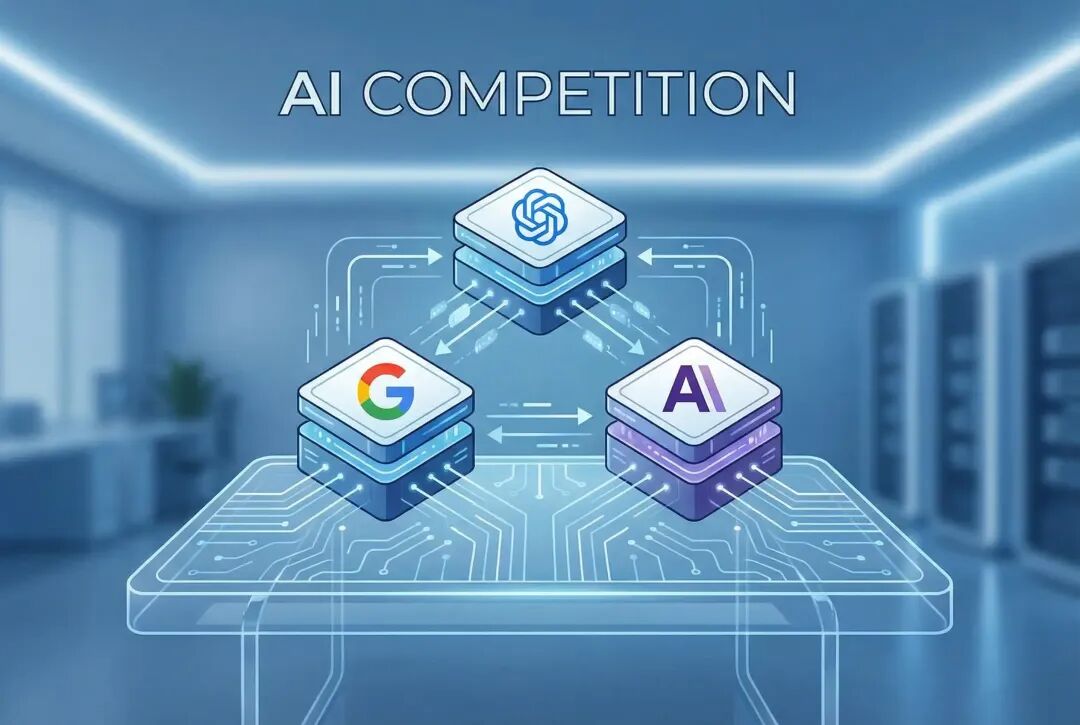
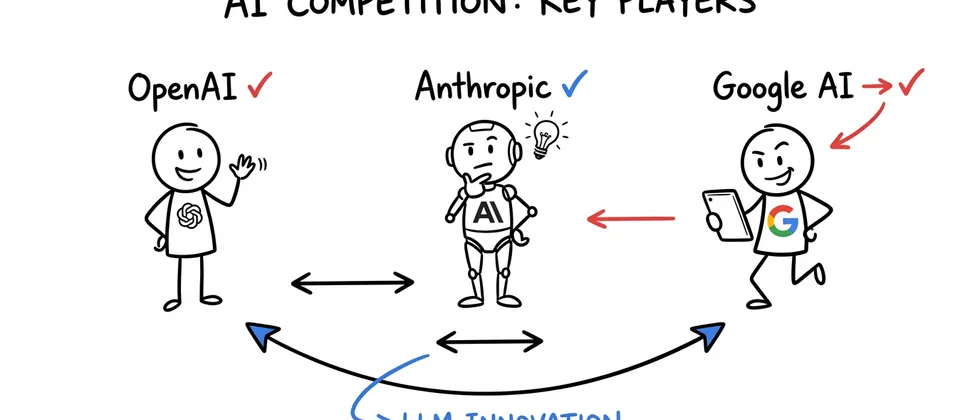
谷歌工程师偷用竞争对手工具写代码:AI编程三国杀Google vs Anthropic vs Open
谷歌工程师偷用竞争对手工具写代码:AI编程三国杀Google vs Anthropic vs OpenAI
Los Angeles Times / Bloomberg,作者:Julia LoveAI大公司竞争(Google vs Anthropic vs OpenAI)
有一件事你可能没想到:
谷歌,那个写出全球最多代码的公司,旗下的DeepMind工程师,正在偷偷用竞争对手Anthropic的Claude Code来写代码。
更尴尬的是,当硅谷工程师被问到”你用什么AI写代码?”的时候,他们的回答通常只有两个名字——Claude Code 和 OpenAI Codex。
谷歌,那个投了Anthropic数十亿美元的”股东”,连竞争候选名单都没进去。
这不是一个产品失败的故事。这是一个拥有全球最顶尖AI人才的公司,却在最赚钱的AI赛道上,因为内部混乱而自我出局的真实案例。
📖 英文原文
The Most Profitable AI Race — And Google Is Losing It
Google’s fragmented suite of AI coding tools is losing ground to nimbler competitors Anthropic and OpenAI in what’s become tech’s most lucrative market.
The world’s most valuable AI company is struggling in the most important near-term market for AI: software development. Engineers at Google’s DeepMind, including those working on the Gemini model itself, have been using Anthropic’s Claude Code — a rival product — even as Google pushes its own internal tools.
A House Divided
Google’s AI coding capabilities are spread across six different branded products, reflecting a lack of focus and internal competition that has slowed the company’s ability to challenge Anthropic’s Claude Code and OpenAI’s Codex.
Five different business divisions — DeepMind, Google Cloud, Google Core, Google Labs, and Android — are all pursuing AI coding in different ways. The result: fragmentation, overlap, and a product lineup that engineers inside and outside the company find confusing.
“There was an opportunity for Google to build something that felt cohesive and intuitive and great. What I more often saw was fragmentation, parallel tools, overlapping surfaces, brilliant teams solving similar problems in slightly different ways. That’s not a talent problem, that’s a systems problem.”— Kathy Korevec, former Google Jules project lead, who left for OpenAI this month
When Your Own Employees Choose the Competition
Most Google employees are prohibited from using competitor tools like Claude Code or Codex for security reasons — but they can apply for exceptions if they demonstrate a business case.
“You want the best people to have the best tools, even at Google.”— Former Google employee
Engineers using internal AI coding tools have frequently hit capacity limits due to compute constraints, forcing some to seek alternatives. The situation highlights a fundamental tension: Google’s AI research ambitions are competing with each other for the same limited computing resources.
Why Coding Is the Only Race That Matters Right Now
“If you win coding this year, you get the raw data you need to win model capabilities next year.”— Raj Gajwani, former Google executive, now Chief Business Officer at OpenArt AI
Coding has become the single most financially rewarding application of AI, with enterprise clients willing to pay premium prices for tools that directly generate business value. Anthropic’s Claude Code and OpenAI’s Codex have positioned themselves as the go-to choices for developers, while Google — despite having the Gemini model underlying many products — is frequently not even in the conversation.
Kathy Korevec, who led Google’s Jules coding project before defecting to OpenAI this month, wrote on X:
“The market is moving too fast for big companies to figure it out before they have to move. Speed is the only moat.”
Google’s Attempt to Fix the Problem
Google has hired chief AI architect Koray Kavukcuoglu to consolidate its internal AI coding tools under a new platform called Antigravity, built partly using talent and technology acquired from startup Windsurf for $2.4 billion. A new team at DeepMind, led by Sebastian Borgeaud, is also being formed to accelerate coding capabilities — and even 2024 Nobel laureate John Jumper is involved in the effort.
The company says adoption of its internal coding tools has grown significantly. About 50% of new code at Alphabet is now written by AI — a milestone touted at the company’s February earnings call.
But whether a unified platform can overcome the cultural and structural fragmentation that has held Google back remains an open question.
🇨🇳 中文精华总结
这篇报道最值得关注的不是谷歌落后了多少,而是它为什么会落后。
谷歌有全球最好的AI研究人才,有Gemini这个顶尖模型,有向Anthropic投入了数十亿美元的资本,但在AI编程这个最能直接变现的赛道上,却连自家工程师都抛弃了自己的工具。
原因很简单:五个部门各做一套,六个品牌互相打架,算力内部竞争,结果没人知道该用哪个。这不是技术问题,是大公司病。
对比之下,Anthropic只做一件事——把Claude Code做到极致。OpenAI也在押注Codex。当竞争对手专注突破,谷歌在内部开会讨论怎么整合产品线。
更讽刺的是:这个赛道的战略价值极高——今年谁赢得了编程,明年就有了训练下一代模型的最好数据。输掉AI编程,就是在输掉AI未来。
谷歌用24亿美元买了Windsurf的团队和技术,组建了新的Antigravity平台,诺贝尔奖得主也加入进来救场。但大公司改革,总是慢一拍。
📚 词汇解析
1. fragmentation /ˌfræɡmənˈteɪʃn/n. 碎片化,分散化
“Google’s fragmented suite of AI coding tools is losing ground.”场景:描述大型组织内部产品线或团队过度分散的问题,是科技公司管理报道中的高频词。
2. cohesive /kəʊˈhiːsɪv/adj. 凝聚的,有整体感的
“There was an opportunity to build something that felt cohesive and intuitive.”场景:形容产品体验统一、团队配合紧密,与 fragmented 反义。
3. moat /məʊt/n. 护城河(竞争优势)
“Speed is the only moat.”场景:来自巴菲特投资术语,在科技/商业报道中比喻难以被竞争对手跨越的核心竞争壁垒。
4. defect /dɪˈfekt/v. 叛变,跳槽(带有从一方转投另一方的含义)
“Kathy Korevec, who led Google’s Jules coding project before defecting to OpenAI…”场景:比普通的”quit”或”left”语气更重,暗示是从竞争对手处挖角,多用于描述关键人才流失。
5. lucrative /ˈluːkrətɪv/adj. 利润丰厚的,赚钱的
“…in what’s become tech’s most lucrative market.”场景:强调某市场、某职业或某合同的经济回报极高,是商业报道标配词汇。
🔍 语法精讲
句型:分词短语作后置定语
“Kathy Korevec, who led Google’s Jules coding project before defecting to OpenAI this month, wrote on X…”
这个句子使用了限制性定语从句,其中嵌套了一个分词结构before defecting,用来补充说明主语的背景动作。
用法要点:
before + V-ing
= “在……之前(做了某事)”,表示先后顺序 defect to
= 叛逃到某方,带有强烈立场转换的意味 -
整体结构 [who + 从句 + before doing]是英语新闻描述人物履历时极常用的句式
仿写示例:
Sam Altman, who co-founded OpenAI before being briefly fired and reinstated, is now targeting a $300 billion valuation.
 💬 互动引导
你觉得谷歌这次能追回来吗?
Antigravity + Windsurf团队 + 诺贝尔奖得主……配置听起来很强,但大公司的执行力,你懂的。
👇 留言告诉我:你平时写代码用什么AI工具?Claude Code、Copilot、Cursor,还是别的?
如果这篇文章让你对AI编程的竞争格局有了新认知,转发给你的程序员朋友——这场三国杀,他们应该知道。