ARTICLE · 1129089
小学阶段所有英语否定句1000句,升初中考试不扣冤枉分(附PDF)
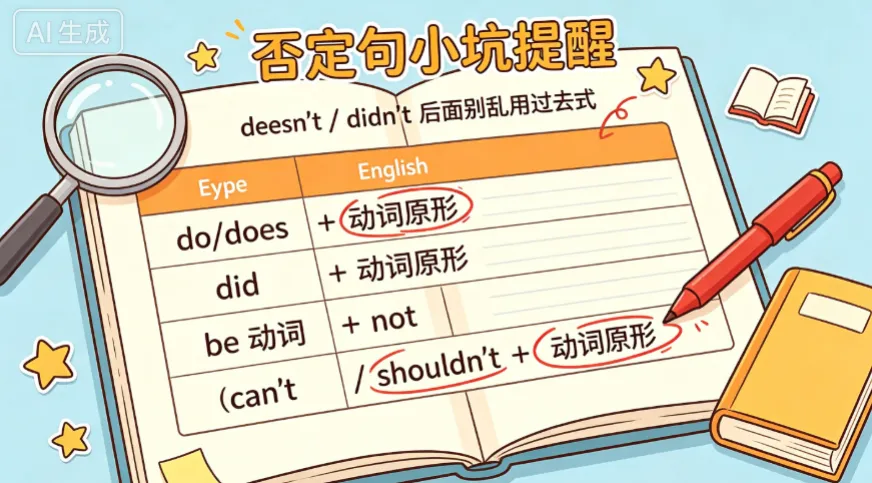
很多孩子平时做英语题,肯定句看着都懂,一变成否定句就容易出错:doesn't后面忘了用原形,didn't后面又跟了过去式,be动词和实义动词也经常混在一起。
其实这些都是小学阶段反复出现的基础句型,提前把常见用法和易错点多看几遍,到了初中做题会轻松不少。


一、一般现在时否定句

我不喜欢喝牛奶。I don't like drinking milk.
我不吃辣的食物。I don't eat spicy food.
我每天不看电视。I don't watch TV every day.
我不认识那个男孩。I don't know that boy.
我不住在北京。I don't live in Beijing.
我不乘公交车去学校。I don't take the bus to school.
我不在早上喝咖啡。I don't drink coffee in the morning.
我不玩电脑游戏到很晚。I don't play computer games until late.
我不喜欢这首歌。I don't like this song.
我不需要你的帮助。I don't need your help.
我不记得他的名字。I don't remember his name.
我不带雨伞去学校。I don't take an umbrella to school.
我不吃早餐吃得很快。I don't eat breakfast quickly.
我不在周末上课。I don't have classes on weekends.
我不经常看电影。I don't often watch movies.
我妹妹不喜欢胡萝卜。My sister doesn't like carrots.
他不喜欢踢足球。He doesn't like playing football.
他不住在这个城市。He doesn't live in this city.
她不喝可乐。She doesn't drink cola.
她不认识我的老师。She doesn't know my teacher.
Tom不骑自行车去学校。Tom doesn't ride a bike to school.
Lucy不喜欢早起。Lucy doesn't like getting up early.
我爸爸不在家工作。My dad doesn't work at home.
我妈妈不看足球比赛。My mom doesn't watch football games.
我的弟弟不吃鱼。My little brother doesn't eat fish.
那个女孩不喜欢画画。That girl doesn't like drawing.
我的朋友不住在附近。My friend doesn't live nearby.
他每天不带午餐去学校。He doesn't take lunch to school every day.
她不在晚上喝茶。She doesn't drink tea at night.
我的猫不喜欢洗澡。My cat doesn't like taking baths.
我们不在这里踢足球。We don't play football here.
我们不每天坐地铁。We don't take the subway every day.
我们不喜欢下雨天。We don't like rainy days.
我们不在晚上学习英语。We don't study English at night.
他们不住在这栋楼里。They don't live in this building.
他们不喜欢这家餐厅。They don't like this restaurant.
这些学生不带手机上课。These students don't bring phones to class.
我的同学们不经常迟到。My classmates don't often arrive late.
我们的老师不说日语。Our teacher doesn't speak Japanese.
这家商店不在晚上营业。This store doesn't open at night.
我不知道这个问题的答案。I don't know the answer to this question.
我不明白你的意思。I don't understand what you mean.
我不记得这个单词。I don't remember this word.
我不觉得这道题很难。I don't think this question is difficult.
我不相信那个故事。I don't believe that story.
他不知道我的电话号码。He doesn't know my phone number.
她不明白这个规则。She doesn't understand this rule.
我的哥哥不认为数学很难。My brother doesn't think math is difficult.
这个单词不表示那个意思。This word doesn't mean that.
这辆公交车不到学校。This bus doesn't go to the school.


二、一般过去时否定句

我昨天没有去学校。I didn't go to school yesterday.
我昨天没有吃早餐。I didn't eat breakfast yesterday.
我昨晚没有看电视。I didn't watch TV last night.
我昨天没有做作业。I didn't do my homework yesterday.
我没有找到我的铅笔。I didn't find my pencil.
我没有听见你的声音。I didn't hear your voice.
我没有看懂那本书。I didn't understand that book.
我没有买那件外套。I didn't buy that coat.
我没有喝完我的牛奶。I didn't finish my milk.
我没有告诉妈妈这件事。I didn't tell Mom about it.
我没有带我的英语书。I didn't bring my English book.
我没有记住这个单词。I didn't remember this word.
我没有坐公交车回家。I didn't take the bus home.
我没有在公园里遇见他。I didn't meet him in the park.
我没有给朋友写信。I didn't write a letter to my friend.
他昨天没有踢足球。He didn't play football yesterday.
他没有完成数学作业。He didn't finish his math homework.
他没有打开那扇门。He didn't open that door.
他没有拿我的书。He didn't take my book.
他没有回答老师的问题。He didn't answer the teacher's question.
她昨天没有去购物。She didn't go shopping yesterday.
她没有吃午饭。She didn't have lunch.
她没有听那首歌。She didn't listen to that song.
她没有给我打电话。She didn't call me.
她没有看到那只小猫。She didn't see the little cat.
Tom没有赶上公交车。Tom didn't catch the bus.
Lucy没有带她的雨伞。Lucy didn't bring her umbrella.
我的爸爸昨天没有上班。My dad didn't go to work yesterday.
我的妈妈没有做晚饭。My mom didn't cook dinner.
我的弟弟没有打扫他的房间。My little brother didn't clean his room.
我们昨天没有打篮球。We didn't play basketball yesterday.
我们没有参观那座博物馆。We didn't visit that museum.
我们没有坐火车去上海。We didn't take the train to Shanghai.
我们没有在餐厅吃晚饭。We didn't have dinner at the restaurant.
我们没有听到那个消息。We didn't hear the news.
他们昨天没有来参加聚会。They didn't come to the party yesterday.
他们没有找到钥匙。They didn't find the key.
他们没有买新电脑。They didn't buy a new computer.
那些孩子没有在操场上玩。Those children didn't play on the playground.
我的朋友们没有迟到。My friends didn't arrive late.
我以前没有住在这里。I didn't live here before.
我以前没有学过游泳。I didn't learn to swim before.
我小时候不喜欢吃蔬菜。I didn't like vegetables when I was young.
我以前不知道这个地方。I didn't know this place before.
他以前没有坐过飞机。He didn't travel by plane before.
她小时候没有养宠物。She didn't have a pet when she was young.
我们以前没有见过那位老师。We didn't know that teacher before.
他们以前不住在这个城市。They didn't live in this city before.
我昨天没有忘记你的生日。I didn't forget your birthday yesterday.
他昨晚没有睡得很好。He didn't sleep well last night.


三、be动词否定句

我不是一名老师。I am not a teacher.
我不是来自英国。I am not from the UK.
我今天不忙。I am not busy today.
我现在不在家。I am not at home now.
我不饿。I am not hungry.
我不累。I am not tired.
我不害怕。I am not afraid.
我不迟到。I am not late.
我不确定答案。I am not sure about the answer.
我不在你的班里。I am not in your class.
他不是我的哥哥。He isn't my brother.
他不是一名医生。He isn't a doctor.
他不在教室里。He isn't in the classroom.
他今天不开心。He isn't happy today.
他不是很高。He isn't very tall.
他不害怕这只狗。He isn't afraid of the dog.
他现在不忙。He isn't busy now.
他不是来自美国。He isn't from the United States.
她不是我的同学。She isn't my classmate.
她不在厨房里。She isn't in the kitchen.
她今天不舒服。She isn't well today.
她不是十二岁。She isn't twelve years old.
她不生气。She isn't angry.
她不是我们的英语老师。She isn't our English teacher.
这不是我的书包。This isn't my schoolbag.
这不是你的铅笔。This isn't your pencil.
这本书不厚。This book isn't thick.
这间教室不大。This classroom isn't big.
今天不是星期一。Today isn't Monday.
今天不是我的生日。Today isn't my birthday.
我们不是在操场上。We aren't on the playground.
我们不是一个班的。We aren't in the same class.
我们现在不忙。We aren't busy now.
我们不是朋友吗?Aren't we friends?
他们不是兄弟。They aren't brothers.
他们不在学校。They aren't at school.
他们现在不开心。They aren't happy now.
这些苹果不是新鲜的。These apples aren't fresh.
那些孩子不在教室里。Those children aren't in the classroom.
我的鞋子不是黑色的。My shoes aren't black.
昨天不是很冷。It wasn't very cold yesterday.
昨天我不在家。I wasn't at home yesterday.
我昨天不舒服。I wasn't well yesterday.
他昨晚不在房间里。He wasn't in the room last night.
她昨天不是很开心。She wasn't very happy yesterday.
那不是我的自行车。That wasn't my bike.
我们昨天不在学校。We weren't at school yesterday.
他们昨天没有迟到。They weren't late yesterday.
那些问题并不容易。Those questions weren't easy.
昨晚天气并不暖和。The weather wasn't warm last night.


四、情态动词否定句

我不会游泳。I can't swim.
我不会弹钢琴。I can't play the piano.
我不能打开这个盒子。I can't open this box.
我不能现在出去。I can't go out now.
我不能在这里停车。I can't park here.
我不会骑自行车。I can't ride a bike.
我不能把这本书带走。I can't take this book away.
我不能回答这个问题。I can't answer this question.
我不能听清你的声音。I can't hear you clearly.
我不会用这台电脑。I can't use this computer.
他不会唱这首歌。He can't sing this song.
他不能独自过马路。He can't cross the road alone.
他不能在课堂上玩手机。He can't use his phone in class.
他不会做这个数学题。He can't do this math problem.
她不会骑马。She can't ride a horse.
她不能吃花生。She can't eat peanuts.
她不能把窗户打开。She can't open the window.
她不会说法语。She can't speak French.
我的弟弟不能拿那个盒子。My little brother can't carry that box.
我的妹妹不会跳舞。My little sister can't dance.
我们不能在图书馆大声说话。We can't talk loudly in the library.
我们不能在这里拍照。We can't take pictures here.
我们不会在没有老师的情况下开始。We can't start without the teacher.
我们不能把食物带进教室。We can't bring food into the classroom.
他们不能进入这个房间。They can't enter this room.
他们不会在这么早的时候到达。They can't arrive this early.
这些孩子不能在马路上玩。These children can't play in the street.
你不能碰那个按钮。You can't touch that button.
你不能把垃圾扔在这里。You can't throw rubbish here.
你不能忘记带作业。You can't forget to bring your homework.
你不应该在床上看手机。You shouldn't use your phone in bed.
我们不应该嘲笑别人。We shouldn't laugh at other people.
他不应该上课迟到。He shouldn't be late for class.
她不应该吃太多糖。She shouldn't eat too much candy.
你不应该在雨天跑得太快。You shouldn't run too fast on a rainy day.
我们不应该浪费食物。We shouldn't waste food.
孩子们不应该在这里打闹。Children shouldn't run around here.
你不应该把书弄湿。You shouldn't get the book wet.
他不应该独自去那里。He shouldn't go there alone.
我们不应该忘记帮助别人。We shouldn't forget to help others.
你不必现在完成这项工作。You needn't finish the work now.
我不必带雨伞。I needn't bring an umbrella.
你不必担心这件事。You needn't worry about it.
我们不必今天买票。We needn't buy the tickets today.
他不必回答所有问题。He needn't answer all the questions.
她不必一个人做这件事。She needn't do this alone.
你不应该忘记锁门。You shouldn't forget to lock the door.
我们不应该在考试中作弊。We shouldn't cheat in an exam.
你不能在这里吸烟。You mustn't smoke here.
学生不能在考试时使用手机。Students mustn't use phones during the exam.


五、there be与“没有”类否定

教室里没有老师。There isn't a teacher in the classroom.
桌子上没有一本书。There isn't a book on the desk.
冰箱里没有牛奶。There isn't any milk in the fridge.
盒子里没有苹果。There isn't an apple in the box.
花园里没有一棵大树。There isn't a big tree in the garden.
墙上没有一幅画。There isn't a picture on the wall.
房间里没有人。There isn't anyone in the room.
包里没有我的铅笔。There isn't my pencil in the bag.
桌上没有足够的食物。There isn't enough food on the table.
书里没有这个单词。This word isn't in the book.
教室里没有学生。There aren't any students in the classroom.
桌子上没有三本书。There aren't three books on the desk.
花园里没有花。There aren't any flowers in the garden.
冰箱里没有鸡蛋。There aren't any eggs in the fridge.
街上没有汽车。There aren't any cars in the street.
盒子里没有玩具。There aren't any toys in the box.
墙上没有照片。There aren't any photos on the wall.
操场上没有孩子。There aren't any children on the playground.
书架上没有漫画书。There aren't any comic books on the shelf.
这个房间里没有窗户。There aren't any windows in this room.
我没有一支新钢笔。I don't have a new pen.
我没有一把雨伞。I don't have an umbrella.
我没有足够的钱。I don't have enough money.
我没有时间吃午饭。I don't have time for lunch.
我没有一只宠物。I don't have a pet.
他没有一辆自行车。He doesn't have a bike.
他没有兄弟。He doesn't have any brothers.
他没有英语书。He doesn't have an English book.
她没有长头发。She doesn't have long hair.
她没有一部手机。She doesn't have a phone.
我的朋友没有一只猫。My friend doesn't have a cat.
我的妹妹没有自己的房间。My sister doesn't have her own room.
我爸爸没有时间看电视。My dad doesn't have time to watch TV.
我妈妈没有一辆汽车。My mom doesn't have a car.
我们没有足够的椅子。We don't have enough chairs.
我们没有更多的水。We don't have any more water.
我们没有一个好主意。We don't have a good idea.
他们没有孩子。They don't have any children.
他们没有足够的食物。They don't have enough food.
这些学生没有英语词典。These students don't have English dictionaries.
桌子上没有任何东西。There is nothing on the desk.
房间里没有任何人。There is nobody in the room.
包里没有任何东西。There is nothing in the bag.
冰箱里没有任何水果。There isn't any fruit in the fridge.
这里没有任何空座位。There aren't any empty seats here.
今天没有课。There aren't any classes today.
我没有什么可担心的。I don't have anything to worry about.
他没有任何问题。He doesn't have any problems.
她没有任何兄弟姐妹。She doesn't have any brothers or sisters.
我们这里没有足够的空间。We don't have enough space here.


六、否定祈使句

不要跑。Don't run.
不要喊。Don't shout.
不要哭。Don't cry.
不要动。Don't move.
不要碰它。Don't touch it.
不要打开门。Don't open the door.
不要关灯。Don't turn off the light.
不要坐在这里。Don't sit here.
不要站在门口。Don't stand at the door.
不要忘记你的书包。Don't forget your schoolbag.
不要忘记做作业。Don't forget to do your homework.
不要迟到。Don't be late.
不要害怕。Don't be afraid.
不要生气。Don't be angry.
不要担心。Don't worry.
不要在教室里吃东西。Don't eat in the classroom.
不要在走廊里跑。Don't run in the hallway.
不要在课堂上说话。Don't talk in class.
不要在图书馆大声说话。Don't talk loudly in the library.
不要在桌子上画画。Don't draw on the desk.
不要把你的书放在地上。Don't put your book on the floor.
不要把门打开。Don't open the door.
不要把水洒在桌子上。Don't spill water on the desk.
不要把这个盒子拿走。Don't take this box away.
不要拿我的铅笔。Don't take my pencil.
不要吃太多糖。Don't eat too much candy.
不要喝太多可乐。Don't drink too much cola.
不要在晚上玩电脑游戏。Don't play computer games at night.
不要在马路上踢足球。Don't play football in the street.
不要独自过马路。Don't cross the road alone.
不要忘记带雨伞。Don't forget to bring an umbrella.
不要忘记关窗户。Don't forget to close the window.
不要忘记锁门。Don't forget to lock the door.
不要穿着湿鞋进教室。Don't come into the classroom in wet shoes.
不要把垃圾扔在这里。Don't throw rubbish here.
不要在墙上写字。Don't write on the wall.
不要在考试中作弊。Don't cheat in the exam.
不要看别人的答案。Don't look at other people's answers.
不要说这个秘密。Don't tell this secret.
不要打扰你的妹妹。Don't disturb your sister.
不要忘记给老师道谢。Don't forget to thank your teacher.
不要对弟弟大喊。Don't shout at your brother.
不要把玩具弄坏。Don't break the toy.
不要在这里拍照。Don't take pictures here.
不要在楼梯上跑。Don't run on the stairs.
不要把手伸进那个盒子。Don't put your hand into that box.
不要一个人去那个地方。Don't go to that place alone.
不要在下雨天骑自行车太快。Don't ride your bike too fast on rainy days.
不要在睡觉前喝太多水。Don't drink too much water before bed.
不要因为一道难题就放弃。Don't give up because of one difficult question.


七、频率与习惯否定

我从来不在课堂上睡觉。I never sleep in class.
我从来不迟到。I am never late.
我从来不吃早餐吃得很晚。I never have breakfast late.
我从来不在晚上喝咖啡。I never drink coffee at night.
我从来不忘记带书。I never forget to bring my books.
我从来不在图书馆大声说话。I never talk loudly in the library.
我从来不一个人去那里。I never go there alone.
我从来不在考试中作弊。I never cheat in exams.
我从来不把作业留到最后一天。I never leave my homework until the last day.
我从来不在床上吃东西。I never eat in bed.
他从来不骑自行车去学校。He never rides a bike to school.
他从来不在课堂上玩手机。He never plays with his phone in class.
他从来不忘记带午餐。He never forgets to bring lunch.
他从来不喝牛奶。He never drinks milk.
他从来不在晚上出去。He never goes out at night.
她从来不吃辣的食物。She never eats spicy food.
她从来不看恐怖电影。She never watches horror movies.
她从来不在早上迟到。She is never late in the morning.
她从来不和同学吵架。She never argues with her classmates.
我的弟弟从来不整理他的房间。My little brother never cleans his room.
我很少看电视。I seldom watch TV.
我很少吃甜食。I seldom eat sweets.
我很少在周末起得很晚。I seldom get up late on weekends.
我很少坐出租车。I seldom take a taxi.
我很少去电影院。I seldom go to the cinema.
他很少打篮球。He seldom plays basketball.
他很少在家吃午饭。He seldom has lunch at home.
她很少喝果汁。She seldom drinks juice.
她很少使用电脑。She seldom uses a computer.
我的爸爸很少看电视。My dad seldom watches TV.
我不经常玩电脑游戏。I don't often play computer games.
我不经常去购物。I don't often go shopping.
我不经常吃汉堡。I don't often eat hamburgers.
我不经常坐公交车。I don't often take the bus.
我不经常和朋友一起看电影。I don't often watch movies with my friends.
他不经常踢足球。He doesn't often play football.
他不经常读英语书。He doesn't often read English books.
她不经常在外面吃饭。She doesn't often eat out.
她不经常玩手机。She doesn't often use her phone.
我们不经常在这里吃饭。We don't often eat here.
我几乎从不喝可乐。I hardly ever drink cola.
我几乎从不熬夜。I hardly ever stay up late.
他几乎从不生病。He hardly ever gets sick.
她几乎从不迟到。She is hardly ever late.
我的爸爸几乎从不坐地铁。My dad hardly ever takes the subway.
我的妈妈几乎从不买快餐。My mom hardly ever buys fast food.
我们几乎从不在冬天游泳。We hardly ever swim in winter.
他们几乎从不在晚上出门。They hardly ever go out at night.
我的朋友很少忘记带作业。My friend seldom forgets to bring homework.
我们不经常在考试前一天学习。We don't often study the day before an exam.


八、时间、数量与程度否定

我还没有吃早饭。I haven't had breakfast yet.
我还没有完成作业。I haven't finished my homework yet.
我还没有看完这本书。I haven't finished reading this book yet.
我还没有找到我的钥匙。I haven't found my key yet.
我还没有决定去哪儿。I haven't decided where to go yet.
我还没有告诉妈妈。I haven't told Mom yet.
他还没有回家。He hasn't come home yet.
她还没有做完练习。She hasn't finished the exercise yet.
我们还没有开始上课。We haven't started the class yet.
他们还没有到学校。They haven't arrived at school yet.
我没有任何问题。I don't have any problems.
我没有任何零钱。I don't have any change.
我没有任何兄弟姐妹。I don't have any brothers or sisters.
他没有任何玩具。He doesn't have any toys.
她没有任何时间休息。She doesn't have any time to rest.
我们没有任何牛奶了。We don't have any milk left.
他们没有任何理由迟到。They don't have any reason to be late.
书包里没有任何书。There aren't any books in the schoolbag.
桌子上没有任何苹果。There aren't any apples on the table.
冰箱里没有任何鸡蛋。There aren't any eggs in the fridge.
我没有足够的钱买这本书。I don't have enough money to buy this book.
我们没有足够的时间完成它。We don't have enough time to finish it.
他没有足够的水。He doesn't have enough water.
她没有足够的空间放这些书。She doesn't have enough space for these books.
教室里没有足够的椅子。There aren't enough chairs in the classroom.
我不太喜欢这个颜色。I don't really like this color.
他不太明白这个问题。He doesn't really understand this question.
她不太会游泳。She can't swim very well.
这个箱子没有那么重。This box isn't that heavy.
今天没有那么冷。It isn't that cold today.
没有人知道答案。Nobody knows the answer.
没有人在教室里。Nobody is in the classroom.
没有人喜欢这个游戏。Nobody likes this game.
没有人告诉我这件事。Nobody told me about it.
没有人能回答这个问题。Nobody can answer this question.
什么也没有发生。Nothing happened.
我的书包里什么也没有。There is nothing in my schoolbag.
桌子上什么也没有。There is nothing on the table.
我什么也没看到。I didn't see anything.
他什么也没说。He didn't say anything.
我没有买任何东西。I didn't buy anything.
她没有喝任何果汁。She didn't drink any juice.
我们没有找到任何答案。We didn't find any answers.
他们没有做任何改变。They didn't make any changes.
我一点也不累。I am not tired at all.
他一点也不害怕。He isn't afraid at all.
这道题一点也不难。This question isn't difficult at all.
这个故事一点也不好笑。This story isn't funny at all.
我一点也不喜欢这道菜。I don't like this dish at all.
她一点也不担心考试。She isn't worried about the exam at all.


九、一般疑问句与特殊疑问句中的否定

你不喜欢苹果吗?Don't you like apples?
你不喜欢英语吗?Don't you like English?
你不认识他吗?Don't you know him?
你不住在这里吗?Don't you live here?
你不每天走路上学吗?Don't you walk to school every day?
他不喜欢足球吗?Doesn't he like football?
她不吃肉吗?Doesn't she eat meat?
你的哥哥不打篮球吗?Doesn't your brother play basketball?
他们不住在附近吗?Don't they live nearby?
你们不需要帮助吗?Don't you need help?
你昨天没有去学校吗?Didn't you go to school yesterday?
你没有看到我的书吗?Didn't you see my book?
他没有完成作业吗?Didn't he finish his homework?
她昨天没有来吗?Didn't she come yesterday?
他们没有买票吗?Didn't they buy the tickets?
你没有听见我的声音吗?Didn't you hear me?
你没有告诉老师吗?Didn't you tell the teacher?
他没有带午餐吗?Didn't he bring lunch?
她没有找到钥匙吗?Didn't she find the key?
你们昨天没有踢足球吗?Didn't you play football yesterday?
你为什么不喜欢这首歌?Why don't you like this song?
你为什么不吃早餐?Why don't you eat breakfast?
你为什么不坐公交车?Why don't you take the bus?
你为什么不早点睡觉?Why don't you go to bed earlier?
你为什么不问老师?Why don't you ask the teacher?
他为什么不和我们一起去?Why doesn't he go with us?
她为什么不喝牛奶?Why doesn't she drink milk?
他们为什么不住在这里?Why don't they live here?
你为什么不告诉我?Why don't you tell me?
她为什么不喜欢这个游戏?Why doesn't she like this game?
难道你不是学生吗?Aren't you a student?
难道他不是你的朋友吗?Isn't he your friend?
难道这不是你的书吗?Isn't this your book?
难道她不在家吗?Isn't she at home?
难道今天不是星期五吗?Isn't today Friday?
难道他们不是你的同学吗?Aren't they your classmates?
难道我们不应该现在出发吗?Shouldn't we leave now?
难道你不认识那个女孩吗?Don't you know that girl?
难道他昨天没有来吗?Didn't he come yesterday?
难道这里没有商店吗?Isn't there a shop here?
谁不喜欢冰淇淋?Who doesn't like ice cream?
谁不想参加这个游戏?Who doesn't want to join the game?
谁没有完成作业?Who didn't finish the homework?
谁没有带英语书?Who didn't bring the English book?
谁不住在这个城市?Who doesn't live in this city?
哪个学生没有回答问题?Which student didn't answer the question?
哪个孩子不喜欢动物?Which child doesn't like animals?
你不喜欢哪一种水果?Which fruit don't you like?
哪些学生没有带午餐?Which students didn't bring lunch?
为什么我们不能在这里拍照?Why can't we take pictures here?


十、小升初否定句易错综合

我不喜欢这本书。I don't like this book.
她不喜欢这本书。She doesn't like this book.
我昨天没有看这本书。I didn't read this book yesterday.
他昨天没有看这本书。He didn't read this book yesterday.
我不是一名学生。I am not a student.
他不是一名学生。He isn't a student.
我们现在不在教室里。We aren't in the classroom now.
我们昨天不在教室里。We weren't in the classroom yesterday.
我没有自行车。I don't have a bike.
她没有自行车。She doesn't have a bike.
我不能骑自行车。I can't ride a bike.
他不能骑自行车。He can't ride a bike.
我不每天喝牛奶。I don't drink milk every day.
她不每天喝牛奶。She doesn't drink milk every day.
我昨天没有喝牛奶。I didn't drink milk yesterday.
她昨天没有喝牛奶。She didn't drink milk yesterday.
教室里没有学生。There aren't any students in the classroom.
教室里没有老师。There isn't a teacher in the classroom.
桌子上没有一本书。There isn't a book on the desk.
桌子上没有三本书。There aren't three books on the desk.
他不喜欢踢足球。He doesn't like playing football.
他昨天没有踢足球。He didn't play football yesterday.
他不会踢足球。He can't play football.
他不应该在这里踢足球。He shouldn't play football here.
我不认识那个女孩。I don't know that girl.
我昨天没有见到那个女孩。I didn't see that girl yesterday.
我不是在找那个女孩。I am not looking for that girl.
我还没有找到那个女孩。I haven't found that girl yet.
她不经常迟到。She doesn't often arrive late.
她从来不迟到。She is never late.
她昨天没有迟到。She wasn't late yesterday.
她不能迟到。She can't be late.
我们不需要更多的椅子。We don't need more chairs.
我们没有更多的椅子。We don't have any more chairs.
教室里没有更多的椅子。There aren't any more chairs in the classroom.
我们不能把更多的椅子放进去。We can't put more chairs in.
我还没有完成作业。I haven't finished my homework yet.
我昨天没有完成作业。I didn't finish my homework yesterday.
我不每天完成作业。I don't finish my homework every day.
他没有完成作业。He hasn't finished his homework.
不要打开那扇窗户。Don't open that window.
不要打开那扇窗户,因为外面很冷。Don't open that window because it's cold outside.
你不应该打开那扇窗户。You shouldn't open that window.
你不能打开那扇窗户。You can't open that window.
难道你不知道答案吗?Don't you know the answer?
你为什么不知道答案?Why don't you know the answer?
没有人知道这个答案。Nobody knows the answer.
我什么也不知道。I don't know anything.
我还没有找到答案。I haven't found the answer yet.
这道题并没有你想的那么难。This question isn't as difficult as you think.
否定句看起来只是加一个“不”,真正做题时却有不少小坑。尤其是don't、doesn't、didn't和be动词的区别,孩子一旦形成固定用法,后面遇到改句型、选择题和翻译题都会顺手很多。
平时不用一次背完,可以每天练几十句,读熟、看懂,再自己试着说一遍。
- END -
任何学习上的问题和需求都可以
留言或私信虫虫哦
文章末尾的“👍🏻”和“♥”期待您的点亮~
每一次支持都将是我持续输出!
注:文章图片均来自网络,侵删