ARTICLE · 1208256
Mini-Sglang:KVCache源码管理2
# engine/engine.py:注意 +1 是给 CUDA graph 的 dummy 请求留的行self.page_table=torch.zeros((config.max_running_req + 1, aligned_max_seq_len),dtype=torch.int32,device=self.device)
def allocate_paged(self, reqs: List[Req]) -> None:needed_pages = 0 ## 计算总共需要的页面数目allocation_info: List[Tuple[int, int, int]] = []for req in reqs:first_page = div_ceil(req.cached_len, self.page_size) ## 已缓存的前缀,按页管理last_page = div_ceil(req.device_len, self.page_size) ## 请求总长折算成的页面数量## div_ceil()向上取整,不足一页的算作一页if last_page > first_page: ## 需要prefiil的页面数needed_pages += last_page - first_pageallocation_info.append((req.table_idx, first_page, last_page))if needed_pages > 0:allocated = self._page_to_token(self._allocate(needed_pages))_write_page_table(self.page_table, allocated, allocation_info, self.page_size)
def _allocate(self, needed_pages: int) -> torch.Tensor:if needed_pages > (free_pages := len(self.free_slots)): ## 判断是否需要驱逐页面evicted = self.prefix_cache.evict((needed_pages - free_pages) * self.page_size) ## 驱逐页面self.free_slots = torch.cat([self.free_slots, evicted[:: self.page_size]]) ## ::按pages_size采样进行驱逐assert len(self.free_slots) >= needed_pages, "Eviction did not free enough space."allocated = self.free_slots[:needed_pages] ## 分配需要的页面self.free_slots = self.free_slots[needed_pages:] ## 总是从头部进行切片return allocated
self.free_slots =torch.arange(num_pages, dtype=torch.int32, device=device) * page_size
def _page_to_token(self, pages: torch.Tensor) -> torch.Tensor:if self.page_size == 1:return pages# [X * page_size] -> [X * page_size, ..., X * page_size + page_size - 1]offsets = torch.arange(self.page_size, device=self.device, dtype=torch.int32) ## 生成页内偏移量return (pages.unsqueeze(1) + offsets).flatten() ## 生成页偏移量的token索引## unsqueeze(1)将pages的形状从[X]变为[X, 1],然后加上offsets得到[X, page_size],最后flatten()将其展平为一维数组,得到每个页面对应的所有token索引。
ex: pages = [4,8],offsets = [0,1,2,3]pages.unsqueeze(1) = [[4],[8]]pages.unsqueeze(1) + offsets = [[4,5,6,7],[8,9,10,11]]allocated = flatten() = [4,5,6,7,8,9,10,11]
def _write_page_table(page_table: torch.Tensor,allocated: torch.Tensor,allocation_info: List[Tuple[int, int, int]],page_size: int,) -> None:needed_tokens = len(allocated)table_idx_host = torch.empty(needed_tokens, dtype=torch.int64, pin_memory=True)## host 侧索引张量,专门存放每个待写入物理槽位在 page_table 中的行坐标。positions_host = torch.empty(needed_tokens, dtype=torch.int64, pin_memory=True)## host 侧索引张量,专门存放每个待写入物理槽位在 page_table 中的列坐标(token 逻辑位置)。offset = 0for table_idx, first_page, last_page in allocation_info: ## table_Idx:哪个请求first_pos, last_pos = first_page * page_size, last_page * page_sizelength = last_pos - first_pos ## 需要新填充的长度table_idx_host[offset : offset + length].fill_(table_idx)torch.arange(first_pos, last_pos, out=positions_host[offset : offset + length])# first_pos=12, last_pos=20# → positions_host[offset:offset+8] = [12,13,14,15,16,17,18,19]offset += lengthassert offset == needed_tokens, "Mismatch in allocated tokens and filled tokens."table_idxs = table_idx_host.to(page_table.device, non_blocking=True)offsets = positions_host.to(page_table.device, non_blocking=True)page_table[table_idxs, offsets] = allocated## 逻辑 token 位置到物理 KV Cache 槽位的映射表# 行:请求(或请求槽位)。每一行对应一个正在运行的请求。# 列:该请求内的 token 逻辑位置(第几个 token)# 值:该逻辑位置对应的物理 KV 槽位索引,也就是 K/V 实际存储在 KV Pool 中的地址## position_host:是token在token序列中的位置## allocated:是KVCache的物理页号
def __init__(self, num_pages: int, page_size: int, page_table: torch.Tensor, type: str):# The `_free_slots` follows a page-aligned manner. For example, if page_size = 2,# the `_free_slots` may look like [0, 2, 4, 6, ...], and each slot represents a page.device = page_table.deviceself.free_slots = torch.arange(num_pages, dtype=torch.int32, device=device) * page_size ##存储空闲页面的页偏移self.prefix_cache = create_prefix_cache(device=device, type=type)self.device = deviceself.num_pages = num_pagesself.page_table = page_tableself.page_size = page_size
def match_req(self, req: PendingReq) -> MatchResult:input_len = req.input_lenassert input_len > 0, "Input length must be greater than 0."return self.prefix_cache.match_prefix(req.input_ids[: input_len - 1]) ##需要去掉最后一个token
def cache_req(self, req: Req, *, finished: bool) -> None:# ==================================== valid cache region ====================================# [0, req.cached_len) This part is valid for attention kernel read/write.# [0, old_handle.cached_len) This part is in the prefix cache before prefill.# [old_handle.cached_len, req.cached_len) This part is allocated by cache manager for this request.# ================================== allocated cache region ==================================# [old_handle.cached_len, cached_len) This part was not in the prefix cache when prefill,# but later cached by other requests.# We must free them to avoid memory leak.# [cached_len, new_handle.cached_len) This part is newly inserted into the prefix cache.# [new_handle.cached_len, req.cached_len) This part is tailing part that can not inserted into the prefix cache.# We should free it if the request has finished.# [0, old_handle.cached_len) prefill 前就在前缀缓存里(已命中)# [old_handle.cached_len, cached_len) prefill 时新分配,但之后被别的请求缓存了# [cached_len, new_handle.cached_len) 本次新插入前缀缓存的部分# [new_handle.cached_len, req.cached_len) 尾部,无法插入前缀缓存(未页对齐)insert_ids = req.input_ids[: req.cached_len]page_indices = self.page_table[req.table_idx, : req.cached_len]old_handle = req.cache_handlecached_len, new_handle = self.prefix_cache.insert_prefix(insert_ids, page_indices) ## 把经过prefill和前向计算后已经计算出KV的token缓存进树# unlock until all operations on handle is doneself.unlock(old_handle)# this part is already in the prefix cache, free itself._free(page_indices[old_handle.cached_len : cached_len])if finished: # this tail part should be freedself._free(page_indices[new_handle.cached_len :])else: # keep the tail part, update the handlereq.cache_handle = new_handleself.lock(new_handle)
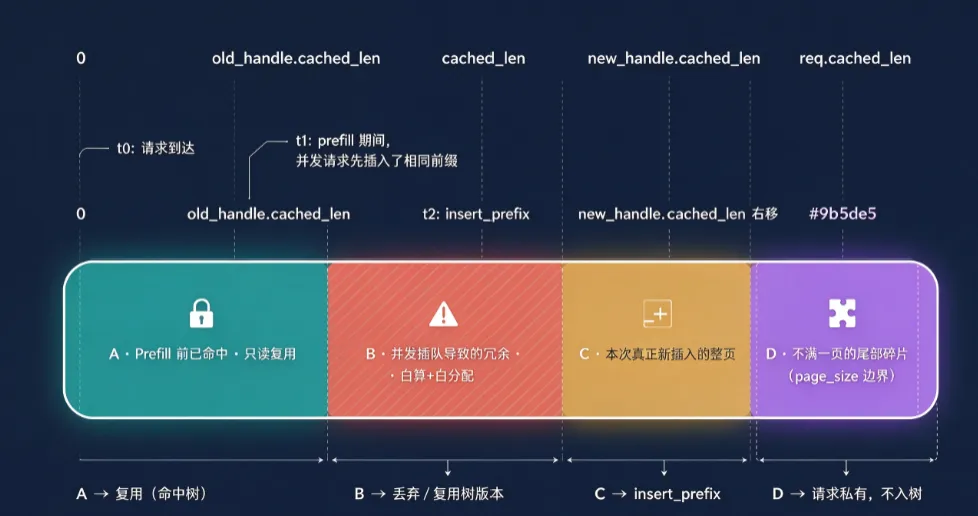
if finished: # this tail part should be freedself._free(page_indices[new_handle.cached_len :])
TableManager 的职责就是维护一个 [0, max_running_reqs - 1] 的槽位池(_free_slots)当一个新请求进入引擎调度时,调用allocate方法给它分配一个空闲行号,原理很简单,就是从列表尾部弹出即可
def allocate(self) -> int:return self._free_slots.pop()
def free(self, slot: int) -> None:self._free_slots.append(slot)
1.在Decode阶段或算子内部,Attention Kernel、PagedAttention Kernel 或后续自定义算子经常需要根据 (table_idx, pos) 直接获取对应的 Token ID,而无需频繁通过Host-to-Device(CPU 到 GPU)拷贝
2.某些静态编译或 CUDA Graph 调度中可能存在占位的虚拟请求(Dummy Request).将整个表用合法的值初始化,可以避免非法显存越界访问或因拿到脏数据导致算子崩溃
4.总结
Mini-Sglang使用巧妙的页表管理,成功将物理KV槽位与逻辑的token位置关联在了一起,而完整的生命周期如下:
1. 调度阶段
└─► TableManager.allocate() 分配空闲 table_idx (占用页表的一行)
└─► prefix_cache.match_prefix() 匹配可复用前缀 (命中旧的物理页)
2. Prefill 准备阶段
└─► allocate_paged()从free_slots分配缺少的新物理页
└─►_write_page_table()向页表写入逻辑位置到物理KV槽的映射
3. Kernel 计算阶段
└─► PagedAttention 算子读取 page_table[table_idx, :len],将分散物理页还原为连续注意力
4. Prefill 提交与保护阶段
└─► 从 page_table[table_idx, :cached_len] 抽取物理页索引
└─► prefix_cache.insert_prefix() 挂入前缀树 (共享复用)
└─► lock 锁定该路径物理页,防止推理中途被置换
└─► 尾部未凑满的物理页予以保留,供随后的 Decode 追加写入
5. Decode 生成阶段
└─► 新生成的 Token 沿用已分配好的尾部页槽位;跨页时动态增补新页
6. 结束回收阶段
└─► prefix_cache 插入最终凑整的页;解锁不再加锁
└─► 释放未满整页的尾部物理槽位
└─► TableManager.free(table_idx) 归还行号槽位