ARTICLE · 1398507
木铎心声—西山区邹继红初中英语工作室学员风采撷英 第4期








木铎心声
西山区邹继红初中英语工作室
学员风采撷英
第4期

教师个人风采展示

韩洋,现任海贝滇池华府俊园学校八年级英语教师,邹继红名师工作室成员。天津外国语大学英语翻译专业本科,中央财经大学经济学硕士,持英语专业八级、TKT 与 CATTI 三级笔译证书。参与昆明市市级微课题《教学评一体化视域下八年级英语教师课堂即时反馈语运用研究》。课堂善以真实情境引路,让学生在表达中习得语言。

纸上得来终觉浅,绝知此事要躬行。

在初中英语单元写作教学中,不少学生习惯于读范文、记句型、套结构,写作往往成为一项以完成练习、获取分数为目的的任务。语言知识虽然学过,却缺少真实的使用场景;学生能够写出句子,却未必能够运用英语解决实际问题。结合新人教版八年级上册 Unit 5 “What a delicious Meal!” 的学习内容,我以“Our Special Drink”为课堂实践主题,尝试开展微项目(Micro-project)教学,让学生从背句型走向做任务、出成果、敢展示。
01

Get to Know Micro-project

A micro-project can be understood as a small-scale, task-oriented project that draws on the principles of Project-Based Learning. It focuses on a meaningful question or practical task. Working in groups, students complete a series of connected activities within a manageable period of time and create a product to share with others.
Unlike large-scale projects, micro-projects can be integrated into regular classroom teaching. They connect language learning with purposeful action, allowing students to learn, apply and reflect through a compact learning experience.

Four Key Features of
Micro-project Design


01. Clear Goal & Scaffolding
Clear learning objectives and language support help students prepare for and complete project tasks with confidence.
02. Role-based Collaboration
Clearly assigned roles and shared responsibilities encourage active participation and effective teamwork.
03. Integrated Language Practice
Students connect language knowledge and skills through meaningful, task-based activities.
04. Visible Outcomes& Reflection
Tangible products and presentations make learning visible, while reflection encourages continuous improvement.

02

Why Micro-projects Matter in English Learning

01.Language Input -- Meaningful Output
Micro-projects encourage students to apply language knowledge in meaningful contexts, expressing ideas and completing communicative tasks.
02.Individual Learning -- Collaborative Learning
Through teamwork, students exchange ideas, share responsibilities and develop communication skills through peer learning.
03.Fragmented Knowledge -- Integrated Skills
Micro-projects connect language knowledge with listening, speaking, reading and writing, promoting integrated language use.
04.Learning Processes -- Tangible Outcomes
Students take ownership of planning and creating, developing autonomy, creativity and a sense of achievement.
03

Implementation Procedures of Micro-projects

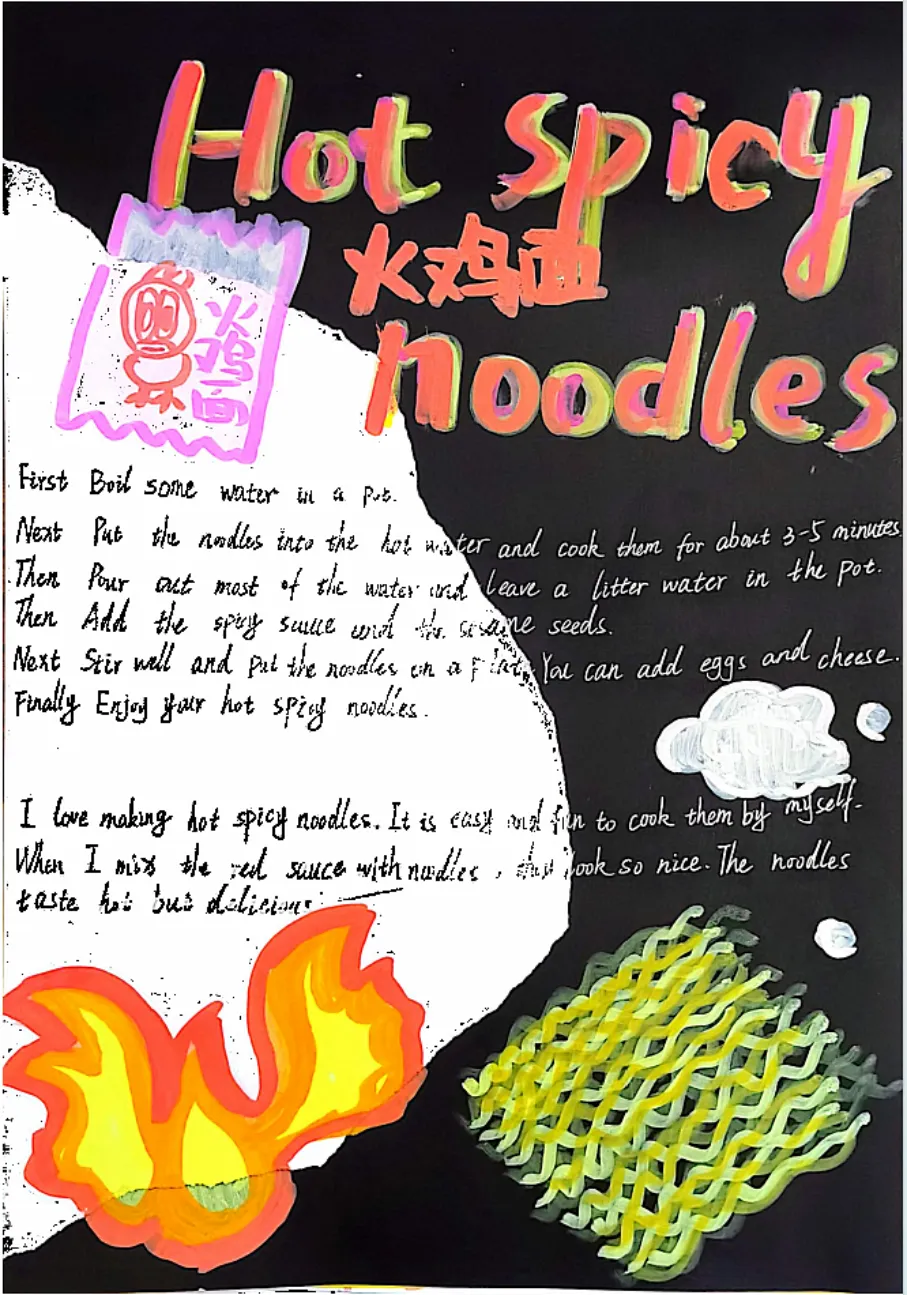
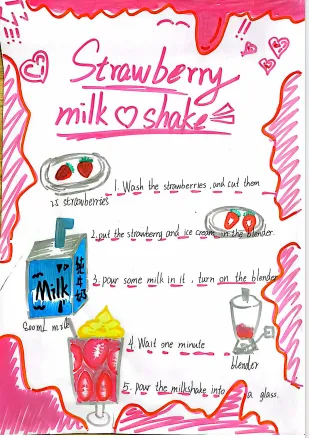
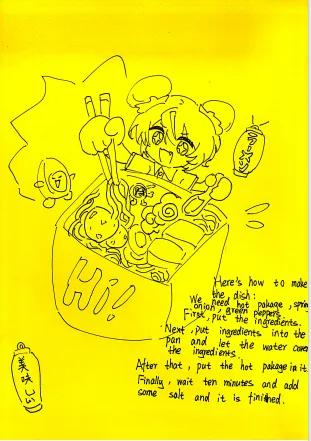
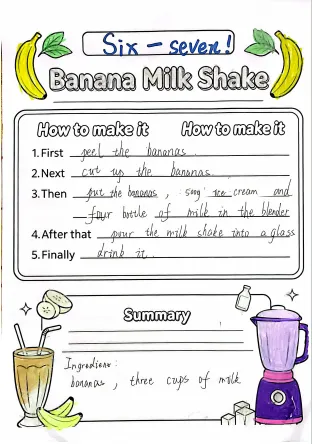

01. Pre-project Preparation
Students work in groups of four, taking on distinct roles: Chef, Assistant, Recorder and Designer. Each member completes assigned pre-class tasks. The teacher provides clear poster guidelines, language scaffolds and a collection of encouraging expressions for students to choose from.
02. In-class Production
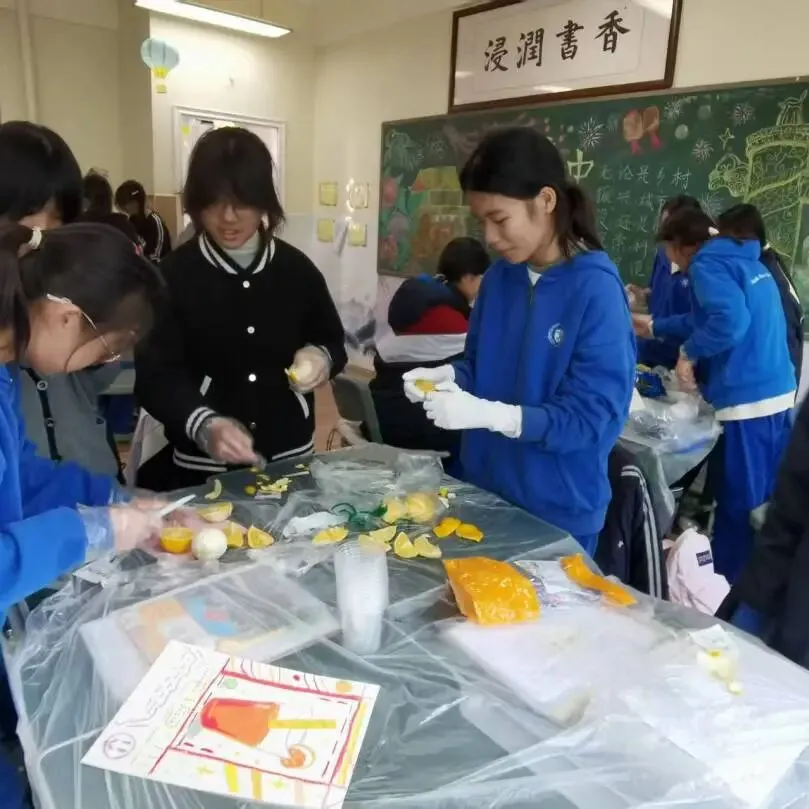
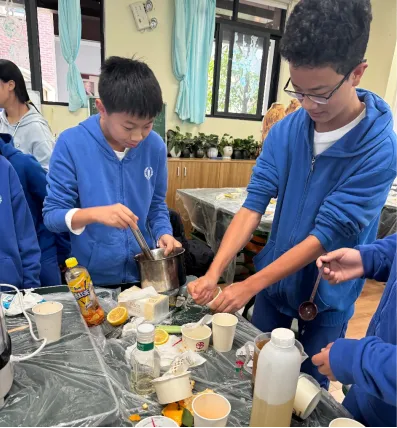
Groups work together to make their drinks or food and complete their posters. Each member contributes according to their assigned role, using English to communicate, follow instructions and describe the procedures in a logical sequence.
03. Oral Presentation & Sharing
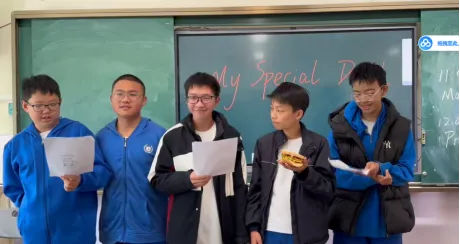
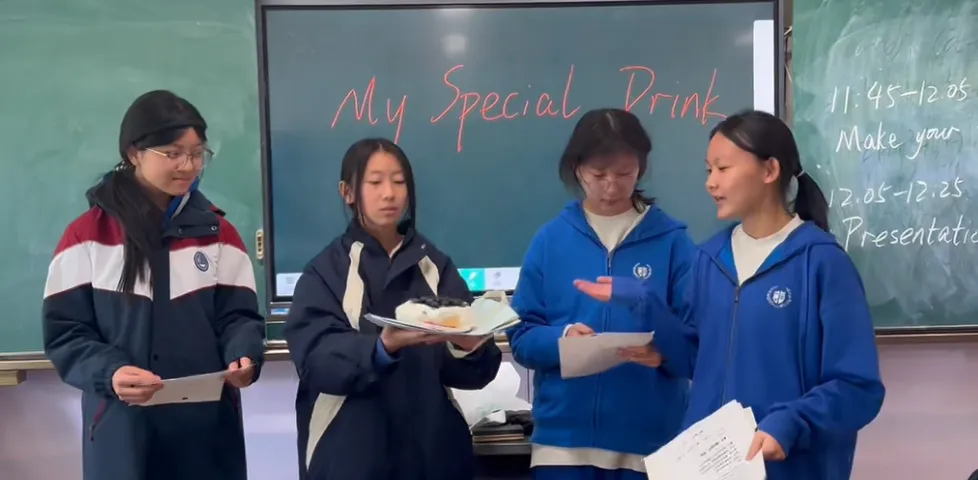
All group members take part in the presentation, introducing their drinks, ingredients and preparation steps, as well as their team slogans. Students then share their creations and explore the themes of love, memories and connection behind food.
04. Post-project Reflection & Improvement
Groups present their posters, evaluate their work using a rubric and reflect on their collaboration and learning. They identify areas for improvement and consider how to make their next project even better.

课堂风采


04

Reflections on Classroom Practice

Throughout this micro-project, language learning remained the central goal, with drink-making providing a meaningful context. Clearly defined group roles enabled students of different proficiency levels to contribute according to their strengths. The multimodal posters also made procedural writing more accessible.
This activity showed that a micro-project is more than an engaging activity. It connects classroom learning with authentic communication and tangible outcomes. By integrating teaching, learning and assessment, it helps students move beyond learning English to using it meaningfully.
Doing makes language real; sharing makes learning last.

图文:韩洋
初审:潘玲燕
终审:邹继红