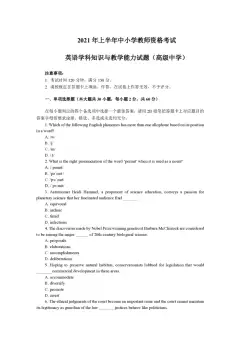
2021年下·初中英语教资真题解析
讲师:原原
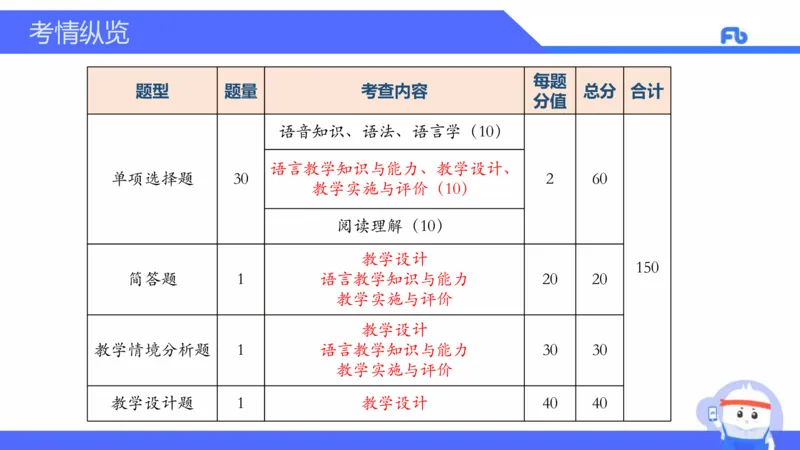
粉笔教师教育 粉笔教师考情纵览
每题
题型 题量 考查内容 总分 合计
分值
语音知识、语法、语言学(10)
语言教学知识与能力、教学设计、
单项选择题 30 2 60
教学实施与评价(10)
阅读理解(10)
教学设计
150
简答题 1 语言教学知识与能力 20 20
教学实施与评价
教学设计
教学情境分析题 1 语言教学知识与能力 30 30
教学实施与评价
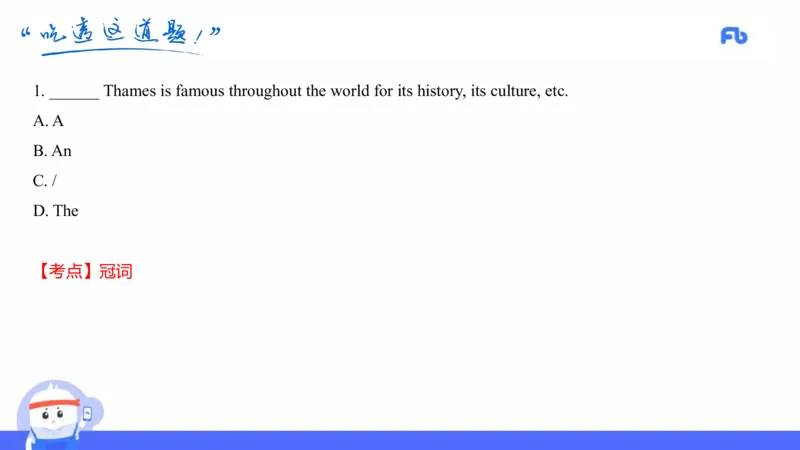
教学设计题 1 教学设计 40 40一、单项选择题1. ______ Thames is famous throughout the world for its history, its culture, etc.
A. A
B. An
C. /
D. The
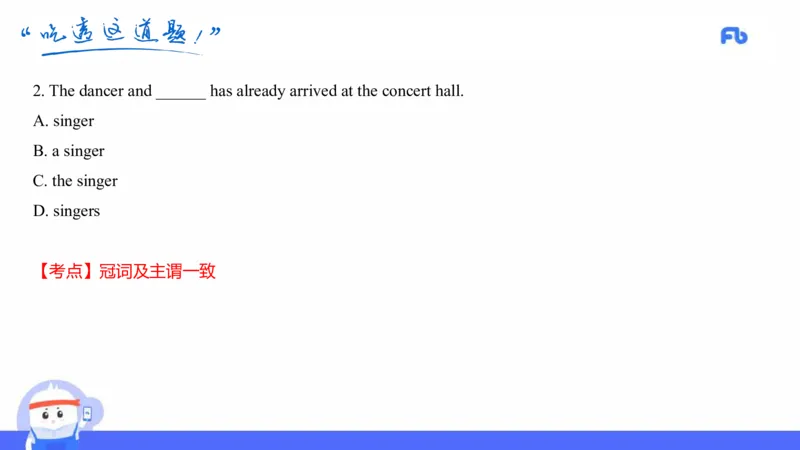
【考点】冠词2. The dancer and ______ has already arrived at the concert hall.
A. singer
B. a singer
C. the singer
D. singers
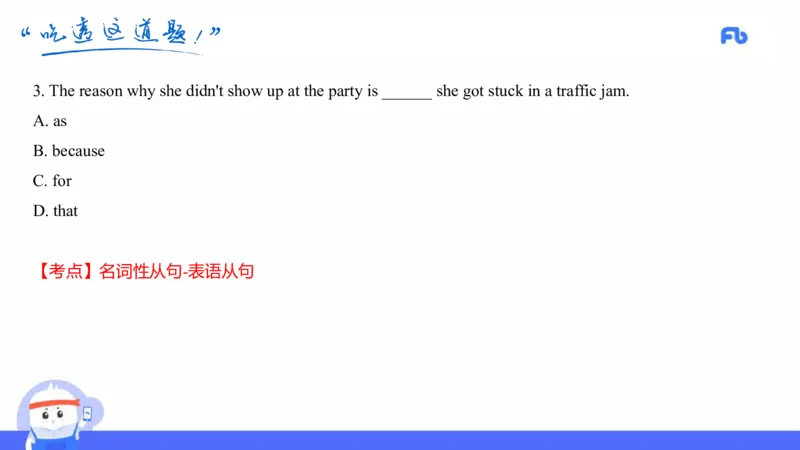
【考点】冠词及主谓一致3. The reason why she didn't show up at the party is ______ she got stuck in a traffic jam.
A. as
B. because
C. for
D. that
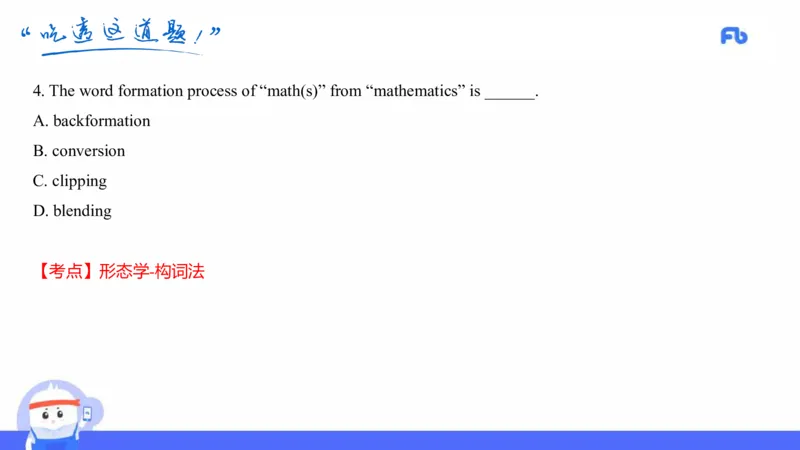
【考点】名词性从句-表语从句4. The word formation process of “math(s)” from “mathematics” is ______.
A. backformation
B. conversion
C. clipping
D. blending
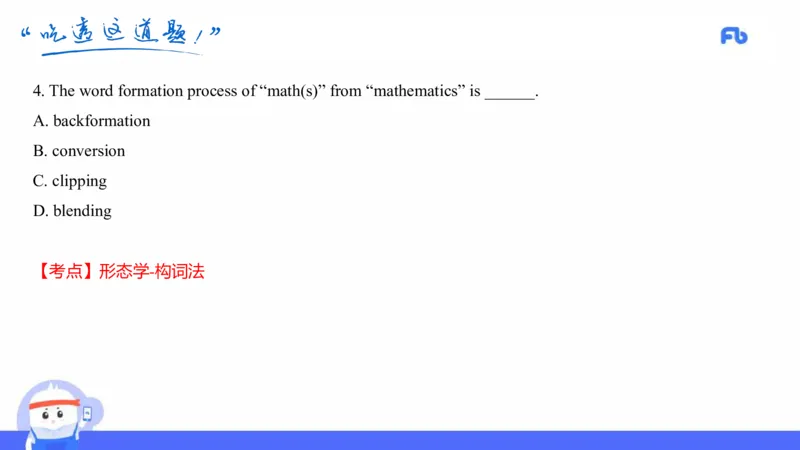
【考点】形态学-构词法知 识 链 接4. The word formation process of “math(s)” from “mathematics” is ______.
A. backformation
B. conversion
C. clipping
D. blending
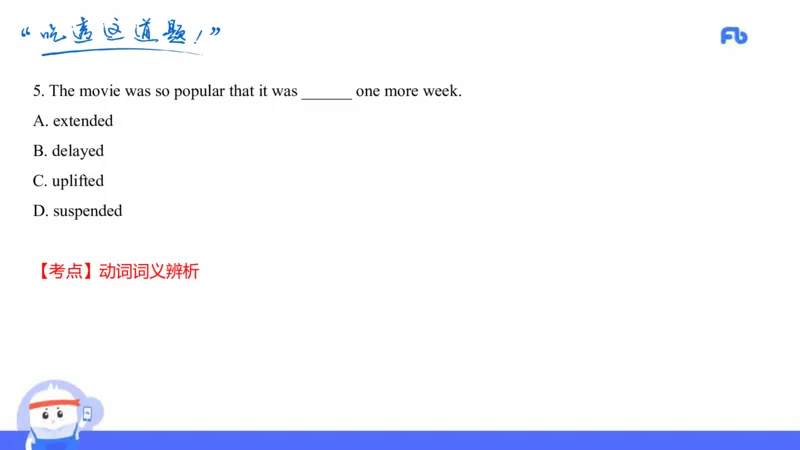
【考点】形态学-构词法5. The movie was so popular that it was ______ one more week.
A. extended
B. delayed
C. uplifted
D. suspended
【考点】动词词义辨析6. The two cats could be ______ only by the number of the rings on their tails, otherwise they were exactly
alike.
A. separated
B. divided
C. disconnected
D. differentiated
【考点】动词词义辨析7. Which of the following sets of English consonants has the same manner of articulation?
A. /p, b, k, g/
B. /m, θ, s, ʃ/
C. /t, d, tr, dr/
D. /d, ʃ, θ, ð/
【考点】语音学-辅音的分类知 识 链 接7. Which of the following sets of English consonants has the same manner of articulation?
A. /p, b, k, g/
B. /m, θ, s, ʃ/
C. /t, d, tr, dr/
D. /d, ʃ, θ, ð/
【考点】语音学-辅音的分类8. Which of the following shows the correct word stress for “nationalistic”?
A. /ˌnæʃənə'lɪstɪk/
B. /'næʃənəlɪstɪk/
C. /ˌnæ'ʃənəlɪstɪk/
D. /ˌnæʃənəlɪs'tɪk/
【考点】单词重音9. Interlanguage refers to a system of rules developed in the minds of L2 learners, which has some features of
______ plus some that are independent of ______.
A. the L1, the Ll
B. the L2, the L2
C. the L1 and L2, the Ll
D. the L1 and L2, the L1 and L2
【考点】二语习得10. Which of the following statements is true about the second language development?
A. Receptive skills may develop simultaneously with productive skills.
B. Productive skills are much easier to be acquired than receptive skills.
C. Receptive and productive skills are susceptible to first language influence.
D. Receptive and productive skills develop equally well for most L2 learners.
【考点】二语习得11.When teaching pronunciation, a teacher should include phonemes, stress, intonation and ______in the
syllabus.
A.consonant
B.vowel
C.rhythm
D.speech
【考点】语音教学12.If a teacher asks students in class, "When do we use passive voice in our daily life?", he/she is trying to
draw students' attention to the______ in grammar teaching.
A.meaning
B.function
C.form
D.sound
【考点】语法教学13.When using such sentences as "A long time ago../Then.../ afterwards.../In the end..." in a reading class, a
teacher is probably teaching language at the ______.
A.lexical level
B.discoursal level
C.grammatical level
D.phonological level
【考点】阅读教学
语篇由一个以上的句子或段落组成,各句子或段落之间在形式上是衔接的,语义上是连贯的。14.When a teacher asks the students to listen to a recording to find out John's flight number and arrival time,
what skills does he/she focus on?
A.Inferring opinion and attitude.
B.Extracting specific information.
C.Getting the general information.
D.Deducing meaning from context.
【考点】听力教学15. What activity are students engaged in when they read each other's writings, provide feedback and make
suggestions for revision before their teacher grades them?
A.Discussing.
B.Brainstorming.
C.Peer reviewing.
D.Draft reviewing.
【考点】写作教学16.What is a teacher trying to do when he/she asks the students to describe what they know about policemen
before reading a story about them?
A.To review a passage.
B.To make a comment.
C.To provide a title.
D.To build a schema.
【考点】阅读教学17.Which of the following is a display question used by teachers in class?
A.What happened to the girl in the story?
B.What would you do if you were the girl in the story?
C.Do you like this story Girl the Thumb,why or why not?
D.Why do you agree that the girl was a kind-hearted person?
【考点】课堂问题的类型18.What does a teacher want the students to do when he/she asks them to find a word of similar meaning to
“germinate” in a paragraph?
A.To deduce meaning from the context.
B.To analyze word meaning by using syntax.
C.To identify new words by using synonyms.
D.To apply grammatical rules to guess meaning.
【考点】阅读教学19.At what stage of a lesson is a teacher likely to conduct a brainstorming activity about a topic?
A.Producing.
B.Checking.
C.Leading-in.
D.Practicing.
【考点】课堂活动20.Which of the following activities best promotes the development of students' communicative skills?
A.Doing multiple-choice questions.
B.Sharing information with partners.
C.Completing a summary of the text.
D.Copying sentences from the dictionary
【考点】课堂活动客观题考点归纳
模块 题号 知识点
语音知识 8 单词重音
词法 1;2;5;6 冠词的用法;动词词义辨析
句法 3 表语从句
语言学 4;7;9;10 语音学;形态学;二语习得
11;12;13;14; 语音教学的内容;语法教学的内容;阅
语言教学知识与能力
15;16;18 读教学;听力技能;写作教学过程;
教学实施与评价 17;19;20 课堂问题的类型;教学活动及教学环节Passage 1
【文章大意】
文章共 11 段,主要讨论了企业到处使用创新一词来表明他们在相应领域处于领先地位,但这并不意
味着这些公司确实在做什么创新,他们用这个词,是为了将寻常的进步描述成巨大的变化。21. Which of the following is likely to be the reason for most companies to favor the word “innovation”
according to this passage?
A. They want to improve their products and service.
B. They are interested in technological innovations.
C. They are on the cutting edge of everything.
D. They are trying to attract investments.
【第三段】'Most companies say they're innovative in the hope they can somehow con investors into
thinking there is growth when there isn't,' says Clayton Christensen, a professor at Harvard Business School
and the author of the 1997 book, 'The Innovator's Dilemma.'22. Why does the word “innovation” means different things for different people according to this passage?
A. It is used to serve different purposes.
B. It carries different shades of meaning.
C. It is so abstract that it is hard to define.
D. It might be beyond their comprehension.
【第四段】The definition of the term varies widely depending on whom you ask. To Bill Hickey, chief
executive of Bubble Wrap's maker, Sealed Air Corp., it means inventing a product that has never existed,
such as packing material that inflates on delivery.
【第五段】To Pfizer Inc.'s research and development head, Mikael Dolsten, it is extending a product's scope
and application, such as expanding the use of a vaccine for infants that is also effective in older adults.23. What has been brought about by the popularity of the term “innovation” according to the passage?
A. The sprouting up of technological innovations.
B. Placing innovation on a company’s top priority.
C. Emergence of a new career-innovation consultant.
D. Emergence of a technological innovation movement.
【第八段】The innovation trend has given birth to an attendant consulting industry, and Fortune 100
companies pay innovation consultants $300,000 to $1 million for work on a single project, which can amount
to $1 million to $10 million a year, estimates Booz & Co. innovationstrategy consultant Alex Kandybin.24. What does the word “innovation” mean to Scott Berkun?
A. A very good product.
B. Cool and agile.
C. Civilization-changing inventions.
D. Start-ups and entrepreneurs.
【第七段】Scott Berkun, the author of the 2007 book 'The Myths of Innovation,' which warns about the
dilution of the word, says that what most people call an innovation is usually just a 'very good product.' He
prefers to reserve the word for civilization-changing inventions like electricity, the printing press and the
telephone -- and, more recently, perhaps the iPhone.25. What is the author’s attitude towards the companies’ use of the term “innovation”?
A. Cynical.
B. Negative.
C. Positive.
D. Neutral.
【第二段】But that doesn't mean the companies are actually doing any innovating. Instead they are using the
word to convey monumental change when the progress they're describing is quite ordinary. Like the once
ubiquitous buzzwords 'synergy' and 'optimization,' innovation is in danger of becoming a cliche -- if it isn't
one already.Passage 2
【文章大意】
文章共 11 段,主要介绍了乔布斯,涉及的内容有他的出生和学习经历;工作经历,包括开发个人电
脑、创建苹果公司、辞职等;以及他患病去世。文章最后一段对乔布斯的一生进行总结点评。26. What has led to Job’s venture of manufacturing personal computers?
A. The influence of his friend who used to work for Hewlett Packard.
B. His working experience of manufacturing video games.
C. The educational background he has had.
D. His profound interest in technology.
【第三段】Steve Jobs had a deep-seated interest in technology, so he took up a job at Atari Inc, then a
leading manufacturer of video games. ...
【第四段】... Once he returned, he convinced Wozniak to quit his job at Hewlett Packard to join him in his
venture that concerned personal computers. ...27. How did Apple Computer manage to increase its wealth swiftly in the early 1980s?
A. By issuing stocks in public.
B. By marketing personal computers.
C. By recruiting wealthy people as partners.
D. By selling such items as scientific calculators.
【第五段】In 1976, Jobs and Wozniak founded Apple Computer in the Jobs family garage. The first
personal computer was sold for $666.66. By 1980, Apple had already released three improved versions of the
personal computer. It had a wildly successful IPO, which made both founders millionaires many times over.28. Which of the following is close in meaning to the underlined word “tiff” in Paragraph 6?
A. Disparity.
B. Quarrel.
C. Tease.
D. Fight.
【第六段第一句】A tiff with the Apple's Board of Directors and John Scully led to Jobs' resignation.29. Which of the following is true about the NeXT Computer?
A. It was a reduplication.
B. It was a commercial failure.
C. It was a blockbuster success.
D. It was a best seller at that time.
【第六段】... The company was called NeXTStep, which produced the NeXT Computer. The machine was a
commercial washout but helped with future work in object-oriented programming, PostScript, and magneto-
optical devices. Jobs returned to his original company after Apple acquired NeXT in 1996.30. Which of the following is probably the most appropriate title for the passage?
A. Steve Jobs
B. Apple Computer
C. What Steve Jobs Left Untouched
D. The Companies Steve Jobs Founded二、简答题31. 在阅读教学中,有的教师倾向于采用从词语到句子、再到语篇的教学方法。简述采用此种方法的
理论基础(8分),并指出该教学方法存在的两个优点(6分)和两个缺点(6分)。【参考答案】
(1)这种方法属于阅读教学模式里自下而上模式。该模式着重强调来自读物的信息,认为阅读过程
是一种通过解码、编码和转换等手段,对信息进行处理的过程。认为学生对材料的理解是从字母到单
词,再到句子,从而理解全文。该模式重视词汇教学,包括读前讲授单词和阅读过程中对词语用法的
分析。31. 在阅读教学中,有的教师倾向于采用从词语到句子、再到语篇的教学方法。简述采用此种方法的
理论基础(8分),并指出该教学方法存在的两个优点(6分)和两个缺点(6分)。【参考答案】
(2)优点:该教学方法从词句入手,再到全文的理解,学生能够获得足够的语言知识;同时也能
够扫清阅读障碍,提高阅读效率。
缺点:一味强调对于词句的学习,而没有从篇章的角度强调背景知识和上下文预测的重要性;而且
有很多学生往往习惯于解码式的分析性阅读,缺乏高层次的理解。三、教学情境分析题32. 下面是一位教师的英语课堂教学片段。
Teacher: Good morning class! We had a wonderful party yesterday....Jack, why were you absent?
Jack (in a low voice): I got a fever and went to see a doctor.
Teacher: I am sorry. 1 can't hear you. Tom, what did Jack say?
Tom: He got a fever and went to see the doctor.
Teacher: Oh, Jack said that he had got a fever and gone to see the doctor. Now we are going to learn the
indirect speech.
根据该教学片段从下面三方面作答:
(1)分析该片段的教学意图。(5分)【参考答案】
(1)该片段的教学意图是复习了一般过去时,并引出新的知识点---间接引语。32. 下面是一位教师的英语课堂教学片段。
Teacher: Good morning class! We had a wonderful party yesterday....Jack, why were you absent?
Jack (in a low voice): I got a fever and went to see a doctor.
Teacher: I am sorry. 1 can't hear you. Tom, what did Jack say?
Tom: He got a fever and went to see the doctor.
Teacher: Oh, Jack said that he had got a fever and gone to see the doctor. Now we are going to learn the
indirect speech.
根据该教学片段从下面三方面作答:
(2)说明该教学环节的作用(5分)及其依据。(5分)【参考答案】
(2)这个环节是教学环节的导入。课堂导入是教师通过已学知识,引导学生进入新知识学习的过程,
是教师在新的教学内容和活动开始时,组织学生进行课前的心理准备和知识准备,引导学生进入新知
识学习的行为方式。材料当中老师通过设置了课堂教学情境,由一般过去时温故而知新本课要学的新
知识,即间接引语。32. 下面是一位教师的英语课堂教学片段。
Teacher: Good morning class! We had a wonderful party yesterday....Jack, why were you absent?
Jack (in a low voice): I got a fever and went to see a doctor.
Teacher: I am sorry. 1 can't hear you. Tom, what did Jack say?
Tom: He got a fever and went to see the doctor.
Teacher: Oh, Jack said that he had got a fever and gone to see the doctor. Now we are going to learn the
indirect speech.
根据该教学片段从下面三方面作答:
(3)从三个角度分析该教师下一步教学应该注意的问题。(15分)【参考答案】
(3)该教师下一步教学应该注意以下问题:
①以学生为中心,注意引导学生观察语言现象,通过合作探究和归纳发现语法规律。
②注意纠错,及时纠正学生在间接引语学习过程中容易忽略的时态及人称的错误。
③注意操练的强度及趣味性,帮助学生将所学语法知识运用到语言实践活动中。四、教学设计题根据提供的信息和语言素材设计教学方案,用英文作答。
33.设计任务:阅读下面的学生信息和语言素材。设计15分钟的英语听说教学方案。教案无固定格式,
但包含以下要点:
①Teaching objectives
②Teaching contents
③Key and difficult points
④Major steps and time allocation
⑤Activities and justifications
教学时间:15分钟
学生概况:某城镇普通中学初中八年级学生,班级人数40人,多数学生已经达到《义务教育英语课
程标准(2011年版)》三级水平,学生课堂参与积极性一般。语言素材:
Helen: Hi, Tom! I’m making some plans to work in an old people’s home this summer.
Tom: Really? I did that last summer!
Helen: Oh. What did they ask you to help with?
Tom: Mm... things like reading the newspaper to the old people, or just talking to them. They told me stories
about the past and how things used to be.
Helen: That sounds interesting!
Tom: Yeah, a lot of old people are lonely. We should listen to them and care for them.
Helen: You’re right. I mean, we’re all going to be old one day, too.【参考设计】
(1) Teaching objectives
① Knowledge objectives
Students can read and understand the new words/ phrases such as_______.
Students can grasp the general idea of the listening material.
② Ability objectives
Students can improve their listening abilities and grab the key information through listening activities.
Students can express their opinions about_________by using the target language.
③ Emotional Objectives
______________________________.
Students can cooperate with other group mates actively and complete the tasks together.【参考设计】
(1) Teaching objectives
① Knowledge objectives
Students can read and understand the new phrases such as read the newspaper, tell stories and care for.
Students can grasp the general idea of the listening material.
② Ability objectives
Students can improve their listening abilities and grab the key information through listening activities.
Students can express their opinions about how to help old people by using the target language.
③ Emotional Objectives
Students can care for old people and try to help them in their daily life.
Students can cooperate with other group mates actively and complete the tasks together.(2) Teaching contents
This is a listening lesson. It talks about how to help old people, including reading the newspapers, talking to them, care
for them and so on.
(3) Key and difficult points
① Key points
Help students understand the content of this lesson through listening.
Help students improve their listening and speaking abilities.
② Difficult points
To talk about/describe the new topic correctly and fluently.
To improve their confidence of speaking English.(4) Major steps and time allocation
Step 1 Pre-listening (4 mins)
(1) New knowledge teaching
With the help of_________, the teacher will guide students to understand the meaning and usage of the new
words/ phrases and sentences, including __________.
(2) Prediction
Before listening, the teacher will organize students to make a prediction. Some hints will be provided to help
them.
Hint 1: Words and sentence just referred.
Hint 2: Title of this material-________.
Hint 3: Some pictures/ videos in which students can see___________.
(Justification: The above activities can help students recognize the new words and sentence patterns, remove
the barriers, and lay the foundation for the next step of “listening”.)(4) Major steps and time allocation
Step 1 Pre-listening (4 mins)
(1) New knowledge teaching
With the help of some pictures, the teacher will guide students to understand the meaning and usage of the
new phrases, including read the newspaper, tell stories and care for.
(2) Prediction
Before listening, the teacher will organize students to make a prediction. Some hints will be provided to help
them.
Hint 1: Words and sentence just referred.
Hint 2: A video in which students can see some students are helping some old people.
(Justification: The above activities can help students recognize the new words and sentence patterns, remove
the barriers, and lay the foundation for the next step of “listening”.)Step 2 While-listening(8 mins)
(1) Extensive listening
Students will listen to the passage for the first time to check their predictions and conclude the main idea of
the passage.
(2) Intensive listening
Students should listen to the passage/conversation for the second time and do the following tasks:
①True or False ②Matching/ Form-filling/ Questions
______________________.(T/F)
______________________.(T/F)
______________________.(T/F)Step 2 While-listening (8 mins)
(1) Extensive listening
Students will listen to the passage for the first time to check their predictions and conclude the main idea of
the passage.
(2) Intensive listening
Students should listen to the passage/conversation for the second time and do the following tasks:
①True or False
Helen will work in an old people’s home this winter.(T/F)
A lot of old people are not lonely in an old people’s home.(T/F)
②Questions
When will Helen work in an old people’s home?
What did the old people ask Tom to help with?(3) Listening and repeating
Students will listen to the passage for the third time and read after it. They should pay attention to the
pronunciation and intonation.
(Justification: In the process of completing the listening tasks at different levels, students can not only
understand the content and certain details of the passage, but also improve their listening skills.)Step 4 Post-listening (3 mins)
Group discussion/Doing a survey
Students will work in groups to discuss the following question/ do a survey about _________. Several
minutes will be given. When time's up, several students will be invited to share their answers/results. Then
the teacher will comment on students' performance.
(Justification: Group activities will provide students with the opportunity to apply what they have learned to
the situation, improve their comprehensive language skills, and boost their confidence in learning English and
strengthen their sense of teamwork.)Step 4 Post-listening (3 mins)
Group discussion
Students will work in groups to discuss the following question “What else can we do to help the old?”
Several minutes will be given. When time's up, several students will be invited to share their answers. Then
the teacher will comment on students' performance.
(Justification: Group activities will provide students with the opportunity to apply what they have learned to
the situation, improve their comprehensive language skills, and boost their confidence in learning English and
strengthen their sense of teamwork.)主观题考点归纳:
题型 题号 考查模块 知识点
简答题 31 阅读教学 阅读教学模式
教学情境分析题 32 教学设计、教学实施 分析教学环节及教学活动
题型 题号 考查课型
教学设计题 33 听说课