语法部分
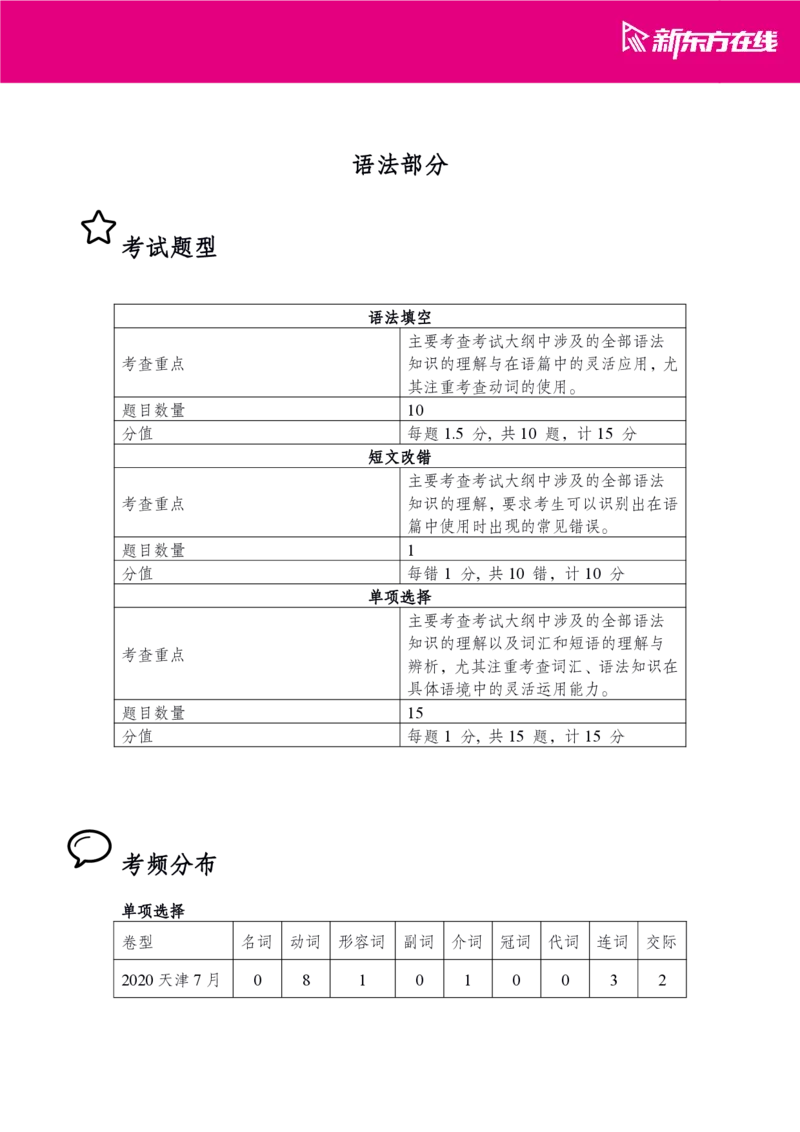
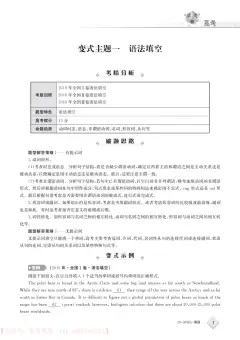
考试题型
语法填空
考查重点
主要考查考试大纲中涉及的全部语法
知识的理解与在语篇中的灵活应用,尤
其注重考查动词的使用。
题目数量
10
分值
每题1.5 分, 共10 题,计15 分
短文改错
考查重点
主要考查考试大纲中涉及的全部语法
知识的理解,要求考生可以识别出在语
篇中使用时出现的常见错误。
题目数量
1
分值
每错1 分, 共10 错,计10 分
单项选择
考查重点
主要考查考试大纲中涉及的全部语法
知识的理解以及词汇和短语的理解与
辨析,尤其注重考查词汇、语法知识在
具体语境中的灵活运用能力。
题目数量
15
分值
每题1 分, 共15 题,计15 分
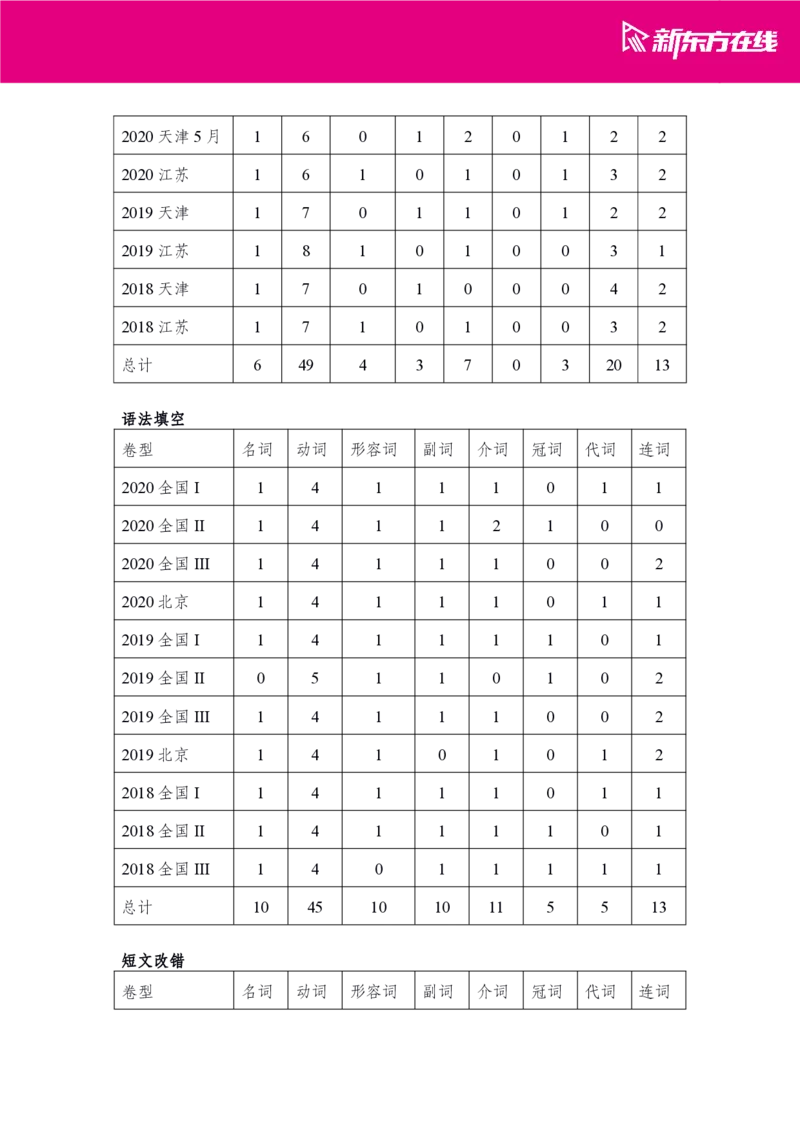
考频分布
单项选择
卷型
名词
动词
形容词
副词
介词
冠词
代词
连词
交际
2020 天津7 月
0
8
1
0
1
0
0
3
2
2020 天津5 月
1
6
0
1
2
0
1
2
2
2020 江苏
1
6
1
0
1
0
1
3
2
2019 天津
1
7
0
1
1
0
1
2
2
2019 江苏
1
8
1
0
1
0
0
3
1
2018 天津
1
7
0
1
0
0
0
4
2
2018 江苏
1
7
1
0
1
0
0
3
2
总计
6
49
4
3
7
0
3
20
13
语法填空
卷型
名词
动词
形容词
副词
介词
冠词
代词
连词
2020 全国I
1
4
1
1
1
0
1
1
2020 全国II
1
4
1
1
2
1
0
0
2020 全国III
1
4
1
1
1
0
0
2
2020 北京
1
4
1
1
1
0
1
1
2019 全国I
1
4
1
1
1
1
0
1
2019 全国II
0
5
1
1
0
1
0
2
2019 全国III
1
4
1
1
1
0
0
2
2019 北京
1
4
1
0
1
0
1
2
2018 全国I
1
4
1
1
1
0
1
1
2018 全国II
1
4
1
1
1
1
0
1
2018 全国III
1
4
0
1
1
1
1
1
总计
10
45
10
10
11
5
5
13
短文改错
卷型
名词
动词
形容词
副词
介词
冠词
代词
连词
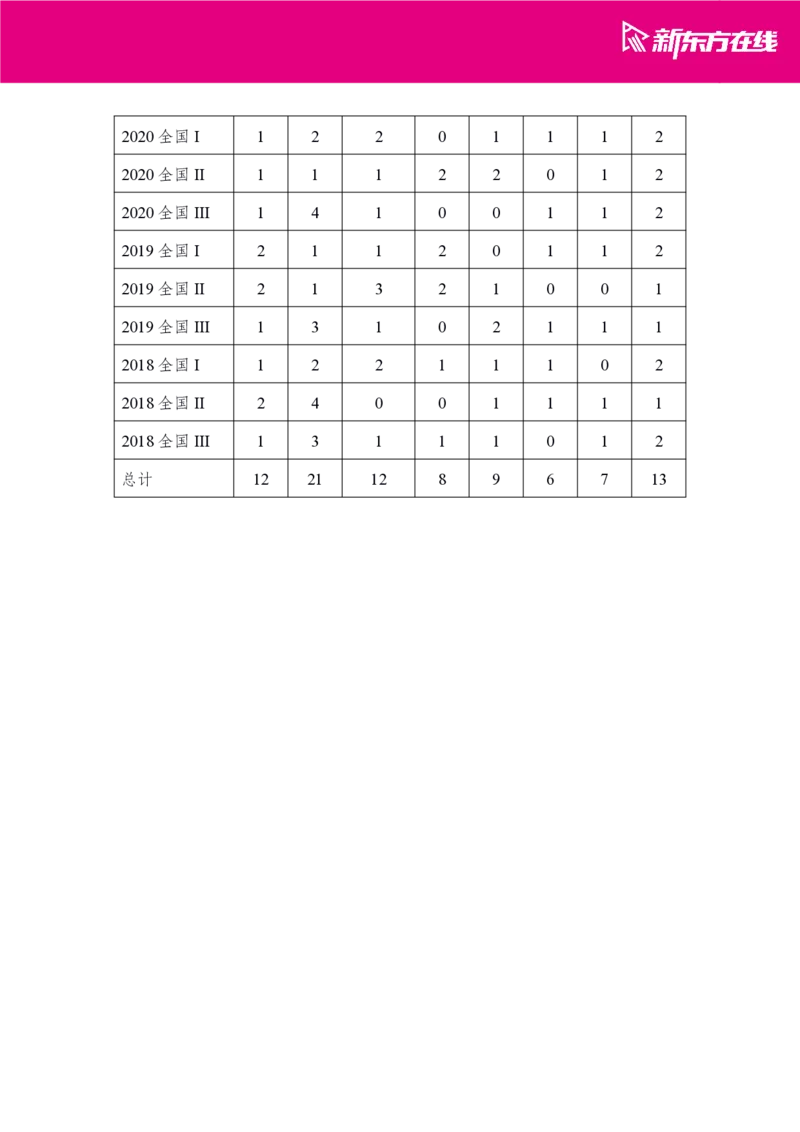
2020 全国I
1
2
2
0
1
1
1
2
2020 全国II
1
1
1
2
2
0
1
2
2020 全国III
1
4
1
0
0
1
1
2
2019 全国I
2
1
1
2
0
1
1
2
2019 全国II
2
1
3
2
1
0
0
1
2019 全国III
1
3
1
0
2
1
1
1
2018 全国I
1
2
2
1
1
1
0
2
2018 全国II
2
4
0
0
1
1
1
1
2018 全国III
1
3
1
1
1
0
1
2
总计
12
21
12
8
9
6
7
13
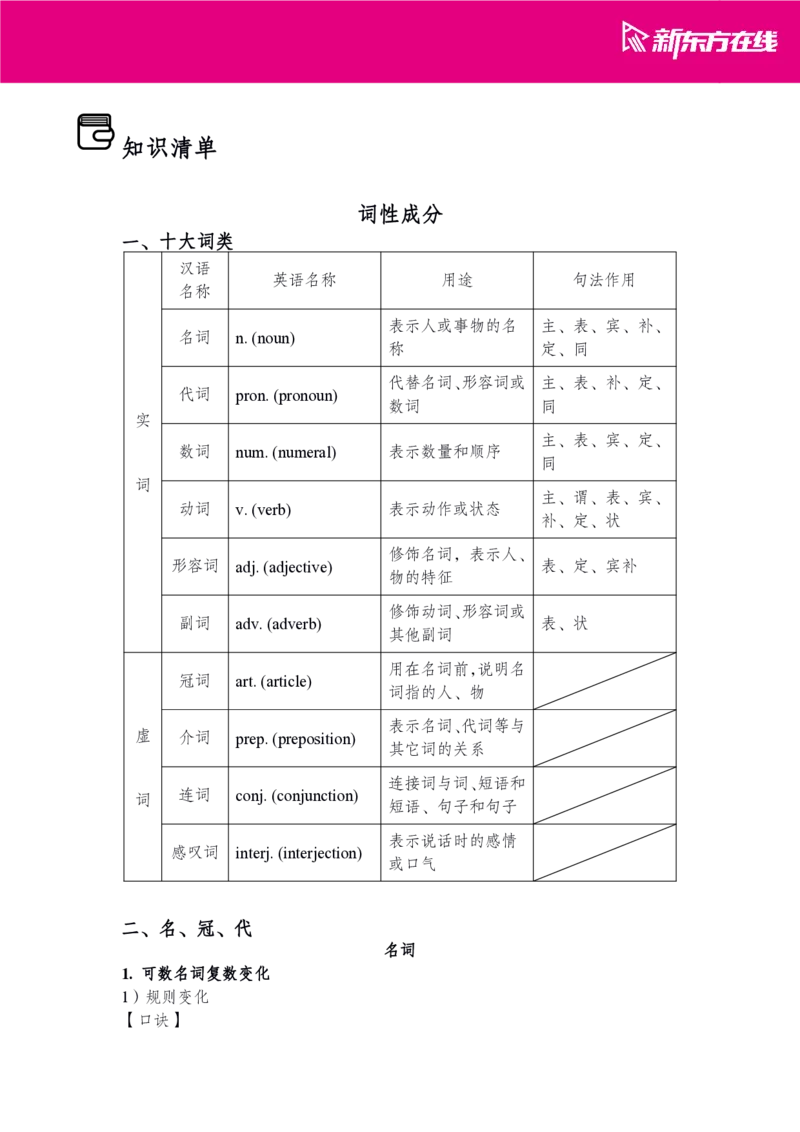
知识清单
词性成分
一、十大词类
实
词
汉语
名称
英语名称
用途
句法作用
名词
n. (noun)
表示人或事物的名
称
主、表、宾、补、
定、同
代词
pron. (pronoun)
代替名词、形容词或
数词
主、表、补、定、
同
数词
num. (numeral)
表示数量和顺序
主、表、宾、定、
同
动词
v. (verb)
表示动作或状态
主、谓、表、宾、
补、定、状
形容词
adj. (adjective)
修饰名词,表示人、
物的特征
表、定、宾补
副词
adv. (adverb)
修饰动词、形容词或
其他副词
表、状
虚
词
冠词
art. (article)
用在名词前,说明名
词指的人、物
介词
prep. (preposition)
表示名词、代词等与
其它词的关系
连词
conj. (conjunction)
连接词与词、短语和
短语、句子和句子
感叹词
interj. (interjection)
表示说话时的感情
或口气
二、名、冠、代
名词
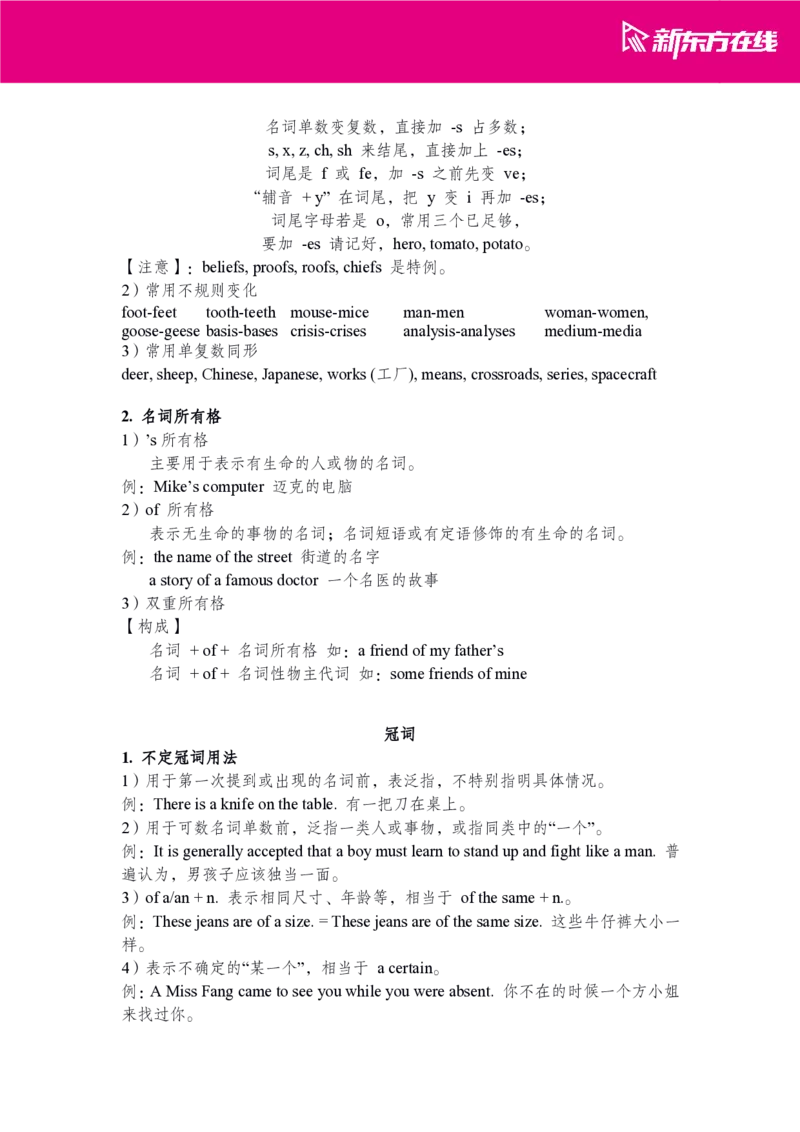
1. 可数名词复数变化
1)规则变化
【口诀】
名词单数变复数,直接加-s 占多数;
s, x, z, ch, sh 来结尾,直接加上-es;
词尾是f 或fe,加-s 之前先变ve;
“辅音+ y” 在词尾,把y 变i 再加-es;
词尾字母若是o,常用三个已足够,
要加-es 请记好,hero, tomato, potato。
【注意】:beliefs, proofs, roofs, chiefs 是特例。
2)常用不规则变化
foot-feet
tooth-teeth
mouse-mice
man-men
woman-women,
goose-geese basis-bases crisis-crises
analysis-analyses
medium-media
3)常用单复数同形
deer, sheep, Chinese, Japanese, works (工厂), means, crossroads, series, spacecraft
2. 名词所有格
1)’s 所有格
主要用于表示有生命的人或物的名词。
例:Mike’s computer 迈克的电脑
2)of 所有格
表示无生命的事物的名词;名词短语或有定语修饰的有生命的名词。
例:the name of the street 街道的名字
a story of a famous doctor 一个名医的故事
3)双重所有格
【构成】
名词+ of + 名词所有格如:a friend of my father’s
名词+ of + 名词性物主代词如:some friends of mine
冠词
1. 不定冠词用法
1)用于第一次提到或出现的名词前,表泛指,不特别指明具体情况。
例:There is a knife on the table. 有一把刀在桌上。
2)用于可数名词单数前,泛指一类人或事物,或指同类中的“一个”。
例:It is generally accepted that a boy must learn to stand up and fight like a man. 普
遍认为,男孩子应该独当一面。
3)of a/an + n. 表示相同尺寸、年龄等,相当于of the same + n.。
例:These jeans are of a size. = These jeans are of the same size. 这些牛仔裤大小一
样。
4)表示不确定的“某一个”,相当于a certain。
例:A Miss Fang came to see you while you were absent. 你不在的时候一个方小姐
来找过你。
2. 定冠词用法
特指谈话双方都知道或前面已提及的人或物。
例:We own a dog and a cat. The dog is brown, and the cat is white.
3. 零冠词用法
季节、月份、节假、三餐、球类运动、语言学科、运动、交通工具前不加冠
词。
【口诀】季月节假日餐球,语言学科运动车
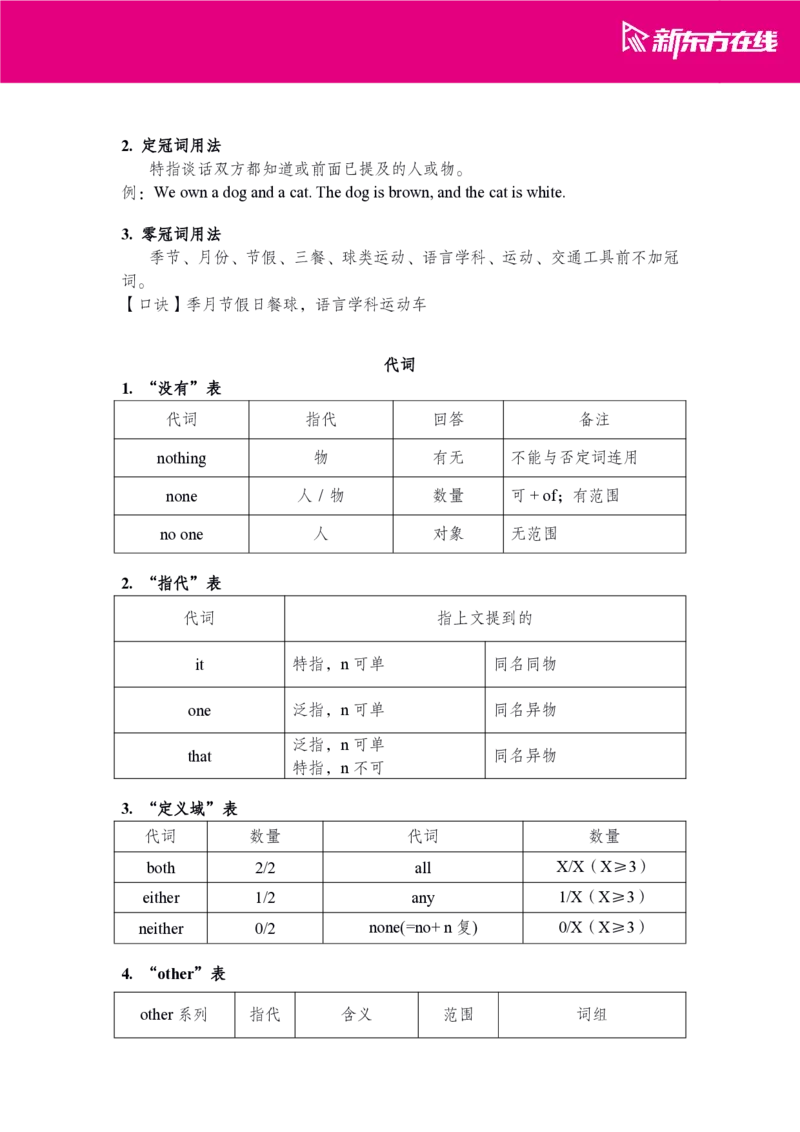
代词
1. “没有”表
代词
指代
回答
备注
nothing
物
有无
不能与否定词连用
none
人/物
数量
可+of;有范围
no one
人
对象
无范围
2. “指代”表
代词
指上文提到的
it
特指,n 可单
同名同物
one
泛指,n 可单
同名异物
that
泛指,n 可单
特指,n 不可
同名异物
3. “定义域”表
代词
数量
代词
数量
both
2/2
all
X/X(X≥3)
either
1/2
any
1/X(X≥3)
neither
0/2
none(=no+ n 复)
0/X(X≥3)
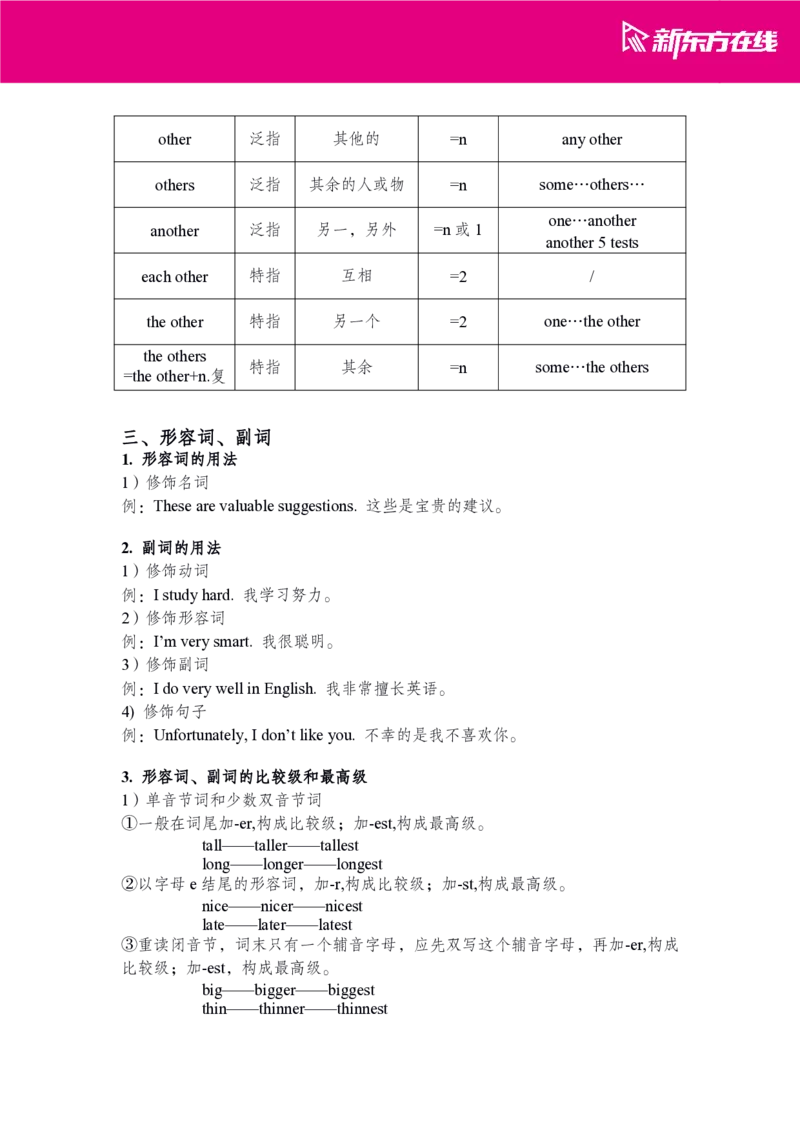
4. “other”表
other 系列
指代
含义
范围
词组
三、形容词、副词
1. 形容词的用法
1)修饰名词
例:These are valuable suggestions. 这些是宝贵的建议。
2. 副词的用法
1)修饰动词
例:I study hard. 我学习努力。
2)修饰形容词
例:I’m very smart. 我很聪明。
3)修饰副词
例:I do very well in English. 我非常擅长英语。
4) 修饰句子
例:Unfortunately, I don’t like you. 不幸的是我不喜欢你。
3. 形容词、副词的比较级和最高级
1)单音节词和少数双音节词
①一般在词尾加-er,构成比较级;加-est,构成最高级。
tall——taller——tallest
long——longer——longest
②以字母e 结尾的形容词,加-r,构成比较级;加-st,构成最高级。
nice——nicer——nicest
late——later——latest
③重读闭音节,词末只有一个辅音字母,应先双写这个辅音字母,再加-er,构成
比较级;加-est,构成最高级。
big——bigger——biggest
thin——thinner——thinnest
other
泛指
其他的
=n
any other
others
泛指
其余的人或物
=n
some…others…
another
泛指
另一,另外
=n 或1
one…another
another 5 tests
each other
特指
互相
=2
/
the other
特指
另一个
=2
one…the other
the others
=the other+n.复
特指
其余
=n
some…the others
red——redder——reddest
④以“辅音字母加y”结尾的双音节词,该“y”为“i”再加-er,构成比较级;加-est,
构成最高级。
easy——easier——easiest
happy——happier——happiest
2)多音节词和部分双音节词
在词的前面加more,构成比较级;加the most,构成最高级。
delicious——more delicious——the most delicious
careful——more careful——the most careful
popular——more popular——the most popular
3)常考不规则变化
good/well——better——best
bad/ill——worse——worst
many/much——more——most
little——less——least
far——further/farther——furthest/farthest
old——older/elder——oldest/eldest
4. 形容词、副词平级
1)as+原级+as…(和……一样)
2)not so/as+原级+as…(不如)
3)as+形容词原级+as+数量词=数量词+形容词
例:the building is as tall as 100 meters. = the building is 100meters tall.
这个建筑有100 米高。
四、八大成分
1. 主语
概念:句子的主体,发出动作的人或物,表示所说的是谁或是什么。
位置:主语一般在句首,特殊句型中在句末。
构成:由名词、代词或相当于名词的词、短语或从句充当。
例:Tom is a good boy. 汤姆是个好孩子。
To learn a foreign language is not easy. 学习一门外语不容易。
Whether we’ll go depends on the weather. 我们是否去要看天气。
2. 谓语
概念:说明主语的动作、特征、状态等的句子成分,叫做谓语。
位置:谓语动词通常位于主语之后,特殊句型位于主语之前。
构成:由动词或动词短语充当。
例:We go to school from Monday to Friday. 我们周一至周五上学。
3. 宾语
概念:动词宾语是动作的承受者。及物动词以及相当于及物动词的短语后都必须
带宾语。介词之后的宾语叫介词宾语。
位置:动词宾语位于及物动词之后;介词宾语位于介词之后。
构成:名词、名词化的形容词、代词、数词、-ing 形式、动词不定式和从句等均
可作宾语。
例:The teacher asked the students to finish the homework after class.
老师让学生们课下完成作业。
He wanted to buy that shirt. 他想买那件衬衫。
They are having a party in the garden. 他们正在花园里开聚会。
I don’t know when they will arrive. 我不知道他们何时到达。
【双宾语】有些及物动词可以接两个宾语,动作的承受者,即指物的叫做直接宾
语,动作是为谁做的或是对谁做的,即指人的叫做间接宾语,这两个宾语称为“双
宾语”。
例:Pass me the sugar, please. 把糖递给我。
The sugar(直接宾语),me(间接宾语)
4. 宾语补足语
概念:补充说明宾语,并与宾语一起构成复合宾语的句子成分,叫做宾语补足语。
位置:通常情况位于宾语之后。
构成:可以做宾语补足语的有名词、形容词、副词、动词不定式、分词以及介词
短语等。
例:You must keep the room tidy. 你必须保持房间整洁。
5. 表语
概念:用来说明主语的身份、特征、状态等的句子成分,是表语。
位置:位于联系动词之后,与联系动词构成复合谓语。
构成:可作表语的有名词、代词、形容词、数词、副词、动词不定式、介词短语、
分词短语以及从句等。
系动词(Link verb):连接主语和表语的动词是系动词。
常用的系动词:
be 动词(am, is, are, was, were, have been)
感官动词(look, smell, taste, sound, feel)
变化类动词(become, turn, go)
保持类动词(remain, keep, stay)
例:That computer is mine. 那台电脑是我的。
I feel much better today. 我今天感觉好多了。
Leaves turn yellow in fall. 叶子在秋天变黄了。
That remains a puzzle to me. 这对我还是个难题。
6. 定语
概念:是对名词或代词起修饰、限定作用的词、短语或句子的句子成分,汉语中
常用“……的”表示。
位置:定语通常位于被修饰的成分前。
【定语后置情况】
①定语修饰some, any, every, no 构成的复合不定代词(如:something, nothing)
时,通常后置,即放在所修饰的词的后面。
②当不定式、分词短语作定语或从句作定语时,定语通常后置。
③副词用作定语时须放在名词之后。
构成:充当定语的词有名词、代词、数词、形容词、副词、动词不定式、介词短
语、动名词、分词(短语)以及从句。
例:My father told me to study hard.我父亲告诉我要努力学习。
The woman in the blue coat is my mother.那个穿蓝色外套的人是我妈妈。
The boy you will know is Tom. 你将认识的男孩叫汤姆。
7. 状语:
概念:用来修饰动词、形容词、副词或整句话,称为状语。状语用来说明动作发
生或存在的时间、地点、条件、让步、原因、方式、程度、目的、结果等。
位置:
①状语在句子中的位置很灵活,通常在句子基本结构之后,强调时放在句首;
②修饰形容词或副词时,通常位于被修饰的词之前;
③表示时间、地点、目的的状语一般位于句子两头,强调时放在句首。
构成:可用作状语的有副词、动词不定式(短语)、分词短语、介词短语、名词
以及从句等。
例:Tom runs very fast. 汤姆跑得非常快。
He came to see me yesterday. 他昨天来看我。
8. 同位语
概念:同位语是在名词或代词之后并列另一个名词或代词,对前者加以解释或说
明的句子成分。它近乎于后置定语,对前面的名词或代词作进一步的解释说明的
作用,说明前面的词是“谁”、是“什么”等。
位置:位于所补充说明的词之前或之后。
构成:同位语通常由名词、数词、代词或从句担当。
同位语与定语的区别:同位语是对前面的名词或代词作进一步的解释、说明的作
用,说明前面的词是“谁”、是“什么”等;而定语则是对被修饰的词起限制或
修饰的作用。
五、五大基本句型
1. 主语+谓语:S+V
例:I do.
2. 主语+谓语+宾语:S+V+O
例:I love you.
3. 主语+谓语+间接宾语+直接宾语:S+V+IO+DO
例:I gave her a kiss.
4. 主语+系动词+表语:S+V+P
例:You are a nice girl.
5. 主语+谓语+宾语+宾语补足语:S+V+O+OC
例:You make me happy.
复合句
一、并列复合句
由表示并列关系、选择关系、转折关系、因果关系的连词连接而成的句子。
并列关系连词:and, both…and, not only…but also ,etc.
选择关系连词:or, either…or ,etc.
转折关系连词:but, yet ,etc.
因果关系连词:for ,etc.
二、主从复合句
包括定语从句、名词词性从句、状语从句。
(一)定语从句
1. 先行词:被定语从句修饰的词为先行词,可以是一个词,也可以是一个句子。
2. 关系词(引导词):
(1) 关系代词:所代替的先行词是人或者物的名词或代词,并在句中充当主语、
宾语、定语等。
引导词在句中
所作成分
限制性定语从句
非限制性定语从句
注意事项
做主语
that, which, who,
as
which, who, as
that 不能引导非限制性
定语从句
作宾语
who/whom, which,
as, that
who/whom, which,
as
在限定性从句中,先行
词被such, so, the same
等此修饰时,用as 引导;
在非限制性定语从句
中,“as”代替整句话的
内容,意为“正如”
作定语
whose, of which/whom
表所属“.…..的”
作表语
who, as, which,
that
who, as, that
例:
He is a teacher, which I
am not.
That man over there is
Peter, who Lily’s uncle
is.
(2) 关系副词可代替的先行词是时间、地点或理由的名词,在从句中做状语。
引导词在句中所
做成分
限制性定语从句
非限制性定语从句
注意事项
做时间状语
when
从句中不缺少主语或宾
语时使用
做原因状语
why
从句中不缺少主语或宾
语时使用
做地点状语
where
从句中不缺少主语或宾
语时使用
(3) 引导词“that” 与“which”辨析
【只用“which” 的情况】
①有“,”
引导非限制性定语从句;
②“介词+关系代词”:关系代词充当介词的宾语,且介词位于关系代词之前;
③先行词本身是“that”;
④先行词本身是“those”或被those 修饰。
【只用“that” 的情况】
①先行词是all, everything, anything, nothing, little, much 等不定代词;
②先行词被all, any, every, no, little, much, some 等词修饰;
③先行词被序数词、形容词最高级修饰或先行词本身是序数词;
④先行词被the only, the very(正是、恰是),the last 修饰;
⑤先行词中既有人也有物;
⑥在which 或who 的特殊疑问句中含有定语从句;
⑦在“there be”句型中,先行词为物是常用“that”。
(4)“介词+关系代词”结构
①考查该结构中关系代词的选用:
指人时,关系代词常用“whom”
指物时,关系代词常用“which”
②考查该结构中介词的选用:一般根据固定搭配以及句意来选择
③介词+ which=when/where/why
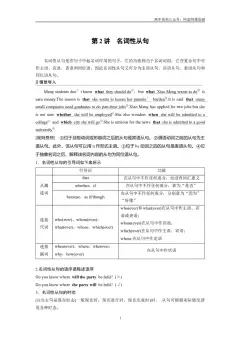
(二)名词性从句
包括主语从句、宾语从句、表语从句、同位语从句。
1. 主语从句
一个从句在句子中担当主语,这个句子就叫做主语从句。主语从句多由连词,
连接代词,连接副词引导,且不能省略。
例:What he said at the meeting is important. 他在会上所说的是重要的。
2. 表语从句
一个从句在句子中担当表语,这个句子就叫做表语从句。
例:The fact is that we have lost the game. 事实上我们输掉了比赛。
3. 宾语从句
一个从句在句子中担当宾语,这个句子就叫做宾语从句。
①及物动词后面的宾语从句
例:I heard (that) he joined the army. 我听说他参军了。
②及物动词双宾语的宾语从句结构:及物动词+直接宾语+宾语从句
例:I persuaded my parents that we should go to Italy for a holiday rather than
Scotland. 我劝我的父母去意大利度假而不是苏格兰。
③介词后面的宾语从句
例:Our success depends on how well we can cooperate with one another. 我们的成
功取决于我们合作的有多好。
④形容词后面的宾语从句
例:I am afraid that I will not pass the final exam. 恐怕我没通过期末考试。
4. 同位语从句
在句中担任同位语成分的句子,这个句子叫同位语从句。同位语从句中that
不担任成分,无实际词义,但是不可以省略。引导词中没有if。
①由that 引导的同位语从句
例:The idea that we invited him yesterday is quite good. 我们昨天邀请他来的想法
非常棒。
②由wh-疑问词引导的同位语从句
例:The question who will take his place is still not clear. 谁会解题他的位置的这个
问题还不清楚。
5. 引导词
名词从句的引导词
含义
引导词是否作成分
that
陈述句
不作成分
whether, if
表“是否”
不作成分
what, who/ whom
表“物”,“人”
作主、宾、表,
which, whose
表“哪一个”,“谁的”
作定语,后接名词
when, where, how, why
表时间,地点,方式,原因
作状语
6. 引导词whether 与if 辨析
if 只能引导宾语从句,if 不能与or not 连用。
例:I don’t care whether or not he will come. 我不在乎他是否会来。
I don’t care whether/if he will come or not. 我不在乎他是否会来。
(三)状语从句
1. 基本形式:九种(时间、地点、原因、目的、结果、条件、让步、比较、方式)
2. 本质特点:起着副词作用的句子
3. 常考状语从句连词总结
状语从句的种类
常用的连接词
特殊的连接词
时间状语从句
when/while/as/before/
after/till/until/
as soon as
the moment/the instant/the minute/
the day/next time/every time/
instantly/immediately/directly/
no sooner…than/hardly…when/
scarcely…when
地点状语从句
where
wherever/anywhere/everywhere
原因状语从句
because/as/for/since
seeing that/considering that/now that/in
that
目的状语从句
so that/in order
that/that
for fear that/in case/in the hope that/
on purpose that/for the purpose that
结果状语从句
so…that/so
that/such…that
such that/to the degree that/
to the extent that
条件状语从句
if/unless
suppose/supposing/providing/provided/
on condition that/so long as/as long as
让步状语从句
although/though/even
though/even if
while(常用句首)/as(用于倒装)
whatever/whoever/whichever/however/
whenever/wherever/whether…or
比较状语从句
as/than
the more…, the more…/just as…,so/
A is to B what(as) C is to D./
no more…than/
方式状语从句
as/the way
时态语态
一、时态结构
1. 主动语态
过去
现在
将来
过去将来
一般
was/were, did
am/is/are, do/does
will do
would do
进行
was/were doing
am/is/are doing
will be doing
would be doing
完成
had done
have/has done
will have done
would have done
完成
进行
had been doing
have/has been doing
will have been
doing
/
2. 被动语态
过去
现在
将来
过去将来
一般
was/were done
am/is/are done
will be done
would be done
进行
was/were being
done
am/is/are being
done
will be being
done
would be being
done
完成
had been done
have/has been done
will have been
done
would have been
done
完成
进行
had been being
done
have/has been being
done
will have been
being done
/
二、时态本质
1. 一般现在时
形式:am/is/are, do/does
特点:表示现在经常反复发生的动作、存在的状态或习惯性的时态。
考点1. 表示现在经常反复发生的动作、存在的状态或习惯性的时态。
①表示经常发生的动作或经常存在的状态;
②表示此时的情况或状态,通常与副词sometimes, often, usually, always,
every day (year, month), once (twice, three times) a day 连用;
③由when, while, before, after, until, as soon as, 等引导的时间状语从句
亦可以用于一般现在时表示经常发生的动作或是状态;
④连词if 引导的条件从句有时也可用一般现在是表示经常发生的动作
或存在的状态。
考点2. 表示主语具备的性格、能力、身份、特性、喜好、天气等。
考点3. 表示着重强调。
根据主语及时态选择合适的助动词do/does。
考点4. 表示客观真理,科学原理,自然现象等客观事实或者格言,谚语等。
考点5. 一般现在时表示将来。
适用于下列动词:come, go, arrive, leave, start, begin, return 的一般现在时
表将来。这主要用来表示在时间上已确定或安排好的事情。
例:The train leaves at 12:00. 火车12 点开出。
2. 一般过去时
形式:did, was/ were
特点:过去某个时间发生的动作或存在的状态。
考点1. 时间状语
①明确的:类似by the time, last week, yesterday 的过去时间的标志词;
②含蓄的:揣摩句意,句子表示对过去情况的描述或推测。如出现must
have done,has gone 等;
③when, after, since, etc 引导从句中。
考点2. 讲述过去客观发生过的事物。
考点3. 表示对过去情况的推测。
句子中可能会出现must have done 等对过去进行推测的关键词,或者结
合虚拟语气,(如if 引导的虚拟语气,从句用一般过去时,主句用
would/could/should/might+ do 形式)。
考点4. 一般过去时PK 现在完成时
一般过去时:仅仅表示动作发生在过去。所用的时间词yesterday, last
week, in 1999, when, years ago, then, just now etc.;
现在完成时:表示动作发生在过去+现在。所用的时间词: since, ever
since,recently, lately, so far, yet, all this year, all my life, already, before,
just, in / during + 时间段etc.。
考点5. 一般过去时PK 过去进行时
一般过去时:表示过去某个时间发生的动作或存在的状态,不强调动作
的延续性;
过去进行时:强调过去某一个时间正在进行或持续进行的动作。
3. 现在进行时
形式:am/is/are doing;am/is/are being done
特点:表示现在或当下一段时间正在进行的动作,也可以表示有计划的未来。
考点1. 表示动作现在正在发生或进行。
①可与now, at present, at this moment 等时间状语连用,也可不用时间状
语,不用时间状语时根据上下句来判断。
②以look, listen 开头的句子,提示我们动作正在进行;
③表示当前一段时间或现阶段正在进行的动作,且此时有this week, these
days 等时间状语。
【注意】:a, c 的区别:c 可以表示现阶段正在进行而说话时不一定正在
进行的动作;a 则表示说话时正在进行的动作。
考点2. 表示最近的将来的动作
多适用于arrive, come, drive, fly, go, leave, start, travel, begin, buy 等位置
转移的瞬间动词。
考点3. 一般现在时PK 现在进行时
①一般现在时强调经常性或习惯性的动作;现在进行时强调目前正在进
行的动作。
例:
I read stories in my spare time. 我有空时看故事。(经常性的行为)
I’m reading a story now. 我在看一个故事。(目前正在干的事情)
②一般现在时只表动作的重复,而不表示动作的持续;现在进行时强调
现阶段一直在进行的动作。
例:
They read English every day. 他们每天读英语。
They are learning English in the summer holiday. 他们暑假在学英语。
4. 一般将来时
形式:will/shall + 动词原形(shall 只限于第一人称,主要见于英式英语,现在
的趋势是第一、二、三人称的单复数形式均用will 表示。)
特点:表示将来发生的动作或事件。
考点1. 表示将来要发生的动作或存在的状态
①用will/shall + 动词原形
②be +现在分词,表示即将发生的动作或存在的状态。
这个句型中动词主要是位置转移的瞬间动词:come, go, leave, arrive, etc.
考点2. 表示同意或答应做某事
考点3. 表示一种倾向或推测
考点4. 与表示时间或条件的状语从句连用
考点5. will/ shall +v. PK be going to do
两者均可表示时间和意图,两者有时可换用,有时可不换用。
可以换用的情况主要是:只是强调将来时间的事情,没有体现意图。
不可换用的情况主要是:若强调某个意图是经过事先考虑好的,用be
going to; 若表示某个意图没有经过事先考虑,而是在说话的当时才临时
想到的,则用will。
5. 过去进行时
形式:was/were doing; was/were being done
特点:过去某个时刻或某个时间段发生的动作。
考点1. 基本用法主要表示过去某一时间或时间段正在进行的动作
考点2. 在when,while 引导的时间状语从句
持续性动词用过去进行时,短暂性动词用一般过去时。
考点3.:表示按计划、安排将来将要发生的事
用于come, go, leave, start, arrive 等表示位置转移的动词时,代替过去将
来时表示将来将要发生的动作。
考点4. 过去进行时表示感情色彩
与现在进行时相似,过去进行时也可表示满意、称赞、惊讶、厌恶等感
情色彩,也通常与always, forever, continually 等副词连用。
例:They were always quarrelling. 他们老是吵架。
6. 现在完成时
形式:have done/have been done
特点:动作必须涉及“过去+现在”。
考点1. 有明确的时间标志词
①since + 过去
②lately,recently,表示“最近一段时间“
③over/during/in + last/past + 时间段
考点2. 固定句型
It is the+序数词+that somebody have/has done something
考点3. 现在完成时PK 一般过去时
现在完成时:动作涉及过去+现在
一般过去时:仅指过去,与现在无关
7. 过去完成时
形式:had done/ had been done
特点:动作发生的时间是“过去的过去”。
考点1. 动作发生的时间是“过去的过去”
①by, before 等介词短语或时间状语从句或者过去的动作来表示;
②表示由过去的某一时刻开始,一直延续到过去另一时间的动作或状态,
常和for, since 构成的时间状语连用。
考点2. 固定搭配
hardly +过去完成when+一般过去;
no sooner +过去完成than+一般过去;
It was the first time+过去完成
考点3. 一般过去时PK 过去完成时
一般过去时:时间是相对现在来说的过去;
过去完成时:时间是相对过去某一时间点来说的从前,即过去的过去。
8. 现在完成进行时
形式:have/has been doing
特点:过去发生持续到现在,现在仍在进行。
考点1. 现在完成时PK 现在完成进行时
现在完成时:动作涉及过去+现在;
现在完成进行时:动作仍在进行,强调未完成。
主谓一致
一、基本概念
谓语动词在人称和数上要和主语保持一致。
二、高频考点
1. 集体名词
原则:视为整体用单数,强调个体为复数。
常考集体名词:police,class,team,family,committee,population
2. 就近原则
原则:谓语与最近的名词单复数保持一致。
常考词:not only…but also;either…or …;neither…nor
3. 就远原则
原则:谓语与最前面的主语单复数保持一致。
常考词:as well as, with, along with, together with, but, like, rather than, except
4. A of B 的主谓一致
原则:A 为代词、数词要抛弃,只有名词敢称帝。
常考词:a lot of, most of, any of, half of,分数/百分数+ of, some of, none of, the rest
of, all of
①the number of…与a number of…
【辨析】
the number of+名词“……的数量”,谓语用单数;
a number of+名词复数“许多……”,谓语用复数。
②a quantity of…与quantities of…
【辨析】
a quantity of 做作语时,谓语需根据of 后名词来判断;
quantities of 作主语时,谓语用复数。
5. many a+名词(许多),no more than one +名词(不止一个)
原则:谓语用单数。
6. 短语和从句做主语
原则:短语、从句做主语,谓语用单数。
【注意】what 引导的主语从句单复数,取决于动词后的名词的单复数。
例:What the children in the mountain village need are good books.
山里的孩子们需要的是好的书籍。
7. 定语从句
原则:定语从句中的谓语动词单复数,由先行词决定。
【辨析】
one of+复数名词+定语从句,定语从句中的谓语用复数;
the only one of+复数名词+定语从句,定语从句中的谓语用单数。
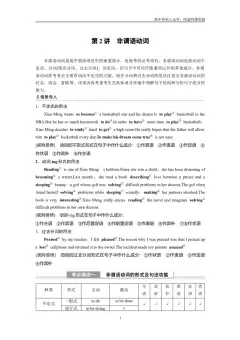
非谓语动词
一、基本概念
1. 定义
非谓语动词,主要指在主句中表示一个动作但不能充当谓语,而是充当其他
语法功能的词。非谓语动词没有人称和数的变化,但是有语态的变化。
2. 分类
非谓语动词基本式
分类
形式
用法
不定式
to do
表目的,将来
动名词/现在分词
doing
表主动,进行
过去分词
done
表被动,完成
非谓语的变形式:
基本式
完成式
进行式
主动
被动
主动
被动
主动
被动
to do
to be done
to have done
to have been done
to be
doing
/
doing
being done
having done
having been done
/
/
done
/
/
/
/
/
2. 逻辑主语
执行非谓语这个动作的对象叫做逻辑主语,逻辑主语与该句子的本身的主语
可能相同,也可能不同。
例:
Seeing you, I fall in love with you.(逻辑主语:I;主语:I)
I have a letter to be posted.(逻辑主语:letter;主语:I)
二、句法功能
分类
主语
宾语
补语
表语
定语
状语
不定式
√
√
√
√
√
√
动名词
√
√
√
√
/
分词
/
/
√
√
√
/
三、非谓语做定语
成分判断:作定语起修饰限制作用,可转换为定语从句。
1. 不定式作定语
形式:①sth.+ to do;
②sth. + to be done
特点:后置定语,理解为“将要做的事情”;关键词next Friday / week / month / year
/ in an hour, etc.。
考点1. 修饰对象为不定代词;the first / last / next / only+n./pron. (one)
考点2. 不定式的主动表被动,被修饰词为逻辑宾语,且逻辑主语明确。
①have + sth. +to do
②there be + sth. + to do
2. 现在分词作定语
形式:①v-ing + sth.;
②sth. (,) + v-ing (doing/ having done)
特点:表性质、特征、用途;表动作正在进行或造成当下的结果;通常作为后置
定语,也可用为前置定语。
考点1. 现在分词的一般式(v-doing)作后置定语,说明名词的性质、特征、用
途等。
考点2. 现在分词的一般式(v-doing)作后置定语,强调名词的动作,且动作是
正在发生或与说话时同时进行,表主动。
考点3. 现在分词的完成式(v-having done)作后置定语,强调名词的动作,且
动作是已经完成并造成现在的结果,表主动。
3. 过去分词做定语
形式:①v-ed. +sth.;
②sth. (,) + v-ed (done/being done/ having been done)
特点:完成或被动;通常作为后置定语,也可用为前置定语。
考点1. 过去分词作后置定语,表被动(强调经常性、反复发生的动作;客观事
实)。
考点2. 过去分词作后置定语,强调动作已完成(有明确的时间概念和动作的先
后顺序)。
四、非谓语做状语
1. 非谓语的状态
(1) 动词不定式的状态
①与主句动作无明显先后顺序,使用原形to do。
例:He is thought to know everything about aviation.
②在主句动作之前发生,不定式to do 变成to have done。
例:He is known to have been killed during the mission.
(2) 动名词doing 的状态
①与主句动作无明显先后顺序,使用原形doing。
例:I admit knowing him. I admit that I know him.
(admit 和knowing 是相同的时间)
②在主句动作之前发生,动名词doing 变成having done。
例:I admit having known him. I admit that I knew him. (know 先发生)
(3) 分词的状态
①分词的动作先后与主句动作无明显先后顺序,使用原形doing/done。
例:Offering help, I often feel happy.
(相当于When I offer help, I often feel happy.)
Stuck in traffic, he couldn`t make it to the meeting.
(相当于As he was stuck in traffic, he couldn`t make it to the meeting.)
②在主句动作之前发生,
现在分词doing 变成having done
过去分词done 变成(having been)done
例:Having finished the race, we all fell down.
(相当于After we had finished the race, we all fell down.)
Having been born in the city, I know little about country life.
(相当于As I was born in the city, I know little about country life.)
2. 不定式作状语:
(1) 表原因
例:I am sorry to hear that.
He was lucky to have found the lost child.
(2) 表目的
(3) 表结果(固定句型),表出乎意料的结果
only to do, “令人失望的、不愉快的结果”;
例:He hurried to the station only to learn that the train had left.
3. 分词作状语:
(1) 黄金二原则:
分词或分词短语作状语,保持前后逻辑主语保持一致;
现在分词表主动或进行,过去分词表被动或完成。
例:Working hard, you will succeed.
Defeated, he remained a popular boxer.
(2) 表时间,相当于after/as soon as/ before/ when/ while 等引导的时间状语从句
例:Finding her lost purse, she sighed with relief.
Rushing for the bus, I fell down and dropped my glasses
(3) 表伴随,两个动作同时发生
例:She cried, wiping her cheeks with a napkin.
He talked on the phone, arranging his desk.
(4) 表原因,相当于as/because/since/therefore 等连词
例:Being away from home for years, she missed her family a lot.
Not having the courage, I could not talk to her.
(5) 表结果,相当于so that/ therefore 等连词
例:He quitted the job all of a sudden, leaving the work unfinished.
The number of the club membership increased by 50 percent, reaching 1500.
(6) 表条件,相当于if/even if/though/等连词
例:Turning left, you will see the bank.
Admitting what he said, I still think he is dishonest.
五、非谓语做主语
考点1. 不定式做主语
不定式做主语时,谓语用单数。往往用it 作形式主语,把不定式放在谓语后面。
It + be + 形容词+不定式
It is impossible to finish the job in one day.
It + be + 名词+不定式
It is an honor to meet you.
It + 动词+ 不定式
It requires patience to be a teacher.
It + be + 介词短语+ 不定式
It is beyond me to explain these.
考点2. 动名词做主语的句型
(1) Doing sth.+ v.
(2) It is + no use, no good (fun, a great pleasure, a waste of time, a bore 等名词) +
doing sth.
(3) It is + useless (nice, good, interesting, expensive 等形容词) + doing sth.
六、非谓语做宾语
考点1. 不定式做宾语
【口诀记忆】
决心学会想希望,拒绝设法愿假装,允许答应选计划。
同意请求帮一帮,愿望似乎就没有,碰巧承担常努力。
determine/decide
manage
choose
try
learn
would like
plan
seem
want
pretend
agree
fail
expert/hope/wish
afford
ask/beg
happen
refuse
promise
help
考点2. 动名词做宾语
【口诀记忆】
考虑建议盼原谅,避免错过继续练,否认完成就欣赏。
禁止想象才冒险,不禁介意准逃亡。
consider
miss
enjoy
mind
suggest/advise
keep on/go on
forbid
escape
look forward to
practice
imagine
allow/permit
excuse/pardon
deny
risk
avoid
finish
can’t help
考点3. 动名词做宾语与不定式做宾语的区别
【口诀记忆】
想起忘记常后悔,努力打算想停止,继续爱恨不一样
forget to do
忘记要做某事(此事未
forget doing
忘记做过某事(此事已做过或
【注意】
如果这些动词前有should 一词,其后宾语只跟不定式,不能跟动名词。
例:I should like to see him tomorrow. 我想明天去见他。
七、非谓语做宾语补足语
宾语补足语是位于宾语之后,说明宾语的状态、特征的成分,多由名词、形
容词、副词、不定式、动名词和分词充当。
The sun keeps us warm.
I heard him singing.
You must get your hair cut.
They found him out.
They wish you to go with them.
宾语+宾语补足语=复合宾语
此结构由主语+及物的谓语动词+宾语+宾语补足语构成。宾语与宾语补足语
有逻辑的主谓关系,若无宾语补足语,则句意不完整。
考点1. 不定式做宾语补足语
(1) 形式为“动词+宾语+不定式(to do)”;
(2) 有些动词做宾语补足语的动词不定式必须带to,其中有:ask, tell, order, want,
get, would like, like, advise, invite, allow, help, wish, warn, expect, prefer, encourage;
(3) 在某些动词后,可用it 做形式宾语,然后加宾语补足语,最后加不定式作真
正的宾语。常见的动词有find, think consider, feel, make 等;
考点2. 分词做宾语补足语
(1) 分词和不定式一样,在一些感官动词或使役动词后作宾语补足语。
①现在分词做宾语补足语,表示的是动作正在进行;
做)
已发生)
stop to do
停止、中断(某件事),
目的是去做另一件事
stop doing
停止正在或经常做的事
remember to do
记住去做某事(未做)
remember doing
记得做过某事(已做)
regret to do
对要做的事遗憾
regret doing
对做过的事遗憾、后悔
try to do
努力、企图做某事
try doing
试验、试一试某种办法
mean to do
打算,有意要…..
mean doing
意味着
go on to do
继而(去做另一件事)
go on doing
继续(原先没有做完的事情)
propose to do
打算(要做某事)
propose doing
建议(做某事)
like / love / hate /
prefer +to do
表示具体行为
like / love / hate /
prefer +doing
表示抽象、倾向概念
②过去分词作宾补表示被动关系,其动作先于谓语动作,所表示的动作一定
和宾语有逻辑上的动宾关系。
(2) get 也能当使役动词,表示“使、让、叫”之意,相当于have,但两者也有所
不同。
have sb. do sth.
get sb. to do sth.使/让/叫某人去做某事
have sth. done = get sth. done 使/让某事由别人去做
have sb./sth. doing 使/让某人/物持续地做某事
get sb./ sth. dong 使某人/物开始行动起来
【补充】
need, want, deserve +动名词作宾语表被动意义;+不定式被动态表示“要(修、
清理等)”的意思,即want/need/require doing=want/need/require to be done。
八、非谓语做表语
考点1. 不定式作表语
(1) 不定式作表语一般表示具体动作。
(2) 在主系表结构中,当表语形容词为good, light, heavy, difficult 等时,其后常用不
定式作状语,表示时间,原因,结果等,且常用主动形式表示被动意义。
考点2. 分词作表语
分词作表语有两种情况,一种是现在分词做表语(现在分词作表语多表示主
语具有的特征),一种是过去分词做表语。过去分词作表语多指主语所处的状态,
总是在系动词如:be, appear, feel, remain, seem, look 等之后,构成系表结构。
【注意】
要区分是“系表结构”还是“被动语态”。作表语的过去分词表示状态,而被动
语态中的过去分词表示动作。
例:The apple was eaten by me. 苹果被我吃了。
He was puzzled about it. 他对这个很困惑。
情态动词
一、基本概念
1. 定义:表示说话人的情绪,态度或语气且本身有一定词义的动词。
2. 用法特点:
①不能表示正在发生或已经发生的事情,只表示期待或估计某事的发生;
②有一定的意义,但不能单独使用,它和后面的动词构成谓语,且没有人称,数
的变化;
③有些情态动词有过去式的变化。
e.g. will—would, can—could, may—might, dare—dared
二、高频考点
考点1. 情态动词基本用法
1. must
(1) 表示必要性,意为“必须”,主用于肯定句和疑问句:
must 引起疑问句,
肯定回答为must/have to;
否定回答为needn’t/ don’t have to,表“不必”。
(2) mustn’t 表示“禁止,不允许”;
(3) 表示“偏偏,非要”表示与说话人愿望相反或不耐烦心情;
(4) 表示“必须”must VS have to
must
have to
主观/客观
主观
客观
时态
现在,将来
多种
表推测
非谓语形式
否定意义
禁止,不允许
不必
2. can/ could
(1) 表示惊讶,常用在否定句和疑问句中;
例:Can it be true?
能是真的么?
(2) cannot...too/enough 表示“无论……也不过分”“越……越好”;
例:One cannot be too careful.
越小心越好。
(3) can\ could\ be able to 表示能力;
①can\ could 主语是人或物,be able to 主语是人;
②can 只用于现在时和过去时(could), be able to 可以体现各种时态;
③be able to do sth. 经过努力能达到
例:
She can sing the song in English.
她可以用英语唱这首歌。
He will be able to sing this song in English in a few minutes, too.
几分钟后他也可以用英文唱这首歌了。
(4) can/could 表示请求,允许
3. may/might
(1) “may as well+动词原形”意为“最好,满可以,倒不如”;
例:You may as well do it at once.
你最好一次性完成。
(2) “may well+动词原形”意为“完全能,很可能”,相当于be very likely to do;
例:He may well be proud of his son.
他大可以为儿子高兴。
(3) may 作“可以”讲时,其否定式常用“mustn’t”表示“禁止”;
(4) 祝愿(祈使句);
(5) may/might 表示请求,允许。
4. will/would
(1) 表示自愿做或主动提出做什么,如意志、愿望或决心等。would 用于过去的
情况;
(2) will 可以表示一种习惯性的动作,有“总是”或“总要”之意,也表示事物倾向和
特性;
(3) would 表示婉转语气。
5. would
(1) would 表示过去反复发生的动作或某种倾向“总是,总要”。
例:When at school, he would always the first to offer help.
在学校时,他总会第一个向他人给予帮助。
6. shall
(1) 用于一、三人称疑问句中,表示说话人征求对方意见和向对方请示;
(2) 用于二、三人称表命令、许诺、警告、规定、威胁、决心、也用于宣布法
律、规定的要求。
7. should
(1) 表示“应该,应当”;
(2) 竟然,居然;
例:It’s strange that he should be late.
很奇怪他竟然迟到了。
(3) 表示“可能,该(= will probably)”。
例:He should arrive soon.
他应该马上就到了。
8. should/ought to
(1) 相同点都可表“责任,义务”常可互换ought to 语气>should;
(2) should 强调主观看法,而ought to 强调客观要求。
9. dare / need
dare 和need 既可以是情态动词又可以是实义动词。
情态动词
实义动词
dare
否定,疑问,条件
dare not do
否定,疑问
don’t dare to do
don’t dare do
肯定()
肯定dare to do
need
否定,疑问
needn’t do
don’t need sth.
don’t need to do
肯定()
must, have to, ought to, should
肯定need to do
考点2. 情态动词表推测
情态动词+do/be 表对现在/将来的推测
情态动词+be doing 表对正在进行的事的推测
情态动词+have done 表对过去的推测
考点3. 情态动词+ have done
情态动词+have done
用法
must have done
表示对过去行为的推测,意为“一定,想必”,语气
十分肯定
can/could have done
本来能够做,而实际上未做
过去可能会做
cannot/could not have
done
过去不可能做
过去没能够做
can’t have done 多用于语气强烈的否定,意为“不可能
做过
也许/或许已经做(肯/否)(否定句表“可能不” )
might 表示语气更加不肯定。might have done 可表
示“本可能做而实际上未做”
may/might have done
should/ought to have
done
本该做,而实际上未做
should not/ought not to
have done
本不该做而做了
needn’t have done
本来不必做某事而实际上却做了
虚拟语气
一、基本概念
虚拟语气表示说话人的主观愿望、推测,而不是客观情况。
二、高频考点
考点1 非真实条件句
1. 虚拟语气表格
主句
从句
与将来相反
would do
did/should do/were to do
与现在相反
would do
did
与过去相反
would have done
had done
【注意】
①be 动词在虚拟语气中,过去式用were 的形式,而不用was 的形式;
②上表中的would 可以替换为should/could/might。
例:If I were you, I would try it again. 如果我是你,我就会再试一次。
2. 错综复杂条件句
主句和从句的谓语动作若不是同时发生时,虚拟语气的形式应作相应的调整。
例:If I had worked hard at school, I would be an engineer, too.
如果我过去在学校好好学习,我现在就也是工程师了。
3. 倒装省略if,后面句子虚拟语气
例:Were she here, she would agree with us.
=If she were here, she would agree with us. 如果她在这,她就会同意。
考点2. 含蓄条件句
1. I wish + 从句
例:I wish you saw the exhibition.
我希望你看过这个展览。
2. It’s high time + 从句
例:It’s high time you got up.
到了你该起床的时候了。
3. I would rather + 从句
例:I’d rather you had watched the movie.
我宁愿你看过这个电影。
4. otherwise + 主句
例:We didn’t know his telephone number; otherwise we would have telephoned him.
我们不知道他的电话号码,否则我们就可以给他打电话了。
5. but for…, + 主句
例:But for the storm, we should have arrived earlier.
要不是因为暴风雨,我们就能早点到。
6. without…, + 主句
例:Without your help, we wouldn’t have achieved so much.
没有你的帮助,我们不可能收获这么多。
7. as if/ though + 从句
例:The old machine runs as if it were a new one.
这个老旧的机器运行时好像一个新的。
He talked about Japan as though he had been there for many times.
他谈论日本就好像去过那儿好几次。
考点3 宾语从句中使用虚拟语气
表示“坚持、命令、建议、要求”宾语从句中的虚拟语气,从句中should+
动词原形结构,should 可以省略。
①坚持insist
②命令command/order
③建议advise/suggest/propose/recommend
④要求require/request/ask/demand/desire
例:They insist that a meeting (should) be held on Friday.
他们坚持周五开会。
【注意】
suggest 表“暗示,表明”,不适用。insist 表“认为”,不适用。
例:
The smile on his face suggested that he was satisfied with our work. (√)
The smile on his face suggested that he (should) be satisfied with our work. (×)
他脸上的笑容暗示着他对我们的工作满意。
倒装句
一、基本概念
三大倒装:完全倒装、半(部分)倒装、形式倒装
类型
用法含义
完全倒装
将整个谓语提到主语之前的即为完全倒装
部分倒装
只把谓语的一部分(如助动词、情态动词等)放到主语前,或把
句子的强调成分提前
形式倒装
只把强调的内容提至句首,主谓并不倒装
二、高频考点
考点1. 完全倒装—谓语部分完全放在主语之前
1. 表示方位、时间的副词或介词短语放于句首时
标志词:there, here, then, up, down, away, off, in the room, etc.
【注意】
主语是名词时倒装,若主语是代词时,则不倒装。
例:
South of the river lies a small factory. 一个小工厂坐落在这条河的南岸。
Out rushed the boy. 那个男孩冲了出去。
Out he rushed. 他冲了出去。
2. such 放于句首时
例:
Such are the facts; no one can deny them.
这就是事实,没有人能否定它们。
Such is the president, an excellent man and the 21th century’s greatest husband.
这就是主席,一个优秀的人,也是21 世纪最伟大的丈夫。
【注意】
such 多被看成表语,所以be 动词要与其后的主语保持一致。
考点2. 半(部分)倒装—把谓语部分的助/系/情放在主语之前
半(部分)倒装的几种情况:
1. only (修饰副词、介词短语或状语从句) 放于句首时,主句半倒装
例:Only in this way can we learn English well.
只有用这种方法我们才能学好英语。
【注意】
only 修饰主语时,句子不能倒装。
例:Only you can sign the report.
只有你能签这个报告。
2. 否定副词及含有否定意义的介词短语放于句首时
如:never, nor, not, hardly, little, seldom, scarcely, rarely, at no time, under no
circumstances, in no case, by no means 等。
例:Hardly do I think it possible to finish the job before dark.
在天黑之前完成这项工作我认为几乎不可能。
Never before have I seen such a moving film.
以前我从未看过这么感人的电影。
3.
so + 助/系/情+ 主语=“主语也是如此”
(=So it is with …=It is the same with…)
so + 主语+助/系/情
“主语的确如此”
4. So + adj /adv +半倒装+that…如此…以至于…
Such + a/an + n +半倒装+ that…
例:So clearly does he speak English that he can always make himself understood.
他说英语说的如此清晰,以至于别人都能听得懂。
Such an interesting book does he have that we all want to read it.
他有一本如此有趣的书,以至于我们都想读。
5. Neither +半倒装, nor + 半倒装“既不…,也不…。”
例:Neither do I know it, nor do I care about it.
我不知道这件事,也不关心。
6. Not only + 半倒装, but (also) +正常
“不但…,而且…。“
例:Not only will help be given to people to find jobs, but also medical treatment will
be provided for people who need it.
不仅要给那些找工作的人提供帮助,而且也要给那些需要帮助的人提供医疗
保健服务。
7. Not until+正常,主句半倒装
例:Not until 4:00 in the morning did he fall asleep.
直到早晨4 点他才睡着。
Not until he returned did we have supper.
直到他回来我们才吃饭。
考点3. 形式倒装—把强调的内容放于句首,主谓不倒装
1. 感叹句
例:What an interesting talk they had!
他们进行了一次多么有趣的谈话呀!
2. the more…(条状从),the more…(主句)句型
例:The harder you work, the greater progress you will make.
你学习越努力,取得的进步就越大。
3. however, whatever 引导的让步状语从句
however + adj/adv + 主语+ 谓语
whatever + n + 主语+ 谓语
例:However difficult the problem may be, we must work it out this evening.
无论这个问题会有多难,今晚我们必须解决。
Whatever reasons you have, you should carry out your promise.
无论你有什么理由,你都应当遵守诺言。
4. as/though 引导的让步状语从句
adj(最高级前无the)
adv
分词
+as/though + 主语+ 谓语
名词(前无冠词)
动词
例:Much as I respect him, I can’t agree with him.
虽然我非常尊重他,但是我仍旧不同意他的意见。
Praised as he is, he remained modest.
尽管他受到了表扬,却仍旧很谦虚。
Youngest as he is in our class, he speaks English best.
他虽然是我们班年龄最小的,但他英语说得最好。
省略
一、从句的省略
1. 状语从句:状从的主系结构可以省略。
例:You shouldn’t come to his party unless (you are) invited.
2. 宾语从句:并列宾从的第一个连词可以省略,且如果第一个连词省略了,后
面的连词就不可以省略了。
例:
He said (that) he would like to see the teacher and that he always finishes his
homework at school.
3. 定语从句
(1) the way 表方式时的that/in which 可以省略;
(2) 定从中做宾语的关系代词可以省略(在带逗号的定语从句中不可以省略)。
例:
The way (in which/ that) he spoke to his classmates was unfriendly.
The man (whom/ who/ that) we saw yesterday is Mr. Brown.
二、不定式的省略
第二次出现的不定式作宾语可以省略,但要保留不定式符号to。
常考动词:prefer, refuse, decide, mean, intend, try, promise, like, love, care, want,
hope, wish, expect
例:I had asked her to come, but she did not want to (come).
强调句
一、判断方式
把强调结构去掉,句子仍通顺。
二、分类
1. 陈述句的强调句型
It is/ was + 被强调部分+ that/ who+ 其他部分。
例:It was yesterday that I met Miss Fang.
昨天我见到了方小姐。
2. 一般疑问句的强调句型
同上,只是把is/ was 提到it 前面。
例:Was it yesterday that I met Miss Fang? 是昨天我见到了方小姐了么?
3. 特殊疑问句的强调句型
被强调部分(通常是疑问代词或疑问副词)+ is/ was + it + that/ who + 其他部
分?
例:When was it that you were born?
你到底什么时候出生的?
4. not … until … 句型的强调句
It is/ was not until + 被强调部分+ that + 其他部分
例:It was not until his wife came back that he went to bed.
直到他老婆回来,他才上床睡觉。
完形填空
考试题型
完形填空
考查重点
主要考查考生综合运用各项英语基础知识的能力,特别是考查
考生对文章整体内容的理解。要求考生在熟练掌握语法、词语
和其他语言知识的基础上,理解文章主旨大意,理清文章逻辑
关系,善于在文章中发现并捕捉信息点,从而选出最符合文章
内容要求的答案。
题目数量
20 道
分值
每题1.5 分,共20 题,计30 分
考频分布
动词题
名词题
形容词、副词题
逻辑、其它
2020 全国I
7
7
5
1
2020 全国II
11
4
5
0
2020 全国III
8
4
6
2
2019 全国I
8
7
5
0
2019 全国II
9
5
4
2
2019 全国III
9
8
4
1
2018 全国I
10
7
3
0
2018 全国II
10
3
6
1
2018 全国III
11
6
3
0
2017 全国I
10
5
4
1
2017 全国II
9
8
3
0
2017 全国III
7
8
5
0
总计
109
72
53
8
知识清单
解题技巧
一、关注首句信息,推测文章主旨
通过首句信息快速抓住文章主旨,对理解全文有很大帮助。
二、注意提示信息,重视语境含义
若有标题、图片、中文注释务必不要忽视,这些可以帮助快速了解文章信息。
此外,完形考查的是整篇文章的连贯性思维,所以要具有全局观念。
三、辨别文章标志,梳理逻辑关系
做题时需要注意语篇标志词如first, thus, although 等,它们可以帮助考生迅速
理清文章脉络。
四、巧用原词复现,寻找近义词语
做题时需要有全局观念,先通读全文,很多答案会在后文中出现。
五、利用背景知识,精简判断过程
完形填空有不同的话题如学校生活、个人情感、社会文化等,考生在做题时
可以应用自己的文化背景知识,辅助理解语篇内容。
六、积累习惯用语,熟记常见句型
完形填空是巨大的语料积累素材库,建议考生在做完题后,可以积累落实词
汇和句型,丰富自己的语料库。
书面表达
考试题型
应用文写作
考查
重点
要求考生对题目给出的现象、问题等做出回应,考生应该仔细审题,根
据题目要求表达要点,并合理拓展细节,用正规的文体要求,在规定的
时间内清晰、准确的写出作文。
字数
要求
100 词左右
分值
25 分(以全国卷为例)
考频分布
卷型
建议信
邀请信
申请信
通知信
介绍信
道歉信
感谢信
2020 全国I
/
/
/
/
1
/
/
2020 全国III
/
/
/
/
1
/
/
2019 全国I
/
/
1
/
/
/
/
2019 全国III
/
1
/
/
/
/
/
2018 全国I
/
/
/
/
1
/
/
2018 全国II
/
/
/
1
/
/
/
2018 全国III
/
/
/
/
1
/
/
2017 全国I
/
/
/
1
/
/
/
2017 全国II
/
1
/
/
/
/
/
2017 全国III
/
1
/
/
/
/
/
2016 全国I
/
/
1
/
/
/
/
2016 全国II
/
1
/
/
/
/
/
2016 全国III
/
/
/
/
/
1
/
总计
0
4
2
2
4
1
0
知识清单
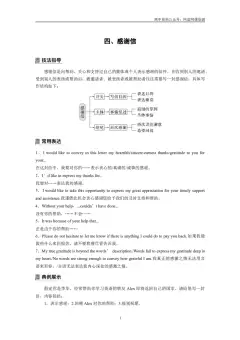
一、开篇功能句
1.
I am writing to invite you to... / I'm writing to tell you that there will be a...
_____________________________________________________________________
2.
It is my pleasure / a great honor for me to invite you to...
_____________________________________________________________________
3.
I am very pleased to invite you to participate in... to be held from... to... in...
_____________________________________________________________________
4.
It is my pleasure to extend an invitation to you to...
_____________________________________________________________________
5.
I would like to give you my apology for...
_____________________________________________________________________
6.
I owe you an apology.
_____________________________________________________________________
7.
I express my regret for being unable to do...
_____________________________________________________________________
8.
I really don't know how to express my gratitude for your help.
_____________________________________________________________________
9.
I am writing to tell you how greatly I appreciate all you have done for me.
_____________________________________________________________________
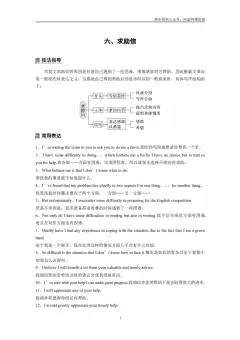
10. You have asked me for some advice on... I will try to give you some suggestions.
_____________________________________________________________________
11. I have received your letter saying ... Now I recommend that...
_____________________________________________________________________
12. I am writing to express my views / ideas about...
_____________________________________________________________________
13. I wish to apply for the post ... advertised in the ... on ...
_____________________________________________________________________
14. I am interested in your advertisement in ...
_____________________________________________________________________
15. I am writing to enquire whether you have a suitable vacancy for...
_____________________________________________________________________
16. In order to celebrate...a meeting/ party is to be held...
_____________________________________________________________________
17. The student union has decided that...
_____________________________________________________________________
18. Ladies and gentlemen, may I have your attention, please? I have an
announcement to make.
_____________________________________________________________________
19. Attention, please. I have something important to tell you.
_____________________________________________________________________
20. I'm ... who bought ... from your website several days ago. I am writing to
complain about ...
_____________________________________________________________________
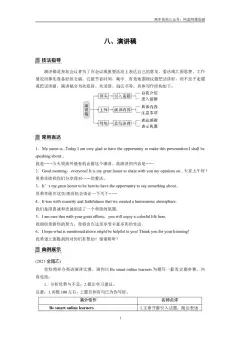
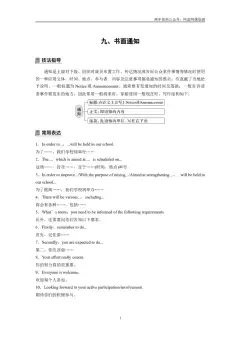
二、结尾功能句
1.
I wonder if you could come...
_____________________________________________________________________
2.
Would you please drop me a line to let me know if you can come to...?
_____________________________________________________________________
3.
If you are interested in it, let me know and I'll send you more information.
_____________________________________________________________________
4.
My family and I would feel honored if you could come.
_____________________________________________________________________
5.
I am sure that you will enjoy yourself here.
_____________________________________________________________________
6.
We would be very grateful if you could give a talk on...
_____________________________________________________________________
7.
I sincerely hope you can understand my situation / thought in my position and
accept my apology.
_____________________________________________________________________
8.
Once again, I'm sorry for any inconvenience caused.
_____________________________________________________________________
9.
I feel greatly obliged to thank you once more.
_____________________________________________________________________
10. My true gratitude is beyond description.
_____________________________________________________________________
11. I am grateful for your selfless donation.
_____________________________________________________________________
12. I hope that my suggestions are helpful.
_____________________________________________________________________
13. I hope that my suggestions will be of some help.
_____________________________________________________________________
14. I would be very grateful if you could arrange an interview at your convenience.
_____________________________________________________________________
15. I hope that you will give me an interview when it is convenient for you.
_____________________________________________________________________
16. I would appreciate it very much if you could give me an early reply.
_____________________________________________________________________
17. Come here on time and bring a pen and a notebook with you.
_____________________________________________________________________
18. All the members are expected to attend it.
_____________________________________________________________________
19. Please be there on time and don't be late.
_____________________________________________________________________
20. I would like you to get this matter settled by the end of this month.
_____________________________________________________________________
真题范文
1. 建议信
(2017 北京)
你的英国朋友Jim 所在的学校要组织学生来中国旅行,有两条线路可以选择:
“长江之行”或者“泰山之旅”。Jim 来信希望你能给些建议。请你给他回信,内容
包括:
①你建议的线路;
②你的理由;
③你的祝愿。
注意:①词数不少于50;
②开头和结尾已给出,不计入总词数。
Dear Jim,
I am glad to receive your last letter, in which you told me that your school
offered two travel routes for China.【高分句型1】
Frankly speaking, both of them are fascinating, but I would like to recommend
you the journey to Mount Tai. ( 建议路线) First, the mountain has the unique
marvelous wonders, such as the rising sun at dawn and rosy clouds at sunset, which
will leave you a deep impression. Besides, vast quantities of poetry and stone
inscriptions have been left on the mountain, giving you an opportunity to have a
better understanding of Chinese traditional culture.【高分句型二】All in all,
Mount Tai, whether its landscape or culture, is worth visiting. (推荐理由)
I hope what I have said above could be helpful and wish you have an exciting and
rewarding trip. (表达祝愿)
Sincerely,
Li Hua
2. 邀请信
(2019 全国3)
假定你是李华,你校将举办音乐节。请写封邮件邀请你的英国朋友Allen 参
加,内容包括:
①时间;
②活动安排;
③欢迎他表演节目。
注意:
①词数100 左右;
②可以适当增加细节,以使行文连贯。
Dear Allen,
I am writing to tell you that a music festival will be held in our school. We can
take part in the music festival in the school hall next Friday afternoon. (时间) In the
music festival, we invite some famous singers and pianists to perform, who will
also give some lessons to the students.【高分句型一】In addition, some students can
have a chance to cooperate with these musicians. (活动安排) As a music fan, you are
bound to participate in the festival. If possible, you are welcome to perform in the
festival, which will be a great experience.【高分句型二】(欢迎他表演节目)
Hopefully, you can take part in it and don't miss the chance.
Yours,
Li Hua
3. 申请信
(2019 全国1)
假定你是李华,暑假在伦敦学习,得知当地美术馆要举办中国画展览.请写
一封信申请做志愿者,内容包括:
①写信目的;
②个人优势;
③能做的事情。
注意:
①词数80 左右;
②可以适当增加细节,以使行文连贯;
Dear Sir or Madam,
I am Li Hua, a 17-year-old teenager. Recently, I learned in your official website
that a volunteer is needed for an exhibition of Chinese traditional painting in London.
So I am writing to apply for this position. (写信目的-提出申请)
Here are three main reasons why I am the best choice for you.【高分句型一】
First and foremost, having lived in London for half a year before as an exchange
student, I am undoubtedly good at English, as a result, it is a piece of cake for me
to introduce everything to international friends.【高分句型二】Besides, I learned
Chinese painting for more than ten years in my childhood, therefore, I do know a lot
about this great art form. Last but certainly not least, as vice monitor of our class, I am
kind, patient and always ready to help others. (个人优势以及能做的事情)
Hopefully, this wonderful chance would be offered to me. I have the confidence
that I will have a great time. Looking forward to your reply. (表达决心)
Yours,
Li Hua
4. 通知信
(2018 全国2)
你受学生会委托为校宣传"英语天地"写一则通知,请大家观看一部英文短片
Growing Together,内容包括:
①短片内容:学校的发展;
②放映时间、地点;
③欢迎对短片提出意见.
注意:
①词数100 词左右;
②可以适当增加细节,以使行文连贯.
Notice
In order to have a better understanding of our school, an outstanding English
short movie about our school will be shown in the library from 2:30 to 4:00 in the
afternoon on June 9th. It is organized by the Student Union. Here are some relevant
details about it. (短片目的以及放映时间和地点)
To begin with, the name of the movie is Growing Together, which is about
the development of our beloved school.【高分句型一】As we all expect, it will be
not only meaningful but also interesting. What's more, everyone of you will be
welcome to take part in it, enjoying the movie, having a heated discussion
afterwards and giving your own comments.【高分句型二】(短片的内容,欢迎对
短片提出意见)
The Student Union
June 8, 2018
5. 介绍信
(2020 全国1)
你校正在组织英语作文比赛.请以身边值得尊敬和爱戴的人为题,写一篇短
文参赛,内容包括:
①人物简介;
②尊敬和爱戴的原因。
注意:
①词数100 左右;
②短文题目和首句已为你写好。
The person I respect most
My mother is the person I respect most. She plays an important role in my
life, not only as a mother but also as a friend.【高分句型一】(人物简介)
As a mother, she takes good care of the family and she is never upset about my
mistakes. She works hard in the company. She's always warm-hearted and ready to
help others. She sets a good example to me so that I have learned to work hard
and respect people around.【高分句型二】As a friend, she knows a lot about me and
gives me help whenever it's necessary. (尊敬和爱戴的原因)
My mother has a great influence on me and I respect her most. (总结)
6. 道歉信、感谢信
假定你是李华,与留学生朋友Bob 约好一起去书店,因故不能赴约.请给他
写封邮件,内容包括:
①表示歉意
②说明原因
③另约时间
注意:
①词数100 左右;
②可以适当增加细节,以使行文连贯。
Dear Bob,
I'm sorry to say that I cannot go to the bookstore with you on Friday afternoon. I
have just found that I have to attend an important class meeting that afternoon. I hope
the change will not cause you too much trouble. (表示歉意并说明原因)
Shall we go on Saturday morning? We can set out early so that we'll have more
time to read and select books.【高分句型一】If it's convenient for you, let's meet at
8:30 outside the school gate. If not, let me know what time suits you best.【高分句
型二】I should be available any time after school next week. (另约时间)
Looking forward to your reply.(期盼回信)
Yours
Li Hua