ARTICLE · 1195027
grammar系列4——高中英语三大从句之定语从句Attributive Clause,提升阅读技能杀手锏

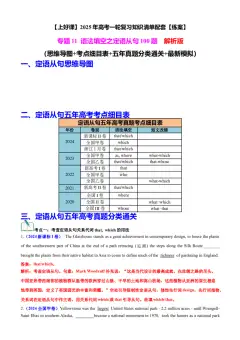
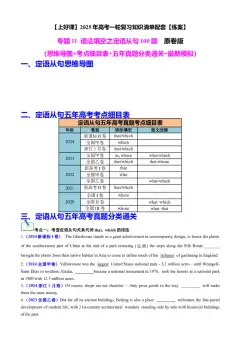
一、例句展示:
阅读以下句子,关注划线词语,并分析他们分别指代什么?为什么会用这些词语进行指代?
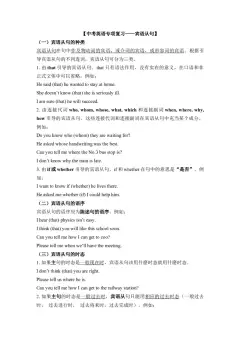
① The digital age also enable us to find people who share our interests.
② We can stay in touch with people that we want to remain friends with.
③ I like the cake which you bought yesterday.
④ She is the girl whom I met at party.
⑤ The old lady whose two daughters are both teachers in a neighbor.
⑥ Eventually it' managed to reach the places where it will spend the winter.
⑦ The solution to the mystery of the monarch's amazing ability comes at a time when it is in serious trouble.
⑧ Suddenly, human activity is the main reason why the number of monarch butterflies is falling.
二、概念一览:
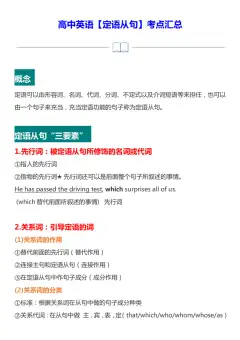
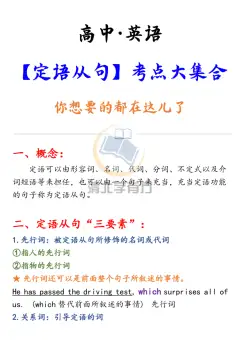
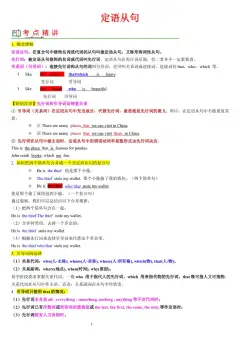
1.先行词(antecedent)
被定语从句所修饰、限定的名词或代词,一般出现在定语从句的前面。
例句:The girl who is singing is my sister. 先行词:the girl(后面从句用来修饰这个 girl)
2.关系代词(relative pronoun)
用来引导定语从句,指代先行词,并且在定语从句中充当主语、宾语、定语的代词。
常见:who, whom, whose, which, that, as
3.关系副词(relative adverb)
引导定语从句,指代先行词,在从句里面只作状语(时间 / 地点 / 原因),不充当主语或宾语。
常见:when(时间状语)、where(地点状语)、why(原因状语)
4.限定性定语从句(defining relative clause)
对先行词进行必要限定、区分;去掉从句后主句意思不完整、不明确,从句和主句之间不加逗号。作用:用来区分“哪一个”。
例句:I like books that are interesting. (去掉从句 I like books,句子虽然语法成立,但丢失了 “什么样的书” 这个关键信息)
5.非限定性定语从句(nondefining relative clause)
只对先行词做补充说明、附加信息,不是必不可少的内容;去掉从句,主句意思依然完整;主句与从句之间必须加逗号。不能用 that引导,关系代词不能省略,可指代前面整件事。
例句:He passed the exam, which surprised everyone.
三、详细分析:
例句为不同关系代词和关系副词引导下的定语从句,分别有who,whose,whom,which,that,why,when,where,以第一句为例,The digital age also enable us to find people who share our interests. 在这个句子中,who指代的是people(who refers to people),是对people做进一步修饰(modify),即who是引导该定语从句的关系代词,people是被修饰的先行词,以此类推。
一个定语从句可以拆成两个简单句,也就是The digital age also enable us to find people whoshare our interests. =The digital age also enable us to find people+The people share our interests.
我们选择用先行词将两个句子合并成一个句子,让表达更加紧凑和清晰(compact and coherent)。
由此我们看到定语从句的通常结构为主句+关系代词/关系副词+从句。那么什么是关系代词和关系副词呢?
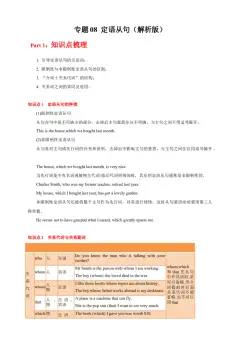
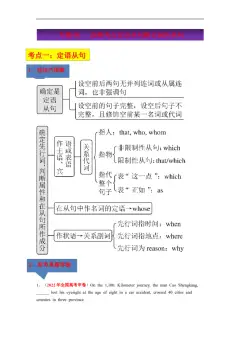
1.关系代词(relative pronoun):
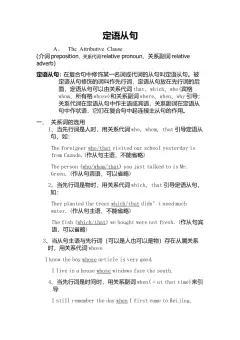
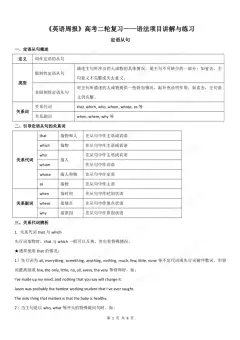
用来引导定语从句,指代先行词,并且在定语从句中充当主语、宾语、定语的代词。
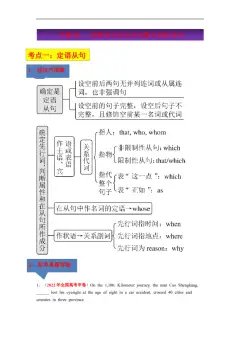
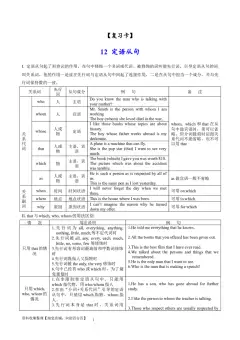
who、whom 指代人whose 指代人 / 物,表所属,…… 的that、as 指代人、物
例句:
① The digital age also enable us to find people who share our interests.② We can stay in touch with people that we want to remain friends with.③ I like the cake which you bought yesterday.④ She is the girl whom I met at party.⑤ The old lady whose two daughters are both teachers in a neighbor.⑨ As we all know, the earth goes around the sun.
2.关系副词(relative adverb)
引导定语从句,指代先行词,在从句里面只作状语(时间/地点/原因),不充当主语或宾语。
where充当地点状语(= 介词 + which)when充当时间状语(= 介词 + which)why充当原因状语(=for which)
⑥ Eventually it' managed to reach the places where it will spend the winter.⑦ The solution to the mystery of the monarch's amazing ability comes at a time when it is in serious trouble.⑧ Suddenly, human activity is the main reason why the number of monarch butterflies is falling.
四、语法难点:
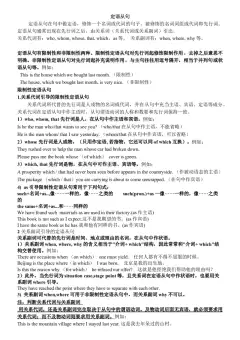
1.As引导的定语从句
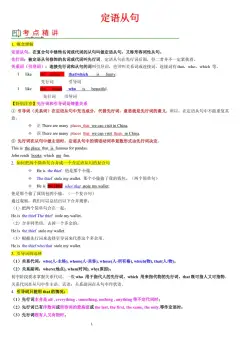
① as 引导非限制性定语从句,可置于句首 / 句中 / 句末,含义:正如、如同,例如:
The problem, as we have discussed, is very important. 正如我们讨论过的,这个问题很重要。
② as 引导限制性定语从句,先行词前常有 such, the same, so, as 修饰,搭配:the same … as;such … as;so … as,例如:
This is the same book as I bought yesterday. 这本书和我昨天买的那本一样。
2.带有介词的定语从句
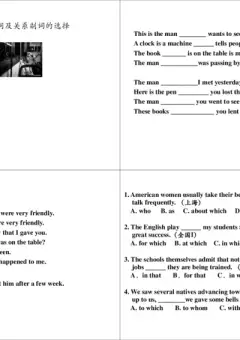
介词 +关系代词:介词 + which /whom/whose(when/where/why = 介词 + which)
介词的选择依据
① 介词来自从句中动词的固定搭配
把先行词放回定语从句,看动词和先行词之间需要什么介词,注意:固定短语动词(look after, take care of),介词不提前。
This is the house in which he once lived. 还原:He lived in the house.
介词也可以留在从句末尾:This is the house (which/that) he lived in.
② 介词来自从句中形容词的固定搭配
固定结构:be + 形容词 + 介词
The girl with whom I was angry is my deskmate. 还原:I was angry with the girl.
③ 介词来自先行词名词本身的固定搭配
名词有固定介词搭配,介词由此而来。
I’ll never forget the day on which we first met. 还原:on the day(on 搭配具体某一天)
There is a tree, in whose shade we used to read books. (whose + 名词,一起放在介词后面。)
There are 50 students in the class, most of whom are hard-working. 班里有 50 名学生,其中大部分学习刻苦。
She has many books, three of which are about history. 她有很多书,其中三本是历史书。
3.限定性和非限定性定语从句
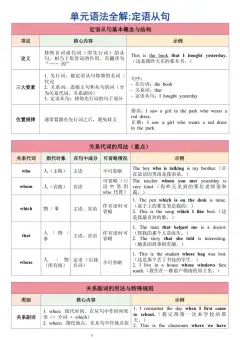
类型 | 限定性定语从句 | 非限定性定语从句 |
形式 | 无逗号 | 主句和从句用逗号隔开 |
功能 | 对先行词进行必要的限定、区分;删掉从句,主句意思不完整。用来回答:哪一个? | 只补充附加信息,不是句子必需内容;删掉从句,主句意思依旧完整。只是额外介绍。 |
关系词使用 | 可用who, whom, whose, which, that;作宾语的关系代词可以省略 | 不能用that;关系代词不可省略 |
指代整件事 | 不能指代前面整句话内容 | which/as 可以指代前面整件事 |
例句 | I have a sister who works in a hospital. 我有一个在医院工作的姐姐。 (含义:我不止一个姐姐,从句用来区分是哪一位)The books that you lent me are interesting. 你借给我的那些书很有趣。(限定是你借我的,不是别的书) | I have a sister, who works in a hospital. 我有一个姐姐,她在医院工作。 (含义:我只有这一个姐姐,后面只是补充介绍她的工作)The books, which I bought last week, are interesting. 这些书很有意思,是我上周买的。(只是补充说明书的购买时间) |
五、总结归纳:
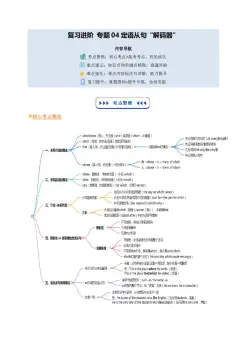
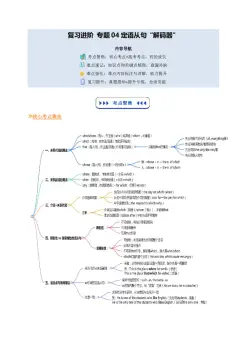
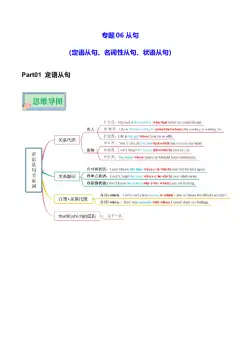
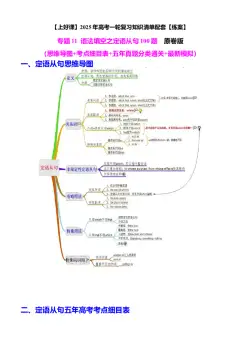
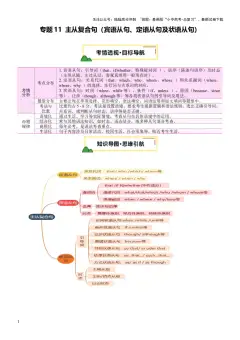
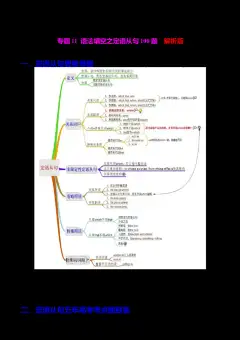
1.定义:修饰名词 / 代词(先行词)的从句,相当于形容词。
2.分类:限制性(无逗号,必不可少)、非限制性(逗号隔开,补充信息,不能用 that)。
3.关系词:
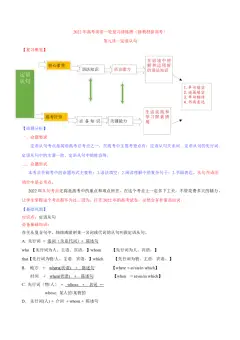
① 关系代词(在从句作主 / 宾 / 定):who (人,主宾)、whom (人,宾)、whose (… 的,表所属)、which (物)、that (人 + 物,非限定不能用)、as(正如,可放句首)
② 关系副词(在从句作状,不作主宾):when (时间 = on/in which)、where (地点 = in/at which)、why (原因 = for which)
4.介词 + 关系代词:介词提前,后只用 which/whom;不能用 that;短语动词如 look after,介词不可提前。名词+ of which/of whom:表 “…… 之中的”
5.特殊规则:
①先行词有最高级、序数词、不定代词、人和物并列,只用 that,不用 which。
②as 引导非限定从句可放句首;which 指代整件事,不能放句首。
③the way 后面从句可用 that /in which / 省略。
④从句谓语单复数看先行词。
6.区分小技巧缺主语 / 宾语 → 选关系代词; 不缺主宾,只缺时间 / 地点 / 原因状语 → 选关系副词。
好了,学习英语最好的方法是多听多读多用多写!今天就分享到这里,欢迎关注、讨论,下期见!