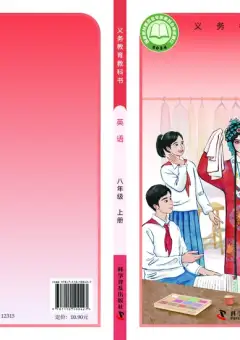
义 务 教 育 教 科 书
英 语
八年级 上册
E N G L I S H
Big Question: How do you deal with changes?
In this unit, you will learn to:
talk about growing up.
understand and deal with growing pains.
use a chart to understand character development.
use the strategy of reading with a purpose.
share your growing-up stories.
Changing and Growing
Changing and Growing
UNIT
4
处理;应对(问题、情况等)
“通过改变来成⻓”
•谈论成⻓。
•理解并处理成⻓的痛苦。
痛苦,苦恼
•使⽤图表来理解性格发展。
⽬的,意图
“with” 在这⾥表示“具有;带有”
“运⽤带着⽬标阅读的策略”
“growing-up”是合成形容词,“成⻓的”
你怎样应对变化
A. Match the words (a–e) with the pictures at the top of the next page.
B. Fill in each blank with a suitable word above.
C. Pair work. Listen and repeat, and then replace the parts in bold
and practice with your partner.
Why do you look upset?
Why not take a deep breath
and smell something good?
And then you will feel relaxed.
I’m feeling nervous about
tomorrow’s speech.
e. touch
d. smell
b. hearing
a. vision
c. taste
Activity 1
Preparing for the Topic
UNIT
4
Listening & Speaking
Senses and stress control
______ 1. When I feel tired, I often wash my face with cold water.
______ 2. I like listening to soft music. The music makes me feel calm.
______ 3. What a fool I was to taste hot pepper! I really regretted doing that.
______ 4. I will never forget seeing so many world-famous paintings in the
museum.
______ 5. The flowers smelt so good! I took a deep breath and the smell made
me relaxed.
UNIT 4
56
Senses:此处指“感官”
(如视觉、听觉、嗅觉等)
代表⼈体感知外界的能⼒。
压⼒
“感官与压⼒控制”
视⼒,视野
n.触觉;触感
v.触摸;碰
“with” 常考⽤法:
1. ⽤;借助(⼯具/⼿段):write with a pen(⽤钢笔写)
2. 带有;具有(特征):a house with a yard(带院⼦的房⼦
3. 和……⼀起(伴随):go with friends(和朋友⼀起去)
“listen” 是不及物动词,
➕
接宾语时,必须加介词 “to”,不能省略。
“make + sb+ do”表示“使某⼈做某事”
感叹句:“What + a/an + 形容词 + 可数名词单数 + 主语 + 谓语 + 不定式(to do)“尝辣椒”
regret doing sth.后悔做过某事(动作已发⽣)
如:He regretted telling her the truth.(他后悔告诉了她真相。)
regret to do sth.遗憾要做某事(动作未发⽣)
如:I regret to say that you didn’t pass the exam.(我遗憾地说你
没通过考试。)“say” 这个动作此时还没发⽣
forget to do sth.:忘记要做某事(事情没做,本该做却忘了)
forget doing sth.:忘记做过某事(事情做了,但不记得了)
合成形容词,“世界闻名的”
take a deep breath“深呼吸”
“make sb. + 形容词”:让某⼈处于某种状态
be/feel nervous about(对……感到紧张)
Why not + do sth.(提建议)=“Why don't you + do sth.?” 为什么不……
feel + adj.(系动词+形容词)
◦ 表“感觉……”
“something good” 是“不定代词 + 形容词”的结构(形容词要后置)
Listen to the conversations and fill in the blanks.
Group work. Consider the following situations and discuss
what you usually do to reduce your stress.
How do
we sense?
I have the flu. I can’t go out.
I can’t visit my grandparents
and I can’t see my friends. I
feel ________. What should
I do?
20″
Me, too. I do some _______
and drawing to help me feel
better. You can have a try!
12″
I feel so happy. It’s the Spring
Festival in Chinatown today.
I _______ the fireworks and
I got a red packet from a shop
keeper. Lucky!
How much lucky money did you get?
18″
_______ yuan.
2″
3″
Activity 2
Activity 3
give a speech
feel lonely in a new school
prepare for an exam
UNIT 4
57
在表达“患流感”时,通常要⽤ the flu,不能⽤ a flu。
have a try意为“尝试⼀下”
同义表达:catch / get the flu
Chinatown 指“唐⼈街”
set off fireworks:放烟花
get sth. from sb.意为“从某⼈那⾥得到某物”
“红包”
压岁钱
shop keeper:“店主”
“情况;情景;形势”
reduce one's stress(减轻某⼈的压⼒)
做演讲
在新学校感到孤独
“lonely” 强调主观感受(孤独),
“alone”(独⾃,表客观状态)
• prepare sth:准备某物(如:prepare food 准备⻝物)
• prepare for sth:为某事准备(如:prepare for the exam 为考试准备)
• prepare sth for sth/sb:为某事/某⼈准备某物
(如:prepare gifts for them 为他们准备礼物)
春节(专有名词,⾸字⺟⼤写)
How much:对价格/不可数名词数量提问
Pair work. Look at the pictures and talk about the boy’s feelings.
Listen to the conversation and answer the question.
Listen again and complete the table.
Pair work. Suppose you are Lingling and your partner is Li Hong.
Make up a new conversation and act it out.
Miss Wang: Hi, Li Hong! You look sad. What’s the problem?
Li Hong: Hi, Miss Wang. I failed the English exam.
Miss Wang: Don’t worry. You can do better next time.
Li Hong: Thanks. But what should I do? Can you give me some suggestions?
Miss Wang: If you have any problem, you can always come to me.
Li Hong: Thank you very much, Miss Wang. And you know, I moved here
a month ago. I miss my friends in my hometown. They often helped
me with my English.
Miss Wang: That’s all right. You can keep in touch with them and make new
friends here.
Li Hong: I guess so. But I don’t know how to start.
Miss Wang: Well, Lingling is nice, and her English is very good. I can
recommend her to you. I’m sure she would like to be your friend.
Li Hong: Thanks for your help, Miss Wang.
What is Li Hong talking about with Miss Wang?
push
can’t find his cat
have fun with friends
see a snake
Problem
Suggestion
Activity 1
Activity 2
Activity 3
Activity 4
• can go to Miss Wang for ___________
• can _____________ with Lingling
• ___________ the English exam
• has no _____________ here
Li Hong’s problems at school
Function
UNIT 4
58
同义句型:What's wrong? / What's the matter?……等
suggestions 也可替换为 advice(不可数)
“can always” 强调“随时可以”
fail the exam(考试不及格)
反义搭配:pass the exam(考试及格)
keep in touch with sb.(和某⼈保持联系)
recommend sb. to sb.(把某⼈推荐给某⼈)
make new friends(交新朋友):固定短语,
“make friends with sb.” 表示“和某⼈交朋友”。
• help sb with sth:在某⽅⾯帮助某⼈
例:She helps me with math.
• help sb (to) do sth:帮某⼈做某事(to 可省略,后接动词原形)
例:He helps me (to) study.
• with the help of sb =with one's help:在某⼈的帮助下
例:With the help of Tom = With Tom's help, I finished it.
“我想是这样的;我猜是这样。”
“Thanks for + 名词/代词/doing”
表示“因……感谢”。
Thank sb you for + 名词/代
词/doing:因……感谢你
“be sure that + 从句” 表示“确信……;肯定……”,that 可省略。
“to be friends with sb”:和某⼈成为朋友
“would like to do” =“want to do” “想要做某事”。
talk about sth. with sb.和某⼈聊某事
have fun with sb “和某⼈⼀起玩得开⼼”。
“你下次可以做得更好”。
反义:pull 拉
Listen and chant. Pay attention to the rhythms.
The 'north winds 'blow.
And we shall have 'snow.
And 'what will the 'poor Robin 'do then?
'Poor 'thing.
He’ll 'sit in a 'barn.
And 'keep himself 'warm.
And 'hide his 'head 'under his 'wing.
'Poor 'thing!
Pronunciation
Activity 3
Listen and read the sentences. Mark the stresses in each
sentence.
Activity 2
Example: She is a 'teacher.
1. She must be excited.
2. I am glad to make many new friends.
3. My sister will become a middle school student.
4. There are big changes in body and mind at different ages.
Listen and read the sentences aloud. Pay attention to the
rhythms.
Activity 1
The rhythm is based
on the units of strong
and weak forms. We read the
stressed units clearly and the
unstressed ones quickly.
TIPS
Rhythm & Stress
1. Time and tide wait for no man.
2. All in his mind is fight or flight.
3. I will not make the same mistake again.
4. An apple a day keeps the doctor away.
UNIT 4
59
“节奏;韵律;规律”。
时不我待。
潮汐;潮⽔
wait for sb/sth:等某⼈/某物
他满脑⼦都是战⽃或逃跑。
“All in one's mind” 表示“某⼈脑⼦满脑⼦都是……”
flight:⻜⾏;航班;逃跑
make a mistake/make mistakes:犯错误(固定短语)
be based on:基于;以……为基础(固定短
语,表达“某事物建⽴在另⼀事物之上”的关系)
stressed units / unstressed ones:重读⾳节 / ⾮重读⾳节
翻译:节奏以重读和弱读形式为单位。我们要把重读的部分
读清楚,⾮重读的部分读快些。
“mark” 表示“标记”
“in each sentence” 即“在每个句
big changes in...:“在……⽅⾯的巨⼤变化”
at different ages:“在不同的年龄阶段”
重⾳规律总结
• 实词重读:名词(如 “teacher”“sister” )、动词(如 “blow”
“keep” )、形容词(如 “excited”“glad” )、副词等实词,在句⼦中通
常承担表意关键信息,⼀般重读 。
• 虚词弱读:冠词(如 “a”“the” )、介词(如 “in”“for” )、连词(如
“and” )、助动词(如 “must”“will” )等虚词,多起语法连接作⽤,通常
⾮重读(弱读) 。
• 强调内容重读:若要强调句⼦中某⼀成分(如强调情绪的 “excited”、强
调事物的 “changes” ),即便从词性看不属于常规重读实词,也会重读,
突出说话者意图 。 当然,具体重⾳还会因语境、表达意图等有灵活变化,
这是基础规律⽤于辅助感知和学习英语语⾳节奏重⾳ 。
Look at the pictures and read the text, and then think about
how and why the character changes.
Read the text and analyze how and why the character changes,
and then complete the character-development chart.
Pair work. Talk about how and why the character changes
based on Activity 2.
Li Hong became our new classmate a month ago. In the beginning, she was always
lonely because she didn’t have any friends. Miss Wang, our English teacher, then
introduced her to Lingling. Lingling was very good at English and helped Li Hong a
lot. They soon became very close friends. Now, Li Hong has many friends at school
and gets along well with us. She enjoys her school life very much.
Beginning
Kangkang lost the
100-meter race and
was very upset.
Beginning
Li Hong didn’t
have any friends
and __________
_____________.
Middle
His friend, Li Ming,
came up to him and
cheered him up.
Middle
Miss Wang _______
_____________ and
they soon became
very close friends.
End
Kangkang laughed
again and walked
with Li Ming
happily.
End
Li Hong has many
friends at school
and enjoys ______
__________.
Exploring the Topic
UNIT
4
Understanding character development
Activity 1
Activity 2
Activity 3
Characters grow and change in the story. You can understand character development
by analyzing how and why a character changes.
Thinking Skills
UNIT 4
60
角色发展(或“理解人物成长”)
analyze how and why...“分析如何……以及为什么……”
⼈物/⻆⾊
• 动词:lose(原形),意为“丢失,输掉(⽐赛等)”
• lost:是lose的过去式和过去分词,
也可作形容词(表“丢失的”)
• 名词:loss(丢失,损失)
“come up to sb.”:⾛到某⼈跟前,靠近某⼈。
• cheer sb. up:使sb.振作/开⼼(侧重缓解低落情绪)
• cheer sb on.:为某⼈加油
in the beginning(起初)=at first
get along well with(与……相处融洽)=“get on well with”
introduce sb. to sb.(把某⼈介绍给某⼈)
help sb. a lot(帮某⼈很多)
become→became
be good at doing sth (擅⻓)=“do well in”。
“lonely(孤独的)
“alone(独⾃的)
“很快;马上;不久”
“她非常享受自己的学校生活”。
副词,修饰动词walk
非常亲密的朋友
“based on”:
“基于;以……为根据”
Read the beginning part of a text and set a purpose for reading.
Read a sentence from the same text and decide whether the
information is important or unimportant for your reading purpose.
Read the text and set a reading purpose first, and then decide
whether the information is important or not for your purpose.
Good readers set a purpose for reading. While reading, they can decide what is important
and what is not for the reading purpose.
The period of time from age 13 to 19 is a very important stage of human life. Many
important life changes take place during this teenage stage.
As a teenager, you also have growing pains. You face problems like schoolwork stress,
pressure from other people and so on. Then, how can you deal with the growing pains?
Firstly, learn to listen and understand. This can help you learn more about life and people
around you. Secondly, make friends with your classmates. Your friends may have the
same problem as yours, so you can always understand and help each other. Lastly, don’t
compare yourself with others. Everyone shines in their own ways. You should discover
and develop your own strong points.
As teenagers grow in age, their bodies reach their full adult height. This is the clearest
change. Also, hair grows on certain areas of their bodies, and their voices change too.
Your reading purpose is to find out ___________________________.
Your reading purpose is to find out ____________________________.
1. Teenagers grow in age.
Important/Unimportant
2. Their bodies reach their full adult height.
Important/Unimportant
3. Hair grows on certain areas of their bodies, and
their voices change too.
Important/Unimportant
1. You also have growing pains.
Important/Unimportant
2. Learn to listen and understand.
Important/Unimportant
3. Make friends with your classmates.
Important/Unimportant
4. Don’t compare yourself with others.
Important/Unimportant
Reading with a purpose
Activity 1
Activity 2
Activity 3
Reading Strategies
UNIT 4
61
有目的的阅读
set a purpose for doing sth.
为做某事设定⽬标
while 的⽤法
◦ 作连词,表“当……时”(后接延续性动词
区别于 when(既可接延续性,也可接短暂性动词)
◦ 表“然⽽”(对⽐转折)
the period of time from...to..“从……到……的时间段”
a stage of human life “⼈⽣的⼀个阶段”
take place:“发⽣”,强调⾃然发⽣或有计划地进⾏,⽆被动语态
happen :常指意外发⽣
“查明、弄清楚、发现(真相、信息等)”
“在这个青少年阶段期间”
随着
在年龄上
成⻓
“完整的、充分的”
“成⼈的身⾼”
“⽑发” “在……上生长”
“身体的特定部位”
◦ voice:特指“⼈的嗓⾳、声⾳”,如 a loud voice(洪亮的嗓⾳)
◦ sound:泛指“⼀切声⾳”,包括⾃然声、物体声等
“成长的烦恼”
“学业压⼒”
pressure from...“来⾃……的压⼒”
“处理;解决,化解”
learn to do sth.“学会做某事”
make friends with “与……交朋友”
the same...as...“与……相同的……”
compare...with...“把……和……作⽐较”
in one's own ways “以某⼈⾃⼰的⽅式”
develop one's strong points “培养某⼈的优点”
“strong points”(优点、⻓处)
“weak points”(缺点)
“Learn more about sth” “更多了解某事”
目的,意图
以及什么不是为了阅读目的。
阅读同一文本中的句子,并决定该信息对您的阅读目的是否重要。
发现
找出,弄明白
Pair work. Talk about the following questions.
Read the email and answer the questions.
What is your reading purpose for the email?
Are the following details important or unimportant for the purpose?
1. Last October, I signed up for a music club. (Important/Unimportant)
2. Mrs. Zhang advised me to have a talk with my parents. (Important/Unimportant)
3. My parents finally understood my love for music. (Important/Unimportant)
1. Did you have any happy or sad memories in junior high school? What were they?
2. When you met some troubles at school, how did you solve them?
Activity 1
Activity 2
Dear Uncle Wang,
How time flies! Congratulations on moving to your new house! How’s
everything going in London? So many things took place in my past school year.
Last October, I signed up for a music club. I felt so lucky to make some good
friends there. The music teacher, Mrs. Zhang, helped me improve my singing
skills. But my parents didn’t allow me to learn singing. They said, “It is a waste
of time.” I was disappointed and didn’t know what to do. When Mrs. Zhang
learnt about this, she advised me to have an open and honest talk with my
parents. I gathered my courage to talk to them. After that, my parents started to
understand my love for music. Two weeks ago, they even came to cheer me on.
I was very glad to have their support.
But here is the problem. I can’t spare much time for my study because of the
singing activities. What should I do? Any advice?
Yours,
Li Xiang
From:
Li Xiang
To:
Uncle Wang
Reply Forward
Theme Reading
Li Xiang’s past school year
UNIT 4
62
李翔过去的学年
“junior high school” 是“初中”,
“senior high school” 是“⾼中”
解决
>以下细节对这个目的来说是重要还是不重要?
sign up for(为……报名/报名参加……)
advise sb. to do sth.,意为“建议某⼈做某事”
love for sth.,意为“对……的热爱”。
sign up for(为……报名/报名参加……)
你阅读这封电子邮件的目的是什么?
Congratulations on (doing) sth.
“因某事/做某事向某⼈表示祝贺”
• How's everything in London?
• How's it going in London?
• How are things going in London?
• How are things in London?
sign up for(为……报名/报名参加……)
feel so lucky to do sth(意思:做某事感到很幸运)
allow sb. to do sth.允许某⼈做某事
浪费时间
advise sb. to do sth.建议某⼈做某事
gather one's courage ⿎起某⼈的勇⽓
love for sth. 对……的热爱
cheer sb. on 为某⼈加油
because of (后接名词/短语)
because(后接句⼦)
spare time for sth. 为……抽出时间
①when(“当……
时”,可接延续性/⾮
延续性动词)、
②while(“当……
时”,接延续性动
词)
“be glad to do something”:乐意做某事。
• talk with sb:和某⼈交谈(双向互动)
• talk to sb:对某⼈说(侧重单向表达)
• talk about sth:谈论某事(围绕某事物展开)
省略句,完整为“Do you have any advice?”
回忆
当你在学校遇到一些麻烦时
meet的过去式
purpose for...“针对……的⽬的”(“for”常⽤来引出对象或⽬标)
Read the text again and complete the character-development
chart.
Beginning
• He signed up for
a music club and
made some good
friends there.
• He felt ________
______________.
Middle
• ______________
______________
______________
• ______________
______________
______________
End
• ______________
______________
______________
• ______________
______________
______________
Activity 3
Group work. Read the text again and discuss how to help Li
Xiang to solve his problem.
Li Xiang’s problem
Your suggestion
He can’t spare much time for his study
because of the singing activities.
1. plan everything well
2. ...
Activity 5
Complete the sentences with the words or phrases from the text.
Activity 4
1. Li Xiang wrote to Uncle Wang for help because he had ________.
2. Li Xiang signed up for a music club last October to ________ his singing skills.
3. Li Xiang’s parents didn’t allow Li Xiang to ________ singing because they
thought it was ________.
4. Li Xiang was ________ and didn’t know what to do.
5. After an open and ________ talk, Li Xiang was glad to receive his parents’ support.
UNIT 4
63
write to sb for help(给某⼈写信求助)
把⼀切都计划好。
sign up for(为……报名/报名参加……)
make friends :交朋友
唱歌技巧
Complete the text and fill in the blanks.
Youth is an important period of time for growing up. It can be hard and __________,
but you grow in every way and learn more about life. Sometimes, you may feel
___________. But your teachers are always there for you, and your friends can
also be ___________. Some people may say something __________ to you, but
they might not mean it, and you can talk to them and learn to communicate with
people. Maybe, you find some subjects difficult and __________. However, you will
understand the true value of knowledge later on. In a word, youth is a __________
experience. You should make the most of it.
aimless helpful hurtful painful priceless useless
Activity 2
Look at the pictures and read the sentences. Pay attention to
the words in bold.
Complete the sentences with the correct form of the given words.
1. Li Hong was _______ (joy) because she got a good grade in the exam.
2. After years of hard work, my uncle became ________ (success) and now he lives
an easy and comfortable life.
3. You were doing very well yesterday. Be ________ (hope) and you’ll succeed.
4. He learned a lot after visiting many _______ (wonder) places.
5. Smoking is _______ (harm). No one should smoke in public.
The doctor feels helpless
to save the patient’s
life. He wishes he could
be more helpful.
The symbols are very
useful to pay online,
but they are useless
without a cellphone.
Your boss doesn’t allow
any careless mistakes,
so you’d better be very
careful in your work.
Activity 1
Activity 3
Suf f ixes -less and -ful
Grammar in Use
UNIT 4
64
feel helpless to do sth:对做某事感到⽆助
save one's life:挽救某⼈的⽣命
wish + 从句(虚拟语气):表示难以实现的愿
望(对现在的愿望用过去式,如 could be)
-less 和 -ful 都是英语中常⻅的后缀,通常加在名
词后⾯构成形容词:
-less:表示“没有……的;缺乏……的”,带有否定含义。
⽐如:care(⼩⼼)+ -less → careless(粗⼼的);hope(希望)+ -less → hopeless(绝望的)。
-ful:表示“充满……的;具有……性质的”,带有肯定含义。
⽐如:care(⼩⼼)+ -ful → careful(仔细的);hope(希望)+ -ful → hopeful(有希望的)。
be useful to do sth:对做某事有⽤
在线⽀付
“符号;象征;标志”。
without a cellphone:没有⼿机(without 介词,表
“没有”,常接名词)
粗⼼的错误
had better do sth:最好做某事(缩写为 you'd better,后接动词原形)
be careful in sth:在某事上谨慎
get a good grade:取得⼀个好成绩
because与so⼆者不能同时⽤。
years of hard work:多年的努⼒
become 是系动词,后接形容词作表语
“live a... life”/“have a... life”:过着……的⽣活”
⽤过去进⾏时,其实是为了强调“昨天那个特定时间段⾥,你正在做的事情表现很好”
learn a lot:学到很多
介词
➕
v-ing
wonderful places:极好的地⽅
in public “公开地、在公共场所”)
⽆⽬的的
伤⼈的;有害的
痛苦的;疼痛的
⽆价的;极其珍贵的
⽆⽤的;⽆效的
⻘春;⻘少年时期(不可数)
⼀段重要的时期
成⻓;⻓⼤
在各⽅⾯
“更多地了解;进⼀步了解”
be there for sb:⽀持某⼈;在某⼈身边
mean it:是认真的;有意的
communicate with sb:与某⼈沟通
find sth + 形容词:发现某物……
the true value of:……的真正价值
总之;简⾔之
make the most of:充分利⽤(= make full use of)
“后来;稍后;
过些时候”
Positive form
Negative form
I
was
helping Xiao Ya
with her mood
problem at 7:00
p.m. yesterday.
He
wasn’t
helping Xiao Ya with her
mood problem at 7:00 p.m.
yesterday.
They
____
You
_____
Question form
______
she
helping Xiao Ya with her
mood problem at 10:00
a.m. yesterday?
Yes, she ______./No, she ______.
Were
they
Yes, they ______./No, they ______.
Complete the table and learn how to use the past continuous
tense.
Pair work. Look at the pictures and talk about what people were
doing at 9:00 a.m. yesterday.
Pair work. Read the conversation. Pay attention to was/were doing.
What were you doing at
this time yesterday?
A: What was he/she doing?/What were they doing?
B: He/She was …/They were …
tidy up the bathroom
jog
write a postcard
ride bikes
Activity 1
Activity 2
Activity 3
Yes. We felt moved when
we were watching it.
I was watching a movie
with my parents.
The past continuous tense
What movie were you
watching? Is it My
Country and My People?
UNIT 4
65
“在这个时候;此时”
《吾国与吾⺠》
作动词(过去式/过去分词):移动;搬动;感动
作形容词:感动的;动⼼的(常⽤来描述⼈的感受)
“help sb with sth”“在某事上帮助某⼈”
“情绪问题”
过去进⾏时态
1. Which is Mike’s favorite band?
2. What does Jameson do?
3. What was Mike doing in the bedroom?
A. Listen to the drama and tick the correct answers.
B. Listen again and match the adjectives with the sentences.
Group work. Discuss your problems of growing up and solutions
to them. The following questions may help you.
1. What problems did you have?
2. How did you feel at first?
3. What did you do to deal with the problems?
4. How did you feel in the end?
The band will hold a concert in the town.
Jameson is Mike’s friend, and he will help Mike to get a ticket.
Mike’s dad bought tickets for Mike.
exciting
happy
crazy
surprised
Mike’s dad saw the band ten years ago.
a
b
c
a
b
c
a
b
c
Talking about problems of
growing up and solutions
to them
Activity 1
Developing the Topic
UNIT
4
Activity 2
Oral Communication
UNIT 4
66
solutions to...:……的解决办法
band 常⻅意思:
• 名词:乐队;⼀群⼈;带⼦(如发带)
• 动词:捆绑;联合
询问职业
• “What do/does sb do?”
• “What's one's job?”
“举办⾳乐会”
buy sth for sb = buy sb sth为某⼈买某物
“起初、⼀开始”
“at first”(起初)的反义词可以是“in the end”(最后)
“help sb (to )do” :“帮助某⼈做某事”
Pair work. Discuss the order of the sentences and read the text
in Activity 2 to check.
Read the text about Li Mei’s growing-up story and complete the
chart.
Growing in the past year
Activity 1
Activity 2
I often argued with my parents for nothing.
Little by little, I became more confident.
During my 8th grade, I went through many changes.
Now, I don’t worry about my weight anymore.
Luckily, my elder sister, Zhenzhen, noticed how I was feeling.
Accept Yourself and Share Your Feelings
My name is Li Mei. Today, I want to share my story of growing up.
During my 8th grade, I went through many changes. As I was
growing taller, I was gaining weight quickly. This made me
feel bad about myself, and I often argued with my parents for
nothing. At times, I was really feeling lonely and unhappy.
Luckily, my elder sister, Zhenzhen, noticed how I was feeling.
She was always there to listen. With her support, I started to
talk about my feelings. Little by little, I became more confident,
and my relationship with my parents also improved.
Being a teenager is not easy, but I learned to accept myself and
share my feelings. Now, I don’t worry about my weight anymore.
Instead, I feel happy every day!
Reading for Writing
UNIT 4
67
“the order of”(……的顺序)
argue with sb(与某⼈争论)
“逐渐地、⼀点⼀点地”
“幸运地”,主要⽤于句⾸(常⽤逗号隔开)或句中
如:I luckily found my lost key.(我幸运地找到了丢失的钥匙。)
“成⻓的故事”
……的
=put on weight 增重
“8th grade”强调“第⼋个年级”的顺序概念,所以必须⽤序数词。
feel bad about 对……感觉糟糕
argue with 和……争吵
little by little 渐渐地/逐渐地
go through“经历;经受”
过去⼀年的成⻓
接受⾃⼰并分享你的感受
无缘无故地;徒劳地
(介词短语,在句中作状语,说
明“争吵”的原因或结果)
介词短语:“有时;偶尔”
be + 频度副词 + 不定式(to do):表示“总是/经常做某事”
注意到
不定式在这里表目的或习惯性动作。
with one's support:“在某⼈的⽀持下”
“当……时;随着”(连词 )
relationship with“与……的关系”
“改善;提⾼”
“作为⼀名⻘少年”(动名词短语作主语 );
“相反;反⽽”
(副词,表转折替代 )
start to do sth.(开始做某
事)=start doing sth.
=be worried about 不担⼼……
not…anymore(不再……)
Draw a character-development chart of your growing-up story,
and then draft your essay. The phrases and sentence patterns may help you.
Rate your draft, and then complete your essay.
Useful phrases
Useful sentence patterns
feel … about …
argue with …
try to do …
no longer
I want to tell …
To become a(n) …
Little by little, …
I’m no longer …
Activity 3
Activity 4
Middle
• ______________
______________
______________
• ______________
______________
End
• ______________
______________
______________
• ______________
______________
Beginning
• ______________
______________
______________
• ______________
______________
How well can you ____________________ ?
Self-
rating
Partner’s
rating
express your view of knowing yourself
use the thinking skill of describing a character
write about your growing-up story
organize ideas into a well-balanced structure
use the theme vocabulary of the unit
use the past continuous tense
use punctuation
spell the words
Please ask your partner to review your draft for errors and offer suggestions for improvement.
1-Needs improvement; 2-Satisfactory; 3-Good; 4-Excellent
UNIT 4
68
范例;模板
短语
Pair work. Look at the pictures and talk about Meimei’s
growing pains.
Group work. Draw some pictures to tell a story about your growing
pains. Give the story a proper title and share it with your group members.
Report your group work to your class and share your story about
growing pains.
Sharing your story of growing pains
Wrapping Up the Topic
UNIT
4
Activity 1
Activity 3
Activity 2
Meimei failed her
math exam again.
Her mom was very
angry with her.
Meimei’s dad joined
them. They were
discussing Meimei’s
problems.
Meimei’s mom was
hugging her, and
her dad looked
very happy.
After Failing an Exam
Project
Put your pictures here.
UNIT 4
69
“分享你关于成⻓的烦恼的故事”。
“growing pains” 是固定搭配,指“成⻓过程
中遇到的烦恼、困惑或困难”
“考试失利后”(或“考试不及格后”)。
fail + 名词:
表示“未能通过(考试、任务等)”
fail to do sth.
(未能做某事,常考)
be angry with + ⼈:对某⼈⽣⽓(核⼼考点)
=be mad at sb./get angry with sb.
1. join:加⼊“组织、团体、⼈群”,成为其中⼀员。
例:join the club(加⼊俱乐部)、join us(加⼊我们)
2. join in:参加“活动”(较⼝语化)。
例:join in the game(加⼊游戏)
3. take part in:参加“有组织、正式的活动”(较正式)
例:take part in the sports meeting(参加运动会)
拥抱
讨论
Pair work. Listen to the conversation and complete the
table, and then talk about their opinions.
Read the letter and fill in the blanks with the correct form of the
words in the box.
Dear Lingling,
How is everything going in your school? I hope you __________
everything at your new school.
Well, I’m writing to ask you for some _________. I’m going to have an
exam soon, just as you _________ last year. However, I didn’t spend
much time _________ my lessons, because I was really busy with my
robot club. Now I know the exam is really important, but I am at a loss.
What should I do? I hope I can _________ your letter soon.
Yours,
Qingyun
Activity 1
Activity 2
advice receive enjoy review do
Review
Xiao Ya’s opinion
Mom’s opinion
I look ________ in my new dress.
You look ________!
My friend Li Hong has beautiful
________ legs.
Everyone is ________!
Be yourself and everyone will think
you are beautiful.
I will wear the dress at Xiaoxiao’s
________ party.
You’re good at math and you are a
good runner. You are beautiful in your
________ way.
UNIT 4
70
“看法;观点;主张”
/əˈpɪnjənz/
look...in + ⾐服,表示“穿某件⾐服看起来……”
如She looks nice in this dress.(她穿这条裙⼦看起来很漂亮。)
多个形容词修饰名词的⼤致顺序: “限冠形龄⾊国材”
• 限:限定词(a, an, the, this, my, some等)
• 冠:描绘性形容词(表示外观、性质,如beautiful, lovely, nice等,“冠”可理解为“描绘”的谐⾳联想)
• 形:包括⼤⼩(big/small)、⻓短(long/short)、形状(round/square)
• 龄:年龄、新旧(old/new/young)
• ⾊:颜⾊(red/blue/green)
• 国:国籍、产地(Chinese/American)
• 材:材质(wooden/cotton/metal)
再结合⼀个例⼦加深记忆:
“a lovely big round old red Chinese wooden table”(⼀个可爱的、⼤的、圆形的、旧的、红⾊的、中国产的⽊桌)
对应顺序就是:限(a)→ 冠(lovely)→ 形(big, round)→ 龄(old)→ ⾊(red)→ 国(Chinese)→ 材(wooden)。
多个形容词修饰名词
ask sb. for advice(向某⼈征求建议)
spend time (in) doing sth.(花时间做某事)
be busy with sth.(忙于某事)
“be busy doing sth.”忙于做某事
just as sb. did(就像某⼈做过的那样)
at a loss:是固定搭配,“困惑,不知所措”
同义表达:
1. How are things going?
2. How’s it going?(⼝语常⽤)
3. How are you doing?
“近况/情况怎么样”
做你⾃⼰,每个⼈都会认为你很漂亮。
擅⻓……
Pair work. Look at the pictures and make conversations with
was/were doing.
Read the letter and answer the questions.
1. How can Lingling make a good study plan?
___________________________________________________________________
2. Why does she need to find time for fun?
___________________________________________________________________
3. Who can she turn to when she has problems?
___________________________________________________________________
4. What suggestions do you have for Lingling?
___________________________________________________________________
Dear Lingling,
I am glad to hear from you. I understand your problem of planning school
life. When I was your age, I was experiencing similar challenges. Here are my
suggestions for you.
First, make a study plan. Write down what you need to do each day and try to follow
it. This will help you manage your time and avoid falling behind. Next, find time
for fun. A good balance of studying and fun will make school life more exciting
and colorful. Lastly, don’t be afraid to ask for help. If you have any problems, talk
to your teachers or classmates. They are always ready to help you.
I hope these suggestions are helpful. Let me know if you need more advice!
Yours,
Emma
have an art lesson
listen to music
ride bikes
have fun with friends
do one’s homework
Activity 3
Activity 4
A: Were you having an art lesson
from 3 p.m. to 5 p.m. yesterday?
B: No, I was having it from 10 a.m. to
12 p.m.
UNIT 4
71
“from...to...”“从……到……”
hear from sb.:收到某⼈的来信
be glad to do sth表“做某事开⼼”
(关于)规划学校⽣活的
制定⼀个学习计划
Here are…“这⼉有……”
写下
try to do“努⼒做某事”
遵循;跟着做
help sb. do sth.
fall behind“落后;跟不上”
avoid doing sth. 表“避免做某事” )
find time for“为……找时间”
“……的良好平衡”
学习和娱乐
“最后;最终”(序数词,⽤于列举末尾 )be afraid to do sth 表“害怕做某事”
“寻求帮助”
be ready to do sth :“乐意做某事”
advice 是不可数名词,“建议”,
suggestion 是可数名词,注意区分
如果你需要更多的建议
“当我在你这个年纪的时候”
Self -assessment
1. How much do you enjoy the topic?
I’m interested in the topic of growing up.
I always try to deal with the changes in growing up, and I often
___________________________________________________.
2. How well can you use the language and cultural knowledge?
I can use proper rhythms and stresses.
I can use the vocabulary for/of growing up.
I can use the suffixes -less/-ful and past continuous tense.
I can understand pains in growing and deal with them properly.
3. How well can you use English to perform the activities?
I can talk about my senses and how to reduce stress.
I can understand the texts and recordings in this unit.
I can discuss problems of growing up and solutions to them.
I can write about my growing-up story.
4. How well can you use thinking skills and learning strategies?
I can understand character development.
I can read with a purpose.
I can work with my partner(s) in pair/group work.
5. How are you satisfied with your group project?
I can share my growing-up stories with my partners.
I can report our project to the class.
6. How are you going to improve your English learning?
____________________________________________________________________
____________________________________________________________________
UNIT 4
72
Tapescripts 131
color, smell, and taste. In the north, noodles are popular while rice is the main food in the south.
Hi�everyone!�Jeff�here�from�the�UK.�British�cooking�is�mostly�simple�and�easy.�We�love�easy�meals�
like sandwiches, fruit, and drinks. We also enjoy dishes with plenty of meat and vegetables. We use
sauces to make foods taste better, and potatoes are often served as the main food.
Unit 4 Changing and Growing
Listening & Speaking Activity 2
1. Kangkang:��I�have�the�flu.�I�can’t�go�out.�I�can’t�visit�my�grandparents�and�I�can’t�see�my�friends.�I�
feel tired. What should I do?
Ding ...
Li Xiang: Me, too. I do some reading and drawing to help me feel better. You can have a try!
2. Kangkang: I feel so happy! It’s the Spring Festival in Chinatown today. I enjoyed the fireworks
and I got a red packet from a shop keeper. Lucky!
Ding ...
Li Xiang: How much lucky money did you get?
Ding ...
Kangkang: 50 yuan.
Oral Communication Activity 1
(In the garden, Mr. Jason was watering the flowers.)
Mike: Dad, my favorite rock band will hold a concert in our town next weekend. How exciting!
Jason: They’re quite popular. Did you get the ticket?
Mike: No, but my friend Jameson can help me to get one.
Jason: Jameson?
Mike: Yes, Jameson sells hot dogs at the stadium. I’m happy to have him as a friend. La la la …
(Two days later in the bedroom)
Jason: What were you doing this afternoon?
Mike: I was just sitting here, Dad. Jameson didn’t get the tickets.
Jason: Oh … Are you feeling upset?
Mike: … A little.
Jason: I know your feeling. In fact, I saw the band’s show ten years ago. I was almost crazy about it.
Mike: Really?
这⾥的“the”是固定搭配⾥的⼀部分,不能⽤“a”替代
help sb. feel better 帮某⼈感觉好⼀点
欣赏烟花
收到红包
店主
“do some + 动名词”搭配:do some cleaning:打扫卫⽣/do some
cooking:做饭/do some washing:洗⾐服/do some writing:写点东⻄
摇滚乐队
举办演唱会
help sb. to get sth.
帮某⼈拿到某物
在体育场
have sb. as a friend
有某⼈作为朋友
be crazy about
对……极度痴迷
感到沮丧
Tapescripts
132
Jason: Yes. I asked my friends to help me buy two tickets. Jameson and you can go to the concert.
Mike: Wow! You’re the best, Dad! But … I want to go with you.
Jason: Me?
Mike: Yes, most parents of my friends don’t even know this band. I really want to have this special
experience with you.
Jason: I’m so glad to hear that.
Review Activity 1
Xiao Ya: Mom, do I look fat in my new dress? I’m going to wear it to Xiaoxiao’s birthday party.
Mom:
No. You look great!
Xiao Ya: Really? My friend Li Hong has such beautiful long legs.
Mom:
Beauty isn’t about legs or faces. It’s about confidence. Everyone is special! Be yourself and
everyone will think you are beautiful.
Xiao Ya: But I don’t think I am …
Mom:
Look, you’re good at math and you are a good runner. You are beautiful in your own way.
Xiao Ya: I get it, mom. I will wear this dress at Xiaoxiao’s birthday party.
Mom:
Good for you.
Unit 5 Amazing Places
Listening & Speaking Activity 2
It’s 5 o’clock in the morning now. We are walking on Tian’anmen Square. It’s so large. It’s 880
meters long from the north to the south and 500 meters wide from the east to the west. It’s cold and
dark�out�here,�yet�it’s�quite�crowded�already.�We�are�getting�excited.�The�flag�raising�ceremony�is�
going�to�begin�in�20�minutes.�We�can’t�wait�to�see�the�national�flag�going�up.�
Oral Communication Activity 1
Interviewer: Kangkang, you visited many places these years. What’s your favorite?
Kangkang: That should be Lake Hillier.
Interviewer: Where is it?
Kangkang: It’s a small lake in the west of Australia, next to the Indian Ocean. It’s famous for its
color.
Interviewer: What color is it?
Kangkang: It’s pink. I was surprised to see a pink lake next to the blue ocean from the plane.
ask sb. to do sth. 表示“让某⼈做某事”
be glad to hear that 很⾼兴听到这个
“look + adj+ in + ⾐物”⽤来描述“穿某件⾐服时看起来……(状态/样⼦)
be good at 擅⻓……
in one's own way
以某⼈⾃⼰的⽅式
get it 明⽩了(⼝语中表理解的固定搭配,常考⽇常对话回应)
Be oneself
结构:表示“做⾃⼰”
wear sth. to...
含义:穿着某物去……
“如此、这样”
most + 名词复数(表“⼤多数”)
“even” 的位置是放在助动词/情态动词/系动词之后,
实义动词之前。
Big Question: Why do we go around the world?
In this unit, you will learn to:
introduce amazing places.
enjoy the beauty of world-famous places.
use a chart to distinguish facts from opinions.
use the reading strategy of making inferences.
make a poster about a world-famous landmark.
Amazing Places
Amazing Places
UNIT
5
“go around”(环游、绕⾏);
“介绍神奇的地⽅”。
“the beauty of...” 表示“……的美”;
“世界著名的地⽅”
“distinguish A from B” “把A和B区分开”;
“⽤图表区分事实与观点。”
“运⽤推理的阅读策略
“欣赏世界著名景点的美”
制作⼀张关于世界著名地标(的海报)
“推理
“世界著名地标”
令⼈惊叹的地⽅
A. Match the places (a–g) with the pictures at the top of the next page.
B. Fill in each blank with a suitable place of interest above.
C. Pair work. Listen and repeat, and then replace the parts in bold
and practice with your partner.
It lies in the south of
Anhui Province.
Where is it?
1. _______________ is famous for its sea of clouds. It lies in the south of Anhui Province.
2. Japan lies in the east of Asia. ________________ is the highest mountain in Japan.
3. ________________ runs from the west to the east in northern China. It starts from
Shanhaiguan and ends at Jiayuguan.
4. ________________ lies in the center of Beijing. Tens of thousands of people come
here to see the national flag-raising ceremony every morning.
5. People built ____________ for the 2008 Beijing Olympics. It is in the south of the
central area of Beijing Olympic Park.
6. London is in the south-east of England. The world-famous ___________ is there.
7. ________________ is on the Niagara River. It is in the north-east of North America.
b. Big Ben
e. Mount Fuji
a. Bird’s Nest
d. Niagara Falls
c. the Great Wall
f. Tian’anmen Square
g. Mount Huangshan
Preparing for the Topic
UNIT
5
Activity 1
Which place do you plan to
visit during your holiday?
I plan to visit
Mount Huangshan.
Listening & Speaking
Landmarks in the world
UNIT 5
74
(“Olympics”为“Olympic Games”的缩写,更⼝语化)。
⻦巢(国家体育场)
⼤本钟
⻓城
尼亚加拉⼤瀑布
富⼠⼭
天安⻔⼴场
⻩⼭
“be famous for...”——“以……闻名”
(云海)
lie in + 地点“位于……(范围内)
lie to表示“位于……(外部且不相邻)
lie on表示“位于……(外部且相邻)
run from...to...“从……延伸到……”
start from...and end at...
“从……开始,到……结束”
build...for...“为……建造……”
“成千上万的、数以万计的”,强调数量很多(具体在“⼏万”这个范围)
plan to do sth.(计划做某事)
the + ⽅位词(south/north/east/west 等)+ of + 地点
表示“……(地点)的南部/北部/东部/⻄部”,⽤来明确⽅位范围。
“in + ⽅位词 + of” 是英语中表达“在……(内部的)某个⽅向”
Listen to the text and fill in the blanks.
Pair work. Talk about a place you would like to visit during your
holiday.
Activity 2
Activity 3
It’s ________ o’clock in the morning now. We are walking on Tian’anmen
Square. It’s so large. It’s ________ meters long from the north to the south and
________ meters wide from the east to the west. It’s cold and ________ out
here, yet it’s quite crowded already. We are getting excited. It’s going to begin
in 20 minutes. We can’t ________ to see the national flag going up.
UNIT 5
75
(现在是上午……点)
from ... to ...“从……到……”
can't wait to do sth.
“迫不及待做某事”
out here“在这⼉(外⾯)
“数词 + 单位 + 形容词”来精准说明事物的度量特征(⻓度、宽度、⾼度等)
如:The building is 80 meters high.(这栋楼⾼80⽶。)
The road is 10 meters wide.(这条路宽10⽶。)
“上升、升起”
“这里已经相当拥挤了。”
“in + 一段时间”的意思:
看时态:将来时→“……后”
过去时→“……内”
Fujian Tulou
Location south-west Fujian
Length
over 120 km
Height
10-- 20 meters
Buildings
46
Shape
round/square
Capacity
800 people
for one building
The Palace Museum
Location
Area
Palaces
Length
Rooms
Width
Pair work. Look at the picture and read the table. Talk about
Fujian Tulou.
Listen to the conversation and answer the question.
Listen again and complete the table.
Group work. Talk about the Palace Museum based on Activity 3.
Li Xiang: Kangkang, what are you looking at?
Kangkang: Oh, some photos of the Palace Museum.
Li Xiang: Can I have a look, please?
Kangkang: Sure. Here you are.
Li Xiang: Wow, they are so beautiful.
Kangkang: Yes, there are more than 70 palaces in different sizes, and they are
all buildings made of wood.
Li Xiang: How amazing! It’s said that there are about 9,000 rooms. Is that true?
Kangkang: Yes. The Palace Museum covers a very large area, more than
720,000 square meters. It is 961 meters long from the north to the
south, and 753 meters wide from the east to the west.
Li Xiang: I really want to visit the Palace Museum some day.
Kangkang: What about this National Day holiday? There will be some
interesting activities there.
Li Xiang: Good idea! Let’s ride our bikes there.
Kangkang: OK. It is in the center of Beijing, not very far from here.
Activity 1
Activity 2
Activity 3
Activity 4
What are Li Xiang and Kangkang talking about?
The Palace Museum
Function
UNIT 5
76
“table”:桌⼦,表格
“故宫博物院”
“福建⼟楼”
的
• look:①“主动看动作” ②(look at + 东⻄)
如:Look! That’s a red balloon.
She is looking at a cat.
• see:“⾃然⻅结果”(⽆需刻意)
如:I see a bird in the tree.
• watch:“专注看动态”(持续/变化的事物)
如:He watches cartoons every evening.
看⼀看(后接看的对象+at )如:Let me have a look at the map.
be made of由……制成(能看出原材料,被动结构)
be made from(看不出原材料,如 Paper is made from wood.)
It's said that...据说……(后接从句,表“传闻、听说”)
某⼀天(⽤于⼀般将来时语境)
What about...?……怎么样?(后+名词/v-ing)
There be 句型(意思是“有……”描述存在关系,谓语就近原则)
There will be... 表将来
同义:That sounds good! / Great!)
“去年某天去过”,则⽤ one day。
后置定语修饰“palaces”意思是:“有
70多座不同⼤⼩的宫殿。”
“那是真的吗?”
a very large area 表示“很⼤的⾯积”,整体结构“cover + ⾯积”即“占据……⾯
“in the center of” “在……的中⼼”
“not very far from”即“离……不是很远”
故宫博物馆
Look at the pictures and read the words. Pay attention to the
sounds and stresses.
Listen and read the sentences.
Pay attention to the sense groups and pauses.
Listen and read the sentences. Pay attention to the sense
groups and pauses in the sentences.
1. Hangzhou / is beautiful.
2. Mount Taishan / lies in Shandong Province.
3. The Potala Palace / has a history / of about 1,300 years.
4. As we know, / the Palace Museum / is the greatest palace / in China.
5. In Paris, / the capital of France, / the Eiffel Tower / is a popular tourist site.
2. The West Lake / lies in / Hangzhou City.
The West Lake / lies in / the west of / Hangzhou City.
The West Lake / lies in / the west of / Hangzhou City, / Zhejiang Province.
1. It may be / a perfect choice.
The Honghe Hani Rice Terraces / may be a perfect choice.
The Honghe Hani Rice Terraces / in Yunnan Province / may be a perfect choice.
'Baiyang 'Lake
'Mount 'Taishan
'Mount 'Qomo'langma
the 'Palace Mu'seum
the 'Honghe 'Hani 'Rice
'Terraces
Pronunciation
Activity 1
Activity 2
Activity 3
In an English
sentence, we often
pause when we see a comma
or finish a sense group.
TIPS
the 'Eiffel 'Tower
Sense group & Pause
UNIT 5
77
“意群”(指句⼦中按意思和结构划分的、
表达完整语义的⼀组词)。
“停顿”(指说话或朗读时在
适当地⽅的短暂停顿)。
注意发⾳和重⾳。
埃菲尔铁塔
珠穆朗玛峰
/ˌtʃəʊməʊˈlæŋmə/
红河哈尼梯⽥。
故宫博物院
⽩洋淀
专有名词常把重⾳放在能体现名称关键识别度的⾳节上,⽅便发⾳和表意 。
关注意群(sense groups)和停顿(pauses)
“在英语句⼦中,当我们看到
逗号或者完成⼀个意群时,常
常会停顿 ”
逗号
布达拉宫
“has a history of + 时间⻓度” :“有……(时间)的历史”。
“众所周知”
法国的⾸都
“地点;场所”
“a popular tourist site” 翻译为 ⼀个热⻔旅游景点。
在巴黎
Read the text and complete the fact-and-opinion chart.
Group work. Discuss the West Lake based on Activity 2.
Baiyang Lake is famous for its beautiful lotus flowers.
During the flower season, the lake is like a huge lotus
garden. People can take boats to enjoy the flowers. Baiyang
Lake is also rich in culture. There are many places of cultural
interest for tourists to see. For example, Gazi Village.
The West Lake lies in Hangzhou City, Zhejiang Province. It is 3.3 kilometers long, 2.8
kilometers wide and 2.5 meters deep on average. As a Chinese saying goes, “Heaven
above, Suzhou and Hangzhou below”. There is always something to see and it is
beautiful all year round. As for the beautiful landscapes, the Broken Bridge is a must-see.
To explore the lake, travelers can take boats, ride bicycles or just walk around it.
1. People can take boats to enjoy
the flowers.
2. There are many places of cultural
interest for tourists to see.
1. Baiyang Lake is famous for its
beautiful lotus flowers.
2. During the flower season, the
lake is like a huge lotus garden.
Facts
Facts
Opinions
Opinions
Distinguishing facts from opinions
Exploring the Topic
UNIT
5
Look at the picture and read the text, and then learn to distinguish
facts from opinions by using a chart.
Activity 2
Activity 3
Activity 1
A fact is something you can check true or false. An opinion is what someone thinks
or feels.
Thinking Skills
UNIT 5
78
be rich in(在…⽅⾯丰富)
(区分;辨别 )
观点
“错误的;假的”
(正确的;真的)
(核实 / 查证)
“观点是某人的想法或感受”。
be famous for... (因…⽽闻名)
during + 时间(在……期间)
(乘船)也可以⽤take a boat
places of interest (景点;名胜)
For example 可以独⽴引出例⼦,前⾯可以不直接接“整体事物”,单独成句也没问题,
相当于“⽐如……”
such as
➕
名词/短语,且不能单独成句,必须“依附”在前⾯的内容之后——先说出“整体事物”
“美丽的荷花”。
“花季”
be like: “……就像……;……如同……”
As a saying goes... (正如俗语所说……)
all year round (全年;⼀年四季)
must-see (必看的
事物;必游之地)
take boats / ride bicycles / walk around (乘船 / 骑⾃⾏⻋ / 四处漫步)
“平均;通常;⼀般来说”
上有天堂,下有苏杭
总是有
⼀些可看的东⻄
“在……⾥⾯
“⻛景;景致”
欣赏
西湖
位于
省
Pronoun
What it refers to
it
Beijing National Stadium
its
the stadium’s
Read the text and learn how to make inferences about pronouns.
Read the text. Underline the pronouns first, and then make
inferences about them.
Read the next part of the text and make inferences about the
underlined pronouns.
In a sentence, pronouns replace nouns. To fully understand the sentence, you need to
make inferences about what the pronouns refer to.
Beijing National Stadium is a landmark of Beijing.
People also call it Bird’s Nest, because its shape is
just like a nest.
The stadium is 333 meters long from the north to the south and 296 meters wide from
the east to the west. A large stadium like this is very difficult to build. To make it
strong and light as well, we built the whole stadium with a strong new material. No
other structure in the world was built with so much of this new material before.
The Sydney Opera House is surely the best place
to see the performing arts. It is also known for the
beautiful design of its buildings. The buildings
look like boats sailing on the sea. People can enjoy
wonderful music in the Concert Hall and the Opera
Theater. They can also have an unforgettable
experience after dining in Bennelong Restaurant.
Making inferences
Activity 1
Activity 2
Activity 3
Pronoun
What it refers to
this
it
Reading Strategies
UNIT 5
79
(代词)
(代替)
(名词)
(完全地)
make inferences about(推断关于……的内容)
refer to(指代)
(国家的)
(体育场)
“……的地标”。
“就像;正如”
like this(像这样的)
from...to...(从……到……)
(难以建造)“形容词 + to do”结构,表示“做某事
是……的”(如“easy to learn 容易学”)。
make it + 形容词(使它……)
as well(也):相当于“too”
with + 材料(⽤……材料)(⼀种坚固的新材料).
No other(没有其他的)
(被建造)
建筑物、构造物”
(如此多的)
“⽆疑;肯定;当然
the best place to do sth.
(做某事的最佳去处)
(表演艺术)
be known for=“be famous for”...(因/以……闻名)
(优美的设计)
look like...(看起来像……)
(在海上航⾏)
“after”是介词,后接doing
(在奔尼浪餐厅)
⼀次难忘的经历 注意⽤an
(在⾳乐厅)
(歌剧厅).
Pair work. Look at the pictures and talk about the questions.
The words and phrases in the box may help you.
Read the text and infer what the underlined pronouns refer to.
Are you looking for a lovely place to spend your vacation? The Honghe Hani
Rice Terraces in Yunnan may be a good choice.
With mountains and clouds, this special landscape looks like a beautiful Chinese
painting. The color of the terraces changes from green to yellow at different
times of the year. In ancient times, the Hani people developed a watering
project. Today, it still helps them bring water from the forests to fields. To make
better use of these water-filled rice fields, farmers raise fish and ducks in them.
Near the terraces, there are many houses with three floors in the villages. The
first floor is for pigs and other animals, the second is a living area and the top
floor is for storing rice.
The lively landscape is really beautiful. How do you like it? Feel free to leave us
any message below!
1. What’s special about the places?
2. Which picture do you prefer? Why?
Activity 1
Activity 2
Pronoun
What it refers to
it
them
Theme Reading
Honghe Hani Rice Terraces in Yunnan
water rice field farming landscape special beautiful colorful
UNIT 5
80
“云南红河哈尼梯田
短语
⽔稻⽥
耕作;农业
⻛景;景观
特别的;专⻔的
这些地⽅有什么特别之处?
你更喜欢哪张图⽚?
spend one's vacation:度某⼈的假
⼀个好选择
伴有;具有
looks like:看起来像(描述外观的核⼼搭配)
changes from...to...:从……变成……
developed a project:开发/研制⼀个项⽬
“develop”常⻅意思:(使)发展、
培养(习惯)、开发 研制(项⽬等)
bring...from...to...:把……从……带到……
⽥地
make better use of:更好地利⽤
充满⽔的
饲养;种植,筹集(raise money)
储存(动名词)
store{
n.商店
v.储存
在古代
houses with three floors:三层的房⼦(“with”表“带有”,描述事物特征,如“a cup with a lid 带盖⼦的杯⼦”)
特别的景观
(⽣动的/充满⽣机的景观)
Feel free to do sth.(随意做某事)
相当于
“What do you think of...?”
How do you feel about …?
(你觉得它怎么样?)
(在下⽅)
“⾊彩丰富的;五颜六⾊的”
Match the words with their meanings according to the text.
landscape a time early in history
ancient to take care of a person, an animal or a plant
raise to keep something for future use
store a view of the countryside
Activity 3
Read the sentences and tick F (Fact) or O (Opinion).
Read the text again and complete the diagram.
1. The Honghe Hani Rice Terraces may be a perfect choice for vacation. ( F/O )
2. With mountains and clouds, this unusual landscape looks like a beautiful
Chinese painting. ( F/O )
3. The color of the terraces changes from green to yellow at different times of the year.
( F/O )
4. Farmers raise fish and ducks in the water-filled rice fields. ( F/O )
5. It is really beautiful. ( F/O )
Activity 5
Activity 4
◎ The landscape looks like a Chinese __________.
◎ The color of the terraces changes from __________ to
__________.
○ The first floor is for __________ and __________.
○ The second floor is a living area.
○ The top floor is for __________.
◎ The watering project brings water from the
__________ to fields.
◎ Farmers raise fish and __________ in the
water-filled rice fields.
◎ There are many houses with three floors in
the villages.
Near the terraces
The watering system
Honghe Hani Rice Terraces in Yunnan
Features
UNIT 5
81
历史早期的⼀个时期
为将来的使⽤
保存
“……的景⾊/景观”
• a view of the sea(海景)
• a view of the city(城市景观)
“不寻常的;不常⻅的;特别的”。
⼀个时期
在历时上
=care for / look after 照顾,照料
⻛景;景⾊;⻛景画;地形
看起来像
landscape :是“整体景观”
view :是“特定视⻆下的景象”
n.选择 v. choose
喂养,筹集(raise money)
I got a new job
today. It’s my
lucky day!
It was a sunny day.
We visited the West
Lake.
Look at the pictures and read the sentences. Pay attention to
the words in bold.
Pair work. Talk about the pictures and use the words in the
box to make sentences.
Read the text and fill in the blanks with the correct form of the
given words.
The Leaning Tower of Pisa is a bell tower. It stands in Pisa,
Italy. From 1990 to 2001, the engineers fixed its ________
(shake) base. Now, the tower is firm. Every year, many
tourists come to see this ________ (dream) tower. They
take pictures in front of the tower on ________ (rain) days
and ________ (sun) days. It is ________ (fun) to see that
many of them lean to one side just like the leaning tower.
A healthy diet is
helpful for you to
keep fit.
Activity 1
Activity 2
Activity 3
The traffic is heavy
because it is rainy.
smoky windy salty icy sleepy woody
Grammar in Use
The suff ix -y
UNIT 5
82
后缀“-y”是英语中常⻅的后缀,主要⽤法如下:
1. 加在名词后,构成形容词,表示“有……的;充满……的;像……的”
◦ 例:cloud(云)→ cloudy(多云的);dirt(灰尘)→ dirty(脏的);sun(太阳)→ sunny
(晴朗的)
2. 加在动词后,构成形容词,表示“易于……的;倾向于……的”
◦ 例:sleep(睡觉)→ sleepy(困倦的);taste(尝)→ tasty(美味的)
3. 少数在名词后-y构成新名词,表示“⼩的……;……的场所”(较⼝语化)
◦ 例:baby(婴⼉,由“babe”加“-y”构成);candy(糖果,原指“⼩糖块”)
这⼀后缀在中考中常考“构成形容词”的⽤法,需重点掌握“名词 + -y → 形容词”的转换(如
rain→rainy)。
繁忙的;拥挤的
(形容交通时)
be helpful for sb. to do
sth.:对某⼈做某事有帮助
keep fit:保持健康=
“keep healthy
“冒烟的;烟雾弥漫的”
“有⻛的;多⻛的”
“咸的;含盐的”
“结冰的;冰冷的”
“困倦的;想睡的”
“⽊质的;多树⽊的”
⽐萨斜塔
⼀座钟楼
stand in + 地点:表
示“矗⽴/坐落于某地”
在意⼤利⽐萨
修复;修理
它的(摇晃的)地基
“坚固的”
in front of 在……(外部的)前⾯
It is + 形容词 + to do sth.“做某事是……的”。
(“lean to...”表“朝……倾斜”)
就像
这座斜塔
Complete the table and learn how to use the infinitive to do.
Read the letter and fill in the blanks with the correct form of
the given words.
Pair work. Read the conversation. Pay attention to the infinitive
to do.
Activity 1
Activity 2
Activity 3
Where do you plan to
spend your holiday?
Can you help me (to) take
some photos of the mountain?
1 0 0 0 8 0
Usage
Positive: to do
Negative: not to do
As an object
They wanted _______(have)
a rest after a long walk.
I decided _______ (not go) there.
As an object
complement
The host and hostess expect
us _______ (arrive) on time.
The teacher warns the students
_______ (not swim) in the river.
As adverbials
of purpose
We started our journey early
_______ (avoid) the bad traffic.
They got up early in order_______
(not miss) the bus.
Mount Huangshan.
Dear Li Wei,
How are you?
I have some great news ______ (tell) you. Next month, I’m going to visit
Mount Huangshan. I plan ______ (take) the train and ______ (book) a train
ticket and a hotel room online.
But now I don’t have enough money. In order ______ (not be) short of money,
I’ll take Xiao Ya’s advice ______ (make) money by selling flowers.
How will you spend your holiday? I’m looking forward to hearing from you.
Yours,
Lingling
The inf initive to do
No problem. Where are
you going?
I’ll go to the beach to spend my
holiday with my grandparents.
UNIT 5
83
动词不定式“to do”
go to the beach:去海滩
(“go to + 地点”表“去某地”
spend one's holiday:度假
作为⼀个宾语
宾语补⾜语
作为⽬的状语
状语
⼥主⼈
expect + sb to do sth.“期待/望某⼈做某事”
准时按时
warn sb. not to do sth.(警告某⼈不要做某事)
in order not to do为了不
做某事;以便不做某事
be going to do sth.(打算做某事)
plan to do sth.(计划做某事)
in order to do sth.(为了做某事);
in order not to do sth.(为了不做某事)
take one's advice(采纳某⼈的建议)
by doing sth.(通过做某事,表⽅式)
look forward to doing sth.(期待做某事)hear from sb.(收到某⼈的来信)
take the train(乘坐⽕⻋)同义表达:go by train
be short of...(缺乏……)
be short of money:缺钱
反义搭配:have enough...(有⾜够的……)
A. Listen to the interview. Mark L for Lake Hillier and Y for Yangshuo.
B. Listen again and complete the table.
Group work. Discuss one of your unforgettable trips with your
group members. The following questions may help you.
Kangkang’s Trips
Where is it?
Lake Hillier is in the
_______ of Australia.
Yangshuo is in the _______
of Guangxi.
How did he get there?
By plane.
By ___________.
What did he see?
He saw both the _______
lake and the blue ocean.
He saw many hills in shapes
of ________ on both sides
of the river.
Developing the Topic
UNIT
5
Activity 1
Activity 2
1. It’s famous for its color.
2. The special geography makes it beautiful.
3. Food there is delicious.
4. It’s next to the Indian Ocean.
1. Where did you go?
2. Who did you go with?
3. How did you get there?
4. What did you see?
5. How did you feel about the trip?
Oral Communication
Talking about an unforgettable
trip
You can pause
briefly before
conjunctions such as
and, but, because, etc.
TIPS
UNIT 5
84
访谈;采访
“作记号;标记”。
“用L标记希利尔湖,用Y标记阳朔”。
它因它的颜色而著名。
独特的地理环境使它很美丽。
那⾥的⻝物很美味。
它紧挨着印度洋。
be famous for...(因……⽽著名)
be famous as...(作为……⽽著名
next to...(紧挨着;靠近)
同义搭配:be close to...(靠近……)
in the shape of...:呈……的形状
在河的两岸
both...and...:……和……两者都
你可以在连词(例如and、but、
because等)之前短暂停顿。
停顿
短暂地
连词
同义:What did you think of the trip?
How did you like the trip?
谈论⼀次难忘的旅⾏
Pair work. Talk about the questions and write down the answers.
An amazing place
Activity 1
Read the text about the Great Wall and complete the chart.
Activity 2
1. What amazing places do you know?
2. Which of the places above is your favorite?
3. What do you know about the place?
The Great Wall
When you open a map of China, you are sure to see a line
across the northern China. It’s one of the most amazing
wonders of the world. People call it the Great Wall of China.
For thousands of years, the Great Wall stood there to keep
out “enemies” from the north. Workers in ancient times
used earth and stones to build the wall. To help soldiers
quickly send messages, the ancient people designed some
watchtowers on the wall. This shows the wisdom and hard
work of the Chinese people. What’s more, the wall is also
important for trade. It protected trading routes such as the
Silk Road.
Today, you can see the Great Wall of China in movies,
books and even on people’s T-shirts. It is not only a place
of interest but also a symbol of the nation.
Reading for Writing
UNIT 5
85
你知道哪些令⼈惊叹的地⽅?
写下
of the places above:在上⾯提到的这些地
⽅中(“above”指“前⽂提到的”)
你对这些地⽅了解些什么?
⼀张……的地图
be certain to do sth.=be sure to do sth.
肯定会做某事
across + 地点
含义:横贯/穿过……(强调从
表⾯穿过,如平⾯、区域)
线
one of + the + 形容词最⾼级 + 名词复数……中最……之⼀
“wonder”作名词(“奇迹)
动词(=want to know“想知道”)
call + sb+ sth:称……为……
amazing → surprising /
wonderful(均表示“令
⼈惊叹的、奇妙的”)
⼏千年来(“for + 时间段”表示动作持续的时间)
矗⽴在那⾥
keep out + 宾语 + from...
含义:阻挡……来⾃……
(“keep out”表示“不让进⼊”,
from引出来源)
“敌⼈”
在古代(对应“in modern times”在现代)
use sth. to do sth.:⽤某物做某事
传递消息
⼠兵们
烽⽕台,瞭望塔
智慧
勤劳
体现了(展示了)
此外(⽽且)
对于贸易来说
贸易路线
丝绸之路
甚⾄
中国的⻓城
not just... but also...:不仅仅……⽽且……
与 not only... but also...(完全同义,更常⽤)
a place of interest:名胜古迹(固定短
语,复数形式“places of interest”)
……的象征
Draw a fact-and-opinion chart about an amazing place and draft
your essay. The phrases and sentence patterns may help you.
Rate your draft, and then complete your essay.
Useful phrases
Useful sentence patterns
be sure to ...
in ancient times
be important for ...
a symbol of ...
It’s one of the most ...
You can see ...
What’s more, ...
It is not only a ..., but a ...
Activity 3
Activity 4
1. ___________________________
2. ___________________________
3. ___________________________
1. ___________________________
2. ___________________________
3. ___________________________
Facts
Opinions
How well can you ____________________ ?
Self-
rating
Partner’s
rating
express your view of cultural self-confidence
use the thinking skill of distinguishing facts from opinions
introduce an amazing place
organize ideas into a well-balanced structure
use the theme vocabulary of the unit
use the infinitive to do
use punctuation
spell the words
After writing your
passage, you can ask
your partner or friend to read it
and make corrections.
TIPS
Please ask your partner to review your draft for errors and offer suggestions for improvement.
1-Needs improvement; 2-Satisfactory; 3-Good; 4-Excellent
UNIT 5
86
进⾏修改;做出更正
ask sb to do sth :让某⼈做某事
Read the text about the Taj Mahal and fill in the blanks.
Group work. Make a poster about a world-famous landmark.
Write the information about it in the blanks.
Making a poster about a world-famous
landmark
Wrapping Up the Topic
UNIT
5
Activity 1
Activity 3
Activity 2
Put a picture here.
Facts about ___________
• ____________________________
• ____________________________
• ____________________________
• ____________________________
• ____________________________
Facts about the Taj Mahal
• a(n) ________________________
• built it to ___________________
__________________________
• cost ________________________
• took ___________ workers _____
________ years to build
• used ______________________
• receives ____________________
every year
The Taj Mahal is one of the most famous
sites in India. Emperor Shah Jahan built it
to remember his wife, Empress Mumtaz
Mahal. It cost the emperor millions of
dollars. Over 20,000 workers spent more
than 20 years building it and used many
kinds of expensive stones from different
parts of the world. Tens of thousands of
visitors from all
over the world
visit there every
year.
Project
Report your group work to your class and share your story about
a world-famous landmark.
UNIT 5
87
世界著名的
地标
泰姬陵
空⽩
one of + the + 形容词最⾼级 + 名词复数
含义:……中最……之⼀
景点
沙·贾汗
皇帝
build sth. to do sth.
含义:建造某物是为了做某事
“cost”主语通常是物,常⽤
①“sth. costs (sb.) + ⾦钱”:(某物花了某⼈…钱)
②It costs sb+钱+to do sth:(做某事花了某⼈…钱)
“spend”主语是⼈常考
①sb. spends + 时间/⾦钱 + on sth.:(某⼈花费时间/钱在某物上)
②sb. spends + 时间/⾦钱 + in doing sth.:(某⼈花费时间/钱做某事)
from different parts of... / from all over...
含义:来⾃……的不同地区/来⾃……各地(表范围)
tens of thousands of + 名词复数
含义:成千上万的……(表示数量庞⼤)
to remember →
in memory of(表
“为了纪念”)
Pair work. Listen to the text and fill in the blanks, and then
talk about the differences between Chinese tea and British tea.
Look at the pictures and complete the text with the help of the first
letters, and then match the underlined words or phrases with the pictures.
British tea culture began
around ________.
People mostly plant tea
_______________________.
There aren’t many
_____________________.
People drink tea at _____
________ of the day.
People drink tea with
snacks ______________.
People have many _____
of tea to choose from.
Most people prefer to
drink tea with some
_____________________.
The Ancient City of Pingyao is in Shanxi Province, China. It has a h______
of about 2,800 years. Pingyao is f______ for its city structure and traditional
culture. The ancient walls in the city are popular with the tourists. There is
a watchtower at every corner of the city walls. People built the walls and
w______ to keep themselves safe in the city. Pingyao also had the first
a______ bank in China. It was the business center in the old times. Today,
people still respect and keep the ancient culture. They c__________ festivals
with landboat dances and other shows. Thanks to government protection, we
can now still experience the past life of Pingyao.
Meimei
China
Steve
Britain
Activity 1
Activity 2
A
B
C
D
Chinese tea has a history
of many ________ years.
Review
UNIT 5
88
“around” 作介词时表示“围绕、在……附近”,作副词时
表示“⼤约、到处、环绕”,⼝语中还可表示“差不多”。
“主要地;通常;多半;⼤部分”
have sth. to do 有某事要做
choose from
含义:从……中选择
drink sth. with sth.含义:喝……时搭配……
(喝茶时搭配⼩吃)
“更喜欢做某事”
“在……的帮助下”=“with one's help”
⾸字⺟
把带下划线的短语和图⽚搭配起来。
have a history of... 有……的历史
be popular with... 受……欢迎
在……的每个⻆落
keep...safe 保证……的安全
thanks to... 多亏;由于
celebrate...with... ⽤……庆祝……
(商业中⼼ )
在古代
尊重
⽤划旱船(舞蹈)
名词
动词形式为:protect(保护;防护 )
v.“体验、经历”
我们现在依旧能够体验平遥的往昔⽣活
be famous (for/as) (因……⽽著名/作为……⽽著名)
Read the text and fill in the blanks with the correct form of the
given words.
Read Li Ming’s diary and answer the questions.
1. Where did Li Ming’s family visit? _____________________________________
2. Where is the Yellowstone National Park? _______________________________
3. How big is the park? _________________________________________________
4. What do you think of Li Ming’s holiday? Why? ___________________________
Activity 3
Activity 4
January 12th Sunday
I had a wonderful holiday last week. I traveled to America with
my family.
We visited the Yellowstone National Park. It’s America’s first
national park, and it sits in the south-west part of the country.
The park is famous for its beautiful views. It covers about
9,065 square kilometers. There are high mountains, big rivers,
hot springs, thick forests, flat grassland, and lots of wild
animals in the park. I like the natural landscape so much. It’s
also a great place to relax.
I enjoyed this amazing holiday. I hope I will visit some other
places one day.
During this summer holiday, I traveled to Britain with my mom. I always wanted
________ (visit) Hadrian’s Wall, and my dad helped us ________ (book) tickets
online. The wall is famous around the world, much like the Great Wall of China.
Today we can only see parts of it, but it is still an amazing place.
The Romans built Hadrian’s Wall ________ (protect) against the enemy in the
northwest. It is about 117 kilometers long. Around 15,000 Roman soldiers began
building the wall under the orders of Emperor Hadrian. They used stones and earth
________ (make) the wall, and it took them
about six years ________ (finish) the whole
wall. Now we are back in China, but the
thought of Hadrian’s Wall makes me ________
(want) to visit Britain again.
UNIT 5
89
want to do sth. 想要做某事
哈德良⻓城
help sb. (to) do sth. 帮助某⼈做某事
=all over the world 全世界
这堵墙的部分
⼀个令⼈惊叹的地⽅
放在“情态动词/助动词”之后,“实义动词”之前
(只能做某事)
begin doing sth./ start to do sth.开始做某事
⻩⽯国家公园
(sit in= lie in表示“坐落于”)
平坦的草原
温泉
茂密的森林
have a holiday = take a holiday 度假
travel to +地点 = go to+地点 for a trip 去某地旅⾏
(“a + 形容词 + place to do sth”表示“⼀个做某事的……地⽅”)
be famous for = be well-known for 因……⽽著名
some other + 名词 (⼀些其他的……)
like... so much = like... very much ⾮常喜欢……
lots of = a lot of:许多⼤量
⾯积表达:“cover + 数词 + square + 单位(占地……)
很像;正如
“travel to + 地点”(前往……旅⾏ )
“be famous around the world”(在全世界闻名 )
(在……的命令下 )
“use sth. to do sth.”
(⽤某物做某事 )
“it takes/took sb. + 时间 + to do sth.”
(做某事花费某⼈……时间 )
“be back in + 地点”表示回到某地 )
(想法 ,念头)
“make sb. do sth.”
(让某⼈做某事 )
• ⽇常随⼝说“棒”:⽤ great(最万能)。
• 感到“开⼼、满⾜”:⽤ wonderful(⽐如假期、聚会)。
• 觉得“厉害、超出想象”:⽤ amazing(⽐如奇观、绝技)。
• 强调“⽔平⾼、很优秀”:⽤ excellent(⽐如成绩、作品)。
Self -assessment
1. How much do you enjoy the topic?
I’m interested in the topic of amazing places.
I know many famous landscapes and landmarks in the world, such
as __________________________________________________.
2. How well can you use the language and cultural knowledge?
I can use proper stresses and pauses.
I can use the vocabulary for/of landscapes and landmarks.
I can use the suffix -y and infinitive to do.
I can share my knowledge of world-famous places.
3. How well can you use English to perform the activities?
I can talk about famous landmarks.
I can understand the texts and recordings in this unit.
I can discuss an unforgettable trip with my partners.
I can write about an amazing place around the world.
4. How well can you use thinking skills and learning strategies?
I can distinguish facts from opinions.
I can make inferences in reading.
I can work with my partner(s) in pair/group work.
5. How are you satisfied with your group project?
I can make a poster about a world-famous landmark.
I can report our project to the class.
6. How are you going to improve your English learning?
____________________________________________________________________
____________________________________________________________________
UNIT 5
90
Tapescripts
132
Jason: Yes. I asked my friends to help me buy two tickets. Jameson and you can go to the concert.
Mike: Wow! You’re the best, Dad! But … I want to go with you.
Jason: Me?
Mike: Yes, most parents of my friends don’t even know this band. I really want to have this special
experience with you.
Jason: I’m so glad to hear that.
Review Activity 1
Xiao Ya: Mom, do I look fat in my new dress? I’m going to wear it to Xiaoxiao’s birthday party.
Mom:
No. You look great!
Xiao Ya: Really? My friend Li Hong has such beautiful long legs.
Mom:
Beauty isn’t about legs or faces. It’s about confidence. Everyone is special! Be yourself and
everyone will think you are beautiful.
Xiao Ya: But I don’t think I am …
Mom:
Look, you’re good at math and you are a good runner. You are beautiful in your own way.
Xiao Ya: I get it, mom. I will wear this dress at Xiaoxiao’s birthday party.
Mom:
Good for you.
Unit 5 Amazing Places
Listening & Speaking Activity 2
It’s 5 o’clock in the morning now. We are walking on Tian’anmen Square. It’s so large. It’s 880
meters long from the north to the south and 500 meters wide from the east to the west. It’s cold and
dark�out�here,�yet�it’s�quite�crowded�already.�We�are�getting�excited.�The�flag�raising�ceremony�is�
going�to�begin�in�20�minutes.�We�can’t�wait�to�see�the�national�flag�going�up.�
Oral Communication Activity 1
Interviewer: Kangkang, you visited many places these years. What’s your favorite?
Kangkang: That should be Lake Hillier.
Interviewer: Where is it?
Kangkang: It’s a small lake in the west of Australia, next to the Indian Ocean. It’s famous for its
color.
Interviewer: What color is it?
Kangkang: It’s pink. I was surprised to see a pink lake next to the blue ocean from the plane.
“in + ⼀段时间”的意思:
看时态:将来时→“……后”,
过去时→“……内”。
from... to... 从……到……
so large = very large :如此/⾮常⼤
相当拥挤
“然⽽、但是”(出乎意料的转折)
“已经”
get excited 变得兴奋(“get + 形容词”表状态变化,
⽂中“are getting excited”强调“逐渐兴奋起来”)
can't wait to do sth 迫不及待做某事
(“see + …+ doing sth”表示“看到……正在做某事”
升起
in the west of + 地点
在……的⻄部
next to 紧挨着、靠近
= close to
印度洋
be famous for = be well-known
for 因……⽽著名
be surprised to do sth 做某事感到惊讶
see... from the plane 从⻜机上看到……
升旗仪式
Tapescripts 133
Interviewer: That’s wonderful! What’s your favorite place in China?
Kangkang: Yangshuo! It’s in the north-east of Guangxi. The special geography makes it beautiful.
Interviewer: What do you mean?
Kangkang: We took boat trips along Lijiang River. We saw many hills in shapes of animals on both
sides of the river.
Interviewer: Oh, that’s really a lot of fun.
Kangkang: Yes, and the food there is very delicious.
Interviewer: I want to visit there already.
Review Activity 1
Hello, everyone! I’m Meimei. I’m from China. Let me tell you something about our tea culture.
China is one of the first countries in the world to plant tea, and Chinese tea has a history of many
thousand years. People mostly plant tea in the south. And we can drink tea at any time of the day and
we have many choices to choose from.
Hi! I’m Steve. I’m from Britain. Let me tell you about tea in my country. The tea culture began
around 1660 in the UK. Black tea is our favorite. We don’t have many tea gardens. We have to
buy tea from other countries. We drink tea with some snacks in the afternoon. It’s very important
in our daily life. Most people prefer to drink tea with some milk.
Unit 6 Earth and Beyond
Listening & Speaking Activity 2
The sun is at the center of the solar system. It is about 4.5 billion years old and 150 million kilometers
away�from�the�earth.�The�temperature�at�the�sun’s�surface�is�about�5526.85�℃.�The�sun�provides�
energy, light and heat for the earth. According to scientists, in about 3.5 billion years from now, the
sun will be 40% brighter than it is today, and it will get bigger and bigger. In about 4.5 billion years,
the sun will turn into a huge red ball and then die by breaking into small pieces.
Oral Communication Activity 1
Dear Xiaozhe,
How are you doing on Jupiter? I arrived on Mars with my parents last week. There is no air here,
so we have to produce some by ourselves. Mars is colder than Earth and the Sun rises from the east.
There is a wonderful view of two small moons in the sky at night. There are 25 hours a day on Mars.
阳朔
独特的地形
a lot of fun = very interesting 很有趣
wonderful = great = amazing 棒极了(此处可互换)
on both sides of the river 在河的两岸
along Lijiang River 沿着漓江(“along + 河流/道路”表“沿着……”)
take boat trips 乘船游览
in the shape of 呈……的形状
已经
最早的国家之⼀
plant tea = grow tea 种茶
have a history of + 时间 有……年的历史
at any time of the day 在⼀天中的任何时候
choose from 从中选择
(动词不定式作后置定语)。
主要地
in the world = (around/all over) the world 在世界上
began around 1660 ⼤约始于1660年
Black tea 红茶(常⻅茶类表达,对应“绿茶”是“green tea”)
drink sth. with sth.含义:喝……时搭配……
茶园
daily life = everyday life ⽇常⽣活
(完全同义,可互换)
(“prefer to do sth”表“更喜欢做某事”)
Big Question: What can you see in the sky at night?
In this unit, you will learn to:
talk about the universe.
develop an interest of exploring the universe.
use a table to compare and contrast.
use the reading strategy of summarizing.
make a fact file about a planet.
UNIT
6
Earth and Beyond
Earth and Beyond
你晚上能在天空中看到什么?
谈论宇宙
培养探索宇宙的兴趣
用图表进行比较和对比
运用总结这一阅读策略
制作一份关于一颗行星的事实档案
(总结)
(制作事实档案)
三个 in the
in the morning / afternoon /
evening(在早上/下午/晚上)
两个at
at noon / night(在中午/夜⾥)
宇宙
培养……的兴趣
“地球及其以外”
“地球和宇宙”
Preparing for the Topic
A. Match the words with the objects (1–8)
at the top of the next page.
B. Fill in each blank with an object above.
C. Pair work. Listen and repeat, and then replace the parts in bold
and practice with your partner.
What do you know about the Sun?
It is the largest and brightest
object in the solar system, and
it gives us light and warmth.
rocket
stars
universe
the Sun
Earth
planets
Moon
satellites
_______ On clear nights, you can see them shining in the sky.
_______ It is much smaller than Earth and goes around Earth once about every 27 days.
_______ It is the largest and brightest object in the solar system, and it gives us light
and warmth.
_______ It sends satellites and people into space, and it is one of the most important
tools for exploring the solar system.
_______ There are eight of them in the solar system, and they all go around the Sun.
_______ They move around another body in space and can be natural or man-made.
_______ It is the third closest planet to the Sun and our only home in space at present.
_______ It is the whole body of things, and no one knows how wide it is.
Activity 1
UNIT
6
Listening & Speaking
The solar system
We use “the Sun” to mean the
only star in the solar system,
and write Earth, Mars, Mercury, etc. for
the names of the planets in space.
TIPS
UNIT 6
92
宇宙
⽕箭
地球
⽉球
太阳
星星
⾏星
卫星
(在晴朗的夜晚)
“see sb doing” 看⻅某⼈正在做某事(强调动作“正在进⾏”)
see sb do:看⻅某⼈做某事(强调“全过程”或“经常做”)
“clear”
作形容词:晴朗的、清楚的;
作动词:清理、放晴。
much smaller than(⽐……⼩得多)go around...(绕……运⾏)
(大约每27天一次)
use...to mean...(⽤……表示……)
(在太阳系中唯⼀的恒星)
“the names of …”表“……的名称”
write...for...(把……写作……
⽤……指……)
(太空中的⾏星)
物体
太阳系
“give sb. sth.”=“give sth. to sb.”
“one of + 最⾼级 + 名词复数”表示“(某类事物中)最……的……之⼀”
对于……⽽⾔
(把卫星和人送入太空)
“数词 + of + 代词”表示“……中的⼏个”
(围绕太阳运⾏)
这⾥表“天体”
“can be + 形容词”表示“可以是……的”
the whole body of...(……的整体)
“no one = nobody”
how wide it is(宾语从句,作“knows”的宾语)
“最⼤最亮的”
“最⼤最亮的”
“在太阳系中”
类似:in the universe(在宇宙中)
并列形容词最⾼级的省略⽤法(largest and brightest 前共⽤⼀个 “the”)
=move around
太阳系
=On sunny nights
1
2
3
4
7
8
6
5
Group work. Collect information about the sun and make a
report about it.
1. It’s about (150,000,000/15,000,000) kilometers away from the earth to the sun.
2. The temperature at the sun’s surface is about (5,625.85/5,526.85) degrees Celsius.
3. The sun provides energy, light and (electricity/heat) for the earth.
4. In about 3.5 billion years, the sun will be 40% (brighter/heavier) than it is today.
Listen to the text and circle the correct words.
______________________
______________________
______________________
______________________
______________________
______________________
Activity 2
Activity 3
We use “the sun” and “the earth”
when we’re talking about them as
common things like the sea and the sky.
TIPS
UNIT 6
93
我们会⽤“the sun”和“the earth”(这样的表达),当我们把“太
阳”和“地球”当作像⼤海、天空这类普通事物来谈论时。
“普通事物”
(作为;当作)
介词(像……⼀样;例如)
provide sth. for sb./sth.=provide sb sth(为……提供……)offer sth. to sb./sth.主动提出给予某物(带有“主动提供、愿意给予”的意味)。
be...kilometers away from...(距离……有……公⾥远)
摄⽒度
“in + 时间段”:
表“多久后”(未来)→ 将来时
表“多久内”(现在/过去)→ 对应时态(现在时/过去时)
约35亿年后,太阳将⽐现在亮40%。
Pair work. Talk about the picture and answer the questions.
Listen to the conversation and answer the question.
Listen again and complete the summary.
Pair work. Share your stargazing experiences and make up a
new conversation with your partner.
Kangkang: Guys, come and watch the stars! They look so clear.
Meimei: Wow, there are so many stars! And some of them shine brighter
than others.
Xiao Ya: Look at the brightest ones. Are they the Big Dipper and the North Star?
Kangkang: Yes, they are. The Big Dipper looks like a spoon. Follow the two
stars on the right, and you can find the North Star.
Lingling: Many stars are far, far away. Let me see more through the telescope.
Meimei: What can you see, Lingling?
Lingling: Some stars are white, some are blue and some are yellow ...
Xiao Ya: Let me have a look ... I see red stars. How amazing!
Meimei: One star never appears at night. Do you know what it is?
Kangkang: Ha! I know. It’s the sun. It’s our daytime star.
Kangkang and his friends ___________ the stars. They can see many stars
and learn a lot about them. The Big Dipper and the North Star are _______
than other stars. Stars can have many different colors, such as _______, blue,
yellow and _______. The sun doesn’t _______ at night.
Activity 1
Activity 2
Activity 3
Activity 4
What do you know about the Big Dipper and the North Star?
1. Where are Kangkang and his friends?
2. What are they doing?
A stargazing experience
Function
UNIT 6
94
(观星)
(观星体验)
北⽃七星
“北极星”
“北⽃七星”指北半球夜空中
由七颗亮星组成的星群,因
形状类似古代舀酒的⽃⽽得
名,是国际通⽤的天⽂专有
名称,⾸字⺟需⼤写,且通
常加定冠词“the”。
“北极星”是靠近北天极的⼀
颗亮星,位置⼏乎不变,常
被⽤作辨别⽅向的标志,属
于天⽂专有名词,⾸字⺟⼤
写,同样需加定冠词“the”。
总结
“watch”强调“专注地看动态或
静态景象”,观星常⽤这个表达
(更亮地闪烁)
“ones”指代前⽂的“stars”,⽤于指代同类事物,单数⽤one表示。
come and...(过来做……)
“Guys” 就像中⽂⾥“⼤伙⼉”
“伙计们”(不分性别),⽤
在熟⼈之间,轻松⼜⾃然。
look + 形容词(看起来……)
look like + 名词(看起来像……,描述外形)
勺⼦
follow + 事物(顺着……;
跟随……)
介词短语做后置定语
(顺着右边的两颗星)
叠⽤两个“far”(far, far away)⽤于加强语⽓,强调距离极远
表示“凭借、通过(⼯具/媒介)
望远镜
Some... some... and some...(有些……有些……还有些……)
(看⼀看)类似:have a try(试⼀试)、have a rest(休息⼀下)
(⽇间星体)
Look at the pictures and read the words. Pay attention to the
stresses.
Listen and read the sentences. Pay attention to the pauses
in the sentences.
Read the short text aloud. Pay attention to the stresses,
pauses and rhythms.
1. Most parts of the earth look blue / because of the oceans.
2. “It is a little bigger / than the earth,” / they guessed.
3. Mercury is the nearest planet / to the Sun / and Neptune is the farthest.
4. We can watch TV / and make phone calls / with the help / of the satellites.
5. Earth is closer / to the Sun / than Mars, / but farther from the Sun / than Venus.
'Sun
'planet
'Earth
'satellite
'stars
'Neptune
'Mars
'Mercury
Do you know / 'anything / about 'space? / We 'all 'live on a 'planet, /
and the planet is 'Earth. / When you 'look up at the 'sky /at 'night, / you
can 'see / many 'other planets and stars. / The 'Sun is a 'star, / too. /
There are 'eight planets / 'going around it. / Do you know 'them?
Pronunciation
Activity 1
Activity 2
Activity 3
Stress, Pause & Rhythm
UNIT 6
95
重⾳
停顿
节奏
重⾳(Stress)规律:
图中单词重⾳(标 ' 处),体现英语多⾳节词常⻅模式
•单⾳节词:如 Sun Earth Mars 等,重⾳默认在⾃身(因⽆多个⾳节,发⾳时⾃然突出),是英语基础节奏单元。
•多⾳节词:
◦双⾳节词:'planet(/'plænɪt/ )、'satellite(/'sætəlaɪt/ )等,重⾳多落在第⼀个⾳节,符合英语双⾳节词常
⻅重⾳规则(简化记忆:双⾳节词“先重后轻” )。
◦多⾳节词(3个及以上⾳节):重⾳常落倒数第三⾳节,还会因词缀、外来词等因素调整重⾳位置会影响节奏。
以“'difficult(困难的 )”“'family(家庭 )”为例,英语⾥不少⻓单词遵循“倒数第三⾳节重⾳”规则。
因词缀改变重⾳位置:原词:in'form(通知,动词)重⾳在第2个⾳节(form),读的时候“form”读得重。•加
-tion 后:infor'mation(信息,名词)后缀是 -tion,所以重⾳就挪到它前⾯的⾳节——ma
语义逻辑停顿:⽤停顿拆分“⽔星 - 太阳最近”“海王星 - 最远”两组语义,避免信息堆砌
引号内是说话内容,先停顿断开⽐较结构(bigger than... ),再停顿区分“陈述内容”与“说话者(they guessed)”,符合⼝语表达“先讲内容,再补说明”节奏。
because of 引导原因状语,停顿区分“结果(地球蓝)”与“原因(海洋)”,让语义层次清晰。
按“⾏为(看电视、打电话)”+“条件(卫星帮助)”分组,让听众跟上语义推进。
停顿拆分“地球 - 太阳 - ⽕星”“地球 - 太阳 - ⾦星”两组⽐较,清晰呈现“近/远”的不同对象,简化理解复杂逻辑。
翻译:“地球⽐⽕星离太阳更近,但⽐⾦星离太阳更远。”
停顿(Pause)规律句⼦⽤ / 标注停顿,核⼼逻辑是依据语义分组
英语节奏核⼼是“重⾳计时”(以重⾳为节奏点,轻⾳快速衔接),结合内容看:
•单词重⾳驱动节奏:句⼦⾥,重⾳单词(标 ' 处,如 'know 'space 'planet 等)是“节奏锚点”,轻读单词(如 do you the 等虚词)快
速带过,形成 “重⾳突出、轻⾳连贯” 的韵律,⽐如 Do you 'know anything / about 'space? ,'know 'space 重⾳清晰,do you
about 轻读,让句⼦像“⿎点(重⾳) + 连⾳(轻⾳)”的韵律流动。
•句⼦⻓度与节奏匹配:短句⼦(如 We 'all 'live on a 'planet, / and the planet is 'Earth. )节奏明快,重⾳密集且间隔短;稍⻓句⼦
(如 When you 'look at the 'sky / at 'night, / you can 'see / many other planets and stars. ),通过停顿拆分后,重⾳仍均匀分
布,维持“稳⽽不乱”的节奏,贴合⼝语⾃然表达习惯(想象说话时“呼吸 - 重⾳ - 轻读”的协调感 )。
本节课内容:⽤“单词重⾳规范发⾳重⼼、语义停顿拆分信息组块、重⾳轻⾳交替塑造节奏”,帮学习者掌握英语发⾳“韵律感”,让表达
从“读对单词”进阶到“说顺句⼦、传情达意”(类似唱歌:⾳准(重⾳) + 换⽓(停顿) + 节拍(节奏) = 好听的旋律 )。
海王星
⽔星
⽕星
⾏星
卫星
“because” 后接句⼦(有主语和谓语),
“because of” 后接名词/代词/名词短语(⽆主语和谓语)。
Group
Planets
Size
Elements
the inner planets
Mercury, _______, Earth
and Mars
smaller
rocks and _________
the outer planets
Jupiter, Saturn, Uranus
and Neptune
________
gas with ________ inside
Object
Type
Diameter (kilometers)
Color
With life
Sun
star
1,391,400
white
No
Earth
planet
13,000
blue and green
Yes
Read the text and learn how to compare and contrast similar things.
Pair work. Discuss the differences between the inner and outer
planets based on Activity 2.
Read the text and complete the table.
The Sun is a star. It has a diameter
of about 1,391,400 kilometers. It
may look yellow, orange, or even
red, but its real color is white. There
are no living things on the Sun.
Earth is one of the eight planets of the
solar system. The diameter of Earth is
around 13,000 kilometers. It looks blue
and green, and it is the only planet with
life in the solar system.
In the solar system, the Sun is in the center, and
eight planets go around it. Asteroid Belt separates
the planets into two groups—the inner planets and
the outer planets. The inner planets are Mercury,
Venus, Earth and Mars. They are closer to the Sun.
The outer planets include Jupiter, Saturn, Uranus and Neptune. They are farther away.
The inner planets are smaller and made of rocks and soil, while the outer planets are
larger and made of gas with rocks inside.
Exploring the Topic
UNIT
6
Comparing and contrasting
Activity 1
Activity 2
Activity 3
Tables are useful tools to make comparisons. For example, we can compare different
traits of many things by using one table.
Thinking Skills
UNIT 6
96
特征
⽤于进⾏⽐较(不定式短语,表⽤途)
different traits of... ……的不同特征
compare...by using... 通过使⽤……来⽐
较……
has a diameter of ……的直径
“has a+表示尺⼨的名词(diameter/height/width)+of+具体数值”
表“某物有……的尺⼨”
no+名词
not 接形容词/副词/动词
⽐如:no water = not any water(没有⽔)
have no time = don't have time
“on + 天体”表示“在……上⾯”,类似:on the Earth 在地球上;
one of the + 复数名词 ……之⼀(表“众多中的⼀个”)
The diameter of... ……的直径
the only + 名词 唯⼀的……
with是介词,后接名词,
表“某物带有……”
如:a house with a
garden(带花园的房
⼦)
真实的颜⾊
围绕……运⾏(表“环绕动作”)
separates...into...
把……分成……
⼩⾏星带
类地⾏星(内⾏星)
类⽊⾏星(外⾏星)
⽔星
⾦星
地球
⽕星
be closer to 离……更近(close的⽐较级)
be farther from...(离……更远)
包括
⽊星
⼟星
天王星
海王星
“farther”是“far”的⽐较级(指距
离更远),“away”可省略(直接说
“They are farther”)
be made of... 由……构成(表“材质”,能看出原材料)be made from (原材料不可⻅)“while”在这⾥不表“当……时”,⽽是引出
对⽐的情况(前后事物的不同),类似
“but”但更强调“对⽐”。
翻译:⽽外⾏星更⼤,由⽓体构成,内部含有岩⽯。
Read the text. Underline the topic sentence for the main idea
and the key sentences for each supporting detail.
Read the text and underline the important information, and
then complete the summary.
Read the text above again and complete the summary.
To write a good summary, you need to identify all the important information and then
write in your own words.
Why is the sun so important? There are at least two reasons:
• It keeps the planets in the solar system. The sun is the biggest object in the
system. It has the power to keep all the planets moving around it.
• It gives heat and light to the earth. The heat gives the just right temperature
to the living things on the earth. The light is important for people and animals
to get energy, and plants need the light to grow.
Summarizing
Activity 1
Activity 2
Activity 3
The earth is our only home planet. It is neither too close nor too far from
the sun. This helps the earth get enough light and heat from the sun. The
earth is large, and it can hold the right type of air around it. Besides,
there is plenty of water as well as some dry land on the surface of the
earth. With water and land, people can live and grow food on the earth.
Reading Strategies
Summary:
Summary:
The text mainly talks about the importance of ______________.
In the text, we can find __________________________________
______________ in the solar system, and ___________________.
This text is mainly about why the ______________________.
The main reasons are enough ____________ and ____________,
the right type of ____________, plenty of ____________ and
some ____________ on the earth’s surface.
UNIT 6
97
UNIT 6
97
⽤你⾃⼰的话(in表“⽤……⽅式”)
为了写一篇好的总结
identify → find out(“找
出;查明”,更⼝语化)
识别,找出
阅读⽂本。划出表达主旨的主题句以及每个⽀持性细节的关键句。
⽀持性细节
⾄少
keep...in...(使……保持在……⾥)
“keep sth doing” :强调“使某物持续做某事”
“give sth to sb” 与 “give sb sth”
恰好合适的
be important for...to do...(对……来
说,做……是重要的)
need...to grow(需要……来⽣⻓)
neither...nor... 既不……也不……
get...from... 从……获得……
the right type of 合适类型的
plenty of(⼤量的)= a lot of / lots of(后接可数或不可数名词)
as well as(以及)这⾥= and
在……表⾯
有了……;凭借……
be动词、助动词、情态动词之后,实义动词之前
主要地;⼤体上;多半
main 是形容词修饰名词,表“主
要的”;
mainly 是副词修饰动作或状态,
表“主要地”。
Pair work. Look at the picture and discuss the questions.
Read the text and summarize the main idea.
When you look up at the sky at night, you can see many stars. But do you
know the Sun is a star too? Yes, it is the only one in the solar system. As a
star, the Sun has eight planets around it, and Earth is one of them.
Among the eight planets, Earth is a middle-sized one, with a diameter of
around 13,000 kilometers. Three of the planets are smaller than Earth.
They are Mercury, Venus and Mars. The other four planets are larger. They
are Jupiter, Saturn, Uranus and Neptune. In the solar system, Jupiter is the
largest planet, with a diameter of about 140,000 kilometers.
Mercury is the closest planet to the Sun, at a distance of about 58 million
kilometers, while Neptune is the farthest, at a distance of about 4.5 billion
kilometers. As for Earth, it is the third closest, closer than Mars but farther
Summary: The text mainly talks about __________ in the solar system. In
the text, we can find most of the planets are very __________ Earth, while
Mars may be similar to Earth in ___________.
Activity 1
Activity 2
1. Which planet do we live on?
2. Which planet is the largest?
3. Which planet do you think might have life?
4. Which planet is the closest to the Sun?
Theme Reading
The amazing solar system
UNIT 6
98
◦live in + 地点(居住在……⾥,如 live in a city)
◦live on + 表⾯(居住在……上,如 live on the earth)
◦live with + ⼈(和……⼀起住,如 live with parents)
(有⽣命)
“the + 形容词最⾼级”
the closest to(离……最近的)
might have = may have(可能有)
(抬头看……)
“look up” 后接 “at + 看的对象” 是固定搭配。
(围绕着它)
“one of + 复数代词/名词” 表“……中的⼀个”
唯⼀的⼀颗(恒星)
“Among + 复数名词” 表示“在……(三者及以上)之中”
复合形容词(中等⼤⼩的)
(具有直径为……)介词 with 表“具有……特征”
⼤约,⼤概 =about
smaller than(⽐……⼩)/ larger than(⽐……⼤)
⽊星
⼟星
天王星
海王星
= having a diameter of(具有直径为……)
the closest planet to...(离……最近的⾏星)
at a distance of(距离为……)
可与上⽅的around互换
As for...(⾄于……)
closer than... / farther away than...(⽐……近 / ⽐……远)
away than Venus and Mercury. Mercury and Venus are much hotter than
Earth, while Jupiter, Uranus and Neptune are much colder. For example, the
temperature on Neptune is around minus 200℃. No living things can survive
on these planets. As our home, Earth is alive with life because it is neither too
hot nor too cold. Mars is more similar to Earth in size and temperature. And
there’s also ice there! So scientists are looking for life on Mars.
Besides the eight planets, there are many other smaller ones. Together, they
make up the amazing solar system.
Read the text again and complete the chart with the main idea
of each paragraph.
Activity 3
Body
Para. 2: The ____________ of the eight planets.
Para. 3: Distances from the Sun and __________ of the eight
planets; there is life on Earth and scientists are looking for
__________ on Mars.
Para. 1: The solar system: the Sun and its _________________ .
Para. 4: The Sun and all the _________________ make up the
amazing solar system.
Conclusion
Introduction
Planet
Size
Distance from
the Sun
Temperature
Earth
diameter of ______
kilometers
the third closest
neither too hot nor too cold
Mercury
_________ than
Earth
_______ kilometers
_______ than Earth
Neptune
_________ than
Earth
_______ kilometers
around minus _______
Jupiter
diameter of _______
kilometers
/
_______ than Earth
Complete the table according to the text.
Group work. Find out other planets in the solar system on the
internet, and then share the information in your class.
Activity 4
Activity 5
UNIT 6
99
much hotter than... / much
colder than...(⽐……热得
多 / ⽐……冷得多)
neither...nor...(既不……也不……)
be similar to...in...(在……⽅⾯与……相似)
零下200摄⽒度
没有⽣物
⽣存
“be alive with”,整体表示“充满……(⽣命、活⼒等)”。
look for (寻找)search for (搜索)更强调“搜寻的过程”
除……之外(还,包含后⾯的名词)
make up:组成;构成
易混搭配:except(除……之外,不包含后⾯的名词)
例:I like all planets except Mercury.(除了⽔星,我喜欢所有⾏星。)
代替前⽂出现过的可数名词复数,避
免重复(ones 前可加形容词修饰)
one 指代可数名词单数
令⼈惊叹的;神奇的
Look at the pictures and read the sentences. Pay attention to
the words in bold.
Fill in the blanks with the words in the box.
Complete the text with the words in the box.
Venus and Mercury are two of the closest planets to the Sun.
Because of its _____________ to the Sun and its _____________ in size,
Mercury is difficult for us to see on Earth. Venus, on the other hand, is
known for its _____________ and it’s beautiful. People can see it at night
on Earth.Venus is the hottest planet while the surface temperature on
Mercury can drop down to -173 ℃ at night. Its _____________ is due to its
thin air.
1. The high cost is a big ________ in space exploration.
2. The development of the space industry will bring more
________ and create more jobs in different areas.
3. So many stars shine in the ________. What a beautiful night!
4. Nature can fill our lives with real joy, peace and ________.
business
weakness
happiness
darkness
Activity 1
Activity 2
Activity 3
Carefulness and
responsibility play
an important role in
scientific exploration.
Fitness of the body
and mind is of key
importance for scientists
to live and work in space.
The brightness of a
star is related to its
size. The larger, the
brighter.
coldness closeness brightness smallness
Grammar in Use
The suffix -ness
UNIT 6
100 UNIT 6
100
“-ness” 是名词后缀,通常加在形容词(少数情况下加在分
词)后,构成抽象名词,意为“……的性质;……的状
态;……感”。
粗体的,加粗的
谨慎
责任感;责任⼼
play an important role in…在……中发挥重要作⽤
(科学探索)
健康
of the body and mind
身⼼的(介词短语作后置定语,修饰“Fitness”)
of key importance:极其重要的(固定搭配,
相当于“very important”)
对于科学家来说
The brightness of... ……的亮度
be related to与……相关
The + ⽐较级, the + ⽐较级
含义:越……,越……
弱点;缺点;虚弱
幸福;快乐
⿊暗;阴暗
商业;⽣意;业务
in space exploration(在太空探索中)
“给某⼈带某物” bring sb. sth.= bring sth. to sb.
so many + 可数名词复数(如此多的……)
闪烁
fill...with...(使……充满……)
寒冷;冷淡
亲密;接近;紧密
明亮;亮度;光明
微⼩;⼩巧
……中的两个
⾦星
⽔星
closest to...(离……最近)
because of
(由于)——
介词短语,后
接名词/名词
短语
because
(因为)——
in size(在尺⼨上)
be known for(因……闻名)
be difficult to see(很难被看⻅)=hard to see
(另⼀⽅⾯)
drop down to(下降到)
rise up to(上升到)
due to(由于)
稀薄的空⽓
对应“thick air”(浓密的空⽓)
然⽽
表⾯温度
Comparative and Superlative Adjectives
add -er/-est
bright -- __________________
add -r/-st
large -- ____________________
change -y into -i, add -er/-est
dry -- _____________________
double the last consonant and add -er/-est
hot -- _____________________
add more/the most
wonderful -- ________________
irregular form
far -- ______________________
Comparative and superlative adjectives
Complete the table and learn how to use comparative and
superlative adjectives.
Read the text and fill in the blanks with the correct form of the
given words.
Pair work. Read the conversation. Pay attention to the words
in bold.
The Death Valley is known as the _______ (hot)
place on the earth and the _______ (dry) place
in North America. In 1913, the _______ (high)
air temperature of 134°F (56.7℃) reached a
record here. In summer, the average rainfall in
the Death Valley is _______ (little) than 5cm.
But winter and spring are _______ (wet) and the
weather is more comfortable. Higher places are _______ (cool) than the lower
areas in the valley.
Activity 1
Activity 2
Activity 3
Yes, so it’s also much
hotter than Earth.
Mercury is smaller than
Earth and it is closer to
the Sun than Earth.
Yes, I know that! It is the
closest planet to the Sun.
What are the differences
between Mercury and
Earth?
UNIT 6 101
Comparative adjectives——⽐较级形容词
(⽤来表示两者之间的⽐较,通常译为
“更……的”,如:taller 更⾼的,more
beautiful 更美的)
Superlative adjectives——最⾼级形容词
(⽤来表示三者及以上之间的最⾼程度,
通常译为“最……的”,如:tallest 最⾼
的,most beautiful 最美的)
the differences between...and...
(……和……之间的差异)
smaller than(⽐……⼩)
closer to...than
(⽐……更接近……)
“close”→“closer”(⽐较级)→“closest”(最⾼级),
属于“以不发⾳的e结尾,加-st”(类似:large→largest)。
the closest...to...
(离……最近的……)
much + ⽐较级:“much”在这⾥⽤来
强化⽐较的程度,表示“……得多”
不规则形式
“双写最后⼀个辅⾳字⺟,再加 -er/-est”
Change...into...—— 把……变成……
添加,增加
有规律变化⼝诀
⽆规律变化⼝诀
be known as + 身份/称号(作为……⽽出名)
be known for(因……闻名)
less than + 数量(少于……)
the + 最⾼级 + 名词 + 范围(……范围内
最……的……)
(死亡⾕)
(134华⽒度(56.7摄⽒度)
达到
记录
(平均降⾬量)
(创下纪录)
⽓温
舒适的,舒服的
(地势较⾼的地⽅)
(地势较低的区域)
1
2
3
4
A. Listen to the letter from Mars and complete the sentences.
Group work. Choose one planet your
group wants to visit and list the reasons why you
want to visit it, and then report to the class.
The information in the box may help you.
B. Listen again and put the sentences in order.
1. There is no _______ on Mars, so we have to produce some.
2. Mars is _______ than Earth.
3. The Sun rises from the _______.
4. At night, I can see _______ small moons in the sky.
5. Everyone has a _______ spacecraft to go ground on Mars.
____ I was designing a new spacecraft last night.
____ There are 25 hours a day on Mars.
____ I arrived on Mars with my parents last week.
____ Yesterday, I went to the National Park in Olympus Mons with my classmates.
____ I’m looking forward to knowing about Jupiter.
Developing the Topic
UNIT
6
Activity 1
Activity 2
Mercury
• the smallest planet
in the solar system
• the closest planet
to the Sun
Venus
• the second brightest
planet in the solar
system
• the hottest planet
You may begin like this: Our group wants to visit … one day. It’s …
Oral Communication
Talking about future lives on
other planets
You can use
expressions like
“Really?” “How interesting!”
“Wow!”, etc. to show your
attitude in conversations.
TIPS
1
UNIT 6
102
(未来生活)
on other planets(在其他⾏星上)
◦介词搭配:“在⾏星/星球上”⽤“on”,如:on Mars(在⽕星上)、on Venus(在⾦星
上);区别于“on the earth/sun/moon”(注意earth/sun/moon前加the)
1. Sun、Moon、Earth 加“the”的原因
•核⼼:它们是“与地球关系最密切、对⼈类⽽⾔独⼀⽆⼆的天体”,且需要明确特指
其他星球(如Mars、Jupiter)不加“the”的原因
2. 其他星球(如Mars、Jupiter)不加“the”的原因
•核⼼:它们是“特定名称的天体”,⽆歧义且⽆需额外特指
have to + 动词(必须做某事)
rise from(从……升起)
“moon”= ⽉亮(地球的卫星)
⼩卫星
宇宙⻜船
设计
arrive on + 星球(抵达某星球)
go to + 地点 + with + ⼈(和某⼈去某地)
look forward to doing sth.(期待做某事)
注意“to”是介词后⾯接动词-ing形式
了解
列出原因
向全班汇报。
“the + 序数词 + 形容词最⾼级 +
名词”(“第…最……的……”)
“the closest to...”
(“离……最近”)
原创作者:以信仰为契约!红薯号:v17719990812 微信号 17719990812
这句话中“go ground”不是常⽤的表达,听⼒⾥
是get around,可能是印刷问题
态度
表达
Pair work. Color the Sun, Earth and Mars. Talk about Earth’s
other neighbors you know.
Earth and its neighbors
Activity 1
Read the text about Earth and Mars and complete the table.
Activity 2
Earth and Its Neighbor—Mars
Is there any life in outer space? We may think of the same planet—Mars.
Mars is smaller than Earth. It has a diameter of around 6,800 kilometers
and Earth’s diameter is around 13,000 kilometers. Mars looks red
because of its red soil, while most parts of Earth look blue because of its
oceans. As a neighbor planet, Mars is farther from the Sun than Earth.
Mars is about 228 million kilometers away from the Sun, while Earth
is about 150 million kilometers away. That is why Mars is colder than
Earth. The temperature on Mars is about minus 63℃; here on Earth, the
temperature is about 14℃ on average. Although the two planets have
many differences, they have something in common—water. On Mars,
there’s a lot of ice under the ground; On Earth, we have water both on
and under the ground.
Mars is waiting for us to explore, and so is the universe.
Reading for Writing
UNIT 6 103
•think of:侧重“想起、想到”(瞬间的念头),或“对……有看法”。
例:◦I thought of my mom when I saw the photo.(看到照⽚时,我想起了妈妈。)
◦What do you think of this book?(你觉得这本书怎么样?)
•think about:侧重“思考、考虑”(有过程的琢磨),常接“要做的事、问题”等。
例:◦I’m thinking about where to go tomorrow.(我在考虑明天去哪⾥。)
◦He often thinks about his future.(他经常思考⾃⼰的未来。)
Is there any...?:有……吗?(any⽤于疑问句/否定句)
外太空
may = might(都表“可能”,语⽓相近)
has a diameter of:直径为……(固定表达)
⼤约=about
地球的大部分地区
由于= due to(都表“因为”,后接名词)
红色的土壤
作为⼀颗邻近⾏星(as表“作为”)
farther from (“离……更远”)
is...kilometers away from:离……有……千⽶远(表距离的固定表达)
前⽂提到过“away from + 地点”,后⾯再提时,可只说“away”,省略重复的地点
minus + 数字 + °C:零下……摄⽒度(温度表达)
on average:平均
虽然;尽管
have something in common:有共同之处
(both...and...表“两者都”)
在地下
wait for + ⼈/物:等待……
wait for sb. to do sth.:等待某⼈做某事
so + be动词 + 主语:……也⼀样(全倒装)
So + 主语 + be动词 → “的确如此”(半倒装)
地球及它的邻居
Draw a table to compare two planets, and then draft your essay.
The phrases and sentence patterns may help you.
Rate your draft, and then complete your essay.
Useful phrases
Useful sentence patterns
because of ...
away from ...
on average
in common
It has a diameter of around ...
That is why ...
There is a lot of ...
... is waiting for us to explore, and so is ...
Activity 3
Activity 4
Planet
Diameter
Distance from the Sun
Average
temperature
Water
How well can you ____________________ ?
Self-
rating
Partner’s
rating
express your view of scientific exploration
use the thinking skill of making comparison and contrast
introduce Earth and one of its neighbors
organize ideas into a well-balanced structure
use the theme vocabulary of the unit
use comparative and superlative adjectives
use punctuation
spell the words
Please ask your partner to review your draft for errors and offer suggestions for improvement.
1-Needs improvement; 2-Satisfactory; 3-Good; 4-Excellent
UNIT 6
104
“共同的;共有的;相同之处”
Pair work. Read the fact file of Mercury and introduce it to your
partner.
Fact File of Mercury
Fact File of ______________
Distance from the Sun:
_____________________
Size:
_____________________
Distance from the Sun:
about 58 million kilometers away
from the Sun
Size:
a diameter of around 4,880 kilometers
— only a little larger than the Moon
Temperature: ________________________________
Draw a picture here.
Draw a picture here.
Temperature:
very hot in the daytime and very cold at night
Wrapping Up the Topic
UNIT
6
Making a fact f ile about a planet
Project
Activity 1
Share your fact file in class. Put your fact files together to make a
class fact file about the universe.
Activity 3
Group work. Design a fact file for another planet in the solar
system.
Activity 2
4,880 km
3,476 km
Moon
Mercury
UNIT 6 105
这⾥“fact file”指包含事实信息的档案、资料集,
通常会汇总该⾏星的基本信息(如⼤⼩、距离太阳
的距离等)、特征等内容。
introduce...to...
把……介绍给……
“a little larger than...”(“⽐……⼤⼀点点”)
Read the text and fill in the blanks with the correct form of the
words in the box.
Pair work. Listen to the text and fill in the blanks, then retell
the life of Copernicus.
Nicolaus Copernicus:
• He was born in Poland on _________ 19th, 1473.
• He studied in Poland and later in _________.
• Copernicus liked to watch the _________.
His ideas:
• The earth and other planets _________ around the sun.
• The earth is not the center of the universe.
• In _________, Copernicus published a book. About sixty
years later, scientists proved his ideas _________.
A black hole is at the center of the Milky Way.
It is one of the strangest and _____________
things in the universe. Nothing around a black
hole can run away, not even ___________.
Comets are ___________ of the solar system.
They look like snowballs traveling around the
sun. When comets are getting ___________ to
the sun, they will become much ___________
and leave pieces of ice and rocks behind them.
It is called a comet’s tail.
Review
Activity 1
Activity 2
hot close amazing member light
UNIT 6
106
哥⽩尼
尼古拉·哥白尼:
“be born in + 地点”表示“在某地出⽣”
波兰
“on”⽤于具体某⼀天
“study in + 地点”表示“在某地学习”
“后来”
the center of...为“……的中⼼
出版,发表
about + 时间段 + later
意为“⼤约……之后”
prove one’s ideas
意为“证实某⼈的观点”
正确形式
at the center of 在……的中⼼
the Milky Way 银河系
around a black hole 在⿊洞周围
逃脱;跑掉
甚⾄不;即使……也不
one of + the + 形容词最⾼级 + 可数名词复数 ……中最……之⼀
最奇特的
彗星
看起来像
雪球
(现在分词短语作定语)
traveling around the sun 围绕太阳运⾏
冰块和岩⽯碎块
彗尾
同义表达:go around...
get close to... 靠近……
leave...behind
◦含义:留下……;把……抛在身后
be called...
被称为……(被动语态常⽤表达)
Read the text and answer the questions.
Group work. Discuss the information and make sentences.
Pluto is a special planet. It travels
around the Sun. It takes Pluto
about 248 Earth years to go
around the Sun. Clyde Tombaugh
discovered Pluto in 1930. Pluto
is about 40 times farther from the
Sun than Earth. It has five small
satellites (moons). To have a
better look at the planet and its
satellites, scientists sent a spaceship to fly close to it. The spaceship took many
pictures. Scientists put the pictures together and learned more about Pluto.
There is no air on the planet. It is so cold on the planet that air would freeze
into something like snow. Without air, human beings can’t live on the planet.
1. How long does it take Pluto to go around the Sun?
2. Who discovered Pluto?
3. How many satellites (moons) move around Pluto?
4. Why did scientists send a spaceship to fly close to Pluto?
5. Can people live on Pluto? Why or why not?
Planet
Average
temperature
Size
Distance from
the Sun
Mercury
higher
large
far
Venus
the highest
larger
farther
Earth
high
the largest
the farthest
Activity 3
Activity 4
The average temperature on Earth is high.
The average temperature on Mercury is higher than that on Earth.
The average temperature on Venus is the highest of the three planets.
Example:
UNIT 6 107
“A + be + ⽐较级 + than + B”• 含义:A⽐B更……(⽤于两者⽐较)
“A + be + the + 最⾼级 + of/in...”•含义:A是……中最……的(⽤于三者及以上⽐较)
“of”后接具体范围(如“of the three”“of all”);“in”后接地点或群体(如“in the solar system”“in the class”)
冥王星
travel around =go around 围绕……运⾏
It takes + 主语 + 时间 + to do sth.
做某事花费(某人/某物)多长时间
克莱德·汤博
发现(过去式)
40倍
倍数表达:A + be + times + ⽐较级 + than + B A⽐B……多少倍
距离……更远
⼩卫星
为了更清楚地观察
have a look at...(看……观察…)
send + 物品 + to do sth.(发送某物去做某事)
fly close to...(⻜到……附近;靠近……⻜⾏)
take pictures=take photos
put...together 把……整合/组装起来
了解更多关于……的信息
so...that...:如此……以⾄于……
freeze into...冻结成……
live on + 地点 (在某地⽣活)
⼈类
“it takes...to do”是“做某事花费……时间”
•find:侧重“找到(寻找的结果)”或“发现(本就存在的事物,只是没注意
到)”。
例:I found my lost pen.(找到丢失的笔);She found a cat in the yard.
(发现院⼦⾥有只猫,猫本来就在)
•discover:侧重“发现(新的、之前未知的事物)”。
例:He discovered a new species.(发现新物种,之前没⼈知道)
Self -assessment
1. How much do you enjoy the topic?
I’m interested in the topic of the universe.
I know a lot about the universe, such as ____________________
____________________________________________________.
2. How well can you use the language and cultural knowledge?
I can use proper pauses, stresses and rhythms.
I can use the vocabulary for/of the universe, stars and planets.
I can use the suffix -ness, comparative and superlative adjectives.
I can develop an interest of exploring the universe.
3. How well can you use English to perform the activities?
I can talk about the solar system.
I can understand the texts and recordings in this unit.
I can discuss future lives on other planets with my partners.
I can write about Earth and its neighbors.
4. How well can you use thinking skills and learning strategies?
I can make comparison and contrast.
I can use summarizing strategy in reading.
I can work with my partner(s) in pair/group work.
5. How are you satisfied with your group project?
I can make a fact file about a planet with my partners.
I can report our project to the class.
6. How are you going to improve your English learning?
____________________________________________________________________
____________________________________________________________________
UNIT 6
108
Tapescripts 133
Interviewer: That’s wonderful! What’s your favorite place in China?
Kangkang: Yangshuo! It’s in the north-east of Guangxi. The special geography makes it beautiful.
Interviewer: What do you mean?
Kangkang: We took boat trips along Lijiang River. We saw many hills in shapes of animals on both
sides of the river.
Interviewer: Oh, that’s really a lot of fun.
Kangkang: Yes, and the food there is very delicious.
Interviewer: I want to visit there already.
Review Activity 1
Hello, everyone! I’m Meimei. I’m from China. Let me tell you something about our tea culture.
China is one of the first countries in the world to plant tea, and Chinese tea has a history of many
thousand years. People mostly plant tea in the south. And we can drink tea at any time of the day and
we have many choices to choose from.
Hi! I’m Steve. I’m from Britain. Let me tell you about tea in my country. The tea culture began
around 1660 in the UK. Black tea is our favorite. We don’t have many tea gardens. We have to
buy tea from other countries. We drink tea with some snacks in the afternoon. It’s very important
in our daily life. Most people prefer to drink tea with some milk.
Unit 6 Earth and Beyond
Listening & Speaking Activity 2
The sun is at the center of the solar system. It is about 4.5 billion years old and 150 million kilometers
away�from�the�earth.�The�temperature�at�the�sun’s�surface�is�about�5526.85�℃.�The�sun�provides�
energy, light and heat for the earth. According to scientists, in about 3.5 billion years from now, the
sun will be 40% brighter than it is today, and it will get bigger and bigger. In about 4.5 billion years,
the sun will turn into a huge red ball and then die by breaking into small pieces.
Oral Communication Activity 1
Dear Xiaozhe,
How are you doing on Jupiter? I arrived on Mars with my parents last week. There is no air here,
so we have to produce some by ourselves. Mars is colder than Earth and the Sun rises from the east.
There is a wonderful view of two small moons in the sky at night. There are 25 hours a day on Mars.
抵达…(arrive后接⼤地点⽤on/in,星球属于“⼤地点”
“到达⼩地点”⽤arrive at,如arrive at the station到达⻋站)
have to + 动词原形:不得不做某事(表客观要求)
There is no + 名词:没有……
by oneself:靠⾃⼰;独⾃
rise from + ⽅向:从……升起
How are you doing? = How are you?
= How’s it going?(都表示“你好吗?”)
在……的中⼼
距离……有……公里(表距离)
太阳的表面
provide sth. for sb./sth. 为……提供……
根据……;据……所说
(“⽐较级+and+⽐较级”表“越来越……”)
变成……(表状态/形态变化)
分裂成碎片
介词+v-ing
消亡
“in + 时间段 + from now”:表示“从现在起……之后”,⽤于将来时
⼀⽚美丽的景⾊(view指“景⾊”)
两颗⼩卫星的(of表“……的”)
Tapescripts
134
Yesterday, I went to the National Park in Olympus Mons with my classmates. It’s one of the largest
mountains in the solar system. Everyone has a small spacecraft to get around on Mars. Last night, I
was designing my own spacecraft. I hope I can explore the whole universe one day.
Tell me something interesting about your experiences on Jupiter. I’m looking forward to hearing
from you soon.
Best,
Kangkang
Review Activity 1
Nicolaus Copernicus was born in Poland, on February 19th, 1473. Copernicus studied in Poland and
later in Italy. He studied some subjects and then became an officer in a Roman church.
In his spare time, Copernicus liked to watch the sky. He put forward many ideas about the solar
system. For example, the earth and other planets travel around the sun. And the earth is not the
center of the universe. At that time, people didn’t believe him. They thought Copernicus was crazy.
Copernicus published his ideas in a book in 1543, but his book didn’t change people’s view about the
universe. However, until about sixty years later, scientists proved his ideas right.
“每个⼈都有⼀艘⼩型宇宙⻜船在⽕星上出⾏”。
“四处活动、移动”(=move around)
国家公园(专有名词)
在奥林匹斯⼭
one of + 最⾼级+复数名词:最……之⼀
go to + 地点 + with sb:和某⼈去某地
one day:既可以指“将来的某⼀天”,也可以
指“过去的某⼀天”
someday:只能指“将来的某⼀天”
整个宇宙
Tell sb something about…:告诉某⼈⼀些关于……
look forward to doing:期待做某事
注意“to”是介词后⾯接动词-ing形式
hear from sb:收到某⼈的来信
尼古拉·哥⽩尼
be born in + 地点 / on + ⽇期出⽣在某地/某⽇期
(时间、地点前介词固定:⼤地点/⽉份/年份⽤in;具体⽇期⽤on)
study in + 地点 (在某地学习)
become + 身份/职业(成为……)
⼀名官员
在⼀个罗⻢教会⾥
in one's spare time=in one's free time在某⼈的业余时间
put forward + 观点/建议:提出(观点、建议等)
=go around...围绕……运⾏
such as(后接名词/名词短语,不能接句⼦)
在那时
believe sb.相信某⼈(指“相信某⼈说的话或观点”)
believe in sb.(更侧重“信任某⼈的品格或能⼒”=trust sb.(信任某⼈,语⽓相近)
publish...in a book(在⼀本书中出版……)
change one's view改变某⼈的观点(“view”指“看
法、观点”,同义于“opinion”)
until...later(直到……之后)
然⽽
prove one’s ideas right:“证实某⼈的观点正确”
小学
初中
Words in Each Unit 135
WordsinEachUnit
注:星号词为小学阶段已学过的二级词,黑体词为《英语课程标准(2022
年版)》要求初中阶段应学习和掌握的基本词,白体词为课文中只要求理解的拓
展词。
Unit1
PreparingfortheTopic
director/dəˈrektə(r);daIˈrektə(r)/
n.导演
(2)
postman/ˈpəʊstmən/(pl.postmen
/ˈpəʊstmən/)n.邮递员,邮差
(2)
builder/ˈbIldə(r)/n.建筑工人
(2)
artist/ˈːtIst/;/ˈːrtIst/n.艺术家;
(尤指)画家
(2)
guide/gaId/n.导游;指南 v.指引;指导(2)
pilot/ˈpaIlət/n.飞行员
(2)
scientist/ˈsaIəntIst/n.科学家;科研人员(2)
send/send/v.邮寄;发送;传达;派遣
(2)
∗letter/ˈletə(r)/n.信;信件
(2)
paint/peInt/v.用颜料画
(2)
eraser/IˈreIzə(r)/;/IˈreIsər/n.橡皮
(3)
tool/tuːl/n.工具
(3)
actor/ˈæktə(r)/n.演员
(3)
actress/ˈæktrəs/n.女演员
(3)
direction/dəˈrekʃn;daIˈrekʃn/n.指导;方向(3)
produce/prəˈdjuːs/;/prəˈduːs/v.制作;拍摄
(3)
believe/bIˈliːv/v.相信;把(某事)当真
(3)
sick/sIk/adj.生病的
(4)
thanks/æks/excl.谢谢,多谢 n.感谢;
谢意
(4)
vet/vet/n.兽医
(4)
excellent/ˈeksələnt/adj.优秀的;杰出的;
极好的
(4)
dancer/ˈdːnsə(r)/;/ˈdænsər/n.舞蹈演员;
跳舞者
(4)
lively/ˈlaIvli/adj.活跃热情的;精力充沛的
(4)
news/njuːz/;/nuːz/n.新闻;消息
(4)
reporter/rIˈpɔːtə(r)/;/rIˈpɔːrtər/n.记者
(4)
maybe/ˈmeIbi/adv.或许
(4)
report/rIˈpɔːt/;/rIˈpɔːrt/n.,v.报道
(4)
ExploringtheTopic
blind/blaInd/adj.瞎的;失明的
(6)
patient/ˈpeIʃnt/n.病人 adj.有耐心的
(6)
direct(v. 导演;指导)adj:直接的
⽅向(direction)
◦ build(v. 建造)
◦ building(n. 建筑物)
post office :邮局
art(n. 艺术)
v. guide sb. to do sth.(指导某⼈做某事)
n. tour guide(导游)
science(n. 科学) scientific (adj 科学上的)
过去式/过去分词:sent
◦ painter(n. 画家;油漆⼯)
◦ painting(n. 画作;绘画)
字⺟
act(v. 表演)
◦ direct(v. 指导;adj. 直接的)
◦ director(n. 导演;负责⼈)
give directions to“给……指路;向……说明⽅向”
produce a movie/TV show(制作电影/节⽬)
production(n. ⽣产;作品)
believe in sth/sb:表示“相信……的存在、价值或能⼒”
believe sb:表示“相信某⼈说的话是真的”
believe sb 是“信其⾔,信其真”,trust sb 是“信其⼈(及⾏为)信其可靠”
be sick / be ill:表“⽣病的状态”(持续)
get sick / get ill:表“⽣病的动作”(从健康到⽣病的变化)。
thanks to...(多亏;由于)
thanks for sth./doing sth.(因……感谢)
dance(v. 跳舞;n. 舞蹈)
名词:excellence(优秀、卓越)
动词:live(居住;⽣活;⽣存)
名词:life(⽣活;⽣命,复数为 lives)
形容词:living(活着的;现存的,如:living things:⽣物)
注意:news为不可数名词,不能加s a piece of news(⼀则消息)
但a news report(⼀篇新闻报道)可数
maybe(副词,放句⾸)≠ may be(情态动词+动词原形,
例:Maybe she will come tomorrow. He may be late.
blind people(盲⼈;失明的⼈)
be patient with sb. 对某⼈有耐⼼
adj. impatient(不耐烦的)
Words in Each Unit
136
railway/ˈreIlँeI/n.䧮䌜;䧮道
(6)
modern/ˈmᬏdn/;/ˈmːdərn/adj.⣝А的;
当А的;䓾А的
(Ꭾ)
ஏuture/ˈஏjuːtʃə(r)/n.ᄳᲒ;᱗Გ
(Ꭾ)
alarm/əˈlːm/;/əˈlːrm/n.䂓报;䬦䧰
(Ꭾ)
receive/rIˈsiːv/v.ऄݝ,ᩣݝ
(Ꭾ)
soஏa/ˈsəʊஏə /n.⇆发
(Ꭾ)
ஏireman/ˈஏaIəmən/;/ˈஏaIərmən/(pl.ஏiremen
/ˈஏaIəmən/;/ˈஏaIərmən/)n.消䭟䭌员(Ꭾ)
uniஏorm/ˈjuːnIஏɔːm/;/ˈjuːnIஏɔːrm/n.制;
ᵎ
(Ꭾ)
rush/rᔅʃ /v.䓲䕌⼨ߕ
(Ꭾ)
dangerous/ˈdeIndࡢərəs/adj.有࢞
䮖的
(Ꭾ)
brave/breIv/adj.ߴ的
(Ꭾ)
tiny/ˈtaIni/adj.极ᄼ的;ᓛᄼ的
(ऐ)
taikonaut/ˈtaIkənɔːt;ˈtaIkəঢnɔːt/n.(͚
ప的)
㝗๖员
(ऐ)
pioneer/ঢpaIəˈnIə(r)/;/ঢpaIəˈnIr/n.ٵ䨸;
ፓ人;ᐭ发者
(ऐ)
ᢝourney/ˈdࡢᜅːni/;/ˈdࡢᜅːrni/n.(尤指䪬䕁)
行
(ऐ)
training/ˈtreInI/n.䃚㏰;ദ䃚
(ऐ)
without/ँ
Iˈٿaʊt/pʗep.⇎有;㑧ͼ
(ऐ)
ready/ˈredi/adj.۳ิ
好
(ऐ)
nearly/ˈnIəli/;/ˈnIrli/adv.差̺
多;ᄳ䓾(ऐ)
chance/tʃːns/;/tʃæns/n.ᱧч;ᱧ䕴
(ऐ)
spaceship/ˈspeIsʃIp/n.(㝗๖)飞㝦
(ऐ)
succeed/səkˈsiːd/v.ߌ;⣝Ⱋᴴ
(ऐ)
act/ækt/n.行ͧ
;行ߕ;ͧ
v.ល演;行ߕ(ँ)
especially/Iˈspeʃəli/adv.尤ڣ;➦ݘ
(ँ)
फuality/ˈkँᬏləti/;/ˈkँːləti/n.人৮;㉍䉕;
䉕䛼 adj.优䉕的,倅䉕䛼的
(ँ)
according(to)/əˈkɔːdItu/;/əˈkɔːrdItu/
ᢛ(ҭҭ䄡);ᠶ(ҭҭ报道)
(ँ)
∗grandpa/ˈgrænpː/(grandஏather
/ˈgrænஏːٿə(r)/)n.❤❤;༒❤
(ϟԡ)
∗piano/piˈænəʊ/n.䧏⥡
(ϟԡ)
interested/ˈIntrəstId;ˈIntrestId/
adj.感ڡ䋐的;ڠ心的
(ϟԡ)
direct/dəˈrekt;daIˈrekt/v.导演;指ᡒ
adj.Ⱑᣒ的
(ϟԡ)
movie/ˈmuːvi/n.⩢ᒞ
(ϟԡ)
illness/ˈIlnəs/n.(䏘Ҁ或精⺋̷
的)⫫病,病
(ϟԡ)
eplorer/Ikˈsplɔːrə(r)/n.ᣏ䮖者
(ϟԡ)
curious/ˈkjʊəriəs/;/ˈkjʊriəs/adj.Ⅿⴒ
ᑧ的;好的
(ϟԡ)
secret/ˈsiːkrət/n.⼅ჳ
(ϟԡ)
∗tomorrow/təˈmᬏrəʊ/;/təˈmːrəʊ/
adv.ౕ
明๖;ౕ
明ᬒ n.明๖;明ᬒ(ϟϟ)
opinion/əˈpInjən/n.意㻮;ᘠ∂
(ϟϟ)
course/kɔːs/;/kɔːrs/n.䄫⼸;䔈⼸
(ϟϟ)
oஏஏicer/ˈᬏஏIsə(r)/;/ˈːஏIsər/n.倅㏔㕹员,
Ⴥ员;ۈჅ
(ϟϟ)
vote/vəʊt/v.ែ⺕;䔶出
(ϟϟ)
choose/tʃuːz/v.䔶᠖;ᠾ䔶
(ϟϟ)
lawyer/ˈlɔIə(r)/n.ᒸጵ
(ϟϟ)
coቝpetition/ঢkᬏmpəˈtڇʃn/;/ঢkːmpəˈtڇʃn/
n.℁䊈;》䊈
(ϟϟ)
encourage/InˈkᔅrIdࡢ/;/InˈkᜅːrIdࡢ/v.呀ߞ;
⓭ߞ
(ϟϟ)
proud/praʊd/adj.侱ן的;㜗䆗的
(ϟϟ)
success/səkˈses/n.ߌ;㘉ݖ
(ϟϟ)
railway station ⽕⻋站 rail:铁轨,轨道
in the future 在将来 in the past 在过去
in modern times 在当代
modern farmer :现代农⺠
bright future 光明的未来
on the sofa:在沙发上
fire :⽕
school uniform 校服
put on the fireman uniforms :穿上消防员的制服
rush to + 地点:匆忙赶往某地
反义词:safe(安全的)
danger(n.危险)in danger(处于危险中)out of danger(脱离危险)
a tiny space(⼀个狭⼩的空间)
“a young pioneer(年轻的开拓者/新⼈)”
trip(短期往返出⾏ ,如 a weekend trip 周末旅⾏ )
travel(旅⾏⾏为/游历,可作动词/名词 既可以表示⻓途旅⾏,
也可以表示短途旅⾏
train v. 训练;培训 → 搭配:train sb. to do sth.(训练某⼈做某事)
without doubt(毫⽆疑问)
否定意义,后接名词/动名词;与 with(有)的对⽐使⽤
be ready for(为……做好准备)get /be ready to do sth.(准备好做某事)
prepare:是动词(v.)“准备”
“For nearly twenty-five years(将近25年)”
have a chance to do sth.(有机会做某事)
by chance(偶然地)
同 spacecraft
◦ success(n. 成功)◦ succeed(v. 成功;继承)◦ successfully(adv. 成功地)
succeed in doing sth.(成功做某事)
action(n.⾏动)actor / actress(n. 男演员/⼥演员)
action(n. ⾏动;⾏为)
active(adj. 积极的)
according to sth.(根据某物)
according to sb.(据某⼈所说)
对应词为 grandma(奶奶;姥姥)。
play the piano(弹钢琴,乐器前需加定冠词 the)
be interested in(对……感兴趣)如 :She is interested in painting.她对绘画感兴趣。
interested 修饰⼈,对应的修饰物的形容词是 interesting(有趣的)。
direction(n. ⽅向;指导)
director(n. 导演;主管)
directly(adv. 直接地)
(= film,美式英语中常⽤)
direct a movie(导演⼀部电影)
更强调“⽣病的状态或⼀段时间的不适”disease /dɪ'ziːz/侧重指“具体的、有明确病因的疾病”
如:Dad stayed home because of his illness.(爸爸因为⽣病待在了家⾥。)
“Cancer is a serious disease”(癌症是⼀种严重的疾病)。
(⽇常⼝语⾥不⽤分得特别细,很多时候可以换着⽤)
explore(v. 探险;探索)
be curious about...(对……好奇)
curious mind(好奇⼼)
keep a secret(保守秘密)
昨天:yesterday
前天:the day before yesterday 后天:the day after tomorrow
in one's opinion(在某⼈看来)
“share one's opinion”分享某⼈的观点、看法
of course(当然)
take a course(上课)
office:办公室,办公场所,也可引申为“公职,职责”
post office:邮局(office在这⾥是办公场所/机构)
voter(n. 选⺠)
◦ choose to do sth.(选择做某事)
◦ choose from...(从……中选择)
choice(n. 选择)
chose(过去式)
chosen(过去分词)
law(法律、法规)
动词:compete(竞争;参加⽐赛)
encourage sb. to do sth.(⿎励某⼈做某事)
be proud of...(为……感到⾃豪)
success in sth.(在某⽅⾯的成功)
如:His success in study makes parents happy.(他在学习上的成功让⽗⺟很⾼兴。)
◦ succeed(v. 成功)
◦ successful(adj. 成功的)
◦ successfully(adv. 成功地)
Words in Each Unit 137
ᦵeצelopingtheTopic
झookeeper/ˈzuːkiːpə(r)/n.ߕ➖చノ⤳员
(ϟ2)
achieve/əˈtʃiːv/v.(ܚ䪬ߗ力)达ݝ
(某ⰛᴴܦౝѺܦᴴ۳);Ⴙ;ߌ
(ϟ2)
design/dIˈzaIn/v.䃫䃎;Ჱᕊ;䃎ܿ
n.䃫䃎;Ჱᕊ;䃫䃎方ᵵ
(ϟ3)
model/ˈmᬏdl/;/ˈmːdl/n.ಸ;➦٬ (ϟ3)
scientiic/ঢsaIənˈtIஏIk/adj.科学(̷
)的(ϟ3)
knowledge/ˈnᬏlIdࡢ/;/ˈnːlIdࡢ/n.ⴒ䃳;学䬛
(ϟ3)
challenge/ˈtʃælIndࡢ/n.ᠾᝅ
(ϟ3)
however/၊aʊˈevə(r)/adv.♣㔹
(ϟ3)
۩rappingUptheTopic
shelஏ/ʃelஏ/(pl.shelves/ʃelvz/)n.᳣
ၽ,Წ
(ϟጢ)
reader/ˈriːdə(r)/n.䄨者
(ϟጢ)
record/ˈrekɔːd/;/ˈrekərd/n.记ᒂ;记䒪
/rIˈkɔːd/;/rIˈkɔːrd/v.记ᒂ;记䒪
(ϟጢ)
dentist/ˈdentIst/n.➆科医生
(ϟ6)
reason/ˈriːzn/n.࣌
;⤳⩞
(ϟ6)
research/rIˈsᜅːtʃ/;/riˈsᜅːrtʃ/n.研⾣;䄰ᴒ
(ϟ6)
tourist/ˈtʊərIst/;/ˈtʊrIst/n.游
(ϟ6)
speech/spiːtʃ /n.演䄡;䃟䄊
(ϟᎮ)
term/tᜅːm/;/tᜅːrm/n.学
(ϟᎮ)
औaitress/ˈँeItrəs/n.女ߎ员
(ϟᎮ)
greet/griːt/v.হ(某人)ក᠈(或䬛好);
⁏䓻;䓻ᣒ
(ϟᎮ)
guest/gest/n.人;ძ
(ϟᎮ)
smile/smaIl/n.,v.ᓛ〾
(ϟᎮ)
lead/liːd/v.ፓ䌜;䶳䌜
(ϟᎮ)
boring/ˈbɔːrI/adj.⇎䋐的;Б人ࢹՓ
(或ࢹ☓)的
(ϟᎮ)
customer/ˈkᔅstəmə(r)/n.䶫
(ϟᎮ)
conversation/ঢkᬏnvəˈseIʃn/;/ঢkːnvərˈseIʃn/
n.ϑ䄵,䄵䄊
(ϟᎮ)
ቝana੫er/ˈmænIdࡢə(r)/n.㏼⤳
(ϟᎮ)
noisᢃ/ˈnɔIzi/adj.ॢ
䬦的;充␎ฝ的
(ϟᎮ)
simple/ˈsImpl/adj.キࢂ的;ᭀև的
(ϟᎮ)
successul/səkˈsesஏl/adj.㣤ᓄߌ的;
有ᅞ的
(ϟᎮ)
Unitԣ
PreparingfortheTopic
literature/ˈlItrətʃə(r)/n.᪴
学;᪴
学作৮
(2ԡ)
calli੫raphᢃ/kəˈlIgrəஏi/n.Γ∂;Γ∂艺术(2ԡ)
sऔan/sँᬏn/;/sँːn/n.๖卲
(2ԡ)
west/ँ
est/n.㺬;㺬方 adj.㺬方的;㺬䘕的;
向㺬的
(2ԡ)
teahouse/ˈtiː၊aʊs/n.㡣亳
(2ԡ)
ballet/ˈbæleI/;/bæˈleI/n.㟚㪫舞ޔ;㟚㪫舞
(2ԡ)
century/ˈsentʃəri/n.⮫Ꭱ;̓
㏗
(2ԡ)
express/Ikˈspres/v.㶕达
(2ԡ)
spirit/ˈspIrIt/n.精⺋;情㐗
(2ԡ)
science(n. 科学)
scientist(n. 科学家)
scientifically(adv. 科学地)
◦ keep(v. 饲养;管理)→ keeper(n. 饲养员;管理员)
◦ zoo(n. 动物园)+ keeper(组合词)
designer(n. 设计师)
名词:achievement(成就;功绩)
achieve a goal(实现⽬标)
achieve success(取得成功)
achieve one’s dream(实现某⼈的梦想)
表转折,可置于句⾸、句中或句尾,⽤逗号隔开。
是不可数名词
“科学知识” :scientific knowledge
face a challenge(⾯临挑战)
meet a challenge(应对挑战)
on the shelf(在架⼦上)复数:on the shelves
read(v. 阅读)→ reader(加-er构成名词,表示“⼈”)
go to the dentist(去看⽛医)
see a /the dentist(看⽛医)
the reason for(……的原因)
season:季节
同义词:study
search:搜索,搜查,搜寻
tour(n. 旅⾏;观光;游览)tourist guide(导游)
visitor traveler(英式写法为 traveller)
give/make a speech(发表演讲)
next term“下学期”
waiter(n. 男服务员)
wait:等待 wait for sb/sth 等待某⼈/某物
greeting(n. 问候)
guess:猜测
host(n. 主⼈)
smile at sb.(对某⼈微笑)
lead to(导致,后接名词/v-
lead /live/have a ... life(过着……的⽣活)
leader(n. 领导者)
•-ed 结尾的形容词(如 bored, interested):
侧重⼈⾃身的感受,可记为“⼈觉得……”。
•-ing 结尾的形容词(如 boring, interesting):
侧重事物的性质,可记为“令⼈……的”。
Listen to the conversation.听对话
manage(v. 管理;经营)
simple : 强调结构简单,不复杂
easy : 强调做起来不费⼒
noise:(n.声⾳;噪⾳)
◦ success(n. 成功)
◦ succeed(v. 成功;继承)
◦ successfully(adv. 成功地)
be successful in (doing) sth. 在某事上成功
如:She is successful in making cakes.(她成功做出了蛋糕。)
literary adj. ⽂学的
calligraphy works(书法作品 )
calligrapher( n. 书法家)
Swan Lake(《天鹅湖》,经典芭蕾舞剧,⽂化常识 )
《⻄游记》 :Journey to the West
western(adj. ⻄⽅的更侧重“⽂化/区域属性)
Western culture(⻄⽅⽂化)
half a century 半个世纪 over half a century 半个多世纪
the spirit of …的精神
The great spirit of the Chinese people.中国⼈⺠的伟⼤精神。
Chinese literature :中国⽂学
“express one’s mind” “表达某⼈的想法/⼼声/观点”
Words in Each Unit
138
classic/ˈklæsIk/adj.ᰭ
优秀的;有А㶕ᕔ的;
传㐌的
(2ԡ)
novel/ˈnᬏvl/;/ˈnːvl/n.ᄼ䄡
(2ԡ)
oil/ɔIl/n.(㐅画用)⇦ᒖ;ⴠ⇦;࣌
⇦
(2ԡ)
calli੫rapher/kəˈlIgrəஏə(r)/n.Γ∂家
(2ԡ)
ancient/ˈeInʃənt/adj.ऑА的;ऑ㔮的
(2ϟ)
photo੫raphᢃ/ஏəˈtᬏgrəஏi/;/ஏəˈtːgrəஏi/
n.摄ᒞ;摄ᒞ艺术
(2ϟ)
wood/ँ
ʊd/n.᱕;᱕;᱕ᴡ
(22)
sand/sænd/n.⇆;⇆ၽ
(22)
correct/kəˈrekt/adj.۳ᬍ䄜的;ₐ的(22)
औoऔ/ँ
aʊ/excl.৴,७
(22)
pity/ˈpIti/n.䖄᛫,जᘉ
(22)
ExploringtheTopic
tᢃpe/ˈtaIp/n.ㆨಸ,ㆨ;ڥಸ;ႄҀ
v.កႄ
(24)
ቝusical/ˈmjuːzIkl/adj.䴠ͽ的
(24)
instrument/ˈInstrəmənt/n.ͽக;Зக;工具
(24)
strin੫/strI/n.ᑓ
(24)
beat/biːt/n.̭
ܨ,ܨក;㞯拍 v.ܨក;ក䉒
(24)
keyboard/ˈkiːbɔːd/;/ˈkiːbɔːrd/n.⥡䩛;䩛Ⰵ
(24)
violin/ঢvaIəˈlIn/n.ᄼ⥡
(24)
belong/bIˈlᬏ/;/bIˈlɔː/v.Ꮑౕ
(某ั
);
䔯Ꮑ
(24)
druቝ/drᔅm/n.呀
(24)
truቝpet/ˈtrᔅmpIt/n.ᄼत;च
(24)
language/ˈlægँIdࡢ/n.䄚㼭
(24)
allow/əˈlaʊ/v.ٮ许;Ҭज㘪
(24)
communicate/kəˈmjuːnIkeIt/v.ϑ≮;⇌䕇
(24)
ஏeeling/ˈஏiːlI/n.感㻶,感㼓;情感;ᘠ∂
(24)
relax/rIˈlæks/v.(Ҭ)ᩫ
Ძ;ᩫ
Ძ精⺋
(或ᕊᘠ)
(24)
aஏraid/əˈஏreId/adj.რᕂ;៲心
(24)
medium/ˈmiːdiəm/(pl.media/ˈmiːdiə /)
n.(传᧚信息ぶ的)྿ϸ,⃢,方∂
(24)
∗eye/aI/n.ⱩⲈ
(2ጢ)
pi੫eon/ˈpIdࡢIn/n.卪ၽ
(2ጢ)
opera/ˈᬏprə /;/ˈːprə /n.⁹ޔ
(2ጢ)
strict/strIkt/adj.㺮Ⅿ͒
ᵩ的;͒
ࢶ的;͒
䅕的
(2ጢ)
perஏect/ˈpᜅːஏIkt/;/ˈpᜅːrஏIkt/adj.Ⴙ㒻的;
极好的
(2ጢ)
painter/ˈpeIntə(r)/n.画家;⇦ࡍ
(2ጢ)
popular/ˈpᬏpjələ(r)/;/ˈpːpjələr/
adj.๔фૉ❞的;Ꭼऄ⁏䓻的;
๔ф(ࡃ)的
(2ጢ)
sentence/ˈsentəns/n.ऒၽ;ݑ۠
,აݑ(2ጢ)
huge/၊juːdࡢ/adj.ጕ๔的;极多的
(26)
gate/geIt/n.๔䬕;ᴲᴼ䬕
(26)
tower/ˈtaʊə(r)/n.ඁ
;ඁ
ẩ
(26)
value/ˈvæljuː/v.䛺㻳;⣺㻳 n.Фթ
(26)
northern/ˈnɔːٿən/;/ˈnɔːrٿərn/adj.ࡄ方的;
ࡄ䘕的
(26)
dᢃnastᢃ/ˈdInəsti/;/ˈdaInəsti/n.⢸;А
(26)
the four great classic novels:四⼤古典名著
oil painting(油画)
calligraphy (n.书法;书法艺术)
An ancient chinese building.“⼀座中国古代的建筑”。
photograph (v.拍摄,n.照⽚=photo)
photographer /fəˈtɑːɡrəfər/(摄影师)
That's correct = That's right 没错,那是对的
“What a pity! / What a shame!”(“太可惜了!”)
It's a pity that ……(很遗憾……)
the type of...(……的类型)
musical instrument 乐器
heart beats(v.⼼跳 )
heartbeat(名词)⼼跳
⽐如:Her heart beats fast.(她⼼跳得很快。)
play the violin(拉⼩提琴 ,乐器前必加 the )
belong to 属于 (⽆被动语态) 如 The book belongs to me.
play the drum(打⿎ ,乐器前加 the )
foreign /ˈfɔːrən/ language(外语)
区分:drama 戏剧
allow sb. to do sth.(允许某⼈做某事)
communication(n. 交流;通讯)
communicate with sb.(与某⼈交流)
talk(交谈,⽇常通⽤ ,communicate 更强调“有效传递信息” )
feel(系v. 感觉 ,如 feel happy 感到开⼼ )
relax one’s mind(放松⼼情 )
relaxed(adj. 觉得放松的 ,修饰⼈)
relaxing(adj. 令⼈放松的 ,修饰物)
be afraid of (doing) sth.(害怕某事/做某事)
catch one’s eye(引起注意 ,
如 Her dress caught my eye. 她的裙⼦吸引了我 )
Beijing Opera(京剧)
be strict with sb.(对某⼈严格)
paint(v. 绘画;油漆)
be popular with/ among…(受…… 欢迎)
popular music(流⾏⾳乐)
如:This singer is
popular with /among
young people.(这位歌
⼿受年轻⼈欢迎。)
“gate tower”指城⻔楼或城楼
school gate(学校⼤⻔ ,如 wait at the school gate 在学校⻔⼝等 )
north(n. 北;adv. 向北)
形容词:valuable(有价值的,宝贵的)
Tang Dynasty(唐朝)
Words in Each Unit 139
amaऊing/əˈmeIzI/adj.Б人๔ͧ
ᗷ的;
(尤指)Б人ᗷૉ的
(26)
centiቝetre/ˈsentImiːtə(r)/(centiቝeterዶቝጶ)
n.ࣅㆠ
(26)
pull/pʊl/v.៶;᠃;ᠪ
(26)
shout/ʃaʊt/v.๔ฝ䄡;घ
(26)
riverside/ˈrIvəsaId/;/ˈrIvərsaId/n.⇠⪁;
⇠ᇥ
(26)
riverbank/ˈrIvəbæk/;/ˈrIvərbæk/n.⇠;
⇠ᇥ
(26)
mark/mːk/;/mːrk/v.ᴴ;ᴴ明方Ѻ;
և记त n.こत;记त
(26)
businessቝan/ˈbIznəsmæn;ˈbIznəsmən/
(pl.businessቝen/ˈbIznəsmen;ˈ
bIznəsmən/)n.ੳ⩹人员;Ю͇
家
(26)
explore/Ikˈsplɔː(r)/v.ᣏ㉏;㔰ᄌ;ࠅᣏ
(26)
croऔd/kraʊd/n.人㓑;̭
ц人 v.ᡑ␎(2Ꭾ)
besides/bIˈsaIdz/pʗep.䮑ҭҭใ(䔅)
adv.㔹́
;ں䄡
(2Ꭾ)
nothing/ˈnᔅI/pʗᅳn.⇎有ϭ͵;܍ͻϭ͵
Ό⇎有
(2ऐ)
anybody/ˈenibᬏdi/;/ˈenibːdi/
(anyone/ˈeniँᔅn/)pʗᅳn.Ш҂人
(2ऐ)
nobody/ˈnəʊbədi/pʗᅳn.⇎有人;⇎有Ш҂人
(2ऐ)
anything/ˈeniI/pʗᅳn.Ш҂͉
㺬,Ш҂事➖
(2ऐ)
harm/၊ːm/;/၊ːrm/v.,n.ᢌრ;ёრ(2ऐ)
somewhere/ˈsᔅmँeə(r)/;/ˈsᔅmँer/
adv.ౕ
某ั
;ݝ某ั
(2ऐ)
someone/ˈsᔅmँᔅn/(somebody/ˈsᔅmbədi/)
pʗᅳn.某人
(2ऐ)
anywhere/ˈeniँeə(r)/;/ˈeniँer/
adv.,pʗᅳn.Ш҂ౝ方
(2ऐ)
create/kriˈeIt/v.݈
䕍
(2ऐ)
ቝa੫ical/ˈmædࡢIkl/adj.有傁力的;ໆ的
(2ऐ)
real/ˈriːəl;rIəl/adj.䭲ႅౕ
的;真的
(2ऐ)
unknoऔn/ঢᔅnˈnəʊn/adj.᱗ⴒ的;ᬍऺ
的(2ऐ)
anᢃtiቝe/ˈeniঢtaIm/adv.ౕ
Ш҂ᬣՆ;
䮼Ӭϭ͵ᬣՆ
(2ऐ)
magic/ˈmædࡢIk/adj.有傁力的;⺋的
n.傁∂;∂术
(2ऐ)
impossible/Imˈpᬏsəbl/;/Imˈpːsəbl/
adj.̺
ज㘪的
(2ऐ)
concert/ˈkᬏnsət/;/ˈkːnsərt/n.䴠ͽч (2ँ)
sweet/sँiːt/adj.ᗓ㕠的;क़㈃的,⩉的(2ँ)
ஏat/ஏæt/adj.㗒的;㗒㘃的 n.㘯㗗
(2ँ)
awஏul/ˈɔːஏl/adj.ᒵ౼的;极䃕ࢹ的
(2ँ)
ᦵeצelopingtheTopic
ஏolk/ஏəʊk/adj.传㐌ℾ䬡的;ℾԄ的
(3ԡ)
shape/ʃeIp/n.ᒏ⟣;ใᒏ
(3ԡ)
character/ˈkærəktə(r)/n.᪴
ႄ;人➖,
㻿㞟;ᕔᵩ
(3ԡ)
upside/ˈᔅpsaId/n.ₐ䲏
(3ԡ)
symbol/ˈsImbl/n.䆎ᒮ;こत
(3ԡ)
claᢃ/kleI/n.叼ౌ
;䮣ౌ
(3ԡ)
iቝቝediatelᢃ/Iˈmiːdiətli/adv.⿸ࢠ;侙̷
;ࢠݨ
(3ϟ)
an amazing experience(⼀个奇妙的经历)
amaze(v. 使惊奇)
centi-:这是⼀个前缀,源⾃拉丁语,意为“百分之⼀”
反义:push(推)
pull sth.(拉某物)
shout at sb(冲…… 叫嚷 ,⼤声斥责某⼈)
shout out” ⼤声呼喊或歌唱
by the riverside(在河畔)
•river bank:指河流与陆地相接的边缘部分,即“河岸”“河堤”。如坐在河岸上欣赏⻛景,就⽤“sit on the river bank and enjoy the scenery”,强调
靠近河⽔的那部分陆地
•river side:是更宽泛的概念,指沿着河流延伸的区域,不仅包括“river bank”,还涵盖河岸周边⼀定范围内的地带,如河边的商店、餐馆、公园等。
可以说“there are many shops and restaurants on the riverside”(河边有许多商店和餐馆)。
exam marks(考试分数)
business(n. 商业;⽣意)
explorer(n. 探险家)
“crowds of people”是“成群的⼈”
a crowd of(⼀群 ,如 a crowd of fans ⼀群粉丝 )
“be crowded with” “充满……;挤满……”
besides:表示“除……之外(还有)”,即包含后⾯提到的对象,强调“另外还有”。
例:Besides English, she also speaks French.(除了英语,她还会说法语。)(英语是她会的语⾔之⼀)
except:表示“除……之外(不包括)”,即排除后⾯提到的对象,强调“不包含”。
例:She knows all the languages except English.(除了英语,她所有语⾔都懂。)(英语是她不懂的,被排除在外)
⽤于否定句、疑问句
“do harm to=“be harmful to...”(...”(对……有害 )
⽤于肯定句
creative:adj.表示“有创造⼒的;创造性的”。
名词“magic”(魔法;魔⼒ )
magic(可作形容词,和“magical”意思接近
副词“really”
动词“realize”(意识到;实现)
反义:known(已知的、为⼈所知的)
反义:possible “as...as possible”(尽可能…… )
“It's impossible to do sth”(做某事是不可能的)
“go to a concert”(去听⾳乐会 )“hold/give/have a concert”(举办⾳乐会 )
“sweet”作名词时,可表示“甜⻝、甜点”“糖果(英式)”,⼝语中也可作亲昵称呼“亲爱的”
“变胖”:“get fat”,还可以说“put on weight”
awful weather “糟糕的天⽓”
“folk art”⺠间艺术
What shape is it?=What's the shape of it?
downside(负⾯、反⾯)
“a symbol of”(……的象征 )
修饰动词:直接位于动词后,强调动作迅速发⽣。
如:He left immediately after the meeting.(会议⼀结束他就⽴刻离开了。)
置于句⾸:⽤于句⾸时,强调“⽴刻、⻢上”的紧迫性,常⽤逗号隔开。
如:Immediately, she realized her mistake.(她⽴刻意识到了⾃⼰的错误。)
Words in Each Unit
140
ቝask/mːsk/;/mæsk/n.䲏具;䲏㒖
(3ϟ)
role/rəʊl/n.㻿㞟
(3ϟ)
style/staIl/n.方ᐼ;作䷻
(3ϟ)
among/əˈmᔅ/pʗep.ౕ
ҭҭ͚
(3ϟ)
∗ஏan/ஏæn/n.ㆶ͊
;䷻
(3ϟ)
pleasant/ˈpleznt/adj.ᘶᔘ的;ࣸ
好的
(3ϟ)
۩rappingUptheTopic
stadiuቝ/ˈsteIdiəm/n.Ҁ㗟౧
(33)
creative/kriˈeItIv/adj.݈
䕍(ᕔ)的;݈
作的(34)
ቝusician/mjuˈzIʃn/n.䴠ͽ家
(34)
relaed/rIˈlækst/adj.ᩫ
Ძ的;㜗ౕ
的
(34)
operate/ˈᬏpəreIt/;/ˈːpəreIt/v.᧺作;䓽䒙;
ᣔ制;ߕ术
(34)
control/kənˈtrəʊl/n.指ᡒ(或ᣔ制)〆;ᣔ制
v.指ᡒ;ᣔ制
(34)
electronic/IঢlekˈtrᬏnIk/;/IঢlekˈtrːnIk/
adj.⩢ၽ的
(34)
photo੫rapher/ஏəˈtᬏgrəஏə(r)/;/ஏəˈtːgrəஏər/
n.摄ᒞጵ;拍⚔者
(34)
sportsऔoቝan/ˈspɔːtsँʊmən/;/ˈspɔːrtsँʊmən/
(pl.sportsऔoቝen/ˈspɔːtsँImIn/;
/ˈspɔːrtsँImIn/)n.女䓽ߕ员
(3ጢ)
sin੫er/ˈsIə(r)/n.⁹ਫ਼家;⁹
(3ጢ)
Unitᇺ
PreparingfortheTopic
cough/kᬏஏ/;/kɔːஏ/n.ৠପ
(3ऐ)
ஏever/ˈஏiːvə(r)/n.发☔
(3ऐ)
sore/sɔː(r)/adj.(发▻)⫩⬈的;䚥⬈的(3ऐ)
throat/rəʊt/n.৪શ;શ
(3ऐ)
headache/ˈ၊edeIk/n.⬈
(3ऐ)
toothache/ˈtuːeIk/n.➆⬈
(3ऐ)
stoቝachache/ˈstᔅməkeIk/n.㗰⬈
(3ऐ)
temperature/ˈtemprətʃə(r)/;/ˈtemprətʃʊr/
n.Ҁ⍖;⍖Ꮣ;⅁⍖
(3ऐ)
medicine/ˈmedsn/;/ˈmedIsn/n.㢜,㢜➖;
医学
(3ऐ)
ᢼunkoodn.ರ౫丌৮
(3ऐ)
slim/slIm/adj.㠄的
(3ँ)
diet/ˈdaIət/n.ᬒ፥些丌
(3ँ)
screen/skriːn/n.ᅼᎂ;㢔ᅼ
(3ँ)
sugar/ˈʃʊgə(r)/n.㈃;丌㈃
(3ँ)
ache/eIk/n.(䏘Ҁ某䘕Ѻ的)⫩⬈
(4ԡ)
eaቝine/IgˈzæmIn/v.ᷭ
ᴒ,ᷭ
侹;ᴒ(4ԡ)
hamburger/ˈ၊æmbᜅːgə(r)/;/ˈ၊æmbᜅːrgər/
n.ⅶൎ࠲
(4ԡ)
chip/tʃIp/n.◥㫜
(4ԡ)
ried/ஏraId/adj.⇦◥的
(4ԡ)
pork/pɔːk/;/pɔːrk/n.⡗㖶
(4ԡ)
pepper/ˈpepə(r)/n.㘎ḿㆶ
(4ԡ)
iced/aIst/adj.䩴的;ߍ಄的
(4ԡ)
ऊoke/kəʊk/n.जͽ
(4ԡ)
pill/pIl/n.㢜ͥ
;㢜❴
(4ԡ)
ExploringtheTopic
out੫oin੫/ঢaʊtˈgəʊI/adj.ใ向的;ࣸ
好的;
❞ϑ䭲的
(42)
shy/ʃaI/adj.㓋ᕜ的;㚩㙳的
(42)
snack/snæk/n.◦心;ᄼर;ᔘ丽
(42)
“play a role /part in...”(在……中起作⽤;在……中扮演⻆⾊ )
the style of:是“……的⻛格”“……的⽅式”。
“between”(在……之间,⽤于两者之间 ,“among”⽤于三者或三者以上 )
a pleasant day(愉快的⼀天)
名词:pleasure(愉快、乐趣)
反义词:unpleasant(令⼈不快的)
“be creative in...”(在……⽅⾯有创造⼒ )
“create”(v.创造;创作 )
relaxed(adj.)修饰⼈或⼈的状态
物 + relaxing:修饰物或事件,表示“(事物)令⼈放松的、使⼈轻松的”。
名词“photography”(摄影;摄影术 )
动词形式“photograph”
operate and control electronic things:操作和控制电⼦设备
男运动员:sportsman→sportsmen
动词原形:sing(唱歌)
过去式/过去分词:sang / sung(发⾳:/sæŋ/ /sʌŋ/)
名词:song(歌曲,发⾳:/sɒŋ/ /sɔːŋ/)
常考搭配 :have a cough 咳嗽
bad cough 咳嗽得厉害
作动词:表示“咳嗽”的动作。cough badly 咳嗽得厉害
have a fever(发烧 )
a high/low fever(⾼烧 / 低烧 )
sore throat(喉咙痛 )sore back(背痛 ) sore eyes(眼睛酸痛 )
ache(名词/动词)
作名词:常以“身体部位 + ache”构成复合词,表“某部位的疼痛”,侧重持续、隐隐的钝痛(多为内部器官或关节)。作动词:直接说“部位 + ache”,表“某部位疼痛”。
▶
例:headache(头痛)、toothache(⽛痛)、stomachache(胃痛)。My back aches.(我背痛。)
sore(形容词/名词)
作形容词:⽤“sore + 身体部位”,表“某部位因发炎、过度使⽤等导致的酸痛、触痛”,侧重⼀碰就痛或肌⾁/黏膜的不适感。作名词:指“痛处、疮”,但描述身体疼痛时很少⽤名词形式。
▶
例:sore throat(喉咙痛)、sore muscles(肌⾁酸痛)、sore feet(脚酸痛)。
“have + 身体部位 + ache” 表示“某部位疼痛”
have a toothache(⽛痛 )
take one's temperature(量体温 )
have a stomachache(胃痛;肚⼦痛 )
have a temperature(发烧 ,相当于
have a fever )
high/low temperature(⾼ / 低温 ,也可指⽓温等 )
take medicine(吃药中药 )
medical 形容词:医学的 医疗的
too much junk food(太多垃圾⻝品 )
stay away from junk food
(远离垃圾⻝品 )
keep slim(保持苗条 )
computer screen(电脑屏幕 )
TV screen(电视屏幕 )
have a healthy diet. 有⼀个健康的饮⻝
on the screen 在屏幕上
不可数
exam n.考试
可数,常⽤复数chips
fried chicken 炸鸡
beef⽜⾁ mutton ⽺⾁
ice:冰块,冰 ice cream冰淇淋
Take pills 吃药(药⽚)
An outgoing girl. ⼀个外向的⼥孩
Don't be shy.不要害羞。
区分后⾯的 :snake:蛇
Words in Each Unit 141
chocolate/ˈtʃᬏklət/;/ˈtʃɔːklət/n.ጔٸ力
(42)
cookie/ˈkʊki/n.ᰟ亩
(42)
∗icecream/ˈaIskriːm/;/ঢaIsˈkriːm/
n.⓭۹
(42)
creaቝ/kriːm/n.ຣ⇦
(42)
ᢼo੫੫in੫/ˈdࡢᬏgI/;/ˈdࡢːgI/n.ᚏ䋾䩨◩
(43)
laऊy/ˈleIzi/adj.ᘝ的;᪐的
(43)
condition/kənˈdIʃn/n.֒
Ꮴ⟣ۢ
;⟣ᔮ;⟣ۢ
(43)
uncoቝortable/ᔅnˈkᔅmஏtəbl/adj.Ҭ人̺
㜿的;
Б人̺
㜿䔯的
(43)
diary/ˈdaIəri/n.ᬒ记;ᬒ记ㅬ
(44)
positive/ˈpᬏzətIv/;/ˈpːzətIv/adj.⼜极
ͽ㻯的;⼜极的;ₐ䲏的
(44)
beneஏit/ˈbenIஏIt/n.⯷ั
;优߬
(44)
ቝood/muːd/n.心情;情㐗
(44)
volleyball/ˈvᬏlibɔːl/;/ˈvːlibɔːl/n.ᢿ⤰䓽ߕ
(44)
energy/ˈenədࡢi/;/ˈenərdࡢi/n.精力;㘪⎽;㘪䛼
(44)
glad/glæd/adj.倅ڡ;ᘶᔘ
(4ጢ)
conident/ˈkᬏnஏIdənt/;/ˈkːnஏIdənt/
adj.㜗信的;有把ᤎ的
(4ጢ)
absent/ˈæbsənt/adj.㑧ፚ;ౕ̺
(4ጢ)
moment/ˈməʊmənt/n.❴ݨ;ⳙ䬡
(4ጢ)
onesel/ँ
ᔅnˈselஏ/pʗᅳn.㜗ጞ;ϟ㜗
(4ጢ)
seem/siːm/v.好,ѩͻ
(46)
unhealthᢃ/ᔅnˈ၊eli/adj.̺֒
Ꮴ的
(46)
empty/ˈempti/adj.⾧的;ᬍ意Ͷ的
(46)
stomach/ˈstᔅmək/n.㗰
(46)
livin੫/ˈlIvI/n.生活方ᐼ adj.生活的;
活Ɑ的
(46)
nonsense/ˈnᬏnsns/;/ˈnːnsens/n.㘎វ;
䅙䃧;㘎㼭Ξ䄚
(46)
iቝproper/Imˈprᬏpə(r)/;/Imˈprːpər/adj.̺
ₐ的;̺
䔯当的;̺
䄇的
(46)
clearlᢃ/ˈklIəli/;/ˈklIrli/adv.明᭫
ౝ;⌲ẇౝ,
⌲ᮝౝ
(46)
sleepᢃ/ˈsliːpi/adj.ఝՓ的;ⲹⲎ的
(46)
worse/ँ
ᜅːs/;/ँ
ᜅːrs/adj.ᰡ差的;ᰡ㈌的;
ᰡ౼的
(46)
rid/rId/v.ᥳ㙞
(46)
ஏridge/ஏrIdࡢ/(reஏrigerator/rIˈஏrIdࡢəreItə(r)/)
n.マ
(4Ꭾ)
weight/ँ
eIt/n.䛺䛼
(4Ꭾ)
ᦵeצelopingtheTopic
∗potato/pəˈteItəʊ/n.侙䧰㫜;ౌ
䅳
(4ऐ)
corn/kɔːn/;/kɔːrn/n.⢶ㆠ;(ᄼ叓ぶ)
䅤➖
(4ऐ)
∗candy/ˈkændi/n.㈃;ጔٸ力;̭
಄㈃
(或ጔٸ力)
(4ऐ)
biscuit/ˈbIskIt/n.亩
(4ऐ)
beeஏ/biːஏ/n.➈㖶
(4ऐ)
cucumber/ˈkjuːkᔅmbə(r)/n.叱⨉
(4ऐ)
liestᢃle/ˈlaIஏstaIl/n.生活方ᐼ;工作方ᐼ
(4ँ)
preஏer/prIˈஏᜅː(r)/v.䒰ૉ⁏;ૉ⁏ҭҭ
多λҭҭ
(4ँ)
bean/biːn/n.䅳;䅳㢇
(4ँ)
英式英语⾥ “biscuit” 对应美式英语 “cookie”
动词 :jog
Don't be lazy.不要懒惰!
固定搭配:be lazy in (doing) sth.(在做某事⽅⾯懒 )
反义词 comfortable(舒适的 )
固定搭配:keep a diary(记⽇记 )
be positive about…(对…… 积极乐观;对…… 有信⼼ )
a lot of benefits 许多益处
in a good/bad mood(⼼情好 / 不好 )
full of energy(充满精⼒ )
be glad to do sth.=be happy to do sth 很⾼兴做某事
more confident 更⾃信
be absent from …缺席…
at the moment 此刻;⽬前 = now
by oneself 独⾃;单独 = alone
enjoy oneself 玩得愉快
seem to do sth. 似乎做某事
It seems that+句⼦(似乎……)
反义词 “healthy 名词:health
an empty stomach (空腹 肚⼦空空)
stomachache(胃疼 )
living habits ⽣活习惯
make a living 谋⽣
live: (n.居住;⽣活;⽣存)
例:Don’t talk nonsense.(别胡扯了。)
反义:proper(适当的;正确的;合乎礼仪的)
形容词:clear,意为“清晰的;清楚的;明确的”。
动词:clear,意为“清除;清理;使清楚”。
例:She has a clear voice.(她的声⾳很清晰。)
例:Please clear the table after dinner.(晚饭后请把桌⼦收拾⼲净。)
sleepy 想睡(形容词,表状态 )asleep 睡着(形容词,表结果)
sleeping 正在睡
原级bad →⽐较级worse →最⾼级worst
worse and worse 越来越糟
what’s worse 更糟糕的是
如:It’s raining. What’s worse, I forgot my
umbrella. 下⾬了,更糟的是我忘带伞了 )
feel sleepy 感到困倦
get rid of 摆脱;除去
bridge 桥
动词:weigh(称重)
lose weight:减肥
复数形式:potatoes (以 “o” 结尾的有⽣命名词,变复数加 “-es” )
popcorn爆⽶花
英式英语⾥ “biscuit” 对应美式英语 “cookie”
注意区分sugar 复数形式 candies
prefer + 名词:更喜欢某物
prefer doing sth.更喜欢做某事(习惯)
prefer prefer to do sth.更愿意做某事(某次选择)
prefer A to B :⽐起B更喜欢A(A、B可以是名词或doing)
Words in Each Unit
142
though/ٿəʊ/cᅳnj.㮪♣;ᅪノ;ࢠҬ
(4ँ)
۩rappingUptheTopic
method/ˈmeəd/n.方∂;ߋ∂;ᣗ
(ጢ2)
ஏocus/ˈஏəʊkəs/v.䯳͚
(∕意力ܦ精力ぶλ)
n.͚
心◦;ڠ∕
(ጢ2)
smell/smel/n.⅁ঠ;㻶
(ጢ2)
ቝostlᢃ/ˈməʊstli/adv.䕇፥;ͨ
㺮ౝ;̭
㝙ౝ
(ጢ2)
sauce/sɔːs/n.䄰ঠⅮ;䚞
(ጢ2)
serve/sᜅːv/;/sᜅːrv/v.〜̷
;ᣒᒲ;ߎ
(ጢ2)
hobby/ˈ၊ᬏbi/;/ˈ၊ːbi/n.͇҆
❞好
(ጢ2)
∗hurry/ˈ၊ᔅri/;/ˈ၊ᜅːri/n.࠳ᔆ;ᕒᔆ
v.࠳ᔆ,ᕒᔆ(և某事)
(ጢ2)
mad/mæd/adj.ᒵ生⅁;⅁ᙑ
(ጢ2)
ஏit/ஏIt/adj.֒
ป的;֒
Ꮴ的
(ጢ3)
phᢃsical/ˈஏIzIkl/adj.䏘Ҁ的
(ጢ3)
balanced/ˈbælənst/adj.Ԋᠮ(或᭫
)Ꭰ㶎的
(ጢ3)
runner/ˈrᔅnə(r)/n.ກ䋾的人(或ߕ➖)(ጢ3)
spread/spred/v.,n.㩀ᐣ;ព᪐
(ጢ3)
Unit
PreparingfortheTopic
vision/ˈvIࡢn/n.㻳力;㻳䛻
(ጢ6)
touch/tᔅtʃ/n.㼓㻶;㼓感 v.㼓ᦥ;ⷝ
(ጢ6)
soஏt/sᬏஏt/;/sɔːஏt/adj.䒨ᴁ的;ᴁ䒜的(ጢ6)
calm/kːm/adj.䩴䲆的;↶Ɑ的 v.ҬᎠ䲆
(ጢ6)
ஏool/ஏuːl/n.㵏人 adj.ר的;ᙇ㵏的
(ጢ6)
regret/rIˈgret/v.感ݝ䖄᛫;ᛷᗁ
(ጢ6)
breath/bre/n.̭
⁎॥ڒ的⾧⅁
(ጢ6)
upset/ঢᔅpˈset/adj.䯫䓴;失᱈;⇛͔
v.Ҭ☓ᖩ;Ҭ生⅁
(ጢ6)
nervous/ˈnᜅːvəs/;/ˈnᜅːrvəs/adj.♓㭾的;
៲ᔔ的
(ጢ6)
sense/sens/v.感㻶ݝ;意䃳ݝ;㻶ᄌ出
n.感㻶Ⴥ㘪;意Ͷ,क़Ͷ
(ጢᎮ)
ஏlu/ஏluː/n.≮感
(ጢᎮ)
ऊhinatoऔn/ˈtʃaInətaʊn/n.人㶄
(ጢᎮ)
ஏirework/ˈஏaIəँᜅːk/;/ˈஏaIərँᜅːrk/n.☌▘;
☌㟞
(ጢᎮ)
keeper/ˈkiːpə(r)/n.Ԋノ人
(ጢᎮ)
lonely/ˈləʊnli/adj.႑⠙的;ჯᄋ的
(ጢᎮ)
push/pʊʃ /v.ᣕߕ;ᣕ䔈
(ጢऐ)
snake/sneIk/n.㯴
(ጢऐ)
miss/mIs/v.䩆䓴;ᕊᔢ
(ጢऐ)
recommend/ঢrekəˈmend/v.ᣕ㡽;ͫ
㡽;ϸ㏺
(ጢऐ)
ExploringtheTopic
laugh/lːஏ/;/læஏ/v.〾
(6ԡ)
happilᢃ/ˈ၊æpIli/adv.ᔘͽౝ;Ꭵ䓽ౝ
(6ԡ)
period/ˈpIəriəd/;/ˈpIriəd/n.̭
⃢ᬣ䬡;ᬣ
(6ϟ)
teena੫e/ˈtiːneIdࡢ/adj.䱿ᄾᎡ的;܍ᆮ的
(6ϟ)
stage/steIdࡢ/n.䭣⃢;舞झ
(6ϟ)
purpose/ˈpᜅːpəs/;/ˈpᜅːrpəs/n.意ఫ;Ⱋ的
(6ϟ)
有时可以与although互换
烹饪⽅法(cooking methods)
focus on(专注于;聚焦于 ) 如 “We should focus on our study.”
(我们应该专注于学习 )
V.闻起来
区分于 “most”(作形容词,副词 “⼤多数的” 、代词 “⼤多数” 、副词 ,⽐
如 “Most students like music.(⼤多数学⽣喜欢⾳乐 )” 和 “The
students are mostly hard - working.(这些学⽣主要很努⼒ )”
soy sauce(酱油 );tomato sauce(番茄酱 );chili sauce(辣椒酱 )
service 名词(服务)
复数hobbies
What are your hobbies?/What is your hobby?
in a hurry(匆忙地 )hurry up”(快点 ,⼝语常⽤ )
“hurry to do sth.”(匆忙做某事 )
be mad at sb.(对某⼈⽣⽓)= be angry with sb.
keep fit = keep healthy = stay healthy(保持健康)
physical exercise(体育锻炼)= physical activity
a balanced diet(均衡饮⻝)
run v.(跑)
running(n. 跑步)
过去式/过去分词:spread(原形不变)
sth spread to... (某物传播到…)
have good/poor vision:视⼒好/差 (不可数)
get in touch (with sb.):与某⼈取得联系
keep in touch(with sb):与某⼈保持联系
touched adj. 受感动的
soft music:轻⾳乐(听⼒/阅读常出现)
stay/keep calm:保持冷静
“Calm down”意为“冷静下来”“镇定下来”
“I need to calm down before making a decision.”(做决定前
我得冷静下来。)
stupid” 是形容词,意为“愚蠢的”
He’s a fool.(他是个傻⽠。)
“愚⼈节”的英语表达是 April Fools' Day
regret doing sth.:后悔做过某事(例:I regret missing the chance.)
• regret to do sth.:遗憾地要做某事(后接tell/say等)例:I regret to tell you the news.)
take a deep breath:深呼吸
hold one's breath:屏住呼吸
be upset about sth.:为某事难过
get upset:变得沮丧
be nervous about sth.:对某事焦虑
feel nervous:感到紧张
make sense:有意义;讲得通(写作必背,
例:The plan doesn’t make sense.)
in a sense:在某种意义上
have/catch the flu:患流感
“How do we sense” (我们是如何感知的)
set off fireworks:放烟花
◦ keep(v. 饲养;保存,管理)→ keeper(n. 饲养员;管理员,保管⼈)
alone(副词/形容词):“独⾃,⼀个⼈”
push sb. to do sth.(督促某⼈做某事)
pull: 拉;拖;拽
区分 snack:⼩吃
recommend sth. to sb.(向某⼈推荐某物)
recommend doing sth.(建议做某事)
miss + doing sth:错过做某事(注意:后接动名词,不接不定式)
laugh at sb./sth. 嘲笑某⼈/某事
make sb. laugh 让某⼈发笑
形容词happy 名词happiness(不可数)
复数形式 periods
“the period of time”“这段时间”
stage by stage 逐步地。
teen years/age ⻘少年时期
teens(复数)表示“⼗⼏岁的时期”(例:in one’s teens 在⼗⼏岁时)
复数 purposes
for the purpose of (doing) sth. 为了(做)某事
(例:He studies hard for the purpose of entering a good
Words in Each Unit 143
teena੫er/ˈtiːneIdࡢə(r)/n.䱿ᄾᎡ
(6ϟ)
reach/riːtʃ /v.达ݝ;ݝ达;์
ᓄⱭ
(6ϟ)
adult/əˈdᔅlt;ˈædᔅlt/adj.Ꭱ的;发㗟
⛌的 n.Ꭱ人
(6ϟ)
height/၊aIt/n.䏘倅;倅Ꮣ
(6ϟ)
∗hair/၊eə(r)/;/၊er/n.Ҁ℈;发
(6ϟ)
certain/ˈsᜅːtn/;/ˈsᜅːrtn/adj.➦Ⴧ的;ᬍ⪾的;
的
(6ϟ)
area/ˈeəriə /;/ˈeriə /n.䘕Ѻ;䲏⼜;ౝࡧ,
ౝഌ
(6ϟ)
pain/peIn/n.⬈㠓;㠓ᖩ;☓ᖩ;⫩⬈
(6ϟ)
schoolऔork/ˈskuːlँᜅːk/;/ˈskuːlँᜅːrk/
n.学ᵎ作͇
;䄫യ作͇
(6ϟ)
stress/stres/n.精⺋ࢸ力;心⤳䉌៲
(6ϟ)
pressure/ˈpreʃə(r)/n.心⤳ࢸ力,㉔ᑍ;ࢸ力
(6ϟ)
deal/diːl/v.ᄦᒲ;ᄦЅ
(6ϟ)
irstlᢃ/ˈஏᜅːstli/;/ˈஏᜅːrstli/adv.(用λ݄ͫ
)
仃ٵ,す̭
(6ϟ)
compare/kəmˈpeə(r)/;/kəmˈper/v.℁䒰;
ᄦ℁
(6ϟ)
shine/ʃaIn/v.出㞟;发ٶ
(6ϟ)
discover/dIˈskᔅvə(r)/v.䃑䃳ݝ;发⣝(6ϟ)
ቝeቝorᢃ/ˈmeməri/n.ఋᓳ;记ᓳ;记ᓳ力;
记ᕔ
(62)
ᢝunior/ˈdࡢuːniə(r)/adj.ͧ
ϟϟ 或ϟ3ᆮ
В̸
٬〒䃫⿸的;ౝѺѻ̸
的
(62)
ᢼuniorhi੫hschool(㒻పহߍᠬ๔)݊
㏔͚
学
(62)
trouble/ˈtrᔅbl/n.䬛䷅;ఝ䯫;ఝධ
(62)
∗email/ˈiːmeIl/n.⩢ၽ邮件 v.(㐆ҭҭ)发
⩢ၽ邮件
(62)
detail/ˈdiːteIl/n.㏳㞯;䄓情
(62)
advise/ədˈvaIz/v.ߊॷ;建䃛
(62)
congratulation/kənঢgrætʃəˈleIʃn/n.⺊䉧;
ᖚ䉧
(62)
disappointed/ঢdIsəˈpᬏIntId/adj.失᱈的;
⇛͔
的
(62)
honest/ˈᬏnIst/;/ˈːnIst/adj.ಓ䄇的;䄇的
(62)
੫ather/ˈgæٿə(r)/v.ᩣ᠏
;㖇䯳;䯳व;᥉䯳
(62)
courage/ˈkᔅrIdࡢ/;/ˈkᜅːrIdࡢ/n.ߴ⅁;ߴ
(62)
spare/speə(r)/;/sper/v.出;⪆出
adj.⾧䬟的;⾧҆
的
(62)
cellphone/ˈselஏəʊn/n.ᱧ;⼨ߕ⩢䄊
(64)
boss/bᬏs/;/bɔːs/n.㔮Წ
(64)
careless/ˈkeələs/;/ˈkerləs/adj.㇄心的;̺
ᄼ心的;̺
Ё㏳的
(64)
ᢝoy/dࡢɔI/n.ૉᗓ;ͽ䋐
(64)
comஏortable/ˈkᔅmஏtəbl/adj.㜿的,Ⴖ䕥的;
㜿䔯的;㜗ౕ
的
(64)
smoke/sməʊk/v.॥☌ n.☌;॥☌
(64)
ᢃouth/juː/n.䱿Ꭱᬣ(尤指ᎡВݺ);
Ꭱ䒨;䱿Ꭱ
(64)
might/maIt/ቂᅳdalv.ज㘪
(64)
bathroom/ˈbːrʊm/;/ˈbærʊm/n.⊡ბ(6ጢ)
ᢝog/dࡢᬏg/;/dࡢːg/v.ᚏ䋾
(6ጢ)
postcard/ˈpəʊstkːd/;/ˈpəʊstkːrd/
n.明信❴
(6ጢ)
reach (a place) 到达某地
reach for sth. 伸⼿去够某物
reach (a level/goal) 达到(⽔平/⽬标)
复数 adults
形容词 /副词:high( ⾼的/地)
be certain (that)… 确定……(例:I’m certain he will come.)
for certain 确定地(例:No one knows for certain.)
have a pain in + 身体部位 某部位疼痛(例:I have a pain in my head.)
in pain 处于痛苦中(例:The patient was in great pain.)
under stress 在压⼒下(= under pressure)
deal with sth. 处理某事
put pressure on sb. to do sth. 逼迫某⼈做某事
stressed adj. 感到压⼒的
stressful adj. 有压⼒的
也可以⽤first(更⼝语化)= at first = to start with
compare A with B:(将A与B对⽐)既可以找相同点,也可以找不同点
compare A to B:“把A⽐作B” 如“Poets often compare love to the sun.”(诗⼈常把
爱⽐作太阳)
contrast(对⽐)只关注差异
例:The sun is shining brightly.(太阳明亮地照耀着。)
in memory of 为纪念…(⾼频考点)
memorize v. 记住(= remember)
discover 侧重“发现新事物”,find 侧重“找到已知事物”。
junior high school 初中(美国⽤法,对应中国“middle school”)
have difficulty in doing)sth=
have trouble (in) doing sth. 做某事有困难(in可省略)
get into trouble 陷⼊麻烦(被动:be in trouble)
advise sb. to do sth. 建议某⼈做某事
advice n. 建议(不可数!)区分suggestion (可数)
表示“祝贺、恭喜”时,通常⽤复数 congratulations
congratulations to sb. on sth.:因某事向某⼈祝贺。
disappoint v. 使失望
to be honest 说实话(放句⾸作状语)例:To be honest, I don’t
like the movie.
have the courage to do sth. 有勇⽓做某事
gather information/data/evidence:收集信息/数据/证据
gather:强调把分散的⼈或物“集中”,较随意(如 gather leaves 捡树叶)。
collect:强调有计划、有选择地“收集”(如 collect stamps 集邮)。
gather one's courage to do sth.(⿎起勇⽓做某事)
in one’s spare time 在空闲时间(= in one’s free time)
smartphone(智能⼿机)
be careless about sth. 对某事粗⼼
反义词 careful(细⼼的)
careless mistake 粗⼼的错误
形容词 joyful(快乐的)
反义词 uncomfortable
second-hand smoke ⼆⼿烟
“youth” 范围更⼴(通常指 15-25 岁左右),可指群体或时期;
“teenager” 特指 13-19 岁的⻘少年,仅指个体。
adult (成年)
might和may是情态动词(后接动词原形,may可能性稍⾼于might,may还表允许);
maybe、perhaps、possibly是副词(修饰句⼦,maybe更⼝语,perhaps稍正式,
possibly强调客观可能且语⽓较弱)。
bedroom:卧室
living room:客厅
kitchen:厨房
study:书房
jogging n.慢跑锻炼
write a postcard:写⼀个明信⽚
Words in Each Unit
144
ᦵeצelopingtheTopic
band/bænd/n.ͽ䭌
(66)
ticket/ˈtIkIt/n.⺕,ݥ
(66)
craऊy/ˈkreIzi/adj.热㶤的;⟯热的
(66)
surprised/səˈpraIzd/;/sərˈpraIzd/
adj.ᗷ的;ᗷ䃣的
(66)
੫ain/geIn/v.㣤ᓄ;䊏ᓄ;ߍ
(6Ꭾ)
argue/ˈːgjuː/;/ˈːrgjuː/v.ζ䃧;ζॢ
;ζ䓖
(6Ꭾ)
luckilᢃ/ˈlᔅkIli/adv.Ꭵ好;Ꭵ䓽ౝ
(6Ꭾ)
notice/ˈnəʊtIs/v.∕意ݝ;∕意
(6Ꭾ)
relationship/rIˈleIʃnʃIp/n.ڠ㈨;㖁㈨;ڠ㖁
(6Ꭾ)
accept/əkˈsept/v.ᣒऄ
(6Ꭾ)
anᢃቝore/ঢeniˈmɔː(r)/;/ঢeniˈmɔːr/
adv.ںΌ(̺
);(̺
)ں
(6Ꭾ)
۩rappingUptheTopic
review/rIˈvjuː /v.,n.ฺ
(Ꭾԡ)
∗robot/ˈrəʊbᬏt/;/ˈrəʊbːt/n.ᱧக人(Ꭾԡ)
similar/ˈsImələ(r)/adj.相Ь的;ㆨѩ的(Ꭾϟ)
manage/ˈmænIdࡢ/v.Ⴙ(ఝ䯫的事);
ߌ㣤ᓄ;ノ⤳
(Ꭾϟ)
avoid/əˈvɔId/v.䖬ٺ;䭟
(Ꭾϟ)
balance/ˈbæləns/n.Ꭰ㶎
(Ꭾϟ)
Unitጇ
PreparingfortheTopic
nest/nest/n.卌ጏ;卌⿊
(Ꭾ4)
ᥘount/maʊnt/n.ᆞ;ᆞም(ౕ
⣝А㠞䄚䛹
ϲ用λౝऺ
)
(Ꭾ4)
lie/laI/v.Ѻλ;౽㥪ౕ
;䏧;Ꭰ䏧
(Ꭾ4)
province/ˈprᬏvIns/;/ˈprːvIns/n.ⰮЪ (Ꭾ4)
east/iːst/n.͉
;͉
方
(Ꭾ4)
cereቝonᢃ/ˈserəməni/;/ˈserəməʊni/n.Зᐼ;
ڥ
(Ꭾ4)
ᨃlᢃቝpics/əˈlImpIks/n.ຒ᳄ࡦٸ䓽ߕч;
ຒ䓽ч
(Ꭾ4)
central/ˈsentrəl/adj.ౕ͚
心的;͚
๛的(Ꭾ4)
south᥋east/ঢsaʊˈiːst/n.͉
南;͉
南方;͉
南
ౝࡧ
(Ꭾ4)
yet/jet/cᅳnj.ѳ᭜;♣㔹
(Ꭾጢ)
फuite/kँaIt/adv.ܳ
,䲋፥;相当
(Ꭾጢ)
already/ɔːlˈredi/adv.ጟ㏼;ᬖጟ
(Ꭾጢ)
south᥋औest/ঢsaʊˈँest/adj.㺬南䘕的
n.㺬南方;㺬南ౝࡧ
(Ꭾ6)
len੫th/lek/n.䪬;䪬Ꮣ
(Ꭾ6)
round/raʊnd/adj.ళᒏ的;⣜ᒏ的
adv.䒙;⣜㐂
(Ꭾ6)
palace/ˈpæləs/n.⢸ი;ი⃬
(Ꭾ6)
ExploringtheTopic
lotus/ˈləʊtəs/n.㣟ᆋḺ➖
(Ꭾऐ)
rich/rItʃ/adj.͝
ჹ多ᒖ的;ჹ有的;⇦㚨的(Ꭾऐ)
culture/ˈkᔅltʃə(r)/n.᪴
ࡃ
(Ꭾऐ)
cultural/ˈkᔅltʃərəl/adj.᪴
ࡃ的;̻᪴
ࡃ
有ڠ的
(Ꭾऐ)
interest/ˈIntrəst;ˈIntrest/n.॥引力;ڡ䋐
(Ꭾऐ)
average/ˈævərIdࡢ/n.Ꭰ adj.Ꭰ的
(Ꭾऐ)
rock band:摇滚乐队
book a ticket:订票
buy a ticket:买票
be crazy about sth.(痴迷于…)
surprise(n. 惊喜;v. 使惊讶)to one's surprise(令某⼈惊讶的是)
gain weight/loss:增重/减重(⾼频考点)
“No pains, no gains.”不劳⽆获
argue with sb. about sth.(和某⼈争论某事)
副词修饰句⼦,放句⾸(Luckily, he survived.)
receive:仅表示“客观上收到”
accept:表示“主观上愿意接受”
notice sb. do sth.:注意到某⼈做了某事(强调动作全过程)
notice sb. doing sth.:注意到某⼈正在做某事(强调动作进⾏中)
notice sth.:注意到某物
relation(名词):意为“关系;联系;亲戚”
relative:作形容词:“相关的;相对的”
not...anymore:不再(强调动作或状态的终⽌,相当于 “no longer”)
例:She doesn’t live here anymore.(她不再住在这⾥了。)
Do...anymore?(疑问句):还……吗?
例:Do you play the piano anymore?(你还弹钢琴吗?)
预习 preview
similar to... 与……相似
similar in... 在……⽅⾯相似
be similar in many ways 在很多⽅⾯相似
manage to do sth. 成功做成某事(强调克服困难完成)
fail(失败,如 fail to do sth. 未能做成某事)
avoid doing sth. 避免做某事
keep a balance 保持平衡
out of balance 失衡
a balanced diet 均衡饮⻝)
⻦巢体育馆:Bird's Nest
mount:常作为⼭名的前缀,⽤于单座⼭峰的专名,⾸字⺟⼤写,⽆冠词,如
“Mount Tai(泰⼭ )”“Mount Huangshan(⻩⼭ )” ,且仅⽤于地名。
mountain:表示“⼭脉;⼭” ,⼭脉多⽤“Mountains”(复数形式),指⼭脉整体,
如“the Taihang Mountains(太⾏⼭脉 )” 。
表“位于”:lie in/on/to + 地点(in 表“在内部”;on 表“接壤”;to 表“不接壤” )
表“躺”:lie on the bed(躺在床上 );lie down(躺下 )
(过去式 lay;过去分词 lain;
现在分词 lying )
a province of...(……的省份 )
in the east of...(在……东部)
eastern(形容词“东⽅的”,更侧重“⽂化/地
域属性” ,如“eastern culture 东⽅⽂化” ,
区别于“east”作形容词时偏地理⽅位 )
a graduation ceremony(毕业典礼 );national flag - raising ceremony(升旗仪式)
奥林匹克运动会(= Olympic Games )
Olympic Park(奥林匹克公园
注意⼤写:“Olympics”作为专属名称,
⾸字⺟常⼤写
the central area of...(……的中⼼区域
center/centre n. 中⼼
north - east(东北 )、south - west(⻄南)north-west(⻄北)
表“但是”:可替换 but(语⽓更弱,常放句中 )
表“还(未)”:⽤于否定句/疑问句
区分“already(已经,⽤于肯定
句 )”与“yet(⽤于否定/疑问 )”
修饰形容词/副词:quite good(相当好 );quite fast(很快 )
特殊⽤法:quite a/an + 名词(如“quite
a beautiful girl 相当漂亮的⼥孩” )
the length of...(……的⻓度 )
long adj. ⻓的(反义 short )
易混词:around(正式“环绕”,
round 更⼝语 ;“round”作形容词“圆
形” ,“around”⽆此⽤法 )
the Palace Museum(故宫博物院 );Summer Palace(颐和园 )
lotus flower(莲花 );the lotus pond(莲花池 )
ich in...(富含…… )
反义:poor(贫穷的;贫乏的 )
rich culture(丰富的⽂化 )
interesting adj. 有趣的(物作主语 );
interested adj. 感兴趣的(⼈作主语 ,
搭配:be interested in 对……感兴趣 )
the average of...(……的平均数 )
“on average 平均来看”
Words in Each Unit 145
saᢃin੫/ˈseII/n.䅇䄚;ᵩ㼭
(Ꭾऐ)
heaven/ˈ၊evn/n.๖യ
(Ꭾऐ)
above/əˈbᔅv/adv.ౕ
(或向)̷
䲏
pʗep.ౕ
(或向)ҭҭ̷
䲏
(Ꭾऐ)
below/bIˈləʊ/adv.ౕ
(或ݝ)̸
䲏
pʗep.ౕ
(或ݝ)ҭҭ̸
䲏
(Ꭾऐ)
landscape/ˈlændskeIp/n.䷻ᮜ,ᮜ㞟
(Ꭾऐ)
broken/ˈbrəʊkən/adj.ⵡᢌ的;₸㑧的
(Ꭾऐ)
traveler/ˈtrævələ(r)/n.行者;;游
(Ꭾऐ)
∗bicycle/ˈbaIsIkl/n.(bike/baIk/)㜗行䒓
(Ꭾऐ)
landቝark/ˈlændmːk/;/ˈlændmːrk/n.ౝᴴ
(Ꭾँ)
whole/၊əʊl/adj.ڕ䘕的;᪡Ҁ的
(Ꭾँ)
material/məˈtIəriəl/;/məˈtIriəl/n.ᱽ料
(Ꭾँ)
structure/ˈstrᔅktʃə(r)/n.㐀ᲱҀ;(尤指)
建筑➖;㐀Ჱ;Ჱ䕍
(Ꭾँ)
surelᢃ/ˈʃʊəli/;/ˈʃʊrli/adv.ᬍ⪾;ᓲჇ;ᘠᓲ
(Ꭾँ)
perorቝin੫artsn.(pl.)㶕演艺术
(Ꭾँ)
sail/seIl/v.㝗行 n.ጳ
(Ꭾँ)
dining/ˈdaInI/n.用丽
(Ꭾँ)
vacation/veIˈkeIʃn;vəˈkeIʃn/n.(学ᵎ的)
մ
(ऐԡ)
ஏield/ஏiːld/n.⩝;ౝ;౧ౝ
(ऐԡ)
terrace/ˈterəs/n.ᷜ
⩝;ᢿᅸ;䭠झ
(ऐԡ)
∗pig/pIg/n.⡗
(ऐԡ)
message/ˈmesIdࡢ/n.信息,消息
v.发ࢠᬣ信息
(ऐԡ)
view/vjuː/n.ᮜ㞟,䷻ᮜ;㻳䛻
(ऐϟ)
countryside/ˈkᔅntrisaId/n.Ύ᱾
(ऐϟ)
sᢃsteቝ/ˈsIstəm/n.㈨㐌;Ҁ制
(ऐϟ)
unusual/ᔅnˈjuːࡢuəl;ᔅnˈjuːࡢəl/adj.➦ݘ的,̺
ᄨ፥的
(ऐϟ)
lean/liːn/v.ի᫉
(ऐ2)
ஏix/ஏIks/v.ԛ⤳;ᵎₐ
(ऐ2)
base/beIs/n.Ꮒ䘕,ᵦധ;ധౝ
(ऐ2)
irቝ/ஏᜅːm/;/ஏᜅːrm/adj.➏ధ的,⽠ధ的;
ಇధ的
(ऐ2)
∗beach/biːtʃ/n.⊤␖;⇆␖
(ऐ3)
hostess/ˈ၊əʊstəs/n.女ᝬ͉
;女ͨ
ᠮ人
(ऐ3)
expect/Ikˈspekt/v.ᒲ;䶱䃎;㺮Ⅿ;指᱈(ऐ3)
warn/ँ
ɔːn/;/ँ
ɔːrn/v.ߊॷ;䂓ॷ;ॷ䄘(ऐ3)
ஏorward/ˈஏɔːँəd/;/ˈஏɔːrँərd/adv.ᒭऻ;向ݺ
(ऐ3)
ᦵeצelopingtheTopic
∗ᧇndian/ˈIndiən/adj.࢝
Ꮣ的
(ऐ4)
enemy/ˈenəmi/n.᩹
人;ϴ人;ࣺ
ᄦ者
(ऐጢ)
stone/stəʊn/n.ⴠ
(ऐጢ)
soldier/ˈsəʊldࡢə(r)/n.ۈ人;(尤指)ธڢ
(ऐጢ)
ीuicklᢃ/ˈkँIkli/adv.䓲䕌ౝ;ᒵᔘౝ
(ऐጢ)
औatchtoऔer/ˈँᬏtʃtaʊə(r)/;/ˈँːtʃtaʊər/
n.Ⳛ᱈ඁ
;ᇄẩ
(ऐጢ)
औisdoቝ/ˈँIzdəm/n.ᮧᚔ;ᮧ
(ऐጢ)
trade/treId/n.䉥ᭀ
(ऐጢ)
route/ruːt/;/rauʊt/n.䌜㏬;䌜䕁;፥㻱䌜㏬
(ऐጢ)
௴shirt/ˈtiː ʃᜅːt/;/ˈtiː ʃᜅːrt/n.ఋᖑ㶘(ऐጢ)
famous saying(名⾔)
“As the saying goes...”“正如谚语所说……;常⾔道…… ”
above average(⾼于平均⽔平)
over(介词,表“在……上⽅”,但above不接触,over可接触)
与below互为反义词:
Heaven above, Suzhou and Hangzhou below. 上有天堂下有苏杭
动词break(过去分词),break的过去式为broke
断桥 Broken Bridge
动词travel(旅⾏),形容词traveling/travelling(旅⾏的)
ride a bicycle/bike(骑⾃⾏⻋)
交通⽅式表达:by + 交通⼯具 前⽆冠词(by bike
),
ride a/the bike 需加冠词(ride bike
)。
动词:cycle(骑⾃⾏⻋;循环)名词:cyclist(骑⾃⾏⻋的⼈)
the whole + 名词(强调整体):
如:the whole day ⼀整天;the whole country 整个国家
all + 名词(注意顺序:all the day = the whole day)
形容词:sure(确定的)
perform(v.表演;执⾏)performance(n.表演;表现)
dining room( ⼩)餐厅
set sail(启航)
Sail on the sea“在海上航⾏”
on vacation 在度假
dining hall(n. 餐厅;⻝堂)
summer/winter vacation 暑/寒
vacation(美)= holiday(英)
in the field of 在……领域
rice/wheat field 稻/⻨⽥
in the field 在⽥野⾥
rice terrace(⽔稻梯⽥)
raise pigs(养猪)
in one's view/opinion(在某⼈看来)
send a message(发信息)text message(短信)
a view of countryside. 乡村的景⾊
in the countryside 在乡村
It’s unusual for sb. to do sth. 某⼈做某事是不寻常的
反义词:usual(常⻅的)、
common(普通的)
leaning tower斜塔
fix a bike/car 修理⾃⾏⻋/汽⻋=repair
fix sth. to/on sth.
把……固定在……上
fix a problem 解决问题(= solve)
based(adj 以……为基础的)basic(adj.基本的)
on the beach 在海滩上
复数:beaches(以 -ch 结尾,加 -es)
对应男性:host(主⼈;男主持⼈)
expect to do sth.(期待做某事)
warn sb. not to do sth.(告诫某⼈不要做某事)
look forward to sth./doing sth.(期待某事/做某事,这⾥“to”是介词)
India(印度)
hill(⼩⼭)vs. mountain(⼤⼭,海拔更⾼)。
复数形式 enemies
soldier(侧重“⼠兵”)vs. army(军队整体)
形容词:quick(快的)
leave a message(留⾔)、take a message(捎⼝信)。
注意与 “information”(不可数,信息统称)区分。
形容词:wise(明智的),名词后缀 -dom(如 freedom)
动词:trade(交易),搭配 trade sth. for sth.(⽤某物交换某物)
trade route:贸易路线
Words in Each Unit
146
nation/ˈneIʃn/n.ప家;ℾ
(ऐጢ)
۩rappingUptheTopic
site/saIt/n.ౝ◦,Ѻ㒛;⣝౧;〆◦
(ऐᎮ)
emperor/ˈempərə(r)/n.⮴ፊ
(ऐᎮ)
wiஏe/ँ
aIஏ/(pl.wives/ँ
aIvz/)n.ၽ(ऐᎮ)
empress/ˈemprəs/n.⮴ऻ;女⮴
(ऐᎮ)
visitor/ˈvIzItə(r)/n.Გ䃬者;游
(ऐᎮ)
∗tea/tiː/n.㡣(Ⅱ);㡣ण
(ऐऐ)
government/ˈgᔅvənmənt/;/ˈgᔅvərnmənt/
n.ᩬ
Ꮙ
(ऐऐ)
protection/prəˈtekʃn/n.Ԋ៑
;䭟࢘
(ऐऐ)
oቝan/ˈrəʊmən/n.ऑ㒄侙人;(⣝А的)
㒄侙人 adj.ऑ㒄侙的;㒄侙的
(ऐँ)
northऔestn.㺬ࡄ;㺬ࡄ方;㺬ࡄౝࡧ
(ऐँ)
ஏinish/ˈஏInIʃ /v.Ⴙ;և好
(ऐँ)
thick/Ik/adj.㠯ჳ的;ࣇ的
(ऐँ)
ஏlat/ஏlæt/adj.Ꭰಓ的;Ꭰ的
(ऐँ)
natural/ˈnætʃrəl/adj.๖♣的;㜗♣的
(ऐँ)
Unitᣤ
PreparingfortheTopic
beᢃond/bIˈjᬏnd/;/bIˈjːnd/adv.ౕ
ओ̭
䓦;ౕ
(或向)ᰡ䔉ั
pʗep.ౕ
(或向)ҭҭ
䒰䔉的̭
䓦;䮑ҭҭใ
(ँϟ)
universe/ˈjuːnIvᜅːs/;/ˈjuːnIvᜅːrs/n.Ⴔ(ँ2)
rocket/ˈrᬏkIt/;/ˈrːkIt/n.▘ペ
(ँ2)
satellite/ˈsætəlaIt/n.࢘
ᭌ;人䕍࢘
ᭌ
(ँ2)
obᢝect/ˈᬏbdࡢIkt/;/ˈːbdࡢIkt/n.➖Ҁ;ᄦ䆎;
Ⱋᴴ;ძ䄚
(ँ2)
solar/ˈsəʊlə(r)/adj.๗䭠的;๗䭠㘪的(ँ2)
औarቝth/ँ
ɔːm/;/ँ
ɔːrm/n.⍖ᯃ;ᯃহ;
热情
(ँ2)
ቝan᥋ቝade/ঢmænˈmeId/adj.人䕍的;䲋๖♣的
(ँ2)
surஏace/ˈsᜅːஏIs/;/ˈsᜅːrஏIs/n.㶕䲏;㶕ᅯ(ँ3)
degree/dIˈgriː/n.Ꮣ,Ꮣ;学Ѻ
(ँ3)
ऊelsius/ˈselsiəs/adj.摄ℼ的
(ँ3)
electricitᢃ/IঢlekˈtrIsəti/n.⩢;⩢㘪
(ँ3)
heat/၊iːt/n.热䛼;热;倅⍖ v.ߍ热;अ热(ँ3)
spoon/spuːn/n.ࠧ
;ࡆ
(ँ4)
telescope/ˈtelIskəʊp/n.᱈䔉䪉
(ँ4)
appear/əˈpIə(r)/;/əˈpIr/v.出⣝,ॵ⣝,᭫
⣝;᭫
ᓄ
(ँ4)
ha/၊ː/n.৵৵(〾)
(ँ4)
daᢃtiቝe/ˈdeItaIm/n.⮪๖;ᬒ䬡
(ँ4)
ExploringtheTopic
diaቝeter/daIˈæmItə(r)/n.Ⱑᒱ
(ँ6)
asteroid/ˈæstərɔId/n.ᄼ行ᭌ
(ँ6)
belt/belt/n.⣜ᒏౝፓ;㚝ፓ
(ँ6)
separate/ˈsepəreIt/v.(Ҭ)ܳ
ᐭ;ܿܳ
(ँ6)
inner/ˈInə(r)/adj.ᣒ䓾͚
心的;ڲ䘕的;
ڲ心的
(ँ6)
outer/ˈaʊtə(r)/adj.ใడ的;䔉⻨͚
心的;
ใ䓦的
(ँ6)
ᥘercurᢃ/ˈmᜅːkjəri/;/ˈmᜅːrkjəri/n.Ⅱᭌ(ँ6)
enus/ˈviːnəs/n.䛾ᭌ;๗⮪ᭌ
(ँ6)
ᥘars/mːz/;/mːrz/n.▘ᭌ
(ँ6)
include/Inˈkluːd/v.࠲᠙;࠲क़
(ँ6)
辨析 site(具体地点)vs. place(泛指地⽅)
national:(adj.)国家的;⺠族的;全国性的
husband and wife(夫妻)
词根“emper-”与“皇帝”相关,-ess 为⼥性后缀(如 actor → actress)
动词:protect(保护)
visit : (v.)参观;拜访;访问
罗⻢国家:Rome
可连写为northwest
反义:thin(薄的;稀疏的)
north-west wind ⻄北⻛
finish doing sth(⾼频考点):完成做某事
名词:nature(⾃然;天性)
beyond介词⽤法: 强调“超出范围”
the universe 宇宙(独⼀⽆⼆,需加定冠词 the)
launch a rocket 发射⽕箭
common object 常⻅物体;
launch a satellite 发射卫星
the solar system 太阳系
solar energy 太阳能
warm(adj 温暖的 v.使温暖)
man-made satellites ⼈造卫星
on the surface 在表⾯上;表⾯上看
表示“度数”时,⼤于1需⽤复数(如 5 degrees)
30 degrees Celsius 30摄⽒度(缩写:30℃)
区分 electric 和 electrical:
◦ electric 修饰“直接⽤电的物品”(如 electric fan 电⻛扇);
◦ electrical 修饰“与电相关的抽象概念或设备”(如 electrical engineering 电⽓⼯程)
warm(v.加热,程度较 heat 轻,如 warm milk 温⽜奶)
量词搭配:“⼀勺”⽤ a spoon of,复数为 two spoons of;
look through a telescope ⽤望远镜看
appear 是系动词,“appear + adj.”
(如 She appears happy. 她显得开⼼)
in the daytime 在⽩天(= during the day)
a diameter of... …的直径
It has a diameter of about...”(它的直径⼤约是……)
Asteroid Belt ⼩⾏星带(太阳系中⽕星与⽊星之间的区域)
separate A from B 把A和B分开
separate into... 分成…(如 separate into three groups 分成三组)
inner 与 outer 互为反义。
outer planets 外⾏星
拼写与顺序:⼋⼤⾏星按离太阳由近及远为:Mercury(⽔星)→
Venus(⾦星)→ Earth(地球)→ Mars(⽕星)→ Jupiter(⽊星)
→ Saturn(⼟星)→ Uranus(天王星)→ Neptune(海王星);
inclusion n. 包含
Words in Each Unit 147
Ȯupiter/ˈdࡢuːpItə(r)/n.᱕ᭌ
(ँ6)
୩aturn/ˈsætᜅːn/;/ˈsætᜅːrn/n.ౌ
ᭌ
(ँ6)
Вranus/ˈjʊərənəs/;/ˈjʊrənəs/n.๖⢸ᭌ(ँ6)
શeptune/ˈneptjuːn/n.⊤⢸ᭌ
(ँ6)
rock/rᬏk/;/rːk/n.ᇖⴠ;ᥴ␇ͽ
(ँ6)
gas/gæs/n.⅁Ҁ;๖♣⅁
(ँ6)
inside/ঢInˈsaId/adv.ౕ
(或向)䛹䲏
pʗep.ౕ
(或向)ҭҭ䛹
(ँ6)
least/liːst/adv.ᰭ
ᄾ;ᰭ
ᄼ
(ँᎮ)
power/ˈpaʊə(r)/n.㘪䛼;ᣔ制力;ᒞ৺力;
⩢力ӈᏁ
(ँᎮ)
ቝainlᢃ/ˈmeInli/adv.ͨ
㺮ౝ;仃㺮ౝ
(ँᎮ)
neither/ˈniːٿər;ˈnaIٿər/adv.Ό̺
deᡙ.,pʗᅳn.͑
者䘪̺
(ँᎮ)
nor/nɔː(r)/cᅳnj.,adv.Ό̺
(ँᎮ)
distance/ˈdIstəns/n.䌊⻨
(ँऐ)
ቝinus/ˈmaInəs/pʗep.䰣̸
(ँँ
)
survive/səˈvaIv/;/sərˈvaIv/v.生ႅ
;ႅ
活;
Ꭵႅ
(ँँ
)
alive/əˈlaIv/adj.活Ɑ;ౕ̓
(ँँ
)
responsibilitᢃ/rIঢspᬏnsəˈbIləti/;/rIঢspːnsəˈbIləti/
n.䉐Ш;䉌䉐
(ϟԡԡ)
related/rIˈleItId/adj.相ڠ的;有㖁㈨的(ϟԡԡ)
eploration/ঢekspləˈreIʃn/n.ᣏ㉏;ࠅᣏ(ϟԡԡ)
developቝent/dIˈveləpmənt/n.发ᆂ;ᐭ发
(ϟԡԡ)
industry/ˈIndəstri/n.工͇
;生ϔ制䕍(ϟԡԡ)
ஏill/ஏIl/v.(Ҭ)充␎
(ϟԡԡ)
due/djuː/;/duː/adj.⩞λ;ͧ
(ϟԡԡ)
death/de/n.₨;₨ώ
(ϟԡϟ)
valleᢃ/ˈvæli/n.ᆞ䅤
(ϟԡϟ)
rainall/ˈreInஏɔːl/n.䭺䰕䛼;̸
䰕
(ϟԡϟ)
low/ləʊ/adj.ѻ的
(ϟԡϟ)
ᦵeצelopingtheTopic
rise/raIz/v.ࡴ䊤;̷
ࡴ
(ϟԡ2)
although/ɔːlˈٿəʊ/cᅳnj.㮪♣;ᅪノ;ࢠӬ (ϟԡ3)
common/ˈkᬏmən/;/ˈkːmən/n.ڙౝ
adj.ڞ有的,ڞह的;ᮛ䕺的
(ϟԡ3)
۩rappingUptheTopic
ile/ஏaIl/n.ᶐᵵ;ࢤჄ;᪴
件
(ϟԡጢ)
born/bɔːn/;/bɔːrn/v.出生
(ϟԡ6)
publish/ˈpᔅblIʃ /v.(Ҭ)发㶕;出❵
(ϟԡ6)
prove/pruːv/v.䃮明;䃮
(ϟԡ6)
strange/streIndࡢ/adj.ᕗ的;➦的(ϟԡ6)
coቝet/ˈkᬏmIt/;/ˈkːmIt/n.ᒄᭌ
(ϟԡ6)
snoऔball/ˈsnəʊbɔːl/n.䰗⤰
(ϟԡ6)۪
luto/ˈpluːtəʊ/n.ے⢸ᭌ
(ϟԡᎮ)
ஏreeऊe/ஏriːz/v.(Ҭ)ۨ
㐀,㐀
(ϟԡᎮ)
bein੫/ˈbiːI/n.生➖;ႅౕ
(ϟԡᎮ)
说明:本词汇表音标根据《牛津高阶英汉双解词典(第ϟԡ 版)》标注。
a piece of rock ⼀块岩⽯
rock music 摇滚乐;rock band 摇滚乐队
反义词:outside(在外⾯)
与 in 的区别:inside 更强调
“空间内部”(如 inside the car
⻋内),in 侧重“在…范围⾥”
(如 in the city 在城市⾥)。
little(原级)less(⽐较级)least(最⾼级)
at least ⾄少
electric power 电⼒;power station 发电站
powerful adj. 强⼤的;有影响⼒的(如 a powerful country 强国)
不⽤于修饰形容词,只能修饰动词或句⼦,
如 “He is mainly interested in art”(正确),
不可说 “He is a mainly artist”。
neither...nor...(既不……也不……,连接并列成分,谓语就近原则)
at a distance of…“在……的距离处”
表示“零下”时,仅⽤于温度,如 “minus 10℃”(正确),
survivor(幸存者)
survive 本身已表“幸存”,不与 in 连⽤,如 “survive the war”(正确),⽽⾮ “survive
in the war”。
be alive(活着);stay alive(存活)
alive 只作表语或后置定语,不可作前置定语,如 “the alive people”(错误)→ “the people
alive”(正确)
duty(职责,更侧重义务)
◦ 动词:explore(探索,勘探)
◦ 名词:explorer(探险家)
名词:relation(关系);relationship(关系,尤指⼈际关系)
related to(与……相关)
be filled with(充满,表状态,相当于 be full of)
due to = because of (由于,后接名词/代词)
动词:die of(死于疾病/衰⽼);
die from(死于外部原因,如事故)
heavy rainfall 强降⾬
low price 低价
low temperature 低温
develop动词(v.):发展;开发;成⻓;患(病)
developing形容词(adj.):发展中的
developed形容词(adj.):发达的
heavy industry(重⼯业)
light industry(轻⼯业)
factory⼯⼚
deadly(adj.致死的) death(n.死亡) dead(adj.死的、⽆⽣命的”)
rise(vi. 不及物动词)raise(vt. 及物动词)
rise 是“⾃⼰升”,raise 是“使……升”。
引导让步状语从句,不与 but 连⽤
与 though ⽤法相近,但 although 更正式,且不能⽤于句末;
have sth in common 有共同之处
“fact file” “事实档案
be born on + 具体⽇期(He was born on July 1st.)
be born in + 地点(She was born in Beijing.)
prove sth to sb 向某⼈证明某事
publish a book 出版⼀本书
stranger(n. 陌⽣⼈)
过去式 froze;过去分词 frozen;现在分词 freezing
原形 be(v. 是;存在)
be alive 活着