1
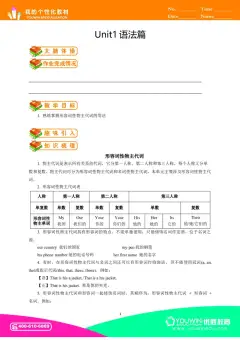
Unit 9 语法篇
__________________________________________________________________________________
__________________________________________________________________________________
理解并掌握过去进行时的用法
过去进行时
一、过去进行时的基本用法
过去进行时表示过去某一时刻或过去某一阶段内正在进行

 或一直进行

 的动作

 。
1. 表示过去某一时刻正在进行的动作。
I was

   doing

   my
    homework

   at this time yesterday.    昨天这个时候我在做作业。
2. 表示某一阶段内正在进行的动作。
I was

   staying

  here from March to May last year.     去年从3 月到5 月我一直呆在这。
二、过去进行时的构成:was/were + doing
否定句、一般疑问句、特殊疑问句
注意:英语中有四类动词一般不用进行时(不用现在进行时和过去进行时)
 (1)表心理状态、情感的动词,如love, hate, like, care, respect, please, prefer, know 等,若用进
行时则词意改变。  I’m forgetting it . (=beginning to forget )
 (2)表存在、状态的动词,如appear, exist, lie, remain, stand, seem 等
 (3)表感觉的动词,如see, hear, feel, smell, sound, taste 等
(4)表一时性的动词,如accept, allow, admit, decide, end, refuse, permit, promise 等。
三、时间状语标志词
2
at that time/moment, (at) this time yesterday (last night/Sunday/week…),
at+点钟+yesterday (last night / Sunday…), when sb. did sth
注意:
1. when 后通常用短
  暂短性动词

 ,while 后通常用持续性动词,因此它所引导的状语从句中,谓语
动词常用进行时态,例如:
When the car exploded I was walking past it.    我路过的时候那个车爆炸了。
  While I was walking past the car it exploded.    当我路过的时候那个车爆炸了。
     2. when 用作并列连词时,主句常用进行时态,从句则用一般过去时,表示主句动作发生的过程
中,另一个意想不到的动作发生了。例如:
   I was walking in the street when someone called me. 我正在街上走时突然有人喊我。
     3. when 作并列连词,表示“(这时)突然”之意时,第一个并列分句用过去进行时,when 引导
的并列分句用一般过去时。例如:
   I was taking a walk when I met him.   我正在散步,突然遇见了他。
We were playing outside when it began to rain. 我们正在外边玩,这时下起雨来了。
四、一般过去时和过去进行时的区别
1. 一般过去式常表示在过去某时发生的动作或存在的状态(包括过去习惯动作),常与一般过
去时连用的时间状语有:
just now, a moment ago, yesterday, last week(month, year), the day before yesterday 及表示过去的时间
状语从句。例如:
I was sixteen yesterday old last

   year.

    我去年16 岁。
  He worked in a factory in    1986

 .    他1986 年在一家工厂工作。
  I met her in the street the
    day

   before

   yesterday

 .   前天我在街上遇见了她。
  He often swam in the river when

   he
    was

   young

 .   他小时候常在河里游泳。
2. 过去进行时表示过去某一段时间或某一时刻正在进行的动作。常与之连用的时间状语有,
at that time/moment, (at) this time yesterday (last night/Sunday/week…),
at 点钟+yesterday (last night / Sunday…),when sb. did sth.等时间状语从句。 例如:
What were you doing at seven p.m. yesterday?   昨天晚上七点你在干什么?
  I first met Mary three

   years

   ago

 . She was working at a radio shop at the time.
  我第一次遇到玛丽是在三年前,当时她在一家无线电商店工作。
  I was cooking when

   she

   knocked

   at    the
    door.

    她敲门时我正在做饭。
3. 一般过去时往往表示某一动作已经完成,而过去进行时却表示动作在持续或未完成。例如:
 I saw you while

   you

   were

   speaking

   to   the teacher. 你在和老师谈话时我看见了你。
注意:有的过去时间状语既可用于一般过去时,也可用于过去进行时,但含义不同。例如:
 She wrote a letter to her friend last night. 她昨晚给她的朋友写了封信。(信写完了)
  She was writing a letter to her friend last night.她昨晚一直在给她的朋友写信。(信不一定写完)
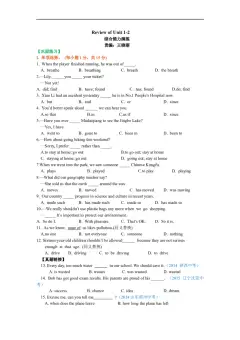
1. I _______the dishes when Mr. Gao visited my home yesterday.
3
  A. wash           B. washed        C. am washing
   D. was washing
2. While I ________dinner last night, Angela called me and asked about homework.
  A. have           B. will have       C. was having        D. am having
3. Marry__________her homework when her mother got home yesterday.
  A. does           B. did            C. is doing           D. was doing
4. I ______ cooked a meal when you _____ me.
  A. cooked, were ringing                   B. was cooking, rang
  C. was cooking, were ringing              D. cooked, rang
5. They _____ a football game from 7 to 9 last night.
         A. were watching       B. watch             C. watched              D. are watching
解析:
1. 考查动词时态。when sb. did sth 表示“当某人做某事的时候”,为过去进行时时间状语标志,
题意为“当高先生昨天到我家时我正在洗碗”。故选D。
2. 考查动词时态。while 当…的时候,常和过去进行时连用。题意“昨晚当我正在吃饭的时候,
Angela 打来电话询问作业。”故选C。
3. 考查动词时态。when sb. did sth 表示“当某人做某事的时候”,为过去进行时时间状语标志,
题意为“昨天当妈妈回到家的时候,Marry 正在做她的家庭作业。”故选D。
4. 考查动词时态。题意为“你给我打电话的时候,我正在做饭”。when 后面跟短暂性动词,当某
人做某事的时候,主句为过去进行时。故选B。
5. 考查动词时态。根据时间状语“from 7 to 9 last night”可得知为过去进行时,题意为“昨天晚上
他们从7 点到9 点一直在看足球赛”,故选A。
答案:
1-5 DCDBA
基础演练
一、用所给词语的适当形式填空
1. I __________ (have) my breakfast at half past six yesterday morning.
2.They_________(go) over her lessons from six to seven last night. John and Peter _________(do)
the same thing.
3. What _____ you _______ (do) at that time?   We __________ (watch) TV.
4. Was your father at home yesterday evening? Yes, he was. He _____________ (listen) to the radio.
5. They ____________(not make) a model ship when I saw him.
二、单项选择
1. ---I called you at 6 o’clock yesterday evening, but nobody answered.
---I'm sorry. I_____________my friend download the movie Kung Fu Panda Ⅱwhen the telephone rang,
4
A. would help
  B. helped
      C. was helping       D. am helping
2. He said he______________ to draw a plane on the blackboard at that time.
  A. tries                B. tried               C. was trying             D. will try
3. I____________ along the road when I saw Peter. So we stopped and had a chat.
A. walked        B. was walking    C. would walk       D. had walked
4. ---What did the teacher say just now?
---Sorry. I didn’t catch it. I ______________something else.
A. think
  B. will think
   C. was thinking      D. had thought
5. Yesterday evening, I was walking along the street_________I suddenly met my maths teacher.
A. when         B. while           C. as               D. before
三、按要求进行句型转换
1. We were having a PE class at four yesterday afternoon.(改为否定句)
We _______ ________ a PE class at four yesterday afternoon.
2. Kate was reviewing her lessons at eight last nigh. (改为一般疑问句,并作肯定、否定回答)
______________________________________________________________________________
3.  He ran in the park .(用at this time yesterday 改写)
______________________________________________________________________________
4.  They were playing computer games at nine last night.( 对划线部分提问)
 ______________________________________________________________________________
5.  I was reading a novel at three yesterday afternoon.( 对划线部分提问)
_______________________________________________________________________________
巩固提高
一、根据中文提示完成句子
1. 你介意把音乐调小点儿声吗?
  Would you_____________________ the music?
2. 我们把用过的书捐赠给慈善机构。
  We_________used books_______________charity.
3. 我相信我们还有更多事情可以做。
  We believe there are ________________________.
4. 我每天骑自行车上班。
  I _________________________every day.
5. 今天天太热,你为什不把夹克脱掉呢?
  It’s too hot today. _________________________your jacket?
二、翻译
1. 昨天这个时候你们英语老师在做什么?她在和一些家长谈话吗?
_________________________________________________________________________
2.当我离开的时候他正在画一幅世界地图。
5
_________________________________________________________________________
3. 当你看见他们的时候他们在干什么?他们在打扫教室。
_________________________________________________________________________
4. 那时二班的学生没在操场上踢足球,他们在打篮球。
_________________________________________________________________________
5. 一天,母亲下班回家的时候,约翰在写给一个朋友写信。
_________________________________________________________________________
答案
基础演练
一、用所给词语的适当形式填空
1. was having    2. were going; were doing   3. were doing; were watching
4. was listening   5. were not making
二、单项选择
1-5 CCBCA
三、按要求进行句型转换
1. were not
2. Was Kate reviewing her lessons at eight last nigh?   Yes, she was.  No, she wasn’t.
3. He was running in the park at this time yesterday.
4. What were they doing at nine last night?
5. What were you doing at three yesterday afternoon?
巩固提高
一、根据中文提示完成句子
1. mind turning down
2.give(gave); to
3. a lot more things we can do
4. ride my bike to work/ go to work by bike
5. Why don’t you take off
二、翻译
1. What was your English teacher doing at this time yesterday? Were she talking with some
parents?
2. He was drawing the map of the world when I left.
3. What were they doing when you saw them?  They were cleaning the classroom.
4. At that time, students of Class Two were not playing football. They were playing basketball.
5. One day, when his mother got home from work, John was writing to a friend.
一、单项选择
1. A lot of trees __________along the street last year.
6
  A. plant         B. planted        C. are planted       D. were planted
2. ---If it _______fine tomorrow, let’s have a picnic in the park.
---Great idea!
  A. is           B. was           C. will be           D. has been
3. ---Your English is so good.
---Thank you. I _______it since I was sevent years old.
  A. learn         B. have learned    C. will learn         D. learned
4. Paul and I ____ tennis yesterday. He did much better than 1.
A. play          B. will play       C. played           D. are playing
5. The air in Beijing is much worse than that in many other cities. We must do_______to protect our
environment.
  A. nothing       B. anything        C. something        D. everything
6. It is reported that people throw ________plastic bags along this street every week.
  A. hundred      B. hundreds        C. hundreds of       D. hundred of
7. --- Where were you at 7:00 last night?
--- I _____ to my mom at home.
A. write
     B. was writing
   C. wrote            D. am writing
8. ---Mr. Lee ______ to a student when I entered the classroom this morning.
--- He is very patient ______ he is young.
A. talking; but    B. talks; though     C. was talking, though  D. talked, however
9. ---What were you doing this time yesterday?
---I ____ on the grass and drawing a picture.
A. sit           B. sat             C. am sitting           D. was sitting
10. The girl with two cats      in the yard when the earthquake happened.
A. was playing   B. is playing        C. are playing          D. were playing
二、完形填空
In 1989 a strong earthquake almost flattened America, and over 300,000 people were injured in less
than four minutes. Though the earthquakes had not ended completely, a father     1

  to the school where
his son was supposed to be, only to find that the building was as flat as a pancake.
After a moment he came to himself and remembered the     2

 he had made to his son: “No matter
what happens,  I’ll always be there for you!” And tears began to fill his eyes. As he looked at the ruins(废
墟),  it looked      3

 ,  but he kept remembering his promise to his son. He rushed there and started digging
in the ruins.
As he was digging, other helpless
    4

 arrived, saying: “It’s too late! They’re all dead! Come
on,  face reality. There's nothing you can do!” To each parent he just replied , “Are you going to help me
now?” No one helped. And then he      5

  to dig for his son,  stone by stone.

    6

 he went on alone because he needed to know for himself: “Is my boy
    7

 or is he dead?”
He dug for 8 hours…12 hours…24 hours…36 hours…Then, in the 38th hour, he pulled back a large stone
7
and heard his son’s    8  .

  He screamed his son’s name, “ARMAND!” He heard back, “Dad! It’s
me,  Dad! I told the other kids not to worry. I told them that if you were alive,   you would save me and
when you saved me, they’d be saved. You promised, ‘No matter what happens,  I’ll always be there for
you!’ You did it, Dad!”
“What’s going on there?” The father asked anxiously.
“There are 14 of us left out of 33, Dad. We’re very frightened, hungry, thirsty and thankful you’re
here.  When the building fell down,  it      9

 a triangle(三角形), and it saved us.”
“Come out, boy!”
“ No,  Dad! Let the other kids come out first, because I know you’ll

 1  0

 me! No matter what
happens,  I know you’ll always be there for me!”
1. A. walked
       B. came
    C. rushed
D. drove
2. A. conversation   B. promise   C. dialogue
    D. encouragement
3. A. hopeless       B. homeless
C. careless       D. endless
4. A. teachers       B. friends    C. parents
    D. students
5. A. stopped       B. continued
C. decided
    D. started
6. A. Seriously
   B. Nervously
C. Dangerously
D. Courageously
7. A. angry
       B. alone
    C. happy        D. alive
8. A. voice
       B. speech    C. laugh        D. suggestion
9. A. saved
       B. made
    C. rose
        D. drew
10. A. get           B. join
    C. see
        D. leave
答案
一、单项选择 1-5 BABCC    6-10 CBCDA
二、完形填空1-5 CBACB    6-10 DDABA
_________________________________________________________________________________
_________________________________________________________________________________
一、单项选择
1. ---Dad, _____ I borrow your camera?        ---Sure. But why?
A. can           B. must
          C. should
       D. need
2. I think man-made wonders are ____________ than natural ones.
A. exciting        B. more exciting     C. most exciting     D. the most exciting
3. Your computer will go wrong if you _____ games too often on it.
A. play           B. plays            C. playing          D. will play
8
4. The story of this book______ how young people love each other.
A. tell            B. tells             C. telling
        D. told
5. ---Will teachers _____ by computers in the future, Tony?
---Maybe yes, maybe no. But I’m sure we’ll learn from both of them.
A. have replaced   B. are replacing
  C. are replaced
    D. be replaced
6. Liu Xiang trained so hard ______ he hurt his foot.
A. when
       B. while
          C. that            D. what
(附:单选1-6,  北京市昌平区2014-2015 学年第一学期初三年级期末质量抽测英语试卷)
二、阅读理解
A
Sometimes people call ours a "throw-away society". That means that we're always throwing away old
things and buying new ones. Many times, you no longer need something, but someone else may just need
to buy one. For example, if your baby doesn't like his toy car any longer, why not give it to a nearly family
who has a little kid? That's one less plastic toy car that they need to buy. It's also one less plastic toy that
needs to be produced, packaged and shipped to the toy store.
Here arc some other ways to help the society save resources (资源):
★Use the other side of the paper so that less trees are cut down.
★Use rechargeable ( 可再充电的) batteries for your electric toys, MP3 players, cell phones, and
cameras.
★ Choose reusable travel cups instead of disposable (一次性的) paper or plastic cups.
★Take your own cloth shopping bags instead of using the plastic bags that are offered when you go
shopping.
★ Drink tap water instead of buying bottled water.
And there are some things you can exchange with your friends, for example, books, toys, even clothes.
It's a way for everyone to get something new without spending any money and without throwing many
things away.
1. What does “throw-away society” mean according to the passage?
A. we don’t like old things.
B. we don’t buy new things.
C. we’re always throwing away old things.
D. we’re always throwing away old things and buying new ones.
2. What do we help the society if we give a second-hand toy car to a neighbor kid?
  A. Produce more new ones                  B. Develop fast
  C. Become richer and richer               D. Save resources
3. Which of the following is NOT true according to the passage?
  A. We should buy things that can be reused in our daily life.
  B. We can exchange some things with others for further use.
  C. It’s good for us to throw away old things and buy new ones.
9
  D. We are supposed to give the things we no longer need to our neighbors.
4. What should we do in our daily life after reading the passage?
  A. Try to throw as few old things as we can.
   B. Use as many disposable things as possible.
  C. Drink bottled water even though there is tap water around.
  D. Buy everything we need instead of exchanging them with others.
B
Ask someone what they have done to help the environment recently and they will almost certainly
mention recycling. Recycling in the home is very important of course. However, being forced to recycle
often means we already have more material than we need. We are dealing with the results of that over-
consumption in the greenest way possible, but it would be far better if we did not need to bring so much
material home in the first place.
Here is an example. In the UK, the total amount of packaging increased by 12% between 1999
and 2005. It now makes up a third of a typical household's waste in the UK. In many supermarkets
nowadays food items are packaged twice with plastic and cardboard.
Too much packaging is doing serious damage to the environment. The UK, for example, is running out
of it for carrying this unnecessary waste. If such packaging is burnt, it gives off green-house gases which
go on to cause the greenhouse effect. Recycling helps, but the process itself uses energy. The solution is not
to produce such items in the first place. Food waste is a serious problem, too. Too many supermarkets
encourage customers to buy more than they need. However, a few of them are coming round to the idea
that this cannot continue, encouraging customers to reuse their plastic bags, for example.
But this is not just about supermarkets. It is about all of us. We have learned to associate packaging
with quality. We have learned to think that something unpackaged is of poor quality. This is especially true
of food.  But it also applies to a wide range of consumer products, which often have far more packaging
than necessary. There are signs of hope.
As more of us recycle, we are beginning to realize just how much unnecessary material we are
collecting. We need to face the waste of our daily life. Although many people have taken action
to recycle, we have a high mountain to climb.
5. What does the underlined phrase "over-consumption" refer to?
A. Using too much packaging.
            B. Recycling too many wastes.
C. Making more products than necessary.        D. Having more material than is needed.
6. The author uses figures in Paragraph 2 to show _____.
A. the tendency of cutting household waste
B. the increase of packaging recycling
C. the rapid growth of supermarkets
D. the fact of packaging overuse
7. According to the text, recycling _____.
A. helps control the greenhouse effect
    B. means burning packaging for energy
C. is the solution to gas shortage
    D. leads to a waste of land
10
8. What can be inferred from Paragraph 4?
A. Unpackaged products are of bad quality.
B. Supermarkets care more about packaging.
C. It is improper to judge quality by packaging.
D. Other products are better packaged than food.
9. What can we learn from the last paragraph?
A. Fighting wastefulness is difficult.
B. Needless material is mostly recycled.
C. People like collecting recyclable waste.
D. The author is proud of their consumer culture.
C
It is an argument that has divided the East and the West for centuries: Are chopsticks better than the
knife and fork, or vice versa? Now the winner may finally be decided, on environmental ground.
Chopsticks are made from a variety of materials, but bamboo and wood chopsticks are more popular.
They are usually cheaper, lower in temperature conduction and provide better sense for holding food.
That’s why almost all disposable(一次性的)chopsticks are made of bamboo or wood. With cutting
down 25 million fully-grown trees a year to make chopsticks, China has ranked number one among the
producers. “We must change our habits and encourage people to take their own chopsticks when eating
out,” said Mr. Bo, the owner of a forestry industry company in China. He even went so far as to suggest
that restaurants should offer metal knives and forks instead. If Mr. Bo’s suggestion is widely accepted, it
would be a dark moment in chopsticks’ 4,000-year history.
Chopsticks were invented in ancient China and later spread around Asia. They are not only used as
eating tools but also used for cooking, stirring the fire and serving food. Koreans sometimes use metal
chopsticks because of their love of barbecue(烧烤). Chinese chopsticks are longer than Korean and
Japanese chopsticks in order to reach the dishes in the center of the table. There are 1.4 billion people
using 80 billion pairs of disposable chopsticks in China every year. However, the most widespread use of
disposable chopsticks is in Japan. Around a total of 24 billion pairs are used in Japan each year, which
means each Japanese uses almost 200 pairs yearly. However, most of its disposable chopsticks have been
imported(进口)from China, up to over 90%.
Today, China has to accept the truth that its forests can no longer provide enough chopsticks to feed
Asian’s table habit. China is now the world’s largest importer of wood and even imports chopsticks from
America. An American company said that the state’s native sweet gum and poplar wood would be
perfectly used to make chopsticks. These materials do not need to be lightened with chemicals or bleach
(漂白粉). The healthy materials and fairly reasonable prices of the products are appealing to Asian
customers. More and more Asians start to use American-made chopsticks at their tables.
11
Although the U.S. has a huge amount of wood, reducing the number of trees that are cut down in Asia,
changing the table habit of using disposable chopsticks still seems to be a wiser choice for chopsticks-using
countries.
10. According to Paragraph 2, Mr. Bo’s advice is that Chinese should ________.
A. use metal chopsticks instead of wooden ones
B. plant more trees and produce fewer chopsticks
C. form the habit of taking their own chopsticks when eating out
D. change their habits and begin to use knives and forks at home
11. What do we know about chopsticks in Asia?
A. Koreans mainly use chopsticks to cook food over a fire.
B. Most disposable chopsticks in Japan are made in China.
  C. The most disposable chopsticks are used in Japan yearly.
  D. Chinese use the shortest chopsticks to take and serve food.
12. The underlined word “appealing” in Paragraph 4 probably means ______.
  A. normal
 B. necessary
    C. attractive
  D. surprising
13. What’s the best title for the passage?
  A. Time to Change the Materials for Chopsticks    B. Time to Cut Down on Disposable Chopsticks
  C. Time to Import Disposable Chopsticks         D. Time to Give Up Using Chopsticks
答案
一、单项选择   1-6 ABABDC
二、阅读理解   (A) 1-4 DDCA
(B) 5-9 DDACA
(C) 10-13 CBCB
课程顾问签字:                        教学主管签字: