核心词汇
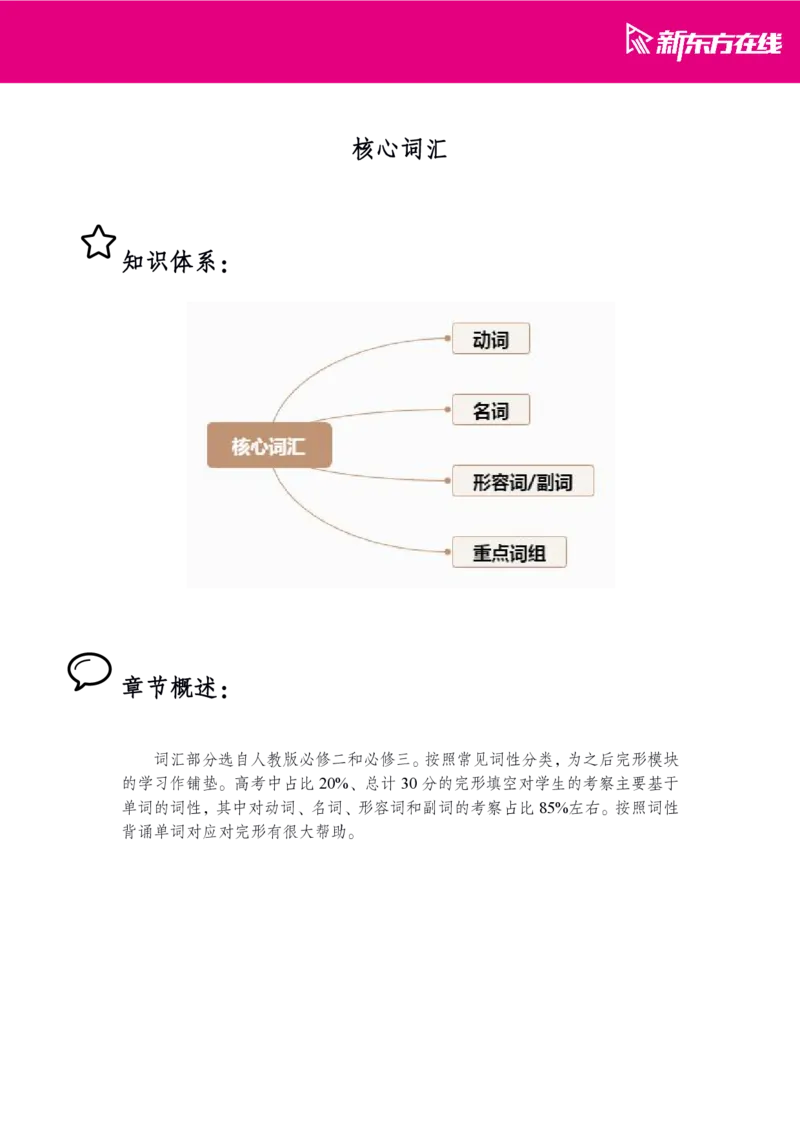
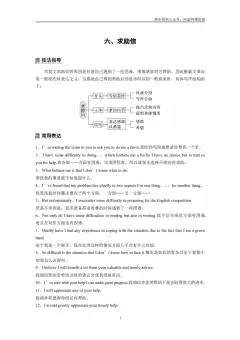
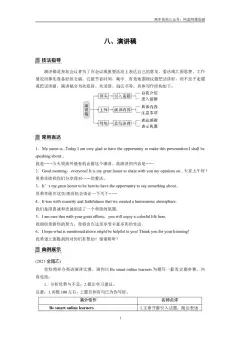
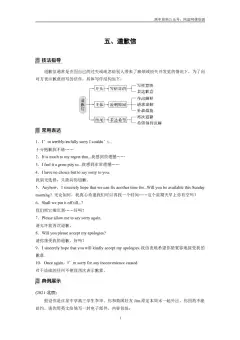
知识体系:
章节概述:
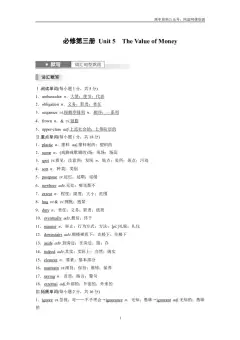
词汇部分选自人教版必修二和必修三。按照常见词性分类,为之后完形模块
的学习作铺垫。高考中占比20%、总计30 分的完形填空对学生的考察主要基于
单词的词性,其中对动词、名词、形容词和副词的考察占比85%左右。按照词性
背诵单词对应对完形有很大帮助。
知识清单:
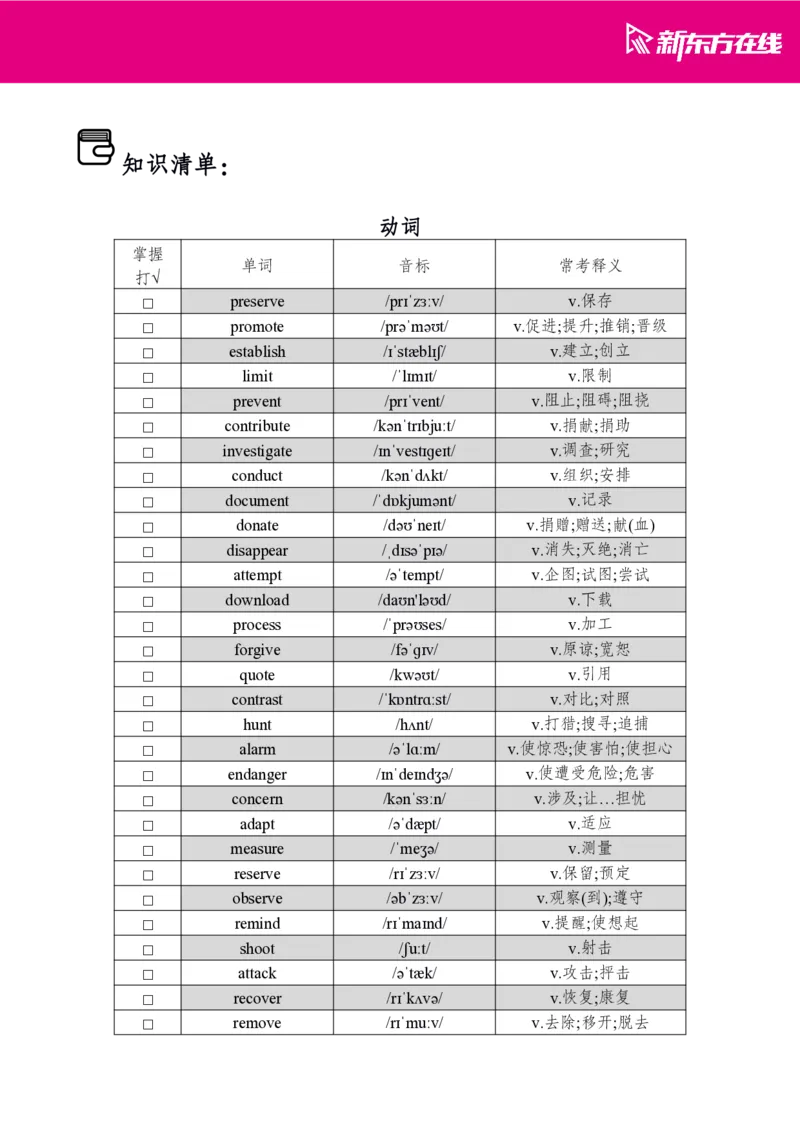
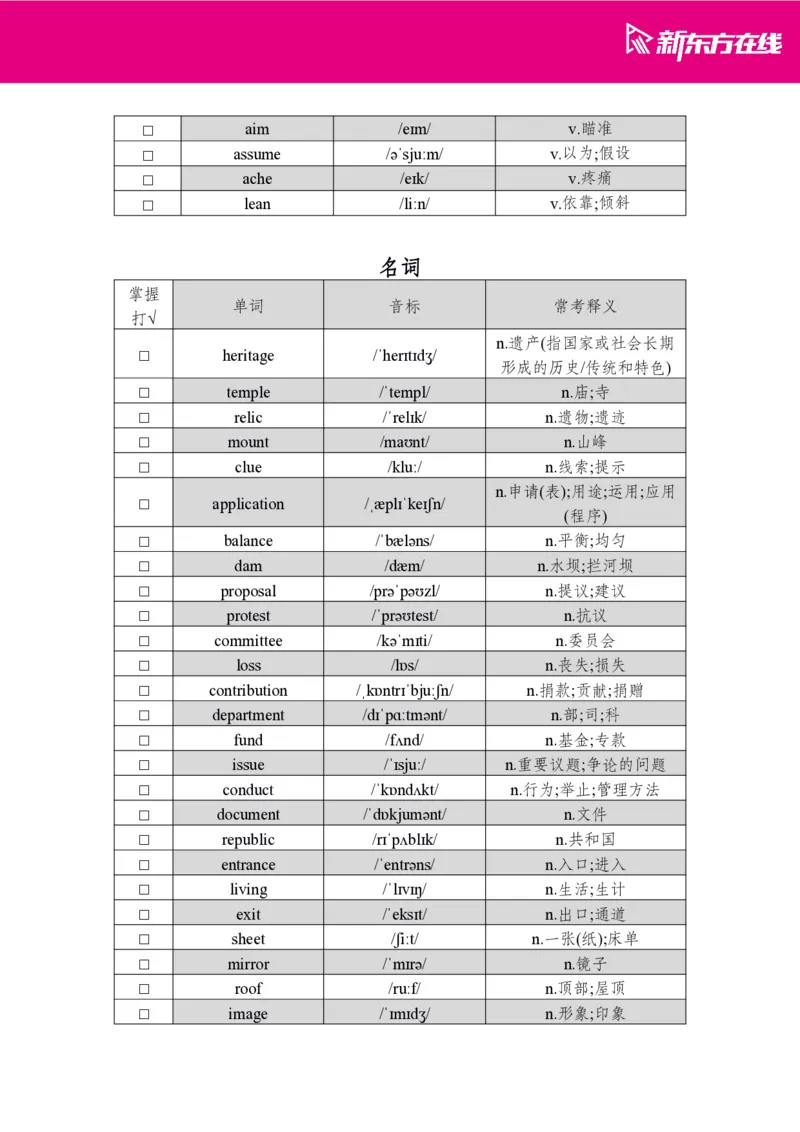
动词
掌握
打√
单词
音标
常考释义
☐
preserve
/prɪˈzɜːv/
v.保存
☐
promote
/prəˈməʊt/
v.促进;提升;推销;晋级
☐
establish
/ɪˈstæblɪʃ/
v.建立;创立
☐
limit
/ˈlɪmɪt/
v.限制
☐
prevent
/prɪˈvent/
v.阻止;阻碍;阻挠
☐
contribute
/kənˈtrɪbjuːt/
v.捐献;捐助
☐
investigate
/ɪnˈvestɪɡeɪt/
v.调查;研究
☐
conduct
/kənˈdʌkt/
v.组织;安排
☐
document
/ˈdɒkjumənt/
v.记录
☐
donate
/dəʊˈneɪt/
v.捐贈;赠送;献(血)
☐
disappear
/ˌdɪsəˈpɪə/
v.消失;灭绝;消亡
☐
attempt
/əˈtempt/
v.企图;试图;尝试
☐
download
/daʊn'ləʊd/
v.下载
☐
process
/ˈprəʊses/
v.加工
☐
forgive
/fəˈɡɪv/
v.原谅;宽恕
☐
quote
/kwəʊt/
v.引用
☐
contrast
/ˈkɒntrɑːst/
v.对比;对照
☐
hunt
/hʌnt/
v.打猎;搜寻;追捕
☐
alarm
/əˈlɑːm/
v.使惊恐;使害怕;使担心
☐
endanger
/ɪnˈdeɪndʒə/
v.使遭受危险;危害
☐
concern
/kənˈsɜːn/
v.涉及;让…担忧
☐
adapt
/əˈdæpt/
v.适应
☐
measure
/ˈmeʒə/
v.测量
☐
reserve
/rɪˈzɜːv/
v.保留;预定
☐
observe
/əbˈzɜːv/
v.观察(到);遵守
☐
remind
/rɪˈmaɪnd/
v.提醒;使想起
☐
shoot
/ʃuːt/
v.射击
☐
attack
/əˈtæk/
v.攻击;抨击
☐
recover
/rɪˈkʌvə/
v.恢复;康复
☐
remove
/rɪˈmuːv/
v.去除;移开;脱去
☐
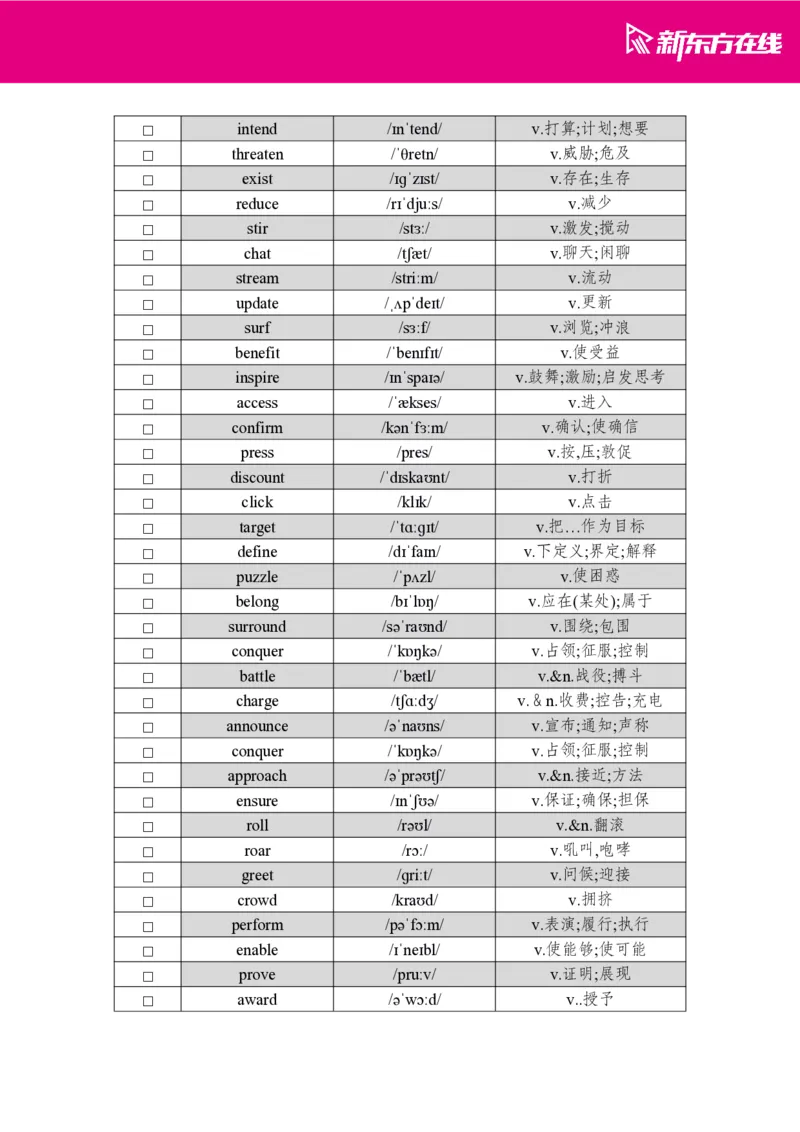
intend
/ɪnˈtend/
v.打算;计划;想要
☐
threaten
/ˈθretn/
v.威胁;危及
☐
exist
/ɪɡˈzɪst/
v.存在;生存
☐
reduce
/rɪˈdjuːs/
v.减少
☐
stir
/stɜː/
v.激发;搅动
☐
chat
/tʃæt/
v.聊天;闲聊
☐
stream
/striːm/
v.流动
☐
update
/ˌʌpˈdeɪt/
v.更新
☐
surf
/sɜːf/
v.浏览;冲浪
☐
benefit
/ˈbenɪfɪt/
v.使受益
☐
inspire
/ɪnˈspaɪə/
v.鼓舞;激励;启发思考
☐
access
/ˈækses/
v.进入
☐
confirm
/kənˈfɜːm/
v.确认;使确信
☐
press
/pres/
v.按,压;敦促
☐
discount
/ˈdɪskaʊnt/
v.打折
☐
click
/klɪk/
v.点击
☐
target
/ˈtɑːɡɪt/
v.把…作为目标
☐
define
/dɪˈfaɪn/
v.下定义;界定;解释
☐
puzzle
/ˈpʌzl/
v.使困惑
☐
belong
/bɪˈlɒŋ/
v.应在(某处);属于
☐
surround
/səˈraʊnd/
v.围绕;包围
☐
conquer
/ˈkɒŋkə/
v.占领;征服;控制
☐
battle
/ˈbætl/
v.&n.战役;搏斗
☐
charge
/tʃɑːdʒ/
v.&n.收费;控告;充电
☐
announce
/əˈnaʊns/
v.宣布;通知;声称
☐
conquer
/ˈkɒŋkə/
v.占领;征服;控制
☐
approach
/əˈprəʊtʃ/
v.&n.接近;方法
☐
ensure
/ɪnˈʃʊə/
v.保证;确保;担保
☐
roll
/rəʊl/
v.&n.翻滚
☐
roar
/rɔː/
v.吼叫,咆哮
☐
greet
/ɡriːt/
v.问候;迎接
☐
crowd
/kraʊd/
v.拥挤
☐
perform
/pəˈfɔːm/
v.表演;履行;执行
☐
enable
/ɪˈneɪbl/
v.使能够;使可能
☐
prove
/pruːv/
v.证明;展现
☐
award
/əˈwɔːd/
v..授予
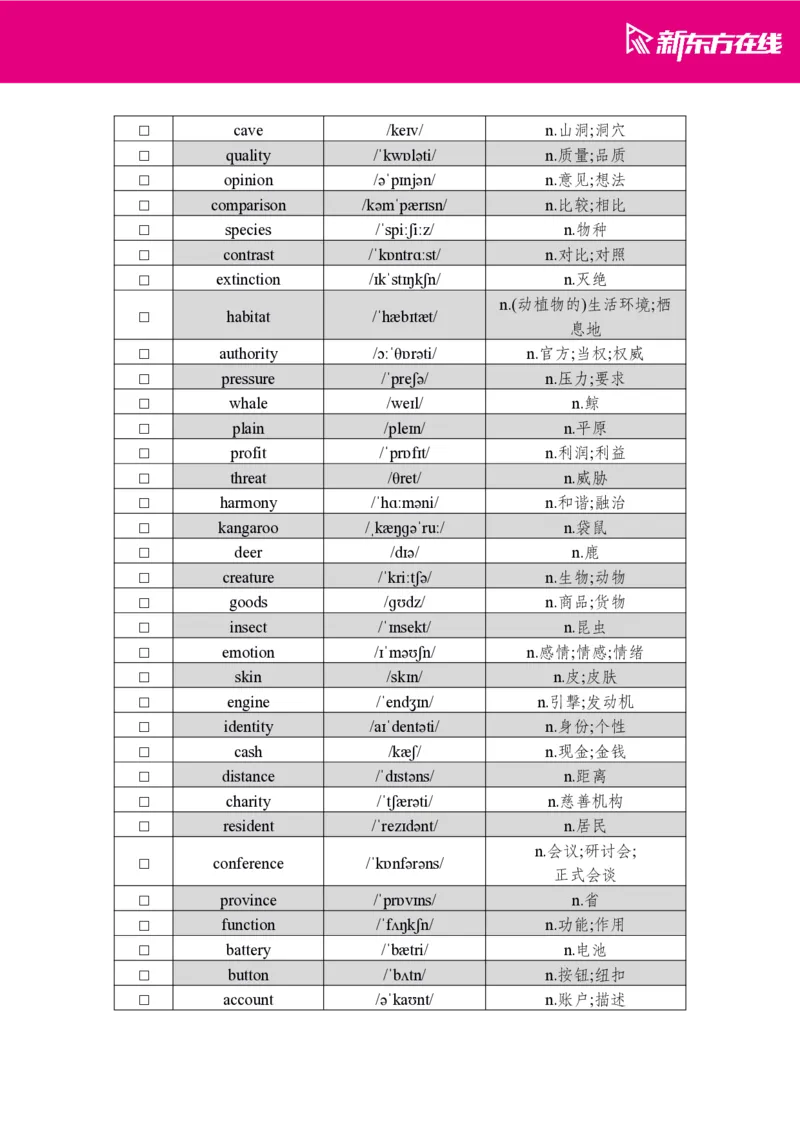
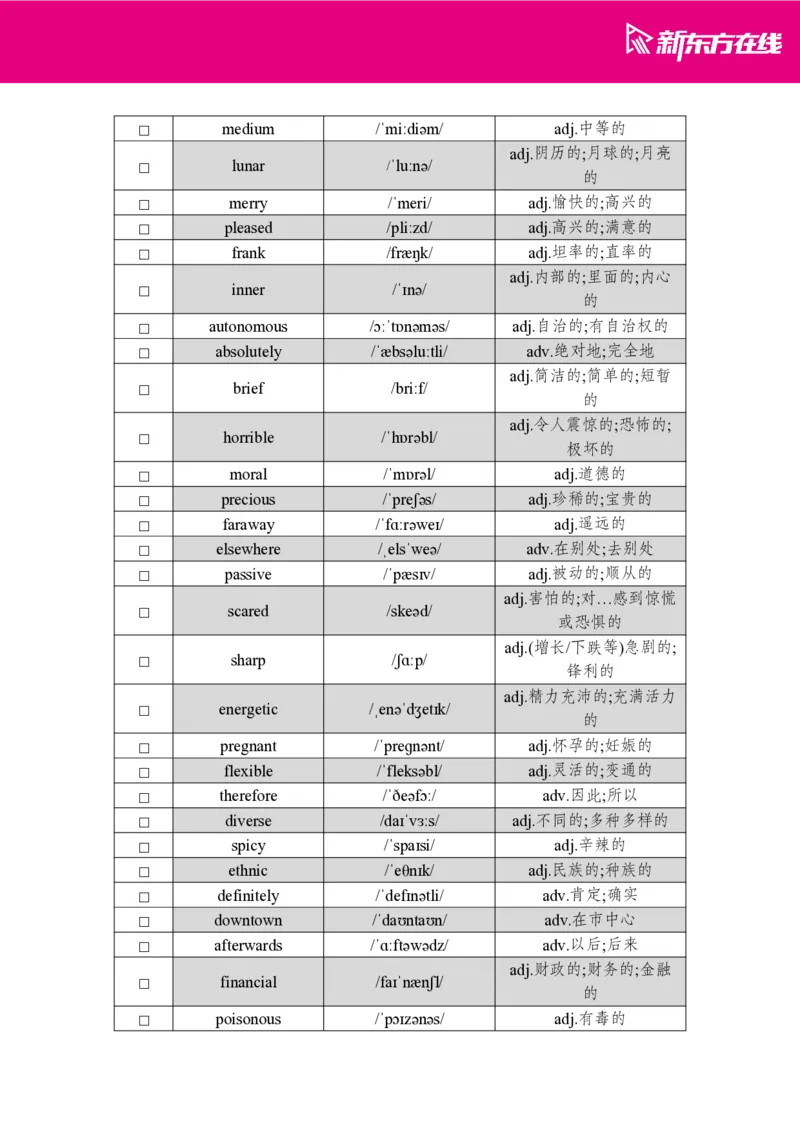
名词
☐
aim
/eɪm/
v.瞄准
☐
assume
/əˈsjuːm/
v.以为;假设
☐
ache
/eɪk/
v.疼痛
☐
lean
/liːn/
v.依靠;倾斜
掌握
打√
单词
音标
常考释义
☐
heritage
/ˈherɪtɪdʒ/
n.遗产(指国家或社会长期
形成的历史/传统和特色)
☐
temple
/ˈtempl/
n.庙;寺
☐
relic
/ˈrelɪk/
n.遗物;遗迹
☐
mount
/maʊnt/
n.山峰
☐
clue
/kluː/
n.线索;提示
☐
application
/ˌæplɪˈkeɪʃn/
n.申请(表);用途;运用;应用
(程序)
☐
balance
/ˈbæləns/
n.平衡;均匀
☐
dam
/dæm/
n.水坝;拦河坝
☐
proposal
/prəˈpəʊzl/
n.提议;建议
☐
protest
/ˈprəʊtest/
n.抗议
☐
committee
/kəˈmɪti/
n.委员会
☐
loss
/lɒs/
n.丧失;损失
☐
contribution
/ˌkɒntrɪˈbjuːʃn/
n.捐款;贡献;捐赠
☐
department
/dɪˈpɑːtmənt/
n.部;司;科
☐
fund
/fʌnd/
n.基金;专款
☐
issue
/ˈɪsjuː/
n.重要议题;争论的问题
☐
conduct
/ˈkɒndʌkt/
n.行为;举止;管理方法
☐
document
/ˈdɒkjumənt/
n.文件
☐
republic
/rɪˈpʌblɪk/
n.共和国
☐
entrance
/ˈentrəns/
n.入口;进入
☐
living
/ˈlɪvɪŋ/
n.生活;生计
☐
exit
/ˈeksɪt/
n.出口;通道
☐
sheet
/ʃiːt/
n.一张(纸);床单
☐
mirror
/ˈmɪrə/
n.镜子
☐
roof
/ruːf/
n.顶部;屋顶
☐
image
/ˈɪmɪdʒ/
n.形象;印象
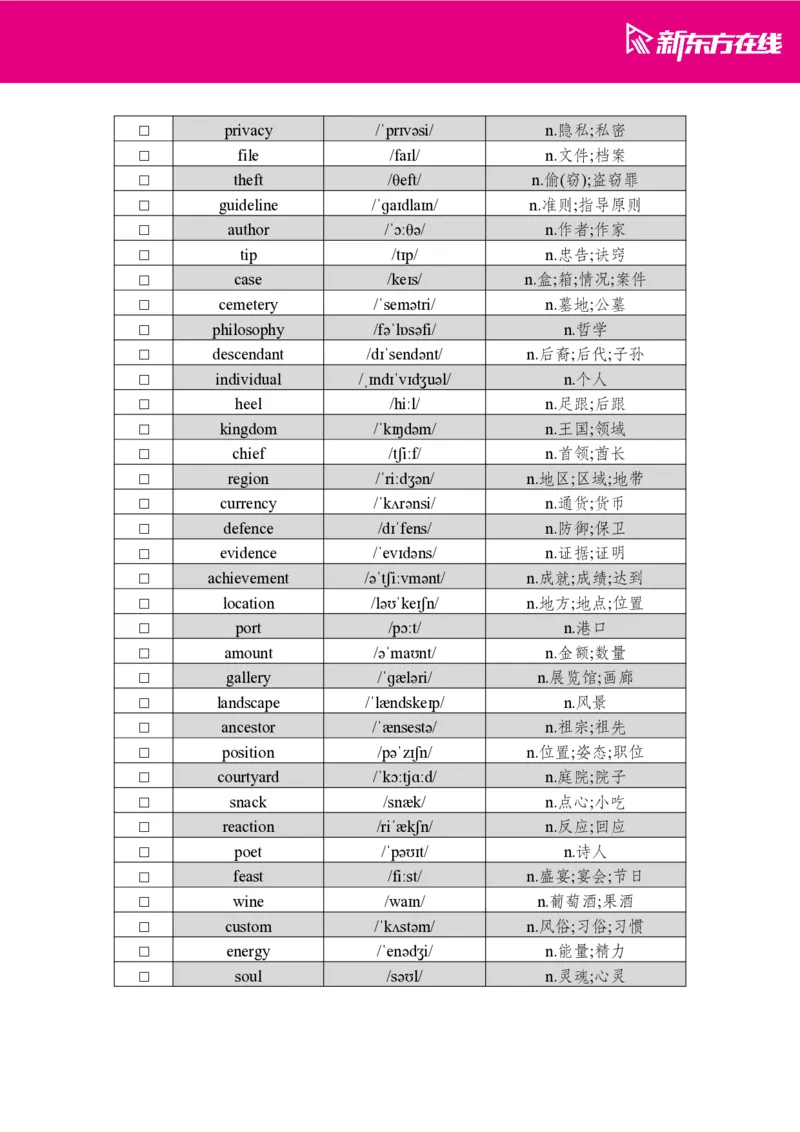
☐
cave
/keɪv/
n.山洞;洞穴
☐
quality
/ˈkwɒləti/
n.质量;品质
☐
opinion
/əˈpɪnjən/
n.意见;想法
☐
comparison
/kəmˈpærɪsn/
n.比较;相比
☐
species
/ˈspiːʃiːz/
n.物种
☐
contrast
/ˈkɒntrɑːst/
n.对比;对照
☐
extinction
/ɪkˈstɪŋkʃn/
n.灭绝
☐
habitat
/ˈhæbɪtæt/
n.(动植物的)生活环境;栖
息地
☐
authority
/ɔːˈθɒrəti/
n.官方;当权;权威
☐
pressure
/ˈpreʃə/
n.压力;要求
☐
whale
/weɪl/
n.鲸
☐
plain
/pleɪn/
n.平原
☐
profit
/ˈprɒfɪt/
n.利润;利益
☐
threat
/θret/
n.威胁
☐
harmony
/ˈhɑːməni/
n.和谐;融治
☐
kangaroo
/ˌkæŋɡəˈruː/
n.袋鼠
☐
deer
/dɪə/
n.鹿
☐
creature
/ˈkriːtʃə/
n.生物;动物
☐
goods
/ɡʊdz/
n.商品;货物
☐
insect
/ˈɪnsekt/
n.昆虫
☐
emotion
/ɪˈməʊʃn/
n.感情;情感;情绪
☐
skin
/skɪn/
n.皮;皮肤
☐
engine
/ˈendʒɪn/
n.引撃;发动机
☐
identity
/aɪˈdentəti/
n.身份;个性
☐
cash
/kæʃ/
n.现金;金钱
☐
distance
/ˈdɪstəns/
n.距离
☐
charity
/ˈtʃærəti/
n.慈善机构
☐
resident
/ˈrezɪdənt/
n.居民
☐
conference
/ˈkɒnfərəns/
n.会议;研讨会;
正式会谈
☐
province
/ˈprɒvɪns/
n.省
☐
function
/ˈfʌŋkʃn/
n.功能;作用
☐
battery
/ˈbætri/
n.电池
☐
button
/ˈbʌtn/
n.按钮;纽扣
☐
account
/əˈkaʊnt/
n.账户;描述
☐
privacy
/ˈprɪvəsi/
n.隐私;私密
☐
file
/faɪl/
n.文件;档案
☐
theft
/θeft/
n.偷(窃);盗窃罪
☐
guideline
/ˈɡaɪdlaɪn/
n.准则;指导原则
☐
author
/ˈɔːθə/
n.作者;作家
☐
tip
/tɪp/
n.忠告;诀窍
☐
case
/keɪs/
n.盒;箱;情况;案件
☐
cemetery
/ˈsemətri/
n.墓地;公墓
☐
philosophy
/fəˈlɒsəfi/
n.哲学
☐
descendant
/dɪˈsendənt/
n.后裔;后代;子孙
☐
individual
/ˌɪndɪˈvɪdʒuəl/
n.个人
☐
heel
/hiːl/
n.足跟;后跟
☐
kingdom
/ˈkɪŋdəm/
n.王国;领域
☐
chief
/tʃiːf/
n.首领;酋长
☐
region
/ˈriːdʒən/
n.地区;区域;地带
☐
currency
/ˈkʌrənsi/
n.通货;货币
☐
defence
/dɪˈfens/
n.防御;保卫
☐
evidence
/ˈevɪdəns/
n.证据;证明
☐
achievement
/əˈtʃiːvmənt/
n.成就;成绩;达到
☐
location
/ləʊˈkeɪʃn/
n.地方;地点;位置
☐
port
/pɔːt/
n.港口
☐
amount
/əˈmaʊnt/
n.金额;数量
☐
gallery
/ˈɡæləri/
n.展览馆;画廊
☐
landscape
/ˈlændskeɪp/
n.风景
☐
ancestor
/ˈænsestə/
n.祖宗;祖先
☐
position
/pəˈzɪʃn/
n.位置;姿态;职位
☐
courtyard
/ˈkɔːtjɑːd/
n.庭院;院子
☐
snack
/snæk/
n.点心;小吃
☐
reaction
/riˈækʃn/
n.反应;回应
☐
poet
/ˈpəʊɪt/
n.诗人
☐
feast
/fiːst/
n.盛宴;宴会;节日
☐
wine
/waɪn/
n.葡萄酒;果酒
☐
custom
/ˈkʌstəm/
n.风俗;习俗;习惯
☐
energy
/ˈenədʒi/
n.能量;精力
☐
soul
/səʊl/
n.灵魂;心灵
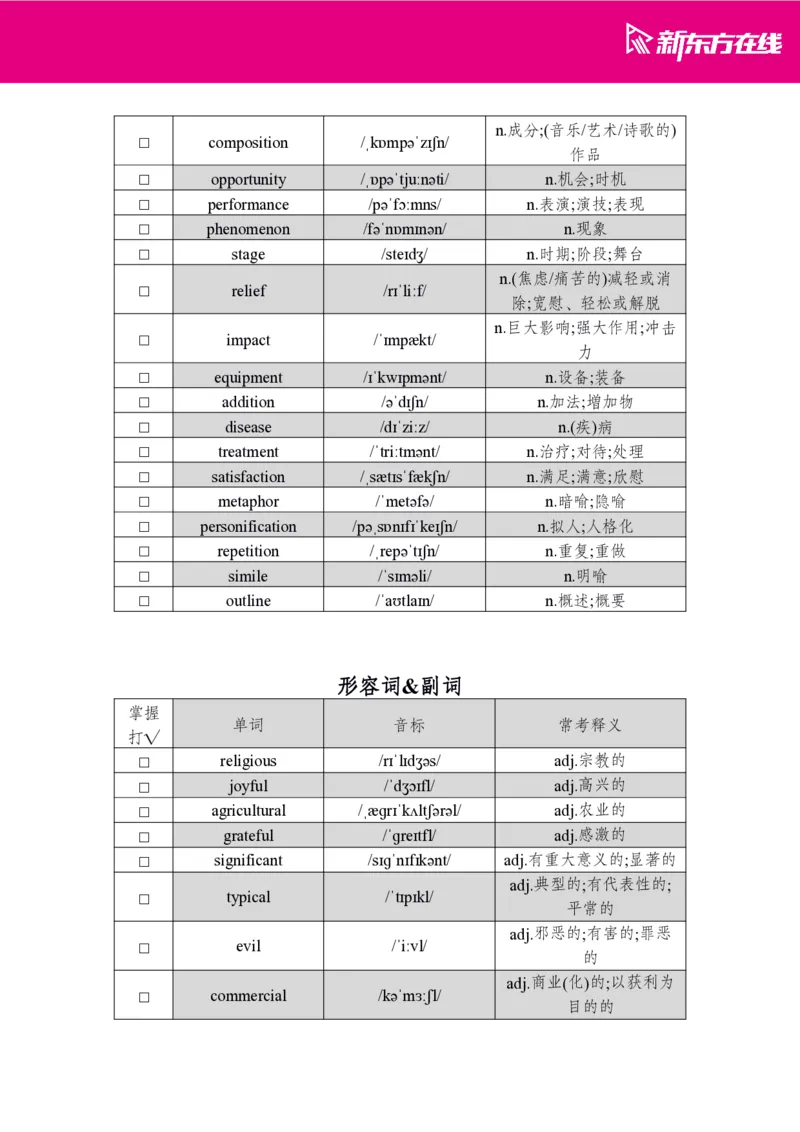
形容词&副词
☐
composition
/ˌkɒmpəˈzɪʃn/
n.成分;(音乐/艺术/诗歌的)
作品
☐
opportunity
/ˌɒpəˈtjuːnəti/
n.机会;时机
☐
performance
/pəˈfɔːmns/
n.表演;演技;表现
☐
phenomenon
/fəˈnɒmɪnən/
n.现象
☐
stage
/steɪdʒ/
n.时期;阶段;舞台
☐
relief
/rɪˈliːf/
n.(焦虑/痛苦的)减轻或消
除;宽慰、轻松或解脱
☐
impact
/ˈɪmpækt/
n.巨大影响;强大作用;冲击
力
☐
equipment
/ɪˈkwɪpmənt/
n.设备;装备
☐
addition
/əˈdɪʃn/
n.加法;増加物
☐
disease
/dɪˈziːz/
n.(疾)病
☐
treatment
/ˈtriːtmənt/
n.治疗;对待;处理
☐
satisfaction
/ˌsætɪsˈfækʃn/
n.满足;满意;欣慰
☐
metaphor
/ˈmetəfə/
n.暗喻;隐喻
☐
personification
/pəˌsɒnɪfɪˈkeɪʃn/
n.拟人;人格化
☐
repetition
/ˌrepəˈtɪʃn/
n.重复;重做
☐
simile
/ˈsɪməli/
n.明喻
☐
outline
/ˈaʊtlaɪn/
n.概述;概要
掌握
打√
单词
音标
常考释义
☐
religious
/rɪˈlɪdʒəs/
adj.宗教的
☐
joyful
/ˈdʒɔɪfl/
adj.高兴的
☐
agricultural
/ˌæɡrɪˈkʌltʃərəl/
adj.农业的
☐
grateful
/ˈɡreɪtfl/
adj.感激的
☐
significant
/sɪɡˈnɪfɪkənt/
adj.有重大意义的;显著的
☐
typical
/ˈtɪpɪkl/
adj.典型的;有代表性的;
平常的
☐
evil
/ˈiːvl/
adj.邪恶的;有害的;罪恶
的
☐
commercial
/kəˈmɜːʃl/
adj.商业(化)的;以获利为
目的的
☐
medium
/ˈmiːdiəm/
adj.中等的
☐
lunar
/ˈluːnə/
adj.阴历的;月球的;月亮
的
☐
merry
/ˈmeri/
adj.愉快的;高兴的
☐
pleased
/pliːzd/
adj.高兴的;满意的
☐
frank
/fræŋk/
adj.坦率的;直率的
☐
inner
/ˈɪnə/
adj.内部的;里面的;内心
的
☐
autonomous
/ɔːˈtɒnəməs/
adj.自治的;有自治权的
☐
absolutely
/ˈæbsəluːtli/
adv.绝对地;完全地
☐
brief
/briːf/
adj.简洁的;简单的;短暂
的
☐
horrible
/ˈhɒrəbl/
adj.令人震惊的;恐怖的;
极坏的
☐
moral
/ˈmɒrəl/
adj.道德的
☐
precious
/ˈpreʃəs/
adj.珍稀的;宝贵的
☐
faraway
/ˈfɑːrəweɪ/
adj.遥远的
☐
elsewhere
/ˌelsˈweə/
adv.在别处;去别处
☐
passive
/ˈpæsɪv/
adj.被动的;顺从的
☐
scared
/skeəd/
adj.害怕的;对…感到惊慌
或恐惧的
☐
sharp
/ʃɑːp/
adj.(増长/下跌等)急剧的;
锋利的
☐
energetic
/ˌenəˈdʒetɪk/
adj.精力充沛的;充满活力
的
☐
pregnant
/ˈpreɡnənt/
adj.怀孕的;妊娠的
☐
flexible
/ˈfleksəbl/
adj.灵活的;变通的
☐
therefore
/ˈðeəfɔː/
adv.因此;所以
☐
diverse
/daɪˈvɜːs/
adj.不同的;多种多样的
☐
spicy
/ˈspaɪsi/
adj.辛辣的
☐
ethnic
/ˈeθnɪk/
adj.民族的;种族的
☐
definitely
/ˈdefɪnətli/
adv.肯定;确实
☐
downtown
/ˈdaʊntaʊn/
adv.在市中心
☐
afterwards
/ˈɑːftəwədz/
adv.以后;后来
☐
financial
/faɪˈnænʃl/
adj.财政的;财务的;金融
的
☐
poisonous
/ˈpɔɪzənəs/
adj.有毒的
☐
super
/ˈsuːpə/
adj.顶好的;超级的
☐
mild
/maɪld/
adj.温和的;和善的;轻微
的
☐
herbal
/ˈhɜːbl/
adj.药草的;香草的
☐
neat
/niːt/
adj.极好的;整洁的;整齐
的
☐
mental
/ˈmentl/
adj.精神的;思想的
☐
intelligent
/ɪnˈtelɪdʒənt/
adj.智慧的;聪明的
☐
determined
/dɪˈtɜːmɪnd/
adj.有决心的;意志坚定的
☐
giant
/ˈdʒaɪənt/
adj.巨大的;伟大的
☐
disappointed
/ˌdɪsəˈpɔɪntɪd/
adj.失望的;沮丧的
☐
ongoing
/ˈɒnɡəʊɪŋ/
adj.持续存在的;仍在进行
的;不停发展的
☐
independently
/ˌɪndɪˈpendəntli/
adv.独立地;自立地
☐
otherwise
/ˈʌðəwaɪz/
adv.否则;要不然
☐
solar
/ˈsəʊlə/
adj.太阳的;太阳能的
☐
current
/ˈkʌrənt/
adj.当前的;现在的
☐
sufficient
/səˈfɪʃnt/
adj.足够的;充足的
☐
keen
/kiːn/
adj.热衷的;渴望的
☐
regular
/ˈreɡjələ(r)/
adj.定期的;经常的;正常
的
☐
limited
/ˈlɪmɪtɪd/
adj.有限的
☐
closing
/ˈkləʊzɪŋ/
adj.结尾的
重点词组
掌握打√
单词
常考释义
☐
dress (sb.) up
给…穿衣;装扮
☐
after all
毕竟;别忘了
☐
range from…to…
包括从…到…之间
☐
fade away
逐新消失;变得虚弱
☐
in spite of
不管;尽管
☐
take advantage of
利用;欺骗;占…的便宜
☐
have sth. in common
(兴趣/想法等)相同
☐
to be frank
坦白说;坦率地说
☐
go off
爆炸;走火;离开
☐
except for
除…之外
☐
set off
出发;动身;启程
☐
carry sb. through sth.
帮助某人渡过难关
☐
tend to do sth.
易于做某事;往往会
☐
first aid
急救
☐
pass away
去世
☐
in memory of
作为对…的纪念
☐
trip over
被…绊倒
☐
in tears
流着泪;含着泪
☐
in despair
处于绝望中
☐
a great deal of
大量
重点语法
知识体系:
章节概述:
语法部分主要选取高一年级下学期重点语法内容。上学期时态部分我们讲到
一般式、进行式,这学期完成剩余的完成式。除了时态部分,这学期的语法部分
还有被动语态、情态动词以及名词性从句。完成式旨在让学生了解初高中语法内
容的差异和重难点,并且高考语法填空中对动词形式的考察占比40%左右,是所
有词性中考察最多的部分,其中很重要一部分是围绕时态进行考察的。关于情态
动词,由于中文没有“情态动词”这一概念,“情态动词”也就成为很多学生语
法学习的难点。但实际上情态动词还是比较好掌握,只要理解“情态动词”是与
实义动词搭配使用的辅助动词,能够表达猜测、埋怨、后悔、要求、许可、惊讶、
祝福等等非常丰富的情绪和态度就可以了。最后,名词性从句作为三大从句之一,
也是高中语法的基础内容与重点内容,了解相关语法点对后面更综合性的学习大
有裨益。
知识清单:
动词时态
一、动词时态之完成式
1. 现在完成时
(1) 定义:过去发生或完成的动作或状态,其结果和现在有联系,可表示持续到
现在的动作或状态。
(2) 形式:have/has done
(3) 用法:
①表动作发生在过去,结果影响到现在
We’ve done a lot of work on it, but we haven’t finished yet.
②表动作从过去持续到现在并可能继续
The old man has lived here for more than twenty years.
③表示过去的某一动作对现在的影响
It is the first time that I have seen the movie.
(4) 时间状语标志词:already, never, yet, still, just, before, recently, lately 等。
现在完成时与一般过去时的区别:
它们所表示的动作都发生在过去,但二者又有区别:一般过去时表示过去某
个时间发生的事、存在的状态或经常发生的动作,侧重点在于陈述一件过去的事
情,与现在没有关系;现在完成时表示与现在有关系的发生在过去的动作,它不
与表示过去的时间状语(如yesterday, last week, a moment ago 等)连用。
2. 过去完成时
(1) 定义:表示过去某一时间或动作以前已经发生或完成了的动作对过去的某一
点造成的某种影响或是结果;也用在另一个过去动作之前就已经完成了的动作。
(2) 形式:had done
(3) 用法:
①表动作在过去的某一时间/动作前已完成
Most of the guests had left when he arrived at the party.
②表过去之前的某一个动作对过去的影响
It was the fastest I’d seen him move since 1964.
(4) 时间状语标志词:常与过去完成时连用的时间状语:
by, before, when, for, since 等。
过去完成时与一般过去时的区别:
一般过去时仅仅表示过去发生的动作或状态。
如:She played basketball yesterday.
She was a teacher ten years ago.
过去完成时侧重表示一个动作在过去某个动作之前已经发生完成了,侧重于
“过去的过去”是一个相对时态。
如:When I got to the station, the bus had already left.
3. 现在完成进行时
(1) 定义:表示动作从过去某一时间开始一直持续到现在,此动作可能刚终止,
也可能还在进行。
(2) 形式:have/has been doing(延续性动词)
(3) 用法:
①表示从过去某时开始一直持续到现在的动作,并且还将持续下去
The Chinese have been making paper for two thousand years.
中国有2000 年的造纸历史。(动作还将继续下去)
I have been learning English since three years ago.
三年以来我一直在学英语。(动作还将继续下去)
②表示在说话时刻之前到现在正在进行的动作
We have been waiting for you for half an hour.
我们已经等你半个钟头了。(人还没到,如同在电话里说的,还会继续等)
③有些现在完成进行时的句子等同于现在完成时的句子
They have been living in this city for ten years.
They have lived in this city for ten years.
他们在这个城市已经住了10 年了。(动作还将继续下去)
I have been working here for five years.
I have worked here for five years.
我在这里已经工作五年了。(动作还将继续下去)
④大多数现在完成进行时的句子不等同于现在完成时的句子
I have been writing a book.
我一直在写一本书。(动作还将继续下去)
I have written a book.
我已经写了一本书。(动作已经完成)
They have been building a bridge.
他们一直在造一座桥。(动作还将继续下去)
They have built a bridge.他们造了一座桥。(动作已经完成)
⑤表示状态的动词不能用于现在完成进行时
·I have known him for years. (√)我认识他已经好几年了。
·I have been knowing...(×)
这类不能用于现在完成进行时的动词还有:love 爱,like 喜欢,hate 讨厌,
think 想等等。
(4) 时间状语标志词:since..., for +时间段
现在完成进行时与现在完成时的区别:
①现在完成进行时的动作不一定已经完成,很可能持续下去,而现在完成时一
般表示动作已经完成。
You’ve been designing solar racing cars for a long time.
I’ve designed five or six different cars so far.
②现在完成进行时往往表示动作在重复,而现在完成时一般不表示动作的重复。
I’ve been taking part in races for about four years.
How many races have you taken part in?
③现在完成进行时与所有进行时态一样带有感情色彩,可使表达生动,而现在
完成时往往仅表示一个事实、影响或结果,不带感情色彩。
What have you been doing? You look fed up!
What have you done?
二、动词语态之被动语态
1. 被动语态的形式
一般时
一般现在时被动
am/is/are + done
一般过去时被动
was/were + done
used to be done
一般将来时被动
will + be done
be going to be done
过去将来时被动
would be done
进行时
现在进行时被动
am/is/are + being done
过去进行时被动
was/were + being done
完成时
现在完成时被动
have/has been done
过去完成时被动
had been done
2. 易错点知识
(1)不能用于被动语态的动词
①及物动词有被动语态,不及物动词没有被动语态。
②少数及物动词如have, leave, cost, enter, reach, suit, benefit, lack, fit, wish 等,以
及动词短语take place, lose heart, break out, belong to, consist of, happen to 等不能
用于被动语态。
(2)主动表被动
①系动词taste, feel, look, smell, sound, prove 等与adj.连用,形成主系表结构。
This piece of music sounds gentle.
The water felt cool when I jumped into the pool for morning exercise.
②表示主语的某种属性特征的动词。如dry, lock, cut, clean, sell, wash, write, read,
wear, play 等作不及物动词与副词well, easily 等连用。
Food can keep fresh in a fridge.
The knife cuts well.
③动词need/want/require/worth 等。
The library needs cleaning, but it’ll have to wait until Sunday.
④某些动词open, shut, start, act, move 等作不及物动词与can’t, won’t, doesn’t 等
连用。
The library doesn’t open on Sunday.
The door won’t shut.
情态动词
一、概述
常见的情态动词有:can, could, may, might, must, need not, shall/will,
should/ought to。情态动词用来表达:推测,能力,建议,允许,命令/强烈建议,
可能性,请求等。
例:
Max’s father is a mechanic. He might retire soon, so he thinks Max should work
in the garage more often. Max can already change tyres, but he has to learn a lot more
about cars. Max must do what he is told and must not touch any dangerous
equipment.
麦克斯的父亲是个机械师。他可能(可能性)很快就要退休了,所以他认为
麦克斯应该(建议)更多地在汽车修理厂里工作。麦克斯已经能(能力)换轮胎
了,但他还得(强烈建议)多了解汽车。麦克斯必须(命令)按吩咐去做事,不
能(命令)碰任何危险的设备。
从例子中可以看到,情态动词没有时态的变化,只有一种形式:情态动词+
动词原形。那么需要用不同时态表达“能力,许可等等”时该怎么办?有些情态
动词有不同的表达形式,它们可以有时态的变化。
例:
Max’s father took over the garage from his father. He did not have to worry about his
future either. Max’s father also had to learn a lot and had to do what he was told. He was
not allowed to touch dangerous equipment. He was expected to work in the garage often.
However, Max’s father was not as talented as Max and was not able to change tyres until
he was 15 years old.
麦克斯父亲从他的父亲那里接管了汽车修理厂。他也不用(命令)担心自己
的未来。麦克斯父亲也必须(命令)学习很多东西,必须(命令)按照他被吩咐
的去做。他不被允许(命令)去触摸危险的设备。他被希望(强烈建议)常在修
理厂工作。然而,麦克斯父亲没有麦克斯那么有天赋,他直到15 岁才会(能力)
换轮胎。
二、用法
(1) may/can’t/must/will/shall 表达推测
①用may/might 表达我们认为某事可能是真的,但又不是100%确定。
a.在现在时中:
例:Max may/might not want to work in the garage forever.
马克斯可能不想永远在车库里工作。
另外,在肯定句中,可以用could 来代替may/might
例:Max’s father may/might/could retire soon, and he is almost 60.
马克斯的父亲快60 岁了,可能很快就退休了。
b.在过去时中,即推测过去发生的事情,用may/ might (not) + have +过去分词。
例:Max’s grandfather may/might have wanted to retire when he was 50.
马克斯的祖父可能想在他50 岁时退休。
②用must 来表达100% 确定是真实的事情。
a.在现在时中:
例:Max’s grandfather must be retired, and he’s 90 years old.
马克斯的祖父一定退休了,他90 岁了。
b.在过去时中,即推测过去发生的事情,用must + have +过去分词。
例:Max’s father must have worked very hard.
马克斯的父亲工作一定很努力。
③无论现在时还是过去时,都用can’t 表达不真实或不可能的事情。
例:Max can’t be retired, and he’s 12 years old.
马克斯不可能退休,他才12 岁。
④用will (not)/ shall (not) 来表达对将来的预测,或者对将来的事情有把握。
例:Max will/shall be a wonderful mechanic.
马克斯将会是一个出色的机械师。
The car won’t/shan’t be ready tomorrow.
汽车明天不会准备好。
(2) can/could 表示能力,替代形式:be able to
①can/could 表示一般能力,并常与动词feel, hear, see, smell, taste, remember and
understand 一起使用。区别是:can 用在一般现在时,could 用在一般过去时。
例:Max can already change a tyre.
麦克斯已经会换轮胎了。
Max’s father could do everything in the garage.
麦克斯的爸爸可以在车库里做任何事。
Max’s father could remember changing his first tyre.
马克斯的父亲还记得第一次换轮胎的事。
②be able to 单纯谈论某个时间发生的特定事情。可以用在所有时态(现在时,
过去时,完成时,进行时和将来时)。
例:In two years time, Max will be able to do everything in the garage.
再过两年,马克斯就能在车库里做任何事了。
Was Max able to change the tyre yesterday?
马克斯昨天换轮胎了吗?
③注意:否定形式couldn’t 和wasn’t/ weren’t able to 之间没有区别。
例:Max’s father couldn’t work in the garage alone.
Max’s father wasn’t able to work in the garage alone.
马克斯的父亲不能独自在车库工作。
(3) should/ought to 表示建议
①我们用should/ought to 来提建议。
例:Max should/ought to work more often in the garage.
马克斯应该更多地在汽车修理厂工作。
②要对已经发生的事情提建议,我们用should/ought to + have +过去分词。
例:Max shouldn’t/ought not to have played computer games all day.
马克斯不应该整天玩电脑游戏。
(4) can/could/may/might 表示允许,替代形式:be allowed to
①请求允许(一般现在时):用can/could/may/might。
礼貌程度:may/might >could >can
例:Can/Could/May I leave my car here for repairs?
我可以把车留在这里维修吗?
注意:我们通常只在疑问句且主语是I/We 时使用may.
②表示允许:
a.一般现在时中,用can/ may.
例:Max, you can/ may change this tyre.
麦克斯,你可以换这个轮胎。
b.一般过去时和条件从句中,用could。
例:Max could change the tyre if he wanted to.
如果马克斯愿意,他可以换轮胎。
Max could/was allowed to leave early yesterday.
马克斯昨天可以/被允许早走。
c.be allowed to 可以用在所有时态中。
例:Max will be allowed to use the dangerous equipment soon.
马克斯不久将获准使用这些危险设备。
(5) must/need/should do/not do 及ought to 表达命令/强烈建议,表示该情态动词
的主语有责任或义务去/不去做某件事情。
替代形式:must/need not →have to/not have to
must not →be not allowed to
should/ought to →be supposed to/be expected to/be to
①表达命令
a.当命令是由说话人施加的,用must。
例:His father says, “You must do what you are told.”
他的父亲说:“你必须照吩咐的去做。”
b.当命令是普适性的(例如规则或法律),或者在过去时或将来时中,用have to。
例:Max is only 12 so he has to go to school.
马克斯只有12 岁,所以他必须去上学。
Max’s father had to go to school too.
麦克斯的爸爸也得去上学。
c.表达不允许或禁止
c.1.有责任/义务时,用mustn't /be not allowed。
例:Max mustn’t/isn’t allowed to touch any dangerous equipment.
不许马克斯碰任何危险的设备。
c.2.没有责任/义务时,用need not/ don 't have to。
例:Max need not/doesn’t have to worry about his future.
麦克斯不必为他的未来担心。
②用should/be expected to 表达强烈建议,语气比must 弱。
例:Max should/is expected to study hard.
马克斯应该努力学习。
(6) may, might 表达将来的可能性
注意:may 和might 在意思上没有区别;may not 和might not 无缩写形式。
例:Max’s father might retire soon.
马克斯的父亲可能很快就要退休了。
Max may not take over his father’s garage.
麦克斯可能不会接管他父亲的车库。
(7) can/could, can/may/might, will/would, shall/should 表达请求/要求某人做某
事
常规
更礼貌
例句
can (能力)
could
Can you repair this flat tyre?
Could you repair this flat tyre?
你能修补一下这个轮胎吗?
can (许可)
may/might
Can we come in?
May/Might we come in?
我们可以进来吗?
shall
should
Shall he pick the car up tomorrow?
Should he pick the car up tomorrow?
他明天来取车好吗?
will
would
Will the car be ready tomorrow?
Would the car be ready tomorrow?
汽车明天能修好吗?
名词性从句
一、四类名词性从句
(1)基本概念:
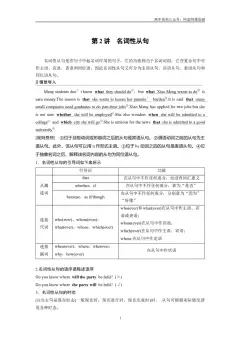
在复合句中起名词作用的从句叫名词性从句,包括主语从句、表语从句、宾
语从句和同位语从句
(2)分类:
在句中充当主语的从句叫做主语从句;
在句中充当及物动词或介词后宾语的从句叫做宾语从句;
在句中充当表语的从句(即放在系动词后面)叫做表语从句;
在句中用作同位语的从句叫做同位语从句。
(3)识别单句中的名词性成分:
①主语——通常位于谓语动词前面。
通常由:名词; 主格代词(I, she 等); 不定式; 动名词; 主语从句充当。但有一种
特殊情况需要注意:有时主语部分太长, 为使句子平衡, 避免头重脚轻, 常用it
作形式主语;
②宾语——通常位于及物动词后面。通常由:名词; 宾格代词(me, her 等); 不
定式; 动名词; 宾语从句充当。但有一种特殊情况需要注意:有时宾语部分太长,
为使句子平衡,避免头重脚轻,常用it 作形式宾语;
③表语——通常位于系动词后面。通常由:名词; 代词; 形容词; 副词; 不定式;
动名词; 表语从句充当。
④同位语——通常用来解释说明前面的名词。
(4)四大名词性从句判断技巧
①主语从句:从句位于句首;由形式主语It 开头,真正主语是后面主语从句
Whether he will be able to come remains a question.
It is well known that China is a great socialist country.
②宾语从句:紧跟动词或介词
They didn’t say which they wanted.
③表语从句:紧跟系动词
The question is whether he is able to do it alone.
④同位语从句:前有抽象名词出现
The idea that the earth is round is not a new one.
二、名词性从句的连接词
(1)引导名词性从句的常用连词
从属连词that
对应陈述句
that 在从句中不作成分
从属连词whether, if
对应一般疑问句whether, if 在从句中不作成分
连接副词
when, where, why, how
连接代词
who, whom, what, which, whose
对应特殊疑问句
when, where, why, how 作状
语;
who, whom, what 作主语、宾语
或表语;
which,whose 作定语,后面接
名词连用。
(2)从属连词的用法
①that 的用法
a.要在陈述句句首加上that,在主语从句、表语从句和同位语从句中一般不能省
略。
b.在宾语从句中有时可以省略。当that 从句作介词宾语时,that 不可省略。
They share little in common except that they are from the same country.
c.当主句谓语动词后接两个或两个以上的宾语从句时,第一个that 可以省
略,其他的不可省略。
I checked the doors were closed and that all the lights were off before I left.
d.在主语从句中,把“that+陈述句”这一结构放在主语位置即构成主语从句,但更
常见的是用it 做形式主语置于句首,而将主语从句放在句末。
It is obvious that he doesn’t understand English.
②if 和whether 的用法
a. if 一般只用于引导宾语从句,在主语从句、表语从句和同位语从句中一般用
whether。
b.在宾语从句中,whether 与if 通常可以互换,但以下情况只用whether:
当从句作介词宾语时,仅用whether
That depends on whether you are suitable for the job.
与or not 连用时,仅用whether
I don’t know whether she will come or not.
③that 与whether 的辨析
引导词
that
Whether
相同点
1.都可引导四大名词从句;2.在从句中都不充当成分,只起连接作用
不同点
1.在从句中不充当成分也无实义;
引导宾语从句有时可省略
e.g.: I truly believe (that) beauty
comes from within.
1.在从句中不充当成分,但含“是否’’
的意思,不能省略
e.g.: It doesn’t matter whether you
turn right or left at the crossing—both
roads lead to the park.
2. that 引导的整个从句的意思通常
是确定的陈述句
e.g.: I don’t doubt that they will
come to help me.
2. whether 引导的从句的意思通常是
不确定的一般疑问句
e.g.: I doubt whether they will come to
help me.
常见使用whether 时的标志词:doubt, question, problem, wonder......
常见使用that 时的标志词:promise, believe, view, conclusion, news......
④连接代词的用法
who, whom, what 作主语、宾语或表语;
which, whose 作定语,后面接名词连用。
⑤连接副词的用法
a.连接副词when/where/why/how—般表示疑问意义,译为“何时、哪里、为什么、
如何”
b.连接副词when/where 可表肯定意义,译为“的时候、的地方”
⑥that 与what 的区别
What you should bring is on the list.
It’s unquestionable that you should bring a pencil.
what 在从句中充当主干成分,表“什么”或“所”。that 在从句中不充当成分,且无
自身意义。
语法填空
考试题型:
语法填空
考察重点
语法填空把语法知识测试全部放在语篇中进行,旨在
语境中考查考生的综合语言运用能力。它不但要求考
生有扎实的词汇、语法等基础知识和对句型结构的灵
活运用能力,而且还要求考生有良好的语感和一定的
阅读理解能力。
它是命题人在预先选好的一篇地道的英语文章中,在
保证句子成分、结构和语法等有效解题信息基本完备
的基础上,挖去10 个空的出题方式,这10 个空根
据有无提示词可分为有提示词类和无提示词类两种。
题目数量
10 道
分值
每题1.5 分,共计15 分
考频分布:
提示词
高频考点
谓语动词
1~2 题
具体考点:时态、语态、主谓一致;
其中涉及语态的不超过1 题。
非谓语动词
1~3 题
具体考点:不定式,动名词,分词;
每种最多设1 题。
派生词
1~3 题
具体考点:动词派生为名词、名词派生
为形容词或动词、形容词派生为副词;
每种最多设1 题。
名词
0~1 题
具体考点:可数名词复数,名词所有格。
形容词和副
词
0~1 题
具体考点:形容词和副词的转换、比较
级和最高级。
低频考点
代词
0~1 题
具体考点:写出所给主格的宾格、名词
性/形容词性物主代词、反身代词
无提示词
高频考点
介词
0~1 题
具体考点:常见介词的基本用法或固定
搭配中的介词。
冠词
0~1 题
具体考点:定冠词、不定冠词,固定搭
配中的冠词。
从属连词
0~2 题
具体考点:三大从句引导词。侧重定语
从句。
低频考点
并列连词
0~1 题
具体考点:并列句的连接词。
其他
0~1 题
助动词,构成强调句的it/that,逻辑副
词before, ago, however, anyway 等
知识清单:
一、做题步骤
1. 阅读题目,判断所给词的词性
2. 思考题目需要的词性,从而明确考点
二、做题技巧
1. 提示词为动词
a. 思考框架
b. 范例分析
[示例1] (2019·全国卷Ⅰ) In recent years some Inuit people in Nunavut ______(65)
(report) increases in bear sightings around human settlements,leading to a belief that
populations are increasing.
分析:分析句子结构可知,缺少谓语,故应填谓语动词。由时间状语In recent years
可知,句子用现在完成时;再由主语some Inuit people 可知,谓语动词应用复数
形式,故谓语动词用have reported。
[示例2] (2019·全国卷Ⅱ) When we got a call ______(68) (say) she was short-listed,
we thought it was a joke.
分析:分析句子结构可知,when 引导的从句中已有谓语动词got,所以空处应填
非谓语动词。再由句意可知,say 与前面的a call 之间是主动关系,故用现在分
词短语saying......作后置定语,修饰a call。
2. 提示词为名词
a. 思考框架
b. 范例分析
[示例1]
(2018·全国卷Ⅰ) Two of the authors of the review also made a study published in
2014 that showed a mere five to 10 minutes a day of running reduced the risk of heart
disease and early deaths from all ______(67) (cause).
分析:cause 表示“原因,起因”时是可数名词,且前面有all 修饰,故填cause
的复数形式causes。
[示例2]
(2019·全国卷Ⅲ) They also shared with us many ______(67) (tradition) stories about
Hawaii that were hugely popular with tourists.
分析:所填词修饰名词stories,故应用tradition 的形容词形式traditional。
3. 提示词为形容词/副词
a. 思考框架
b. 范例分析
[示例1]
(2019·全国卷Ⅰ) It is difficult to figure out a global population of polar bears as
much of the range has been ______(65) (poor) studied.
分析:挖空处用来修饰动词studied,故应用形容词poor 的副词形式poorly。
[示例2]
(2019·全国卷Ⅰ) Scientists have responded by noting that hungry bears may be
congregating (聚集) around human settlements,leading to the illusion(错觉) that
populations are ______(68) (high) than they actually are.
分析:根据空格后的than 可知,此处应用high 的比较级形式higher。
4. 无提示词
a. 思考框架
b. 范例分析
[示例1]
(2019·全国卷Ⅰ) Modern methods ______(63) tracking polar bear populations have
been employed only since the mid-1980s.
分析:a method of/for doing sth. 做某事的方法,故填介词of 或for。
[示例2]
(2018·全国卷Ⅲ) I was searching ______(67) these three western lowland gorillas I’d
been observing.
分析:search for 意为“寻找”,为固定搭配,故填介词for。
[示例3]
(2019·全国卷Ⅰ) Of ______(69) nineteen recognized polar bear subpopulations,
three are declining, six are stable, one is increasing, and nine lack enough data.
分析:此处特指确认的19 个北极熊亚种群,故用定冠词the。
[示例4]
(2019·全国卷Ⅱ) When we got a call saying she was short-listed,we thought it was
______(69) joke.
分析:joke“笑话,玩笑”,是可数名词。空格后用了单数joke,故其前用a。
[示例5]
(2017·全国卷Ⅱ) However, the railway quickly proved to be a great success and
within six months, more than 25,000 people were using ______(67) every day.
分析:挖空处指代前句中的the railway,故填it。
[示例6]
(2016·全国卷Ⅲ) In much of Asia, especially the so-called “rice bowl” cultures of
China, Japan, Korea, ______(61) Vietnam, food is usually eaten with chopsticks.
分析:这里列举了亚洲的一些国家,它们为并列关系,应用and。
[示例7]
(2019·全国卷Ⅱ) Now Irene Astbury works from 9am to 5pm daily at the pet shop in
Macclesfield, ______(62) she opened with her late husband Les.
分析:分析句子结构可知,逗号后是非限制性定语从句,the pet shop 是先行词,
定语从句中缺少opened 的宾语,故用which。
[示例8]
(2019·全国卷Ⅰ) While they are rare north of 88°, there is evidence ______(61)
they range all the way across the Arctic, and as far south as James Bay in Canada.
分析:分析句子结构可知,所填词引导同位语从句,解释说明evidence 的具体内
容,从句不缺少成分且意义完整,故用that 引导。
应用文
知识体系:
章节概述:
高中的书面表达比初中英语要求要更高,除了表达清楚、没有语法错误、不
遗漏要点等基础要求以外,还需要学生可以熟练运用高级句式和词汇。因此对于
高中应用文写作来说,了解文章的写作架构,提升自己高级词汇、句型的运用能
力尤为关键。
知识清单:
感谢信
一、真题范文
假定你是李华,经常帮助你学习英语的朋友Alex 即将返回自已的国家。请
给他写一封邮件,内容包括:
1. 表示感谢;
2. 回顾Alex 对你的帮助;
3. 临别祝愿。
注意:
1. 词数80 左右;
2. 可适当增加细节,以使行文连贯。
参考范文
Dear Alex,
I’ve just learned you’re leaving for the United States soon. At this moment, I
want to express my sincere thanks to you for your help.
Honestly speaking, but for your help, I wouldn’t have made such great progress
in English. With your help, I won first prize in an English speech contest. Whenever I
have difficulties, you always cheer me up and help me out. Words can’t describe how
thankful I am.
Wish you a pleasant journey home.
Yours,
Li Hua
二、感谢信三要素
开篇点题,表示感谢,描述感谢的具体内容并表示回报。
三、文章主题词
1.感谢:gratefulness; gratitude
2.遇见困难:face/meet/encounter; trouble/obstacle/difficulty
3.帮助:help; assist; do sb. a favor; give sb. a hand
四、文章结构
(一)首段:写作背景+写作目的
1.【例句】Words failed to convey my sincere gratefulness to you for being my most
considerate companion during my stay in London.
(1) 未能:fail to do
(2) 表达感激:convey my sincere gratefulness
(3) 贴心的伙伴:considerate companion
2.【亮点词汇句式】
因……而表示感谢
(1) I’m writing to express/extend/convey my heartfelt thanks/sincere gratitude for...
(2) I am obliged to you for your selfless assistance during my visit to…
(3) Your generous help made it possible that we had a very pleasant stay and a
chance to know English cultures better.
(4) Without your timely assistance in doing..., I fear the consequences might have
been much serious.
(5) It is your unreserved help that enables me to obtain this splendid opportunity to...
(二)中间段:回顾过程+表示感谢
1.【例句】You were always ready to lend me a hand when I was messed up with all the
obstacles I encountered.
(1) 时刻准备着:be ready to do
(2) 受困于:be messed up with
(3) 遇见的困难:the obstacles I encountered
2.【亮点词汇句式】
被帮助的意义/好处
(1) 扩展视野broaden our horizon/give a glimpse of sth.
(2) 提升成绩improve our academic performance
(3) 提高……兴趣activate/arouse/fuel one’s passion in...
(4) 体验灿烂的文化experience splendid cultures
(5) 丰富课余生活enrich our after-school life
(6) 唤新思想refresh our minds
(7) 锻炼身体strengthen our body
(8) 舒缓压力relieve our stress
(9) 传播正能量promote positive energy
(10)提高合作能力improve our cooperative ability
(11)传播……的思想spread the idea of
(12)适应陌生的环境:adjust to the alien environment
3.【重点句式】
(1) 强调句突出帮助的作用及影响
It was your effort (concern/encouragement ...) that ...
(2) Not only ... but also ...半倒装强调帮助的作用
Not only did you improve ... but also ...
(3) 虚拟语气再次强调帮助意义
Had it not been for your help/Without your help ...
But for your help, I wouldn’t have ...
【例句】是你专业的指导和鼓励让我鼓起勇气战胜困难。
It was your professional guidance and encouragement that helped me get up my
courage to overcome difficulties.
【例句】在我申请留学期间,您不仅帮我给史密斯教授写申请信,而且耐心地指
导我填写申请表。
Not only did you write a recommendation to Professor Smith, but also you instructed
me on how to fill application forms patiently when I applied for further education.
(三)尾段:再次感谢+发出邀请/表示回报
1.【例句】Meanwhile, I sincerely invite you to visit ..., where I can guide you around
the spectacular view and welcome you warmly in return.
(1) 壮观的景色:spectacular view
(2) 作为报答:in return
2.【亮点词汇句式】
①再次感谢:
(1) Please do accept my heartfelt thanks again.
(2) Without your help, I could not have had a wonderful time there.
(3) Had you not given assistance to me, I could not have led a delighted life there.
②发出邀请/表示回报
(1) I’m not sure if I have the honor to invite you to pay a visit to ..., so that I could
return your favor/charming hospitality.
(2) I do hope that you can visit... in the near future, so that I could have the
opportunity to repay your friendship.
(3) I deeply appreciate your courtesy and I hope to have the opportunity to reward
you.
咨询信
一、真题范文
假定你是李华,打算去澳大利亚参加游学夏令营活动(tour-and-learn summer
camp)。请你给澳大利亚笔友John 写一封电子邮件,告知参加目的和所需帮助。
注意:
1. 80 词左右;
2. 可以适当增加细节,以使行文连贯。
Dear John,
How is everything going? l can’t wait to tell you the good news that I am
scheduled to participate in a tour-and-learn summer camp in your country next month.
Although it’s a fantastic opportunity for me to broaden my horizons and have a deep
insight into Australia. However, what I am concerned about is that I can’t fit in well
with locals there. Besides, the weather and food may not agree with me. As a result,
I’m writing to ask if you could put forward some useful suggestions. I’m looking
forward to your pleasant reply.
Yours,
Li Hua
二、咨询信三要素
1. 问候并相关情况介绍。
2. 咨询的具体方面
3. 表示期待。
三、文章主题词
1. 咨询:consult;inquire about
2. 关于:regarding; concerning
3. 考虑到:considering; consideration; take … into account
4. 详细信息:detailed information
5. 提出建议:put forward
四、文章结构
(一) 首段:问候及相关信息介绍
1.【范文】
How is everything going? I can’t wait to tell you the good news that I am scheduled to
participate in a tour-and-learn summer camp in your country.
2.【亮点词汇句式】
(1) 迫不及待:can’t wait to do
(2) 计划做某事:be scheduled to do
(二) 中间段:咨询的具体方面
1.【范文】
Although it’s a fantastic opportunity for me to broaden my horizons and have a deep
insight into Australia. What I am concerned about is that I can’t fit in well with locals.
Besides, the weather and food may not agree with me. As a result, I'm writing to ask
if you could put forward some useful suggestions.
2.【亮点词汇句式】
(1) 深入了解:have a deep insight into
(2) 某人所担心的是:what sb. be concerned about is…
(3) 融入:fit in well with locals
3.【翻译练习】
(1) 我的担心是我不能和当地人流利地交流英语。
What I am concerned is that I can’t communicate frequently with local people.
(2) 摔跤不适合我。
Wrestling doesn’t agree with me.
4.【补充拓展】
(1) 这是一个做某事的机会
It is a good opportunity to do sth.
(2) 希望某人提出一些建议
hope that sb. can put forward some suggestions
(三) 结尾段:良好期待
1.【范文】
I’m looking forward to your pleasant reply.
2.【补充拓展】
希望你把我的困惑考虑进去。
I hope you will take my confusion into your consideration.