热点话题04  科学家从皮肤细胞中培育出人类卵
细胞——生物科学技术
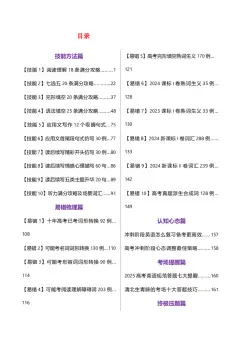
目录
时文精读------------------------------------------------------------精选外刊原创阅读理解
  【原创·阅读理解】
【课标词汇积累】
【课标词汇训练】
【参考译文】
好题精练----------------------------------------------------------精选名校及联考话题专练
【阅读理解】
【阅读7 选5】
【完形填空】
【语法填空】
【话题·导语】
科学家从皮肤细胞中培育出人类卵细胞。
【原文·时文阅读】
文章来源:https://www.sciencenews.org/article/human-egg-cells-from-skin-cells
A technique used in cloning combined with fertilization and a bit of chemical coaxing caused human skin
cells to produce eggs able to give rise to early human embryos, researchers report September 30 in Nature
Communications.
The effort is the latest attempt to make eggs and sperm from human cells. Researchers have already
succeeded in making these important cell types from many types of animals, including pandas. But producing
human eggs and sperm has proven elusive.
Such technology may one day treat infertility for women who no longer have eggs because of age, early
menopause or previous cancer treatments. Same-sex male couples may also be able to use the technique “to have,
读时文精读
potentially, a child that’s genetically related to both partners,” says reproductive endocrinologist Paula Amato of
Oregon Health & Science University in Portland.
For now, the technique “is too inefficient and high risk to apply immediately to clinical application,” says
stem cell researcher Katsuhiko Hayashi of the University of Osaka in Japan. Hayashi was not involved with this
effort but previously reprogrammed tail cells from two adult male mice into eggs and sperm. Those reprogrammed
cells gave rise to healthy mice that had two biological fathers and were able to have offspring of their own.
A version of the new technique also works in mice, Amato says. “Usually, things that we can get to work in
mice eventually work in humans.” At least, in making stem cells it does.
Amato and colleagues removed the nucleus(细胞核) from a human egg cell and replaced it with the
nucleus of a type of skin cell called a fibroblast(细胞核移植技术). That step, called somatic cell nuclear
transfer, is the same first step used in cloning Dolly the Sheep and many other species.
But the researchers weren’t trying to make a human clone. They wanted to make an egg cell, which has 23
chromosomes(染色体). That’s half the number of chromosomes as most other cells in the body, which carry a
set of 23 chromosomes inherited from the mother and 23 from the father.
Cells that will give rise to eggs and sperm go through a type of cell division called meiosis(减数分裂),
which halves the number of chromosomes. In that process, each chromosome pairs with its counterpart from the
other parent and swaps some DNA. The cell then divides, pulling one half of each pair into daughter cells. Then,
when eggs and sperm get together, they produce a zygote(受精卵) with 46 chromosomes that will divide and
make every cell in the body.
But the cloned egg already had 46 chromosomes. With mice, Amato and colleagues just fertilized the cloned
egg with sperm. That caused the egg to jettison half its chromosomes, producing an embryo with the correct
number of chromosomes.
The human eggs, though, didn’t extrude half their chromosomes when fertilized. So the researchers had to
add chemical persuasion in the form of a molecule called roscovitine. That molecule allowed the winnowing of
chromosomes to begin.
Some of the fertilized eggs made early human embryos, but many did not. “That’s probably, we think,
because they had an abnormal number of chromosomes,” Amato says. These failed would-be eggs kicked out half
their chromosomes, on average, but not the right half. None of the embryos were allowed to develop beyond the
blastocyst(胚囊) stage, growing for about six days. Many stopped developing at earlier stages.
None of the embryos ended up with the correct sets of chromosomes so ultimately were not viable. For
instance, one embryo had 48 chromosomes instead of 46. That embryo had all 23 chromosomes from the sperm,
but a mishmash of 25 chromosomes from the skin cell. Some chromosomes were present in a single copy, while
others had two copies, and other chromosomes were missing entirely.
The unequal divisions probably resulted because the chromosomes paired randomly instead of with their
specific mate as they would in normal meiosis, Amato says.
“It was not the outcome we wanted, really, but it was more proof-of-concept. ‘Hey, we can kind of make this
process happen now,’” Amato says. The team is working to get the chromosomes to divvy up properly but she
estimates at least a decade before the technique could be tested in clinical trials.
Even then, such trials would probably not take place in the United States, which prohibits genetic
modification of human embryos, she says.
The new technique has a drawback in that it requires donor egg cells for the cloning step, Hayashi says.
Reprogramming as he and colleagues have done does not need egg cells to make other egg cells. Still, he
says, “this technology has made a significant breakthrough in halving the human genome.” He predicts “new
technologies will stem from this achievement.”
【原创·阅读理解】
1.What does the underlined word in the second paragraph mean?
A.difficult to find   B.successful to solve   C.fail to do    D.easy to make
2.What was the possible reason why did Amato’s experiment fail?
A.Because the American government didn’t support the research.
B.Because the fertilized eggs had an abnormal number of chromosomes.
C.Because his team didn’t collect enough money for the experiment.
D.Because his team didn’t have theory to support the experiment.
3.Which is correct according to text?
A.Hayashi thinks that the new technique is useless.
B.Making egg cells from skin cells from many types of animals is successful.
C.Hayashi is a member of the Amato’s experiment.
D.Amato predicts ten years before the technique could be tested in clinical trials.
4.What is Amato’s attitude to the technique?
A.confident   B.skeptical   C.negative   D.indifferent
【课标词汇积累】
1.technique n.技术, 技能
The teacher demonstrated a new memorization technique by using colorful mind maps to help students
remember historical events more effectively.
老师展示了一种新的记忆技巧,通过使用彩色思维导图帮助学生更有效地记住历史事件。
2.combine v.使结合,混合, 联合, (使)联合;(使)合并n.联盟,集团
The science project required us to combine different chemicals to observe the reactions, which was both
exciting and educational.
科学项目要求我们将不同的化学物质混合以观察反应,这既有趣又有教育意义。
3.previously adv.事先, 以前, 仓促
Previously, our school library only had a few outdated books, but now it's filled with new novels and
reference materials.以前,我们学校图书馆只有几本过时的书,但现在堆满了新小说和参考资料。
4.attempt v. 努力,尝试,企图 n. 努力,尝试,(杀人)企图
Our class will attempt to organize a charity bake sale to raise funds for the local animal shelter.
我们班将尝试组织一场慈善烘焙义卖,为当地动物收容所筹集资金。
5.potentially adv. 潜在地;可能地
Staying up late to play video games can potentially affect your concentration in class the next day.
熬夜玩电子游戏可能会影响你第二天的课堂注意力。
6. reprogramme v. 再次(重新)设定程序
After failing the midterm, I decided to reprogramme my study habits by creating a strict schedule and
sticking to it.期中考试不及格后,我决定重新调整学习习惯,制定严格的时间表并坚持执行。
7.modification n. 修改,修正,变更,改良,改进
The school cafeteria made a healthy modification to its menu by replacing fried foods with grilled options.
学校食堂对菜单做了健康调整,用烤制食品替代了油炸食品。
8.randomly adv. 随便地,未加计划地
The principal would randomly visit classrooms to check if students were focused during lessons.
校长会随机抽查教室,看学生上课是否专注。
9.abnormal adj. 不正常的,异常的;畸形的
It was abnormal for the usually punctual student to be late three days in a row, so the teacher asked if
everything was okay.一向守时的学生连续三天迟到很不寻常,所以老师询问是否一切正常。
10.persuasion n. 劝说,说服(力);信仰
The student council used creative persuasion tactics like free snacks to encourage more students to attend
the after-school lecture.学生会用免费零食等创意劝说策略鼓励更多学生参加课后讲座。
【课标词汇训练】
根据语境,从上面的“课标词汇”中选用合适的单词及其正确形式将句子补充完整。
1.The basketball coach taught us a special shooting _____________ that improved our accuracy during
practice.篮球教练教了我们一种特殊的投篮技巧,在训练中提高了我们的命中率。
2.We decided  _____________ our ideas for the school festival and create a unique performance that included
both dance and drama.我们决定将校园节的想法结合起来,创作一个包含舞蹈和戏剧的独特表演。
3.I had _____________ struggled with math, but after extra tutoring sessions, my grades improved significantly.
我之前数学很差,但在额外辅导课后,成绩显著提高了。
4.During the sports meet, John made a brave _____________ to break the school's long jump record, landing
just a few centimeters short.运动会上,约翰勇敢尝试打破学校的跳远纪录,只差几厘米就成功了。
5.Joining the debate club could _____________ help shy students build confidence in public speaking.参加辩论
社可能帮助害羞的学生建立公开演讲的信心。
6.The computer teacher showed us how _____________ the robot to complete an obstacle course instead of
just moving in straight lines.计算机老师教我们如何重新编程机器人,让它完成障碍路线而不仅是直线移动。
7.Our English teacher suggested some _____________ to our essay outlines to make our arguments clearer.英
语老师对我们的作文提纲提出了一些修改建议,使论点更清晰。
8.For the group project, our teacher _____________ assigned teammates to ensure everyone worked with
different classmates.分组作业时,老师随机分配组员以确保每个人和不同的同学合作。
9.The _____________ heat wave in October forced our school to cancel outdoor PE classes for safety reasons.十
月的异常热浪迫使学校出于安全取消户外体育课。
10.After much _____________ from the art teacher, the shy student finally agreed to display her paintings in
the school exhibition.经过美术老师的多次劝说,害羞的学生终于同意在学校展览中展示她的画作。
【参考译文】
研究人员在9 月30 日的《自然-通讯》中报告称,通过结合克隆技术与体外受精,并辅以化学诱导手
段,成功使人类皮肤细胞产生能够发育为早期人类胚胎的卵细胞。
该研究是人类细胞制造卵子和精子技术的最新突破。此前科学家已从包括大熊猫在内的多种动物细胞
中培育出配子,但人类配子的制备始终面临挑战。
这项技术未来或可帮助因年龄、早发性绝经或癌症治疗而卵子枯竭的女性解决不孕问题。"同性男性
伴侣也可能通过该技术获得与双方均有遗传关联的后代,"波特兰俄勒冈健康与科学大学的生殖内分泌学家
保拉·阿马托表示。
但大阪大学干细胞研究者林克彦指出,当前技术"效率过低且风险过高,无法立即投入临床应用"。林
克彦虽未参与本研究,但曾将成年雄性小鼠尾部细胞重编程为卵子和精子,并成功培育出拥有双父系基因
的健康小鼠后代。
——
——
阿马托团队采用体细胞核移植技术
即克隆多利羊的技术路径
将皮肤成纤维细胞的细胞核植入
去核人类卵细胞。与克隆不同,研究者旨在制造仅含23 条染色体的卵细胞。正常配子形成需经历减数分
裂,使染色体数量减半并完成基因重组。但克隆卵细胞初始携带46 条染色体,小鼠实验中直接受精即可
触发染色体减半,而人类卵细胞需依赖化学药物罗可维汀诱导。
实验显示,部分受精卵可发育至囊胚阶段(约6 天),但因染色体分配异常均未存活。典型失败案例
中,一个胚胎含有精子提供的完整23 条染色体,却混杂了皮肤细胞来源的25 条染色体,呈现单拷贝、双
拷贝甚至完全缺失的混乱状态。阿马托解释,这种异常源于染色体随机配对而非正常减数分裂的特异性配
对。
"虽未达预期目标,但验证了技术可行性,"阿马托表示。团队正着力解决染色体精准分配难题,预计
至少需十年才可能开展临床试验。鉴于美国禁止人类胚胎基因编辑,相关试验或将在其他地区进行。
林克彦指出该技术仍需捐赠卵细胞作为核移植载体,不如其团队开发的直接重编程方案便捷。但他承
认:"这项研究在人类基因组减半技术上取得重大突破,必将催生更多衍生技术。"
Passage1 阅读理解
Known for its role in Game of Thrones (《权力的游戏》), the dire wolf (冰原狼) went extinct over 10,000
years ago. On April 7, the US company Colossal Biosciences announced restoring this species via de-extinction —
a historic first.
Time magazine said scientists studied fossils (化石) such as a 13,000-year-old dire wolf tooth and a 72,000-
year-old ear bone and compared their genes to those of gray wolves to discover differences. They edited 14 key
genes in gray wolf blood cells to match dire wolf traits, implanting modified cell’s nuclei (核) into surrogate (代孕)
练好题精练
dogs’ eggs.
The babies, larger than gray wolves, now live in a preserve. They behaved like wolves by howling at two
weeks old. But “we have not seen them attempt to hunt live prey”, Colossal’s Paige McNickle told Time magazine.
Some scientists have criticized the project. Professor Nic Rawlence from Otago University questioned using
fossil DNA, calling it too damaged to use. “Ancient DNA is like if you put fresh DNA in a 500 degree oven
overnight, it comes out like dust,” Rawlence told the BBC. He argued Colossal actually only created “a hybrid
(杂交品种)” — a gray wolf with dire wolf features.
Colossal isn’t just reviving the dire wolf. Their list includes the woolly mammoth, dodo and Tasmanian tiger.
Their mission goes beyond de-extinction: they also use the same technique to prevent species in danger from
disappearing. For example, they brought back four red wolves, an endangered species, in the same way of restoring
the dire wolf.
The Center for Biological Diversity predicts that 30% of the planet’s genetic diversity could be lost by 2050.
Colossal CEO Ben Lamm argues that genetic engineering is crucial to prevent this loss. Yet some warn there could
be consequences. Introducing new species can cause invasive species, while cloning often leads to health problems
in animals and surrogates.
1.How did scientists try to restore the dire wolves?
A.By obtaining DNA from living dire wolves.
B.By hybridizing different modern wolf species.
C.By studying fossils of dire wolf and surrogating.
D.By using complete DNA of dire wolves to clone.
2.What can be learned about the “restored” dire wolf babies?
A.They exhibit some wolf-like behaviors.
B.They have already begun hunting live prey.
C.They are bigger in size than adult gray wolves.
D.They are completely the same as the ancient dire wolves.
3.Why does the author mention red wolves in the 5th paragraph?
A.To illustrate the variety of revived species.
B.To highlight the importance of biodiversity.
C.To contrast with the dire wolf’s revival process.
D.To show Colossal’s broader conservation efforts.
4.What is the author’s attitude towards the de-extinction?
A.Opposed and critical.
B.Objective and cautious.
C.Supportive and optimistic.
D.Humorous and unconcerned.
【词汇积累】
1.extinct adj. 灭绝的;废除了的 2.historic adj. 历史(性)的;有历史记载的 3.implant vt. 移植;灌输;
植入,插入vi. (受精卵)着床;被移植 4.preserve v. 保持;保护;保险;腌制n. 蜜饯;果酱;腌菜
5.criticize v. 批评,指责;评价,批判 6.endangered adj. (动物、鸟类等)濒危的,濒于灭绝的
7.diversity n. 多样性,多元性;差异,不同 8.crucial adj. 至关重要的,关键性的
Passage2 阅读理解
An ambitious plan to genetically engineer a version of the woolly mammoth (长毛猛犸象), a giant that
disappeared 4,000 years ago, is making some progress. A new biosciences and genetics company, Colosal, has
raised $15 million to create a mammoth hybeid that looks exactly like its extinct counterpart. The goal isn’t to
clone a mammoth, but to create, through genetic engineering, a living, walking elephant-mammoth hybeid.
The scientists revealed they had reprogrammed cells from an Asian elephant, the woolly mammoth’s closest
living relative. These changed cells can grow into any kind of elephant cell. The research team has analyzed the
than 50 changes to the genetic code of the Asian elephant to give it the characteristics it needs to survive and thrive
in the Arctic. These characteristics include a 10-centimeter layer of insulating (绝缘的) fat, five different kinds of
hair including some that is up to a meter long, and smaller ears that will help the hybrid tolerate the cold.
Colossal believes that bringing the woolly mammoth back to life could possibly help restore the fragile
Arctic tundra (冻原) ecosystem, which is at risk as the world warms. The company has claimed that mammoths, if
they should return to their natural habitat in the Arctic in sufficient numbers, would help slow down frozen soil
melting. Some scientists believe that, before their extinction, animals such as mammoths and horses kept the earth
frozen underneath by walking on the grass, knocking down trees and pressing snow tight. One small study in
Siberia published in 2021 suggested that the presence of large mammals such as horses and reindeer resulted in
lower soil temperatures in the protected area where they were kept compared with land outside that area.
Colossal also announced plans to being some other animals back to life such as the Tasmanian tiger in 2023
and the dodo in 2024, but its work on the mammoth has been going on longest.
5.What does the underlined word “counterpart” in the first paragraph refer to?
A.Endangered animal.
B.Fellow species.
C.Cloned elephant.
D.Extracted cell.
6.What can we learn about the hybrid?
A.It is visually similar to the Asian elephant.
B.It can grow into any types of elephant cell.
C.Thick fat and smaller ears help it endure the severe weather.
D.Long hair like a woolly coat keeps it from the cold and attacks.
7.Why does the author mention the study in Siberia in Paragraph 3?
A.To illustrate the possibility of reintroducing mammoths to their natural habitats.
B.To compare different kinds of nature reserves where large mammals were kept.
C.To indicate the link between the extinction of large mammals and climate change.
D.To show the potential impact of returning mammoths to the Arctic on the ecosystem.
8.What can we infer from the last paragraph?
A.The project on bringing back the mammoth costs the most.
B.The Tasmania tiger and the dodo are also long-dead animals.
C.Colossal needs increased investment to advance the projects.
D.Colossal is completely confident in its technology and scientists.
【长难句分析】
【文章原句】Colossal believes that bringing the woolly mammoth back to life could possibly help restore the
fragile Arctic tundra (冻原) ecosystem, which is at risk as the world warms.
【句式分析】 这个句子是一个复合句。That 后是宾语从句,which is at risk as the world warms 是宾语从句中
的非限制性定语从句。
【翻译】Colossal 认为,让猛犸象复活可能有助于恢复脆弱的北极苔原生态系统,随着全球变暖,这个生态
系统正面临风险。
Passage 3 阅读七选五
阅读下面短文,在空白处填入1 个适当的单词或括号内单词的正确形式。
Four Rules for Successful Plant Cloning
Plant growers have two choices when it comes to starting new plants: growing from seed, or plant cloning.
And plant clones offer advantages that growing plants from seed can’t offer.

 1

 , and as long as you do the
cloning yourself, you know who the mother plant is and how your clones will grow, yield, and get you high. But it’s
an art and science to plant cloning.
Take your plant cuttings from a healthy motherplant. Plant cloning gives you genetic copies of your
motherplant.

 2

 , your clones get the best start possibly. Avoid using motherplants that are sick, or that are
plagued with pests.


 3

 . Most plant clones prefer temperatures slightly higher than your ideal grow room temperature, and
they don’t like a day and night cycle with a temperature drop at night. That’s why most growers root their cuttings
under lighting that stays on 24 hours a day. The lighting itself creates temperature stabilization. Temperatures
between 74-77 degrees F are the range you want.
Clones like high humidity(湿度). Your cuttings need a humid environment in the 75-95% humidity range until
they’ve created roots and are able to intake water through them. That’s why many plant cloners use humidity
covers.

 5

 , they’ll die.
Use sterile(无菌的) equipment and materials. You already figured out that your scissors, knife, or other tools
for cutting clones has to be clean. But you also want to make sure you trays, cloning covers, and root zone media
are clean and sterile too. Don’t reuse cloning cubes or cloning powders and gels.

 5

 .
When you follow these plant cloning tips, your clone success rate should be nearly 100%.
A.Start fresh every time
B.Use kind LED lighting
C.Give your plant clones consistent climate
D.Growing from clones you’re sure to have all females
E.If you’re taking 20 clones and seeing only 10 of them survive
F.Until your clones have functioning roots, if they’re in dry air
G.If your motherplants are strong, healthy, and have potent genetics
Passage 4 完形填空
Like anything built by evolution, the human body has many downsides, teeth without exception. Adult
humans only get one set of teeth, which must last about 60 years. However, a(n)

 1

  of poverty, sugar-rich
diets and poor hygiene means 2.5bn people globally suffer from tooth decay, in which acid produced by mouth-
living bacteria eats away the hard enamel (牙釉质) that

 2

  the outside of a tooth, leading to further
infection and damage. Once decay has set in, all a dentist can do is to fill the gap with artificial filling.
But in a paper published in Cell, Hannele Ruohola-Baker, a stem-cell biologist at the University of
Washington, and her colleagues offer a possible

 3

 . Stem cells have the

 4

  to turn themselves
into any other type of cell in the body. It may soon be possible, the researchers claim, to use those

 5

  cells
to regrow a tooth’s enamel naturally.
The first step was to work out how enamel is produced. As enamel-making cells, known as ameloblasts,
disappear soon after a person’s adult teeth have finished growing, the researchers

 6

  samples of tissue
from human foetuses (胚胎), which contain plenty of functioning ameloblasts.

 7

 , they checked to see
which genes were especially active in the enamel-producing cells. It turned out that genes designed to bind to
calcium were particularly busy.


 8

  that information, Dr Ruohola-Baker and her colleagues next checked to see whether the stem
cells could be persuaded to

 9

  ameloblasts. The team devised various drugs designed to activate the genes
expressed in functioning ameloblasts. That worked, with the engineered ameloblasts producing the same proteins as
the natural sort.
For now, the work is more concept than a medical treatment. The next step is to boost enamel production
further, with a view to

 10


  beginning clinical trials. The hope is that, one day, medical versions of the
team’s findings could be used as biological implants, to

 11


  a patient’s decayed teeth.
Stem-cell-based therapies are not the only ones heading to clinical trials. Another treatment, known as
biomimetic repair, involves rebuilding the tooth crown using synthetic (人工合成的) proteins, which are similar,
but not quite

 12


 , to human enamel. The proteins could be included in toothpaste and even cough drops.
But synthetic formulations can be less

 13


  than human enamel.
It will take time for either technology to become reality. One question is how durable the enamel made by
stem-cell-derived ameloblasts is. Another is how best to deliver the stem cells to a patient’s mouth. But these
findings are

 14


 . As any dentist will tell you, prevention is better than cure.

 15


 , a better cure
would be always welcome. There is no doubt that this research offers a new prospect for future dental care.
1.A.combination
B.absence
C.application
D.coincidence
2.A.contains
B.coats
C.floats
D.fills
3.A.procedure
B.alternative
C.variation
D.recipe
4.A.opportunity
B.obligation
C.capacity
D.intention
5.A.changeable
B.noticeable
C.complicated
D.practical
6.A.appealed to
B.objected to
C.applied to
D.turned to
7.A.Then
B.Therefore
C.Otherwise
D.Still
8.A.Pleased by
B.Puzzled by
C.Armed with
D.Covered with
9.A.transform into
B.break down
C.speed up
D.respond to
10.A.exclusively
B.permanently
C.inevitably
D.eventually
11.A.resemble
B.reform
C.regenerate
D.recycle
12.A.identical
B.subject
C.relevant
D.unique
13.A.accessible
B.diverse
C.durable
D.influential
14.A.fulfilling
B.stimulating
C.initiating
D.promising
15.A.Likewise
B.Furthermore
C.Nevertheless
D.Instead
Passage 5 语法填空
阅读下面短文,在空白处填入1 个适当的单词或括号内单词的正确形式。
For some, cloning (克隆) is a problem, since it means that the awkward day

 1

  somebody proposes
cloning people is unavoidable. For others, it will help medical researchers mass-produce animals for

 2
(they) experiments.
That sort of cloning is the goal of Dr Sun Qiang of the Chinese Academy of Science. In 2018, Dr Sun made
headlines by

 3

  (raise) a crab-eating monkey. The following year, he performed

 4

  same trick
with five crab-eaters. On January 16, 2024, he reported in Nature Communications that he has invented a better
way to clone monkeys in quantity and that he has in his lab a healthy two-year-old male monkey

 5
(produce) with the new method.
Cloning has become

 6

  (popularity) since it gave the world Dolly, a sheep that, in 1996, became the
first animal to be cloned from an adult with this method. But success

 7

  (rate) are low. For most species
only, 1—3% of implants produce a surviving new-born. Even for cattle, where the odds are better, they are still
only 5—20%. At the moment, the only people making money from cloning are companies that clone pets and
horses. If cloning animals is to become a

 8

  (scientific) useful technology, then better ways of doing it
have to

 9

  (find).
“

 10


  we have just obtained one healthy baby monkey from 11 implants, it’s not a bad outcome
for the first trial of a new technique,” said Dr Sun.