策略分析
专题04 猜词题
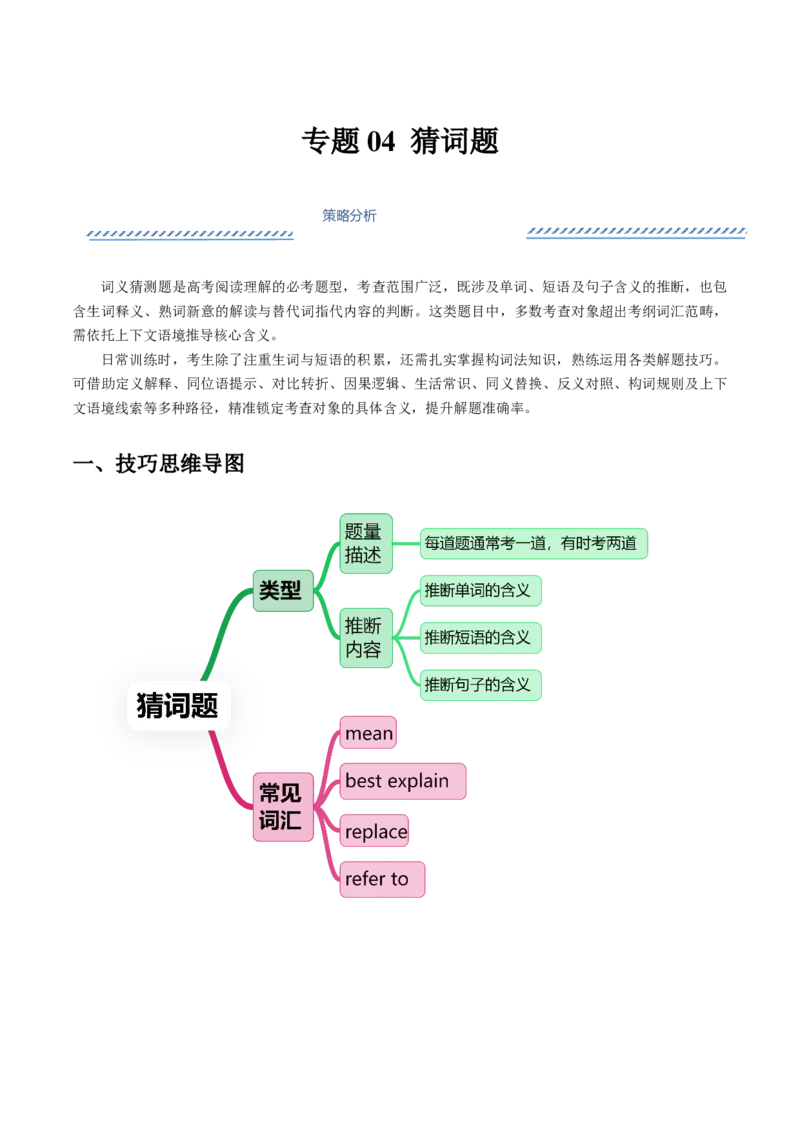
词义猜测题是高考阅读理解的必考题型,考查范围广泛,既涉及单词、短语及句子含义的推断,也包
含生词释义、熟词新意的解读与替代词指代内容的判断。这类题目中,多数考查对象超出考纲词汇范畴,
需依托上下文语境推导核心含义。
日常训练时,考生除了注重生词与短语的积累,还需扎实掌握构词法知识,熟练运用各类解题技巧。
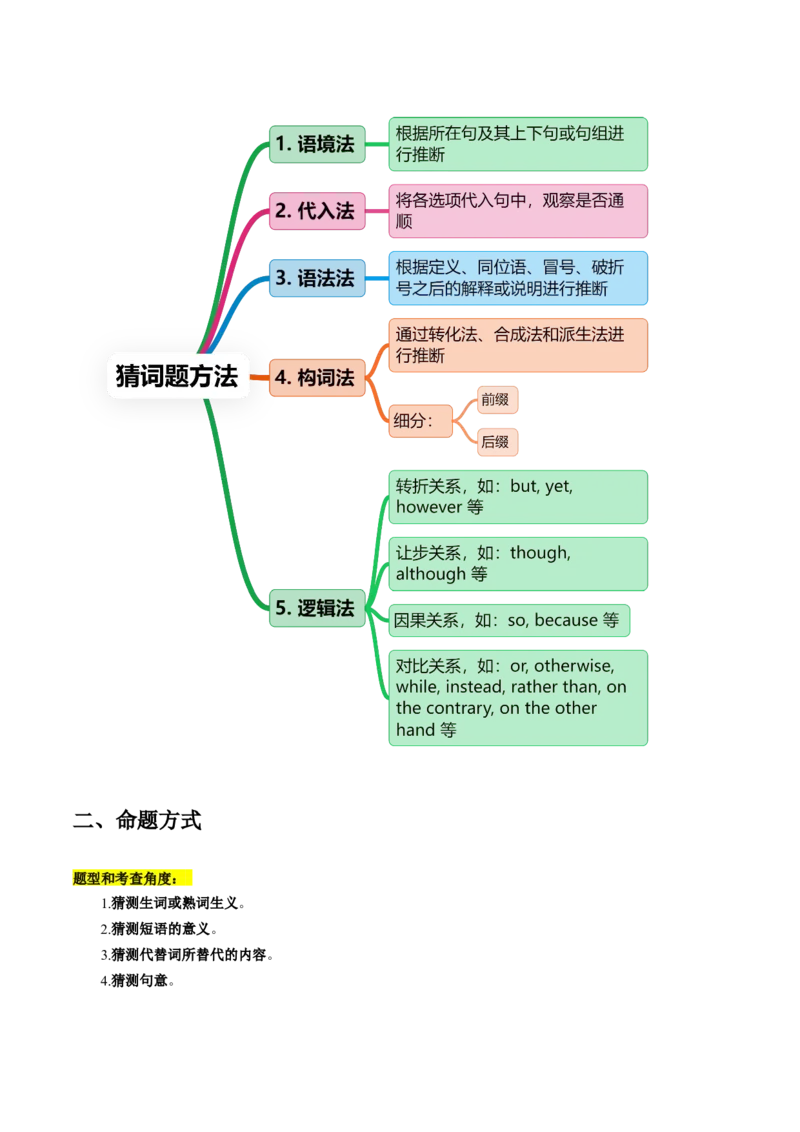
可借助定义解释、同位语提示、对比转折、因果逻辑、生活常识、同义替换、反义对照、构词规则及上下
文语境线索等多种路径,精准锁定考查对象的具体含义,提升解题准确率。
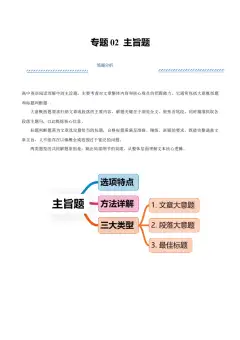
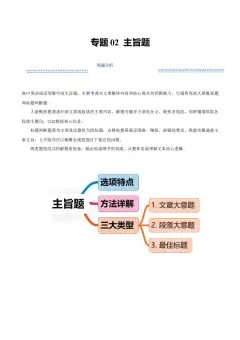
一、技巧思维导图
二、命题方式
题型和考查角度:
1.猜测生词或熟词生义。
2.猜测短语的意义。
3.猜测代替词所替代的内容。
4.猜测句意。
命题方式:
•
The underlined word “ … ” refers to/ (probably) means     .
•
“…” as used in the passage can best be defined as…
•
What do you think the expression “…” stands for?
•
What  does the underlined word “…” refer to in the last paragraph?
•
Which of the following words can take the place of the word “ … ”?
•
The underlined word “…” could best be replaced by…
•
Which of the following has the closest meaning to the word “ … ”?
•
What does the author mean by “…” in paragraph 2?
三、选项特点
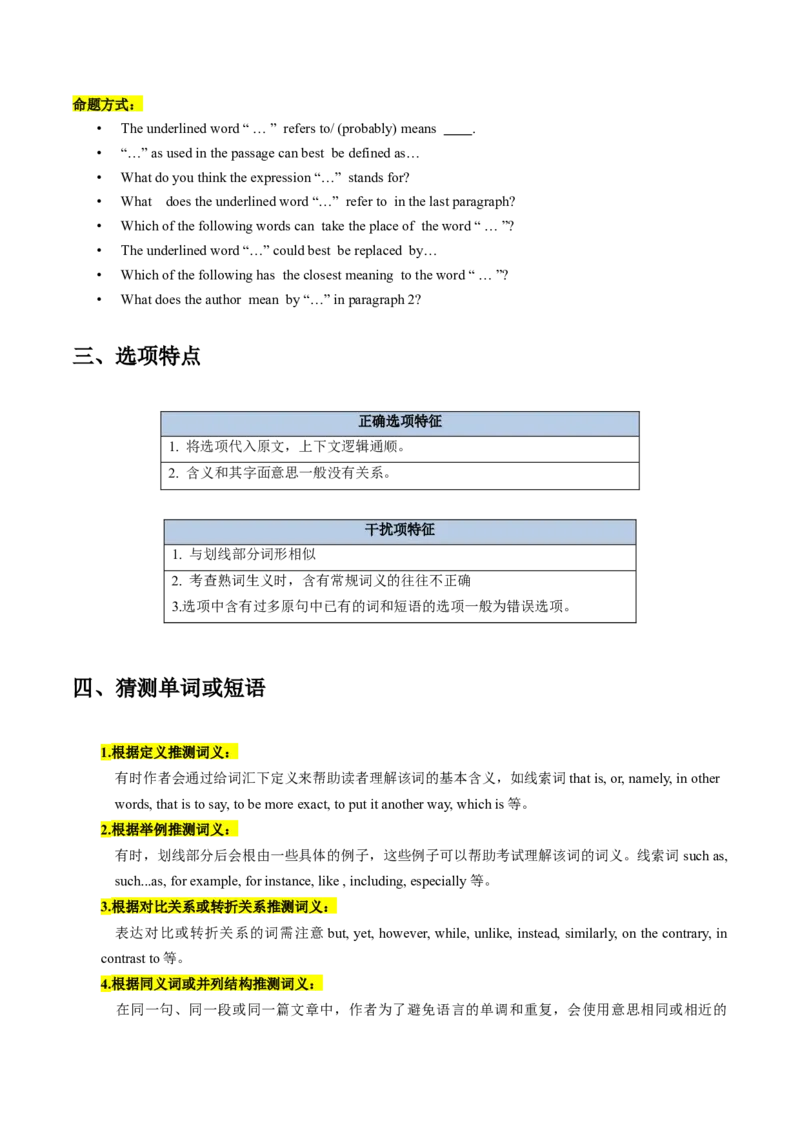
正确选项特征
1. 将选项代入原文,上下文逻辑通顺。
2. 含义和其字面意思一般没有关系。
干扰项特征
1. 与划线部分词形相似
2. 考查熟词生义时,含有常规词义的往往不正确
3.选项中含有过多原句中已有的词和短语的选项一般为错误选项。
四、猜测单词或短语
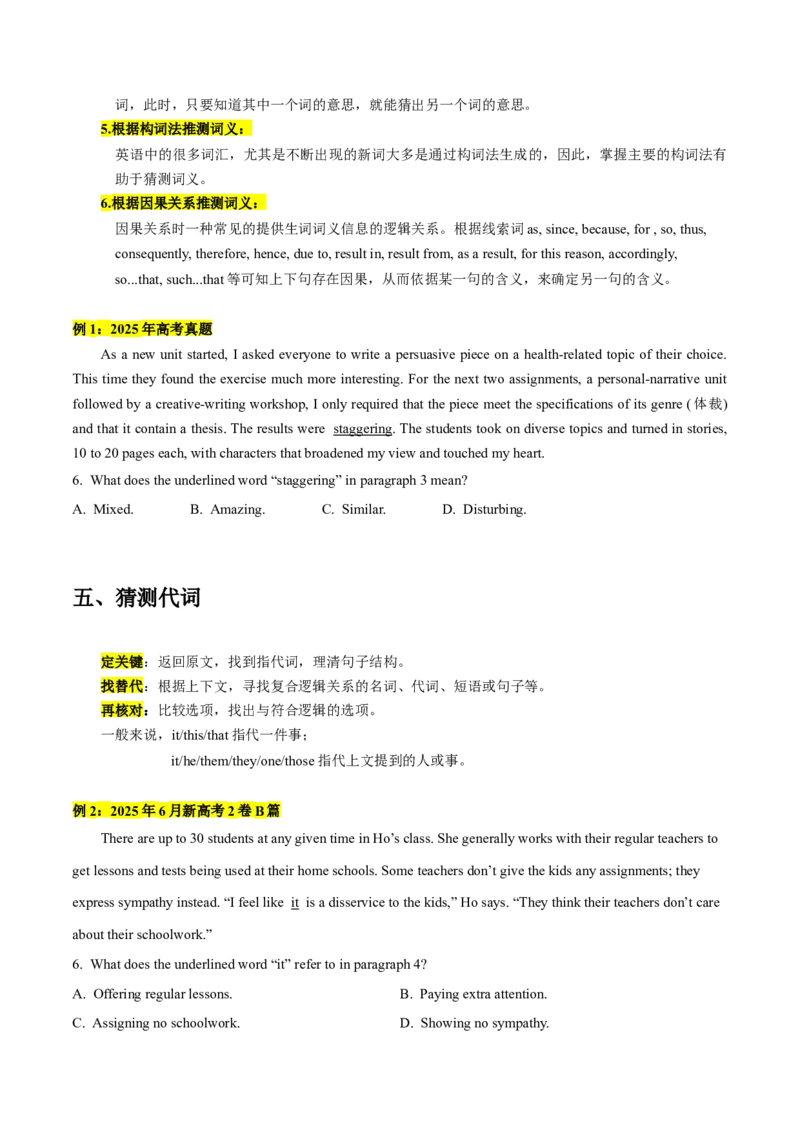
1.根据定义推测词义:
有时作者会通过给词汇下定义来帮助读者理解该词的基本含义,如线索词that is, or, namely, in other
words, that is to say, to be more exact, to put it another way, which is 等。
2.根据举例推测词义:
有时,划线部分后会根由一些具体的例子,这些例子可以帮助考试理解该词的词义。线索词such as,
such...as, for example, for instance, like , including, especially 等。
3.根据对比关系或转折关系推测词义:
表达对比或转折关系的词需注意but, yet, however, while, unlike, instead, similarly, on the contrary, in
contrast to 等。
4.根据同义词或并列结构推测词义:
  在同一句、同一段或同一篇文章中,作者为了避免语言的单调和重复,会使用意思相同或相近的
词,此时,只要知道其中一个词的意思,就能猜出另一个词的意思。
5.根据构词法推测词义:
  英语中的很多词汇,尤其是不断出现的新词大多是通过构词法生成的,因此,掌握主要的构词法有
助于猜测词义。
6.根据因果关系推测词义:
因果关系时一种常见的提供生词词义信息的逻辑关系。根据线索词as, since, because, for , so, thus,
consequently, therefore, hence, due to, result in, result from, as a result, for this reason, accordingly,
so...that, such...that 等可知上下句存在因果,从而依据某一句的含义,来确定另一句的含义。
例1:2025 年高考真题
As a new unit started, I asked everyone to write a persuasive piece on a health-related topic of their choice.
This time they found the exercise much more interesting. For the next two assignments, a personal-narrative unit
followed by a creative-writing workshop, I only required that the piece meet the specifications of its genre ( 体裁)
and that it contain a thesis. The results were staggering. The students took on diverse topics and turned in stories,
10 to 20 pages each, with characters that broadened my view and touched my heart.
6. What does the underlined word “staggering” in paragraph 3 mean?
A. Mixed.        B. Amazing.        C. Similar.        D. Disturbing.
五、猜测代词
定关键:返回原文,找到指代词,理清句子结构。
找替代:根据上下文,寻找复合逻辑关系的名词、代词、短语或句子等。
再核对:比较选项,找出与符合逻辑的选项。
一般来说,it/this/that 指代一件事;
          it/he/them/they/one/those 指代上文提到的人或事。
例2:2025 年6 月新高考2 卷B 篇
There are up to 30 students at any given time in Ho’s class. She generally works with their regular teachers to
get lessons and tests being used at their home schools. Some teachers don’t give the kids any assignments; they
express sympathy instead. “I feel like it is a disservice to the kids,” Ho says. “They think their teachers don’t care
about their schoolwork.”
6. What does the underlined word “it” refer to in paragraph 4?
A. Offering regular lessons.
B. Paying extra attention.
C. Assigning no schoolwork.
D. Showing no sympathy.
六、猜测句子
一定位:定位划线句,利用语法和逻辑关系准确分析原卷
二分析:分析理解划线句前后语境,合理推断句意
三归纳:归纳总结,找出与原句意思完全吻合的选项
例3:高考真题
Southbank, at an eastern bend in the Thames, is the center of British skateboarding, where the continuous
crashing of skateboards left your head ringing. I loved it. I soon made friends with the local skaters. We spoke our
own language. And my favorite: Safe. Safe meant cool. It meant hello. It meant don't worry about it. Once, when
trying a certain trick on the beam (横杆), I fell onto the stones, damaging a nerve in my hand, and Toby came over,
helping me up: Safe, man. Safe. A few minutes later, when I landed the trick, my friends beat their boards loud,
shouting: “Safe! Safe! Safe

 !
  ” And that's what mattered—landing tricks, being a good skater.
9.What do the underlined words “Safe! Safe! Safe!” probably mean?
A.Be careful!
B.Well done!
C.No way!
D.Don't worry!
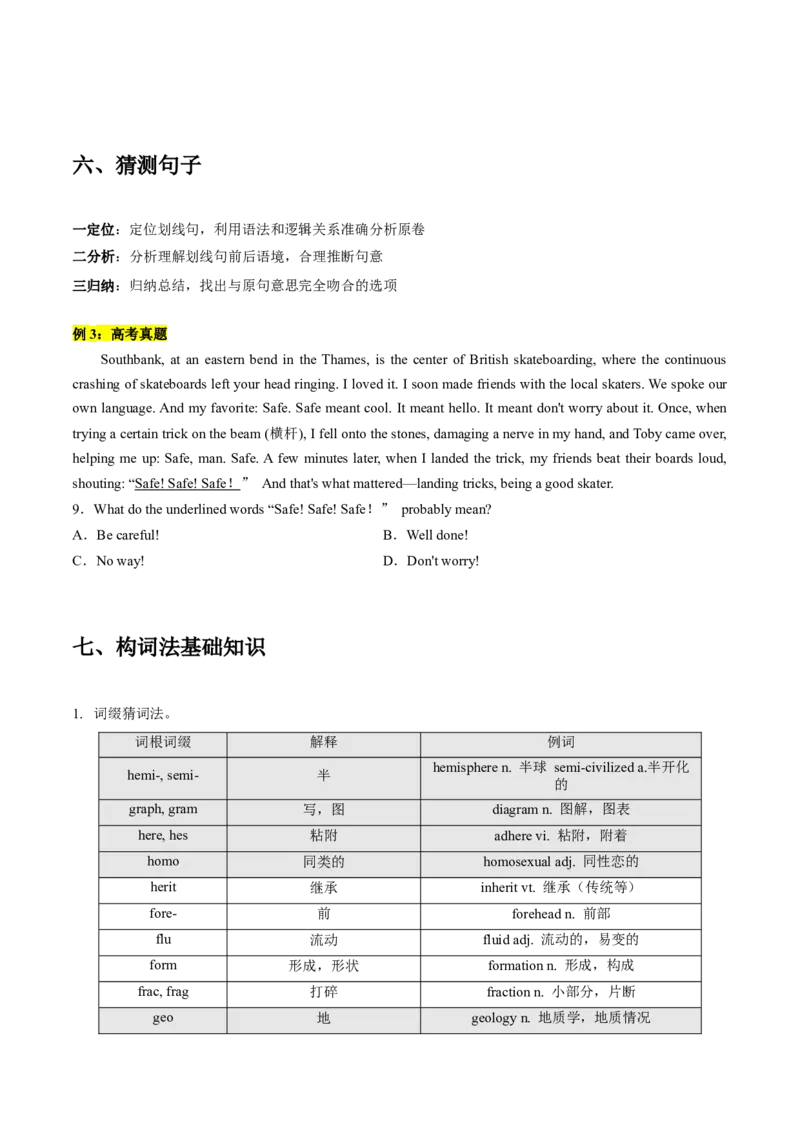
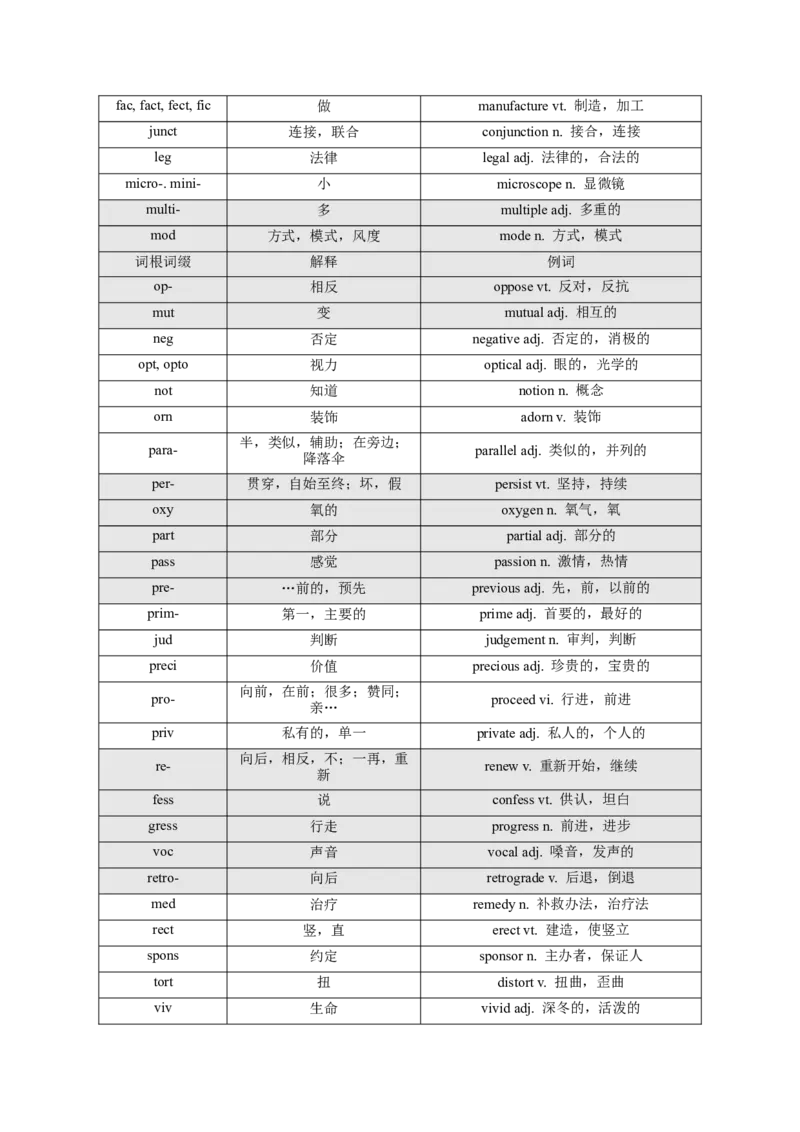
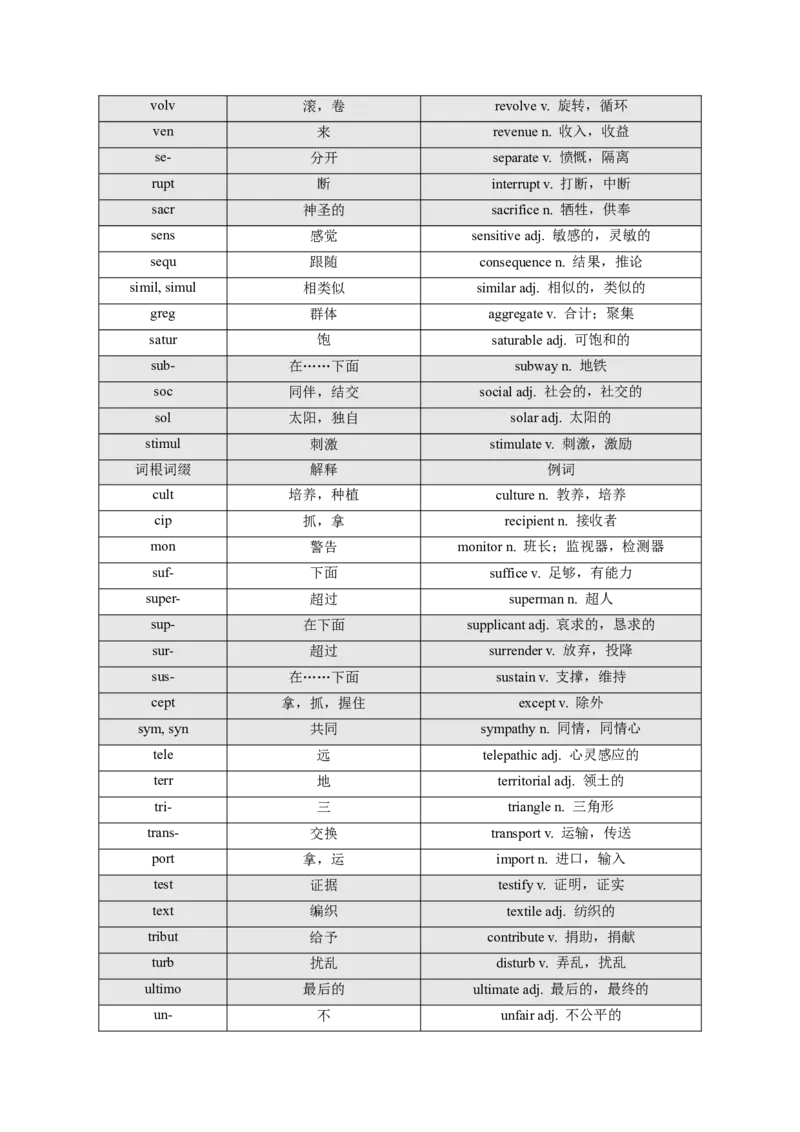
七、构词法基础知识
1. 词缀猜词法。
词根词缀
解释
例词
hemi-, semi-
半
hemisphere n. 半球 semi-civilized a.半开化
的
graph, gram
写,图
diagram n. 图解,图表
here, hes
粘附
adhere vi. 粘附,附着
homo
同类的
homosexual adj. 同性恋的
herit
继承
inherit vt. 继承(传统等)
fore-
前
forehead n. 前部
flu
流动
fluid adj. 流动的,易变的
form
形成,形状
formation n. 形成,构成
frac, frag
打碎
fraction n. 小部分,片断
geo
地
geology n. 地质学,地质情况
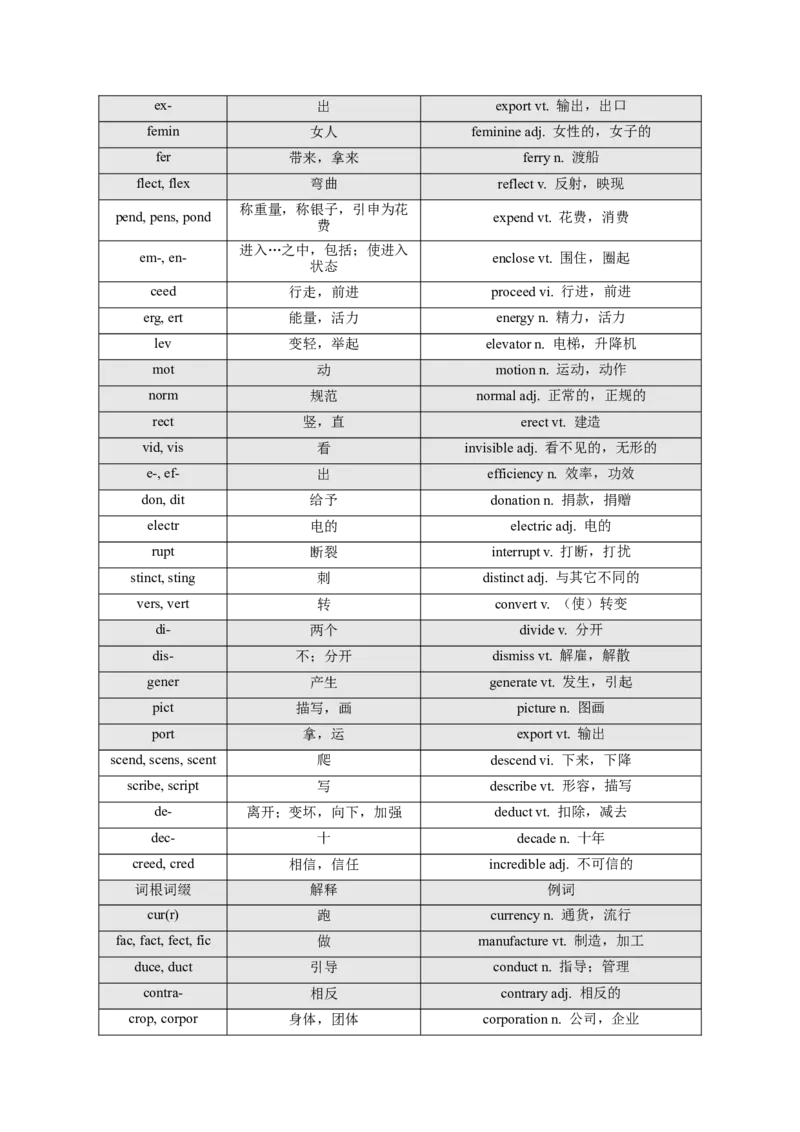
ex-
出
export vt. 输出,出口
femin
女人
feminine adj. 女性的,女子的
fer
带来,拿来
ferry n. 渡船
flect, flex
弯曲
reflect v. 反射,映现
pend, pens, pond
称重量,称银子,引申为花
费
expend vt. 花费,消费
em-, en-
进入…之中,包括;使进入
状态
enclose vt. 围住,圈起
ceed
行走,前进
proceed vi. 行进,前进
erg, ert
能量,活力
energy n. 精力,活力
lev
变轻,举起
elevator n. 电梯,升降机
mot
动
motion n. 运动,动作
norm
规范
normal adj. 正常的,正规的
rect
竖,直
erect vt. 建造
vid, vis
看
invisible adj. 看不见的,无形的
e-, ef-
出
efficiency n. 效率,功效
don, dit
给予
donation n. 捐款,捐赠
electr
电的
electric adj. 电的
rupt
断裂
interrupt v. 打断,打扰
stinct, sting
刺
distinct adj. 与其它不同的
vers, vert
转
convert v. (使)转变
di-
两个
divide v. 分开
dis-
不;分开
dismiss vt. 解雇,解散
gener
产生
generate vt. 发生,引起
pict
描写,画
picture n. 图画
port
拿,运
export vt. 输出
scend, scens, scent
爬
descend vi. 下来,下降
scribe, script
写
describe vt. 形容,描写
de-
离开;变坏,向下,加强
deduct vt. 扣除,减去
dec-
十
decade n. 十年
creed, cred
相信,信任
incredible adj. 不可信的
词根词缀
解释
例词
cur(r)
跑
currency n. 通货,流行
fac, fact, fect, fic
做
manufacture vt. 制造,加工
duce, duct
引导
conduct n. 指导;管理
contra-
相反
contrary adj. 相反的
crop, corpor
身体,团体
corporation n. 公司,企业
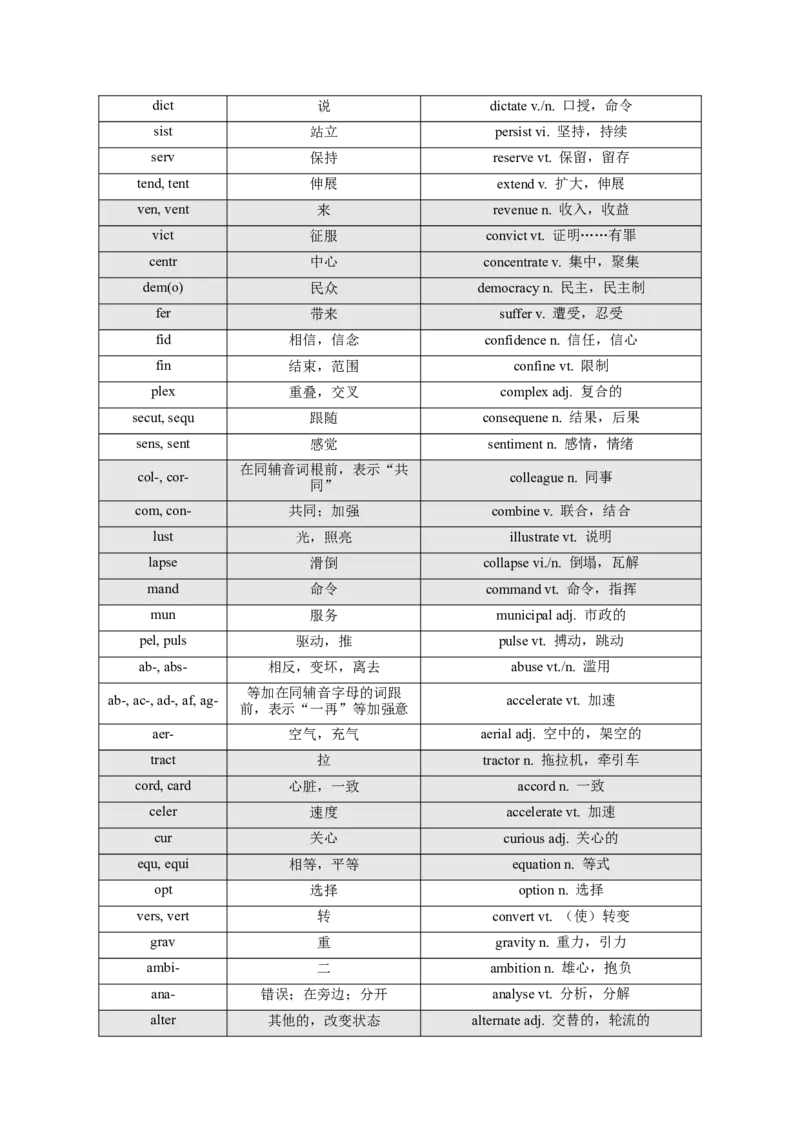
dict
说
dictate v./n. 口授,命令
sist
站立
persist vi. 坚持,持续
serv
保持
reserve vt. 保留,留存
tend, tent
伸展
extend v. 扩大,伸展
ven, vent
来
revenue n. 收入,收益
vict
征服
convict vt. 证明……有罪
centr
中心
concentrate v. 集中,聚集
dem(o)
民众
democracy n. 民主,民主制
fer
带来
suffer v. 遭受,忍受
fid
相信,信念
confidence n. 信任,信心
fin
结束,范围
confine vt. 限制
plex
重叠,交叉
complex adj. 复合的
secut, sequ
跟随
consequene n. 结果,后果
sens, sent
感觉
sentiment n. 感情,情绪
col-, cor-
在同辅音词根前,表示“共
同”
colleague n. 同事
com, con-
共同;加强
combine v. 联合,结合
lust
光,照亮
illustrate vt. 说明
lapse
滑倒
collapse vi./n. 倒塌,瓦解
mand
命令
command vt. 命令,指挥
mun
服务
municipal adj. 市政的
pel, puls
驱动,推
pulse vt. 搏动,跳动
ab-, abs-
相反,变坏,离去
abuse vt./n. 滥用
ab-, ac-, ad-, af, ag-
等加在同辅音字母的词跟
前,表示“一再”等加强意
accelerate vt. 加速
aer-
空气,充气
aerial adj. 空中的,架空的
tract
拉
tractor n. 拖拉机,牵引车
cord, card
心脏,一致
accord n. 一致
celer
速度
accelerate vt. 加速
cur
关心
curious adj. 关心的
equ, equi
相等,平等
equation n. 等式
opt
选择
option n. 选择
vers, vert
转
convert vt. (使)转变
grav
重
gravity n. 重力,引力
ambi-
二
ambition n. 雄心,抱负
ana-
错误;在旁边;分开
analyse vt. 分析,分解
alter
其他的,改变状态
alternate adj. 交替的,轮流的
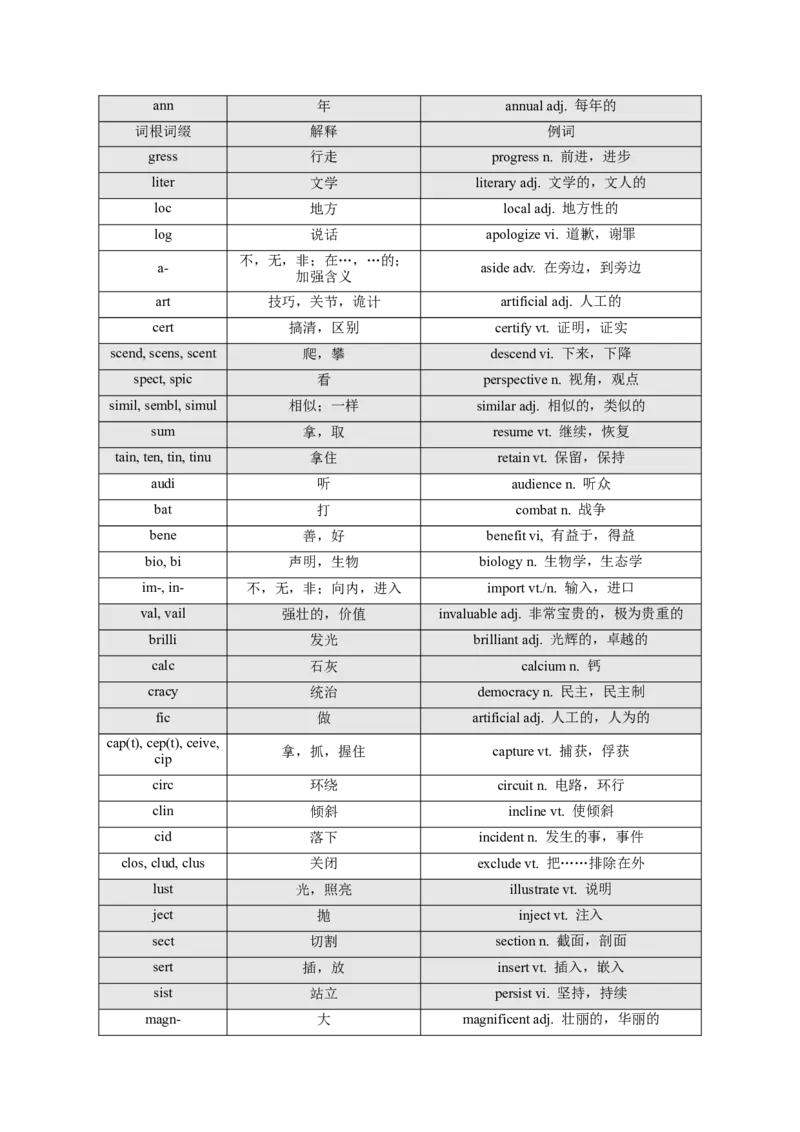
ann
年
annual adj. 每年的
词根词缀
解释
例词
gress
行走
progress n. 前进,进步
liter
文学
literary adj. 文学的,文人的
loc
地方
local adj. 地方性的
log
说话
apologize vi. 道歉,谢罪
a-
不,无,非;在…,…的;
加强含义
aside adv. 在旁边,到旁边
art
技巧,关节,诡计
artificial adj. 人工的
cert
搞清,区别
certify vt. 证明,证实
scend, scens, scent
爬,攀
descend vi. 下来,下降
spect, spic
看
perspective n. 视角,观点
simil, sembl, simul
相似;一样
similar adj. 相似的,类似的
sum
拿,取
resume vt. 继续,恢复
tain, ten, tin, tinu
拿住
retain vt. 保留,保持
audi
听
audience n. 听众
bat
打
combat n. 战争
bene
善,好
benefit vi, 有益于,得益
bio, bi
声明,生物
biology n. 生物学,生态学
im-, in-
不,无,非;向内,进入
import vt./n. 输入,进口
val, vail
强壮的,价值
invaluable adj. 非常宝贵的,极为贵重的
brilli
发光
brilliant adj. 光辉的,卓越的
calc
石灰
calcium n. 钙
cracy
统治
democracy n. 民主,民主制
fic
做
artificial adj. 人工的,人为的
cap(t), cep(t), ceive,
cip
拿,抓,握住
capture vt. 捕获,俘获
circ
环绕
circuit n. 电路,环行
clin
倾斜
incline vt. 使倾斜
cid
落下
incident n. 发生的事,事件
clos, clud, clus
关闭
exclude vt. 把……排除在外
lust
光,照亮
illustrate vt. 说明
ject
抛
inject vt. 注入
sect
切割
section n. 截面,剖面
sert
插,放
insert vt. 插入,嵌入
sist
站立
persist vi. 坚持,持续
magn-
大
magnificent adj. 壮丽的,华丽的
fac, fact, fect, fic
做
manufacture vt. 制造,加工
junct
连接,联合
conjunction n. 接合,连接
leg
法律
legal adj. 法律的,合法的
micro-. mini-
小
microscope n. 显微镜
multi-
多
multiple adj. 多重的
mod
方式,模式,风度
mode n. 方式,模式
词根词缀
解释
例词
op-
相反
oppose vt. 反对,反抗
mut
变
mutual adj. 相互的
neg
否定
negative adj. 否定的,消极的
opt, opto
视力
optical adj. 眼的,光学的
not
知道
notion n. 概念
orn
装饰
adorn v. 装饰
para-
半,类似,辅助;在旁边;
降落伞
parallel adj. 类似的,并列的
per-
贯穿,自始至终;坏,假
persist vt. 坚持,持续
oxy
氧的
oxygen n. 氧气,氧
part
部分
partial adj. 部分的
pass
感觉
passion n. 激情,热情
pre-
…前的,预先
previous adj. 先,前,以前的
prim-
第一,主要的
prime adj. 首要的,最好的
jud
判断
judgement n. 审判,判断
preci
价值
precious adj. 珍贵的,宝贵的
pro-
向前,在前;很多;赞同;
亲…
proceed vi. 行进,前进
priv
私有的,单一
private adj. 私人的,个人的
re-
向后,相反,不;一再,重
新
renew v. 重新开始,继续
fess
说
confess vt. 供认,坦白
gress
行走
progress n. 前进,进步
voc
声音
vocal adj. 嗓音,发声的
retro-
向后
retrograde v. 后退,倒退
med
治疗
remedy n. 补救办法,治疗法
rect
竖,直
erect vt. 建造,使竖立
spons
约定
sponsor n. 主办者,保证人
tort
扭
distort v. 扭曲,歪曲
viv
生命
vivid adj. 深冬的,活泼的
volv
滚,卷
revolve v. 旋转,循环
ven
来
revenue n. 收入,收益
se-
分开
separate v. 愤慨,隔离
rupt
断
interrupt v. 打断,中断
sacr
神圣的
sacrifice n. 牺牲,供奉
sens
感觉
sensitive adj. 敏感的,灵敏的
sequ
跟随
consequence n. 结果,推论
simil, simul
相类似
similar adj. 相似的,类似的
greg
群体
aggregate v. 合计;聚集
satur
饱
saturable adj. 可饱和的
sub-
在……下面
subway n. 地铁
soc
同伴,结交
social adj. 社会的,社交的
sol
太阳,独自
solar adj. 太阳的
stimul
刺激
stimulate v. 刺激,激励
词根词缀
解释
例词
cult
培养,种植
culture n. 教养,培养
cip
抓,拿
recipient n. 接收者
mon
警告
monitor n. 班长;监视器,检测器
suf-
下面
suffice v. 足够,有能力
super-
超过
superman n. 超人
sup-
在下面
supplicant adj. 哀求的,恳求的
sur-
超过
surrender v. 放弃,投降
sus-
在……下面
sustain v. 支撑,维持
cept
拿,抓,握住
except v. 除外
sym, syn
共同
sympathy n. 同情,同情心
tele
远
telepathic adj. 心灵感应的
terr
地
territorial adj. 领土的
tri-
三
triangle n. 三角形
trans-
交换
transport v. 运输,传送
port
拿,运
import n. 进口,输入
test
证据
testify v. 证明,证实
text
编织
textile adj. 纺织的
tribut
给予
contribute v. 捐助,捐献
turb
扰乱
disturb v. 弄乱,扰乱
ultimo
最后的
ultimate adj. 最后的,最终的
un-
不
unfair adj. 不公平的
真题演练
uni-
单一
uniform adj. 统一的,一致的
with-
向后,相反
withdraw v. 收回,撤销
util
使用
utilize v. 利用
vac
空
vacant adj. 空白的
vit
生命
vitamin n. 维他命,维生素
vari
变
various adj. 多样的,多方面的
verb
词语
adverb n. 副词
ver
真实的
verdict n. 裁决,判断
verg
倾向
converge v. 聚合,会聚
1.
2025 年6 月新高考1 卷B 篇
As a new unit started, I asked everyone to write a persuasive piece on a health-related topic of their choice.
This time they found the exercise much more interesting. For the next two assignments, a personal-narrative unit
followed by a creative-writing workshop, I only required that the piece meet the specifications of its genre (体裁)
and that it contain a thesis. The results were staggering. The students took on diverse topics and turned in stories,
10 to 20 pages each, with characters that broadened my view and touched my heart.
6. What does the underlined word “staggering” in paragraph 3 mean?
A. Mixed.        B. Amazing.        C. Similar.        D. Disturbing.
2.
2025 年6 月新高考2 卷B 篇
There are up to 30 students at any given time in Ho’s class. She generally works with their regular teachers to
get lessons and tests being used at their home schools. Some teachers don’t give the kids any assignments; they
express sympathy instead. “I feel like it is a disservice to the kids,” Ho says. “They think their teachers don’t care
about their schoolwork.”
6. What does the underlined word “it” refer to in paragraph 4?
A. Offering regular lessons.
B. Paying extra attention.
C. Assigning no schoolwork.
D. Showing no sympathy.
3.
2025 年6 月北京卷C 篇
Not too long ago, on a cold winter night, there was a teenager who wanted more screen time and a parent who
said no. The teenager was advocating for her right to scroll (翻屏) for an extra 30 minutes. The parent argued that
none of her friends’ parents let them have screens after 9 o’clock. “I thought, in this family, we don’t compare
ourselves with other people, Dad?” the teenager replied. The parent — who was me, by the way — just got served.
Since they were young, I have told my kids not to compare themselves with other people. I have argued countless
times that comparisons are the “thief of joy”.
Although my daughter didn’t win, she did help expose one of the worst pieces of advice I have ever given. In
my defence, I did what we’ve all done before, which is repeat received wisdom without exploring the nuances. But
now is the time to set the record straight, which starts with questioning the idea that all social comparison is
unhealthy.
29. What does the word “nuances” underlined in Paragraph 2 most probably mean?
A. Major achievements.
B. Complex feelings.
C. Significant impacts.
D. Fine differences.
4.
2025 年1 月浙江卷C
A novel design approach to gardening has been gaining in popularity worldwide. Referred to as matrix
planting, this approach aims for nature to do a lot more of the heavy lifting in the garden, and even some of the
designing. Eschewing fertilizers(化肥) and power tools, it’s based on an elegantly simple principle: to garden
more like nature does.
The concept was born when German city planners sought to plant large areas of parkland after World War II in
a reproducible way that would need minimal maintenance. Planners created planting mixes that could be used
modularly (模块化). In a matrix garden, plants with similar cultural needs are grouped so that they will grow
together above and below ground, forming a cooperative ecosystem that conserves water and discourages weeds.
......
28. What does the underlined word “Eschewing” in the first paragraph mean?
A. Running out of.
B. Keeping away from.
C. Putting up with.
D. Taking advantage of.
5.
2025 年1 月八省联考B
Jim Johnson, a mail carrier, was an institution in the leafy Westmoreland, Westhaven and Westover Hills
neighborhoods. just north of downtown Wilmington, where he delivered much more than the mail. He knew all the
kids and their pets by name; he carried in the groceries; he took note of unlocked doors, offered gardening advice,
and taught more than a few young boys the art of the curveball. When he wasn't doing all that, Jim was running
across a checkerboard of green lawns(草坪) to ensure the local postal service did not fall short of its daily
promise.
Though the postal service is often disparaged now, the trust in local postal service lives on. In many
communities, that trust is won every day when life-saving medicine, greetIng cards, social security checks, college
acceptance letters-even the bills-appear in mailboxes in front of the houses.
25. What does the underlined word “disparaged” in paragraph 2 mean?
A. Refused.
 B. Criticized.
C. Investigated.
D. Suspended.
6.
2024 年6 月新课标全国Ⅰ卷C
Is comprehension the same whether a person reads a text onscreen or on paper? And are listening to and
viewing content as effective as reading the written word when covering the same material? The answers to both
questions are often “no”. The reasons relate to a variety of factors, including reduced concentration, an
entertainment mindset (心态) and a tendency to multitask while consuming digital content.
When reading texts of several hundred words or more, learning is generally more successful when it’s on
paper than onscreen. A large amount of research confirms this finding. The benefits of print reading particularly
shine through when experimenters move from posing simple tasks — like identifying the main idea in a reading
passage — to ones that require mental abstraction — such as drawing inferences from a text.
28. What does the underlined phrase “shine through” in paragraph 2 mean?
A Seem unlikely to last.
                      B. Seem hard to explain.
C. Become ready to use.                          D. Become easy to notice.
7.
2024 年6 月新课标全国Ⅱ卷D
Given the astonishing potential of AI to transform our lives, we all need to take action to deal with our AI-
powered future, and this is where AI by Design: A Plan for Living with Artificial Intelligence comes in. This
absorbing new book by Catriona Campbell is a practical roadmap addressing the challenges posed by the
forthcoming AI revolution (变革).
In the wrong hands, such a book could prove as complicated to process as the computer code (代码) that
powers AI but, thankfully, Campbell has more than two decades’ professional experience translating the heady into
the understandable. She writes from the practical angle of a business person rather than as an academic, making for
a guide which is highly accessible and informative and which, by the close, will make you feel almost as smart as
AI.
12. What does the phrase “In the wrong hands” in paragraph 2 probably mean?
A. If read by someone poorly educated.
B. If reviewed by someone ill-intentioned.
C. If written by someone less competent.
D. If translated by someone unacademic.
以防潜在危机。
8.
2024 年6 月新课标全国甲卷B
Cats have many heightened senses, but their sense of smell is quite impressive. They use their noses to assess
their environment and look out for any signs of danger. They will sniff out specific areas before they choose a place
to relax. However, another way the cats are able to distinguish between situations is by looking for familiar smells.
Your cat will likely smell your face and store the smell in its memory and use it to recognize you in the future.
That's why most pet cats are able to tell immediately if their owners were around any other cats, which they don't
usually like.
Dogs are known for their impressive fetching habit, but cats take this behavior up a notch. Many cats will find
random objects outside and bring them to their owners. This is a very old habit that's been present in all kinds of
predators (食肉动物). Cats bring gifts for their owners to show they love you. These adorable little hunters are just
doing something that it's been in their nature since the beginning of time. So just go along with it!
6. Which best explains the phrase "take. . . up notch" in paragraph 3?
A. Perform appropriately.
  B. Move faster.
C. Act strangely.   D. Do better.
9.
2024 年6 月北京卷C
The 18th-century philosopher Kant argued that the universe ultimately consists of things-in-themselves that
are unknowable. While he held the notion that objective reality exists, he said our mind plays a necessary role in
structuring and shaping our perceptions. Modern sciences have revealed that our perceptual experience of the world
is the result of many stages of processing by sensory systems and cognitive (认知的) functions in the brain. No one
knows exactly what happens within this black box. If empirical (实证的) experience fails to reveal reality,
reasoning won’t reveal reality either since it relies on concepts and words that are contingent on our social,
押题演练
cultural and psychological histories. Again, a black box.
So, if we accept that the universe is unknowable, we also accept we will never know if we live in a computer
simulation. And then, we can shift our inquiry from “Is the universe a computer simulation?” to “Can we model the
universe as a computer simulation? ” Modelling reality is what we do. To facilitate our comprehension of the world,
we build models based on conceptual metaphors (隐喻) that are familiar to us. In Newton’s era, we imagined the
universe as a clock. In Einstein’s, we uncovered the standard model of particle (粒子) physics.
29. What does the phrase “contingent on” underlined in Paragraph 2 probably mean?
A. Accepted by.
B. Determined by.
C. Awakened by.
D. Discovered by.
10. 2024 年1 月九省联考C
However, there are ways to win an argument every time. When you state your position, formulate (阐述)
an argument for what you claim and honestly ask yourself whether your argument is any good. When you talk with
someone who takes a stand, ask them to give you a reason for their view and spell out their argument fully Assess
its strength and weakness Raise objections(异议) and listen carefully to their replies. This method will require
effort, but practice will make you better at it.
30. What does the underlined phrase “spell out” in paragraph 3 probably mean?
A. Defend.        B. Explain.        C. Conclude.        D. Repeat.
1.
Some studies estimate that by 2025, about 35.7 million Americans or 22% of the workforce will be remote
workers. Now more people are choosing to welcome a location-independent, technology-enabled lifestyle that
allows them to travel and work remotely. They are called digital nomads (数字游民), and the trend is becoming
more and more widespread.
The growing popularity of this location-independent lifestyle has stimulated an interest in digital nomad
visas. As a result, countries are introducing visa options to lure foreigners for extended stays. For example,
Indonesia announced that the country is developing a new visa that would be effective for five years — longer than
any other digital nomad visa currently available. The emergence of digital nomad visas signifies a progressive
response to the rising demand for this new lifestyle.
Meanwhile, the conventional image of digital nomads is undergoing a transformation. Digital nomads used
to be thought of as twenty-somethings backpacking from hostel to hostel, looking for anywhere they could plug in
their laptop. But flexible work and homeschooling have helped introduce a new type of digital nomad that wants to
see the world and create lasting memories with their families. It’s called the “anywhere worker”. Most anywhere
workers can be found in high-tech jobs, with 61% working full-time. Almost half of people in this category are
married, and, unlike the typical digital nomad, 70% are parents who take their families with them.
Consistent with the changing image of digital nomads, there is also a shift from valuing possessions to
focusing on experiences. Millennils in particular, are fueling this trend. Rather than spending money on expensive
watches or luxury cars, younger generations prefer to invest in experiences like concerts, rock climbing and
traveling. According to one study, more than three in four Millennials would rather spend their hard-earned money
on a thrilling experience or event over buying a product.
As remote work opportunities increase, the trend of living a digital nomadic lifestyle is expected to continue
growing, allowing more individuals to pursue their dream lifestyles. Nevertheless, whether or not it will stand the
test of time remains to be seen.
1.What makes remote work possible?
A.The rise of digital nomads.
B.The technology advancement.
C.The availability of digital nomad visas.
D.The increased demand for work-life balance.
2.What does the underlined word “lure” mean in Paragraph 2?
A.Request.
B.Entertain.
C.Fascinate.
D.Guide.
3.What is Paragraph 4 mainly about?
A.The shopping habits of Millennials.
B.The analysis of Millennials’ image.
C.The changing values of digital nomads.
D.The benefits of a digital nomadic lifestyle.
4.What is the author’s attitude towards digital nomads?
A.Positive.
B.Negative.
C.Neutral.
D.Ambiguous.
2.
Most people see innovation as a flash of brilliance and Eureka, a new world is born. When Alexander
Fleming returned to his lab in 1928, he found a bacteria culture he had grown was infected by fungus ( 霉菌),
killing any colonies it touched. Rather than simply starting over, Fleming switched his focus to the fungus. He
identified the bacteria-killing substance, which he called “penicillin”, and seemingly in a single stroke, created the
new field of antibiotics. The truth, however, is messier. It wasn’t until 1943 that penicillin came into widespread
use.
To put Fleming’s discovery in context, consider Ignaz Semmelweis, who pioneered hand washing in
maternity wards ( 产房), significantly reducing childbed fever but receiving scorn instead of fame. That was
because in the 1850s, his ideas conflicted with the popular miasma theory, which attributed disease to “bad airs”.
After his death in 1865, germ theory was accepted, paving the way for Fleming’s later work.
Fleming was a gifted biologist but a poor communicator. When he published his results in 1929, few took
notice. In 1935, Howard Florey and Ernst Chain discovered Fleming’s paper, understood its importance, and
developed methods to produce penicillin in quantity. By 1943, with World War II raging, the War Production Board
enlisted 21 companies to mass-produce penicillin, saving countless lives and ushering in the new age of antibiotics.
Fleming, Florey and Chain received the Nobel Prize for Medicine in 1945.
Penicillin owes much of its success to government support. For many other groundbreaking innovations like
the Internet and GPS, their innovators, while carving their own path, are often uncertain of where the opportunity
lies until they team up with other visionaries and corporations, who might have the resources to fast-track their
ideas. So, look at any significant innovation and the myth of the lone genius and the “eureka moment” breaks
down.
1.What is the first paragraph mainly about?
A.An account of a lab story.
B.Redefinition of a traditional view.
C.Correction of a popular misconception. D.An analysis of a scientific phenomenon.
2.What is the message conveyed about Fleming’s story?
A.Great minds think alike.
B.The early bird catches the worm.
C.Luck’s got your back when it comes to success.
D.Early work is a steppingstone to later breakthroughs.
3.What does the underlined part “ushering in” mean in paragraph 3?
A.Delaying.
B.Introducing.
C.Predicting.
D.Transforming.
4.Which of the following can be the best title?
A.Great Innovations: Individuals Are True Heroes.
B.From Failure to Success: The Story of Penicillin.
C.The Lone Genius: Fleming’s Discovery of Penicillin.
D.The Long Road to Penicillin: How Innovation Happens.
3.
Human beings have a fundamental need to belong. Yet we are living in a time of loneliness and isolation. A
lack of social connection can have negative consequences for both our mental and physical health. To encourage
the feelings of connectedness, recent studies suggest that experiential purchases, such as travel, meals at restaurants
and recreation, tend to bring people more happiness than material ones, and can promote a greater sense of social
connection.
In a series of 13 experiments involving 1,980 participants, researchers asked people to think about either
experiential or material purchases they had made and then rate their thoughts and feelings about those purchases.
People reported feeling more connected with those who had made the same experiential purchase than those who
had made the same material purchase. This reflects the fact that experiential purchases are more central to an
individual’s identity.
Moreover, these findings apply even when people think about how their experiences differ. Even in cases
where participants were asked to consider a situation in which they met someone making a similar but better
experiential or material purchase, experiences were more likely to foster connection between people than material
items were. Although the unpleasant social comparison can create a sense of social distance, this distance feels less
wide when it comes to experiential purchases. That’s because it’s easier for people to find common ground and feel
kinship with someone else over their similar experiences.
Finally, after people think about a joyous experience, they express a greater desire to engage in social
activities than they do after they reflect on an important possession. As experiences bond us with others, they
provide memories of such bond that people can revisit. These memories, in turn, can encourage engagement in even
more sociality.
One clear takeaway from this research is that people would likely be wise to shift their spending habit from
“having” to “doing”. Also, the research hints that directing resources toward more community engagement might
drive improvements in societal well-being.
1.Which can be an example of experiential purchases?
A.Watching a paid magic show.
B.Claiming free food samples.
C.Reading fictions in a library.
D.Purchasing a trendy T-shirt.
2.What does the underlined word “kinship” in paragraph 3 mean?
A.A shared family background.
B.A sense of emotional closeness.
C.A tendency to be competitive.
D.A desire to purchase the same things.
3.What can be learned about experiential purchases?
A.They are better for mental development. B.They create unpleasant social comparisons.
C.They contribute to widening social distance.
D.They encourage engagement in social events.
4.What are people advised to do according to the text?
A.Reflecting on our consumption preference.
B.Seting rules to limit unnecessary spending.
C.Encouraging community engagement.
D.Exploiting more resources in community.
4.
For centuries, we’ve pursued happiness and meaning. But what does that leave out? As a social psychologist,
I have dedicated my research career to a simple, but universal question: what makes for a good life, and how can
we achieve it?
For much of human history, we have been presented with two possibilities: pursuing a life of happiness, or a
life of meaning. Each of these paths has its benefits, but decades of psychological research have also revealed their
limits.
Ask the Danes and Finns, who consistently rank among the happiest people in the world, what their secret is
and they’ll tell you this: lower your expectations and be content with what you have. It sounds good, doesn’t it? But
it leaves something out. It’s a bit like being a college student who only takes easy courses to be sure of getting good
grades. Might there be more to life than simple pleasures and cozy comfort?
Then there’s the meaningful life. We often imagine that meaning flows from trying to change the world like
Steve Jobs. Once again, the research shows that lowering your sights and focusing on the little things can offer a
more achievable sense of meaning. Often people find it in routines like taking care of family, or volunteering in the
community. But there is also a dark side to the pursuit of meaning: researchers have found that it can encourage
people to draw sharp lines between those who belong in their group and those who don’t.
My research lab mapped out a third route to fulfillment: psychological richness. A psychologically rich life is
one filled with diverse, unusual and interesting experiences that change your perspective; a life with twists and
turns; a life that feels like a long, winding hike rather than many laps of the same racing circuit. Such experiences
can make us tougher. Not only that, embracing the pursuit of psychological richness can make us less likely to
regret: it matters less if the thing you did went wrong.
Perhaps no one said it better than Eleanor Roosevelt: “The purpose of life, after all, is to live it, to taste
experience to the utmost, to reach out eagerly and without fear”.
1.What is revealed about pursuing happiness or meaning?
A.Their benefits outweigh the limits.
B.They are equally difficult to achieve.
C.Both paths have limits despite their benefits. D.Most people prioritize happiness over meaning.
2.What does the example of “a college student” show in paragraph 3?
A.Gratitude is essential for a happy life.
B.We should live up to others’ expectations.
C.Life means more than leisure and comfort.
D.Happiness requires academic achievement.
3.What does the underlined words “a dark side” imply in paragraph 4?
A.It may lead to prejudice against outsiders.
B.It may result in the loss of group belonging.
C.It demands too much volunteer involvement. D.It makes people forget their family responsibilities.
4.What is the author’s main purpose in writing this article?
A.To promote Roosevelt’s life philosophy. B.To introduce a new concept of life fulfillment.
C.To criticize traditional psychological research.D.To compare different cultural views on happiness.
5.
Now controversial new technologies promise parents even more control over their embryos (胚胎) . Today, a
lot of those “designer babies” are teenagers. And some families are discovering that things don’t always work out
as planned; The kids feel like walking science experiments; the parents are disappointed in how their children
turned out. Fertility (生育) businesses are selling a chance of domestic welfare, and these families feel cheated.
People who have children this way often place too much importance on genes while ignoring the
environment. It’s like, “This is what our family is going to look like. We’re going to pick a kid, and this is how
we're going to put it together,” It’s like a project or building a company. People don’t always realize they are
creating a human being and not a piece of furniture. They tend to get what they want and don’t hear “no” a lot. So
when their kid shows up and isn't the way that they want, what happens?
Usually, it’s a disaster. In these homes, a high value gets placed on achievement. I think the way these kids
are created sends the message: “You’re not good enough. You need to achieve.” When the kids struggle, it’s
especially devastating. The child grows up feeling very different, knowing they were an experiment but not getting
the proper support or acceptance they need to grow.
In my work, I help parents accept: This is the child you have. I help them make abstract concepts more
concrete. Sometimes just explaining “you and your child are not the same person” does the trick. And I help kids
accept the reality of their parents. Or say a teenager doesn’t feel loved. I might need to clarify to them that “love” is
not a tangible feeling, like getting kicked. It means someone feels fondness toward you like you feel fondness
toward candies or toys.
Trying to control your child is a recipe for disaster. The kid is going to rebel ( 反抗) . I don’t know if
anyone’s making sure parents understand that they can’t test-drive a child and then return it. You probably can
predict stocks, but human behavior has far too many variables.
1.What does the author stress regarding “designer babies” in paragraph 1?
A.The high expectations from their parents.
B.The psychological impact on their families.
C.The intentional cheating from fertility businesses.
D.The moral issues surrounding genetic engineering.
2.What is a common problem for families with “designer babies”?
A.The children often rebel against their parents.
B.The parents are too focused on genetic perfection.
C.The children feel like they are science experiments.
D.The parents are unable to afford to raise their children.
3.What does the underlined word “devastating” in paragraph 3 mean?
A.Confusing.
B.Doubtful.
C.Challenging.
D.Harmful.
4.What is the author’s suggestion for parents of “designer babies”?
A.Invest more in genetic research.
B.Accept their children as they are.
C.Focus more on their children’s achievements.
D.Seek professional help to shape their children.
6.
A growing number of companies are building humanoid robots, and these mechanical look-alikes are starting
to appear in car factories and delivery places. Some businesses even promise robots for home use. Yet one big
question still has no answer: Why bother? Why make a robot in a human shape when it could take any imaginable
form?
The usual answer is that humanoid robots could, in principle, handle any physical jobs a person can. But that
“in principle” is doing a lot of heavy lifting. If you’ve watched videos of these robots, you’ll get it — they’re often
clumsy, awkward machines. Sure, the technology helping them stand and move has come a long way, but they’re
still not as quick or graceful as humans. Meanwhile, robots built for a single job — like an arm shifting goods
between conveyor belts (传送带) — are now commonplace. Designed with one purpose, they do it really well,
unlike humanoid robots, which aim to do everything but often master nothing.
Another argument is that a human shape makes it easier for people to work with or control robots. This
holds some water, especially since many of these machines still need skilled human operators. Companies often
avoid admitting this, calling it a short-term phase, but the dream of fully independent, AI-powered humanoid robots
— ones that match or beat human workers — remains a long shot. For now, what we’ve got are human-shaped
shells guided by people behind the scenes. When Elon Musk introduced Tesla’s Optimus robot in 2021, he proudly
claimed it could teach, babysit, walk dogs, fetch groceries, or pour drinks. Yet those robots weren’t AI-driven, and
each was controlled by a hidden human. Notice a pattern? These tasks—low-wage, service-oriented jobs — suggest
that, for now, humanoid robots just mask human effort with a shiny surface.
Some remote-controlled robots serve real purposes, like in deep-sea exploration. But those machines aren’t
shaped like humans — they look like capsules or small vehicles, and they work just fine. The idea that robots must
be human-shaped is a failure of imagination.
Yes, humanoid robots look impressive. They remind us of the fantasies in science fictions where machines
handle all difficult tasks. But today, they are mostly marketing tools, masking human labor. And a robot that doesn’t
truly improve life is missing the point.
1.What does the underlined phrase “holds some water” mean in paragraph 3?
A.Provides sufficient evidence.
B.Makes much sense.
C.Is partly reasonable.
D.Is widely accepted.
2.Why does the author mention Tesla’s Optimus robot?
A.To prove humanoid robots are better.
B.To highlight its impressive technology.
C.To show it can replace human workers. D.To suggest it is in the charge of humans.
3.What is the author’s attitude toward humanoid robots?
A.Skeptical.
B.Optimistic.
C.Neutral.
D.Cautious.
4.What is the best title for the passage?
A.When Humanoid Robots Miss Potential B.How Humanoid Robots Miss Goals
C.What Humanoid Robots Lack Now
D.Why Humanoid Robots Fall Short
7.
In 1933, philosopher Bertrand Russell observed that “the fundamental cause of the trouble is that in the
modern world the stupid are confident while the intelligent are full of doubt.” This insight remains relevant today,
but the issue runs deeper: while most people recognize overconfidence in others, they rarely see it in themselves.
This phenomenon, known as the Dunning-Kruger Effect, reveals that those with the least knowledge often
overestimate their abilities, while the truly knowledgeable remain humble and open-minded.
The internet exacerbates this problem. With endless access to information, people often mistake superficial
understanding for professional knowledge, leading to overconfidence. Organizational psychologist Adam Grant
addresses this in his book Think Again, urging readers to challenge and update their beliefs. Grant argues that we
often adopt the mindsets of churchmen, lawyers, or politicians — defending our beliefs, attacking others’, or
seeking approval — rather than seeking truth.
To overcome this, Grant suggests separating our sense of self from fixed beliefs. Instead of sticking to
beliefs, we should be open to revision. This scientific mindset encourages us to test ideas and update our
understanding. Grant cites a study where entrepreneurs (企业家) trained in scientific thinking did better than their
peers and achieved greater success, which highlights the value of open-mindedness and adaptability.
In the final part of the book, Grant shows us how rethinking skills enhance political debates, teaching, and
workplace innovation. Grant provides a host of illustrative examples, but my favorite is the example of a history
teacher who gets her students to think like scientists by rewriting textbook chapters that failed to cover important
historical events in sufficient depth. This is a far better approach than simply delivering a lecture and forcing
students to review the information on a test.
But of course, this book is not the final word on the topic, and Grant wouldn’t want it to be. As we gain
better evidence and more experience, it’s our responsibility to continually renew our beliefs. As Russell said, “If
you’re certain of anything, you’re certainly wrong, because nothing deserves absolute certainty.”
1.What problem do most people have?
A.Decline in self-confidence.
B.Concern about others’ doubts.
C.Indifference to social problems.
D.Unawareness of personal limitations.
2.What does the underlined word “exacerbates” in paragraph 2 probably mean?
A.Creates.
B.Fixes.
C.Worsens.
D.Prevents.
3.Which person could be an example in the final part of the book?
A.A chef open to feedback.
B.A scientist resistant to doubts.
C.A doctor reliant on experience.
D.A consumer blinded by brands.
4.Which of the following can be used to describe the book?
A.Practical and conclusive.
B.Insightful but not definitive.
C.Informative and theoretical.
D.Authoritative but not engaging.
8.
Consider the hierarchy (层次) of needs proposed in 1943 by the psychologist Abraham Maslow. Maslow
believed that people tend to focus on meeting their needs in a particular order of urgency. We start with survival
needs such as food, shelter, and safety. Once these have been met, we turn our attention to social and emotional
needs, such as love and belonging. Finally, we focus on higher-order needs such as self-actualization — in other
words, looking for life’s meaning.
Of these three levels, money is only truly helpful for the first. This is why economists often find that well-
being doesn’t improve much once a person reaches the relatively humble financial means that meet those needs.
The “middle needs” of love and belonging — family, friends, romance — can’t be met with money, and pursuing
money with too much gusto can even result in unexpected consequences.
Focusing too much on money is actively opposed to Maslow’s highest-level needs, because doing so can
lead people into a trap that researchers call “financial contingency of self-worth,” which happens when a person’s
self-esteem is conditional on his or her financial success.
This might explain why stress levels are high both when money is tight and when people reach higher
income levels. A 2018 survey conducted by LinkedIn found that stress at work falls when people earn more than
$50,000, but then starts to rise significantly when people earn above $200,000. One reason for the stress among
high earners is their neglect (忽略) of relationships, according to some researchers.
Perhaps your parents always put a lot of pressure on you to succeed financially, or you tend to be insecure
about your self-worth and rely a lot on social comparison. One way or another, you might be measuring yourself in
money, and without realizing it, hoping that at some point you will be “expensive” enough to earn others’ love and
respect. Your instincts (直觉) might be telling you to earn more, more, more in order to find peace and satisfaction.
Your instincts are lying, and you could get much happier by reassessing your priorities.
1.What is the primary role of money according to Maslow’s hierarchy of needs?
A.It ensures a sense of safety.
B.It satisfies all levels of needs.
C.It is crucial for self-actualization.
D.It is most effective for basic survival needs.
2.What does “gusto” mean in paragraph 2?
A.Resistance.
B.Enthusiasm.
C.Indifference.
D.Hesitation.
3.Why might pursuing money excessively lead to stress even at higher income levels?
A.It leads to a constant need for financial growth.
B.It complicates financial choices for the wealthy.
C.It may overshadow social and emotional bonds.
D.It increases the pressure to maintain high income.
4.What is the author’s view on using money as a measure of self-worth?
A.It’s a natural response.
B.It’s a reasonable pursuit.
C.It’s a notable misconception.
D.It’s a temporary phase in personal growth.
9.
Every day, you likely hear a new piece of advice. One suggestion you may hear is to “fake it until you make
it”, especially if you’re starting something new, like a job. But is it really good advice?
Fake it till you make it is an expression in which a person imitates (模仿) the confidence or skills they need
to succeed in what they are doing in the hope that they will eventually feel real. Advocates of this idea say you can
fake confidence and hope that, eventually, it will inspire real confidence.
The best time to use this strategy may be when you’re trying to change your behavior to improve yourself. If
you aim to boost your work productivity, you might draw inspiration from your more efficient colleagues. This way
can help you learn strategies to enhance your performance. Similarly, in your personal life, striving to be more
friendly and warm can initially feel awkward but will ultimately foster better relationships with those around you.
Unfortunately, faking it till you make it doesn’t always bring sunshine, lollipops, and rainbows. It may not
work when dealing with hard skills, assisting others, or faking who you are. For example, it is incredibly hard to
fake technical skills and competence like software experience. It’s also hard to assist others if you lack
understanding of the subject. Moreover, pretending to be someone you’re not or making false claims can be
exposed.
One study shows that it can snowball into imposter syndrome, which can arise when individuals feel their
success is undeserved and fear being exposed as a fake. Unfortunately, faking it till you make it can exacerbate that
syndrome, leading to avoidance and negative impacts on productivity and well-being.
In conclusion, there is a difference between learning new behaviors and lying about your identity or skills.
One can build you into a better worker or friend, but the latter can get you into trouble. “Fake it till you make it”
can be a useful approach for some, while it can also contribute to imposter syndrome for others.
1.Why do some people adopt the strategy “fake it till you make it”?
A.To criticize the behavior of others.
B.To make others trust their abilities.
C.To avoid taking on new challenges.
D.To gain confidence through imitation.
2.In what type of situation might “fake it till you make it” be ineffective?
A.When taking up a new hobby.
B.When trying to stay focused in class.
C.When teaching others computer skills.
D.When socializing with your classmates.
3.What does the underlined word “exacerbate” in paragraph 5 mean?
A.Worsen.
B.Relieve.
C.Prevent.
D.Recognize.
4.What is the author’s main viewpoint on the strategy “fake it till you make it”?
A.It can be positive or negative.
B.It is a useful tool in our daily life.
C.It is more harmful in the long run.
D.It’s always good for personal growth.