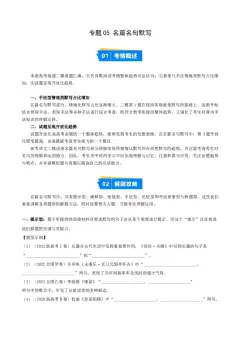
专题05.认知与批判性思维
批判性思维是高中英语核心素养的核心组成部分,指通过分析、评估、推理与反思等思维活动,实
现对文本的深度解读而非被动接受。在高考阅读理解中,其集中体现为:识别作者隐藏立场与假设、评
估论据有效性、辨别逻辑谬误、结合语境推断深层含义、形成独立判断等能力。这一思维方式不仅适用
于议论文、说明文等信息类文本,也贯穿新闻报道、科技评论等多元语篇,是突破 “浅层阅读”、提升
推理判断题与观点态度题正确率的关键策略。
策略操作
一、论点溯源与立场解码策略(适用于议论文 / 评论类语篇)
【策略操作】
定位显性论点:议论文或评论类语篇的核心观点常遵循 "总 - 分" 或 "分 - 总" 结构。在首段结尾
处,作者通常通过设问、数据对比等方式引出核心论点;末段则可能以总结句或升华句的形式强化立场
建议使用荧光笔标注信号词(如 however, therefore, in conclusion)辅助定位。
梳理分论点及论证逻辑:采用思维导图工具,将段落关键词提炼为节点,分析各分论点间的递进、
并列或对照关系。特别关注论据类型(事实数据、专家证词、案例分析),区分归纳推理(从具体到抽
象)与演绎推理(从抽象到具体)的论证路径。
挖掘论点背后的隐含假设与作者立场:通过追问 "作者默认读者认同哪些前提?"" 哪些价值观被嵌
入论述?"等问题,识别隐藏在论证中的意识形态倾向。例如,环保议题论述中对" 可持续发展 " 概念的
默认接受,或经济评论中暗含的效率优先原则。建议使用表格横向对比不同作者对同一议题的立场差异
强化批判性视角。
【语篇示例】(议论文节选)
Online education should replace traditional classrooms entirely. A 2023 study by the Education Research
Center found 82% of students reported higher learning efficiency in online courses. Moreover, online platforms
reduce educational costs, making quality education accessible to rural areas. Those who oppose it overstate the
lack of face-to-face interaction, but modern video tools have solved this problem.
策略分析
【示例分析】
显性论点剖析:文章提出 “Online education should replace traditional classrooms entirely” 的核心主张,
此观点将在线教育与传统课堂置于非此即彼的对立格局。这一论断通过强化技术赋能下教育形态变革的
绝对化倾向,试图重构教育场景的话语权归属。
支撑论据解构:
数据论证:文中引用 “82% 学习效率数据” 作为关键论据,此类量化指标虽具有直观说服力,但
需警惕数据来源的可靠性、样本选取的代表性及效率评估维度的局限性。在未明确学习内容、评估标准
及学习者群体特征时,该数据存在过度简化教育复杂性的风险。
成本优势:强调在线教育 “降低教育成本”,主要基于减少场地租赁、师资配置等显性开支。然而,这
一论述忽视了在线教育平台开发维护、网络基础设施建设等隐性成本,同时未考虑教育资源分配不均导
致的数字鸿沟问题。
价值判断标准:论证过程中默认 “学习效率高” 与 “成本低” 是衡量教育模式优劣的核心维度,
却忽略了教育的人文性、社会性等非量化价值。例如,传统课堂中的即时情感交流、同伴协作学习对学
生人格塑造和社会能力培养的独特作用。
技术替代逻辑:假定 “视频工具可完全替代面对面互动”,这一假设低估了线下教学中肢体语言、
课堂氛围等非语言因素对学习效果的影响,以及教师在真实场景中对学生动态反馈的即时调整能力。
作者立场洞察:作者呈现出明显的技术乐观主义倾向,过度放大在线教育的革新潜能,而对传统教
育在因材施教、师生深度互动、校园文化浸润等方面的不可替代性缺乏充分考量。这种立场偏差可能导
致对教育模式转型的认知片面化,忽视技术应用与教育本质的辩证关系。
高考链接:此类系统性文本分析策略可有效应对高考英语阅读中 “What is the author’s attitude towards...”
等态度推断类题型。通过拆解论点、剖析论据、挖掘假设、定位立场的四步分析法,能够避免因孤立解
读个别情感词汇(如褒义词、贬义词)而误判作者真实意图,从而提升答题的精准度与逻辑性。
二、证据三维度评估策略(适用于说明文 / 研究报告类语篇)
【策略操作】
从 “充分性、相关性、可靠性” 三维度构建系统化证据评估框架:
充分性检验:核查证据数量是否覆盖研究对象的核心场景、发展阶段及影响因素。例如,分析气候
变化对农业的影响时,需涵盖不同气候区、农作物类型及时间跨度的数据,避免以偏概全。
相关性验证:判断证据与论点的逻辑联结强度。可采用 “反向追问法”,即假设移除某条证据后论
点是否仍成立,若论点根基动摇则说明证据相关,反之则需重新评估。
可靠性审查:双重验证信息源权威性与数据精确性。优先采用核心期刊论文、政府公报等权威渠道,确
保数据具备具体数值、样本量说明及实验可重复性描述,规避模糊表述或主观臆断。
【语篇示例】(科技说明文节选)
"Solar energy is the most reliable renewable energy. A local newspaper reported that 'many households saved
electricity bills by using solar panels.' Additionally, a 2022 experiment in Australia showed solar panels worked on
cloudy days."
【示例分析】
证据充分性不足:文章仅依赖单一 “家庭案例” 和 “澳大利亚实验” 作为支撑论据,存在显著
局限性。不同气候带的光照条件差异巨大,热带地区常年日照充足,而高纬度地区冬季光照时间短且强
度弱,仅基于特定地区实验难以覆盖全球多样气候条件下太阳能设备的实际表现;此外,应用场景也具
有多样性,家庭住宅、商业建筑、工业设施对太阳能设备的需求和使用方式各不相同,缺乏多场景数据
结论普适性大打折扣。
相关性存疑:文中将 “节省电费” 作为太阳能设备 “可靠性” 的关键论据,存在逻辑错位。
“可靠性” 本质聚焦于设备运行的稳定性与持续性,例如在极端天气下能否持续供电、系统是否存在频
繁故障等;而 “节省电费” 更多体现设备的经济性优势,二者属于不同维度的评价指标,强行关联会
误导读者对太阳能设备真实性能的判断。
可靠性欠缺:在信息来源方面,引用 “local newspaper”(当地报纸)作为核心参考,此类非专业学
术渠道缺乏严谨的事实核查与数据验证流程,容易掺杂主观观点和不实信息。同时,文中 “many
households”(许多家庭)“worked on cloudy days”(在阴天工作)等表述过于笼统,未明确具体家庭数量、
实验周期、阴天的光照强度区间、设备实际发电量等关键数据,使得结论缺乏精确性与说服力。
解题应用:若题目问 “Which of the following weakens the author’s argument?”,可从上述证据缺陷角
度切入。聚焦证据样本的局限性、论据与论点的逻辑断层、信息来源权威性缺失及数据模糊性四大薄弱
环节,逐一剖析选项与文章论证漏洞的契合度,精准定位削弱项。
三、事实与观点二元区分策略( 适用于多元语篇类型)
在信息爆炸的时代,无论是学术研究、新闻阅读还是日常信息筛选,准确区分事实与观点都是提升
信息素养的核心能力。事实作为客观存在的 “硬信息”,是决策与判断的基础;观点作为主观表达的
“软立场”,则反映了创作者的价值取向与情感倾向。该策略通过结构化的识别方法,可广泛应用于新
闻报道、学术论文、评论文章、演讲辞等多元语篇类型,帮助使用者快速剥离信息层级,避免被主观立
场误导,实现理性阅读与批判性思考。
【策略操作】
从特征到定位的精准识别:
    事实识别:锚定客观可验证的信息内核。事实的核心属性是客观真实性与可验证性,即信息可通过
数据追溯、文献查证、实验复现等方式证明其真伪,常见于注重客观性的文本类型(如新闻快讯、学术
期刊、政府工作报告、
    观点识别:捕捉主观立场与价值判断的语言线索。观点的核心属性是主观性与立场性,即信息反映
创作者的个人态度、情感倾向、价值判断或未来预测,无法通过客观手段验证其 “真伪”,仅能评价其
“合理性”,常见于注重表达立场的文本类型(如评论文章、社论、演讲辞、产品测评、个人博客等)。
【语篇示例】
Climate Action and Urban Development
A report released by the United Nations Environment Programme (UNEP) in June 2024 stated that global
urban areas account for 60% of total carbon emissions, with megacities (cities with over 10 million inhabitants)
contributing 35% of that figure. The report also noted that 85% of the world’s urban population lives in cities with
inadequate green infrastructure, such as parks and urban forests.
However, many urban planners argue that cities should prioritize the construction of green spaces, as they
can reduce urban heat islands by up to 4°C and improve air quality significantly. Dr. Emma Wilson, a leading
environmental scientist, believes that investing in green infrastructure is the most effective way to mitigate the
impact of climate change in urban areas. She predicts that if 50% of urban areas adopt such measures by 2030,
global urban carbon emissions could decrease by 18%.
【示例分析】
基于二元区分策略的文本拆解:结合上述操作步骤,对该英语语段进行事实与观点的精准拆解,验
证策略在实际文本中的应用价值:
1.事实信息的定位与验证
通过 “数据指标”“专有名词”“报告结论” 三类特征,可提取语段中的 5 处核心事实,且每处
均具备可验证性:
专有名词 + 报告结论:“The United Nations Environment Programme (UNEP) released a report in June
2024”(明确机构、报告发布时间,可通过 UNEP 官网查询该报告原文,验证发布信息的真实性);
数据指标 + 报告结论:“Global urban areas account for 60% of total carbon emissions, with megacities (cities
with over 10 million inhabitants) contributing 35% of that figure”(含具体百分比、城市人口定义标准,可通
过报告原文追溯数据来源与统计方法,验证数值准确性);
数据指标 + 报告结论:“ 85% of the world’s urban population lives in cities with inadequate green
infrastructure, such as parks and urban forests”(含比例数据、绿色基础设施的具体举例,可通过报告中的抽
样范围与调研方法验证结论的客观性);
专有名词 + 人物身份:“Dr. Emma Wilson is a leading environmental scientist”(明确人物身份与专业
领域,可通过学术数据库或机构官网查询其研究背景,验证身份信息的真实性);
数据指标 + 预测前提:“If 50% of urban areas adopt such measures by 2030”(含具体比例与时间节点,属
于预测的客观前提,而非主观观点,可通过 “2030 年”“50%” 的明确性判断其事实属性)。
2.观点信息的定位与分析
通过 “情态动词”“评价性词汇”“心理动词” 三类线索,可提取语段中的 4 处核心观点,均体
现主观立场与判断:
心理动词 + 建议立场:“Many urban planners argue that cities should prioritize the construction of green
spaces”(“argue” 为心理动词,体现规划师的主观认知;“should prioritize” 为情态动词短语,明确建议
立场,属于 “应该如何做” 的主观建议,无法通过客观手段验证 “优先级” 的真伪);
评价性词汇 + 效果判断:“Green spaces can reduce urban heat islands by up to 4°C and improve air
quality significantly”(“significantly” 为评价性副词,限定 “改善空气质量” 的程度,属于主观判断
——“显著” 的标准因人而异,不同研究可能有不同结论,因此具备观点属性;“can reduce” 虽为可能
性表述,但结合 “significantly” 的评价性,整体属于主观效果判断);
心理动词 + 价值判断:“Dr. Emma Wilson believes that investing in green infrastructure is the most
effective way to mitigate climate change in urban areas”(“believes” 为心理动词,体现个人信念;“the
most effective way” 为最高级评价,属于主观价值判断 ——“最有效” 的标准取决于评价维度(如成本、
效果、可行性),不同专家可能有不同观点,因此属于典型观点);
心理动词 + 未来预测:“ She predicts that global urban carbon emissions could decrease by
18%”(“predicts” 为心理动词,明确指向未来预测;“could decrease” 为情态动词短语,体现可能性判
断,而非确定性结论 ——2030 年的减排效果无法当前验证,属于主观预测,具备观点属性)。
3.策略应用价值总结
通过该实例可见,事实与观点在实际语篇中常呈现 “事实为基础、观点为延伸” 的融合形态:语
段以 UNEP 报告的事实数据为开篇,为后续观点提供客观支撑;再通过规划师与科学家的观点,对事实
进行解读与延伸,形成 “事实 + 观点” 的完整论述逻辑。该策略的核心价值在于:
剥离信息层级:帮助读者快速区分 “客观依据” 与 “主观解读”,避免将 “专家观点” 等同于
“科学事实”;
提升批判思维:通过识别观点的语言线索,可进一步分析观点的支撑依据(如规划师的建议是否基
于报告中的 “绿色基础设施不足” 事实),判断观点的合理性;
适配多元场景:无论是英语阅读、学术论文分析,还是新闻评论解读,该策略均能通过标准化的特
征识别,实现跨文本类型的应用,提升信息处理效率。
四、逻辑谬误精准辨别策略 (适用于议论文 / 辩论类语篇)
【策略操作】
掌握常见谬误类型:系统梳理非形式逻辑中的典型错误范式。例如,非黑即白(False Dilemma)将
复杂问题简化为二元对立选项,如 “不支持疫苗就是反科学”;因果谬误(Post Hoc Fallacy)错误建立
时间先后与因果关系,如 “冰饮销量上升导致犯罪率激增”;滑坡谬误(Slippery Slope)通过夸大因果
链条制造恐慌,如 “允许小额贷款将导致全民破产”。同时关注循环论证、诉诸权威等隐蔽性较强的谬
误形式。
分析论证链条完整性:采用 “拆解 - 验证 - 重构” 三步法。首先将论点、论据、论证过程分解为
独立环节,检查是否存在证据缺失(如 “因为某专家说过,所以必然正确” 却未提供研究数据)、偷
换概念(如将 “人口流动” 等同于 “非法移民”)等断裂点;其次验证论据与论点的关联性,警惕
“稻草人谬误”(歪曲对手观点进行攻击);最后尝试用反向推理验证论证路径是否合理。
评估谬误影响程度:建立三级评估体系。轻度谬误(如修辞性夸张)可能仅削弱论证严谨性,中度
谬误(如部分数据选择性引用)会损害结论可信度,而重度谬误(如伪造关键证据)则直接导致论点失
效。可通过设计 “反例测试” 检验论证稳定性,例如针对 “科技发展必然导致伦理崩溃” 的观点,
提出 “互联网医疗提升生命质量” 的反例,判断谬误对论点的瓦解程度。
【语篇示例】
School Uniforms: A Dangerous Step Toward Control
Some schools argue that mandatory school uniforms will eliminate bullying by making all students look the
same. But this is a naive idea. If we let schools force students to wear uniforms, next they’ll start controlling what
students eat for lunch, then they’ll ban after - school clubs that don’t match the school’s “values,” and soon
students won’t have any freedom left at all. Dr. Emily Carter, a professor who wrote a book about educational
policies ten years ago, says, “Uniforms destroy student individuality,” so it’s clear that any school supporting
uniforms is ignoring the needs of students. Additionally, since schools that adopted uniforms last year saw a 5%
drop in test scores, uniforms must be the reason for the decline in academic performance.
【示例分析】
(1)常见谬误类型识别
滑坡谬误(Slippery Slope):语段中 “if we let schools force students to wear uniforms, next they’ll
start controlling what students eat... soon students won’t have any freedom left” 是典型代表。它毫无依据地夸
大因果链条,从 “强制穿校服” 直接跳跃到 “学生失去所有自由”,中间未提供任何证据证明 “穿
校服” 与后续一系列极端结果存在必然联系,属于通过制造恐慌来误导读者的逻辑错误。
诉诸权威谬误(Appeal to Authority):文中引用 “Dr. Emily Carter, a professor who wrote a book
about educational policies ten years ago” 的观点来证明 “校服破坏学生个性”,存在明显缺陷。一方面,
该教授的研究领域是 “教育政策”,其对 “校服与学生个性关系” 的研究专业性未明确;另一方面,
观点来自十年前,未考虑教育环境、学生认知等方面的变化,不能仅凭权威身份就认定观点必然正确,
违背了论证需基于客观证据的原则。
因果谬误(Post Hoc Fallacy):“since schools that adopted uniforms last year saw a 5% drop in test
scores, uniforms must be the reason for the decline” 是典型的因果谬误。它仅仅因为 “穿校服” 和 “考试
分数下降” 在时间上存在先后顺序,就错误地将前者认定为后者的原因,忽略了教学质量、学生学习状
态、考试难度等可能影响分数的其他关键因素,混淆了时间关联与因果关系。
(2)论证链条完整性分析(拆解---验证 ---重构三步法)
拆解环节:该语段的论点是 “强制校服是危险的,会损害学生利益”,论据包括 “滑坡式的自由
剥夺担忧”“权威教授的观点”“穿校服学校分数下降的数据”,论证过程是通过串联这些论据来支撑
论点。但拆解后可发现,多个论据存在断裂点:“自由剥夺” 缺乏中间逻辑衔接证据;权威观点的专业
性和时效性存疑;分数下降数据未排除其他干扰因素。
验证环节:验证论据与论点的关联性时,能发现 “稻草人谬误” 的潜在倾向。学校提出 “校服消
除 bullying” 的观点,而语段却将讨论重点转移到 “自由”“个性”“分数” 上,未针对 “校服与
bullying 关系” 进行正面反驳,而是通过歪曲讨论方向来攻击支持校服的观点,导致论据与核心论点的
关联性大幅削弱。
重构环节:采用反向推理验证,若 “校服导致分数下降” 成立,那么所有穿校服的学校都应出现
分数下降,但现实中存在部分穿校服学校分数上升的情况,反向推理结果与语段论证路径矛盾,进一步
证明原论证链条的不合理性。
(3)谬误影响程度评估(三级评估体系)
轻度谬误:“诉诸权威谬误” 属于轻度谬误。虽然该权威观点的引用存在问题,但它仅在 “校服
破坏个性” 这一细分观点上削弱论证严谨性,对整体 “校服危险” 的核心论点影响有限,读者仍可通
过其他角度判断论点合理性。
中度谬误:“因果谬误” 属于中度谬误。“分数下降归因于校服” 的论据,直接影响了 “校服损
害学生学术利益” 这一重要分论点的可信度。由于分数是衡量学校政策效果的关键指标,该谬误可能让
部分读者误以为校服与学术表现存在负面关联,对论点的说服力造成较大损害。
重度谬误:“滑坡谬误” 属于重度谬误。它通过构建极端且无依据的因果链条,将 “强制校服”
与 “学生失去所有自由” 绑定,严重误导读者对校服政策的认知,甚至可能引发对学校管理的过度恐
慌。这种谬误直接动摇了 “校服危险” 这一核心论点的合理性基础,若读者未识别该谬误,很可能全
盘接受错误观点,导致论点失去客观支撑。
五、跨视角辩证推理策略(适用于争议性主题语篇)
【策略操作】
梳理文本呈现的多方立场:仔细标注文本中不同主体的核心观点,识别显性论断与隐性倾向。例如
在探讨人工智能伦理问题时,需区分技术乐观派、伦理保守派及行业从业者的差异化主张,避免遗漏边
缘视角。
对比不同立场的论据优势与缺陷:建立结构化分析框架,从逻辑严谨性、数据可靠性、现实可行性
等维度展开。如分析社交媒体监管争议时,既要肯定政府管控对未成年人保护的积极意义,也要指出其
可能存在的隐私侵犯风险与监管成本问题。
结合现实语境形成平衡判断:引入具体时空背景下的政策导向、社会文化因素与技术发展阶段,综
合权衡各方利弊。以基因编辑技术应用为例,需在科学突破价值与人类伦理边界之间构建动态平衡,提
出分阶段、分领域的监管建议。
【语篇示例】(环境主题语篇)
立场 1(工业界):Carbon emission reduction will destroy economic growth. A 2023 survey showed 60%
of factories would cut jobs if forced to reduce emissions.
立场 2(环保组织):Uncontrolled emissions will cause global temperatures to rise 2
 by 2050. The
℃

2022 IPCC report proves climate disasters will increase 30%.
【示例分析】
立场 1 聚焦短期经济成本,证据局限于 “工厂就业”,未考虑绿色产业的新增岗位;
立场 2 侧重长期环境风险,IPCC 报告权威性强,但未提及减排技术的成本下降空间;
辩证结论:需通过 “技术创新 + 政策补贴” 实现减排与经济的平衡,二者并非对立关系。
高阶能力体现:此类分析可应对 “What is the author’s suggestion implied in the text?” 等深层推理题。
六、元认知反思闭环策略 ( 适用于各类语篇的解题复盘)
【策略操作】
元认知反思闭环策略是提升语篇解题能力的核心方法,其核心在于通过系统化的复盘,实现 “解题
— 反思 — 修正 — 优化” 的闭环提升。以下将对操作步骤进行更细致的拆解,帮助使用者精准落地。
(一)记录初始判断依据:构建 “可视化思考路径”
在完成阅读理解题目后,需在3 分钟内快速回溯解题时的即时思维,避免记忆偏差。记录内容需包
含 “显性线索” 与 “隐性推演” 两部分:
显性线索定位:明确标注答案对应的原文依据,包括关键词所在段落(如 “Para.3, Line 2”)、具体
表述(如 “the unemployment rate dropped by 2.1% in 2023”),以及该线索与题干的关联点(如题干问
“2023 年失业率变化”,原文数据直接回应问题)。
隐性推演梳理:若解题需结合逻辑推理(如因果关系、对比关系),需用 “因为… 所以…”“通
过 A 与 B 的对比,可推出…” 等句式还原思考过程。例如:“题干问‘作者为何支持新能源政策’,
原文 Para.4 提到‘新能源可减少 60% 碳排放(线索 1),且成本较 2010 年下降 40%(线索 2)’,
因此判断作者支持的原因是‘环保与经济可行性兼具’。”
(二)深度分析思维偏差:搭建 “三维批判性框架”
将个人答案与标准答案对比后,需从 “隐含假设”“事实与观点”“逻辑链” 三个维度逐题排查,
避免单一维度的片面反思:
隐含假设检验:重点关注 “是否用个人经验替代文本信息”。例如,若原文仅提到 “某研究显示
咖啡可能影响睡眠”,但个人答案写 “咖啡一定会导致失眠”,则需标注偏差:“代入了‘咖啡对睡眠
有绝对负面影响’的主观假设,忽略原文‘可能’的不确定性表述,违背文本严谨性。”
事实与观点辨析:区分 “可验证的客观信息” 与 “带有主观倾向的判断”。例如,原文 “2024
年全球新能源汽车销量达 1200 万辆” 是事实(有具体数据),而 “新能源汽车将在 10 年内取代燃
油车” 是观点(含预测性表述)。若在 “作者认为新能源汽车的优势” 题中,误将 “销量数据” 作
为答案,则需反思:“混淆事实与观点,题干问‘作者观点’,应选择原文中作者的评价类表述,而非
客观数据。”
逻辑链完整性:检查 “推理是否存在断层或过度延伸”。例如,原文 “某公司 2023 年营收下降,
同时关闭了 3 家分公司”,个人答案认为 “营收下降导致分公司关闭”,但标准答案未提及因果关系,
仅指出 “两者同时发生”。此时需分析:“主观添加了‘营收下降→分公司关闭’的因果逻辑,原文未
明确两者关联,属于跳跃性推理,逻辑链不完整。”
(三)系统性总结思维漏洞:建立 “个性化错题知识库”
针对同类题型,需跳出单题反思,进行 “题型共性问题” 的提炼,形成可复用的解题策略:
按题型分类梳理:将错题分为 “主旨归纳题”“词义推测题”“细节理解题”“作者态度题” 等
类别,每类单独建立清单。例如,在 “词义推测题” 下记录:“多次因忽略‘破折号后解释说明’的
线索(如原文‘the phenomenon—defined as the sudden increase in temperature’,误将‘phenomenon’推测
为‘温度’,实际应根据破折号后内容推测为‘骤升现象’),需强化‘关注标点符号(破折号、括
号)的解释功能’的策略。”
标注 “高频易错点 + 应对方法”:对出现 3 次及以上的错误类型,用 “错误表现 + 修正方法 +
典型案例” 的结构记录。例如:“高频错误:细节题中漏看‘not’‘except’等否定词(如题干问‘下列哪
项不属于原因’,误选‘属于原因’的选项);修正方法:解题时用荧光笔标注题干中的否定词,选项
逐一与原文对比,排除‘符合原文’的选项;典型案例:2024 年高考英语卷阅读 A 篇第 3 题,因漏
看‘not’,误选‘原文提及的原因’,正确答案为‘原文未提及的表述’。”
【语篇示例】
In recent years, the popularity of plant-based meat alternatives (PBMA) has grown rapidly. A 2023 report by
the Food and Agriculture Organization (FAO) shows that global PBMA sales reached $21.3 billion, a 15%
increase compared to 2022. The report also notes that 62% of consumers choose PBMA because of health
concerns, while 28% select it for environmental reasons.
     However, some experts have raised doubts about the actual benefits of PBMA. Dr. Lisa Chen, a nutritionist
at Harvard University, argues that many PBMA products contain high levels of sodium and processed additives,
which may increase the risk of heart disease. "While PBMA is marketed as a healthy option, consumers should
check the nutrition labels carefully," she says.
    On the environmental side, the FAO report acknowledges that PBMA production uses 30% less water and
emits 45% less greenhouse gas than traditional beef production. But it also points out that if PBMA is transported
over long distances, the carbon footprint could be similar to that of beef.
1.What is the main reason for consumers to choose PBMA according to the 2023 FAO report?
A. Lower price compared to traditional beef
B. Health concerns
C. Environmental protection
D. Recommendation from nutritionists
2.What is Dr. Lisa Chen's attitude towards PBMA?
A. Fully supportive
B. Neutral
C. Cautious
D. Strongly opposed
3.Which of the following statements is a fact according to the passage?
A. PBMA is healthier than traditional beef.
B. Global PBMA sales in 2023 were $21.3 billion.
C. PBMA will replace traditional beef in 5 years.
D. PBMA production has no environmental benefits.
【示例分析】
(一)第一步:记录初始判断依据(以第 1 题为例)
题干分析:问 “2023 年 FAO 报告中,消费者选择 PBMA 的主要原因”,定位关键词 “main
reason”“2023 FAO report”“consumers choose PBMA”。
显性线索:Para.1 提到 “62% of consumers choose PBMA because of health concerns, while 28% select
it for environmental reasons”(明确数据对比,62%>28%),且该句直接来自 “2023 report by the FAO”,
与题干完全对应。
隐性推演:通过 “62%(健康原因)” 与 “28%(环境原因)” 的比例对比,可推出 “健康原
因是主要原因”,因此选择选项 B。
(二)第二步:深度分析思维偏差(以 “若第 1 题误选 C 为例”)
隐含假设检验:反思是否代入主观假设 —— 若误选 C(环境原因),可能是因为个人平时关注环
保议题,潜意识认为 “环保是选择植物肉的主要原因”,忽略原文数据明确显示 “健康原因占比更
高”,属于 “用个人认知替代文本数据” 的偏差。
事实与观点辨析:本题题干问 “报告中的原因”,原文数据(62%、28%)是事实,选项 B、C 均
对应事实,但需结合 “main reason” 判断,误选 C 的核心问题并非混淆事实与观点,而是未关注 “比
例对比” 的细节。
逻辑链完整性:解题逻辑应是 “题干问‘主要原因’→原文找‘消费者选择的原因及比例’→通过
比例对比确定‘主要原因’”,误选 C 则跳过了 “比例对比” 的环节,直接选择 “个人认为重要的
原因”,逻辑链存在断层。
(三)第三步:系统性总结思维漏洞(以第 1、3 题为例)
1.细节理解题(第 1 题):
易错点:忽略 “数据对比”“程度词(main、most)” 等关键信息,凭主观认知选择答案。
应对策略:解题时用 “圈画法” 标注题干中的 “main”“most” 等程度词,原文中寻找 “比例、排序”
等支撑 “主要 / 次要” 的线索,避免主观判断。
典型案例:第 1 题误选 C,因未关注 “62%>28%” 的比例对比,需强化 “程度词→原文数据 /
对比线索” 的关联意识。
2.事实与观点辨析题(第 3 题):
易错点:混淆 “有具体数据的事实” 与 “带有主观 / 预测性的观点”(如误选 A,认为
“PBMA 更健康” 是事实,但原文中 Dr. Chen 仅指出 “部分 PBMA 含高钠”,未明确 “更健康”
的结论,属于观点范畴)。
应对策略:判断选项是否为事实时,检查是否有 “具体时间、数据、机构名称” 等可验证信息
(如选项 B 有 “2023 年”“$21.3 billion”“FAO report”,属于事实);若选项含 “更、将、应该” 等
表述,需警惕是否为观点。
1
Is forgiveness against our human nature? To answer our question, we need to ask a further question: What
is the essence of our humanity? For the sake of simplicity, people consider two distinctly different views of
humanity. The first view involves dominance and power. In an early paper on the psychology of forgiveness, Droll
(1984) made the interesting claim that humans’ essential nature is more aggressive than forgiving allows. Those
who forgive are against their basic nature, much to their harm. In his opinion, forgivers are compromising their
well-being as they offer mercy to others, who might then take advantage of them.
The second view involves the theme of cooperation, mutual respect, and even love as the basis of who we
are as humans. Researchers find that to fully grow as human beings, we need both to receive love from and offer
love to others. Without love, our connections with a wide range of individuals in our lives can fall apart. Even
common sense strongly suggests that the will to power over others does not make for harmonious interactions. For
example, how well has slavery worked as a mode of social harmony?
From this second viewpoint of who we are as humans, forgiveness plays a key role in the biological and
psychological integrity of both individuals and communities because one of the outcomes of forgiveness, shown
through scientific studies, is the decreasing of hatred and the restoration of harmony. Forgiveness can break the
cycle of anger. At least to the extent the people from whom you are estranged accept your love and forgiveness
and are prepared to make the required adjustments. Forgiveness can heal relationships and reconnect people.
As an important note, when we take a Classical philosophical perspective, that of Aristotle, we see the
distinction between potentiality and actuality. We are not necessarily born with the capacity to forgive, but instead
with the potential to learn about it and to grow in our ability to forgive. The actuality of forgiving, its actual
appropriation in conflict situations, develops with practice.
1.What is Droll’s idea about forgiveness?
A.People should offer mercy to others.
B.People who forgive can have their own welfare affected.
C.Forgiveness depends on the nature of humanity.
D.Aggressive people should learn to forgive.
2.What does the example in Paragraph 2 illustrate?
突破演练
A.To forgive is to love.
B.To fight is to grow.
C.To dominate is to harm.
D.To give is to receive.
3.What is the writer’s attitude toward forgiveness?
A.Objective.
B.Reserved.
C.Favorable.
D.Skeptical.
4.What is message of the last paragraph?
A.Forgiveness is in our nature.
B.Forgiveness grows with time.
C.Actuality is based on potentiality.
D.It takes practice to forgive.
【答案】1.B    2.C    3.C    4.D
【解析】本文是一篇议论文。文章围绕“原谅是否违背人类本性”这一主题进行了深入的探讨和论证,
通过对比不同的人类本性观点,分析了原谅在个体和社区中的作用和意义。
1.细节理解题。根据文章第一段“In an early paper on the psychology of forgiveness, Droll (1984) made the
interesting claim that humans’ essential nature is more aggressive than forgiving allows. Those who forgive are
against their basic nature, much to their harm. In his opinion, forgivers are compromising their well-being as they
offer mercy to others, who might then take advantage of them. (在一篇关于宽恕心理学的早期论文中,
Droll(1984)提出了一个有趣的观点,即人类的本质比宽恕所允许的更具攻击性。那些宽恕的人违背了他们
的本性,对他们造成了很大的伤害。在他看来,宽恕者在向他人提供仁慈的同时,也在损害自己的幸福,
而这些人可能会利用他们。)”可知,Droll 认为宽恕的人违背了他们的本性,对他们造成了很大的伤害,
他认为宽恕者在向他人提供仁慈的同时,也在损害自己的幸福。故选B。
2.推理判断题。根据文章第二段所举例子上文“Researchers find that to fully grow as human beings, we
need both to receive love from and offer love to others. Without love, our connections with a wide range of
individuals in our lives can fall apart. Even common sense strongly suggests that the will to power over others
does not make for harmonious interactions. (研究人员发现,为了全面成长为人类,我们既需要从别人那里
接受爱,也需要向别人提供爱。没有爱,我们与生活中各种各样的人的联系就会破裂。甚至常识也强烈
表明,控制他人的意愿并不会促成和谐的互动。)”可知,没有爱,我们与他人的联系就会破裂,控制他人
的意愿并不会促成和谐的互动;奴隶制是一个基于对他人的支配和控制的制度,它造成了大量的伤害和
痛苦。“For example, how well has slavery worked as a mode of social harmony? (例如,奴隶制作为社会和
谐的一种模式发挥了多大的作用?)”通过以奴隶社会举例,以反问的方式,来阐明试图通过支配和权力来
控制他人并不能带来真正的和谐或幸福,即控制就是伤害。故选C。
3.推理判断题。根据文章倒数第二段“From this second viewpoint of who we are as humans, forgiveness
plays a key role in the biological and psychological integrity of both individuals and communities because one of
the outcomes of forgiveness, shown through scientific studies, is the decreasing of hatred and the restoration of
harmony. Forgiveness can break the cycle of anger. At least to the extent the people from whom you are estranged
accept your love and forgiveness and are prepared to make the required adjustments. Forgiveness can heal
relationships and reconnect people. (从作为人类的第二种观点来看,宽恕在个人和社区的生理和心理完整性
方面都起着关键作用,因为科学研究表明,宽恕的结果之一是减少仇恨,恢复和谐。宽恕可以打破愤怒
的循环。至少在某种程度上,与你疏远的人接受你的爱和宽恕,并准备做出必要的调整。宽恕可以治愈
人际关系,重新连接人际关系。)”可知,作者认为原谅在个体和社区生物学和心理学完整性中的关键作用,
指出原谅能够减少仇恨、恢复和谐,并且能够打破愤怒的循环。作者还提到原谅可以治愈关系,让人们
重新建立联系。这些观点都表明作者对于原谅持有支持的态度。故选C。
4.主旨大意题。根据文章最后一段“As an important note, when we take a Classical philosophical
perspective, that of Aristotle, we see the distinction between potentiality and actuality. We are not necessarily born
with the capacity to forgive, but instead with the potential to learn about it and to grow in our ability to forgive.
The actuality of forgiving, its actual appropriation in conflict situations, develops with practice. (值得注意的是,
当我们从古典哲学的角度,即亚里士多德的角度来看,我们会看到潜在性和现实性之间的区别。我们不
一定天生就有宽恕的能力,但我们有潜力去学习宽恕,并在宽恕的能力中成长。宽恕的现实性,它在冲
突情境中的实际运用,是随着实践而发展的。)”可知,最后一段主要传达了原谅需要实践的信息。作者通
过引用古典哲学中关于潜在性和实际性的观点,指出我们并不是天生就具备原谅的能力,而是需要通过
学习和实践来培养和发展这种能力。因此,原谅并不是一种自然而然的行为,而是需要我们付出努力去
实践的。故选D。
2
“Without trust,” writes Rachel Botsman, “society cannot survive, and it certainly cannot thrive."
Clearly, we are in trouble. Two-thirds of people surveyed last year in 28 countries expressed low levels of
trust in "mainstream institutions" of business, government and media.
In “Who Can You Trust?” Botsman, an Oxford lecturer offers a timely and accessible framework for
understanding what trust is, how it works, why it matters and how it is evolving. It is an important guidance to the
obstacles and opportunities we face as a society if we are to repair and redefine trust.
Through human history, trust has evolved in three basic stages: Local trust was enough when people lived in
small communities and everybody knew everybody else; industrialization and urbanization required institutional
trust so that people could trust complete strangers running governments, corporations, and standards for
international trade, commerce and finance. We are now living through a massive global .shift of trust from
institutions to individuals: distributed trust facilitated by high-tech platforms, many of which are run by the
private sector.
This shift is caused by several factors. First, accountability is unequal. Rich, powerful and well-connected
individuals have been able to accumulate vast quantities of often undocumented wealth by avoiding tax and anti-
bribery laws, while ordinary people are likely to be caught and punished for lawbreaking. Second, people in
power are no longer seen to deserve greater respect as the details of their lives are exposed.
Botsman does not prescribe how we deal with that. But if the old ways of giving and cancelling trust such as
voting, markets and consumer choice are no longer functioning, then we must change or replace them. Systems
must be "driven democratically and rationally," become more "transparent, inclusive, and accountable" and, most
important, be designed to "put people first," which profit-driven platforms have failed to do sufficiently.
Tech executives are responding to the trust crisis mainly with promises of more and better technology. But
Batsman warns that the responsibility for ensuring that the robots being used are trustworthy lies with the human
beings who design and use them. We have not thought through how we hold those people accountable, let alone
their robots. She warns against a natural tendency "to become over-reliant on machines." Ideally machines should
be programmed to "understand" their own limitations and even seek human help or intervention.
A growing number of people hope that new trust mechanisms can be established through the use of exciting
new technologies such as the blockchain (区块链). In essence, blockchains are digital public ledgers of
transactions that cannot be changed, thereby creating greater transparency and accountability and making
corruption much harder.
However, Botsman warns that the blockchain is no panacea for human trust. Whether blockchain systems
lead to more accountable governance and a more just global economy will depend on their design and the
intentions of those who build them. There is no app for fixing trust.
"Who Can You Trust?" does make a clear case for why it is important for the companies, governments and
other institutions to be much more transparent and subject themselves to new mechanisms that can credibly hold
them accountable. It is the only way they can hope to earn and maintain trust in the future.
1.Which of the following orders of trust evolution is right?
A.institutional trust→ industrialized trust→ individual trust
B.urbanized trust→ local trust→ institutional trust
C.local trust→ institutional trust→ distributed trust
D.local trust→ urbanized trust →individual trust
2.What can we conclude from the passage?
A.Profit-driven platforms pay no attention to the importance of people.
B.It is the people who design and use technology that count in restoring trust.
C.New technologies, such as the blockchain can prevent corruption from happening.
D.People should rely on new technologies to create transparency and accountability.
3.What do the underlined words “no panacea" mean?
A.not a Herculean task
B.a hard nut
C.not a cure-all medicine
D.a catch -22
4.What's the author's attitude toward the possibility of using technology to restore trust?
A.Supportive
B.Negative
C.Indifferent
D.Skeptical
【答案】1.C    2.B    3.C    4.D
【解析】这是一篇说明文。去年在28 个国家进行的调查显示,三分之二的受访者对企业、政府和媒体等
“主流机构”的信任度较低。针对这种现象,牛津大学的一名讲师博茨曼在Who Can You Trust?” 为我们
提供了一个及时、易懂的框架,帮助我们理解什么是信任、信任是如何运作的、信任为什么重要以及信
任是如何演变的。并说明技术可以帮助人们重建信任,但更强调重建信任的关键是设计和使用技术的人。
1.细节理解题。由第四段“Local trust was enough when people lived in small communities and everybody
knew everybody else. We are now living through a massive global shift of trust from institutions to individuals:
distributed trust facilitated by high-tech platforms”可知,当人们生活在小社区里,每个人都互相认识时,本
地的信任就足够了。我们现在正经历着一场大规模的全球信任,从机构到个人的转变:由高科技平台推
动的分布式信任。所以信任进化的顺序是C 选项。故选C 项。
2.推理判断题。由倒数第四段“But Batsman warns that the responsibility for ensuring that the robots being
used are trustworthy lies with the human beings who design and use them”可知,但是Batsman 警告说,确保使
用的机器人是值得信赖的责任在于设计和使用它们的人类。所以通过Batsman 的警告可以推断出,设计和
使用技术的人才是重建信任的关键。故选B 项。
3.词句猜测题。由倒数第二段换线词后的“Whether blockchain systems lead to more accountable
governance and a more just global economy will depend on their design and the intentions of those who build
them. There is no app for fixing trust”可知,区块链系统是否能带来更负责任的治理和更公正的全球经济,
将取决于它们的设计和构建者的意图。没有固定信任的应用程序。所以通过上下文可以判断下划线的单
词“no panacea”是“不能包治百病的灵丹妙药”。故选C 项。
4.推理判断题。由倒数第四段“But Batsman warns that the responsibility for ensuring that the robots being
used are trustworthy lies with the human beings who design and use them”. 但是Batsman 警告说,确保使用的
机器人是值得信赖的责任在于设计和使用它们的人类。倒数第二段“However, Botsman warns that the
blockchain is no panacea for human trus”然而,Botsman 警告说,区块链并不是人类信任的灵丹妙药。最后
一段“ It is the only way they can hope to earn and maintain trust in the future”这是他们希望在未来赢得并保
持信任的唯一途径。所以通过Batsman 的警告可以看出,使用技术来重建信任存在着很多弊端和不确定性,
而最后一段作者表示出这是他们在未来赢得并保持信任的唯一途径。由此推断出,作者对使用技术来重
建信任的可能性持怀疑的态度。故选D 项。
3
When I was about 4 years old, I decided to go to Disney World. For most young kids, it’s a normal request,
but I had cerebral palsy (脑瘫). Walking into anywhere, let alone a crowded place like Disney World was, to put it
lightly, a tall order. Luckily, I had people in my corner to help me. Over the next three years, I worked with
physical doctors, acquired a walker, and practiced walking, standing, and balance — all skills that I would need to
turn my goal into a reality.
I remember the feeling when my legs would protest doing any more work. Despite this, everyone else told
me I could do it, so I kept it up. It was all because of people like my parents, brothers, teachers, and doctors that I
was able to grow so much, both physically and mentally. Constantly pushing me to “walk on,” yet encouraging
me whenever I needed it.
On June 9, 2008, as I stood in the tunnel leading into Main Street, my dad asked me if I wanted any help. I
instantly replied, “No!” and situated myself facing the end of the tunnel, feet planted firmly, heart most likely
beating out of my chest. Then I went, walking ever so slowly at first, then gradually speeding up. Step, step, step,
step, bump. Holding fast onto the handlebars, I gathered up all my strength, picked up my walker and straightened
out, picking up my pace once again. It wasn’t too long before the cheering increased because I had made it to the
end, where my mom was waiting with tears in her eyes and arms open wide ready to hug her son and tell him how
proud she was.
Looking back on that experience, I realize something pretty thoughtful. Every once in a while, life will throw
a few bumps in the road. Though it may set you back for a bit, don’t let it stop you. Pick yourself back up and
finish. It’s worth it. Besides, there just might be someone there cheering you on along the way.
1.Which of the following best explains “a tall order” underlined in paragraph 1?
A.An easy decision.
B.An available action.
C.A reasonable order.
D.A challenging task.
2.Why does the author say he’s lucky?
A.He eventually has his brain disease well cured.
B.He constantly gets courage and support from others.
C.He is likely to do any kind of work in his later life.
D.He is naturally gifted in keeping balance on his own.
3.The author gives a vivid picture of himself in paragraph 3 to______.
A.explain he was terrified to take the first step
B.describe he took pride in his mother and friends
C.show how he managed to walk by himself
D.prove how he understood to respect others
4.What can be the best title of the text?
A.Where Dreams Come True
B.When Bad Fortune Falls
C.How I Value Friendship
D.Why I Look Back My Life
【答案】1.D    2.B    3.C    4.A
【解析】本文是一篇夹叙夹议文。文章主要讲述了作者虽然是一个脑瘫患者,但是在很多人的鼓励和支
持下,刻苦锻炼,最终能够独立行走,并去了迪斯尼世界。作者也由此认识到不要让生活中的颠簸不平
阻止前进的脚步,路上总会有人为你喝彩。
1.词义猜测题。根据划线词组前的but I had cerebral palsy (脑瘫).Walking into anywhere, let alone a crowded
place like Disney World was 可知,对一个脑瘫患者来说,别说去迪斯尼世界这样拥挤的地方,就连走路去
哪都是一个艰巨的任务。由此可知,划线词组意为“有挑战性的任务”。故选D。
2.细节理解题。根据第一段中的Luckily, I had people in my corner to help me.(幸运的是,我身边有人帮助
我)及第二、三段内容可知,作者得到了很多人的鼓励和支持,所以他说自己很幸运。故选B。
3.推理判断题。根据第三段内容,特别是I had made it to the end 可知,本段作者生动地描绘了自己走路
是为了证明自己不需要别人的帮忙,也能设法独自行走。故选C。
4.主旨大意题。通读全文,特别是根据第一段中的When I was about 4 years old, I decided to go to Disney
World.(当我大约4 岁的时候,我决定去迪斯尼乐园)和Over the next three years, I worked with physical
doctors, acquired a walker, and practiced walking, standing, and balance — all skills that I would need to turn my
goal into a reality. (在接下来的三年里,我和物理医生一起工作,学会了走路,练习走路,站立和平衡——
所有这些技能都是我将目标变成现实所需要的)及倒数第二段中的It wasn’t too long before the cheering
increased because I had made it to the end, where my mom was waiting with tears in her eyes and arms open wide
ready to hug her son and tell him how proud she was.(没过多久,欢呼声响起,因为我坚持到了最后。妈妈热
泪盈眶,张开双臂,准备拥抱儿子,告诉他她有多骄傲)可知,本文主要讲述了作者虽然是一个脑瘫患者,
但是在很多人的鼓励和支持下,刻苦锻炼,实现在了自己独立行走,最终实现了去迪斯尼世界的梦想。
由此可知,故A 项Where Dreams Come True(美梦成真)适合做本文最佳标题。故选A。
4
Echoes of a 1997 Harbour Night: A Farewell in Shadowed Times
The Victoria Harbour glittered below, its familiar sparkle now a disquieting reminder of all Stanley Cheng
was leaving behind. Seated at the rooftop restaurant, the savoury aroma of dai pai dong delicacies mingled oddly
with the scent of his leather suitcase. Tomorrow, he would board a flight not for adventure, but for necessity —
San Francisco. The imminent handover loomed like a storm cloud, forcing choices that tasted of unspoken
compromise.
Mei Ling, his confidante since their Kowloon childhood days, raised her teacup. Her smile, usually radiant,
seemed strained at the edges. “To your journey, Stanley,” she offered, her voice thick with unvoiced sorrow. “May
the Golden Gate shine half as brightly as our harbour tonight.” Stanley clung to her words, a knot of emotions
tightening in his throat. Their shared history — surviving typhoons, cramming for exams under flickering neon,
dreaming amidst the relentless energy of Nathan Road — felt poignantly fragile now.
“Remember Wong Tai Sin last Mid-Autumn?” Mei Ling’s question hung in the air.
“We released those lanterns, believing their flight mirrored our futures... boundless.” Stanley nodded,
draining his jasmine tea to hide the involuntary tremor in his hand. The optimism of youth felt like a distant echo.
“Fate plays discordant tunes, Mei,” he murmured, his gaze fixed on the ferries crisscrossing the dark water.
“Leaving feels less like soaring, more like... uprooting.”
Later, under the waning crescent moon, Mei Ling’s voice rose in a familiar melody — an old Cantopop
ballad about fleeting time and unwavering bonds. Stanley listened, transfixed. Each note carved itself into his
memory — the raucous city hum beneath them, the fragile warmth of shared presence, the profound ache of
impending separation. This wasn’t mere farewell; it was the dismantling of a world.
Why This Night Held the Weight of a Thousand Tomorrows
As the final note faded, Mei Ling turned, her eyes reflecting the harbour lights.
“Stanley,” she began, her voice laced with quiet intensity, “Time will pass. You’ll hear countless
symphonies in concert halls across the ocean. You’ll witness sunsets gilding the Pacific, constellations unknown
gracing foreign skies.” She paused, her next words deliberate, heavy. “Yet, I venture to say, no grandeur out there,
no matter how dazzling, will eclipse the luminosity of this very hour. For this light,” she gestured around them,
“isn’t cast by the moon alone, but by the shared history illuminating our goodbye.”
Stanley felt the sting of profound truth. Future marvels would be admired, perhaps enjoyed, but always
viewed through the lens of absence. This moment, steeped in shared sacrifice and tinged with regret, held an
irreplaceable resonance. Its beauty was inextricably bound to its pain, magnified by the uncertainty of return.
A Fragile Pact Against the Tide of Change
Descending the Peak Tram for the last time, Mei Ling pressed a worn cassette into Stanley’s palm —
recordings of Hong Kong’s soundscape. “When the fog clings stubbornly to those San Francisco hills,” she
whispered, her composure finally fraying, “or when the sheer alienness of it all threatens to engulf you... play this.
Let the rain sound like our monsoon, the cable car bell like our trams. Summon this night. Remember who we
were here.”
Stanley vowed solemnly, a lump rendering his voice hoarse. The path ahead promised isolation. When, or
if, the stars would align for a reunion remained shrouded in the mists of tomorrow. It was this gnawing ambiguity
that lent their final evening its excruciating preciousness. Standing alone later on his hotel balcony, the harbour’s
dwindling lights mirroring his receding home, Mei Ling’s conviction resounded within him. No future splendour
could wash away the imprint of this farewell — the bittersweet symphony of belonging, loss, and the unyielding
spirit of a home carried within. Its perfection lay not in joy, but in the depth of feeling shared under a shared sky,
one final time. Home, he realised, was not a place, but a moment — this moment — suspended precariously
between a cherished past and an uncharted future.
1.When Mei Ling compares the Golden Gate Bridge to “our harbour tonight,” why does this comparison make
the pain stronger?
A.She is saying more than she means.
B.She uses a part to represent the whole.
C.She uses an exaggerated irony.
D.She gives an object a human feeling.
2.The cassette’s hidden weight lies in its power to_________.
A.compress an entire city’s soundscape into exile’s pocket
B.predict the weather in San Francisco
C.erase the need for photographs
D.replace Cantonese tones with English vowels
3.In calling leaving “uprooting,” Stanley reveals the core conflict between _________.
A.personal ambition and filial duty
B.fixed place and floating identity
C.romance and career
D.memory and imagination
4.The waning crescent moon over the harbour silently measures__________.
A.the shrinking time before reunion
B.the fading light of a collective era
C.the exact hour of departure
D.the waxing hope of return
【答案】1.C    2.A    3.B    4.B
【解析】本文是一篇记叙文。主要讲述1997 年香港回归前夕,Stanley 因局势将赴旧金山,与好友Mei
Ling 在维多利亚港告别,蕴含着离别之痛与时代变迁下的复杂情感。
1.推理判断题。根据第二段中的“May the Golden Gate shine half as brightly as our harbour tonight.(愿金门
大桥的光芒能有我们今晚港湾的一半明亮)”可知,Mei Ling 用夸张的对比,暗示旧金山的金门大桥虽有名,
但在她心中远不及家乡港湾的光芒,这种略带讽刺的夸张表达,让离别的痛苦因对家乡的珍视而更加强
烈。故选C 项。
2.细节理解题。根据倒数第二段中的“Mei Ling pressed a worn cassette into Stanley’s palm — recordings of
Hong Kong’s soundscape. “When the fog clings stubbornly to those San Francisco hills, or when the sheer
alienness of it all threatens to engulf you play this. Let the rain sound like our monsoon, the cable car bell like our
trams.(Mei Ling 将一盘旧磁带塞进Stanley 的手心——里面录着香港的各种声音。“当旧金山的山岗被浓
雾久久笼罩,或是当周遭全然的陌生感快要将你吞噬时就听听这个。让那里的雨声听着像我们这里的季
风,缆车的铃声听着像我们的电车”)”可知,这盘磁带的隐藏分量在于它能将整个城市的声音压缩进远在
异乡的人的口袋,成为连接家乡的情感纽带。故选A 项。
3.推理判断题。根据第五段““Leaving feels less like soaring, more like... uprooting.”(“离开不像是展翅翱
翔,更像是……被连根拔起”)”可知,“uprooting”(连根拔起)一词揭示了Stanley 内心深处固定的家乡
归属感与即将面临的漂泊身份之间的核心冲突。故选B 项。
4.推理判断题。结合全文背景(1997 年香港回归前夕)及第六段中的“This wasn’t mere farewell; it was
the dismantling of a world.(这不仅仅是告别,更是一个世界的解体。)”可知,港湾上空的峨眉残月悄然丈
量着一个集体时代光芒的消逝。故选B 项。
5
When Eugenie George heard that her friend passed a financial counseling exam, at first her heart sank. She
had failed the same test weeks earlier, and she needed the qualification to advance her career. “My inner child got
upset,” recalled Ms. George, a financial writer and educator from Philadelphia. But then, instead of stewing, she
called her friend. “I told her I failed and admitted I was jealous,” she said. Ms. George knew that being upfront
would calm her envy, and she was surprised, when it shifted her attitude she could share her friend’s happiness,
and experience her own, in turn.“I congratulated her and told her she inspired me.”
Finding pleasure in another person’s good fortune is what social scientists call freudenfreude, a
term(inspired by the German word for joy)that describes the happiness we feel when someone else succeeds, even
if it doesn’t directly involve us. “Freudenfreude is like social glue,” said Catherine, a professor of psychology at
Ursinus College. “It makes relationships closer and more enjoyable.”
Erika Weiz, an empathy researcher and postdoctoral fellow in psychology at Harvard University, said the
feeling closely resembles positive empathy— the ability to experience someone else’s positive emotions. A small
2024 study examined positive empathy’s role in daily life and found that it stimulates kind acts, like helping
others. Sharing in someone else’s joy can also foster resilience (韧性), improve life satisfaction and help people
cooperate during a conflict.
However, freudenfreude doesn’t always come easily. In zero- sum situations, your loss might really sting,
making freudenfreude feel out of reach. If you were raised in a family that paired winning with self- worth, Dr.
Catherine said, you might misread someone else’s victory as a personal shortcoming. And factors like mental
health and overall well- being can also affect your ability to participate in someone else’s joy. Still, freudenfreude
is worthwhile— and there are ways to encourage the feeling.
1.What does the underlined phrase “being upfront” in Paragraph 1 mean?
A.Hiding one’s true feelings.
B.Honestly expressing one’s emotions.
C.Always escaping from reality.
D.Offering practical advice immediately.
2.Which of the following belongs to freudenfreude?
A.You felt upset that your best friend lost a match.
B.You felt happy that you defeated your opponent.
C.You felt delighted that your classmate got a prize.
D.You felt glad that you helped those weaker than you.
3.What is paragraph 3 mainly about?
A.The benefits of freudenfreude.
B.The reasons for freudenfreude.
C.The definition of freudenfreude.
D.The factors affecting freudenfreude.
4.What might the author continue talking about?
A.The importance of sharing others’ success.
B.The way to seek more happiness in our life.
C.The harm that freudenfreude may bring to us.
D.The tips on how to experience freudenfreude.
【答案】1.B    2.C    3.A    4.D
【解析】本文是一篇说明文。文章讲述了“乐他人之幸”这一概念,即当他人成功时,我们也能感受到
快乐。心理学家指出这种情感能够增进人际关系,受竞争心态等因素影响可能难以产生,但是值得培养。
1.词义猜测题。根据第一段中的“I told her I failed and admitted I was jealous,” she said. Ms. George knew
that being upfront would calm her envy(我告诉她我失败了,我承认我很嫉妒,”她说。George 女士知
道……会平息她的嫉妒心)可知,此处指的是Ms. George 直接告诉朋友自己失败了,并且承认自己很嫉妒
他人,因此此处表示Ms. George 是直截了当地告诉朋友自己嫉妒”,即“坦诚地表达自己的情绪”。B
选项“Honestly expressing one’s emotions. (坦诚地表达自己的情感)”与划线词意思相近。故选B 项。
2.细节理解题。根据第二段中的“Finding pleasure in another person’s good fortune is what social scientists
call freudenfreude(从别人的好运中找到快乐,社会科学家称之为“freudenfreude”)”可知,从别人的好运中
找到快乐即为“乐他人之幸”。C 选项“You felt delighted that your classmate got a prize.(你很高兴你的同
学得奖了)”符合题意。故选C 项。
3.主旨大意题。根据第三段的内容,特别是最后一句“Sharing in someone else’s joy can also foster
resilience (韧性), improve life satisfaction and help people cooperate during a conflict.(分享别人的快乐也能培
养韧性,提高生活满意度,帮助人们在冲突中合作)”可知,本段主要讲述的是“乐他人之幸”的好处。故
选A 项。
4.推理判断题。根据文章最后一句“Still, freudenfreude is worthwhile— and there are ways to encourage the
feeling.(不过,“乐他人之幸”是值得的——有方法可以鼓励这种感觉)”可知,“乐他人之幸”是有方法
可以鼓励的,由此推断文章接下来可能会讲述如何体验“乐他人之幸”的具体方法而展开。D 项“The
tips on how to experience freudenfreude.(关于如何体验“乐他人之幸”的建议)”符合题意。故选D 项。
6
Anger is one of the most intense and challenging emotions we experience. It can arise from feelings of
injustice, frustration, or perceived threats to our well-being. Whether anger manifests in ourselves or in others, it
has the potential to create division, escalate ( 升级) conflicts, and harm relationships. However, anger does not
have to control us. By utilizing compassion — specifically, compassionate reframing — we can transform anger
into a deeper understanding and connection.
At its core, anger is a reaction to an appraisal — a mental assessment of a situation that threatens something
we value. This appraisal determines the intensity: and quality of our emotional response. However, situations
themselves do not contain meaning; we assign meaning to them based on our interpretations. When we react in
anger, we often view events through a narrow lens, reinforcing negative emotions and rigid perspectives.
Reframing is the process of consciously changing our interpretation of an event to reduce negative emotions.
Compassionate reframing takes this one step further by integrating compassion — for both ourselves and others
— into the way we interpret situations, helping us move away from hostility and resentment toward a mindset of
unity and understanding.
Compassion has the power to neutralize anger by softening our perspective. It allows us to acknowledge
suffering — both our own and that of others — without immediate judgment or retaliation. We can shift our
reactions from aggressive to constructive. Consider a common scenario: You are at a restaurant, and the server has
not attended to your table for quite some time. A typical reaction might be: “This is ridiculous! We’ve been
waiting forever. The service here is terrible!” A compassionate reframe might be: “I don’t like how long this is
taking, but I know serving tables is difficult. Maybe they’re short-staffed tonight. At least I can enjoy my time
with friends.”
Compassionate reframing acknowledges personal discomfort while also extending understanding to the
server. It prevents anger from, escalating and creates an opportunity to act with patience and kindness. Rather than
reacting defensively or dismissively, we can ask ourselves: What might be causing their anger? How can I respond
in a way that acknowledges their emotions without fueling hostility?
Anger is an unavoidable part of life, but it does not have to dominate our reactions or relationships. By
practicing compassionate reframing, we gain the ability to step back, assess situations with kindness, and respond
in ways that promote peace rather than conflict. Whether in personal interactions, professional settings, or
moments of frustration with strangers, compassionate reframing offers a powerful tool for transforming anger into
understanding. The choice to reframe our perspective not only benefits our emotional well-being but also fosters a
world where compassion leads the way in conflict resolution and human connection.
1.Which statement does the author probably agree with on anger?
A.Anger should always be contained in social settings.
B.Anger’s impact is greater on oneself than on others.
C.Compassionate reframing is effective only in specific contexts.
D.Anger is a natural response that can be positively channeled.
2.Anger often escalate conflicts due to the fact that ______ .
A.people prioritize winning over resolving issues
B.fixed interpretations prevent consideration of others
C.anger in its nature ruins relationships
D.anger is an unavoidable part of life
3.Why is compassionate reframing proposed to conduct according to the passage?
A.To reduce negative emotions through a deeper understanding.
B.To acknowledge suffering without judgment and development and develop sympathy.
C.To rationalize one’s dissatisfaction in challenging situations.
D.To minimize the potential of a conflict by controlling emotions.
4.The restaurant scenario illustrates that compassionate reframing can ______ .
A.encourage beneficial dialogues instead of confrontation
B.decrease the sense of self-awareness during disagreements
C.shift focus from personal frustration to others’ circumstances
D.validate annoyance as a justified response to the issue
5.The writer’s friend Nathan was driving suddenly another driver cut him off, nearly causing an accident. How
shouldn’t he respond?
A.He was such an idiot! He could have killed us both!
B.I was scared. But maybe he was rushing to a hospital.
C.Dangerous! Perhaps he’s a green hand and misjudged the distance.
D.I’m grateful I’m safe. Everyone should be careful in the morning rush.
【答案】1.D    2.B    3.A    4.C    5.A
【解析】本文是一篇议论文。文章指出愤怒是常见情绪且会带来负面影响,但可通过富有同情心的重新
构建思维方式,将愤怒转化为理解,促进和平解决冲突。
1.推理判断题。根据第一段中“It can arise from feelings of injustice, frustration, or perceived threats to our
well-being.(它可能来自于不公平的感觉、沮丧或对我们幸福的威胁)”和“However, anger does not have to
control us. By utilizing compassion — specifically, compassionate reframing — we can transform anger into a
deeper understanding and connection.(然而,愤怒不一定非要控制我们。通过运用同情心——具体来说,富
有同情心的重新构建思维方式——我们可以将愤怒转化为更深刻的理解和联系)”可知,愤怒是一种自然反
应,并且可以被积极地引导。由此可推断,作者可能同意“愤怒是一种可以被积极引导的自然反应”这
一观点。故选D 项。
2.推理判断题。根据第二段中“When we react in anger, we often view events through a narrow lens,
reinforcing negative emotions and rigid perspectives.(当我们愤怒地做出反应时,我们常常以狭隘的视角看待
事件,强化负面情绪和僵化的观点)”可知,愤怒会强化负面情绪和僵化的观点,让人们以狭隘的视角看待
事件,常常会升级冲突,因为这种固定的解读方式使人们无法考虑他人。故选B 项。
3.细节理解题。根据第二段中“Reframing is the process of consciously changing our interpretation of an
event to reduce negative emotions. Compassionate reframing takes this one step further by integrating compassion
— for both ourselves and others — into the way we interpret situations, helping us move away from hostility and
resentment toward a mindset of unity and understanding.(重新构建思维方式是有意识地改变我们对事件的解
读以减少负面情绪的过程。富有同情心的重新构建思维方式更进一步,将对自己和他人的同情心融入到
我们解读情况的方式中,帮助我们从敌意和怨恨转向团结和理解的心态)”可知,提出富有同情心的重新构
建思维方式是为了将对自己和他人的同情心融入到我们解读情况的方式中,通过更深刻的理解来减少负
面情绪。故选A 项。
4.推理判断题。根据第三段中“Consider a common scenario: You are at a restaurant, and the server has not
attended to your table for quite some time. A typical reaction might be: ‘This is ridiculous! We’ve been waiting
forever. The service here is terrible!’ A compassionate reframe might be: ‘I don’t like how long this is taking, but I
know serving tables is difficult. Maybe they’re short staffed tonight. At least I can enjoy my time with friends.’(考
虑一个常见的场景:你在一家餐馆,服务员很久都没有照顾你的桌子。一个典型的反应可能是:‘这太
荒谬了!我们等了好久了。这里的服务太差了!’一个富有同情心的重新构建思维方式可能是:‘我不喜欢
等这么久,但我知道服务顾客很困难。也许他们今晚人手不足。至少我可以和朋友们享受时光。’)”可知,
餐馆场景说明了富有同情心的重新构建思维方式可以将注意力从个人的沮丧转移到他人的处境上。故选C
项。
5.推理判断题。根据第四段“Compassionate reframing acknowledges personal discomfort while also
extending understanding to the server. It prevents anger from escalating and creates an opportunity to act with
patience and kindness.(富有同情心的重新构建思维方式在承认个人不适的同时,也对他人表示理解。它能
防止愤怒升级,并创造一个以耐心和善意行事的机会)”可知,富有同情心的重新构建思维方式能将愤怒转
化为理解,避免冲突升级。A 选项“He was such an idiot! He could have killed us both!(他真是个白痴!他差
点害死我们两个!)”表达的是愤怒和指责,没有运用富有同情心的重新构建思维方式,不利于和平解决问
题;而B 选项“也许他正赶着去医院”、C 选项“可能他是个新手,误判了距离”、D 选项“我很感激我
安全了。每个人在早高峰都应该小心”都体现了理解和包容。所以不应该像A 项那样回应。故选A 项。
7
For all the talk of helicopter parents and their snowflake children, most parents I know are more concerned
with whether their children’s development would be considered normal by experts than whether they are raising a
prodigy (天才).
When the teen years arrive, the “Is it normal?” instinct can go into overdrive. Adolescence is marked by
many changes, including ones that manifest(显示)physically and, their more challenging counterpart, ones that
manifest emotionally. The moods and deep feelings are intense, and make many helicopter parents in a state of
extreme panic.
But difficult feelings are often not a cause for concern, according to psychologist Lisa Damour in her new
book, The Emotional Lives of Teenagers: Raising Connected, Capable, and Compassionate Adolescents. Not only
are sadness and worrying healthy and natural parts of being a teenager, but the ability to experience these
feelings(without a parent panicking)and to learn how to cope with them is developmentally necessary.
There is a lot of commercial marketing around wellness that can give people the impression that they are
only mentally healthy or their kids are mentally healthy if they are feeling good, calm or relaxed. This is not an
accurate definition of mental health. Mental distress is not only inevitable—it is part of mental health and
experiencing it is part of how kids grow and mature.
There are many other healthy ways kids regulate emotions besides talking. Listening to mood-matching
music is a very adaptive way to regulate as the experience of listening to the music catalyzes the emotion out of
them. Teenagers also discharge emotions physically—by going through a run, jumping on a trampoline or banging
on drums. Sometimes they will discharge them through creative channels like drawing or making music.
As adults, we should not diminish the value of emotional expression that brings relief, even if it doesn’t
come in the verbal form to which we are most accustomed. Don’t join in because what we ultimately want is for
our teens to become autonomous in dealing with their hard feelings.
1.Why do many helicopter parents feel alarmed in their children’s adolescence?
A.They are eager to raise a genius.
B.They are concerned about their children’s safety.
C.They can’t accept children’s physical changes.
D.They are anxious about their children’s mental development.
2.What is a common misunderstanding of mental health?
A.It is all about good feelings.
B.It means having the ability to handle hardships.
C.It contributes to kids’ growing up.
D.It refers to a person’s positive qualities.
3.Why does the author discuss kids’ ways to manage emotions in Paragraph 5?
A.To confirm bad feelings are sure to be gone.
B.To encourage parents to give a helping hand.
C.To show kids can tackle hard feelings themselves.
D.To clarify the definition of mental health.
4.Which of the following can be the best title for the text?
A.Helicopter Parents: You Can Be More Self- reliant.
B.Commercial Marketing: A Magical Trick
C.Snowflake Children: You Are Promising
D.Hard Feelings: A Sign of Teenagers Mental Health
【答案】1.D    2.A    3.C    4.D
【解析】本文是一篇说明文。青春期中孩子会经历身心变化,青少年时期的情绪波动和困惑是正常的,
而且经历这些情绪并学会应对它们对于他们的成长是必要的。除了交谈之外,青少年还可以通过听音乐、
运动、绘画等方式来调节情绪。文章主要从社会心理学的角度叙述了青少年身心健康的含义,告诫“直
升机父母”不必过度担心与干涉孩子的健康成长,应该尊重这种情绪表达的价值,因为我们最终希望青
少年能够独立处理自己的困难情绪。
1.推理判断题。根据第二段中的“When the teen years arrive, the ‘Is it normal?’ instinct can go into
overdrive.  Adolescence is marked by many changes, including ones that manifest (显示) physically and, their
more challenging counterpart, ones that manifest emotionally. The moods and deep feelings are intense, and make
many helicopter parents in a state of extreme panic.  (当青少年到来时,‘这正常吗?’的本能可能会超速。
青春期的特点是许多变化,包括身体上的变化,以及更具挑战性的情感变化。这种情绪和深刻的感受是
强烈的,使许多直升机父母处于极度恐慌的状态)”可推知,“直升机父母”会过分担心青春期的孩子是不
是在健康发展,对于孩子身心的变化,父母产生焦虑、恐慌,其根本原因是担心孩子们的心理健康。故
选D 项。
2.细节理解题。根据第四段中的“There is a lot of commercial marketing around wellness that can give
people the impression that they are only mentally healthy or their kids are mentally healthy if they are feeling
good, calm or relaxed. This is not an accurate definition of mental health. (有很多关于健康的商业营销,可以
给人们留下这样的印象:只有当他们感觉良好、平静或放松时,他们或他们的孩子才会精神健康。这不
是对心理健康的准确定义)”可知,人们受商业营销的影响误以为只有孩子心情愉悦才是心理健康的标志。
由此可知,对于心理健康的误解是,健康的心理都是关于心情愉悦的。故选A 项。
3.推理判断题。根据第五段“There are many other healthy ways kids regulate emotions besides talking.
Listening to mood-matching music is a very adaptive way to regulate as the experience of listening to the music
catalyzes the emotion out of them. Teenagers also discharge emotions physically—by going through a run,
jumping on a trampoline or banging on drums. Sometimes they will discharge them through creative channels like
drawing or making music.(除了谈话,孩子们还有很多其他健康的方式来调节情绪。听符合情绪的音乐是一
种适应性很强的调节方式,因为听音乐的经历会催化他们的情绪。青少年还会通过跑步、跳蹦床或敲鼓
等方式来发泄情绪。有时他们会通过绘画或制作音乐等创造性渠道来释放这些情绪)”可知,孩子们有很多
健康的方式来调节情绪,最后一段中的“As adults, we should not diminish the value of emotional expression
that brings relief, even if it doesn’t come in the verbal form to which we are most accustomed. Don’t join in
because what we ultimately want is for our teens to become autonomous in dealing with their hard feelings. (作为
成年人,我们不应该贬低带来解脱的情感表达的价值,即使它不是我们最习惯的语言形式。不要加入,
因为我们最终想要的是让我们的孩子在处理他们的困难情绪时变得自主)”可推出,作者建议父母尊重孩子
自己的处理情绪的方式,作者还建议父母不要干涉孩子管理情绪的方式,这样会让孩子变得更独立,这
也是父母一直期待的结果。由此可见,第五段是为最后一段做铺垫,旨在让父母相信孩子自己能管理好
情绪( kids can tackle hard feelings themselves)。故选C 项。
4.主旨大意题。通读全文可知,尤其第三段“But difficult feelings are often not a cause for concern,
according to psychologist Lisa Damour in her new book. The Emotional Lives of Teenagers: Raising Connected,
Capable, and Compassionate Adolescents. Not only are sadness and worrying healthy and natural parts of being a
teenager, but the ability to experience these feelings(without a parent panicking)and to learn how to cope with
them is developmentally necessary. (但心理学家丽莎·达穆尔在她的新书《青少年的情感生活:培养有联系、
有能力、有同情心的青少年》中说,困难的感觉通常不是担心的原因。悲伤和担忧不仅是青少年健康和
自然的一部分,而且体验这些感觉(没有父母的恐慌)并学习如何应对它们的能力是发展所必需的)”可知,
文章主要介绍了青少年身心健康的标志,以及“直升机父母”对孩子青春期焦虑的关注。故D 项“Hard
Feelings: A Sign of Teenagers Mental Health (艰难的感受:青少年心理健康的标志)”适合作本文标题。故选
D 项。
8
What’s more important in determining life success-book smarts or street smarts? This question gets at the
heart of an important debate contrasting the relative importance of cognitive( 认知的)intelligence (CI) and
emotional intelligence (EI).
Cognitive intelligence is still recognized as an important element of success, particularly when it comes to
academic achievements. People with high cognitive intelligence typically do well in school, often earn more
money, and tend to be healthier in general.
But today experts recognize that cognitive intelligence is not the only determining factor of life success.
Instead, it is part of a complex range of influences-one that includes emotional intelligence. Many companies now
provide emotional intelligence training and use emotional intelligence tests as part of the hiring process. Research
has found that individuals with strong leadership potential also tend to be more emotionally intelligent, suggesting
that high emotional intelligence is an important equality for business leaders and managers. According to a survey
of hiring managers, almost 75% of the responders suggested that they valued an employee’s emotional
intelligence more than his cognitive intelligence.
Now that emotional intelligence is so important, can it be taught or strengthened? According to one meta-
analysis that looked at the results of social and emotional learning programmes, the answer to that question is
definitely yes. Strategies for teaching emotional intelligence include character education, modeling positive
behaviours, encouraging people to think about how others are feeling, and finding ways to be more empathetic(感
同身受的)towards others.
All in all, life success is a result of many factors. Both cognitive intelligence and emotional intelligence
play roles in overall success, as well as health, wellness, and happiness. Rather than focusing on which factors
have a prior influence, the greatest benefit may lie in learning to improve skills in multiple areas. In addition to
strengthening cognitive abilities, such as memory and mental focus, you can also acquire and improve social and
emotional skills.
1.What can we know about people with book smarts?
A.They can debate with other people.
B.They can deal with various situations.
C.They can be outstanding in academic research.
D.They can be good at gaining real life experience.
2.Why does the author mention the data in Paragraph 3?
A.To indicate the strictness of the hiring process.
B.To prove the importance of emotional intelligence.
C.To explain the result of emotional intelligence tests.
D.To show the influence of cognitive intelligence on success.
3.What can be learned concerning emotional intelligence?
A.Evaluating how others feel.
B.One’s extreme behaviours
C.One’s academic performance.
D.Controlling others’ emotions.
4.Which of the following is a suitable title for the text?
A.Does book smarts matter?
B.Is CI or El more important?
C.What counts most in life?
D.Mental health or physical health?
【答案】1.C    2.B    3.A    4.B
【解析】这是一篇议论文。文章讨论了一个问题,决定人成功的究竟是智商还是情商。最终得出了智商
和情商都在人的成功上发挥很重要的作用。但人的成功不仅仅是这两个因素决定的,同时还有很多其他
方面的因素。
1.细节理解题。根据文章第二段“Cognitive intelligence is still recognized as an important element of
success, particularly when it comes to academic achievement.(认知智力仍然被认为是成功的重要因素,尤其
是在学术成就方面)”可知,读书聪明的人往往在学术研究方面表现突出。故选C 项。
2.推理判断题。根据文章第三段“According to a survey of hiring managers, almost 75% of the responders
suggested that they valued an employee’s emotional intelligence more than his cognitive intelligence.(根据一项
对招聘经理的调查,几乎75%的应答者表示,他们更重视员工的情商,而不是他的认知智力)”可以推知,
作者在第三段提到数据是为了证明情商的重要性。故选B 项。
3.细节理解题。根据文章倒数第二段“Strategies for teaching emotional intelligence include character
education, modeling positive behaviors, encouraging people to think about how others are feeling, and finding
ways to be more empathetic (共鸣) toward others. (情商包括品格教育、教学策略建模积极行为,鼓励人们去
思考别人的感受,和他人产生共鸣)”可知,关于情商我们能学到评估别人的感受。故选A 项。
4.主旨大意题。根据文章第一段“What’s more important in determining life success — book smarts or street
smarts? (在决定人生成功的过程中,哪一个更重要——书本知识还是街头智慧?)”以及最后一段“Both
cognitive intelligence and emotional intelligence play roles in overall success, as well as health, wellness, and
happiness. Rather than focusing on which factors have a prior influence, the greatest benefit may lie in learning to
improve skills in multiple areas.(认知智力和情商在整体成功,以及卫生、健康和幸福中都发挥着作用。与
其关注哪些因素具有优先影响力,学习提高多个领域的技能才是最有益的)”可知,文章一直在讨论情商与
智商谁更重要,故选B 项。
9
Back in 1964, in his book Games People Play, psychiatrist Eric Berne described a pattern of conversation
he called “Why Don’t You — Yes But”, which remains one of the most annoying aspects of everyday social life.
The person adopting the strategy is usually a chronic complainer. Something is terrible about their relationship,
job, or other situation, and they complain about it endlessly, but find some excuse to dismiss any solution that’s
proposed. The reason, of course, is that on some level they don’t want a solution; they want to be validated (认可)
in their position that the world is out to get them. If they can “win” the game — dismissing every suggestion until
interlocutor (对话者) gives up in annoyance — they get to feel pleasurably righteous (正当的) in their anger and
excused from any obligation to change.
Part of the trouble here is the so-called responsibility/fault fallacy (谬误). When you’re feeling hard done
by — taken for granted by your partner, say, or obliged to work for a stupid boss — it’s easy to become attached
to the position that it’s not your job to address the matter, and that doing so would be an admission of fault. But
there’s a confusion here. For example, if I were to discover a newborn at my front door, it wouldn’t be my fault,
but it most certainly would be my responsibility. There would be choices to make, and no possibility of avoiding
them, since trying to ignore the matter would be a choice. The point is that what goes for the baby on the doorstep
is true in all cases: even if the other person is 100% in the wrong, there’s nothing to be gained, long-term, from
using this as a justification to evade responsibility.
Should you find yourself on the receiving end of this kind of complaining, there’s a clever way to shut it
down — which is to agree with it. Psychotherapist Lori Gottlieb describes this as “over-validation”. For one thing,
you’ll be spared further complaining, since the other person’s motivation was to confirm her beliefs, and now
you’re confirming them. But for another, as Gottlieb notes, people confronted with over-validation often hear their
complaints afresh and start arguing back. The concept that they’re utterly powerless suddenly seems unrealistic,
not to mention rather annoying — so they’re prompted instead to generate ideas about how they might change
things.
“And then, sometimes, something magical might happen, ” Gotlieb writes. The other person “might realize
she’s not as trapped as you are saying she is, or as she feels. ” Avoiding responsibility feels comfortable, but turns
out to be a prison; whereas assuming responsibility feels unpleasant, but ends up being freeing.
1.What is the characteristic of a chronic complainer, according to Eric Berne?
A.They are angry about their ill treatment and feel bitter towards whoever tries to help.
B.They are habitually unhappy and endlessly find fault with people around them.
C.They constantly dismiss others’ proposals while taking no responsibility for dealing with the problem.
D.They lack the basic skills required for successful conversations with others.
2.What does the author try to illustrate with the example of the newborn on one’s doorstep?
A.People tend to think that one should not be held responsible for others’ mistakes.
B.It is easy to become attached to the position of overlooking one’s own fault.
C.People are often at a loss when confronted with a number of choices.
D.A distinction should be drawn between responsibility and fault.
3.What does the author advise people to do to chronic complainers?
A.Stop them from going further by agreeing with them.
B.Listen to their complaints attentively and sympathetically.
C.Ask them to validate their beliefs with further evidence.
D.Persuade them to clarify the confusion they caused.
4.Which of the following is the best title for the passage?
A.What is the responsibility/fault fallacy for chronic complainers?
B.How can you avoid dangerous traps in everyday social life?
C.Who are chronic complainers and how to deal with them?
D.Why should we stop being a chronic complainer and assume responsibility?
【答案】1.C    2.D    3.A    4.C
【解析】本文是一篇说明文。文章介绍了长期抱怨者会不停地抱怨,但是从不负起责任解决问题,他们
试图从对话者的恼怒中获得正义感,从而逃避改变的责任,这背后的原因部分在于他们混淆了责任和错
误。对待长期抱怨者,我们需要的是同意他们的观点,促使他们自己产生改变的想法。
1.细节理解题。根据第一段中“The person adopting the strategy is usually a chronic complainer. Something
is terrible about their relationship, job, or other situation, and they complain about it endlessly, but find some
excuse to dismiss any solution that’s proposed.(采用这种策略的人通常是一个长期抱怨者。他们的关系、工
作或其他情况有些糟糕,他们不停地抱怨,但却找借口拒绝任何提出的解决方案)”可知,长期的抱怨者会
一直拒绝他人的解决方案,不停地抱怨却不负责解决问题。故选C 项。
2.推理判断题。根据第二段中“For example, if I were to discover a newborn at my front door, it wouldn’t be
my fault, but it most certainly would be my responsibility.(例如,如果我在家门口发现一个新生儿,这不是我
的错,但肯定是我的责任)”和“The point is that what goes for the baby on the doorstep is true in all cases: even
if the other person is 100% in the wrong, there’s nothing to be gained, long-term, from using this as a justification
to evade responsibility.(问题的关键在于,在所有情况下,门口的婴儿都是真实的:即使另一方100%是错
的,从长远来看,以此作为逃避责任的理由是没有任何好处的)”可知,在家门口发现新生儿的例子说明了
错误不在自己,但仍需负起责任,不能因为不是自己的错误就逃避负责任。作者举这个例子是为了说明
错误和责任之间有明显的区别,不能混为一谈。故选D 项。
3.细节理解题。根据倒数第二段中“Should you find yourself on the receiving end of this kind of
complaining, there’s a clever way to shut it down — which is to agree with it.(如果你发现自己是这种抱怨的接
受者,有一个聪明的方法可以让它停止——那就是同意它)”可知,面对长期的抱怨者,让他们停止抱怨的
方法就是赞同他们。故选A 项。
4.主旨大意题。通读全文可知,文章介绍了长期抱怨者会不停地抱怨,但是从不负起责任解决问题,他
们试图从对话者的恼怒中获得正义感,从而逃避改变的责任,这背后的原因部分他们在于混淆了责任和
错误。对待长期抱怨者,我们需要的是同意他们的观点,促使他们自己产生改变的想法。由此可知,C 项
“谁是长期抱怨者?如何处理他们?”符合文章大意,对应了文中对长期抱怨者的描述以及提出的解决
方法,适合作为文章标题。故选C 项。
10
Is there a single word that motivates us more than “weekend”? It’s like the promise of a sweet holiday
following what seems like long-time exhaustion. It’s the spring in our step that gets bouncier with each passing
day — until by Friday, we’re practically bumping our heads against the ceiling.
The trouble is that the weekend is a rip-off. You think you’re getting 48 hours of unconditional downtime,
but reality takes a discount. In fact, it takes most of Sunday. That’s when anxiety comes creeping in and another
countdown begins: 12 hours until Monday. Sure, the weekend is free time. But the mounting stress of an incoming
Monday can ease any joy you might get from a Sunday evening.
That feeling is so common among the Monday-to-Friday crowd that there’s even more than one name for it:
the Sunday Scaries, or Sunday Fear Syndrome. Going from a countdown to the weekend to a countdown to
Monday can be difficult. Even monster.com — a website that specializes in binding humans to the Monday-to-
Friday cycle — admits it’s a problem. In a survey, Monster found that 76% of Americans have “really had”
Sunday night blues.
For most people, Sunday is no holiday at all. It may all come down to the same problem: We can’t stop
thinking about tomorrow. Even worse, we may develop some downright unhealthy coping strategies for that
transition from weekends to Monday. Some might resists — staying up late, milking every minute of a fleeting
Sunday in the form of mind-numbing distractions.
But why should Monday cast such a long and fearful shadow on our lives? Maybe it’s because the counter
is reset and the weekend, or happiness, seems at furthest point. If, like most of us, you have a tolerable job, but
don’t much like the whole idea of working, there are plenty of ways to make Mondays a little less stressful. Most
importantly, don’t leave any unsettled Friday business hanging over the weekend. So, clear the decks and tie up
loose ends.
1.What do we know about the weekend in Paragraph 2?
A.It is hard-earned.
B.It doesn’t bring joy as expected.
C.It adds to people’s anxiety and stress.
D.It provides good time to relax.
2.Why does the writer mention monster.com in the text?
A.To clarify a question.
B.To show its popularity.
C.To provides an illustration.
D.To support his idea.
3.What does the writer think of the way most people spend the weekend?
A.Tolerant.
B.Conservative.
C.Unwise.
D.Practical.
4.Which of the following is the best title for the text?
A.Why People Are Stressed Out on Fridays
B.Why Monday Takes a Bite out of Sunday
C.Why a Countdown to the Weekend Is Difficult
D.Why Monday Casts a Fearful Shadow on Our Lives
【答案】1.B    2.D    3.C    4.B
【解析】本文是一篇说明文。文章介绍了很多人会因为即将到来的周一而充满焦虑,无法好好享受周末,
而且这种现象在人群中非常普遍。
1.细节理解题。根据第二段中“That’s when anxiety comes creeping in and another countdown begins: 12
hours until Monday. Sure, the weekend is free time. But the mounting stress of an incoming Monday can ease any
joy you might get from a Sunday evening.(这时,焦虑悄然袭来,另一个倒计时开始了:离周一还有12 个
小时。当然,周末是自由时间。但是,即将到来的周一带来的压力会让你从周日晚上获得的快乐荡然无
余。)”可知,周末并不像预想的那样充满快乐,周天总是笼罩在周一即将到来的焦虑中,会感到充满
压力。故选B 项。
2.推理判断题。根据第三段中“Even monster.com — a website that specializes in binding humans to the
Monday-to-Friday cycle — admits it’s a problem. In a survey, Monster found that 76% of Americans have “really
had” Sunday night blues.(就连monster.com——一个专门将人与周一到周五的周期绑定起来的网站——也
承认这是个问题。Monster 在一项调查中发现,76%的美国人“真的有”周日夜忧郁。)”可知,虽然
Monster 是一个绑定人与周一到周五周期的网站,但是也承认周日恐惧症的存在。由此推知,作者提到这
个网站是为了佐证前文提到的观点:周日恐惧症普遍存在。故选D 项。
3.推理判断题。根据倒数第二段“For most people, Sunday is no holiday at all. It may all come down to the
same problem: We can’t stop thinking about tomorrow. Even worse, we may develop some downright unhealthy
coping strategies for that transition from weekends to Monday. Some might resists — staying up late, milking
every minute of a fleeting Sunday in the form of mind-numbing distractions.(对大多数人来说,星期天根本不
是假日。这可能都归结为同一个问题:我们无法停止对明天的思考。更糟糕的是,为了从周末过渡到周
一,我们可能会制定一些完全不健康的应对策略。有些人可能会抵制——熬夜,以让大脑麻木的分心形
式榨取转瞬即逝的周日的每一分钟。)”可知,大多数人在过周末的时候,充满对周一的焦虑,有的甚
至会有不健康的应对方式。由此可知,作者认为这种度过周末的方式并不明智。故选C 项。
4.主旨大意题。通读全文可知,文章主要讨论了很多人无法好好享受周末这一问题背后的原因,因为他
们会因为即将到来的周一而充满焦虑。因此B 项“为什么周一会蚕食周日”符合文章大意,适合作为文
章标题。故选B 项。
11
People are looking to make meaning after the global pandemic. And one way that some of us do this is to
credit coincidences—the unexpected concurrence (同时发生) of events—with helping to find jobs, friends and
spouses, make significant career decisions and relieve pains. Scholars disagree on the cause of coincidences.
Some say they are random and due to probability. Others see God or spiritual forces at work. Still others say it’s
our subconscious making connections. No matter the cause, people who study coincidences say that paying
attention to these moments may help us, especially in times of stress.
Studies show that noticing coincidences may help boost both the effectiveness of psychotherapy and mental
well-being. Michael Schauch, 42, an investment-portfolio manager in Squamish, British Columbia, who is an avid
mountaineer, lost his best friend Brent last year. A few months later, Mr. Schauch climbed a mountain he and
Brent often scaled together. At the summit, Mr. Schauch found hundreds of ladybugs. When he climbed a different
mountain on the anniversary of Brent’s death, he saw a ladybug as he started up each new section of the rock face.
“I knew at once that it was Brent, and that he was still there with me, as if to say: ‘You’ve got this, Mike. Keep
going!’” he says.
Coincidences can make the world feel like it makes good sense, says David B.Yaden, an assistant professor
at the Johns Hopkins University School. Varieties of spiritual experiences show a correlation ( 关联) between
coincidences and an increase in positive emotions,better personal relationships and a greater sense of meaning in
life.
Coincidences are more likely to happen to certain people. “People who are troubled by distress and searching
for signs are more likely to experience coincidences,” says Bemard Beitman, a psychiatrist and a coincidence
researcher. If you’d like to enhance your ability to notice coincidences, there are several strategies, says Lisa
Miller, a clinical psychologist: Be open to them. Write them down. Talk about them with others. “We really need
this deep inner wisdom.” she says.
1.What can we learn about coincidences from paragraph 1?
A.They happen as expected.
B.They provide guidance or relief.
C.They activate subconscious mind.
D.They contribute to invisible forces.
2.Why does the author mention Michael Schalch’s story?
A.To clarify the cause of coincidences.
B.To offer a method of coping with grief.
C.To show the comforting effect of coincidences.
D.To present a solid friendship between two climbers.
3.What can we infer from the last paragraph?
A.Lucky people tend to be surprised by coincidences.
B.Wisdom is to the soul what mental health is to the body.
C.Coincidences mean more to our daily lives than the surface.
D.The more we cultivate coincidences, the more likely they happen.
4.What is the passage mainly about?
A.The meaningful moments in life.
B.The hidden power of coincidences.
C.The various opinions on coincidences.
D.The strategies for noticing coincidences.
【答案】1.B    2.C    3.D    4.B
【解析】这是一篇说明文。介绍了“巧合”这一心理学概念,一起研究认为其对人们和世界起到的巨大
作用。
1.推理判断题。根据第一段最后一句“No matter the cause, people who study coincidences say that paying
attention to these moments may help us, especially in times of stress. (不管是什么原因,研究巧合的人都说,
关注这些时刻可能会帮助我们,特别是在压力时期。)”可知,关注这些巧合的事情,可能对人们有所帮助,
尤其当人们面临压力的时候,可推测这些巧合可能给人们提供指导或者宽慰。故选B 项。
2.推理判断题。根据第二段最后两句“When he climbed a different mountain on the anniversary of Brent’s
death, he saw a ladybug as he started up each new section of the rock face. “I knew at once that it was Brent, and
that he was still there with me, as if to say: ‘You’ve got this, Mike. Keep going!’” he says. (当他在布伦特忌日爬
上一座不同的山时,每开启一块新的岩石表面,他都看到一只瓢虫。他说:“我一下子就知道是布伦特,
他还在那里陪着我,好像在说:‘你有这个,迈克。继续!’”。)”可知,爬山时看到和朋友布伦特之前
一起看到过的瓢虫,麦可尔·沙尔奇觉得自己的朋友一直没有离开,还陪在自己身边,这缓解了他的悲伤
情绪,因此可推测本文介绍他的故事,是为了呈现这种巧合带来的宽慰人的作用。故选C 项。
3.推理判断题。根据最后一段第二句““People who are troubled by distress and searching for signs are
more likely to experience coincidences,” says Bemard Beitman, a psychiatrist and a coincidence researcher. (精神
病学家和巧合研究者贝玛德·拜特曼说:“那些被痛苦困扰并寻找痛苦征兆的人更有可能经历巧合。”)”
可知,专家举例表明,痛苦的人越想找到痛苦的征兆,他就越有可能体验这种巧合,即经历类似的痛苦,
故从最后一段可以推测出的是人们越是去培养巧合,这种巧合越可能出现。故选D 项。
4.主旨大意题。根据第一段最后一句“No matter the cause, people who study coincidences say that paying
attention to these moments may help us, especially in times of stress. (不管是什么原因,研究巧合的人都说,
关注这些时刻可能会帮助我们,特别是在压力时期。)”;第二段第一句“Studies show that noticing
coincidences may help boost both the effectiveness of psychotherapy and mental well-being. (研究表明,注意巧
合可能有助于提高心理治疗的有效性和心理健康。)”以及第三段第一句“Coincidences can make the world
feel like it makes good sense, says David B. Yaden, an assistant professor at the Johns Hopkins University School.
(约翰·霍普金斯大学学院助理教授大卫·B·亚登说,巧合会让世界觉得这很有意义。)”可知,本文各段主要
讲述了“巧合”对人们和世界的作用,即“巧合”隐藏着巨大的力量。故选B 项。
12
Your emotion helps you make sense of the world. At the core of an emotion is a subjective experience of
the valence of it — what emotion scientists call “affect” (情感). Generally speaking, affect is what we are most
focused on. Do you have chocolate cake in front of you? That’s good! Do you see a spider on the table! That’s
bad!
Your affective reactions tell you which experiences are desirable, and which aren’t, but the total emotional
experience includes all you do and think. You can learn a lot by observing and describing them. You can also learn
a lot by appreciating their secret life.
The problem is: the affective features of emotions tend to dominate. Our subjective valence of emotion is
almost all we can see. When emotions are only about what is pleasant or unpleasant in subjective experience right
now, the more important features of emotion disappear.
If you can slow down and expand; if you stop running or clinging ( 沉浸其中) and adopt a sense of
curiosity, emotions become more subtle and different. When fear comes up, don’t walk away so that fear
dissipates. Instead, stay. Allow yourself to feel the nervousness, the sweating, and everything else that comes
along with it. It is one of the hardest things to do in life, but it’s also one of the most rewarding. If you run, you are
telling basic parts of your brain, “I guess this threat really was real. I better stay away from it.” You are training
yourself to fear, regardless of that situation. If you cling, you are saying, “Escape from this emotion is a threat”,
and since it is not a happy experience, happiness slips through your hands like sand.
Note that you can not fool yourself. Just allow the full emotion. You will never enter into their secret life
until you stop running or clinging. To control your life, you need to actively train your emotions to be your ally
(同盟). Observe. Describe. Appreciate. Do that and you may find you have allies for healthy living that were there
all along.
1.Why does the author mention “chocolate cake” and “spider” in paragraph 1?
A.To explain the complex response of emotions.
B.To show the subjective experience of emotions.
C.To indicate the goodness and badness of the world.
D.To emphasize the significance of emotions in life.
2.What is the consequence if you just focus on your present feelings?
A.The present feelings are less obvious.
B.The subjective emotions are less powerful.
C.The overall picture of emotions is easier to ignore.
D.The observation and description of emotions are easier.
3.What does the underlined word “dissipates” in Paragraph 4 probably refer to?
A.Deepens.
B.Spreads.
C.Disappears.
D.Sticks.
4.What is the text mainly about?
A.The secret of emotions.
B.The subjective experience.
C.The importance of allies in life.
D.Magical functions of emotions.
【答案】1.B    2.C    3.C    4.A
【解析】这是一篇说明文。文章主要介绍了情感的秘密有哪些,包括情绪情感的核心,以及如何更好控
制它们,成为情绪的盟友。
1.推理判断题。由第一段中的“At the core of an emotion is a subjective experience of the valence of it —
what emotion scientists call “affect” (情感). Generally speaking, affect is what we are most focused on. Do you
have chocolate cake in front of you? That’s good! Do you see a spider on the table! That’s bad! (情绪的核心是对
情感价值的主观体验,情感科学家称之为““affect” (情感)”。一般来说,情感是我们最关注的。你面前
有巧克力蛋糕吗?太好了!你看见桌子上有蜘蛛吗!太糟糕了!)”可知,情绪的核心是对情感价值的主观
体验,后面举例巧克力蛋糕和蜘蛛是为了论述这句话,表现情感的主观体验。故选B 项。
2.细节理解题。由第三段中的“Our subjective valence of emotion is almost all we can see. When emotions
are only about what is pleasant or unpleasant in subjective experience right now, the more important features of
emotion disappear. (我们的主观情感价值几乎是我们所能看到的。当情绪只与当前主观体验中的愉快或不
愉快有关时,情绪中更重要的特征就消失了)”可知,如果你只关注你现在的感受,后果是情绪的整体情况
更容易被忽视。故选C 项。
3.词句猜测题。由第四段中的“If you can slow down and expand; if you stop running or clinging (沉浸其中)
and adopt a sense of curiosity, emotions become more subtle and different. When fear comes up, don’t walk away
so that fear dissipates. (如果你能放慢速度并扩张;如果你停止奔跑或沉浸其中,并采取一种好奇心,情绪
就会变得更加微妙和不同。当恐惧出现时,不要走开,以便恐惧dissipates)”可知,如果你停止沉浸其中并
且培养好奇心,情感就会变得微妙和不同,说明恐惧也会变化,变得不恐惧,可得出画线词所在句讲当
恐惧来临时,不要逃避恐惧,那么恐惧就会消失,dissipates 意为“消失(Disappears)”。故选C 项。
4.主旨大意题。由第二段中的“You can also learn a lot by appreciating their secret life. (通过欣赏情感的秘
密生活,你也可以学到很多东西)”和最后一段中的“Just allow the full emotion. You will never enter into
their secret life until you stop running or clinging. (只需要充分的情感。你永远不会进入它们的秘密生活,除
非你停止奔跑或沉浸其中)”可知,文章主要介绍了情感的秘密有哪些,包括情绪情感的核心,以及如何更
好控制它们,成为情绪的盟友,A 项“情感的秘密”符合文意。故选A 项。