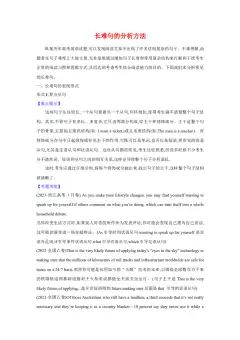
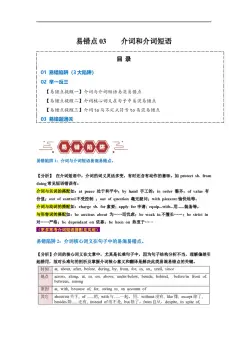
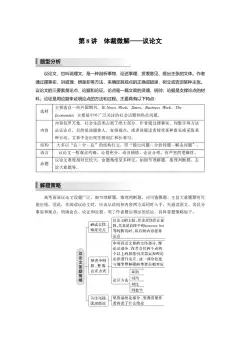
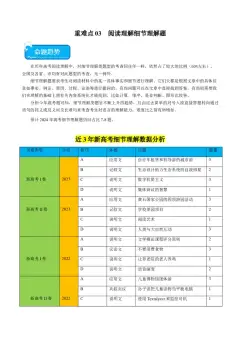
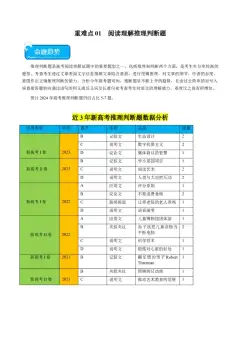
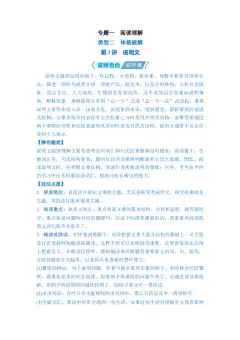
专题 02.长难句的分析突破
策略分析
长难句是高三英语阅读理解的核心障碍,其本质是 “主干 + 多层修饰” 的语法组合体,常通过嵌
套从句、插入非谓语成分、调整语序等方式提升复杂度。逐词翻译易导致逻辑断裂,核心解题策略为
“先拆后合”:先剥离修饰成分锁定句子主干(主谓宾 / 主系表),再理清修饰成分与主干的逻辑关系,
最终重组句意。这一策略可快速突破信息定位、选项判断等题型难点,是提升阅读速度与准确率的关键
能力。
阅读语篇中不同的长难句的拆解策略
英语中常出现包含多个从句、插入语或倒装结构的长难句,若逐词翻译易造成逻辑混乱。核心策略
是 “拆分句子结构”,抓住主干信息。
(一)找主干法:定位核心,剥离修饰
主干是句子的 “骨架”,由 “主语 + 谓语 + 宾语 / 表语” 构成;定语(修饰名词)、状语
(修饰动词 / 句子)、插入语(补充说明)等为 “血肉”,可暂时剥离。具体步骤为:先找谓语动词
(排除非谓语 doing/done/to do),再顺推主语、倒推宾语 / 表语。
【举例1】
The museum we visited last weekend, which houses a collection of ancient artifacts discovered in the Silk
Road, offers visitors a glimpse into the cultural exchanges between East and West.
【分析】
找谓语:排除 “visited”(定语从句谓语)、“houses”(非限制性定语从句谓语),确定主干谓语为
“offers”;
定主语:谓语前的核心名词为 “The museum”;
寻宾语:谓语后 “visitors a glimpse” 为 “间接宾语 + 直接宾语”;
主干提炼:The museum offers visitors a glimpse(这家博物馆为游客提供了了解机会)。
修饰成分补充:“we visited last weekend”(省略 that 的定语从句,修饰 museum)、“which houses...
Silk Road”(非限制性定语从句,补充博物馆藏品信息)、“into the cultural exchanges... West”(介词短语
作后置定语,说明 “了解机会” 的内容)。先抓主干可快速明确句子核心功能,再看修饰可完善细节
理解。
【举例2】To ensure the accuracy of the experiment, all variables must be carefully controlled, leaving no room for
unexpected errors.
【分析】
找谓语:排除 “To ensure”(目的状语,非谓语)、“leaving”(结果状语,非谓语),确定主干谓
语为 “must be controlled”;
主干提炼:All variables must be carefully controlled(所有变量必须被严格控制)。
修饰成分补充:“To ensure... experiment”(目的状语,说明控制变量的原因)、“leaving... errors”(现在
分词短语作结果状语,补充控制变量的效果)。
(二)识别从句信号词:划分层次,理清关系
从句需通过信号词(连接词)依附主句存在,不同信号词对应不同从句类型,明确信号词功能即可
区分主次关系。高频信号词分类及功能如下:
从句类型 核心信号词 功能说明
定语从句 that/which/who/whose/when/where 修饰名词,表 “…… 的”
宾语从句 that/if/whether/what/how 作动词 / 介词的宾语,表
“动作对象”
主语从句 What/Whether/That(置于句首) 作句子主语,表 “核心话题”
状语从句 because/while/when/if/only if 表原因、让步、时间、条件等
逻辑
【举例1】
What surprised the researchers most was that the participants who received regular positive feedback showed
a 40% higher success rate in maintaining healthy habits.
【分析】
信号词定位:“What”(主语从句信号词)、“that”(表语从句信号词)、“who”(定语从句信号
词);
层次划分:
主语从句(主干主语):What surprised the researchers most(最让研究人员惊讶的是);
表语从句(主干表语):that the participants... showed a 40% higher success rate(那些参与者……
成功率高出 40%);定语从句(修饰 participants):who received regular positive feedback(定期获得积极反馈的);
逻辑重组:先理解主语从句的 “话题”,再看表语从句的 “内容”,最后通过定语从句明确 “参
与者” 特征,整体句意清晰连贯。
【举例2】
While digital devices have greatly improved communication efficiency, over-reliance on them may lead to a
decline in face-to-face interaction skills, and this is becoming a growing concern among educators.
【分析】
信号词定位:“While”(让步状语从句信号词)、“and”(并列句连接词);
层次划分:
让步状语从句:While digital devices... efficiency(尽管电子设备极大提高了沟通效率),表转折
逻辑;
并列主句 1:over-reliance on them may lead to a decline(过度依赖可能导致下降);
并列主句 2:this is becoming a growing concern(这正成为担忧);
逻辑重组:通过 “While” 明确 “让步 - 转折” 关系,通过 “and” 明确两个主句的顺承关系,
避免将从句与主句混淆。
(三)处理特殊句式:还原语序,简化理解
倒装、强调、虚拟等特殊句式通过改变正常语序增强表达效果,解题核心是 “还原为陈述句语序”
再按常规方法拆解。
1. 倒装句:找准标志,还原主谓
高频标志:“Only + 状语” 置于句首、“Not only” 置于句首、否定副词(Never/Nowhere)置于句
首、虚拟语气省略 if(Had/Were/Should 提前)。
【举例1】
Had it not been for the timely financial support from the local community, the small theater would have been
forced to close down.
【分析】
识别标志:“Had it not been for” 为 “if it had not been for” 的倒装结构(虚拟语气省略 if);
还原语序:If it had not been for the timely financial support from the local community, the small theater
would have been forced to close down;
主干提炼:The small theater would have been forced to close down(这家小剧院早就被迫关闭了);
逻辑补充:还原后的条件状语从句明确 “关闭” 的假设前提,理解难度大幅降低。
【举例2】Not only does the book provide historical facts, but it also challenges readers to rethink their understanding
of cultural identity.
【分析】
识别标志:“Not only” 置于句首,主句倒装(助动词 does 提前);
还原语序:The book not only provides historical facts, but it also challenges readers to rethink their
understanding of cultural identity;
主干提炼:The book provides historical facts and challenges readers(这本书提供历史事实并促使读者
思考)。
2. 强调句:去掉框架,回归主干
高频标志:“It is/was + 被强调部分 + that/who + 其余部分”,去掉标志词后句子仍完整。
【举例】
It was through persistent efforts and teamwork that the research team managed to decode the genetic
sequence of the rare plant.
【分析】
识别标志:“It was... that” 强调框架,被强调部分为 “through persistent efforts and teamwork”(方式
状语);
还原语序:The research team managed to decode the genetic sequence of the rare plant through persistent
efforts and teamwork;
主干提炼:The research team managed to decode the genetic sequence(研究团队成功破译了基因序列)。
去掉强调框架后,句子主干清晰,被强调的 “方式状语” 可作为细节补充理解。
(四)插入语处理:跳读分隔,聚焦主干
插入语是插入句子中间、补充说明背景 / 态度 / 解释的成分,常以 “逗号”“破折号”“括号”
为标志,不影响主干结构。解题时可先 “跳读” 插入语,锁定主干后再回头理解补充信息,避免被分
隔成分干扰逻辑。
▲高频插入语类型
短语类:however, in fact, for example, on the contrary(表转折 / 举例 / 对比);
从句类:I believe, we think, they argue(表观点);
名词短语类:a famous scientist, the capital of France(补充身份 / 属性)。
【举例】
The new policy, which many experts believe will promote sustainable development, is expected to be
implemented next year.【分析】
识别插入语:“which many experts believe will promote sustainable development” 为非限制性定语从句
作插入语,前后用逗号分隔;
跳读插入语,找主干:排除插入语后,句子简化为 “The new policy is expected to be implemented
next year”,主干清晰(新政策预计明年实施);
补充插入语:该从句解释 “新政策的作用”(许多专家认为能促进可持续发展),不影响主干理解,
可后续补充。
【举例2】
Online learning, contrary to what some people think, does not necessarily reduce the quality of education.
【分析】
识别插入语:“contrary to what some people think” 为介词短语作插入语,表对比;
跳读插入语,找主干:Online learning does not necessarily reduce the quality of education(在线学习未
必会降低教育质量);
补充插入语:插入语说明 “与部分人观点相反”,明确句子立场,不改变主干逻辑。
(五)综合复杂句拆解:多法结合,分步突破
高考真题中多数长难句是 “从句 + 非谓语 + 插入语” 的综合组合,需同时运用 “找主干”“辨
信号词”“处理特殊结构” 三种方法,按 “先主干→再分层→最后整合” 的步骤拆解。
【举例1】
When we talk about environmental protection, we often forget that the small actions we take every day, such
as turning off lights when leaving a room, can make a big difference to the planet.
【步骤】
第一步:找主干,排除外层状语
外层 “when we talk about environmental protection” 为时间状语从句,先剥离;
剩余部分:“we often forget that the small actions... can make a big difference to the planet”,主干为
“we often forget that...”(我们常忘记……)。
第二步:辨信号词,拆分内层从句
信号词 “that” 引导宾语从句(作 forget 的宾语):that the small actions... can make a big
difference;
信号词 “we take every day” 为省略 that 的定语从句(修饰 small actions),“such as turning off
lights...” 为插入语(举例说明 small actions)。
第三步:整合逻辑外层状语:谈论环保时;
主干:我们常忘记一件事;
内层宾语从句:日常小行动(如离开房间关灯)能对地球产生大影响;
完整句意:谈论环保时,我们常忘记,像离开房间关灯这样的日常小行动,其实能对地球产生大影
响。
【举例2】
Only by understanding the historical background of the event, which has been discussed in many academic
papers, can we truly grasp the meaning behind the decisions made by the leaders at that time.
【步骤】
第一步:处理特殊句式(倒装)
标志词 “Only by...” 置于句首,句子倒装,还原语序:We can truly grasp the meaning behind the
decisions made by the leaders at that time only by understanding the historical background of the event...;
第二步:找主干,排除修饰
还原后主干:We can truly grasp the meaning(我们能真正理解含义);
修饰成分:“behind the decisions made by the leaders at that time”(介词短语 + 过去分词作定语,修
饰 meaning)、“by understanding the historical background of the event”(方式状语,说明 “理解” 的途
径)。
第三步:处理插入语
插入语 “which has been discussed in many academic papers” 为非限制性定语从句(修饰 historical
background),补充 “该历史背景已在多篇学术论文中讨论过”;
整合逻辑:只有理解(已在多篇学术论文中讨论过的)事件历史背景,我们才能真正理解当时领导
人所做决策背后的含义。
(六)虚拟语气拆解:明确假设,还原真实语义
虚拟语气用于表达与事实相反的假设、愿望或建议,常通过特殊的谓语动词形式(如过去式、had
done、would do 等)体现。拆解时需先判断虚拟语气的类型(对现在、过去、将来的虚拟),明确假设
的时间背景,再还原其背后的真实语义,避免误解句子核心意图。虚拟语气类型及标志:
虚拟类型 时间背景 主句谓语形式 从句谓语形式
对现在虚拟 与当前事实相反 would/could/might + do 过去式(be 动词用
were)对过去虚拟 与过去事实相反 would/could/might + have had + done
done
对将来虚拟 对未来的假设(可能 would/could/might + do 过去式 /should + do
性小) /were to + do
【举例1】
If I had known about the traffic jam in advance, I would not have missed the important meeting this morning.
【分析】:
判断虚拟类型:从句谓语 “had known”(had + done),主句谓语 “would not have missed”(would
+ have done),可确定为 “对过去虚拟”;
明确假设与事实:假设 “提前知道堵车”,而真实情况是 “并未提前知道”;主句假设 “没错过
会议”,真实情况是 “已经错过会议”;
主干提炼:I would not have missed the important meeting(我本不会错过这场重要会议);
补充逻辑:通过虚拟语气强调 “因未提前知晓堵车而错过会议” 的遗憾,理解时需结合真实语义,
避免按字面意思误判。
【举例2】
It is high time that we took effective measures to protect the endangered species before they disappear
forever.
【分析】
判断虚拟类型:“It is high time that...” 为固定虚拟句式,从句谓语需用 “过去式”,表示 “对现
在 / 将来的建议”,暗含 “该做却未做” 的含义;
明确语义:字面意为 “我们该采取有效措施保护濒危物种”,深层语义是 “目前尚未采取足够措
施,急需行动”;
主干提炼:We took effective measures to protect the endangered species(我们采取有效措施保护濒危物种);
此处 “took” 非过去时,而是虚拟语气标志,不可按常规时态理解为 “过去采取措施”。
不同文体长难句特点及拆解侧重
高考英语阅读理解包含记叙文、议论文、说明文、新闻报道等不同文体,其长难句的结构和功能各
有特点,拆解时需针对性调整策略,提高效率。
(一)记叙文:侧重 “事件逻辑”,抓时间 / 动作主线
【句式特点】常通过 “时间状语从句(when/while/before)”“并列谓语”“非谓语作伴随状语(doing/done)”
串联事件,修饰成分多为细节描写(如人物外貌、环境场景),主干多为 “主语 + 多个连续动作谓
语”。
【拆解侧重】
先锁定 “人物” 和 “核心动作”,剥离环境、外貌等补充描写,按时间顺序梳理事件发展。例如:
As the sun was setting behind the mountains, the old fisherman, who had been sailing on the sea for nearly
ten hours, pulled his net out of the water and found a small golden fish in it.
【拆解思路】
抓人物与动作:人物 “the old fisherman”,核心动作 “pulled... and found...”(拉网、发现鱼);
剥离修饰:时间状语 “As the sun was setting...”(环境描写)、定语从句 “who had been sailing...”
(补充渔民航行时长);
梳理事件:傍晚时分,航行了近 10 小时的老渔民拉网,在网中发现一条小金鱼。
(二)议论文:侧重 “观点逻辑”,抓论点 / 论据关系
【句式特点】
大量使用 “宾语从句(that/what 引导,表观点)”“让步状语从句(though/while 引导,表转
折)”“原因状语从句(because/since 引导,表理由)”,常通过 “however/therefore” 等逻辑词连接论
点与论据,主干多为 “作者观点(主句)+ 论据(从句 / 插入语)”。
【拆解侧重】
先找 “论点句”(常位于段首 / 段尾),再通过逻辑词区分 “论据(支撑观点)” 和 “转折
(补充观点)”,避免被论据中的细节干扰论点判断。例如:
While some people argue that online shopping is more convenient and cost-effective, others hold the view
that it lacks the real shopping experience, which is essential for many consumers who enjoy touching and trying
products before buying.
【拆解思路】
找论点:通过 “While... others...” 明确两种对立观点 ——“部分人认为网购便捷省钱”“另一部分
人认为网购缺乏真实购物体验”;
析论据:定语从句 “which is essential... buying” 解释 “真实购物体验重要的原因”(消费者喜欢购
买前触摸、试用商品);
理逻辑:让步关系引出两种观点,论据补充第二种观点的合理性,核心是呈现 “网购利弊的争议”。
(三)说明文:侧重 “说明对象”,抓 “特征 / 方法” 主干
【句式特点】多含 “定语从句(修饰说明对象特征)”“被动语态(强调客观事实)”“介词短语作定语
(of/with/about,说明属性)”,主干常为 “说明对象 + 特征 / 功能 / 方法(be+adj. /can do /be
done)”。
【拆解侧重】
先定位 “说明对象”(通常是段落反复出现的名词),再找描述其 “特征、功能、原理” 的主干
成分,忽略次要的举例、数据等补充说明。例如:
The intelligent robot developed by this company, which can recognize human emotions through facial
expressions and voice tones, is widely used in hospitals to help doctors communicate better with patients who
have difficulty expressing themselves.
【拆解思路】
定对象:说明对象为 “The intelligent robot”(智能机器人);
找主干:The intelligent robot is widely used in hospitals(这款智能机器人在医院被广泛使用);
补特征:定语从句 “which can recognize... tones” 说明机器人特征(能通过面部表情和语调识别人类
情绪);介词短语 “to help... patients” 说明用途(帮助医生与表达困难的患者沟通)。
长难句理解中常见错误分析
在长难句拆解中,高三学生易因细节疏忽导致理解偏差,需重点规避以下三类错误:
(一)混淆 “非谓语” 与 “谓语”
【错误表现】误将 doing/done/to do 当作句子主干谓语,导致主干定位错误。
【规避技巧】谓语动词需体现 “时态、语态、人称” 变化(如 is doing/was done/has finished),非谓语
无此变化。
例:The girl sitting by the window reading a novel is my deskmate.
错误:将 “sitting/reading” 当作谓语;
正确:主干谓语为 “is”,“sitting/reading” 为非谓语作定语,主干为 “The girl is my deskmate”。
(二)误判 “从句归属”
【错误表现】将修饰某个名词的定语从句,误认为修饰整个句子的状语从句。
【规避技巧】定语从句前必有被修饰的 “先行词”(名词 / 代词),状语从句无先行词,常表逻辑关系
(原因 / 时间 / 条件)。
例:I will never forget the day when we first met.
错误:认为 “when” 引导时间状语从句;
正确:“when” 引导定语从句,先行词为 “the day”(修饰 “日子”)。
(三)忽略 “并列结构” 对称性【错误表现】未识别 “and/or/but” 连接的并列成分(如并列谓语、并列从句),导致漏读信息。
【规避技巧】找到并列连词后,前后成分需 “结构对称”(如都是动词原形、都是从句)。
例:She not only likes playing the piano but also enjoys painting.
结构对称:“likes playing” 与 “enjoys painting” 为并列谓语,均作 “she” 的动作;
主干:She likes playing the piano and enjoys painting。
押题演练
1
Scientists in Australia have used Artificial Intelligence (AI) to help them locate a rare bird called the Plains-
wanderer. This new information will help scientists protect the birds, which are endangered.
The Plains-wanderer is a small bird that lives in Australia’s grasslands. Not just any grasslands. Plains-
wanderers are picky. There can’t be too much grass or too little. Zoos Victoria, the group behind the recent effort
to locate Plains-wanderers, says the birds’ number has fallen by over 85% in recent decades as grasslands have
been turned into farms and cities. Scientists believe there are now only 250 to 1,000 of the birds left in the wild.
Scientists have put the species into a “family” all by itself, since there are no other similar birds. The female
Plains-wanderers are larger, and are in charge of protecting the territory while the male birds are smaller and take
care of the eggs.
To protect these rare birds, scientists first had to learn where they were, so Zoos Victoria worked with
Queensland University of Technology on a plan to locate the birds. Since Plains-wanderers were hard to spot, the
team chose to “listen” for the birds instead. Female Plains-wanderers make an unusual “Ooom” call, and this is
the key to locate them.
The researchers set up 35 special recording devices called “song meters” in nine different grassy areas
where Plains-wanderers could possibly have been. Song meters recorded all the sounds made in an area over a
long period of time. The song meters collected tens of thousands of hours of recordings——far more than humans
could analyze. So the researchers fed the recordings to an AI system trained to identify the calls of Plains-
wanderers. The AI system discovered Plains-wanderer calls coming from two of the sites. The scientists double-
checked and found that the AI system was correct. Chris Hartnett, who worked with Zoos Victoria, said it was
like “finding gold”.
The new information will help scientists protect the birds. And the researchers are still “listening”— usingsong meters and AI to try to locate more of these Goldilocks birds.
1.What is the primary cause for the Plains-wanderers’ population decline?
A.Habitat loss. B.Climate change. C.Increased enemies. D.Lack of food sources.
2.What can we know about Plains-wanderers from paragraph 2?
A.Their physical characteristics are unique.B.They are the only birds that live in grasslands.
C.They belong to a family with no close relatives. D.The female are more responsible than the male.
3.What does the underlined sentence imply in paragraph 4?
A.The discovery is valuable. B.The birds prefer the grassland.
C.The birds are as expensive as gold. D.The protection of the birds is vital.
4.Why is AI essential in this research?
A.It predicts the future population trends. B.It replaces the need for human scientists.
C.It processes amounts of sound data efficiently. D.It makes bird calls to attract Plains-wanderers.
2
It’s eight o’clock on Christmas morning, and dad says he wants to listen to the news. My 11-year-old self is
wondering why on Earth grown-ups would be interested in the news when there are important things to be done,
such as handing out presents. And then, while I am only half-listening to the radio broadcast, something unusual
happens: the boring newsreader begins talking about a Christmas message. Hadn’t we heard that report earlier?
My older brother, Colin, figures out what’s happening. “Pete, Pete, it’s a tape recorder! We’ve got our tape
recorder!”
It finally dawns on me: my dad recorded the news and is playing it back now.
I think it’s quite rare to experience real excitement over a present, but for me this was one of those
rare moments. Colin and I had both been blind from birth. Now, in the late 1950s, exciting consumer goods were
coming within reach of the not-so rich. At the special boarding school that Colin and I attended, a recorder of your
own was the height of joy. However, Colin—better informed and more realistic about family finances than I was
—had no real expectations of getting one. I realised, much later, that a tape recorder would have cost more than
four times dad’s weekly wage.
The new toy, the size of a small suitcase, dominated the rest of the Christmas holidays. Once we had
mastered the controls, we recorded anything and everything: each other, our parents, the milkman, the dog... and
we very quickly learned how much fun we could have with it. For the first time, in the same way that a sighted
child might react to seeing themselves in a mirror or a photograph, I got the sense of myself as a separate person
who existed outside my head and was experienced by other people. It was both exciting and embarrassing.I took my first steps down the path to my career as a broadcaster when I returned to school after the
holidays. I was lucky to be in a class of imaginative and creative boys crazy for recorders, and it wasn’t long
before we started to make our own radio programmes. I would wander round the school with my microphone,
recording my thoughts in the style of the voices I heard on the radio.
Ten years later, I drew on the confidence gained from those early involvement in sound and walked into a
radio station, in the hopes of selling myself as a broadcast journalist. Twenty-five years later, I presented my first
report for BBC TV’s Six O’Clock News, a programme my dad had never missed. Although by then he’d been
dead for more than a decade, I like to think he’d have realised that his inspiring Christmas present had changed
my life.
1.Why did dad want to listen to the news on Christmas morning?
A.He expected to give the boys a surprise.
B.He was postponing handing out his presents.
C.He had always enjoyed listening to the news.
D.He missed the Christmas news the day before.
2.By the first sentence of paragraph 4, the “experience real excitement over a present” means that _____.
A.he didn’t know before what a recorder was
B.he got the tape recorder he had been dying for
C.the recorder was the first present he got from dad
D.the recorder was an exceptionally meaningful gift
3.What did the recorder enable the boys to do when they started to use it?
A.Make their own radio programmes.
B.Discover more about themselves.
C.Pursue a career in broadcasting.
D.Hear each other more clearly.
4.According to the passage, how did the tape recorder change the author’s life?
A.It boosted the author’s confidence in communicating with people.
B.It helped the author develop a closer relationship with his family.
C.It made the author more interested in listening to news reports.
D.It sparked the author’s passion for sound and broadcasting.
3
Wikipedia (维基百科), one of the last remaining pillars of the open and free web, is in existential crisis.The trend towards rationality (理性) was endangered long before the birth of the World Wide Web. As Neil
Postman noted in his 1985 book Amusing Ourselves to Death, the rise of television introduced not just a new
medium but a new atmosphere: a gradual shift from a typographic (印刷的) culture to a photographic one, which
in turn meant a shift from rationality to emotions, opinions to entertainment.
In an image-centered and pleasure-driven world, Postman noted, there is no place for thinking, because you
simply cannot think with images. It is text that enables us to “uncover lies and confusions, and to detect abuses of
logic and common sense. It also means to weigh ideas, to compare and contrast statements, to connect one
generalization to another.”
The dominance of television was not contained to our living rooms. It overturned all of those habits of
mind, fundamentally changing our experience of the world, affecting politics, religion, business, and culture. It
reduced many aspects of modern life to entertainment and commerce. “Americans don’t talk to each other; we
entertain each other,” Postman wrote. “They don’t exchange ideas; they exchange images. They do not argue with
propositions; they argue with good looks, celebrities and commercials.”
At first, the web seemed to push against this trend. When it emerged towards the late 1980s as a purely
text-based medium, it was seen as a tool to pursue knowledge, not pleasure. Reason and thought were most valued
in this garden. Universities were among the first to connect to this new medium, hosting discussion groups,
informative blogs, electronic magazines, and academic forums. It was an intellectual project, not about commerce
or control, created in a scientific research center in Switzerland.
Wikipedia was a fruit of this garden. So was Google search and its text-based advertising model. And so
were blogs, which valued text, hyperlinks, knowledge, and literature. And for more than a decade, the web created
an alternative space that threatened television’s power over society.
Social networks, though, have since colonized the web for television’s values. From Facebook to
Instagram, the medium refocuses our attention on videos and images, rewarding emotional appeals — “like”
buttons over rational ones. Instead of searching for knowledge, it engages us in an endless passion for instant
approval from an audience, for which we are constantly but unconsciously performing. It reduces our curiosity by
showing us exactly what we already want and think, based on our profiles and preferences. The Enlightenment’s
motto ( 座右铭 ) of “Dare to know” has become “Dare not to care to know.”
Now the challenge is to save Wikipedia and its promise of a free and open collection of all human
knowledge among the conquest of social media - how to collect and preserve knowledge when nobody cares to
know. We need to understand that the decline of the web and thereby of the Wikipedia is part of a much largercivilization shift which has just started to unfold.
1.According to Neil Postman, which of the following statements is TRUE?
A.Television started a revolution in photographic technology.
B.Texts help people think critically to make judgments.
C.Images give people more chances to communicate deeper.
D.The web was meant to serve as an entertainment platform.
2.The underlined word “propositions” in paragraph 4 probably means “________”.
A.experiences B.appearances C.opinions D.consequences
3.What can we infer about the influence of social media from the underlined sentence?
A.We are constantly distracted and can’t focus for long.
B.We are well kept updated with the latest information.
C.We have become more curious about the outside world.
D.We have become uninterested in intellectual pursuits.
4.Which of the following can be the best title of this passage?
A.The Decline of Television B.The Power of Social Media
C.Why We Amuse Ourselves to Death D.How Social Media Endangers Knowledge
4
That moment still flashes before me: spilling coffee across my supervisor’s white notes during a critical
meeting. The heat in my face, the apologies — an embarrassing memory etched painfully deep. We all have these
awkward snapshots. But what if this vivid recall holds an unexpected key to a sharper mind? Neuroscience shows
enhancing our memory systems does far more than store facts.
A dedicated research team has developed sophisticated methods to amplify the brain’s memory. Their
findings reveal surprising benefits touching nearly every aspect of cognition and emotion.
Forget struggling for hours. Participants using these techniques experienced accelerated mastery of
complex skills. Learning complex software or conversational fluency in a new language became faster and more
intuitive (直觉的). Information stuck with less effort, transforming study into genuine understanding. The brain
wove new knowledge seamlessly into its fabric.
More profoundly, strengthening memory proved therapeutic (治疗的). It wasn’t erasing the coffee-spill
disaster. Instead, the enhanced capacity allowed individuals to reframe painful recollections. Accessing the fuller
context, perhaps a kindness afterward, or realizing it wasn’t catastrophic, significantly decrease the emotional
sting. Past has lost power, fostering greater emotional balance.It is not exaggerating that the impact has already extended into social fluency. Remembering subtle details
about colleagues, nuances (细微差别) of conversations, or names with greater accuracy mattered deeply. This
heightened recall built smoother interactions, deeper empathy, and stronger bonds. It became less about
memorisation and more about true connection.
So, while I still blush recalling that moment, the science offers hope. Enhancing memory capacity reshapes
how we learn, heal from emotional bruises, and navigate the social world. That awkward memory might be the
pathway to a more adaptable, emotionally intelligent, and capable self. Our past stumbles, remembered better,
become stepping stones forward.
1.What impact did memory enhancement techniques have on participants’ learning process?
A.They reduced study time but required increased repetition for knowledge retention.
B.They accelerated mastery of complex skills, making learning much easier afterwards.
C.They removed the need for traditional methods by relying on subconscious absorption.
D.They were effective for academic subjects, but this averted in practical daily skills.
2.What is the core therapeutic benefit?
A.Altering factual accuracy.
B.Suppressing negative emotions.
C.Accelerating memory decay.
D.Expanding contextual recall.
3.What best describes the passage’s structure?
A.Problem-solution-conclusion.
B.Contrast-argument-prediction.
C.Definition-examples-summary.
D.Story-research-reflection.
4.What does the underline sentence indicate?
A.Forgetting failures enables progress.
B.Memory enhancement erases pain.
C.Improved memory promotes growth.
D.Recalling the past is worthless.
5
After we lost Indigo, I got a call from the Bed ‘n’ Biscuit. One of their customers was dying, and her dog,
Chloe, needed a home. Given our recent loss, they asked, might our family be interested in adopting her?They had to be kidding. After Indigo, we would never get another dog. Ever.
It had just been a few years earlier, it seemed, that Indigo — a black Lab — had first burst through our
door. Her shiny black fur caught the light, and her energy never seemed to run out. However, she had a nose for
trouble. On one occasion, I came home to find that she’d eaten a five-pound bag of flour.
She was covered in white powder, and flour paw prints were everywhere. I asked the dog what on earth had
happened, and Indy just looked at me with a glance that said I couldn’t imagine what you were referring to.
Time raced by. Our children grew up and went off to college. The mirror, which had reflected a young mom
when Indigo first arrived, now showed a woman in late middle age. I had eye surgery. I began to lose my hearing.
We all turned gray: me, my husband, the dog.
In August 2017, I took Indigo for one last walk. She was slow and unsteady on her paws. She looked up at
me mournfully. You did say you’d take care of me when the time came, she said. You promised, Jenny. She died
that month, a tennis ball by her side.
I told the Bed ‘n’ Biscuit we were sorry, but we wouldn’t be adopting any more dogs. Then one morning, as
I was passing the Bed ‘n’ Biscuit in my car, I pulled over. I could at least lay eyes upon this Chloe. What harm
could it do?
But she had such a soft face.
When Chloe entered our house, she was cautious, uncertain. She spent hours that first day going to every
corner, sniffing things out. Finally she sat down by the fireplace, where Indigo used to belong, and gave me a
look. If you wanted, she said, I would stay with you.
1.Why did the Bed ‘n’ Biscuit contact the writer?
A.They wanted to sell a dog.
B.They were sharing sad news.
C.They were anxious about Indigo’s conditions.
D.They were looking for a new home for a dog.
2.Which words best describe Indigo?
A.Loyal but violent. B.Playful and naughty.
C.Curious and cautious. D.Uncertain but well-behaved.
3.What does the underlined sentence imply?
A.Visiting Chloe was a harmless curiosity.
B.Visiting Chloe could definitely change her decision.
C.The writer was making her regular visit to the Bed ‘n’ Biscuit.D.The writer was worrying about the request of the Bed ‘n’ Biscuit.
4.What can be the best title for the text?
A.Life with a Naughty Dog
B.The Pain of Losing Indigo
C.Saying Goodbye to Indigo
D.The Importance of Pets in Our Lives
6
There’s a Native American proverb that says, “The one who tells the story rules the world.” Stories have the
potential to be incredibly powerful. They’re able to change how we relate to each other, to change prejudice, so
the potential for stories to persuade is staggering. I read this really, really good research paper about these two
books which basically suggested, that if you get people to read a couple of chapters of Harry Potter, they’ll rate
themselves higher than other people in their capacity to potentially move something, just using the power of their
mind.
The people who read about the vampires, they’ll actually believe that their teeth are slightly longer than
other people in the population, just as a result of having read a chapter or two of this book. In terms of
psychology, there’s a few things that stories actually do to us.
We start to almost feel as if the things that are happening to them, are happening to us. Reading is not a
relaxation, you are building worlds, you are housing those worlds with cities, and those cities you are populating
with people. So although television, film, theatre all have their place in the storytelling world, to me that moment
of contact with a book, when you read a story and unlock its secrets ... nothing quite comes close.
Our research has been on the interpretation of individual words, if you read the word “jump” for example,
you activate those areas that you also activate when you do actually perform the action of jumping, so it would be
about here somewhere. The interesting question in this case of course is, I mean if you read about somebody else
jumping, why should you activate brain areas related to jumping?
The proponents of the theory would say that immersing yourself into a story is based on the mirror neuron
system. I am convinced that mirror neurons are part of this process, but it can’ t be the whole story. It’s been found
that, when we connect with people who aren’ t real but are fictional characters, it forms a sort of social surrogate
for us — it ’s almost like they’re a real person when they’re not. And psychologists sometimes call it forming a
parasitical relationship.
And what’s interesting about that is it kind of makes us feel less lonely and it can also buffer self-esteemand improve our mood. We know that having a lot of friendships with other people when you’re in a couple is a
really positive thing for the outcomes of that relationship. But what is really interesting is they don’t have to be
real people.
1.What can we know from the first 3 paragraphs?
A.The whole world is in the possession of the ones who tell stories.
B.Reading is a process of relaxing rather than building connections with inside people.
C.After reading some certain stories, we may have the feeling being like the characters.
D.Books have stronger power than films and televisions in the storytelling world.
2.According to the passage, what’s the meaning of the underlined sentence?
A.They can boost us in our capability that someone else may not have.
B.They can immerse us in the world which we are reading about.
C.We can enjoy the accompany with the lots of friends whether they are real or fictional.
D.We can gain a deeper insight into the meanings of a unfamiliar word.
3.Which world can replace the underlined world “parasitical ”?
A.fictional B.dependant
C.desperate D.subsequent
4.What does the article mainly talk about?
A.How do stories affect our mindset?
B.Whether to read stories or not?
C.Should we put up with stories?
D.How can we gain a parasitical friendship?
7
Go to any movie theater or sports venue, and it’s obvious there’s an invisible bond that forms from
laughing, crying, and simply feeling while brushing shoulders with others. Researches have long backed up this
sense of connection, but some aspects of the phenomenon remained unclear. Now, a new study is offering insight.
Writing in the journal Royal Society Open Science, Victor Chung of the École Normale Supérieure in
France and his team reported how they examined the matter by inviting strangers to watch videos together in same
sex pairs.
Pairs of strangers watched three types of videos together: positive, negative, and neutral with a curtain
between them that was either open or closed. At the start of the experiment the researchers asked each participant
whether they’d like to meet the other member of their pair again. After watching each video, participants reportedtheir emotions and feelings of connectedness, and after seeing all three videos they were asked once again about
their feelings towards the other participant.
The results showed the emotional films generated stronger responses than the neutral film. Crucially, the
team said participants’ feelings of connectedness within the pairs was boosted when they experienced more
intense emotions. However, this was only the case when participants watched the films with the curtain between
them open. The researchers said that whether or not the pairs could see each other had no impact on how
positively or negatively they felt about the films.
“We found that silently watching emotional films together with another individual is associated with social
bonding, even when this person is a stranger and without any verbal communication,” said Chung, the study
author.
The team added that the findings may help explain why people seek out group activities that generate
strong emotions, “even participating in sad memorials that cause negative emotions.” In other words, because
emotion bonds us, and humans have a fundamental desire to belong, we’re up for experiences one might think
we’d naturally want to avoid.
1.What can we learn about the research method of Victor Chung’s team?
A.They invited pairs of strangers of different genders to watch videos.
B.Participants watched the videos without any physical barriers between them.
C.Participants were asked about their feelings only once during the experiment.
D.They compared participants’ responses to three types of videos with different emotional tones.
2.According to the study, which of the following factors most affects the sense of connectedness between
participants?
A.The type of the video they watched.
B.Whether they could see each other during watching.
C.The intensity of emotions the video aroused.
D.The order in which they watched the videos.
3.What can be inferred from the underlined sentence “this was only the case when participants watched the films
with the curtain between them open” in Paragraph 4?
A.Watching videos with the curtain closed had no effect on participants’ emotions.
B.Visual contact was a necessary condition for the enhancement of connectedness.
C.Participants felt more positive about the films when they could see each other.
D.The presence of a curtain between participants influenced their emotional responses to the films.4.What is the main idea of the passage?
A.To introduce a new study on how group activities strengthen social bonds.
B.To analyze the reasons why people prefer certain types of group activities.
C.To explain the impact of different emotional experiences on social bonding.
D.To prove that silent watching of emotional films promotes social connection.
8
Is it possible to persuade mankind to live without war? War is an ancient institution, which has occurred
ever since men were organized into units larger than the family. In the past human race managed to survive it.
Why should it not continue to survive even if wars go on occurring from time to time? Moreover, people like war,
and will feel frustrated without it. And without war there will be no adequate opportunity for heroism or self-
sacrifice.
Modem technology has changed this. Either man will abolish war, or war will abolish man. For the present,
it is nuclear weapons that cause the most serious danger, but bacteriological or chemical weapons may, before
long, offer an even greater threat. If we succeed in abolishing nuclear weapons, our work will not be done. It will
never be done until we have succeeded in abolishing war. To do this, we need to persuade mankind to look upon
international questions in a new way, not as contests of force, in which the victory goes to the side which is most
skillful in killing people, but by arbitration (通过仲裁) in accordance with agreed principles of law. It is not easy
to change very old mental habits, but this is what must be attempted.
There are those who say that the adoption of this or that ideology (意识形态) would prevent war. I believe
this to be a big error. All ideologies are based upon dogmatic (武断的) statements that are, at best, doubtful, and at
worst, totally false. Their followers believe in them so fanatically that they are willing to go to war in support of
them.
The movement of world opinion during the past few years has been very largely such as we can welcome.
It has become a commonplace that nuclear war must be avoided. Of course very difficult problems remain in the
world, but the spirit in which they are being approached is a better one than it was some years ago. It has begun to
be thought, even by the powerful men who decide whether we shall live or die, that negotiations should reach
agreements even if both sides do not find these agreements wholly satisfactory. It has begun to be understood that
the important conflict nowadays is not between different countries, but between man and the atom bomb.
1.From the passage we can learn that war now is ______.
A.as bad as in the past B.worse than in the pastC.as necessary as in the past D.not so dangerous as in the past
2.What does the underlined sentence in Paragraph 2 probably mean?
A.Men, as well as war, will have to make the ultimate choice between the two.
B.Modern technology has empowered man to choose whether to have war or not.
C.At least 6,000 years later, man has finally decided to abandon war once and for all.
D.People will eventually destroy themselves if they choose to go to war at modern times.
3.As for ideology, what does the author intend to tell us?
A.Certain ideology is superior regarding its truthfulness.
B.It is useless to adopt an ideology to prevent war.
C.Not every ideology is not worth fighting for.
D.It is wrong to follow any ideology.
4.Which would be the best title for the passage?
A.War or No War, That Is A Question
B.Nuclear Weapons Bring the End of Human Race
C.Towards a Future Without War: A Call for Global Arbitration
D.From Ideology to Negotiation: A New Approach to International Conflicts
9
A friend and I were having lunch and I asked about her son who was getting professional help for some
behavioral problems he was having. Our conversation went like this: “There’s a good change in his attitude. He’s
staying out of trouble, but I’m just waiting for the other shoe to drop.” she said. “It’s hard to trust him yet. He is
doing things that he’s never done before, which is great. But I still need to supervise him just in case.”
I asked a couple of questions: “Have you told him how proud you are of how far he’s come? Have you
thanked him for the things he’s now doing but never did in the past?” She said no. And because she’s a very bright
woman she followed it up with: “I really need to say those things because I am proud of him and I am grateful for
what he’s doing now. All I keep doing is looking at what he’s still doing wrong and getting on him about that.
How’s he ever going to feel good about himself and continue to improve if I don’t acknowledge him for all his
improvements and growth?”
“If I keep waiting for the other shoe to drop, it will!” I just smiled and told her I loved her and that she’s a
great mom. The conversation moved on to a new topic. It’s worth taking a look at your close relationships,
especially with your kids and asking yourself: Do I spend too much time letting them know what they’re doing
wrong? Do I ignore their efforts toward positive change? Do I still find ways to be unsatisfied with their behavior?If you answer yes to any of those questions, you’re now the one who needs to do some changing. Never
forget that people love to be acknowledged — not just for the big things but the little things, too. Appreciation and
love are the driving force that keeps them wanting to do well and do something nice for others.
1.The author’s friend ______.
A.was already satisfied with her son’s behavior
B.was particular about her son’s attitude
C.was still worried about her son’s behavior
D.already fully believed in her son
2.The attitude the friend holds towards the author’s advice is ______.
A.favorable B.negative
C.unconcerned D.doubtful
3.What does the underlined sentence in Paragraph 3 mean?
A.If I keep waiting for kids to correct mistakes, they will.
B.If I keep waiting for kids to change positively, they will.
C.If I keep waiting for kids to wear the other shoe, they will.
D.If I keep waiting for kids to make mistakes, they will.
4.The motivations for kids to keep behaving well are ______.
A.direct rejection and scolding
B.proper affection and admiration
C.blind love and appreciation
D.strict requirements and standards
5.The best title for the text is ______.
A.A Dialogue Between Two Women
B.Are You Proud of Your Child?
C.Be Patient When You Are a Parent
D.One Major Thing Most Parents Forget to Do
10
He Jiazheng, 22, a college student in Shenzhen, Guangdong province, said he used to buy only big brands
(品牌) during middle school. Then he realized that a piece of clothing, regardless of whether it is from a well-
known brand or not, may only be worn for one or two years. Besides, the quality of famed brands sometimes is
not as good as that of ordinary ones.Now he spends no more than 100 yuan on each item of clothing. “As long as the clothes are suitable to
wear, this is fine.”
“I hope to realize maximum happiness through minimum spending. As luxury food and brand-name
clothing cannot increase my happiness, why not satisfy myself by spending less for the same amount of
happiness?” He said.
Ma Yuan, 36, a college teacher in Shanxi province, began saving money a year ago. She wants to save
money for advanced studies and her family expects to travel.
She stopped buying well-known brands of make-up and using cheaper products instead. Ma also recycled
empty boxes, cut back on dining out, and reduced the number of unnecessary purchases.
“ While buying may bring short happiness, I have discovered that living a more frugal ( 节俭的 ) lifestyle
can lead to a sense of satisfaction,” she said. “I have many dreams that require financial support. By controlling
and reducing my spending. I am able to bring those dreams closer to reality.”
It’s a good idea to have a certain amount of money saved for better use in the future.
1.He Jiazheng thinks the quality of famed brands is ________ that of ordinary brands.
A.better than B.sometimes not as good as
C.worse than D.as good as
2.When buying clothes, what does He Jiazheng care about most now?
A.Quality. B.Color. C.Style. D.Price.
3.What can we know about Ma Yuan?
A.She used to buy well-known brands of make-up.
B.She wants to save money for her children.
C.She no longer dines out.
D.She is a college student in Shanxi province.
4.What can we infer from the underlined sentence?
A.Living a frugal life can bring Ma Yuan the shortest happiness.
B.The less Ma Yuan buys, the unhappier she feels.
C.Ma Yuan prefers sense of satisfaction to short happiness.
D.Ma Yuan has never experienced a sense of satisfaction before.
5.What may be the best title for the passage?
A.Ways of Making Money B.How to Shop Smartly
C.Spending Less and Save More D.The Stories of Two Young People11
When Strauss’s first wife passed away, it was a shock for him and their then-10-year-old daughter, Molly.
Seeing her facing a challenge she really wasn’t prepared for, Strauss naturally turned to what he knows best:
storytelling.
“I had the idea that perhaps stories of great heroes and the way they met challenges and hardships in their
lives could be inspirational to her,” Strauss says. The principal at his daughter’s elementary school had lost her
own mother when she was nine and developed a close bond with Molly. Her school hosted the first plays, and the
principal advised him to design the plays to fit in with the standard school curriculum, so that teachers could
achieve their education goals along with Strauss’s objectives.
Strauss calls his collection of plays the Spirit Series, “because it’s a celebration of the human spirit and
because our job is to spirit students over a threshold (门槛) in a transformative way”. Unlike in regular theater
plays, the Spirit Series plays leave room for the children to plug in their own dialogue, put themselves in the
historic figures’ shoes and write essays about big questions posed by the historic figures in the plays, for instance:
What do you want out of life when you grow up? Does popularity feed the soul?
The Spirit Series has been hosted by more than 100 schools and 60,000 students in California. The results
students and teachers report are striking: More than a quarter of students improve academically and in social and
emotional skills. More than 90 percent of students report improved teamwork after participating, and nearly 82
percent of participating teachers said that the series enhances focus.
Today, the Spirit Series has expanded into Spirit Corps, which provides video-assisted storytelling that
Strauss is rolling out more widely this year, and Spirit Works, a coaching program for teachers, “because you can’t
expect students to go where you can’t lead them,” Strauss says. “Transformative outcomes in classrooms begin
with self-transformation.”
1.Why did Strauss create the Spirit Series?
A.To express the love to his lost wife. B.To help his daughter tackle the sorrow.
C.To offer standard curriculum to schools. D.To promote traditional theater education.
2.What makes the Spirit Series plays special?
A.They record major historic events. B.They are a collection of students’ essays.
C.They are written by a less-known writer.D.They allow children to add their own creation.
3.What does paragraph 4 mainly talk about concerning the Spirit Series?
A.Its positive impacts. B.Its high profitability. C.Its potential problems. D.Its
great complexity.4.What message does the underlined sentence in the last paragraph convey?
A.Teachers should improve their teaching aims. B.Teachers should be a model for the students.
C.Teachers should coach their students. D.Teachers should reform their teaching.
12
An early morning winter storm had brought several inches of snow in my small town in the mountains.
Schools were canceled, roads were dangerous and all I wanted to do was to stay in bed. Still, I knew I had to get
the day started so I put on warm clothes and walked outside. The snow got all over my shoes. The cold wind dried
my lips and my eyes. My 47-year-old back ached in anticipation of the shoveling I would have to do if the snow
didn’t stop soon.
Yet, when I looked out on the white blanket that covered the ground, I couldn’t help but smile a bit. It was
so beautiful. It softened the bare trees and hid the dead grass. In the distance I could hear the sound of the
snowplow on the road, the barking of a happy dog and the laughter of children playing outside, enjoying their way
off from school.
The sweet music of that laughter brought back a hundred memories of winters past. I remembered catching
snowflakes on my tongue, building snowmen, making snow angels, running down hills and always losing
snowball fights with first my brothers and then my own children. Standing there in that warm coat of memories
made the wind a little less cold and my back a little less sore. I turned up my head, stuck out my tongue and for
the first time in years caught a snowflake on it. It tasted so fresh and clean. It tasted like youth, like joy and like
love.
May you always feel young in spirit, no matter how old or achy your body may be. May you always delight
in the simple joys of life. May you always share your happiness with the hearts of children. And may you always
give your love, your light, your laughter and your warmth to others even on the coldest days.
1.How did the author react when he knew it snowed heavily?
A.He was upset. B.He was happy. C.He was thankful. D.He was moved.
2.From the underlined sentence in Paragraph 1, we can know that “________”.
A.my back ached because of the cold weather.
B.I had suffered from back pain for many years.
C.my back would ache upon thinking of cleaning up the snow.
D.the snow didn’t stop and I felt too cold.
3.From which senses did the author describe the joy of having snow?
A.Taste and smell. B.Sight and smell.C.Smell, hearing and taste. D.Sight, hearing and taste.
4.What does the author mainly want to tell us with this article?
A.We should brave any snowstorm in life. B.Snow brings both fun and trouble.
C.Memories can change our opinion. D.We should stay young at heart.