热点话题01 深度应用AI 与伦理挑战
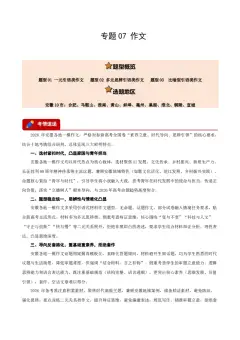
一、主题解析
“深度应用AI 与伦理挑战”这一主题在英语课程标准中是关于 “科学技术与社会发展” 的子话题,
聚焦人工智能技术在教育、医疗、社交等领域的渗透应用,以及由此引发的隐私保护、算法公平、学术
诚信等伦理争议。这一主题既呼应新课标对 “科技素养与人文关怀” 的核心要求,也是高考议论文阅
读的高频考点(占科技类话题考查比重的 30% 以上),主要考查考生对技术利弊的辩证分析能力、伦理
争议的逻辑梳理能力及跨文化语境下的文本解读能力。
二、句子积累
1. 阅读必备词块
(1)基础技术
artificial intelligence (AI) 人工智能
AI-powered systems 人工智能驱动的系统
machine learning 机器学习
generative AI 生成式人工智能
algorithm 算法
data training 数据训练
neural network 神经网络
AI literacy 人工智能素养
intelligent assistant 智能助手
automated decision-making 自动化决策
(2)伦理核心
ethical principles 伦理原则
do no harm 无害原则
non-discrimination 非歧视性
transparency 透明度
explainability 可解释性
proportionality 比例适度原则
human agency 人类主体性
data privacy 数据隐私
information security 信息安全
ethical dilemma 伦理困境
(3)应用场景
personalized learning 个性化学习
academic integrity 学术诚信
content detection 内容检测
recommendation algorithm 推荐算法
medical diagnosis 医疗诊断
social media algorithms 社交媒体算法
employment displacement 就业替代
inclusive technology 包容性技术
cultural diversity 文化多样性
话题资源
environmental sustainability 环境可持续性
(4)争议问题
algorithmic bias 算法偏见
information cocoon 信息茧房
AI hallucination 算法幻觉
plagiarism risk 抄袭风险
technology dependence 技术依赖
human-machine collaboration 人机协作
regulatory framework 监管框架
ethical controversy 伦理争议
accountability 问责制
technological ethics 科技伦理
(5)高频短语
double-edged sword 双刃剑
ethical guidelines 伦理准则
responsible innovation 负责任创新
misuse of technology 技术滥用
safeguard rights 保障权利
mitigate risks 降低风险
balance efficiency and fairness 平衡效率与公平
preserve authenticity 维护真实性
pose threats to 对…… 构成威胁
adhere to norms 遵守规范
2. 常见句式
(1)现象描述
With the rapid advancement of generative AI, the boundary between human-created and machine-generated
content has become increasingly blurred.(随着生成式人工智能的快速发展,人类创作与机器生成内容的界
限日益模糊。)
AI-powered systems have revolutionized sectors like education and healthcare by enhancing efficiency and
precision.(人工智能驱动的系统通过提升效率与精准度,彻底改变了教育和医疗等领域。)
Social media algorithms are designed to maximize user engagement, often leading to the formation of information
cocoons.(社交媒体算法旨在最大化用户参与度,往往导致 “信息茧房” 的形成。)
The pervasive use of AI in academic writing has sparked widespread debate about the future of academic integrity.
(人工智能在学术写作中的广泛应用,引发了关于学术诚信未来的广泛争论。)
Machine learning models rely on massive datasets, which may inadvertently embed existing social biases.(机器
学习模型依赖海量数据集,这可能无意中嵌入已有的社会偏见。)
(2)利弊分析句
On one hand, AI facilitates personalized learning by adapting to individual students' needs; on the other hand, it
risks reducing face-to-face teacher-student interaction.(一方面,人工智能通过适应学生个体需求促进个性化
学习;另一方面,它可能减少师生面对面互动。)
While AI improves the efficiency of medical diagnosis, it cannot replace the empathy and clinical judgment of
human doctors.(尽管人工智能提升了医疗诊断效率,但它无法替代人类医生的共情能力和临床判断
力。)
AI brings unprecedented convenience to daily life, yet its potential to displace repetitive jobs cannot be ignored.
(人工智能为日常生活带来前所未有的便利,但它替代重复性工作的潜力不容忽视。)
The advantage of AI lies in its ability to process complex data quickly, but its disadvantage is the lack of
transparency in decision-making.(人工智能的优势在于快速处理复杂数据的能力,但其劣势是决策过程缺
乏透明度。)
AI-driven tools enhance research productivity, but their misuse may undermine the sanctity of original academic
work.(人工智能驱动工具提升了研究效率,但滥用可能损害原创学术成果的神圣性。)
(3)伦理争议
One of the major ethical concerns about AI is that algorithmic bias may exacerbate social inequality.(人工智能
的主要伦理担忧之一是算法偏见可能加剧社会不平等。)
The question of whether highly anthropomorphic robots should be granted legal rights remains controversial.(高
度拟人化机器人是否应被赋予法律权利的问题仍存在争议。)
Protecting personal privacy is the basic premise for AI to gain social trust, according to industry experts.(业内专
家表示,保护个人隐私是人工智能获得社会信任的基本前提。)
Ethical norms are not shackles on innovation but guarantees for the sustainable development of AI.(伦理规范不
是创新的枷锁,而是人工智能可持续发展的保障。)
The core ethical dilemma of AI lies in balancing technological progress with the protection of human rights.(人
工智能的核心伦理困境在于平衡技术进步与人权保护。)
(4)解决方案
To address AI ethics issues, governments should establish clear regulatory frameworks and accountability
mechanisms.(为解决人工智能伦理问题,政府应建立明确的监管框架和问责机制。)
Universities have integrated AI literacy into curricula to foster students' critical thinking about technology ethics.
(大学已将人工智能素养纳入课程,以培养学生对科技伦理的批判性思维。)
Tech companies are required to conduct safety assessments throughout the AI model's training and deployment.
(科技公司需在人工智能模型的训练和部署全流程进行安全评估。)
Promoting inclusivity in AI design can mitigate risks to marginalized groups and people with disabilities.(在人
工智能设计中促进包容性,可降低对边缘化群体和残障人士的风险。)
International collaboration is essential to developing universal ethical principles for AI development.(国际合作
对制定人工智能发展的通用伦理原则至关重要。)
(5)观点表达
As experts point out, the ultimate goal of AI development is to benefit all human beings rather than replace them.
(正如专家所言,人工智能发展的终极目标是造福全人类而非替代人类。)
It is widely believed that algorithmic fairness is more important than technological advancement in AI
applications.(人们普遍认为,在人工智能应用中,算法公平比技术先进更重要。)
From the perspective of education, AI should serve as an auxiliary tool rather than a substitute for teachers.(从教
育角度看,人工智能应作为辅助工具而非教师的替代品。)
There is no consensus on how to define the ethical boundaries of generative AI among scholars.(学者们对如何
界定生成式人工智能的伦理边界尚未达成共识。)
In terms of data security, strict measures must be taken to prevent the misuse of user information by AI systems.
(在数据安全方面,必须采取严格措施防止人工智能系统滥用用户信息。)
(6)趋势预测
The future of AI will witness closer human-machine collaboration rather than one-sided replacement.(人工智能
的未来将见证更紧密的人机协作,而非单方面替代。)
With the improvement of ethical regulations, AI is expected to develop in a more responsible and sustainable way.
(随着伦理法规的完善,人工智能有望以更负责任、更可持续的方式发展。)
It is predicted that AI will reshape industry patterns but cannot replace human creativity and imagination.(据预
测,人工智能将重塑行业格局,但无法替代人类的创造力和想象力。)
The integration of AI with ethical education will become a key trend in future school curricula.(人工智能与伦
理教育的融合将成为未来学校课程的重要趋势。)
As AI becomes more pervasive, public awareness of its ethical risks will continue to grow.(随着人工智能日益
普及,公众对其伦理风险的认知将持续提升。)
1
Embodied intelligence (具身智能), a revolutionary concept in artificial intelligence (AI), challenges the
traditional view that intelligence exists purely in algorithms (算法). Unlike conventional AI systems that process
data in isolation, embodied AI interacts with the physical world through sensors and actuators, imitating how
humans learn by integrating body and mind.
Research from MIT’s Computer Science and Artificial Intelligence Laboratory (CSAIL) reveals that robots
with embodied intelligence outperform screen-bound AI in complex tasks. For example, a robot arm learning to
突破演练
pour water adjusts its movements based on tactile feedback — a process requiring continuous adaptation, which
demonstrates how physical interaction enhances cognitive (认知) development in ways keyboard-based training
cannot achieve. This “learning-by-doing” approach agrees with developmental psychology theories emphasizing
the role of sensory experiences in human intelligence.
However, critics argue that embodied AI faces unique challenges. While digital AI can be trained on
massive datasets, physical robots require costly real-world trials. A 2023 study in Nature Robotics found that an
embodied AI system took 40% longer to master object recognition than its virtual counterpart, partly because
environmental variables like lighting and friction (摩擦) introduced unpredictability. Hardware durability further
complicates application; saltwater exposure reduces marine exploration robots’ lifespan by 60% compared to lab
models. Additionally, ethical concerns emerge as these systems gain autonomy — should a self-driving car
prioritize passenger safety or pedestrian lives in unavoidable crashes?
Despite these disadvantages, industries are embracing embodied intelligence. Medical robots now assist
surgeons by providing tactile (触觉的) feedback during operations, while agricultural drones analyze soil quality
through aerial imaging and physical sampling. As Dr. Cynthia Breazeal, a pioneer in social robotics, observes:
“True intelligence isn’t just about dealing with numbers; it’s about understanding and navigating the messy reality
we live in.”
The future of AI may depend on bridging the gap between digital and physical gaps. Emerging technologies
like neuromorphic computing, which imitates the brain’s neural structure, could enhance embodied systems’ real-
time adaptability. For tasks demanding contextual awareness and adaptive problem-solving, embodied intelligence
offers solutions that no screen can reproduce.
1.What can we know about embodied intelligence?
A.Physical interaction enhances its cognitive efficiency.
B.Screen-bound AI outperforms it in adaptability.
C.It prioritizes algorithmic complexity.
D.It processes data in isolation.
2.What challenge does the 2023 study in Nature Robotics highlight for embodied intelligence?
A.Timely tactile feedback.
B.Limited dataset accessibility.
C.Unpredictable environmental factors.
D.Too much reliance on virtual training.
3.Why is Cynthia Breazeal mentioned in the passage?
A.To stress ethical concerns in AI.
B.To demonstrate the popularity of robots.
C.To clarify hardware durability challenges.
D.To prove the feature of embodied intelligence.
4.What is the attitude of the author to embodied intelligence?
A.Indifferent.
B.Objective.
C.Dismissive.
D.Skeptical.
【答案】1.A    2.C    3.D    4.B
【解析】本文是一篇说明文。文章主要介绍了具身智能的概念、优势与挑战,并探讨其应用前景及未来
发展方向,呈现了客观分析的态度。
1.细节理解题。根据第二段中“For example, a robot arm learning to pour water adjusts its movements based
on tactile feedback — a process requiring continuous adaptation, which demonstrates how physical interaction
enhances cognitive (认知) development in ways keyboard-based training cannot achieve. (例如,一个学习倒水
的机械臂会基于触觉反馈来调整它的动作——这是一个需要持续适应的过程,这展示了身体互动是如何
以基于键盘的训练所无法实现的方式来增强认知发展的)”可知,身体互动能增强具身智能的认知效率。故
选A。
2.细节理解题。根据第三段中“A 2023 study in Nature Robotics found that an embodied AI system took
40% longer to master object recognition than its virtual counterpart, partly because environmental variables like
lighting and friction (摩擦) introduced unpredictability. (《自然·机器人学》2023 年的一项研究发现,一个具
身人工智能系统掌握物体识别的时间比虚拟人工智能系统长40%,部分原因是诸如光照和摩擦等环境变
量带来了不可预测性)”可知,2023 年《自然·机器人学》上的一项研究强调了光照和摩擦等环境变量为具
身智能带来了不可预测性,即具身智能面临的不可预测的环境因素这一挑战。故选C。
3.推理判断题。根据第四段中“As Dr. Cynthia Breazeal, a pioneer in social robotics, observes: “True
intelligence isn’t just about dealing with numbers; it’s about understanding and navigating the messy reality we
live in.” (正如社交机器人领域的先驱辛西娅·布雷泽尔博士所观察到的那样:“真正的智能不仅仅是处理
数字,还关乎理解和应对我们所生活的复杂现实。”)”可知,辛西娅·布雷泽尔博士强调真正的智能不仅
仅是处理数字,而是理解和驾驭我们所生活的混乱现实,这正是具身智能的特征。由此推知,文中提到
辛西娅·布雷泽尔是为了证明具身智能的特征。故选D。
4.推理判断题。通读全文可知,文章首先介绍了具身智能的概念及其相对于传统人工智能的优势,然后
提到具身智能面临的独特挑战,如需要昂贵的现实世界试验、环境变量的不可预测性、硬件耐久性问题
以及伦理问题等,接着提到具身智能在医疗、农业等行业的应用,最后提到具身智能的未来可能依赖于
新兴技术来增强其适应性。作者在介绍具身智能时,既提到了其优势,也提到了其面临的挑战,没有表
现出明显的偏见或倾向性。由此推知,作者以一种客观的态度对具身智能进行了介绍和分析。故选B。
2
A company backed by Sam Altman, Tools for Humanity, has introduced a groundbreaking solution to a
pressing problem on the Internet: distinguishing humans from AI bots. The solution is called the Orb, a facial
scanning device designed to verify human identity in a world where AI can easily bypass traditional CAPTCHA
systems.
The Orb is part of the “World” network, an open-source platform for verified humans. When users scan
their faces with the Orb, it analyzes their eyes and facial dimensions, as well as how their features react to light.
Once verified, the Orb sends a unique “WorldID” to the user’s phone, which can serve as a digital passport for
various online services. This technology aims to create bot-free online spaces, preventing fake accounts and
reducing the spread of disinformation.
Currently, the Orb is available in over 20 countries, with more than 12 million people having verified their
identities using the device. It is temporarily unavailable in the US while the technology is updated. The company
plans to roll out home delivery of Orbs later this year, starting in Latin America.
However, the Orb has faced significant challenges. Privacy concerns have led to a ban in Hong Kong,
China. And data regulators in the UK have launched inquiries into the device. Critics argue that the Orb’s use of
biometric data could pose risks to users’ privacy. While the project has drawn skepticism over its potential to
centralize power, Tools for Humanity claims that the technology is designed to protect users’ privacy. Photos taken
by the Orb are deleted from the device after being sent to the user’s phone, and the data is encrypted (加密) during
transmission.
As the AI era progresses, the Orb represents a bold attempt to balance security and privacy in the digital
world. Tiago Sada, the company’s chief product officer, believes the need for such a service is urgent. He points
out that bots are rampant in ticket sales, dating apps, and social media, driving up prices and spreading
misinformation. Whether it can overcome regulatory hurdles and gain widespread acceptance remains to be seen.
1.Which of the following is a function of the Orb?
A.It can be used to bypass traditional CAPTCHA systems.
B.It generates a special ID for users after verifying their identity.
C.It allows users to access restricted areas in the US.
D.It helps users verify their identity for different types of services.
2.What is the main purpose of introducing the Orb?
A.To solve the problems caused by bots online.
B.To create a digital passport for online services.
C.To centralize power through advanced technology.
D.To promote the use of facial scanning devices globally.
3.What can be inferred about the Orb’s impact on privacy?
A.The Orb’s data encryption during transmission is highly effective.
B.The Orb’s biometric scanning may increase privacy risks.
C.The Orb’s been banned in all regions due to privacy concerns.
D.The Orb’s developers are indifferent to privacy issues.
4.What does Tiago Sada’s statement imply about the current online environment?
A.It is significantly impacted by the presence of bots.
B.It is increasingly difficult to distinguish humans from bots.
C.It is facing growing concerns over privacy issues.
D.It is struggling to adapt to the rapid development of AI technology.
【答案】1.B    2.A    3.B    4.A
【解析】本文是一篇说明文,主要讲述了由Sam Altman 支持的公司Tools for Humanity 推出的面部扫描设
备Orb,其功能是区分人类与AI 机器人,并探讨其应用、挑战及隐私影响。
1.细节理解题。根据第二段“Once verified, the Orb sends a unique “WorldID” to the user’s phone, which can
serve as a digital passport for various online services.(一旦验证,Orb 就会向用户的手机发送一个唯一的
“worlddid”,这可以作为各种在线服务的数字护照)”可知,验证用户身份后生成一个特殊的ID 是Orb 的
功能。故选B。
2.细节理解题。根据第二段“This technology aims to create bot-free online spaces, preventing fake accounts
and reducing the spread of disinformation.(这项技术旨在创建无机器人的在线空间,防止虚假账户,减少虚
假信息的传播)”可知,引入Orb 的主要目的是解决网络机器人带来的问题。故选A。
3.推理判断题。根据第四段“Critics argue that the Orb’s use of biometric data could pose risks to users’
privacy.(批评人士认为,Orb 使用生物特征数据可能会对用户的隐私构成威胁)”可知,Orb 的生物识别扫描
可能会增加隐私风险。故选B。
4.推理判断题。根据最后一段“As the AI era progresses, the Orb represents a bold attempt to balance security
and privacy in the digital world. Tiago Sada, the company’s chief product officer, believes the need for such a
service is urgent. He points out that bots are rampant in ticket sales, dating apps, and social media, driving up
prices and spreading misinformation. Whether it can overcome regulatory hurdles and gain widespread acceptance
remains to be seen.(随着人工智能时代的发展,Orb 代表了在数字世界中平衡安全和隐私的大胆尝试。该公
司首席产品官蒂亚戈·萨达认为,对这种服务的需求非常迫切。他指出,机器人在门票销售、约会应用和
社交媒体中猖獗,推高了价格,传播了错误信息。它能否克服监管障碍并获得广泛接受还有待观察)”可知,
当前网络环境受机器人严重影响。故选A。
3
My struggle with electromagnetic principles nearly ended my physics journey last term. Midterm
preparations found me bewildered by textbook illustrations of Fleming’s Left-Hand Rule, my notebook littered
with frustrated erasures, and my test scores stayed very low. Everything changed when my teacher introduced
DeepSeek, an AI study assistant designed for high school students.
The first time I used it, I typed: “Why does moving a wire near a magnet produce electricity?” Instead of
complicated explanations, DeepSeek responded with a cartoon video showing a simple generator. Then it asked:
“What if we use a stronger magnet? Will the light bulb glow brighter?” These step-by-step questions made me
think like a scientist.
Over weeks, DeepSeek became my personal coach. It noticed I kept mixing up “voltage” and “current,” so
it created a mini-game comparing electricity to water flow. My favorite feature was the “Real-World Connection”
button---it explained traffic light sensors using the same physics principles I learned.
The results surprised everyone. In the midterm exam, I scored 82%! Mr. Li, my physics teacher, pointed at
my paper: “Your explanation of battery energy loss shows true understanding, not just memorization.” Even my
classmates asked how I improved so fast.
Now, I spend 20 minutes daily on DeepSeek. It won’t give direct answers before tests, but guides me to
textbook pages or short animations. Sometimes it connects math problems too - last week it used pizza slices to
teach fractions (分数)!
This experience taught me two things: First, asking questions is more important than memorizing answers.
Second, technology works best when it supports, not replaces our learning journey. With tools like DeepSeek,
every student can find their own path to success.
1.What initially challenged the author in physics?
A.Time management.
B.Laboratory experiments.
C.Electromagnetic concepts.
D.Mathematieal calculations.
2.How did DeepSeek explain electricity principles in Paragraph 2?
A.Through textbook quotes.
B.By providing exam papers.
C.Showing real generator models.
D.Using visual aids and guiding questions.
3.How did Mr. Li find the author’s exam answer?
A.It was perfectly memorized.
B.It used advanced vocabulary.
C.It showed genuine comprehension.
D.It included precisely varied formulas.
4.What does the underlined part “supports, not replaces” in the last paragraph suggest?
A.Human effort remains essential.
B.Technology is indeed unreliable.
C.AI should take control of all learning.
D.Teachers will completely lose their jobs.
【答案】1.C    2.D    3.C    4.A
【解析】本文是一篇记叙文。主要讲述了作者在学习电磁学原理时遇到困难,通过使用人工智能学习助
手DeepSeek,最终提高了物理成绩,并从中领悟到提问比记忆答案更重要,技术应支持而非取代学习过
程。
1.细节理解题。根据第一段第一句“My struggle with electromagnetic principles nearly ended my physics
journey last term. (上学期,我在电磁学原理上的挣扎几乎结束了我的物理学习之旅。)”可知,作者最初在
物理上遇到挑战的是电磁学概念。故选C 项。
2.细节理解题。根据第二段后三句“Instead of complicated explanations, DeepSeek responded with a cartoon
video showing a simple generator. Then it asked: “What if we use a stronger magnet? Will the light bulb glow
brighter?” These step-by-step questions made me think like a scientist. (DeepSeek 没有给出复杂的解释,而是
用一个展示简单发电机的卡通视频来回应。然后它问:“如果我们使用更强的磁铁呢?灯泡会变得更亮
吗?”这些循序渐进的问题让我像科学家一样思考。)”可知,DeepSeek 通过视觉辅助工具(卡通视频)
和引导性问题来解释电力原理。故选D 项。
3.细节理解题。根据第四段第三句“Mr. Li, my physics teacher, pointed at my paper: “Your explanation of
battery energy loss shows true understanding, not just memorization.” (我的物理老师李老师指着我的试卷说:
“你对电池能量损失的解释显示了真正的理解,而不仅仅是记忆。”)”可知,李老师认为作者的考试答案
显示了真正的理解。故选C 项。
4.推理判断题。根据最后一段第一句“This experience taught me two things: First, asking questions is more
important than memorizing answers. Second, technology works best when it supports, not replaces our learning
journey. (这段经历教会了我两件事:第一,提问比记忆答案更重要。第二,当技术支持而非取代我们的学
习过程时,它效果最好。)”可知,最后一段中划线部分“supports, not replaces”暗示了人类的努力仍然是
必不可少的,技术只是起到辅助作用。故选A 项。
4
Becky Litvintchouk has ADHD, which makes it hard for her to focus and organize tasks. She started a
business called GetDirty, which makes cleaning wipes. To help with her business, she uses an app called Claude,
which is an AI tool. This app helps her choose the best contracts and make business plans.
People with ADHD often struggle with focusing, organizing, and controlling their actions. AI tools can help
them do tasks faster. But experts say these tools should not replace traditional treatments for ADHD, like learning
organizational skills or taking medicine. John Mitchell, a professor at Duke University, says AI should be used as
“one tool in a toolbox” He compares it to a life preserver in water; it helps you stay afloat but doesn’t teach you
how to swim.
Becky also uses ChatGPT for shopping and meal planning, which are tasks that can be hard for people with
ADHD.She shares her methods on TikTok to help others.
Bram de Buyser, a software engineer, created Goblin tools, which helps with making to-do lists. He says
he’s not trying to cure ADHD but to help for a few minutes each day.
However, there are concerns about using AI. Russell Fulmer, a professor at Husson University, says the
research on AI and ADHD is not clear yet. He worries that AI might not work well for everyone.
Valese Jones, who has ADHD, uses AI bots (机器人程序) for emails and proofreading. But she says the
responses don’t always show her true self or her culture.
Using AI chatbots has its benefits, like never being tired or needing sleep. But there are also privacy issues.
When you use these bots, you give a lot of personal information to big companies.
In summary, AI tools can help people with ADHD manage tasks better, but they should be used carefully
and not replace traditional treatments.
1.What can we learn about AI from Paragraph 2?
A.It is the most effective way to treat ADHD.B.It is a replacement for traditional treatments.
C.It is a tool to help finish tasks.
D.It is the underlying solution.
2.What does Bram de Buyser aim to do with Goblin tools?
A.Help ADHD patients daily.
B.Teach people to accept the reality.
C.Cure ADHD.
D.Reduce the pain.
3.Which of the following would Russell Fulmer agree?
A.AI should be used as the only treatment. B.The research on AI and ADHD is conclusive.
C.AI works perfectly for people with ADHD.D.Not everyone with ADHD can benefit from AI.
4.How does Valese Jones feel about her using AI bots?
A.She has a mixed feeling about it.
B.She is always satisfied with it.
C.She is uninterested in it.
D.She is totally disappointed with it.
【答案】1.C    2.A    3.D    4.A
【解析】这是一篇说明文。文章讲述Becky Litvintchouk 利用AI 工具Claude 帮助管理ADHD 症状,提高
工作效率,但专家提醒AI 不应替代传统治疗,且需注意隐私问题。
1.细节理解题。根据第二段“AI tools can help them do tasks faster.(人工智能工具能够帮助他们更快地完
成任务)”可知,AI 是帮助完成任务的一种工具。故选C。
2.细节理解题。根据第四段“Bram de Buyser, a software engineer, created Goblin tools, which helps with
making to-do lists. He says he’s not trying to cure ADHD but to help for a few minutes each day.(布兰姆·德·布伊
瑟是一位软件工程师,他开发了“哥布林”工具,该工具有助于制作待办事项清单。他表示,自己并非
试图治愈多动症,而是希望能每天花几分钟使用这款工具)”可知,Bram de Buyser 的目标不是治愈
ADHD,只是希望人工智能可以每天帮到ADHD 病人。故选A。
3.细节理解题。根据第五段“However, there are concerns about using AI. Russell Fulmer, a professor at
Husson University, says the research on AI and ADHD is not clear yet. He worries that AI might not work well for
everyone.(然而,人们对于使用人工智能存在一些担忧。赫索恩大学的教授拉塞尔·富勒表示,目前关于人
工智能与注意力缺陷多动障碍(ADHD)的研究结果尚不明确。他担心人工智能可能并不适合所有人使
用)”可知,哈森大学教授Russell Fulmer 担心人工智能并不一定能够正常地为每个人服务。故选D。
4.推理判断题。根据第六段“Valese Jones, who has ADHD, uses AI bots (机器人程序) for emails and
proofreading. But she says the responses don’t always show her true self or her culture.(瓦莱塞·琼斯患有注意力
缺陷多动障碍(ADHD),她使用人工智能程序来处理邮件和进行校对工作。但她表示,这些程序给出的
回复并不总是能真实地展现她的个性或她的文化背景)”可知,瓦莱斯·琼斯对于使用人工智能机器人这件
事既有肯定也有否定的看法。故选A。
5
AI is advanced enough to take over the basic function of driving a vehicle, but driving needs so much more
than just piloting a car. Human beings perform a vast variety of tasks in a car.
The fact is, human beings won’t completely be out of the driver’s seat anytime soon. We still have the edge
over AI because we think like other human beings. We anticipate that other drivers or pedestrians may not always
follow the rules of the road, or they may behave in unpredictable ways. We know this not from a driving manual,
but from life experience. We subconsciously respond to situations in a very human way. Eventually, learning
algorithms (算法) will be developed to imitate some of our gut (本能的) reactions, but this will take time.
So far, there’s been little effort on the part of either the automobile industry or public safety officials to
bring the public up to speed: When people hear the term autonomous car,
they are often under the mistaken belief that the role of the human driver has been removed,that he or she is
now downgraded to the role of passenger.
“The biggest misconception about automation is that the more automation there is, the less human
competence is needed. Actually, the more you automate, the more you need to educate, where, when, how, etc.,”
observes Bryan Reimer, a research scientist at MIT’s Center for Transportation and Logistics.
He has studied driver behavior as it relates to automation and raises an interesting point:as our automobiles
assume more and more of the tasks of their operation, there is a risk that human beings will lose some of the real-
world driving experiences that make us competent drivers. This is fine as long as the car remains in control. But in
a world of semi-autonomous vehicles, the drivers may become less equipped to handle the complicated operation
that would stump (难倒) the software.
“The way we approach driver training will likely need an upgrade to accommodate to the new world of
semi-autonomous cars. It doesn’t look like we’ re going to have to shut down our driving schools anytime soon,”
Bryan Reimer added.
1.What does the author say about driving?
A.Its basic function is still complicated for AI.
B.It requires more than operating a vehicle.
C.It involves many repetitive and boring tasks.
D.It needs the driver’s full attention to the road.
2.What does the author think is the advantage of human drivers over AI?
A.They prove to be more acceptable to the general public.
B.They have more detailed knowledge of the rules of the road.
C.They are more experienced in dealing with unusual situations.
D.They are better at handling traffic accidents in a human way.
3.What does Bryan Reimer imply about automation?
A.It plays an important role in improving traffic safety.
B.It reduces the need for drivers’ professional competence.
C.It alters the relationship between drivers and passengers.
D.It may cause drivers to be less able to cope with complex situations.
4.What should people do to adapt to semi-autonomous driving?
A.Upgrade automation technologies.
B.Change their perception of AI.
C.Update driver training programs.
D.Open more driving schools.
【答案】1.B    2.C    3.D    4.C
【解析】本文是一篇说明文。文章主要讨论了人工智能在驾驶方面的应用,以及人类驾驶员与人工智能
相比的优势和不足,并指出人们需要更新驾驶培训计划以适应半自动驾驶汽车的时代。
1.细节理解题。根据第一段“AI is advanced enough to take over the basic function of driving a vehicle, but
driving needs so much more than just piloting a car. Human beings perform a vast variety of tasks in a car. (人工
智能已经足够先进,可以接管驾驶车辆的基本功能,但驾驶不仅仅是驾驶汽车。人类在汽车中执行各种
各样的任务。)”可知,驾驶需要的不仅仅是操作车辆。故选B。
2.推理判断题。根据第二段中“We still have the edge over AI because we think like other human beings. We
anticipate that other drivers or pedestrians may not always follow the rules of the road, or they may behave in
unpredictable ways. We know this not from a driving manual, but from life experience. We subconsciously
respond to situations in a very human way. (我们仍然比人工智能有优势,因为我们像其他人一样思考。我们
预料到其他司机或行人可能并不总是遵守交通规则,或者他们可能会以不可预测的方式行事。我们不是
从驾驶手册中知道这一点,而是从生活经验中知道的。我们下意识地以一种非常人性化的方式应对各种
情况。)”可知,人类司机在处理不可预测的、不寻常情况方面更有经验。故选C。
3.推理判断题。根据倒数第二段中“But in a world of semi-autonomous vehicles, the drivers may become
less equipped to handle the complicated operation that would stump (难倒) the software. (但在半自动驾驶汽车
的世界里,司机可能没有足够的能力来处理那些会让软件感到困惑的复杂操作。)”可知,Bryan Reimer 暗
示自动化可能会导致司机在应对复杂情况时能力下降。故选D。
4.细节理解题。根据最后一段中“The way we approach driver training will likely need an upgrade to
accommodate to the new world of semi-autonomous cars. (我们对待司机培训的方式可能需要升级,以适应半
自动驾驶汽车的新世界。)”可知,人们需要更新驾驶培训计划以适应半自动驾驶汽车的时代。故选C。
6
Whether or not robots can feel is a question. But what’s becoming increasingly clear, says Associate
Professor Szu-chi Huang in Stanford University, is that robots do have the capacity to make humans feel.
In the latest episode of If/Then: Business, Leadership, Society, Huang digs into the effect that robots can
have, not just on our emotions, but on our behavior. Huang’s research shows that when people witness others
being helpful towards others, they’re motivated to do the same. This is what she calls “pro-social” behavior. But
she wondered: what happens when a robot is the one lending a helping hand? Are people inspired to follow the
example of a machine?
To find out, Huang designed a study where participants were shown various news reports about natural
disasters and the measures being taken in response. In some stories, the “heroes” were humans; in others, they
were robots.
“In both cases, we explained in detail what those heroes were doing,” says Huang. Whether dragging
survivors out of ruins after an earthquake or disinfecting (消毒) hospitals during a surging COVID-19 pandemic,
“The actions are exactly the same, but the heroes are different.”
Following test subjects’ exposure to these stories, Huang measured their willingness to engage in pro-social
behavior, like donating to support children in need. What she found was those who saw robot heroes were
significantly less likely to donate than those who saw humans taking the same actions. “The robot stories actually
make people feel less inspired,” says Huang. “And that has important consequences. If using robots lowers our
intention to help others, it could have a pretty big negative social impact.”
So what do we do as AI and robots play an increasing role in our lives? How do we embrace their benefits
without downgrading our humanity and pro-sociability in the process? Huang says if we want robots to be good
for society, then we need to humanize them.
1.Which of the following best describes “pro-social” behavior?
A.Helping others when they are in need.
B.Becoming less motivated to help others.
C.Copying the behavior of a robot.
D.Avoiding social interaction with others.
2.What were the participants asked to do in the study?
A.To review news reports.
B.To respond to news reports.
C.To observe robots working.
D.To take an interview.
3.What can be inferred from the last paragraph?
A.People hate robots helping others.
B.Robots will never be able to replace humans.
C.People’s humanity will surely decline because of robots’ development.
D.Humanizing robots is likely to make them more beneficial to society.
4.Which of the following could be the best title?
A.Robots: Threats to Human Pro-social Behavior
B.The Dilemma of Robots in Modern Society
C.Humanizing Robots: A Solution to Social Problems
D.Do Robots Inspire Human Pro-social Behavior?
【答案】1.A    2.A    3.D    4.D
【解析】这是一篇议论文。斯坦福黄教授研究发现机器人助人反而削弱人类亲社会行为,提出将机器人
人性化或有益社会。
1.细节理解题。根据第二段“Huang’s research shows that when people witness others being helpful towards
others, they’re motivated to do the same. This is what she calls ‘pro-social’ behavior.(黄的研究表明,当人们看
到别人帮助他人时,他们也有动力去做同样的事情。这就是她所说的 ‘亲社会’行为。)”可知,“亲社
会”行为是在别人需要帮助时帮助他人。故选A。
2.细节理解题。根据第三段“To find out, Huang designed a study where participants were shown various
news reports about natural disasters and the measures being taken in response.(为了找出答案,黄设计了一项研
究,让参与者观看各种关于自然灾害以及相应应对措施的新闻报道。)”可知,参与者被要求观看新闻报道。
故选A。
3.推理判断题。根据最后一段“So what do we do as AI and robots play an increasing role in our lives? How
do we embrace their benefits without downgrading our humanity and pro-sociability in the process? Huang says if
we want robots to be good for society, then we need to humanize them.(那么,当人工智能和机器人在我们的生
活中扮演越来越重要的角色时,我们该怎么做呢?我们如何在不降低我们的人性和亲社会性的情况下接
受它们的好处呢?黄说,如果我们希望机器人对社会有益,那么我们需要让它们人性化。)”可知,让机器
人人性化可能会使它们对社会更有益。故选D。
4.主旨大意题。通读全文可知,文章主要讲述了斯坦福大学黄教授的研究,研究机器人对人类亲社会行
为的影响,看到机器人帮助他人,人们帮助他人的意图降低,最后提出如果想让机器人对社会有益,需
要让它们人性化。所以D 选项Do Robots Inspire Human Pro-social Behavior?(机器人会激发人类的亲社会行
为吗?)符合语境。故选D。
7
Superhuman artificial intelligence has played a role in our life. When it comes to playing games like chess,
or solving difficult scientific challenges like predicting protein structures, computers are well ahead of humans.
But we have one superpower they aren’t close to mastering: mind reading.
We are blessed with a mysterious ability to reason the goals, desires and beliefs of others, a crucial skill that
means we can anticipate other people’s actions and the consequences of our own. If AIs are to become truly useful
in everyday life — to cooperate effectively with us or to understand that a child might run into the road after a
bouncing ball — we have to give them this gift that evolution has given us to read other people's minds.
In psychology, the ability to infer another’s mental state is referred to as theory of mind. In humans, this
capacity develops at a very young age. How to reproduce the capability in machines is far from clear, though. One
of the main challenges is context. For instance, if someone asks whether you are going for a run and you reply
“it’s raining”, they can quickly conclude the answer is no. But this requires huge amounts of background
knowledge about running, weather and human preferences.
Besides, whether humans or AI, the theory of mind is supposed to emerge naturally from one’s own
learning process. Building prior knowledge into AI makes it reliant on our imperfect understanding of theory of
mind. In addition, AI may be capable of developing approaches we could never imagine. There can be many
forms of theory of mind that we don’t know about simply because we live in a human body that has certain types
of senses and a certain ability to think.
But we might still want AI to have a more human-like form of theory of mind. Humans can clearly explain
their goals to each other using common language and ideas. While letting AI form the theory of mind in their
learning process is likely to lead to developing more powerful AI, plainly building in shared ways to represent
knowledge may be crucial for humans to trust and communicate with AI.
It is important to remember, though, that the pursuit of machines with theory of mind is about more than
just building more useful robots. It is also a stepping stone on the path towards a deeper goal for AI and robotics
research: building truly self-aware machines. Whether we will ever get there remains to be seen. But along the
way thinking about other people and other agents, we are on the path to learning to think about ourselves.
1.According to the passage,which of the following contexts can AI understand well?
A.When asked where an object is, a naughty kid points in the wrong direction.
B.When a teacher asks for a boy’s homework, he answers “my dog ate it”.
C.When you are treated with a hotpot for dinner, you reply “a sore throat”.
D.When a mom tells her kid milk is good for health, the kid drinks it up.
2.Which statement will the author agree with most about theory of mind?
A.Humans’ theory of mind is far from perfect.
B.Humans limit AI’s theory of mind to an extent.
C.AI’s theory of mind development has been totally decoded.
D.Shared forms of theory of mind result in more powerful AI.
3.What is the author’s attitude toward truly self-aware machines?
A.Ambiguous.
B.Conservative.
C.Skeptical.
D.Approving.
4.Which would be the best title for the passage?
A.AI’s Theory of Mind Will Define Our Future
B.AI with Its Own Theory of Mind Is Expected
C.AI’s Theory of Mind — a Blessing or Suffering to Humans
D.Theory of Mind Bridges the Gap Between Humans and AI
【答案】1.D    2.B    3.D    4.B
【解析】这是一篇说明文。文章主要介绍了AI 在心智理论发展中的挑战及其对人类沟通信任的影响。
1.推理判断题。根据第二段“We are blessed with a mysterious ability to reason the goals,desires and beliefs
of others,a crucial skill that means we can anticipate other people’s actions and the consequences of our own. If
AIs are to become truly useful in everyday life — to cooperate effectively with us or to understand that a child
might run into the road after a bouncing ball — we have to give them this gift that evolution has given us to read
other people’s minds.(我们拥有着一种神秘的能力,可以推理出他人的目标、欲望和信念,这是一种至关
重要的技能,使我们能够预判他人的行动以及我们自身行为的后果。如果要让人工智能在日常生活中真
正发挥作用——与我们有效协作,或是理解孩子可能会因为追一个弹跳的球而跑到马路上——我们必须
赋予它们这种通过进化赐予我们的、解读他人想法的能力)”可知,AI 不具备人类推理出他人的目标、欲
望和信念的能力。由此可推知,“当妈妈告诉孩子牛奶对健康有益时,孩子就把它喝光了”不涉及推理,
AI 可以轻松理解。故选D。
2.细节理解题。根据第四段的“Building prior knowledge into AI makes it reliant on our imperfect
understanding of theory of mind. In addition, AI may be capable of developing approaches we could never
imagine. There can be many forms of theory of mind that we don’t know about simply because we live in a human
body that has certain types of senses and a certain ability to think.(将先验知识植入人工智能会使它依赖于我们
对心智理论这种不完美的理解。此外,人工智能或许能够发展出我们完全无法想象的方法。可能存在许
多形式的心智理论,而我们之所以不了解它们,仅仅是因为我们生而为人,具有特定类型的感官和特定
的思考能力)”可知,人类在一定程度上限制了AI 的思维理论,作者最有可能同意这个观点。故选B。
3.推理判断题。根据倒数第二段的“But we might still want AI to have a more human-like form of theory of
mind.(但我们可能仍然希望人工智能有一种更像人类的心理理论形式)”以及最后一段的“It is also a
stepping stone on the path towards a deeper goal for AI and robotics research: building truly self-aware
machines.Whether we will ever get there remains to be seen.But along the way thinking about other people and
other agents,we are on the path to learning to think about ourselves.(这也是通往人工智能和机器人研究更深目
标的垫脚石:建造真正具备自我意识的机器。我们是否能够最终达到这一目标还有待观察。但在这一过
程中,通过思考其他人和其他主体,我们正走在学会反思自我的道路上)”可推知,作者支持开发具有心智
理论的AI, 期待建造真正有自我意识的机器。故选D。
4.主旨大意题。通读全文,尤其是第一段的“Superhuman artificial intelligence has played a role in our
life.When it comes to playing games like chess,or solving difficult scientific challenges like predicting protein
structures,computers are well ahead of humans.But we have one superpower they aren't close to mastering:mind
reading.(超人级别的人工智能已经在我们的生活中发挥了作用。无论是下棋游戏,还是解决像预测蛋白质
结构这样复杂的科学挑战,计算机的表现都远远超过了人类。但我们拥有一种它们尚未接近掌握的超能
力:读心术)”以及最后一段的“It is also a stepping stone on the path towards a deeper goal for AI and robotics
research: building truly self-aware machines.Whether we will ever get there remains to be seen.But along the way
thinking about other people and other agents,we are on the path to learning to think about ourselves.(这也是通往
人工智能和机器人研究更深目标的垫脚石:建造真正具备自我意识的机器。我们是否能够最终达到这一
目标还有待观察。但在这一过程中,通过思考其他人和其他主体,我们正走在学会反思自我的道路上)可
知,文章主要探讨了超人人工智能虽在特定任务上超越人类,但在“读心术”(理解他人意图)方面仍
显不足,强调了为AI 赋予类似人类的“心智理论”能力的重要性及其挑战。所以“人工智能有望拥有自
己的心智理论”适合作本文的标题。故选B。
8
Applying for a new job? A human resources representative or hiring manager may not be the first to review
your resume (简历). Instead, it might be an AI-powered tool.
With some job postings attracting hundreds or thousands of applications, companies are increasingly using
AI to sort through applicants before they reach a human recruiter (招聘者). According to data from jobseeker
resource site Resume Genius, 48% of hiring managers report using AI to screen resumes and applications.
Companies have long been using applicant tracking systems (ATS) to analyze resumes for skills and keywords.
Now, AI can further automate this by “reading” resumes to find suitable candidates while helping recruiters save
time.
But can that make it more difficult to guarantee a resume gets seen by a human? Experts claim that AI
enables algorithms (算法) to comprehensively “view” applications. This lessens the dependence on keyword-
focused approaches that might have disadvantaged candidates who didn’t include specific words in their resumes.
The practice of including keywords from a job posting in a resume isn’t new. For example, an applicant
may put the coding languages Python or C + + on their resume for software engineering jobs that require those
skills, ideally improving their chances of being picked up by automated systems. But new AI tools can understand
the content of a resume, meaning they can help spot candidates even if their resumes don’t mention certain words,
said Madeline Laurano, chief analyst at Aptitude Research, an HR advisory firm. The system can then provide
hiring managers with a list of relevant candidates and rank them, added Laurano.
But as advanced as AI may be, AI sometimes outputs false information, known as hallucinating, so it could
potentially misunderstand an applicant’s resume and provide incorrect information to a recruiter. While AI tools
like Hiring Assistant can help remove “friction” in the hiring process, finding the right hire will always require a
human touch.
1.What can be inferred about the AI recruitment?
A.It benefits recruiters and candidates.
B.It focuses upon keyword matching.
C.It helps candidates analyze resumes.
D.It has reduced application numbers.
2.Why do applicants usually add some keywords to their resumes?
A.To highlight personal achievements.
B.To get noticed more likely by ATS.
C.To seek more attention from humans.
D.To let AI tools prioritize reading them.
3.What’s the author’s attitude to AI’s making a decision on hiring?
A.Dismissive.
B.Favorable.
C.Disapproving.
D.Objective.
4.What’s the suitable title for the text?
A.What AI Can Do for Hiring Decisions
B.AI Has Replaced Human Recruiters
C.How AI Transforms Job Applications
D.AI Might Be Reading Your Resume
【答案】1.A    2.B    3.D    4.D
【解析】本文是一篇说明文。文章主要讲述了人工智能在招聘过程中可能正在阅读求职者的简历,并分
析了其利弊。
1.推理判断题。根据第二段中“Now, AI can further automate this by “reading” resumes to find suitable
candidates while helping recruiters save time. (现在,人工智能可以通过“阅读”简历来进一步自动化这一过
程,寻找合适的候选人,同时帮助招聘人员节省时间。)”及第三段中“This lessens the dependence on
keyword-focused approaches that might have disadvantaged candidates who didn’t include specific words in their
resumes. (这减少了对聚焦关键词方法的依赖,这种方法可能会让那些简历中没有包含特定词汇的候选人
处于不利地位。)”可知,AI 招聘既帮招聘者节省时间,又减少候选人因关键词缺失的劣势,对双方都有
益。故选A。
2.细节理解题。根据第四段中“The practice of including keywords from a job posting in a resume isn’t new.
For example, an applicant may put the coding languages Python or C + + on their resume for software engineering
jobs that require those skills, ideally improving their chances of being picked up by automated systems. (在简历
中加入职位发布中的关键词的做法并不新鲜。例如,求职者可能会在简历中列出Python 或C++等编程语
言,以申请需要这些技能的软件工程职位,理想情况下这会增加他们被自动化系统选中的机会。)”可知,
求职者通常会在简历中添加一些关键词,是为了更有可能被ATS 注意到。故选B。
3.推理判断题。根据最后一段“But as advanced as AI may be, AI sometimes outputs false information,
known as hallucinating, so it could potentially misunderstand an applicant’s resume and provide incorrect
information to a recruiter. While AI tools like Hiring Assistant can help remove “friction” in the hiring process,
finding the right hire will always require a human touch. (但尽管人工智能可能很先进,但它有时会输出错误
的信息,即所谓的“幻觉”,因此它可能会误解求职者的简历,并向招聘人员提供错误的信息。虽然像
Hiring Assistant 这样的人工智能工具可以帮助消除招聘过程中的“摩擦”,但找到合适的人选总是需要人
工干预。)”可知,作者既提到了人工智能招聘的优势,也提到了其存在的问题,所以作者对人工智能在招
聘中做出决定的态度是客观的。故选D。
4.主旨大意题。通读全文,尤其是根据第一段“Applying for a new job? A human resources representative
or hiring manager may not be the first to review your resume (简历). Instead, it might be an AI-powered tool. (申
请新工作时,人力资源代表或招聘经理可能不是第一个查看你简历的人。相反,可能是一个人工智能工
具。)”可知,文章主要讲述了人工智能在招聘过程中可能正在阅读求职者的简历,并分析了其利弊,所以
“AI Might Be Reading Your Resume (人工智能可能正在阅读你的简历)”作为文章标题最为合适。故选D。
9
Science chatbots provide a unique way to interact with complex scientific topics, giving users instant
answers, guidance, and. support. Below, you’ll find a list of science-focused chatbots that can help you understand
topics in-depth, conduct research, and even complete experiments.
Wolfram Alpha
Wolfram Alpha is a powerful computational chatbot, perfect for students tackling challenging science and
math problems. Known for its accuracy, Wolfram Alpha provides step-by-step solutions to complex equations,
generates graphs, and interprets data. It’s ideal for students looking to enhance their problem-solving skills in
physics, chemistry, and other quantitative sciences. The platform’s precise calculations and vast database make it a
go-to tool for those needing scientific support.
Socratic
Socratic is a popular educational chatbot developed by Google, helping students with science, math, and
other subjects. It uses AI to answer questions, explain concepts, and provide visual aids for better comprehension.
Socratic is user-friendly and offers solutions for both simple and complex scientific problems. Via images, videos,
and diagrams, Socratic enhances understanding and is a great resource for students who benefit from a visual
learning approach.
Galactica
Galactica is an astronomy-focused chatbot designed to help students and enthusiasts explore the universe. It
provides information on bodies, space phenomena, and astronomical theories, making it an exciting resource for
anyone interested in space science. With Galactica, users can ask questions about planets, stars, and galaxies,
gaining a better understanding of our universe. This chatbot is perfect for aspiring astronomers and students keen
on expanding their knowledge of space.
SciNote ELN Assistant
SciNote ELN Assistant is an electronic lab notebook (ELN) tool tailored for scientific research and lab
management. It assists researchers by organizing notes, tracking experiments, and providing reminders for lab
tasks. This chatbot is particularly beneficial for students and researchers who need to maintain organized records
of their experiments. With SciNote ELN, users can ensure efficient documentation, making it easier to analyze
results and improve research productivity.
1.What is Wolfram Alpha featured with?
A.Interactive science learning visuals.
B.Real-time research database updates.
C.In-depth astronomy exploration guide.
D.Detailed guidance to scientific problems.
2.Which chatbot best suits a visual learner?
A.Wolfram Alpha.
B.Socratic.
C.Galactica.
D.SciNote ELN Assistant.
3.What is the primary function of SciNote ELN Assistant?
A.Analyzing chemical reactions in labs.
B.Generating graphs from research data.
C.Documenting research and tracing lab tests.
D.Providing video explanations of lab techniques.
【答案】1.D    2.B    3.C
【解析】这是一篇应用文。主要介绍了四种专注于科学领域的聊天机器人,分别是 Wolfram Alpha、
Socratic、Galactica 和 SciNote ELN Assistant,以及它们各自的功能和特点,这些聊天机器人可以帮助用
户深入理解科学主题、进行研究甚至完成实验。
1.细节理解题。根据第二段 “Wolfram Alpha is a powerful computational chatbot, perfect for students
tackling challenging science and math problems. Known for its accuracy, Wolfram Alpha provides step-by-step
solutions to complex equations, generates graphs, and interprets data.(Wolfram Alpha 是一个功能强大的计算聊
天机器人,非常适合解决具有挑战性的科学和数学问题的学生。Wolfram Alpha 以其准确性而闻名,它为
复杂方程提供逐步的解决方案,生成图表并解释数据)” 可知,Wolfram Alpha 的特点是能为科学问题提
供详细的指导。故选D。
2.细节理解题。根据第三段 “Socratic is a popular educational chatbot developed by Google, helping
students with science, math, and other subjects. It uses AI to answer questions, explain concepts, and provide
visual aids for better comprehension. Socratic is user-friendly and offers solutions for both simple and complex
scientific problems. Via images, videos, and diagrams, Socratic enhances understanding and is a great resource for
students who benefit from a visual learning approach.(Socratic 谷歌开发的一个受欢迎的教育聊天机器人,帮
助学生学习科学、数学和其他科目。它使用人工智能来回答问题,解释概念,并提供视觉辅助以更好地
理解。苏格拉底是用户友好的,为简单和复杂的科学问题提供解决方案。通过图像,视频和图表,苏格
拉底提高理解,是一个伟大的资源,学生受益于视觉学习方法)” 可知,Socratic 为视觉学习者提供图像、
视频和图表等视觉辅助工具,所以最适合视觉学习者。故选B。
3.细节理解题。根据最后一段 “SciNote ELN Assistant is an electronic lab notebook (ELN) tool tailored for
scientific research and lab management. It assists researchers by organizing notes, tracking experiments, and
providing reminders for lab tasks. .(SciNote ELN Assistant 是一款为科学研究和实验室管理量身定制的电子
实验室笔记本(ELN)工具。它通过整理笔记、跟踪实验和提供实验室任务提醒来帮助研究人员)” 可知,
SciNote ELN Assistant 的主要功能是记录研究和跟踪实验室测试。故选C。
10
Before she goes to bed each night, Li Juan logs on to DeepSeek for “therapy (疗法) sessions”. Ever since
January, when the breakout Chinese AI app launched, the 28-year-old has brought her dilemmas and sorrows,
including the recent death of her grandmother, to the chatbot as a therapy. Its responses at times brought her to
tears. “DeepSeek has been such an amazing counselor (咨询师). It has helped me look at things from different
perspectives and does a better job than the paid counselling services I have tried," says Li Juan.
From writing reports and Excel formulas to planning trips, workouts and learning new skills, AI apps have
found their way into many people’s lives across the world. In China, though, young people like Li Juan have been
looking to AI for something not typically expected of computing and algorithms — emotional support. For users
like Li Juan, DeepSeek isn’t just a tool; it’s a source of comfort in uncertain times.
DeepSeek is available 24/7 (24 hours a day, 7 days a week), allowing users to seek emotional support
whenever they need it. This is particularly important for those experiencing sudden emotional depression or who
may not have access to traditional therapy during off-hours. And the anonymity (匿名) and privacy offered by the
app make it easier for them to share their thoughts and emotions without hesitation.
DeepSeek is a generative AI tool — similar to OpenAI’s ChatGPT and Google’s Gemini — trained on
massive amounts of information to recognize patterns. This allows it to predict things like people’s shopping
habits, create new content in text and images, and also carry on conversations like a person. What’s more, it lets
users see its “thought process” before delivering a response because it offers something unique: its AI model, R1.
DeepSeek R1 is designed to interpret emotional clues from user interactions, including tone of voice,
language patterns, behavior indicators and contextual understanding. The ability to detect emotions marks a
significant advancement in AI assistants, enabling more empathetic and personalized interactions that adapt to
users’ emotional needs.
1.What does DeepSeek mean to Li Juan?
A.An online teammate.
B.An emotional comfort.
C.An academic guide.
D.A decision maker.
2.What sets DeepSeek apart from other Al apps according to the text?
A.24/7 availability.
B.Massive data training.
C.A wide range of applications.
D.Thinking process visualization.
3.Which aspect of DeepSeek R1 does the last paragraph cover?
A.Its limitations.
B.Its operating environment.
C.Its significance.
D.Its theoretical foundation.
4.What would be the best title for the passage?
A.DeepSeek: The Rise of Chinese AI App B.How Young Chinese Find Therapy in AI
C.How AI Shapes the Consulting Industry D.DeepSeek: The Future of AI Technology
【答案】1.B    2.D    3.C    4.B
【解析】本文是一篇新闻报道。文章主要报道了DeepSeek 这一AI 应用在中国年轻人中作为情感支持工
具的现象,并详细说明了其特点、功能以及与传统疗法的区别。
1.细节理解题。根据文章第一段“Ever since January, when the breakout Chinese AI app launched, the 28-
year-old has brought her dilemmas and sorrows, including the recent death of her grandmother, to the chatbot as a
therapy. Its responses at times brought her to tears. “DeepSeek has been such an amazing counselor ( 咨询师). It
has helped me look at things from different perspectives and does a better job than the paid counselling services I
have tried," says Li Juan.(自今年1 月这款在中国大火的人工智能应用程序推出以来,这位28 岁的姑娘就把
自己的各种困扰和悲伤情绪倾诉给了这个聊天机器人,把它当作一种治疗方式,其中就包括她最近遭遇
的祖母去世一事。它给出的回复有时让她感动得落泪。李娟说:“DeepSeek 真是一位超棒的咨询师。它
帮助我从不同角度看待问题,比我试过的那些付费咨询服务做得还要好。”)”以及第二段“For users like
Li Juan, DeepSeek isn’t just a tool; it’s a source of comfort in uncertain times.(对于像李娟这样的用户来说,
DeepSeek 不只是一个工具,它还是在充满不确定性的时期里给予他们慰藉的来源。)”可知,李娟会把自
己的困境和悲伤,比如祖母的去世,向 DeepSeek 倾诉来作为一种治疗方式,DeepSeek 帮助她从不同角
度看待问题,对她来说,DeepSeek 是在不确定时期的一种安慰,是能给予她情感慰藉的存在。故选B。
2.细节理解题。根据文章第四段“What’s more, it lets users see its “thought process” before delivering a
response because it offers something unique: its AI model, R1.(此外,它还能让用户在它给出回复之前看到其
“思考过程”,因为它提供了一项独特的功能:其人工智能模型R1。)”可知,DeepSeek 能够让用户在它
给出回复之前看到其“思考过程”,因为它提供了独特的人工智能模型R1,这是它区别于其他人工智能
应用程序的地方。因此,使 DeepSeek 区别于其他人工智能应用程序的是它的思考过程可视化。故选
D。
3.推理判断题。根据文章最后一段“ DeepSeek R1 is designed to interpret emotional clues from user
interactions, including tone of voice, language patterns, behavior indicators and contextual understanding. The
ability to detect emotions marks a significant advancement in AI assistants, enabling more empathetic and
personalized interactions that adapt to users’ emotional needs.( DeepSeek R1 旨在从用户的互动中解读情感线
索,包括语气、语言模式、行为指标以及对上下文的理解。能够检测情感标志着人工智能助手的一项重
大进步,这使得它能够进行更具同理心、更贴合用户情感需求的个性化互动。)”可知,最后一段重点阐述
了DeepSeekR1 在解读情感线索以及在人工智能助手发展方面的重要意义,突出了它能更好地满足用户情
感需求的优势。所以最后一段讲述了DeepSeekR1 的意义。故选C。
4.主旨大意题。根据文章内容可知,文章开篇以李娟为例,讲述了她通过使用中国的人工智能应用程序
DeepSeek 来寻求情感支持,把它当作一种治疗方式,接着进一步阐述了像李娟这样的中国年轻人如何借
助人工智能获得情感上的慰藉,还介绍了DeepSeek 的一些特点以及它在情感互动方面的作用等内容。选
项B“How Young Chinese Find Therapy in AI(中国年轻人如何在人工智能中寻求治疗)”很好地概括了文章的
核心内容,即中国年轻人利用人工智能来获得情感上的治疗和支持。故选B。
11
In a world where tech companies often compete to create the next productivity tool, a new device is
breaking away from the pack. Meet Friend: a new wearable AI companion that you wear around your neck. The
small device records your every word and interaction and responds accordingly by text. They cost $99 and are
expected to ship out in early 2025.
The device comes at a time when loneliness and social isolation (孤独) are at record highs. Studies indicate
that 61% of young people in the U.S. suffer from serious loneliness, a statistic that reveals a growing mental
health crisis. While AI reshapes all the ways we interact in jobs, healthcare and entertainment — more and more
people report feeling socially isolated, Schiffmann, Meet Friend’s founder, sees it differently: the device isn’t a
replacement for human relationships but rather a way to fill the gaps when human companionship is hard to come
by.
AI companionship is controversial (有争议的). While some people, like Schiffmann, argue that it can help
people feel less isolated, others worry that AI relationships might displace real human connections, and thus make
people feel more lonely. If you are someone who already struggles with human interactions, the thinking goes,
why would you continue to subject yourself to them when you have an AI friend who's fun and uncomplicated,
and doesn’t come with all the baggage of another person?
But so far, the research doesn’t seem to support this fear. Drake-Maples at Stanford University surveyed
more than 1,000 students who used the AI chatbot Replika, and investigated their feelings of loneliness and
perceived social support. Roughly half of these users reported decreased anxiety, and a feeling of social support.
Nearly a quarter of those surveyed said they are more able to handle stress in their current relationship because of
Replika’s advice.
It is still a new field though, and Drake-Maples says there needs to be guidelines. “I strongly believe that
you do need to have ethical guidelines around AI companions pushing people back when appropriate, towards
human relationships,” she says. These could be gentle reminders like “Hey, you should go chat with somebody
about that” or “Go practice this now with a real human.”
1.What is Meet Friend aimed at?
A.Replacing human relationships.
B.Boosting the productivity at work.
C.Offering a new approach to connection.
D.Detecting early symptoms of mental illness.
2.What does the underlined part “the thinking” in paragraph 3 refer to?
A.AI helps avoid life’s stress.
B.AI worsens feelings of loneliness.
C.Human relationships are hard to keep.
D.It's easy to communicate with an AI friend.
3.What is Drake-Maples’ attitude towards AI companionship?
A.Cautious.
B.Unclear.
C.Supportive.
D.Disapproving.
4.Which of the following is the best title for the text?
A.Can we trust an AI friend?
B.Will AI change human nature?
C.Can an AI friend make us less lonely?
D.Will AI redefine mental health crisis?
【答案】1.C    2.B    3.A    4.C
【解析】这是一篇说明文。文章介绍了一款新型人工智能设备(Meet Friend),既有研究支持其积极作
用,也探讨争议(可能加剧孤独),最终还是要对AI 能否缓解孤独持谨慎态度。
1.细节理解题。由第二段中“Schiffmann, Meet Friend’s founder, sees it differently: the device isn’t a
replacement for human relationships but rather a way to fill the gaps when human companionship is hard to come
by. (Meet Friend 的创始人Schiffmann 对此有不同的看法:该设备不是人际关系的替代品,而是在难以获
得人类陪伴时填补空白的一种方式)”可知,Meet Friend 的创始人强调该设备并非替代人际关系,而是在人
际陪伴稀缺时填补空白,其目标是提供一种新的连接方式。故选C 项。
2.词句猜测题。由第三段中“While some people, like Schiffmann, argue that it can help people feel less
isolated, others worry that AI relationships might displace real human connections, and thus make people feel
more lonely. If you are someone who already struggles with human interactions, the thinking goes (虽然有些人,
比如Schiffmann,认为它可以帮助人们减少孤立感,但其他人担心人工智能关系可能会取代真正的人际关
系,从而使人们感到更加孤独。如果你是一个已经在与人类互动方面苦苦挣扎的人,the thinking 是)”可知,
划线的the thinking 指代前文争议观点:若人们依赖轻松有趣的AI 朋友,可能逃避现实中复杂的人际互动,
进而加剧孤独感。故选B 项。
3.推理判断题。由第四段中“Roughly half of these users reported decreased anxiety, and a feeling of social
support. Nearly a quarter of those surveyed said they are more able to handle stress in their current relationship
because of Replika’s advice. (这些用户中大约有一半报告说焦虑减轻,并有一种社会支持的感觉。近四分
之一的受访者表示,由于Replika 的建议,他们更能应对当前关系中的压力)”和最后一段中“It is still a
new field though, and Drake-Maples says there needs to be guidelines. “I strongly believe that you do need to
have ethical guidelines around AI companions pushing people back when appropriate, towards human
relationships,” she says. (然而,这仍然是一个新领域,Drake Maples 表示需要制定指导方针。她说:“我
坚信,你确实需要制定关于人工智能伴侣的道德准则,在适当的时候将人们推回人际关系。”)”可知,
Drake Maples 虽提到AI 对部分用户有积极作用,但强调需制定伦理指南,并推动AI 提醒用户回归真实关
系,体现其谨慎态度。故选A 项。
4.主旨大意题。通读全文可知,全文围绕“AI 能否缓解孤独”展开:既有研究支持其积极作用,也探讨
争议(可能加剧孤独),最终还是要对AI 能否缓解孤独持谨慎态度,C 项“人工智能朋友能让我们不那
么孤独吗”。故选C 项。
12
John von Neumann, who pioneered modern computer architecture, wrote in 1949, “It would appear that we
have reached the limits of what is possible to achieve with computer technology.” Among the countless forms of
computational limit-breaking that have challenged von Neumann’ s prediction is the social psychologist Frank
Rosenblatt’s 1958 model of a human brain’ s neural network. He called his device, based on the IBM 704
mainframe computer, the “Sensor” and trained it to recognize simple patterns. Sensor eventually led to deep
learning and modern artificial intelligence.
Although Stuart Dreyfus, who is a professor at Berkeley, is impressed by the progress made in AI, he
remains skeptical and concerned about certain AI applications, especially large language models, or LLMs, like
ChatGPT. “Machines don’t have bodies, which is limiting and creates risk.” he notes, “It seems to me that in any
area which involves life-and-death possibilities, AI is dangerous, because it doesn’t know what death means.”
According to the Dreyfus skill acquisition model, an inner shift occurs as human know-how advances
through five stages of development: beginner, advanced beginner, competent, master, and expert. “A crucial
difference between beginners and more competent performers is their level of involvement,” the researchers
explained. “Beginners and advanced beginners feel little responsibility for what they do because they are only
applying the learned rules.” If they fail, they blame the rules. Expert performers, however, feel responsibility for
their decisions because as their know-how becomes deeply rooted in their brains, nervous systems, and muscles,
they learn to operate the rules to achieve their goals. They own the outcome.
That close relationship between intelligent decision-making and responsibility is an essential ingredient for
a well-functioning, civilized society, and some say it’s missing from today’s expert systems. Also missing is the
ability to care, to share concerns, to make commitments, to have and read emotions — all the aspects of human
intelligence that come from having a body and moving through the world.
As AI continues to pour so many aspects of our lives, can we teach future generations of expert systems to
feel responsible for their decisions? Is responsibility or care or commitment or emotion — something that can be
obtained from statistical inferences or drawn from the problematic data used to train AI? Perhaps, but even then
machine intelligence would not equal to human intelligence — it would still be something different, as the
Dreyfus also described nearly four decades ago.
1.What can we conclude from the first paragraph?
A.It highlights the role of IBM 704 in the evolution of AI.
B.It describes the development and impact of AI on modern society.
C.It illustrates the continuous breakthroughs in computational capabilities.
D.It introduces the rough history of computer technology and its limitations.
2.What is the main concern that Professor Dreyfus has about AI applications?
A.AI’s progress in language models is too rapid.
B.AI’s lack of physical bodies limits its understanding.
C.AI is not suitable for applications involving creativity.
D.AI’s understanding of death is too advanced for its own good.
3.What is the central theme of paragraphs 3 and 4?
A.The necessity of having a body for the development of advanced skills.
B.The significance of emotional intelligence from a beginner to an expert.
C.The evolution of responsibility and decision-making with skill levels advancing.
D.The importance of physical movement in the development of human intelligence.
4.What can we learn from the passage?
A.The limitations of AI in comparison to human intelligence.
B.The evolution of AI beyond human imagination and its destruction of society.
C.The skill acquisition stages of learning operational rules in humans and AI.
D.The prediction of responsibility in AI and human intelligence decision-making.
【答案】1.C    2.B    3.C    4.A
【解析】本文是一篇说明文。文章介绍了计算机技术的突破带来了AI 的发展,同时指出伯克利教授对AI
应用的担忧,还阐述了人类技能发展中责任与决策的演变及AI 与人类智能的差异。
1.推理判断题。根据第一段中“Among the countless forms of computational limit breaking that have
challenged von Neumann’s prediction is the social psychologist Frank Rosenblatt’s 1958 model of a human
brain’s neural network. He called his device, based on the IBM 704 mainframe computer, the ‘Sensor’ and trained
it to recognize simple patterns. Sensor eventually led to deep learning and modern artificial intelligence.(在无数
挑战冯·诺伊曼预测的计算突破形式中,社会心理学家弗兰克·罗森布拉特1958 年提出的人类大脑神经网
络模型便是其中之一。他将基于IBM 704 大型计算机的设备称为‘传感器’,并训练它识别简单模式。
‘传感器’最终催生了深度学习和现代人工智能)”可知,文中提到对冯·诺伊曼关于计算机技术达到极限
预测的挑战,以及从‘传感器’到现代人工智能的发展,说明了计算能力在不断取得突破。由此可推断,
第一段说明了计算能力的持续突破。故选C 项。
2.细节理解题。根据第二段中“‘Machines don’t have bodies, which is limiting and creates risk.’ he notes,
‘It seems to me that in any area which involves life and death possibilities, AI is dangerous, because it doesn’t
know what death means.’(‘机器没有身体,这是一种限制并会产生风险。’他指出,‘在我看来,在任何涉
及生死可能性的领域,人工智能都是危险的,因为它不知道死亡意味着什么。’)”可知,德雷福斯教授对
人工智能应用的主要担忧是人工智能缺乏身体限制了它的理解。故选B 项。
3.主旨大意题。根据第三段中“According to the Dreyfus skill acquisition model, an inner shift occurs as
human know how advances through five stages of development: beginner, advanced beginner, competent, master,
and expert.(根据德雷福斯技能获取模型,随着人类专业技能在初学者、高级初学者、胜任者、精通者和专
家这五个发展阶段中提升,会发生内在的转变)”和“Expert performers, however, feel responsibility for their
decisions because as their know how becomes deeply rooted in their brains, nervous systems, and muscles, they
learn to operate the rules to achieve their goals. They own the outcome.(然而,专家级的执行者会对自己的决
策负责,因为随着他们的专业技能深深扎根于他们的大脑、神经系统和肌肉中,他们学会运用规则来实
现自己的目标。他们对结果负责)”以及第四段中“That close relationship between intelligent decision-making
and responsibility is an essential ingredient for a well-functioning, civilized society, and some say it’s missing
from today’s expert systems.(智能决策和责任之间的密切关系是一个运转良好的文明社会的基本要素,有些
人说,这在今天的专家系统中是缺失的)”可知,这两段主要围绕人类技能水平提升过程中,责任和决策能
力的演变展开。所以这两段主要讨论了随着技能水平提高,责任感和决策能力的发展演变。故选C 项。
4.推理判断题。通读全文,结合最后一段“As AI continues to pour so many aspects of our lives, can we
teach future generations of expert systems to feel responsible for their decisions? Is responsibility or care or
commitment or emotion — something that can be obtained from statistical inferences or drawn from the
problematic data used to train AI? Perhaps, but even then machine intelligence would not equal to human
intelligence — it would still be something different(随着人工智能继续渗透到我们生活的诸多方面,我们能否
教会未来的专家系统对自己的决策负责呢?责任、关怀、承诺或情感——这些能否从统计推断中获得,或
者从用于训练人工智能的有问题的数据中得出呢?也许可以,但即便如此,机器智能也不等于人类智能
——它仍然是不同的东西)”可知,文章主要论述了人工智能在责任、情感等方面与人类智能相比存在局限
性。所以我们能从文章中了解到人工智能与人类智能相比存在的局限性。故选A 项。