ARTICLE · 1219837
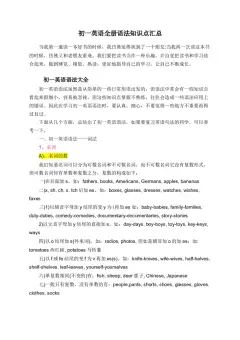
初中英语人教版8年级必备语法知识汇总
三、八年级上册(2025版,8个单元)
单元 | 核心语法 |
Unit 1 Happy Holiday | 复合不定代词 |
Unit 2 Home Sweet Home | 情态动词can/could |
Unit 3 Same or Different | 形容词/副词比较级 |
Unit 4 Amazing Plants and Animals | 形容词/副词最高级 |
Unit 5 What a Delicious Meal! | 感叹句 |
Unit 6 Plan for Yourself | be going to一般将来时 |
Unit 7 When Tomorrow Comes | will一般将来时 |
Unit 8 Let’s Communicate! | if引导的条件状语从句 |
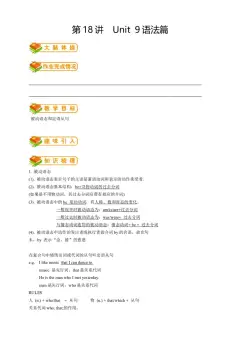
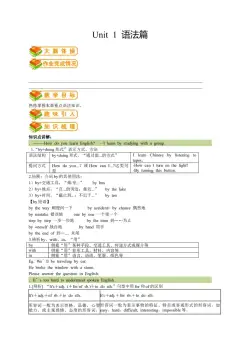
Unit 1 Happy Holiday——复合不定代词
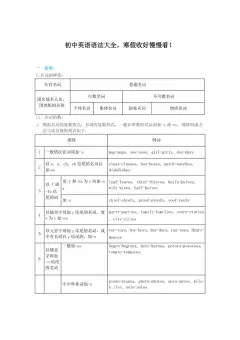
复合不定代词由some/any/no/every与-body/-one/-thing/-where构成:somebody, someone, something, somewhere; anybody, anyone, anything; nobody, nothing; everybody, everyone, everything。作主语时谓语动词用第三人称单数;some类用于肯定句,any类用于否定句、疑问句;形容词修饰时后置(something interesting)。
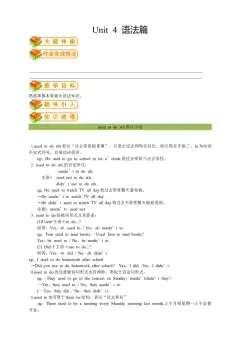
Unit 2 Home Sweet Home——情态动词can/could
can表示能力,could是其过去式;Could you...? / Could I...?用于委婉地请求或征求许可,语气比can客气,但回答仍用can(Could I take a photo?——Of course, you can.)。句式:主语+can/could+动词原形;否定can’t/couldn’t;疑问把情态动词提前。
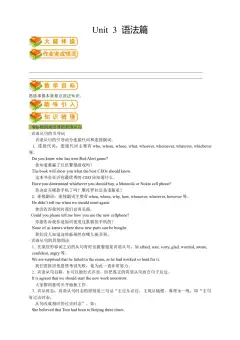
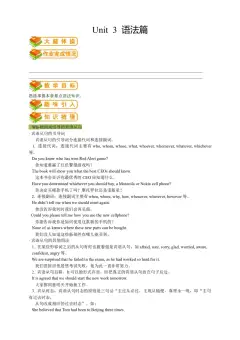
Unit 3 Same or Different——形容词/副词比较级
①构成:单音节及部分双音节词加-er(tall→taller);以e结尾加-r(fine→finer);重读闭音节双写辅音加-er(big→bigger,口诀“大红胖瘦适合湿热”);辅音+y结尾变y为i加-er(early→earlier);多音节词前加more(more beautiful)。不规则:good/well→better, bad→worse, many/much→more, little→less, far→farther/further。
②常考句型:A+比较级+than+B(Tom is taller than I.);比较级+and+比较级(越来越……);the+比较级,the+比较级(越……就越……);可用much, a lot, a little, even, far修饰比较级(不能用very)。
Unit 4 Amazing Plants and Animals——形容词/副词最高级
①构成:单音节及部分双音节词加-est(tallest);多音节词前加most(most beautiful);不规则:good→best, bad→worst, many/much→most, little→least。
②用法:三者或三者以上比较,形容词最高级前加the,常用in/of引出比较范围(the tallest in our class);one of+the+最高级+可数名词复数(one of the most famous places)。
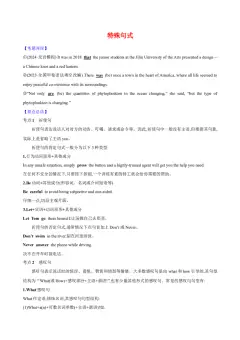
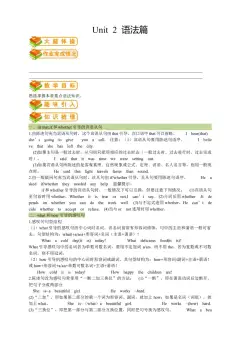
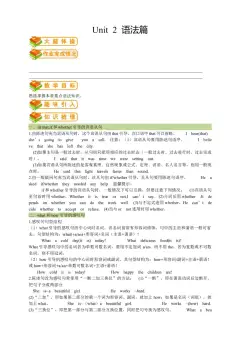
Unit 5 What a Delicious Meal!——感叹句
①What引导:What(+a/an)+形容词+名词(+主语+谓语)!——What a beautiful girl she is! / What delicious food!
②How引导:How+形容词/副词(+主语+谓语)!——How beautiful the girl is!
易错点:名词前有形容词时用what;只有形容词/副词时用how。
Unit 6 Plan for Yourself——be going to一般将来时
be going to+动词原形表示打算、计划做某事,或根据现有迹象判断将要发生的事。be随主语变化(am/is/are going to);否定be not going to;疑问把be提前。常与tomorrow, next week, this evening等连用。
例句:I am going to study medicine at a university. Look at the clouds! It is going to rain.
Unit 7 When Tomorrow Comes——will一般将来时
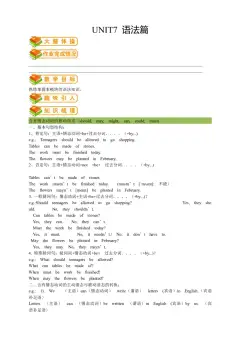
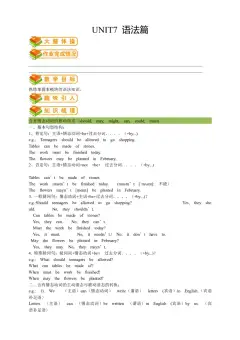
①will+动词原形:表示将来要发生的动作或存在的状态;否定won’t;一般疑问句把will提前(Will people have robots?——Yes, they will.)。there will be表示“将会有”。
②will与be going to的区别:be going to多用于口语,侧重计划、打算或有迹象的推测;will侧重客观上将来必然发生,也用于临时决定。在if条件句中主句多用will。
Unit 8 Let’s Communicate!——if引导的条件状语从句
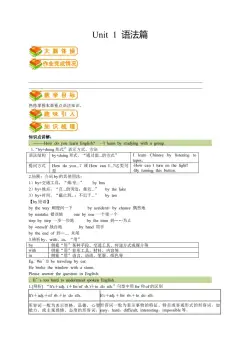
if条件状语从句表示“如果”,主句用一般将来时(或含情态动词、祈使句),从句用一般现在时——“主将从现”(If it rains tomorrow, I won’t climb the hills.)。if从句可放在主句前(加逗号)或主句后。可与“祈使句+and/or+陈述句”转换:Get up early, and you’ll get there on time. 也可用unless(=if...not)改写。
四、八年级下册(2026版,8个单元)
单元 | 核心语法 |
Unit 1 Time to Relax | 动词不定式(作状语、宾语补足语) |
Unit 2 Stay Healthy | 表建议的情态动词should/could;反身代词 |
Unit 3 Growing Up | 状语从句(although/until/so that/if) |
Unit 4 The Wonders of Nature | 形容词/副词比较级与最高级(复习深化) |
Unit 5 Nature’s Temper | 情态动词表推测(may/might/must/can’t) |
Unit 6 Crossing Cultures | 状语从句(so...that/unless/as soon as) |
Unit 7 A Good Read | 现在完成时(一) |
Unit 8 Making a Difference | 现在完成时(二) |
Unit 1 Time to Relax——动词不定式
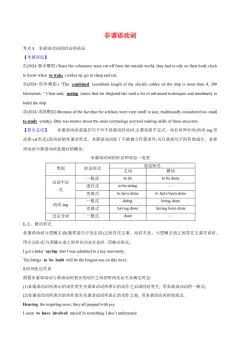
动词不定式(to+动词原形)在本单元主要作状语和宾语补足语:作目的状语(I came here to learn English.);作宾语补足语(ask/tell/want/encourage sb. to do sth.——She asked me to help her.)。
Unit 2 Stay Healthy——建议情态动词与反身代词
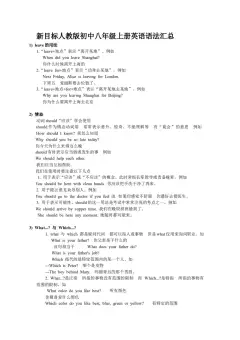
①表建议的情态动词:should/shouldn’t(应该/不应该,语气直接肯定);could(可以,语气委婉,给对方留选择空间)。常用于提健康建议:You should exercise more. You shouldn’t stay up late.
②反身代词:myself, yourself, himself, herself, itself, ourselves, yourselves, themselves;常见搭配enjoy oneself(玩得开心)、by oneself(独自)、look after oneself(照顾自己)。
Unit 3 Growing Up——状语从句
本单元集中学习四类状语从句:although/though引导让步状语从句(Although it rained, we still went out.);until/till引导时间状语从句(Wait until the light turns green.);so that引导目的状语从句(She studies hard so that she can pass the exam.);if引导条件状语从句(If you work hard, you will succeed.)。
Unit 4 The Wonders of Nature——比较级与最高级复习深化
在八上基础上复习深化比较级与最高级:重点掌握“比较级+than+any other+可数名词单数/比较级+than+the other+可数名词复数”表示最高级含义(Lucy is taller than any other student in her class.);倍数表达(A+倍数+比较级+than+B——Our school is twice bigger than yours.)。
Unit 5 Nature’s Temper——情态动词表推测
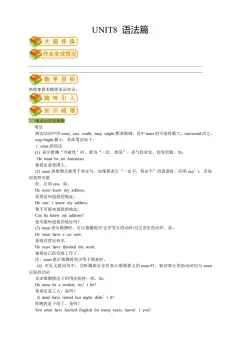
情态动词表推测:may/might(可能,might语气更弱);must(一定,把握很大);can’t(不可能,表否定推测)。如It must be Mr. Wang. It can’t be him——he has gone abroad. 注意与mustn’t(禁止)区分。
Unit 6 Crossing Cultures——状语从句(so...that/unless/as soon as)
①so...that...如此……以至于……,引导结果状语从句(He is so tired that he can’t walk.)。
②unless除非,如果不(=if...not),引导条件状语从句(You will be late unless you hurry up.)。
③as soon as一……就……,引导时间状语从句(I’ll call you as soon as I get there.)。
Unit 7 A Good Read——现在完成时(一)
现在完成时(一):结构为have/has+动词过去分词,表示过去发生的动作对现在造成的影响或结果。常与already(已经,肯定句)、yet(还未,否定/疑问句)、just(刚刚)、ever(曾经)、never(从未)等连用。如I have just finished the book. Have you read it yet?
Unit 8 Making a Difference——现在完成时(二)
现在完成时(二):深化用法——与since(自从,+时间点/从句)和for(长达,+时间段)连用,表示持续到现在的动作或状态;区分have/has been to(去过,已回)与have/has gone to(去了,未回);瞬间动词与延续性动词的转换(borrow→keep, buy→have, leave→be away, die→be dead等)。
附录:初中三年核心语法体系一览
单元 | 核心语法 |
时态体系 | 一般现在时→现在进行时→一般过去时→一般将来时(be going to/will)→现在完成时 |
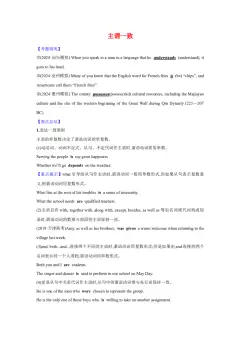
语态体系 | 主动语态→一般现在时被动→一般过去时被动→情态动词被动→一般将来时被动 |
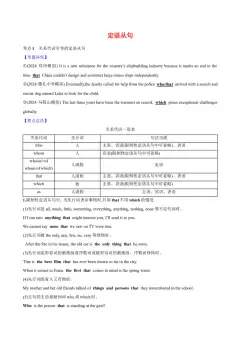
从句体系 | 宾语从句(that/if/whether/疑问词)→状语从句(时间/条件/让步/结果/目的)→定语从句(who/that/which) |
情态动词体系 | can/could(能力、请求)→have to/must(义务)→should/could(建议)→may/might/must/can’t(推测) |
词法体系 | 名词(所有格/可数性)→代词(人称/物主/不定)→形容词副词(比较级/最高级)→动词不定式 |
句法体系 | there be句型→祈使句→感叹句→主谓一致→特殊疑问句 |