ARTICLE · 1219842
初中英语人教版7年级必备语法知识汇总
一、七年级上册(2024版,7个正式单元+3个预备篇单元)
预备篇Starter Units 1—3:以字母、语音与基础交际为主——26个字母及元音字母a/e/i/o/u;问候语(Hello! / Good morning!)、自我介绍(My name is... / I am...)、询问与回答姓名及号码(What is your name?)等基础句型。
单元 | 核心语法 |
Unit 1 You and Me | be动词(am/is/are)一般现在时;人称代词;形容词性物主代词 |
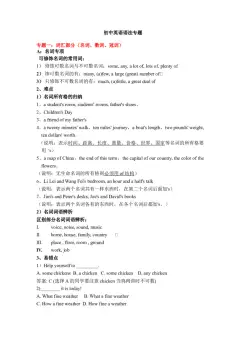
Unit 2 We’re Family! | 实义动词一般现在时(动词三单变化);名词所有格 |
Unit 3 My School | there be句型;方位介词 |
Unit 4 My Favourite Subject | 连词and/but/because;It’s+adj.+(for sb.)+to do sth. |
Unit 5 Fun Clubs | 情态动词can(表能力) |
Unit 6 A Day in the Life | 时间表达;特殊疑问句What time/When;介词at/in/on;频度副词 |
Unit 7 Happy Birthday! | 序数词;wh-特殊疑问句复习 |
Unit 1 You and Me——be动词的一般现在时
①be动词(am/is/are):第一人称单数用am(I am...);第三人称单数及单数名词用is(He/She/It is...);第二人称及复数用are(You/We/They are...)。否定式am not/isn’t/aren’t;一般疑问句把be提到主语前(Are you...? Yes, I am. / No, I’m not.)。
②人称代词:主格I/you/he/she/it/we/they,宾格me/you/him/her/it/us/them(动词或介词后)。
③形容词性物主代词:my/your/his/her/its/our/their,后接名词表所属。
例句:I am a student. He is from the UK. Are you in Class 1?——Yes, I am.
Unit 2 We’re Family!——实义动词的一般现在时
①实义动词一般现在时:表示经常性、习惯性动作或客观事实;主语为第三人称单数时,动词加-s/-es(like→likes, go→goes, study→studies, have→has)。否定式用don’t/doesn’t+动词原形。
②名词所有格:有生命名词后加’s(Tom’s bike);以s结尾的复数名词只加’(the teachers’ room);表示共同所有在最后一个名词后加’s(Jim and Tom’s mother)。
例句:My mother likes music. She doesn’t like sports. This is my father’s car.
Unit 3 My School——there be句型
①there be句型:表示“某地有某人/某物”,there是引导词,真正的主语是be后面的名词。单数名词或不可数名词用There is,复数名词用There are;遵循就近原则(There is a pen and two books.)。否定式There isn’t/aren’t...;一般疑问句Is/Are there...?。
②方位介词:in(在……里)、on(在……上)、under(在……下)、behind(在……后面)、between...and...(在……和……之间)等。
例句:There are many trees in our school. The library is between the classroom building and the lab.
Unit 4 My Favourite Subject——连词与It作形式主语
①连词and/but/because:and表并列或顺承,but表转折,because表原因(回答why的提问)。
②It’s+adj.+(for sb.)+to do sth.:it作形式主语,真正的主语是后面的动词不定式。如It’s interesting to learn about the past. It’s important for us to study hard.
Unit 5 Fun Clubs——情态动词can
can表示能力(“能,会”):can+动词原形,没有人称和数的变化;否定式can’t;一般疑问句把can提到主语前(Can you swim?——Yes, I can. / No, I can’t.)。
例句:I can play the guitar. She can’t speak French.
Unit 6 A Day in the Life——时间表达与特殊疑问句
①时间的表达:整点用o’clock;分钟数不超过30用past(half past seven),超过30用to(twenty to eight)。
②特殊疑问句What time/When:What time is it? / What time do you get up? 询问具体时刻。
③介词at/in/on:at+具体时刻(at 7:00);on+具体某天(on Monday);in+月份、季节、年份(in the morning)。
④频度副词:always, usually, often, sometimes, never等,常放在实义动词前、be动词后。
Unit 7 Happy Birthday!——序数词
①序数词构成:基变序有规律——“一二三单独记(first, second, third);八减t(eighth)、九减e(ninth)、五和十二变ve为f(fifth, twelfth);整十数变y为ie加th(twentieth);非整十两位数只变个位(twenty-first)”。
②用法:序数词前一般加定冠词the(the first lesson);名词前已有物主代词等限定词时不再加the(my first day)。
③wh-特殊疑问句复习:what(什么)、when(何时)、where(哪里)、who(谁)、how(怎样)等。
二、七年级下册(2025版,8个单元)
单元 | 核心语法 |
Unit 1 Animal Friends | 特殊疑问句(what/where/why);形容词(-ed/-ing);可数名词复数 |
Unit 2 No Rules, No Order | 祈使句;情态动词(can/have to/must) |
Unit 3 Keep Fit | 名词性物主代词;频度副词与How often |
Unit 4 Eat Well | 可数/不可数名词(some/any);too much/too many/much too;选择疑问句 |
Unit 5 Here and Now | 现在进行时(一) |
Unit 6 Rain or Shine | 现在进行时(二);天气句型 |
Unit 7 A Day to Remember | 一般过去时(一):规则动词 |
Unit 8 Once upon a Time | 一般过去时(二):不规则动词;there be过去式 |
Unit 1 Animal Friends——特殊疑问句与形容词
①特殊疑问句:what询问什么(What do you like?)、where询问地点(Where are giraffes from?)、why询问原因(Why do you like pandas?——Because they’re cute.)。
②形容词用法:-ed形容词修饰人,表示感受(excited, interested);-ing形容词修饰事物,表示性质(exciting, interesting)。如I am interested in the interesting story.
Unit 2 No Rules, No Order——祈使句与情态动词
①祈使句:以动词原形开头,省略主语you,表示命令、请求、建议等(Be quiet! / Please help me.);否定式用Don’t+动词原形(Don’t run in the hallway.);Let’s+动词原形表建议。
②情态动词:can(能,可以)、have to(不得不,客观需要)、must(必须,主观要求)。mustn’t表示“禁止”,don’t have to表示“不必”。
Unit 3 Keep Fit——名词性物主代词与频度副词
①名词性物主代词:mine, yours, his, hers, ours, theirs,相当于“形容词性物主代词+名词”,后不再接名词(This book is mine. = This is my book.)。
②频度副词与How often:always(总是)>usually(通常)>often(经常)>sometimes(有时)>hardly ever(几乎不)>never(从不)。询问频率用How often(How often do you exercise?——Three times a week.)。
Unit 4 Eat Well——可数/不可数名词与选择疑问句
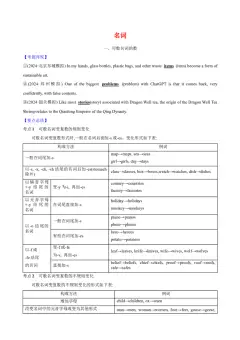
①可数名词与不可数名词:可数名词有单复数变化;不可数名词无复数,用some/any及量词计量(a glass of milk, two pieces of bread)。some用于肯定句及委婉请求的疑问句(Would you like some tea?);any用于否定句和一般疑问句。
②too much/too many/much too:too much+不可数名词;too many+可数名词复数;much too+形容词/副词(much too hot)。
③选择疑问句:一般疑问句+or+另一选项(Would you like juice or coffee?),不能用Yes/No回答,须直接选择。
Unit 5 Here and Now——现在进行时(一)
现在进行时表示此时此刻正在发生的动作,结构为be(am/is/are)+动词-ing。动词-ing变化规则:一般直接加-ing(play→playing);以不发音e结尾去e加-ing(make→making);重读闭音节双写末尾辅音字母再加-ing(run→running)。否定式be not+doing;一般疑问句把be提前。
例句:Look! The boy is swimming in the pool.
Unit 6 Rain or Shine——现在进行时(二)与天气句型
①天气描述句型:What’s the weather like? / How’s the weather?——It’s sunny/rainy/cloudy. 描述天气主语用it;rain(动词/名词)与rainy(形容词)辨析:It’s raining. / It’s rainy.
②一般现在时与现在进行时对比:一般现在时表经常性动作(It often rains here.);现在进行时表此刻正在发生(Look! It is raining now.)。
Unit 7 A Day to Remember——一般过去时(一)
一般过去时表示过去某个时间发生的动作或存在的状态,常与yesterday, last week, two days ago, just now等连用。规则动词过去式变化:一般加-ed(work→worked);以e结尾加-d(live→lived);辅音字母+y结尾变y为i加-ed(study→studied);重读闭音节双写末尾辅音字母加-ed(stop→stopped)。否定式didn’t+动词原形;一般疑问句Did+主语+动词原形?(Yes, I did. / No, I didn’t.)。
Unit 8 Once upon a Time——一般过去时(二)
①不规则动词过去式:需逐个记忆——go→went, see→saw, have→had, eat→ate, take→took, make→made, give→gave, write→wrote, get→got, come→came, say→said, tell→told, run→ran, sing→sang, buy→bought, teach→taught, think→thought, bring→brought, forget→forgot, lose→lost, hear→heard, sleep→slept, meet→met, cut→cut等。
②there be句型的过去式:There was/were+名词+地点;否定There wasn’t/weren’t...;疑问Was/Were there...?;遵循就近原则。
附录:初中三年核心语法体系一览
单元 | 核心语法 |
时态体系 | 一般现在时→现在进行时→一般过去时→一般将来时(be going to/will)→现在完成时 |
语态体系 | 主动语态→一般现在时被动→一般过去时被动→情态动词被动→一般将来时被动 |
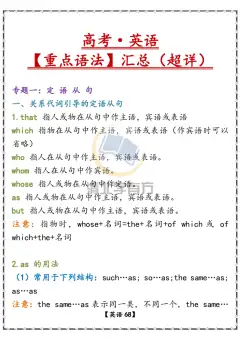
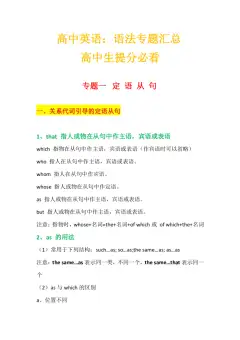
从句体系 | 宾语从句(that/if/whether/疑问词)→状语从句(时间/条件/让步/结果/目的)→定语从句(who/that/which) |
情态动词体系 | can/could(能力、请求)→have to/must(义务)→should/could(建议)→may/might/must/can’t(推测) |
词法体系 | 名词(所有格/可数性)→代词(人称/物主/不定)→形容词副词(比较级/最高级)→动词不定式 |
句法体系 | there be句型→祈使句→感叹句→主谓一致→特殊疑问句 |